







Abstract
Autistic individuals report more gender-related questions and gender incongruence compared to non-autistic peers. However, research on gender identity in autistic individuals lacks longitudinal perspectives and underrepresents cisgender males. This study explored how both cisgender autistic individuals and trans and gender-diverse (TGD) autistic individuals experienced their gender identity development in a broad sense. Fifteen autistic adults (aged 27–52) participated in semi-structured interviews. Data were analyzed using a qualitative longitudinal approach combining phenomenological and process analyses, guided by the Qualitative Analysis Guide of Leuven (QUAGOL). The autistic community was involved in developing research questions, study design, interpreting and discussing results. Phenomenological analysis revealed three themes: (1) exploring a comfortable identity; (2) negotiating oneself with others; and (3) interacting with societal perspectives on gender. Process analysis identified three themes: (1) learning by experience; (2) gender identity development takes time and is demanding; and (3) changing perspectives on gender. Gender-related questions shaped by individual, environmental, and societal factors were present in both cisgender and TGD autistic individuals, though convergence and divergence existed. Gender identity development was experienced as intertwined with autism and demanding, emphasizing the need for supportive environments, peer connections, and appropriate timing and conceptualization of autism diagnoses to foster positive gender identity development.
Lay Abstract
Not everyone feels they have a gender identity, but everyone goes through a development in which gender identity plays a part. Some people experience a difference between their sex assigned at birth and how they experience their current gender. Here, we refer to this small group as trans and gender-diverse and to those whose gender aligns with their assigned sex as cisgender. An increasing number of studies show that autistic people identify more often as trans and gender-diverse compared to the general population but also autistic cis persons can have questions about gender. However, little research on gender identity in autistic individuals had looked at how their sense of gender developed. So, we wondered how autistic adults experienced their gender and how this changed while growing up.
We interviewed 15 autistic adults between 27 and 52 years old about their gender identity development. In the interviews, we focused on (1) how autistic people described their sense of gender and (2) how their sense of gender changed over time.
For both cisgender autistic individuals and trans and gender-diverse autistic individuals, gender identity development was a personal journey. We found three key themes: (1) exploring an identity that feels right as an individual; (2) in social situations, finding a balance between personal identity and others’ expectations; and (3) in society, interacting with social views on gender. We also found three themes related to changes over time: (1) people learning by experience; (2) gender identity development takes time and is demanding; and (3) perspectives on gender change over time. However, variety existed in how these themes were expressed and experienced.
Interviewees shared how autism and identity, including gender identity, intertwined. For some, this was challenging. This shows how adequate information and support on gender and autism, and connections with other autistic people can contribute to a positive gender identity development. Also, a well-timed autism diagnosis and positive views on autism can further support this development.
Keywords
Introduction
Autism and gender diversity are increasingly recognized as intersecting phenomena, with important implications for understanding and supporting autistic individuals (Dewinter et al., 2023). Indeed, autistic individuals, particularly autistic women, reported more gender non-conforming feelings (Dewinter et al., 2017) and qualitative studies focusing on cisgender autistic women have shown that identifying as cisgender may still involve engagement with gender-related questions, such as reflecting on traditional gender norms, femininity, and the role of masking autistic traits to conform to gender expectations (Bargiela et al., 2016; Milner et al., 2019). In addition, research suggested that gender incongruence/gender dysphoria (GI/GD) is more common in autistic individuals than in non-autistic individuals (Thrower et al., 2020; Warrier et al., 2020), and that 8% to 16% of individuals with GI or GD are diagnosed with autism (Kallitsounaki & Williams, 2022), compared to 1% in the general population (Zeidan et al., 2022). In light of these findings, it is not surprising that the autistic community, together with researchers and stakeholders, has advocated for the development of accurate and responsive comprehensive sexuality education (CSE) as well as accessible healthcare by well-trained professionals with expertise in gender diversity to promote the well-being of autistic individuals (Dewinter et al., 2023), recognizing that autistic individuals may have unique support needs throughout their development (Bertilsdotter Rosqvist & Jackson-Perry, 2021). To better understand and respond to the support needs of autistic individuals in gender identity development, insight into first-person autistic experiences is essential (Dewinter et al., 2020; Rea et al., 2024). Thus, the growing number of qualitative studies that aimed to capture these experiences and perspectives of autistic individuals on gender identities is a positive trend (Mittertreiner et al., 2024; Moore et al., 2022). However, the current literature on this topic faces three important limitations. First, most of the research in this area has focused on cisgender females, and trans and gender-diverse (TGD) individuals, leaving the experiences of cisgender autistic males understudied (Moore et al., 2022). Including cisgender men can deepen our understanding of how gender identity develops within dominant cultural norms and help explore both shared and distinct experiences among autistic individuals. Second, the existing qualitative research focused primarily on the experiences of autistic individuals at the time of their participation in the study (Mittertreiner et al., 2024). This emphasizes the need for research that explores changes in gender identity across the lifespan, because such studies can inform and enhance the effectiveness of clinical guidelines for autistic individuals with gender-related questions (Bo et al., 2024; Dewinter et al., 2020). Third, despite their potential to enhance relevance and impact on well-being by reflecting autistic needs (Fletcher-Watson et al., 2018; Strang et al., 2019), participatory research designs remain underutilized in studies of both gender identity and autism (Mittertreiner et al., 2024; Moore et al., 2022). Therefore, this study employed a participatory design, involving the autistic community from the outset to shape two key objectives. First, we aimed to explore the first-person experiences of gender identity development of both cisgender and TGD autistic individuals. Second, we wanted to explore which factors were experienced as helpful or hindering during this developmental process. By addressing these two research questions, we not only aimed to contribute to a better understanding of gender identity development in autistic individuals but also to provide entry points for meaningful support of gender identity development for both cisgender and TGD autistic individuals.
Methods
The report of this study adhered to the Standards for Reporting Qualitative Research (SRQR; O’Brien et al., 2014).
Participants
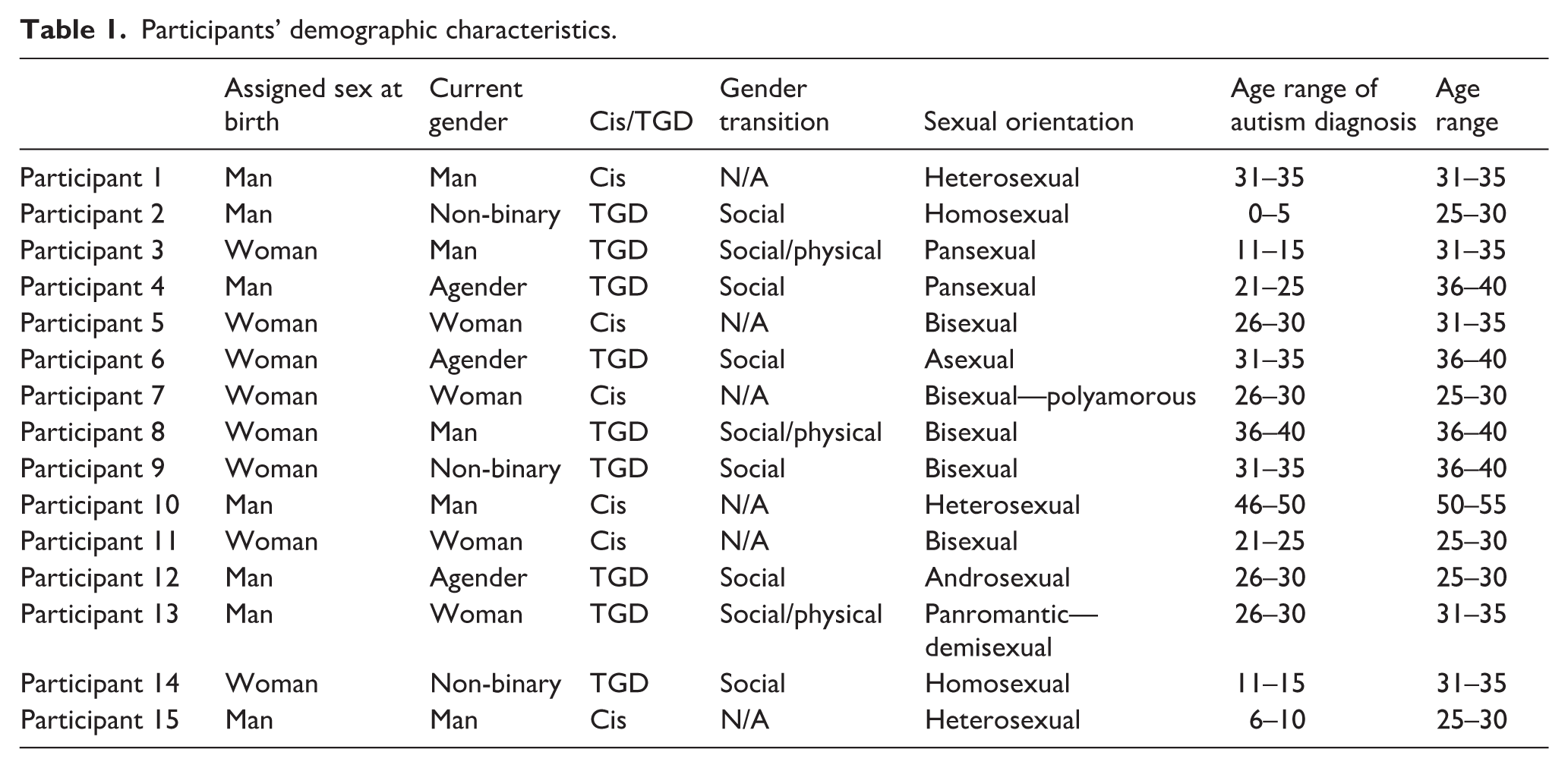
We recruited 15 adults (aged 27–52), all formally diagnosed with autism, from Belgium (n = 11) and The Netherlands (n = 4), through calls for participation. Given the focus on gender identity development across genders, we recruited participants with diverse characteristics in terms of assigned sex at birth, gender, sexual orientation, age of diagnosis, and age (Table 1). Table 1 also presents whether participants reported a social and/or physical transition, although the meanings of these transitions varied across individuals. We used purposive sampling to capture diverse perspectives on gender identity development among autistic people and to explore both convergence and divergence across participants (Green & Shaughnessy, 2023; Smith et al., 2021). Therefore, Dutch-speaking autistic individuals were eligible, regardless of demographic background. Only autistic individuals with intellectual disabilities were excluded, as this was the first time the method was used and it had not yet been adapted to meet their needs (Gibbs et al., 2024). The first 13 participants responded spontaneously to the recruitment; participants 13 and 15 were recruited through an additional targeted outreach by autistic community networks to address the underrepresentation of their profiles—a trans woman and a cis man diagnosed at a young age, respectively. The interviews were conducted in Dutch, as both interviewers (RM and MG) are native Dutch speakers.
Participants’ demographic characteristics.
Procedures
The Ethics Committee Research of UZ/KU Leuven granted ethical approval (MP027988). Participants were recruited via posts on social media and flyer distribution in collaboration with organizations of autistic people that do not specifically focus on LGBTQIA+ identities (Autistic Adults’ Reading and Advisory Group (LAVA) and Flemish Autism Association (VVA)). Interested individuals reached out via e-mail or social media for more information. In accordance with autism-friendly practices (Kaplan-Kahn & Caplan, 2023), participants received the interview guide, timeline, and consent form in advance. Informed consent was explained and signed before the interview began.
Interviews, which lasted on average 45 min (range: 21–122 min), were conducted by RM and MG between March 24 and June 30, 2024. Interviews took place in the researchers’ offices (n = 4), a library room (n = 2), participants’ homes (n = 3), online with verbal interaction (n = 5), or online with written interaction only (n = 1), depending on the participants’ preferences.
An open-ended, semi-structured interview was used, combined with a timeline (Figure 1) and the interviewers paid attention to structure and clear language to facilitate the interview (Tesfaye et al., 2023). Minor adjustments to the interview guide were made based on participant feedback. All interviews were audio-recorded. Interviewers transcribed the interviews verbatim to facilitate data analysis and pseudonymized them to allow for de-identified data analysis and reporting.
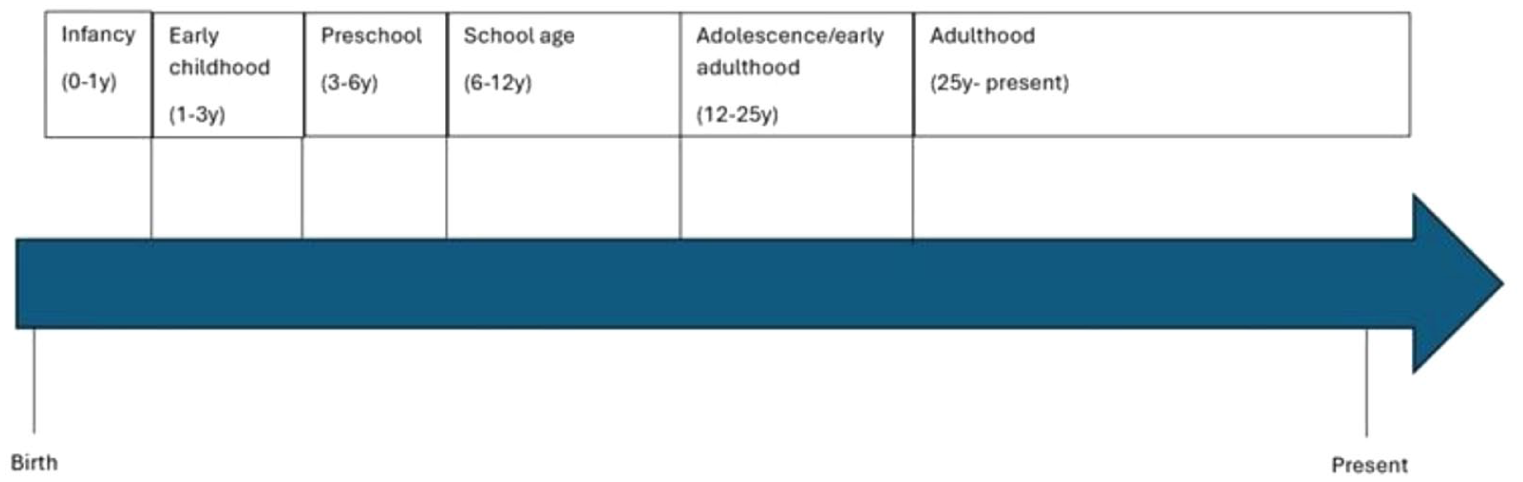
Timeline.
Data analysis
Data analysis was based on an interpretivist epistemology and was guided by Neale’s three-dimensional qualitative longitudinal analysis (QLA; Neale, 2021), which includes a case-oriented approach for individual uniqueness, a phenomenological thematic analysis for lived experiences tied to specific moments, and a process analysis to examine the role and experience of time. Methodically, the analysis followed the Qualitative Analysis Guide of Leuven (QUAGOL; Dierckx de Casterlé et al., 2012), which consists of two iterative stages. The first stage follows a preparatory, case-oriented approach, in line with the emphasis on a case-oriented focus in QLA. After transcription, both first authors (RM and MG) prepared a narrative report for each interview, which they discussed reflexively to develop one conceptual framework for each interview. Each conceptual framework was e-mailed to the corresponding participant as a member check, to ensure accurate representation. Once validated, themes were compared within and across the transcripts. The second stage focused on the coding process. Although the data were collected at a single point in time, analysis was partly focused on development over time. To also capture this developmental perspective, coding was first carried out from a phenomenological perspective (focusing on autistic individuals’ lived experiences of gender identity) and then from a process-oriented perspective (focusing on how they experienced gender identity throughout their development), without requiring further adaptations to the original QUAGOL framework. First, a list of concepts was developed to serve as a basis for coding. In addition, both first authors engaged in reflexive discussions, critically challenging each other’s ideas to refine these concepts. Coding and theme development were then conducted in NVivo (Lumivero, 2023). When uncertainty arose about categorizing a theme as either phenomenological or process-related, decisions were made through thorough discussion until consensus was reached. These discussions were guided by the definition of a process theme as experiences that evolved over time or involved reflections on the passage of time and perspectives from the present into the past or future (Audulv et al., 2022). The first authors then described each concept and integrated them into a conceptual framework during team meetings. The conceptual framework was then checked by examining individual codes, identifying which participants mentioned each one. This approach enabled us to identify patterns of convergence and divergence within the broader autistic group, with particular attention to individual narratives and gender identities, primarily focusing on differences between cisgender and TGD individuals. To ensure the study’s trustworthiness, an external auditor (JD) monitored the analysis.
Positionality
We emphasize reflexivity and positionality in studying gender identity among autistic individuals, integrating a participatory approach and reflexive practices. As cisgender, non-autistic researchers, the first authors (RM; MG), both medical professionals pursuing a Master’s in Sexology, shaped the study through data analysis, presenting both opportunities and challenges due to the sample’s diversity (Berger, 2015). Interviews were conducted without prior affiliation to participants to ensure neutrality, though first authors’ medical and sexological backgrounds may have influenced interpretations. JD, a male-identifying, non-autistic post-doctoral researcher with expertise in the intersection of autism and sexuality, contributed through an audit to ensure methodological rigor. PE, a male-identifying non-autistic professor in sexology, and IN, a female-identifying non-autistic professor in educational sciences, contributed to theme development by engaging in reflexive discussions regarding theme creation and formulation. To broaden our perspectives, we followed a participatory approach with the involvement of both cisgender and TGD autistic individuals. As a team, we embrace neurodiversity and gender diversity, committed to advancing knowledge while respecting and empowering the communities we study by challenging stigma, affirming identities, and promoting equity and inclusion for both autistic and gender-diverse individuals.
Participatory methods
We used a participatory design at several stages of this study and followed the short version of the second Guidance for Reporting Involvement of Patients and the Public (GRIPP2-SF; Staniszewska et al., 2017) in the report. Our aim was to increase the inclusivity, relevance, and impact of this research for autistic individuals. Initially, we co-developed the study design and research questions with a member of the LAVA to refine our objectives and ensure an effective approach. This input helped tailor the interview guideline and create a supportive visual aid. After data analysis, we held an online session with LAVA members to discuss the results. This session provided a platform to collaboratively review and contextualize our findings. We invited feedback on how findings aligned with lived experiences within the autistic community. This dialogue helped identify key themes, strengthening our conclusions, and shaping the discussion to reflect community perspectives and experiences. Working with autistic individuals who are active in their community provided insights beyond personal experiences. A challenge arose when some community members sought explanations for the higher rates of gender incongruence among autistic individuals in our findings. However, our aim was exploration, not explanation, thus highlighting the need to clearly define the study’s scope in participatory research.
Results
The following section describes the themes identified in both the phenomenological analysis and the process analysis, as illustrated in Figure 2. First, the phenomenological analysis revealed three key themes: (1) exploring a comfortable identity; (2) negotiating oneself with others; and (3) interacting with societal perspectives on gender. Second, the process analysis identified three additional themes: (1) learning by experience; (2) gender identity development takes time and is demanding; and (3) changing perspectives on gender. It is important to note that while the two analyses are presented as distinct dimensions, they overlap and are interrelated. Moreover, within the codes presented in Figure 2, both convergence and divergence were found between cisgender and TGD individuals (Tables S1 and S2). These patterns are further explored in the text below.
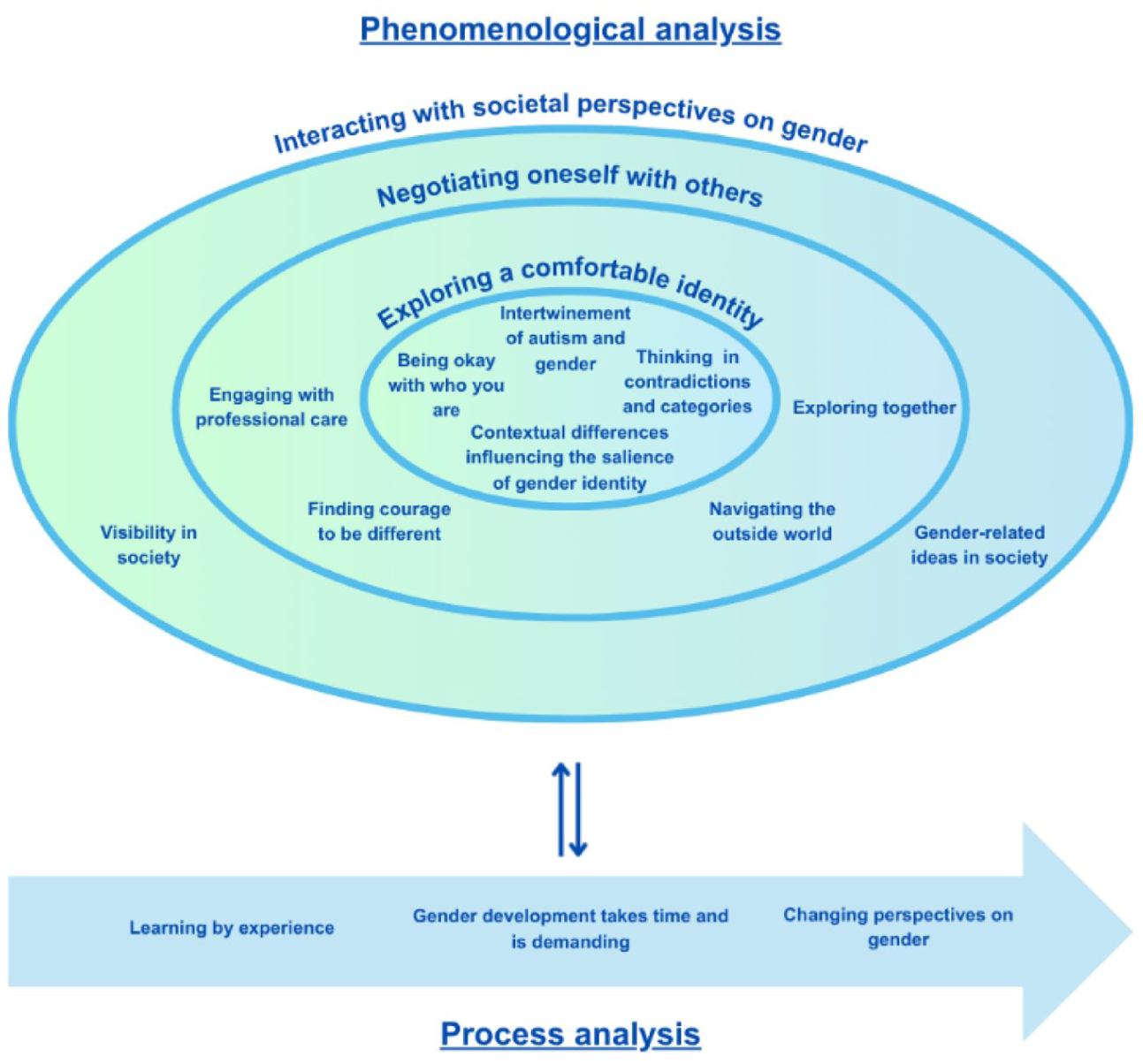
Themes emerging from the phenomenological and process analyses.
Phenomenological analysis
Exploring a comfortable identity
Participants’ narratives on gender identity development included themes of differences in salience of gender identity, being okay with who you are, and navigating contradictions. Gender exploration often reemerged during calmer life phases, with black-and-white thinking and stereotypes creating both confusion and opportunities for fluid self-definition. Participants related being autistic to specific emotions and perceptions that created self-doubt about their gender, with gender-related questions adding an additional layer of stress. At the same time, connections with autistic peers fostered self-understanding. While many of these themes were shared across gender identities, the way they were experienced and expressed could differ between cis and TGD participants.
Contextual differences influencing the salience of gender identity
Gender identity held little significance during childhood, regardless of current gender. As one cis woman reflected, “as a child, I don’t think I questioned it” (P5). During puberty, participants of all different genders experienced a suppression of gender exploration in high school, although in different ways. Some, especially those with negative social experiences in primary school, described a strong desire to fit in by “not adopting a more gender-critical stance”—referring here to not feeling free to question gender norms—because that “wouldn’t have fit with my attempt to appear as average as possible” (P15, cis man). Others, particularly participants overwhelmed by challenges such as autistic burnout, explained that gender simply “did not pop up” as they felt “completely stressed out” (P8, trans man) with one trans woman escaping from such challenges by being busy with “using video games, music, and drugs to survive” (P13). As a result, gender exploration emerged later, “when the rest of my life became calm” (P8, trans man). In a more accommodating environment later in life, trans participants described a sudden need to act on the awareness of their gender identity. A trans woman expressed frustration at long waiting lists, saying, “I just want to move forward” (P13), while a trans man described his realization as an “epiphany” (P8). Others, however, ranged from continuing to question the meaning of gender to finding it unimportant. One agender participant noted, “nobody can explain what it means to be, to adopt, or to feel a gender” (P4), while others described gender as “not being meaningful” (P15, cis man). For cisgender individuals, this lack of meaning was experienced as “not being an obstacle” (P15, cis man), whereas non-binary and agender participants disconnected from the gender binary, focusing instead on personhood, as one non-binary participant explained, “I didn’t really know there was a difference between boys and girls [. . .] I just saw everyone as not being me” (P9).
Being okay with who you are
The importance of feeling comfortable with one’s body emerged across gender identities, though participants followed different paths. One group felt at ease accepting their assigned gender, calling it a “default choice” or “simply convenient” (P1, cis man), and stated, “I have no problem with how I look” (P7, cis woman). Others, both cis and TGD individuals, described feeling “not at home in my own body” (P14, non-binary person). Body positivity in sex education, not focusing on “how the body should look” (P12, agender person), was seen as potentially helpful, while TGD individuals also noted that surgical procedures and tools such as binders helped them achieve “that straight body . . . the one I had always wanted” (P14, non-binary person).
Also comfort in others’ gender labeling was important for both cis and TGD individuals, yet experiences varied. For those who felt satisfied with how they were perceived, it was important that their appearance reflected their gender expression and matched how they wanted others to relate to them: “I feel comfortable living this way [. . .] being seen and treated this way” (P3, trans man). However, a non-binary participant rather found comfort in “indifference” to others’ labeling, noting they “don’t feel the strong need to correct them” (P2).
Feeling different in various aspects of life, including gender, was described by both cis and TGD participants as both challenging and liberating at the same time. On the one hand, feeling different could lead to intense tension: “I can’t fake anymore . . . No one is going to tell me who I am or who I’m not” (P14, non-binary person). Despite being distressing, such moments of tension were also seen as turning points by TGD individuals, helping them to set boundaries and resist gendered expectations. For one agender participant, an experience of boundary violation led to rejecting gendered norms altogether: “I won’t be able to do that anymore. I don’t want to do it anymore either” (P12). On the other hand, feeling different was described as “a kind of relief” (P12, agender person), as this participant explained that identifying as agender allowed them to distance themself from binary gender expectations and feel more authentic and comfortable with who they was, especially when navigating difficult social situations. Gaining confidence and autonomy played a key role, as one participant shared, “I could stand on my own two feet and say: You know what, not today” (P2, non-binary person). In addition, being okay with who you are was central, explained as “to radically choose to be myself, at all times” (P4, agender person). Acts like changing one’s name symbolized this liberation for TGD individuals as one agender participant shared, “[name change] gave me control over what shape I could be . . . and broke me free from my parents’ influence” (P4).
Thinking in contradictions and categories
Participants of all different genders experienced an inclination toward black-and-white thinking about gender, influenced by internalized gender ideas, which led to doubts and confusion about their gender identity, though the nature of these experiences and ways of handling them varied. Gender stereotypes influenced beliefs among both cis and TGD individuals, sometimes leading to the rejection of certain activities based on personal principles. As one cis woman explained, “This is what girls do, this is what boys do, I fit more with the boys, so I’m not like other girls” (P11). Another shared how this thinking shaped the rejection of certain behavior: “[Boys] were often the athletic types, so for a long time I was anti-sports on principle” (P15, cis man). Binary thinking about gender left both cis and TGD participants “struggling” to “find that balance” (P13, trans woman) between extremes, especially when they did not align with stereotypical gender traits, leading to doubt about their identity and sense of authenticity. As one non-binary participant explained, “Your authenticity is somewhat affected by this as well, because it doesn’t align each time” (P2). However, specific to TGD individuals, binary thinking could feel unsettling by experiencing disappointment after exploring a transgender identity, as one non-binary person stated, “Then I really lived as a man for a while. But that wasn’t right either” (P14). In addition, participants who identified with the opposite sex based on linking weakness to femininity and strength to masculinity experienced increased doubt when those stereotypes were no longer present. For example, one participant who previously identified as a trans man and now as agender shared, “I could not feel masculine anymore because of how weak I felt” (P6).
How participants handled this confusion also varied. For example, one cis man looked for clear answers by linking gender to biological sex. This participant explained, “It’s already confusing [. . .] I really need that structure [. . .] due to my autism,” adding, “gender and sex are inherently linked [. . .] gender is fixed” (P1). In contrast, a non-binary participant embraced the confusion, viewing it as important to their identity and as “associated with their own non-binary identity” (P2). In addition, both cis and TGD found it easier to achieve a balance by acknowledging categorization is limiting: “The more you develop, the more you realize that labels can’t describe everything” (P11, cis woman), and experiencing gender identity as changing: “It’s not always the same [. . .] Some days, it is a bit fluctuating” (P6, agender person). Their experiences were affected by things like spiritual “internal energy” (P4, agender person), appearance, which felt “affirming of my gender and thus connected with my identity” (P4, agender person), and social surroundings: “Being constantly surrounded by men made me act more masculine [. . .] It did influence my identity” (P7, cis woman).
Intertwinement of autism and gender
For all but one recently diagnosed participant, gender identity development was closely connected to autism. In addition, an autism diagnosis was experienced as helpful for self-understanding by participants of all different genders, offering “a step toward better understanding myself and how I function” (P13, trans woman). Connecting with other autistic individuals further supported this process, allowing participants to refine their sense of identity by “making clearer what makes me different [within the autistic community]” (P2, non-binary person). However, not all autistic traits (e.g. need for structure) were seen as influencing gender.
For assigned males at birth who described themselves as “sensitive” (P13, trans woman) and for a trans man who recalled “getting control over my aggression” (P3) in childhood, autism influenced the experience of gender identity through different ways of showing emotions and how others see them. As one agender participant explained, “[Boys] tended more toward aggression than emotional reactions. I think I had a bit of both at the same time [. . .] and I think that had something to do with autism.” They added, “I think teachers felt like, you’re tall, you’re a man, so why are you struggling so much physically? And why are you so emotional?” (P12).
For TGD individuals who felt stress related to autism, gender caused accumulated stress with the “above standard stress from autism” intensified by “an extra layer of stress” (P8, trans man). This was especially noticeable for trans individuals experiencing difficulties in organizing their transition process and for those experiencing “that everywhere, some parts of me are welcome, but others are not. Never all of me” (P4, agender person).
Negotiating oneself with others
Participants of all different genders balanced expectations to fit in and being oneself, often relying on supportive environments and relationships for exploration and expressing themselves. Gender-affirming connections and online spaces provided a feeling of understanding, while fixed roles and resistance made things harder. Help from experts was seen as important primarily by TGD participants, emphasizing their role in addressing both autism and gender.
Navigating the outside world
Navigating the outside world required balancing between being themselves and fitting in, shaped by both autism and gender identity, regardless of gender. One agender participant reflected, “I didn’t know that I was permitted to be someone else with my own story, my own identity. I think that’s also partly due to my autism” (P12). While feeling forced to follow societal expectations to function in daily life, both cis and TGD participants resisted societal norms that conflicted too much with their identity. As a cis man described, “Going along with it. But if I felt too much resistance to the macho behavior, then I wouldn’t” (P15). Still, anxiety about negative outcomes held both cis and TGD participants back from being themselves, including fears of “street violence” (P4, agender person) or bullying. Interestingly, anxiety about bullying was expressed by those who witnessed it rather than experienced it firsthand. One participant felt “cautious” after seeing boys harass girls at school, noting: “It could happen to you here” (P10, cis man). To navigate social interactions, both cis and TGD individuals adopted specific roles, as one explained, “It’s easier to interact if you show who you are today. Like saying, look, I’m a gay man, or I’m the one checking tickets” (P2, non-binary person). However, for participants who presented a different gender online than in daily life, switching between these different worlds was exhausting, like “to come home and suddenly have to, like, log into your video game and make people think you’re a girl” (P2, non-binary person). In addition, specific TGD participants shared their gender identity only with trusted persons. As one trans man noted, “It’s more for those close to me [. . .] I don’t always feel like explaining it to cisgender, heterosexual people” (P8).
Finding courage to be different
For participants of all genders, feeling different from others in relation to gendered expectations raised questions: “I experienced the mismatch, but I didn’t know what to replace it with” (P13, trans man). Realizing that gender identity is unique and gender labels are not fixed was helpful for these participants. As one cis woman noted, “I’m allowed to decide what femininity means to me [. . .] despite it not fitting the traditional picture” (P11). Being autistic also made it easier for both cis and TGD individuals to embrace differences regarding gendered expectations. One cis man reflected, “Autism has been somewhat liberating, even in terms of gender,” adding, “I’m not going to conform perfectly anyway” (P15). At the same time, autism was linked to difficulty understanding others’ resistance to difference: “I think my autism doesn’t always make it easy for me to understand why someone feels resistance to something that seems perfectly logical to me” (P12, agender person). Further, both cis and TGD individuals saw embracing their identity as a political act “helping to make it politically discussable” (P12, agender person), possibly drawing support from the presence of gender diversity throughout history. Still, conforming to gender norms did not necessarily alter cis and TGD individuals’ sense of identity. As one non-binary participant put it: “The fact that I went through that didn’t affect who I was” (P2). A specific challenge in finding courage to differ for TGD individuals was the importance of names across generations. As a non-binary participant shared, “Being named after my grandfather . . . made it hard for my family to accept my new name” (P2). More broadly, society’s lack of openness to gender diversity affected both cis and TGD individuals. For instance, a cis man reflected on how, in some progressive activist contexts, masculinity was rejected altogether, leaving him little room to identify in a positive way as male: “I don’t feel supported by those wanting to get rid of masculinity . . . some people simply feel like a man” (P15). Intrusive questions worsened this lack of openness for both cis and TGD participants, as one trans man recalled, “all the staff [in psychiatric care] kept asking me questions. It just wasn’t pleasant” (P8). In addition, participants who presented in a feminine way experienced the sexualization of their gender identity, with one trans woman noting, “You’re seen as a fetish” (P13).
Exploring together
Relationships played an important role in shaping participants’ gender identity development, providing both benefits and challenges. Romantic and sexual encounters revealed the connection between gender and sexual orientation and sexual experiences for all genders. A cisgender participant thought about his identity after dating women who later identified as lesbians: “What does that say about me? What am I, then?” (P15). Gender diversity-accepting relationships, particularly with partners also exploring their gender identity, provided a feeling of understanding for cis and TGD participants, as “you don’t have to explain all of that. The other person immediately understands it” (P14, non-binary person). On the other hand, heterosexual gender roles in romantic relationships hindered exploration for all genders, creating fixed expectations that left participants feeling “trapped [. . .] where I couldn’t meet those expectations” (P10, cis man). Moreover, individuals who felt positioned within power dynamics shaped by heterosexual norms emphasized the importance of equality in interactions as essential for self-exploration and expression. One non-binary participant noted, “equality in my daily life [. . .] helps my non-binary identity to thrive” (P9). In addition, conversations with TGD individuals were considered helpful in creating new perspectives across all genders but held additional value for TGD individuals due to common experiences of feeling misunderstood. A cis woman explained, “The fact that you can share ideas about this with others broadens your own perspective” (P5), while a trans woman described still searching for someone who “understands me and what I’m going through” (P13). Similarly, a trans man found conversations with others who shared his identified gender particularly meaningful and a trans woman described how thought-provoking questions helped broaden her perspective, noting, “When people ask targeted questions, it gives you the space to think about it” (P13).
Participants found gender dynamics within groups and bonding with peers challenging. While navigating social scripts was challenging for participants of all genders, those who grew up primarily among female friends felt little connection to others based on gender. One cis woman elaborated on this experience, stating: “The typical dynamics that emerge when many women are together . . . It doesn’t do much for me, and I always feel quite uncomfortable in that situation,” adding that they felt like an “alien” in “that kind of behavior that seems automatic” (P7). In the broader context, participants of all genders valued supportive environments, often referred to as “a secure environment” or “a safe space,” for offering space to “bring these things out in me . . . and stretching my comfort zone just a little” (P4, agender person). For TGD individuals who explored different identities online, these spaces also served as safe environments for identity experimentation. As one non-binary participant described, “Having your character drawn in different clothes, like outfits you’d not yet dare to buy for yourself” (P2).
Engaging with professional care
Few participants mentioned receiving help from professionals, with TGD persons particularly emphasizing its importance. Such experiences were discussed not as part of experiencing the developmental process itself, but as factors that could either support or hinder a positive sense of gender identity. One trans man appreciated an expert who approached gender “from the perspective of my autism,” alleviating concerns that it “might just be a temporary obsession” (P3). General counseling was beneficial for one non-binary participant for addressing “the constant cycle of gender dysphoria, anger, stress, burnout” (P9), though a trans person felt it focused too much on “peripheral aspects . . . never the core” (P13).
Interacting with societal perspectives on gender
The visibility of diverse gender roles shaped cis and TGD participants’ gender exploration. Societal attention to gender diversity facilitated self-recognition, but gaps in healthcare and misinformation created barriers. Role models and inclusive language about gender were important for self-exploration. However, restrictive norms and binary ideas caused discomfort, limiting self-expression through societal perceptions of behavior and physical traits.
Visibility in society
The visibility of diverse gender roles in society influenced how participants perceived the possibilities for exploring their gender identity. These possibilities depended on societal awareness of gender diversity by both cis and TGD individuals, with participants valuing “small victories,” like “shops removing the male/female divide in their forms” (P9, non-binary person). While TGD persons were particularly hindered by the lack of awareness in healthcare, with a trans man participant noting, “It would have helped me if those caregivers had shown a bit more . . . sensitivity” (P8), particularly cis men felt that gender had become “a bit of a hot topic” (P1), making it a sensitive topic to discuss in broader society.
For participants of all genders inclusivity and representation in media were also important for self-exploration, with words used to describe gender helping participants “begin to think about themselves” (P6, agender person) and providing “the words I did not have before” (P8, trans man). Inclusive literature and music offered valuable role models, with characters becoming “the role models I couldn’t find” (P5, cis woman). This was valuable as the absence of role models was a challenge for cis and TGD individuals. A cis man noted his father’s absence had “greatly, hugely undermined” his “image of the man” (P10). In addition, disinformation hindered self-recognition for cis and TGD individuals. For example, one agender participant did not agree with the idea of “being born in the wrong body,” explaining, “my body just feels . . . normal to me” (P12).
Gender-related ideas in society
Society’s binary view of gender, both in-person and online, did not match how some understood their own identity, causing confusion and discomfort for both cis and TGD individuals. Growing up without strict expectations generally provided “a bit more comfort” (P1, cis man), in contrast to strict parenting that strengthened “default thinking” (P5, cis woman). Strict gender divisions further hindered overall identity development for both cis and TGD individuals. A cis woman noted, “I didn’t receive the same encouragement [as boys] from my teacher” (P7). Both groups also described how these norms affected them early on. One non-binary participant shared, “as a child, I already knew that this didn’t feel comfortable” (P14). Linking bad behavior to gender added to confusion. An agender participant recalled being told, “You’re not allowed to hit girls,” and reflected, “we don’t hit each other, and that could have been the end of it” (P12).
For one group of participants who grew up as a boy but experienced female interests during childhood, gender and behavior felt unrelated, stating, “It doesn’t mean that it will define my identity” (P4, agender person). In contrast, a group of TGD individuals felt that behavior and appearance shaped others’ perceptions, restricting self-expression. For example, one non-binary participant avoided skirts because “it makes me be seen more as a woman and sexualized” (P14). However, participants of all genders emphasized physical traits. One non-binary explained, “It wasn’t really about behavior . . . [but my] high-pitched voice, and the expectation of being a girl was projected onto me” (P2).
Process analysis
Learning by experience
Gender identity development was described by participants of all genders as a lifelong process of experimentation and self-discovery, shaped by personal experiences and evolving self-understanding, with TGD individuals in particular engaging in processes of unlearning and relearning. Looking back, both cis and TGD participants noted that certain gender choices were present throughout their lives before they fully recognized their gender identity. One non-binary participant remembered “making a choice for the first time, a choice I still make as a non-binary person” (P2). Experimentation was key to understanding gender identity later in life for all genders, as participants explored appearances and gender roles to experience whether these expressions felt right or not for them. A trans man described experimenting as “trying things out, yes, like binders, clothing . . . taking on certain roles and thinking, oh yeah, no, this isn’t it. This is it.” (P8). For both cis and TGD individuals, experimentation could mean trying one label at a time, limiting further exploration. A trans man reflected, “I discovered that I was attracted to women. And then I was a lesbian. [. . .] That black-and-white thinking, which is somewhat linked to autism [. . .] stuck with it” (P8). However, throughout this experimentation, especially TGD individuals felt restricted by learned rules and beliefs. One trans man noted needing to “break away from my mother’s ideas and thoughts” (P3). So, for them building an identity also meant unlearning and relearning. One trans woman stated, “because you’re constantly developing, and you have new experiences, and you learn new things, and as a result, you’re always thinking differently about things” (P13). Over time, participants of all genders grew into gender identities shaped by personal events and preferences. This journey led to the understanding that “you can be a [gender] and still not meet societal expectations, but at the same time, you also have that uniqueness” (P7, cis woman).
Gender identity development takes time and is demanding
For participants of all different genders, gender identity development was a slow and gradual journey, with participants experiencing it as a “search for a long time” (P11, cis woman) and not “something that happens overnight” (P12, agender person). Both cis and TGD participants experienced gender identity as exhausting on multiple fronts, although this experience was not mentioned by all individuals. One trans man explained it as “always there, but in an unpleasant way. Not something I was consciously aware of, but it was something that constantly drained a lot of energy” (P8). As a result, both cis and TGD participants who experienced their gender journey as demanding felt there was no way back once they had found a sense of comfort in their identity. One cis man, reflecting on his gender journey, explained,
“It took me so long throughout my life to build some kind of identity—how to present myself, behave, dress, and everything else—that I don’t want to question it too deeply. I’ve become who I am because of that entire process.” (P15)
Changing perspectives on gender
Gender identity development was described by participants of all genders as an ongoing, context-dependent process, shaped by social expectations, puberty, and the intertwinement of autism and gender identity. Participants of all different genders referred to it as a “continuous process of searching” (P15, cis man), influenced by time and social contextual changes. Puberty was experienced by both cis and TGD individuals as a period of intensified expectations, as people “started focusing much more on self-expression” (P11, cis woman), as well as a period to navigate bodily changes. One non-binary participant recalled, “I just wanted to keep the body I had as a child, and I remember being really confused at that time” (P14). Over time, for participants of all different genders the pressure to conform lessened, as one cis woman explained, “I’ve let go of that a bit more as I got older and just started wearing what I liked or found comfortable” (P5). The meaning of gender also evolved for both cis and TGD individuals depending on the situation. One non-binary participant shared how teacher training exacerbated gender dysphoria: “I was suddenly a ‘madam,’ and that caused pure dysphoria” (P9). Looking back, both cis and TGD participants expressed feelings of shame over past conforming behaviors that no longer aligned with their current sense of identity, such as “being with girls . . . because that’s what’s expected of me” (P10, cis man). However, for TGD participants who felt that their gender identity development was suppressed during puberty, reflecting on the past also helped understand their current feelings. A trans man noted the need to question whether past behaviors reflected personal identity or were attempts to fit in: “Is this something that truly suits me or something I did to conform?” (P3). In addition, for the TGD group, gender identity development felt slower and was often hindered by various difficulties. One trans man explained, “It may have slowed down a certain realization process because I also had to deal with a lot of other stuff” (P3). The timing and conceptualization of an autism diagnosis were also important for both cis and TGD participants. The ones who were diagnosed later in life felt that earlier knowledge would have changed their experience, noting, “If I had known earlier . . . it might have been different” (P8, trans man). For others, diagnosed early with autism, it became “a draw to put my otherness into” (P2, non-binary person), delaying deeper gender identity exploration until later in life.
Discussion
This study used a developmental approach to gender identity in both cisgender and TGD autistic individuals, focusing on lived experiences and personal growth over time. Gender identity development was described as a dynamic, ongoing process shaped by individual, social-interactional, and societal factors. Participants experienced it as a demanding and unfolding journey to find comfort, balancing black-and-white thinking, a need for clarity and embracing their uniqueness within societal expectations. Participants differed in how they experienced and navigated this process. In particular, cis men introduced themes that were not mentioned by TGD participants or cis women, such as linking biological sex to gender or experiencing gender as not open for discussion, whereas cis women tended to refer to themes that were shared across groups. However, especially in the process analysis, we found a notable alignment between cis and TGD participants, suggesting that some experiences and underlying processes of gender identity development may be shared across groups. Autism played a significant role, offering both challenges and opportunities in navigating this process. Experimentation and reflection were key, with most participants finding their autism diagnosis helpful in understanding their gender identity. However, the timing and conceptualization of the diagnosis were important in shaping these experiences.
The intertwinement of gender-related questions and autism aligns with previous research on gender identity in autistic cis women and autistic TGD individuals (Coleman-Smith et al., 2020; Cooper et al., 2021; Milner et al., 2019). This study extends these findings to autistic cis men. Notably, cisgender participants also expressed anxiety and concealment related to their gender expression, whether due to not fitting societal gender norms or due to discomfort in gender-diverse spaces. These shared experiences of stigma and internal conflict among both cis and TGD autistic individuals align with the minority stress model (Botha & Frost, 2020), emphasizing that the psychological strain stemming from societal expectations is not exclusive to autistic TGD individuals. Moreover, the data reinforce the notion that gender norms are context-specific (Kafer, 2013), and that both cisgender and TGD autistic individuals can “neuroqueer”: a process of subverting dominant assumptions about gender, neurotypicality, and their interrelation (Walker & Raymaker, 2020).
An important addition from our study is how the increased emphasis on societal norms in puberty influenced the participants’ ability to explore gender. While prior research showed that gender dysphoria often intensifies during puberty (Coleman-Smith et al., 2020; Cooper et al., 2021; Oliver et al., 2025), our participants described this period as marked by reduced exploration of gender identity. We think that, rather than contradicting previous work, this finding complements it: puberty may coincide with increased distress, but not necessarily with greater freedom to explore. In fact, the social and bodily pressures of adolescence (Coleman-Smith et al., 2020; Cooper et al., 2021; Oliver et al., 2025) may reduce the space for gender identity questioning, especially after negative events in primary school. Participants emphasized that early experiences of acceptance had long-term effects on gender identity development. Affirming environments during childhood were strongly associated with later comfort in one’s identity, while early bullying or exclusion had long-lasting suppressive effects. These insights stress the need to cultivate acceptance of neurodiversity and gender diversity from a young age. Initiatives like the Learning About Neurodiversity at School (LEANS) program (Alcorn et al., 2024) and inclusive classroom practices that facilitate interactions between autistic and non-autistic peers (Kim et al., 2023) are promising for reducing stigma and supporting identity development in both cisgender and TGD autistic youth.
In addition to the social environment, participants also pointed to the role of diagnosis timing in shaping their identity development. Participants noted that early diagnoses sometimes led to linking gender questions to autism. However, late diagnoses were experienced as hindering gender identity development by delaying self-understanding. In contrast, peer connections, rather than diagnosis timing, were found to foster a positive autistic identity (Davies et al., 2024). Peer learning also contributed more to a positive identity than learning from parents or professionals (Bury et al., 2022). The latter aligns with our findings, where connections with gender-diverse and autistic peers were crucial for positive gender identity development, while professional care was rarely mentioned. Together, this suggests that diagnosis timing can impact gender identity development, but understanding autism and autistic identities is equally key. Therefore, involving peer support and experts by experience can be crucial in supporting gender identity development (Gillespie-Lynch et al., 2017). In addition, encouraging self-identification and fostering peer connections can enhance visibility and complement clinical care (Overton et al., 2024), while formal diagnoses remain valuable for self-understanding and accessing support (Vanaken, 2023).
This study, the first with a developmental approach to gender identity in cisgender and TGD autistic individuals, offers unique insights into lived experiences. The inclusion of diverse participants, particularly cis men, enhances the understanding of gender identity in a broad sense. A participatory framework ensured the research questions were collaboratively shaped with the autistic community, increasing their relevance. Methodological rigor, including reflexive practices and external auditing, bolstered trustworthiness (Lincoln & Guba, 1985). However, the study has limitations, including the exclusion of individuals with intellectual disabilities, as the visual method used had not yet been adapted for their needs (Courchesne et al., 2021), leaving a significant portion of autistic voices unheard. Future research should focus on creating inclusive methodologies for meaningful participation of autistic individuals with intellectual disabilities (Gibbs et al., 2024), addressing the limited body of literature regarding autistic individuals with intellectual disabilities (Walker & Walton, 2024). Furthermore, we explored both convergence and divergence in gender identity development, primarily through comparing cisgender and TGD individuals. However, variation might exist within each of these groups as well. Future research examining potential intra-group differences among cisgender and TGD populations, taking into account the diversity within these subgroups, could offer a more nuanced understanding and further deepen current insights. Reliance on retrospective data collection may have introduced recall bias. Longitudinal approaches and Experience Sampling Methodology could address this issue, offering real-time insights into identity disclosure experiences and improving our understanding of the factors that facilitate or hinder disclosure for autistic individuals (Love et al., 2023). It is possible that our recruitment strategy, which primarily relied on social media and community networks related to autism, attracted participants who were already more self-reflective about their identities. A more general recruitment approach might have reached individuals for whom autism and gender are less closely connected. This may have influenced the prominence of the theme describing autism and gender as closely intertwined. Finally, a limitation of QLA is the need to combine different methodologies, leading to condensed findings within a single article. Dividing the analyses across multiple articles could help but might blur their interrelatedness (Audulv et al., 2022). Therefore, we chose to present the results in one article, despite the necessity and the challenge of condensing the findings.
In conclusion, this study reveals how gender identity development in both cisgender and TGD autistic individuals is context-dependent and intertwined with their experiences of autism. Supportive environments, peer connections, and the timing and conceptualization of an autism diagnosis play an important role in the gender identity development of autistic individuals. These insights provide opportunities for tailored support and emphasize the importance of community involvement in addressing the unique challenges autistic individuals face in their gender identity development. Future research should prioritize longitudinal studies in both cisgender and TGD autistic individuals, adapt methods for inclusion of autistic individuals with intellectual disabilities, and focus on interventions to foster self-identification and reduce minority stress for autistic individuals.
Supplemental Material
sj-pdf-1-aut-10.1177_13623613261421391 – Supplemental material for Gender identity development in autistic individuals: An interview study
Supplemental material, sj-pdf-1-aut-10.1177_13623613261421391 for Gender identity development in autistic individuals: An interview study by Robin Michiels, Marie Groffi, Jeroen Dewinter, Ilse Noens and Paul Enzlin in Autism
Supplemental Material
sj-pdf-2-aut-10.1177_13623613261421391 – Supplemental material for Gender identity development in autistic individuals: An interview study
Supplemental material, sj-pdf-2-aut-10.1177_13623613261421391 for Gender identity development in autistic individuals: An interview study by Robin Michiels, Marie Groffi, Jeroen Dewinter, Ilse Noens and Paul Enzlin in Autism
Supplemental Material
sj-pdf-3-aut-10.1177_13623613261421391 – Supplemental material for Gender identity development in autistic individuals: An interview study
Supplemental material, sj-pdf-3-aut-10.1177_13623613261421391 for Gender identity development in autistic individuals: An interview study by Robin Michiels, Marie Groffi, Jeroen Dewinter, Ilse Noens and Paul Enzlin in Autism
Footnotes
Acknowledgements
The authors thank LAVA vzw, especially Lora-Elly Vannieuwenhuysen, for their support in shaping the research questions and methods, discussing the results, and shaping the discussion. The authors also thank all the participants who shared their experiences for this study.

Ethical consideration
All procedures performed in this study were in accordance with the ethical standards of the institutional and/or national research committee and with the 1964 Helsinki declaration and its later amendments or comparable ethical standards. The Ethics Committee Research of UZ/KU Leuven granted ethical approval (MP027988).
Informed consent to participate
Written informed consent to participate was obtained from all participants included in the study.
Informed consent for publication
Written informed consent for publication was obtained from all participants included in the study.
Author contributions
Funding
The authors received no financial support for the research, authorship, and/or publication of this article.
Declaration of conflicting interests
The authors declared no potential conflicts of interest with respect to the research, authorship, and/or publication of this article.
Data availability statement
Authors agree to make data and materials supporting the results or analyses presented in their paper available upon reasonable request.
Supplemental material
Supplemental material for this article is available online.
References
Supplementary Material
Please find the following supplemental material available below.
For Open Access articles published under a Creative Commons License, all supplemental material carries the same license as the article it is associated with.
For non-Open Access articles published, all supplemental material carries a non-exclusive license, and permission requests for re-use of supplemental material or any part of supplemental material shall be sent directly to the copyright owner as specified in the copyright notice associated with the article.
