







Abstract
Social motivation diminishment is a core autism feature, yet prior research has been inconsistent, focusing on single dimensions and overlooking heterogeneity in motivational expressions among autistic individuals. This mixed-methods study compared social motivation in 104 individuals with autism (male: 74, Mage = 18.55 years) and 192 non-autistic peers (male: 101, Mage = 16.65 years), using eye-tracking and behavioral tasks, self-/parent-reports, and qualitative analysis of open-ended responses. Quantitative analyses revealed autistic participants had lower self-determined motivation, driven by reduced intrinsic motivation and identified regulation. Parent-report results corroborated lower perceived social motivation in the autistic group. The eye-tracking task showed decreased orientation to social stimuli, and behavioral task indicated reduced willingness to exert effort for social rewards, with no significant associations with age or autistic trait. Qualitative data highlighted that despite challenges, many autistic participants valued friendship and sought connection through shared activities, often preferring compact, stable social networks. The group-level quantitative findings align with social motivation theory but underscore heterogeneity, showing that diminished social motivation in autism may stem from contextual challenges rather than uniform amotivation. This study advances the understanding of social motivation dynamics, emphasizing the need for inclusive assessments that recognize diverse motivational expressions and prioritize subjective experiences.
Lay Abstract
Social motivation refers to how much people want to engage with others, notice social cues, and seek connections. Researchers have long debated whether autistic people’s social challenges stem from lower social motivation. However, past studies often focused on only one aspect of social motivation and ignored individual differences among autistic people. We recruited 104 autistic and 192 non-autistic adolescents and young adults. Participants and their caregivers completed questionnaires about social motivation from their own and caregivers’ perspectives. We used two behavioral tasks to measure how much attention participants devoted to social content, and how willing they were to exert effort for social rewards. Open-ended questions captured autistic participants’ perspectives on friendship dynamics, social inclusion, and the meaning of social connection. We found that autistic participants reported lower social motivation, a finding supported by parent reports. They spent less time looking at social content and exerted less effort to obtain social rewards than non-autistic peers. However, their open-ended responses showed that they sought social connection through shared activities, preferred small and stable social networks, and found joy and belonging in close friendships, despite challenges such as the strain of social interaction. Our results can help professionals avoid misinterpreting autistic people’s social behaviors, and help families and peers recognize autistic individuals’ expressions of social interest, reducing unfair judgments and promoting more respectful interactions. In addition, these findings support the development of assessments and social programs that reflect autistic perspectives.
Introduction
Social communication deficits and challenges in initiating or maintaining social interactions are core features of autism (American Psychiatric Association, 2013), with profound impacts on quality of life across the lifespan (Howlin & Magiati, 2017; Magiati et al., 2014). For autistic adolescents and young adults, these challenges are amplified by key developmental dynamics and shifts in social demands, including the transition from family-centered to peer-centered social networks, romantic relationships, independent living, and early career pursuits (Crone & Dahl, 2012; Radey et al., 2025; Shattuck et al., 2012). This period represents a pivotal window for intervention; however, a support gap exists, as childhood services typically end while adult supports remain limited (Ishler et al., 2023). In addition, many individuals continue to experience social skills and cognitive deficits (Ke et al., 2018; Velikonja et al., 2019), which hinder their social flexibility, ability to initiate and maintain social bonds, and social reputation management (Bertollo et al., 2020; Black et al., 2024). These challenges shape long-term social, emotional, and functional outcomes (Cassidy et al., 2018; Magiati et al., 2014) and are central to the experiences of autistic individuals. Understanding the underlying mechanisms that shape social behavior during this stage is therefore essential.
Social Motivation Theory and Its Implications for Social Functioning in Autism
Social motivation, a critical factor in driving social behavior, encompasses three key behavioral components (Chevallier et al., 2012; Dawson et al., 2005): prioritizing attention to socially significant stimuli (i.e., social orientation), experiencing social interactions as rewarding (i.e., social seeking), and exhibiting interpersonal behaviors driven by the desire to maintain and strengthen relationships (i.e., social maintaining). This intrinsic drive is evident from early development and crucial for social development and well-being (Kaplan et al., 2009; Safra et al., 2018).
The social motivation theory (SMT, or “hypothesis”) has emerged as a prominent framework for understanding the social challenges in autism. In the context of neurotypical (NT) development, social motivation is fundamental to social success (Pelphrey et al., 2011; Porcelli et al., 2019). Among autistic individuals, alterations to early social motivation can affect the developmental trajectory of social and communication skills (Dawson et al., 2005). The SMT suggests that core social difficulties in autism may stem from a fundamental difference in social motivation, rather than solely from cognitive or perceptual deficits (Chevallier et al., 2012).
Research supporting this hypothesis has identified behavioral markers in autistic individuals. For instance, both autistic children and adults exhibit diminished social orientation, often focusing more on background or nonsocial elements than on social stimulus (Chawarska et al., 2013; Klin et al., 2002). In addition, reduced eye contact (Osterling et al., 2002), gaze to the eyes (Spezio et al., 2007), and gaze following (Freeth et al., 2010) are also seen as markers of diminished social motivation.
Furthermore, autistic individuals may have fewer and lower quality friendships (Billstedt et al., 2011; Kasari et al., 2011), though this does not necessarily increase their loneliness (Chamberlain et al., 2007; Howlin et al., 2004). They also exhibit decreased pleasure in social situations and fewer observable strategies for maintaining friendships (Barbaro & Dissanayake, 2007; Izuma et al., 2011).
Neuroimaging studies have revealed structural and functional atypicalities in brain regions related to reward processing in autistic individuals (Bottini, 2018; Clements et al., 2018). These may result in a low level of reward from social stimuli and/or an atypically high level of reward from nonsocial stimuli, leading to decreased initiation of social approach and social-orienting behavior (Neuhaus et al., 2010; Stavropoulos & Carver, 2014).
These differences in the display of social motivation can alter the interactions of autistic individuals with others, potentially reducing opportunities for social engagement and learning (Baumeister & Leary, 1995; Holt-Lunstad et al., 2010). This may lead to divergence in social cognition and behavior between autistic and non-autistic individuals (Chevallier et al., 2012; Dawson et al., 2005), such as impairments in social cognition (Klin et al., 2002; Marrus et al., 2022), joint attention (Stallworthy et al., 2023; Su et al., 2021), interaction and communication skills (Contreras-Huerta et al., 2020), and language abilities (Stallworthy et al., 2023).
Challenges to the SMT and Heterogeneity in Social Motivation Among Autistic Individuals
Despite the SMT providing a useful framework for understanding social challenges in autism, it has faced controversies and challenges. One central debate revolves around whether social motivation is indeed diminished in autistic individuals.
First, many autistic individuals report a desire for social connection. Autistic adults and adolescents express a desire for friends (Gillespie-Lynch et al., 2017; Marks et al., 2000), and autistic children are as likely as non-autistic children to choose to play with others (Cage et al., 2016). Some autistic people report experiencing greater loneliness than non-autistic people (Bauminger & Kasari, 2000; Bauminger et al., 2003).
Moreover, the SMT does not account for the heterogeneity observed in autistic individuals. The autism spectrum is diverse, with varying levels of social motivation, skills, and outcomes among individuals (Shen & Piven, 2017). Autistic people vary widely in motivation to make and keep friends, with some desperately wanting friends and others preferring limited social connections (Calder et al., 2013; Dean et al., 2014; Head et al., 2014).
Furthermore, some autistic individuals may exhibit NT social behavior to navigate social situations, referred to as “social camouflaging” (Livingston et al., 2019). These autistic compensators often report high social motivation but may experience significant psychological costs, due to the effort required to conform to NT social norms (Cassidy et al., 2018; Hull et al., 2017). This suggests that social motivation in autism may be a more nuanced construct, with some individuals demonstrating intact or even heightened motivation despite apparent social challenges.
In addition, debates persist regarding reward processing in autism. While some studies support the SMT by suggesting that social stimuli may act as punishers (Bottini, 2018), others highlight heightened reinforcement from nonsocial stimuli (Cascio et al., 2012), or general reward dysfunction (Dichter et al., 2012). These discrepancies suggest that social motivation may not be uniformly diminished but instead shaped by individual differences in neural reward sensitivity and contextual factors (Bottini, 2018; Clements et al., 2018).
Methodological Challenges in Assessing Social Motivation in Autism
Assessing social motivation in autism involves methodological diversity, yielding both insights and inconsistencies. Existing methods—ranging from behavioral experiments and eye-tracking to self-report questionnaires and caregiver reports—each offer unique advantages but also face distinct limitations.
Many measures relying on caregiver or teacher reports are valuable for assessing young or non-verbal individuals, providing data on relationship maintenance and engagement patterns (Neuhaus et al., 2020, 2024). However, caregivers may interpret behaviors through an NT perspective, potentially misattributing gaze avoidance or limited initiation as diminished motivation rather than sensory discomfort or anxiety (Clements et al., 2018; Jaswal & Akhtar, 2019). Moreover, many existing measures are clinically derived, which have been criticized for failing to comprehensively capture individual differences in social orienting and social seeking (Chevallier et al., 2012; Itskovich et al., 2021).
Self-report measures offer direct access to internal motivations, revealing discrepancies with caregiver perceptions. Some studies highlight that many autistic individuals desire social connection but face challenges in expressing it (Elias & White, 2020), with self-reports aligning with NT peers in friendship valuing, despite lower reported social skill (Neuhaus et al., 2024; Schriber et al., 2014). For instance, autistic adolescents may feel overwhelmed by unspoken social norms, leading to avoidance that caregivers misinterpret as disinterest (Hull et al., 2017). Nonetheless, some self-report measures have yielded inconsistent findings, with some indicating lower social motivation in autism (e.g., Neuhaus et al., 2024), and others finding no significant differences or even higher motivation in specific contexts (e.g., Han et al., 2019).
Eye-tracking and behavioral tasks have illuminated group differences in social orienting and seeking, revealing autistic individuals’ lower priority to process social stimuli and reduced behavioral effort made to receive social stimuli in controlled settings (Hedger et al., 2020). However, some studies using other eye-tracking paradigms have found no differences in fixations on social stimuli between individuals with and without autism or even increased attention to social stimuli (Fletcher-Watson et al., 2009; Freeth et al., 2010; Kwon et al., 2019). Other behavioral studies have similarly shown variability, with some finding that autistic individuals exhibit less preference for social rewards (e.g., Dubey et al., 2017), while others observed no differences in effort expenditure for social stimuli (e.g., Demurie et al., 2011; Gilbertson et al., 2017).
The Current Study
Despite the pivotal role of social motivation in understanding social functioning in autism, previous studies have employed diverse methodologies to assess social motivation. Persistent discrepancies and inconsistencies exist regarding the effectiveness of these approaches. Prior studies have primarily relied on singular approaches, without systematically evaluating their congruence or capturing the rich, context-dependent motivations reported by autistic individuals themselves. Moreover, the absence of qualitative analysis fails to capture the nuanced desires for social connection in autism.
This study addresses this gap by conducting a comprehensive comparative analysis of four measurement modalities: eye-tracking task (i.e., the Dynamic Visual Preference [DVP] task, which reliably indexes implicit social orienting biases across dynamic and static stimuli; Hedger et al., 2020), behavioral paradigm (i.e., the Choose-A-Movie [CAM] paradigm, which assesses explicit effort expenditure for social rewards in choice-based contexts; Hedger et al., 2020), self-report and parent/caregiver-report rating scales, supplemented by qualitative insights from open-ended responses. This integrated approach aims to (1) evaluate whether eye-tracking (capturing implicit social orientation), behavioral task (indexing goal-directed social seeking), and self-report and parent/caregiver-report ratings yield consistent or divergent profiles of social motivation in autism. (2) Investigate and compare the interrelationships between different measures of social motivation in individuals with and without autism. (3) Explore how autistic individuals conceptualize friendship and social engagement through qualitative analysis. By applying objective behavioral measurements with qualitative accounts, this research seeks to provide a comprehensive view of social motivation dynamics in autism and resolve contradictions between observed behavior and internal experience.
Methods
Participants and Procedures
A total of 104 autistic participants (male: 74, 71.15%; Mage = 18.55 years, Rangeage = 14–23 years; SD = 1.80) and 192 non-autistic participants (male: 101, 52.60%; Mage = 16.65 years, Rangeage = 14 – 24 years; SD = 2.15) participated in this study. Participants were recruited from secondary schools and universities in Hong Kong and cities in Mainland China (Guangzhou, Shenzhen, Foshan, Zhuhai), and special schools in Foshan. All autistic participants reported that they had received a formal diagnosis as indicated in the assessment reports by qualified healthcare professionals, and scored ⩾30 on the Autism Spectrum Quotient (AQ; Baron-Cohen et al., 2006). The two groups did not differ in non-verbal intelligence (assessed via Raven’s Standard Progressive Matrices; Raven, 1977) or adaptive communication skills (measured using the Communication subscale of The Adaptive Behavior Assessment System-II; Harrison & Oakland, 2003). Detailed information on the sample demographics and comorbidities is presented in Table 1.
Demographic Information of Autistic and Non-Autistic Participants.
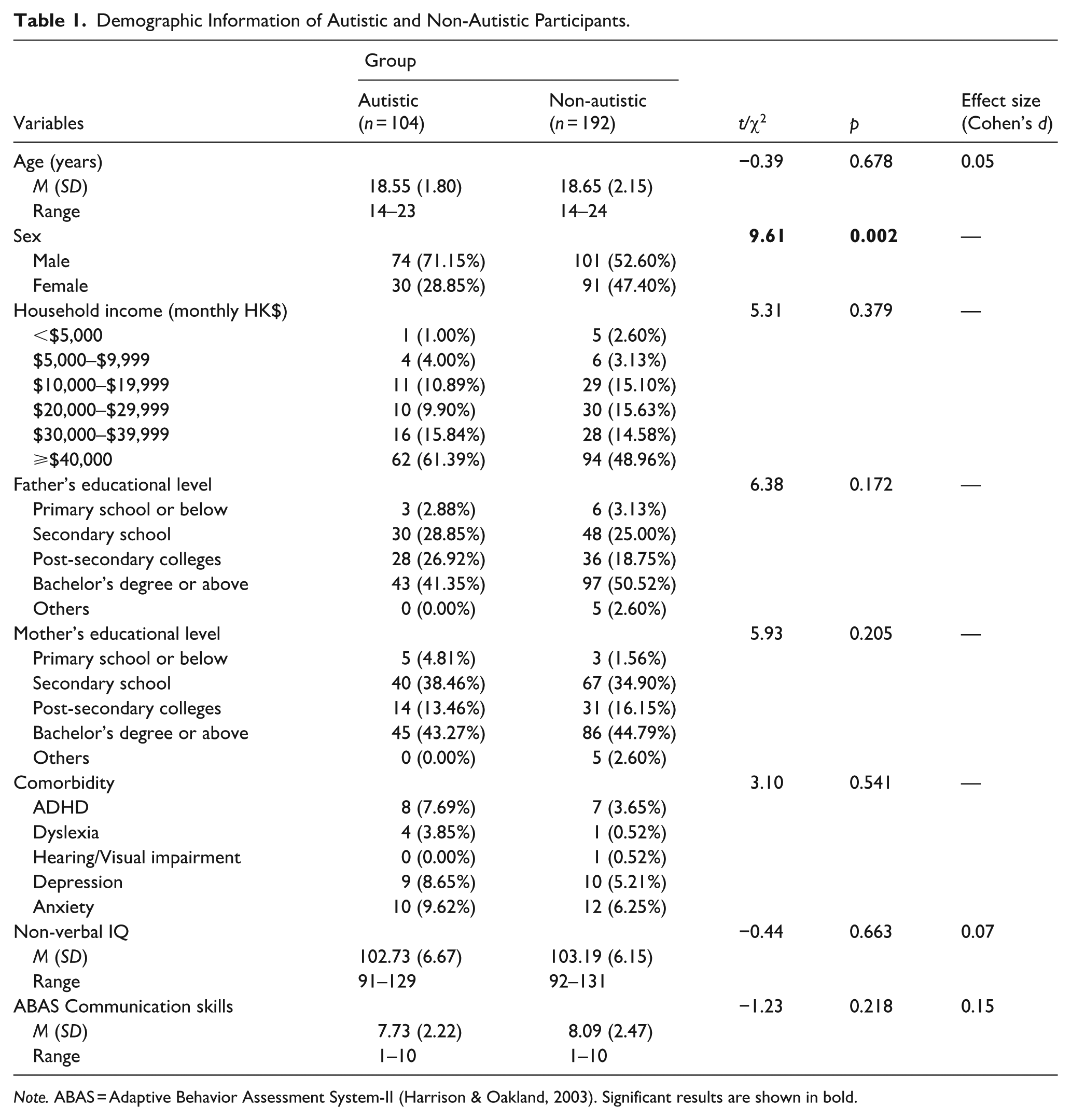
Note. ABAS = Adaptive Behavior Assessment System-II (Harrison & Oakland, 2003). Significant results are shown in bold.
Written consent was obtained from both the participants and their parents/caregivers. Parents/caregivers completed all measures except for the Friendship Motivation Scale (FMS), which was rated by the participants themselves. The DVP task and the CAM task were administered by the first author in a controlled laboratory setting, following standardized procedures to ensure consistency and accuracy in task presentation and response recording.
Measures
Autism Symptom Severity
The AQ (Baron-Cohen et al., 2006) was used to assess autistic traits. It is a 50-item questionnaire scored on a 4-point Likert-type scale, ranging from “definitely agree” to “definitely disagree”. The total score ranges from 0 to 50, with higher scores indicating a greater presence of autistic traits. The internal consistency of the AQ in this sample was excellent, with Cronbach’s alphas of .80 and .81 for the autistic and non-autistic groups, respectively.
Social Motivation Measures
Social Responsiveness Scale
The social motivation subscale of the Social Responsiveness Scale (SRS; Cen et al., 2017; Constantino, 2005) was rated by parents or caregivers to measure the participants’ motivation for engaging in social-interpersonal behaviors. This subscale includes items describing social anxiety, inhibition, and empathic orientation, rated on a 4-point Likert-type questionnaire (1 = “never true” to 4 = “always true”). The subscale raw scores were converted into T-scores, where a higher score indicates more severe social dysfunction (i.e., lower level of social motivation; Constantino, 2005). The internal consistency of the social motivation subscale was high, with Cronbach’s alphas of .91 for both the autistic and non-autistic groups.
Friendship Motivation Scale
The FMS (Richard & Schneider, 2005) is a 4-point Likert-type questionnaire (1 = “not at all like me” to 4 = “exactly like me”) designed to assess four theoretically distinct motivational orientations (i.e., four subscales) related to forming social relationships. These subscales were developed within the framework of Self-Determination Theory (SDT; Deci & Ryan, 1985; Ryan & Deci, 2000) to represent different points along the motivational continuum, ranging from amotivation through more controlled form of regulation (i.e., external regulation), to more autonomous form (i.e., identified regulation), and the most autonomous form (i.e., intrinsic motivation).
The FMS consists of 12 items (3 per subscale) measuring responses to the general question: “Why do you want to have friends?”. Intrinsic motivation items reflect inherently rewarding social engagement (e.g., “For the fun moments that I have with friends”). Identified regulation items involve valuing friendships for personal benefits (e.g., “Because I think having friends is good for me”). External regulation items measure motivation driven by environmental rewards (e.g., “To be invited to parties”). Amotivation items indicate indifference or perceived futility in forming friendships (e.g., “I don’t see why I would want to have friends”).
Each subscale score was calculated by summing the raw scores of its three corresponding items, resulting in a possible range of 3 to 12 for each subscale (higher scores indicate stronger endorsement of that specific motivational orientation). In addition, overall social motivation is indicated by the Self-Determination Index (SDI), calculated using the weighted formula: SDI = (2 × intrinsic) + (1 × identified) − (1 × external) − (2 × amotivation), where higher scores reflect stronger self-determined motivation (Richard & Schneider, 2005). In this study, the SDI was used to compare mean levels of overall self-determined motivation between groups. The FMS demonstrated acceptable internal consistency in this sample, with Cronbach’s alpha coefficients of .78 and .72 for autistic participants and non-autistic participants, respectively.
DVP Task
This task was adapted from the dynamic geometrical images (DGI) versus dynamic social images (DSI) paradigm (Kou et al., 2019; Moore et al., 2018; Pierce et al., 2016) to measure social orientation in participants. Participants were presented with 10 pairs of DSI and DGI in a 60-s movie without audio (Figure 1). This movie featured two rectangular regions of interest of the same size (10.5 cm × 5.8 cm) aligned side by side on a neutral white background. The DSI displayed videos of children or adults dancing, while the DGI contained abstract geometric shapes with randomized color and motion trajectories. The left–right position of DSI and DGI was randomly assigned across participants.
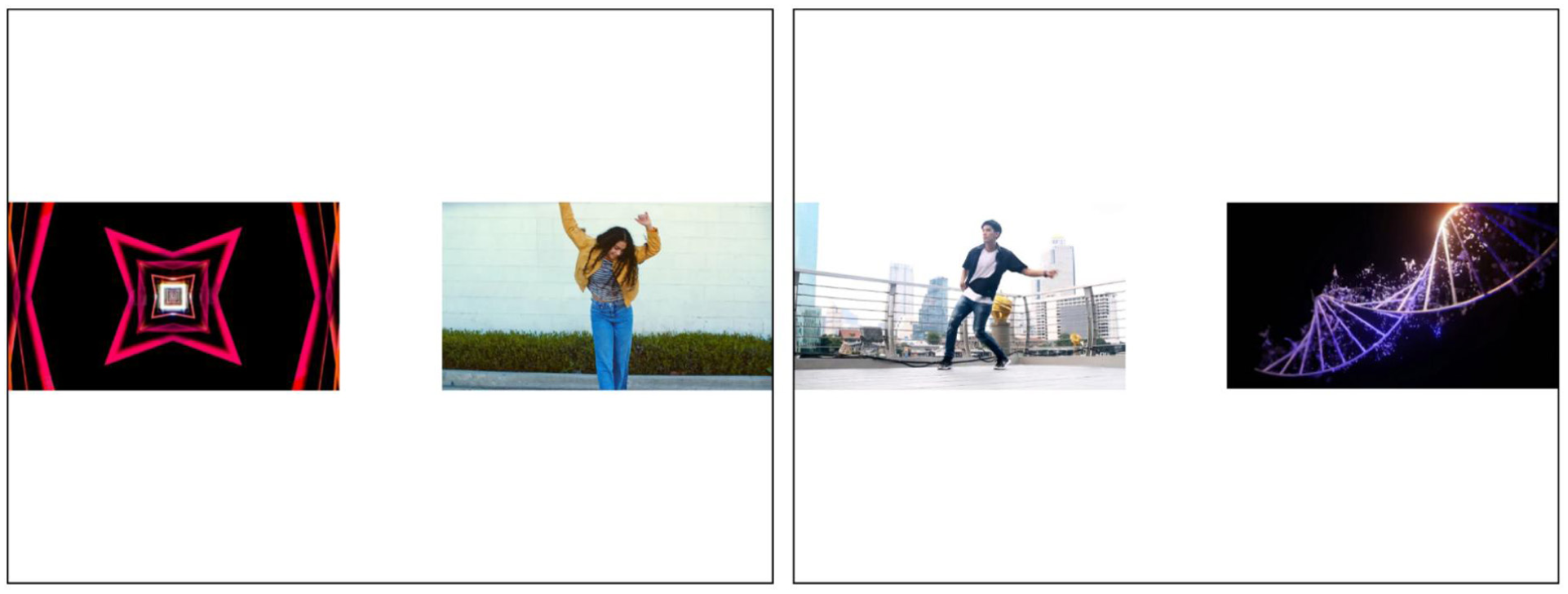
Example of stimuli for the Dynamic Visual Preference task.
Experiments were conducted using SR Experiment Builder with an EyeLink 1000 Plus (SR Research Ltd., Canada) to record participants’ eye movements. All stimuli were presented on a 22-inch CRT monitor with a resolution of 1024 × 768, under a viewing distance of 61 cm. Nine-point calibration and validation were performed before the experiment, and recalibration took place whenever the drift check error exceeded 1° of visual angle. A fixation cross is displayed in the center of the screen for 2 s before the start of the task stimuli. The percentage of time spent fixating within each area of interest (i.e., DGI or DSI) was tabulated for each subject. Fixation counts and durations were collected using EyeLink default settings. The social fixation proportion was calculated as the number of fixations on DSI divided by the total fixations on both DSI and DGI, expressed as a percentage. The social duration proportion was the total fixation time on DSI divided by the total fixation time on both DSI and DGI, presented as a percentage.
CAM Paradigm
The CAM task adapted from Dubey et al. (2015) was used to measure social seeking by assessing participants’ willingness to exert effort to view preferred stimuli. Participants were asked to make instrumental choices between accessing two distinct video categories (social vs. nonsocial) under varying effort costs (Figure 2A). Specifically, participants encountered two visually distinct boxes associated with direct-gaze social videos or object-based nonsocial videos. The mapping of box patterns to social/nonsocial videos was counterbalanced across participants. Each box was secured with one to three virtual locks, necessitating sequential mouse clicks to remove them, with additional locks introducing incremental delays (Dubey et al., 2017). The social stimulus set consisted of 10 videos (3-s duration) featuring smiling people maintaining direct eye contact with the camera, whereas nonsocial stimuli displayed pairs of household objects (3-s duration).
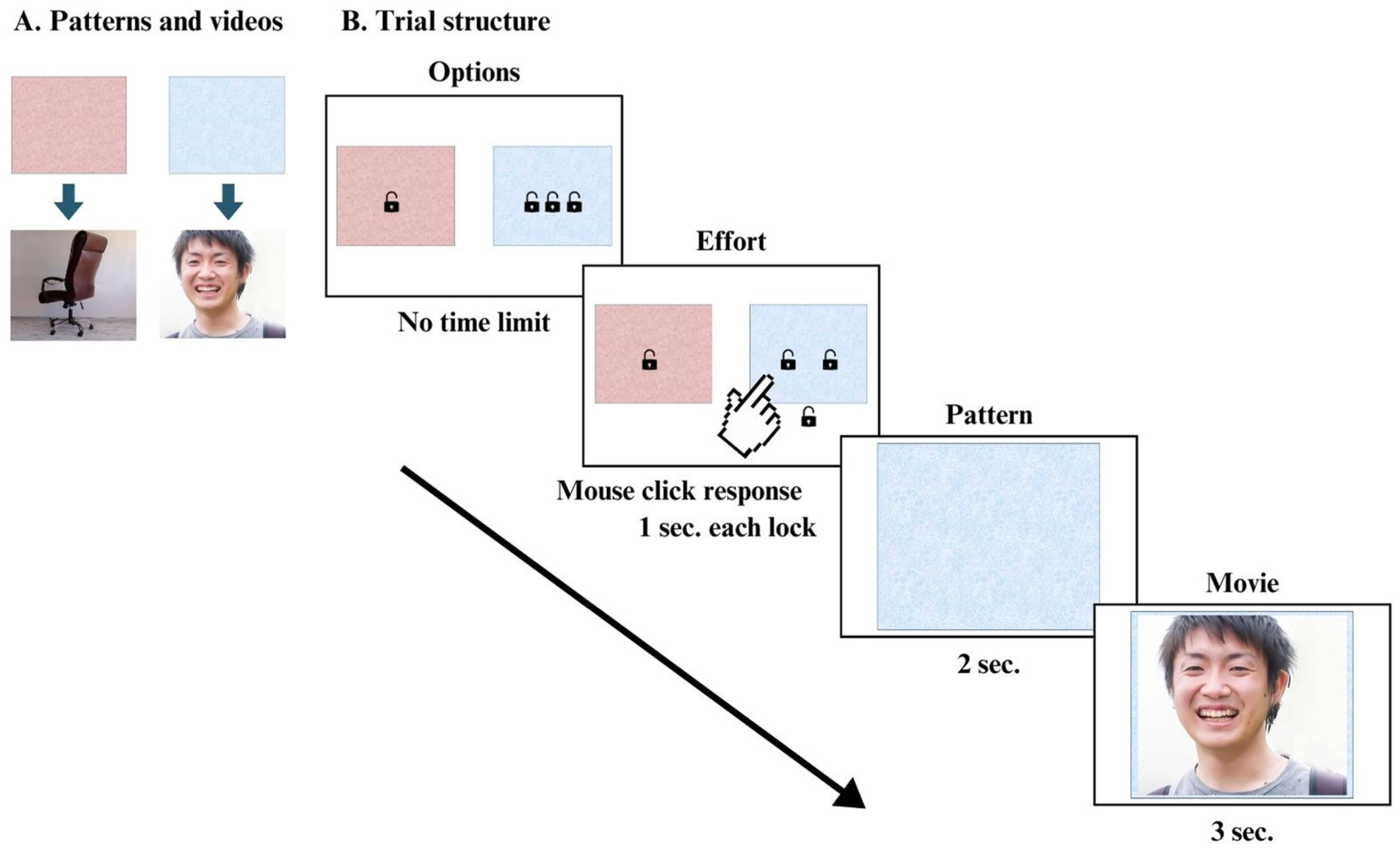
Example of (A) stimuli and patterns and (B) trial structure of the Choose-A-Movie paradigm.
We replicated Dubey et al.’s (2017) CAM paradigm with only one modification: mouse click interaction replaced touchscreen input. Participants were familiarized with the interface, response mechanics, and stimulus categories after 10 practice trials. The subsequent 60-choice trials presented two boxes with unequal (one to three locks) or equal lock configurations (Figure 2B). Specifically, trial types included 24 trials with three versus one locks, 12 trials with two versus one locks, 12 trials with three versus two locks, and 12 trials with equal number of locks. Lock distributions were pseudorandomized with balanced left–right placement. Participants chose one box, clicked to remove all locks, and viewed the corresponding video. Dubey et al.’s (2015, 2017) original CAM paradigm did not include a composite score for social motivation. Here, we introduced the CAM social score to quantify participants’ relative motivation to engage with social versus nonsocial stimuli, after accounting for effort expenditure (see Supplementary Materials for detailed calculation procedures).
Qualitative Measure
This study used open-ended questions embedded within a questionnaire to explore social motivation in autistic individuals qualitatively. This approach was chosen to balance participant comfort with data richness. The questions were developed based on interview questions used and the responses of autistic individuals in existing literature (Calder et al., 2013; Jaswal & Akhtar, 2019; Sedgewick et al., 2016), and the questions were designed to reveal friendship motivation in regular daily situations. The questions included discrete prompts to address: (a) perceived friendship dynamics (“Do you have friends with whom you play or study regularly?”; “What activities do you typically engage in with your friends?”; “How do you feel when interacting with your friends?”); (b) desire for social inclusion (“Do you wish to have more friends to play or study with?”; “When observing groups of peers socializing, do you want to join them?”; “How would you feel if surrounded by many friends during shared activities?”); and (c) conceptualization of friendship (“What does the term ‘friend’ mean to you?”).
Analyses
Descriptive statistics, independent samples t-tests, analysis of covariance (ANCOVA), and correlation analyses were conducted using Jamovi (Version 2.2, The Jamovi Project, 2021). The CAM paradigm data were analyzed using mixed-effects logistic regression model. The dependent variable was the choice (1 = left box selected, 0 = right box selected). Factors included stimulus type (1 = social, 0 = nonsocial on the left), relative effort (difference in locks between boxes: +2, +1, 0, −1, −2), group (1 = autistic, 2 = non-autistic), and intervention between stimulus type and effort. Wald χ² tests evaluated significance of fixed effects, with odds ratios (OR) and 95% confidence intervals (CIs) reported for effect sizes.
Qualitative data derived from open-ended questionnaire responses were analyzed using reflexive thematic analysis (Braun & Clarke, 2006). Transcripts were systematically coded and interpreted through six iterative phases: familiarization with the data, initial coding, theme generation, theme review, theme definition, and report production. The first author and a trained researcher independently reviewed anonymized data to identify descriptive codes, which were clustered into candidate themes through inductive synthesis. Discrepancies in coding were resolved through consensus discussions.
Results
Descriptive Statistics and Group Comparisons
Demographic Characteristics, Communication and Non-Verbal Abilities, and Autistic Symptom Severity
Descriptive statistics of participants’ demographic information and performance in non-verbal IQ and communication skills are presented in Table 1. The autistic and non-autistic groups did not differ in non-verbal IQ, communication skills, and all demographic variables except for the sex ratio, with the autistic group having a higher proportion of males.
Descriptive statistics and comparisons of participants’ autistic symptom severity, parent-reported social motivation, self-reported friendship motivation, social orientation measured by the DVP paradigm, and social seeking measured by the CAM paradigm are presented in Table 2. Participants with autism showed significantly higher AQ total score than those without autism.
Descriptive Statistics (Ms and SDs) and Group Comparisons of Autistic Symptom Severity, Social Motivation, Friendship Motivation, and Performance in the Dynamic Visual Preference Paradigm and Choose-A-Movie Paradigm.
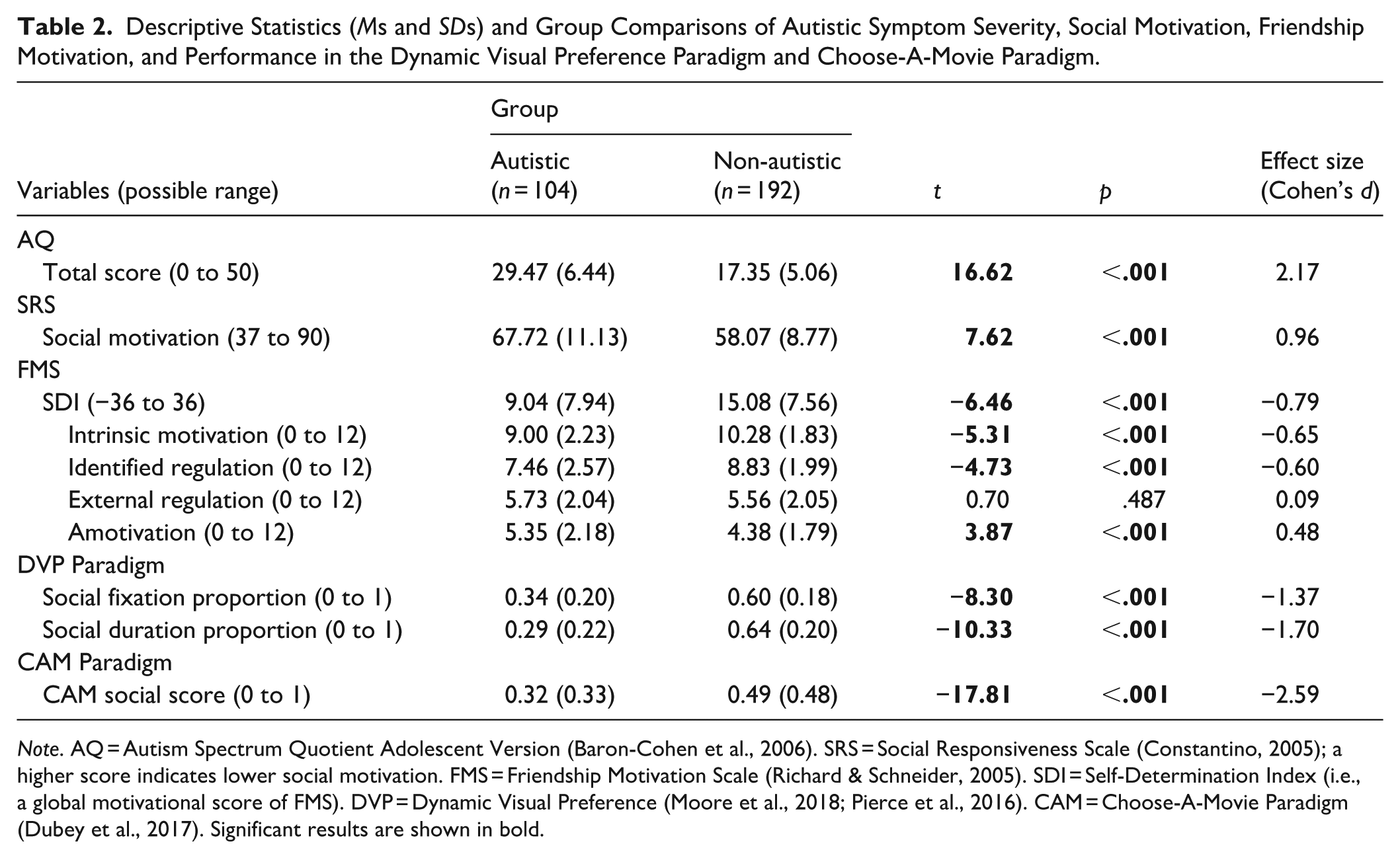
Note. AQ = Autism Spectrum Quotient Adolescent Version (Baron-Cohen et al., 2006). SRS = Social Responsiveness Scale (Constantino, 2005); a higher score indicates lower social motivation. FMS = Friendship Motivation Scale (Richard & Schneider, 2005). SDI = Self-Determination Index (i.e., a global motivational score of FMS). DVP = Dynamic Visual Preference (Moore et al., 2018; Pierce et al., 2016). CAM = Choose-A-Movie Paradigm (Dubey et al., 2017). Significant results are shown in bold.
Parent-Report Social Motivation and Self-Report Friendship Motivation
Regarding social motivation as measured by the SRS, the autistic group had higher T-scores than the non-autistic group (Table 2), indicating more severe social dysfunction and lower social motivation as reported by parents/caregivers. For self-reported friendship motivation measured by the FMS, the autistic group had a significantly lower SDI, with reduced scores in both intrinsic motivation and identified regulation, and higher scores in amotivation (ps < .001). However, there was no significant difference in the mean scores of external regulation between the two groups (Table 2).
Behavioral Performance in the DVP and CAM Paradigms
In the DVP task (Table 2 and Figure 3), autistic participants showed significantly lower proportion of total fixation counts on DSI than the non-autistic group. Similarly, autistic group spent a significantly smaller proportion of total fixation duration on DSI. After controlling for age, these differences in the proportion of fixation counts, F(1, 151) = 68.98, p < .001,
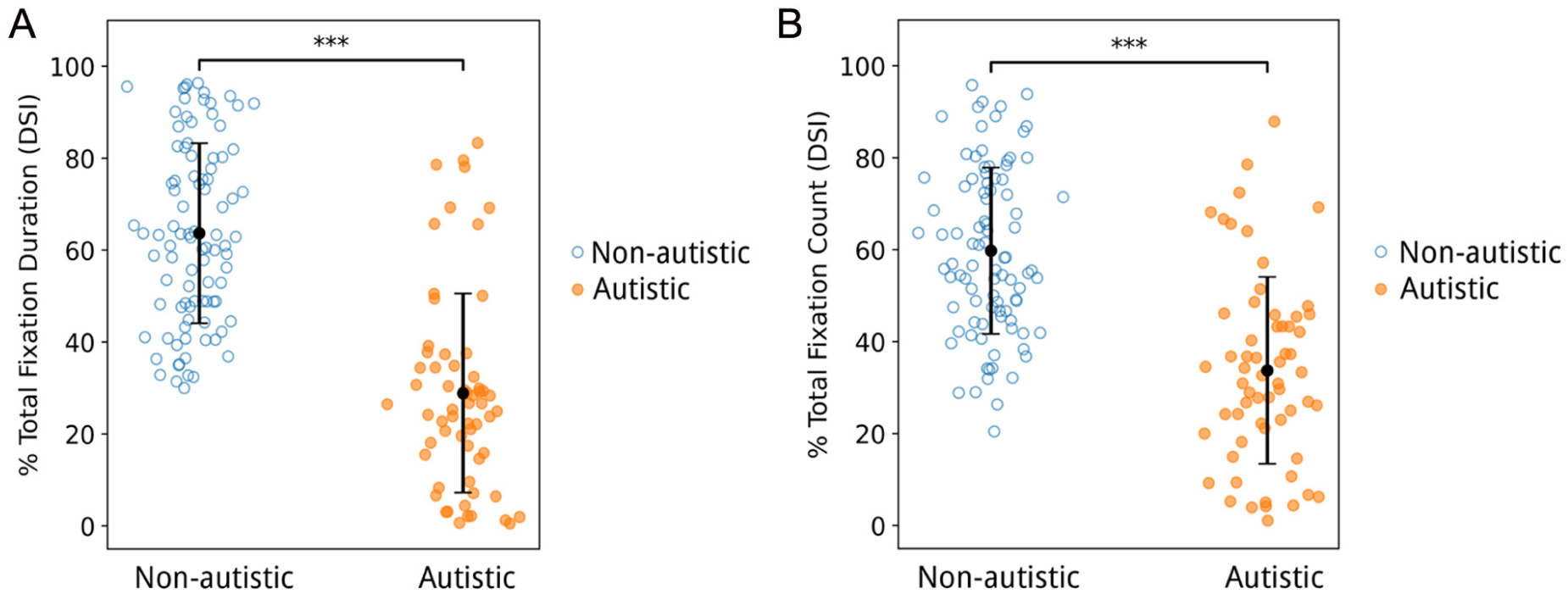
Scatterplots illustrating (A) the proportion of total fixation duration on the dynamic social images (DSI) and (B) the proportion of total fixation count on the DSI in the Dynamic Visual Preference task.
In the CAM task, the percentages of participants’ choice according to stimulus type and effort level are shown in Supplemental Table S1. The CAM social score was significantly lower in the autistic group compared with the non-autistic group (Table 2). To investigate the influence of stimulus type and effort cost on participants’ choices, a mixed model logistic regression analysis was employed. The results of this analysis, including all participants, are detailed in the Supplementary Materials. When analyzing each group separately, distinct patterns emerged (Table 3 and Figure 4). For the autistic group, choices were significantly influenced by both effort (Wald χ² = 132.99, p < .001) and stimulus type (Wald χ² = 149.95, p < .001). As depicted in Figure 4A, the autistic group demonstrated a clear preference for object videos over social videos across different effort levels (OR = 0.53), and for choices that required less effort (OR = 0.74). In contrast, for the non-autistic group, choices were significantly influenced by effort (Wald χ² = 326.80, p < .001) and the interaction effect between effort and stimulus type (Wald χ² = 15.18, p < .001). As shown in Figure 4B, the non-autistic group preferred choices that required less effort (OR = 0.59), but did not exhibit a consistent preference for either object or social stimuli. Instead, their preference for nonsocial stimuli was higher when effort was low, with this pattern reversing on high-effort trials. Finally, age and autistic traits did not significantly affect participants’ choices in the CAM task in either group (Table 3).
Logistic Regression Analyses of Factors Influencing Participants’ Choice in the Choose-A-Movie Paradigm for the Autistic and Non-Autistic Groups.
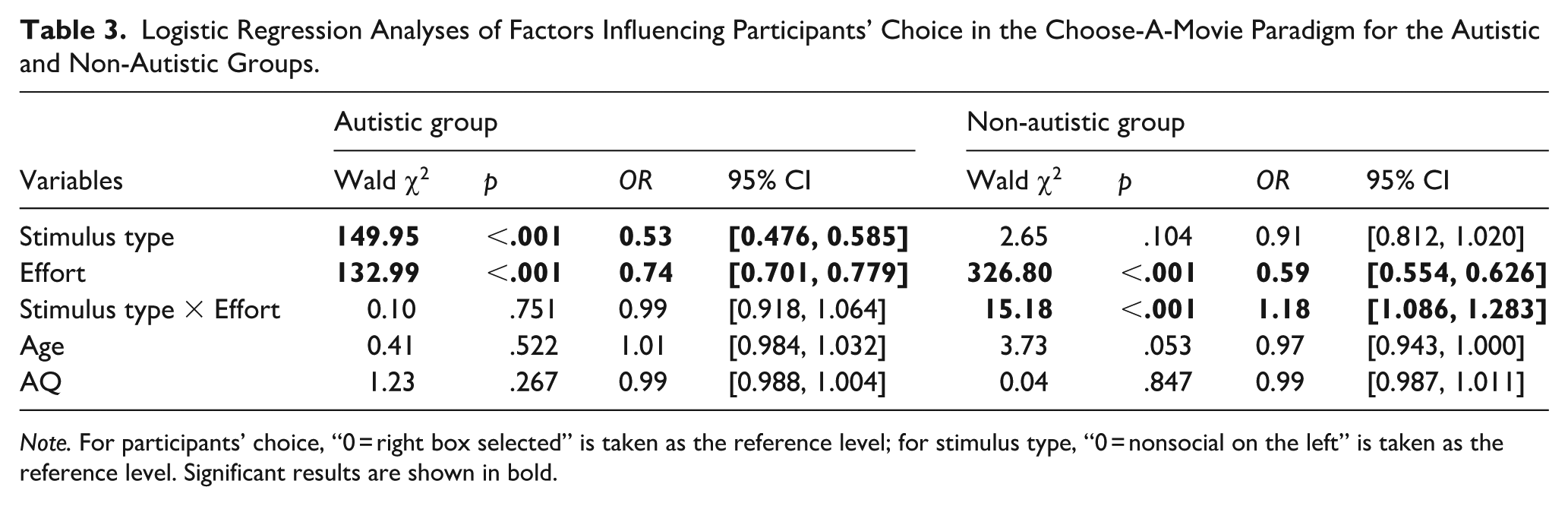
Note. For participants’ choice, “0 = right box selected” is taken as the reference level; for stimulus type, “0 = nonsocial on the left” is taken as the reference level. Significant results are shown in bold.
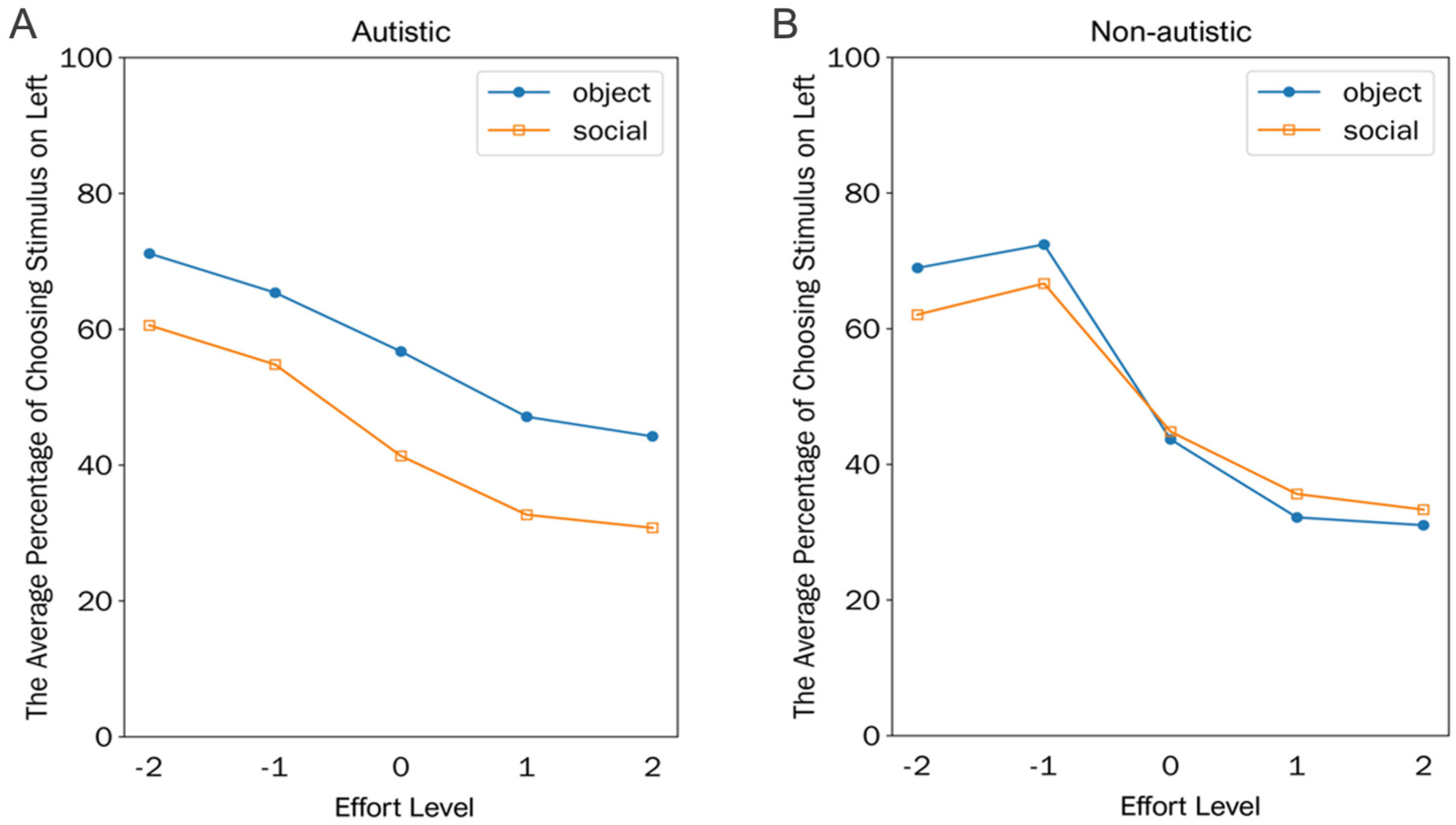
Mean percentage of choices according to effort level and stimulus type for (A) the autistic group and (B) the non-autistic group in the Choose-A-Movie paradigm.
Correlational Analyses
Correlations between age, AQ total score, and various social motivation measures for both groups are presented in Table 4. To control for the risk of Type I errors due to multiple comparisons, Benjamini–Hochberg correction was applied, with correlations having p ⩾ .016 considered non-significant after correction. In both groups, age did not significantly correlate with any social motivation measures (ps ⩾ .057).
Correlations Among Age, Autistic Traits, Parent-Reported Social Motivation, Self-Reported Friendship Motivation, and Performance in the DVP and CAM Paradigms for the Autistic Group (Upper Panel) and Non-Autistic Group (Lower Panel)..
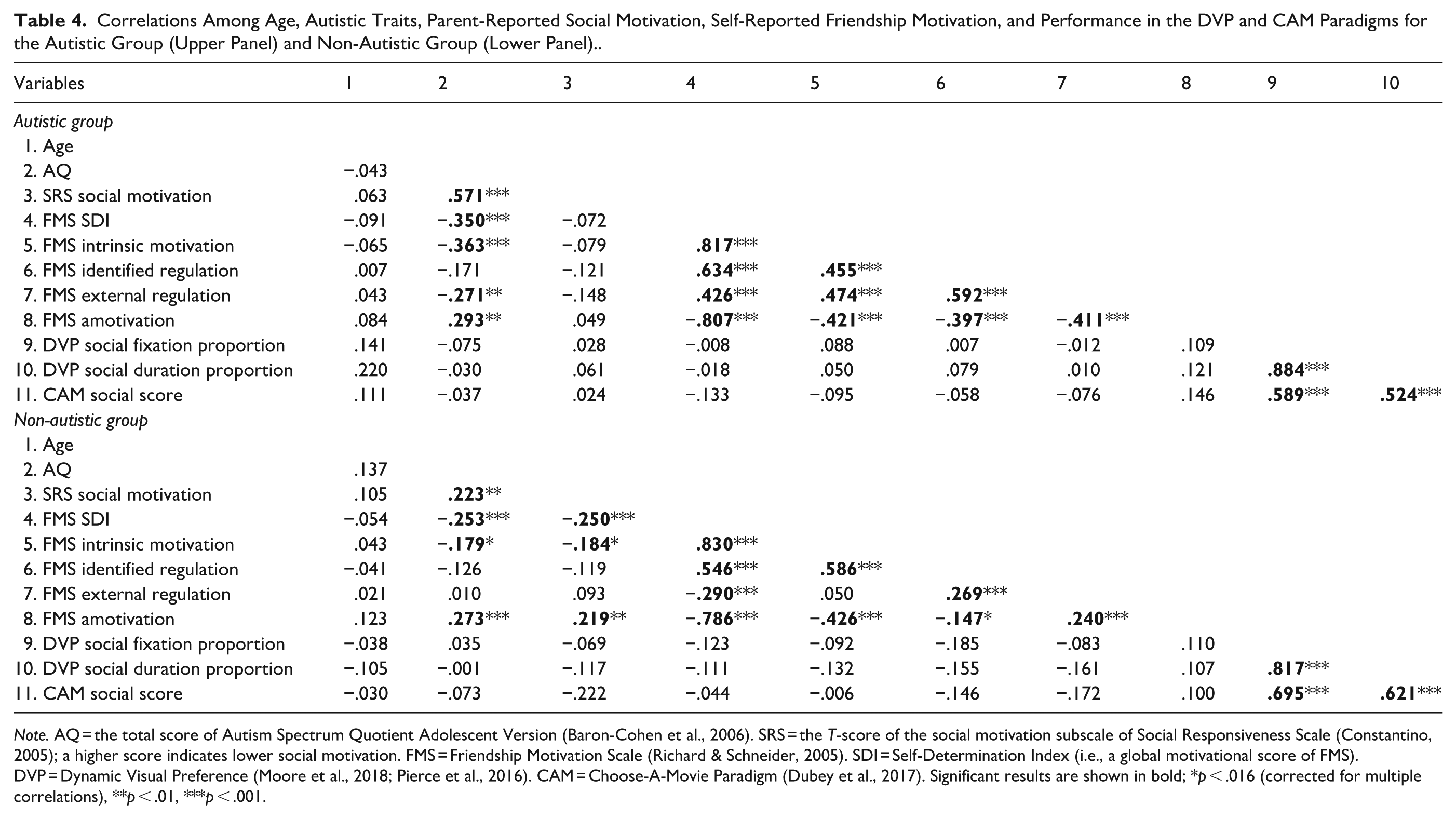
Note. AQ = the total score of Autism Spectrum Quotient Adolescent Version (Baron-Cohen et al., 2006). SRS = the T-score of the social motivation subscale of Social Responsiveness Scale (Constantino, 2005); a higher score indicates lower social motivation. FMS = Friendship Motivation Scale (Richard & Schneider, 2005). SDI = Self-Determination Index (i.e., a global motivational score of FMS). DVP = Dynamic Visual Preference (Moore et al., 2018; Pierce et al., 2016). CAM = Choose-A-Movie Paradigm (Dubey et al., 2017). Significant results are shown in bold; *p < .016 (corrected for multiple correlations), **p < .01, ***p < .001.
Overall, autistic symptom severity showed significant correlations with both parent- and self-reported ratings of social motivation, but not with eye-tracking measures or behavioral performance in the tasks (ps ⩾ .500). Nonetheless, there were notable differences between the two groups. Specifically, higher AQ scores were moderately associated with greater social motivation problems on the SRS in the autistic group (r = 0.57, p < .001) and exhibited only a weak but significant correlation in the non-autistic group (r = 0.22, p = .002). Moreover, more autistic traits were significantly linked to lower overall friendship motivation, reduced intrinsic motivation, and increased amotivation on the FMS in both groups; however, higher AQ scores were also associated with lower external regulation in the autistic group.
Among the various social motivation measures, parent-reported SRS ratings were significantly correlated with self-reported FMS ratings only in the non-autistic group (SDI: r = −.25, p < .001; Intrinsic motivation: r = −.18, p = .011; Amotivation: r = 0.22, p = .002), but not in the autistic group. Conversely, there were no significant correlations between SRS and other social motivation measures in the autistic group (ps ⩾ .039).
Regarding the FMS, aside from their associations with SRS scores in the non-autistic group, the SDI and subscale scores were not significantly correlated with DVP performance or the CAM social score in either the autistic or non-autistic group. Intercorrelations between the FMS subscales revealed differing patterns of association between the two groups. Specifically, in the autistic group, external regulation was positively associated with intrinsic motivation, and identified regulation, and negatively correlated with amotivation. In contrast, in the non-autistic group, external regulation showed non-significant correlation with intrinsic motivation and was positively associated with both identified regulation and amotivation.
Finally, the CAM social score was significantly correlated with DVP task performance in both the autistic (rs > .52, ps < .001) and non-autistic groups (rs > .62, ps < .001).
Qualitative Analyses
The qualitative analyses of responses from 32 participants (demographic information for these participants are presented in Supplemental Table S3) who consented to engage with open-ended questions revealed five main themes related to friendship motivation and experience (Figure 5, also see Supplementary Material and Table S4 for participants’ quotes).
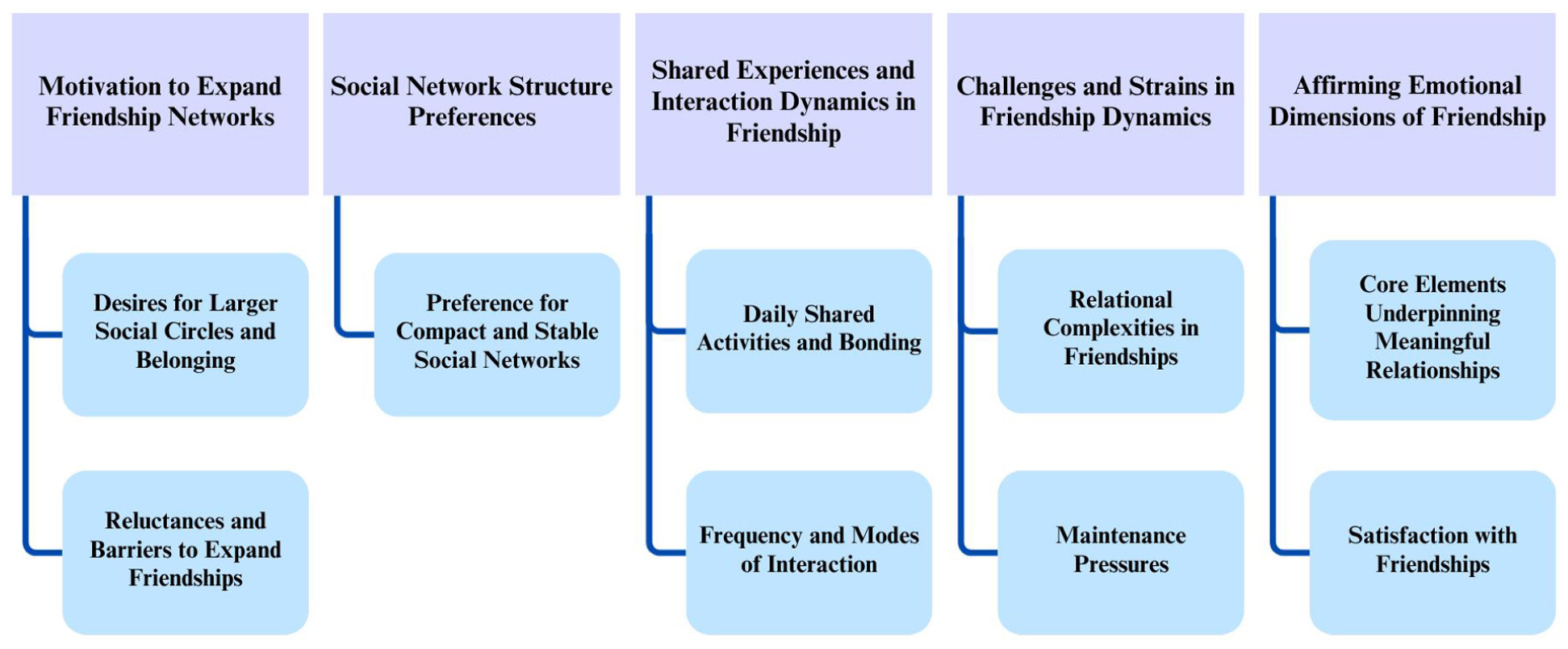
Structure of themes and subthemes from qualitative analyses.
Theme 1: Motivation to Expand Friendship Networks
This theme reveals positive attitudes among participants toward expanding their friendship networks, while facing challenges in making friends. Some participants expressed desires for larger social circles and belonging. However, others revealed reluctances and barriers to expand friendships, and highlighted concerns about the effort and discomfort associated with larger social groups. These contrasting views underscore the complex nature of individuals’ motivations regarding friendship expansion.
Theme 2: Social Network Structure Preferences
This theme delves into individuals’ preferences for the size and stability of social networks. A significant number of participants demonstrated a preference for compact and stable social networks. They value enduring relationships within their limited circle of friends.
Theme 3: Shared Experiences and Interaction Dynamics in Friendship
This theme focuses on the role of daily interactions and shared activities in fostering friendships, as well as the modes of interaction among friends. Participants’ accounts showed that daily shared activities and bonding served as the foundation in building deep and meaningful friendships. Moreover, they also highlighted that sharing life’s moments with friends is a powerful force in maintaining and enriching their friendships. Regarding frequency and modes of interaction, participants shared diverse strategies to stay connected. Others highlighted the importance of consistent interaction in their friendships and emphasized regular meetups as crucial for their friendship maintenance.
Theme 4: Challenges and Strains in Friendship Dynamics
This theme sheds light on the difficulties and pressures individuals encountered in maintaining friendships, encompassing both emotional tensions and practical burdens. Relational complexities in friendships captured the emotional labor of sustaining connections. Participants frequently described the stress of navigating social interactions, even with close friends. These underscored the subtle emotional barriers that can arise in otherwise strong relationships. Maintenance pressures focused on the practical demands of friendship. Participants highlighted the cost of balancing social commitments with personal needs, emphasizing the trade-offs between companionship and self-care. These accounts demonstrate how routine maintenance of friendships can sometimes feel burdensome.
Theme 5: Affirming Emotional Dimensions of Friendship
This central theme reflects the emotional aspects of friendships, including the joy, support, and companionship as well as a sense of belonging and satisfaction experienced in friendships. Participants emphasized the core elements underpinning meaningful relationships. Participants underscored the supportive role of friends, demonstrating the importance of emotional safety and mutual acceptance. Participants also highlighted their satisfaction with friendships. They illustrated how friendships bring them joy, comfort, and a sense of belonging, significantly enhancing individuals’ overall emotional well-being and satisfaction.
Discussion
This study used multiple methods to explore social motivation in individuals with and without autism. Group comparisons on self- and parent-ratings showed that autistic individuals exhibited reduced social motivation, indicated by lower SDI scores on the FMS and higher SRS social motivation scores. The DVP task and CAM paradigm further revealed decreased social orientation and social seeking in the autistic group. Correlation analyses identified both convergent and divergent patterns across measures, as well as similarities and differences between groups in social motivation. In addition, qualitative analyses provided insights into social network preferences and emotional experiences within friendships.
Consistency of Social Motivation Profiles Across Measures
Across measurements, there was consistent evidence of reduced social motivation in autistic participants (aligning with the SMT; Chevallier et al., 2012). Caregivers reported perceiving lower social motivation. Self-rating revealed a lower SDI, driven by reduced intrinsic motivation and increased amotivation. Their identified regulation was also lower, while external regulation did not differ from that of the non-autistic group. Autistic individuals may cognitively understand social norms but lack the emotional reinforcement that drives spontaneous engagement, leading to a performative approach to socializing (Hull et al., 2017). This intact external regulation, despite low intrinsic motivation, may explain “social camouflaging”—where autistic individuals mimic NT social behaviors to meet external expectations, despite internal costs (Hull et al., 2017; Livingston et al., 2019). For example, an individual might understand that having friends is socially desirable but feel minimal intrinsic joy in socializing, leading to superficial or effortful interactions (Cage & Troxell-Whitman, 2019).
The DVP task revealed that autistic individuals displayed a lower proportion of fixation counts and duration toward DSI. This finding aligns with the SMT (Chevallier et al., 2012), which posits that a reduced prioritization of social stimuli underpins core social deficits in autism. This finding converges with extensive eye-tracking research showing atypical social orienting (Kou et al., 2019; Pierce et al., 2016) and diminished attention to social cues such as faces or emotional expressions (Klin et al., 2002; Pierce et al., 2016; Spezio et al., 2007).
The CAM paradigm further demonstrated a preference for nonsocial over social stimuli among autistic individuals, particularly when accessing social stimuli required higher effort, indicating lower social seeking behavior. These align with previous studies and the SMT hypothesis that autistic individuals exhibit reduced motivation to exert effort for social rewards (Dubey et al., 2015, 2017; Stavropoulos & Carver, 2014). In addition, the logistic regressions showed that the interaction between stimuli and effort influenced choices only in non-autistic individuals, suggesting a balance between effort and stimulus acquisition in that group. However, for autistic individuals, the stimulus itself was a significant factor influencing their choices. This indicates that, for autistic individuals, social motivation may be transactional—emerging only in low-demand, interest-aligned contexts—and further suggests that social engagement is more likely to occur when it aligns with individual strengths or preferences (Bauminger et al., 2008; Kasari et al., 2011).
Divergent Interrelationships Between Measures Across Groups
Besides consistent group differences, the correlational patterns diverged between autistic and non-autistic individuals, highlighting distinct motivational mechanisms. In the autistic group, a positive correlation was observed between external regulation and intrinsic motivation, which was non-significant in the non-autistic group. Conversely, a negative correlation existed between external regulation and amotivation—a pattern that was reversed in the non-autistic group. These dissociations suggest that autistic individuals may recognize the instrumental value of social relationships but lack the inherent pleasure or drive to initiate or maintain them. They may link external regulation (i.e., instrumental reasons for friendship) to intrinsic enjoyment rather than indifference (Deci & Ryan, 1985; Richard & Schneider, 2005), serving as a pragmatic adaptation to bridge the gap between social utility recognition and inherently rewarding social engagement. This aligns with some qualitative studies where autistic individuals describe valuing friendship in theory but feeling no natural motivation to seek them (Chevallier et al., 2012), or relying on external cues to navigate interactions while struggling to engage due to social norms or sensory overload (Calder et al., 2013; Sedgewick et al., 2016). In contrast, non-autistic individuals may experience external social expectations and peer norms as a source of strain, which conflicts with their intrinsic need for autonomy (Richard & Schneider, 2005; Ryan & Deci, 2000), thereby increasing feelings of futility and reducing desire for authentic connection (Ryan & Deci, 2006; Vansteenkiste et al., 2009).
The negative correlation between AQ scores and intrinsic motivation further indicates that stronger autistic traits are associated with diminished inherent reward from social interactions, consistent with self-report data showing reduced enjoyment in social situations (Barbaro & Dissanayake, 2007; Izuma et al., 2011).
Notably, in both groups, correlations between autistic traits and DSI fixation/duration or CAM choices were insignificant. This suggests that reduced social orientation and social seeking are more likely to be group-level markers rather than continuous traits across the spectrum. Such findings support the idea of a foundational motivational deficit that transcends individual variation in trait expression (Freeth et al., 2010; Jones & Klin, 2013).
Moreover, the absence of significant correlations between age and DVP fixation patterns, along with the lack of age effects on CAM choices, suggests that reduced social orientation and social seeking may become stable traits among adolescents and young adults. This stability supports the SMT hypothesis of early-emerging, fundamental differences in social motivation that persist into adulthood, potentially disrupting the development of social skills and shaping lifelong social behavior (Chawarska et al., 2013; Marrus et al., 2022). However, social motivation in childhood may still be dynamic, with ongoing maturation of social awareness, social cognition, and responsiveness to social cues (Mundy, 2018; Soto-Icaza et al., 2015) potentially leading to developmental shifts not captured here. In addition, autistic older adults may show different patterns of social seeking, influenced by age-related changes in social opportunities, daily social contexts, and longer-term experiences of social interactions (Tse et al., 2022; van Dijk et al., 2024), factors not represented in our sample. These potential age-related variations warrant further longitudinal investigation across broader developmental stages to fully characterize the stability and malleability of social motivation in autism.
Besides that, in both groups, DVP social duration and fixation were strongly correlated with CAM social scores, indicating a shared mechanistic link between implicit attention to social stimuli and explicit effort for social rewards (Bottini, 2018; Pierce et al., 2011).
The significant correlation between the AQ and SRS scores not only highlights convergent validity but also raises concerns about observer bias. Notably, the lack of correlation between parent-reported SRS and self-reported FMS was observed only within the autistic group, further revealing discrepancies in perceptions and understanding of social motivation between parents and participants themselves (Dawson et al., 2022; Jaswal & Akhtar, 2019; Neuhaus et al., 2021).
Self-reported social motivation reflects subjective experiences, including internal desires for social connection, perceived rewards from social interactions, and personal reasons for pursuing friendships (Elias & White, 2020; Neuhaus et al., 2024). In contrast, caregiver-reported social motivation captures observable social behaviors, such as the frequency of initiation, duration of social engagement, and consistency of social responsiveness across daily contexts (Neuhaus et al., 2021; Stratis & Lecavalier, 2015). For autistic individuals, their internal social desires may not always correspond directly to externally observed social behaviors. Moreover, reduced social engagement may stem from barriers such as sensory overload, social anxiety, or communication differences (van Dijk et al., 2024). This is exemplified in our qualitative findings, where participants expressed longing for friendships but avoided overwhelming social contexts due to sensory or anxiety-related barriers.
These two report types are complementary, together providing a comprehensive characterization of social motivation. However, a contextual variable that warrants consideration when interpreting these informant discrepancies is the absence of systematic data on participants’ residential status (e.g., living with parents, independent living, or semi-independent living such as campus accommodation). Residential status can influence the scope and frequency of caregivers’ observations, especially when caregivers’ exposure is restricted to specific social contexts that may not reflect the participant’s primary social environments (e.g., school, workplace). Future research should consider incorporating residential status as a contextual moderator to refine the interpretation of multi-informant data on social motivation in autism.
Qualitative Nuances: Context-Dependent Motivations and Relational Challenges
The five thematic categories derived from open-ended responses—friendship expansion motivation, social network preferences, unique interaction modes, relational pressure and challenges, and positive emotional aspects of friendship—reveal a dynamic, context-sensitive model of social motivation. First, participants expressed a longing for friendships and described the emotional richness they derived from them, such as comfort, joy, and a sense of belonging. These accounts counter the SMTs proposition, revealing that many autistic individuals experience genuine social desire and reward from meaningful connections.
However, the preference for compact, stable social networks and shared activities as a foundation for friendship echoes prior findings of fewer high-quality friendships in autism (Bauminger et al., 2008; Kasari et al., 2011). These patterns may reflect a preference for predictable environments where social cues are embedded within familiar contexts, possibly serving as an adaptive strategy to mitigate the overwhelm associated with social interactions (Dichter et al., 2012; van Dijk et al., 2024).
The theme of relational complexities and maintenance pressures highlights the hidden costs of social interaction, and further illustrates the divergence between self-ratings of amotivation and qualitative accounts of social desire. For example, many participants not only valued friendship but also described anxiety related to sustaining conversations, miscommunication during NT–autistic interactions, and navigating unspoken NT norms. This suggests a mutual misunderstanding between NT and autistic individuals that can erode interaction quality, or a mismatch between autistic information processing and societal expectations (Mitchell et al., 2021). Motivation, therefore, may not be a static trait but an interplay between individual needs, environmental demands, and emotional resources (Jaswal & Akhtar, 2019), challenging the SMT’s notion of a unitary framework.
The qualitative accounts further reveal that social disengagement in autism is not uniformly driven by amotivation. For some individuals, withdrawal stems from fear of anxiety rooted in past miscommunication or unmet normative expectations, whereas for others, it reflects a lack of intrinsic reward from social interactions (Chetcuti et al., 2025; Dichter et al., 2012; Tanaka & Sung, 2016). This challenges the SMT’s assumption of a uniform deficit, highlighting individual differences in how motivation is experienced and expressed.
Moreover, context-dependent motivation emerges as a critical factor, as social reward for autistic individuals often depends on environmental predictability, low sensory demands, or alignment with shared interests (van Dijk et al., 2024; Yu et al., 2023). This aligns with the double empathy approach (Milton, 2012), which posits that social barriers arise not solely from autistic “deficits” but from mutual misunderstandings between autistic and NT individuals (e.g., divergent perceptual styles, communication norms, and social expectations; Mitchell et al., 2021). In contrast, autistic–autistic interactions often involve smoother engagement and greater social reward, rooted in shared preferences for these same contextual factors (Crompton et al., 2020). Notably, the factors shaping communication and social dynamics in autistic-autistic interactions warrant further investigation, as variability may also exist due to individual differences in social motivation or sensory needs (Crompton et al., 2020; Gillespie-Smith et al., 2024).
Our qualitative findings echo this complexity, suggesting that shared contextual needs (e.g., low sensory overload, common interests) may serve as a foundation for meaningful social connections among autistic peers, even though these preferences vary across individuals. This underscores the risk of misinterpreting behavior through a non-autistic lens and emphasizes the importance of context-sensitive assessment (Elias & White, 2020; Jaswal & Akhtar, 2019). Consequently, issues related to social motivation in autism should not be viewed as a “deficit” to be eradicated, but rather as a set of nuanced preferences that require understanding and support.
Implications and Future Directions
This study offers a comprehensive investigation of social motivation in autism through a mixed-methods design, revealing group-level diminishment in social orientation and seeking, and individual heterogeneity in motivational expression. While the quantitative findings align with the SMT by demonstrating reduced implicit and explicit social engagement in autism, qualitative insights highlight that social disengagement often stems from contextual challenges rather than uniform amotivation. These findings challenge the universal applicability of the SMT, emphasizing the need to acknowledge context-dependent motivation and the adaptive strategies employed by autistic individuals.
The results also underscore the importance of assessments that differentiate between intrinsic motivational differences and environmental or cognitive barriers, and suggest that interventions should prioritize supporting authentic social expressions rather than simply enforcing NT norms (Yu et al., 2023). For example, interventions can prioritize low-demand, interest-aligned structured activities that reduce the cognitive and sensory overload associated with unstructured peer interactions (Jaswal & Akhtar, 2019; Ke et al., 2018). Interventions should also address contextual barriers by providing explicit support for sensory and anxiety-related challenges (e.g., access to quiet spaces, advance information about social expectations, and clear, concrete social norms), even for individuals who report a strong desire for friendship (Dawson et al., 2022; van Dijk et al., 2024). Finally, enhancing reciprocal understanding in cross-neurotype interactions is crucial. Brief education for non-autistic peers, caregivers, and educators about autistic communication styles and sensory needs may help alleviate the double empathy problem and foster more rewarding social experiences that reinforce social motivation (Crompton et al., 2020; Mitchell et al., 2021).
For motivation rated by participants, our operationalization of controlled motivation was restricted to external regulation, consistent with the original FMS design (Richard & Schneider, 2005). However, the FMS did not encompass introjected regulation (i.e., motivation driven by internalized social approval or guilt; Ryan & Deci, 2000) due to challenges in reliable measurement with adolescent samples (Richard & Schneider, 2005). Future research could incorporate introjected regulation to provide a more comprehensive account of controlled motivation in autistic and non-autistic adolescents and young adults. This would help capture nuanced motivational dynamics in friendships, such as navigating feelings of embarrassment from lacking close connections, or vulnerability to persuasion and peer pressure (Koestner & Losier, 2002; Richard & Schneider, 2005).
In this study, the absence of age effects on DVP and CAM tasks suggests that reduced social orientation and seeking are early-emerging, stable traits (Chawarska et al., 2013; Marrus et al., 2022). However, previous qualitative research indicates developmental nuances: autistic adolescents describe evolving preferences, such as transitioning from childhood avoidance to adulthood efforts at camouflaging (Jaswal & Akhtar, 2019). In addition, developmental trajectories may diverge: some individuals with low motivation may experience cumulative deficits in social skills, whereas those with high motivation may compensate through cognitive strategies (Livingston et al., 2019). However, the cross-sectional nature of this study hinders insights into these developmental processes. Future research should aim to track how motivational profiles evolve over time, linking early behavioral markers to long-term social outcomes like friendship quality and loneliness (Chawarska et al., 2013; Marrus et al., 2022).
In conclusion, this mixed-methods study advances understanding of social motivation in autism by highlighting its complexity, including group-level diminishments in social motivation that coexist with individual heterogeneity and context-dependent expression. These findings refine the SMT by emphasizing that social disengagement is not simply a uniform lack of motivation and underscore the need for tailored assessments and interventions. Future research addressing measurement gaps (e.g., introjected regulation) and adopting longitudinal designs will further unpack the developmental dynamics of social motivation and inform more effective support for the social well-being of autistic individuals.
Supplemental Material
sj-docx-1-aut-10.1177_13623613261445631 – Supplemental material for Social Motivation in Autism Spectrum Disorder: A Mixed-Methods Exploration Using Eye-Tracking, Behavioral Tasks, Self- and Parent-Reports, and Qualitative Insights
Supplemental material, sj-docx-1-aut-10.1177_13623613261445631 for Social Motivation in Autism Spectrum Disorder: A Mixed-Methods Exploration Using Eye-Tracking, Behavioral Tasks, Self- and Parent-Reports, and Qualitative Insights by Jiaxi Li and Kathy Kar-man Shum in Autism
Footnotes

Ethical Considerations
The study is approved by the Human Research Ethics Committee (HREC) at the authors’ affiliated university (EA220194).
Author Contributions
Funding
The authors received no financial support for the research, authorship, and/or publication of this article.
Declaration of Conflicting Interests
The authors declared no potential conflicts of interest with respect to the research, authorship, and/or publication of this article.
Data Availability Statement
The data that support the findings of this study are available from the corresponding author, K.K.M.S., upon reasonable request.
Supplemental Material
Supplemental material for this article is available online.
References
Supplementary Material
Please find the following supplemental material available below.
For Open Access articles published under a Creative Commons License, all supplemental material carries the same license as the article it is associated with.
For non-Open Access articles published, all supplemental material carries a non-exclusive license, and permission requests for re-use of supplemental material or any part of supplemental material shall be sent directly to the copyright owner as specified in the copyright notice associated with the article.
