







Abstract
The aim of this article is to interrogate the pervasive dichotomization of ‘conventional’ and ‘alternative’ therapies in popular, academic and medical literature. Specifically, I rethink the concepts such as holism, vitalism, spirituality, natural healing and individual responsibility for health care as taken-for-granted alternative ideologies. I explore how these ideologies are not necessarily ‘alternative’, but integral to the practice of clinical medicine as well as socially and culturally dominant values, norms and practices related to health and health care in Canada and elsewhere. These reflections address both theoretical and applied concerns central to the study of integration of different medical practices in western industrialized nations such as Canada. Overall, in examining homologies present in both biomedicine and complementary/alternative medicine (CAM), this article rethinks major social practices against binary oppositions by illustrating through literature review that the biomedical and CAM models may be homologous in their original inceptions and in recent cross-fertilizations towards a rigorous approach in medicine. By highlighting biomedicine and CAM as homologous symbolic systems, this article also sheds light on the potential for enhancing dialogue between diverse perspectives to facilitate an integrative health care system that meets multiple consumer needs.
Introduction
The explosion of interest in, and the concomitant use of complementary and alternative medicine (CAM) in Canada and elsewhere have been widely documented. As well, definitions that shed light on the breadth of alternative therapies and providers have been extensively proposed. One of the earliest definitions was proffered by Eisenberg et al. (1993: 246) who defined alternative therapies as the ‘medical interventions not taught widely at US medical schools, or generally available in US hospitals’. Understandably, many scholars found this definition to be culturally bound, despite its presumed cultural universality. In 1997, a National Institutes of Health panel proposed a residual definition that CAM entails ‘health systems, modalities, practices and their accompanying theories and beliefs that are not intrinsic to the politically dominant health system of a particular society or culture in a given historical period’ (OAM, 1997: 50). This more encompassing, yet culturally constructed definition, defines CAM in terms of medical practices that are not presently accepted as part of orthodox, state-regulated health care. According to many CAM analysts, CAM 1 covers an extensive array of practices, approaches and philosophies, many without common linkages (Ernst, 1997; McGuire, 2002; Pizzorno, 2002; Sugarman and Burk, 1998). Through a selected review of literature (Achilles et al., 1999; Ernst, 1997; Eskinazi, 1998; Fulder, 1998; Kelner and Wellman, 1997, 2000; Patel, 1998; Verhoef and LaValley, 1995), the dichotomization between ‘conventional’ and ‘alternative’ therapies is apparent, in which ideologies such as holism, vitalism, spirituality, natural healing and individual responsibility for health care are claimed as unique to CAM.
Recently, the increasing consumer use of CAM in western nations in combination with biomedicine, has garnered intense scholarly attention to the meanings and extent of CAM integration with mainstream health care. Many scholars have attributed this CAM integration to several ideological and pragmatic factors. Ideological factors involve a search for more satisfactory alternatives including the pursuit of holism, vitalism, spirituality, natural healing and individual responsibility for health care to counter the limitations of the biomedical model (Kelner and Wellman, 1997, 2000; Miles, 1998; Pawluch et al., 2000; Sharma, 2000). In turn, pragmatic factors include reduced tolerance for paternalism underlying impersonal doctor–patient interactions that lead to poor communication, concerns about undesirable side-effects of more potent conventional treatments, unsuccessful conventional treatments of chronic ailments and perceived higher effectiveness of CAM therapies (Cohen and Doner, 1998; Hare, 1993; Scheid, 2002; Standish et al., 2002).
This article seeks to re-evaluate the usefulness of ideologies that are often perceived to be specific to CAM. I interrogate concepts such as holism, vitalism, spirituality, natural healing and individual responsibility for health care as taken-for-granted alternative ideologies in many CAM analyses. Alternative ideologies is a term specifically used by Kelner and Wellman (1997, 2000), to denote the above cited features of CAM in contrast to biomedicine. Kelner and Wellman’s work is highlighted here because it represents widely accepted expert knowledge on CAM that continues to inform academic, community and Canadian policy arenas. In order to question these widely held claims of truth, I situate my analysis within an ‘integrated sociological paradigm’ (Ritzer, 2011) to examine critically biomedical and CAM boundaries against binary oppositions.
An integrated sociological paradigm approaches all micro and macro social phenomena in terms of a continuum entailing dialectical interrelationships between material realities (e.g. society, bureaucracy, technology, law) and non-material processes (e.g. beliefs, values, norms, perceptions) (Ritzer, 2011: 502–504). Using this theoretical lens, I contend that the so-called alternative ideologies are integral aspects of biomedicine as well as socially and culturally dominant values, norms and practices related to health and health care in Canada and elsewhere. In my ensuing analysis, I use the term ideologies not in the classical Marxist sense of ‘false consciousness’ associated with a misleading system of thought aimed to justify class inequalities and the social order (Marx and Engels, 2004), but as symbolic systems encompassing overt and covert beliefs and practices in wider society (Frankenberg, 1980: 198).
Thus, the main goal of this article is to demonstrate biomedicine and CAM as homologous symbolic systems, operating in a continuum of overlapping and diverse constructions of holism, vitalism, spirituality, natural healing and individual responsibility, which are inherent in the traditions of both modalities of care, and/or derive from their cross-fertilizations in the pursuit of social legitimacy. Understandably, the widely used dichotomy between biomedicine and CAM reflects the tendency of western thought to rely on binary oppositions to describe social reality, and invariably, this binary philosophy in western thinking has a major effect in how CAM practices are often perceived and assessed in terms of their scientific validity or lack thereof.
Methods
My qualitative approach to data collection (2003–2011) comprised two components: (1) textual data derived from archival research; and (2) narrative data based on informal participant-observation of conference presentations on CAM held in Canada and the USA. This article is primarily based on textual data collected from background readings of interdisciplinary sources selected from the Social Sciences Index, Sociological Abstracts and Medline to frame an ongoing ethnographic study of biomedical and traditional Chinese medical practitioners’ constructions of evidence of safety and effectiveness standards in Canada. For the purposes of this article, I focus on a discourse analysis of dichotomous boundaries between CAM and biomedicine arising in the textual and narrative data. Drawing on Foucault (1980), I understand discourse as a composite of ideas, actions, beliefs and attitudes that systematically relate and construct the worlds and the subjects about which they speak. My discourse analysis is informed by postmodernist theory acting as ‘an oppositional epistemology’, that is, a strategy for questioning claims of truth advanced by any given perspective (Ritzer, 2011: 485). My overall goal was to call attention to interesting dynamics or ‘dialectical interrelationships’ (Ritzer, 2011: 503) between biomedicine and CAM that suggest a more complex picture than portrayed by many CAM and biomedical analysts. By focusing on biomedical and CAM homologies, my article contributes theoretically to a larger debate about fostering an open dialogue between diverse perspectives to facilitate an integrative health care system that meets multiple consumer needs, including reflecting upon the implications of a broader conceptual framework for evaluating evidence bases of multiple health modalities beyond the scope of bio-scientific standards.
Overall, this article poses questions for further empirical research on practitioners’ own interpretations of the key features of CAM and biomedicine, and it does not purport to produce applied knowledge of how biomedical and CAM practitioners conduct their respective work. Producing such contextual knowledge is doubtlessly invaluable and it is my projected goal in my ongoing ethnographic study. At present, the question whether biomedical and CAM practitioners actually practice holism, vitalism, spirituality, natural healing and individual responsibility or say they do is beyond the purview of this article. However, I must also emphasize that saying and doing should not be viewed as polar opposites. I have argued elsewhere that the verbalization of an intent to do something may function to validate an incipient action (Ning, 2005). As Wittgenstein (1963) has noted, there is no human agreement about what is true and false, only about what human beings say is true and false. Hence, the actual doing is a separate issue.
Since research for this article involved a major theoretical component, ultimately, the theorizing and interpretive commentary that I produce are my responsibility. I am aware of potential limitations that can arise when the researcher incurs her own theoretical assumptions on the data. Writing of this nature presents the inevitable dilemma of how to ensure that diverse perspectives are accurately reflected in the work. In declaring that I am responsible for the theory and interpretations that appear here, I do not mean to assume full credit for all the theorizing and identification of issues that went into this work. The issues raised in this article originate largely from my engagement with existing literature, and conference presentations I have attended over the years, not from assumptions held prior to the initiation of my research. Thus, the homologies discussed in the following sections are key in unlocking binary oppositions and central issues in CAM and biomedicine. This should not obscure, however, my role in ultimately selecting and arranging these homologies to follow the logic of my argument.
Finally, while I am responsible for the presentation of the homologies, my purpose is not to advocate on behalf of the views of CAM or biomedicine. Nor does the choice of homologies reflect an attempt to represent the ‘totality’ of the CAM and biomedical realms. I do not claim, nor do I think it is possible to grasp the totality of meaning within different cultural systems. Rather, by presenting homologies between CAM and biomedicine, I seek to highlight the complexity of interrelationships between various symbolic systems involved in the delivery of health care. Interestingly enough, to articulate these interrelationships raises a paradox which is embedded in the very process of writing. The need to present clear arguments for an audience traps us in an inescapable linearity for the sake of clarity. In other words, I will present in a sequential order, the ideological bases for the interrelated homologies between CAM and biomedicine.
Rethinking dichotomies between biomedicine and CAM
Anthropologists have long noted that medical pluralism – the co-existence of popular, folk and professional health care sectors – is an ongoing reality in any society (Feierman and Janzen, 1992; Kleinman, 1980; Whitaker, 2003). While CAM is not necessarily the western equivalent of ‘traditional’ ethnomedicine or ‘folk’ healing often described in many non-western contexts, situating CAM within the features of medical pluralism points to the wider issue that the integration of many unorthodox and unregulated therapies with conventional health care has already been in place at different levels worldwide. At an informal level, integration is visible in the diversity of health beliefs and practices within and across different societies – as part of the cultural traditions of certain groups, personal choice or affordability – regardless of the dominant form of health care. For example, many so-called traditional health care modalities such as Aboriginal healing are an integral part of the identities and customs of particular Aboriginal groups. As such, they constitute ‘conventional’ rather than ‘alternative’ forms of care for these individuals. Although ‘conventional medicine’ is widely used in both popular and academic literature to distinguish from other unorthodox or unregulated therapies, ‘biomedicine’ 2 – the biologically oriented medicine that is the dominant modality of health care in western industrialized nations, and increasingly the world over – is a more accurate term of reference.
At a formal level, different levels of integration of CAM modalities with biomedical care are also apparent worldwide, which clearly illustrates Frankenberg’s (1980: 198) notion of medical pluralism as a feature of class divided societies. In other words, the differential access and control of various forms of health care depends on the amount of symbolic and material capital upheld by different segments of the population. To this effect, in societies where the distinctions between ‘conventional’ and ‘alternative’ perspectives are different politically, socio-culturally and medically, the universal transferability of western discourses on CAM is disputable. For example, Traditional Chinese Medicine (TCM) 3 and East Indian Ayurvedic Medicine have long co-existed with biomedicine in the provision of mainstream health care, in their respective countries of origin. 4 Even in western countries like Italy, Germany, France and England, where biomedicine is the dominant modality of health care, it is not ideologically bound against other health traditions such as humoralism and homeopathy (Hogle, 1999; Payer, 1990; Whitaker, 2003).
Aside other nations where the distinctions between ‘conventional’ and ‘alternative’ health care are quite blurred, many so-called conventional practitioners in North America such as nurses, pharmacists, family physicians, physiotherapists and psychiatrists have also integrated CAM therapies like acupuncture, acupressure, massage, mind–body therapies into their regular practices (Achilles et al., 1999; De Bruyn, 2001; Hirschkorn and Bourgeault, 2005; Tataryn and Verhoef, 2001). In Canada for example, there has been some acceptance of CAM practitioners per se as part of the health care system, given that acupuncture, chiropractic care, midwifery, 5 naturopathy and osteopathy are regulated health professions in some provinces, and some extended health benefit plans cover them (Achilles et al., 1999; Boon, 2002; De Bruyn, 2001; Tataryn and Verhoef, 2001). However, steps in this direction have been slow for the majority of CAM modalities. This Canadian reality is well captured in Tataryn and Verhoef’s (2001) model of different levels of integration whereby CAM integration is minimal at the regulatory and health policy level in contrast with the consumer, clinical and institutional levels. Recently, Hirschkorn and Bourgeault (forthcoming) have highlighted broader structural factors that shape mainstream practitioners’ integration of CAM in institutional settings. For example, structural factors such as liability concerns, hospital protocol and time constraints, may influence providers’ use and referral of CAM.
Unquestionably, since state-regulated health care in Canada remains the exclusive domain of biomedicine, with the exception of the above-mentioned CAM modalities in some provinces, the Canadian health care system illustrates the position of asymmetrical medical pluralism (Janzen, 2002). In other words, there is a clearly dominant versus subordinate rank difference between the representatives of different health modalities that is reflected in their differential incorporation into mainstream health care. Below, I will examine homologies underlying CAM and biomedicine to shed light on the potential for interdisciplinary dialogue that facilitates effective co-ordination of integrative health care. 6 I will highlight conceptual links between CAM and biomedicine, which can facilitate greater co-ordination between the two models for the delivery of integrative health care.
By illuminating many homologous therapeutic principles and paths to social legitimacy in apparently distinct health traditions, I question the dichotomization between ‘conventional’ and ‘alternative’ therapies that is prevalent in popular, academic and clinical representations. Now, I will critically reflect on prevailing discourses of holism, vitalism, spirituality, natural healing and individual responsibility, as being specific to CAM, using appropriate literature to support my ideas. Below, I start with the concept of holism.
Holism
Many scholars have noted that CAM therapies are holistic, connecting mind, body and spirit in contrast with the dualist separation of mind and body underlying biomedicine and its interventions (Eskinazi, 1998; Kelner and Wellman, 1997; Micozzi, 2002; Tataryn and Verhoef, 2001). According to its critics, biomedicine’s dualistic framework leads to biological reductionism, that is, the biomedical tendency to reduce ill health to biological abnormalities to the exclusion of wider emotional, social and political factors that impact on one’s health and well-being (Eskinazi, 1998; Gordon and Lock, 1988; Micozzi, 2002; Tataryn and Verhoef, 2001). Given its emphasis on biological phenomena, biomedicine relies on identified pathological molecular processes within individualized aspects of the body as opposed to the whole person to approach treatment. Biomedicine views the human body as the cause of all symptoms of mind, energy and spirit (Tataryn and Verhoef, 2001: 92). As such, it approaches the body as a machine, whereby biomedical professionals remove parts that do not work and replace parts that fail (Samson, 1999). This focus on the person’s disease and not the individual as a whole is often cited as the primary reason for North Americans’ disenchantment with biomedicine, hence leading to their choice of CAM therapies (Eskinazi, 1998: 1622; Micozzi, 2002: 399–400; Tataryn and Verhoef, 2001: 92–93).
While there are clearly distinct foundational principles 7 between CAM and biomedical therapies, there is also great overlap between them in their original inceptions as well as in recent cross-fertilizations towards establishing social legitimacy. The boundaries between them are dynamic, varying over time and place 8 (Alter, 2005; Tataryn and Verhoef, 2001; Whitaker, 2003). In particular, holism is not necessarily an alternative ideology that is exclusive to CAM practices but is congruent with mainstream local and global health discourses that are found in biomedical, government and consumer realms. With regards to western popular constructions of health, scholars have demonstrated that the pursuit of holism in health care is strongly influenced by New Age and holistic health movements that became popularized in the 1970s (Baer, 2002; Kelner and Wellman, 1997; Micozzi, 2002; Pawluch et al., 2000). A New Age preoccupation with concepts of holism, energy and spirit has shaped the reformulation of alternative healing systems in North America and Europe (Barnes, 2003). Upon a closer examination of recent developments among global and local biomedical institutions, a holistic perspective of health and health care is promoted. For example, the World Health Organization (WHO, 2012) defines health in holistic terms: ‘A state of complete physical, mental and social well-being and not merely as the absence of [a] disease or infirmity.’ Moreover, the WHO recently adopted a three-year strategy (2002–2005) entailing four main objectives: (1) integrating traditional medicine into western medicine; (2) providing technical guidelines for evaluating efficacy, safety and proper use of traditional medicine; (3) supporting consumers and practitioners of traditional medicine; and (4) furthering research on traditional medicine (Azatyan, 2004). However, to date, these initiatives merely seem to pay lip service to the reality of limited integration of biomedicine and CAM into mainstream health care in most western nations. Even though the WHO is not an instrument of biomedicine and it retains its own discourses on health that are often shaped by public health rather than biomedical agendas, the example of the WHO highlights the diversity within biomedical approaches – a subject I will elaborate below – in the context of diverse values within biomedicine, many of which overlap with CAM’s.
Accordingly, a holistic perspective is also reflected in recent biomedical directions in preventive and palliative care (Sugarman and Burk, 1998: 1624) as well as in biomedical recognition of population health research that addresses broader social determinants of health (Tataryn and Verhoef, 2001: 93–94). The social advocacy roles played by physicians affiliated with Medicins Sans Frontiers, also recognize broader social, economic and political factors that impact on health or that promote healing. In Canada, Tataryn and Verhoef (2001: 94–95) observe that family medicine has adopted patient-centred care as a model of practice based on six guiding principles. 9 Likewise, Hirschkorn and Bourgeault (2005) note that patient-centred care is a driving force behind diverse mainstream providers’ integration of CAM. Interestingly, the mission statement by the College of Physicians and Surgeons of Ontario (2012) includes both elements of ‘art and magic’ in biomedicine. Thus, these local and global health discourses suggest that there is more variety to biomedicine than the rigorous, scientific approach that is typically associated with the profession. However, it remains questionable whether the elements of ‘art and magic’ exist in biomedical practice despite this stated acknowledgement, especially in light of the current emphasis on evidence-based medicine for all biomedical specializations.
As some biomedical interventions are seemingly paralleling key features of CAM, some CAM therapies are also embracing biomedical standards in the pursuit of social legitimacy. For example, the globalization of Traditional Chinese Medicine (TCM) has led to increasing fragmentation of its holistic tenets, yielding to separate treatment interventions. While most TCM practitioners would not separate acupuncture from other TCM components such as herbal therapies, moxibustion, massage therapy (Tui Na) and relaxation techniques such as Tai Chi, and Qi Gong (Achilles et al., 1999; Eskinazi, 1998; Evans, 1999), TCM has increasingly been advertised to global audiences as compartmentalized techniques, resembling the biomedical specializations. In other words, one is encountering herbal specialists, acupuncturists, massage therapists and Qi Gong specialists in the same fashion as family physicians, psychiatrists, oncologists and so on. The compartmentalization of TCM and specifically, its biomedicalization into separate techniques may be due to several considerations. In particular, many western health providers understand some TCM components such as acupuncture better than other ones, given the theoretical compatibility between acupuncture and biomedical explanations of pain activation 10 (Croizier, 1976). As well, some TCM therapies such as acupuncture and herbal treatments are more testable through clinical trials than other components (Ernst, 2000). Furthermore, the legal acceptance of CAM practices in Canada and other western nations is significantly tied to demonstrating their efficacy and safety standards through bio-scientific evidence bases (Barnes, 2003; De Bruyn, 2001; Dean, 2004; Denny, 1999; Rappolt, 1997; Villanueva-Russell, 2005). Given the imperative of demonstrating appropriate evidence in biomedically dominant arenas, many CAM practitioners have undertaken paradoxical paths by accommodating to the biomedical model, and rejecting the more holistic aspects of their health traditions (Saks, 1992). Indeed, debates in social science literature about the biomedicalization of CAM have addressed not only mainstream CAM therapies such as acupuncture, chiropractic care, homeopathy and osteopathy (Coburn and Biggs, 1986; Saks, 1992) but also lesser known therapies like spiritual and crystal healing (McClean, 2003). Thus, the recent cross-fertilization between CAM and biomedicine in terms of establishing legitimate standards of evidence for efficacy and safety reflects a continuing strong direction towards a rigorous scientific approach in all health professions.
Vitalism
According to numerous scholars and CAM proponents, CAM therapies are distinct from biomedicine given their explanation of biological phenomena in terms of the existence of a ‘vital force’ or bioenergy. ‘Vital force’ constitutes an elusive entity designated Qi in China, Ki in Korea and Japan and Prana in India (Eskinazi, 1998: 1621). As well, vital energy characterizes some western traditions such as homeopathy. Central to these CAM practices’ belief in vitalism is the body’s ability to heal itself, if given a chance (Micozzi, 2002: 400; Pawluch et al., 2000: 254). For CAM supporters, the ideas of vitalism and holism provide conceptual links for overcoming the missing connections between body and mind, 11 and body and energy that are the hallmark of the biomedical model (Micozzi, 2002: 399). However, similar to the idea of holism which is increasingly presented in biomedical approaches to health prevention, palliative and patient-centred care, acknowledging that the body has its own energy that enables it to heal itself is also found in many biomedical examples.
Indeed, an increasing number of family physicians are themselves using acupuncture to treat disease and control pain, and many nurses are using therapeutic touch in hospital wards 12 (Hirschkorn and Bourgeault, 2005; Tataryn and Verhoef, 2001: 91). According to some scholars, biomedicine recognizes the reality of the ‘laying on of hands’ that can heal in relation to the possible virtues of the ‘placebo effect’, and recently these phenomena have been studied scientifically (Micozzi, 2002; Moerman, 2002). Further, Micozzi (2002) argues that biomedicine has long known that the body has energy. In particular, biomedicine has measured the energy of the heart (EKG), brain (EEG) and muscle (EMG) to help address the material aspects of the body (Micozzi, 2002: 401). To this effect, the new field of psychoneuroimmunology is attempting to capture the connections between mental and physiological functions mediated by a mobile neuropeptide messenger system (Micozzi, 2001). By studying mind/body connections, psychoneuroimmunology acknowledges the influence of psychosocial factors such as stress and lifestyle on health, supporting treatment interventions like psychotherapy, stress reduction, hypnosis and relaxation training that link body and mind (Tataryn and Verhoef, 2001: 89, 91). Psychiatric approaches such as ‘thought/feel therapy’ and ‘emotional freedom’ to treat phobia, anxiety and depression are also western derivatives of Chinese Medicine (So, 2004).
There is equally much evidence of past cross-fertilization between eastern and western medical systems including tremendous diversity within biomedicine across western societies (Bates, 2006; MacFarlane and De Brun, 2010; Payer, 1990; Sharma, 2000; Whitaker, 2003). For example, humoral medicine based on the Hippo-Galenic tradition was a precursor to modern biomedicine. A central aspect of humoral medicine is the concept of health in terms of a balance of opposing energies such as hot/cold, wet/dry and dark/light. Although these humoral principles are not explicit in contemporary biomedical discourse, many scholars argue that a humoral approach to healing is apparent in biomedicine through its emphasis on proper diet, exercise, healthy living and regimen for maintaining and restoring health (Bates, 2006; Helman, 2002; Janzen, 2002; Strathern and Stewart, 1999). Here, I agree with Helman (1978, 2002) that the issue of cross- fertilization between humoralism and biomedicine is not a question of biomedicine endorsing CAM ideology but both models may be homologous from their original inceptions, whereby biomedicine has long retained a ‘folk’ discourse that is reminiscent of its foundational roots. Bates (2006: 35) rightly maintains that even if biomedicine approaches the human body in terms of atoms and molecules, and humoralism addresses it in terms of four elements – earth, air, fire and water – this does not signify a distinct theoretical framework between the two paradigms. Since any healing art in any culture deals with the human body, central to any health care understanding of the body is the latter’s relationship to the outer world (Bates, 2006). Thus, just as any healing practice and the ways of understanding the world are closely associated, it should be noted that biomedical practitioners themselves are also part of the ‘folk’ world for most of their lives, prior to and after completing medical training. As Helman writes:Both as individuals and as members of a particular family, community, religion or social class, they bring with them a specific set of ideas, assumptions, experiences, prejudices and inherited folklore, and this can greatly influence their medical practice (Helman, 2000: 82).
In Italy (Whitaker, 2003) as well as in many Latin American contexts (Harwood, 1998; Poss and Jezewski, 2002), humoral beliefs and practices are an integral part of individuals’ identities and everyday activities, co-existing with biomedical treatments. Even biomedical practitioners in these contexts acknowledge and work with their patients’ explanatory models in ways that promote optimal health care, preventing potential hazardous interactions between biomedical and traditional interventions (Harwood, 1998; Poss and Jezewski, 2002; Whitaker, 2003).
Given the multicultural nature of many western societies, it is likely that many of their citizens have combined biomedicine with humoral and other healing traditions of their countries of origin to understand health, sickness and healing. As such, the concept of vital energy is a ‘conventional’ rather than an ‘alternative’ ideology, being part of individuals’ cultural beliefs, norms and practices. Even within mainstream North America, Martin (1994) has found that many individuals describe their immune system as the equivalent to ‘vital energy’, that is central to maintain their health. In particular, a strong immune system is perceived as encompassing the necessary energy for coping with daily demands, and as an important source of illness prevention. An interesting example of this, is the vast myriad of ‘energy boosting’ drinks made up of fresh and/or organic fruits and vegetables that have become the latest fad sold in many exclusive, fresh juice shops across Canadian cities, all claiming the virtues of strengthening one’s immune system. Let us now turn to the concept of spirituality to examine further homologies between CAM and biomedical therapies.
Spirituality 13
Spirituality is considered to be an integral part of CAM practices in contrast with the secularity of biomedicine. The spiritual element is often directly related to the dominant religion or philosophical system of the originating culture that yielded a particular health care modality. For example, several spiritual schools and particularly Taoism have influenced Traditional Chinese Medicine. Indian Ayurvedic medicine reflects Hindu worldviews (Eskinazi, 1998: 1621). Similarly, other traditional healing practices such as Aboriginal healing, shamanism and folk healing are linked to indigenous religious beliefs regarding transcendental aspects or personalities beyond the material universe, which can influence health and disease (Laderman, 1987; Tataryn and Verhoef, 2001; Tsing, 1988). Most scholars agree that because modern biomedicine is rooted in the scientific model, it is profoundly secular and has relegated spiritual concerns regarding health and illness to the patients’ priests, ministers or rabbis (Eskinazi, 1998; Micozzi, 2002).
Notwithstanding, a long, complicated and variable story about the relationship between body and soul can be found in the western medical tradition. Following Bates (2006), the word ‘soul’ had a medical, physiological or biological meaning that was prior to, and independent of any religious sense of that word. Up until the 19th century, the medical concept of soul was covered by the concept of vital forces, which was equated to the notion of mind-like capabilities. The idea that soul embraced mind, had also been strongly influenced by Descartes (Bates, 2006: 32). This particular legacy may explain why contemporary psychiatry, psychotherapy and psychoanalysis – dealing with matters of mind – are seemingly more open to other philosophical inclinations. It has been remarked that for many patients undergoing psychotherapy, the incorporation of culturally relevant philosophies including Confucian, Taoist and Buddhist teachings has been associated with higher effectiveness in their treatment (So, 2004). As well, within biomedical realms, pastoral care is a significant area of health care that considers the body–spirit connection (Tataryn and Verhoef, 2001: 103).
Recently, the Centre for Addiction and Mental Health (CAMH) in Toronto, Canada has incorporated Aboriginal healing practices in some of its addiction treatment interventions, including Aboriginal elders who complement regular counselling activities with culturally significant healing ceremonies that have a strong spiritual component (Harper, 2004). This initiative to incorporate Aboriginal spirituality as a form of therapy in mainstream Canadian institutions follows similar steps previously implemented in Canadian prisons under the ‘Native Awareness’ programs (Waldram, 1997). Likewise, many physicians in Canada refer their patients to spiritually based 12-step, self-help groups to assist individuals’ recovery from different types of addiction, as well as yoga and meditation classes for cancer patients, and others with fertility issues. Thus, these developing therapeutic connections between body and spirit highlight the potential for facilitating an integrative health care system through collaboration between biomedical and CAM practices.
Despite its claims of scientific objectivity, biomedicine is neither culture or value-free since it reflects the dominant philosophical belief system of the society in which it developed – western society. As such, like every medical system, biomedicine is a cultural system entailing a number of beliefs held to with ardour and faith. The central beliefs underlying the ‘culture of biomedicine’
14
have been extensively studied (Gordon and Lock, 1988; Helman, 2002; Joralemon, 2006; Kleinman, 1995, 1988; Samson, 1999). Helman (2000: 83, emphasis in original) has eloquently asserted that biomedicine is more than a system of scientific ideas and practices:
it has also been a symbolic system, expressing some of the basic underlying values, beliefs and moral concerns of the wider society. In a more secularized age, religious ideas of sin or immorality often seem to be replaced by ideas of health and disease. Today, medical metaphors have become part of the daily discourse, for example a ‘sick society’, an ‘epidemic of crime’, an ‘ailing economy’. Whereas a few generations ago, religion spoke out against a ‘sinful life’, medicine now condemns the ‘unhealthy lifestyle’ – but the punishments occur in this world, rather than in the world to come.
Thus, with the decline in organized religion in many western societies, biomedicine has increasingly grown into a system of morality. As Lock (2000) maintains, the quest for the normal, healthy body by current biomedical standards, has become a dominant discourse in western morality and social order. The biomedical framework has appropriated a secular morality to place individual responsibility on health, and to impart individual conformity to social expectations. In particular, ‘good health’ dictates the right lifestyle choices, ranging from food selection, physical activity and sexual behaviour to narcotic use. Likewise, I believe this moral imperative of ‘healthiness’ through individual responsibility for health care (Crawford, 1994) has shaped CAM practices in North America as part of the discourse of ‘informed/consumer choice’, whereby individuals consciously endorse self-care options that prescribe daily routines of diet, exercise, hygiene and physical activity in order to maintain or restore health. The previous notion that anyone could be healthy given the proper lifestyle has now been translated into a moral imperative that everyone should follow (Edgely and Brissett, 1990: 259). For example, narcotic use once represented the deadly sin of slothfulness, it has recently become a significant co-morbidity factor in mortality rates, thus constituting a biomedical version of a deadly sin (Bourgois, 2000; Bourgois et al., 1997). Further, the earlier deadly sin of gluttony has now been re-conceptualized as ‘over-eating’ and ‘lack of exercise’ (Helman, 2000: 83).
Undoubtedly, the paradigm of modern biomedicine is premised upon a number of fervently held beliefs about the nature of the body and its functions. These ideas are produced, accepted and transmitted in a political and social context. Biomedicine mirrors and reinforces cultural conceptions and social values, thus constituting a cultural system that offers a way of perceiving and thinking about health and illness, which is coded in the traditions of a society (Helman, 2002). Indeed, MacFarlane and De Brun’s (2010) recent study of Eastern European refugees and asylum seekers in Ireland, shows that individuals experience different manifestations of biomedicine in their home and host countries. Thus, these authors shed light on different socio-cultural mediations of biomedicine, suggesting that a more appropriate term would be ‘biomedicines’, representing diverse and plural sets of culturally mediated practices and discourses (MacFarlane and De Brun, 2010: 182). As societal structures change, biomedicine also responds to broader social transformations, driven not only by macro social conditions (e.g. economic, technological and legal developments), but also by micro social realities (e.g. the beliefs, values, norms and expectations) that individual practitioners filter into the biomedical endeavour.
Needless to say, an appreciation for spirituality has allowed some biomedical practitioners to counter a ‘devitalized body’ or the perspective of the body as a machine when dealing with patients (Trullope-Kumar, 2005, personal communication). Further, due to high levels of stress associated with their own work, including concerns about rising suicide rates and mental health issues among biomedical professionals, some providers have organized discussion/support groups with a strong emphasis on spirituality to address their experiences of stress and burnout (Trullope-Kumar, 2005, personal communication). Thus, in addition to consumers and CAM providers, biomedical practitioners are increasingly resorting to spiritual elements to find meaningful ways to address their own needs.
Natural healing
CAM practices are usually promoted to consumers, and perceived by them as ‘natural’ and ‘pure’ in contrast with the ‘synthetic’ and ‘polluting’ biomedical drugs (Miles, 1998). However, CAM and biomedical practices share considerably similar symbols. For example, the so-called natural health products such as herbal supplements are readily available to the general North American public at a phenomenal rate, from an estimated 1.6 billion products in 1996 to 3.9 billion in 1998 (Silverstein and Spigel, 2001: 160). These natural health products draw simultaneously upon the symbols of nature and science. They are considered natural, based upon herbal components that are known for their mystical and curative powers, presupposing no side-effects. Yet, the symbolic representation of science is prevalent in the ways that natural products emphasize scientific validity to communicate their efficacy. Scientific validity is also evident in the ways CAM products are packaged in pill or capsule form, within airtight sealed bottles that can be purchased in pharmacies or herbal stores alongside other pharmaceutical options (McGuire, 2002; Miles, 1998; Sugarman and Burk, 1998). The pictures in Figure 1 illustrate this point.
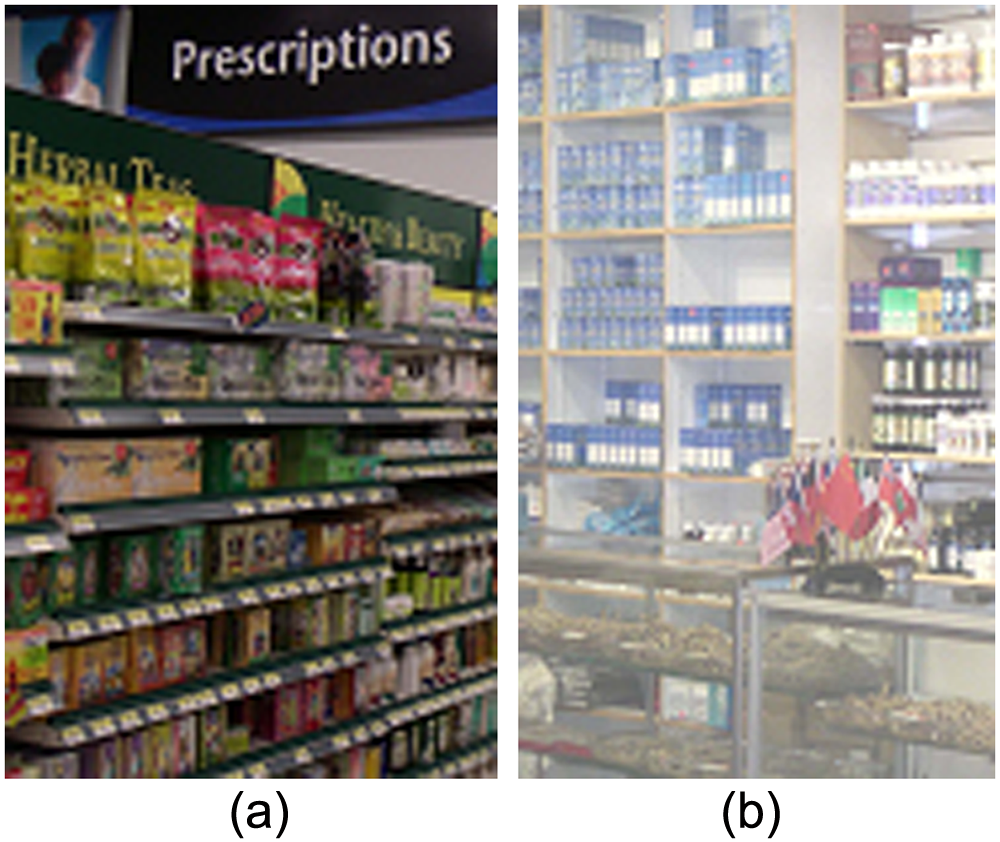
(a) Pharmacy in Toronto with allopathic and natural health products (b) Chinese herbal store in Toronto’s Chinatown
In effect, the commonly perceived boundaries between ‘natural’ health products versus ‘synthetic’ biomedical drugs can be further debunked by long-standing arguments about some of the ‘natural’ beginnings of many biomedical drugs, and the fact that ‘synthetic’ vitamins are still categorized as ‘natural health products’ in most western regions.
In January 2004, Health Canada’s Natural Health Products Directorate instituted new regulations for the manufacturing, distribution and sale of natural health products in Canada. This new legislation promises safety and efficacy of natural health products for all sectors – government, community and consumers. Interestingly, five types of evidence bases are considered in this legislation: (1) randomized controlled trials (RCTs); (2) non-RCTs; (3) observational studies; (4) expert committee reports, and peer reviewed published reviews; and (5) traditional references, that is, if a product has been marketed for over 50 years (Qu, 2004). Since this regulatory regime encompasses diverse constructions of evidence for regulating natural health products, one can see the role of both ‘tradition’ and ‘science’ as legitimating rhetorical strategies for assessing product safety and efficacy.
Just as CAM interventions are increasingly marketed as both ‘natural’ and ‘scientific’, so are biomedical ones. In recent media and even in biomedical literature on mainstream health care in North America, many family physicians and biomedical specialists have expressed more cautions about over-prescription of drugs, especially antibiotics in light of higher incidents of ‘superbugs’ in local hospitals, or recommending ‘invasive’ reproductive procedures such as in vitro fertilization (Akkerman et al., 2005; Ananth, 2008; Campbell and Campbell, 2006; Singh et al., 2000). 15 Their support for more ‘natural’ interventions parallels some local family physicians’ claims to offer ‘natural childbirth’, and some Ontario hospitals’ more ‘natural’ approach to childbirth by offering ‘birthing suites’ (MacDonald, 2008). In turn, midwife-attended, ‘natural childbirth’ that is publicly funded in Ontario can take place either in one’s home or in clinical settings, with or without the assistance of biomedical drugs. Thus, these examples demonstrate intersecting ideological bases between CAM and biomedical practices, which employ similar symbols.
Individual responsibility
A number of social scientists have identified individual responsibility as a key alternative ideology for many western consumers to endorse CAM. In their view, CAM consumers actively choose the health care option that best suits their needs and interests, and are not confined to their conventional health care system (Kelner and Wellman, 1997; Pawluch et al., 2000; Tataryn and Verhoef, 2001). These scholars note that individual responsibility is strongly influenced by other social factors such as one’s income and educational levels as well as by the severity of certain health conditions. In particular, many HIV/AIDS patients have felt discriminated against by biomedical professionals given initial speculations that HIV/AIDS was related to homosexual lifestyles. As such, the stigma surrounding HIV/AIDS in addition to perceived, limited biomedical outcomes to address this condition has prompted many individuals to seek CAM therapies alternatively to, or concurrently with biomedicine (Evans, 1999; Pawluch et al., 2000; Songwathana and Manderson, 2001). While these individual actions denote individual agency in seeking more appropriate alternatives to meet specific health needs, individual responsibility is not an alternative ideology per se. For example, North American ideals and cultural expectations of health are significantly tied to an emphasis on individual responsibility (and blame) for one’s own health care. Within social science literature, there are many accounts of the ‘healthy self’ in mainstream North America (Crawford, 1994; Kleinman, 1988; Sontag, 1978), which illustrates individualistic orientations for ensuring one’s health. As well, popular self-help literature such as that by Deepak Chopra and Andrew Weir, promote individual health and well-being based upon individual actions such as maintaining appropriate diet, exercise and seeking spiritual comfort through meditation.
Undeniably, individual responsibility for health as a feature of both conventional health promotion ideology and CAM has already been discussed in social science literature (Lee-Treweek, 2001; McClean, 2005). Of all the fundamental tenets discussed above, individual responsibility has been the least identified as a hallmark of CAM. Rather, many would argue that CAM is more individualized in nature than biomedicine by focusing on wellness rather than disease, being associated with the notion that the body will naturally heal itself, and that the practitioner facilitates the body to achieve this by considering each individual’s unique constitution (Barnes et al., 2004; Park, 2002). Below, I will reveal how seemingly different constructions of individual responsibility overlap in the ways biomedicine, CAM, consumers and the Canadian government emphasize the rhetoric of personal choice to achieve optimal health.
The emphasis on individual responsibility for health care is a key aspect of the biomedical model. Also, it can be argued that biomedicine is more individualized than much of the rhetoric around it. As Foucault (1973, 1980) has discussed, partly as a product of the machine metaphor and the quest for mastery, the biomedical model conceptualizes the body as the proper object of control by emphasizing the responsibility of the individual to exercise this control in order to maintain or restore health. The machine metaphor views the body as a complex biochemical machine, and disease as the malfunctioning of some mechanical component. I believe this machine metaphor encourages the physician to individualize treatment by ‘repairing’ one part in isolation from the rest, justifying as a medical procedure to replace non-working parts by organ transplants, pacemakers and artificial joints.
The idea of the body as an object of control is intertwined with other mainstream western values, resulting in the biomedical and social emphases on such standardized body disciplines as diets, exercise programmes, routines of hygiene and even sexual activity. However, the body as an object of control is not exclusive to biomedicine but is also apparent in other healing systems. In fact, CAM modalities prescribe similar body disciplines, as well as suggest that every body is individual – that ‘one is the best judge for one self’ (Evans, 1999: 44). That is to say, CAM’s focus on wellness rather than disease is not so different from the biomedical emphasis on individual responsibility, whereby CAM interventions are not only for maintaining health or preventing disease, but also for engaging each individual as an active and conscious participant in maintaining his or her own health (Tataryn and Verhoef, 2001: 95). In other words, putting the onus on personal choice is an interesting homology between biomedical and CAM discourses of individual responsibility for health care. While the discourse of individual responsibility in biomedicine appears to focus on individual lifestyle regimens such as appropriate diet, exercise and patterns of sexual activity, a similar discourse in CAM extends to deeper personal meanings by accounting for the unique circumstances of each individual including imparting positive thinking and the avoidance of negative thoughts to assist the body in healing itself. In light of the above, individual responsibility for one’s health and health care options raises interesting research questions and conversations about the individualized nature in both biomedicine and CAM in ways that further common rhetoric about striking differences between these modalities of care.
As far as the Canadian health care system is concerned, its current reform illustrates a general shift in the government’s position vis-a-vis CAM health care providers. The Government has drawn a new role for itself as an advocate in favour of individual responsibility for health care. In this respect, CAM would support and advance this new health care approach whereby the Government could tolerate CAM without specifically endorsing it. According to Gilmour (2001), this position is convenient for the Government since it places responsibility on individuals to take care of their own health, dovetailing with government agendas to diminish the role of the State in the provision of important social services. Through the recent regulations of natural health products (2004), the approach of the Government is one that emphasizes ‘inherent safety’ and freedom of consumer choice. As this government approach illustrates, individual responsibility has become a key strategy to promote the use of CAM, as part of the rhetoric of consumer choice. Without underestimating the beneficial role that CAM may have in public health care, the Government must also address broader social determinants of health such as social, economic and environmental factors, which are beyond individuals’ control and may affect their health.
Conclusion and implications of homologies between biomedicine and CAM for an integrative health care system
In conclusion, this article has sought to rethink biomedicine and CAM as homologous rather than dichotomous unlike many contemporary social science analyses. In critically examining central values and symbols underlying biomedicine and CAM I argued that concepts such as holism, vitalism, spirituality, natural healing and individual responsibility are present in both models as part of their own inherent traditions as well as through cross-fertilization for legitimacy reasons. In particular, this article has illuminated many overlaps between ‘conventional’ and ‘alternative’ therapies in the ways they establish their therapeutic principles and pursue social legitimacy. As such, a key contribution of this article is to rethink major social practices against binary oppositions, by showing that the boundaries between CAM and biomedical care are not so static when considering some of the values inherent in their original traditions and in their recent steps towards evidence bases to demonstrate a rigorous approach in medicine. Having questioned the tendency for many western scholars to dichotomize CAM and biomedicine, I now turn to the implications of these reflections for addressing theoretical and practical concerns related to the integration of CAM within mainstream health care in Canada.
In Canada as well as in most western industrialized nations, biomedical professions have a knowledge monopoly based on a single bio-scientific framework that restricts CAM integration into mainstream health care. Thus far, the issue of CAM integration in Canada is tied to demonstrating appropriate evidence bases to attain legal acceptance towards state regulation. Here, the question of legitimate evidence bases for evaluating the efficacy, safety and education standards of CAM practices is embedded in a dichotomous debate: focusing on either an evidence-based analysis or an alternative testing system. On the one hand, the key argument for many conventional practitioners and even for some proponents of integrative health care who emphasize non-hierarchical and collaborative relations between different therapeutic practices, is premised upon a ‘scientific’ construction of ‘evidence’, relying exclusively on experimental methods as the only appropriate venue for integrating CAM and biomedicine in mainstream Canadian health care (Boon et al., 2004; Tataryn and Verhoef, 2001). On the other hand, many CAM practitioners insist on their own ‘testing system’, arguing that CAM cannot always meet conventional medical standards of evidence because CAM are holistic, individualized, synergistic and complex health systems dating back thousands of years (Filice, 2004; Gillet 2004; Yeomans, 2001).
Given homologous values between biomedicine and CAM, I contend that it is unfruitful to evaluate their respectively heterogeneous activities within a single framework through either evidence-based analysis or an alternative testing system. Elsewhere (Ning, 2008), I identify serious limitations to relying exclusively on either model for considering appropriate evidence bases. In short, an evidence-based framework relying exclusively on biomedical standards creates a hierarchy of value between the western scientific paradigm and other equally valid CAM epistemologies based for example on experiential knowledge, observational studies and historical references that are founded in textual and oral traditions. Likewise, an alternative testing system that is reflective of CAM diversity is a problematic argument because CAM practices are not unchanging traditions, but as shown earlier, overlap with biomedical theories of the body, health and disease in both historical and contemporary global settings. Indeed, biomedical proponents have ironically used a similar argument to exclude the integration of CAM into mainstream health care, by arguing that CAM’s extreme diversity is incompatible with biomedical standards (Barnes, 2003).
Thus, by illuminating biomedicine and CAM as homologous symbolic systems, I want to argue for more interdisciplinary dialogue to enhance a truly symmetrical system of medical pluralism in which a broader conceptual framework including diverse theories and methods can assess the validity of any therapeutic modality. Since biomedical and CAM practices have cross-fertilized, and contemporary societies are pluralistic, there is a real need for more encompassing and plural methods to evaluate the effectiveness, safety and educational standards of plural health care practices of which biomedicine and CAM are a part. A broader conceptual framework will facilitate a truly integrative health care system in which the contributions to health and wellness from different epistemologies meet diverse health care needs. As explained earlier, the Natural Health Products Directorate in Canada has recently instituted a regulatory regime that encompasses diverse constructions of evidence for regulating natural health products. One could argue that a similarly broader conceptual framework including multiple evidence bases should be considered for regulating and integrating CAM therapies into mainstream health care beyond the scope of randomized controlled trials. In this regard, ethnographic research is critical to produce contextual knowledge that clarifies what, and to whom legitimate types of ‘evidence’ are necessary for assessing CAM practices, as well as shed light on the cultural logic of integrating different healing models.
Footnotes
Notes
Author biography