






Abstract
This paper conducts a multimodal critical discourse analysis of 92 accompanying images in 22 articles related to adolescent depression published on the WeChat official accounts of major Chinese state-aligned media outlets, including People’s Daily, CCTV.com, China News Service, and Health News. We pay special attention to analyze the multimodal discursive strategies employed to represent the causes and solutions of adolescent depression, as well as the implicit health ideologies embedded within these representations. Findings indicate that different gazes and hands are discursively represented as causes and solutions for adolescent depression. Specifically, a blaming gaze and judgmental hands visually construct the perceived origins of depression, while a mothering gaze and caring hands are deployed to depict pathways to recovery. In particular, the state media predominantly attribute the causes of depression to familial and socio-cultural factors—such as academic pressure and “face” culture—through discursive strategies including cool color palettes, spatial marginalization of adolescents, and metaphorical constructs like dominant parental figures, surveilling eyes, and encircling social judgments. In contrast, solutions are frequently visualized through warm tones, intimate compositions, and metaphors such as “healing hugs from mothers,” emphasizing familial emotional support while underrepresenting professional medical intervention. We argue that these discourses may reinforce familial-centric ideologies and conventional gender norms of mothers. Implications for more sensitive and constructive media discourses on adolescent depression in the Chinese context are discussed.
Keywords
Introduction
Depression is a common mental disorder. It involves a depressed mood or loss of pleasure or interest in activities for long periods of time (World Health Organization [WHO], 2025). Adolescent depression affects how teenagers think, feel and behave, causing emotional, functional and physical problems (Mayo Clinic, 2023). In China, it is estimated that more than 9 million Chinese adolescents have depression (Zhou et al., 2023), particularly in the post-COVID context (Ma et al., 2021). Extensive research has demonstrated that depression is closely associated with suicide risks among Chinese adolescents (e.g. Guo et al., 2014; Li et al., 2019; Lian et al., 2017; Xu et al., 2024). Within this context, adolescent depression has garnered increasing public attention and media coverage, including the attention from Chinese official media such as People’s Daily. For example, People’s Daily Online (2023) published an editorial (10th, October, 2023) titled “Approaching Adolescent Depression: Why Children’s Pain Is Often Overlooked” (《走近青少年抑郁症:为什么孩子的痛苦,常常被我们忽略?》), which describes the symptoms and causes of adolescent depression and calls on parents to learn mental health knowledge and improve family education methods to reduce the risk of adolescent depression (People’s Daily Online, 2023).
Such coverages of adolescent depression in Chinese official media draw our attention as they not only reflect but also reconstruct discourses on adolescent depression in Chinese society. By “discourse,” we mean a socially constructed and organized way of knowing and representing some aspect of reality, which is realized not only through language but also through the interplay of various semiotic modes such as imagery, layout, typography, and color (Kress and van Leeuwen, 2020). It is important to note that official media in China play a key role in establishing the “main melody” or the official stance on social issues (Feng, 2013; Ma, 2014). They wield significant authoritative power in setting public agendas, including health-related issues. As such, coverage of adolescent depression in Chinese official media warrants scholarly attention, as they shape dominant discourses and can influence public perceptions of adolescent depression. Up to date, few studies have investigated how Chinese official media discursively reflect and reconstruct adolescent depression, and even fewer studies have looked into the multimodal (such as verbal and visual) discursive representations of adolescent depression in Chinese official media. Knowing this is important because the interplay between culturally specific discourses and multimodal resources in official media constructs a unique symbolic framework that not only reflects but also shapes public understanding and societal responses to adolescent mental health in China. In this study, we thus aim to conduct a Multimodal Critical Discourse Analysis (MCDA, Machin and Mayr, 2023) on the images in articles about adolescent depression published on Chinese state media social platforms (WeChat public accounts). Particularly with regard to the causes and solutions of adolescent depression, we aim to answer the following research questions:
By answering above questions, this study has twofold significance as well as originality. Firstly, a discursive perspective can reveal how cultural contexts influence health communication on adolescent depression. Previous studies have explored adolescent depression in Western contexts (e.g. Horwood and Augoustinos, 2022; Kristen et al., 2024), leaving the Chinese context largely underexplored. Secondly, a unimodal analysis that only focuses on language would fail to capture the complete rhetorical picture. MCDA can deconstruct how the combination of word and image naturalizes certain ideologies, fosters specific emotional appeals, and ultimately guides the public toward particular perceptions of responsibility and action regarding adolescent depression.
Research context
Adolescent depression in China: cultural factors from Confucianism, meritocracy and stigma
Chinese culture is oriented toward mutual interdependence, and the construction of the individual self is often based on relationships with significant others and social expectations (Markus and Kitayama, 1991). Within such a socio-cultural context, adolescent depression is profoundly shaped by deep-seated cultural norms in China. Specifically, Confucianism, meritocracy, and stigma intertwine to form a significant cultural mechanism influencing adolescent mental health.
First, Confucianism stresses on filial piety, authority worship, and a strict social hierarchy based on age, gender, and social class (Park and Bernstein, 2008). When an individual’s behavior deviates from cultural norms and fails to meet the role expectations defined by Confucian values, interpersonal stress arises (Hsiao et al., 2006). The stress, stemming from a perceived failure in one’s social roles, directly impacts one’s mental well-being. Zhang and Liu (2012) focus on depressed and suicidal adolescents in rural China, finding that Confucian culture can have a dual effect—either buffering or exacerbating the risk of depression and suicide. In detail, for some adolescents, pressure to fulfill social roles or family expectations by Confucian ideals may increase the risk of depression and suicide (Kleinman, 1986). However, the ethics of filial piety explicitly prohibit “harming one’s own body,” in accordance with the Confucian belief that “身体发肤,受之父母”[one’s body, hair, and skin are gifts from one’s parents] (Zhang and Liu, 2012). Nevertheless, the profound influence of collectivism and the concept of “face” in Chinese culture—as Hsieh and Bean (2014) noted in their study on Chinese American families, collectivist values dominated by Confucianism prioritize the family’s overall reputation over individual needs. Depression, regarded as a “family stain,” is prone to triggering shame, prompting families to hide the “problem” rather than actively seek help.
Second, in contemporary China, these traditional Confucian values are dynamically intertwined with a pervasive culture of meritocracy, particularly within the educational system, where academic achievement is often directly equated with personal and familial honor (Kipnis, 2019). Meritocracy, as a sociological concept, has long been subject to debate. Krauze and Slomczynski (1985: p. 623) define it as “a large-scale social system in which a positive relationship exists between ‘merit’ and such commonly desired values as income, power, and prestige”. Elite selection mechanisms, such as the college-entrance examination, or “gaokao,” in Chinese education give expression to the meritocracy. Wu (2017) further confirmed this through empirical research, finding that the gaokao-driven meritocratic selection not only sorts students into stratified higher education tiers (national elite and the non-elite universities) but also endows elite university attendees with de facto elite recognition—these students gain privileged access to social and economic capital (e.g. increased opportunities for securing employment within governmental institutions), solidifying their elite status in both societal perception and practical opportunities. Consequently, the meritocratic culture further exacerbates academic pressure among adolescents, constructing academic setbacks as a form of personal failure (Liu and Helwig, 2022).
It is further worth noting that the meritocracy has jointly strengthened the stigma associated with psychological problems. Stigma, which refers to a deeply discrediting attribute that reduces the person bearing it from a whole and usual person to a tainted and discounted one (Goffman, 2009), remains a major barrier to open discussion on depression in China. Mental illness is frequently associated with weakness, moral failing, or hereditary defect, leading to social exclusion and reluctance to seek help as well as offering help (Yang et al., 2007). Yu et al. (2018) found patients with mental illness in China are generally labeled with the core stigma of “abnormal” and perceived by society as an “incompetent” and “crazy” group. Such a negative construction exposes individuals with mental issues to significant opportunities restrictions in key life domains such as employment and marriage. Moreover, due to fear of stigma, patients themselves choose to conceal their condition (e.g. telling others they are “going on vacation” rather than being hospitalized; Yu et al., 2018). Notably, the stigmatization is not confined to the individual patient but also extends to their family, forming “affiliate stigma” that subjects the entire family to social pressure (Li et al., 2007; Mak and Cheung, 2008).
Adolescent depression discourses
In depression studies, depression is largely approached through a biological discourse, focusing on diagnosis, pathology, and etiology (Li et al., 2022). More recently, a more holistic discourse which focuses on the social nature of humans and life experiences are taken in analyzing (adolescent) depression. For instance, McDermott et al. (2021) examined the mental health of LGBTQ+ youth and the role of family relationships in the UK, arguing that a crucial step in understanding the etiology of adolescent depression is to move beyond the one-dimensional view that psychological distress stems solely from individual deficits. Instead, they emphasize the importance of recognizing and addressing the real challenges adolescents encounter within complex social environments. Similarly, Østbye et al. (2020)’s research on adolescents with medically unexplained symptoms also reveals that adolescents’ psychological distress often arises from illness-induced “derailment” of developmental trajectories and the dilemma of meaning reconstruction between social expectations and individual predicaments.
Metaphor serves as an effective tool for understanding depression, allowing the conceptualization of abstract, complex and subjective experience of depression as tangible entities (Coll-Florit et al., 2021). Three major metaphors are dominant in talking about depression, that is, DEPRESSION IS DESCENT (e.g. McMullen and Conway, 2002), DEPRESSION IS WEIGHT (e.g. Charteris-Black, 2012) and DEPRESSION IS DARKNESS (e.g. McMullen and Conway, 2002). These metaphors have been found helpful for patients to explain their experience of depression (Roystonn et al., 2021). Visual metaphors recently have also garnered growing academic attention. Fahlenbrach (2017) identified two main recurring metaphors of depression in films: BEING ENCLOSED BY RAIN and DARK PALCE. Forceville and Paling (2021) further identified two major visual metaphors based on wordless animation films on depression: DRAK CONFINING SPACE and DARK MONSTER. Recently, Zhang and Luo (2026) examined the use of multimodal metaphors in animated depression education videos on Chinese social media. They found that these videos prioritize a biomedical account of depression, for instance, by personifying brain chemicals. The authors suggested that this approach may carry the risk of dehumanizing and overmedicalizing individuals affected by depression. Overall, extant metaphor studies on depression focus on generalized adulthood. However, metaphor studies on adolescence, a unique age group that is prone to depression but often missed (Thapar et al., 2012), remain insufficient.
In mediated society, media are central to what come to represent the social constructions of adolescent depression and contribute to our understanding of it. Rich studies have explored how adolescent depression is discursively represented in Western media (e.g. Cummings and Konkle, 2016; Thomas-MacLean and Stoppard, 2004; Tobin and Lyddy, 2014). For example, Francis et al. (2005) conducted a comprehensive analysis of Australian non-fiction media from 2000 to 2001, finding that depression was the most frequently portrayed mental illness, yet coverage often lacked detailed information on symptoms, causes, treatment, and prognosis, and sometimes included misleading messages, particularly regarding treatment (e.g. describing depression as a “defense mechanism” for coping with social problems). Tobin and Lyddy (2014) employed a corpus-based approach to examine Irish broadsheet newspaper coverage on youth depression from 2007 to 2011. Their study found that media reports frequently linked youth depression to issues such as suicide, alcohol use, and bullying, while offering limited guidance on recognizing depressive symptoms. Moreover, the language used often implied a lack of agency among adolescents. Cummings and Konkle (2016) analyzed print news from 2013 to 2014 in Canadian media, finding that while coverage predominantly featured positive themes like awareness and research, over half of the articles used inaccurate or stigmatizing language (e.g. using “suffering from” to describe people with depression tends to reinforce the stereotype that “patients are helpless victims,” overlooking their agency and potential for recovery), and first-person narratives from individuals with depression were rare. Extending the inquiry to digital and culturally specific contexts, Vargas et al. (2021) investigated the availability of web-based depression literacy resources for Latinx teens in the U.S., identifying a critical scarcity of tailored, actionable online content, with most search results being sensationalized news stories, highlighting a significant gap between the web’s potential and its actual use in supporting this vulnerable population. Complementing these media-specific and audience-focused studies, Zhang et al. (2016) conducted a systematic longitudinal content analysis examining how major U.S. print and broadcast media attributed responsibility for depression in their coverage from 1980 to 2012. The study revealed a predominant tendency to frame the causes of and solutions to depression at the individual level (e.g. genetics, personality, behavior) rather than the societal level (e.g. social environment, public health policies). Furthermore, the research identified differences across media types: print media emphasized individual-level causes more than broadcast media did, while local newspapers were more likely than their national counterparts to attribute problem-solving responsibility to individuals.
By comparison, there is little research on adolescent depression in China, and public awareness of this issue remains insufficient. China’s Healthy China Initiative, China’s latest national health campaign, also identifies insufficient public awareness on depression as a core bottleneck (National Health Commission of the People’s Republic of China [NHC], 2019). Existing research predominantly concentrates on medical and psychological fields, such as diagnostic criteria (Li et al., 2022) and clinical interventions (Zhang et al., 2022), leaving discursive representations of adolescent depression largely overlooked. A rare exception is done by Gao and Meng (2019) by analyzing the Weibo posts surrounding Zou Fan’s (Zou Fan is the nickname of a college student in China) suicide case. They demonstrated how adolescent depressive expression is constrained by cultural norms (e.g. maintaining “face” in public spaces). Similarly, Chen (2025) investigated 2000 comments of 20 core participants in Zou fan Weibo community to discern how the participants communicate discursive positioning via linguistic cues, finding that an emotional estrangement from the self and the environment is witnessed among the online depression community. The findings corroborate the social constructionist perspective in health communication – that the meaning of illness is not transmitted objectively but generated through cultural semiotic practices (Lupton, 2017), again, justifying the need of conducting discourse analysis on adolescent depression.
In summary, the existing literature has two limitations: First, extant studies neglect how cultural contexts shape the discursive representation of adolescent depression (Gao and Meng, 2019); second, applications of MCDA (Multimodal Critical Discourse Analysis) and metaphor analysis in depression are predominantly focused on Western contexts and adulthood, leaving adolescent depression in the Chinese context under-explored. Against such a background, this article aims to conduct a multimodal critical discourse analysis on the neglected area of media representation of adolescent depression in the Chinese socio-cultural context.
Methodology
Data collection
We focus on the WeChat Official Accounts of four state-aligned official media outlets in China, that is, People.cn, CCTV.com , China News Service, and Health News. The four accounts are chosen for the following reasons. In detail, People.cn, as the online platform of the People’s Daily, the official newspaper of the Central Committee of the Communist Party of China, has reported on health issues and remains a trusted channel for health information for the public (Liu et al., 2020). CCTV.com represents the most extensive official audiovisual dissemination channel, with its content production strictly adhering to official stance (Zhang et al., 2015). China News Service, while focused on external communication, also addresses domestic agendas, representing the official narrative strategy on sensitive issues like mental health (Ouyang and Li, 2013). Health News is the authoritative platform for national health policy dissemination and holds professional discursive authority on the topic of “adolescent depression” (Wang, 2023). Posts were accessed in early June 2025, targeting those published between January 1, 2020, and May 31, 2025. We used “青少年抑郁症 [adolescent depression]” as the keyword to retrieve candidate posts from the four media platforms, initially yielding 50 articles with a total of 177 images. Through careful manual screening of the search results, articles whose core themes explicitly and closely focused on reports, analyses, commentaries, or popular science related to adolescent depression were selected (instead, those which mention the adolescent depression only incidentally were excluded). Twenty-eight articles that merely mentioned the topic without making it a central focus, including event notifications, reposted non-original content, and duplicate publications, were excluded. This process ultimately resulted in a valid sample of N = 22 articles, containing 47,219 Chinese characters (N = 92 accompanying images; see Table 1). Although limited in size, the dataset reflects the most recent official media reports on adolescent depression in China. The posts are accessible on the Open Science Framework (OSF) at https://osf.io/n3jas/overview?view_only=3ae15af24b2f4918b0758b8b81eba404 1
Data distribution.
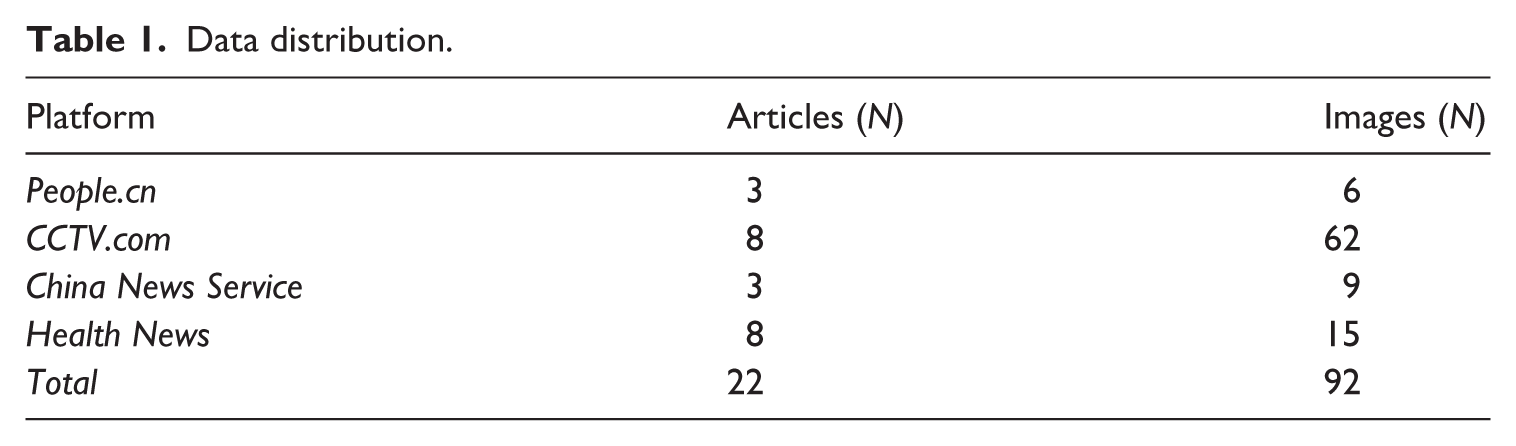
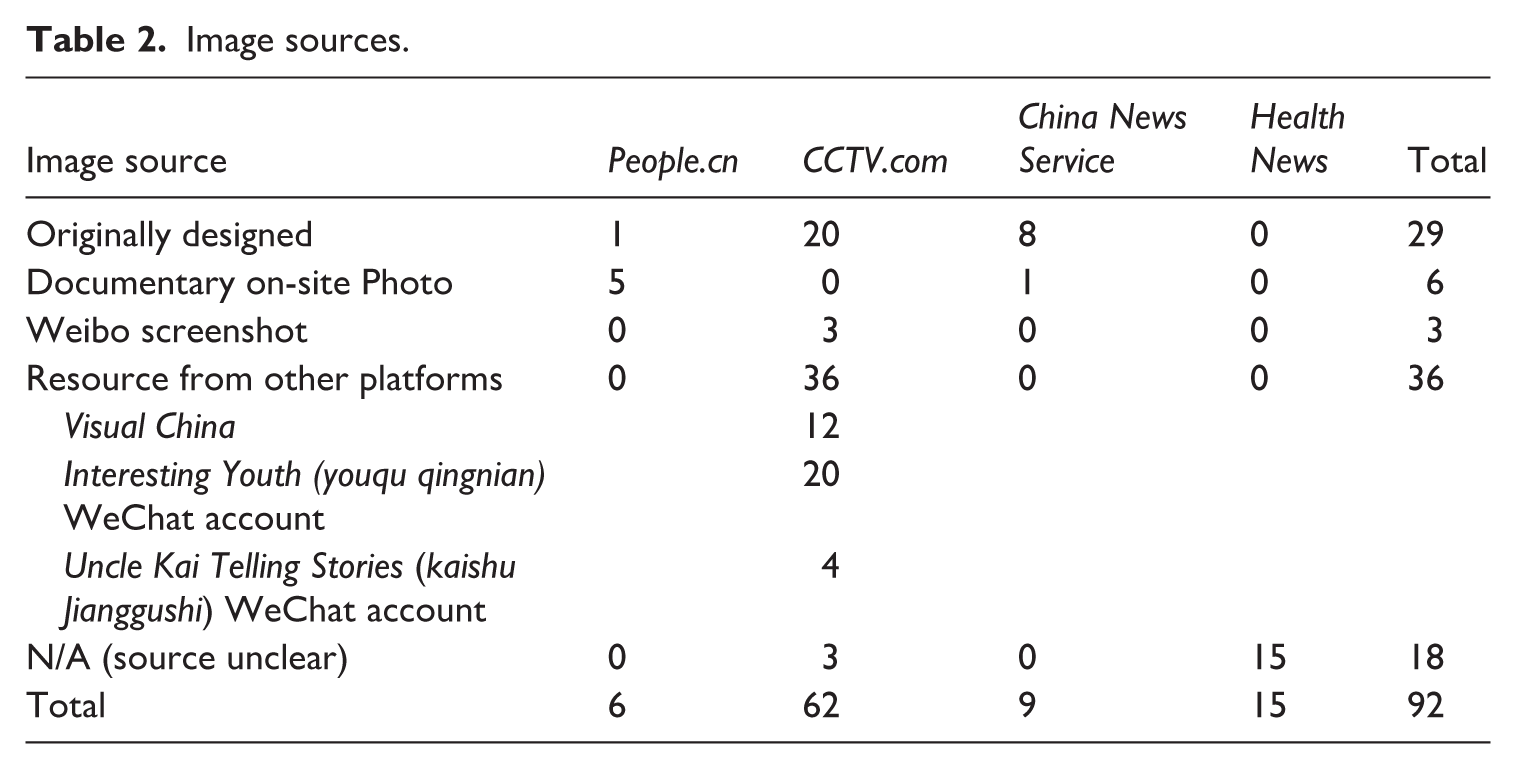
For better understanding the collected data, it is necessary to clarify how news is produced in Chinese official media. Typically, news production is a collaborative, editorial team-based process. As the byline usually shows the institution (e.g. CCTV.com ) rather than individual reporters, credits are given for roles such as media managers, editors-in-chief, and working journalists, who jointly produce the news. Images in the news are normally created by in-house graphic editors or sourced from stock libraries such as Visual China Group (视觉中国), one of the largest stock image and media footage providers in China. In detail, among the 92 images, 36 are resourced from other platforms; 29 are originally designed by the illustrators; 6 are documentary on-site photos; 3 are Weibo screenshots; and 18 are marked as N/A (neither original claimed nor repost credited). In either case, every image must be approved through a collective editorial panel, ultimately serving to reflect the official stance and convey official ideologies (Huan, 2016). The detailed source information of the 92 images can be seen in Table 2.
Image sources.
Analytical framework: Multimodal critical discourse analysis (MCDA)
This study adopts a qualitative and interpretive research approach, implementing a comprehensive Multimodal Critical Discourse Analysis (MCDA; Machin and Mayr, 2023) framework. MCDA involves examining how discourses are entextualized not only through linguistic choices but also through other semiotic modes (e.g. image, font, layout), and is concerned with how text creators’ lexical, visual, and other semiotic choices construct meaning and ideologies (Kress and van Leeuwen, 2020; van Leeuwen, 2008). As such, MCDA enables analyses to move beyond mere description toward a more systematic and critical examination of the communicative choices made in any textual composition (Machin and Mayr, 2023). MCDA has been applied to various health issues and has yielded valuable insights (e.g. obesity, Li and Huang, 2026; dementia, Putland et al., 2025). Our analysis of the official articles focus on the visual representations of adolescent depression. In detail, we analyzed the visual choices pertaining to the following aspects of images:
(i). Participants (Who or what is depicted in the image?)
(ii). Actions and postures (e.g. rigid vs relaxed, open vs intimate)
(iii). Color (e.g. saturation, contrast, and hue)
(iv). Perspective and composition (e.g. eye-level, high-angle, or low-angle view; whether the image is symmetrical or asymmetrical)
Furthermore, our analysis extends to the identification of multimodal metaphors within the images. According to Forceville (2006), a multimodal metaphor is one where the source and target domains are represented through multimodal resources such as language, image and gestures. Examining how these metaphors operate across different modalities allows for a more nuanced understanding of how adolescent depression is represented in the Chinese official media.
Procedure and reliability
The two authors coded the 92 images in terms of their major categories, that is, causes, symptoms, and solutions of adolescent depression. Both authors independently analyzed all images based on each image itself (e.g. people depicted, setting, action) as well as the accompanying articles in which the image appeared. The actual immediate context where the image is used provides crucial cues that help distinguish, for example, whether an image relates to the root of the depression (cause), its manifestations (symptom), or how it can be addressed (solution). In other words, while an image viewed in isolation might suggest multiple possible codings (e.g. overlapping between the three categories), its placement within the article makes the intended category clear. This contextual anchoring helped us minimize interpretive ambiguity. It should be noted that we did have some initial disagreements, particularly when causes and symptoms appeared closely intertwined (e.g. Figure 3, which the first author initially coded as a symptom, was, after discussion, agreed by both authors to be more about a cause of adolescent depression). Such differences were addressed through discussion and contextual analysis. After this process, full consensus was reached (thus no intercoder-reliability test was done in this stage). Yet, we acknowledge the inherent subjectivity in the qualitative coding, as we are embedded in our culture in interpreting images, a key feature in multimodal analysis (Kress and van Leeuwen, 2020).
Finding and analysis
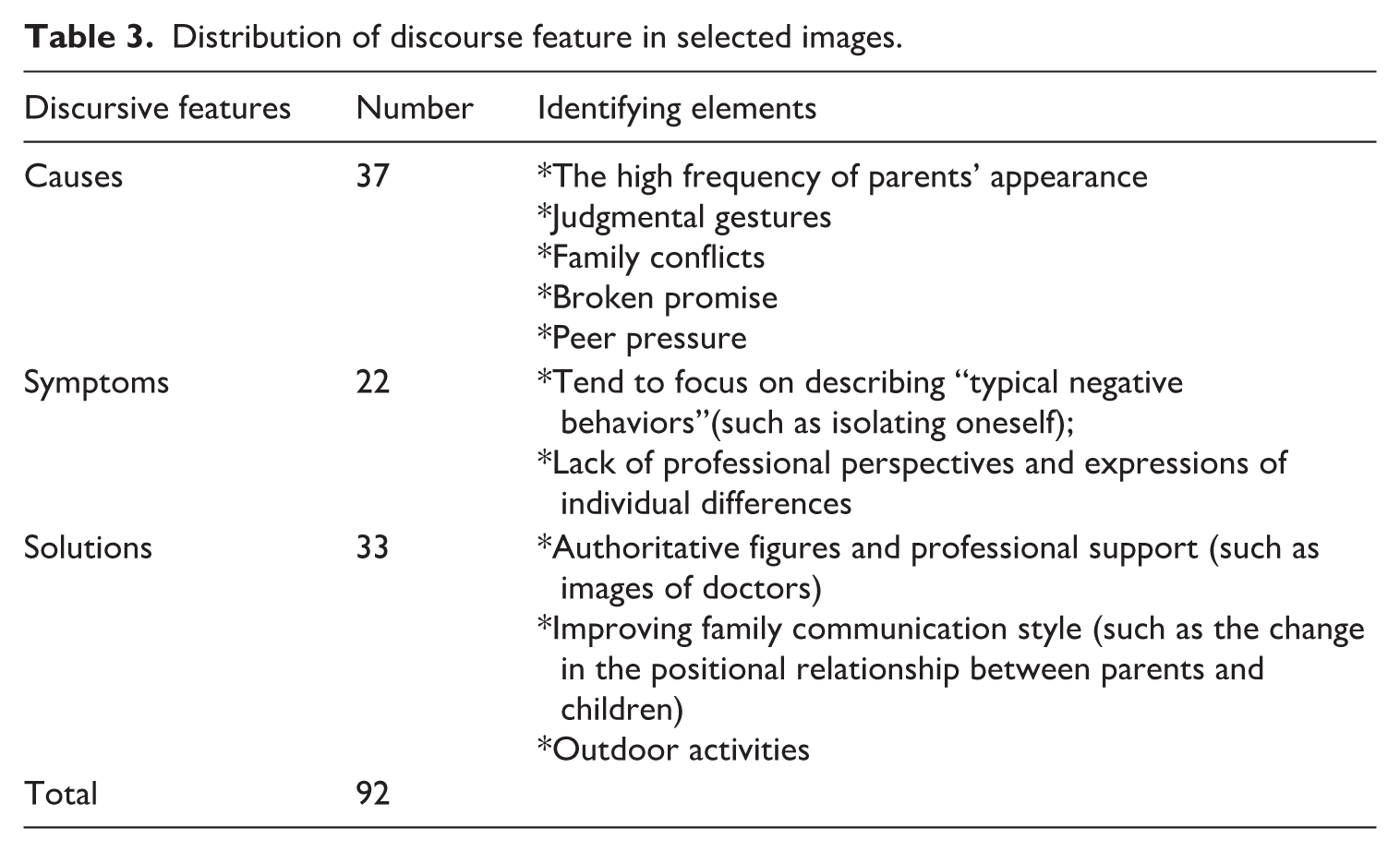
Through thematic coding of 92 images related to adolescent depression collected from the platforms, we have identified three dominant discursive features, that is, causes, symptoms and solutions (see Table 3).
Distribution of discourse feature in selected images.
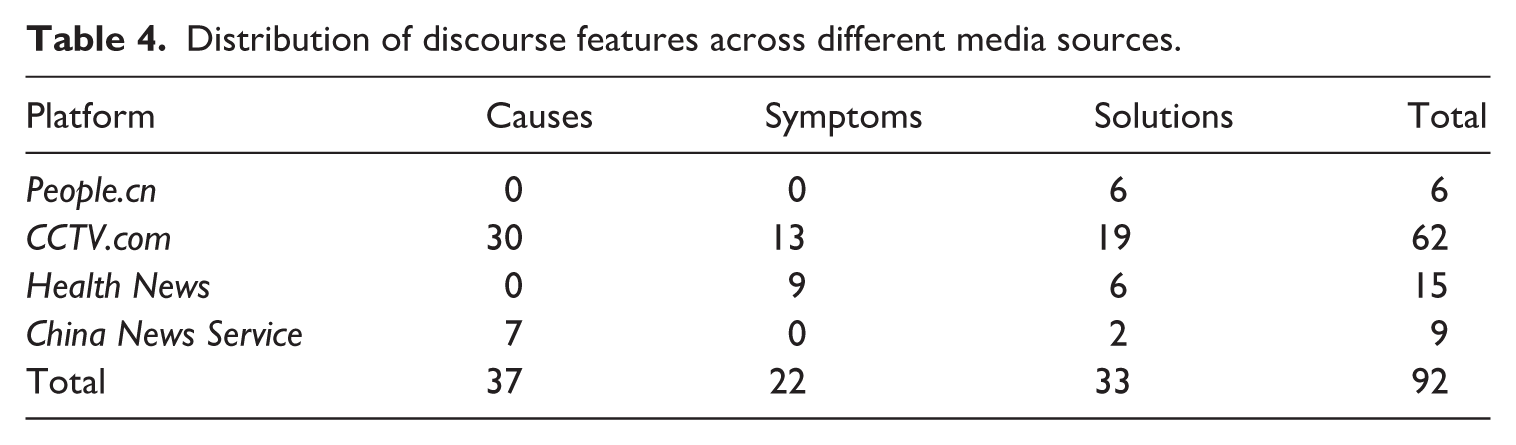
Given that visual representations addressing the causes of and solutions to adolescent depression accounted for a notably high proportion within the collected images, we decide to focus specifically on causes and solutions. Table 4 shows that CCTV.com contributes the majority of total discourse features (62/92), particularly on causes (30 out of 37) and the solutions (19 out of 33). It is therefore the most comprehensive source for examining both the causes of and solutions to adolescent depression, especially when compared with People.cn and Health News, which do not focus on causes, or China News Service, which rarely covers solutions. CCTV.com yields a more direct access to discursive features this paper focuses on. This is why the images presented and discussed below are sourced primarily from CCTV.com .
Distribution of discourse features across different media sources.
In more detail, we randomly selected 10 cause-related images and 10 solution-related images for joint analysis and discussion, through which we identified major causes (e.g. family conflict, social pressure) and major solutions (e.g. medical treatment, family support). After jointly developing and agreeing upon the coding scheme and criteria, we independently coded all the selected images. Since some images contain more than one cause or solution, we conducted multiple codes to a single image. This is why the total count exceeds 70 (the total number of cause-related and solution-related images). The intercoder-reliability test yielded a Cohen’s kappa coefficient of 0.824 for the coding on causes and 0.829 for the coding on solutions (Cohen, 1960), indicating high levels of agreement. Finally, various causes and solutions are revealed in the images (see Table 5). We elaborate on them in the subsequent sub-sections.
Frequency of causes and solutions in selected images.
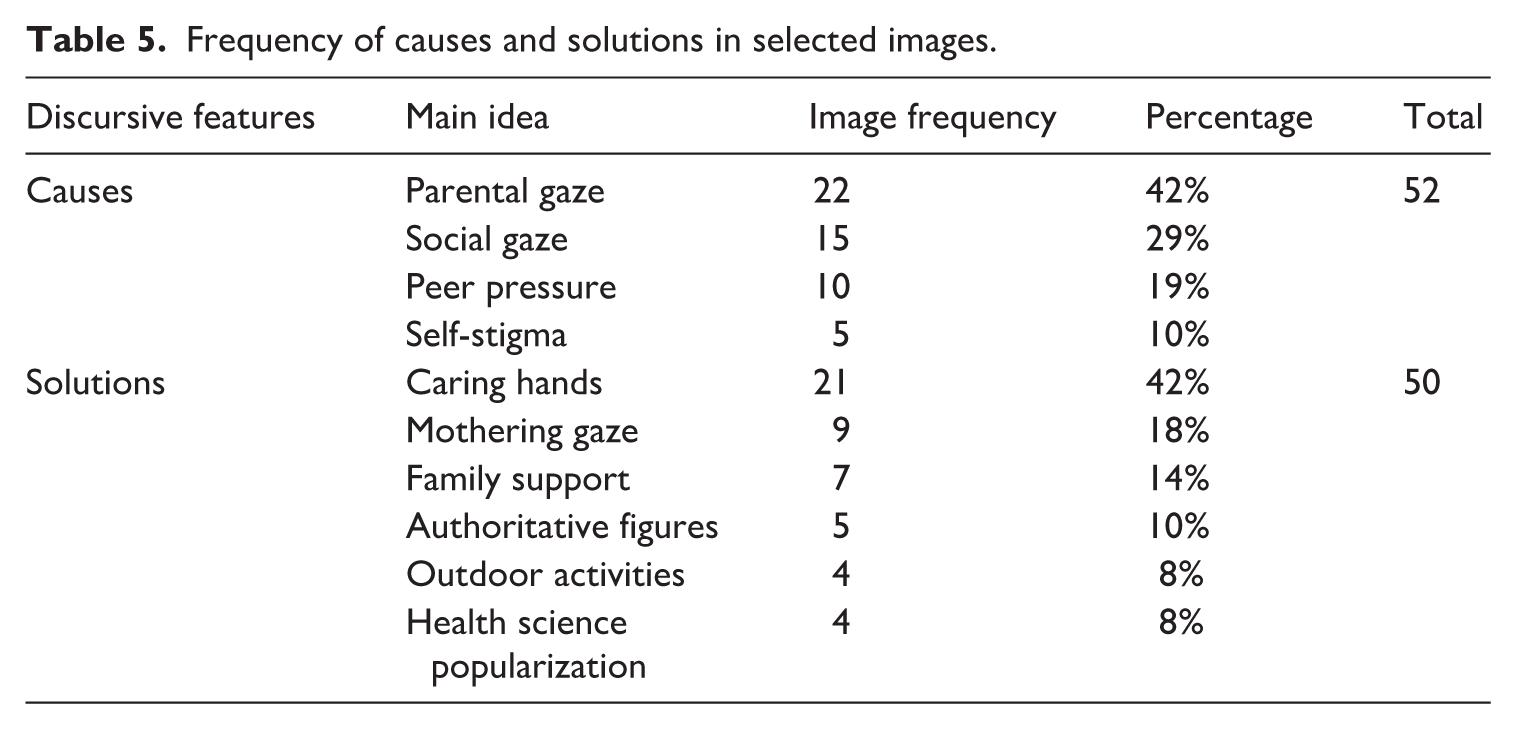
Causes of adolescent depression: Stringent parental and Social Gaze
Across the images, the official accounts tend to align the causes of adolescent depression with academic pressure, which is identified as a major factor affecting adolescent mental health in China (National Health Commission of the People’s Republic of China [NHC], 2019). Academic pressure is primarily visualized through a stringent parental gaze, which appears 22 times across the images. Figures 1 and 2 are from the post titled “我都是为了你好”[I’m Only Doing This for Your Good]. The two figures construct a narrative of pressure enacted “in the name of love” through multimodal metaphors. Specifically, Figure 1 (“Parental Gaze”) does not directly depict parental figures; instead, the large, overbearing, and controlling eye forms the power center of the frame—this eye, which dominates the visual space, acts as an all-encompassing “surveillant subject,” while the tiny adolescent below huddles over a desk with a lowered head. This visual composition aligns precisely with the dialog in the image: “我们准备在你房间装个监控,是为了监督你学习”[We plan to install a surveillance camera in your room, and this is to supervise your study] and “这是通知,不是商量[This is a notification, not a negotiation.]”. These remarks materialize the abstract “gaze” into a concrete act of surveillance, and the adolescent’s posture of lowered, averted gaze conveys a state of suppression and submission, further reinforcing the power imbalance in the parent-child relationship: the parents’ “notification” is in essence unilateral control, leaving the adolescent with no room for negotiation. In this context, the gaze no longer signifies care, but evolves into a mechanism of surveillance and judgment. Through such a visual metaphor (Forceville, 2009), the “parental gaze” function as a “camera” that strictly follows adolescents’ actions.
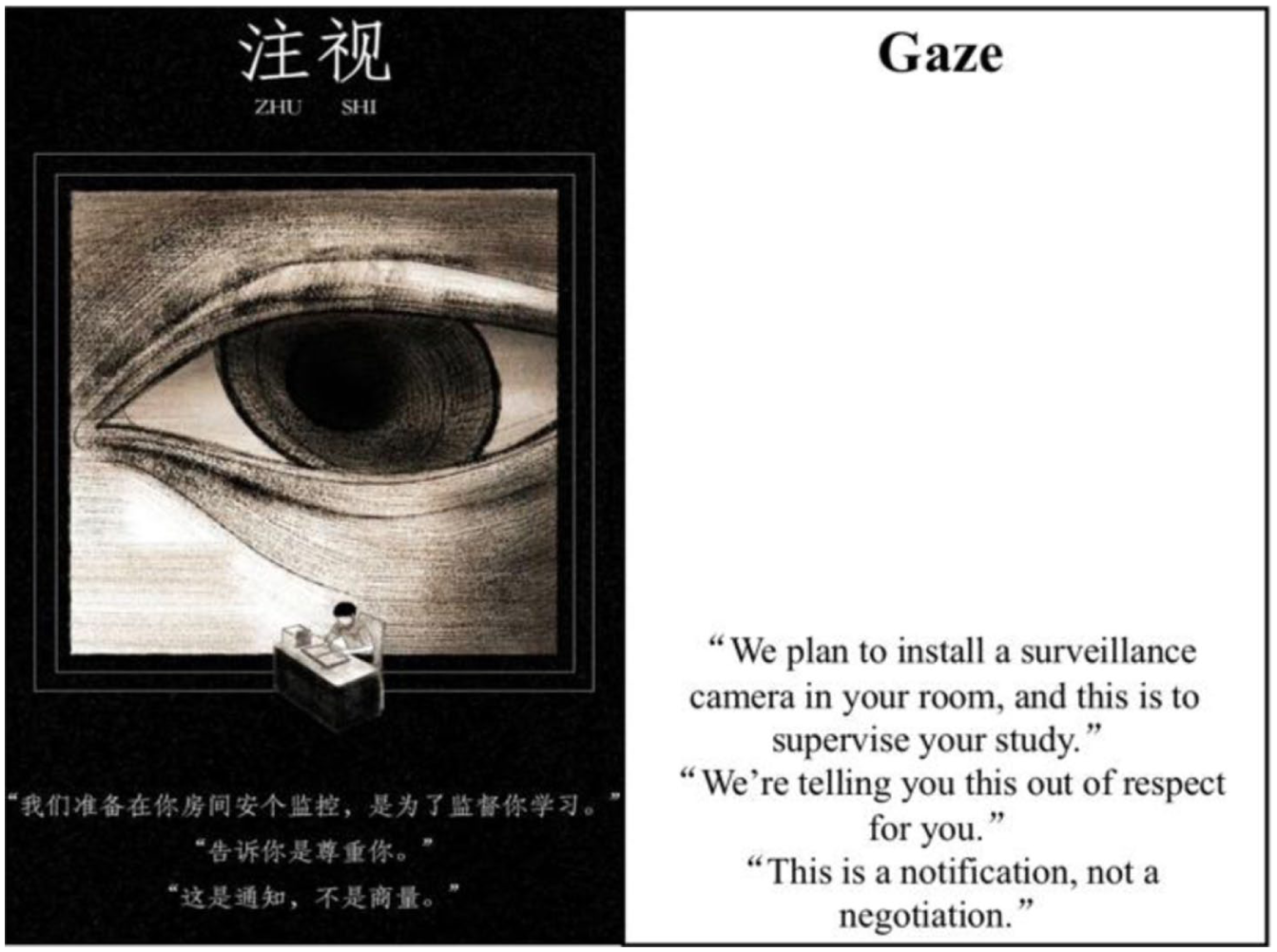
Parental gaze. 2
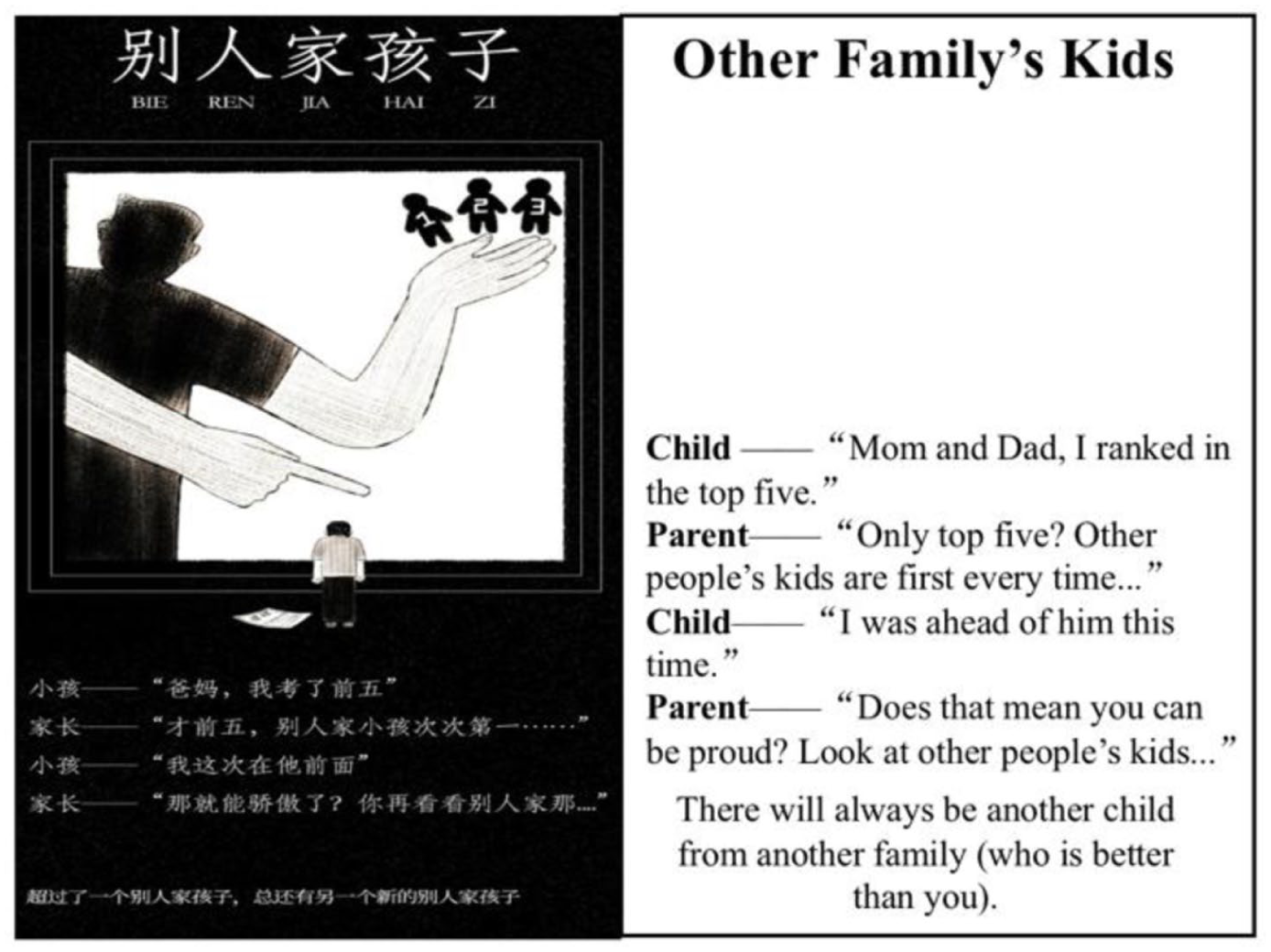
Other family’s kids.
Further, the overall employment of cool tones, specifically black, white, and gray, creates a strong contrast with positive emotions such as “warmth” and “support,” not only aligning with the characteristics of depressive mood but also strengthening its visual representation (Adams and Osgood, 1973). The use of cool tones aligns with the metaphor of “depression is darkness,” transforming the abstract experience of depression into visible consign to darkness (McMullen and Conway, 2002). Adolescents are often positioned at the edges of the frame or in shadows, symbolizing their voicelessness within family discourse and the dissolution of their subjectivity brought about by a sense of visual compression. According to the social semiotic analysis of visual discourse, such compositional choices align with the “detachment effect” generated by oblique angles and public social distance, positioning the depicted adolescents as marginalized participants rather than central subjects (van Leeuwen, 2008). Furthermore, these images tend to adopt an “indirect address” mode—wherein adolescents do not make eye contact with the viewer—coupled with conceptual representational structures (Kress and van Leeuwen, 2020). This design guides viewers to adopt the position of onlookers, enabling them to more intuitively perceive the oppressive atmosphere endured by adolescents and reinforcing the emotional distance between viewers and the subjects. This dual effect of observability and distance not only evokes emotional resonance but also prompts viewers to engage in rational reflection on the marginalized status of adolescents.
In Figure 2 (“Other Family’s Kids”), the father cradles a group of “other family’s kids” in his palm as cherished symbols of excellence. In stark contrast, he points a reproachful finger at his own child, who stands alone below with a bowed head. This visual juxtaposition—the elevation of others’ kids against the reprimand of his own, accentuated by their disparity in size—amplifies an imbalance parental attitude: “other family’s kids” are framed as an ideal benchmark, while his own child is reduced to an outlet for dissatisfaction. This vividly captures the educational anxiety fueled by constant peer comparison in China. It is noteworthy that in both Figures 1 and 2, the focus of all adult figures is concentrated on the adolescent’s academic performance, while their psychological needs, emotional state, or physical development are rendered collectively visually silent.
The visual narrative presented in Figure 3 (“Social Judgment”) further corroborates the above argument, extending the attributed causes of adolescent depression from the internal family to broader sociocultural dimensions. Images under the theme of “social gaze”, including Figures 3 and 4 analyzed here, appear 15 times in total. In this Figure, the adolescent is surrounded by multiple social gazes (e.g. those of teachers and relatives), forming a composite of “social gazing”: the three adults frown tightly, lean slightly forward, and their eyes carry both confusion about the adolescent’s state and an implicit judgmental tone. Their encroaching posture acts as an invisible circle of pressure, tightly enclosing the adolescent curled up on the floor—who clutches his body with arms wrapped around his chest, huddles into a tight ball, and buries his head deep in his elbows. The visual composition metaphorically materializes adolescents’ psychological predicament under multiple social gazes as an inescapable, confined space (Forceville and Paling, 2021; Zhang and Luo, 2026). The scattered papers at his feet and the note reading “活着好累”[Life is so tiring] on the desk further emphasize his isolated and helpless predicament. This stark contrast in postures symbolizes the compression of individual psychological space by social stigmatization: the adults’ judgment is a disregard for the adolescent’s emotional distress, while the adolescent’s curled posture represents self-isolation and withdrawal under the pressure of stigma. The stigma is also seen in Figure 4.
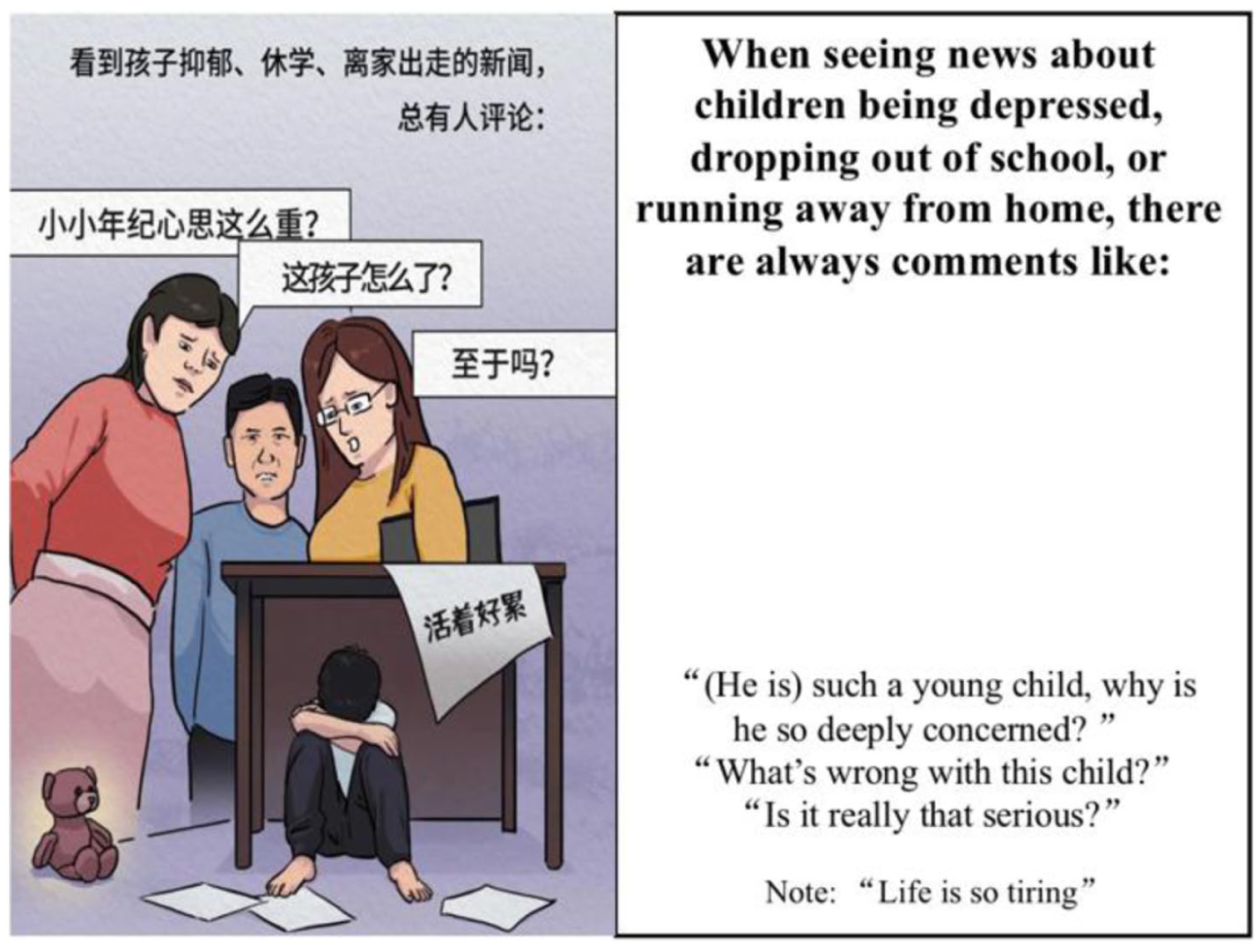
Social judgment.
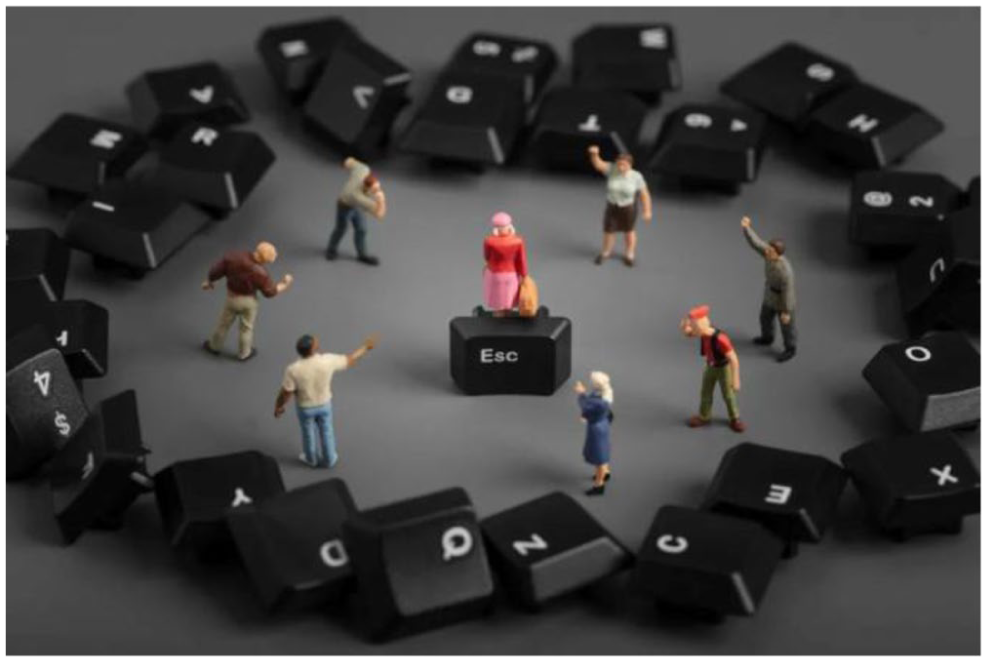
A closed scolding field consisting of keyboard.
In Figure 4, the keyboard is disassembled into scattered circles, forming virtual “scolding field of online public opinion.” This is as well a visual metaphor that the adolescent (more precisely, a girl based on the clothes) is placed at the center of the “scolding field,” standing isolated on the Escape key, abbreviated as Esc, yet unable to truly escape. The closed “scolding field” formed by the keyboard metaphorically suggests the suffocating sense of being trapped by online public opinion with no way out (Fahlenbrach, 2017), evoking connotations of despair and isolation. The girl is forced to endure scolding from individuals of different gender and age—a plot that symbolizes the profound helplessness of adolescents when confronting anonymous public judgment in the era of social media. Such helplessness gives rise to negative emotions including anger, shame, powerlessness, and self-blame, which exacerbate the etiological factors of depression and thereby increase the risk of suicide (Nixon, 2014). In this context, the keyboard is metaphorically constructed as a “tool of judgment,” further highlighting the implicit erosion and profound impact of online public opinion on adolescents’ psychological states. The adolescent’s bowed posture in Figure 4 echoes that in Figure 3 but appears more passive and helpless here, reflecting the individual’s sense of powerlessness when confronted with collective moral judgment in a highly digitalized society. While Figure 3 focuses on the pressure of gazes within the familiar society, Figure 4 extends this pressure to the anonymous, borderless space of the internet. Visually, both emphasize the besieged state of adolescents within social judgments.
Thus, these images, utilizing multimodal metaphors (Forceville, 2009), collectively construct a multi-layered structure of gazing: it begins with the parental gaze within the family and extends to the social gaze. Consequently, the visual narrative not only represents pressure but also reproduces an ideology: that the value of adolescents depends primarily on their performance in academic competition, while their emotional world is systematically overlooked under the collective gaze of adults.
Solutions to adolescent depression: Caring hands and mothering gaze
In contrast to the attribution discourse that ascribes adolescent depression to external stressors, the platforms, when presenting solutions, tend to emphasize the restorative role of maternal care and family harmony in their visual representations centered on the “caring mother” and the “harmonious society” (see Figures 5–8). Images representing “caring hands” appear 21 times, and those depicting “mothering gaze” appear 9 times. Below, we elaborate on these visual themes in detail.

Within mom’s hug.

Under mom’s protection.
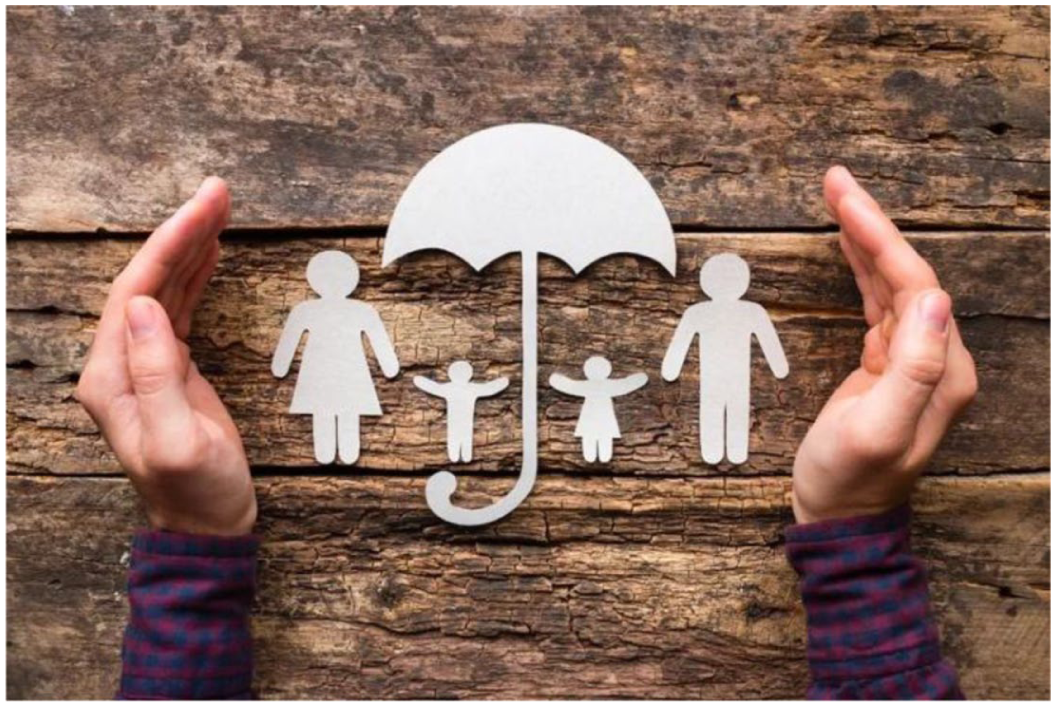
Upholding a harmonious family.

Upholding the falling teenager.
Figure 5 is accompanied by the article titled “一项新发布的分析报告提示:呵护孩子心理健康 路还很长” [A Newly Released Analysis Suggests: The Road to Nurturing Children’s Mental Health is Still Long], and it depicts a scene of a mother embracing an infant tenderly. In the image, the mother leans over to fully envelop the child with her body, while the baby lies relaxed in her arms, its small hands reaching to touch the mother’s forehead. Their bodies are pressed so closely together that there is barely any gap between them. Rather than a simple hug, this embrace resembles an intimate contact; every gesture conveys complete acceptance and dependence. Again, this image employs a visual metaphor (Forceville, 2009), mapping “mother’s hug” onto “emotional haven.” Visually, the scene is dominated by warm tones (such as soft skin tones and a light beige background), creating a stark contrast with the cold, oppressive colors used in previous images (see Section 4.1). This color choice aligns with the affective modality theory proposed by Kress and van Leeuwen (2020), which uses color to evoke feelings of safety and empathy in the viewer. The mother and child are positioned centrally with tightly intertwined bodies: the mother’s curled posture forms a protective spatial boundary, while the child’s relaxed expression implies a sense of security in being held. Together, these elements symbolize family connection and unconditional support. This interactive meaning guides the viewer to empathize with the scene, thereby reinforcing the core proposition that maternal love is a fundamental buffer against psychological distress (Kleinman, 1986), which is also seen in Figure 6.
Figure 6, from the article “Mom Stopped Her Daughter’s Antidepressants and Replaced Them with Vitamins,” presents a more controversial narrative. In the image, the mother assumes a protective posture around the child: the green heart-shaped background behind her and her warm orange clothing visually lay a foundation of “care.” Her clasped hands form a semi-enclosed arc above the child, resembling the construction of an intangible shelter. Importantly, there is no direct physical contact between the mother and the child; she merely delineates a guarded boundary through her relaxed posture. This physically close yet without direct contact subtly constructs “maternal love” as a visual “shield” against depression. This configuration mirrors the concept of a “secure base,” where a caregiver provide safety through a non-intrusive presence (Ainsworth et al., 2015). Such representational meaning aligns with the symbolic attributive process proposed by Kress and van Leeuwen (2020): the mother’s arms form a protective barrier, metaphorically implying that family care could replace professional medical intervention. While this narrative resonates with collectivist values that emphasize family agency (Liu and Helwig, 2022), it also entrenches a potentially dangerous notion—that natural remedies can substitute for evidence-based medical treatments. The article’s headline explicitly references the replacement of antidepressants with vitamins 3 , further reinforcing this discourse and potentially discouraging help-seeking behavior inadvertently—a concern also noted in stigma research (Yang and Kleinman, 2008). It also potentially over-stresses the functions of families (especially mothers) in solving the depression, which is also seen in Figure 7.
Figure 7 is featured in the article “初中女生遭“群聊围猎”致抑郁:1.96亿未成年网民的隐秘角落”[A Junior High Girl Depressed by “Group Chat Hunting”: The Hidden Corner of 196 Million Minor Netizens]. Addressing depression triggered by social stressors, the image shifts the focus of solutions toward broader family harmony. It depicts a tightly bonded family unit—a typical four-member household with a son and a daughter: parents flank the two children positioned at the center, while an umbrella symbol and hands on either side enclose this core group. The balanced, symmetrical composition and warm visual palette further reinforce its compositional meaning. This visual structure symbolizes stability and collective resilience, conveying the core message that a harmonious family environment can mitigate external pressures such as cyberbullying. This narrative aligns with Chinese cultural norms that frame family cohesion as a cornerstone of mental health (Shek, 2006), echoing a policy-oriented discourse consistent with the “Healthy China 2030”’s emphasis on “family-based prevention models” (National Health Commission of the People’s Republic of China [NHC], 2019).
A feature of critical analytical value in this image is its background choice: a wall constructed from aged, textured wood with subtle cracks. The use of this natural material carries an implicit metaphor of returning to the family and anchoring tradition: the wood’s raw texture and weathered grain not only echo the perception that “the family is the natural foundation of social structure” but also, through the imagery of “naturalness,” reinforce the narrative orientation that nurturing the family is equivalent to safeguarding adolescents’ psychological defenses. From the perspective of multimodal metaphor (Forceville, 2006), wood, as a foundational building material, metaphorically constructs the “family” as the “foundation” for individual development and mental health. However, the wood’s “imperfect” state, as seen in its evident grain and latent fragility, subtly subverts the traditional imagery of the family as an unshakable fortress, visually suggesting that the roots of adolescents’ psychological issues may lie within the very familial foundation they depend on. This mode of representation, on one hand, validates the significance of family factors through the imagery of a “natural foundation,” enhancing the discourse’s credibility; on the other hand, it explicitly anchors the focus of solutions in the internal repair of the private sphere: the warm-toned wood conveys the warmth of traditional families, while its “in-need-of-repair” state points to emotional bonds that require maintenance, thus providing visual justification for the “caring mother” narrative aforementioned.
Overall, these images collectively construct a cultural script emphasizing the central role of mothers and the family in mental health recovery. While this highlights the importance of emotional support, it may also divert attention from structural solutions (such as school-based programs or accessible psychiatric services). As Fairclough (1992) argues, discursive practices can naturalize certain ideologies; here, the “caring mother” trope reinforces traditional gender roles and family responsibilities, potentially obscuring social and policy-level accountability. A more complex solution to adolescent depression is seen in Figure 8.
Figure 8 forms an important complement and extension to the “family repair” narrative presented in Figure 7. Figure 8 depicts a pair of hands attempting to catch a falling adolescent. The visual of “falling” concretizes the conceptual metaphor “depression is descent,” where psychological distress is understood as a downward movement (McMullen and Conway, 2002). Soft green lines extend from the holding hands toward the descending youth, serving as an “emotional bond” connecting the supporter and the supported but also, through its chromatic choice, symbolizing hope and growth. It can be interpreted as both a continuation of family care and a transmission of social support, blurring the boundary between the private and public spheres. Notably, Figure 8 does not explicitly distinguish between “parental hands” and “societal hands”; instead, by obscuring identities and emphasizing the unity of action, it constructs both the family and society as joint “upholders” of adolescents. This visual strategy transcends, to some extent, the limitations of “familial centralism” implied in Figure 7, suggesting that addressing adolescent depression requires the alignment and collaboration of family and societal responsibilities.
Discussion and conclusion
This paper investigates the multimodal discursive strategies used by state-affiliated social media platforms in China to visually represent the causes of and solutions to adolescent depression, and to critically uncover the health ideologies embedded within these representations. The findings indicate that Chinese state media employ a range of multimodal strategies to communicate the causes and solutions of adolescent depression. Visually, causes are often depicted through cool color tones (e.g. gray, black), the spatial marginalization of adolescents, and symbolic metaphors such as the “parental gaze” (Forceville, 2009). These elements collectively construct a narrative that attributes depression primarily to familial and sociocultural pressures, such as academic expectations, parental control, and social judgment, rather than to individual pathology or neurobiological factors. For instance, images frequently portray adolescents with bowed heads or positioned in shadows, while parents are depicted with stern gazes or dominant postures. These compositional choices reinforce a perception of a judgmental and oppressive family atmosphere (Kress and van Leeuwen, 2020). Similarly, the intertextual use of image and text—for example, pairing images of constrained youth with captions like “I’m Only Doing This for Your Good”—strengthens the critique of parental pressure as a primary cause. In contrast, the representation of solutions tends to employ warm color tones, centralized composition, and emotional metaphors such as “a mother’s embrace as healing.” These visual elements emphasize emotional support and family harmony as key remedies. This dichotomy reflects a cultural preference for familistic and collectivist solutions over individualized clinical pathways (Ryder et al., 2008).
The findings of this study align with prior literature emphasizing the sociocultural construction of mental health issues in non-Western contexts. Consistent with Gao and Meng’s (2019) analysis of Chinese social media discourse, our findings similarly indicate that adolescent depression is predominantly attributed to external, relational factors, such as academic pressure, familial expectations, and “face” culture, rather than to individual or biomedical causes. Likewise, the results corroborate the collectivist orientation observed in Chinese media representations, where solutions highlight family harmony and emotional support, reflecting the Confucian cultural emphasis on familial roles and social stability (Ryder et al., 2008).
This study thus contribute to our understanding of how health ideologies are constructed and enacted not only through text but also through visual means in digital public communication. The multimodal representations convey several implicit health ideologies. First, different from the overmedicalization of depression in Chinese social media (Zhang and Luo, 2026), our findings reveal that the causes of adolescent depression in Chinese official media are significantly externalized to the family and social environment, reflecting a sociogenic rather than biogenic understanding of mental disorders (Kleinman, 1986). Such representations resonate with Chinese cultural norms emphasizing social harmony and family responsibility (Hwang, 1999), but it may also oversimplify the etiology of depression by neglecting genetic, hormonal, or neurodevelopmental factors. Second, the visual emphasis on maternal care and family unity as solutions reinforces a familistic ideology, placing the burden of mental health management on the family unit, particularly on mothers. While this promotes emotional support, it may also solidify traditional gender roles and obscure the need for systemic interventions, such as school-based mental health services or public health policies. Third, the general absence of depictions of professional treatment or medication in the images reflects a stance of stigma avoidance toward biomedical interventions, aligning with a broader societal tendency to stigmatize psychological issues (Yang and Kleinman, 2008). We contend, by repeatedly visualizing depression as a result of family pressure and social judgment, state media might raise family awareness of adolescent depression. Yet, solution-oriented imagery emphasizing family harmony and maternal love, while potentially encouraging the seeking of informal support within the family, might also delay or hinder help-seeking from professionals if audiences perceive family support as sufficient. This is particularly concerning given that adolescent depression often requires multidisciplinary intervention (Weisz et al., 2006). The lack of visual representation of policy-level solutions, such as psychological counseling services or mental health education, might limit public demand for such resources, thereby potentially weakening policy impact. Further, when we overstate the role of families (especially mothers) in solving the depression, people may perhaps strengthen their assumption that adolescent depression is caused by “uncaring” or “not caring-enough” mothers. We contend this may lead to further mothering anxiety and worsen family relations. Nevertheless, we also contend that highlighting family factors is valuable because, unlike biological ones, they are more open to intervention. This is possibly why the official media focus on family factors in seeking more actionable pathways to address adolescent depression.
Finally, this study has several limitations. First, the sample is limited to four state-affiliated media outlets, which may not capture the full diversity of visual representations in Chinese media. Second, the analysis focuses primarily on static images and does not cover dynamic or interactive content (e.g. videos or infographics). Future research could expand the scope to include a wider range of media sources and multimodal forms and incorporate audience reception studies to examine how different groups interpret the representations. Third, although this study focuses on Chinese official media, the image analyzed are drawn primarily from CCTV, owing to its more comprehensive coverage of both the causes and solutions of depression. Other sources (People.cn, China News Service, and Health News) receive only limited attention. Therefore, future research can examine the discursive representations of adolescent depression (including symptoms which is not explored in this study) across broader types of Chinese media.
Footnotes

Ethical considerations
Our study did not require an ethical board approval because it did not directly involve humans or animals. We can confirm that we have permission to collect and analyze publicly available data from WeChat official accounts.
Funding
The authors received no financial support for the research, authorship, and/or publication of this article.
Declaration of conflicting interests
The authors declared no potential conflicts of interest with respect to the research, authorship, and/or publication of this article.