







Abstract
Lesbian, gay, bisexual and trans (LGBT) inclusive sex and relationships education (SRE) is of growing interest. However, there is a lack of clarity about what LGBT inclusive SRE should/does look like in practice. This article addresses that uncertainty by examining original research findings on innovative youth work based SRE provided within an arts-based project run by a third sector organisation in the North East of England. The research is set within the context of three broad rationales for LGBT inclusive SRE: to support the mental health of LGBT+ young people; to tackle sexual health issues, and to address concerns about sexual encounters and intimate relationships. The article sets out research findings within four main themes concerning: young people’s experiences of formal SRE; young people’s attempts to acquire SRE informally; young people’s experiences of youth work based SRE; practitioners’ experiences of delivering youth work based SRE. It then draws on this data to make the case for dedicated youth work for LGBT+ young people, outlining its potential alongside school-based SRE.
Introduction
Amid concerns about young people’s sexual health and/or abusive relationships in the UK (e.g. Barter et al., 2009; Evans, 2006), lesbian, gay, bisexual and trans (LGBT) 1 inclusive sex and relationships education (SRE) 2 is an area of growing research and advocacy interest. Recently, the British government has released guidance to inform forthcoming statutory relationships and sex education (RSE) in England, with widespread media coverage that this intends to be LGBT inclusive. This follows an initial call for evidence which led the Department for Education (2018: 36) to conclude that there was ‘a strong feeling among young people … that teaching about gender and sexual identity in SRE would contribute to raising awareness and acceptance of LGBT young people’. However, as the subsequent guidance states that schools ‘are free to determine how they do this’ (Department for Education, 2019: 15), and given recent protests at English schools delivering LGBT inclusive curricula (Kotecha, 2019; Lightfoot, 2019), anticipated levels of LGBT inclusivity remain uncertain.
Whilst much formal SRE may not equip young people with ‘sexual literacy’ (Bryan, 2017) or ‘sexual competence’ (Hirst, 2008), this is heightened for LGBT+ young people because of the wider heteronormative context in which their identities and relationships are formed and negotiated (Abbott et al., 2015; McNeill, 2013; Robinson, 2012). Although previous research has documented young LGBT people’s poor experiences of SRE (outlined further later in this article), there is less evidence about what LGBT+ inclusive SRE/RSE does/should look like in practice, and how it might be achieved in future education environments. This article addresses that lack, responding in part to practitioners’ concern about a lack of detailed research and information on how LGBTQ young people currently equip themselves to have healthy/happy sex and relationships (METRO, 2014a).
In this article we examine original findings from research on youth work based 3 SRE provided within an arts-based project entitled Selfies. This enables us to contribute to existing literature on SRE, offering new evidence on young LGBT+ people’s experiences of formal SRE; their attempts to acquire SRE informally, and their experiences of youth work based SRE, alongside practitioners’ experiences of delivering youth work based SRE. In examining the experiences of people involved in a project seeking to provide SRE for LGBT+ youth we expand understanding on LGBT+ young people’s learning about sex and relationships more broadly, and examine ways in which this might influence SRE/RSE provision in the future.
Selfies was run by a third sector organisation (Projects Galore) in the North East of England, which used community arts projects to promote positive change in the lives of participants from a range of community groups, and with a particular commitment to working with LGBT people. The aim of Selfies was to work with LGBTQ young people to promote the importance of, and celebrate, friendships and healthy peer relationships, and help them recognise and resist domestic violence, abuse and sexual exploitation. This focus is supported by previous research that has identified unmet needs in these areas (Gowen and Winges-Yanez, 2014), and that friends are the most likely source of support for LGBT+ people experiencing domestic violence and abuse (Donovan and Hester, 2014). The 18-month project was informed by principles of youth and community work: for instance it was entirely voluntary, seeking to up-skill young people in safe, informal settings. 4 It ran for two cycles with each cycle involving 10 weekly sessions, though young people did not necessarily attend every session. In the first cycle, sessions were held within existing youth groups (which we refer to as ‘host’ organisations) across four different locations. In the second cycle, young people were recruited directly to the project so these sessions were stand-alone (the reasons for this are explored later). This recruitment took place at local Pride events with leaflets and posters, and via word of mouth through young LGBT+ people and local youth workers.
There were three types of staff involved in the work: four group-work facilitators employed by Projects Galore whom we refer to as ‘core’ staff; youth workers employed by the host organisations that Projects Galore worked with (‘host’ staff), and freelance artists (specialising in drama, music, photography and art) that Projects Galore employed to help run particular sessions. There were always at least two Selfies workers present, one facilitating the group and the other leading the art work. Because of the change to recruitment/delivery method, sessions in cycle one involved all three staff groups whilst sessions in cycle two involved only core staff and artists.
Selfies used different art forms (e.g. drama, music, photography) to explore issues including consent, respect, warning signs of abusive relationships, and what being a ‘good’ friend means. Each group of young people were offered a range of art mediums to explore and, when decided, activities were then tailored to the group, for example those choosing drama created, rehearsed and recorded a mock radio advice phone-in as a way to examine sex and relationships; those interested in music examined song lyrics and how, for instance, they are often gendered and heterosexist; others explored issues related to body image and identity through creating photographs, videos and/or hand-drawn comic strips. Each of these ‘mini-projects’ was designed to facilitate discussion and the sharing of experiences amongst the young people involved. Because young people were free to dip in and out of the groups/project some may have only experienced one art form/activity whilst others may have experienced multiple ones. In addition, some young people who did not want to participate in the art projects still stayed and took part in the group discussions.
The authors were not involved in the development or delivery of Selfies but were commissioned to research the project alongside its delivery (research methods detailed later). The research was approved by Sheffield Hallam University Research Ethics Committee, and adhered to guidelines of the British Sociological Association and the National Children’s Bureau. Protocols about participant anonymity, confidentiality, informed consent, right to withdraw, and secure data storage were followed at all times. In what follows, we first set the context for our research with a discussion, drawing on existing literature, about three broad rationales for LGBT+ inclusive SRE: to support the self-esteem and general mental health of LGBT+ young people; to tackle sexual health issues; and to promote enjoyable/’healthy’ sexual encounters and intimate relationships. This is followed by an outline of the methods employed and the participants involved. We then set out our findings within four sub-headings: Young people’s experiences of formal SRE; Young people’s attempts to acquire SRE informally; Young people’s experiences of Selfies; Practitioners’ experiences of Selfies. Finally, we offer a discussion and conclusion, which makes the case for dedicated youth work for LGBT+ young people with a role in supporting forthcoming statutory RSE in schools.
Setting the context: The need for LGBT+ inclusive SRE
The inappropriateness of formal SRE for LGBT young people has become more acknowledged in recent years, both in the UK (Abbott et al., 2015; Formby, 2011a) and internationally. In America, Elia and Eliason (2010: 17) concluded that there was ‘glaring evidence that lesbian, gay, bisexual, transgender, and queer (LGBTQ) issues and individuals have been left out of school-based sexuality education’, whilst in Australia Grant and Nash (2018) reported a ‘well-documented’ absence of inclusive school-based SRE for LGBTQ youth. In England, recent large-scale data reported that less than 20% of LGBTQ respondents aged 16–25 found formal SRE provision useful for preparing them to have healthy and happy sex and relationships (METRO, 2014b). This has obvious implications for their sexual health (Formby, 2011a; Hillier and Mitchell, 2008), though also for their broader relationship health and personal well-being, as we go on to examine. Qualitative UK and US research insights (Formby, 2011a; Gowen and Winges-Yanez, 2014) suggest that LGBT young people regularly feel excluded from mainstream SRE, identifying clear gaps in their learning about how to establish and maintain safe, healthy and happy sex and relationships. This can be as a result of gender-specific language use and/or the sole discussion of sexual activities that render same-sex practices invisible (Buston, 2004; Formby, 2011a), often because of a negative approach focusing on pregnancy and (‘opposite’-sex) sexually transmitted infection (STI) prevention. However, existing literature often focuses only on schools, which we believe underestimates the potential of informal, youth work based SRE. As Horn et al. (2009) have noted, youth service practice has been less often explored in literature on the lives of LGBT young people, which we mean to address. In the following subsections, we set the context for our research regarding three potential issues for LGBT+ young people: mental ill-health; sexual ill-health; domestic violence and abuse (DVA).
The self-esteem and general mental health of LGBT+ young people
LGBT experiences of UK schooling have been characterised by homophobic, biphobic or transphobic bullying and poor or inadequate responses within some schools; LGBT young people have also suffered from discriminatory attitudes from some staff and invisibility across the formal school curriculum (Bradlow et al., 2017; Formby, 2013). Authors such as Vanderbeck and Johnson (2015) have discussed reasons for this, including the impacts of religion and the legacy of Section 28 of the Local Government Act 1988 which stated that ‘a local authority shall not … promote the teaching in any maintained school of the acceptability of homosexuality as a pretended family relationship’ (HMSO, 1988). Its repeal (in 2000 in Scotland and 2003 in England and Wales) notwithstanding, the remaining legacy ranges from attempts at inclusion, through ambivalence about what to do, to hostility and exclusion of references to sexualities other than heterosexual, with particular interpretations of religious faiths often drawn on to support the more exclusionary positions (Vanderbeck and Johnson, 2015). Likely related to this context, research has also focused on the mental health, self-harm, depression and/or attempted suicide among (some) young LGB people in America and the UK (Demissie et al., 2018; McDermott and Roen, 2016), as well as their heightened risk for alcohol, drug and/or tobacco use (Fish, 2007; Rivers and Noret, 2008). However, where SRE is more inclusive, research suggests that LGBTQ youth have lower odds of experiencing school-based victimisation and adverse mental health (Proulx et al., 2019).
The sexual health of young LGBT+ people
Young people, regardless of their sexual or gender identities, are one of the groups most at risk of being diagnosed with an STI, with the impact of STIs remaining greatest in those aged 15–24 and among gay, bisexual and other men who have sex with men (PHE, 2017). Whilst increasing STI diagnoses may be the result of rises in testing (Dougan et al., 2007), they may also be linked to continuing ‘self-destructive’ and/or ‘risky’ sexual practices (Hickson et al., 2007; McDermott et al., 2008), as well as sexual exploitation and/or violence (Donovan, 2014; Smeaton, 2013). To compound this further, fears about unsupportive and/or prejudiced responses from professionals influence health service access, with potential for delayed diagnosis, treatment and care (Fish, 2006; Formby, 2011b).
Sexual encounter and intimate relationship well-being for LGBT+ young people
Thinking about appropriate SRE for LGBT+ youth is also pertinent when considering the evidence about how at risk young people are (across sexuality and gender) for experiencing domestic and/or sexual violence in casual and/or one-off encounters, dating and relationships (Barter et al., 2009). Moreover, evidence from North America (Ristock, 2002) and the UK suggests that first same-sex relationships are at heightened risk. In the first national UK research comparing love and violence in same-sex and heterosexual relationships, Donovan and Hester (2014) found that first same-sex relationships are at risk from domestic violence, and that those under 35 were at heightened risk for experiencing domestic (including sexual) violence. In their earlier work (2008), Donovan and Hester discovered that those interviewed who had experienced domestic violence in a first same-sex relationship talked about: not knowing what to expect in a same-sex relationship; accepting the abusive behaviour as ‘normal’ or to be expected in same-sex relationships; not talking to anybody about it; not recognising that their experience was domestic violence. Often abusive partners were older and/or more experienced at being in same-sex relationships or having an LGB identity, and this provided what Donovan et al. (2014) have called ‘experiential power’ insofar as they were able to use their greater experience to negatively comment on and undermine their partner’s authenticity, for example, as a lesbian or gay man. Similarly, in a recent Barnardo’s report on child sexual exploitation (CSE) in England, the author concluded ‘There is little in the way of educational resources or general information that provides advice to LGBTQ young people about what a healthy relationship is’ (Fox, 2016: 6).
Youth work with LGBT+ youth
Elsewhere, research has indicated the importance (and sometimes life-saving potential) of specialist youth work for LGBT youth, which can offer safe, non-judgemental and welcoming spaces in which young LGBT people can explore their identities with professionals who might be LGBT role models, as well as meeting peers with a shared understanding about their identities (Formby, 2013, 2015; Juetten and O’Loan, 2007). It is therefore concerning that there are increasingly fewer opportunities for young LGBT+ people to receive informal education in youth group settings as youth services in general have been widely reported as one of the worst hit by ‘austerity’ measures (Cox and Schmuecker, 2013; Puffett, 2017). UNISON (2014) data shows that UK youth services lost at least £60 million of funding between 2012 and 2014. The report authors concluded that ‘specialist provision for young people who identify as lesbian, gay, bisexual or transgender … [is] being decimated to catastrophic effect’ (UNISON, 2014: 4). However, literature has rarely focused on the provision of SRE in these informal education spaces, and it is the contribution LGBT+ youth work can make in this area that we wish to explore here.
Research methods and participants
This research was a collaboration between two universities and Projects Galore. Research activities took place over the same time-period as Selfies and included the following (in chronological order):
a pre-Selfies self-completion survey of participants a pre-Selfies focus group with seven participants in one of the groups a survey of young people at a local Pride event (midway through Selfies) a post-Selfies self-completion survey of participants post-Selfies interviews with four project participants post-Selfies interviews with six staff members.
Although in this list we use the terms ‘pre’ and ‘post’, this is not to signify any before/after comparison, but simply to identify when the activities took place. We deliberately explored the views of young people at different time periods throughout the project as our overall approach was exploratory rather than experimental in design. The results of the work are not large-scale but we believe they offer important insights that could usefully inform future thinking and service delivery on SRE/RSE for LGBT+ young people. In the following section we outline how we undertook the research and then summarise who was involved.
Research processes
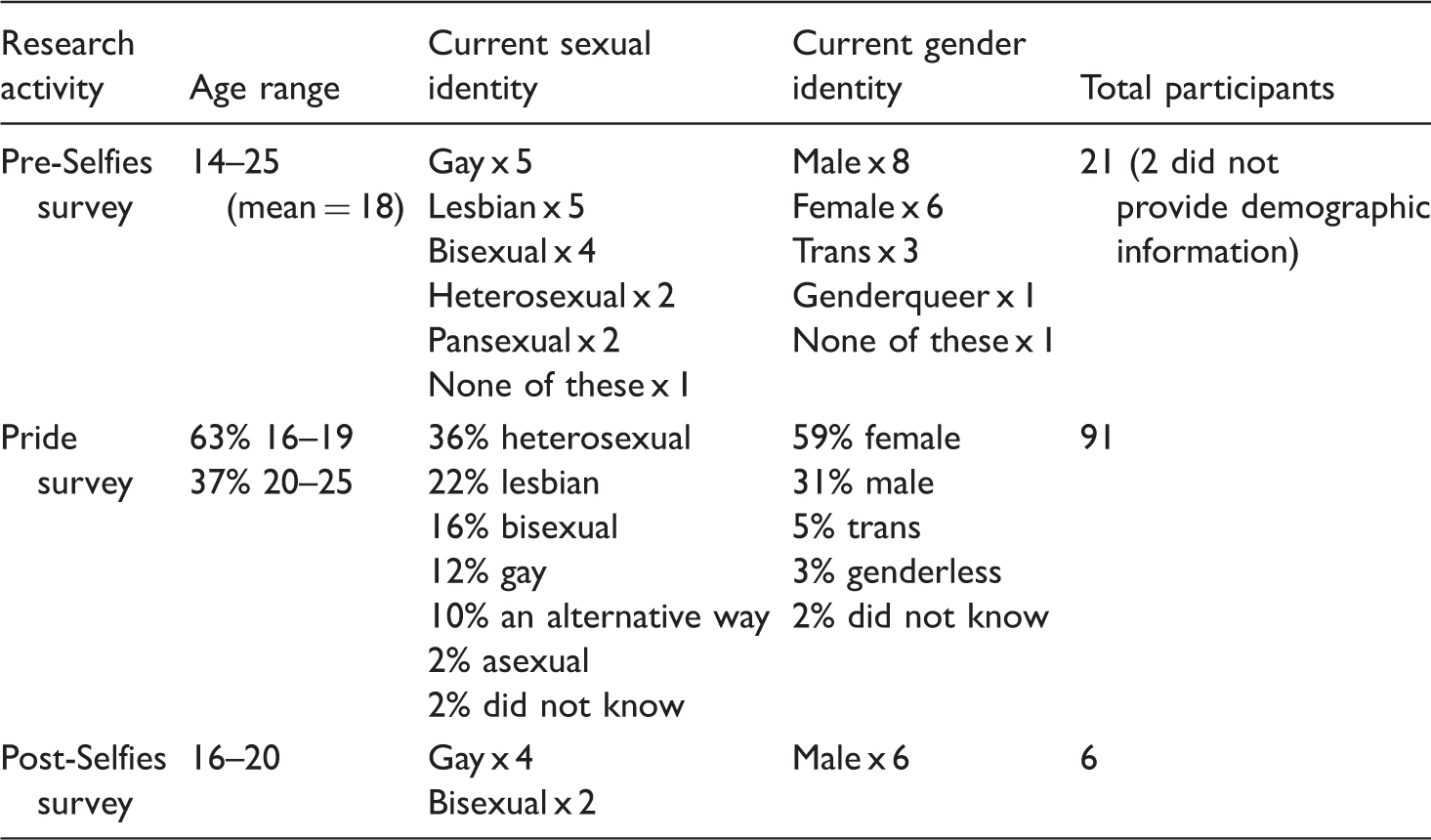
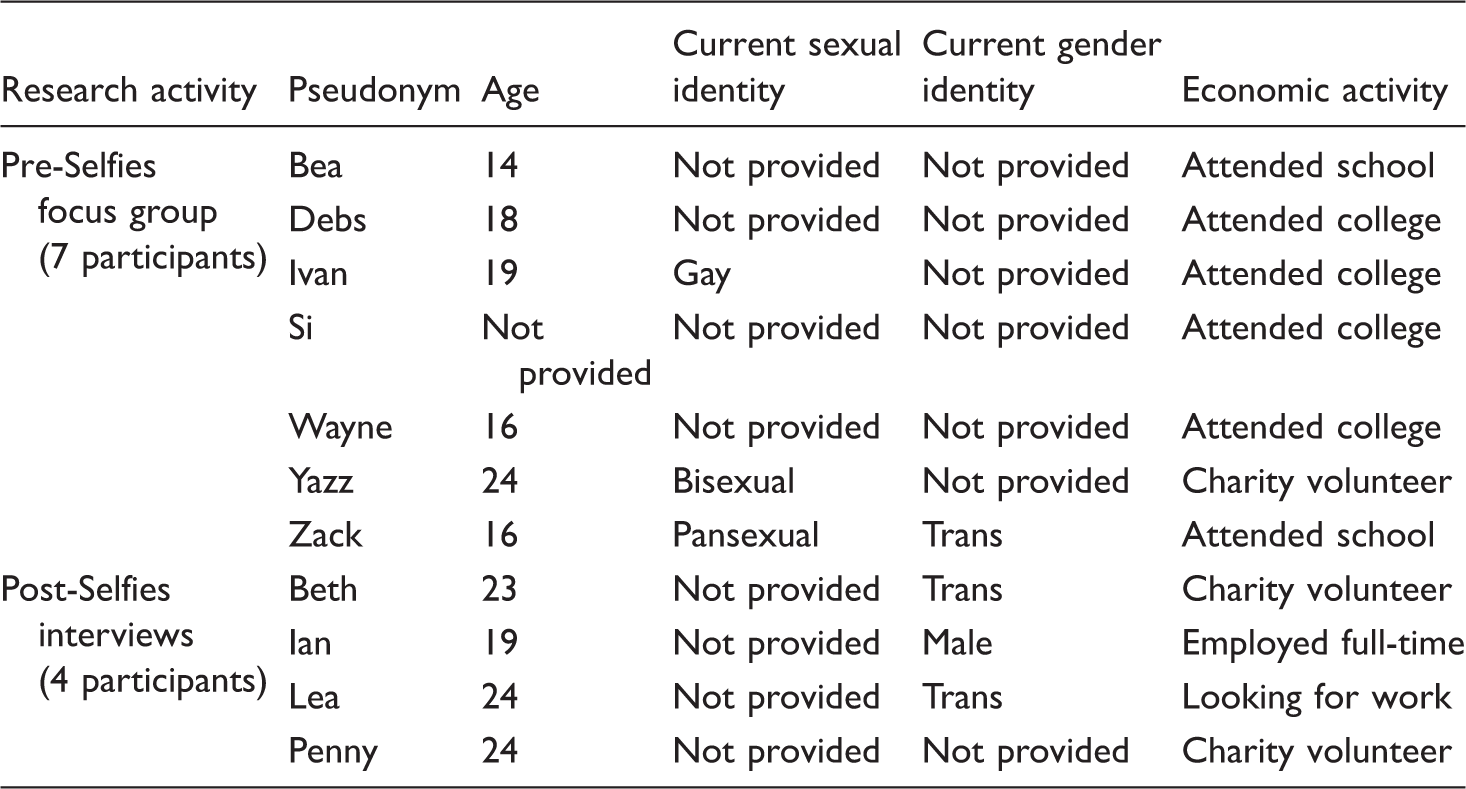
All data collection tools were designed by the authors in collaboration with Projects Galore. The pre-Selfies survey was disseminated to project participants by project staff the first time they met. The majority of the hard-copy survey consisted of closed questions covering the following sections, as well as demographic information: The world around you (related to, for example, visibility in the media and inclusion within what is taught at schools and colleges); Friendships; Education, advice and support; Relationships. In total, 21 young people completed the survey. Following on from this, seven individuals were involved in a group discussion that took place prior to the Selfies work at one of the four locations. Question areas concentrated on sources of knowledge about LGBT sex and relationships and their usefulness; suggested changes/wishes for future learning about sex and relationships for LGBT young people (including on content and mode of delivery); expectations and what they hoped to gain from Selfies.
During the course of Selfies another hard-copy survey (called ‘What’s OK in an LGBT relationship?’) was distributed by project participants, under the guidance of a core staff member, at a regional Pride event to gather wider information useful to inform Selfies content and delivery. It asked where respondents had previously got any information or advice about LGBT relationships; about relationship expectations (e.g. in relation to DVA), and about awareness of sources of support. In total, 91 people completed it.
Following the end of Selfies, a final hard-copy survey was distributed to project participants by Selfies staff. It focused on questions about the activities they had been involved in, what they had learned, how useful they had found involvement in Selfies, and suggestions for how the project could be improved in the future if it were to be continued. Six people completed the survey. After this, project participants were approached by Selfies staff to see if they would be willing to be interviewed. Four young people volunteered and their contact details were subsequently shared with the first author who then undertook individual interviews that explored the activities they had been involved in, what they had (not) enjoyed, any learning as a result of the project, and suggestions for how Selfies might be improved in the future.
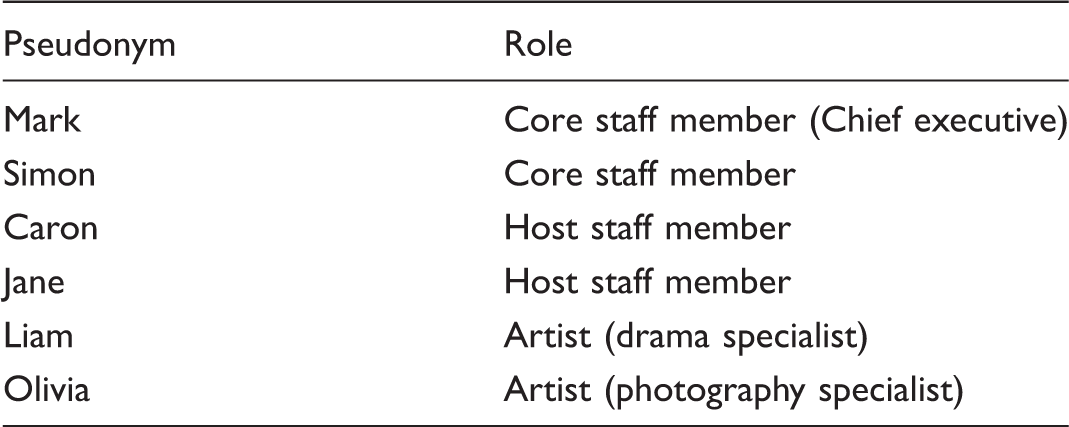
Finally, six interviews were completed with staff to examine their perspectives on what had worked well/not so well within the project; the project’s aims and ways of working; young people’s engagement, and any lessons learned. These were recruited via an initial email sent by the core organisation’s chief executive, and volunteers subsequently made contact with the first author to arrange a telephone interview. In-depth data from the interviews and focus group were digitally recorded and transcribed. All data were then analysed thematically by identifying and categorising recurring themes as they arose (Ritchie and Lewis, 2003).
Participants
Young people participating in surveys.
Young people participating in in-depth methods.
Staff interview participants.
Research findings
In this section we present our findings, which capture the unique experiences of young people and staff involved in Selfies. Where we draw on survey data, this is anonymous but where we cite qualitative extracts, these are accompanied by a pseudonym (see Tables 2 and 3 for details). Although small-scale, non-experimental, and non-generalisable in nature, we believe our data offer original insights that could usefully inform future debates about LGBT+ inclusive SRE/RSE. We outline but importantly go beyond young people’s experiences of formal SRE by identifying how they attempt to acquire SRE informally, and what they can gain from youth work based SRE, along with associated issues related to this delivery from practitioners’ perspectives.
Young LGBT+ people’s experiences of formal SRE and implications for learning about DVA
There was a consensus across pre-Selfies and Pride survey participants that LGBTQ people are not ‘at all’ included within what is taught at schools and colleges. Focus group participants said that they had had to learn for themselves because they either ‘missed’ their school’s provision of SRE/PSHE (personal, social, health and economic education) 5 or because their school had not yet provided any, reflecting the ‘patchiness’ of current PSHE provision (Formby and Wolstenholme, 2012), tied to its non-statutory status.
Even when SRE/PSHE was experienced, it did not mention LGBT+ people or relationships: In terms of LGBT-related things [in SRE], that’s even worse, it’s barely mentioned … it’s totally neglected. (Ian) It is very traditional and exclusive, like they don’t really cover things that could happen to everyone … A lot of it seems unnecessarily gendered towards the heterosexual perspective. (Lea)
When asked whether they had ‘low expectations’ of SRE focus group participants responded with laughter and derision, agreeing: ‘We don’t expect anything from them’ (original emphasis). This had implications for their learning about DVA, because it was felt that it was only ever discussed in a way that reflects what Donovan and Hester (2014) call the ‘public story’ of DVA, in other words, that it is a heterosexual problem (with only men as perpetrators), primarily focusing on physical violence rather than other potential forms of abuse. The young people, however, suggested that DVA is ‘relevant to everyone’s life’. A number of the group had personal experience of DVA, either from their own relationships or within their immediate family. Despite this, it was noted that it was sometimes difficult to know what is ‘weird’ in a relationship, and hence participants said they would like to learn about DVA.
Likely related to this context, the Pride survey results demonstrate some areas of potential concern that could be addressed within future SRE/RSE. Overall, 8% of respondents thought it was ‘OK’ in a relationship to hit a partner, and 52% thought it was ‘sometimes’ OK if boy/girlfriends asked to see who their boy/girlfriend had been ringing or texting (with an additional 2% thinking it was ‘totally OK’). In total, 25% knew of LGBT friends whom they thought had experienced DVA. The survey also found that formal sources of support were not often sought or used for advice: when asked who they might talk to about relationship problems 48% said a friend, 37% said a family member, 13% said they would contact an organisation, and 2% said their partner. Overall, 43% did not think there is enough support for LGBT people in relationships who experience DVA. This echoes previous evidence about LGBT mistrust, for example, of the police and other statutory services (Donovan, 2014; Donovan and Hester, 2014), as well as mainstream health provision (Formby, 2011b). These findings also support existing evidence that points to the importance of friends rather than family as the first line of support for LGBT people experiencing problems in relationships (Donovan and Hester, 2008, 2014).
Young LGBT+ people’s attempts to acquire SRE informally
In the absence of formal SRE, young people often sought to acquire information online and/or informally via their peers. They said that social media (Twitter, Facebook and YouTube) facilitated access to other people’s ‘own stories’, including ‘celebrities’ such as Tyler Oakley. However, within focus group discussions it was pornography that emerged as the most commonly accessed source of online SRE, with participants referring to this as ‘rule 34’ (i.e. ‘if it exists, there is porn of it’). Our research therefore supports previous evidence about the influence of the internet, and particularly pornography, for young people lacking formal SRE opportunities (Currin et al., 2017; Mustanski et al., 2014; Pingel et al., 2013). Accessing such alternative sources of SRE is not without its problems, for example seeing ‘religious comments’ condemning LGBT identities on social media made some of the participants feel angry. Young people using online sites to view other people’s experiences has also been problematised in terms of safety (Craig and McInroy, 2014), but their need to access information (which might result in not using privacy settings) should not be underestimated. Similarly, concerns about pornography as a source of SRE have been raised by practitioners and the public (Brook et al., 2014; Ellis-Petersen, 2017; Horvath et al., 2013), though not without critics (Smith et al., 2018). We would argue that only focusing on the ‘dangers’ online does not recognise young people’s reports of finding positive learning opportunities and safety in online spaces (Formby, 2017; Taylor et al., 2014). Education related to online safety therefore needs to be informed and nuanced.
Focus-group participants also illustrated some familiarity with each other’s sexual experiences (not reported here to protect confidentiality). Whilst this may suggest some level of peer support through talking amongst themselves, it could be problematic given the relatively wide age range involved in some groups (discussed further later in the article). When asked within the pre-Selfies survey, the majority said they had experienced an LGBTQ friend coming to them for help about a relationship or somebody they were seeing. A focus on sex here was noticeable, and could relate to the lack of sex education that many LGBTQ youth experience (see earlier). Comments also indicated some concerns about coming/being ‘out’, and domestic abuse, which SRE could potentially address. In the survey, just over half of respondents had felt able to help their friend(s) ‘a little’, but not ‘a lot’, suggesting opportunities for increasing capacity for peer support. Whilst the majority of pre-Selfies survey respondents thought that ‘looking after each other’, ‘listening to each other’s worries’ and ‘giving advice if one of you thinks the other is making a mistake’ were ‘very important’ within ‘good’ friendships, there was evidence to suggest they could be better supported to develop these skills.
When asked where or how they would most like to receive information or advice about sex and relationships relevant to LGBTQ people in the future, three of the top four responses were sources that could offer what might be called informal SRE: ‘at an LGBT organisation venue’ (x 17), ‘online’ (x 14), and ‘at a youth club or venue’ (x 12). However, ‘at school or college’ (x 15) was the second most popular answer, suggesting simultaneous interest in more formalised SRE too. When asked from whom they would most like to receive information or advice about sex and relationships relevant to LGBTQ people in the future, by far the two most common answers were from an LGBTQ friend or partner and from a youth worker. Echoing themes discussed among friends, topics they would most like to see covered in information or advice about sex and relationships relevant to LGBTQ people in the future were: ‘safe sex’; ‘how an LGBT relationship works’; ‘sex education’; ‘more about domestic violence and abuse’; ‘abuse in relationships/how to recognise abuse’; ‘STIs, how to be safe’; ‘STIs, domestic abuse’. Within the focus group, the majority argued that LGBT identities and relationships should be included within school lessons so that the information is available to everyone, whether or not they (currently) identify as LGBT.
Young LGBT+ people’s experiences of Selfies
Given the potential absence of formal SRE in young LGBT+ people’s lives, their experiences of Selfies (particularly in terms of approach and content) become more significant.
Participants identified the best aspects of Selfies for them, and this feedback begins to provide the framework for what an informal approach to SRE/RSE could offer young LGBT+ people in the future, for example the opportunity to come together and discuss (LGBT+) relationships in an informal setting: The way in which it was done, it was very informal, which was nice, it made you feel a lot more comfortable … I don’t have a problem talking to new people anyway, but most of the people who went do have kind of confidence issues and stuff like that, so it was good in that sense. (Ian) It was great … these interesting projects … like media, which I have never tried before, really enjoyable projects like that, and it made me want to keep coming back and it made me sorry when it was all over … I think it’s a very unique style of teaching through creativity. (Beth) It was just extremely, it was rather more, engaging I think. (Lea)
In part, this may be related to the approach of involving practitioners who identified as LGBT+ and who could therefore, to an extent, act as ‘role models’ for the young people: It was fun to meet some of the people … somebody you can learn a lot from … It was so inspirational being around [them] and being able to learn more from [them]. (Beth) As well as domestic violence and abuse … alongside that what they did was consent and … that’s vitally important, I think, because a lot of people, who maybe they’re just new out or they haven’t come out, you know, when someone offers you some sort of attention that you aren’t getting, then it’s so easy to fall into that trap of, well I’ll just say yes, even if they feel uncomfortable, because of some sort of closeness. I mean it happens with all people, but I think it definitely happens more so in the LGBT community because there’s more chance of confidence to be low because some of them might not be out. (Ian) I was in an abusive relationship a couple of years ago and [an] exercise kind of gave me more insight in to how I got in to it. (Penny) It did, like, what it set out to do and … it was always a good experience … [There is] nothing quite like what they did … I really enjoyed what we were doing and I can definitely see how it could be helpful to people. (Lea)
Practitioners’ experiences of Selfies
Whilst the foregoing themes have evidenced a lack of formal SRE for LGBT+ youth, and the ways in which this is, or has been, addressed, in this section we identify a number of issues and challenges in relation to professional practice.
First, is setting up and recruiting participants for this kind of work. Initially, Selfies had accessed existing groups of young LGBT people, which was thought to have advantages and disadvantages. The benefits were often connected to the ‘ease’ of this way of working in terms of practical logistics: I’m not sure it would have worked if you attempted to put groups together specifically for that purpose, because where on earth would they have come from? (Caron) Having that group there where they go every week was a blessing because they didn’t have an opportunity to run away from it. Because they’ve come together for a completely different purpose other than [Selfies] … those who didn’t feel artistic or didn’t have confidence … didn’t really want to engage beyond having the discussions (Caron). The whole thing worked well because … it went at their [young people’s] pace, it was something they were interested in … It not only fitted in with the group, it fitted in with our other stuff going on with the group, so it was kind of flexible and appropriate really. (Jane) When you’re getting [young people] into the 20s and things … some of them were at school, some of them are working, some of them have got mental health issues … The youngest was 16 and the oldest was 24 … it’s [a] huge [range]. (Simon)
Getting access to existing LGBT groups was also challenging, not least because of the impacts of austerity that meant youth workers for these groups were often sessional and difficult to get hold of, or there was no worker for the group at all and the young LGBT group self-organised. Partly for these reasons, between the first and second cycle of Selfies work the project changed strategy and began to recruit independently of existing groups, particularly in areas where the LGBT groups did not have designated youth workers available to support Selfies delivery.
Whilst not as large as the existing groups, the groups established specifically for Selfies were believed to offer more ‘intimate’ work with the young people involved: We had four who took part and … that was excellent, it really worked out well. It was really quite intimate work that we could do … in a small group … The kids that we had as well have other more complex issues going on apart from going through their [gender] transition. One of them has autism and another one of them had … some behavioural issues and stuff. In a bigger group they would have got a lot less and would have been unable to really get to the potential that we did. (Simon) I think that this particular group, it was small, there was definitely a big amount of trust and there is a huge comfort level there … I think it was a successful atmosphere because … [core worker] was running the group and he had a great rapport with them. (Olivia) We had one new person who joined that group who hadn’t joined any other groups through word of mouth from one of the others, and [they were] a young trans person … just getting comfortable with a name change and it was a really big step for [them] … We were privileged to be in the position to be there and support [them] on that. (Simon) At the beginning [core staff member] didn’t go in to huge detail about promoting healthy relationships, looking at abusive relationships, partly because I think it would have totally put them off. (Jane) As a vehicle for discussing kind of positives and negatives of relationships it [Selfies] has worked quite well … We haven’t done too much in-depth on sexual exploitation and domestic violence … for a lot of the group, it was kind of beyond what they could imagine. (Caron) I think because I work with a very visual media that it lends itself to … getting at something very intense, so if someone allows themselves, if someone has control over their image and it’s part of the process of producing … it’s a safe but exciting way to explore your image, your body issues. (Olivia) I thought it worked really well … I think it [drama] is a way in which you can have discussions about any problems or any issues and talk open and free about something and not realise that actually you’re talking about yourself … it actually helps people engage with their own communication skills because … you have to put yourself in someone else’s position and then you can empathise and then you say ‘well actually I wouldn’t do it like that’, and that may be the first time they’ve thought about how they would deal with these situations. (Liam)
Opening up varied conversations was identified as useful, and at times led to impactful discussions: They were very engaged … even the ones who weren’t interested in doing the [art] got involved in the discussions … and gave their points of view and some personal stories … I think it opened a few eyes … I think they all realise that some friendships or some relationships that are ongoing or quite new actually were pretty negative. It’s enabled them to think about what they might do about that. (Caron)
Discussion and conclusion: Making the case for LGBT+ youth work and informal SRE/RSE for LGBT+ youth
Selfies was valued by both participants and practitioners for its methods and approach, and for its content/the subject matter it dealt with. Here we draw together some of our overall observations.
First, is that LGBT+ youth feel strongly about the invisibility of LGBT identities within mainstream school and college settings, and want support regarding sex, relationships, and coming/being ‘out’ (either at an LGBT organisation, a youth group/venue and/or at school or college). Second, they identified a lack of role models and positive images of LGBTQ relationships in the media and wider society that left many of them unclear about what to expect in a relationship. This may link to the importance they placed upon having LGBTQ friends, which for some were lacking. This evidences the lack of appropriate SRE currently provided (which has implications for young people’s learning about DVA), but also the pressures that may be placed upon LGBTQ friendships striving to fill this gap, which supports the provision of services to up-skill and build capacity for LGBTQ peer support. However, building capacity in LGBTQ peer support becomes complex in a context where ‘age-appropriate’ discussions may be hard to balance in mixed age groups.
Where support was lacking, LGBTQ youth went online or ‘learnt from experience’ or their peers, which was not without its problems. Alternatively, they turned to LGBT organisations, groups and youth workers, which is concerning given that LGBT organisations and youth services (both commonly in the third sector) have been particularly hit by UK government funding cuts (Davies et al., 2016; Puffett, 2017).
In conversations about Selfies, three separate but interlinking needs of LGBT+ young people were identified that the project could, or was, addressing: LGBT-specific youth work; ‘general’ LGBT SRE; LGBT SRE specifically focused on DVA and/or CSE. Young people valued the informality, opportunities for creativity that they found engaging, access to LGBT+ role models, and DVA/consent-related content. Whilst Selfies was set up to specifically address DVA and CSE through building strong friendships and peer support, in some of the groups where there was no existing youth worker Projects Galore had to offer LGBT-specific youth work and ‘general’ LGBT SRE as groundwork first. Selfies was thus, at least partly, addressing wider gaps in youth service provision and/or LGBT support. In particular, core staff felt the absence of specialist work (run by youth workers as opposed to a self-run group) for LGBT+ young people in the region, which meant that in a couple of the groups they worked with, the young people were not always youth/group work ‘ready’ to begin Selfies work on DVA and CSE specifically. Whilst delivering this work within existing youth groups may appear to be the most efficient method to provide LGBT+ inclusive SRE, it may mean young people are less engaged (having not directly asked for, or signed up to, the project), and can be so varied in age, background and health or learning needs that this makes the work more difficult. In addition, there are questions about what an ‘existing group’ is, when sometimes it may be run as a self-organised space with little staff support on offer to young people. This lack of youth work ‘grounding’ for some of the Selfies recruits, plus the level and range of some of their needs, suggests that delivery needs to be carefully pitched and managed. In an ideal world, groups would be tailored and not so varied, and have qualified youth workers who are adequately supported and supervised. Establishing new, dedicated groups to offer SRE/RSE may take longer and therefore require more resources, but may facilitate more intense or impactful work, and provide an opportunity to reach young people not accessing services or support elsewhere. Although demonstrating its complexities, this research therefore offers useful messages for future practice regarding recruitment and delivery.
In future, thought needs to be given to the provision of broad LGBT+ youth work, ‘general’ LGBT+ inclusive SRE, and LGBT+ SRE focused on DVA and/or CSE, and the ways in which these can be distinguished and/or simultaneously supported. In the current climate of ‘austerity’ and shrinking public services able to support LGBT+ young people, this may be a challenge for remaining LGBT+ youth work trying to facilitate affirmation and peer socialising, fill the gaps in mainstream SRE provision, and attend to some of the specific concerns about DVA and CSE for LGBT+ youth. This is likely to demand flexibility and responsiveness on the part of workers, who may meet a variety of individual expectations and needs from the young people they work with. Given the lack of available SRE for LGBT+ young people, it is expected that the provision of more generalised SRE content would be useful, which could then lead into more detailed discussions of DVA, CSE, and any other specific issues that young people may raise. A DVA/CSE focus thus needs to build on ‘core’ SRE building blocks as a starting point, which the Selfies work suggests may be lacking. Whilst forthcoming statutory RSE is a positive step, we await evidence that it will adequately address the needs of LGBT+ young people. In this context, we suggest that youth work practice should be placed more centrally within debates about SRE/RSE, particularly for those who may face specific issues.
One way of addressing this context is to focus on relationships and not only on the mechanics of sexual acts. Providing opportunities for young people to consider what a ‘good’/happy sexual encounter and/or relationship might be would be useful for all young people, enabling them to begin a process of exploring and establishing their own ‘rules’ about what they will and will not accept from a sexual partner/relationship. Conversations about consent are a crucial part of this process to enable young people to recognise the importance of both verbal and non-verbal ways that consent might be communicated. Whilst a focus on mechanical acts might be appropriate at some stage, it is worth considering not focusing on acts involving the penis as the ultimate or definitive sex act, so that sex is understood to involve a choice of different kinds of practices regardless of sexual and/or gender identity. There are international resources that can be useful here (see for example RFSU, 2019).
Discussions about love should include how this can be used to manipulate and provide a cover for abusive behaviours, because feelings can be confused when somebody is both kind and cruel/caring and controlling. Whilst heteronormative gendered assumptions and practices are implicated in the enactment of, and social structural support for, these behaviours, they can be experienced across gender and sexuality by somebody who is being abused and/or groomed (Donovan and Hester, 2014). All young people should also be provided with opportunities to reflect on the ways in which the internet and other social media shape norms about sex, bodies and communication about sex and relationships, love, power, care and control, privacy, safety and surveillance. Working with young people to rehearse ‘sex speak’, ‘power speak’, ‘love speak’, ‘rejection speak’, ‘protection speak’, ‘consent speak’ and ‘help speak’, for example, would be useful for everyone, without anybody having to ‘come out’ or name a partner or particular form of sexual attraction.
There is a history of research-informed calls for greater funding for LGBT+ youth work, but in the present climate these are unlikely to be met. The need for work like Selfies therefore becomes paramount, particularly where young people call for SRE ‘refreshers’ post-schooling age (and there might be opportunities to develop this within further and higher education as a result of the Universities UK (2016) agenda to address interpersonal violence, sexual violence, hate and harassment on campus). Youth work offers what schools, colleges and universities cannot always: developing young people ‘ready’ for group work, with awareness about social justice, and with experience of talking through social issues in non-judgemental ways. LGBT+ youth work can therefore provide safe spaces for young LGBT+ people in which they can participate in informal education to enhance their knowledge, skills and confidence in relation to SRE and their sexual and gender identities.
The Selfies project makes the case for LGBT+ youth work within which young people are offered different ways of thinking about their potential for ‘safe’/happy sex and relationships. This could help promote strong ethics of friendships, awareness about DVA and CSE, and decision-making in favour of positive/egalitarian relationship qualities.
Footnotes
Acknowledgements
The authors would like to thank all those who supported this work, including the young people and professionals who distributed or completed surveys, and who participated in interviews or group discussions.
Funding
The research was funded as part of the Selfies project by Projects Galore, who drew on contributions from the North East Domestic Abuse Project (NEDAP), the Big Lottery, the Allen Lane Foundation, Comic Relief and Northumbria Police and Crime Commissioner, Vera Baird.
