






Abstract
To understand the contemporary use of sexual categories in shaping subjectivities, we must situate them within their historical and cultural context. The category ‘bisexual’ has faced rejection and erasure by Spanish feminism and the hegemonic LG movement. However, we are currently observing a resurgence of the label among younger generations. This paper examines the narratives surrounding bisexuality among Spanish youth within the framework of Spanish transfeminism. The qualitative analysis reveals narratives that emphasize bisexuality within a binary gender framework, alongside others that align with a broader spectrum of plurisexuality. This analysis also maps these subjectivities onto an ontology/epistemology matrix, helping us understand sexual identities through a political lens of identity.
Introduction
Lesbian, marica, trans, bollera, and bisexual are sexual categories that coexist in Spain today. However, despite the work of academics and activists on these realities, the Spanish context is characterized by a relatively low level of institutionalization of studies on LGTBQ + sexualities compared to other regions (Calvo and Pichardo, 2011). This has led to notable gaps, including a lack of interest in bisexual experiences (Domínguez, 2017). In 2011, the journal Sexualities dedicated a monograph to transformations in sexuality in Spain, which included contributions from prominent Spanish authors, yet notably lacked any focus on bisexuality. More than a decade later, this silence persists. In this paper, we adopt a sociological perspective to take on the necessary task, as Galupo (2006) suggests, of examining how bisexuality is understood in a given social context, based on the interpretative frameworks used in Spain.
Halberstam (2018, p.22) asserts that “naming fixes bodies in time and space and in relation to preferred social narratives of difference.” We accept that language acts as a shifting ecosystem where terms may change, disappear, or become unreadable, while functioning as a space where words are suspended above synonymy. As Jorge Fontdevila (2020) states, referencing Hacking’s work, interactive taxonomies never exhaust the range of lived sexual practice. The categories we use to understand the dynamic relationships between pleasure, identification, social recognition, reproduction, and libidinal drives, as Halberstam (2018) tells us, change quickly, often under the pressure of new forms of activism. Moreover, these sexual labels are intersected by axes of inequality (class, ethnicity, age) that complicate any homogeneous notion of identity, and reflect the hybridization between global and local orders (Platero, 2008).
One of the key intersections in queer theories is the emphasis on subverting gender and sexuality to challenge the hegemonic social order (Vidarte, 2014). Teresa de Lauretis’s introduction of Queer Theory aimed to disarticulate the essentialist foundations upon which social identities like “gay” or “lesbian” are built. For De Lauretis (1991, p.XIX), “sexual identity is neither innate nor acquired but (re)structured dialogically by fictionalized forms that are culturally available and historically contingent.” The extent to which this decentering activates the collapse of classificatory regulations is explored in the literature on corporeality, gender, and sexuality (Coll-Planas, 2012).
In the Spanish context, Cuir Transfeminism emerges as a framework drawing from radical feminist genealogy and sexual mobilization, challenging the classical feminist movement (Trujillo, 2022). Ira Hybris (2023) points out that Transfeminism involves a critical reconsideration of feminist genealogy, the challenge to the singular and monolithic subject of hegemonic feminism by incorporating subjects traditionally excluded from the feminist struggle, attention to the plurality of oppressions arising from social relationships and structures, and the formation of alliances that aim for the radical transformation of society without relying on identitarian anchors. As Sayak Valencia (2018, p.31) explains, “transfeminist movements aim to open spaces and discursive fields for practices and subjects excluded from the neoliberal reconversion of feminist critical apparatuses—a reconversion we now recognize as biologistic gender politics or cis-women’s polítics”. The articulation of a movement that re-politicizes sexuality seems supported by current data, suggesting that the young Spanish population increasingly accepts sexual identity fluidity and recognizes affective-sexual diversity (Pérez-de-la-Merced, 2020).
The silences of sociology regarding bisexual realities
The historical articulation of cultural concepts of sexuality and subjectivities leads us to a decisive matrix in which, on the one hand, sexuality is recognized as having motivations beyond the procreative, and on the other hand, erotic motivation involves the gender of the subjects (Rust, 2000). Although static gender categories have been challenged through the critical lens of Queer studies, our understanding of desire as monosexual and our perception of sexual practices as inherently gendered remains largely unchallenged (Rodriguez, 2016). Bisexuality is thus confined within a sexual order that is based on monosexuality and a binary notion of gender.
Kenji Yoshino (2017) offers an explanation for the broader sociological absence of bisexuality, suggesting that bisexual erasure is a strategy to manage the inconsistency that bisexuality implies in relation to both heterosexuality and homosexuality. Bisexuality is rejected because it is articulated as a void that does not adequately challenge the sex/gender system (Pichardo, 2008). Moreover, as Angelides (2001, 2006) has shown in several contexts, the category of bisexuality has been relegated or even erased from the deconstructive field of Queer theory perhaps, as Hemmings (2007) argues, because it has been accused of reproducing the very oppositional identity categories that queer theorists sought to dismantle. The “bi” appears as the link that unites polar opposites.
This context requires us to adopt a critical stance that recalls the words of Angelides (2001, p206) when he stated:”Which we refer to as «sexuality» can never be understood in ontological terms only, as what a body is, which is inextricable from what a body does; and what a body is and does is thus indissociable from discourse, history and change”. As Laura Arnés et al. (2019) point out, bisexuality deserves a place in contemporary reflections on gender and sexuality—not merely because bisexual realities have been historically misunderstood or ignored (although they have)—but because the narratives bisexuality proposes constitute an affective and effective discourse that creates meaning not only about itself but also about the symbolic matrix of sexuality. Bisexuality raises important critical questions about the intersections of sexuality and gender, as well as the epistemologies of these categories (Monro et al., 2017).
The young population studied here has been positioned at the crossroads of heated debates—such as trans inclusivity, recognition of sex work, and intersectionality—that have taken place within Spanish Feminism over the past decade, becoming increasingly intense since 2019 (Parellada, 2022). In these contested feminist spaces, Transfeminism has played a significant role as a movement proposing to destabilize the correspondence between sex, gender, desire, and sexual practice (Grau, 2018). From these perspectives, bisexuality is no longer seen as an individual attribute but rather as a category in flux—undefined and unstable (Lahti, 2020). However, transfeminism does not solely aim to disrupt identity; as Valencia (2018) notes, the transfeminist perspective seeks to function as an epistemological tool.
In his classic text on the sociological study of sexuality, Steven Epstein (1994, p.199) asked: “How are complex, often internally contradictory, and ambiguous systems of sexual meaning constructed and challenged in different cultures?” The aim of this research is to qualitatively identify the polyphony of meanings through which young people in Spain enrich the category of bisexuality. Additionally, we seek to trace how these meanings intersect with the crossroads of sexuality and gender, and how they navigate the ontological and epistemological dimensions inherent to identity construction.
Methodology
To define the study population, we used Plummer’s (2010) notion of sexual generation, focusing on young people residing in the Valencian Community (Spain) who, at the time of fieldwork, were between 20 and 30 years old. According to the literature, generational impact is significant in the reformulation of sexual identities, displacing traditional taxonomies and proposing other categories that challenge the binary system or do not revolve around gender (Hammack et al., 2022). However, our sample consists of young people who chose the sexual label of bisexual for themselves. While this may seem like an old-fashioned category that has been replaced by newer ones, as several studies have noted in other contexts (Cover, 2018), it is of interest to us to understand what the young Valencian population means when they identify as bisexual.
Our sample comes from two research projects, both designed from a qualitative methodology. (a) GV/2020/023, ‘Online Sexualities’: uses, meanings, practices, and experiences of the young population (20 to 30 years old) with sexuality mediated by virtual environments and media. Government of Valencia (Spain). (b) Non-binary people, struggling gender structure. International project on non-binary realities led by Professor Barbara Risman of the University of Illinois at Chicago.
For the fieldwork of Project A, a recruitment questionnaire was used to collect information on various sociodemographic categories (Suen et al., 2020). All questions in the form were open-ended. The question on sexual identity asked: “If you had to choose a sexual identity that defines you, what would it be?” Participants were free to write their chosen identity, and no response options were suggested. In this article, we focus on the participants who wrote “bisexual” in response to that question. These individuals represented 35.5% of the 107 respondents who completed the questionnaire. Other plurisexual labels were also used (e.g., pansexual, fluid, mamarracha), but these were minority cases. The questionnaire link was distributed primarily among students at the (University of Spain), as well as through snowball sampling among the general population.
For the recruitment of the second research project, snowball sampling was also employed to locate participants, along with advertisements placed on the walls of educational institutions and LGBTQ + associations. Additionally, a recruitment brochure was posted on Facebook and Instagram to promote the study (DeCapua, 2017). In the initial telephone conversation with respondents to the advertisements, participants were asked the same sexual identity question as in Project A. Of the total sample in Project B (n = 45), 71% self-identified as bisexual.
Consent forms were provided to participants, who signed them in person before the interviews began. Participants were informed that they could withdraw from the interview at any time and that the interview would be recorded. All participants received a gift card (€35) as compensation for their participation. The interviews lasted between 50 and 120 minutes. This study was approved by the Generalitat Valenciana Ethics Committee (approval no. GV2020-023) on December 2, 2020.
Descriptive statistics of study participants.
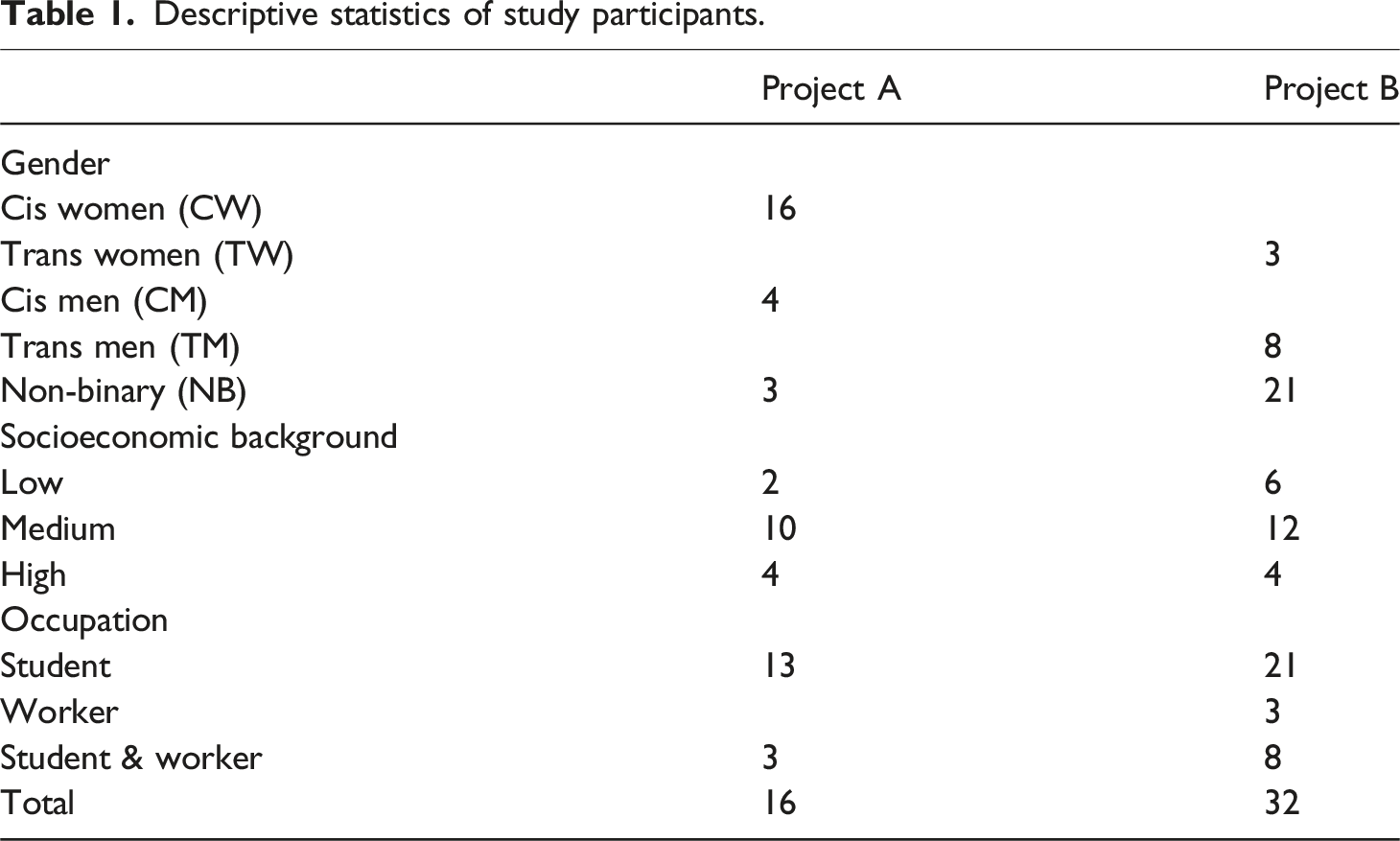
The fieldwork for both studies consisted of semi-structured interviews guided by a script designed to address the research objectives. One section of both interview guides focused on participants’ experiences in their sexual lives. Participants were encouraged to share narratives associated with bisexuality, including how they demarcate boundaries and negotiate their identity in relation to other traditional categories (e.g., gay, lesbian, heterosexual) and/or emerging categories (e.g., pansexual, heteroflexible). We followed Rebecca Jones’s (2019) methodological recommendation to respect individuals’ current choices regarding identity labels while also recognizing how these choices are shaped by specific interpretations and theories of gender and sexuality.
For the analysis of qualitative data, a discourse system analysis supported by Atlas.ti v8 software was conducted. Through this analysis, we identify both hegemonic and emerging discourses about bisexuality (Conde, 2010, 2019). To carry out the coding process, a strategy similar to that used by Winer et al. (2022) was followed. Grau performed an initial coding using memos to explain the specificity of each explanation of sexual identity. Then, a code scheme was created by grouping similar explanations. The codes were developed inductively following the approach of Deterding and Waters (2018). Once Grau had completed this process, Faus conducted an independent coding of the material using the same code matrix.
The challenge we have undertaken in this research is not only about expanding the spectrum of meaning of the theoretical category of “bisexuality” by paying attention to both its ontological and epistemological dimensions, but also about developing an analytical methodology capable of accounting for this phenomenon. With this purpose in mind we structured an analysis matrix to explore the variability of narratives about bisexuality. Regarding the first axis, at one pole, we find an ontological dimension of bisexuality, and at the other, the epistemological dimension. By ontological dimension, we refer to discourses that relate to sexual categories as attributes that allow individuals to identify themselves and be recognized by others. This dimension places subjectivity in the reality of the self, referring to the reification of sexual categories and the legitimate place of being. It reflects the traditional way of understanding sexual subjectivity—as a label that defines who we are. We could summarize this in expressions such as Carmen’s: “it was hard for me to realize that I was bisexual.” (Carmen, TW20)
By epistemological dimension, we refer to discourses that make strategic use of the category to articulate different viewpoints or forms of knowledge. These are narratives that complicate the notion of sexual subjectivity, moving beyond the self-reflective level to turn sexual subjectivity into an instrument of political positioning: “[bisexuality] makes you think differently about people you may like.” (Andreu, CM23). Our suggestion is that this reading of sexual subjectivity as an epistemological tool derives from approaches to reconfiguring sex, gender, and sexuality, characteristic of Queer theory and, specifically in the Spanish context, the Transfeminist movement.
The other axis organizes discourse along a vector that, at one pole, maintains a direct association between erotic motivation and the gender of subjects—following the traditional conceptualization of human eroticization processes. At the other pole, this axis considers additional elements or attributes besides gender as motivators of desire. In this pole, we find narratives emphasizing non-embodied aspects of people, such as their way of being, political positions, or belonging to certain groups: “you meet that person in all the movidas [political activities], a workshop, a manifa [demonstration]… and well, you know [he/she/they] is your type… that is enough for you to like him/her/them, isn’t it?… whether he/she/they is a boy, a girl, or trans… it is not… it is not determinant.” (Mia, NB20) (Figure 1). Matrix analysis tool.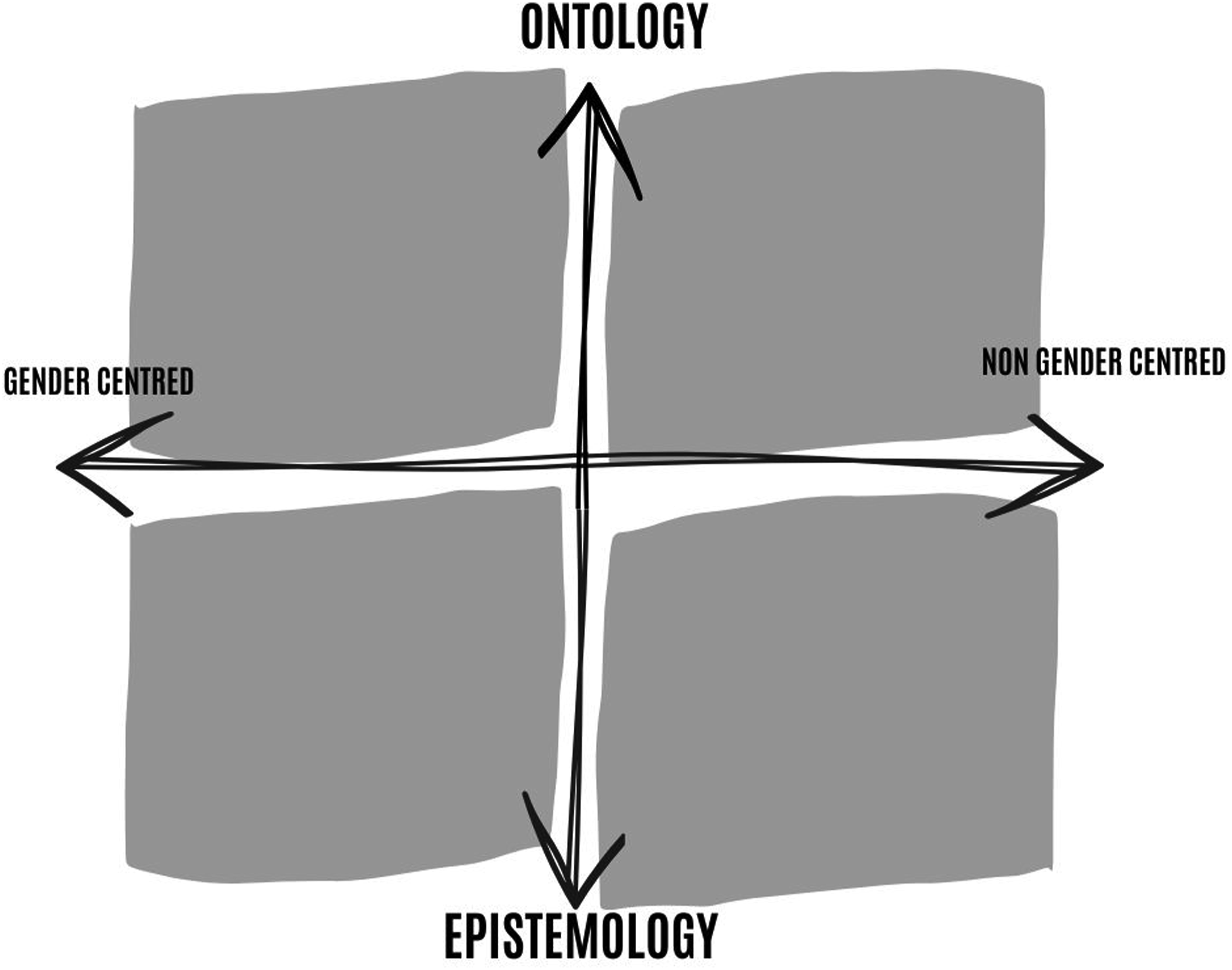
Findings
Being confused? Strategies of erasure and deactivation of bisexuality
Social labels function as devices of social control, aiming to redefine bisexual identity within parameters of rigidity and stability (Galupo, 2018). A recurring theme in our interviews was the invisibility and erasure of bisexual identity. One of the interviewees explained it this way: “If I have a boyfriend, it is something normal; if I have a girlfriend, for them [her family], she is a friend” (Paula, CW20).
Alejandra Sardá (2019) compiles some of the strategies of identity disarticulation that have been used regarding bisexuality, which hinge on notions such as immaturity, suggesting that bisexuals are perpetually in a state where all objects are potential love objects: “my friend always tells me… but make up your mind! Are you sure you are not a maricón [faggot]?” (Pau, CM22); imposture, implying that they are “actually” gays or lesbians who do not dare to admit it; confusion, characterizing them as people who do not know what they want: “they tell you that you are young and that this is a phase that will pass” (Carlos, CM21); hypersexualization, claiming their libido is so intense that it does not discriminate between socially accepted and prohibited objects; and egocentrism, focused solely on the pursuit of their own pleasure. Our interviewees added another delegitimizing strategy, an accusation of using the label of bisexuality for the purpose of distinction: “they [people] think I want to be cool because it seems more edgy to be ‘bi’ than to be straight” (Lila, CW20).
However, they demonstrate that bisexual identity still needs to be justified and proven to fit within the boundaries that delimit our language related to sexual categories, as Galupo (2018) notes. Bisexuals navigate the world seeking acceptance not only from heterosexuals but also from gays and lesbians (Bollas, 2023): “you feel like [gays] think you have it easier because no one sees you, no one knows” (Carlos, CM21).
Ultimately, this is about situating the dimensions of experience in a negotiation with the matrix of social categories of sexuality. And I said: 'Well, I'm bisexual, I like the whole spectrum, so to speak... (...) so when I started dating this person, one day I told them [her family]: 'Well, I'm dating this person'. And they said: 'Oh, so you're homosexual?', and I said: 'No, I'm bisexual', and they said: 'But you're with a guy, if you were bisexual you should also be with a girl' (Cristina, CW23)
Another delegitimization strategy experienced by bisexual individuals relates to the tallying of contacts with different genders. Bisexuality is expected to be a stable identity, and this stability is supposedly demonstrated through sexual routines. A person who identifies as bisexual is often expected to have a number of contacts—if not equal, then at least similar—distributed between genders. People think it's percentages... a 50 and a 50, and it's not like that, because there are stages in your life where you like women more, where you like men more, or you like them equally, or... And I think this also made... it was very difficult for me to see that I was bisexual, because I understood that I had to like them equally, and maybe I liked men more than women (Paula, CW20)
Currently, however, mechanisms of discrediting bisexuality are associated with the creation and popularization of alternative labels that force a return to centering. Participants mentioned labels such as “heteroflexible” and “heteroconfused.” We believe these labels function as reorganizational devices, suggesting that the individual is fundamentally heterosexual, even if they “occasionally” transgress identity boundaries.
Many individuals feel compelled to explain and justify a reflective stance on their own identity, and they don’t even feel legitimized to use a category associated with instability. but yes, there was a time when I felt attracted to a girl, so it's like: 'Wow, I don't know if I should call myself bisexual', I mean, I also don't know if it's enough for me, can I call myself bisexual if I've only liked one...? That's what I wonder (Noa, CW22)
The following is an overview of the discourse system derived from the qualitative analysis of the different meanings attributed to the bisexual category by the young population. We will relate each discourse to the analysis matrix, which intersects the ontology/epistemology and gender-centered/non-gender-centered axes. This analysis will allow us to map out the various meanings, as well as their similarities and dissonances. Although our research is based on a qualitative epistemology, it is also worth noting the prevalence of these discourses within the study population in order to identify trends of hegemonic or emerging narratives regarding the bisexual label.
“With both sexes”: Bisexuality from the gender binary
Rust (2000) states that in the current cultural context of the early 21st century, where sexuality constitutes a key element of identity, individuals who do not fit into the dominant cultural categories of heterosexual/homosexual attempt to appropriate an experiential space, one that would be bisexuality. The narratives we have identified with the discourse of “both sexes” refer to a framework in which plurisexuality is acknowledged, but it remains anchored to a binary gender matrix, still tied to the bodily and gender categories of man and woman. In this sense, it is the self-assigned gender, in relation to the gender by which the subject is perceived, that sparks erotic motivation, thereby justifying desire. This desire, though fragmented, is still binary, summarized in the classic notion of being attracted to “both genders”: “So, what is bisexuality? Well, basically, it’s that you can like people of either gender, and that’s it” (Andrea, CW19). Amber Ault already pointed out in 1996 that these discourses on sexual subjectivity do not fully escape the influence of binary structures, although they also function as political tools for transformation.
In this case, the “bi” is interpreted as referring to two genders. This definition of bisexuality has traditionally been criticized by the LG movement, as it is seen as complicit with the hegemonic binary order. However, this should not erase its potential to challenge the homosexual/heterosexual dichotomy (Domínguez, 2017) and to transcend monosexuality (McDowall, 2009). If they see you're with a guy they already think you're heterosexual... and no, I have a partner who is a guy and he defines himself as heterosexual, but I'm bisexual, our relationship may be hetero, but I'm bi (Laia, CW21)
These narratives, ranked from least to most prevalent, are the second least common. Symbolically, we would place this narrative in the upper left quadrant of the discourse matrix. In these cases, the narrative surrounding sexual identity revolves around personal identity, as it relates to a reading of the body/being that is defined in ontological terms by two different modalities of body/being, distinguished by assigned gender. The emphasis is on a rupture with normative heterosexuality, which is incorporated as part of the identity, although this still occurs within a binary framework. We also place this narrative in strong relation to the gender link, as the stability with which gender is interpreted as a motive for attraction is particularly evident in these discourses.
“Is that possible? It could be”: Bisexuality as a revision of erotic inheritance
The discourse analyzed in this section accommodates narratives that disassociate sexual identity from sexual practice. Although this is the least prevalent narrative—perhaps the rarest—what makes it interesting is that it breaks with the notion of bisexuality that, in line with its categorical social definition, requires engaging in sexual relationships with men, women, and/or other genders. Instead, the emphasis is on the potential of the self-assigned label as a tool for revising sexual cultural inheritance. We could say that this approach is about the desire to “revise desire” without necessarily materializing it. Am I bisexual? Yes. Have I had sex with other genders? No. Is that possible? It could be (Roser, CW19)
This characteristic of immateriality attributed to bisexuality becomes explicit in the rethinking of temporality. One does not wait to identify as bisexual until they have relationships with multiple genders; rather, they are already bisexual because the possibility for these relationships exists. With this perspective, the idea of bisexuality as merely a phase in one’s sexual development is disrupted. In this case, what I highlight with that is that I am sexually attracted to a woman, but when it comes to sharing my life and starting a family, I wouldn't mind doing it with a man, because I value more things apart from sexuality. I mean, I wouldn't mind sharing my life with a man if I'm in love with that person. So I would define it like this... and it hasn't happened yet, but it could happen in the future (Carlos, CM21) I'm not going to say two personalities because that sounds really bad, but like two pulls, like two tendencies, so one is satisfied [having sex with her boyfriend], but the other one isn't (Lola, CW19).
Despite efforts by authors like Bauer and Brennan (2013) to separate sexual identities from sexual practices, both contemporary society and scientific literature continue to validate sexual identity through behavior (Cipriano et al., 2022). This need for reaffirmation through action stems from the social context and contrasts with positions that challenge this view—positions that are often the most questioned and delegitimized by a model of sexuality still firmly centered on gender and behavior. Identifying as bisexual without engaging in sexual relationships with multiple genders is often seen as a strategy to distance oneself from the hegemonic model without facing the social control and external scrutiny that come with increased visibility. We don't seem credible, we're seen as wanting to be cool... and you can feel the anger from the [LGBTIQ+] community... and I understand, but I would also like to be understood (Pau, CM22).
The analysis of these narratives shows that genders continue to be eroticized as objects of sexual motivation, although we could say that this projection materializes into a fictionalized idea of gender that has not yet taken physical form. However, these narratives highlight the epistemological reconfiguration work, which is associated with the emphasis on dismantling the cultural inheritance of dominant cisheteronormativity. As Fontdevila (2020) points out in his study on bisexual Latino men, not only are specific subjective phenomena experienced, but there is also a form of “phenomenological reduction” that partially suspends assumed heteronormative binary structures. For these reasons, we place this narrative within the epistemological axis, in the middle of the two lower quadrants, as it points to a reconfiguration of the knowledge framework that challenges previous perspectives on sexual identity: “For me, it is a huge step forward to know that nowadays it could be possible [to be with someone other than a woman]” (Tomeu, CM19).
“Bi” is not binary: Bisexuality in the spectrum of plurisexuality
The narratives included in this discursive thread reflect the transformation that the label of bisexuality has undergone over the last two decades, expanding the possible genders of desire (Taylor, 2018), but above all, they emphasize the dilemma between monosexuality and plurisexuality. And bisexual because really... for me, a person's gender doesn't determine whether I like them or not, it's just one more trait (Nil, NB19).
Angelos Bollas (2023) argues that what was once considered a purely heteronormative dominant culture has now been replaced by a hetero/homonormative culture. Within this framework, plurisexuality is seen as a threat. In these discourses, bisexuality seeks to break away from its essential connection to the gender binary, drawing from plurisexuality as an alternative theoretical construct aimed at disrupting both hetero and homonormative culture. So, well, it's in the bisexual manifesto itself that bisexual means being attracted to all gender identities, so I've... well, for almost the same years that I identified as non-binary, I also identified as bisexual, so I like... I can like all people (Geri, NB20).
In this context, bisexuality is not a composition of “half hetero/half gay,” but rather a conscious plurisexual navigation of both gender norms and norms of monogamy, in all their forms. I: And are you open to them being cis or...? R: It doesn't matter to me. I: It doesn't matter to you. R: To me it doesn't matter. I mean, as I always say, I don't care what the person has between their legs (Cristina, CW23)
As Kathryn Nutter-Pridgen (2015) points out in her research, this represents an important discursive negotiation, where two different dimensions are managed: one advocating for the maintenance of bisexuality as a collective (public) identity, and the other respecting the diversity among individuals. The creative formulation of new labels by activism, such as “pansexual,” may eventually displace the label “bisexual,” thereby deactivating its binary background. While we recognize that this is the case in other contexts (Flanders, 2018), the term “pansexual” has not yet gained significant traction in the Spanish context, though it is easy to anticipate that it could do so in the near future. I: Bisexual or pansexual? R: Bisexual, because it includes everything I: And pansexual? R: Also... but for now I identify as bisexual (Quim, TM22)
Here, we encounter the most prevalent narratives within the discourse system. In these narratives, the erotizable body/being is no longer defined by sex or gender. Instead, the focus is on people, who have various traits that can become elements of attraction. This is why we position these narratives in a quadrant where gender is not a primary marker of erotic, sexual, or romantic attraction. Regarding the other axis of the matrix, which distinguishes bisexual identity as a trigger for either ontological or epistemological transformation, we would place these narratives in an intermediate position.
Certainly, as with the rest of activism, “bi” activism based on the notion of bisexuality as an umbrella term leans on identity politics, which emphasizes bisexuality as an identity. This is a sentiment expressed by some of the interviewees: “I am one of those who carry the bi flag at Orgullo [Pride] and have the stickers on my laptop.” (Ari, NB21) However, it must also be noted that the shift from monosexuality to plurisexuality involves a renewed approach to the range of possible sexualities, which holds significant epistemological potential for understanding relationships and cultural frameworks of sexuality from a new perspective: “Realizing that you can like anyone, even a man, is very different from what I thought I was, from what I thought my sexual relationships would be like… it’s something else.” (Andreu, CM23)
“A matter of principle”: Bisexual feminism
In 1999, Sheila Jeffreys questioned the subversive potential of bisexual politics in favor of emphasizing lesbian feminist politics. For Jeffreys, the conscious choice to love only women, rather than men, constituted a political act—a form of resistance against heterosexuality as an institution that upholds and shapes male supremacy. The narrative discussed in this section challenges Jeffreys’ critique by updating the notion of majority bisexuality that was prevalent in the 1990s, and by positioning bisexuality as having the potential to challenge the dominant heterosexual matrix from within feminism. [bisexuality] It's like a confrontation, it's challenging heteropatriarchy... it's like... a matter of principle (Nur, NB19). There are men I like, but what I don't like is the idea of men, so it's difficult to say that I like men, because there are some I like but I don't like men... (Erik, NB20)
There are studies that have explored the trajectories of individuals who self-identify as bisexual with feminist backgrounds. Taske and Delvoye (2015) conclude in their research that involvement in feminist groups can broaden participants’ views on sexual diversity, thereby expanding opportunities for same-gender relationships. However, the discourses we analyze here go beyond this additive perspective, positioning identification with bisexuality as a core element of the subjectivity of “being” feminist. - For me, being a feminist means being aware of all the hierarchies that try to make people different, and therefore unequal... being a feminist means recognizing that and fighting against it. If I'm a feminist, how could I keep my sexual pleasure within that hierarchy? Sex can't happen within a hierarchy. - And bisexuality...? - Well, that's what bisexuality is about, not operating within hierarchies when it comes to sexual matters. (Noa, CW22)
For these individuals, being feminist today involves dismantling essentialist definitions of identities. In these cases, clear traces of transfeminism are evident in their identification as feminists. And bisexual because really... for me, a person's gender doesn't determine whether I like them or not, it's just one more trait, that's my own way of facing life (Lila, CW20)
The narratives included in this section reject a sexual subjectivity that reproduces the binary order. From a political stance that decentralizes binary gender as an identity attribute, the erotic paradigm based on gender ontology loses its relevance. This may explain why most of the interviewees associated with these discourses identified as non-binary. Lately I've been experimenting with people on the binary spectrum and the non-binary spectrum... people, in the end, I think we give too much importance to gender, and it's not going well for us, it's time to change that... that's what I believe. (Patricia, TW23)
Monogamy also does not apply as the hegemonic model. From our cultural perspective, not only do we understand sex, gender, and sexuality as mutually constitutive, but the ideal that a single partner can fulfill all our emotional and sexual needs is equally crucial in maintaining the binary hegemonic model (Lahti, 2020). Among the interviewees, there are proposals for non-monogamous relationships, such as open relationships and polyamory. The dissolution of monogamy is integrated as an important element of feminist political positioning. Anything that resonates as hetero, hegemonic... like sex this way or that way, with this or that person, for a lifetime, faithful, always faithful... I'm not interested in any of that, I want a life that has none of that... (Aiden, NB22)
The discourses we have discussed here represent the second most common in the discourse system. We have placed them in the quadrant that views bisexuality as an epistemological tool, highlighting the resignification that the sexual label has undergone in this context. Similarly, these narratives are positioned within the decentering of gender as an erotic motivation, given the political approach that underpins them, which aims to dismantle the notion of gender as a fixed marker of subjectivity (Figure 2). Matrix of findings.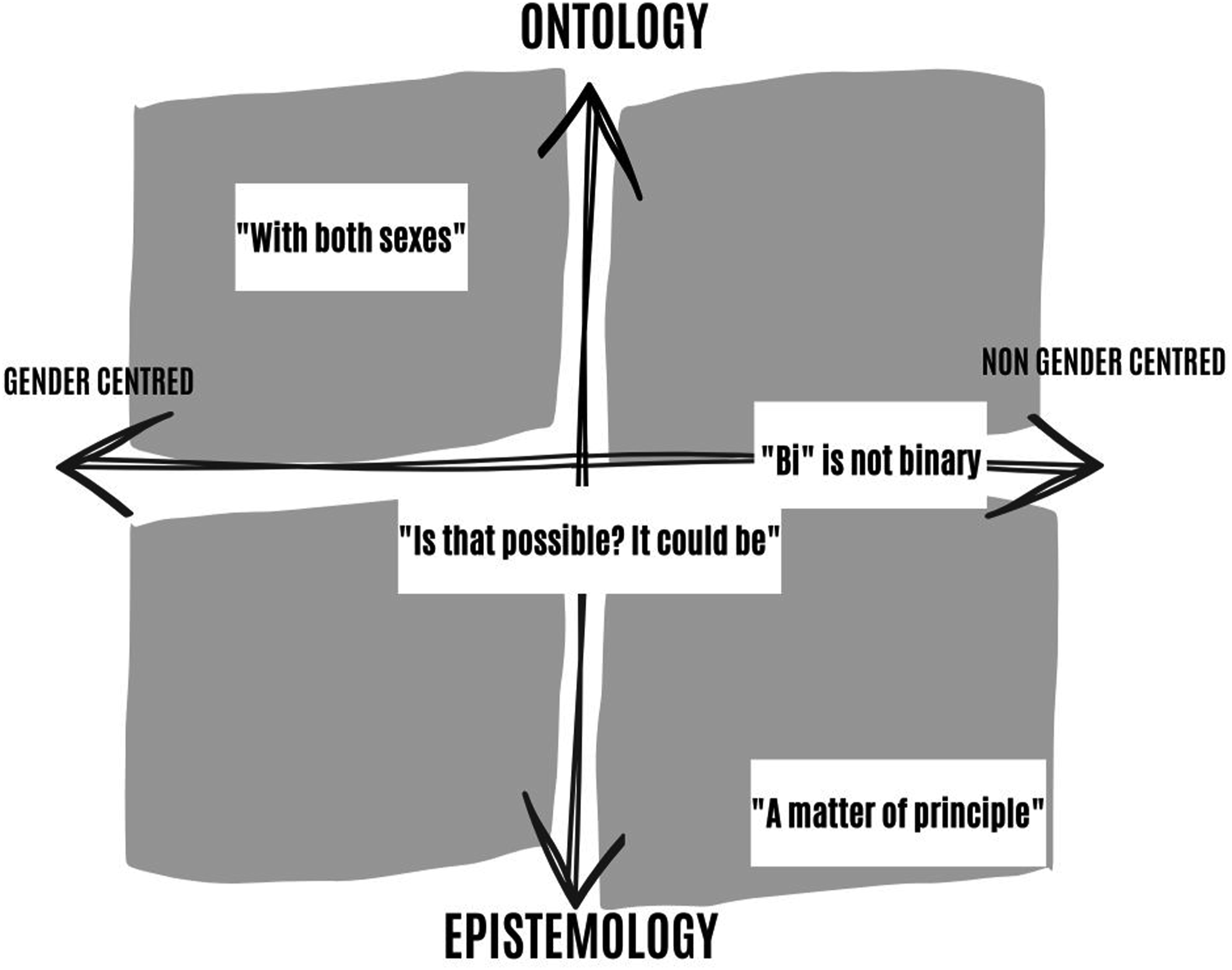
Discussion
Social contexts and structures influence how individuals appropriate sexual categories and integrate them into their subjectivities. In this paper, we review the reappropriation of the bisexual category among the young Spanish population in the current historical context, considering the ongoing struggles within Spanish Feminism. We explore these interpretations of bisexuality from a transfeminist perspective, aiming to situate their meanings within a framework that, on one hand, facilitates the decentering of gender as an erotic pretext, and on the other, positions bisexuality not only as an identity marker, but also, as an epistemological force that challenges hegemonic social realities.
Gracia Trujillo (2022) states that Spanish transfeminism draws from the radicalism of the 1970s in Spain, during the decline of Francoism, and from the groups (trans*, travestis, lesbians, and gays) that mobilized at that time. This process occurred in parallel with ruptures involving certain gay collectives and segments of lesbian feminism. Thus, Spanish transfeminism opposes essentialist feminism and the homonormative LG movement, while promoting post-identitarian social activism (Solá, 2012), which emphasizes political interpretations of sexuality.
In the contemporary Spanish context, it is easy to identify tensions between traditional feminism—rooted in binary biomedical identities—the institutionalized gay movement, and the multiple proposals emerging from trans and maricabollo politics, which advocate for a feminist political subject with greater epistemic complexity. Our analysis shows that the non-essentialist and politicized experience of sexuality proclaimed by Spanish transfeminism can be identified in the discourses of our young-generation interviewees.
The genealogy of the queer movement in the Spanish context is necessary to avoid a homogenizing reading of the Queer proposal (Grau, 2018). Recent academic literature (Cover, 2018) suggests that challenges to the binary hegemony of corporeality/gender/sexuality are often mediated through the creation of new labels (queer, plurisexual, pansexual), which embody forms of resistance. However, in the Valencian context, we have observed that the young population makes strategic use of the bisexual category, which led us to focus this study on the use of that category. One limitation of this work, however, is the exclusion of other dissident labels that challenge heterosexual hegemony, which this population may also be using. Addressing these labels will be part of future research.
Our research, like many previous studies, emphasizes the processes of social discrediting of bisexuality as a sexual category. Authors like Angelides (2001), Du Plessis (1996) or Wark (1997) pointed out long ago the existence of social mechanisms for the erasure and delegitimization of bisexuality. Our data confirms that these strategies are not relics of the past. In our sample, we identified experiences of re-centering sexuality, aligning with what Morgenroth et al. (2022) state, namely that bisexual men are often perceived as ‘hidden gays,’ while bisexual women are seen as heterosexual. We have also identified demands for stability within the bisexual category which, as Rust (2000) points out, must be demonstrated through an equal distribution of sexual partners across genders. Of course, as Dyar et al. (2015) conclude in their research, there are many instances when these social expectations are not met.
Translating the theoretical perspective into a consistent methodological design has not been an easy task. Thus, we have worked with a dual-axis matrix that has enabled us to locate discourses in different quadrants.
Primarily we have complexified the concept of bisexuality by understanding it not only as a sexual orientation that defines being but also as a driver of epistemological transformation. Secondly, we have expanded the object of desire in the erotic dimension, assuming the possibility that gender is not the sole determinant of attraction or sexual relationships. This strategy has allowed us to highlight the diversity and complexity of the meanings with which young people in Valencia enrich the category of bisexuality.
Firstly, we examined the arguments surrounding the idea of sex “with both genders.” In these cases, the discourse on sexual identity is closely linked to personal identity, as it reflects an interpretation of the body and self that is ontologically framed by two distinct modalities, differentiated by assigned gender. The focus is on breaking away from normative heterosexuality which, nonetheless, remains integrated as part of identity, albeit within a binary structure. Additionally, we highlight the strong connection between this narrative and gender, as these discourses clearly emphasize the stability with which gender is understood as a determining factor in attraction. At a first sight we could consider this the traditional definition of bisexuality; however, this stance of bisexuality, as Erickson-Schroth and Mitchell (2009) state, opens up a set of genuinely alternative possibilities to the extent that bisexuality threatens the institutions of heterosexuality and homosexuality.
We also identified other discourses that, while still using gender in its binary form as an erotic marker, present a more fluid perspective, with bisexual subjectivity being detached from specific sexual practices. What makes it interesting is that it breaks with the notion of bisexuality that, in line with its categorical social definition, requires engaging in sexual relationships with men, women, and/or other genders. Instead, the emphasis is on the potential of the self-assigned label as an instrument for revising sexual cultural inheritance. This aligns with what Jones (2019) highlights regarding the discrepancies between the proportion of people who identify as bisexual and those who have bisexual experiences. In these cases, this openness allows for a reevaluation of sexual cultural heritage, emphasizing a more epistemological dimension of bisexuality rather than a purely identitarian one.
As part of the reappropriation of the category, we also identified narratives that decenter gender as an erotic criterion. These narratives emphasize the fluidity of the meaning of the bisexual category (Flanders, 2018). As shown in the research of Erickson-Schroth and Mitchell (2009), the existence of bisexuality demands a redefinition of how the choice of desired object is understood, shifting from a monosexual paradigm to significantly more open categories. In these cases, the category becomes more inclusive, functioning as an umbrella term where the ‘bi’ prefix no longer serves as a reminder of binarism, but rather embraces all bodies, all genders, and all beings. With respect to the other axis of the matrix, we can say that the ontological reaffirmation of a super-identification with bisexuality as an identity category functions as a strategic measure for some interviewees. However, it is also possible to see that the shift from a monolithic understanding of sexuality to a plural one can be interpreted as a transformation in epistemological terms.
Finally, we explored narratives that position bisexuality as a feminist stance. In these cases, the connection between sexual label and identity is dismantled, with the label serving as a political tool. The narratives analyzed here are situated in the quadrant that interprets bisexuality as an epistemological lens, emphasizing the redefinition that the sexual label has undergone in this context. Likewise, these narratives align with the decentering of gender as the primary factor in erotic attraction, as they are grounded in a political perspective that seeks to dismantle the idea of gender as a fixed determinant of subjectivity.
The destabilization of the sex/gender/sexuality matrix, in Butlerian terms, renders bisexuality an ‘unintelligible’ sexuality, as Callis (2009) notes—something that appears to be deliberately sought. From a perspective that deconstructs gender as an erotic pretext, bisexuality becomes synonymous with transfeminism.
Our research suggests a significant intersection between sexual and gender politics, rendering bisexuality a category with diverse meanings. In conclusion, our findings indicate that bisexuality is undergoing a process of resignification, aligning it more closely with the challenge to traditional structures of gender and sexuality, and reconfiguring it as an epistemological tool. These results deserve to be addressed in all public policies guaranteeing the rights of sexual diversity, but also this perspective can contribute to the international debate on bisexuality. In the conclusions of his classic book, Angelides (2001, p190) insists that what interests him about bisexuality is not what bisexuality is and what bisexuality means, but rather what bisexuality does and how bisexuality means. The ontological dimension of bisexuality is a relevant topic in sexuality studies since, as we have seen, people continue to fill this category with identitarian content. However, following Angelides’ proposal, it may be particularly insightful for international sexuality studies to also delve into its epistemological dimension. This would allow us to examine whether, as in the case of Valencian youth, the category of bisexuality operates as an epistemological category that goes beyond defining what the subject is to highlight what the subject does through their political positioning in relation to social reality. Ultimately, this opens an opportunity to explore processes of subjectivation in which sexual categories are used to express issues that have little to do with bodies and sexual practices, and are instead more related to an identification with social transformation of issues concerning corporeality, gender, and sexuality.
Footnotes
Acknowledgements
We gratefully acknowledge the support of the funding bodies and extend our sincere thanks to all interview participants for their valuable contributions to the study.
Declaration of conflicting interests
The author(s) declared no potential conflicts of interest with respect to the research, authorship, and/or publication of this article.
Funding
The author(s) disclosed receipt of the following financial support for the research, authorship, and/or publication of this article: This research was supported by funding from the Valencian Government, Spain (GV/2020/023) and the University of Illinois at Chicago, USA.
