







Abstract
Internationally, the most widely used self-report instrument to assess alexithymia (a clinical condition characterized by serious deficits in the cognitive processing of emotions) is the Toronto Alexithymia Scale (TAS-20). Because this measure has been poorly investigated in Brazil and emerging research suggests that TAS-20 scores might vary from one culture to another, we sought to: (1) investigate the psychometric properties of a Brazilian TAS-20; and (2) examine the degree to which Brazilian non-clinical TAS-20 scores differ from the scores of non-clinical samples from other cultures. A sample of 850 non-clinical Brazilian adults were administered a number of questionnaires and performance-based measures via online data collection. Data analyses inspected internal consistency and factor structure of the TAS-20, and tested the association of TAS-20 scores to emotional functioning and psychopathology. In line with previous international research, the Brazilian TAS-20 showed acceptable to adequate psychometric properties. Furthermore, TAS-20 scores associated negatively with empathy and emotional perception, and positively with emotion dysregulation and personality traits like dependency, abrupt changes in mood, and avoidance of criticism. Also noteworthy, our non-clinical Brazilian TAS-20 scores were very similar to those observed in other previously published non-clinical TAS-20 scores from seven non-Brazilian cultures.
Alexithymia (literally “no word for feeling”) was defined and initially studied as a condition of psychosomatic patients who had great difficulty in fantasizing and in decoding or expressing emotions (Taylor, 1987). The current definition of alexithymia includes: (1) difficulty recognizing emotional states; (2) a low ability to fantasize; (3) focusing interests on external events rather than internal or introspective thinking; and (4) concrete verbalizations, with reduced or non-symbolic thinking (Bagby, Taylor, & Parker, 1994; Taylor & Bagby, 2004).
Over the years, a large number of studies have been conducted and the construct of alexithymia has been investigated in relation to clinical conditions such as eating disorders (Brewer, Cook, Cardi, Treasure, & Bird, 2015; Kessler, Schwarze, Filipic, Traue, & von Wietersheim, 2006), psychosomatic gastrointestinal disorders (Gerhards, 1998), inflammatory bowel disease (Porcelli & Meyer, 2002), dependent and other personality disorders (Loas & Cormier, 2009; Nicolò et al., 2011), alcohol dependence and motivation for drinking (Maciel & Yoshida, 2006; Stewart, Zvolensky, & Eifert, 2002), anorexia nervosa (Torres et al., 2011), and constriction of feelings (Akimoto, Fukunishi, Baba, Mori, & Wai, 2002), among others.
In addition, being a relevant construct of social interaction, the relationship of alexithymia to interpersonal abilities like emotional perception has been investigated. In fact, a large number of authors have reported that people with a lower ability to perceive emotional expression in faces (Brewer et al., 2015; Cook, Brewer, Shah, & Bird, 2013; Grynberg et al., 2012; Jongen et al., 2014; Parker, Taylor, & Bagby, 1993; Prkachin, Casey, & Prkachin, 2009; van der Velde et al., 2015) and voices (Heaton et al., 2012) tend to display higher levels of alexithymia. Other studies found little or no association between alexithymia and emotional perception (Gerhards, 1998; Kessler et al., 2006; Miguel et al., 2010; Zuanazzi, Ricci, & Miguel, 2015). Furthermore, some authors have suggested that alexithymia might be associated with poor empathy skills (e.g., Guttman & Laporte, 2002; Jonason & Krause, 2013; Moriguchi et al., 2007; Silani et al., 2008; Swart, Kortekaas, & Aleman, 2009), though additional research on this topic would be beneficial.
Regarding the assessment of alexithymia, the most frequently used instrument is the Toronto Alexithymia Scale (TAS-20), a self-report instrument composed of 20 items (Bagby, Parker, & Taylor, 1994). The 20 items are spread across three subscales: (1) Difficulty Identifying Feelings (DIF); (2) Difficulty Describing Feelings (DDF); and (3) Externally Oriented Thinking (EOT). Cross-cultural studies on the TAS-20 have been conducted in many different countries, such as Finland (Säkkinen, Kaltiala-Heino, Ranta, Haataja, & Joukamaa, 2007), France (Loas, Parker, Otmani, Verrier, & Fremaux, 1997), Germany (Bach, Bach, de Zwaan, Serim, & Böhmer, 1996), Greece (Tsaousis et al., 2010), Italy (Bressi et al., 1996; Craparo, Faraci, & Gori, 2015), Iran (Besharat, 2007, 2008, 2015; Pourhosein, Rostami, Besharat, & Mirzamani, 2006), Japan (Akimoto et al., 2002), Peru (Loiselle & Cossette, 2001), and Spain (Fernández-Jiménez et al., 2013). In addition, an internet version of the TAS-20 has been studied recently, showing psychometric properties similar to the original paper-and-pencil version (Bagby, Ayearst, Morariu, Watters, & Taylor, 2014). In general, all these studies concur to indicate that while the DIF and DDF factors possess relatively sound psychometric properties, EOT often produces low reliability indexes (Kooiman, Spinhoven, & Trijsburg, 2002). Interestingly, however, in a relatively recent, well-designed study by Prkachin et al. (2009), EOT correlated with perception of facial expressions of emotion more strongly than did DIF and DDF.
Despite the large number of international studies on the assessment of alexithymia, the TAS-20 has been poorly investigated in Brazil. In fact, only two articles (i.e., Balbinotti, Wiethaeuper, Barbosa, Ferreira, & Gonzalez, 2008; and Wiethaeuper, Balbinotti, Pelisoli, & Barbosa, 2005) have examined a Brazilian-Portuguese version of the TAS-20, and neither of them have been published in English-language journals. Moreover, both of those articles focused on the factor structure of the TAS-20 but did not investigate its convergent or divergent validity, and only one of them reported Cronbach’s alphas. Thus, additional research on the psychometric properties of the Brazilian TAS-20 is needed.
Furthermore, emerging research suggests that cultural values might contribute to shaping one of the core features of alexithymia. Indeed, Dere et al. (2013) reported that TAS-20 EOT scores differed when considering Euro-Canadian versus Chinese-Canadian students, and that modernization and Euro-American values negatively associated with EOT scores in a sample of Chinese outpatients. However, the empirical data on this topic is still very scarce.
To extend the available literature in these important but under-investigated areas, the current study aimed at: (i) testing the psychometric properties of a Brazilian-Portuguese version of the TAS-20; (ii) investigating the association of alexithymia to emotion regulation, emotional perception, and empathy; and (iii) comparing Brazilian non-clinical TAS-20 scores against other cultures’ non-clinical TAS-20 scores. To do so, we recruited via web-based procedures a relatively large sample of Brazilian adult participants, and administered them a number of self-report, as well as performance-based, psychological measures.
Methods
Participants
This study used a sample of 850 adult participants, with ages ranging from 18 to 71 (M = 30.97, SD = 10.80), with 98.6% of participants aged under 60. The majority of the sample were women (83.2%), with men being about one sixth (16.8%); and education level was in its majority college education (52.5% were graduates or enrolled in graduate courses and 18.0% were post-graduate).
Procedure
Data collection followed standard ethical procedures for web-based psychological research. Potential participants were informed about the possibility to volunteer for our study through a post on social media (Facebook). By clicking on the invitation, prospective participants were conducted to another website where an informed consent form, containing the information about the research, was displayed. Consent was provided by accepting to create a username to log into the web page, which gave access to the instruments, all administered in Brazilian Portuguese. There was no financial compensation for participants, although results for the instruments were displayed at the end, with a brief explanation of each construct. Data collection took four months.
Measures
Below is the list of measures available for each participant to respond to. In order to avoid careless responding, participants had the option to choose which measures they wanted to fill in and were informed about the possibility to discontinue participation at any time. Therefore, not all participants filled in all instruments.
The Toronto Alexithymia Scale (TAS-20; Bagby, Parker, et al., 1994)
As noted above, the TAS-20 is the most-used instrument for assessing alexithymia. It is comprised of 20 items assessing three dimensions of alexithymia, i.e., Difficulty Identifying Feelings (DIF), Difficulty Describing Feelings (DDF), and Externally Oriented Thinking (EOT). Several international studies concur that while DIF and DDF possess good psychometric properties, the reliability of EOT is doubtful (for a review, see Kooiman et al., 2002). The current study used the Brazilian TAS-20 developed by Wiethaeuper et al. (2005).
Difficulties in Emotion Regulation Scale (DERS; Gratz & Roemer, 2004)
This instrument is a 36-item questionnaire that assesses six factors of emotional dysregulation: Non-Acceptance of Emotional Responses (Acceptance); Difficulties in Engaging in Goal-Oriented Behaviors (Goals); Difficulties in Control Impulses (Impulses); Lack of Emotional Knowledge (Knowledge); Restricted Access to Emotional Regulation Strategies (Strategies); and Lack of Emotional Clarity (Clarity). Respondents must classify the frequency with which each sentence applies to them, on a five-point Likert scale varying from 1 (almost never 0–10%) to 5 (almost always 91–100%). Gratz and Roemer (2004) reported good psychometric properties of this instrument in their original study, with alphas ranging from 0.77 to 0.93, besides other good indicators of construct validity and test-retest stability. Several international studies also support the strong validity and reliability of the DERS (e.g., Cho & Hong, 2013; Coutinho, Ribeiro, Ferreirinha, & Dias, 2010; Giromini, Velotti, de Campora, Bonalume, & Zavattini, 2012; Ruganci & Gençöz, 2010). The current study used the Brazilian-Portuguese version of the scale developed by Miguel et al. (2017), which produced, in our sample, Cronbach’s alphas ranging from 0.89 to 0.94.
Questionnaire for Cognitive and Affective Empathy (QCAE; Reniers, Corcoran, Drake, Shryane, & Völlm, 2011)
The QCAE is an instrument comprised of 31 items that assesses cognitive and affective empathy. A four-point Likert scale ranging from strongly disagree to strongly agree is provided to measure the agreement of the respondents with each of the affirmatives. Reniers et al. (2011) reported acceptable psychometric properties of the scale in the original study. This study used the Brazilian-Portuguese version of the QCAE, which was developed by Miguel et al. (2017) via translation/back-translation procedures and in consultation with Dr. Reniers, the author of the original instrument. In our sample, alphas for the QCAE total score of affective and cognitive empathy were respectively 0.68 and 0.87. For the subscales, the alpha ranged from 0.34 to 0.87. The alpha for the total score was 0.82.
Clinical Dimensional Personality Inventory (IDCP-2; Carvalho & Primi, 2015)
This test assesses characteristics associated with personality disorders using a Likert scale of four points to measure the agreement of the respondent with each affirmative. The scale can be used to assess 12 factors of the personality, besides a small questionnaire about the psychiatric and psychological history and suicide concerns. In preview studies, the IDCP-2 showed good psychometric properties (Abela, Carvalho, Cho, & Yazigi, 2015; Carvalho & Primi, 2015). In our sample, the alphas for the subscales of IDCP-2 were 0.91 for Dependency, 0.89 for Aggressiveness, 0.86 for Mood instability, 0.86 for Eccentricity, 0.80 for Attention seeking, 0.87 for Distrust, 0.86 for Grandiosity, 0.88 for Isolation, 0.89 for Criticism avoidance, 0.90 for Self-sacrifice, 0.84 for Conscientiousness, and 0.89 for Impulsiveness.
Primary Emotion Perception Test (PEP; Miguel & Primi, 2014)
This instrument is a computer-based measure that assesses one of the abilities of Emotional Intelligence, which is the capacity to perceive basic emotions (Mayer, Roberts, & Barsade, 2008). The task involves watching 35 videos of people expressing basic emotions (joy, love, fear, sadness, surprise, disgust, anger, and curiosity), with the purpose to identify the emotion being shown. The PEP has shown satisfactory psychometric properties in previous Brazilian studies, with a test-retest correlation of 0.86 in seven months and Rasch reliability of 0.68. The Rasch reliability for our sample was 0.63.
Battery of Reasoning Tests (BPR-5; Primi & Almeida, 2000)
This is a Brazilian instrument battery that measures general reasoning abilities. In this research, we used two of the five subscales of this battery: Verbal Reasoning (VR) and Abstract Reasoning (AR). The BPR-5 is composed of 25 items where the individual has to identify for the verbal and abstract reasoning the relationship between words and abstract geometric figures, respectively. In our sample, internal consistency was 0.80 for AR and 0.66 for VR.
Results
TAS-20 scores
Descriptive statistics, gender differences and correlations with age for the TAS-20.
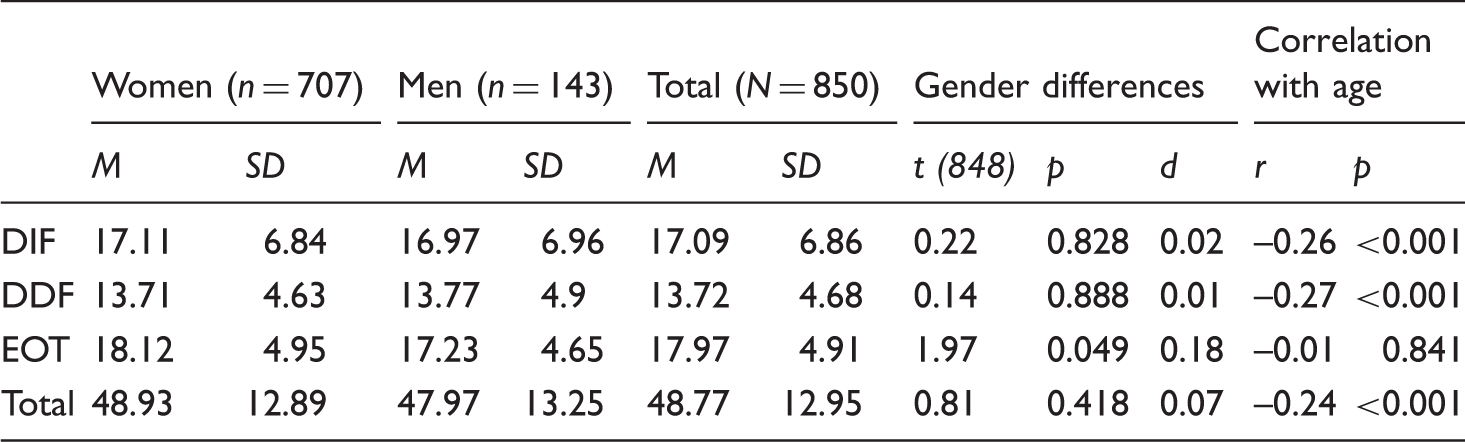
TAS-20 scores showed medium-sized significant correlations with age, in the expected direction (i.e., older participants displayed less alexithymia than younger participants, as emotion regulation typically improves with age), except for EOT, whose correlation value approached zero.
Internal consistency
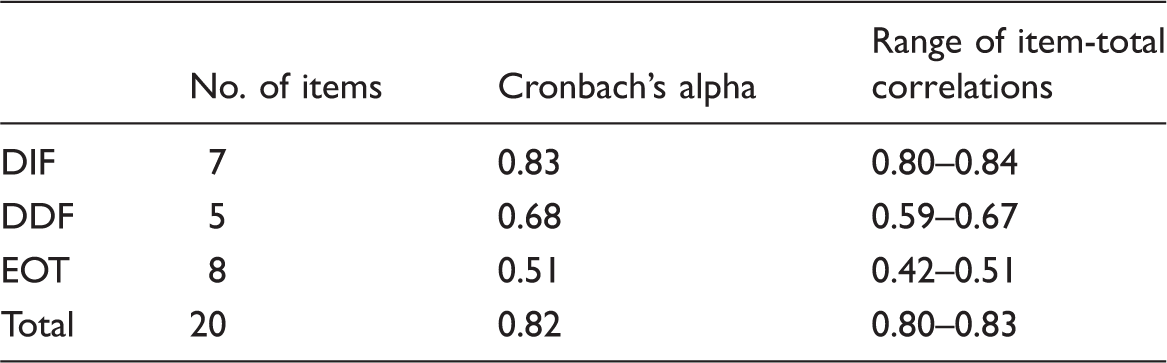
Internal consistency analyses for TAS-20.
Factor structure
We conducted confirmatory factor analyses (CFAs) to analyze the proposed factor structure for TAS-20. The resulting model is presented in Figure 1. The root mean square error of approximation (RMSEA) was 0.056 (90% confidence interval of 0.051–0.061), the non-normed fit index (NNFI) was 0.95, the comparative fit index (CFI) was 0.95, and the standardized RMR was 0.048. According to commonly accepted benchmarks—i.e., RMSEA ≈ 0.05 for a close fit (Browne & Cudeck, 1993); NNFI and CFI ≥ 0.90 for a good fit (Bentler & Bonett, 1980); and standardized RMR < 0.08 for a good fit (Hu & Bentler, 1999)—our data adequately fit the model proposed by Bagby, Parker, et al. (1994) .
Factor structure of the TAS-20.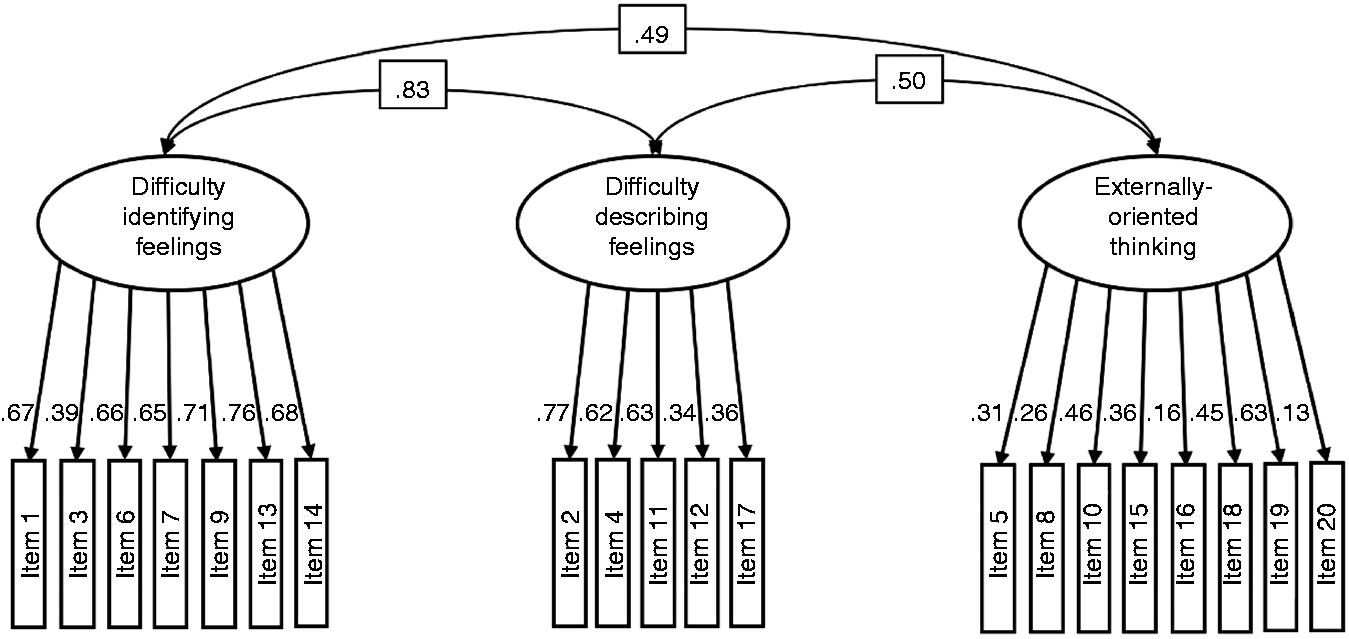
The relationship of TAS-20 to emotion regulation, empathy, and emotional perception
Partial correlations of TAS-20 to DERS and QCAE, controlled by age.
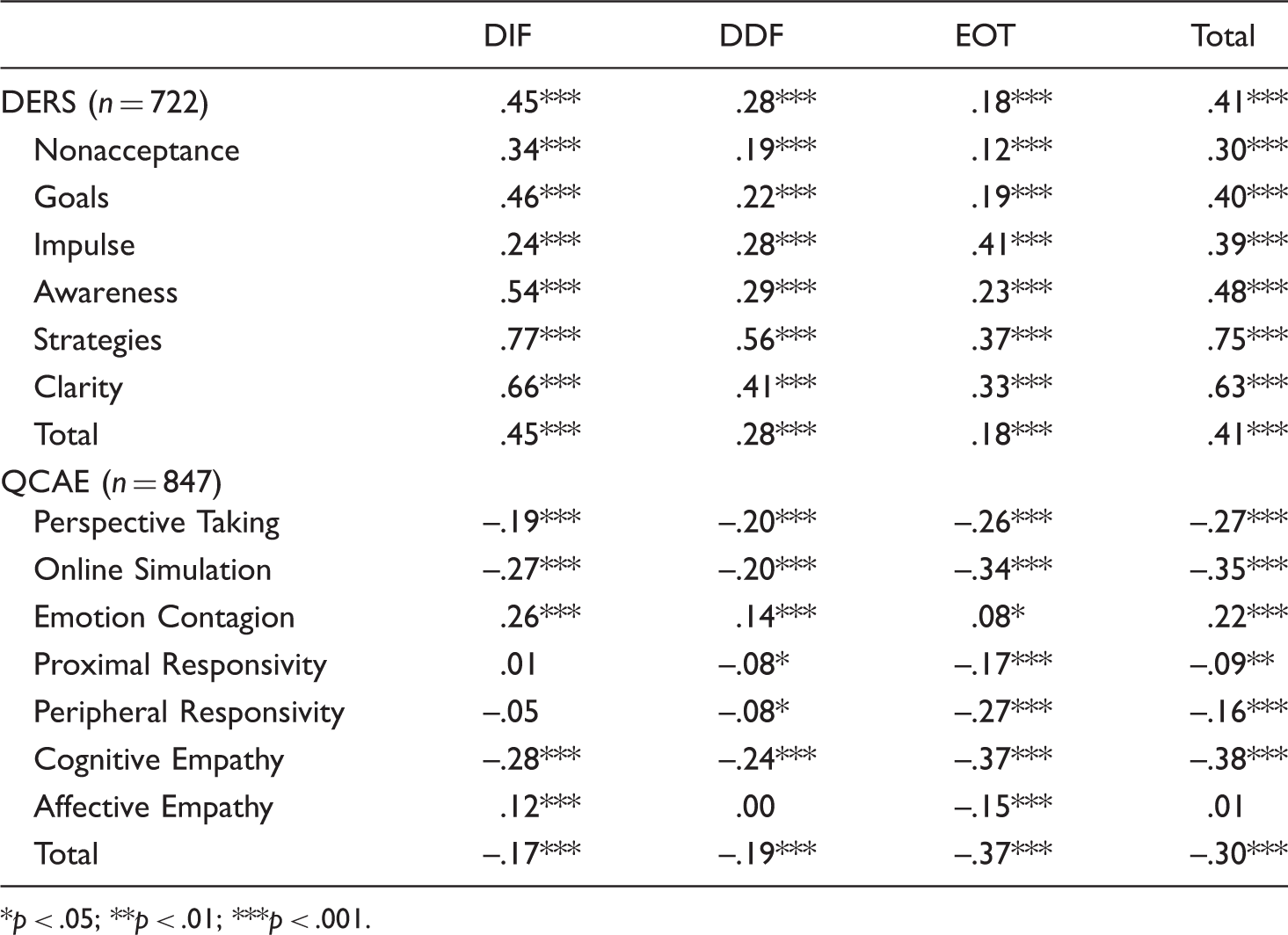
*p < .05; **p < .01; ***p < .001.
Partial correlations of TAS-20 to pathological personality traits, controlled by age.
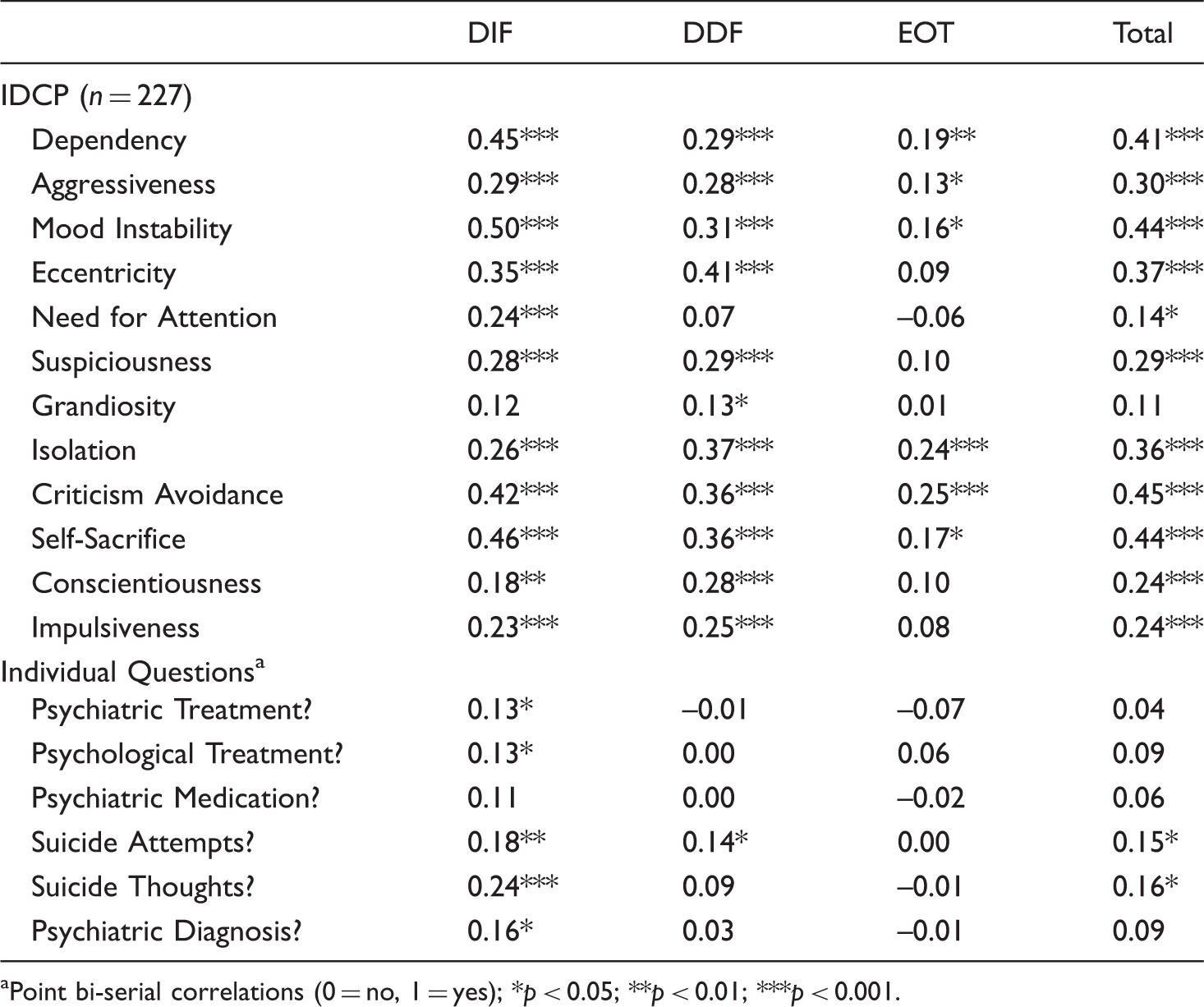
aPoint bi-serial correlations (0 = no, 1 = yes); *p < 0.05; **p < 0.01; ***p < 0.001.
Partial correlations of TAS-20 to cognitive tasks, controlled by age.

*p < 0.05; **p < 0.01; ***p < 0.001.
Additionally, as a means to investigate divergent validity, we also ran correlation analyses between TAS-20 and two intelligence tasks. The results of these analyses are presented in Table 5. There was only one statistically significant correlation, which was low. The results give support to the differentiation of alexithymia from abstract and verbal reasoning.
Comparison between Brazilian versus other cultures’ scores on TAS-20
To examine the extent to which our Brazilian TAS-20 scores differed from those obtained in other cultures, we retrieved from the literature all cross-cultural validation studies of the TAS-20 that were conducted with non-clinical samples, and for which the mean and standard deviation values of DIF, DDF, EOT, and Total scores had been reported (only articles published in English-language journals were considered, to this aim). Accordingly, we inspected TAS-20 data from Greek (Tsaousis et al., 2010), Italian (Bressi et al. 1996), American-English and Peruvian-Spanish (Loiselle & Cossette, 2001), Farsi (Besharat, 2007), and Chinese (Zhu et al., 2007) TAS-20 versions.
To estimate TAS-20 descriptive statistics for all available samples (N = 3414), we added the data from the international samples described above to our Brazilian sample. Specifically, for each TAS-20 score we calculated a weighted average, i.e., the mean of the combined sample was calculated as the sum of the products of each sample's mean value times the size of that specific sample, divided by the N of the combined sample. A similar approach was then used also to estimate the dispersion statistics, i.e., variance and standard deviation, of this combined sample. As a result, the mean score of the entire combined sample was 48.1 (SD = 11.0) for the Total score, 16.2 (SD = 5.4) for TAS-20 DIF, 13.0 (SD = 4.0) for TAS-20 DDF, and 18.4 (SD = 4.7) for TAS-20 EOT.
Based on these values, we finally transformed each sample’s raw scores into T scores (i.e., scores with a mean of 50 and SD of 10), and plotted the results in Figure 2, so as to examine the extent to which our Brazilian scores differed from those obtained in other, cross-cultural validation studies involving non-clinical participants. Interestingly, all samples produced T scores within one standard deviation from the grand mean of the entire sample (i.e., between 40 and 60). The Brazilian sample was close to the grand mean values for all TAS-20 scores (i.e., close to T = 50); the highest scores were obtained with the Peruvian version; and the lowest scores were obtained with the Greek and Farsi versions.
Distribution of TAS-20 T scores in multiple cross-cultural validation studies.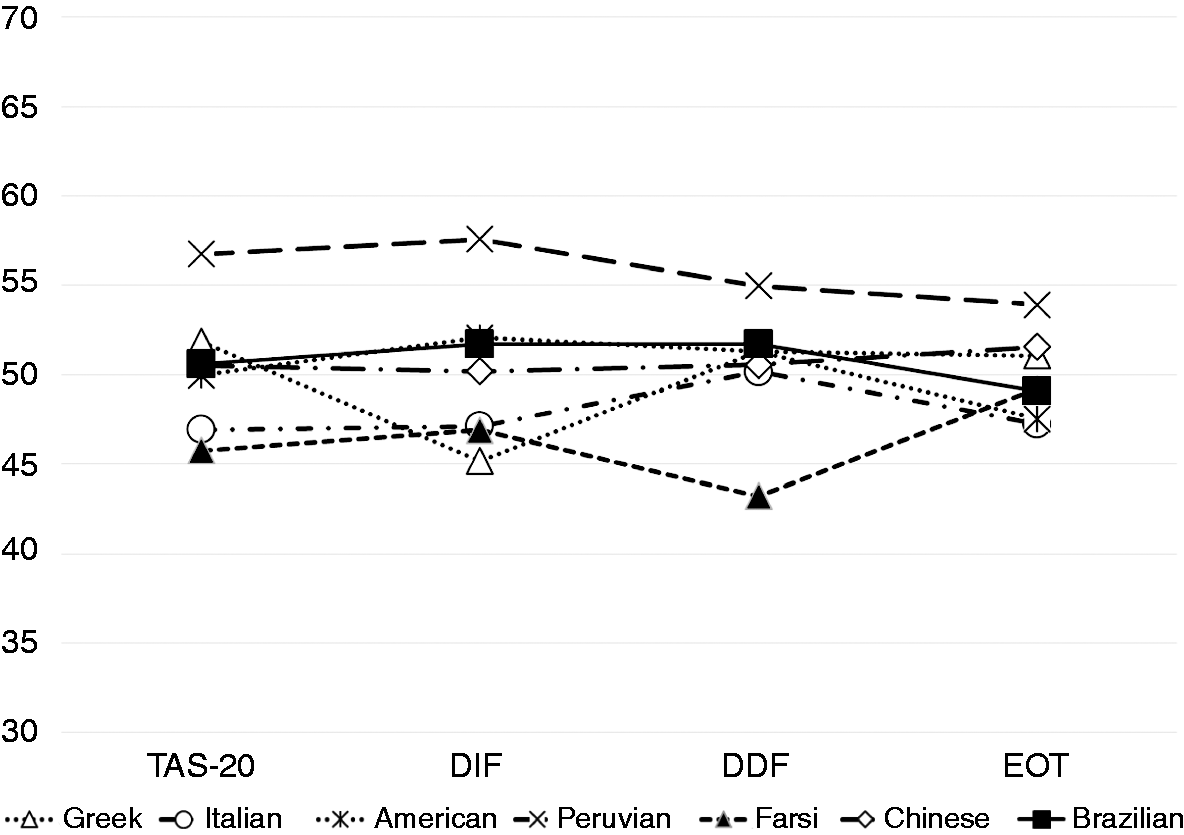
Discussion
Much empirical evidence indicates that alexithymia, broadly defined as a deficit in the cognitive processing of emotions, associates with difficulties in emotion regulation and psychopathology. Additionally, some authors have suggested that alexithymic personality traits may also associate with deficits in interpersonal abilities such as empathy and emotional perception, though the empirical research findings are somewhat mixed in this regard. To contribute to the study of alexithymia and investigate its relationship to emotion regulation, empathy, and emotional perception, the current study inspected a relatively large sample of Brazilian adult individuals, and tested the correlations between the TAS-20 and a number of self-report and performance-based psychological measures. Besides this, since the literature on the validity and reliability of the TAS-20 in Brazil is scarce, our research also aimed at examining the psychometric properties of a Brazilian-Portuguese version of the TAS-20, and at inspecting whether a relatively large non-clinical Brazilian sample would score differently on the TAS-20 when compared to other non-clinical samples from different cultures.
As expected, all TAS-20 scales positively correlated with the DERS. When considering the total DERS score, the effect sizes of these correlations were large (r ≈ 0.50) for DIF, medium (r ≈ 0.30) for DDF, and small to medium (r ≈ 0.20) for EOT (for benchmarks for interpreting r values, see Cohen, 1988). Thus, identifying feelings may be particularly important to regulate emotions, while DDF and EOT possibly play a minor role in this. This finding is not too surprising: focusing on one’s internal world (EOT) and/or being able to describe these internal experiences (DDF) is important for, but does not necessarily lead to a clear identification or understanding of, one’s own mental states and feelings (DIF). Conversely, emotion regulation largely depends on the ability to attend to, acknowledge, and be clear about the emotions one is experiencing (Gratz & Roemer, 2004).
Alexithymia also correlated with empathy, as measured by the QCAE. However, while the effect size of this negative correlation was medium to large (r ≈ –0.40) for the QCAE subscale Cognitive Empathy, it approached zero for the QCAE subscale Affective Empathy, and even became positive for the QCAE Emotion Contagion subscale (r ≈ 0.20). Thus, the presence of alexithymic traits seems to interfere with the ability to cognitively process and understand the emotions experienced by others, but not with the ability to implicitly and perhaps automatically share and feel those same emotions. Put differently, alexithymia seems to allow for an automatic emotional contagion and embodied simulation of others’ emotions, even in the absence of a clear understanding of what the meanings and implications of these shared experiences, feelings, and emotions might be. To some extent, this finding is in line with recent research suggesting that affective empathy is less adaptive and more associated with psychopathology than is cognitive empathy (e.g., Giromini et al., 2016; Michaels et al., 2014).
Some empirical data support the hypotheses that higher alexithymia is correlated with a lower ability to recognize emotions in other people (Brewer et al., 2015; Cook et al., 2013; Grynberg et al., 2012; Jongen et al., 2014; Parker et al., 1993; Prkachin et al., 2009; van der Velde et al., 2015). However, some articles report partial or no association between these two constructs (Gerhards, 1998; Kessler et al., 2006; Miguel et al., 2010; Zuanazzi et al., 2015), and our study also showed a weak association between emotional perception and alexithymia. In an attempt to better understand these seemingly contradictory findings, future studies should test whether the association between these constructs would be mediated by other psychological aspects, like pathological personality traits. In fact, a recent study has shown that alexithymia could be a mediator of the relationship between personality and mental health (Atari & Yaghoubirad, 2016). As such, personality could also mediate the extent to which people with alexithymic traits do or do not impact emotional recognition.
An intriguing finding of our study is that among the three TAS-20 scales, EOT produced the strongest negative correlations both with empathy (r ≈ –0.40 with the total QCAE, versus r ≈ –0.20 for DIF and DDF) and with emotional perception (r ≈ –0.20 with the PEP, versus r > –0.10 for DIF and DDF). As noted in the Introduction, also in Prkachin et al.’s (2009) study, EOT correlated more strongly than DIF and DDF with perception of facial expressions of emotion. As a possible explanation for their findings, Prkachin et al. (2009) suggested that when a person focuses on external events rather than internal or introspective thinking, they likely pay no or little attention to their emotions while observing another individual’s emotional face. Thus, because emotional perception presumably involves people processing visual information while retrieving memories of their own emotional states associated with the observed emotional stimuli, people with high scores on EOT might perform poorly on emotion perception tasks because they do not encode their own emotional states while observing emotionally relevant information displayed by others. This hypothesis, which is consistent with the “shared manifold of intersubjectivity” theory (Gallese, 2003), seems to be supported also by our data, given that EOT correlated, more strongly than DIF and DDF, with both the QCAE and PEP.
We also found that alexithymia, as measured by the TAS-20, is related to several pathological personality traits, confirming previous findings in the literature (Loas & Cormier, 2009; Nicolò et al., 2011). Not all IDCP-2 traits correlated significantly with the TAS-20 and its subfactors, and some of the significant correlations magnitudes were low. However, the correlations that displayed the highest magnitudes were coherent with the description of alexithymia, suggesting that it is related to dependency on other people’s opinions and guidance, frequent and abrupt changes in mood, and putting oneself in situations to avoid feeling distressed from being criticized and to receive positive feedback. As shown in previous studies (Glenn & Klonsky, 2009; McLaughlin, Mennin, & Farach, 2007; Miguel et al., 2016), pathological or maladaptive personality traits are associated with emotional dysregulation. These results point to a lower ability to regulate emotions, thus using behavioral strategies to put oneself in situations to avoid emotional distress.
In general, our findings attest to the reliability of the TAS-20 scores, except for EOT. On the one hand, international studies show similar findings for that subscale, which may indicate a further need for improving its items. The number of items per scale might also account for the different alpha values from one scale to another. On the other hand, however, the idea that Cronbach’s alphas should be higher than 0.70 has recently been criticized by statisticians, as high internal consistency often reflects redundancy across items, rather than reliability (e.g., John and Soto, 2007; Sijtsma, 2009). Given that the debate on the reliability of EOT is far from being settled, in the meantime we recommend that individual interpretations made with EOT be conducted carefully.
Lastly, our study also allowed us to compare the TAS-20 scores produced by a number of non-clinical samples from seven different cultures. Differently from recent research supporting the possibility of a cultural interference on alexithymia (Dere et al., 2013), the differences in this investigation were rather small. Indeed, the TAS-20 scores from the American, Chinese, Greek, Italian, Farsi, and Peruvian versions did not notably differ from each other or from our Brazilian data—in fact, each sample’s scores fell within one standard deviation of the grand mean of the entire sample combining all data. With this respect, two considerations can be made. First, our findings do not support the hypothesis that culture plays a key role in the manifestation or development of alexithymia traits. Second, the TAS-20 scores produced by our non-clinical Brazilian sample very closely resembled those produced by the other non-clinical samples under investigation, which provides additional support to the hypothesis that the TAS-20 should perform well in Brazil too.
Several limitations can be considered in this study. First, the majority of participants were women, which may restrict generalizability of the results for the population. Even though the magnitude of difference between genders was small, a study with a larger sample of men could investigate whether gender differences display a larger effect size. Second, the age range was very broad (from 18 to 71 years old). However, most of the participants were young or relatively young adults, so that participants older than 60 (1.4%) might be considered to be outlier data. We tested whether excluding them from the analysis would impact the results and found no support in this sense. Nevertheless, future studies might attempt to replicate our study by testing older adults. Third, all instruments were collected with online administration. According to Bagby et al. (2014), the results of their study “comparing Internet and paper-and-pencil administrations of the TAS-20 indicate that the two methods are comparable and can be used interchangeably” (p. 20). However, it is still possible that a number of participants were not in a neutral environment or did not put enough effort into answering some of the tests and/or items. In addition, the participants may represent a part of the population with a better economic status and resources to be able to use the internet, while less privileged people may not be represented. Fourth, the instruments that displayed higher correlation magnitudes are self-report, just like the TAS-20, and may be influenced by social desirability and other biases. Further studies could address this issue by using more performance-based or behavioral measures, or comparison between criteria groups. Despite these limitations, our study has the merit of providing some insight into the relationship between alexithymia, emotional functioning, and mental health. It is the first study of the TAS-20 in a large Brazilian sample, providing some validity evidence for the scale.
Footnotes
Declaration of Conflicting Interests
The author(s) declared no potential conflicts of interest with respect to the research, authorship, and/or publication of this article.
Funding
The author(s) received no financial support for the research, authorship, and/or publication of this article.