






Abstract
Non-ordinary experiences such as hearing voices, losing control over one's body or mediumship/possession, are observed across cultures. However, there is a notable lack of instruments specifically designed to measure these experiences from a subject-centered, culturally sensitive perspective, with existing measures offering limited coverage ofexperiences that may be particularly salient for religious groups cultivating mediumship/possession practices. This study proposes a novel, feature-based, subject-dependent approach to defining and measuring relevant mediumship/possession-like experiences, grounded in cross-culturally recognizable phenomenological features while respecting participants’ culturally specific interpretations. Using Brazil as a case study, given its rich mediumship traditions, we developed and validated a new set of items that capture relevant experiences within mediumship/possession through a multi-step process informed by the Inventory of Non-Ordinary Experiences. Study 1 involved a systematic review of dissociation and mediumship research in Brazil to create an item pool. Study 2 refined these items with input from mediumship practitioners and religious leaders. Study 3 validated the items in a Brazilian population sample, and Study 4 estimated the prevalence of these experiences in a representative sample. The study validated 10 key features of mediumship/possession-relevant experiences and found high prevalence rates in Brazil, with some experiences reported by more than 60% of participants. Our findings highlight the importance of feature-based, culturally informed approaches to studying mediumship/possession and offer recommendations for future research into their phenomenology, prevalence, and cultural appraisals.
Keywords
Non-ordinary experiences (NOEs) such as hearing voices and sensing the presence of deceased persons or spiritual entities are found across diverse cultures, social settings and throughout human history (Bourguignon, 2004; Luhrmann et al., 2021; Maraldi & Krippner, 2019), and form an important part of many spiritual and religious traditions. In fact, many religions emphasize and practice mediumship or spirit possession, an experience during which a person believes to be under the mental or physical influence of a supernatural being 1 (Cardeña et al., 2009; Maraldi, 2024).
These experiences have potentially important medical, psychological, and societal implications. However, there is a notable lack of instruments specifically designed to measure these experiences from a subject-centered, culturally sensitive perspective (Maraldi et al., 2023). Recent inventories, such as the Inventory of Non-Ordinary Experiences (INOE; Taves et al., 2023), have poor coverage of (or address only indirectly) experiences that might be salient for religious groups cultivating mediumship/possession practices such as perceived alterations in embodied agency, perceived presence of deceased individuals and specific sensory alterations such as olfactory experiences, which are considered relevant by mediumship practitioners (regarding this, see the findings of Study 2 below).
This paper presents a new, culturally sensitive approach to defining and measuring mediumship/possession. By using Brazil as a case study, we adopted a feature-based framework that bridges cross-cultural phenomenology with local, emic interpretations, aiming to offer a more nuanced understanding of these experiences and their prevalence in the general population. Our research offers an innovative perspective that not only respects the subjective realities of those experiencing mediumship, but also paves the way for a deeper understanding of the broader societal and mental health implications of these phenomena. Given the potential mental health implications of mediumship/possession-related experiences and their broad cultural impact, it is important to further understand how prevalent such experiences are in the general population.
Relationship Between Mediumship/Possession and Mental Health Constructs
Belief in spirit possession and reports of mediumship/possession experiences have been reported across societies and history (Bourguignon, 2004). Such experiences have inspired the creation of several religious traditions and philosophies, and sometimes dramatically transformed the lives of individuals by increasing their sense of purpose in life, empowerment, and overall well-being (McClenon, 2002; Moreira-Almeida et al., 2024). The widespread incorporation of these experiences into religious communities may be explained by the fact that large segments of the general population across societies report having had similar experiences at least once in their lifetime (Castro et al., 2014; Greeley, 1975; Monteiro de Barros et al., 2022).
However, experiences relevant for mediumship are also often linked to psychopathological conditions such as psychotic and dissociative disorders (Bourgin et al., 2020; Ross & Browning, 2018) which involve clinically significant cognitive distortions or alterations in the sense of self, agency, and perception of the environment (Maraldi et al., 2017). The Diagnostic and Statistical Manual of Mental Disorders, fifth edition (DSM-V), defines dissociative disorders as “characterized by a disruption of and/or discontinuity in the normal integration of consciousness, memory, identity, emotion, perception, body representation, motor control, and behavior” (American Psychiatric Association, 2013, p. 291). Possession is recognized as a potential folk-presentation of dissociative identity disorder (DID), a dissociative disorder characterized by a “disruption in identity” involving “marked discontinuity in sense of self and sense of agency” (American Psychiatric Association, 2013, p. 292).
The DSM describes psychotic and schizophrenia spectrum disorders in terms of cognitive and behavioral abnormalities involving experiences such as delusions, hallucinations, and disorganized thinking and/or behavior (American Psychiatric Association, 2013). Nevertheless, hearing voices and other hallucination-like experiences are also reported by mediums and by individuals in the general population (such as members of the voice-hearing movement), often in the absence of a need for clinical care or of significant cognitive, social, or occupational impairment (Damiano et al., 2021; Lurhmann et al., 2015; Menezes Jr et al., 2012). The same manual acknowledges that psychotic experiences such as hallucinations “may be a normal part of religious experience in certain cultural contexts” (American Psychiatric Association, 2013, p. 88). As a consequence, researchers in the health sciences are increasingly recognizing the cultural impact and potential implications of mediumship/possession for mental health and well-being (Delmonte et al., 2016, 2022; Moreira-Almeida et al., 2006, 2024).
This paradoxical characteristic of mediumship/possession-related experiences, sometimes seen as signs of distress and other times as indicators of well-being, has created debates around their characterization in the psychiatric literature (Krüger, 2021; Maraldi et al., 2019). A systematic review of the literature (Maraldi et al., 2023) has identified that researcher-defined questionnaires or instruments, often using medical terminology, are the norm in this broader field. Such instruments relying on psychological or psychiatric classifications often fail to address the variety, nuances, and impact of NOEs in people's lives, and may sometimes even contribute to social discrimination against or misdiagnosis of individuals who report these experiences, especially given the limitations of existing differential diagnosis criteria and the associated social stigma that is attached to medical categorization (Damiano et al., 2021; Delmonte et al., 2016; Maraldi et al., 2019). Although dissociative and psychotic symptoms are often conceptualized along a continuum ranging from “normal” or adaptive to pathological manifestations (Somer, 2006), the predominant reliance on psychopathological terminology to describe these experiences has been criticized for failing to capture their multifaceted sociocultural dimensions (Delmonte et al., 2016; Maraldi et al., 2019; Seligman, 2005).
The instruments used in this literature have important practical (diagnostic and therapeutic) implications. It is essential to devise more dynamic, contextualized, and non-discriminatory ways of assessing mediumship/possession that take people's understandings of their own experiences into account. This approach would allow researchers to more precisely evaluate these experiences and the factors that may act upon them, including psychopathological variables, while reducing the risk of conceptual overlap. These issues have taken on a particular importance in the wake of the COVID-19 pandemic and an increasing awareness of mental health issues in the general population (Schmidt & Stockly, 2023). Important advances have been made by Taves and Barlev (2023) and Taves et al. (2023), drawing attention to the importance of distinguishing between researcher-defined definitions (“extraordinary,” “exceptional,” “anomalous,” “psychotic,” “dissociative,” “psychopathological,” etc.), which rely on a presumably stable distinction between non-ordinary and ordinary/everyday across cultures, and a subjective-first-person-defined characterization “in which ‘nonordinary’ refers to experiences that stand out to people or are marked by them as special relative to what they consider ordinary or everyday” (Taves et al., 2023, p. 5).
A Feature-Based, Subject-Dependent Approach to Conceptualizing Mediumship/Dissociation-Related Experiences
Mediumship/possession-like experiences have been included in a number of large-scale studies (Hecker et al., 2015; Ross, 2011; van IJzendoorn & Schuengel, 1996). Yet, it remains unclear how many individuals may actually have such experiences, given both the conflation of these experiences with psychiatric constructs (e.g., dissociation) and the diversity of terms, definitions, and cultural understandings of these experiences (Maraldi et al., 2023). Taves et al. (2023) developed the INOE, which separated the phenomenological features of experiences from how they are appraised, allowing a more neutral assessment of the experiences independently of their (religious or psychopathological) evaluation. Building on a series of previous inventories, the INOE covers a wide variety of experiences and utilizes neutral wording in the description of experiences. This feature-focused assessment emphasizes subjectively recognizable features of experiences instead of researcher-defined constructs. As already mentioned, although the INOE covers a broad range of experiences, it is questionable whether it covers the relevant breadth and diversity of culturally relevant dissociation or possession-like experiences. This was acknowledged by Taves et al. (2023) who highlighted the importance of expanding research efforts to cover experiences that may be salient to specific religious communities or cultures.
To date, the individual experiences that form part of the published inventory have not been examined in terms of their salience for mediumistic practitioners. It would be useful to examine whether mediumistic practitioners consider those experiences as important for their mediumistic practices. Given the broad focus of the inventory, it is likely to miss other experiences that might be salient across different possession-practicing groups. Although some psychiatric and psychological measures include possession-relevant items (e.g., the Dissociative Disorders Interview Schedule or DDIS; Ross et al., 1989), we were unable to identify a neutrally worded and validated measure of relevant experiences in the literature (Maraldi et al., 2023). This requires a careful examination of possible candidate experiences within and across specific populations.
Mediumship/Possession from a Cross-Cultural Perspective: The Case of Brazil
Our study focused on Brazil, which offers exciting possibilities for developing items describing relevant experiences and investigate their prevalence, because of the variety of religious groups that feature mediumistic and possession-like practices. To advance our understanding, we used a diverse range of methodological approaches to more precisely measure mediumistic, possession or dissociative-like experiences, relevant to practices commonly observed in mediumship-based religions in Brazil, using the INOE inventory. Using a single specific linguistic and cultural context, we can both illuminate and constrain possible cultural factors that may be associated with multivariate definitions of NOEs and the manifold definitions that may exist around a set of experiences across different cultures. Furthermore, Brazil is an excellent case study because of its rich spiritual and religious traditions that value, cultivate and practice mediumship/possession, but which can be traced to religious traditions more globally. This intersection of both a circumscribed case study of one specific cultural and linguistic location, but with expressions that can be traced to traditions elsewhere offers an important space for further theoretical development.
Modern Brazil is the seventh most populous country in the world and a truly multicultural and multiethnic nation, primarily build around the three cultural matrices of Indigenous people, Europeans, and Africans. This greater ethnic diversity is reflected in the significant religious and spiritual diversity (Schmidt & Engler, 2016). Although national population surveys on “religious affiliation” indicate that most of the population (more than 80%) declares to be Christian (Brazilian Institute of Geography and Statistics, 2025), such statistics obscure the complex interweaving, mobility, and hybridism between Christian denominations and other religious groups (Maraldi et al., 2021).
Belief in spirits and in the communication between the spiritual and the material worlds is central to Brazilian culture and religiosity in general (Curcio & Moreira-Almeida, 2019; van der Hoek, 2024). Brazil has rich religious and spiritual traditions that emphasize possession or mediumistic experiences (Monteiro de Barros et al., 2022), including trance states and anomalous self and identity experiences involving motor automatisms (e.g., automatic writing or “psychography”) and perceptions of another self in body (Krippner, 2008; Moreira-Almeida et al., 2006).
Among the main mediumship/possession traditions in Brazil, about 2% to 3% of the population follow Spiritism (a spiritualist doctrine founded by the French pedagogue Allan Kardec), Candomblé (an African diasporic ancestor-focused religious movement), Umbanda (a Brazilian syncretic religious movement fusing Catholicism, Kardecist Spiritism and African and Indigenous derived traditions) and Santo Daime (a spiritualist doctrine whose rituals are based on the use of a psychoactive tea, ayahuasca). These traditions coexist and interact with the main Christian dominations. For example, it is common that individuals with mental health concerns or experiencing distressing experiences consult mediums for spiritual or religious advice in conjunction with or as a substitute for medical or psychological treatment, independent of their formal religious affiliation (Delmonte et al., 2016; Maraldi et al., 2023; Menezes Jr et al., 2012). This intersection between spiritual practice and mental health treatment reflects the strong religious and spiritual culture of Brazilian society (Schmidt, 2016, 2017).
The Current Study
The current study aimed to advance measurement of mediumship/possession-related experiences based on a feature-based, subject-dependent approach, both expanding the existing INOE and classifying existing experiences lists in terms of their relevance for mediumistic practices. To advance these goals, we reported a series of studies that describe the development, validation and prevalence of mediumship/possession items in the Brazilian population. In Study 1, we reported a systematic review of empirical research on dissociative and possession-like experiences in Brazil and identify key themes, concepts, and terms from both an emic and etic perspective. We then developed an initial pool of items grounded in a more culturally sensitive understanding of mediumistic and possession experiences within the Brazilian context of religious practices. In Study 2, practicing mediums and religious leaders of different mediumship religions in Brazil judged the relevance of an initial candidate list for spirit mediumship or possession practices. This study assisted us in detecting meaningful experiences as indicated by the practitioners themselves. In Study 3, the most relevant items were validated using a qualitative method (Wolf et al., 2025) to determine if the questions were understood as intended. Finally, in Study 4 the validated version was tested in a general population sample to investigate the overall lifetime prevalence.
Study 1: Literature Review and Development of the Initial Pool of Items
In order to ground the development of feature-based, subject-dependent experience items, we conducted a systematic review of empirical research on ethnographic, sociological, medical, and psychological research on mediumship/possession and dissociation in Brazil. Reviewing the existing literature was crucial, because it allowed us to identify key themes in the description of these experiences but also gaps and inconsistencies in the current research. By synthesizing previous findings, we were able to better understand how these phenomena have been conceptualized, the methods used to study them, and the cultural influences that shape their interpretation. This review served as the basis for developing more precise and culturally relevant items to measure mediumship/possession. Our aim was to capture mediumship/possession-relevant experiences that both included emic notions relevant in the context of possession traditions and more etic definitions focusing on dissociation and dissociative-like processes, more common in a medical context.
Methods and Results
We conducted a literature search on ProQuest Central on 21 September 2022 using the following search strategy and keywords (see Supplementary File 1 for more details on the specific filters applied to ProQuest results): noft ((trance OR ‘spirit medium’ OR ‘spirit possession’ OR ‘mediumship’ OR ‘altered states of consciousness’ OR ASC OR ‘dissociative experience*’ OR ‘dissociative symptom*’ OR ‘hearing voices’ OR hallucination) AND (Brazil* OR Brasil))
We focused on ProQuest because it covers a broad range of scholarly databases ranging from medical/psychological to anthropological and social science studies. The initial search yielded a total of 961 articles, theses, and books. A team of seven researchers (EOM, RF, MVL, GNB, MCLB, and two paid research assistants) from psychology and biomedical sciences went through the titles and abstracts and selected publications that were directly relevant to Brazil and the experience of mediums or possession-related religious practices. Our inclusion criteria were: (a) participants were Brazilians or the research focused on Brazil; and (b) any academic reference (articles, books or monographs) providing descriptions of mediumship, possession-like or dissociative phenomena and their relevant cognitive, behavioral, and/or bodily characteristics. This selection process resulted in a list of 52 documents that were deemed relevant to our review and that were analyzed in detail (see Figure 1 for a PRISMA diagram).
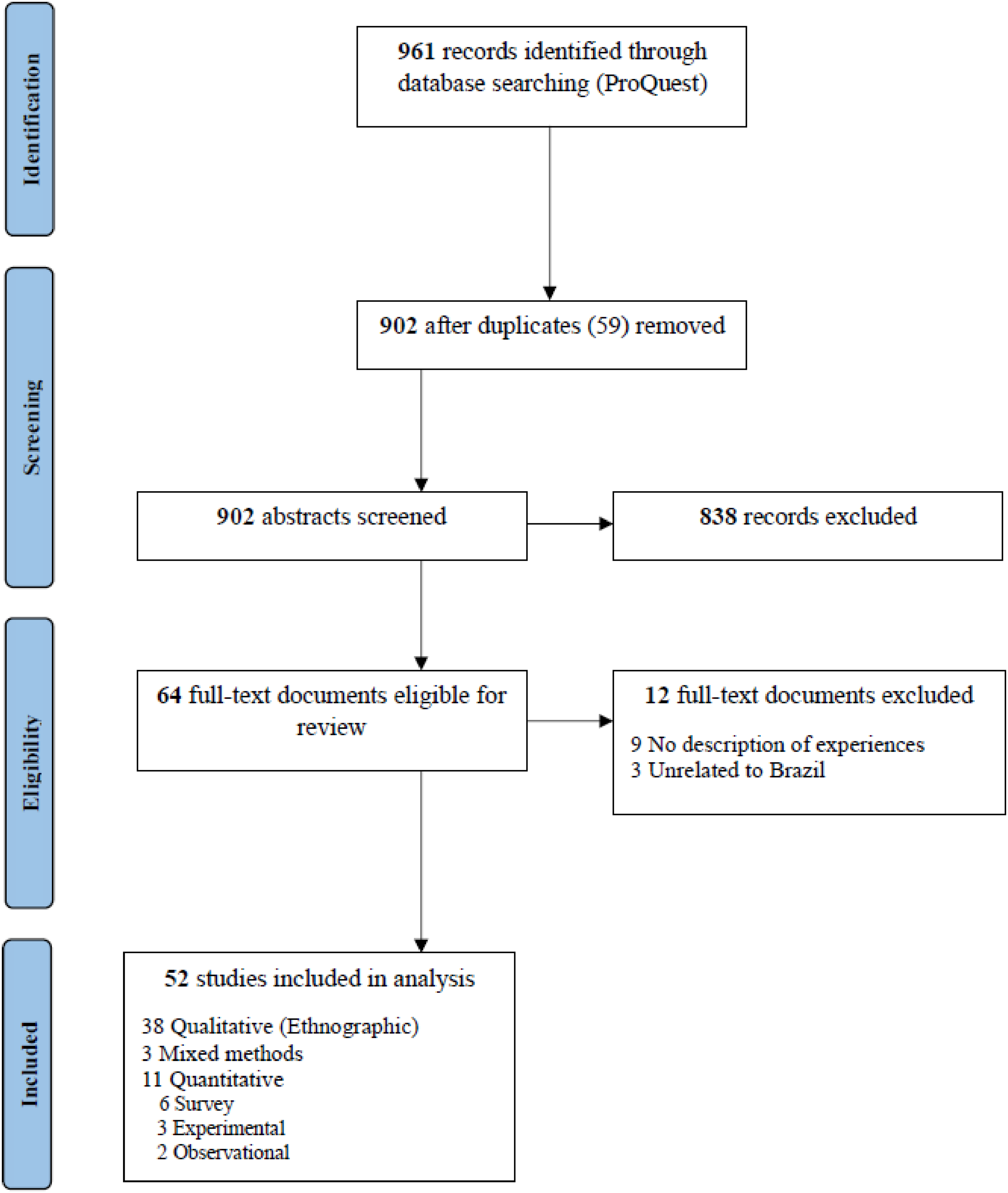
PRISMA diagram for selection of studies.
As shown in Figure 1, most of the studies followed a qualitative methodology based on ethnographic fieldwork. Quantitative studies (such as surveys and experimental research) were included when there were descriptions of the phenomenological features of mediumship experiences or when relevant features of dissociation were used.
The studies covered a wide range of mediumship traditions in Brazil including Spiritism (19.23% of the publications), Candomblé (15.38%), Umbanda (9.62%), Santo Daime (5.77%), and Vale do Amanhecer (3.85%). Among the other religious groups identified in the literature, the largest group (17.31%) described undifferentiated/hybrid Afro-Brazilian cults or regional variations of the previous mediumistic religions (such as Tambor de Mina, Terecô, União do Vegetal, and Xangô). Two studies (3.85%) dealt with esoteric spiritualist groups that practice mediumship. In total, 11.54% of the studies compared different religious groups or practices as part of their research. A few publications also examined dissociative experiences among clinical groups (7.69%) and members of the general population (5.77%).
The team extracted relevant phrases, excerpts, or paragraphs about dissociation and mediumship experiences from the papers to inform the item development process. The extracted excerpts were categorized based on qualitative thematic analysis (Badzinski et al., 2021; Mayring, 2015), focusing on the phenomenological (cognitive or bodily) features and types of experiences. The researchers independently performed a preliminary categorization, which was then revised and refined by researchers working together. The codes and coding processes were discussed in joint research meetings. Disagreements in coding, if any, were discussed until consensus was achieved.
The qualitative content analysis of the experience extracts from the 52 studies revealed six interrelated themes focusing on the phenomenological characteristics of mediumship/possession and dissociative-like experiences during mediumship practices: (a) alterations in consciousness, including semiconscious states and episodes of unconsciousness or amnesia; (b) behavioral alterations and anomalous self and identity experiences, marked by observable changes in behavior and identity, such as shifts in voice tone or personality changes; (c) intense emotions such as joy, fear, and love; (d) somatic manifestations such as shakiness or trembling, dizziness, and other physical symptoms; (e) perceptual or cognitive alterations including hallucination-like experiences such as visions and hearing voices; and (f) other mediumistic or possession-relevant experiences such as premonitions and intuitions. A more detailed description of each theme, along with illustrative extracts from the literature, is provided in Supplementary File 2.
Based on these excerpts from the literature, identification of several measures of dissociation and mediumship-like experiences (Table 1) and drawing upon the item pool of the original INOE scale (including non-validated or rare items, see Taves et al., 2023), an initial item pool consisting of 158 items was developed (see Supplementary File 3 for the complete list of preliminary items). This initial list was reduced via a multi-step refinement process to ensure the relevance of each item to the study's purpose. This process involved thematically grouping items, comparing versions of items measuring supposedly similar experiences and reducing duplications and highly similar descriptions. Items from previous measures or ethnographic behavioral descriptions in English were translated into Portuguese during this stage. We used a team-based translation process, and each translated item candidate was discussed until an agreement was reached among all team members. In cases of disagreement about optimal translation or wording choices, a survey was conducted with the original English text and Portuguese translations, and the version with the most votes across the group was selected.
Item Sources.
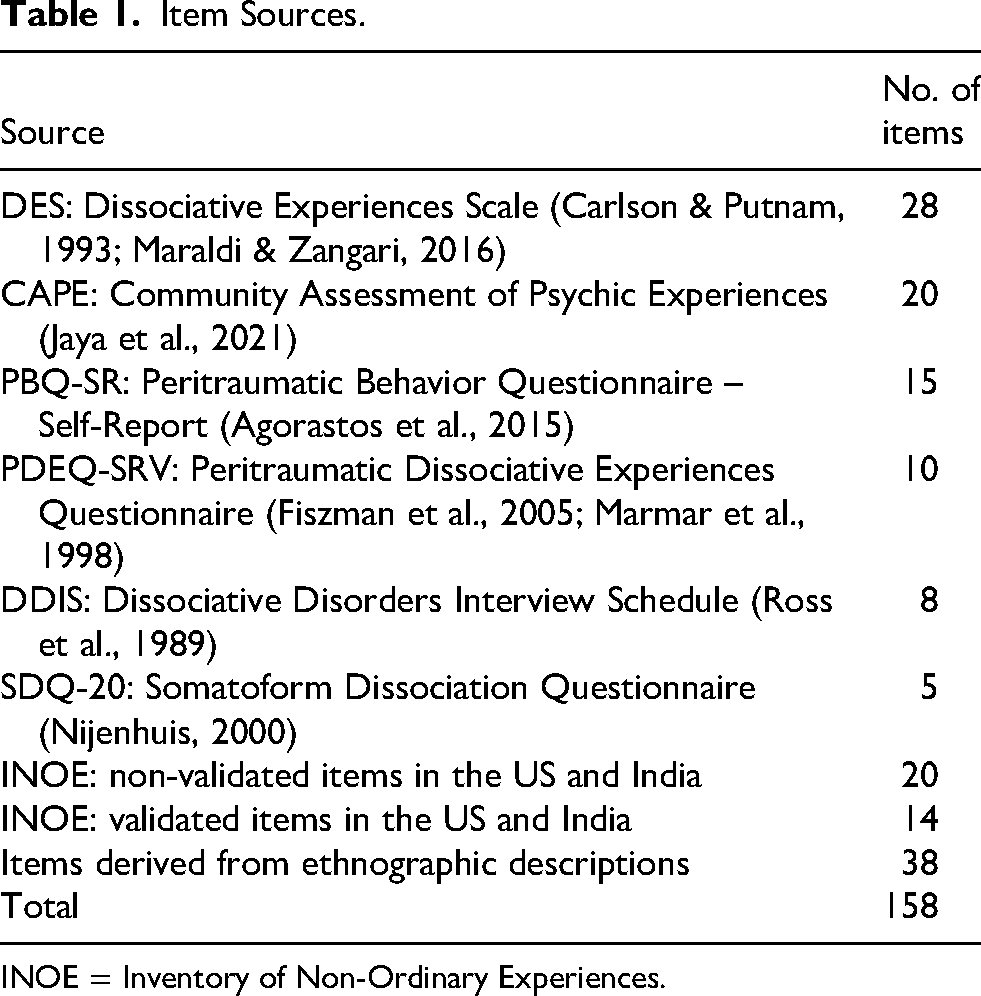
INOE = Inventory of Non-Ordinary Experiences.
During this process, additional improvements or modifications were carried out whenever appropriate to ensure that the wording of the items clearly focused on the phenomenological features of experiences. The list was iteratively reduced through rounds of independent votes by each team member and subsequent group discussions of the voting outcome. The voting criteria were classifications of the items as not relevant to define mediumship/possession (0), relevant (1), or highly relevant (2). At each voting round, outcomes were discussed based on the literature, ethnographic experiences of the research team members and taking into account previous selection decisions.
The iterative process resulted in a preliminary list of 67 items considered relevant or highly relevant to defining mediumship/possession-related experiences based on the existing literature.
Study 2: Online Survey with Mediums
The previous study resulted in an initial list of candidate items to capture mediumship and possession-like experiences. However, these items were generated based on previous literature. One of the central challenges of any inventory is that it is often driven by the perceptions and perspectives of the researchers, leading to possible outsider biases. Practitioners and mediums may not prioritize these experiences as relevant for mediumship. Recognizing that the list of items needed further filtering and refinement and aiming to achieve higher subject-dependent validation, we conducted a study with practicing mediums and spiritual leaders of different mediumship/possession religions.
Methods
We used snowball sampling via personal and research contacts of the research team members to invite participants practicing mediumship or having experience with mediumship (e.g., being a spiritual leader of a group cultivating mediumship). A total of 22 mediums or leaders answered the online survey. Of these, 45% were members of African-derived religions (Umbanda, Candomblé), 32% were Spiritists, and 14% defined themselves as spiritual rather than religious, without belonging to a specific religious or spiritual group or as belonging to different groups. Overall, 66% were female, four were males and four chose not to provide gender information. In total, 72% of the sample reported practicing mediumship two or more times per week (with 27% practicing every day). The number of years practicing mediumship varied among the mediums (M = 19.32, SD = 14.82, minimum = 1, maximum = 60).
This survey presented the refined list of 67 items (including all the validated items of the original INOE; Taves et al., 2023). Participants had to select those they deemed most relevant to define mediumship/possession experiences based on their own history of (and familiarity with) such experiences. The following response options were provided: (a) “Yes, this experience is related to mediumship”; (b) “This experience is not related to mediumship”; and (c) “This experience might be related to mediumship, but the wording of the item needs improvement (please, provide your suggestions)”.
Our selection criterion for retaining items was the percentage of agreement among mediums, with an a priori cutoff of 80% agreement. This threshold was adopted to balance two complementary aims: parsimony, by reducing the initial pool to a manageable set of core features; and consensus validity, by retaining only those characteristics that are broadly recognizable within the community of practicing mediums. The 80% cutoff—following the approach proposed by Taves et al. (2023)—prioritized items reflecting high intersubjective convergence, while excluding more idiosyncratic or tradition-specific features. As a result, the retained items emphasize widely shared aspects of mediumship experiences, at the cost of a more exhaustive coverage of less common or marginal expressions. The research project was approved by the D’Or Institute for Research and Education Research Ethics Committee in Brazil (CAAE: 65573322.6.0000.5249), and all participants gave online informed consent for participation.
Results and Discussion
A total of 16 items passed the 80% agreement cutoff (see Table 2 for a description of each item). We assessed the agreement among the mediums using an intraclass correlation coefficient (ICC 2), which estimates the reliability of the group mean (Bartko, 1976; Bliese, 2000). The interrater agreement across all items was .74, which is above the recommended threshold of .70 and suggests an appropriate agreement in our sample. In Supplementary File 4, we provide the full list with all items presented to the mediums (including Portuguese wording).
Items of Non-Ordinary Experience With at Least 80% Agreement Between Mediums.
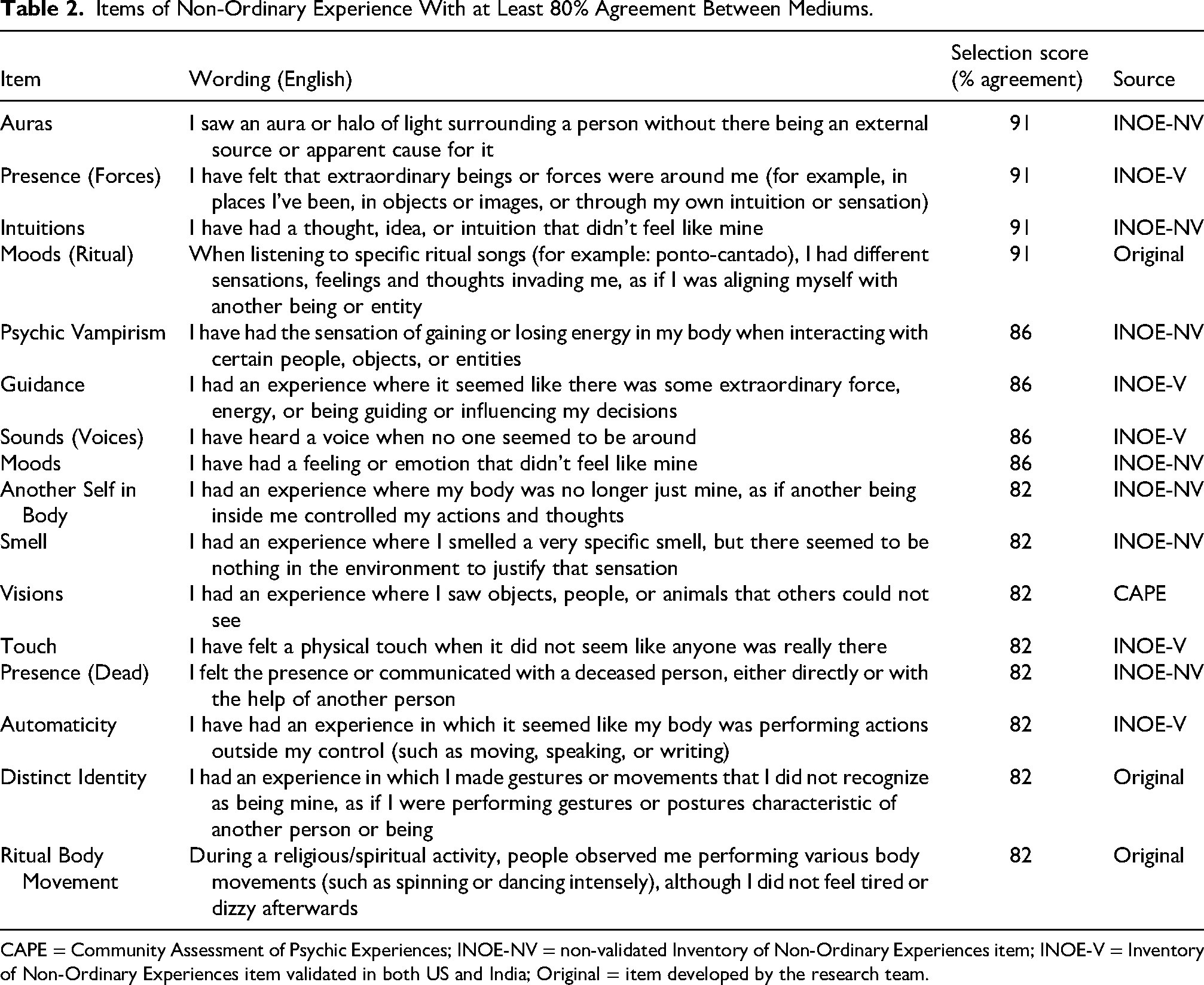
CAPE = Community Assessment of Psychic Experiences; INOE-NV = non-validated Inventory of Non-Ordinary Experiences item; INOE-V = Inventory of Non-Ordinary Experiences item validated in both US and India; Original = item developed by the research team.
As shown in Table 2, most of these experiences emphasize the perception of beings/entities, forces or energies, covering a wide variety of perceptual modalities including visual (Auras or Halos of Light), tactile (Touch), olfactive (Smell), and auditory (Voices). Consistent with the larger literature, experiences of alteration in the usual sense of self and identity (Another Self in Body; Distinct Identity), and related behavioral changes such as automatic writing and other involuntary body movements were also identified as relevant. The mediums also emphasized the experience of “sensed presences” (either extraordinary forces/beings or deceased people), and perceptions of “energy” shifts in the body when interacting with other people (Psychic Vampirism), themes that have been identified in previous research. Mediums also identified experiences of mood swings/emotional alterations and intuitions that seemed to arise spontaneously or were perceived as coming from an outside source (in a similar way to automaticity experiences) as important.
Overall, the selected items parallel some of the themes identified in the literature review such as perceptual and cognitive alterations (e.g., Visions, Voices, Smell, Touch, Presences), and anomalous self and identity experiences (e.g., Ritual Body Movement, Distinct Identities). Considering the original INOE, a total of five items from the published version were identified as relevant for mediumship. Seven further items that were part of an original INOE item pool but were not validated or further developed in the original study (Taves et al., 2023) also formed part of this list.
Study 3: Item Validation in the General Population
The list of experience items requires validation before being used in further studies. Traditional validation methods focusing on internal consistency are not directly applicable when examining the validity of single items. One option is to use qualitative item probing (Behr et al., 2014, Fischer et al., 2025), as a form of face validity with individuals that are part of the target population. We used a variation of the Response Process Evaluation (RPE) method (Wolf et al., 2025), in which participants see the experience item and are asked open-ended probing questions. This is a variation of widely used cognitive interviewing and web-probing, with the major distinction that it is used in an iterative fashion. Participants report relevant experiences that are supposed to be relevant to the researcher-posed question. These responses are then classified by researchers to assess whether participants understood the items as intended. If the items show problems with understanding, they are modified and retested in a new batch of participants. This process continues until an item shows rates of understandability according to predefined thresholds. Therefore, the method uses established cognitive interviewing and web-probing techniques in an iterative fashion with predefined criteria and validity thresholds to assess item validity to yield optimal item phrasing for a specific population. The RPE method is particularly valuable for two reasons: (a) it verifies participant comprehension of the intended meaning; and (b) it facilitates iterative item refinement, in case problems with specific item understandings are identified. Using this method iteratively allows researchers to fine-tune the wording of the experience items so that the meaning becomes clearer for individuals drawn from the target population and it allows a quantitative assessment of the validity of the item, enhancing transparency, replicability and validity.
Methods
The research project was approved by the D’Or Institute for Research and Education Research Ethics Committee in Brazil (CAAE: 65573322.6.0000.5249), and all participants gave online informed consent for participation. A total of 633 adults who had signed up for an online panel survey participated in this study (mean age = 43.0, SD = 13.0, 57% female). The majority of participants came from the southeast of Brazil (45%) and were either enrolled in undergraduate studies or had an undergraduate degree (70%). Individuals responded online to two randomly selected items and each participant had to answer a number of validity probes. If individuals claimed to have had the experience, they were asked to describe in detail the situation and their experience. If individuals did not have the experience or were not sure, we asked to give an example of what this experience might be like. All participants also were asked to paraphrase the question. See Supplementary File 5 for a complete description of the validity probes used in Study 3 and Supplementary File 6 for a more complete description of the demographic characteristics of the sample.
Participants’ responses were classified by four trained research assistants (three authors: MVL, GNB, MCLB; and one paid research assistant). All team members initially discussed the items from the published version and item classifications were checked with the authors of the original inventory. For the new items, disagreement about possible understanding was discussed as part of Study 1 (the creation of the item pool and in the generation of the intended interpretations), focusing on possible linguistic markers or thematic indicators of whether the individual did understand the question, did not understand the question or more information would be needed to make this classification. If three members of the team agreed with a classification, this majority decision was adopted. If the team was evenly split between understood vs not understood, the response was coded as requiring more information. In all other cases, the senior author (RF) made the final decision. We adopted the original criteria (Taves et al., 2023) requiring that at least 80% of responses in a sample of 20 individuals or more has been classified as understood (discounting responses with insufficient information). Additional validity information is provided in Table 3 but not further discussed here.
Validated Experience Items and Process of Validation in Brazil (Using the Rule-Based Categorization).
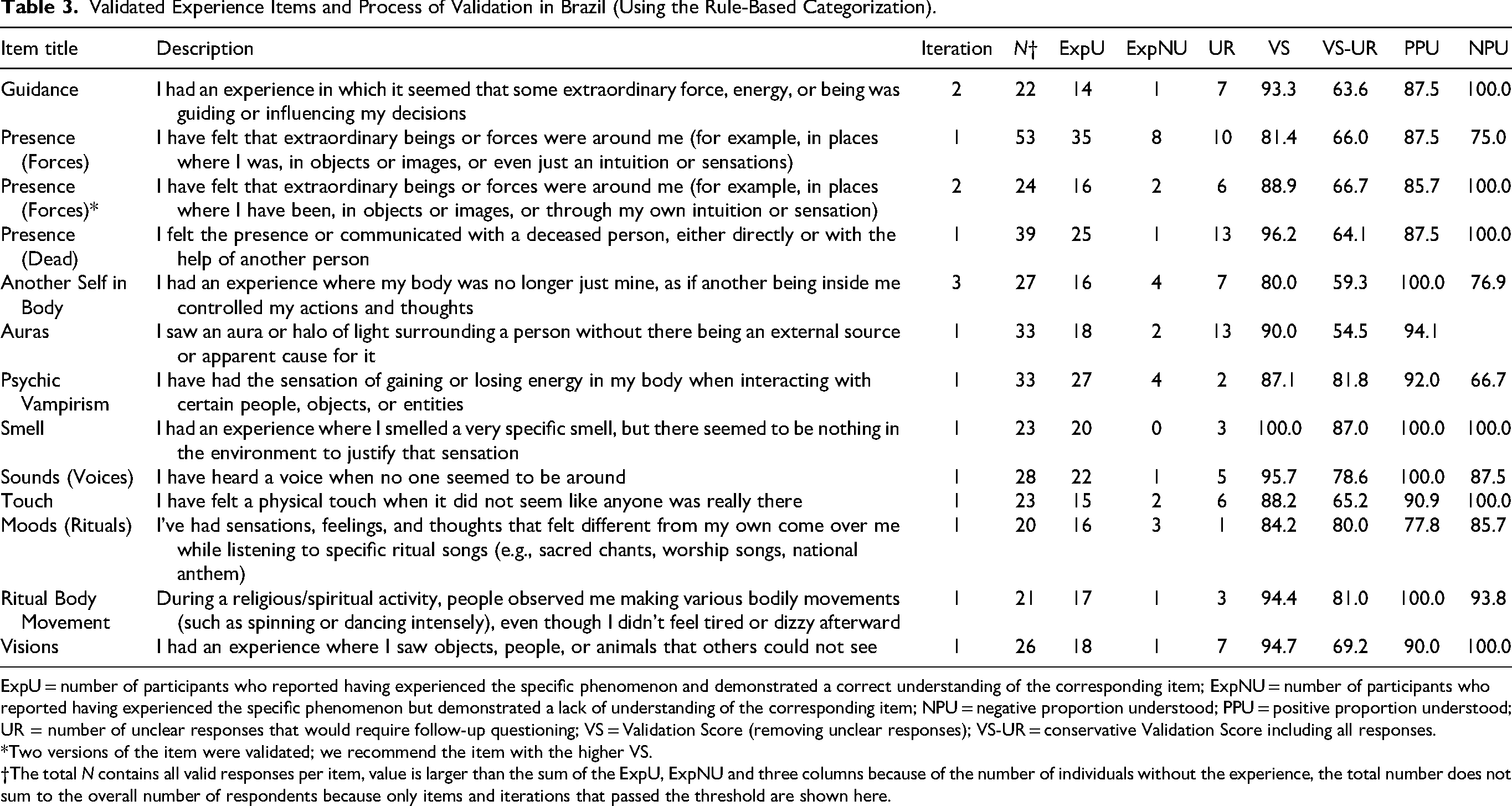
ExpU = number of participants who reported having experienced the specific phenomenon and demonstrated a correct understanding of the corresponding item; ExpNU = number of participants who reported having experienced the specific phenomenon but demonstrated a lack of understanding of the corresponding item; NPU = negative proportion understood; PPU = positive proportion understood; UR = number of unclear responses that would require follow-up questioning; VS = Validation Score (removing unclear responses); VS-UR = conservative Validation Score including all responses.
*Two versions of the item were validated; we recommend the item with the higher VS.
†The total N contains all valid responses per item, value is larger than the sum of the ExpU, ExpNU and three columns because of the number of individuals without the experience, the total number does not sum to the overall number of respondents because only items and iterations that passed the threshold are shown here.
Importantly, items scoring below 80% on the validation scores underwent an iterative refinement process. This process involved either retesting the item with a new sample or revising its wording based on participant responses to minimize misunderstandings and improve response accuracy. Revised versions were then tested with new samples. We cycled through a maximum of five different wordings because of time and financial constraints. In some cases, we decided to test fewer than five wordings if the cumulative validation scores were below 60%, and no clear alternatives for rephrasing to improve clarity were evident based on the available item responses. For more information on this adapted procedure, see Fischer et al. (2026).
We tested all 16 items from Study 2 that passed the 80% selection threshold. As noted above, the specific item wording may be adjusted based on the responses during the validation process and the final item wordings vary from those presented to participants in Study 2.
Results and Discussion
Of the 16 items selected by the mediums as more representative of mediumship/possession experiences, 12 passed the 80% threshold and were deemed initially validated. The item asking about being guided and another self in body had to be tested in various iterations. It was noteworthy that the item Another Self in Body also did not pass the validation in the US and Indian samples (Taves et al., 2023), but ultimately passed in our revised version. We tested two different versions of a “presence of supernatural forces” item and considered the version with higher validation scores to be better. Tables 3 and 4 show results on the items that did and did not pass the validation step. The interrater reliability using Fleiss’ Kappa for all items and versions was .504, which indicates acceptable interrater agreement (Landis & Koch, 1977). Examining separately the items that passed the validity threshold, interrater reliability was .463 and for those items that did not pass, interrater reliability was .473, again suggesting sufficient agreement between coders. Therefore, our validity threshold together with the interrater reliability information indicated that these items can be accepted as provisionally valid in this population.
Non-Validated Experience Items and Process of Validation in Brazil (Using the Rule-Based Categorization).
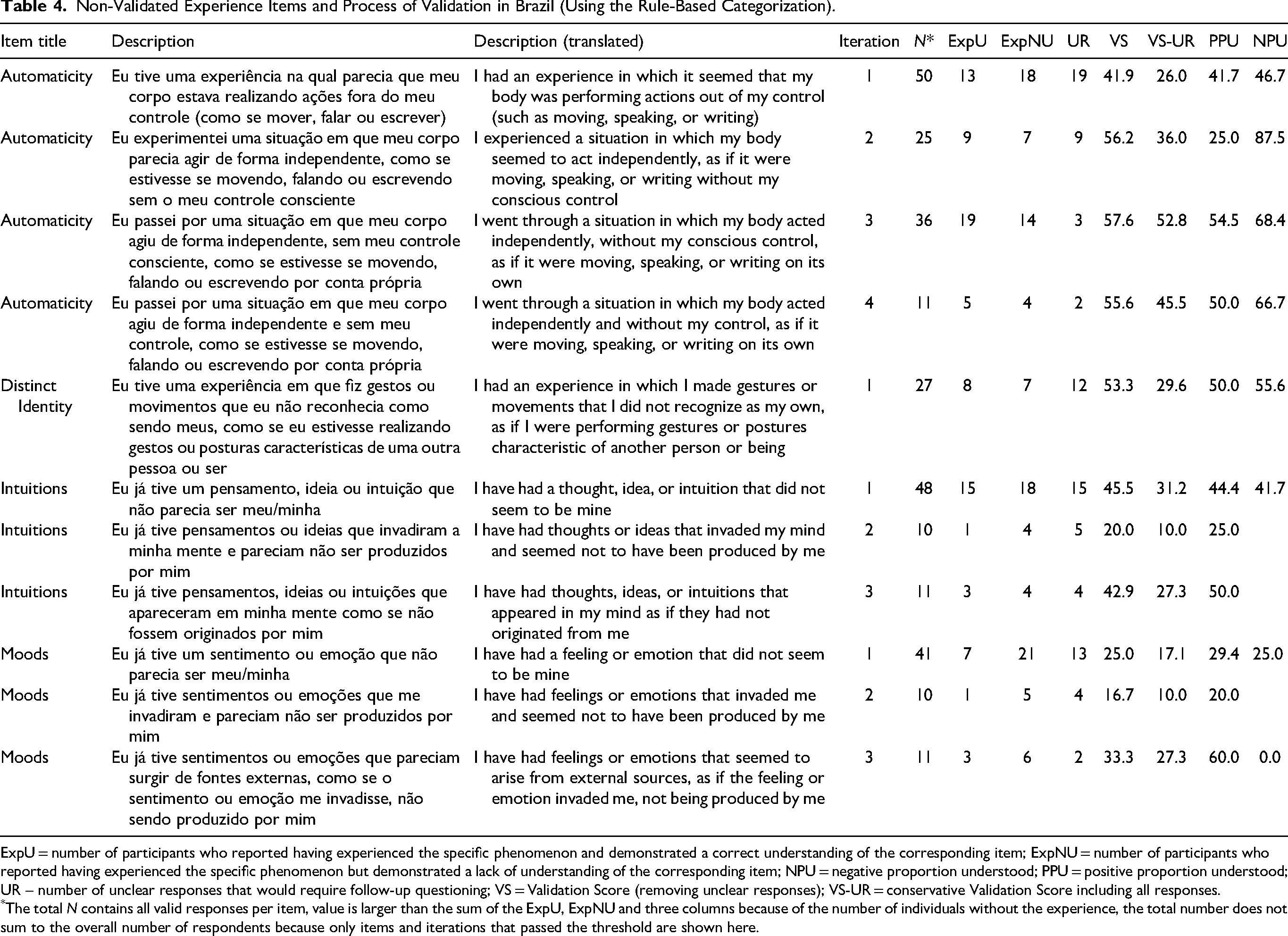
ExpU = number of participants who reported having experienced the specific phenomenon and demonstrated a correct understanding of the corresponding item; ExpNU = number of participants who reported having experienced the specific phenomenon but demonstrated a lack of understanding of the corresponding item; NPU = negative proportion understood; PPU = positive proportion understood; UR – number of unclear responses that would require follow-up questioning; VS = Validation Score (removing unclear responses); VS-UR = conservative Validation Score including all responses.
The total N contains all valid responses per item, value is larger than the sum of the ExpU, ExpNU and three columns because of the number of individuals without the experience, the total number does not sum to the overall number of respondents because only items and iterations that passed the threshold are shown here.
Study 4: Prevalence of Mediumship/Possession-Relevant Experiences in the General Population
One interesting question is the relative prevalence of these experiences in general population samples. As noted in the introduction, a number of religious traditions emerged out of mediumistic practices and many religious groups actively cultivate mediumistic practices on a regular basis. At the same time, individuals may feel stigmatized if these experiences are framed within a medical context implying psychopathology. Against this background, it is essential to explore the reported lifetime prevalence rates when using a feature-based approach for describing the experience. Conducting a large population-level study allows for a more nuanced understanding of the distribution and characteristics of mediumship/possession-relevant experiences, providing essential data to inform research, clinical practice, and public policies. Moreover, such studies contribute to cross-cultural research on these phenomena, offering insights into their variability and psychosocial implications across cultures.
Method
The research project was approved by the D’Or Institute for Research and Education Research Ethics Committee in Brazil (CAAE: 79141724.9.0000.5249), and all participants gave online informed consent for participation. We recruited 2000 individuals via an online panel. Eligibility criteria included being 18 years or older, holding Brazilian citizenship, having internet access, being able to comprehend and respond to the questionnaire, and agreeing to the informed consent form. The sample (mean age = 45; SD = 15) was representative of the larger Brazilian population, in terms of gender (52% female) and geographical location, as outlined in the Brazilian Census 2010. Regarding educational levels, the distribution in the sample was similar to Census 2010 data, with only minor deviations of up to ±5%.
Material
We presented 10 validated items from Study 3 to participants, namely: Guidance, Presence (Forces), Presence (Dead), Another Self in Body, Auras, Psychic Vampirism, Smell, Sounds (Voices), Touch and Visions. We did not include the Moods (Rituals) and Ritual Body Movement items because of logistic constraints. Individuals were asked whether they have had the experience at least once in their lifetime. Responses were recorded as “Yes,” “No,” or “Unsure.”
Results and Discussion
The overall prevalence rates for each item are shown in Figure 2 and the prevalence rates of the “yes” responses together with 95% confidence interval and an estimate of effect sizes for proportions (with .20, .50, and .80 indicating small, medium, and large effects) are available in Table 5. Examining Cohen's h as an estimate of effect size for proportions (yes versus combined no and unsure responses), six of the experiences were of a large magnitude, three were of small magnitude and experiences of auras were the only experiences that were just below the criterion of small effect sizes.
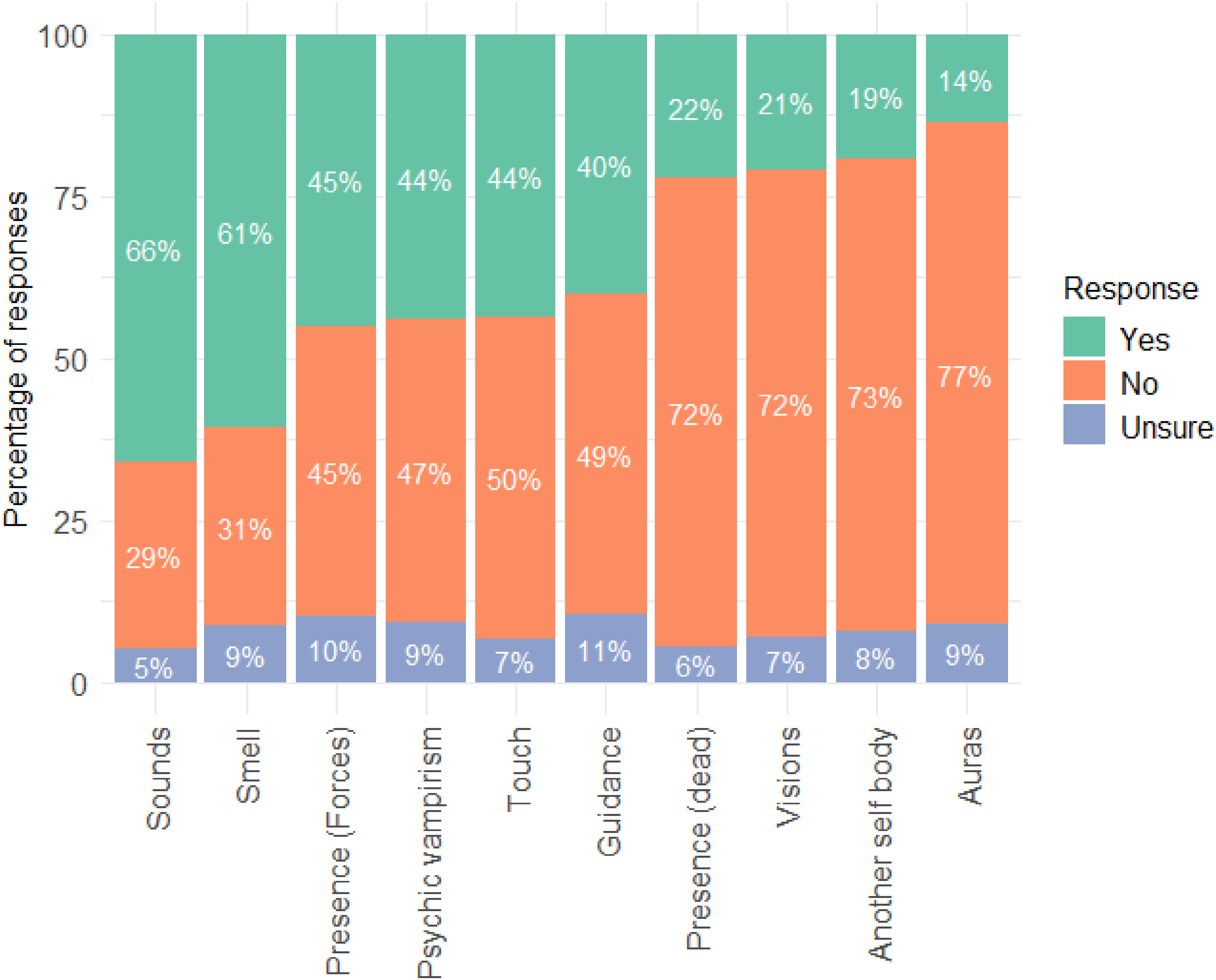
Prevalence percentages for each Inventory of Non-Ordinary Experiences (INOE)-mediumship item.
Prevalence Rates With 95% Confidence Intervals (CI) and Ordered by Effect Size Estimate.
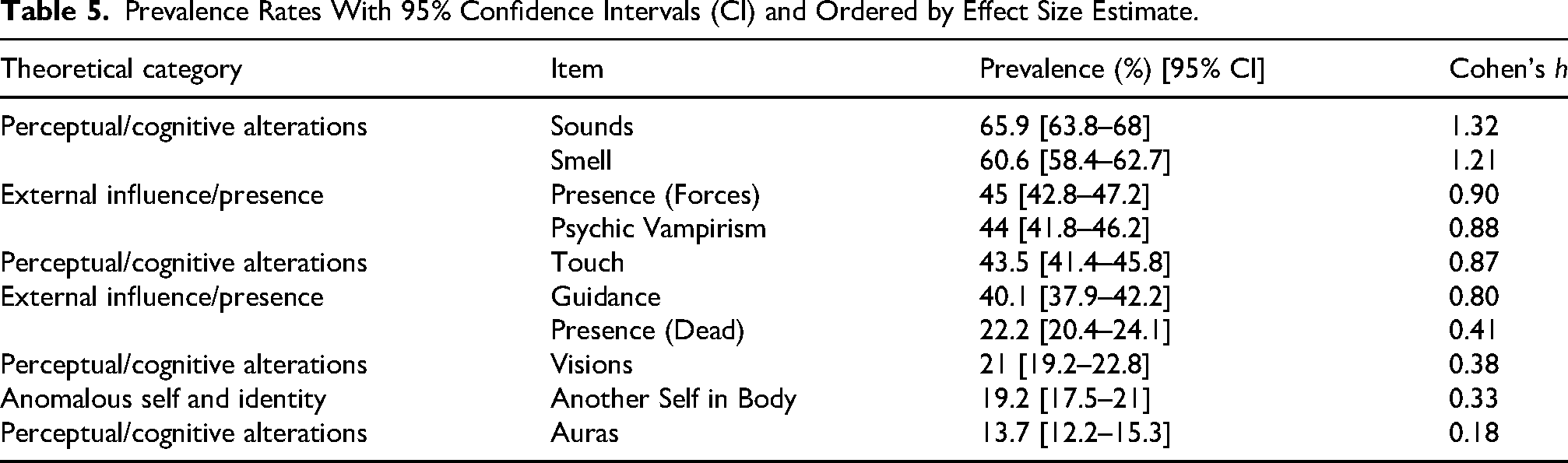
The reported experiences with the highest prevalence rates involved perceptual alterations: Sounds, Smell, Touch and Visions (all showing large to moderate effect sizes). Alterations in the cognitive system indicating perceptions of presence (especially of some higher force, but also presence of dead individuals), alterations of personal energy in the presence of other individuals (Psychic Vampirism) and feeling guided also showed strong to moderate effect sizes. The experience of Guidance is quite illustrative of the mediumship/possession experience itself (the feeling of being guided or influenced by a non-ordinary force or being). Notably, all experiences related to external influence and presence items identified in Study 1 showed moderate to large effect sizes, indicating that these experiences are widespread in this population.
One item referring to perceptions of Another Self in Body, which corresponds to the behavioral alterations and anomalous self and identity experiences category that are often seen as a marker of dissociative experiences showed small to moderate effect sizes. Even the rarest experiences (Auras, Another Self in Body) were still relatively common considering the low prevalence of dissociative disorders in the general population (Maraldi et al., 2017) and were indicating a small effect size. Focusing on the other end of the distribution, the most common experiences such as hearing voices or smells were reported by approximately two in three Brazilians.
Our sample deviated slightly from census data for education levels. To test whether education levels systematically influenced the prevalence rates, we computed both the sum of experiences and the prevalence of each experience separately with ordinally coded education levels. Overall, higher education levels were not reliably associated with more reported experiences overall (r = −.02, p = .38) or with any of the experiences on average (mean r = −.015, min r = −.093, max r = .049). The only correlation coefficient significant at p < .01 was for hearing voices (r = −.093, p < .001), indicating that more-educated individuals were less likely to report having heard voices. Therefore, there is limited evidence that education biases the prevalence rates. If at all, we may have underestimated some of these experiences such as hearing voices in less-educated population segments.
General Discussion
This paper presented the development and validation process of mediumship/possession-relevant items in Brazil following the format and approach of the INOE. We developed an pool of 158 items, which were reduced to a high-quality list of 67 items presented to spirit mediums and spiritual leaders. This group identified 16 items as highly relevant for mediumship, of which we were able to validate 12 for use in a general population sample. Testing 10 of these items in a population-level study, even the rarest experiences are well above clinical rates of dissociative or psychotic experiences and for some experiences, two in three Brazilians report having had the experience at least once in their life.
The experiences tap into different perceptual and cognitive processes that are often associated with mediumship practices. As found in the literature review in Study 1, experiences such as Guidance, Presence (Forces) and Presence (Dead) are appraised as signs of the presence of spiritual forces or beings that can provide advice or guidance. All these characteristics correspond to the items Guidance, Presence (Forces), and Presence (Dead) from our INOE-Mediumship/Possession items.
The prevalence of the different mediumship-relevant experiences varied in the general population, with items such as Smell and Sounds attaining more than 50% prevalence, while perception of Auras and Another Self in Body were far less common, although still relatively prevalent (14% and 19%, respectively) and showing a small effect size. Future studies should investigate the specific prevalence rates of these experiences among members of mediumship religions. Are certain experiences more common in some contexts? How do particular religious or social practices induce, favor or attract individuals with specific experiences? For example, are Umbanda mediums more prone to smell experiences because of the expectations regarding the manifestation of specific entities (e.g., “pretos velhos”)? Are experiences of the perceived presence of deceased individuals more common in Spiritist contexts because of practices such as psychography or automatic writing, which are sought by many people in Brazil to communicate with their deceased loved ones (Curcio & Moreira-Almeida, 2019)?
Of the 12 validated items, 4 had not been previously validated in both the US and India: Auras, Smell, Another Self in Body, and Presence (Dead), 2 were new items proposed in our study (Moods [Ritual] and Ritual Body Movement), whereas Visions was extracted from the Community Assessment of Psychic Experiences (CAPE). The validation data points to the importance of cultural practices and appraisals in the recognition and comprehension of specific types of experiences. We may expect that experiences that occur more often in general or are more salient to certain cultures will also be more easily identified and understood. Given the widespread prevalence of mediumship practices and beliefs in Brazil, experiences such as Another Self in Body and Presence (Dead) might be more familiar to respondents, making them better candidates for validation in this context. Taken together, these items extend the INOE by incorporating experiential domains that are central to religious groups engaged in mediumship/possession practices, thereby yielding an expanded version of the inventory that is more attuned to culturally specific forms of non-ordinary experience without compromising comparability with prior cross-cultural work.
One notable aspect of the current findings is the high prevalence of mediumship and possession-relevant experiences in the general population, which may contribute to the recruitment of individuals into religious groups and movements. However, these prevalence rates stand in stark contrast to those of dissociative disorders. This discrepancy suggests a disconnect between clinical diagnoses and reports from general population samples. Previous large-scale studies have estimated the prevalence of dissociative disorders to range from 2.2% to 8% (Maraldi et al., 2017), figures that are consistently lower than the percentage of individuals in the general population reporting mediumship/possession-relevant experiences in our study. These findings have important implications for future research on the differential diagnosis between pathological and non-pathological mediumship/possession-relevant experiences, the role of cultural factors in mental health and the recruitment and reinterpretation of these common experiences into a religious or spiritual context.
From a clinical perspective, these findings caution against equating the presence of anomalous experiences per se with psychopathology, while underscoring the need for conceptual frameworks that can accommodate both overlap and distinction between clinical symptoms and culturally embedded NOEs. Our findings support recent calls within psychiatry and clinical psychology to move beyond symptom-based inference toward contextualized assessment that considers appraisal, meaning, distress, and functional impact (Fischer & Tasananukorn, 2018; Luhrmann et al., 2015, 2023; Maraldi et al., 2021; Taves & Barlev, 2023). Instruments that fail to capture culturally normative expressions of NOEs risk inflating false positives or misclassifying spiritually integrated experiences as necessary indicators of disorder. Whereas medically oriented approaches typically foreground constructs such as dissociation, hallucinations, or ego fragmentation, the items retained here emphasize experiential features that are meaningful to practitioners, such as perceived guidance, sensed presence, or embodied alteration attributed to an external agent. These features are not defined by loss of reality testing or functional impairment, but by subjective salience and culturally intelligible interpretations.
Our culturally sensitive approach to item development combined several complementary strategies. First, we conducted a systematic review of relevant categories in the literature—both emic and etic—which informed the creation of an initial pool of items (Study 1). Second, these items were selected and refined based on evaluations provided by mediums or experiencers themselves (Study 2). Third, the items were validated in the general population to enable broader use of the instrument and to provide objective criteria for inclusion in the final item set (Study 3). Finally, we investigated the prevalence of mediumship/possession-related experiences to better understand their patterns in the population and to facilitate comparisons with the international literature. In this sense, the proposed feature set refines existing debates by shifting the analytic focus from diagnostic resemblance to phenomenological structure and social recognizability. Rather than assuming a priori that mediumship-related experiences can be subsumed under dissociative or psychotic categories, our approach investigates which experiential elements are consistently identified as central to mediumship across practitioners, and how these elements are distributed in the general population. Relative to prior inventories and coding schemes that either excluded culturally specific experiences or subsumed them under broader clinical constructs, the current item pool was derived from a systematic literature review explicitly centered on mediumship/ possession practices. Cultural sensitivity was operationalized methodologically through an item inclusion threshold based on high agreement among mediums themselves, privileging intersubjective recognizability within a community of practice. Although this approach necessarily trades breadth for parsimony, it yields a feature set that is better aligned with the lived phenomenology of mediumship/possession and more suitable for cross-cultural comparison.
The current findings also converge with, and extend, recent empirical work on spiritually interpreted NOEs conducted in non-clinical populations, bearing implications for the understanding of different human experiences. For instance, research by Tanya Luhrmann and others on voice-hearing, sensed presences, and other non-ordinary experiences among religious practitioners demonstrates that these experiences are often cultivated, socially scaffolded, and appraised as meaningful rather than distressing (Luhrmann et al., 2015, 2021; Powell & Moseley, 2020). Some authors now speak of “spiritually significant voices,” which they separate from pathological auditory–verbal hallucinations (Cook et al., 2022). Our high prevalence rates for experiences such as Sounds, Guidance and Presence (Forces) are consistent with this work, suggesting that similar experiential processes may be at play in Brazilian mediumship contexts, albeit expressed through culturally specific idioms and practices. Experiences often labeled as hallucinatory or dissociative in clinical settings are widely distributed in the population when assessed using neutral, experience-proximal language. Importantly, our results further indicate that prevalence estimates are strongly shaped by whether instruments capture experiences that are meaningful within specific cultural and religious frameworks.
The items Presence (Forces) and Presence (Dead) also speak directly to the growing interdisciplinary literature on felt or sensed presence experiences. Recent work has documented such experiences across a wide range of contexts, including bereavement, solitude, psychosis, and spiritual practice (Alderson-Day et al., 2025; Barnby & Bell, 2017; Ratcliffe, 2021). Although much of this literature focuses on phenomenological description or experimental induction, our findings contribute population-level prevalence data and show that sensed presence experiences are not only common, but also culturally differentiated. Crucially, the distinction between Presence (Forces) and Presence (Dead) reflects emic distinctions that are often blurred in broader felt-presence research. Whereas experimental and clinical studies typically treat sensed presence as a unitary phenomenon, mediumship traditions often differentiate between types of presences based on perceived identity, relational meaning, and moral status. By incorporating these distinctions into measurement, the current inventory allows for more fine-grained comparisons between religious, clinical, and experimental contexts.
Limitations of the Study
Our review primarily focused on academic studies, particularly ethnographic research. Our study did not include emic references such as books written by mediums describing their own experiences. Given this highly diverse literature, which is not captured in large databases, and unsure quality standard (e.g., who would be counted as a genuine medium), we decided not to include them in this review. This remains a major task for a future project. Our Study 2 included individuals who practice mediumship regularly, yet, given the challenges in identifying and convincing mediums to participate the sample size was small and did not encompass all mediumship religions identified in our systematic review. Furthermore, in-depth interviews with mediums who have many years of practice could have provided additional insights into the phenomenology of mediumship/possession that online surveys cannot easily capture. These more in-depth steps were not possible because of the restrictions imposed by the pandemic when our research was conducted. However, it is important to note that our team included researchers with extensive experience in studying mediumship religions and other ritualistic practices in Brazil. This prior experience, including ethnographic fieldwork and interviews, was considered during the item development process. The sample in Study 3 had relatively high educational levels and given the involved qualitative nature it may have been more appealing to more-educated participants. Preliminary analyses (available upon request) from a larger set of items suggested that more-educated participants provided responses during the response validation process that were more likely to be classified as “understood,” primarily due to responses that could be classified (longer responses, with more detail allow a classification) and an associated reduction in unclear responses. Therefore, it might be that we overestimate the validity in less-educated strata of the population, which may lead to biases in estimating prevalence rates. The validation process, including the RPE method, advance replicability and transparency in qualitative instrument validation and therefore allow more critical assessment of the validity of items. Other researchers can query the database and re-evaluate the coding classifications, which can also help to detect any hidden researcher-driven biases. All the categorizations are available for further scrutiny, and we strongly encourage further cross-cultural validations to strengthen these methods. A broader cross-cultural analysis, particularly in comparison with studies on similar experiences in different traditions, would be interesting to assess whether the identified items generalize across contexts. Research by Luhrmann et al. (2021, 2023) has shown that cultural frameworks shape the way individuals interpret experiences such as hearing voices or perceiving presences, which may be appraised as divine communication, psychotic symptoms, or mediumistic phenomena depending on the cultural setting. Future studies might investigate whether the items identified in our research resonate with similar constructs in other religious traditions and practices, such as Pentecostal Christianity, shamanistic practices, or Buddhist meditative states. Such comparative analyses may provide additional insight into the common versus distinctive features of mediumship/possession-relevant experiences.
Conclusion
This study is the first to develop and implement a measure for assessing mediumship/possession-relevant experiences using a feature-based, subject-dependent approach to definition and measurement. Our research utilized an innovative multi-step, mixed-methods validation process, balancing emic and etic perspectives, and integrating qualitative and quantitative methodologies within the same project. Our findings demonstrated that the INOE mediumship/possession-relevant items are valid and can be utilized in future research. Mediumship/possession-relevant experiences are common in the general population in Brazil. Our research provides the foundation for a more systematic study of mediumship and possession-like experiences across cultures that may yield a better understanding of the commonalities and differences in various cultural contexts.
Supplemental Material
sj-docx-1-tps-10.1177_13634615261459751 - Supplemental material for Investigating Mediumship/Possession-Relevant Experiences: Contributions from a Feature-Based, Subject-Dependent Approach to Definition and Measurement
Supplemental material, sj-docx-1-tps-10.1177_13634615261459751 for Investigating Mediumship/Possession-Relevant Experiences: Contributions from a Feature-Based, Subject-Dependent Approach to Definition and Measurement by Everton De Oliveira Maraldi, Ronald Fischer, Maria Vitoria De Lima Varejão, Giovanna Novaes Bortolini, Maria Clara Laport Bêta, Larissa Hartle, Tiago Bortolini and Jorge Moll in Transcultural Psychiatry
Supplemental Material
sj-docx-2-tps-10.1177_13634615261459751 - Supplemental material for Investigating Mediumship/Possession-Relevant Experiences: Contributions from a Feature-Based, Subject-Dependent Approach to Definition and Measurement
Supplemental material, sj-docx-2-tps-10.1177_13634615261459751 for Investigating Mediumship/Possession-Relevant Experiences: Contributions from a Feature-Based, Subject-Dependent Approach to Definition and Measurement by Everton De Oliveira Maraldi, Ronald Fischer, Maria Vitoria De Lima Varejão, Giovanna Novaes Bortolini, Maria Clara Laport Bêta, Larissa Hartle, Tiago Bortolini and Jorge Moll in Transcultural Psychiatry
Supplemental Material
sj-xlsx-3-tps-10.1177_13634615261459751 - Supplemental material for Investigating Mediumship/Possession-Relevant Experiences: Contributions from a Feature-Based, Subject-Dependent Approach to Definition and Measurement
Supplemental material, sj-xlsx-3-tps-10.1177_13634615261459751 for Investigating Mediumship/Possession-Relevant Experiences: Contributions from a Feature-Based, Subject-Dependent Approach to Definition and Measurement by Everton De Oliveira Maraldi, Ronald Fischer, Maria Vitoria De Lima Varejão, Giovanna Novaes Bortolini, Maria Clara Laport Bêta, Larissa Hartle, Tiago Bortolini and Jorge Moll in Transcultural Psychiatry
Supplemental Material
sj-xlsx-4-tps-10.1177_13634615261459751 - Supplemental material for Investigating Mediumship/Possession-Relevant Experiences: Contributions from a Feature-Based, Subject-Dependent Approach to Definition and Measurement
Supplemental material, sj-xlsx-4-tps-10.1177_13634615261459751 for Investigating Mediumship/Possession-Relevant Experiences: Contributions from a Feature-Based, Subject-Dependent Approach to Definition and Measurement by Everton De Oliveira Maraldi, Ronald Fischer, Maria Vitoria De Lima Varejão, Giovanna Novaes Bortolini, Maria Clara Laport Bêta, Larissa Hartle, Tiago Bortolini and Jorge Moll in Transcultural Psychiatry
Supplemental Material
sj-docx-5-tps-10.1177_13634615261459751 - Supplemental material for Investigating Mediumship/Possession-Relevant Experiences: Contributions from a Feature-Based, Subject-Dependent Approach to Definition and Measurement
Supplemental material, sj-docx-5-tps-10.1177_13634615261459751 for Investigating Mediumship/Possession-Relevant Experiences: Contributions from a Feature-Based, Subject-Dependent Approach to Definition and Measurement by Everton De Oliveira Maraldi, Ronald Fischer, Maria Vitoria De Lima Varejão, Giovanna Novaes Bortolini, Maria Clara Laport Bêta, Larissa Hartle, Tiago Bortolini and Jorge Moll in Transcultural Psychiatry
Supplemental Material
sj-docx-6-tps-10.1177_13634615261459751 - Supplemental material for Investigating Mediumship/Possession-Relevant Experiences: Contributions from a Feature-Based, Subject-Dependent Approach to Definition and Measurement
Supplemental material, sj-docx-6-tps-10.1177_13634615261459751 for Investigating Mediumship/Possession-Relevant Experiences: Contributions from a Feature-Based, Subject-Dependent Approach to Definition and Measurement by Everton De Oliveira Maraldi, Ronald Fischer, Maria Vitoria De Lima Varejão, Giovanna Novaes Bortolini, Maria Clara Laport Bêta, Larissa Hartle, Tiago Bortolini and Jorge Moll in Transcultural Psychiatry
Footnotes
Acknowledgements
The authors would like to thank all the mediums who contributed to this research. We also thank Bruna Valerio Gomes, Camila Piniel, Gustavo Fernandes Granjeiro, and Maria Eduarda Moreira-de-Oliveira for their assistance in different moments of the data collection and analysis.
ORCID iDs
Ethics Approval Statement
The research project was approved by the D’Or Institute for Research and Education Research Ethics Committee in Brazil, registration (CAAE) numbers: 65573322.6.0000.5249 (Studies 2 and 3) and 79141724.9.0000.5249 (Study 4).
Consent to Participate
All participants gave online informed consent for participation (click-if-you-agree type of informed consent).
Consent for Publication
Not applicable.
Author Contributions
Conceptualization and design: Ronald Fischer, Everton O. Maraldi, Tiago Bortolini and Jorge Moll. Systematic review and development of the mediumship questionnaire items (Study 1): Everton O. Maraldi, Ronald Fischer, Tiago Bortolini, Maria Vitoria de Lima Varejão, Giovanna Novaes Bortolini, Maria Clara Laport Bêta and Larissa Hartle. Survey with mediumship practitioners and religious leaders (Study 2): Everton O. Maraldi, Ronald Fischer and Maria Vitoria de Lima Varejão. Management of data collection for the validation and prevalence studies (Studies 3 and 4): Ronald Fischer, Tiago Bortolini, Giovanna Novaes Bortolini, Maria Clara Laport Bêta and Larissa Hartle. Statistical analyses, tables and graphs: Tiago Bortolini, Ronald Fischer, Giovanna Novaes Bortolini, Maria Clara Laport Bêta, Larissa Hartle, Everton O. Maraldi and Maria Vitoria de Lima Varejão. Manuscript drafting and preparation: Everton O. Maraldi, Ronald Fischer and Maria Vitoria de Lima Varejão. Supervised the project and contributed to the interpretation of findings: Ronald Fischer and Jorge Moll. All authors read, revised, and approved the final manuscript.
Funding
The authors disclosed receipt of the following financial support for the research, authorship, and/or publication of this article: This work was supported by the John Templeton Foundation (Grant number 62651), the Brazilian National Council for Scientific and Technological Development (CNPq, process: 309085/2023-3, recipient: Ronald Fischer), IDOR Pioneer Science Initiative and was financed in part by the Coordenação de Aperfeiçoamento de Pessoal de Nível Superior – Brasil (CAPES) – Finance Code 001.
Declaration of Conflicting Interests
The authors declared no potential conflicts of interest with respect to the research, authorship, and/or publication of this article.
Data Availability Statement
The procedures involved in the item validation process were preregistered prior to the research being conducted. Additional details, results and other materials can be found in the supplementary files submitted along with the manuscript, as well as in the following Open Science Framework registry:  .
.
Supplemental Material
Supplemental material for this article is available online.
Notes
Author biographies
.
References
Supplementary Material
Please find the following supplemental material available below.
For Open Access articles published under a Creative Commons License, all supplemental material carries the same license as the article it is associated with.
For non-Open Access articles published, all supplemental material carries a non-exclusive license, and permission requests for re-use of supplemental material or any part of supplemental material shall be sent directly to the copyright owner as specified in the copyright notice associated with the article.
