







Abstract
Death is inevitable and universal, and the corona virus disease has only further intensified a world of uncertainties as a result of frequent accidents, HIV/AIDS, cancer and natural disasters. Bereavement after any death is a potentially disruptive life event with consequences in physical and mental health, relationships and social functioning. Death is a rather odd, thought-provoking and challenging experience, particularly in the lives of children and adolescents. Death of parent/s, sibling, relative/s, teacher, classmate or friend is a relatively new and challenging phenomenon. Persons working with pupils and students, including teachers, counsellors, school chaplain and social workers, need to be prepared to offer help to those who experience bereavement. Death is unpredictable and may occur naturally, suddenly, or traumatically. In several instances, help is sometimes required in advance of bereavement in that the death may be anticipated such as instances of prolonged illness or following a fatal accident. In all cases, the role of the teacher and counsellor in the school is pivotal in supporting pupils and students who have been bereaved. This paper highlights the need to impart post-traumatic growth in bereft pupils and students in schools in order to cope with bereavement.
Introduction
Death is inevitable and universal, and amidst various accidents, HIV/AIDS, cancer, natural disasters and now the coronavirus (COVID-19), the fears and anxiety, unfortunately, turns into bitter reality when life is no more. Death is a phenomenon that is also frequently experienced by all including, adults, young people and children. This has led to various difficulties experienced by pupils and students in school when dealing with loss through death. This could result in psycho-pathological problems (PPPs), including feelings of anxiety and unpreparedness to deal with the eventuality of death. Bereavement after any death is a potentially disruptive life event with consequences in physical and mental health, relationships and social functioning for both children and adults. Moreover, death is a rather odd, thought-provoking and challenging experience in the lives of children and adolescents. Death of a parent, sibling, close relative or family member, teacher, classmate or friend is a difficult phenomenon though not uncommon (Fauth, 2009; Harrison & Harrington, 2001; Persons, 2011). Persons working with pupils and students, including teachers, counsellors, school chaplain and social workers, need to be prepared to offer help to children who experience bereavement. Death is unpredictable and may occur naturally, suddenly, or traumatically. In several instances, help is sometimes required in advance of bereavement in that the death may be anticipated such as instances of prolonged illness or fatal accident. In all cases, the role of the teacher counsellor or chaplain is pivotal in supporting pupils and students who have been bereaved. This paper highlights the need to impart post-traumatic growth in bereft pupils and students in schools in order to cope with bereavement.
Scholars and educationalists have demonstrated that counselling and psychotherapy particularly school-based counselling is a highly effective strategy in reducing psychological distress and helping pupils and students achieve their personal, academic and social goals (McArthur et al., 2013; Wango & Mungai, 2007). The scope and definitions of school counselling are quite broad (Cooper, 2013; Lambie & Williamson, 2004; Wango, 2015a) and include guidance and counselling, school-based counselling, school counselling, career guidance and student support services such as chaplaincy, guidance and counselling teachers. Guidance and counsellors, teacher counsellors, school counsellors all work under the umbrella of a professional school counsellor (PSC). Professional school counsellors work within an educational system to support students, teachers and families within the context of the community. The intricacy of the school system stems not only from working with children but also from the tensions and complexity inherent in working with various stakeholders including the school administration (principal, deputy principal, senior teacher), parents, teachers, school chaplain and other community members (such as clergy, social workers and referral services).
This paper highlights the necessity to impart post-traumatic growth in bereft pupils and students in schools in order to cope with bereavement. The coronavirus disease, for instance, will have both short-term and long-term consequences including psychological manifestations. As of January 20th 2021 there were 2,084,596 total deaths including United States of America 415,894, Brazil (212,893), India (152,906) and Mexico (144,371) as a result of COVID-19 (www.worldometers.info ‘coronavirus’, 2021). These unfortunate deaths will inevitably result in general anxiety disorder even among pupils and students in schools. Besides, there are the constant stream of news reports about an outbreak and additional deaths. This leads to increased anxiety and there will be mood-related emotions including panic, fear of death as well as children losing their friends, teachers, relatives and others being orphaned. Children’s fears and doubts need to be clarified; and, pupils and students require social and psychological support, counselling and sometimes highly specialised therapeutic services. The paper adds to existing knowledge on school guidance and counselling as well as revealing insight into various intervention strategies through which interweaving processes can support children as a form of support in times of distress leading to improved mental health.
Literature review: Conceptualising child’s everyday experiences
There is a well-established reciprocal relationship between mental health and academic achievement (Allodi, 2010; Eccles & Roeser, 2011; Gustafsson et al., 2010; Maelan et al., 2019). Health is now understood to include emotional and psychological as well as physical wellbeing (World Health Organization, 2019). The World Health Organization (WHO) defines health as a state of complete physical, mental and social wellbeing, not merely the absence of disease or infirmity (Huber et al., 2011; World Health Organization, 2019). Henceforth, health is defined as a state of wellbeing emergent from interactions between individuals’ potentials, life demands, social and environmental determinants (Bircher & Kuruvilla, 2014; World Health Organization, 2019). Pupils and students with poor mental health are at increased risk of dropping out of school (Holen et al., 2018; Schwab, 2018; Wango & Gatere, 2019). It has been established that stress and psychological disturbance, as well as several mental health problems first, appear during the school years and this presents opportunities for early identification and intervention (Aldridge et al., 2018; Maelan et al., 2018; O’Reilly et al., 2018). Subsequently, schools have an essential role to play in supporting pupils’ mental health (Aldridge et al., 2018). Child mental health is a central concern for schools, teachers and parents in order to support the educational progress and achievement of the child (Allodi, 2010; Claessens et al., 2017; Eccles & Roeser, 2011; Maelan et al., 2019; Wango & Gatere, 2019). A significant cause of distress among children is loss leading to bereavement.
Bereavement refers to the status of the individual who has suffered a loss, and who may be experiencing psychological, social and/or physical stress because a meaningful relationship has ended (Kastenbaum, 1997). Grief is a normal response to death, and though children experience emotional and behavioural reactions, the loss can have both short term and long term effects on the child, and this includes their psychological wellbeing and educational outcomes (Black, 1996). Bereavement has the potential of a long-lasting psychological impact that can affect the health and education of the child (Black, 1996; Black & Young, 1995; Corr et al., 2000; Klass et al., 1996).
Corr et al. (2000) outline three elements that are essential in defining bereavement:
That it includes a relationship with a person or thing that is valued;
That there is a loss of that relationship; and,
That a survivor is deprived by the loss.
A pupil or student will be bereaved when they experience any of the many forms of loss which result in the child being deprived of a relationship with a person or thing that is valued (such as a parent, sibling, family member, teacher, classmate, pet, friendship). Many children who have been bereaved will have a double tragedy: the burden of death especially in the more traditional societies with relatively little discussion of what is going on; and, the social setting of a school that is highly skewed towards academic excellence. This is because, to a large extent, illness and death in traditional communities are interpreted in several ways as the fate of the gods. Again, the child may have a double stigmatised identity; for example, if the cause of death is HIV/AIDS, suicide and in some places cancer or COVID-19 (Nzioka, 2000; Wango, 2015b; Wango & Wairire, 2018; World Health Organization, 2020).
Bereavement can have a combination of positive and negative consequences especially for young people (Barnard et al., 1999; Black, 1996; Cranwell, 2007; Shipman et al., 2001). Grief generally follows bereavement, grief being a normal, healthy and appropriate response to loss (Kastenbaum, 1997; Raphael, 1998). Grief is often associated with a loss through death, but grief can be experienced after any personally significant loss, such as: divorce/separation; relocation and/or displacement; the loss of a friendship (such as happens through bullying); the loss of a job (retrenchment/retirement; or the failure to complete a task or achieve a set goal. Grief is a complex process with several often diverse consequences, an amalgamation of painful responses (psychological and physical) to bereavement. These may include sadness, guilt, helplessness, anger and despair (Kübler-Ross, 1969; Raphael, 1998).
Pupils and students who have experienced the bereavement of a significant relationship will react in various ways depending, for example, on their age, gender, religion, culture, developmental stage, level of family support and socio-economic background (Barnard et al., 1999; Christ et al., 2002; Harrington & Harrison, 1999; Humphreys et al., 2010; Mallon, 2011). Children spend a great deal of their time in school. Subsequently, the reactions of teachers and classmates and the role that others play in caring and supporting the needs of those who are bereaved is highly significant (Capewell, 1999; Cassidy, 1999; Cranwell, 2007; McManus & Sally, 2019; Shipman et al., 2001). This is because the grief management process and support can assist in child positive growth as well as alleviate any potentially harmful psychological, social, educational and health-related outcomes in the future.
While bereavement is the loss of someone or thing that is valued, grief refers to the responses resulting from the loss. There is the immediate reaction of shock and panic that often leads to crying. Some children may be overwhelmed and cry immensely or faint, while some depending on age and circumstances may withhold any emotional reactions. Common reactions to loss which may affect pupils and students include the following (Capewell, 1999; Sheras, 2000; Wango, 2018a):
◾ Marked hindered functioning in daily activities (such as poor concentration in class (looking blank, day dreaming), failure to take part in-class activities or inadequate performance in hitherto exciting activities).
◾ An increase in daily fears (such as fear of loud noises), fear of darkness or being alone, especially at night.
◾ Lowered activities (such as failure to take a shower, missing pen or book, poor dressing), or failure to complete assignment (homework).
◾ A (marked) decline in academic performance.
◾ Social withdrawal (isolation, loneliness), or becoming antisocial.
◾ Regression in age appropriate behaviour (such as tantrums, bedwetting).
◾ Eating and sleeping disorders (lack of sleep or sleeping too much, poor appetite or poor eating habits such as craving for junk food).
◾ Reaction formation such as smoking, alcohol or substance abuse and may be evident in reckless behaviour.
◾ Disturbing memories or flashbacks of the deceased (memory loss).
◾ Significant or sudden changes in behaviour (such as aggression, persistent anxiety, panic attacks).
◾ Psychosomatic complaints (emotional and psychological disturbance). This is evident in stomach aches, unexplained headaches, ulcers).
Schools and educational institutions will deal with various instances that present unforeseen predicaments and disasters such as the COVID-19 (Kumar & Nayar, 2020; Save the Children, 2020; World Health Organization, 2020). The situation will inevitably lead to stressful situations for pupils and students as summarised by Kumar and Nayar (2020, p. 1):
Children may respond to stress in different ways such as being more clingy, anxious, withdrawing, angry or agitated, bedwetting, etc. Children need adults’ love and attention during difficult times. They need extra time and attention. It is important to keep children close to their parents and family and avoid separating children and their caregivers to the extent possible. If separation occurs (e.g. hospitalization) regular contact (e.g. via phone) and reassurance are required. Particularly young children who have lost their parents are more vulnerable. Every child experiencing such loss needs a safe and supportive environment, guidance and help to express their feelings such as fear and sadness.
There are psychological and educational outcomes for children including in COVID-19 that impact on their wellbeing following a loss and it is the fact ‘every child experiencing such loss needs a safe and supportive environment’ that needs to be highly emphasised. Therefore, positive relations with pupils and students on a day-by-day basis enables preventative support services that can help avoid long-lasting harmful effects.
Theoretical perspective
The theoretical foundations of bereavement and grief are essential in helping the practitioner to understand both the reactions and symptoms that pupils and students may manifest in psychological, emotional, physical, educational and social outcomes. Various scholars such as Bowlby (1980) on attachment theory, Kübler-Ross (1969) on the grieving process, Klass et al. (1996) on the theory of continuing bonds have provided various models and insights into bereavement process. Theories also provide explanations and indicate the stages of reactions that those who have experienced bereavement such as children and adolescents may encounter. Overall, models of grief suggest that the bereaved need to engage with their loss, and in turn work through it in order to reconstruct and reorder their world to become meaningful once again (Wango, 2018a, 2018b, 2018c). Teacher counsellors and others working with pupils and students must remember that each bereaved person is unique. Additionally, everyone will deal with loss in a different way though there are several suggested pathways (Bowlby, 1980; Klass et al., 1996; Kübler-Ross, 1969; Wango, 2018a). Finally, it is recognised by psychologists that there is no right or wrong way to grieve.
Though there are several theoretical models of death and bereavement, this paper focuses on the hermeneutic phenomenological approach. Hermeneutic phenomenology has historically and psychologically invoked horizons and dimensions enabling scholars to study deeper phenomena such as death. Furthermore, hermeneutic phenomenology is inherently multidimensional; for example, Merleau-Ponty’s phenomenological approach along with the theory of human existence. The relevance of hermeneutics and science, in particular, is foregrounded as it is central to a variety of current collections but also given the sometimes peripheral presence of such phenomena as life and death. Besides, the phenomenological approach in mainstream philosophy, psychology and theology has a rounded understanding of our bodily, intersubjective, and situated existence. As humans, we experience both life and death, and one immediately present sensation can forestall the circumstances of another especially in the more traditional societies where life and death were subsumed to be a ‘natural co-existence’, that is, coexisted (Wango, 2013).
The phenomenological approach allows a distinction between life and death that must be logical and at the same time decisive. For instance, the counsellor or therapist should have an enhanced understanding in order to comprehend and in turn contrast between explication and understanding of life and death. This should be clear in order to articulates an importantly hermeneutic truth when it comes to the relation between the two subjects, and in this instance for a child who has been bereaved. Yet despite what would appear to be clarity and correctness (as Heidegger distinguishes ontic truth), pupils and students (as well as the counsellor) will interpret life and death in diverse ways depending on age, religion, culture and other factors. As Bechtol (2017) states a phenomenological explanation of how we survive the death of another offers an understanding of the relationship between death and the world. It is this description and explanation that makes phenomenological hermeneutics a theory that is embedded in the content and context of our lives. Bechtol (2017, p. 7) summarises both the experience of death and death as an integrally connected event:
If the death of the other is an event, it must arrive not only unexpectedly but also excessively so. The arrival of the death of the other is excessive because it exceeds our conceptual and linguistic horizons of rationality. No matter how much factual information a person may have about when and how the other has died, the survivor continually comes back to the question, in one form or another, of why the other has died.
Hermeneutic phenomenology has been applied in several ways such as in the death of the other understood as event (Bechtol, 2017) and lived experiences of nursing students with regards to death and dead bodies (Nwozichi, 2015). In that case, hermeneutics cuts across the traditional-cum-contemporary societies, and can be applied in several contexts including schools to assist bereaved pupils and students.
Application: Transitional phase in dealing with bereavement
Even in places where there have been high or increasing numbers of deaths, effective support services for bereft pupils and students significantly lacking in schools and other educational institutions. This paper provides some clarity regarding loss as a thematic analysis grounded in descriptive phenomenology. The paper argues that there is a need to comprehend the phenomenological underpinnings of loss, and guided by these, it is possible to identify ways of dealing with loss and grief. Also, it discusses the potential individual and contextual influences affecting loss and bereavement. We argue that a step-by-step model of only dealing with loss has obvious limitations, particularly when working with children. Thus, it may not be possible to describe the scenario for each pupil and student.
Pathways to support and healthcare in schools
Understanding the way in which pupils and students can seek support and healthcare is important for the school in their planning services, including referral mechanisms. This is because children require continuous support because of their age and issues even before a loss, just as they require care after a loss. Schools establish various pathways to support and health care. In the case of an expected loss, pathways to mental care are defined as the contacts made during the period of onset of illness and the initiation of treatment (Rogler & Cortes, 1993). Pathways are used to find out how people (such as pupils and students) use services (such as therapy/counselling) including the effectiveness of such services (time, the efficacy of therapeutic services and the role of carers).
Pathways to care fall broadly into three categories: via primary caregivers (peer counsellors, ordinary teachers); via more specialised care (nurse/teacher/school counsellor, chaplain, educational psychologist); and, via client service (a child can be taken to a counsellor/therapist/psychiatrist/psychologist for direct access to specialised treatment). This can be elaborated as follows:
(a) Primary caregivers. Most pupils and student first and immediate contact is with their friend, parent or a regular teacher (subject or class teacher, and in certain circumstances, their favourite teacher). They may then be referred to a peer counsellor, other teachers, a counsellor in the school, nurse, school matron or school chaplain.
(b) Specialised care. A pattern of a more specialised person providing care (such as nurse/teacher/school counsellor, chaplain, educational psychologist) is important in that the specialist can assist in dealing with certain emotions such as shock, sadness and the emotional turmoil. They can also easily and quickly seek additional assistance in good time.
(c) Specialised and referral services. An essential means of support is the chance to have direct access to therapeutic and mental services from professionals. This includes a school counsellor, counsellor/therapist/psychiatrist/psychologist/palliative nurse such as when breaking the news of loss. Admittedly, only a few pupils and students have direct access to such specialised care. Again, these professionals will refer clients with more specialised needs appropriately, including clinical care and treatment.
This can be illustrated as follows:
The patterns and nature of access to helping services in diverse schools and among pupils and students are, however, diverse. This is because as with adults, pupils and students might seek help within and without the formally established. Nonetheless, schools should consistently be both more responsive and more proactive in dealing with bereavement (Holland, 2008).
Effectiveness of support and health services
There should be several pathways in the school, such as guidance and counselling of pupils and students and chaplaincy in order to provide child support and health care. For that matter, there should be an already established counselling service (for regular support) and an identified specialised intervention when needed demonstrated as follows:
To be effective various intervention programmes must take a proactive approach in that not all pupils and students will be able to deal amicably with everyday situations such as loss and bereavement. Thus, there may be a need for referral of certain cases to more specialised treatment. The effect of loss will take into consideration proactive elements.
Subsequently, the school programme will ensure differentiated responses as a loss will impact differently on children. Hence, the reactions and coping strategies will be different, taking into consideration their age, gender, needs and circumstances. Thus, the school should have clear programmes with proactive elements applied to: (a) whole school; and, (b) individual pupils and students (Figures 1 to 3).
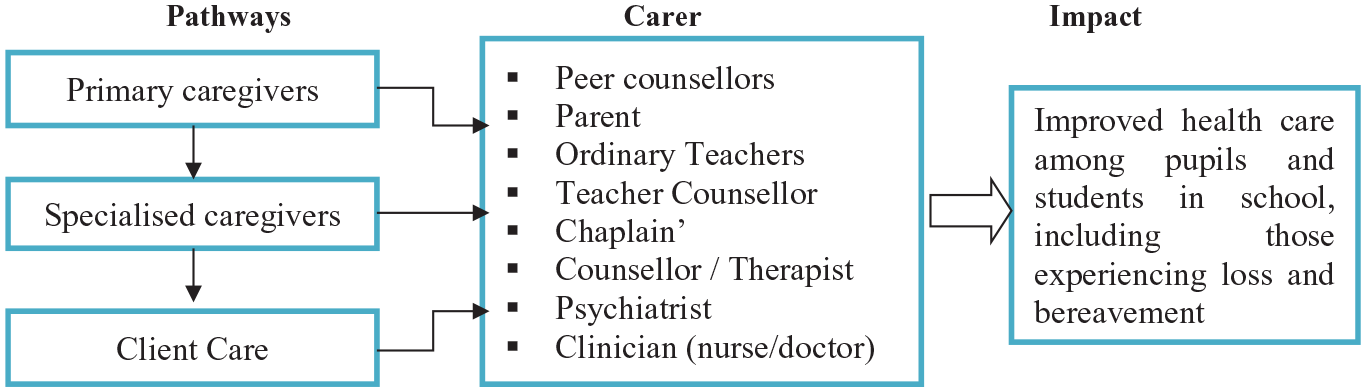
Pathways to support and health care.

Effectiveness of support and services provided.

Effectiveness of support and services in times of loss.
The interpretation and description of meaning is an important process in the loss phenomenon. This is because it usually needs more than a single word, and the process is highly elaborate. The process of thematic analysis is based in a descriptive phenomenological approach that goes from: (1) the familiarity with the loss process, to (2) a search for meanings and purpose in life, and (3) organisation and meaningfulness that creates wholeness. This process entails the identification of meanings and organising these into expressive patterns that are then intertwined with our lives.
Schools must aim at ensuring that learners acquire a range of skills in order to deal with loss and grief. This includes enabling the learner to participate in both classroom and school activities. Subsequently, pupils and students must acquire knowledge and understanding of the interconnectedness and interdependency between life, loss, death and bereavement. The skills will cover the three domains of learning: the cognitive, the socio-emotional and behavioural as demonstrated in Table 1.
Objective by domains of learning and experiencing loss.
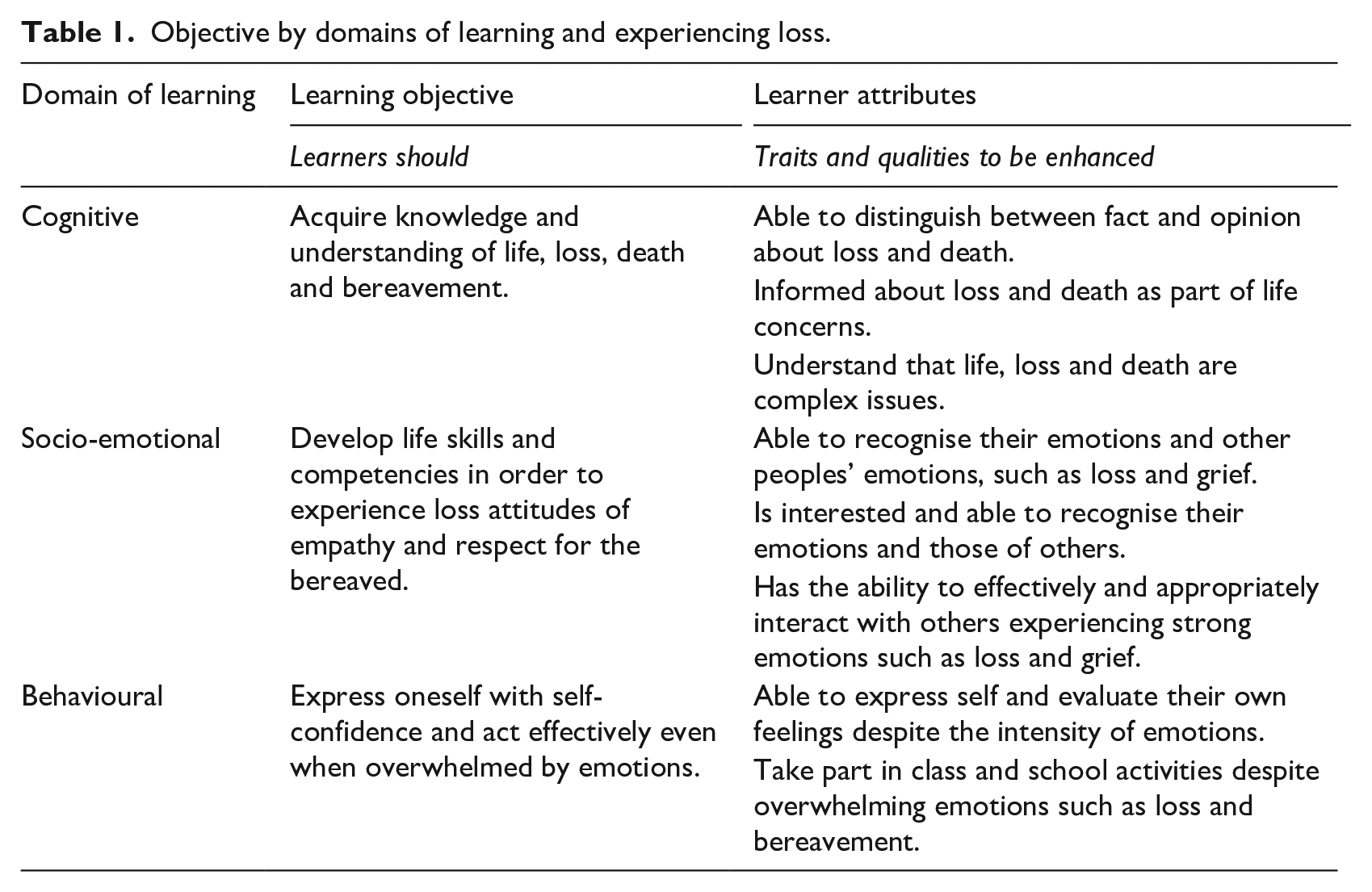
Overall, pupils and students must develop critical thinking and analytical skills in order to deal with loss and bereavement.
Policy framework and guidelines to schools
While the role of the teacher, counsellor, chaplain and others is pivotal in supporting pupils and students who have been bereaved, there is no policy framework or guidelines in many countries to guide the process. Nevertheless, it is useful to plan for psychosocial support services to assist in bereavement provision. In addition, curriculum materials and programmes should incorporate life skills in this important work to allow effective emotional regulation.
There will be several ways to assist the child in the bereavement process. Pupils and students should be allowed permission to be away from school to attend the burial of a loved one (including significant- others such as uncles/aunts, cousins, friends, grandparent). In addition, pupils and students should attend the funeral of a classmate, especially if the death was caused by an accident (tragic or sudden death) in which they were involved. This is to reduce fear and anxiety as a result of the event and the eventuality of death. Attending the funeral of a friend or classmate will also greatly alleviate the fear of death and enable the child to adjust to the knowledge that the classmate or friend is gone. Additionally, pupils and students should not stay at home unnecessarily after the death of a relative (parent/s, sibling, family member or other relatives (grandparent, uncle, aunt). A major misconception is that the child is mourning along with relatives; on the contrary, the child needs to be back in school as soon as possible with the classmates and schooling so that they can ‘normalise’ their lives.
Children and adolescents need to be in a supportive, caring, and helpful environment within and outside school, hence the need for the integration of education and mental health in schools (Atkins et al., 2010; Humphreys et al., 2010; Lambie & Williamson, 2004; Mallon, 2011; Matthews et al., 2015; McManus & Sally, 2019). This is illustrated in Table 2.
Incorporating bereavement into school activities.
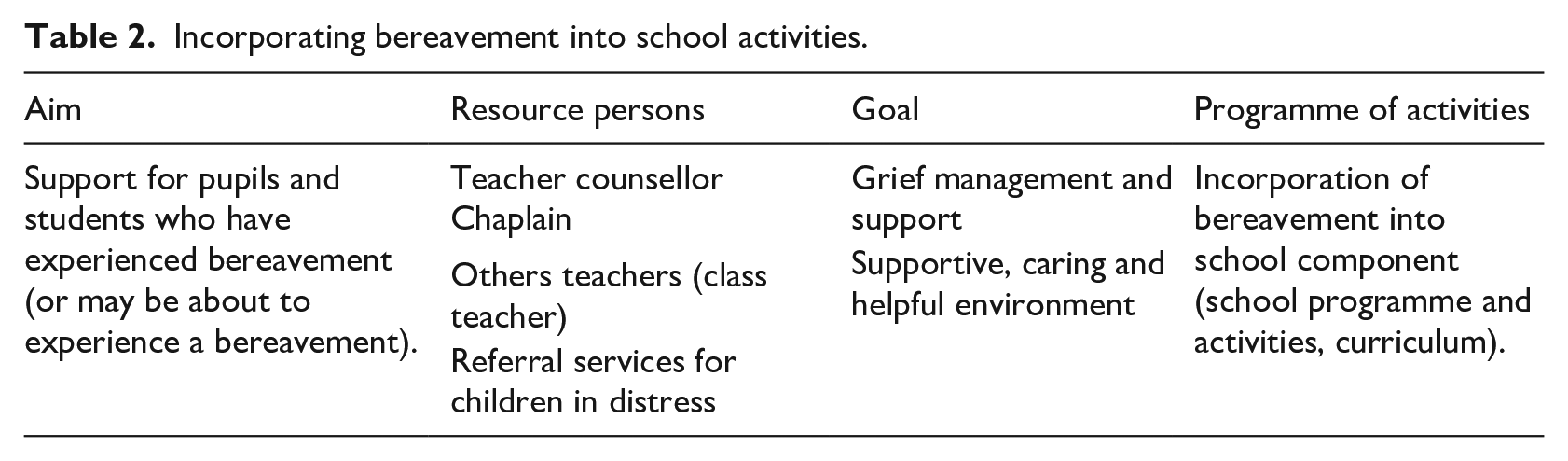
It may not be possible to provide a step-by-step procedure for dealing with bereavement. This is because death is more a personal issue for each person, and hence the unique perspective can affect each child in slightly different ways. Nonetheless, psychologists and by implication teacher counsellors working with pupils and students must seek to obtain understanding concerning the interpretation of death, and realise the meaning in human existence for pupils and students in school.
Admittedly, death is a unique experience and does not have a ‘one size fits all’ experience. Subsequently, counsellors and teachers will oscillate between pupils and students who can cope with bereavement effectively. In contrast, certain others will experience difficulty depending on the circumstances as outlined in Figures 1 to 5. In that case, the following model summarized in Figure 6 is suggested to enable the adaptation of various support services and intervention strategies for pupils and students in schools.
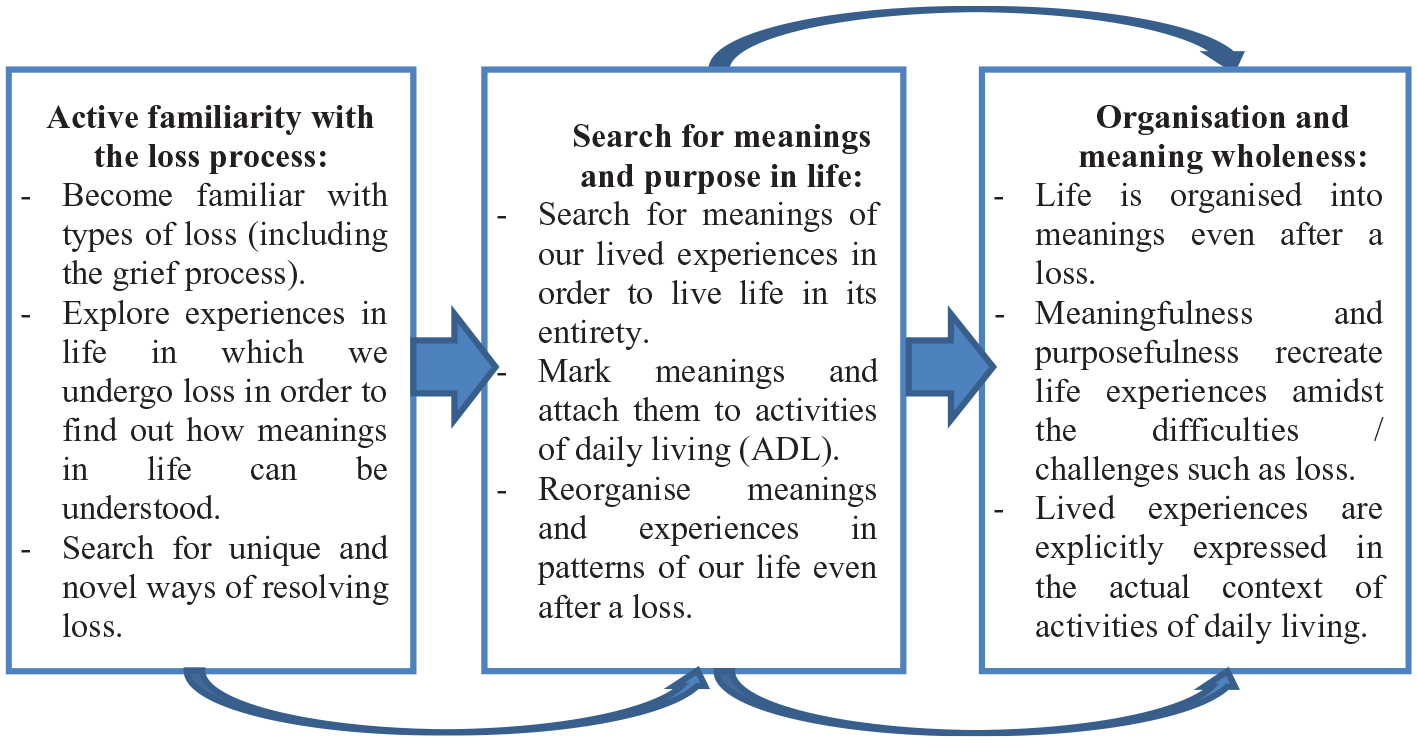
The loss process: interpretation and description of life meaning.
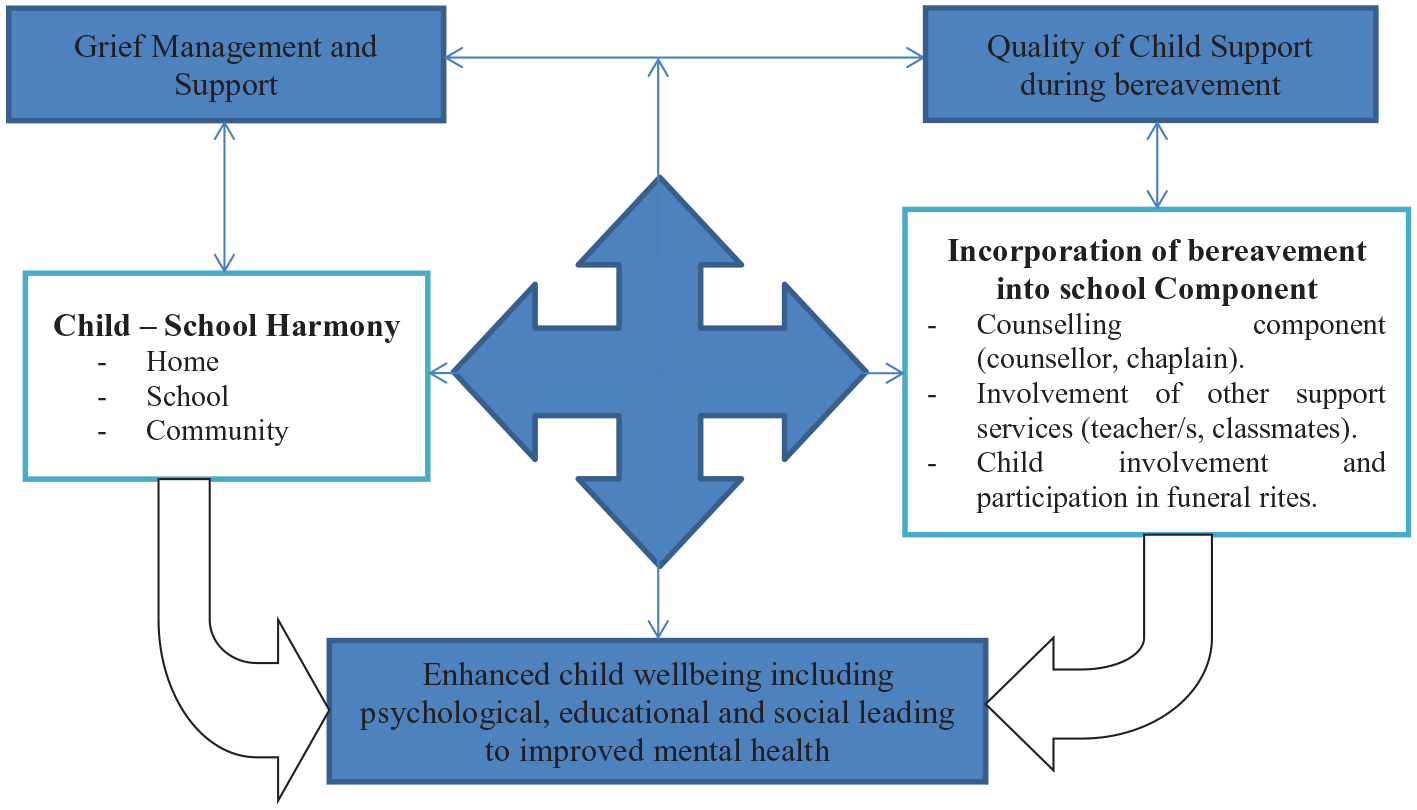
Pupil/student supportive, caring and helpful environment.
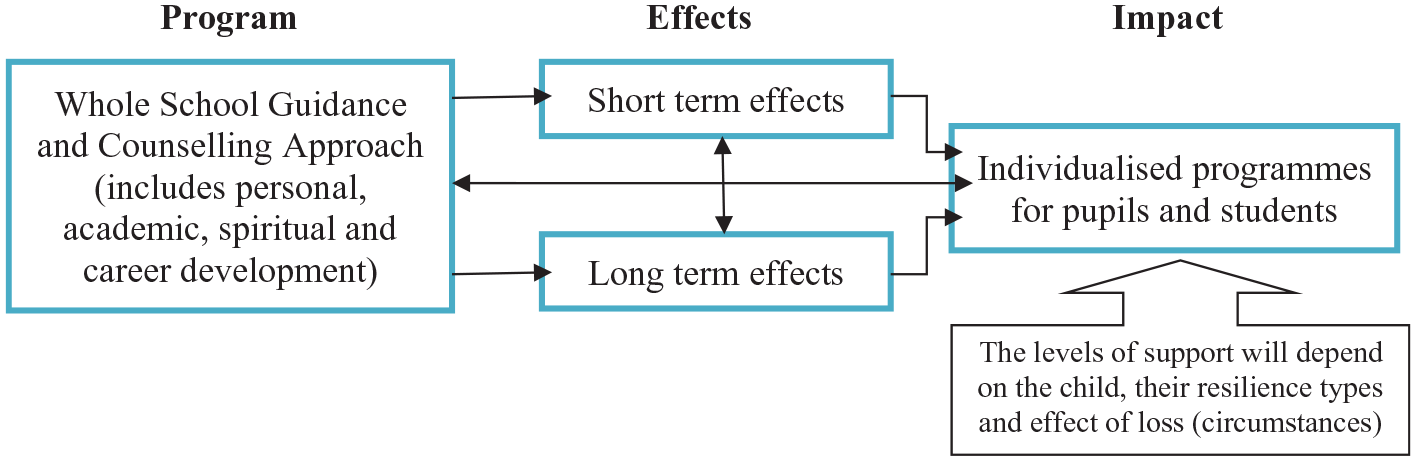
Suggested support and intervention strategies to pupil and students.
The new model extends psychological services to include the child’s overall wellbeing, that is, a programme with a purpose, effects and an intended impact. In addition, it also takes into consideration individual differences as well as the social-cultural diversity of learners, short term and long term goals and the psychological and clinical conditions. An enhanced understanding of increasing diversity is vital in order to seek appropriate mechanisms between care and improved health as demonstrated in Table 3.
Schooling, teaching and pupils’ mental health.
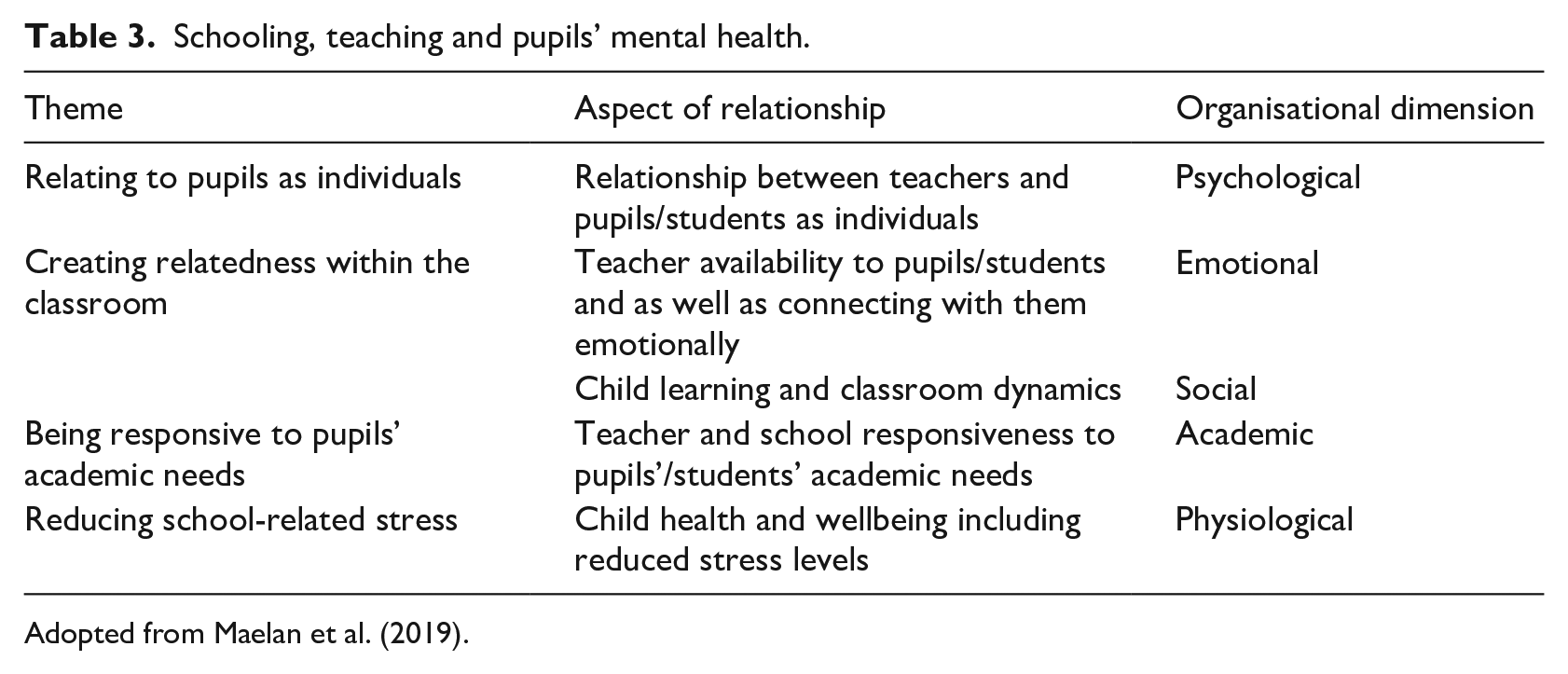
Adopted from Maelan et al. (2019).
One of the most profound ways in which teacher counsellors and others could work with pupils is to identify their needs and different concerns regarding the effect of death. In several ways, this is possible based on the foundation of our temporal existence. Bechtol extensively refers to Derrida (2001) expounding on the experience of death and condenses it thus (Bechtol, 2017, p. 4):
We know when an event has disrupted the norms of everyday life because such a disruption carries common symptoms with it. With this, Derrida’s own writing on events can be used to represent this broadly agreed-upon structure of an event as unexpected, excessive, and transformative.
When an event such as death occurs, it transforms the meaningful contexts of pupils and students that have been constituted in relation to the other (parent, teacher, classmate, other relatives). In this transformation, the child experiences death as more than just the loss of the person because it also has broader implications in their lives. This is because the loss may involve a parent and in developing countries with scarce resources, the death may lead to a complete disruption of the child’s life and the end of their education. For such a child, it is the death of the world. In phenomenological terms, the term world is understood as explained by Bechtol (2017, p. 9), that is, the context in which things and others have their particular meanings on account of the bequest of history.
Conclusion: The significance of new relational experience
Mental health problems seem to be increasing during adolescence (Maelan et al., 2019) and hence the need to support the child through everyday practice. The child requires a lot of support throughout the school process (Gustafsson et al., 2010; Maelan et al., 2018, 2019; McManus & Sally, 2019). In that case, schools need to identify various ways to assist pupils and students in general, as well as specific children in distress amidst various issues such as the corona virus disease (World Health Organization, 2020). Teacher counsellors, in particular, can support the child’s mental health – socially, psychologically, emotionally and academically. We take cognisance of the fact that pupils and students will have diverse backgrounds. In contrast, teacher counsellors have varying experiences, especially in dealing with bereavement as well as relations to pupils and students. Overall, school and counsellor engagement, as well as the various dimensions of mental health, are important prerequisites. Additionally, the professional competence of the counsellor (knowledge, skills and techniques and ethical standards) must be highlighted as pertinent in the helping process. While an enhanced understanding of pupils’ and students’ perspectives on bereavement as well as other phenomena will be emphasised by various stakeholders, the inclusion of a more diversified helper who comprehends the needs of the pupils and students in the school will, no doubt, contribute immensely towards enhanced child wellbeing including mental health.
This paper has highlighted the fact that positive post-traumatic growth can be achieved in bereft pupils and students in order to cope with bereavement and thus prevent certain adverse effects such as traumatic experiences and drop out (Holen et al., 2018; Mallon, 2011; Reinke, 2011; Samdal & Rowling, 2012; Silverman, 2000; Spratt, 2016; Weare & Nind, 2011). It has suggested several salient features, particularly in the school counselling programme in order to provide immediate and on-going support to pupils and students in the school (Brock et al., 2002; Matthews et al., 2015; Maelan et al., 2018, 2019). There will be those who will argue about traditions. However, it is also possible that traditions are evolving leading to an enhanced understanding with increased knowledge that will, in turn, allow psychological adaptations even in the circumstances such as death. Bereavement support services must aim to achieve an understanding of patterns of meanings in the child’s lived experiences in response to the bereavement and the need for life to go on.
Footnotes
Declaration of conflicting interests
The author(s) declared no potential conflicts of interest with respect to the research, authorship, and/or publication of this article.