







Abstract
More than 60% of the world speak two or more languages. Therefore, it is important that classroom environments promote multilingual children’s listening, learning, and wellbeing. The aim of this paper was to understand how the classroom environment impacts listening, learning, and wellbeing for school children who are multilingual, how it can be improved, and identify future research areas. A scoping review centred around the terms of the Listen to Learn for Life Assessment Framework was conducted following the PRISMA-ScR. Fourteen papers met the criteria to be included. The results showed SNRs should be optimised to enhance multilingual children’s listening and learning. Visually, findings were mixed, but it may be beneficial to incorporate visual cues where possible to aid listening. The results were inconclusive on whether multilingual children are at a disadvantage compared to monolingual children, but factors such as differences in the task, chronological age, age of language acquisition, and socio-economic status are likely to contribute to these mixed findings. Future research to improve our understanding of how to make optimal classroom environments for multilingual children to succeed is discussed.
Introduction
Creating a classroom environment that facilitates listening, learning, and wellbeing is vital for all children. With growing diversity in our classrooms, this can be a challenge. For example, bilingualism/multilingualism is common around the world with more than 60% of the world speaking two or more languages (Associated Press, 2001). For many multilingual children, English is a second or additional language and often the weaker language. In contrast, their monolingual peers have more English knowledge, larger vocabularies, and can better fill in the information they miss in communicative interactions through general context. Therefore, these linguistically diverse children may struggle much more than their monolingual peers in the classroom.
Multilingual children may be further challenged in the classroom as it can be considered an adverse listening environment with high noise levels depending on the different activities that are being carried out (Mealings, 2016; Mealings & Buchholz, 2024b). Adverse listening conditions have been shown to be a challenge for non-native listeners. For example, non-native listeners suffer more from higher noise levels, competing speech, and reverberation when listening to words or sentences compared to native listeners (Lecumberri et al., 2010). The ability to listen in noise also depends on the age of language acquisition for the additional language, and what the first language acquired was (Lecumberri et al., 2010). As listening is an important part of learning in mainstream classrooms, it may be expected that difficulties in listening could impact learning. Additionally, a meta-analysis found a significant positive correlation between academic achievement and wellbeing (Bücker et al., 2018). Therefore, it is important to understand how the classroom environment may contribute to multilingual children’s listening, learning, and wellbeing, so that action can be taken to improve the classroom environment and hence enhance these outcomes in multilingual children.
The aim of this paper was to conduct a scoping review to understand how the classroom environment impacts listening, learning, and wellbeing for school children who are multilingual, how it can be improved, and identify future research needs by applying the Listen to Learn for Life Assessment Framework (L3). While there have been several review papers on the effect of classroom acoustic conditions on particular aspects of children’s listening, learning, and wellbeing (Lamotte et al., 2021; Mealings, 2022b, 2022c, 2022d, 2022e, 2022f, 2023a; Minelli et al., 2022; Murgia et al., 2022), these reviews do not specifically focus on multilingual children. Additionally, they focus solely on acoustics, whereas using the L3 incorporates a more holistic view of the classroom listening environment including visual and spatial aspects in addition to acoustics (see Figure 1). Therefore, this scoping review provides important information for researchers and educators on how the classroom environment affects listening, learning, and wellbeing specifically in multilingual children and how it can be improved to enhance these outcomes.
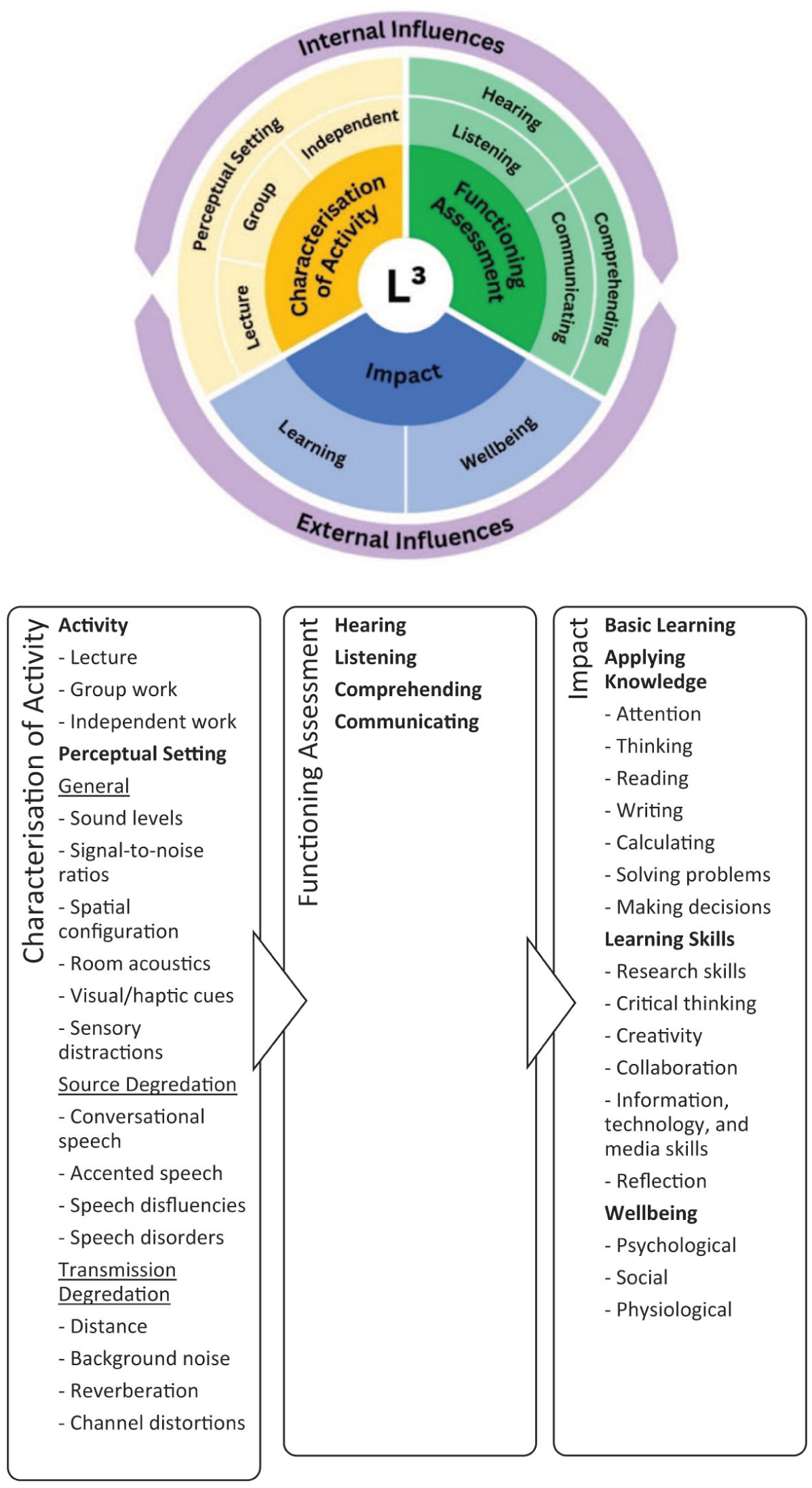
L3 wheel from Mealings et al. (2023) and expanded L3 components adapted from Mealings et al. (2023).
Literature Review – Multilingualism
Australia is a linguistically diverse country, with more than 1 in 5 people speaking a language other than English – 1 in 4 for New South Wales (NSW; Australian Bureau of Statistics (ABS), 2022). The largest population of heritage speakers are Chinese, including Mandarin and Cantonese (with 685,274 and 295,281 speakers), followed closely by Arabic (367,159), Vietnamese (320,758), Punjabi (239,033 and Hindi (197,132). Many children in Australian classrooms also speak languages other than English, especially in NSW (37.7%) and Victoria (34%; NSW Department of Education and Communities, 2021; VIC Education and Training, 2022). Some of these children will have been exposed to English early through early childcare services; speaking a heritage language at home and being exposed to English at childcare. Other children will not have had regular, sustained English input from native speakers until they enter school. Similar to other countries with sustained immigration, Australian classrooms will also have children entering school at different ages and learning English for the first time. Therefore, classrooms can have a range of multilingual children who may have learned two or more languages simultaneously from birth or shortly after (simultaneous multilinguals), as well as children learning English as an additional language from early to later childhood (sequential multilinguals). Many simultaneous and sequential multilingual young children will have English as their weaker language, as English is often also the weaker language of their parents. In addition, many migrant accepting countries will have high levels of heritage language diversity. Classrooms can therefore have considerable linguistic diversity.
Linguistically diverse children can struggle much more than their monolingual peers in poor classroom listening environments, missing key sounds in English, such as /s/ at the end of plural words like cats, due to a combination of a noisy environment and weaker English knowledge. For example, Mandarin-speaking children, one of the largest populations of speakers, will struggle to learn this new structure in English because grammatical inflexions are not allowed in Mandarin (Xu Rattanasone et al., 2016, 2024; Xu Rattanasone & Demuth, 2023). Similar challenges can occur for multilingual children learning in many other English-speaking countries. For example, in the United States, 22% of the population speaks a language other than English at home (Dietrich & Hernandez, 2022). In the United Kingdom, 19% of pupils have English as an additional language (UK Department of Education, 2018). Multilingualism is not just a trend in English-speaking countries, but also in other countries. For example, in Europe, 96.6% of the population of Sweden speaks more than one language, and 78.7% of the population of Germany, 66.0% of Italy, and 60.1% of France speak more than one language (Eurostat, 2022). Due to the different speech sounds and combinations used in different languages, linguistically diverse children can be at a greater disadvantage in the classroom compared to their monolingual peers. Not being able to hear properly in the classroom may lead to poorer listening and learning outcomes, impacting on these children’s wellbeing.
Conceptual Framework – The Listen to Learn for Life Assessment Framework (L3)
The Listen to Learn for Life Assessment Framework (L3; Mealings et al., 2023) outlines how to assess the links between the classroom environment and children’s listening, learning, and wellbeing (see Figure 1). The first component is the Characterisation of Activity component (yellow). The three main classroom activities based on research literature are lecture (i.e. whole-class teaching), group work, and independent work. Each of these activities create their own perceptual setting which can be charaterised as general, source degradation, or transmission degradation components. General components include sound levels (i.e. the level of the speaker’s voice), signal-to-noise ratios (SNRs), the spatial configuration (i.e. the layout of the classroom such as open plan or enclosed), room acoustics, visual/haptic cues, and sensory distractions. Source degradation includes conversational speech, accented speech, speech disfluencies, and speech disorders. Transmission degradation includes distance, background noise, reverberation, and channel distortions (see left column in Figure 1). Once the perceptual settings for different activities have been characterised, subsequent components of the L3 can be assessed. The next component is the Functioning Assessment component of the L3 (green) which is made up of the spectrum of listening: hearing, listening, comprehending, and communicating, as defined by Kiessling et al. (2003; see middle column Figure 1). The Characterisation of Activity and Functioning Assessment components also affect the Impact component (blue) which consists of basic learning, applying knowledge, learning skills, and wellbeing (see right column in Figure 1). Understanding all these links is vital for identifying how optimal classroom environments can be created that enhance children’s listening, learning, and wellbeing. The L3 also takes into account external and internal influences (purple). Internal influences include the specifics of the child, which in this case includes multilingualism. External influences include education services, systems, and policies; education and communication products and technology; support and relationships; and attitudes.
The L3 complements existing theories in education such as Bronfenbrenner’s ecological systems theory – a well-known and highly cited educational theory (Bronfenbrenner, 1994). Bronfenbrenner’s ecological systems theory consists of five systems: microsystem, mesosystem, exosystem, macrosystem, and chronosystem; each of which theorises how different environments play a unique role in shaping human growth and development (Bronfenbrenner, 1994). The microsystem focuses on the individuals directly interacting with the children, that is, family and teachers. The mesosystem encompasses the interactions between different microsystems, such as parents and teachers. The exosystem includes structures or institutions that children might not directly engage with, but which can indirectly affect them, such as school policies and management. The macrosystem encompasses the broader cultural and societal context, such as national policies, societal ideologies, and attitudes. The chronosystem considers broader social changes that may impact the life of the child. The L3 primarily focuses on the microsystem, that is, the classroom perceptual environment, and so goes into greater detail about how this perceptual environment may affect children’s listening, learning, and wellbeing. However, it is important to also acknowledge the other systems to gain a full understanding of what may be affecting children’s listening, learning, and wellbeing development. In the L3, these other systems are largely acknowledged by the external influences component; however, there is less of a focus on this in the L3. The focus of this review using L3 will therefore be on the classroom (microsystem).
The L3 was originally designed as a framework for designing studies on how the classroom environment affects listening, and how this goes on to affect learning and wellbeing. However, it also provides a comprehensive framework for a literature review. The L3 has been used to review how classroom environments affect listening, learning, and wellbeing in typically developing children (Mealings & Buchholz, 2024a), children with ADHD (Mealings & Buchholz, 2026) and autistic children (Mealings et al., 2025). As in these previous reviews, in this review we will investigate the effect of the Characterisation of Activity components on listening but also directly on learning and wellbeing, without necessarily impacting listening first as little research has been conducted on the full L3 process (see Figure 2; Mealings & Buchholz, 2024a). Given the large number of children who are learning academic content in an additional language, it is important to understand how the classroom environment may affect their listening, learning, and wellbeing, and how it can be improved. The L3 was used for this review to examine how the classroom environment impacts listening, learning, and wellbeing for multilingual children with two hypotheses. First, it was thought that high noise levels, which result in poor SNRs, may have a greater effect on listening/comprehending/communicating in multilingual compared to monolingual children. This was because of the expected extra processing load of understanding speech in noise on top of children learning lesson content using a weaker language they are still acquiring. Second, it was anticipated that interactions in the classroom between multilingual children and their peers may be more challenging than monolingual children due to this extra processing load, resulting in lower social and psychological wellbeing.
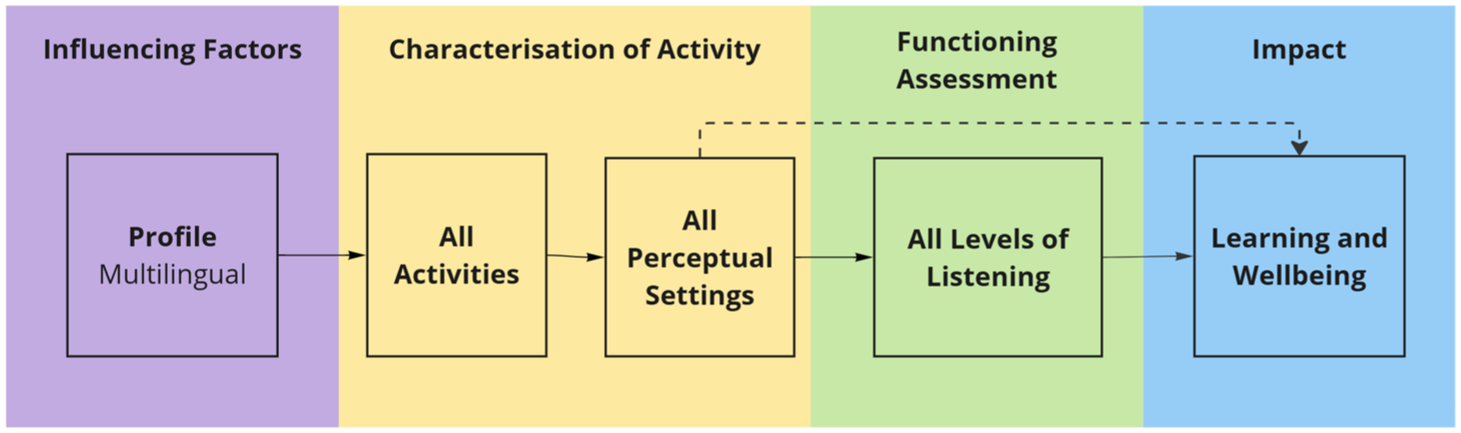
L3 flow chart for review adapted from Mealings et al. (2023).
Method
Protocol
The Preferred Reporting Items for Systematic reviews and Meta-Analyses extension for Scoping Reviews (PRISMA-ScR; Tricco et al., 2018) was the protocol used for this scoping review. A scoping review was chosen for this review rather than a systematic review as the purpose of scoping reviews are "to identify the types of available evidence in a given field; to clarify key concepts/ definitions in the literature; to examine how research is conducted on a certain; topic or field; to identify key characteristics or factors related to a concept; as a precursor to a systematic review; and to identify and analyse knowledge gaps” (p. 2; Munn et al., 2018). The aim of this paper was to understand how the classroom environment impacts listening, learning, and wellbeing for school children who are multilingual, how it can be improved, and to identify future research needs by applying the L3 framework. Therefore, a scoping review method was chosen as the review includes all components of the L3 to identify what is currently known and what is not known. This scoping review could be the precursor to a systematic review that focuses on one specific aspect of the L3 and critically appraises studies on that component, which was not the purpose of this review.
Eligibility Criteria
The peer-reviewed journal articles had to have the full text in English available and meet the following PICO framework criteria:
- Population: School children aged 5 to 18 years who were multilingual.
- Intervention (or Exposure): Classroom environment (as defined by the Characterisation of Activity component of the L3).
- Comparison: Different types of classroom environments for multilingual children, or multilingual children versus monolingual children.
- Outcome: Listening, learning, or wellbeing (as defined by the Functioning Assessment and Impact components of the L3).
No date restrictions were applied. Articles were excluded if they did not meet these criteria.
Information Sources
Web of Science, Scopus, PsycInfo, MEDLINE, and PubMed bibliographic databases were searched as these are the main databases in this field of research. The search results were uploaded into Covidence, where duplicates were removed, and records were screened.
Search
The search term was as follows, constructed from the L3 terms: line 1 = internal influence (i.e. multilingual and its derivatives), line 2 = location (i.e. classroom or school), line 3 = Characterisation of Activity components or derived components to supplement L3 terms (encompassing the auditory, visual, and spatial aspects), line 4 = Functioning Assessment and Impact components or derived components to supplement L3 terms (encompassing the listening, learning, and wellbeing aspects): multilingual OR bilingual OR “non-native language” OR “additional language” OR “language background other than” OR “L2″ OR “culturally and linguistically diverse” AND classroom OR school AND sound level OR signal-to-noise ratios OR amplification OR spatial configuration OR acoustics OR visual cues OR haptic cues OR sensory distractions OR speech OR distance OR noise OR reverberation OR channel distortions AND hear* OR auditory processing OR listen* OR comprehend* OR communicat* OR learn* OR attention OR think* OR read* OR writ* OR literacy OR numeracy OR calculat* OR solv* problem OR mak* decisions OR research skills OR critical thinking OR creativity OR collaborat* OR information skills OR technology skills OR media skills OR reflect* OR wellbeing OR health OR quality of life
Web of Science was searched using the title, abstract and indexing fields and refined by the article inclusion criteria. Scopus was searched using the title, abstract and keywords fields. PsycInfo was searched using the abstract field. MEDLINE and PubMed were searched using the title/abstract fields. The searches were conducted on 1st May 2025.
Selection of Sources of Evidence
The titles and abstracts of the papers from the database search were screened by Mealings, Kiri to identify potentially relevant publications. These publications were then evaluated by reading the full text to assess if they met the eligibility criteria.
Data Charting Process
Data from eligible studies were charted to capture the relevant information on key study characteristics.
Data Items
Data were abstracted on the following characteristics: Aim, demographics, study design, findings, classroom activity explored, L3 perceptual setting explored, and L3 listening, learning, or wellbeing components investigated.
Synthesis of Results
Studies were grouped according to activity type (lecture, group work, independent work, general activities) and components of the L3 investigated. Papers were categorised as lecture if they involved one person talking. Studies were categorised as group work if the stimuli used was multitalker babble. Studies were categorised as independent work if it involved a child working on their own. Papers that were not obviously related to a particular activity were categorised under general activities.
Results
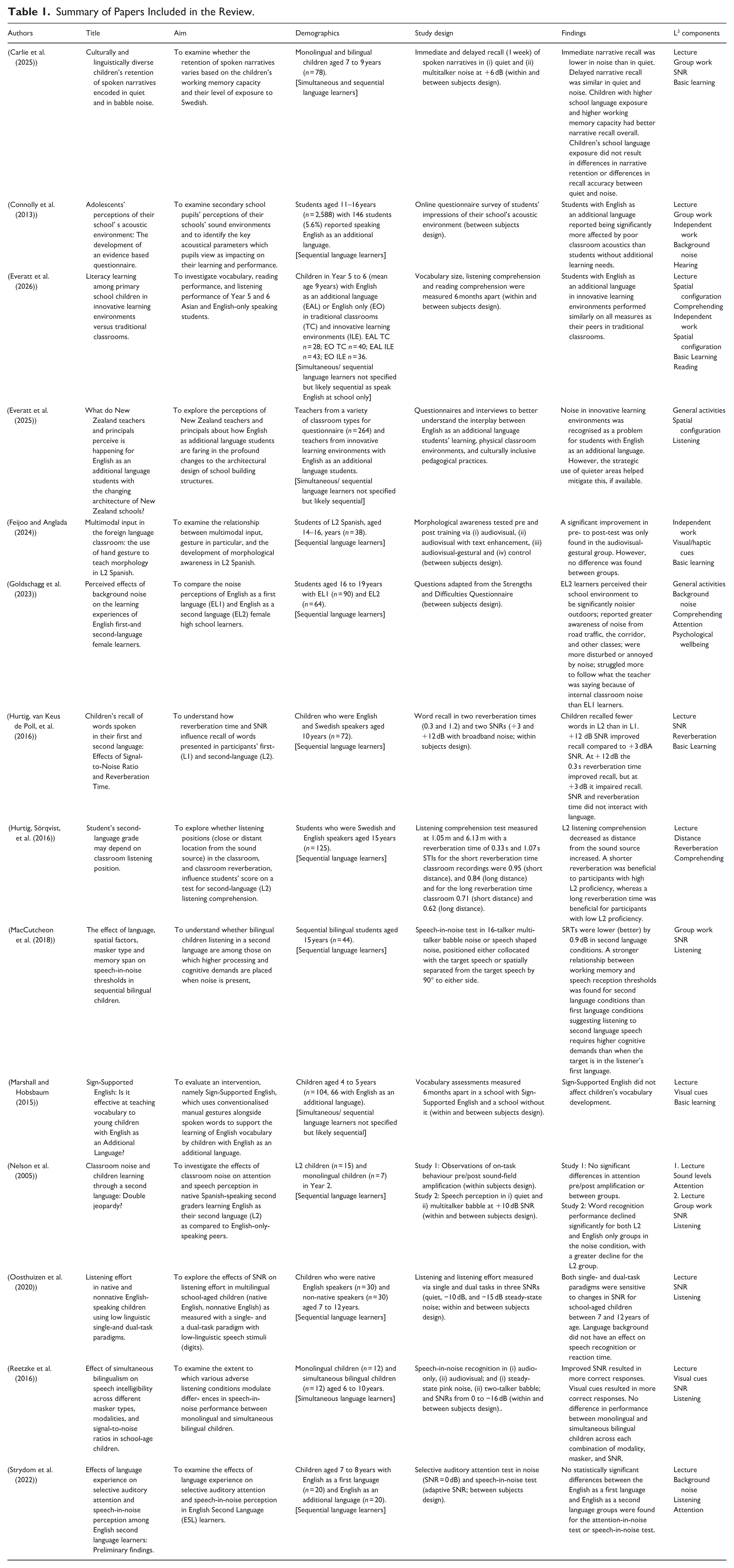
Figure 3 shows the search results. In total, 14 papers were included in the review. A summary of the details of the papers is in Table 1. The results summary of papers on the effect of each characterised activity on each listening, learning, and wellbeing components of the L3 can be seen in Supplemental Table 1 (note results for general activities are not displayed in this table). Figure 4 shows the publication years of the included studies which ranged from 2005 to 2025. The language demographics for the participants in the included papers were children who were simultaneous language learners (n = 1; Reetzke et al., 2016) and children who were sequential language learners (n = 12; Connolly et al., 2013; Everatt et al., 2025, 2026; Feijoo & Anglada, 2024; Goldschagg et al., 2023; Hurtig, van Keus de Poll, et al., 2016; Hurtig, Sörqvist, et al., 2016; MacCutcheon et al., 2018; Marshall & Hobsbaum, 2015; Nelson et al., 2005; Oosthuizen et al., 2020; Strydom et al., 2022). One study included both children who were simultaneous and sequential language learners (Carlie et al., 2025). Figure 5 shows the number of studies found for each component of the L3. The most investigated perceptual settings were SNR, spatial configuration, and background noise. Figure 6 shows the number of studies that showed whether the characterised activity components of the L3 resulted in better, no difference, or poorer performance by the multilingual children compared to monolingual native listening children. Twelve results showed no difference, whereas six results showed that multilingual children performed more poorly than their monolingual peers.
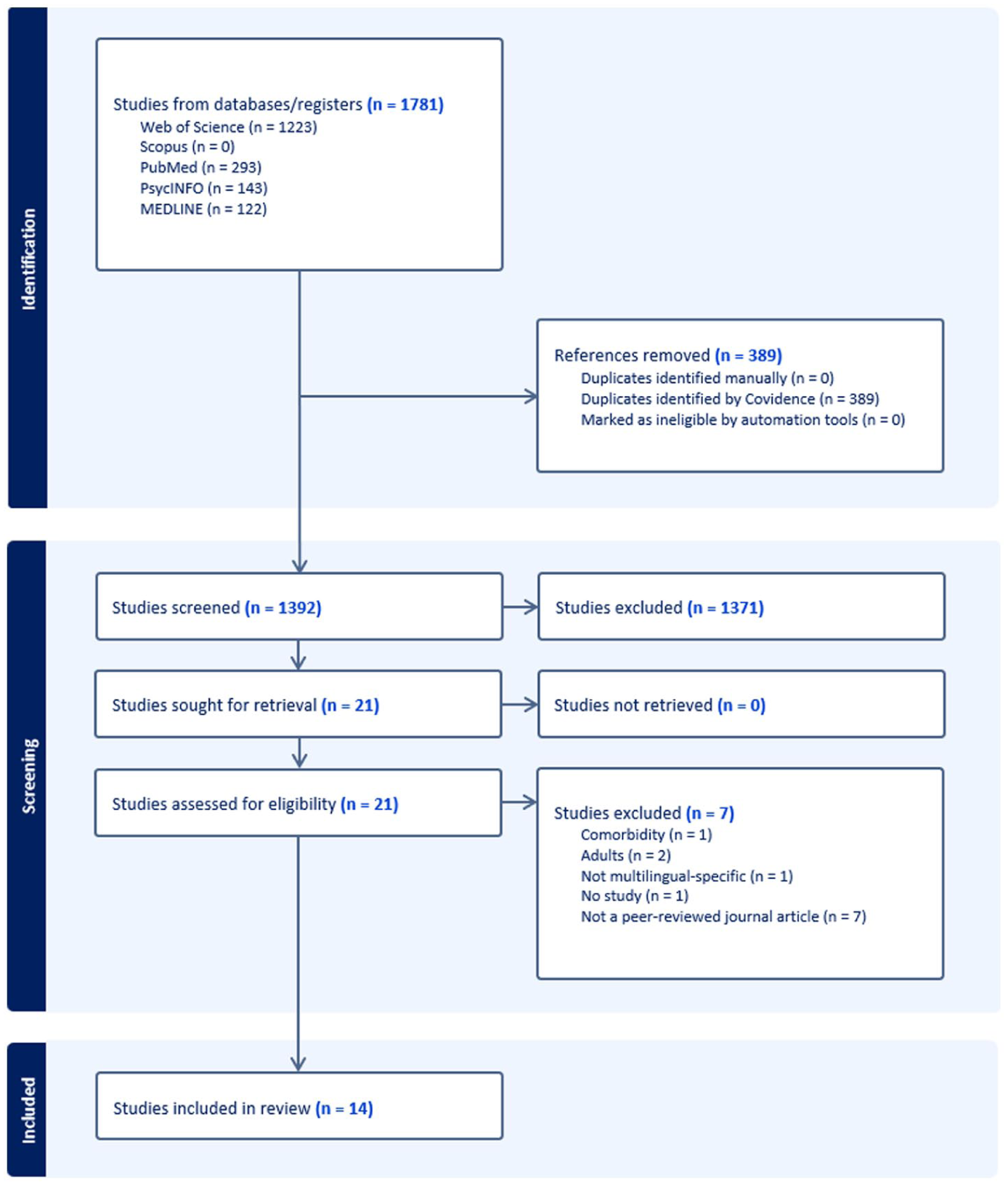
PRISMA-ScR selection of sources of evidence flow diagram.
Summary of Papers Included in the Review.
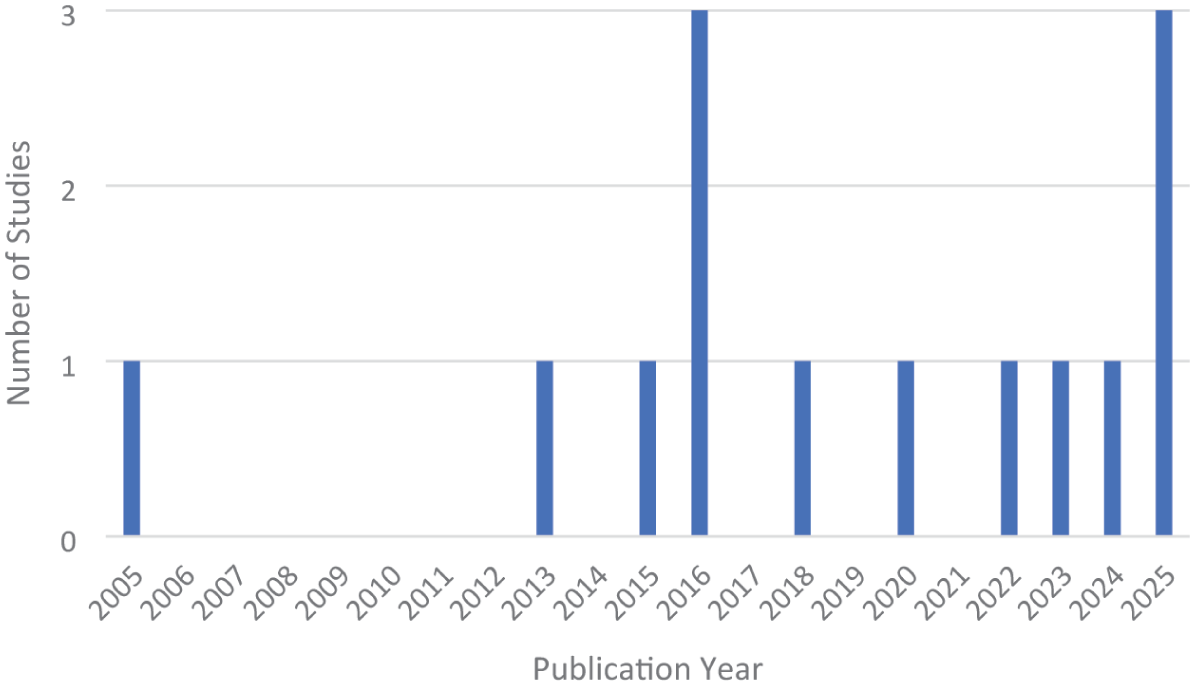
Publication years of the papers included in the review.
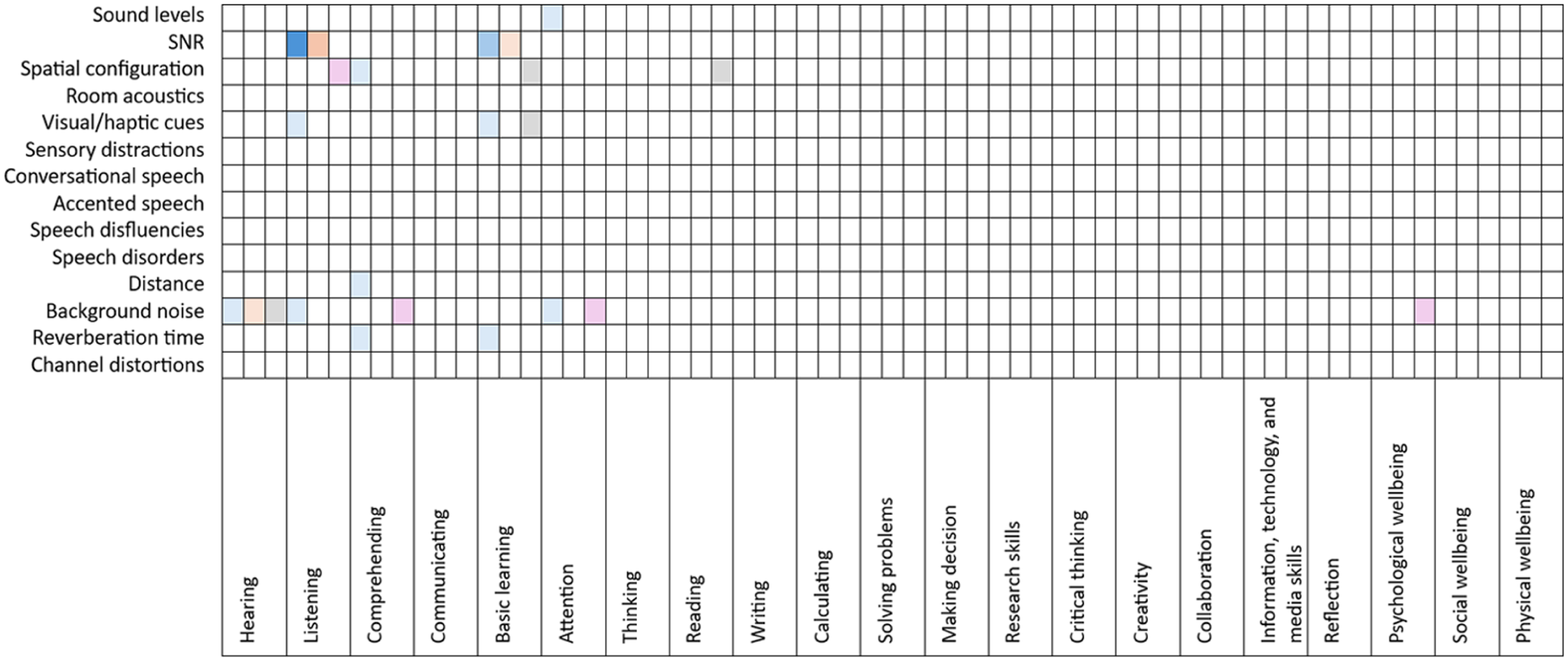
Matrix of number of studies found for each component of the L3.
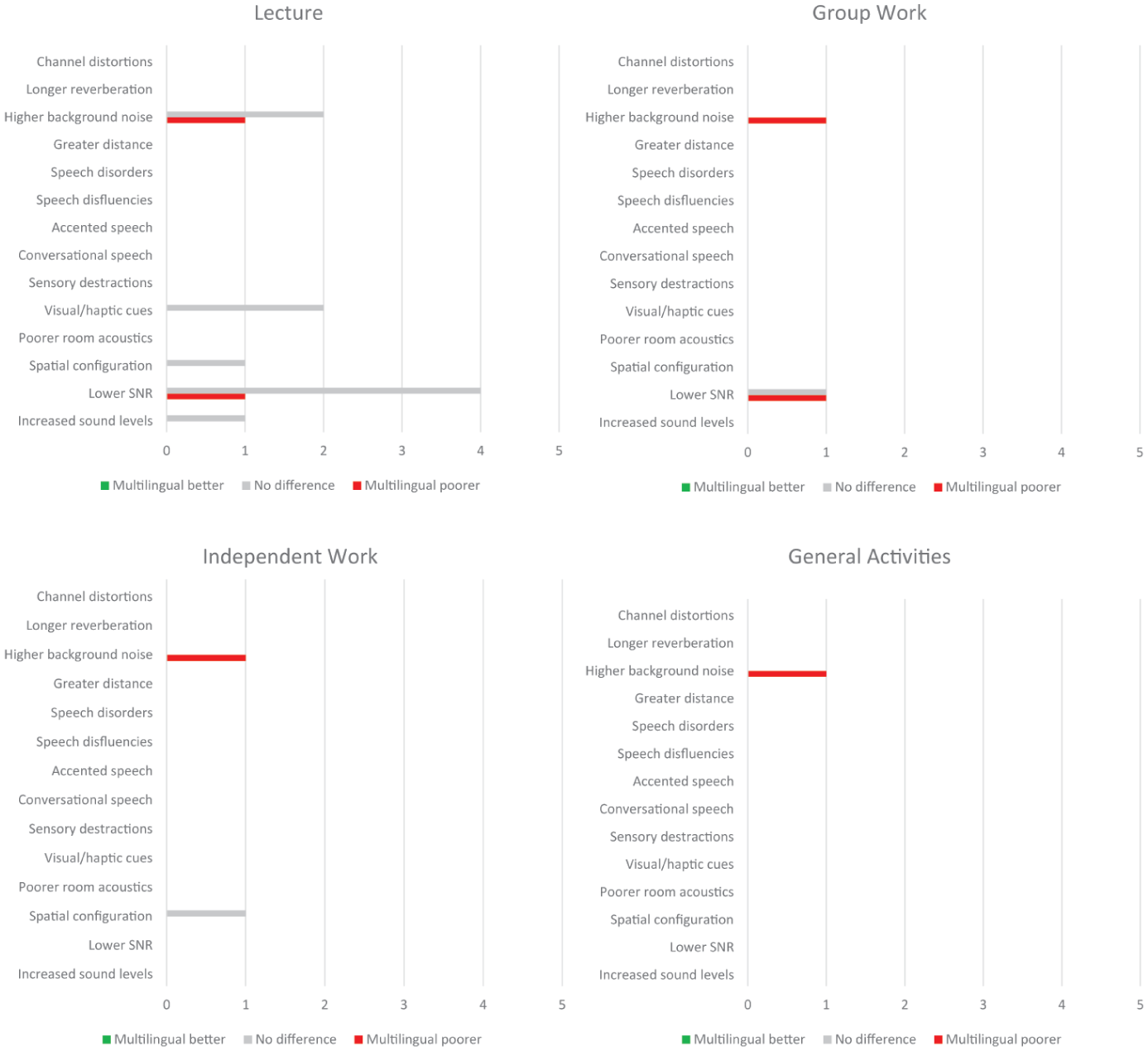
Number of studies that showed whether the characterised activity components of the L3 resulted in better, no difference, or poorer performance by the multilingual children compared to monolingual native listening children.
The following sections provide the results of the research that was found for those components where publications were identified. For information on the details of the studies, see Table 1. Given the heterogeneous nature of multilingual children, they are referred to by different terms in the studies included in the review. We attempt to separate findings into simultaneous and sequential multilingual groups by referring to each category as best as we can based on the information provided in each study. However, due to the lack of demographic information on children’s exposure, we have left second language (L2) and English as an additional language to the description of the samples. This is because without age of acquisition information, we cannot determine which samples are sequential L2 learning children versus simultaneous multilingual children learning English as an additional first language to their home heritage language.
Lecture
Perceptual Setting (General): Sound Levels (Vocal Levels)
Learning
Nelson et al. (2005) assessed the effect of sound-field amplification on sequential language learning children’s attention but did not find a significant difference in attention pre/post sound-field amplification or between monolingual and L2 groups.
Perceptual Setting (General): Signal-to-Noise Ratio
Listening
Nelson et al. (2005) found word recognition performance declined significantly for both L2 (sequential bilinguals) and English-only groups in the noise condition compared to the quiet condition, with a greater decline for the L2 group. Oosthuizen et al. (2020) found that speech recognition and reaction time was poorer with lower SNR but language background did not have an effect on speech recognition or reaction time in sequential language learners. Reetzke et al. (2016) found that an improved SNR resulted in more correct responses on a spech recognition test, but there were no differences in performance between monolingual and simultaneous bilingual children across each combination of masker and SNR.
Learning
Carlie et al. (2025) found that immediate narrative recall was lower in noise than in quiet whereas delayed narrative recall was similar in quiet and noise in simultaneous and sequential language learners. However, children’s school language exposure did not result in differences in narrative retention or differences in recall accuracy between quiet and noise. Hurtig, van Keus de Poll, et al. (2016) found that a + 12 dB SNR improved recall compared to +3 dBA SNR, but SNR did not interact with language for these sequential language learners.
Perceptual Setting (General): Spatial Configuration
Listening
Everatt et al. (2026) found that students with English as an additional language in innovative learning environments performed similarly on a listening comprehension test compared to their peers in traditional classrooms. It was unclear whether these students were simultaneous or sequential bilinguals.
Perceptual Setting (General): Visual/Haptic Cues
Listening
Reetzke et al. (2016) found that visual cues resulted in more correct responses on a speech-in-noise test but there was no difference in performance between monolingual and simultaneous bilingual children.
Learning
Marshall and Hobsbaum (2015) found that Sign-Supported English did not affect sequential language learning children’s vocabulary development.
Perceptual Setting (Transmission Degradation): Distance
Listening
Hurtig, Sörqvist, et al. (2016) found that (sequential bilinguals) L2 listening comprehension decreased as distance from the sound source increased.
Perceptual Setting (Transmission Degradation): Background Noise
Listening
Connolly et al. (2013) found that students with English as an additional language reported being significantly more affected by poor classroom acoustics than students without additional learning needs. Strydom et al. (2022) found no statistically significant differences between the English as a first language (L1) and English as a L2 (sequential bilinguals) groups on a speech-in-noise test.
Learning
Strydom et al. (2022) found no statistically significant differences between the L1 English and L2 English (sequential bilinguals) groups on an attention-in-noise test.
Perceptual Setting (Transmission Degradation): Reverberation
Listening
Hurtig, Sörqvist, et al. (2016) found that a shorter reverberation time was beneficial to participants (sequential bilinguals) with high L2 proficiency, whereas a long reverberation time was beneficial for participants with low L2 proficiency.
Learning
Hurtig, van Keus de Poll, et al. (2016) found that at +12 dB the 0.3 s (short) reverberation time improved recall, but at +3 dB it impaired recall, however, reverberation time did not interact with language.
Group Work
Perceptual Setting (General): Signal-to-Noise Ratios
Listening
MacCutcheon et al. (2018) found that listening to L2 speech (in sequential bilinguals) requires higher cognitive demands than when the target is in the listener’s L1. Nelson et al. (2005) found that word recognition performance declined significantly for both L2 and monolingual English groups in a noise condition, with a greater decline for the L2 group.
Learning
Carlie et al. (2025) found that immediate narrative recall was lower in noise than in quiet whereas delayed narrative recall was similar in quiet and noise in simultaneous and sequential language learners. However, children’s school language exposure did not result in differences in narrative retention or differences in recall accuracy between quiet and noise.
Perceptual Setting (Transmission Degradation): Background Noise
Listening
Connolly et al. (2013) found that students with English as an additional language reported being significantly more affected by poor classroom acoustics than students without additional language learning needs.
Independent Work
Perceptual Setting (General): Spatial Configuration
Learning
Everatt et al. (2026) found that students with English as an additional language in innovative learning environments performed similarly on vocabulary and reading comprehension tests compared to their peers in traditional classrooms.
Perceptual Setting (General): Visual/Haptic Cues
Learning
Feijoo and Anglada (2024) found no difference in morphological awareness after training via (i) audiovisual, (ii) audiovisual with text enhancement, (iii) audiovisual-gestural and (iv) control methods in sequential language learners.
Perceptual Setting (Transmission Degradation): Background Noise
Listening
Connolly et al. (2013) found that students with English as an additional language reported being significantly more affected by poor classroom acoustics than students without additional language learning needs.
General Activities
Perceptual Setting (General): Spatial Configuration
Listening
Everatt et al. (2025) found that noise in innovative learning environments was recognised as a problem for students with English as an additional language, however, the strategic use of quieter areas helped mitigate this, if available.
Perceptual Setting (Transmission Degradation): Background Noise
Listening
Goldschagg et al. (2023) found that L2 English learners struggled more to follow what the teacher was saying because of internal classroom noise than L1 English learners.
Learning
Goldschagg et al. (2023) found that L2 English learners were more disturbed by noise than L1 English learners.
Wellbeing
Goldschagg et al. (2023) found that L2 English learners perceived their school environment to be significantly noisier outdoors; reported greater awareness of noise from road traffic, the corridor, and other classes; and were more annoyed by noise than L1 English learners.
Discussion
The aim of this paper was to conduct a scoping review to understand how the classroom environment impacts listening, learning, and wellbeing for school children who are multilingual, how it can be improved, and identify future research needs by applying the L3 framework. Below is a discussion of the findings of the review for each activity, the limitations of the review, and areas for future research.
Lecture
There were three main findings on the effect of the classroom environment on multilingual children’s listening and learning during lecture activities, that can be divided in auditory, visual, and spatial effects. Auditorily, lower SNRs negatively impacted multilingual children’s listening and learning, however, the results were mixed as to whether this effect was larger for multilingual compared to monolingual children (Carlie et al., 2025; Hurtig, van Keus de Poll, et al., 2016; Nelson et al., 2005; Oosthuizen et al., 2020; Reetzke et al., 2016). Similarly, there were mixed effects of the impact of language on children’s listening and learning when noise and reverberation were present (Connolly et al., 2013; Hurtig, van Keus de Poll, et al., 2016; Hurtig, Sörqvist, et al., (2016); Strydom et al., 2022). Visually, there were mixed effects on the addition of visual cues on multilingual children’s listening and learning (Marshall & Hobsbaum, 2015; Reetzke et al., 2016). Spatially, students with English as an additional language in innovative learning environments performed similarly on a listening comprehension test compared to their peers in traditional classrooms (Everatt et al., 2026).
To understand the mixed findings as to whether the SNR effect was larger for multilingual compared to monolingual children, a deeper analysis focussed on factors such as differences in the task, chronological age, age of language acquisition, and socio-economic status was conducted. Nelson et al. (2005) found that word recognition performance declined significantly for both L2 (sequential bilinguals) and English-only groups in the noise condition, with a greater decline for the L2 group. The second-grade children in the L2 group were mainly immigrants, and all had a minimum of 1 year of experience with English in the school setting, and most had been in the same educational setting for a minimum of 2 years. However, the other studies (Carlie et al., 2025; Hurtig, van Keus de Poll, et al., 2016; Oosthuizen et al., 2020; Reetzke et al., 2016) did not find an effect of language. Therefore, it needs to be determined why the results for the Nelson et al. (2005) study were different. Regarding the task, Nelson et al. (2005) assessed speech recognition, whereas Carlie et al. (2025) and Hurtig, van Keus de Poll, et al. (2016) investigated word recall and found no effect of language. Therefore, it may be that word recall in noise is not affected by language. Regarding age, Reetzke et al. (2016) and Oosthuizen et al. (2020) assessed speech recognition in older primary school-aged children. Reetzke et al. (2016) found no difference in performance between monolingual and simultaneous bilingual children aged 6 to 10 years. All children’s family social strata (SES) were quite high, either (a) medium business, minor professional, technical, or (b) major business and professional. Similarly, Oosthuizen et al. (2020) found that language background did not have an effect on speech recognition or reaction time for children aged 7 to 12. However, demographics and language acquisition details were not reported, except that they were non-native speakers. Given that Nelson et al. (2005) conducted their study with early language learners who were young (Year 2), the only conclusions that can be drawn from this analysis are that speech recognition by young L2 learning children is more adversely affected by poor SNRs, possibly due to a less developed cognitive system. However, a more systematic study is needed to confirm this.
The mixed auditory results deserve even further unpacking given that there was a complex interaction between language, SNR, and reverberation. Hurtig, Sörqvist, et al. (2016) found that a shorter reverberation time (0.33 s) was beneficial to participants’ listening for those with high L2 proficiency, whereas a long reverberation time (1.07 s) was beneficial for participants with low L2 proficiency (both assessed in quiet). However, Hurtig, van Keus de Poll, et al. (2016) found that at +12 dB the short reverberation time (0.3 s) improved recall, but surprisingly at +3 dB it impaired recall (i.e. performance was better with a 1.2 s reverberation time). Hurtig, van Keus de Poll, et al. (2016) postulate that the long reverberation time, which means the listener hears the word for slightly longer, assists temporal integration when language perception is impaired, making the word easier to understand and remember. More research is needed, however, to fully understand this process and the implications that it has for classroom design. Although the effect of reverberation was complex, it would be beneficial to improve the SNR to aid children’s listening and learning, as the negative effect of poor SNRs was clear. Strategies to improve the SNR are discussed later under ‘Implications for schools and practitioners’.
Visually, Marshall and Hobsbaum (2015) found that Sign-Supported English did not affect children’s vocabulary development. Furthermore, Reetzke et al. (2016) found that visual cues resulted in more correct responses on a speech-in-noise test but there was no difference in performance between monolingual and simultaneous bilingual children. Therefore, using visual cues may be a helpful strategy for teachers to employ for all children. Another study has also shown the benefit of visual facial cues and gestures compared to auditory-only stimuli for listening comprehension in adult second language learners, with the addition of gestures being particularly helpful for learners with low L2 proficiency (Sueyoshi & Hardison, 2005). The language of acquisition of the children aged 4 to 5 years in the study by Marshall and Hobsbaum (2015) were not reported (except that they had English as an additional language), however, regarding socio-economic status, the borough was ranked in the top 15% of most deprived areas in the United Kingdom. The children in the Reetzke et al. (2016) were simultaneous bilingual children aged 6 to 10 years where all children’s family social strata were either (a) medium business, minor professional, technical, or (b) major business and professional. Therefore, the difference in findings between these two studies could be due to a range of factors, including the different visual cues provided, the different ages of the children, the potential different ages of language acquisition, or the different socio-economic status. Future studies are needed to entangle these possible contributors.
Spatially, although students with English as an additional language in innovative learning environments performed similarly on a listening comprehension test compared to their peers in traditional classrooms (Everatt et al., 2026), there are a few important things to note. Innovative learning environments include more open plan spaces where classes are connected together with minimal walls. These can range on a spectrum from having an enclosed classrooms with a common space up to a fully open plan space with all classes sharing an area (Imms et al., 2017). Open plan classrooms have become popular again in the 20th century (after initially being popular in the 1960s and 1970s) with new educational trends that require flexibility for a variety of different learning methods and working group sizes (Shield et al., 2010). However, with the lack of barriers between classes, intrusive noise from other classes can be a problem in these spaces, reducing children’s speech perception and processing speed (Mealings, Demuth et al., 2015a, 2015b, 2015c; Mealings, Buchholz et al. 2015; Mealings, Dillon, 2015). Therefore, teachers should be aware of the impact of noise from other classes in innovative learning environments and try to minimise this where possible to help increase the SNR.
Group Work
The main finding on the effect of the classroom environment on multilingual children’s listening and learning during group work activities was the auditory effect. Background noise and lower SNR resulted in poorer listening and performance for multilingual compared to monolingual children (Connolly et al., 2013; Nelson et al., 2005), however, children’s school language exposure did not result in differences in narrative retention or differences in recall accuracy between quiet and noise conditions, though immediate narrative recall was lower in noise than in quiet (Carlie et al., 2025). The different findings in these studies could again be related to the task, with Carlie et al. (2025) assessing recall compared to Nelson et al. (2005) who assessed speech recognition and Connolly et al. (2013) who distributed a questionnaire on school pupils’ perceptions of their schools’ sound environments and identify the key acoustical parameters which impact their learning and performance. It may be that recall is not more adversely affected for multilingual compared to monolingual children (as also found for lecture activities above), but speech recognition and perceptions of learning are affected more. Future research is needed to assess this hypothesis.
These results suggest that it would be beneficial to maximise the SNR in classrooms as much as possible to aid children’s listening and learning. This can be achieved by the recommendations in the ‘Implications for schools and practitioners’ section however, note that sound-field amplification is not suitable in this group work situation given that there are different groups with different speakers (i.e. not all children are listening to one speaker that can wear the microphone as in lecture-style activities). Therefore, reducing the noise level, particularly of the children through teacher control as well as installing acoustic treatment to reduce the reverberant noise are the main strategies to be implement for improving multilingual students’ listening and learning in group work activities.
Independent Work
The main findings on the effect of the classroom environment on multilingual children’s listening and learning during independent work activities were for auditory, visual, and spatial effects. Students with English as an additional language reported being significantly more affected by poor classroom acoustics (background noise in this case) than students without additional learning needs (Connolly et al., 2013). There was no difference in morphological awareness after training with visual cues versus no visual cues (Feijoo & Anglada, 2024). Students with English as an additional language in innovative learning environments performed similarly on vocabulary and reading comprehension tests compared to their peers in traditional classrooms (Everatt et al., 2026). These findings are similar to the findings for lecture-style activities, so the discussion on auditory, visual, and spatial effects and how to improve these in the classroom environment apply here also.
General Activities
The main findings on the effect of the classroom environment on multilingual children’s listening, learning, and wellbeing during general activities were for auditory and spatial effects. Learners with English as their second language perceived their school environment to be significantly noisier outdoors; reported greater awareness of noise from road traffic, the corridor, and other classes; were more disturbed or annoyed by noise; struggled more to follow what the teacher was saying because of internal classroom noise than learners with English as their first language (Goldschagg et al., 2023). Spatially, noise in innovative learning environments was recognised as a problem for students with English as an additional language, however, the strategic use of quieter areas helped mitigate this, if available (Everatt et al., 2025).
These findings suggest that multilingual children might benefit from efforts to reduce noise in the classroom, but more studies are needed to understand the impact noise has on these children. It was interesting that Everatt et al. (2025) found that teachers thought that noise was an issue in innovative learning environments for general activities, whereas Everatt et al. (2026) did not find a difference in vocabulary size, listening comprehension, or reading comprehension over 6 months between multilingual children in innovative learning environments and traditional classrooms during lecture or independent work activities. However, given these mixed findings and the results of other studies comparing open plan classrooms with enclosed classrooms, showing a negative effect of intrusive noise (Mealings, Demuth et al., 2015a, 2015b, 2015c; Mealings, Buchholz et al. 2015; Mealings, Dillon, 2015), reducing noise should still be made a priority, including having designated quite spaces that children can draw away to as needed.
Limitations of the Review
There are several limitations for this review that should be noted.
Scoping Review Methodology
First, the scoping review search was completed solely by Mealings, Kiri. Although the PRISMA-ScR protocol does not require more than one screener, it is important to acknowledge that there may have been some biases in the selection of the studies and the possibility that studies may have been unintentionally missed.
Second, the papers did not always use the same terminology as the L3, so they had to be categorised as best as possible by Mealings, Kiri, particularly when it came to the activity (lecture, group work, independent work, general activities). Therefore, there is the possibility that studies were categorised differently to how the author originally intended.
The Concept of Multilingualism
This review included any papers involving children who were multilingual, regardless of whether they simultaneously or sequentially learned the additional languages. The majority of studies (14 out of 16) were conducted with sequential language learners only, and one was conducted with both simultaneous and sequential language learners. However, the language proficiency of sequential language learners can be vastly different depending on when the child started learning their additional language. Most of the studies did not specify this, with the exception of Carlie et al. (2025) who included simultaneous language learners and sequential language learners who were categorised according to the duration of their language learning which was factored into the data analysis. Therefore, as only one study included duration of language learning, future research is needed that takes into account the age of acquisition, length of acquisition, and language typology effects, as well as research that teases apart developmental versus additional language learning effects as each of these variables may influence the effect of the classroom environment on these children’s listening, learning, and wellbeing.
Critical Evaluation of the Conceptual Adequacy of L3 for Multilingual Populations
The L3 outlines how to assess the links between the classroom environment and children’s listening, learning, and wellbeing, and provided a good structure to systematically assess these links in multilingual school children for this review. For example, it provided a way to characterise classroom activities and their perceptual settings, and identify how these settings affect multilingual children’s listening, learning, and wellbeing. The terminology of the L3 components provided helpful terms to use for the database search string, though it is noted that some terms were supplemented with additional terms to ensure that papers using different but related terms were included (e.g. in addition to ‘wellbeing’ the terms ‘health’ and ‘quality of life’ were included). Using the L3 shed light on how adverse classroom environments affect multilingual children’s listening, learning, and wellbeing, however, it is important to note that there are some limitations to using this framework in multilingual populations. For example, the L3 does not explicitly address concepts such as sociolinguistic positioning (how children may use language, style, and communication choices to align with a social group), language status (the standing of a language within a society), identity (what defines the child), and power relations (the relational dynamics in classrooms), all of which may affect how multilingual children function in the classroom and as a result, affect their listening, learning, and wellbeing. The L3 does acknowledge External Influences which include attitudes (such as societal attitudes and norms) and relationships (such as teacher-student relationships and the social and emotional climate of the classroom; see Figure 6 in Mealings et al. (2023) which are related to the concepts mentioned above). However, it is important to explicitly state the concepts above which directly affect multilingual children and consider them when interpreting the findings of this review and conducting future research using the L3 framework methodology.
Additionally, the L3 is focussed primarily on the classroom environment. Other factors outside the classroom suggested in ecological models are acknowledged in the External Influences component of the L3 (see Figure 6 in Mealings et al. (2023) but not described in detail. Therefore, it would be beneficial to complement the L3 with, for example, Bronfenbrenner’s ecological systems theory. Bronfenbrenner’s ecological systems theory consists of five systems: microsystem, mesosystem, exosystem, macrosystem, and chronosystem; each of which theorises how different environments play a unique role in shaping human growth and development (Bronfenbrenner, 1994). The L3 primarily focuses on the microsystem, that is, the classroom perceptual environment. However, it may be important to also consider the other systems to gain a full understanding of what may be affecting children’s listening, learning, and wellbeing development. For example, school language policy (which can come under an educational policy in the External Influences component of the L3) determines what languages are used and taught in school, which will affect multilingual children’s listening, learning, and wellbeing depending on how the languages relate to the languages the child speaks. Home-school language alignment is another example (which could come under family support in the External Influences component of the L3). Families switching their home language to the language of instruction at school is associated with higher reading scores (Kilpi-Jakonen & Alisaari, 2022). Additionally, societal attitudes towards multilingualism (which comes under societal attitudes in the External Influences component of the L3) affect learners’ motivation to learn languages (Lasagabaster, 2017). Therefore, school language policy, home-school language alignment, and societal attitudes towards multilingualism all shape listening, learning, and wellbeing in multilingual children, which are broadly acknowledged by the L3 but not specifically identified (or evaluated in this review) and therefore important to consider here.
Future Directions
Figure 5 shows that there are many areas of the L3 that have not yet been investigated. A few areas to note are considered here. First, the majority of studies were conducted on the spectrum of listening or basic learning. Therefore, more research is needed to assess how these flow on to affect multilingual children’s learning (e.g. academic achievement). There is also little research on the links between listening and learning in typically developing monolingual children, apart from the link between listening comprehension and reading comprehension (Mealings & Buchholz, 2024b). Therefore, this research is needed and was why the L3 was developed (Mealings et al., 2023). Further, more research is needed to understand how this all affects children’s wellbeing, as there was only one study found in this review that touched on this area. This research needs to assess wellbeing in multilingual children who are both in the majority in the classroom and in the minority. Take for example, children from highly multilingual geographical areas and those from the largest group of non-English speaking populations. There are likely to be many other children similar to them (speaking the same home heritage language) in their classroom or school. This means that they may form a multilingual identify early, and have decent support at the school and policy level. We may expect more positive wellbeing from these children in comparison to children in other multilingual groups (including Indigenous populations) who are in the minority in their classroom regarding their L1.
Second, no studies assessed the effect of source degradation (i.e. conversational speech, accented speech, speech disfluencies, or speech disorders) on multilingual children’s listening, learning, or wellbeing. Therefore, this could be an interesting area to explore as it may be expected that these source degradation effects have a negative effect on multilingual children’s listening, and flow on to affect their learning and wellbeing.
Finally, the effects of the classroom environment on multilingual children’s listening, learning, and wellbeing might be different in countries that have monolingual policies compared to dual language policies. Therefore, this also warrants future investigation.
Implications for Schools and Practitioners
Creating a conducive classroom perceptual environment for multilingual children is not only essential to improve the performance of these children, but is also an issue of equity and inclusion. Therefore, there are some changes that school leaders should make to classrooms to make them more inclusive, and strategies that teachers should be trained in to enhance multilingual children’s listening, learning, and wellbeing. The two main improvements identified in this review were that increasing SNRs can enhance multilingual children’s listening and learning, and visual cues can aid listening. Strategies to improve the SNR include minimising background noise by having low noise-emitting heating, ventilation, and air-conditioning systems, closing doors and windows to reduce external noise, and controlling the noise of the children. Reducing the speaker-to-listener distance by seating multilingual children at the front of the class (which was found to improve listening comprehension in this review (Hurtig, Sörqvist, et al., 2016)) is another way to improve the SNR. It is also recommended that schools install classroom acoustic treatment to reduce the reverberation time of the room which in turn reduces the build-up of reverberant noise. Installing classroom acoustic treatment has been shown to improve students’ listening, learning, and wellbeing (Mealings, 2023b). Open plan classrooms should be considered with caution as they have higher intrusive noise levels from the classes sharing the space which negatively affect children’s speech perception and processing speed (Mealings et al., 2015, 2015, 2015a, 2015b, 2015c). Schools could also consider having quiet spaces in the classroom that children who are having difficulty listening and learning during noisy group work activities can withdraw to. In lecture style activities, sound-field amplification can be used, where the teacher wears a microphone to transmit their speech around the classroom via loudspeakers thereby increasing the SNR throughout the room. Although sound-field amplification was not found to improve attention in this review (Nelson et al., 2005), sound-field amplification has been shown to improve children’s listening and learning in other studies (Mealings, 2022a). It is important, however, that teachers are trained in how to use it, including knowing what activities it is most effective (lecture activities with one speaker) and how to maintain the equipment and troubleshoot when it does not work. Teachers should also be trained in ways to present visual cues to assist children in comprehending what they are teaching.
Creating an inclusive classroom environment will not only benefit children who are multilingual, but all children. A classroom that is an equitable, diverse, and welcoming learning environment is likely to allow children to fully participate and meaningfully contribute. As well as the practical physical changes to the classroom environment that can be made as discussed above, teachers can establish a supportive classroom culture by collaborating with students to set clear norms around respect, participation, and support for all students. Teachers can also check in with students regularly to ensure that they are feeling included and supported, and make changes as needed to enhance these children’s listening, learning, and wellbeing.
Conclusions
This paper reviewed the literature on how the classroom environment for different activities affects listening, learning, and wellbeing for children who are multilingual, suggested improvements that can be implemented in the classroom, and posed areas for future research. Overall, the results showed that poorer SNRs had a negative effect on multilingual children’s listening and learning. Therefore, it would be beneficial to reduce background noise in the classroom and use sound-field amplification during lecture activities to enhance the speech signal (which will benefit all children). However, sound-field amplification is only suitable for lecture activities as group work activities have multiple people speaking with often rapid transitions between speakers. Therefore, future research is needed on how to improve the SNR in group work activities. The classroom spatial environment (e.g. the degree of open plan design) should also be considered as the noise may affect multilingual children if they do not have a quiet space that they can make use of. That noted, innovative learning environments did not appear to negatively affect multilingual children’s vocabulary development or listening and reading comprehension in the one study assessing this. Visually, there were mixed findings on the benefit of visual cues with some studies showing no effect, however, as some studies did show a positive effect on listening, it may be beneficial to incorporate these where possible. Regarding whether children who are multilingual are more negatively affected by adverse classroom environments compared to children who are monolingual, the results were mixed, but factors such as differences in the task, chronological age of the participants, age of language acquisition, and socio-economic status are likely to contribute to these mixed findings. More research controlling for these factors is needed to better understand their effects. Additionally, future research is needed on the effects of reverberation time and other room acoustic parameters on multilingual children as these results were unclear, as well as different types of speech as very few studies were conducted in these areas. Finally, more research in general on the effects of the classroom perceptual setting for different activities on children’s learning and wellbeing is needed, as most of the research that has been conducted was on listening and basic learning. An understanding of the flow on effect to academic achievement is needed. Further, only one study was conducted on wellbeing, demonstrating that this is an area of research need. The L3 categorises wellbeing into psychological, social, and physical wellbeing, so it would be beneficial to investigate each of these constructs systematically. Traditionally, wellbeing has been measured by self-reported questionnaires, but recently there has been a move to more objective measures as physiological measures have been found to be markers of wellbeing (de Vries et al., 2022). However, more research is needed to investigate cognitive and physiological measures of wellbeing as they may not be as reliable as self-report measures (Yetton et al., 2019). The results of all of this future research will help improve our understanding of how to make an optimal classroom environment where children who are multilingual can succeed. In the meantime, it is recommended that classroom acoustic standards be enforced and that teachers undergo inclusive pedagogical training so that they understand the effect of auditory, visual, and spatial aspects on multilingual children and how to improve these aspects, such as through sound-field amplification and visual cues.
Supplemental Material
sj-docx-1-imp-10.1177_13654802261458141 – Supplemental material for Applying the L3 Assessment Framework to Conduct a Scoping Review of How the Classroom Environment Affects Listening, Learning, and Wellbeing in Multilingual Children
Supplemental material, sj-docx-1-imp-10.1177_13654802261458141 for Applying the L3 Assessment Framework to Conduct a Scoping Review of How the Classroom Environment Affects Listening, Learning, and Wellbeing in Multilingual Children by Kiri Mealings, Nan Xu Rattanasone and Joerg M. Buchholz in Improving Schools
Footnotes

Author Contributions
KM completed the review and drafted the manuscript. NXR contributed to the manuscript writing. JMB provided supervision.
Funding
The authors disclosed receipt of the following financial support for the research, authorship, and/or publication of this article: This research was funded by The Martin Lee Centre for Innovations in Hearing Health.
Declaration of Conflicting Interests
The authors declared no potential conflicts of interest with respect to the research, authorship, and/or publication of this article.
Supplemental Material
Supplemental material for this article is available online.
References
Supplementary Material
Please find the following supplemental material available below.
For Open Access articles published under a Creative Commons License, all supplemental material carries the same license as the article it is associated with.
For non-Open Access articles published, all supplemental material carries a non-exclusive license, and permission requests for re-use of supplemental material or any part of supplemental material shall be sent directly to the copyright owner as specified in the copyright notice associated with the article.
