







Abstract
This article reviews Improving Schools to assess the journal’s distinctive contributions within the school improvement literature and the extent to which its positioning has supported cumulative knowledge development. Using bibliometric and systematic review methods, the study analyzes the journal’s full corpus published between 1998 and 2025. Patterns of authorship, citation distribution, publication type, topical organization, and journal co-citation relationships are examined to evaluate the journal’s intellectual profile and scholarly influence. The findings indicate that Improving Schools has evolved into a broad, practice-oriented forum whose inclusive positioning has not consistently translated into consolidated lines of inquiry. The journal addresses a wide range of educational problems across diverse contexts, yet its citation profile remains modest and less consolidated than that of journals more firmly anchored in established disciplinary and school improvement research traditions. Topical analyses show that the journal is organized around school improvement as a broad, integrative construct rather than around clearly identifiable thematic clusters. Co-word and journal co-citation analyses situate Improving Schools within a diverse and weakly consolidated segment of the education literature, reflecting its bridging role across research- and practice-oriented traditions. The review concludes by reflecting on the implications of these patterns for readers, prospective authors, and editorial strategy as the journal seeks to strengthen integrative linkages within its distinctive improvement-oriented mission.
Keywords
Introduction
Journals play a central role in the legitimation, consolidation, and dissemination of knowledge. For this reason, scholars periodically analyze journal content to identify distinctive contributions, assess alignment between editorial mission and published work, evaluate impact, and provide empirical evidence to inform future editorial directions (Campbell, 1979; Garcia-Huidobro et al., 2017; Hallinger & Kovačević, 2022; Oplatka, 2012; Wang et al., 2017). This article undertakes such an analysis for Improving Schools, a Sage journal launched in 1998.
From its inception, Improving Schools was positioned to occupy a distinctive niche within the school improvement literature. In the inaugural issue, the editors articulated a vision for the journal that emphasized inclusivity and practitioner voice:
We see Improving Schools as a forum in which all those concerned with the future of schooling have an opportunity to write or to read about what helps schools improve. Some pieces will be objective reports by education researchers; some pieces will be accounts by classroom teachers of action research which led to improvements in their students’ learning; some will be narratives by headteachers or other senior managers of initiatives which have changed the culture of their school; some will be passionate pieces of advocacy by those who believe they have an answer to the problems which schools currently face. . . As editors, we are clear that many different groups of educators, and others, have valuable things to say about change and improvement in schools. But perhaps the balance is currently awry. Perhaps those closest to the rough and tumble of daily school life feel they have not the time, energy or, sometimes, confidence to write about what has made a difference to their students’ achievements or attitudes. But it is those whose daily work is in schools. . . to whom we now turn. These are the voices which we hope will be heard in the same forum as those of more experienced commentators on the educational scene. (Learmonth & Worrall, 1998)
This founding statement made clear that the journal was not conceived primarily as a venue for traditional effectiveness- or outcomes-driven research. Instead, it was envisioned as a forum in which researchers, teachers, school leaders, and advocates could contribute to ongoing conversations about how schools change and improve. The orientation was deliberately pluralistic—neither exclusively empirical nor exclusively theoretical. In this respect, the journal’s positioning differed from that of established outlets in educational leadership and management, which aimed to contribute to and consolidate knowledge grounded in more formalized disciplinary traditions. The distinction is not evaluative; it reflects an intentional editorial stance within a diverse scholarly landscape.
Over time, the intellectual terrain surrounding school improvement has evolved. What began as reform-oriented discourse during the 1980s (e.g. Barth, 1986; Edmonds, 1982; D. U. Levine, 1982; Loucks-Horsley & Hergert, 1985; Tomlinson, 1998) has developed into a substantial body of research characterized by identifiable theoretical frameworks, methodological traditions, and cumulative lines of inquiry (e.g. Armstrong, 2015; Coker, 2022; Feldhoff et al., 2016; Hopkins et al., 2014). In 2026, Improving Schools adopted revised aims and scope that place greater emphasis on peer-reviewed research, organizational and systemic dimensions of improvement, and explicit engagement with equity and the human dimensions of schooling (Improving Schools 2026). The journal’s revised aims do not abandon its foundational concern with improving schools. Rather, they signal a recalibration in emphasis—prompting reflection on how the journal’s commitment to improving schools might be translated into more sustained and integrative lines of inquiry.
However, the journal’s evolving aims raise questions about its intellectual positioning. More specifically, does Improving Schools function primarily as a specialized outlet consolidating research within the established school improvement tradition, or as a broadly scoped education journal that adopts improvement as an integrative framework connecting diverse strands of inquiry? Addressing this question requires empirical analysis rather than assertion. This review, therefore, examines the full corpus of Improving Schools through the following research questions:
What is the historical landscape of publications in Improving Schools?
What distinctive contributions has Improving Schools made to the field of education and school improvement?
What topical foci are featured in the Improving Schools corpus?
What is Improving Schools’ intellectual locus in the broader education and school improvement literature?
This article employs bibliometric and systematic review methods to analyze the full corpus of 518 articles published in Improving Schools between 1998 and the end of 2025. The review draws on descriptive statistics, performance analysis (e.g. document citation analysis), science mapping techniques (co-word and journal co-citation analyses), and content analysis to identify salient patterns in the journal’s content and historical evolution. Together, these methods are used to identify the characteristics of the journal’s published scholarship, its distinctive contributions and scholarly impact, and to consider the implications for its future development.
Method
This review of Improving Schools employed a combination of bibliometric and systematic review methods (Donthu et al., 2021). Systematic review procedures (Hallinger, 2013) were used to construct the document database and to analyze the journal’s content across multiple dimensions. Bibliometric performance analysis and science mapping techniques were applied to identify broader patterns in the journal’s corpus (Hallinger & Kovačević, 2022; Wang et al., 2017; Zupic & Čater, 2015). This hybrid approach has been used previously to examine the contributions of several prominent education journals ( Hallinger, 2023a; Hallinger & Kovačević, 2022, Hallinger, 2023b).
Identification of Documents
The document search retrieved all articles published in Improving Schools from its launch in 1998 through December 2025. Scopus was selected as the data source because Improving Schools is not indexed in the Web of Science. Scopus provides comprehensive publication records, citation data, and author metadata in formats compatible with the analytical software used in this study (i.e. VOSviewer).
The Scopus search was conducted on February 1, 2026. The search term “improving schools” was entered in Scopus’s “search sources field.” Scopus returned 723 related documents (see Figure 1). Scopus filters were used to exclude 123 documents from unrelated sources that contained the term “improving schools.” The resulting list was then limited to “articles” and “reviews,” yielding 518 eligible journal articles published in Improving Schools through the end of 2025 for the review.
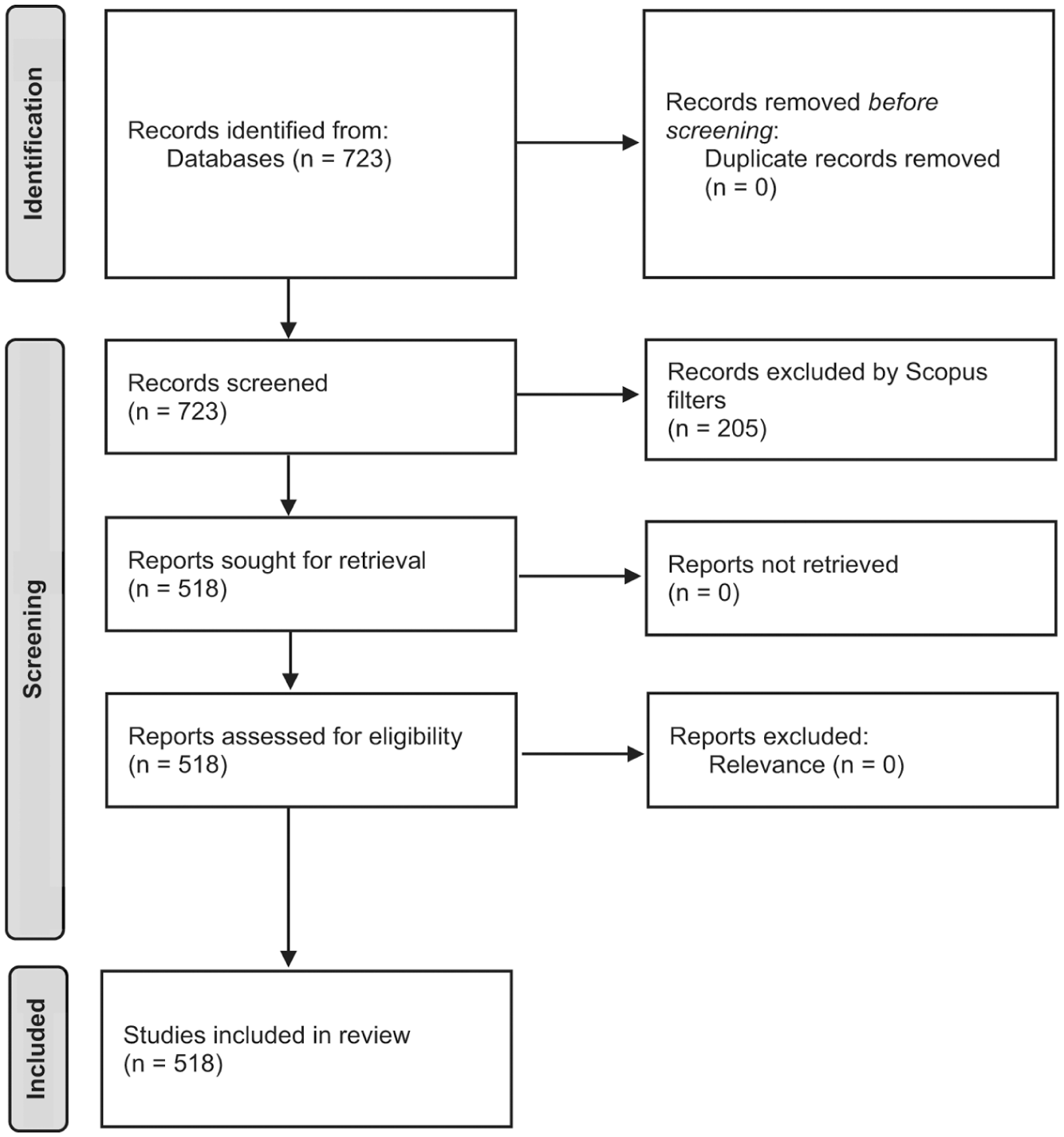
PRISMA diagram showing the search and exclusion process (adapted from Page et al., 2021).
Data Analysis
The Scopus list was exported to Excel in a format compatible with VOSviewer version 1.6.20 (van Eck & Waltman, 2023). The Excel spreadsheet contained 32 columns of metadata for the 518 articles. To facilitate data analysis, a thesaurus file (van Eck & Waltman, 2016) was developed to replace conceptually overlapping terms (e.g. student/students; primary schools/elementary schools) with a single term (e.g. students; primary schools). The thesaurus file was uploaded to VOSviewer, which generated results for the descriptive, citation, and science-mapping analyses (van Eck & Waltman, 2016).
Descriptive analyses, conducted in Excel, began with the geographic distribution of journal articles. The country of authorship was coded based on the author affiliation information provided in the Scopus records. For multi-authored articles, country attribution was determined by the affiliation of the first-listed author, consistent with common practice in bibliometric analyses (Hallinger & Kovačević, 2019). The descriptive analysis also included the distribution of articles by authors’ gender. Temporal analyses were also conducted to track changes in the composition of the journal’s author base across these dimensions.
Performance analysis employed document citation analysis to assess the scholarly impact of the journal’s content and analyze distinctive topics in its corpus (Hallinger, 2023a; Zupic & Čater, 2015). While citation frequency represents only one type of impact, it is widely used to evaluate knowledge production, particularly in journal evaluation and scholarly contributions (Hallinger, 2023a; Royle et al., 2013). Document citation analysis served two main purposes. First, it provides insight into the extent of scholarly impact of the journal’s most frequently cited articles. Second, analysis of the journal’s highly cited articles offers insight into the topical focus and publication types (e.g. empirical, conceptual, commentary, review) of the corpus. This analysis informed the interpretation of the journal’s distinctive contributions.
The distribution of article types was determined through content analysis (Seuring & Gold, 2012). Empirical articles were defined as those reporting studies that collected and analyzed primary or secondary data. Conceptual articles proposed or critiqued models, theories, or professional practices. Commentaries consisted of reflective or practice-oriented pieces without explicit reference to systematic data analysis. Because abstracts often did not provide sufficient detail to reliably distinguish conceptual articles from commentaries, these categories were combined. Research reviews were defined as studies that systematically synthesized findings from multiple investigations. Articles were classified as “undefined” when abstracts provided insufficient information for reliable categorization.
Content analysis was also conducted to identify research methods used in the articles that reported empirical studies. Methods were coded based on explicit statements in abstracts and categorized as quantitative, qualitative, mixed methods, or undefined. The “undefined” category included empirical studies in which the methodological orientation was not clearly stated in the abstract. Because classification relied primarily on abstract-level reporting, methodological analyses are presented solely in aggregate rather than disaggregated by time to avoid misinterpretation arising from incomplete reporting.
Next, the journal’s topical profile was examined using keyword analysis (Hallinger & Kovačević, 2022; Wang et al., 2017; Zupic & Čater, 2015). VOSviewer was used to identify frequently occurring topics based on both author-supplied and index keywords. To move beyond simple frequency counts, co-word analysis examined patterns of keyword co-occurrence across articles. Co-word analysis assumes that keywords that frequently “co-occur” (e.g. professional development and teacher education; school reform and change) reflect underlying conceptual linkages within the literature (Donthu et al., 2021; van Eck & Waltman, 2016). VOSviewer generated a science map that visualizes the relationships among frequently co-occurring keywords appearing within the Improving Schools corpus. Co-word maps are commonly used to assess the conceptual organization of a body of literature and the extent to which research topics cluster around shared thematic concerns (Hallinger & Kovačević, 2022; Zupic & Čater, 2015).
To examine potential temporal shifts, the co-word analysis was extended with a temporal overlay visualization based on the mean publication year of the documents in which a keyword appeared. Keywords were included in the analysis if they met a minimum threshold of ⩾4 occurrences. The overlay enabled examination of patterns in the journal’s topical evolution across the full corpus.
Finally, journal co-citation analysis (JCA) was employed to examine Improving Schools’ position within its journal community (Hallinger, 2023a; Hallinger, 2023b). JCA analyzes the journals cited by authors in Improving Schools. Analogous to co-word analysis, JCA assesses the frequency with which pairs of journals are cited together (i.e. co-cited) within the same articles (Zupic & Čater, 2015). This analysis assumes that frequently “co-cited” journals bear an intellectual affinity, for example, Review of Education Research and Educational Researcher, or School Leadership & Management and Educational Management Administration & Leadership (Hallinger, 2023a; van Eck, 2011). Using these journal co-citation data, VOSviewer generates a science map that visualizes the relational position of Improving Schools within its particular community of related journals (Donthu et al., 2021; Hallinger, 2023a).
Results
Landscape of the Improving Schools Corpus
Figure 2 presents the distribution of documents published in Improving Schools by country or territory based on author affiliations. The data reveal a pronounced concentration of publications originating from a small number of countries. The United Kingdom accounts for the largest share of documents, followed by the United States and Australia. Together, these three countries dominate the journal’s overall publication profile. This affirms the journal’s historical roots within Anglo-American education systems and locates its early editorial networks specifically in the UK (Learmonth & Worrall, 1998; Wrigley, 2001).
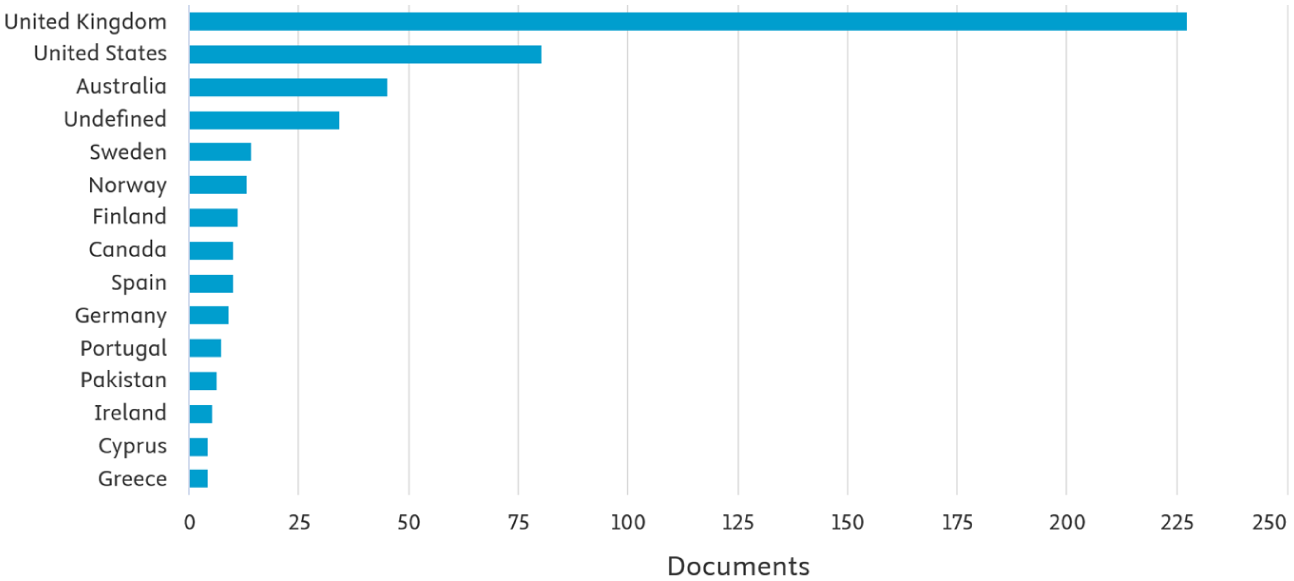
Geographic distribution of the leading contributors to Improving Schools by country or territory.
Beyond these core contributors, the corpus exhibits a “long-tail distribution” of numerous countries, each accounting for relatively few publications. These include several European societies (e.g. Sweden, Norway, Finland, Spain, Germany, Portugal, Ireland, Cyprus, and Greece), as well as contributions from Canada and Pakistan. While the presence of these countries indicates some geographic diversity, their contributions have been modest relative to those of the Anglo-American contributors. This broad pattern provides a baseline for interpreting subsequent analyses of internationalization and authorship trends over time.
Subsequent analyses examined if and how the geographic distribution of the journal’s publications has shifted over time. This temporal analysis provides insight into the journal’s longer-term patterns of internationalization. More specifically, authorship patterns were analyzed across three time periods (1998–2007, 2008–2017, and 2018–2025).
In the earliest period (1998–2007), authorship was highly concentrated in the United Kingdom (e.g. Robinson & Taylor, 2007; Woolner et al., 2007), which accounted for 77% of the published articles and 90% of citations (not tabled). Authors from the United States (e.g. Eisner, 1998; Wurdinger et al., 2007) and Australia (e.g. Caldwell, 2000; Johnson & Scull, 1999) contributed 9% and 4% of the articles published during this period, respectively. Contributions to Improving Schools from 14 other countries were limited to one or two articles and accounted for a small share of its citations. This narrow geographic base reflected the journal’s founding context and the early editorial team’s location in the United Kingdom.
During the middle period (2008–2017), the geographic distribution of publications expanded from 18 to 35 nations (not tabled). Nonetheless, the United Kingdom (e.g. Harris & Jones, 2010; Robinson & Taylor, 2013), United States (e.g. T. H. Levine, 2011; Mertler, 2009), and Australia (Aldridge et al., 2016; Coffey, 2013) remained prominent contributors, authoring 66% of the corpus and achieving 77% of its citations. Contributions from Europe (e.g. Jäppinen, 2012; Koutrouba & Karageorgou, 2013), Asia (e.g. Saito & Hang, 2010; Tajik, 2008), and Africa (Boikhutso, 2010; Ntombela, 2011) gradually increased during this period, marking an initial phase of international expansion.
Data for the most recent period (2018–2025) indicated continued expansion of the journal’s geographic reach (not tabled). Although the same three Anglo-American nations continued to lead in journal contributions, their share of articles and citations fell below 50%, during this period. Authors from continental Europe, especially Scandinavia, Germany, Spain, Portugal, and Belgium, markedly increased their presence in the journal’s discourse (e.g. Borg & Drange, 2019; Torres & Mouraz, 2022). Asian (e.g. Bzour et al., 2022; Zulfiqar et al., 2019) and African (e.g. Ayaya, 2021; Wango & Gwiyo, 2023) authors made more limited contributions.
These patterns indicate a gradual shift from an Anglo-American-concentrated authorship base toward a more internationally distributed profile. Although the journal retains a strong core of authors in the United Kingdom, the United States, and Australia, it has gradually attracted a more diverse author base from regions worldwide. The impact of this trend extended to the gender distribution of authors.
Analysis of author gender across three equal publication periods revealed a steady increase in the proportion of female authors (not tabled). Whereas authorship was nearly gender-balanced in the earliest period (i.e. female 49%/male 51%), female authors constituted a clear majority in the middle period (i.e. female 55%/male 45%) and became dominant in the most recent period (i.e. female 61%/male 39%). This pattern suggests a long-term structural shift in authorship participation within the journal rather than a short-term fluctuation.
Cross-tabulation of author gender and geographic affiliation reveals that changes in gender composition are closely linked to the journal’s internationalization (not tabled). In the earliest period, when authorship was concentrated in Anglo-American contexts, there was near gender parity. As contributions diversified geographically after 2015, female authors became increasingly prominent. This phenomenon was especially evident in internationally co-authored articles from outside the traditional Anglo-American societies.
These data suggest that the growing representation of female authors reflects not only demographic change within established academic networks but also the entry of new regions and collaboration norms into the journal’s knowledge production network. Notably, however, this analysis is descriptive and does not attempt to model causal relationships between geographic diversification and gender composition. Nonetheless, these trends suggest that changes in authorship composition reflect multiple, overlapping developments in the journal’s contributor base.
Distinctive Contributions of Improving Schools
Improving Schools’ distinctive contributions to the education literature are examined through analyses of document citation impact, article types, and research methods. Drawing on comparisons with journals occupying a related intellectual space, the analysis clarifies how Improving Schools generates scholarly impact and positions itself within the broader landscape of research on school improvement and change.
Document Citation Analysis
To provide context for the citation profile of Improving Schools, comparable data were compiled for two journals with overlapping conceptual foci, School Effectiveness and School Improvement (SESI) and the Journal of Educational Change (JEC). As a Scopus Q1 journal, SESI occupies a niche within the school improvement literature characterized by a strong, though not exclusive, orientation toward advanced quantitative research and research synthesis (Kovačević & Hallinger, 2020). JEC, also a Scopus Q1 journal, publishes a balance of conceptual and varied empirical studies on topics related to educational change and school reform (Garcia-Huidobro et al., 2017).
The most highly cited article published in Improving Schools, Kokotsaki et al.’s (2016) review of project-based learning, accumulated 1,003 Scopus citations through 2025 (see Table 1). Across the journal’s 20 most cited articles, the median citation count is 85, and the lowest-cited article in this group of top-cited articles accrued 55 citations. This pattern highlights a steep decline beyond the top-cited article, with two other articles gaining 200+ Scopus citations, and three more accruing 100 to 200 citations. Thus, the top-cited article is an outlier within the journal’s corpus.
Top-Cited Documents Published in Improving Schools.
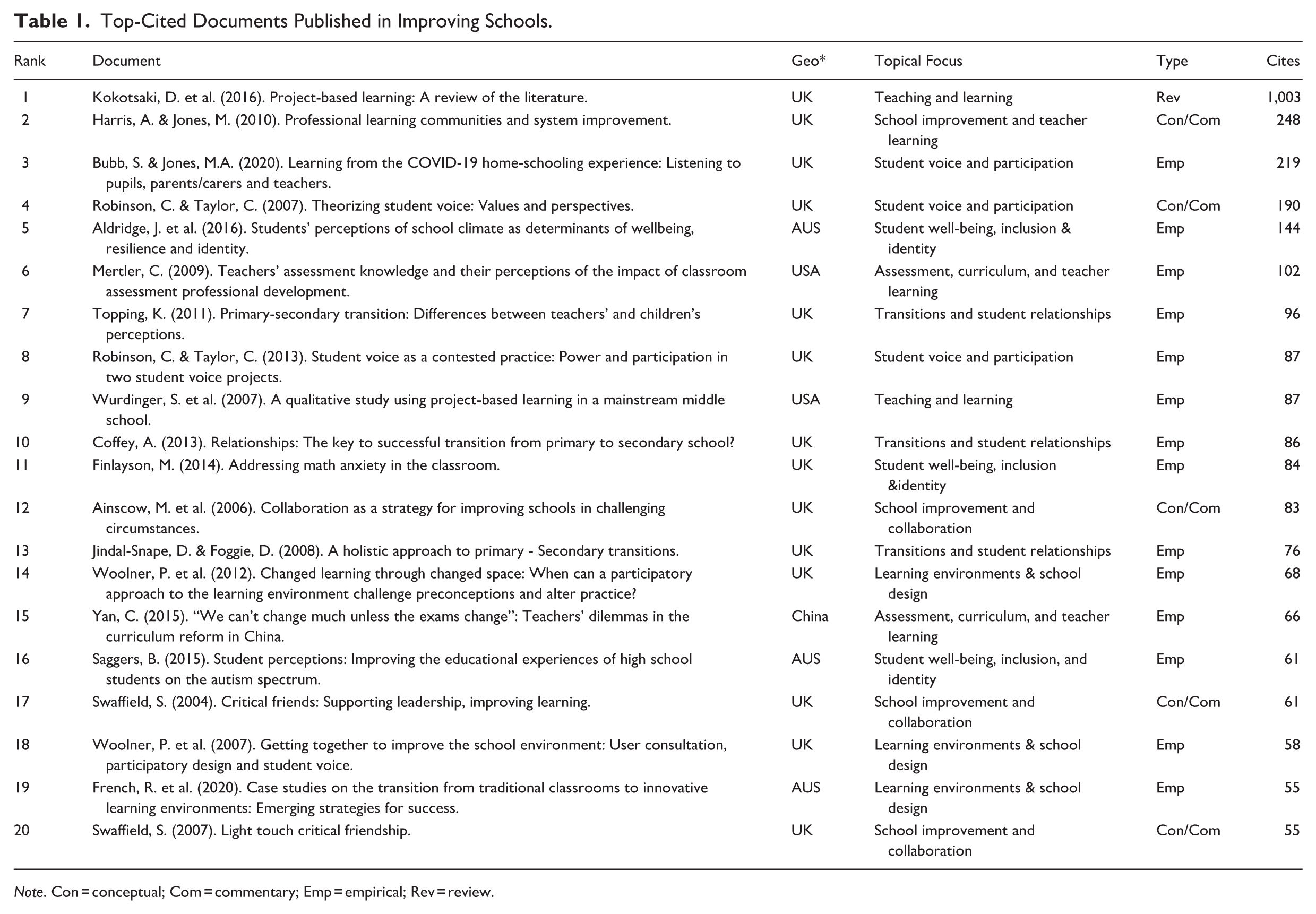
Note. Con = conceptual; Com = commentary; Emp = empirical; Rev = review.
By comparison, SESI’s most highly cited article (Hallinger & Heck, 1998) gained 766 Scopus citations through 2025, while its 20th most cited article accrued 175 citations; the median citation count for SESI’s top-cited articles is 238 (not tabled). JEC’s top-cited article (Ainscow, 2005) accumulated 461 citations, while the 20th most cited article gained 114 citations; the median citation count for JEC’s top-cited articles is 187 citations. Notably, 62 articles published in SESI and 26 in JEC accrued 100 or more citations; in contrast, only six articles published in Improving Schools reached this threshold. These comparative citation profiles show that while Improving Schools has produced a small number of influential articles, SESI and JEC have developed more consolidated bodies of highly cited work in the domains of school improvement and change.
Content Analysis of Article Types
As shown in Table 1, 14 of the 20 top-cited documents published in Improving Schools were empirical studies. These span a wide range of substantive concerns, including teaching and learning, student voice, well-being, transitions, and learning environments. Five conceptual/commentary articles are also present among the most influential articles (Ainscow et al., 2006; Harris & Jones, 2010; Robinson & Taylor, 2007; Swaffield, 2004, 2007). Notably, only one research review, Kokotsaki et al.’s (2016) top-cited article, appears among the journal’s top-cited publications. This pattern contrasts with other education journals, in which research reviews are frequently prominent among the most highly cited articles (e.g. Hallinger, 2023b; Hallinger & Kovačević, 2022).
This distribution of article types, however, was not replicated across the full dataset. Conceptual/commentary articles accounted for approximately 49% and empirical studies 44% of the journal’s corpus. Thus, while conceptual/commentary articles constituted a plurality of the full dataset, empirically grounded studies were disproportionately represented among the journal’s most frequently cited contributions. This contrast suggests that scholars have placed particular value on empirical studies published in Improving Schools, even as the journal has placed somewhat greater emphasis on practice-oriented scholarship. Notably, eight research reviews constitute a very small share (2%) of the corpus (e.g. Buchanan & Buchanan, 2017; Flecknoeà, 2003; Kokotsaki et al., 2016; Reierson & Becker, 2021). Although research reviews typically comprise the smallest proportion of a journal’s corpus, this limited level of synthesis remains striking given the journal’s broad topical scope (see Hallinger, 2023b; Hallinger & Kovačević, 2022).
Content Analysis of Research Methods
To further unpack the dominance of empirical studies among the most highly cited articles, the full subset of empirical articles was analyzed by methodological orientation. Drawing on information from the article abstracts, empirical studies were classified as qualitative, quantitative, or mixed-methods studies, where possible. Among the empirical articles with identifiable methods, qualitative studies accounted for a significant majority of publications (~67%), followed by quantitative (~23%), and mixed-methods (~10%) designs. Notably, a surprising number of empirical articles did not explicitly specify their methodological orientation in the abstract, limiting finer-grained, accurate classification. Nonetheless, the broad trend is not expected to change markedly based on a more complete classification of the research methods employed in the articles since it is consistent with the journal’s stated emphasis on practitioner accessibility and voice.
Topical Analysis
Keyword Analysis
While analysis of the journal’s highly cited articles provides initial insight into the topical foci of scholarship that has achieved the greatest visibility, it does not capture the broader topical composition of Improving Schools (Hallinger, 2023a; Hallinger & Kovačević, 2022; Wang et al., 2017). To examine this dimension, a keyword frequency analysis was conducted across the full publication corpus. This enabled a description of the journal’s topical range and an assessment of the extent to which foci represented among highly cited articles reflect patterns evident in the corpus as a whole.
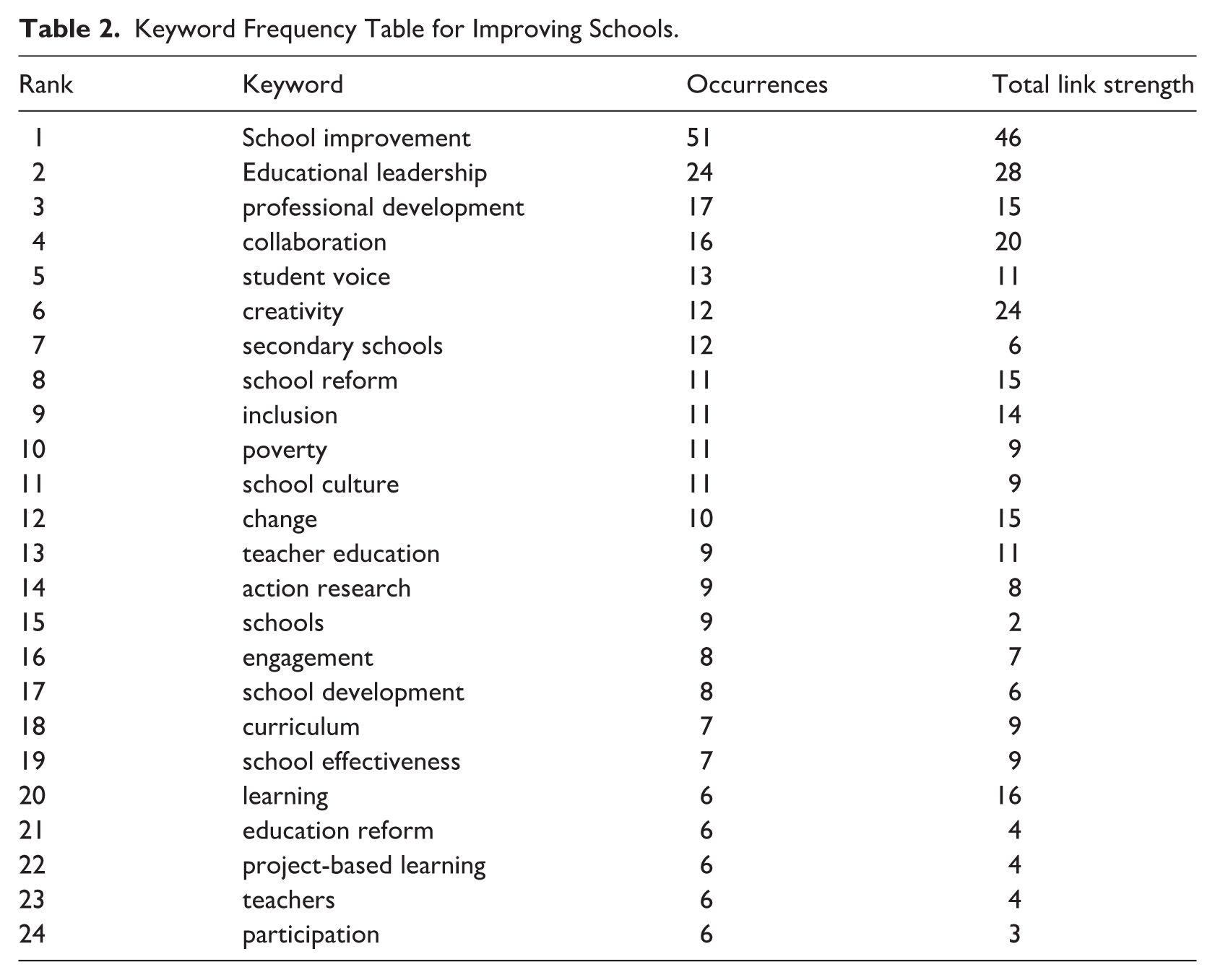
A keyword frequency table was generated from Scopus data analyzed in VOSviewer (see Table 2). As expected, the term school improvement appears most frequently, reflecting the journal’s stated focus (see Table 2). Beyond this core concept, however, keyword frequencies are widely dispersed, with only three other keywords occurring in more than 15 documents (educational leadership, professional development, collaboration). By way of comparison, SESI and JEC each had more than twice as many keywords with at least 15 occurrences, suggesting a greater dispersion and less thematic development in the topical content of Improving Schools. These data suggest a topical profile characterized by breadth rather than concentration, with school improvement functioning as an integrative frame rather than a narrowly defined analytic focus.
Keyword Frequency Table for Improving Schools.
This pattern, however, is open to competing interpretations. On the one hand, it suggests that Improving Schools has operated as a broadly inclusive forum that accommodates diverse educational concerns within a shared, improvement-oriented framework. For example, the journal’s content gives voice to the roles played by multiple stakeholders in school improvement (e.g. students, parents, teachers, leaders, and education authorities). On the other hand, this topical dispersion can also be interpreted as a lack of sustained accumulation of research within clearly bounded lines of inquiry. These interpretations suggest a trade-off between “inclusivity” and “thematic coherence.” Whether that tradeoff is intentional or organic cannot be judged from these data.
Keyword Co-occurrence Analysis
While the keyword frequency analysis offers insight into topical breadth, it does not capture “relationships among themes” within the journal’s knowledge structure (Hallinger, 2023a; Hallinger, 2023b). To examine this dimension, a co-word analysis was conducted to identify patterns of association among concepts. This analysis offers insight into whether the journal’s topical landscape is organized around coherent thematic cores or dispersed across loosely connected domains (van Eck, 2011; Zupic & Čater, 2015).
In the resulting co-word map, nodes represent keywords occurring at least four times in the corpus, with node size indicating frequency and links representing the “co-occurrence of keywords” within the same articles (see Figure 3). Colored keyword clusters reflect patterns of conceptual association among keywords within the network (Donthu et al., 2021; van Eck, 2011; van Eck & Waltman, 2016). The very low threshold used in this analysis was necessary, given the sparse keyword coverage in this corpus. It should be noted that the low threshold implies that linked keywords often reflect episodic co-occurrence rather than sustained engagement with shared topics across a large body of work.
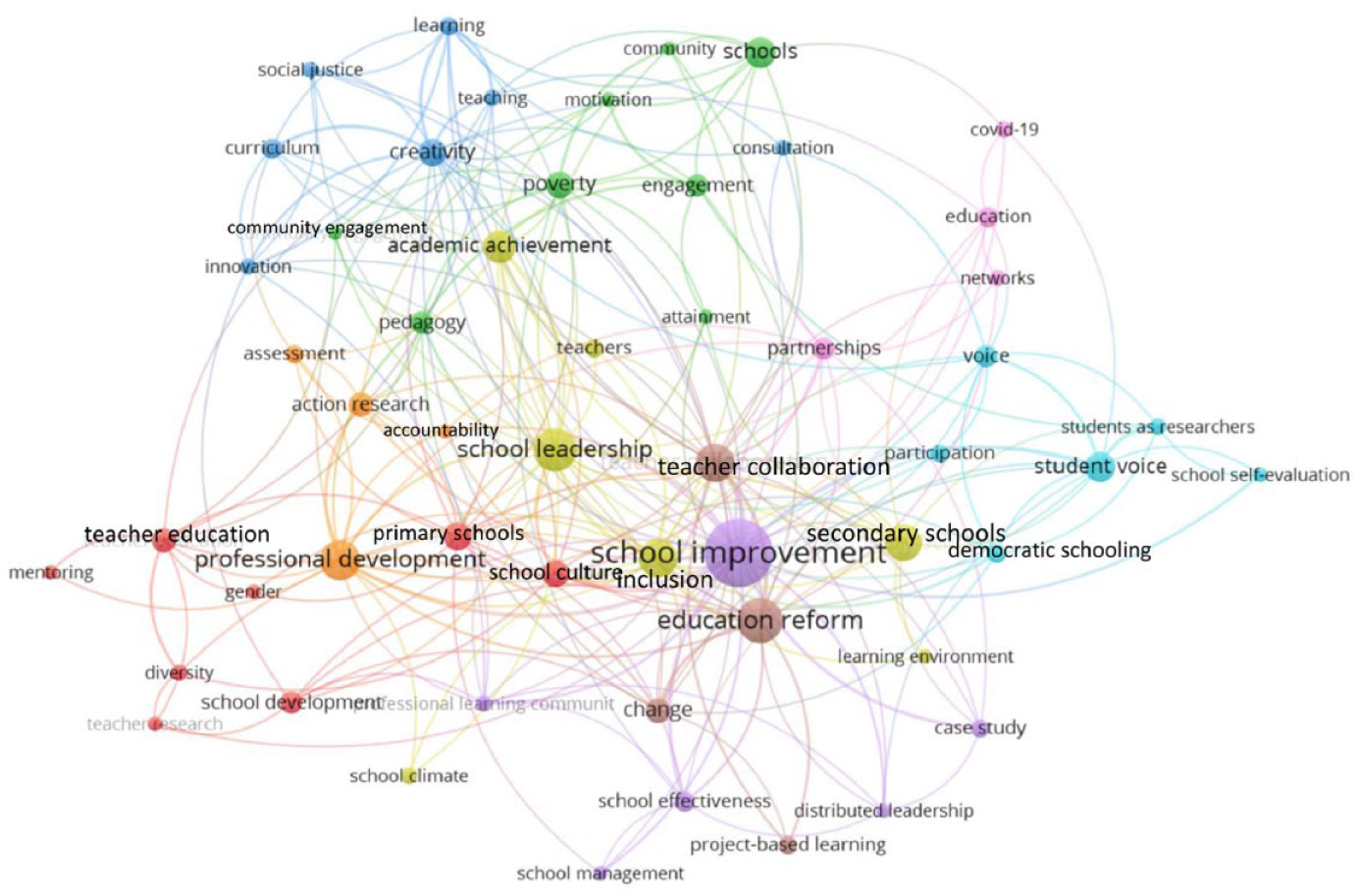
Co-word map of the Improving Schools corpus of articles (threshold four occurrences, resolution 0.90).
As summarized in Table 2 and illustrated in Figure 3, school improvement serves as the anchoring construct on the co-word map. Beyond this core, associations are distributed across leadership, professional development, pedagogy, student voice, inclusion, and social context. The conceptual structure of this co-word map is notable for its lack of coherent, well-defined colored clusters comprised of thematically related keywords. Instead, the map visualizes a relatively large number (i.e. 10) of overlapping, topical clusters, each comprising a few small nodes. This conceptual structure is interpreted as evidence that topical integration within the journal’s corpus occurs primarily through loose association around the “school improvement frame.”
Collectively, the keyword frequency and co-word analyses indicate that topical integration within Improving Schools occurs primarily through “conceptual bridging” rather than through the development of specialized themes. Moreover, while a wide range of educational concerns are linked under the rubric of “school improvement,” these connections tend to be episodic and loosely coupled to one another. These patterns suggest that knowledge accumulation within the journal’s corpus is shaped more by individual contributions addressing broadly resonant concerns than by sustained inquiry into shared problems across an identifiable community of scholars and practitioners.
Temporal Analysis
The prior analyses offer insight into the topical organization of the full corpus. However, it was also of interest to explore if and how the topics featured in the journal have changed over time. To examine potential shifts in the journal’s topical emphasis, a temporal overlay visualization was generated based on the average publication year of keywords meeting the same threshold (⩾4). Figure 4 presents the resulting map, in which color gradients indicate the relative recency of keyword usage, with brighter colors associated with more recent topics and darker colors with those that were emphasized earlier in the Improving Schools corpus.
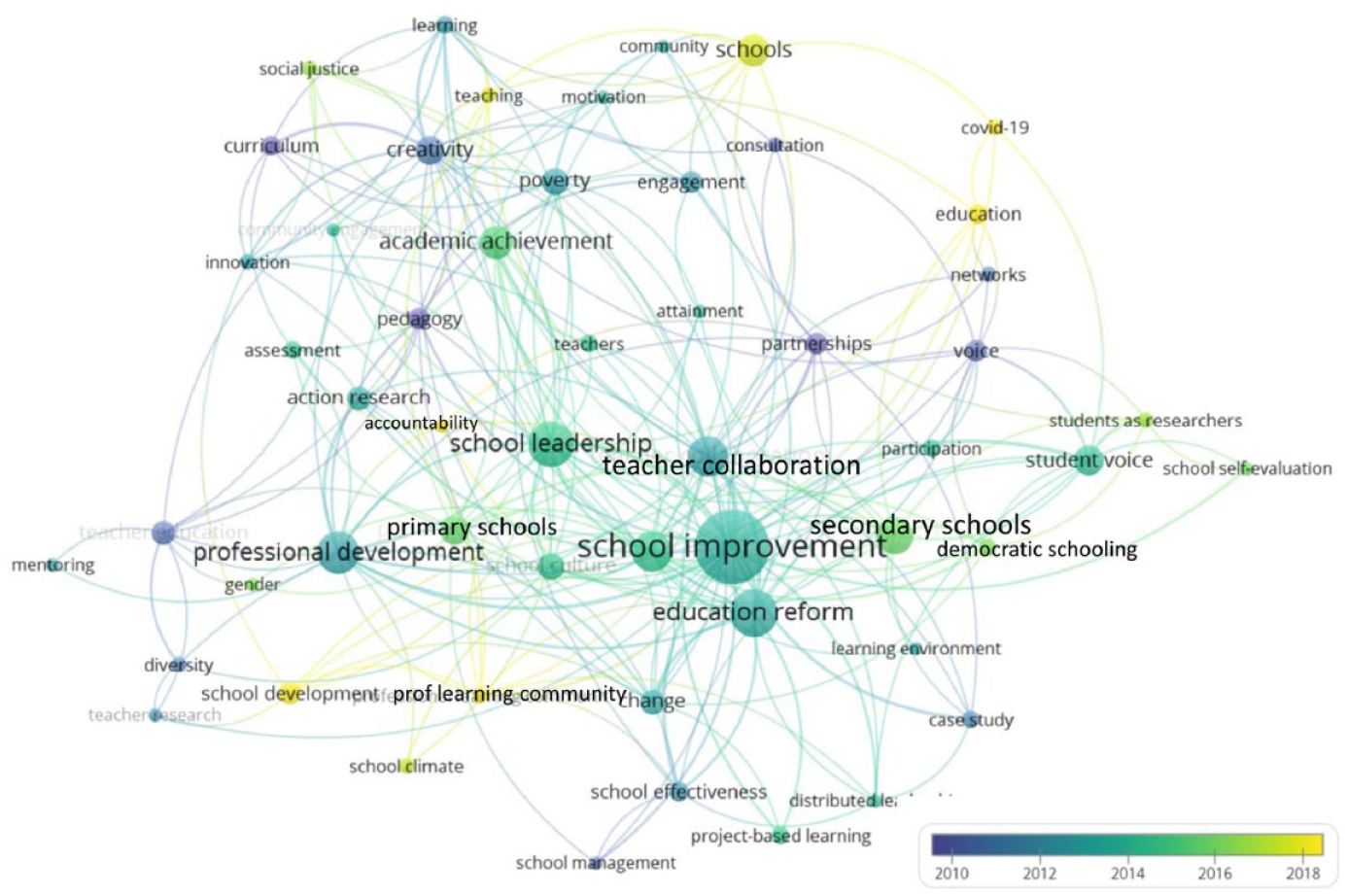
Temporal overlay of the co-word map for Improving Schools (threshold four co-citations).
The overlay suggests considerable thematic continuity across the journal’s publication history. Core constructs such as school improvement, teacher collaboration, school leadership, education reform, and professional development remain evident over time, highlighting sustained attention to broad reform-oriented concerns rather than marked transitions toward narrowly bounded research programs. These topics are not confined to a single publication period but persist throughout the corpus.
Notably, these keywords, which demonstrate persistence over time, are also among the larger and more frequently occurring nodes in the network (see also Table 2). Although their absolute frequencies are modest relative to some other journals (e.g. Hallinger, 2023b; Hallinger & Kovačević, 2022), within the Improving Schools corpus, they represent among the journal’s most frequently featured topics. Their recurrence across the three publication periods, therefore, reflects not episodic attention, but the maintenance of a relatively stable conceptual core.
Some temporal variation is nevertheless evident. Earlier publications (darker nodes) show greater prominence of terms associated with practitioner-oriented inquiry and case-based work (e.g. mentoring, teacher education, diversity, case study). Mid-period publications display an increased emphasis on outcome-oriented and engagement-related constructs such as academic achievement, poverty, engagement, and teachers. Topics that have received particular emphasis over the past decade (yellow and light green nodes) include terms that reflect responsiveness to contemporary reform contexts, such as COVID-19, democratic schooling, social justice, accountability, and professional learning communities.
Thus, the temporal overlay highlights adaptive topical responsiveness over time rather than clear consolidation around increasingly specialized thematic or methodological domains. While the journal demonstrates sustained engagement with emerging reform issues, the persistence of broadly framed and moderate-frequency constructs suggests limited movement toward progressively differentiated or thematically integrated lines of inquiry. New topics appear layered onto an enduring reform-oriented discourse rather than displacing or refining it into increasingly specialized research programs. This pattern reflects continuity in the journal’s central concerns while raising questions about the extent to which its intellectual evolution has followed a cumulative trajectory characterized by increasing specialization and theoretical integration.
Improving Schools’ Place in the Education Literature
The fourth research question examines Improving Schools’ place in the education literature by analyzing journal co-citation patterns. Whereas the preceding analyses focused on identifying characteristics of its most influential articles and the journal’s internal topical structure, journal co-citation analysis provides insight into how Improving Schools is positioned in relation to other journals within the broader scholarly landscape (Hallinger, 2023a; Hallinger, 2023b; Hallinger & Kovačević, 2022). By examining which journals are most frequently cited in articles published in Improving Schools, this analysis reveals the communities of scholarship in which the journal’s articles are read, cited, and mobilized (Zupic & Čater, 2015).
A journal co-citation map was generated in VOSviewer with a co-citation threshold of four journal references within articles published in Improving Schools. Interpretation of this map (see Figure 5) follows the same general guidelines as those applied to the co-word analysis for node size, links, proximity, and cluster colors. Node size reflects the frequency with which a journal is co-cited alongside Improving Schools, while links indicate the strength of co-citation relationships. As in the co-word analysis, the relatively low inclusion threshold of only four co-citations influences the interpretation of this map.
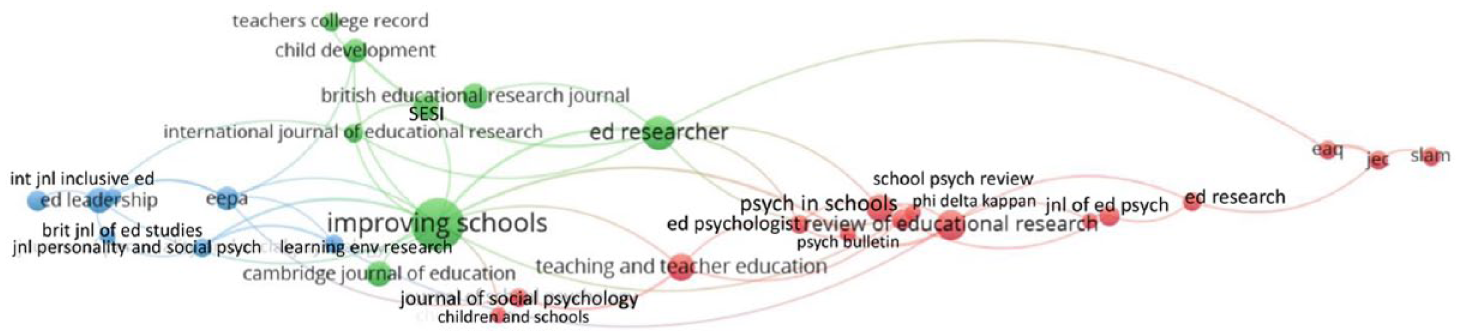
Journal co-citation analysis of the Improving Schools corpus (threshold four co-citations).
The journal co-citation network presented in Figure 5 exhibits a relatively sparse, widely dispersed structure. Improving Schools is the journal most frequently cited by its own authors, a pattern that contrasts with that observed for more intellectually consolidated outlets. Beyond this self-citation effect, Improving Schools is situated within a small and heterogeneous cluster of journals spanning multiple areas of educational research, including teaching and learning, educational leadership, school reform, psychology, inclusion, professional practice, and policy. The network does not display a dense core of highly interconnected journals that would signal the presence of a cohesive or well-defined intellectual community anchored in a specific subfield.
Instead, the co-citation pattern suggests that Improving Schools is only weakly aligned with any single journal community, reflecting breadth and topical heterogeneity rather than disciplinary or theoretical concentration. The implications of this pattern are reinforced by the low co-citation threshold (n = 4) used to generate the network. Under this inclusive threshold, only two journals—Education Researcher (13 co-citations) and Review of Educational Research (11 co-citations)—appear in double digits in the reference lists of articles in Improving Schools. By contrast, the reference lists of SESI and JEC contain substantially more journals with double-digit co-citations (32 journals for SESI, with a maximum of 82 co-citations; and 15 journals for JEC, with a maximum of 32 co-citations). This comparative evidence indicates that SESI and JEC are more firmly embedded within identifiable journal communities, whereas Improving Schools occupies a more loosely connected and eclectic position within the broader educational research landscape.
The journals most frequently co-cited with Improving Schools tend to be broadly scoped education journals and outlets oriented toward school-level practice, reform, and pedagogy. These include journals addressing themes such as classroom practice, curriculum innovation, student experience, inclusion, and professional learning. Consistent with the low co-citation threshold noted above, clustering beyond the immediate neighborhood of Improving Schools remains weak, with journals linked through relatively modest co-citation ties. In structural terms, Improving Schools occupies a bridging position within this literature, appearing at the intersection of multiple journals that feature different educational discourses (e.g. Children and Schools, Educational Researcher, Journal of Personality and Social Psychology, Educational Evaluation and Policy Analysis (EEPA), SESI, Learning Environments Research).
Discussion
This review examined the full corpus of Improving Schools to explore the relationship among the journal’s founding mission, its evolving publication profile, and its patterns of scholarly influence. Drawing on performance analysis, science mapping, and content analysis, the study identified a set of interrelated structural features that shape how knowledge is generated, organized, and cited within the journal. The discussion that follows situates these findings in light of the journal’s original aims and its recently revised editorial vision, considers methodological limitations of the review, and reflects on implications for the journal’s future trajectory.
Limitations
The primary limitation of this review is its reliance on data analysis at a moderate to high level of abstraction. More specifically, the analysis did not involve a close reading of the full corpus—or a representative sample—of articles. Instead, the review drew on bibliographic metadata, including author information, affiliations, citation counts, abstracts, cited journals, and keywords. While this approach is well established in large-scale journal reviews (Campbell, 1979; Hallinger, 2023b; Oplatka, 2012; Wang et al., 2017), it necessarily precludes fine-grained assessment of article quality, theoretical depth, or the substantive contributions and nuances of individual contributions.
A second limitation concerns the content analysis of article types and research methods. Because these analyses were not the primary focus of the review, coding decisions were based on article abstracts rather than full texts. Unfortunately, in some cases, abstracts did not provide sufficient detail to support confident classification. Although these analyses would benefit from replication using full-text coding, the author maintains that the reported patterns are robust and accurately capture the broad contours of publication activity within the journal.
Interpretation of the Findings
The findings indicate that the journal’s authorship patterns have evolved considerably over the past several decades. Early volumes were characterized by an authorship base located primarily in the United Kingdom, reflecting the journal’s origins and initial editorial networks. Over time, patterns of authorship have become increasingly international, with growth in contributions from the United States, Australia, Asia, Europe, and Africa. This geographic diversification coincided with a steady increase in the proportion of female authors, suggesting that shifts in gender composition are closely intertwined with broader processes of internationalization rather than representing isolated demographic change. Together, these developments reflect an expansion of the journal’s contributor base while maintaining continuity with its reform-oriented focus.
The document citation analysis further illuminated how influence operates within the journal. Citation impact is modest and unevenly distributed, with a relatively small number of articles accounting for a disproportionate share of total citations. Among the most highly cited contributions, empirical studies addressing diverse substantive issues predominate, despite conceptual articles and practitioner commentaries comprising a slightly larger share of the journal’s published output. When considered across the full corpus, this pattern indicates that empirical studies have generated greater citation visibility than practitioner-oriented commentaries or conceptual reflections.
This distribution, however, must be interpreted in light of the journal’s founding mission. Early editorial statements positioned Improving Schools as a forum for practitioner voice, reflective discourse, and context-sensitive inquiry rather than as a vehicle primarily for “traditional” empirical studies (Learmonth & Worrall, 1998; Mortimore, 1998). The prominence of commentary and qualitative case-based work within the publication profile, therefore, reflects intentional editorial priorities. At the same time, the concentration of citations among empirical studies highlights the structural distinction between a practitioner-oriented publication model and the mechanisms through which academic influence typically accumulates within the wider educational research ecosystem.
The limited number of research reviews identified in the corpus mirrors other structural features documented in this analysis, including relatively low keyword frequencies, modest levels of topical clustering, and a sparse journal co-citation network. Although systematic synthesis has not been a central mode of scholarly discourse within the journal, its most highly cited article is a research review. This suggests that when systematic synthesis is undertaken in the journal, it can achieve substantial visibility within the field (Kokotsaki et al., 2016). This stands in contrast to models of programmatic research that emphasize sustained engagement with progressively integrated lines of inquiry (Hallinger & Kovačević, 2019; Heck & Hallinger, 2005; Leithwood, 2005). Within Improving Schools, thematic continuity is evident, but cumulative integration across studies is comparatively limited.
This dispersed intellectual structure is similarly reflected in the absence of dense networks of highly co-cited journals. This pattern is consistent with the journal’s longstanding emphasis on practitioner relevance and responsiveness to emergent reform concerns. It is also consistent with the relatively modest citation levels observed across the corpus, reinforcing the journal’s influence as diffuse rather than concentrated.
The findings further point to editorial format as a structural condition shaping how knowledge accumulates within the journal. In comparison with School Effectiveness and School Improvement (SESI) and the Journal of Educational Change (JEC), which typically publish longer articles, the shorter manuscript lengths encouraged in Improving Schools may limit opportunities for extended synthesis and sustained engagement with shared lines of inquiry. While brevity can enhance accessibility and practitioner relevance, shorter formats allow less space for integrative reviews, theoretical consolidation, and detailed methodological exposition.
Taken together, these features suggest that influence within Improving Schools is shaped not only by topical breadth but also by a methodological orientation that emphasizes context-specific inquiry, often accompanied by concise methodological reporting. Although this may enhance accessibility for practitioner audiences, an abbreviated methodological exposition limits opportunities for rigorous evaluation, study replication, secondary analysis, and systematic comparison. Collectively, these structural features help explain the uneven citation patterns observed earlier, in which even highly cited articles achieve visibility without necessarily anchoring sustained programmatic development. For example, Kokotsaki et al. (2016) top-cited article on project-based learning was one of only five articles published on the topic in the journal’s corpus.
This methodological profile contrasts with that observed in SESI, where methodological procedures are more consistently articulated. This contrast helps account for SESI’s more consolidated and highly cited clusters of work. Methodological orientation, article length, topical structuring, and disciplinary positioning appear to interact in shaping patterns of citation concentration and knowledge accumulation across journals.
Topical analyses reinforce this interpretation. Keyword frequency, co-word, and temporal overlay analyses indicate that Improving Schools is organized around school improvement as a broad integrative construct rather than around multiple tightly bounded thematic cores. Topics related to leadership, pedagogy, student experience, inclusion, and social context are consistently present across publication periods and, in several cases, among the more frequently occurring terms in the corpus (see Table 2). The temporal analysis of topics suggests that these core constructs have retained prominence over time, with newer issues layered onto an enduring reform-oriented center rather than replacing it. However, these themes do not coalesce into densely interconnected clusters that would signal sustained, integrated lines of inquiry. The co-word map indicates that connections among topics reflect episodic co-occurrence across individual articles rather than the emergence of distinct programmatic research streams.
When considered alongside the composition of the journal’s most highly cited articles and its journal co-citation profile, this topical structure clarifies how influence operates within Improving Schools. In the absence of a strongly consolidated thematic core or disciplinary anchor, influence derives less from cumulative programmatic engagement than from individual studies’ capacity to address broadly shared improvement-related concerns across educational contexts. Although Improving Schools is positioned as a specialist journal focused on educational improvement, its scholarly profile, in many respects, resembles that of a generalist education journal (e.g. Educational Review, European Journal of Education, British Journal of Educational Studies). Its distinctive contribution lies in linking diverse strands of inquiry through a flexible conception of school improvement rather than in advancing clearly delineated disciplinary agendas.
The journal co-citation analysis situates Improving Schools within a diverse and weakly consolidated segment of the education literature. The absence of a dense cluster of co-cited journals from any single field, combined with proximity to broadly scoped, practice-oriented outlets (e.g. Educational Leadership, Phi Delta Kappan), suggests a bridging position across multiple scholarly traditions rather than a stable discipline-centered network. Together, these patterns underscore the journal’s role as a “generalist forum” organized around an improvement-oriented framework.
In sum, Improving Schools occupies a distinctive position within the education literature, marked by international expansion, topical breadth, openness to practitioner voices, and sustained engagement with reform-oriented concerns. This distinctiveness, however, has not been accompanied by strong evidence of knowledge accumulation (Campbell, 1979). In contrast to SESI and JEC, which display more coherent conceptual and methodological clustering, Improving Schools presents a diverse but loosely integrated corpus of improvement-oriented scholarship. Citation patterns reflect uneven and diffuse visibility rather than the steady consolidation of interconnected research programs. A small number of articles have achieved notable citation counts, but most contributions have attracted modest scholarly attention. Translating breadth and inclusivity into sustained cumulative influence may therefore require more explicit mechanisms for synthesis, integration, and thematic continuity.
Implications of the Findings
These findings have several implications for how Improving Schools is interpreted and engaged by education practitioners and scholars. For readers, the journal’s value therefore lies less in tracing specialized scholarly debates and more in identifying applied work that speaks to contemporary challenges in educational development. The journal’s title itself provides insight into this orientation. The phrase “improving schools” conveys active, ongoing engagement with the challenges facing schools. In contrast, the term “school improvement” has, over several decades, come to denote a well-defined line of inquiry, a “subject,” if you will. This distinction is subtle but meaningful. Whereas “school improvement” suggests an established field of study with identifiable theoretical and methodological traditions, “improving schools” signals a broader, practice-centered commitment to advancing educational quality across different education contexts. The journal’s publication profile aligns more closely with the latter orientation, reflecting a sustained engagement with the process of improving schools rather than the consolidation of a clearly identifiable research domain.
This distinction also frames a question about the journal’s future trajectory. The revised aims and scope introduced in 2026 place greater emphasis on rigorous empirical research and cumulative contribution to knowledge about educational improvement. To the extent that these revisions signal a desire to align more closely with the established school improvement research tradition, they imply a shift not in the journal’s core concern with improving schools, but in how that concern is operationalized. The challenge, therefore, is not whether Improving Schools should remain committed to its inclusive, practice-oriented orientation, but whether and how it might deliberately cultivate integrative strands of inquiry within that broad framework. In this sense, the issue is one of emphasis and structural support rather than mission replacement.
The findings also carry implications for prospective authors. Given the disproportionate citation visibility of empirical studies, authors seeking influence within Improving Schools may benefit from grounding their work in clearly articulated empirical designs that engage broadly resonant educational concerns. At the same time, the relative scarcity of research reviews and the limited consolidation of thematic clusters suggest opportunities for integrative scholarship. Systematic reviews, meta-analyses, and state-of-the-art syntheses that clarify points of convergence across areas such as leadership, professional learning, curriculum reform, student engagement, and teacher collaboration could strengthen the journal’s contributions to knowledge without narrowing its inclusive scope.
A further implication concerns Improving Schools’ position within its community of journals. When considered alongside SESI and JEC, the journal occupies a complementary rather than competitive space. Its contribution lies less in consolidating discipline-based research programs than in connecting diverse strands of inquiry within an improvement-oriented frame. The absence of tightly integrated thematic cores should therefore be understood not solely as a limitation, but as a defining characteristic that supports cross-cutting engagement with issues that traverse disciplinary boundaries. These differences reflect distinct editorial models rather than differences in scholarly rigor or relevance.
As the journal enters a new phase, the analyses presented here suggest several developmental pathways that may strengthen visibility and cumulative integration while preserving structural openness. First, although authorship has become increasingly international, opportunities remain to deepen engagement with scholars from underrepresented regions, particularly in the Global South. Expanding editorial representation, commissioning geographically focused special issues, or foregrounding themes salient to educational systems in developing societies could further enhance international reach. The experience of Educational Management Administration & Leadership illustrates how deliberate editorial positioning can support meaningful internationalization (Hallinger & Kovačević, 2022).
Second, the journal may consider cultivating a more active role in fostering knowledge synthesis. The limited presence of systematic reviews contrasts with their substantial citation potential, exemplified by the journal’s top-cited article. Targeted invitations for integrative scholarship could consolidate insights on the journal’s distinctive themes and strengthen its role in advancing cumulative knowledge.
Third, manuscript length guidelines merit reflection. Although the current 4,000 to 6,000 word range supports practitioner accessibility, shorter formats may constrain extended synthesis and fuller methodological exposition. Introducing an additional article category with a higher word limit could create space for integrative reviews and more fully developed empirical studies, while retaining the journal’s established format for concise, practice-oriented contributions.
Fourth, greater thematic signaling may enhance coherence without constraining breadth. Recurring special issues or structured thematic strands organized around emerging improvement concerns highlighted in the temporal analysis could encourage sustained engagement with shared problems and foster continuity across volumes. These include equity-focused reform, professional learning communities, student participation, accountability, and democratic schooling.
Finally, the journal’s bridging position may warrant more explicit articulation. Co-citation patterns suggest that Improving Schools already connects practice-oriented and research-focused discourse. Clarifying this positioning through editorial statements, revised aims and scope, or commissioned commentaries could sharpen the journal’s identity and attract submissions aligned with its distinctive role.
Conclusion
This review was undertaken during an editorial transition at Improving Schools. This juncture invites reflection not only on what the journal has accomplished, but also on how its distinctive features may be leveraged in the future. The analyses presented in this article do not yield a prescriptive agenda. Rather, they offer an evidence-based account of the journal’s structural characteristics, patterns of influence, and topical evolution. In doing so, the review aims to inform ongoing discussions about how Improving Schools can continue to serve an increasingly international scholarly community while strengthening its contribution to the cumulative advancement of school improvement research and practice.
Footnotes

Funding
The author received no financial support for the research, authorship, and/or publication of this article.
Declaration of Conflicting Interests
The author declared no potential conflicts of interest with respect to the research, authorship, and/or publication of this article.