







Abstract
Judicial proof can be reinterpreted as a dynamic process of dialectical argumentation, based on modern argumentation theory and situated within the adversarial legal framework. It reflects the dialogical nature of reasoning, where plaintiffs and defendants present supporting arguments, challenge opposing claims through counterarguments and engage in interactive exchanges to persuade the adjudicator. The adjudicator carefully evaluates these arguments to ensure they meet established standards of proof and to determine whether the burdens of production and persuasion have been satisfied. This process develops through distinct phases: constructing arguments during evidence presentation, interacting with arguments during cross-examination and evaluating arguments during closing arguments. By drawing on minimal rationality theory, this study highlights that rational fact-finding emerges not from rigid probabilistic methods but from the structured interplay of arguments and counterarguments that characterises adversarial proceedings. This reconceptualisation clarifies the rational, explanatory and dialogical aspects of judicial proof, offering both a stronger theoretical understanding of its logical structure and practical insights into how adversarial processes ensure fairness and accuracy in fact-finding.
Keywords
Introduction
An enduring challenge in legal scholarship lies in precisely defining and interpreting judicial proof. Although it is foundationally significant, the logical aspects of judicial proof are often neglected. In The Principles of Judicial Proof, Wigmore highlights the key role of ‘proof’ in judicial proceedings instead of merely focusing on the admissibility of evidence; he notes that legal studies have historically emphasised procedural rules, having neglected the significance of ‘natural’ proof. Judicial proof involves the ratiocinative process of contentious persuasion—mind to mind, counsel to juror—with each participant aiming to influence the tribunal's perspective (Wigmore, 1931: 1). Wigmore calls for the establishment of a scientific proof system independent of procedural rules; this oversight, he contends, has led to a lack of rational justification in fact-finding. Wigmore's vision calls for a scientific and rational change in the study of judicial proof, strongly advocating for a new scientific framework to redefine judicial proof. This perspective implies that judicial proof is intrinsically linked to rational processes, despite its distinct legal characteristics.
There are many important contributions to the study of judicial proof, building upon Wigmore's foundational insights and further developing the field. Allen has emphasised the limitations of probabilistic approaches in legal reasoning and has advocated for a model based on inference to the best explanation, which underscores the construction of coherent narratives from evidence by legal fact-finders (Allen, 1997; Allen & Pardo, 2007). Pardo has collaborated with Allen to further this explanatory framework, critiquing traditional probabilistic models and emphasising the epistemological principles underlying legal standards of proof (Pardo, 2013; Pardo & Allen, 2008). Stein has contributed by integrating economic and philosophical perspectives into evidence law, focusing on the rationality and fairness of judicial proof, and examining how accuracy and procedural justice are balanced in fact-finding (Stein, 2005, 2012). Meanwhile, Dahlman has explored the application of formal epistemology to judicial reasoning, analysing the role of coherence and plausibility in the fact-finding process and contributing to the philosophical foundations of evidence law (Dahlman et al., 2021). Collectively, these scholars have shifted the focus of judicial proof studies from purely procedural or probabilistic concerns to a more comprehensive and rational framework that incorporates explanatory coherence, epistemic justification and philosophical rigor. This body of work reflects a century of intellectual progress, addressing the critiques posed by Wigmore and advancing a scientific and rational understanding of judicial proof.
In the latest research, Allen et al., in Minimal Rationality and the Law of Evidence, 1 provide a groundbreaking critique of conventional views of evidence law. Traditionally, the law of evidence has been seen as designed to maximise rationality in legal fact-finding by ensuring the reliability of evidence and guiding judicial reasoning. However, Allen and his colleagues argue that the law of evidence does not strive for maximal rationality but instead operates under a framework of minimal rationality. They contend that rather than tightly controlling the quality of evidence or the reasoning of fact-finders, the law imposes only basic structural rules that allow the adversarial system to determine the outcome. The adversarial process, with its focus on party autonomy and the competitive presentation of evidence, plays a central role in shaping the rationality and accuracy of legal decisions. Under this minimal rationality theory, the responsibility for producing accurate outcomes lies primarily with the parties involved, who decide what evidence to present and how to argue their case, while the court ensures only that basic procedural standards are met. This perspective shifts the focus from stringent regulatory control over evidence to an understanding of the law of evidence as a system that facilitates adversarial engagement and leaves room for the parties to shape the proof process.
Judicial proof fundamentally involves the discovery and establishment of case facts, aimed at uncovering the truth and persuading the adjudicator. Unlike formal proof, which operates through deductive reasoning, judicial proof is subject to change as new evidence is introduced. Furthermore, judicial proof is closely tied to the burden of proof, a concern absent in formal proof. Standards of proof in judicial proceedings vary depending on the legal context, unlike the consistent validity standard of formal proof. Despite these differences, modern logic has shifted beyond the strict criteria of validity and reliability. This evolution has led to the application of various logical frameworks, such as deontic logic, fuzzy logic and nonmonotonic logic, to legal reasoning. This paradigm shift has spurred the exploration of topics related to judicial proof based on modern argumentation theory, such as legal argumentation and legal dialogue.
In the process of judicial proof, the plaintiff and defendant engage in argumentation to advocate for their respective positions; through this rigorous debate, the facts of the case become clearer. This process facilitates the discovery and presentation of the case facts, ultimately leading to a judgment. Walton, a leading scholar in informal logic and legal argumentation theory, proposed an abstract normative model of a fair trial, considering it a goal-directed structure for resolving disputes and delivering justice through due process. In Walton's model, trials are characterised by adversarial disputes wherein litigants and their attorneys aim to win. However, rules of evidence and procedure ensure that relevant arguments from both sides are rigorously tested (Walton, 2002: xii). The adjudicator uses critical thinking to assess the strengths and weaknesses of these arguments. Walton emphasises that fact-finding reasoning in legal argumentation occurs within the purpose-driven, conversational framework of the trial. This approach, termed ‘dialectical argumentation’, also offers new insights into the reasoning used in statutory interpretation, which is crucial for understanding the law (Walton, 2002: xiv).
According to Walton, a fair trial is closely related to the well-known concept of ‘dialectical argumentation’. The method of dialectical argumentation is a logical theory for analysing and evaluating the argumentative activities of the plaintiff, defendant and adjudicator (referred to as the trial participants). As the argumentative activities of these three parties form the basic components of judicial proof, it may be enlightening to approach the study of judicial proof from the perspective of argumentation theory. The aim of this paper is to argue that dialectical argumentation provides a new perspective for studying judicial proof, allowing the concept of judicial proof to be redefined with new meaning by various argumentation theories related to legal reasoning, argumentation and dialogue. Moreover, the redefinition of judicial proof in terms of its rational dimension has two positive impacts. First, the rich results of argumentation theory provide new approaches for studying judicial proof, offering effective methods for the three trial participants to analyse and evaluate arguments; this helps each participant better understand their roles. Second, applying argumentation theory highlights the dialectical nature of the trial participants’ activities during the stages of evidence presentation, cross-examination and evaluation.
We proceed as follows. First, we redefine judicial proof as a form of dialectical argumentation, explaining its logical structure and highlighting its dynamic nature within adversarial proceedings. Second, we examine the limitations of probabilistic reasoning, particularly Bayesian methods, in addressing the interactive and rebuttal-driven characteristics of judicial proof. In contrast, we introduce Allen's minimal rationality theory, which better aligns with the dialogical and explanatory processes inherent in adversarial reasoning. Third, we analyse the phases of judicial proof, focusing on the construction of arguments during evidence presentation, the interaction of counterarguments during cross-examination, and the evaluation of arguments during adjudication. Fourth, we explore the practical implications of argumentation theory for judicial proof, demonstrating its ability to address real-world challenges in legal reasoning, evidence evaluation and burden of proof. Finally, the conclusion synthesises these insights, showing that judicial proof, when viewed as a dialectical process, provides a deeper understanding of legal reasoning while promoting fairness and rationality within the adversarial system.
Judicial proof as dialectical argumentation within the adversarial process
In modern argumentation theory, traditional logical perspective defines argumentation as a premise–conclusion structure in a monological form, focusing on deriving the conclusion from premises through inference rules. Argumentation expresses dialectical argumentation, which involves the interaction between argumentative subjects and pragmatic elements, resembling everyday argumentative activities. Dialectical argumentation refers to dynamic, interactive argumentation rather than a static sequence of propositions.
Judicial proof can be considered and understood as a special case of dialectical argumentation because it aligns closely with the fundamental characteristics of dialectical argumentation. Johnson and Blair, in their 1987 paper ‘Argumentation as dialectical argumentation’, summarised the concept of dialectical argumentation, tracing it back to Aristotle's notion of dialectics in his Topics. The key features of dialectical argumentation, as identified by Aristotle, include the following:
An argument is a product set of propositions whose characteristics can only be properly understood relative to the process of argumentation that produced it (Blair and Johnson, 1987: 45). The process of argumentation presupposes at least two roles: the questioner of a proposition and the answerer of those questions (Blair and Johnson, 1987: 45). The process of argumentation is initiated by a question or doubt, i.e., some challenge to a proposition. The challenge may have been mooted as a possibility, or it may have been posed (Blair and Johnson, 1987: 45). Argumentation is a purposive activity in which each participant aims to change or reinforce the propositional attitudes of the other or themselves. The questioner aims to challenge or reject the proposition or test whether it can withstand challenges. Conversely, the answerer aims to demonstrate the proposition's resilience to challenge to discover that it should not be accepted without further support or that it should be rejected (Blair and Johnson, 1987: 46).
In summary, dialectical argumentation involves at least two parties and begins with a conflict of opinions, with each side aiming to defend their respective positions. The dialectical process unfolds as both parties present their claims and challenge those of their opponents.
The theory of argumentation and the minimal rationality theory share a close connection, as both reveal the essence of judicial proof from different perspectives. Allen et al. critique the traditional overemphasis on formal evidentiary rules, arguing that the rationality and accuracy of judicial proof primarily depend on the adversarial process rather than rigid evidentiary frameworks. This viewpoint aligns closely with the central argument of this paper: judicial proof can be understood as a form of dialectical argumentation that takes place within the litigation process. Specifically, within the adversarial procedure, the plaintiff, defendant and adjudicator engage in a structured dialectical process of presenting evidence, refuting arguments and evaluating claims, ultimately leading to fact-finding and dispute resolution. By drawing on argumentation theory, this paper conceptualises judicial proof as a form of dialectical argumentation, offering a theoretical explanation of this process that complements and extends the insights of minimal rationality theory.
This connection between argumentation theory and minimal rationality theory also helps explain why both approaches arrive at similar conclusions about the nature of judicial proof. While argumentation theory examines the logical structure and interactive dynamics of the dialectical process, minimal rationality theory focuses on the practical operation of adversarial procedures within the legal framework. Despite their differing methodologies, both theories emphasise that the rationality and fairness of judicial proof emerge not from strict adherence to evidentiary rules, but from the dynamic exchange of arguments and counterarguments between the parties. Argumentation theory highlights how this structured interaction—consisting of evidence presentation, rebuttal and critical evaluation—mirrors the principles of dialectical reasoning, while minimal rationality theory underscores how the adversarial process serves as the key mechanism for achieving accurate and fair outcomes. The convergence of these perspectives demonstrates the robustness of their shared insights and underscores the interdisciplinary value of integrating argumentation theory with legal scholarship to provide a deeper understanding of judicial proof and the critical role of adversarial procedures in ensuring rational adjudication.
This convergence of argumentation theory and minimal rationality theory highlights the dynamic and interactive nature of judicial proof, which can be effectively analysed from the perspective of dialectical argumentation. By focusing on the adversarial process, both theories emphasise how the exchange of arguments and counterarguments among trial participants ensures rationality and fairness in adjudication. Building on this foundation, judicial proof can be viewed as a form of dialectical argumentation that takes place within the context of litigation.
The characteristics and structure of judicial proof closely align with those of dialectical argumentation, making it a prime example of this process within the legal framework.
In the initial phase of judicial proof, the plaintiff or defendant presents evidence and constructs supporting arguments. These arguments represent the outcomes of the broader argumentative process. Judicial proof involves three key participants: plaintiff, defendant and adjudicator. The plaintiff and defendant alternately present supporting arguments and counterarguments, either defending their claims or attacking their opponent's. Judicial proof originates from a conflict of opinions between the plaintiff and defendant. The process aims to resolve this conflict, culminating in the final judgment that serves as the resolution. This implies that judicial proof inherently involves questioning and challenging arguments. The purpose of judicial proof is clear: both the plaintiff and defendant strive to defend their claims and refute the opponent's arguments, ultimately aiming to persuade the adjudicator.
Judicial proof inherently embodies the fundamental traits of dialectical argumentation, making it a prime example of this process within the legal context. Judicial proof can be conceptualised as a dialectical argumentation. To fully understand the concept, it is imperative to reassess judicial proof from the dialectical argumentation perspective. This paper posits that the objective of judicial proof is to ensure a fair trial, which is achieved through an inherently dialectical process. Consequently, judicial proof can be seen as a type of dialectical argumentation aimed at achieving a fair trial.
From an argumentation theory perspective and based on the analysis of its dialectical characteristics, judicial proof can be reconstructed as follows:
Both plaintiff and defendant present supporting arguments to substantiate their claims and offer counterarguments to defend their positions, thereby challenging the opponent's arguments. Throughout this process, both parties aim to persuade the adjudicator to accept their claims. During this dynamic interaction, the adjudicator must critically evaluate the arguments from both sides, verify their adherence to established standards of proof, and determine whether the respective burdens of proof and persuasion have been met.
From the argumentation theory perspective, judicial proof is an open process wherein legal concepts and rules are defeasible and subject to exceptions. Reasoning based on rules and cases is inherently nonmonotonic. Additionally, judicial proof accommodates conflicting information, particularly on evidence, applicable rules and precedents. Judicial proceedings provide a fair and equitable platform for debate, governed by clearly defined procedural rules. Another prominent indicator of the dialectical nature of judicial proof is the shifting burden of proof, exemplifying its dialectical characteristics. When the plaintiff submits evidence satisfying the relevant standard of proof, the burden of proof shifts to the defendant. The defendant must then respond with evidence to support their counterarguments. Similarly, if the defendant's counterarguments meet the required standard, the burden shifts back to the plaintiff, compelling them to further defend their claims. This alternating dynamic between the plaintiff and defendant exemplifies the regulatory mechanism of argumentation exchange facilitated by the shifting burden of proof. Essentially, the dialectical nature of judicial proof is embodied in this dynamic mechanism driven by the transfer of the burden of proof.
The analysis shows that judicial proof can be conceptualised as a triangular structure. First, the plaintiff and defendant serve as adversarial parties, each advocating for their respective claims. Second, both sides are required to present robust arguments to persuade the adjudicator, who acts as the audience in this context. Finally, the adjudicator is not merely a passive audience but also an active judge who determines the validity of the arguments, ensures compliance with proof standards, and assesses whether the burdens of proof and persuasion have been met throughout the judicial process (Figure 1).
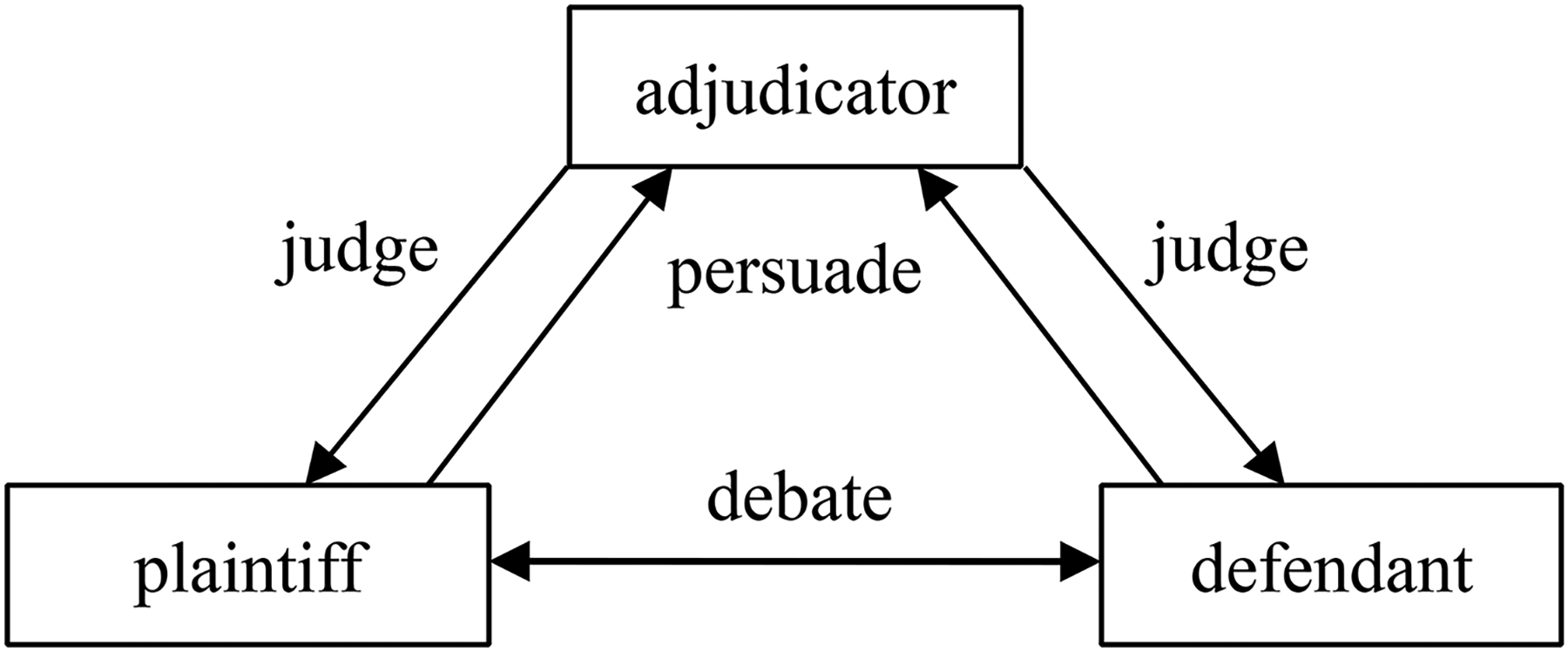
Triangular structure of judicial proof.
However, assessing whether the plaintiff and defendant have met their respective burdens of proof requires the adjudicator's verification and evaluation. Hence, redefining the concept of judicial proof necessitates clarifying the dialectical behaviours of the plaintiff and defendant during evidence presentation and cross-examination, as well as specifying the adjudicator's evaluative processes during certification.
To clarify the argumentative nature of judicial proof, three key questions must be explored:
How do the parties involved in judicial proof utilise evidence to formulate arguments that support their claims? This involves examining the types and structural frameworks that support their conclusions. How do these parties refute their opponents’ arguments and organise rebuttals effectively? This includes defending their initial claims by raising objections. Understanding this requires analysing how plaintiffs and defendants challenge each other's arguments and defend their own positions. How does the judiciary evaluate the arguments from both sides to determine which party meets the required standard of proof and fulfills the burden of persuasion? This involves studying the methods applied during the judicial proof process.
Construction of arguments in the evidence presentation phase
In evidence presentation, the tasks of the plaintiff and defendant are to bear the burden of proof and present their positions. These activities are performed during the construction of arguments and serve as key preparations for the next stage of dialectical argumentation. In modern argumentation theory, the focus on how parties construct arguments is a central concern of analytical theory. Specifically, in legal argumentation theory, it is crucial for the rational reconstruction of legal arguments, which is, in turn, foundational for reconstructing the facts of a case. Feteris proposes that the legal argumentation theory should propose a model for the rational reconstruction of legal argumentation (Feteris, 1999: 203); this reconstruction should explore how legal argumentation can be rationally reconstructed using theoretical models (e.g., how to reconstruct them effectively). Addressing this issue requires attention to the following two aspects. First, what are the basic components of argumentation? Second, what are the types or structures of arguments formed by these basic components, and what are their characteristics?
The components of arguments in judicial proof
An argument typically comprises three components: a conclusion, a set of premises, and an inference rule (which connects the premises to the conclusion). In judicial proof, the premises can include commonly accepted facts, natural laws and presumptive facts that do not require evidence but primarily consist of actual evidence. Such arguments, which use evidence as their premises, are known as evidential arguments.
Evidence is categorised based on its objective existence and form of presentation into tangible evidence and testimonial evidence. Considering the inherent limitations of human cognition, evidence is often subject to revision; therefore, the evaluation of evidence should focus not only on its validity but also on its acceptability. From an epistemological perspective, evidence acceptability is largely determined by its credibility. Essentially, the more credible the evidence, the higher its acceptability.
An inference rule establishes the relationship where one or more premises lead to a conclusion. These rules are generally divided into two: strict inference rules (which are typical in mathematical or logical reasoning) and defeasible inference rules (which are more common in natural reasoning). In judicial proof, inference rules are also defeasible, representing a binary relationship between a set of evidence and the fact to be proven.
In a legal context, defeasible inference rules are often derived from generalisations based on experience. Generalisations can then be classified along three axes: generality, reliability and source. The endpoints of the generality axis range from abstract generalisations to those specific to a precise case or context. On the reliability axis, generalisations include: (1) scientific laws and well-founded scientific opinions (e.g., the conclusion from forensic DNA reports); (2) widely shared common-sense conclusions (e.g., the belief that everyone must stop at a red light); (3) commonly held but unproven or unprovable beliefs (e.g., the idea that fleeing a crime scene indicates a guilty conscience); (4) strongly held prejudices (e.g., the belief that white jurors cannot fairly judge black defendants); and (5) less strongly held but still operative beliefs (e.g., the notion that a criminal's actions usually conform to their motives). The source axis ranges from generalisations based on repeated personal experience to those based on acquired knowledge, including synthetic or intuitive generalisations where the source cannot be identified (Anderson et al., 2005: 102).
For instance, a commonly accepted generalisation is that individuals who commit violent crimes typically flee the scene. From this, a defeasible inference rule can be formulated: ‘If a person flees a crime scene, then they are likely the perpetrator.’ However, these rules can be somewhat arbitrary, resulting in a weak link between premises and the conclusion, and often leading to the conclusion that does not always reflect objective reality.
To address this issue, argumentation theory introduces the concept of argument schemes, which can be transformed into corresponding defeasible inference rules. These schemes capture the typical patterns of argumentation found in everyday discourse. In legal argumentation, specific schemes are used to construct typical legal arguments. Walton identifies 26 common argument schemes, several of which are pertinent to judicial proof. These include arguments from position to know, expert opinion, witness testimony and ad hominem attacks. For example, the argument from the analogy has the following general form (Walton, 1996: 77):
Major Premise : Generally, case C1 is similar to case C2.
Minor Premise: Proposition A is true in case C1.
Conclusion: Proposition A is true in case C2.
This type of argument scheme, commonly employed in case-based reasoning, is particularly applicable to judicial proof within common law jurisdictions; it involves comparing the similarities between two cases. If the new case is highly similar to the old one, the judgment from the earlier case should apply to the new one. Prakken highlights that the core function of argument schemes lies in their defeasible inference rules. He suggests adapting the argument schemes into defeasible inference rules within legal argumentation by incorporating conditional clauses (Prakken, 2010b: 167). For instance, an argument from the analogy can be reconstructed as a defeasible inference rule: If case A1 is similar to case A2, and proposition C is true in case A1, then, usually, proposition C is true in case A2.
In argumentation, the conclusion generally refers to the object of proof, which, in judicial proof, is the litigation claim. For example, in criminal judicial proof, the object of proof includes the elements of the crime and facts related to the sentencing circumstances. An ultimate litigation claim comprises several subclaims, each of which may be supported by multiple intermediate claims; it represents the factual assertion that the plaintiff and defendant must establish or refute. In the judgment phase, it often serves as the minor premise in judicial syllogism. Subclaims constitute the components of the ultimate claim. Conversely, intermediate claims are the conclusions needed to prove the subclaims; they form part of the inferential chain of propositions supporting the subclaims.
For instance, in common law jurisdictions, proving the claim that a defendant committed murder requires establishing several subclaims. These may include the victim's death, the victim's death due to unlawful action, the defendant's causation of the victim's death, and the defendant's premeditation. In the Chinese legal system, this corresponds to proving the elements of the crime, often referred to as the ‘seven elements’. These elements include what happened (i.e., the nature of the crime), when the crime was committed, where it occurred, what was used (i.e., the tools or instruments), how the crime was carried out (i.e., the method and characteristics), why it was committed (i.e., the motive and purpose), and who the specific perpetrator was. Therefore, to establish the ultimate factual claim, all these factual elements must be proven, with each subclaim forming part of the overall judicial proof process.
The structure of argument in judicial proof
After defining the basic elements of an argument, the plaintiff and defendant must know how to effectively organise their evidence to support their claims and make their arguments as compelling as possible. This organisation of evidence and arguments is known in modern argumentation theory as the argument structure. In evidence theory, this is referred to as evidence structure, and there are six common types: conjunction, catenate, compound, convergence, corroboration and integration.
Anderson and Schum highlight the importance of understanding these structures for two main reasons First, they are central to questions on how specific arguments, or the arguments in a case-as-a-whole, should be evaluated in reaching a judgment. These are questions that Wigmore did not address in any detail. Second, the structures have considerable practical importance for the lawyer who must analyze evidence to identify and appraise the arguments that can be made in any case (Anderson et al., 2005: 103).
Informal logicians have significantly contributed to the classification of argument structures, an effort that can be traced back to the classic classifications by Beardsley (Beardsley, 1950) and Thomas (Thomas, 1986). North American informal logicians have continued and refined this classification method. Walton categorised argument types into six types: single, convergent, linked, serial, divergent and complex arguments. Freeman has also written extensively on argument structures; he believes that argument structures encompass not only the ‘premise–conclusion’ microstructures of traditional formal logic but also the macrostructures that describe how propositions are integrated to support the conclusion (Freeman, 2011).
We employ a widely recognised classification method for argument structures (Walton, 2006: 139–149), which can be summarised as follows:
Single: one piece of evidence supports a conclusion. Convergent: multiple pieces of evidence independently support a conclusion. Linked: multiple pieces of evidence jointly support a conclusion. Serial: evidence leads to a conclusion through a series of inferential steps. Divergent: one piece of evidence supports multiple conclusions. Complex: combinations of the above structures.
A simple inference graph can be used to illustrate the different types of argument structures. An inference graph is a labelled directed finite graph, denoted as I = (P, S), where P is a set of propositions and S is a set of supporting links. These supporting links represent the relationships between propositions and are depicted as ordered pairs, such as (p, q)∈S. This means that proposition p supports proposition q. In the graphical representation, these supporting links are shown using standard arrows. Figure 2 shows the simplified diagrams for the first five types of argument structures.
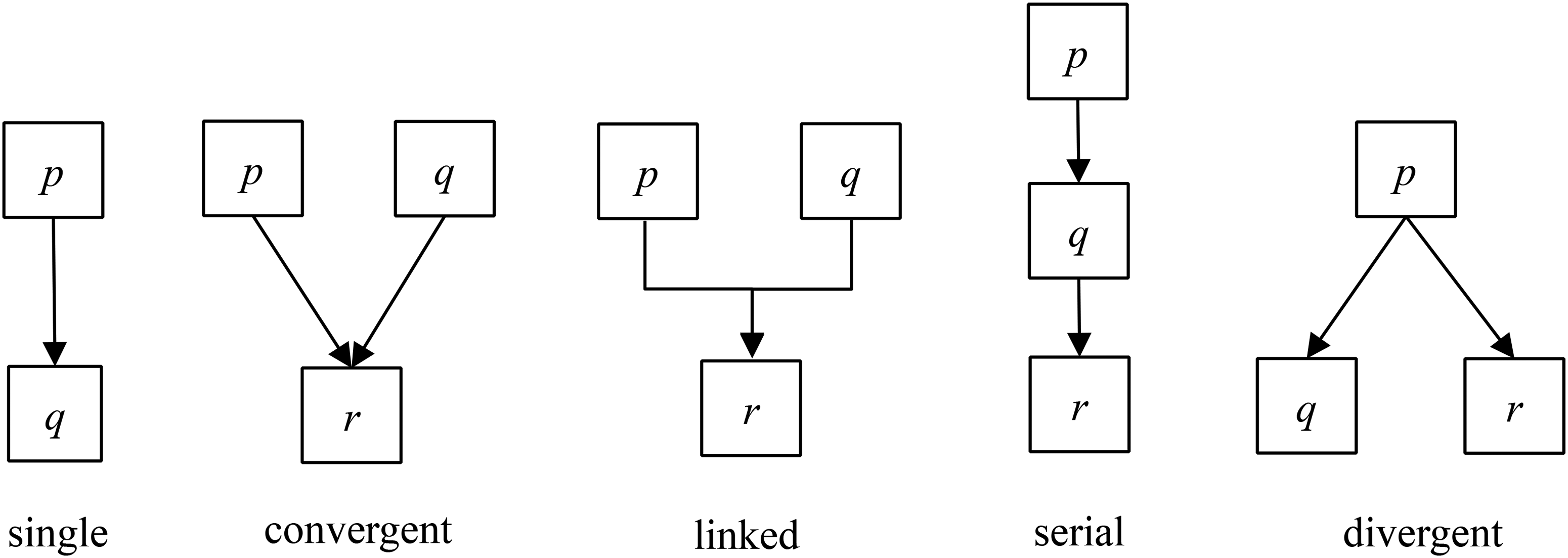
Argument structure.
These argument structures are equivalent to the six types identified in evidence theory. For example, ‘conjunction’ in a legal context refers to a situation where, in a case, a party must establish multiple elements or facts to succeed. This means that all specified conditions or components must be proven true for the prosecution (or plaintiff in civil cases) to meet their burden of proof (Anderson et al., 2005: 103).
For example, to prove the facts of a case where a defendant is accused of murdering a victim (T) in a murder case, establishing the secondary facts is necessary to do first, and these include the following:
P: The victim is deceased.
Q: The death was caused by an unlawful act (actus reus).
R: The defendant committed the actus reus.
S: The defendant acted with criminal intent.
The case exemplifies a linked argument, wherein the evidence must collectively support the conclusion, and the absence of any one piece of evidence would prevent the conclusion from being reached. Figure 3 represents the argument diagram.
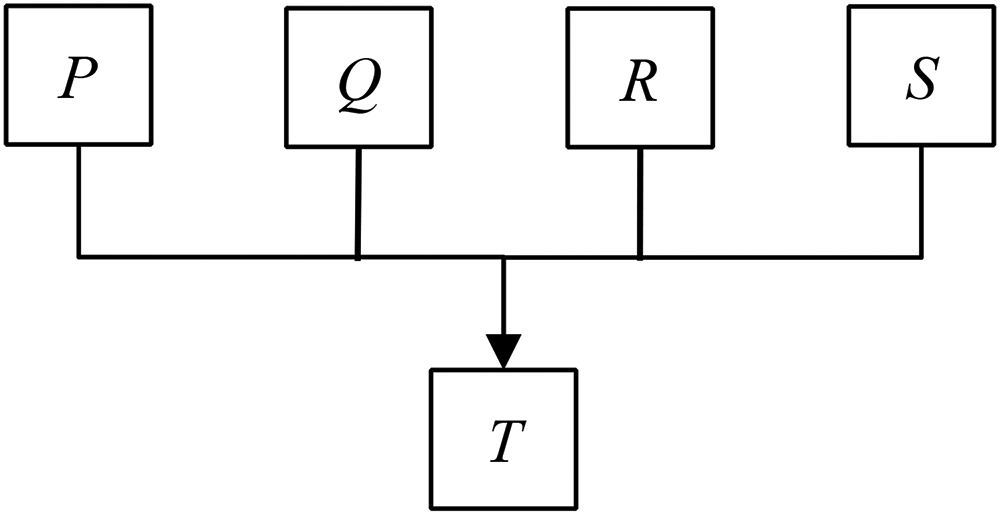
An example of conjunction propositions.
Argument interaction in the cross-examination phase
The dialectical nature of judicial proof becomes evident through the interplay of attacks and defences of arguments. During cross-examination, the plaintiff and defendant begin to debate, and the dialectical nature of judicial proof is manifested in the interaction of the arguments between the two sides; this phase encompasses both the competition and defence of the arguments. As the arguments presented by both the plaintiff and defendant are always defeasible, the defendant should adopt appropriate strategies to challenge the plaintiff's arguments to refute them. Conversely, the plaintiff must defend their arguments by questioning the defendant's counterarguments. Therefore, the cross-examination phase involves a dynamic interplay of argumentation. In cross-examination, each side aims to undermine the other's arguments while defending their own, highlighting the dialectical nature of judicial proof.
In argumentation theory, many informal logicians have defined the attacking relationships between arguments. For instance, Govier identifies several types of objections that can be made against a given argument (Govier, 1999: 229):
Objections against the conclusion. Objections against the argument in support of that conclusion. Objections against the arguer. Objections against the position of the arguer (i.e., qualifications, personal characteristics and circumstances). Objections against the way the argument and conclusion are expressed.
Comparatively, formal logicians argue that the attacking relationship between arguments should focus on negating the fundamental components of the argument, which includes attacking the premises, conclusion and defeasible inference rules (Prakken, 2010a). Defeasible arguments can be attacked in three primary ways: by attacking the conclusion (rebutter), by attacking a defeasible inference (undercutter) or by attacking a premise (underminer).
Considering Govier's definitions, the first type corresponds to rebuttal attacks. The second type essentially corresponds to undermining attacks, and it involves questioning the premises supporting the conclusion. The fifth type still involves attacking the premises or the conclusion itself, and it involves objections to the expression of the argument or conclusion. The other types can be translated into questioning the defeasible inference rule.
Attacking the premises
In judicial proof, attacking the premises often involves directly challenging the evidence. If a piece of evidence is discredited, the conclusion based on that evidence will not be accepted. Attacks on evidence typically question its credibility. For physical evidence, this can be approached from three aspects (Anderson et al., 2005: 64–65): authenticity (i.e., whether the evidence is admissible), accuracy (i.e., whether the evidence accurately conveys the intended information) and reliability (i.e., whether the evidence can be consistently reproduced).
In the OJ Simpson case, one piece of evidence used by the prosecution was the hair and clothing fibres found at the crime scene. The defence argued that the police contaminated the crime scene by covering the body with a blanket from Brown's house, making the hair and fibre evidence highly questionable; this argument essentially attacked the evidence's authenticity.
For testimonial evidence, such as witness testimony or expert opinions, credibility can be questioned by examining two factors: the basis of the testimony (i.e., how the witness acquired the information they are testifying about) and the credibility of the testimony itself (which depends on the witness's honesty, objectivity and observational skills).
In the OJ Simpson case, the defence questioned the credibility of Detective Fuhrman's testimony because of allegations of racial bias, attacking his honesty and objectivity to undermine his testimony.
Attacking the defeasible inference rule
Sidgwick proposes that inferences between facts depend upon our belief in the general rules of connection between facts, generalisations about the way things happen in nature, and the work of criticising inferences resolves itself into that of criticising generalisations (Sidgwick, 1884: 9).
Attacking defeasible inference rules is more complex than attacking premises or the conclusion. On the one hand, as defeasible inference rules often stem from empirical generalisations, attacking these rules can be translated into attacking the generalisations on which they rely. Prakken suggests several ways to attack generalisations: challenging the validity of the source of the generalisation, attacking the defeasible derivation from the source, questioning the application of the generalisation to a given scenario and attacking the generalisation itself (Prakken, 2004: 40).
Conversely, argumentation theory suggests that as defeasible inference rules in arguments can be reconstructed from argument schemes, the methods used to critique these schemes can also be applied to attack defeasible inference rules. Essentially, attacking defeasible inference rules can be translated into attacking the argument schemes on which they are based. As per modern argumentation theory, questioning argument schemes involves posing critical questions. Walton developed critical questions for 26 argument schemes, which function as attacks on the argument schemes. For example, for the argument from the analogy scheme, critical questions include the following: Are cases A1 and A2 similar? Is proposition C true in case A1? Is there another case A3 similar to A1 where proposition C is false? (Walton, 2002: 327). If the defending party cannot respond to these questions, the defeasible inference rule they propose will not be accepted.
In criminal cases, the cross-examination process in judicial proof involves both the general characteristics of natural argumentation and specific legal features. The adjudicator—a neutral third party—plays a crucial role in coordinating the proceedings to ensure that the cross-examination is organised and fair.
Attacking the conclusion
Attacking a conclusion in judicial proof often involves directly refuting the litigation claim by constructing a counterargument rather than directly attacking the premises or defeasible inference rules of the opposing argument. This means creating a new argument with a conclusion negating the conclusion of the opposing argument. For instance, if the prosecution presents argument A to support claim p, and the defence presents argument B to support claim p, then the defence is effectively attacking argument A with argument B.
In the OJ Simpson case, the prosecution argued that a glove found at the crime scene belonged to Simpson using evidence that a blood-stained glove was found at Simpson's home. The DNA tests showed the blood was Simpson's. The defence countered by demonstrating, in court, that Simpson could not fit his hand into the glove found at the crime scene. Both the prosecution and defence constructed arguments attacking each other's conclusion, and these arguments were defeasible.
This method of attacking the conclusion is more prevalent in civil litigation, wherein both the plaintiff and defendant often need to construct arguments with directly opposing the conclusion. The judge evaluates the arguments from both sides and decides the side with the stronger case based on the preponderance of evidence. However, in criminal litigation, the standard of proof beyond a reasonable doubt does not require the defence to present an argument that completely opposes the prosecution's claim. Instead, the defence only needs to attack the premises or inference rules of the prosecution's argument to introduce reasonable doubt.
In summary, the three types of attacking relationships can be illustrated (Figure 4). Suppose the proponent's argument has a premise P, a conclusion Q and a defeasible inference rule P⇒Q. The opponent's counterarguments can then take three forms: negating the premise (P), negating the defeasible inference rule (n(P⇒Q)) and directly negating the conclusion (Q).
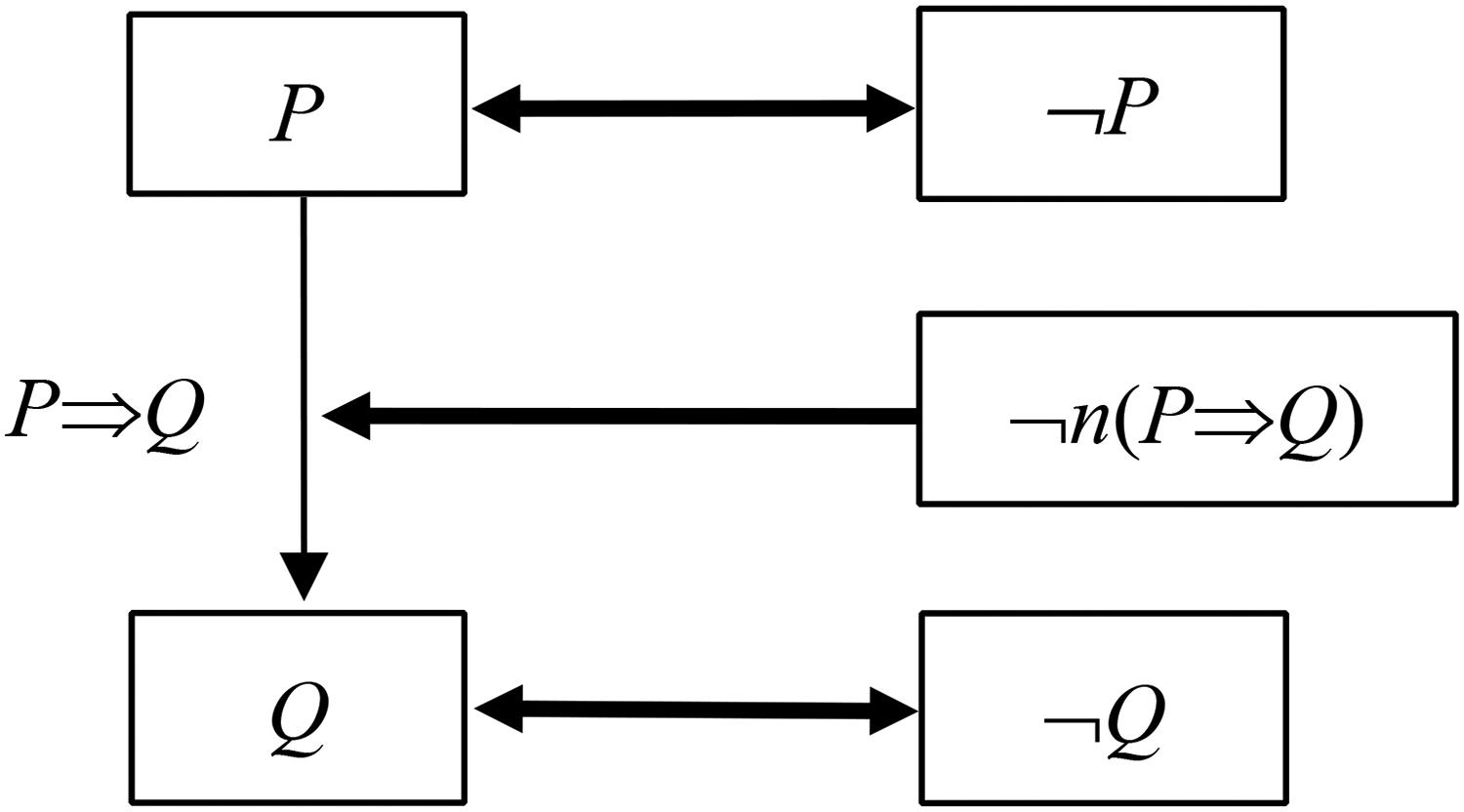
Attacking relationship.
Argument evaluation in the closing arguments phase
In judicial proof, the certification phase involves the continuous evaluation of the evidence presentation and cross-examination processes. The adjudicator is then tasked with assessing the arguments and actions of both the plaintiff and defendant throughout the judicial proof process. Therefore, certification should not be observed as a separate phase following evidence presentation and cross-examination but as an integral part of the entire judicial process.
During the evidence presentation phase, the adjudicator evaluates the arguments presented by both parties to support their claims; this is known as the evaluation of primary arguments. In the cross-examination phase, the adjudicator assesses the credibility of arguments after they have been attacked and defended; this is referred to as the evaluation of rebuttals. The evaluation of primary arguments determines whether the burden of proof has been met. Conversely, the evaluation of rebuttals ultimately determines whether the burden of persuasion has been satisfied.
Argumentation theory, which aims to construct frameworks for argument evaluation, can be divided into two approaches: formal and informal. Both approaches can be applied to characterise the evaluation of arguments in the certification phase, but each has its own focus. Formal argumentation theory emphasises the external evaluation of arguments; this includes the ability to calculate the justification status of arguments within complex networks of attacks. In contrast, informal logic focuses on procedural methods to evaluate the acceptability of premises, the relevance and sufficiency of the relationship between premises and the conclusion, and the acceptability of the conclusion itself.
Formal argumentation theory differs from traditional formal logic in that validity is no longer the sole criterion for evaluating an argument's quality. Instead, the criterion of acceptability has become more prominent (Dung, 1995). The current mainstream argumentation theories often represent an argument's acceptability through its justification status. However, the credibility of legal arguments cannot be uniformly assessed by a set of justification statuses, as this often reflects uncertain credibility. Therefore, formal argumentation theory is not entirely applicable in this context.
Rethinking the Bayesian methods
Probabilistic reasoning methods based on Bayesian semantics have been influential. In recent years, Western logicians have been keen to apply the latest probability and statistical tools to studying legal science. For example, Fenton published a paper titled ‘Improve statistics in court’, where he argued that ‘Experts must agree a set of acceptable ways to assess and present forensic evidence’ (Fenton, 2011: 36–37).
Nevertheless, methods based on probability and mathematical statistics still face criticism. First, these methods require a high level of mathematical knowledge. These make the methods difficult to master for the judicial process and unsuitable for widespread adoption. Second, the probabilistic reasoning methods based on the Bayesian theory have inherent issues (e.g., the challenge of assessing prior probabilities in subjective probability).
Specifically, during court investigation, the adjudicator needs to evaluate the evidence presented by the plaintiff and the counterevidence presented by the defendant. During court debate, the adjudicator must assess both the primary arguments of the plaintiff and defendant. Moreover, the adjudicator must analyse the credibility of these arguments after they have been challenged and defended; this involves evaluating rebuttals. Evaluating primary arguments is essential to determine whether the burden of proof has been met. Conversely, evaluating rebuttals is crucial to ultimately determine whether the burden of persuasion has been satisfied. Evaluating judicial proof always boils down to evaluating the propositions that constitute the objects of proof (i.e., the claims to be proven), which necessitates evaluating the arguments that support these propositions.
Judgments about evidence or the conclusion are expressed not with absolute certainty but as probabilistic expressions of uncertainty. Anderson et al. argue that the conclusion based on evidence are inherently probabilistic because (1) evidence is always incomplete; (2) evidence is generally inconclusive; (3) evidence is often ambiguous; (4) evidence bodies are often dissonant (with different pieces of evidence supporting different propositions); and (5) evidence comes from sources with varying levels of imperfect credibility (Anderson et al., 2005: 246).
Investigating evidence reasoning and judicial proof through the probability theory perspective is a well-established approach. Subjective probability theory, based on Bayes’ theorem, has been thoroughly examined (Ekelöf, 1964).
Bayes’ theorem can be mathematically expressed as follows:

Subjective probability theory relies heavily on personal judgment to establish prior probabilities, unlike objective probability theory wherein prior probabilities can be derived from historical data analysis. Despite its analytical utility, probabilistic reasoning alone does not capture the intrinsic nature of judicial proof. This often encompasses a broader array of cognitive and inferential processes beyond mere numerical calculations.
Bayesian probability theory faces significant limitations when applied to adversarial legal proceedings, as it struggles to capture the dynamic, interactive and dialectical nature of judicial proof. In adversarial settings, plaintiffs and defendants engage in an ongoing process of presenting arguments, countering opposing claims and introducing rebuttals. This iterative exchange evolves over time and cannot be effectively represented by the static mathematical framework of Bayesian reasoning, which relies on predetermined probabilities and fixed conditional relationships. A critical weakness of Bayesian methods is their inability to account for the impact of rebuttals and counterarguments on the strength of claims. In adversarial processes, arguments are constantly tested, revised and challenged, but the rigidity of Bayesian calculations often fails to reflect the fluid and contestable nature of legal reasoning.
Allen argues that judicial proof utilises a variety of cognitive tools, including probability theories, to support plausible reasoning; however, he stresses that this process cannot be entirely captured by numerical values or mathematical formulas (Allen, 2017: 133). Instead, the reasoning involved in judicial proof is more complex and nuanced, relying on a broader range of cognitive strategies beyond just quantitative measures. Essentially, the nature of judicial proof is explanatory as opposed to probabilistic. This approach is known as ‘inference to the best explanation’. Judicial proof involves a two-stage inferential process. The first stage involves generating various potential explanations. The second stage involves selecting one of these potential explanations based on their explanatory power. In a trial, both parties, including the prosecution, present competing narratives; these narratives, if accepted as true, provide a coherent explanation for the evidence presented (Allen, 2014: 2016). This method emphasises the importance of selecting the most plausible explanation rather than relying solely on probabilistic calculations. Moreover, the method highlights the key aspects of judicial proof and its reliance on explanatory reasoning, which can be useful in constructing legal arguments.
In contrast, Allen's theory provides a more suitable framework for adversarial judicial proof because it emphasises ‘inference to the best explanation’. This approach aligns closely with the essence of the adversarial process: adjudicators must evaluate competing narratives presented by both sides rather than merely reducing evidence to numerical probabilities. Allen highlights that judges or adjudicators assess the credibility of evidence based on the reasonableness of the arguments and the coherence of explanations they provide. In adversarial proceedings, plaintiffs construct a coherent explanation supported by evidence, while defendants respond by challenging its reasonableness, proposing alternative explanations and undermining the opposing arguments. Throughout this process, adjudicators must critically evaluate these competing narratives, considering both their explanatory power and their ability to withstand rebuttals. This dynamic, interactive evaluation reflects the true nature of adversarial proceedings, making Allen's theory a far more appropriate framework for judicial proof.
Issues with the subjective probability theory in judicial proof
Subjective probability theory is widely regarded as well-suited for evidential reasoning in legal contexts because it addresses the unique and non-repeatable nature of legal cases, where events cannot be treated as part of a repeatable sequence (Dawid, 1991). Unlike objective probability, subjective probability is shaped by an individual's uncertainty and background information, allowing for reasonable variations in probability assessments among judges, jurors or lawyers. However, subjective probability theory faces a range of challenges.
In subjective probability theory, when combining multiple independent pieces of evidence to support a conclusion, the multiplication rule often leads to counterintuitive results. Although each piece of evidence may have a high probability of being true, their combined support for the conclusion can decrease. This occurs because the multiplication rule multiplies the probabilities of independent events, which, when each is less than 1, reduces the overall probability. For example, in a criminal case where three independent pieces of evidence each have a high probability (e.g., 0.95, 0.98, and 0.9), the overall probability that all evidence supports the defendant’s guilt is only about 0.84. This result is surprising because one might expect the combined evidence to strengthen the conclusion, but instead, the overall support diminishes. This illustrates a limitation of applying the multiplication rule in contexts like legal reasoning, where evidence may not be entirely independent and alternative methods may be needed to accurately assess the strength of the case.
Subjective probability theory cannot handle the impact of counterevidence or counterarguments on the probability of the target argument. Pollock highlights two issues in the study of defeasible reasoning. First, some arguments are better than others, providing stronger support for their conclusions. Conclusions supported by better arguments should be highly justified, and we believe that they are more credible. Furthermore, when we have competing (conflicting) arguments for conclusions, the strength of the argument is related to determining which conclusion is accepted (not defeated). Everyone accepts these facts, but most semantics ignore them, and if we make these semantics (existing argumentation semantics) accept variable values of justification, they will be flawed. If formal semantics are used to analyse the actual application of arguments, these semantics must be revised (Pollock, 2007: 43). Pollock's statement shows that when two conflicting arguments exist, and one argument is superior to the other, the superior argument should have higher acceptability. Second, the strength of an argument is influenced by its counterarguments. If an argument can withstand competition from its counterarguments, it is acceptable. The subjective probability theory cannot handle the impact of counterarguments on the target argument. For example, if a proposition's prior probability is p and the probability of evidence attacking the argument supporting that proposition is s, intuitively, p should be weakened by s, but subjective probability theory cannot handle the impact of attacking arguments on the target proposition. In judicial proof, the adjudicator often must determine how one piece of evidence affects other arguments, which subjective probability theory cannot adequately address.
In legal reasoning, when applying probability theory to analyze a case, the framework is not strictly confined to the additivity principle (which states that the sum of probabilities of mutually exclusive events must equal 1). For example, the propositions “the defendant is guilty (A)” and “the defendant is not guilty (¬A)” are logically contradictory, and in classical probability theory, they must satisfy P(A)+P(¬A) = 1. However, in legal practice, “credibility” is a subjective assessment based on the strength of the evidence, which can sometimes exceed or fall short of this limit. Specifically, when there is overlapping or independent evidence supporting both sides, the plaintiff and defendant may present strong, independent evidence (such as physical evidence from the plaintiff and an alibi from the defendant), leading to both propositions having high credibility (e.g., 0.7 and 0.6), causing their probabilities to sum to more than 1. Conversely, if both sides lack sufficient evidence or if there are unresolved possibilities, the credibility of both propositions may be low (e.g., 0.3 and 0.2), resulting in a total sum less than 1. As a result, additivity is not a fundamental feature of legal reasoning, which raises doubts about the direct application of probability theory in this context.
Additionally, Shafer and Dempster's evidence theory—DS theory (Shafer, 1976)—can address this issue as it does not require satisfying the principle of additivity and can calculate changes in credibility among conflicting evidence through combination rules. This aligns more closely with an intuitive understanding of evidence. However, DS theory also has three deficiencies in characterising judicial proof: (1) DS theory requires that evidence supporting a conclusion be independent, which is difficult to satisfy in judicial proof where multiple pieces of evidence often jointly support a fact to be proven. For example, in Chinese criminal judicial proof, the ‘seven elements’ must be satisfied to strongly support a conclusion); (2) Zadeh and others have highlighted that DS theory itself can lead to counterintuitive results (Zadeh, 1984: 81–83); (3) DS theory can lead to computational complexity issues when dealing with complex evidence. This makes it impractical for court proceedings requiring efficiency and cost-effectiveness.
Evaluation of argumentation in judicial proof
In contrast to the formalised approach of Bayesian probability theory, which has its limitations in the context of judicial proof, informal methods offer a more flexible and intuitive framework for argument evaluation that can address the concerns of legal scholars. Although these informal methods may lack the precision of formal methods, they employ procedural evaluations to assess argument quality, making them more comprehensible and easier to apply in practice. Within the realm of informal argumentation theory, several influential models and approaches have been developed. These include Toulmin's model of argument (Toulmin, 1958), Perelman's new rhetoric (Perelman and Olbrechts, 1991), Walton's new dialectic (Walton, 1998) and the pragma-dialectical theory by Eemeren and others (van Eemeren and Grootendorst, 1992). These models have all contributed significantly to the evaluation of arguments and have been successfully applied to legal argumentation.
The early work of informal logic pioneers Ralph H. Johnson and John A. Blair is particularly notable. Their development of the relevance, sufficiency and acceptability (RSA) triad evaluation system is considered an authoritative paradigm in argument evaluation theory, and it remains a central focus of modern argumentation research. In their book Logical Self-Defense, Johnson and Blair introduced the RSA triad evaluation system, which aims to determine what constitutes a good argument. They argue that: ‘A good argument is not necessarily a valid argument; it should be a persuasive argument whose premises provide strong reasons that any rational individual would accept the conclusion, and they would rightly accept it’ (Johnson and Blair, 1994). A good argument should meet the RSA standards:
Relevance: The premises must be relevant to the conclusion. Sufficiency: The premises must provide sufficient support for the conclusion. Acceptability: The premises must be acceptable.
Relevance is crucial in evidence theory. Wigmore noted that the relevance of evidential facts to the facts in question is a logical issue, emphasising the logical coherence–legal relevance connection. If an evidential fact can be used to confirm or refute the facts in question, then it is relevant (Wigmore, 1983). This aligns with the relevance standard in the RSA triangle, which requires that the premises must support a conclusion. Moreover, Johnson offers a straightforward method for determining relevance: if the truth (or falsity) of the premise increases the likelihood of the conclusion being true (or false), then the premise is relevant to the conclusion. He further argues that relevance cannot be arbitrarily determined in arguments and must be supported by other ‘relevant supporting premises’ (Johnson and Blair, 1994: 68–69). In complex cases, single pieces of evidence often cannot independently support a conclusion and must be combined with other ‘relevant evidence’ to determine relevance to the facts in question. Additionally, relevance is considered the primary bridge between fact analysis/proof principles and legal norms, and it is a key exclusion mechanism. If evidence is deemed irrelevant to the facts in question, it should be excluded.
The sufficiency standard requires that the premises adequately support for the conclusion. Johnson views sufficiency as a matter of degree: the premises, to varying extents, must justify the conclusion, even if evidence is not necessarily complete (Johnson, 2000: 204–205). Premises must meet two conditions to sufficiently support a conclusion: the evidence type must be adequate and the quantity of evidence must be sufficient. This sufficiency is a ‘local sufficiency’ that ignores the dialectical nature; however, in dialectical argumentation, the proponent must respond appropriately to the opponent's objections to defend their argument, a concept Johnson calls ‘dialectical sufficiency’ (Johnson and Blair, 2002: 371). In judicial proof, the adjudicator must evaluate whether the evidence set by both parties sufficiently supports the facts in question, assessing both the type and quantity of evidence. For instance, in criminal judicial proof, witness testimony itself needs to be supplemented by tangible evidence to form a conclusion. The absence of key evidence also prevents a conclusion. Sufficiency standards vary in different legal contexts, (e.g., ‘beyond reasonable doubt’ in criminal cases and ‘preponderance of the evidence’ in civil cases).
The acceptability standard requires that premises must be acceptable. In judicial proof, as most evidence cannot be true, the truth standard is not applicable for evaluating evidence. This necessitates the use of the acceptability standard. The acceptability of premises involves two aspects. First, if there is a counterargument challenging the premise and a defence argument exists, then it meets the acceptability standard. Second, in the absence of objections, a premise can be acceptable even without a defence argument. Hence, the party bearing the burden of proof must always explain and defend any nonaccepted evidence, making the evaluation of the premises’ acceptability a dynamic process. Additionally, the acceptability standard pertains to the audience, meaning that acceptable premises are those considered rationally acceptable to the audience. Perelman notes that the audience is the totality of those whom the speaker wishes to influence by their argument (Perelman and Olbrechts-Tyteca, 1991: 19). In judicial proof, both parties need to persuade the adjudicator to accept their claims, including the presented evidence, making the adjudicator the audience. Likewise, the adjudicator's arguments (e.g., those in judgments) must gain acceptance from the audience, which Perelman identifies as the disputing parties (plaintiff and defendant), legal professionals and public opinion. In judicial practice, the adjudicator's reasoning in judgments aims to persuade these potential audiences, embodying the intersection of legal argumentation and rhetoric in legal documents.
Conclusion
From the perspective of the adversarial process, this paper reinterprets judicial proof as a form of dialectical argumentation that is fundamentally shaped by the competitive and dialogical nature of legal proceedings. Within this framework, the plaintiff and defendant engage in a structured exchange of arguments and counterarguments, with the adjudicator critically evaluating the strength and coherence of the competing narratives. This adversarial interaction ensures that the most plausible explanation is tested and refined through challenge, defence and evaluation, ultimately contributing to the rational resolution of disputes. This study reinforces the insights of minimal rationality, which stress that fact-finding derives its rationality not from rigid evidentiary rules alone but from the interactive and competitive nature of adversarial proceedings. The dialectical structure inherent in the adversarial process ensures that evidence is critically examined, arguments are scrutinised and counterarguments are addressed, creating a dynamic mechanism for establishing facts and achieving fairness.
The rise and development of modern argumentation theory have facilitated the exploration of the rational foundations of judicial proof. Many informal argumentation schools have chosen legal argumentation as their application domain. This has resulted in extended legal argumentation theories that offer natural academic support for the logical study of judicial proof. Within this perspective, judicial proof is endowed with rational connotations beyond its legal characteristics. The dialectical nature embodies a new attribute that prompts a reassessment of the concept and its associated theories. The functions of judicial proof now encompass not only justification but also refutation, evaluation and persuasion. Justification involves the plaintiff and defendant successfully proving the facts they assert. Refutation involves the plaintiff and defendant successfully refuting their opponent's arguments, invalidating their opponent's asserted facts. Evaluation requires the adjudicator to assess the arguments of both the plaintiff and defendant to determine whether they meet the standards of proof and fulfill the burden of proof. Persuasion, built upon evaluation, aims to convince the adjudicator of the validity of the justified claims or refutations.
The rational interpretation based on argumentation theory revolves around three fundamental issues in judicial proof: constructing arguments, organising counterarguments and evaluating arguments. First, it examines how the plaintiff and defendant use evidence to construct arguments supporting their claims. Second, it explores how the plaintiff and defendant raise objections to the opponent's arguments to effectively defend their initial claims, organising counterarguments. Third, it considers how the adjudicator evaluates the arguments from both sides to determine whether they meet the appropriate standards of proof and fulfill the burden of persuasion. These questions help clarify the roles of the prosecution, defence and adjudicator in the proof process. In the evidence presentation phase, the plaintiff and defendant present evidence to the court, organising sets of premises, inference rules and the conclusion to construct appropriate arguments. During the cross-examination, under the adjudicator's supervision, the plaintiff and defendant challenge each other's arguments through cross-examination. In this phase, they question the premises (evidence) and defeasible inference rules or propose a contrary conclusion. In the certification phase, the adjudicator evaluates the arguments presented during evidence presentation and cross-examination, assessing their relevance, sufficiency and acceptability and evaluating the relationships between supporting, attacking and defending arguments. This comprehensive approach rooted in modern argumentation theory redefines judicial proof, highlighting its rational and dialectical attributes.
Footnotes
Declaration of conflicting interests
The author declared no potential conflicts of interest with respect to the research, authorship, and/or publication of this article.
Funding
The author(s) disclosed receipt of the following financial support for the research, authorship, and/or publication of this article: This work was supported by the National Social Science Fund of China, (grant number 24&ZD133) and by the Fundamental Research Funds for the Central Universities.
