







Abstract
Aims and objectives:
The objective of this scoping review is to provide an overview by analysing studies conducted on heritage language, specifically Turkish, in which participants speaking Turkish as a heritage language were recruited.
Methodology:
In this study, a quantitative descriptive scoping review was used. To this end, relevant studies were systematically reviewed and summarized, and trends and gaps in the literature on Turkish as a heritage language were identified.
Data and analysis:
The scoping review involved a total of 93 studies: 77 research articles, six book chapters, seven dissertations, and three MA theses accessible in the JSTOR, ERIC, ProQuest, and WOS databases. The studies were reviewed on the basis of (a) the definition of the concepts of ‘heritage language’ and ‘heritage speaker’ of Turkish, (b) the theoretical frameworks used, (c) the type of variables, instruments, and designs, and (d) other substantive features, for example, the location of the research.
Findings/conclusions:
The results show that the focus of definitions of heritage language and heritage speaker was mostly social and that the most common theoretical frameworks used were cognitive, social, and human learning, respectively. In addition, cognitive variables, interviews, and cross-sectional designs were other most common features in the selected studies.
Originality:
These findings provide insights for future research in terms of gaps identified and research trends in Turkish as a heritage language.
Significance/implications:
As a result of the increasing Turkish immigrant population in Europe and other countries, the use of Turkish in the heritage context has attracted researchers’ interest for several years. However, Turkish as a heritage language has not been closely examined in terms of synthesizing previous research. It is hoped that the findings of this review will shed light on practice and policy related to the Turkish community in the immigrant context.
Introduction
Migration is a significant phenomenon in which people move across an (inter)national border in search of better life standards because of economic, security, or various environmental factors. After the Second World War, Western Europe witnessed massive labour migration flows which resulted in the permanent settlement of guest workers with their families. Many different languages started to be spoken as heritage languages in this context. This study focuses on one of those heritage languages, Turkish, and its scope in the related academic literature. To this end, studies on Turkish as a heritage language were reviewed, trends and gaps in the literature were identified, and suggestions for further studies were made.
Background
Heritage language acquisition studies
A heritage language can be defined as a language primarily used within the family domain, while a dominant language is used in non-familial contexts, such as those of indigenous, colonial, or immigrant communities. Although widely varying definitions of heritage language and heritage speakers have emerged over the years, it is difficult to define the issue precisely. Valdés’s (2001) definition, based on two different contexts, is the one that appears to have some agreement. First, in the social context, these speakers are those ‘having a historical or personal connection to a language, such as an endangered, indigenous, or immigrant language that is not normally taught in school’ (Valdés, 2001, p. 37). On the contrary, another definition that is mostly agreed upon was offered by Montrul (2011), who defined heritage languages as ethnic minority languages and further divided it into two types (p. 156). Montrul’s (2011) first type refers to the speakers who are the indigenous people of the region, while in the second type, it describes people who are living in the context where the language of the majority is spoken and speakers who have moved to another country where the language of the host country is spoken as the majority language. In these contexts, according to Ortega (2019, p. 40), heritage language studies have been instrumental in our understanding of ‘language contact, critical education research, sociolinguistics, and migration studies’.
Turkish labour migration
It is important to bear in mind the history of migration from Türkiye to Europe and elsewhere before dealing with Turkish as a heritage language. The popular destinations for Turkish migrants were Austria, Belgium, Germany, France, the Netherlands, Sweden, and Switzerland in the 1950s and 1960s (Soysal, 2008). Among these, Germany stands out as the most popular destination for labour migration. Following Germany’s announcement of the demand for labour, a bilateral Turkish-West German labour recruitment agreement was signed in 1961 (İçduygu, 2012). According to the guest-worker scheme, the migrants would be able to stay in Germany provided there were jobs available for them. In 1967, when the German economy went into recession, a small wave of migrants returned to Türkiye (Hansen, 2003), but in the following years, it can be seen that return migration was not an option for most of the migrants despite the slowing economy.
A labour recruitment agreement with France came into force in 1969 (De Lary, 2004). The economic recession in France caused a massive increase in guest workers and led to the introduction of a programme which included financial support to be given to migrants to return to Türkiye (Seccombe & Lawless, 1986). However, the programme failed to encourage guest workers to return and was abandoned in the following years. In Belgium, labour migration started in the early 1960s, and similar to the schemes in other West European countries, guest workers’ stay was temporary. According to Reniers (1999), one of the characteristics of this context was that the recruitment involved only men, which meant that they could not be accompanied by their wives and children. However, in the following years, the recruitment scheme was updated, and family reunification and permanent settlement were included in migration policies (Reniers, 1999).
In the Netherlands, Turkish guest workers arrived in the early 1960s, but the recruitment of guest workers to the Netherlands came to a halt in 1978 as a result of the oil crisis (Van Meeteren et al., 2013). In the following years, the number of Turkish immigrant workers increased mostly as a result of family unification, which was supported formally. An official agreement between Türkiye and Sweden was signed in 1967 and formal labour migration continued until 1973, when restrictions were imposed by the Swedish labour unions (Başer & Levin, 2017).
In the context of US migration waves from Türkiye can be classified into three waves, the ones in the 1950s, the early 1980s, and after the 1980s (Kaya, 2004). Examination of the demographics of the migrants shows that while the second wave comprised mostly professionals who came for educational purposes, the third wave was composed of a diverse group including skilled, unskilled, and undocumented migrants people (Kaya, 2004).
Official Turkish labour migration to Australia occurred between the years 1968 and 1974 when an agreement signed between the Australian and Turkish governments was in force (İçduygu, 1991). When the settlement plans of the migrants are taken into consideration, according to İçduygu (1991), after the abolition of the agreement which slowed the flow of migration, migrants arrived in Australia with the intention of permanent settlement. A note of caution is due here since Australia is an immigration country where policies promote cultural diversity and multiculturalism. Therefore, language orientations and acculturation processes of the heritage speakers can vary when compared to some countries in Europe (Yağmur & van de Vijver, 2012).
Turkish labour migration to the United Kingdom can be categorized into three phases, namely the ones in the 1970s, 1980s, and 1990s which included (Atay, 2010) unskilled migrants, family reunions, asylum seekers, undocumented workers, and highly skilled migrants (Sirkeci et al., 2015), who can be called white-collar workers.
The current situation of Turkish communities
As can be seen from the explanation above, Turkish labour migration started in the early 1960s and led to the formation of Turkish communities who settled mainly in Western Europe, the United Kingdom, the United States, and Australia. Based on Eurostat, Fleck and Richter’s (2023) report showed that more than 1,500,000 Turkish citizens are currently living in Europe. On the contrary, according to the Republic of Türkiye Ministry of Foreign Affairs (2022), around five million Turkish people are in Western Europe. The difference between numbers emerges from the fact that Fleck and Richter’s (2023) figures refer to people with Turkish nationality, while the Republic of Türkiye Ministry of Foreign Affairs’ (2022) numbers refer to the people of Turkish heritage.
When the spread of Turkish immigrants in overseas countries is taken into consideration, it is difficult to provide a precise and up-to-date number. However, according to the US Census Bureau (2021), the number of people reporting Turkish ancestry in the United States was around 230,000. The Australian Bureau of Statistics (2021) released more detailed demographic data on the Turkish community there. According to the census held in 2021, the number of people reported to have been born in Türkiye and to have Turkish ancestry was around 32,000. When people with Turkish ancestry who were born in Australia and overseas are taken into consideration, the number increases to 87,164. Finally, it can be seen that in the United Kingdom, the number of immigrants is smaller than those in the United States but more than those in Australia. According to Clark (2021), around 48,000 Turkish nationals were living in the United Kingdom.
The data must be interpreted with caution because these are the numbers of Turkish passport holders. Dual citizenship can also be included in these numbers. In addition, it can be clearly said that citizenship does not necessarily require being a speaker of the language. There can be Turkish heritage language speakers who are not Turkish citizens or Turkish citizens who are not heritage speakers of Turkish. Moreover, no research has been found that surveyed the number of Turkish heritage language speakers. The above-mentioned data were given to visualize the approximate population.
As can be clearly seen, there is a large Turkish community with Turkish citizenship or ancestry, apart from those who hold the citizenship of the host country or speak Turkish as heritage speakers. The history of Turkish labour migration and the populations living in these countries show that Turkish is one of the languages which is spoken in heritage contexts. As a result, there has been an increasing interest in studying Turkish as a heritage language and Turkish heritage speakers. However, no previous study has investigated Turkish as a heritage language using a scoping review. It is therefore hoped that this current study will contribute to a deeper understanding of Turkish as a heritage language.
Turkish as an L2/heritage language
As a result of the labour migrations described above which started in the early 1960s and the subsequent family reunification acts, there has been a considerable Turkish population abroad, which has increased interest in studies of Turkish as a heritage language. A significant amount of literature has been published on Turkish as a heritage language starting from the 1980s. When the topics covered are taken into consideration, it is seen that various aspects of Turkish as a heritage language have been investigated so far. Turan et al. (2020) said that the earliest studies mostly focused on first- and second-generation heritage speakers. Several studies have begun to examine ‘second language acquisition (of the majority language), language choice patterns, and the structure and functions of codeswitching’ (Backus et al., 2010, p. 481) in the following years. Some of these studies have explored topics such as the code-mixing (Boeschoten & Verhoeven, 1987) and socio-linguistic (e.g., Pfaff, 1981) domains of Turkish as a heritage language. In subsequent years, however, the topics of investigation have varied in terms of scope, methodology, data collection tools, participants, and context.
A large and growing body of literature has investigated heritage languages from different perspectives. These studies include developmental language disorder (e.g., Blom et al., 2022), proverbs (e.g., Peçenek, 2018), Turkish instruction (e.g., Evcen, 2020), returnees (Daller & Treffers-Daller, 2014), gestures (e.g., Azar et al., 2020), literacy (Riehl, 2020), language contact (Onar-Valk & Backus, 2013), and ethnolinguistic vitality (Yağmur, 2009) in Turkish as a heritage language. A variation in the scope of previous studies can also be seen in the methodologies adopted. Both the longitudinal (e.g., Czapka et al., 2021) and cross-sectional (e.g., Ciftci, 2021) study designs can be seen in the related literature. On the same lines but with different methodologies, studies started to adopt recent data collection tools such as online tasks in many of the processing studies (e.g., Eldem, 2021) and electrodermal activity (Sevinç, 2018). In recent years, there has been an increasing interest in returnees as heritage speakers of Turkish (e.g., Antonova-Ünlü & Bayram, 2023). Finally, a variation can be seen in the context of research. In addition to Turkish as a heritage language and speakers living in western European countries, there have been recent studies in the context of Australia, the United States, and the United Kingdom (e.g., Aarssen et al., 2001; Biedinger et al., 2015; Et-bozkurt, 2022).
Bayram (2020) stated that Turkish is an ideal language for studying the heritage context because of its community, which is almost larger than any other immigrant groups, especially in Western Europe. Moreover, owing to the long history of migration, Turkish as a heritage language provides a high level of comparability in terms of language maintenance, as there have been successive generations (Extra & Yağmur, 2010). With regard to formal linguistics, as Bayram (2020) stated, studies of Turkish provide important insights, as it is typologically different from the majority of languages spoken in heritage context. Taking all these issues into consideration, the purpose of the current study is to contribute to this growing area of research by reviewing the scope of the previous studies exploring Turkish as a heritage language.
The current study
This study was designed to synthesize the existing literature and identify common research methodologies on Turkish as a heritage language. It is necessary here to clarify exactly what is meant by a scoping review.
Although there is little consensus about what the term ‘scoping review’ means, there appears to be some agreement that it refers to a research method which enables researchers to explore the relevant literature in a broad way. Arksey and O’Malley (2005) stated that scoping reviews ‘examine the extent, range, and nature of research activity, determine the value in undertaking a full systematic review, summarize and disseminate research findings, or identify gaps in the existing literature’. In contrast to systematic reviews, according to Arksey and O’Malley (2005), scoping reviews have less depth in the analysis, but the conceptual range over which they operate is relatively broader. Moreover, one of the advantages of a scoping review is that it provides more flexibility than other types of review (Peterson et al., 2017). Instead of addressing specific questions, a scoping review starts with more general questions (Moher et al., 2015) and thus provides researchers with an opportunity to identify gaps and connect the different aspects of the relevant research (Tricco et al., 2016).
To date, it seems that a scoping review has not been conducted to explore the existing body of knowledge in Turkish as a heritage language even though there is a growing body of literature. The purpose of this investigation is to explore previous relevant studies and their theoretical frameworks, variables, instruments, designs, and contexts. To this end, the following research questions were posed:
How do studies define the concepts of ‘heritage language’ and ‘heritage speaker’ of Turkish?
What are the theoretical frameworks used to investigate Turkish L2 learners and the learning of Turkish as a heritage language?
What types of variables, instruments, and designs are employed in the studies which explore Turkish L2 learners and learning of Turkish as a heritage language?
Studies accessible in JSTOR, ERIC, WOS, and ProQuest(LLBA) were taken into consideration, as these include articles rigorously peer-reviewed based on stringent academic criteria and theses/dissertations submitted in the fulfilment of the requirements for degrees in various universities in the international context.
Method
Identification, selection, and inclusion
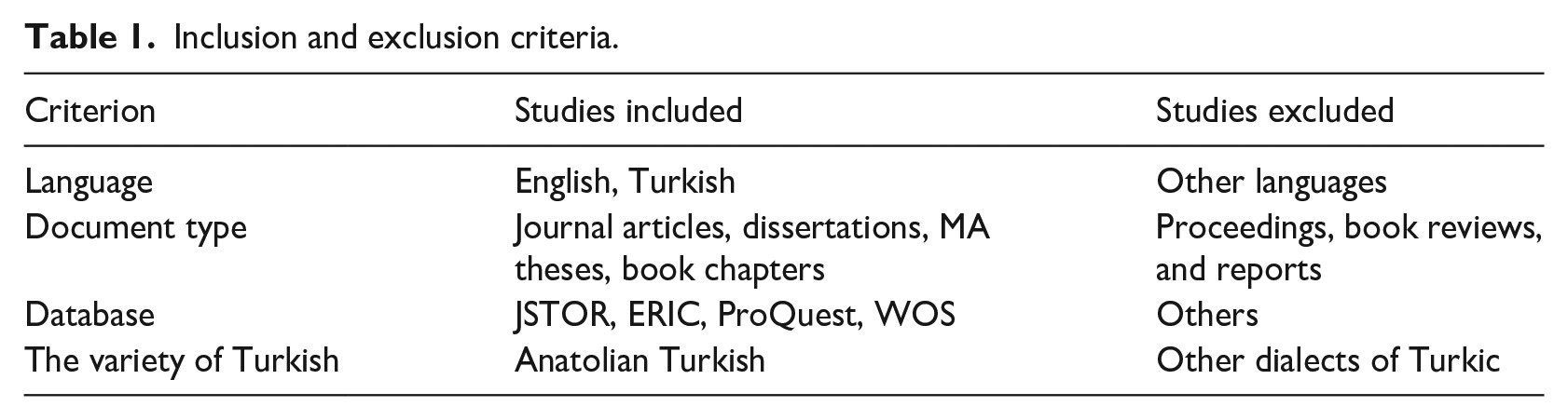
Initially, the researchers set the inclusion and exclusion criteria to be applied in the review. The criteria set out in Table 1 were determined by the objectives of the scoping review. As can be seen in Table 1, there are four main criteria for the inclusion and exclusion of the studies. First, studies in English and Turkish were selected while other languages were excluded. Second, document types that required a peer-review process were chosen for the analysis. It was considered that the peer-reviewing process is an opportunity to evaluate the quality and reliability of the research. Third, prominent databases were taken into consideration because of their peer-reviewing processes and commitment to established publication ethics guidelines. Finally, Anatolian Turkish was taken as a criterion while excluding studies investigating Azeri dialect or other Turkic dialects (languages).
Inclusion and exclusion criteria.
To report the identification of studies found in the databases, Page et al.’s (2021) PRISMA flow diagram for scoping reviews was used. Figure 1 shows that 1,543 references were found in the JSTOR, ERIC, ProQuest, and WOS databases with the keywords set out below. As a next step, 901 studies were screened using the predetermined criteria following the exclusion of 642 irrelevant ones upon screening titles of the research. The 901 studies were reviewed again, and 608 irrelevant and 59 duplicates were screened upon abstract screening. As a result of the second screening process, 234 records were retained. In the final screening which includes an elaborate reading of texts, non-empirical and irrelevant ones were excluded finally. At last, 93 studies (see Supplemental Appendix I) were found to be eligible for the scoping review. Journal articles, dissertations, MA theses, and book chapters on Turkish as a heritage language are the ones which were found in JSTOR, ERIC, ProQuest, and WOS databases.
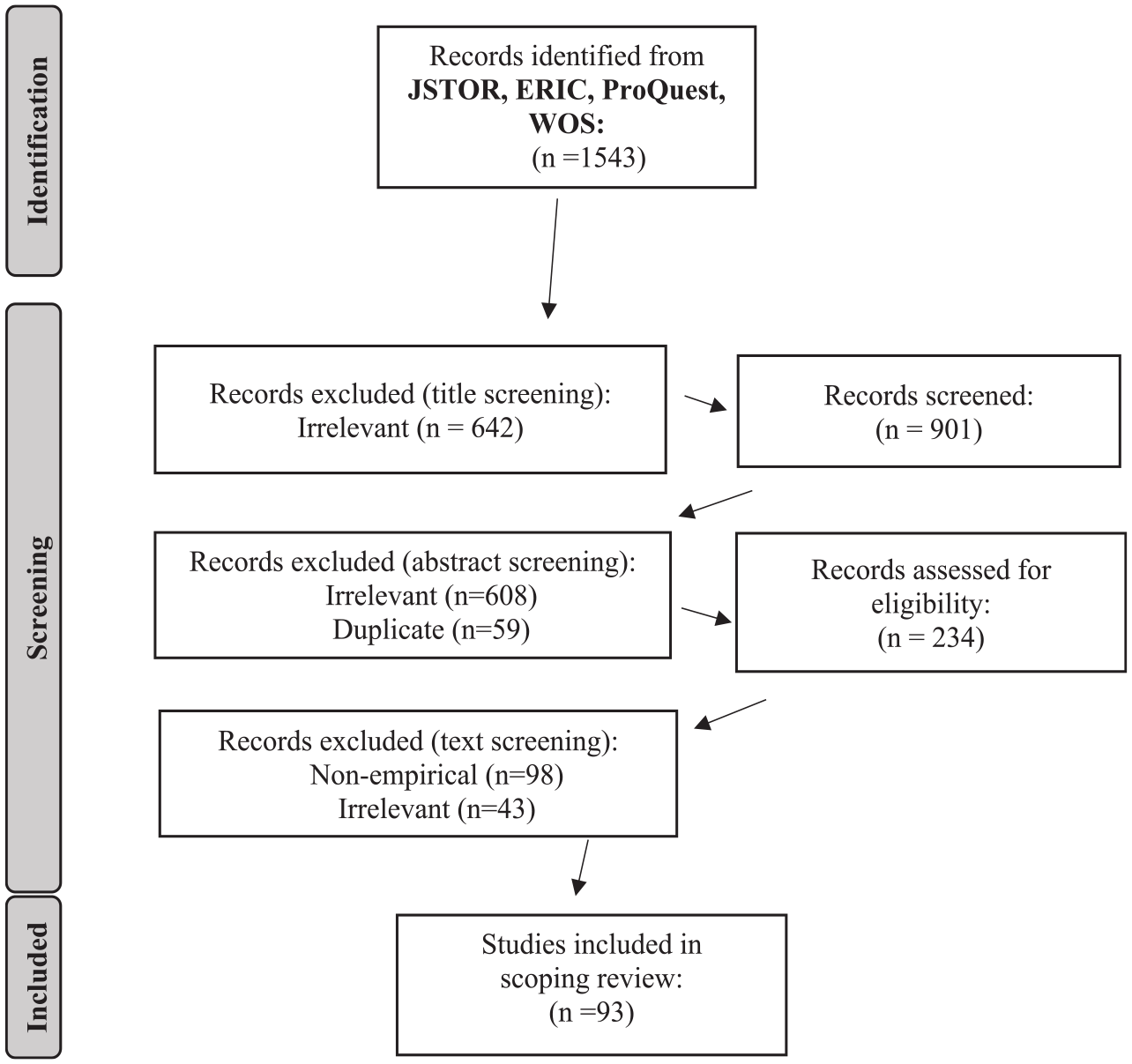
PRISMA diagram for identification, screening, and inclusion.
Data coding and analysis
Relevant literature shows little consensus about what the term ‘heritage language’ actually refers to. According to Wang and Hatoss (2024), the concept of heritage language continues to be influenced by historical contexts and varies by region, which results in the use of terms such as languages spoken by immigrants and their descendants, ethnic minority languages, and community languages (p. 614). Taking this into consideration, the terms ‘minority language’ and ‘(im)migrant language’ were included in the identification phase to capture studies exploring languages or speakers within a heritage context, but using different terminologies.
The keywords Heritage speaker AND Turkish, Heritage learner AND Turkish, Heritage AND Turkish, Heritage language acquisition AND Turkish, and Turkish second language AND heritage, minority language AND Turkish, (im)migrant language AND Turkish yielded many results in the databases of JSTOR, ERIC, ProQuest, and WOS. The data collection procedure was completed on May 25, 2023, which means that only studies published up to this date were taken into consideration.
To analyse the data, the coding scheme developed by Gurzynski-Weiss and Plonsky (2017) was used. A new variable which categorized the studies on the basis of the country where the participants lived was included in the scheme. The variables and values in the coding scheme are set out in Table 2.
The coding scheme.
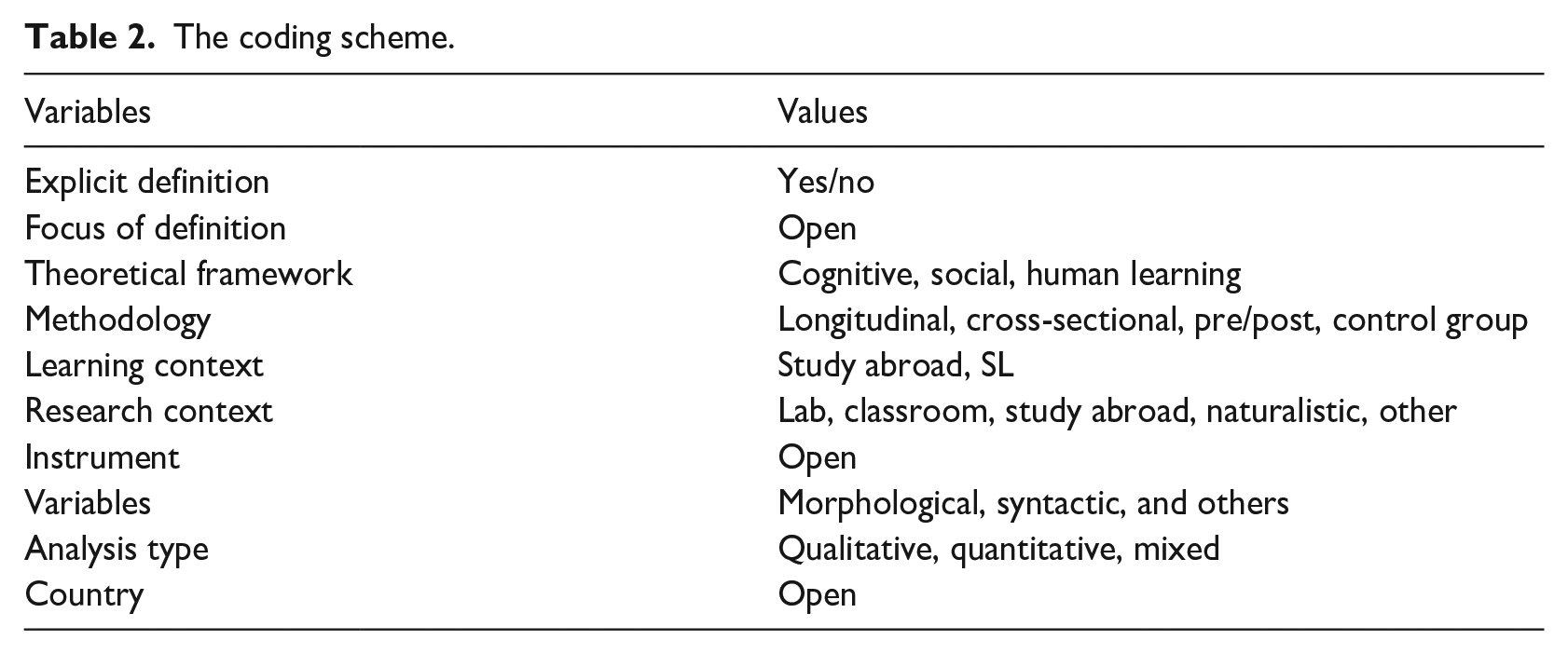
As can be seen above, the theoretical framework was first divided into subdisciplines, and then theoretical frameworks were coded. In this coding scheme, learning context refers to whether a heritage language is learnt as a foreign language or second language. This classification was done to refer new speakers of Turkish as a heritage language.
Having completed the data coding process of the final sample, the frequencies and percentages for the values of the variables were calculated, as these are some of the characteristics of data analysis in a scoping review (Chong & Plonsky, 2023). When analysing the open-ended values in a coding scheme such as the focus of definitions and instruments, the thematic analysis was first carried out, and then the frequencies and percentages of these categories were calculated.
To ensure the trustworthiness and consistency of the findings, inter-rater reliability analysis was performed. This process involved two phases. As the coding task was divided between the two authors, as a first step, they rated each other’s coding values. The overall percentage of agreement for inter-rater reliability between the raters was found to be 97.8%. In the second step, an independent researcher assessed both coding schemes and the rate of the inter-rater reliability was found to be 94.3% in the sample of 69. Any disagreement was resolved through negotiation between the raters.
Results
As a result of the review of the JSTOR, ERIC, ProQuest, and WOS databases, 93 research works were included in the current scoping review. The final sample consisted of 77 research articles, six book chapters, seven dissertations, and three MA theses.
The analysis showed that research on Turkish as a heritage language and on heritage speakers had been frequently published in various academic journals (see Figure 2), of which the International Journal of Bilingualism (n = 9) and Bilingualism: Language and Cognition (n = 7) were the most popular, followed by the Journal of Multilingual and Multicultural Development (n = 5), Linguistic Approaches to Bilingualism (n = 4), Second Language Research (n = 3), Languages (n = 3), the International Journal of Bilingual Education and Bilingualism (n = 3), and Frontiers in Psychology (n = 3).
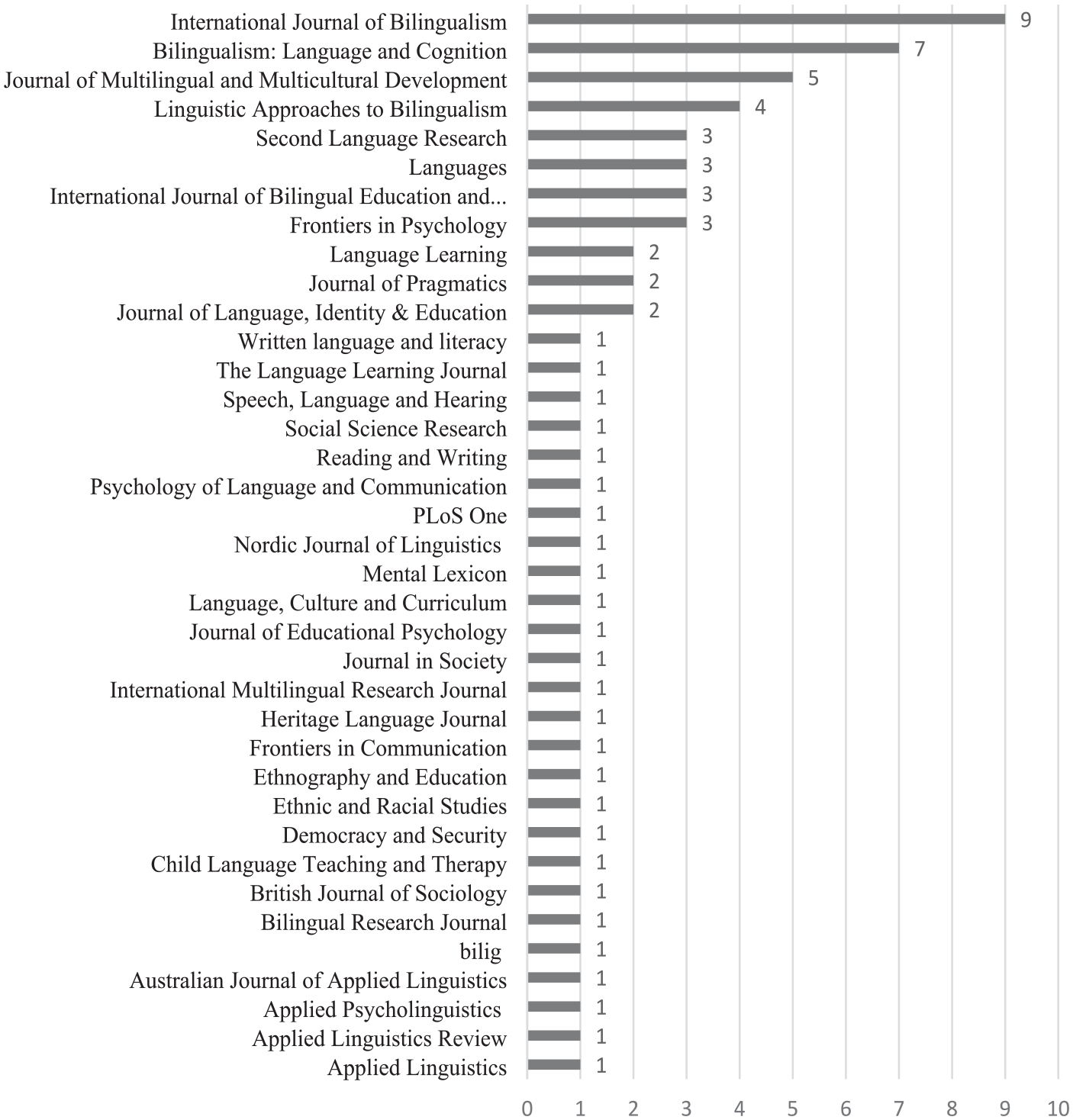
Journals publishing research on Turkish as a heritage language.
Next, to identify a publication trend in the JSTOR, ERIC, ProQuest, and WOS databases, a timeline was developed, and this is shown in Figure 3. As can be seen, the earliest study that explicitly used the terms heritage language and heritage speakers in these databases was published in 1999. The publication trend shows that studies on heritage language/speakers have been receiving increasing academic attention, especially in the early 2020s. It was found that publications peaked in 2021 and 2022. The number of these studies is projected to increase in the following years after 2015, as there has been a general rise year by year so far.
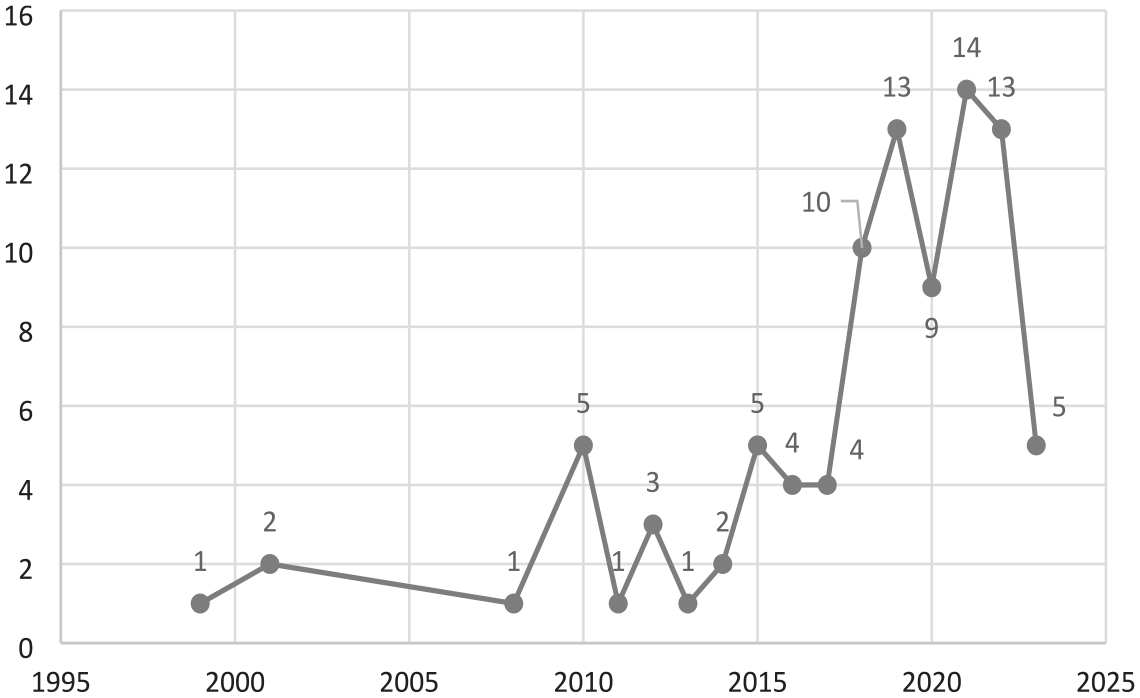
Number of publications per year.
How do studies define the concepts of ‘heritage language’ and ‘heritage speaker’ of Turkish?
When the definitions of ‘heritage language’ and ‘heritage speaker’ are taken into consideration, it can be seen that 32% (n = 30) of the studies defined one of those concepts explicitly. The most cited definitions were offered by Valdés (1995, 2000, 1997, 2005), Rothman (2009), and Montrul (2008, 2010, 2015, 2016, 2018). In the works of one of these scholars, most of the definitions (n = 27) adopted a social perspective to define ‘heritage speaker’ or ‘heritage language’ within its broader context emphasizing dominant and minority settings. Three studies included cognitively focused definitions, categorizing heritage speakers as individuals who (1) acquired a language different from those learned later in life, (2) had greater proficiency in the mainstream language than in the heritage language, and (3) experienced an interruption in their first language acquisition.
What are the theoretical frameworks used to investigate Turkish L2 learners and Turkish as a heritage language learning?
The theoretical frameworks used in the studies of Turkish as a heritage language showed variation. As stated above, Gurzynski-Weiss and Plonsky’s (2017) inquiry scheme was adopted which divided theoretical frameworks into three main categories: social, cognitive, and human learning. First, social theoretical frameworks in this study refer to social norms, ideologies, identity, language transmission, socialization, and related concepts. Cognitive frameworks focus on internal processes of the mind such as attention, memory, and language processing. On the contrary, human learning frameworks refer to instructional methods, behaviours, emotions, and experiences within classroom environment. A note of caution needs to be added here, as the cognitive and human learning frameworks can often be interrelated with each other. Moreover, social and learning frameworks can be complementary in nature, as learning frequently occurs through interaction. All in all, although these three perspectives have distinct focuses, they share overlapping goals in explaining external and internal processes.
Figure 4 shows that most of the studies (n = 49) adopted cognitive frameworks which included the exploration of the processing of pro-drop features, language awareness, comprehension of proverbs, and lexical development. The second most used framework was found to be social frameworks (n = 31) which included research related to social identity, family language policy, language attitudes, and the role of family background. The least common studies (n = 13) were those investigating the acquisition of literacy or writing skills in Turkish as a heritage language in a classroom environment (i.e., Usanova & Schnoor, 2021).
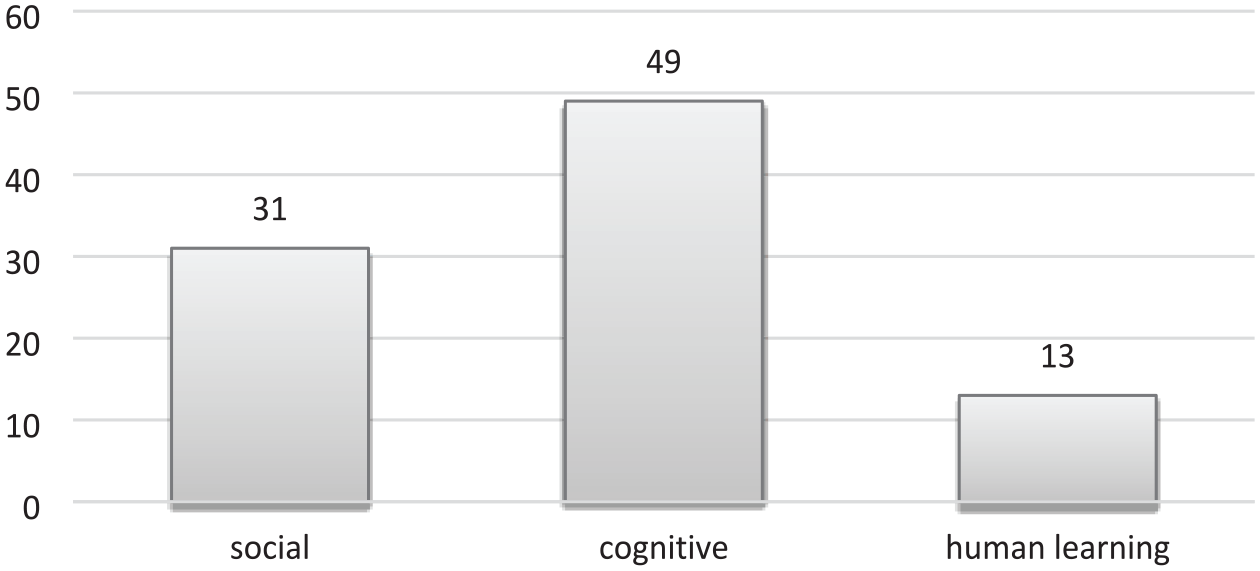
Publications with social, cognitive, and human learning frameworks.
What type of variables, instruments, and designs were employed in the studies that explored Turkish L2 learners and Turkish as a heritage language learning?
It was found that different variables were highlighted in the studies in the scoping analysis. Most (54%) of the studies had structural variables such as morpho-syntactic and lexico-syntactic variables. As can be seen, there is an interest in heritage language grammar. The second most common variables were variables of (a) socio-psychology of the heritage speakers (10%), (b) family language policy and ideologies (10%), and (c) cognitive ones (10%). These categories include subjects of research such as (a) anxiety and attitudes, (b) language management and intergenerational transmission, and (c) processing and working memory, respectively. These are followed by the research on translanguaging and code-switching (9%) in the heritage context. Finally, research on acculturation and integration (5%), identity (2%), and physiological psychology (1%) makes up the rest of these studies.
These studies collected data in various contexts. The most common research contexts are naturalistic ones (40%) and laboratories (38%) which are followed by classrooms (22%). These study settings are compatible with the adopted frameworks, data collection instruments, and samplings.
Various data collection instruments were found to have been adopted as the researchers had deemed appropriate for the study population and purpose. The use of multiple data collection instruments made drawing conclusions difficult. However, it was found that quantitative data collection techniques (n = 42) are the most common ones in terms of number. These include grammaticality judgement tests, elicitation tasks, proficiency tests, attitude tests, and so on. Then, qualitative techniques (n = 32) are the second most used technique. These include semi-structured/group interviews, observations, and so on. Overall, these findings were found to be coherent with the ones about frameworks and study designs.
The social, cognitive, and human learning theoretical frameworks in the examined studies adopted various methodologies. Following Gurzynski-Weiss and Plonsky’s (2017) coding scheme, two main methodologies were identified in the research. Figure 5 shows that most of the studies on Turkish heritage language/speakers had adopted cross-sectional designs (n = 78). Corpus-based studies were included in cross-sectional studies. These studies made use of a corpus in a direct way (i.e., using bilingual corpora to explore language use and variation) and an indirect way (choosing frequent target items from the corpus). Among these cross-sectional designs, 25 included control groups to make comparisons. On the contrary, only a small number of studies (n = 15) had adopted a longitudinal design which covered an extended period and involved multiple data collection rounds. The enormous amounts of time and higher costs involved in longitudinal studies might be a negative factor in the use of such designs.
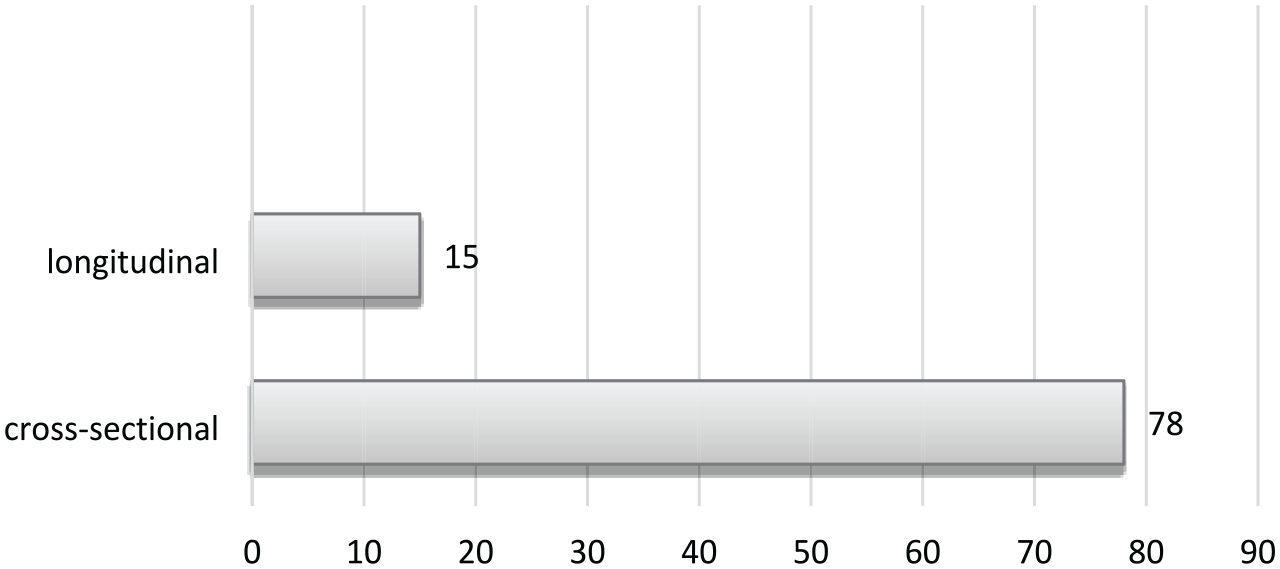
Distribution of studies by methodological design types.
Another criterion under investigation was the analysis type adopted in the studies on Turkish heritage language/speakers. The data in Figure 6 show that 45% of the studies (n = 42) were quantitative, had collected numerical data, and used statistical methods of analysis. Second, 29% of them (n = 27) had used mixed-method designs. Finally, 26% of the studies (n = 24) were qualitative in form and had explored subjective experiences and attitudes through interviews.
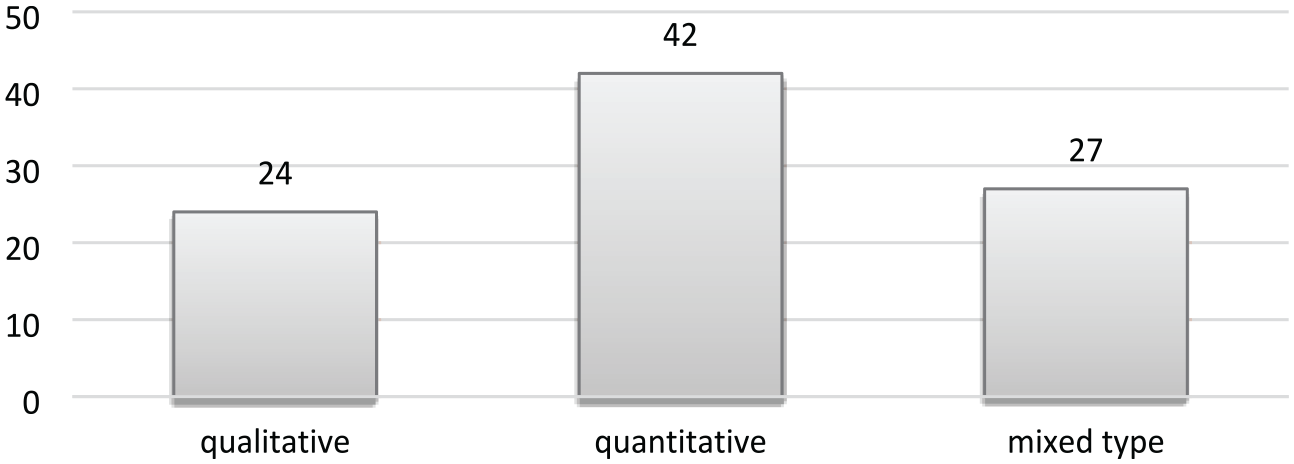
Distribution of studies by study design.
Another criterion which was included in the analysis was the country where the data were collected. This has been instrumental in our understanding of studies on Turkish heritage language/speakers. The results showed that the distribution of studies by country was relatively compatible with the Turkish labour migration discussed in the previous sections. Figure 7 shows that Germany was the country where half of these studies’ (n = 33) participants lived. Following Germany, the Netherlands (n = 19) was the second country where Turkish heritage language/speakers had been studied. In the third place, the United States had 11 studies. It can be seen that some studies were based on heritage speakers of many different languages such as German and French. These studies are categorized as multinational studies in the relevant analysis. It can be seen from the data in Figure 7 that in three studies, the heritage language of returnees living in Türkiye was explored. Finally, countries that are symbolized by one study were classified as ‘others’. This category is composed of Canada, Norway, Greece, France, and Australia. Taking these into consideration, heterogeneous distribution in terms of countries was found in this scoping review.
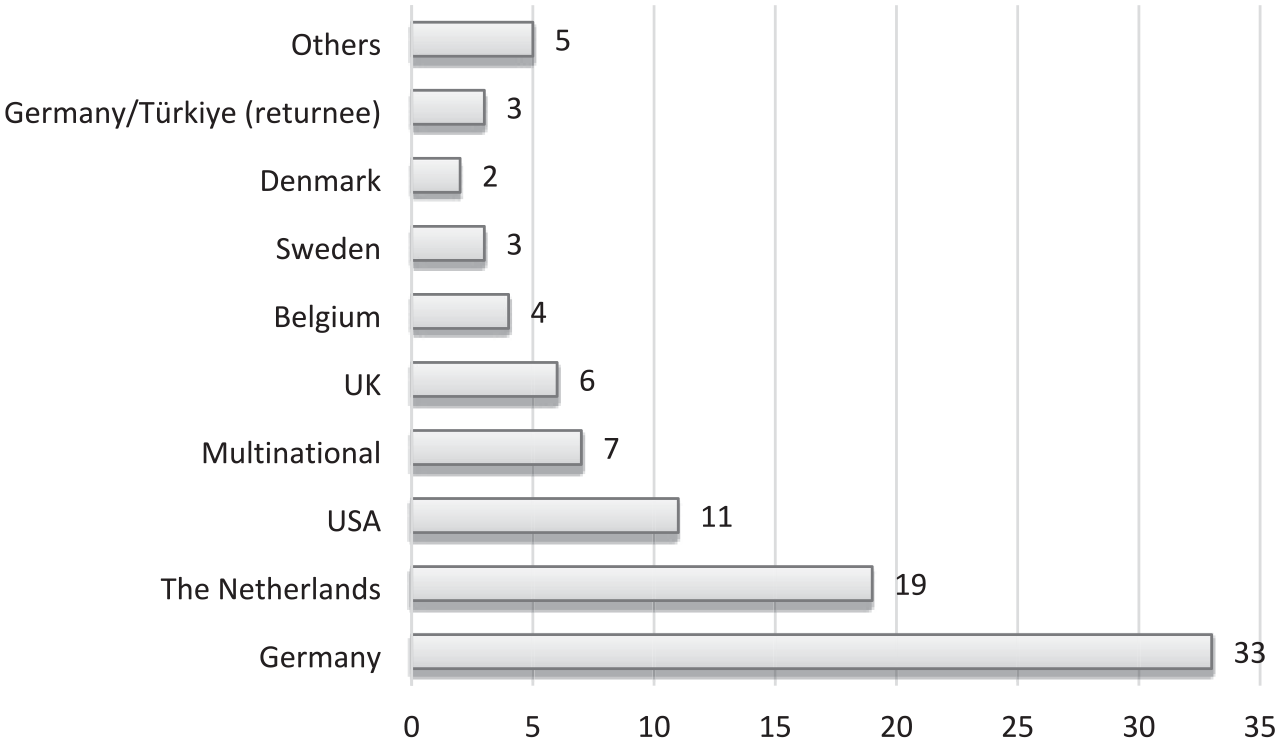
Distribution of studies by country.
Discussion
The principal purpose of this review was to understand the concept of Turkish as a heritage language and speakers of it in previous research in the Turkish context and thus to contribute to further studies, the reviewing of academic practices, and developing policies in the related field. As mentioned earlier, scoping review studies map the breadth of currently available research on a specific concept. In this study, the term ‘heritage language’ was adopted as one of the keywords to trace its use in the Turkish context. The findings show that the term ‘heritage language’ began to be used in the early 2000s to refer to allochthonous contexts. In addition to ‘heritage language’, the terms ‘minority languages’ and ‘(im)migrant languages’ were also investigated, although the latter was found to be losing prominence, particularly in language policy and planning studies (see Wang & Hatoss, 2024).
As stated in the results section, the International Journal of Bilingualism was the journal found to have been most preferred for publishing studies of Turkish as a heritage language. It is seen that journals with a multilingualism focus are more interested in these studies. The most striking result to emerge from the findings is that except for one journal (Bilig), there were no Türkiye-based journals found in the databases which had published any such studies. Launching a journal devoted to Turkish as a Heritage Language might increase the interest among Turkish researchers. It was thought that launching a Türkiye-based journal could also be part of the awareness for the immigration and related policies. Academic research may have strong incentives to influence policy-making. As a home country of the citizens living abroad, various activities to understand the social, cultural, economic, and political needs of these citizens and to create policies accordingly are important. It is also essential for children and young people to maintain their language skills, access quality education, and integrate into society.
Second, it was found that interest in Turkish as a heritage language appears to have increased after the 2010s, although the first of these was published in 1999, referring to Turkish as the minority language in the context of the Netherlands. It is also striking that the concept of heritage language became widespread around 2020. Taking these into consideration, although the term heritage language has been preferred around 2010, it is not possible to limit it to these years. Starting from the labour recruitment agreements in the 1950s and 1960s, Turkish, as one of the migrant languages, has been the focus of the research in these contexts.
Concerning the definition of ‘heritage language’, it was found that less than half of these studies explicitly defined the concepts which is also an interesting finding. This can be stemmed from the hesitancy and uncertainty about the boundaries of the concept. As stated in Wang and Hatoss (2024), the variation in the definitions shows the very immediate historical contexts and geographical locations. Thus, researchers may have avoided using their own definition of heritage language.
Theoretical frameworks in Turkish as a heritage language studies were another objective of this scoping review. The findings showed that studies with a cognitive framework outnumbered the ones with social and human learning ones. One possible explanation is the emergence and proliferation of new methodologies. As Bayram et al. (2024) cited, innovative techniques such as ‘eye-tracking and electroencephalography/event-related potentials (EEG/ERPs)’ detailed visualization of the mechanisms in heritage language research. This finding can also be observed in the selection of data collection instruments. Quantitative tools such as online processing tools and elicitation tasks outnumbered the qualitative ones, accordingly. This might be the result of the emergence of novel and more granular techniques to investigate cognition in the field of heritage language studies (Bayram et al., 2024), although more evidence is needed to make generalizations.
Another finding was about the use of a corpus which was adopted in two ways in some of the studies reviewed. The first was using corpus-derived measures which included the selection of test items from general corpora. It was seen that particular lexical and grammatical factors such as word length, word complexity, and factors related to language use such as frequency were the main motivations to use corpora such as TNC (the Turkish National Corpus), BNC (the British National Corpus), and COCA (the Corpus of Contemporary American English). To exemplify, in Lorenz, et al.’s (2019) study, the frequency of occurrence of each verb–pronoun pattern was taken from BNC and COCA. This shows the use of general corpora in heritage language studies.
Second, it was found that researchers tended to develop their corpora of various sizes. These were limited to specific purposes of investigation, such as orthography (Schroeder, 2020) and narrative and argumentative texts (Riehl, 2021) and were annotated accordingly. Among these, the multilingual RUEG corpus (Research Unit ‘Emerging Grammars in Language-Contact-Situations: a Comparative View’), which is fully accessible, was used in some of the studies (Iefremenko et al., 2021; Özsoy et al., 2022). Apart from these, the findings suggest the need for the compilation of a Turkish as a heritage language corpus which will show variation between spoken and written language, different locations, and individual contexts. Discussing the projects of heritage language corpora, Kisselev (2021) lists their functions and benefits: tracking changes and variation in heritage language grammar with a longitudinal perspective, tracking the development of heritage language skills, comparing and finding out differences and similarities between heritage and non-heritage learners, and developing computational error-detection tools for language production. In this context, Turkish as a heritage language corpus is expected to provide more valid, reliable, and representative data about this complex and heterogeneous group. Availability of the corpus may increase the awareness and the interest in studying Turkish as a heritage language. It could also help disseminate research findings in the field of migration and contribute to policy-making processes.
Although extensive research has been carried out on language processing, attitudes, and use, few studies have dealt with disadvantaged and less-represented groups in the heritage context. In one of these, Blom et al. (2022) investigated the language development of children speaking Turkish as a heritage language. In another, Willard et al. (2019) explored the relationship between mothers with depressive symptoms and their children’s vocabulary development in Turkish as a heritage language. Along with the ones on disadvantaged and less-represented groups, it is clear that more work needs to be done to provide more definitive evidence about Turkish as a heritage language and to develop related policies.
When the context in which Turkish as a heritage language was investigated was taken into consideration, it was found that most of the studies had been conducted in countries which have been the main destinations of labour migration such as Germany and the Netherlands. In these contexts, heritage language maintenance and intergenerational transmission have been reported to be stronger and higher among Turkish migrants (Extra & Yağmur, 2010; Fick et al., 2014). On the contrary, despite having significant Turkish-speaking populations, the countries like France, Scandinavian nations, Austria, and Switzerland have a limited number of heritage language studies focusing on Turkish. The most likely causes of this are the assimilationist policies and ideologies, which lead to a lack of support from public institutions, limited funding for academic research, and the underrepresentation of Turkish-origin academics studying Turkish as a heritage language.
One of the surprising findings of the study was that only a third of the studies provided explicit definitions of heritage speaker or language. Two-thirds of the studies did not include an explicit definition for the term. A possible explanation for this contradiction might be the variable nature of the concept of heritage speaker and the difficulty in categorical distinctions. Discussing narrow and broad perspectives in the conceptualization of heritage language, Polinsky and Kagan (2007) stated that it is ‘still uncharted territory, both linguistically and pedagogically’ (p. 369). Factors such as cultural affiliation, family inheritance, order of acquisition, motivation for maintenance, and attrition cause difficulty in the scope and classification of heritage languages. Polinsky and Scontras (2020) commented that due to the variation in heritage speaker population, making generalizations can be difficult. In the current study, overseas contexts such as the United States and Australia were represented in the review. However, it was found that there have been no studies on Turkish as a heritage language or on speakers of it in Far Eastern countries, Arabic countries, or Russia. The evidence from these contexts would be invaluable, especially on the basis of literacy skills, as different writing systems are used in these countries. Literacy skills’ importance lies in not only its educational and cognitive advantages but also its contribution to the maintenance and development of the heritage language. Literacy in L1 was found to have a facilitating role in phonological awareness (Muljani et al., 1998), reading comprehension and fluency (Vaughn et al., 2006). In addition, languages with similar orthographic features which refer to the mapping of systematic spelling and pronunciation may have a positive effect on reading development (Geva & Siegel, 2000), and there are little published data on this.
Return migration is an emerging theme in migration studies. In the Turkish context, however, it is too early to say that there is an increasing interest, as there are little published data on Turkish as a heritage language. All of the studies in the review explored returnees from Germany. In these studies (Antonova-Ünlü et al., 2021; Kaya-Soykan et al., 2023; Treffers-Daller et al., 2016), language use such as evidentiality and collocations was investigated. There have been no studies to investigate returnees’ family language policies, linguistic accommodation, or identity transformation. The inclusion of such social and educational dynamics in future studies will provide more insights into the concept of Turkish as a heritage language. This was also echoed in Erdoğan-Öztürk’s (2024) study which explored language ideologies and affect in the context of returnee women in Türkiye. According to Erdoğan-Öztürk (2024), ethnographically and sociolinguistically informed studies involving the actors with the experience of return mobility are recent and rare.
It is seen that heritage language studies overlap significantly with second language acquisition
Although many studies were carried out in a classroom environment, only a few of them had examined learning processes. These studies (Schnoor & Usanova, 2022; Usanova & Schnoor, 2021) were conducted by the same researchers and on writing skills and development. Translanguaging, another emerging topic in language education, was investigated only in one study (Yılmaz & de Jong, 2020). These findings can provide insights for future research on materials and curriculum/syllabus development, language teaching methods, language testing and assessment, computer-assisted language learning, and distance learning. Similar to the gaps in the related literature, there are also problems in practice such as curriculum development, materials development, and the lack of standardized and reliable language tests (Driessen, 1997). Face-to-face or online classes supported with updated pedagogical materials and offered by teachers qualified to teach Turkish as a heritage language will be important for future practice.
In the analysis of the findings, cross-sectional studies outnumbered longitudinal studies in this scoping review. Montrul (2010) emphasized the importance of longitudinal study designs starting from childhood to adolescence for understanding the influence of a majority language on home language skills. Future research on Turkish as a heritage language could therefore benefit from longitudinal research to obtain a more precise picture. Montrul (2010) also pointed out that indirect evidence such as self-reports and estimates may not be reliable. Thus, the use of direct input from parents or participants should be more controlled and could provide insights in the field of Turkish as a heritage language.
Conclusion
The purpose of the current study was to explore the concept of heritage language in the context of Turkish. As can be seen, the heritage language research is highly multidisciplinary in nature and variable in research population which make its definition and scope disputed. The overlaps with related concepts like bilingualism make it hard to define it as a separate concept in the related literature. The extent of variation in use of the term can be both productive and restrictive. The inclusion of diverse speaker profiles based on language proficiency and immigrant/indigenous contexts, as well as interdisciplinary research collaboration, can be productive. However, the variation can also be restrictive, as there is no agreed-upon definition which leads to difficulties in comparability and the generalizations of the findings.
The findings of the current study need to be interpreted with caution because of the absence of conclusive results since speaking and learning Turkish as a heritage is a popular and evolving topic. Moreover, this scoping review covered a predetermined period of data collection and specific databases, which did not include studies in Türkiye-based databases. Second, the motivation of the study was to investigate the concept of heritage language. Although a wide range of terms were adopted as keywords, there is a possibility that some studies may have been missed. Third, inclusion of English- and Turkish-only studies may limit the scope of analysis. Thus, these deserve attention while drawing conclusions.
Although the generalizability of the results is subject to these limitations, the findings of this review certainly add to the understanding of the concept of heritage language and heritage speakers in the Turkish context. Further research might usefully explore the implications suggested above.
Supplemental Material
sj-docx-1-ijb-10.1177_13670069251358077 – Supplemental material for Turkish as a heritage language: A scoping review of previous studies and suggestions for future research
Supplemental material, sj-docx-1-ijb-10.1177_13670069251358077 for Turkish as a heritage language: A scoping review of previous studies and suggestions for future research by Gülin Dağdeviren Kırmızı and Melike Üzüm in International Journal of Bilingualism
Footnotes
Declaration of conflicting interests
The author(s) declared no potential conflicts of interest with respect to the research, authorship, and/or publication of this article.
Funding
The author(s) received no financial support for the research, authorship, and/or publication of this article.

Supplemental material
Supplemental material for this article is available online.
Author biographies
References
Supplementary Material
Please find the following supplemental material available below.
For Open Access articles published under a Creative Commons License, all supplemental material carries the same license as the article it is associated with.
For non-Open Access articles published, all supplemental material carries a non-exclusive license, and permission requests for re-use of supplemental material or any part of supplemental material shall be sent directly to the copyright owner as specified in the copyright notice associated with the article.
