







Abstract
Introduction:
Background: Inner speech, or the “little voice in the head,” is implicated in many cognitive functions and is gaining interest in interdisciplinary research. Inner speech in bilinguals, people who speak more than one language proficiently, may shed light on the underlying mechanisms of language and cognitive function in the brain.
Objectives:
We aim to examine the research on inner speech in bilingual adults and the methods used in this research to characterize how bilingual adults use inner speech. We further focus on the factors that influence language choice for inner speech. Finally, we aim to relate this research to future research on inner speech in bilingual adults with aphasia and its clinical implications.
Method:
We conducted a scoping review of inner speech in bilingual adults and used a specific search strategy on five databases. Using the software Covidence, we reviewed the titles and abstracts, then completed a full-text review. We extracted the relevant data and charted them based on pre-defined variables.
Results:
Inner speech is bilingual, but many factors influence which language is used, including age and context of acquisition, social environment, and emotionality. The most common methods used to evaluate inner speech in bilingual adults are questionnaires and interviews, and we critically examine these methods and suggest possible improvements in the discussion.
Conclusion:
Examining how inner speech is used by bilingual adults can help researchers understand the phenomenon of inner speech, language organization in the brain, cognitive functions, and the importance of context and experience. This review helps to inform researchers and clinicians who work with bilingual adults with aphasia, as we must ensure that our work is based on accurate assumptions of these individuals rather than extending the knowledge from research with monolinguals without regard for the additional complexity of navigating multiple languages.
Keywords
Introduction
Inner speech, using words to talk to oneself in the head, can be a rich aspect of daily life and a way to make sense of ourselves and our surroundings. It supports a range of self-directed and cognitive functions, including self-regulation, self-reflection, self-awareness and monitoring, planning, and problem-solving (Baldo et al., 2005; Kross et al., 2014; Lidstone et al., 2010; Racy & Morin, 2024) and is closely linked to executive functions such as working memory, cognitive control, inhibition, and task switching (Emerson & Miyake, 2003; Fernyhough & Borghi, 2023; Marvel & Desmond, 2012). For this reason, research on inner speech has been growing, especially when related to groups who may have deficits in these areas or in language in general (Alderson-Day & Fernyhough, 2015; Fama & Turkeltaub, 2020, in aphasia). Inner speech uses language, thus when a person speaks more than one language, they likely recruit multiple languages in their inner speech as well. Moreover, the cognitive processes supported by inner speech – particularly executive function and self-monitoring – overlap with domains that have been proposed to differ as a function of bilingual experience.
Bilingualism has been hypothesized to influence executive functions such as inhibitory control, attentional regulation, working memory, and cognitive flexibility, potentially granting a “bilingual advantage” through sustained coactivation of multiple languages and the need to select and inhibit languages according to context (Chen et al., 2017; Grundy, 2020; Marian & Shook, 2012). There is some disagreement on the existence of a bilingual advantage, as some functions may have a slight advantage (i.e., inhibition, shifting, and working memory), which does not hold up to correction for publication bias (Lehtonen et al., 2018). The bilingual advantage may exist but be dependent on factors such as age or task, in that more complex tasks or older age may make the advantage more prominent (Bialystok et al., 2014; Ware et al., 2020). Given that inner speech is implicated in many of these same cognitive domains, examining inner speech in bilingual adults offers a theoretically motivated avenue for understanding how language experience may interact with cognition beyond overt language use. In this scoping review, we examine how bilingual adults use inner speech, with the aim of integrating research across inner speech and bilingualism and informing future empirical and applied work.
In many cases, researchers have viewed bilingualism as a dichotomous factor (bilingual vs. monolingual), when there can be a range of bilingualism dependent on proficiency, age of acquisition, current use of both languages, and many other complex factors that affect the bilingual experience. When viewing bilingualism as a continuous variable, such as self-report of the amount of time a person is generally exposed to their less frequent language, bilingualism enhanced executive function regardless of age (Incera & McLennan, 2018).
Considering these complex variables of bilingualism and understanding how inner speech is used in bilinguals may benefit the understanding of how language is stored and processed, and how inner speech may mediate cognitive function. The prevailing models of word recognition and production in bilinguals state that there is a shared conceptual store and separate lexical stores for each language (Kroll et al., 2010; Kroll & Stewart, 1994; Kroll & Tokowicz, 2005; van Dijkstra & Heuven, 2002). A better understanding of how inner speech is used by bilinguals may shed light on whether there is a hierarchy between the languages and how translations occur in the mind.
The combination of research in bilingualism and inner speech may be especially helpful for future research in aphasia and other clinical populations. Inner speech is studied in the context of aphasia because of its ties to cognitive processes (Alderson-Day & Fernyhough, 2015; Morin, 2011; Racy et al., 2020), and the potential that it may be a predictor of recovery (Hayward et al., 2016). Given the role of inner speech in self-reflection and emotional regulation in neurotypical adults, its relationship to psychosocial aspects of recovery in aphasia remains a theoretically motivated but underexplored area for future research. Thus far, this research has lacked focus on bilingual individuals with aphasia, and as over half of the world speaks more than one language (Marian & Shook, 2012), this is an unwanted oversight. Research in bilingualism and aphasia has addressed the potential for a bilingual advantage (Faroqi-Shah et al., 2018; Penn et al., 2010), with bilingual people with aphasia performing better on tasks of executive function and in conversation. These findings promote differences in language processing between bilinguals and monolinguals, lending credence to the idea that a bilingual speaker should not be thought of as two monolingual individuals in one head (Grosjean & Li, 2013). In other words, bilinguals do not have two completely separable language systems. Therefore, researchers and clinicians must know how inner speech is used by bilingual individuals to apply this information to clinical populations, rather than relying on knowledge gained from research solely in monolinguals. The ways that bilinguals and monolinguals use inner speech may be fundamentally different.
Language Choice
Understanding inner speech in bilinguals may improve our understanding of language organization in the brain, as well as the phenomenon of inner speech as a whole. Based on models of bilingual language representation, there is interaction between the languages a person speaks, and both languages may be activated during word retrieval or processing (Grant et al., 2019; Grosjean & Li, 2013; Kroll & Tokowicz, 2005). Because inner speech relies on words, inner speech must recruit the lexicon of at least one language. If codeswitching (use of both languages in the same thought) is present in inner speech, this would provide evidence for activation of both languages during lexical access. Language choice in speech out loud relates to a variety of factors, including the communication partner (Fishman, 1965). In inner speech, the communication partner is the self; thus, other factors must affect which language is used. Some of these factors could be the same as in speech out loud (e.g., age and context of acquisition), but it is possible that factors such as linguistic context may not matter as much, as a person could think in one language even though the people around them are using a different language. Knowing the patterns of language use during inner speech and the factors that contribute to them will inform future research and help researchers determine variables of interest for inner speech and bilingualism.
Measuring Inner Speech
In monolinguals, inner speech has been measured with various methods. Questionnaires often use Likert-type scales, and people endorse statements based on their personal experience, for example, General Inner Speech Questionnaire (Racy et al., 2020), Self-Talk Scale (Brinthaupt et al., 2009), and Varieties of Inner Speech Questionnaire-Revised (Alderson-Day et al., 2018). Thought-listing requires people to recall inner speech after the fact (Morin et al., 2018). Inner rhyme judgments use pictures, and people silently decide whether two words rhyme, requiring inner speech (Geva et al., 2011; Langland-Hassan et al., 2015; Stark et al., 2017). Descriptive experience sampling requires training and prompts people at certain time intervals to examine their inner speech (Heavey & Hurlburt, 2008; Hurlburt & Heavey, 2015). Think-aloud methods are similar, aiming to capture inner speech by having people verbalize their inner speech out loud (Klopp et al., 2020). Subjective reports during naming are popular in aphasiology to understand where lexical access may break down (Fama et al., 2017, 2019). Neuroimaging focuses on the neural correlates of inner speech and their relations to other linguistic measures (Hurlburt et al., 2016; Kühn et al., 2014). These measurements can cover a variety of aspects of the phenomenon of inner speech, including frequency, content (what inner speech is about), functions (reasons for inner speech use), and activities (when a person uses inner speech). Some methods, such as rhyme judgments and subjective reports during naming, can measure inner speech ability through accuracy or reported access to words, which is especially relevant in aphasiology. Depending on the methods used in bilingual individuals, the research thus far may lack information on some of the aspects of inner speech. For example, if the only method used is questionnaires, the types of information that can be gained will be highly dependent on the questions posed and will be subject to degradation of memory over time and a person’s self-awareness of their inner speech.
Rationale for a Scoping Review
A scoping review is appropriate. According to the guidelines by Peters et al. (2020), scoping reviews are indicated to examine how research is done on a certain topic and identify and analyze knowledge gaps, which clearly fits with our research questions below, based on the context from separate literature on inner speech and bilingualism. By analyzing these research questions, we aim to understand the current research and gaps, and use these to inform research in populations such as those with aphasia.
Method
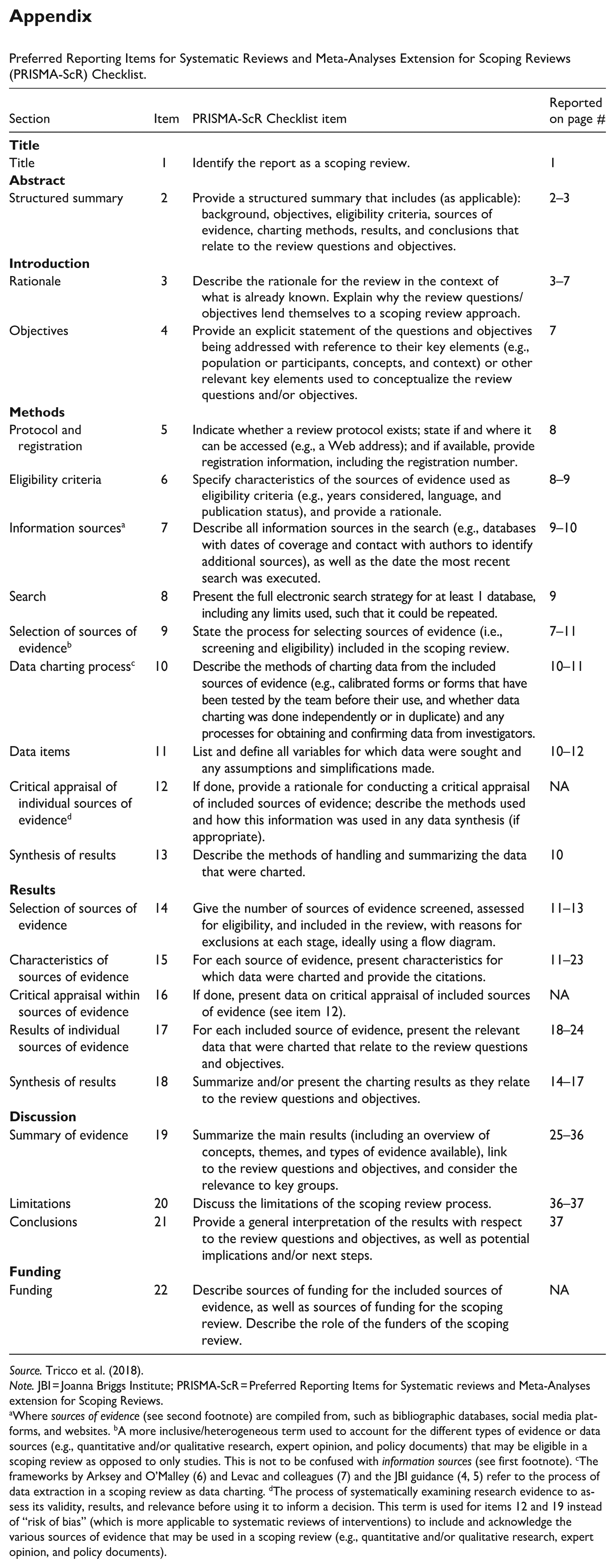
A review protocol and preregistration (prior to the writing of this review) are available via the Open Science Framework at https://osf.io/sryzd/. We followed recent guidance for scoping reviews (Peters et al., 2020; Tricco et al., 2018), and our checklist is available in the Appendix (Preferred Reporting Items for Systematic reviews and Meta-Analyses extension for Scoping Reviews Checklist, Appendix).
Eligibility Criteria
In order for an article to be considered eligible for review, we established four core criteria. First, the participants of the study must be bilingual or multilingual adults (speakers of two or more languages). This criterion excluded studies of beginner language learners in a classroom setting and bilingual children. The rationale for this criterion was to characterize inner speech in bilingual adults in a more stable manner, not as it changes over the process of learning a language, which is a separate question. In addition, studies on children were excluded from the review because children may still be developing the ability to use inner speech (Geva & Fernyhough, 2019) and because our focus was on the implications of this research on future research on inner speech in adults with neurogenic communication disorders. The development of inner speech is a separate research question outside the scope of this review. Under this criterion, studies on speakers of three or more languages were included, as our research questions were not constrained to precisely two languages.
The second criterion was that the studies involve inner speech – operationally defined as any thought, in words, that is “in the head.” This criterion excluded studies that only addressed “private speech” or talking to oneself out loud. Due to potential differences in terminology, we focused on whether the concept of inner speech was addressed. We were broad in our definition of inner speech due to the relatively small amount of research on this topic, while ensuring that all of the studies were comparable and involved the same phenomenon. We also excluded studies on schizophrenia and auditory/verbal hallucinations due to our interest in neurologically healthy adults, who would be the comparison group for studies in neurogenic communication disorders.
Third, we required that the studies include data from participants (we excluded purely theoretical papers and reviews). While a basis in theory is important, our questions centered on how this is being empirically studied. The data could be qualitative and/or quantitative. Fourth, the studies were required to be published in scholarly, peer-reviewed journals (i.e., excluding dissertations and books). As additional criteria, we did not limit the search by date but did limit it by language. There are a few papers on the topic, and the date published was not relevant to our research questions. All articles were available in English to ensure that the reviewers could understand the articles.
Information Sources and Search Strategy
We used the same search strategy on all five databases selected: Linguistics and Language Behavior Abstracts, PsycINFO, Communication Source, Education Resources Information Center, and Academic Search Complete. These databases were chosen in collaboration with our department’s librarian, based on their likelihood of producing relevant articles. We did not limit the searches in any other way (e.g., by date). Our search strategy was as follows: “inner speech” OR “inner voice” OR “inner narrative” OR “inner monologue” OR “inner language” OR “self-talk” OR “self talk” And bilingual* OR multilingual* OR “foreign language” OR “second language” OR “heritage speaker” OR “heritage language” OR “first language” And adult*
The date of our last search was October 12, 2022. After completing our searches on the five databases, we uploaded the articles to Covidence, a systematic review management software designed to streamline the review process and maintain organization. Using Covidence, there were three steps to the scoping review process: (1) screening based on title and abstract, (2) full-text review, and (3) data extraction. For all three steps, both reviewers independently reviewed each source and checked it against the inclusion/exclusion criteria described above. During the full-text review, the reviewers also provided a reason for exclusion. For any discrepancies in whether a study should be included or the reason for exclusion, the reviewers met to determine the final decision and come to a consensus.
Data Extraction and Charting
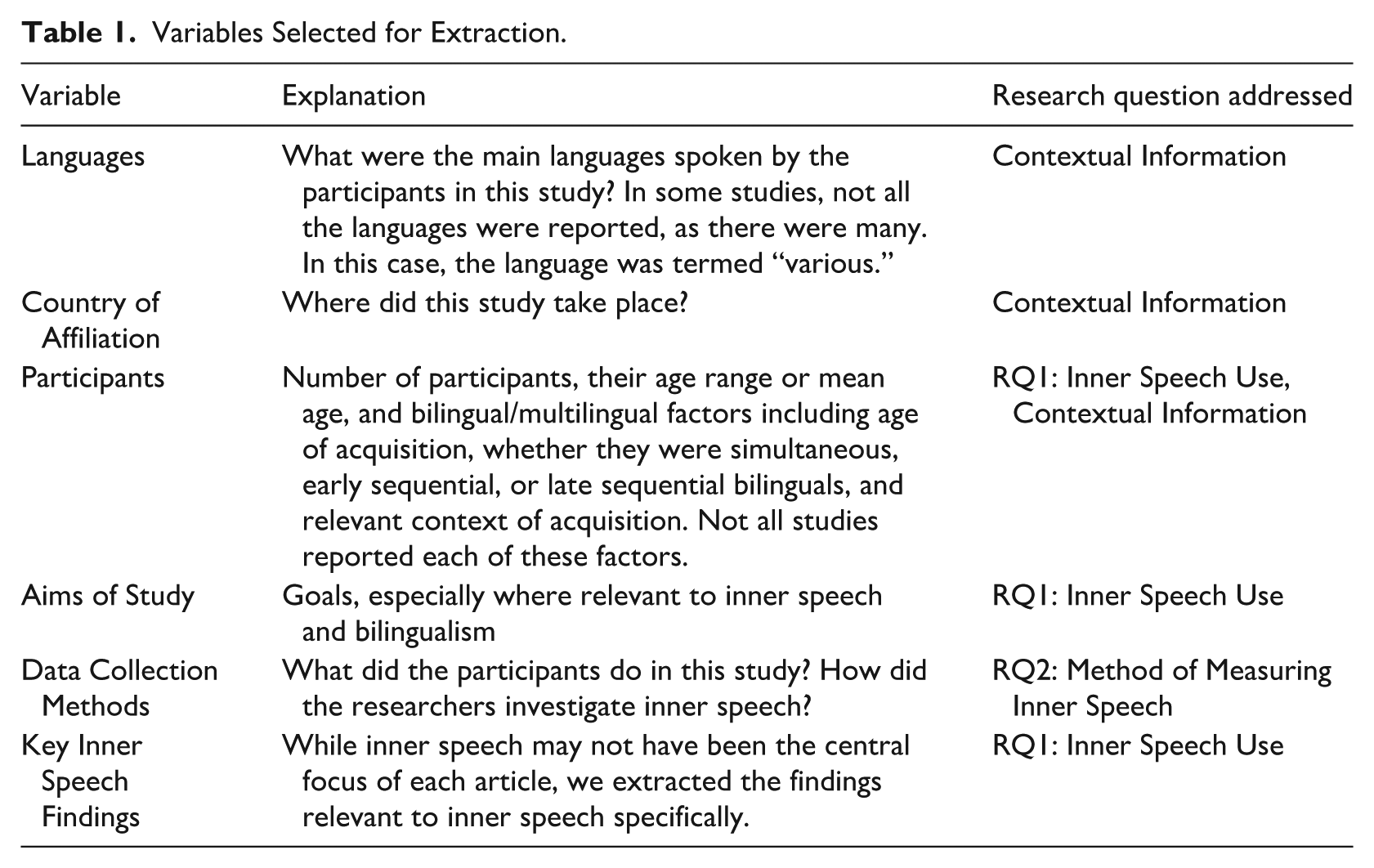
We extracted the data through Covidence after deciding the relevant variables and independently choosing the data to extract. The relevant variables were chosen to encompass the factors related to demographics, bilingualism, and outcomes of the studies. In Covidence, we extracted the title, author names, year of publication, name of journal, languages spoken, authors’ country of affiliation, number of participants, age range of participants, participants’ country of residence (i.e., whether L1 or L2 was spoken there), bilingual factors, aims of study, research questions, data collection and analysis methods, and results. These variables are explained in more depth in Table 1, including the research question addressed by each variable. The languages spoken by the participants and the country of affiliation of the researchers were included to provide context. For example, if the languages all had similar syntactic structures and many cognates, that may impact the interpretation of the results. Participants’ demographic information and bilingual/multicultural factors were included to understand the factors influencing inner speech use. For ease of viewing, we collapsed some of the variables (e.g., “Participants” includes number, age, and bilingual variables) and removed the extracted outcomes that were irrelevant to inner speech. Just as with determining inclusion, we met to address any discrepancies and come to a consensus on specific wording for extraction.
Variables
Variables Selected for Extraction.
Results
Selection of Sources for Evidence
After reviewing 302 initial articles from 5 databases, we included 11 articles that were relevant to our question and met our criteria (Figure 1). Many of the initial articles were not relevant to our question based on the title and abstract screening, often due to a lack of relevance to inner speech. Covidence allows a few different reasons for excluding evidence, which we adapted for our review. We used “wrong intervention” to mean that the context of the study may not have required inner speech, while “wrong study design” meant that it was a review, theoretical paper, or may have used speech out loud/private speech rather than inner speech. We used “wrong patient population” for studies on children or beginner language learners. There was no formal assessment of study quality or risk of bias, although the methods of the studies are discussed in detail in response to RQ2.
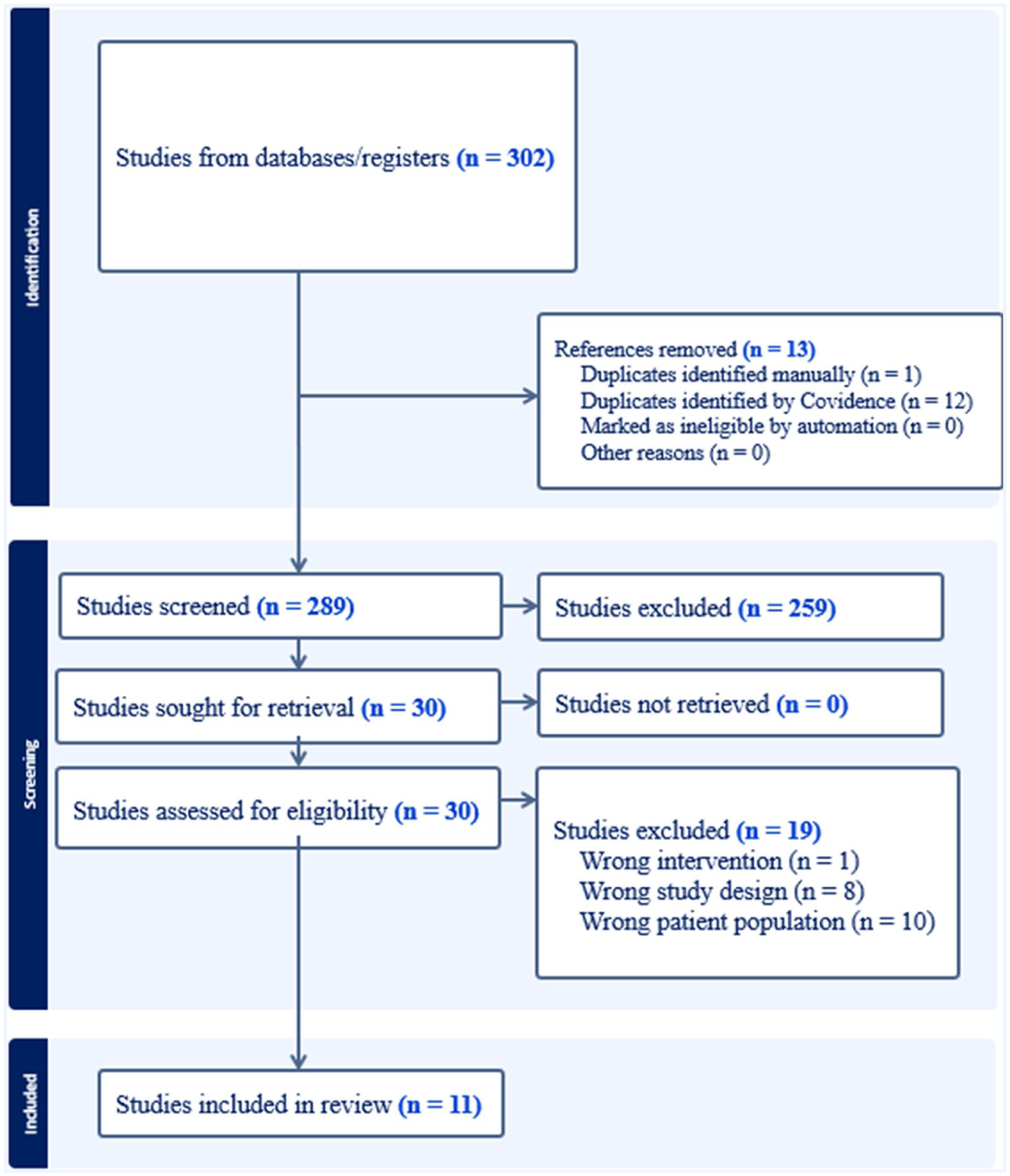
Flowchart of source selection, produced by Covidence.
RQ1: Patterns of Language Choice for Inner Speech
How do bilingual adults use inner speech? Are there particular factors of bilingualism that affect this use, especially for language choice for inner speech?
Results of the extraction are displayed in Table 2. Most of the studies focused on which language was used for inner speech. We present those results here, as well as the information about content, functions, and activities of inner speech extracted from the articles.
Studies on Inner Speech in Bilingual Individuals.
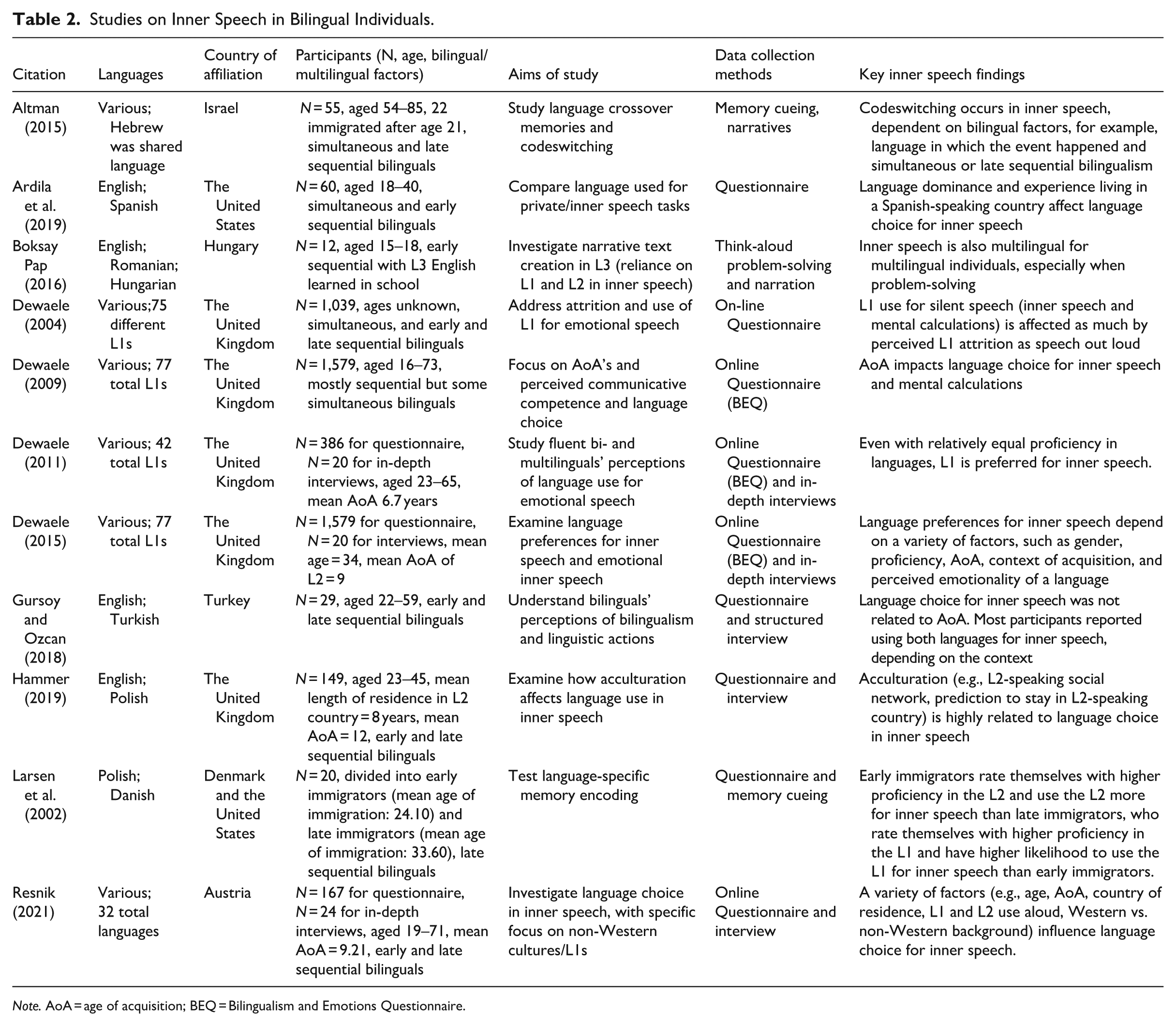
Note. AoA = age of acquisition; BEQ = Bilingualism and Emotions Questionnaire.
Language Choice
Overall, most studies found that the first language (L1) was used most often for inner speech, but several factors influenced the degree of this preference (Table 2, Key Inner Speech Findings). Studies identified a younger age of acquisition (AoA) to be associated with more use of the second language (L2) in inner speech (Dewaele, 2009, 2015; Larsen et al., 2002; Resnik, 2021), although one study found that AoA was not related to inner speech language choice (Gursoy & Ozcan, 2018). Language dominance and proficiency also contributed to language choice for inner speech (Ardila et al., 2019; Dewaele, 2004, 2015; Larsen et al., 2002), where the more dominant language/higher proficiency was associated with more inner speech use in that language. Context of inner speech was important as well (Altman, 2015; Gursoy & Ozcan, 2018; Larsen et al., 2002), especially when remembering events which occurred in a certain language (the inner speech was more likely to be in that language, although there were interactions with other variables such as proficiency or age of acquisition). The context of acquisition (Altman, 2015; Ardila et al., 2019; Dewaele, 2011, 2015; Larsen et al., 2002; Resnik, 2021) also played a role, with inner speech in L2 being more likely if a person did not only learn an L2 in school but also used the L2 in the community, for example. Use of L1 and L2 out loud reflected their use in inner speech (Resnik, 2021). Acculturation, measured by L2-speaking social networks and likelihood to stay in an L2-speaking country, was also highly related to using more L2 in inner speech (Hammer, 2019). Overall, inner speech for bilingual and multilingual adults appears to also be bilingual and multilingual (Boksay Pap, 2016), and phenomena that occur in overt speech, such as codeswitching, can occur in inner speech (Altman, 2015).
Inner Speech Use: Content, Functions, and Activities
Although most information was about language choice, another focus of this review included the concepts of content, functions, and activities of inner speech. For inner speech content (what a person talks about), L1 was often used for more emotional content – L1 was perceived as more emotional, while L2 may be more “rational,” as described by a participant who uses her L2 for additional clarity in inner speech (Dewaele, 2015). This may be because people generally learn their L1 at home and L2 for school or work, leading to this difference in language choice according to emotional load. For inner speech functions (reasons for inner speech use), studies identified inner speech used in problem-solving (Boksay Pap, 2016) and planning/reflecting (Ardila et al., 2019). For inner speech activities (when inner speech is used), studies discussed that inner speech was used during activities such as when remembering events that occurred in L1 versus L2, diary writing, and praying (Hammer, 2019), but often the principal focus of the research pertained to language choice during these activities. For example, rather than surveying all the activities during which bilinguals use inner speech, Hammer (2019) asked whether they used L1 or L2 for those specific activities (remembering events from L1 and L2, diary writing, and praying) and did not consider other potential activities, such as when alone/bored, driving, meeting people, and walking, as have been commonly reported in monolingual young adults (Racy et al., 2020).
RQ2: Measuring Inner Speech in Bilingual Adults – Methodologies
How are researchers measuring inner speech in bilingual adults? What types of information can be gained from these methods?
The most common method to measure inner speech was with questionnaires, followed by interviews, usually both methods being used within the studies (Table 2, Data Collection Methods). The questionnaires generally investigated the language choice for inner speech and/or the frequency of inner speech in each language, sometimes modulated by types of inner speech (emotional vs. mental calculations, in Dewaele, 2009). The Bilingualism and Emotions Questionnaire (BEQ) used by Dewaele (2009, 2011, 2015) has only one question specifically addressing inner speech: “If you form sentences silently
Other questionnaires had up to seven questions addressing different “domains” of inner speech, some of which may not be considered as inner speech by other groups (e.g., dreaming). The findings were supported by statistical analysis in most cases, including ANOVAs, Kruskal–Wallis tests, Wilcoxon Signed-Rank tests, and Spearman Rank correlations, although occasionally authors only provided descriptive statistics. The interviews confirmed the information collected from the questionnaires and allowed for quotations to illustrate concepts, but generally, the interviews did not extend to new research questions, and formal qualitative data analysis such as thematic analysis (Nowell et al., 2017) was rarely completed, although Boksay Pap (2016) employed an open-coding process. The interviews were selective (i.e., not every participant was interviewed) for the studies that used them to confirm information from questionnaires (Dewaele, 2011, 2015; Resnik, 2021); thus, they may not be representative of the entire population of bilinguals who completed the rest of the study. This is especially true as the interviews were limited by location, whereas web-based questionnaires could be completed from anywhere, and cultural influences may differ based on location. For example, in Resnik (2021), all of the participants had English as their L2, and the interviews were of participants living in London, but a majority of the respondents to the web survey lived in their countries of origin, which likely have different cultural-linguistic norms.
There were other methods that were used less frequently but provided additional types of evidence. Memory cueing addressed language choice, and it allowed for examination of crossover memories and codeswitching in inner speech, finding that both languages were activated (Altman, 2015; Larsen et al., 2002). Crossover memories (memories recalled in one language that originally happened in the other) depended on immigration status, with immigrants having more crossover memories in L2 (Altman, 2015), and age of immigration, with younger immigration related to higher ratings of proficiency in L2 and more inner speech in L2, including crossover memories, although most memories were recalled in the language that they originally occurred (Larsen et al., 2002). Narratives and narration (Altman, 2015; Boksay Pap, 2016) along with a think-aloud protocol (Boksay Pap, 2016) provided real-time insight into the mental processes of memory and problem-solving in bilinguals/multilinguals.
No studies used thought listing, descriptive experience sampling, articulatory suppression, inner rhyme judgment, or neuroimaging, as has been explored with monolingual young adults (Morin & Racy, 2022). The use of web-based questionnaires allows for convenient and efficient collection of large datasets (Dewaele, 2015), but the lack of variety in methodology poses limitations in this area of research, which will be addressed in the discussion.
Discussion
Summary of Evidence
RQ1: Inner Speech Use and Factors Affecting Language Choice in Inner Speech
Discussing which language (L1 vs. L2 vs. LX) is used in inner speech and the factors that affect language choice is a natural first step in inner speech and bilingualism research, and the research reported in this scoping review accomplished that step. Rather than just one factor determining which language is used in inner speech, there is a combination of factors which contribute to language choice. These factors overall reflect the cultural, linguistic, and emotional experiences of bilingual adults, and they highlight unique considerations when studying the bilingual population, such as codeswitching, merged language features, age and context of acquisition, L1 vs. L2 use out loud, language background/its interaction with culture, and motivations for using L1 and L2.
Acculturation and Cultural Identity
One central theme that emerged from the reviewed literature (Gursoy & Ozcan, 2018; Hammer, 2019; Larsen et al., 2002; Resnik, 2021) was the role of acculturation in shaping language choice in inner speech. Acculturation encompasses different variables, such as country of residence (and languages used in that country), language use in social networks, and plans for living in an L2-speaking country. The degree of acculturation can vary depending on cultural background and experiences, and it has significant implications for language use in inner speech. For example, in residents of the United States with an L1 of Spanish, the group of people born outside the United States was more likely to use Spanish in their inner speech than those born in the United States, but both reported using English more often than Spanish (Ardila et al., 2019). This difference may be attributed to longer experience with Spanish, but there could also be differences in acculturation due to the timing of migrating to the United States.
There may be cultural differences that especially affect acculturation, such as coming from a Western vs. non-Western background, as immigrants from a non-Western background to a Western background reported more use of L1 in inner speech than Western-Western immigrants (Resnik, 2021). There are multiple possible reasons for this difference in L1 inner speech use, including L1 and L2 linguistic similarity and acculturation. If aspects of the L1 and L2 such as morphosyntax, phonology, semantics, and pragmatics are perceived as different, adoption of the L2 in inner speech may be less likely. In addition, if a person is less likely to become involved in the L2 culture, they may also be less likely to use L2 in inner speech. Being less involved in the culture could lead to having fewer interactions out loud in the L2 and less time spent in the contexts in which those interactions happen, which may be driving some of the results concerning other factors that affect language choice for inner speech. Acculturation may also be affected by the reasons that a person would begin to learn another language; for example, if the individual was forced to move to another country due to socio-political unrest, the age at which they moved may be even more telling of their level of acculturation, and thereby their use of L2 in inner speech. Younger individuals may adapt more to the new culture and language (Kuo & Roysircar, 2004), leading to greater use of L2 in inner speech, whereas older individuals may continue to rely predominantly on L1 and have social circles in which L1 is spoken more often.
Language Proficiency and Order of Acquisition
According to the literature reviewed here, individuals are more likely to use the language in which they are more proficient for inner speech (Ardila et al., 2019; Dewaele, 2009, 2011, 2015; Larsen et al., 2002; Resnik, 2021). If one language is stronger or more dominant due to factors such as age and order of acquisition, frequency of use, or formal education, individuals may default to using that language in inner speech. There were mixed findings on the impact of age of acquisition on language choice for inner speech, with most studies finding that younger age of acquisition of a language related to more use of it in inner speech (Dewaele, 2009, 2015; Larsen et al., 2002; Resnik, 2021, but see Gursoy & Ozcan, 2018). Order of acquisition may matter more than proficiency in some cases (i.e., people will use L1 for inner speech more often although proficiency is equal) (Dewaele, 2011), which may be due to other factors, such as environment and emotional association, discussed below.
Language Environment and Context
The language environment, including the languages spoken by family members, friends, and colleagues, can influence language choice in inner speech. Individuals may use the language that is most prevalent or socially appropriate in their immediate surroundings. It may be mentally taxing to use inner speech in a language different from the one in the environment, as this would necessitate more translation, which adds to cognitive load (Hunziker Heeb et al., 2021). Therefore, it is likely natural to have inner speech in the language of the environment. The context in which inner speech occurs and the specific task at hand can influence language choice. For example, if individuals are engaged in a task that requires them to use specific terminology or concepts from one language, they may default to using that language in their inner speech. If a person learned certain terminology or concepts in a certain language, it will likely be easiest to use that language for inner speech. One example discussed in the literature is mental calculations, as people will use the language of instruction for mental calculations (Dewaele, 2009; Gursoy & Ozcan, 2018), unless their occupations require mental calculations, in which case they will use the language of that environment (Gursoy & Ozcan, 2018).
Emotional Association
Emotional experiences and associations with a particular language can influence language choice in inner speech. If a language is associated with positive emotions, comfort, or familiarity, individuals may be more likely to use it in inner speech, especially during moments of reflection or introspection. L1 is often perceived to be more emotional, likely because it was the language spoken at home (Dewaele, 2004). If people are also more proficient in their L1, they may also have more access to vocabulary related to emotions.
Overall, the findings from this scoping review underscore the intricate interplay between acculturation, cultural-linguistic background, and language choice in inner speech among bilingual individuals. Understanding these factors is essential for gaining insights into the dynamics of inner speech in bilingualism and its implications for language processing and cognitive function.
RQ2: Methods of Measuring Inner Speech
Measuring inner speech can be challenging due to the silent nature of the phenomenon, and the studies included in this review used limited methodology, mainly addressing the question of language choice discussed above. For that question, the most common methods – questionnaire, interview, and memory cueing – were appropriate, but they do not give the depth and breadth of information that other methods used in monolingual adults can give. For example, the BEQ only included one question related to language choice in inner speech, and it did not go beyond that to include other aspects of inner speech. This questionnaire, or a similar one-question investigation of inner speech, was used in the majority of the studies that employed questionnaires. The methods used for studying inner speech in bilingual adults yielded information about which language is used and factors influencing that choice, but the research reviewed here lacks information about the content, functions, and activities of inner speech, and how they relate to prior work with monolingual adults (Morin & Racy, 2022; Racy et al., 2020). The questionnaire used by Ardila et al. (2019) did address which language is used for different types of inner speech (e.g., spiritual, planning, reflecting, problem-solving, reasoning, recall of experiences/knowledge, thinking in high-stress situations). Hammer (2019) similarly investigated four inner speech domains (thinking of events experienced in L2, diary writing, praying/internal monologue, and thinking of events experienced in L1). This allows for more robust interpretation, but it does not encompass every possibility of inner speech use.
It is possible that bilinguals and monolinguals use inner speech to talk about similar concepts and for similar reasons, and their inner speech is spread to varying degrees across their languages based on the factors presented above, but there may be content or functions of inner speech unique to the bilingual experience, or certain contents more likely to occur in L1 versus L2. For example, if the L1 is the home language while the L2 is used primarily at work, L1 may have more content related to family life, maintaining the home, and food, while L2 may have more content related to scheduling, work, and errands. In addition, bilinguals may have unique themes of inner speech, such as translating in the head or cultural-linguistic differences. The frequency of inner speech in these studies was limited to comparative frequency in each language and does not give an idea of how often bilingual adults use inner speech, regardless of the language. It is possible that speaking more than one language could relate to using inner speech more or less often than monolingual adults. This relationship is unknown, but if a person manages two languages in the mind, inner speech may occur more frequently by virtue of knowing more than one language and coactivation of the language systems (Chen et al., 2017). Alternatively, bilinguals may experience more condensed inner speech, with less of the phonetic representation, closer to Vygotsky’s concept of “thinking in pure meaning” (Vygotsky, 1962) due to the shared conceptual store.
Some studies also used memory cueing (Altman, 2015; Larsen et al., 2002), and this led to the exploration of crossover memories, which appear to exist bidirectionally (from events in L1 to memories in L2 and vice versa). Based on the models of language in the bilingual brain, both languages interact and coactivate (Grant et al., 2019; Grosjean & Li, 2013; Kroll et al., 2010; Kroll & Tokowicz, 2005). This coactivation can lead to crossover effects, where memories formed in one language can influence recall in the other language. Furthermore, the context and linguistic experience of the bilingual individual play crucial roles in determining which language is activated and used during recall. Even though an event occurred in one language, they may recall it in the other language due to emotional significance, language dominance, or the environment of recall. The coactivation of both languages may also be related to the findings of codeswitching in inner speech. Bilinguals may codeswitch even more often in inner speech (as compared to out loud), as they can easily understand themselves in whichever words come to mind most efficiently, rather than considering the linguistic knowledge of a communication partner. This may be especially true when the characteristics of the words themselves (such as high or low frequency) are different in L1 and L2. In some cases, there may even be words without clear or one-to-one translations (Yaffe, 2025). For this reason, inner speech may allow bilinguals to have more fluid and efficient language use than speech out loud.
Measuring inner speech during problem-solving tasks, as in Boksay Pap (2016), taps into the evidence about the functions of inner speech and may also be used for assessing how inner speech could be related to the proposed “bilingual advantage” in executive function. Inner speech is closely linked to various cognitive functions, including attention, working memory, and problem-solving (Alderson-Day & Fernyhough, 2015; Morin, 2011). By studying how inner speech is utilized during problem-solving tasks in bilinguals, researchers can investigate how language interacts with these cognitive processes. For example, inner speech may serve as a tool for organizing thoughts, planning, and evaluating solutions during problem-solving by being one possible cognitive strategy to support executive function (Baldo et al., 2005; Fama et al., 2024). Understanding how inner speech functions for bilinguals in problem-solving contexts can provide valuable insights into the relationship between language and cognitive function. If there is a bilingual advantage for particular cognitive functions (e.g., inhibition, problem-solving, cognitive flexibility, and again, this is speculative), it is possible that inner speech is a mechanism behind this advantage due to its connection with tasks requiring cognitive control.
Expanding methods for measuring inner speech in bilingualism requires a nuanced approach that considers the multifaceted nature of inner speech. Researchers can enhance existing methodologies by incorporating additional types of questions into questionnaires, focusing on aspects such as the contents, functions, and activities of inner speech. In addition, most of the methods used in these studies rely on subjective self-report through questionnaires or interviews. While valuable, this methodology may face issues with reliability and validity because people may answer based on their beliefs about inner speech rather than the actual experience. Self-report methods can be improved by implementing a rigorous training process to ensure validity (Hurlburt & Heavey, 2015). Researchers can supplement self-reports with more objective methods such as neuroimaging (Fama et al., 2017; Hurlburt et al., 2016; Kühn et al., 2014) (e.g., measuring brain activity during inner speech in various languages) or articulatory suppression (Baldo et al., 2005; Nedergaard et al., 2023) (e.g., inhibiting inner speech) to provide more robust data. By so incorporating additional questions and techniques, researchers can gain a more comprehensive understanding of how inner speech operates in bilingual individuals across different contexts and languages.
Adding questions about the contents of inner speech allows researchers to explore the specific themes that bilingual individuals use in their inner speech, or what a person talks about in the head. This can provide insights into the linguistic and cognitive processes involved in inner speech across languages. Questions about the functions of inner speech examine the purposes and goals that inner speech serves, such as problem-solving, self-regulation, or language rehearsal. Understanding the functions of inner speech can shed light on its role in cognitive processes and how it may differ between languages in bilingual individuals. In addition, researchers can inquire about the activities during which inner speech is employed, such as while driving, working, or language switching. This helps to contextualize the use of inner speech in everyday situations and cognitive activities. By tailoring the items on questionnaires to specific research questions, researchers can design questionnaires that capture relevant aspects of inner speech in bilingualism.
It is important to note that questionnaires may have limitations in capturing the dynamic nature of inner speech in daily life. To complement questionnaire data, researchers can employ methods such as descriptive experience sampling (Heavey & Hurlburt, 2008), which involves participants providing real-time reports of their inner experiences at random intervals throughout the day. Descriptive experience sampling allows for the measurement of inner speech frequency, contents, and functions in naturalistic settings, providing a more ecologically valid assessment of inner speech in bilingual individuals’ daily lives. Furthermore, researchers can employ more rigorous statistical analyses to extract meaningful insights from the data collected. This may involve using advanced modeling techniques to examine relationships between variables, assessing covariates that may influence inner speech processes, or conducting formal qualitative analyses to explore themes and patterns in participants’ responses. By employing robust statistical methods, researchers can derive more nuanced and accurate conclusions from their data, enhancing our understanding of inner speech in bilingualism.
Broader Applications: Cognitive and Clinical Implications
When examining inner speech in bilingual adults, we must consider applications beyond the laboratory. Inner speech is thought to play a role in executive functions such as problem-solving, task switching, and self-regulation (Alderson-Day & Fernyhough, 2015; Racy & Morin, 2024; Wallace et al., 2017). For bilingual adults, these functions are shaped by the need to manage multiple linguistic systems, making inner speech a particularly informative window into bilingual cognition.
Critically, bilingualism should not be treated as a dichotomous variable (bilingual vs. monolingual). The factors of bilingualism that affect the use of inner speech and language choice during inner speech add to the complexity of research, and these factors may shape both typical and atypical language use across contexts. As an example, in aphasia, researchers and clinicians must consider not only their neurological variables (e.g., lesion site, time post-stroke) but also their individual bilingual experience, including language history, premorbid use, whether the languages were affected and recovered in parallel, and linguistic environments (Khachatryan et al., 2016). In clinical work, clinicians must design their plans of care to address bilinguals’ connections with each language: how often they may be using each language out loud and in their heads, their linguistic environments (at home, in health care, in their communities), and how they may be using that language (the contents, functions, and activities). Based on the findings of this review, inner language use may differ from overt speech. For instance, a bilingual individual may speak in their L2 in health care or professional settings while maintaining L1 for inner speech, particularly for emotionally salient or autobiographical content. Clinicians and researchers who probe this distinction may gain insight into personal language priorities, and this could inform applications such as treatment goals.
Beyond aphasia, inner speech has been implicated in a range of mental health and neurodevelopmental conditions in which many individuals are bilingual or multilingual. In schizophrenia, atypical inner speech has been linked to auditory verbal hallucinations and deficits in self-monitoring (Alderson-Day et al., 2018; Barber et al., 2021; Petrolini et al., 2020), raising questions about how language choice in inner speech may shape symptom expression in bilingual individuals. In autism spectrum disorder, differences in inner speech use have been associated with self-regulation and memory (Williams et al., 2008, 2016), while in anxiety disorders, ruminative or intrusive inner speech may vary depending on language and emotional distancing (Ghamari Kivi et al., 2023; Zawadzki, 2015). Considering bilingualism in these populations highlights the importance of examining not only what people say aloud but also how they use language internally to regulate cognition and emotion.
Inner speech also interacts with phenomena such as codeswitching (Altman, 2015) and cross-linguistic generalization. In aphasia treatment, for example, recovery in one language may extend to the other (Edmonds & Kiran, 2006). This was especially relevant for semantically related items in the other language, indicating coactivation of the semantics and phonology of both languages. Inner speech may facilitate or reflect this coactivation, providing a mechanism through which bilingual language systems interact. Similar processes may support executive function and inhibition in neurotypical bilingual adults, underscoring the relevance of inner speech to broader models of bilingual language control.
Methodologically, research on inner speech in adults – both neurotypical and clinical – has employed a range of approaches, including self-report questionnaires, interviews, descriptive experience sampling, neuroimaging, articulatory suppression, covert or inner rhyme judgment tasks, subjective reports of successful inner speech during naming, and rating scales assessing frequency of inner speech (Alderson-Day et al., 2018; Alexander et al., 2023, 2024; Baldo et al., 2005; Fama et al., 2019; Grandchamp et al., 2019; Heavey & Hurlburt, 2008; Nedergaard et al., 2023; Racy et al., 2020; Stark et al., 2017). In the future, researchers may integrate a detailed language history measure with these inner speech assessments to examine how bilingual experience shapes internal language use across populations. This work may provide a foundation for work on cognitive functions related to bilingualism, inner speech, and aphasia, such as executive function. Such work may clarify how inner speech supports executive function and whether bilingualism confers cognitive advantages or compensatory mechanisms, including in populations with acquired language disorders (Penn et al., 2010). In clinical practice, these tools may be used to screen for preserved inner speech, explore discrepancies between internal and overt language use, and guide treatment planning – for example, by identifying whether individuals can access verbal mediation internally even when overt speech is impaired. Integrating detailed language history measures with inner speech assessments would allow clinicians and researchers to examine how bilingual experience shapes internal language use across populations.
Importantly, studying bilingual adults with aphasia remains valuable not only for clinical reasons but also because focal brain injury offers unique insight into the organization of the language system. Patterns of preserved or disrupted inner speech following stroke may illuminate how bilingual language representations are accessed and regulated internally, contributing to theoretical accounts of bilingual language processing more broadly.
Limitations and Future Directions
Based on our inclusion and exclusion criteria for studies, we excluded research from “gray literature,” so we do not have data from dissertations or books, although they could be relevant to our questions. Although there were several studies in our original search about language learning, our focus on relatively stable forms of inner speech and language ability led us to exclude work examining dynamic changes during language acquisition. Future work investigating language learning and inner speech could help to further understand our questions about how inner speech relates to bilingualism in the brain and whether the use of inner speech in L2 may predict mastery. In addition, we restricted our definition of inner speech to verbal thought in the head, but including related phenomena such as private speech would have extended our findings. Including more articles may provide more insight into whether inner speech in a certain language is necessary to fluency or if there could be pedagogical techniques involving encouraging inner speech in a new language.
We limited our search to the database search, not searching for additional evidence relevant to our research questions (i.e., screening the reference lists from our included studies or contacting authors to identify additional sources of evidence). We chose to select only the sources from our search strategy on the identified databases to make the process more replicable, but it is possible that we missed relevant studies. We also did not do a formal critical appraisal (or risk of bias) of the evidence, as much of the research was qualitative, and we felt that the critical appraisal would be more appropriate for treatment studies.
Future studies on inner speech in bilingual adults may benefit from employing multi-method designs, combining experience sampling, more in-depth questionnaires such as the General Inner Speech Questionnaire (Racy et al., 2020), and experimental paradigms to gain more information on the different aspects of inner speech. Further research could expand our questions to include how dynamic inner speech may be for bilinguals and take a life course perspective, examining how inner speech and language choice evolve across development, migration, aging, and neurological change. In clinical populations, themes such as identity, health-related cognition, and emotional regulation may be particularly salient (Moss et al., 2021; Taubner et al., 2020; Thomas et al., 2020).
Conclusion
For research and clinical work with bilingual adults, researchers and clinicians must be aware of factors throughout the life course that may affect the language that a person will use, even in their heads. A bilingual adult likely has many perceptions about the languages they speak and the cultures that accompany them. Bilingual individuals bring rich linguistic histories and cultural identities that shape how they think, regulate emotion, and solve problems internally. Examining inner speech across neurotypical and clinical populations – including aphasia, mental health conditions, and neurodevelopmental differences – offers a valuable avenue for advancing our understanding of bilingual cognition. By integrating perspectives from bilingualism research, cognitive science, and clinical inquiry, future work on inner speech can contribute to more comprehensive models of bilingual language processing and its variability across the lifespan.
Footnotes
Appendix
Preferred Reporting Items for Systematic Reviews and Meta-Analyses Extension for Scoping Reviews (PRISMA-ScR) Checklist.
| Section | Item | PRISMA-ScR Checklist item | Reported on page # |
|---|---|---|---|
|
|
|||
| Title | 1 | Identify the report as a scoping review. | 1 |
|
|
|||
| Structured summary | 2 | Provide a structured summary that includes (as applicable): background, objectives, eligibility criteria, sources of evidence, charting methods, results, and conclusions that relate to the review questions and objectives. | 2–3 |
|
|
|||
| Rationale | 3 | Describe the rationale for the review in the context of what is already known. Explain why the review questions/objectives lend themselves to a scoping review approach. | 3–7 |
| Objectives | 4 | Provide an explicit statement of the questions and objectives being addressed with reference to their key elements (e.g., population or participants, concepts, and context) or other relevant key elements used to conceptualize the review questions and/or objectives. | 7 |
|
|
|||
| Protocol and registration | 5 | Indicate whether a review protocol exists; state if and where it can be accessed (e.g., a Web address); and if available, provide registration information, including the registration number. | 8 |
| Eligibility criteria | 6 | Specify characteristics of the sources of evidence used as eligibility criteria (e.g., years considered, language, and publication status), and provide a rationale. | 8–9 |
| Information sources a | 7 | Describe all information sources in the search (e.g., databases with dates of coverage and contact with authors to identify additional sources), as well as the date the most recent search was executed. | 9–10 |
| Search | 8 | Present the full electronic search strategy for at least 1 database, including any limits used, such that it could be repeated. | 9 |
| Selection of sources of evidence b | 9 | State the process for selecting sources of evidence (i.e., screening and eligibility) included in the scoping review. | 7–11 |
| Data charting process c | 10 | Describe the methods of charting data from the included sources of evidence (e.g., calibrated forms or forms that have been tested by the team before their use, and whether data charting was done independently or in duplicate) and any processes for obtaining and confirming data from investigators. | 10–11 |
| Data items | 11 | List and define all variables for which data were sought and any assumptions and simplifications made. | 10–12 |
| Critical appraisal of individual sources of evidence d | 12 | If done, provide a rationale for conducting a critical appraisal of included sources of evidence; describe the methods used and how this information was used in any data synthesis (if appropriate). | NA |
| Synthesis of results | 13 | Describe the methods of handling and summarizing the data that were charted. | 10 |
|
|
|||
| Selection of sources of evidence | 14 | Give the number of sources of evidence screened, assessed for eligibility, and included in the review, with reasons for exclusions at each stage, ideally using a flow diagram. | 11–13 |
| Characteristics of sources of evidence | 15 | For each source of evidence, present characteristics for which data were charted and provide the citations. | 11–23 |
| Critical appraisal within sources of evidence | 16 | If done, present data on critical appraisal of included sources of evidence (see item 12). | NA |
| Results of individual sources of evidence | 17 | For each included source of evidence, present the relevant data that were charted that relate to the review questions and objectives. | 18–24 |
| Synthesis of results | 18 | Summarize and/or present the charting results as they relate to the review questions and objectives. | 14–17 |
|
|
|||
| Summary of evidence | 19 | Summarize the main results (including an overview of concepts, themes, and types of evidence available), link to the review questions and objectives, and consider the relevance to key groups. | 25–36 |
| Limitations | 20 | Discuss the limitations of the scoping review process. | 36–37 |
| Conclusions | 21 | Provide a general interpretation of the results with respect to the review questions and objectives, as well as potential implications and/or next steps. | 37 |
|
|
|||
| Funding | 22 | Describe sources of funding for the included sources of evidence, as well as sources of funding for the scoping review. Describe the role of the funders of the scoping review. | NA |
Source. Tricco et al. (2018).
Note. JBI = Joanna Briggs Institute; PRISMA-ScR = Preferred Reporting Items for Systematic reviews and Meta-Analyses extension for Scoping Reviews.
Where sources of evidence (see second footnote) are compiled from, such as bibliographic databases, social media platforms, and websites. bA more inclusive/heterogeneous term used to account for the different types of evidence or data sources (e.g., quantitative and/or qualitative research, expert opinion, and policy documents) that may be eligible in a scoping review as opposed to only studies. This is not to be confused with information sources (see first footnote). cThe frameworks by Arksey and O’Malley (6) and Levac and colleagues (7) and the JBI guidance (4, 5) refer to the process of data extraction in a scoping review as data charting. dThe process of systematically examining research evidence to assess its validity, results, and relevance before using it to inform a decision. This term is used for items 12 and 19 instead of “risk of bias” (which is more applicable to systematic reviews of interventions) to include and acknowledge the various sources of evidence that may be used in a scoping review (e.g., quantitative and/or qualitative research, expert opinion, and policy documents).
Acknowledgements
We would like to acknowledge Amy Minix, the Neuro-Health Sciences Librarian and Liaison for Nursing, Optometry, Psychological & Brain Sciences, and Speech, Language, & Hearing Sciences at Indiana University, for her help in selecting databases, developing a sensitive yet efficient search strategy, and using Covidence to complete the review.

Funding
The authors received no financial support for the research, authorship, and/or publication of this article.
Declaration of Conflicting Interests
The authors declared no potential conflicts of interest with respect to the research, authorship, and/or publication of this article.