






Abstract
Aims:
The present study explores how language switching modulates cross-language semantic competitor effects in Chinese-English bilinguals to test the Inhibitory Control Model and Language-Specific Selection Model.
Design:
Two behavioral experiments adopted a modified cross-language semantic competitor priming paradigm. Computational models simulated inhibitory and non-inhibitory mechanisms.
Data and analysis:
Linear mixed-effects models and generalized linear mixed-effects models were used to analyze reaction time and accuracy from behavioral experiments. Computational simulations were compared with behavioral results.
Findings:
For L2 production, cross-language semantic interference effects emerge under non-switch conditions and diminish under switch conditions. For L1 production, no cross-language semantic interference effects were detected under either the non-switch or switch conditions. Computational simulations matched these results.
Originality:
A dual-mechanism account is proposed that L2 production relies on inhibitory control and L1 production on language-specific selection.
Significance:
Language control mechanisms by Chinese-English bilinguals can be modulated by language dominance.
Keywords
Introduction
A premise in bilingual language production is the co-activation of linguistic representations across both languages (Colomé & Miozzo, 2010; Hoshino & Kroll, 2008). This parallel lexical activation necessitates language control to allow target-language production while avoiding interference from the non-target language (Abutalebi & Green, 2007, 2008; Green & Abutalebi, 2013). Two theoretical frameworks have been proposed. The Inhibitory Control Model (ICM; Green, 1998) postulates that lexical representations from both languages are activated and compete, and global inhibition of the non-target language is required to ensure target-language production. The Language-Specific Selection Model (LSSM; Costa et al., 1999), in contrast, assumes that while lexical representations from both languages are activated, competition for lexical selection is constrained to the target language, with no need to inhibit the non-target language.
Empirical support for ICM comes mainly from the language switching paradigm. The most robust empirical findings include: (1) switch costs where naming latencies are significantly shorter on stay trials than on switch trials and (2) asymmetrical switch costs where the switch cost is significantly higher when switching back to L1 than to L2 (Jevtović et al., 2020; Kaufmann et al., 2018; Kennis et al., 2024; Meuter & Allport, 1999). ICM explains this via global inhibition of the non-target language. Switch trials require overcoming inhibition applied to the current language on the previous trial, leading to switch costs. ICM also posits that the greater the activation level of a language, the stronger the inhibition applied to it. A stronger degree of inhibition must be applied to the highly active L1 than to the L2. Therefore, in a switch trial back to L1, overcoming the previously applied strong inhibition of the L1 takes a longer time, resulting in the larger switch costs. These findings can also be explained by the Response Selection Account (Finkbeiner, Almeida, et al., 2006; Finkbeiner, Gollan, et al., 2006). According to this framework, a single stimulus activates L1 and L2 responses. Due to a single articulatory channel, one response must be rejected for successful production. In stay trials, predefined criteria allow immediate selection or rejection, while switch trials require extra time to re-establish these criteria, leading to switch costs. Furthermore, L1 stay responses become available faster than L2 stay responses, contributing to asymmetrical switch costs. Moreover, asymmetrical switch costs are not always replicable. Some studies have found no asymmetry (Costa & Santesteban, 2004; Ivanova & Hernandez, 2021; Kang et al., 2018) or even reversed asymmetry (Bonfieni et al., 2019; Liu et al., 2019; Zheng et al., 2020).
Emerging studies suggest that paradigms examining semantic competitor effects may provide complementary insights. Broadly defined, semantic competitor effects refer to the phenomenon where the speed with which a given object is named is significantly affected by whether objects from the same semantic category have been presented or named previously (Runnqvist et al., 2012). A consistently replicated finding is the semantic interference effect, wherein target naming latencies (e.g., dog) are longer when a semantically related name (e.g., cat) has been presented or named beforehand compared to an unrelated condition (e.g., book; Feng et al., 2026; Glaser & Düngelhoff, 1984; Howard et al., 2006; Wang et al., 2025; Wheeldon & Monsell, 1994). This effect is widely interpreted as strong evidence for lexical competition (Levelt et al., 1999). Specifically, semantically related words become co-activated via spreading activation from the conceptual level and compete with the targets for selection.
When extended to bilingual language production, semantic competitor effects examine how naming latencies for a target (e.g., dog) are influenced by semantically related words from another language (e.g., 猫, meaning cat). A key paradigm is the bilingual picture-word interference (PWI) task, where participants name pictures in the target language while ignoring distractors in the non-target language (Costa & Caramazza, 1999; Costa et al., 1999; Sudarshan & Baum, 2019; Tomoschuk et al., 2020). A robust finding is the cross-language semantic interference effect from non-translation distractors, wherein target naming (e.g., dog) is significantly slower with semantically related (e.g., 猫, meaning cat) versus unrelated distractors (e.g., 书, meaning book) (Costa & Caramazza, 1999; Roelofs et al., 2016; Sudarshan & Baum, 2019). This effect corresponds to ICM’s predictions. Lexical representations from both languages activate and compete, with semantically related distractors eliciting stronger competition due to semantic overlap with targets. LSSM offers an alternative explanation. Lexical representations from both languages are activated, but the competition is constrained to the target language. A core tenet of the LSSM targeting bilingual PWI paradigm is that non-target language distractors automatically activate their translation equivalents (Costa et al., 1999). For example, the Chinese distractor “猫” (cat) is not a competitor itself, but its English translation “cat” is activated and competes with the target “dog,” leading to the interference effect. When the cross-language semantic relatedness is maximized, in which the distractor (e.g., 狗, meaning dog) is just the translation of the target (e.g., dog), a facilitation effect is repeatedly obtained (Chauncey et al., 2009; Dylman & Barry, 2018; Giezen & Emmorey, 2016; Tomoschuk et al., 2020). This finding supports LSSM. The translation distractors (e.g., 狗, meaning dog) directly activate their target language labels (e.g., dog), creating a priming effect for the target (e.g., dog). Conversely, it challenges ICM, with the prediction of maximal interference effects for the translation distractors due to their complete semantic overlap with targets. To simultaneously account for both cross-language semantic interference effects from non-translation distractors and translation facilitation effects, LSSM emerges as a more viable framework than ICM.
In the examination of language control mechanisms, language switching research primarily tests whether global inhibition is engaged, whereas studies on semantic competitor effects mainly verify the presence of cross-language lexical competition. Both lines of research have advanced the understanding of bilingual language control. Several studies have been conducted to examine the interaction between language switching and semantic competitor effects. The ICM yields a testable prediction in this regard, positing that “(. . .) if there is a change of language then any lemmas in the previously active language will become inhibited. In certain circumstances, this should lead to the abolition of both cross-language and within-language competitor priming” (Green, 1998, p. 75). In contrast, the LSSM proposes a different mechanism. The model posits only within-language competition, predicting no cross-language but only within-language semantic competitor effects. Furthermore, the within-language semantic competitor effects are expected to persist following a language switch because the lexical representations of the previously used language remain accessible rather than being suppressed. These divergent predictions provide a testing ground for competing accounts of bilingual language control.
Several studies tested that prediction. Lee and Williams (2001) tested the ICM prediction using a cross-language semantic competitor priming paradigm with English-French bilinguals. Participants generated L1 words from definitions, then named pictures in L1 or L2. The word elicited by the second definition could be semantically related to the second picture name. Semantically related primes prolonged naming latencies, which were attributed to the sustained activation of primes and lexical competition. However, this interference effect disappeared when a language switching occurred between the prime and the target picture. These findings supported ICM. Language switching triggers global inhibition of previously active L1 lemmas, eliminating competition during subsequent picture naming. However, the authors noted that their study only demonstrated L1 inhibition during L2 production; whether L2 words compete with L1 targets or are inhibited during L1 production remains untested (Lee & Williams, 2001). Hong and Macwhinney (2011) extended this work with Chinese-English bilinguals. They found that L2 classroom learners with low working memory replicated the vanished interference after switching, whereas individuals with study-abroad experience and L2 learners with high working memory maintained interference despite switching, suggesting that language control is modulated by study-abroad experience and working memory capacity.
Runnqvist et al. (2012) used a cumulative semantic interference paradigm with Spanish-Catalan bilinguals and found linearly increasing naming latencies for same-category items (e.g., car, airplane, bus) separated by unrelated filler in the same language. Producing a word strengthens its concept–lemma connection, thereby priming its future activation, and as subsequent same-category pictures spread activation to related concepts, the previously produced item becomes a strong competitor, with the accumulation of additional category members further enlarging the competitor pool and causing increasing interference (Howard et al., 2006). Crucially, this interference persisted when language was introduced through mixed-language fillers, contradicting the predictions of the ICM.
Lowry et al. (2021) employed an adapted version of the blocked naming paradigm consisting of two conditions: semantically uniform sub-blocks (all six trials from the same semantic category) and mixed sub-blocks (trials 1–4 from one category, trials 5–6 from another). Each sub-block contained six trials, with the naming language on the fourth trial differing from that of the other trials (e.g., L1, L1, L1, L2, L1, L1). The results revealed no difference in naming latencies at the fifth trial between uniform and mixed sub-blocks, consistent with the predictions of ICM. According to ICM, in uniform sub-blocks, language switching at the fourth trial inhibits activation from the first three trials, reducing competition and producing no difference from mixed sub-blocks. Lowry et al. (2021) also developed computational models of inhibitory and non-inhibitory accounts. The inhibitory model performed better, predicting no differences at the fifth trial between uniform and mixed sub-blocks, matching the observed reaction time patterns. In contrast, the non-inhibitory model predicted longer naming latencies for uniform blocks at the fifth trial, contradicting the experimental results.
Theoretically, examining the interplay between language switching and semantic competitor effects can be used to investigate language control mechanisms, revealing the nature of lexical competition and the role of inhibition, and providing a comprehensive description of bilingual language control. However, findings in this area remain fragmented and characterized by empirical inconsistencies. Four critical research gaps exist. First, a methodological ambiguity exists regarding the isolation of language-level control. Earlier behavioral research (e.g., Lee & Williams, 2001) confounded language-specific inhibition with task switching by mixing disparate production modalities, such as alternating between definition-driven and picture-driven naming. Consequently, it remains unresolved whether the observed abolition of semantic interference is a pure linguistic product of inhibitory control or merely a byproduct of shifting between different cognitive tasks. Second, the generalizability of extant computational models requires further validation across diverse paradigms. Although Lowry et al. (2021) provided pivotal computational evidence for inhibitory control by demonstrating its influence on within-language semantic competitor effects in a blocked naming paradigm, it remains an open question whether these findings hold in cross-language priming scenarios. This investigation is vital to evaluate if global inhibition functions as a universal mechanism that operates effectively regardless of the specific experimental task or linguistic boundary involved. Third, the modulating role of language dominance remains underexplored. Lee and Williams (2001) only demonstrated the strong inhibition of L1 words during L2 production; however, a parallel experimental design investigating L1 production was lacking. It remains unclear whether the language control mechanisms governing L1 and L2 production are characterized by qualitative or quantitative distinctions. Fourth, there is an urgent need to investigate the modulating role of domain-general cognitive control, which refers to a broad spectrum of executive functions, including attention, problem-solving, working memory, and inhibition that monitor and regulate goal-driven behavioral responses (Mackie et al., 2013). Hong and MacWhinney (2011) tested Chinese-English bilinguals using a semantic competitor priming paradigm. They found that language control was influenced by working memory, demonstrating a connection between language control and domain-general cognitive control. To our knowledge, this is the only study that has directly examined the role of domain-general cognitive control on language control using this paradigm. Furthermore, the broader literature presents a complex picture of both correlations (e.g., Kang et al., 2020; Sudarshan & Baum, 2019; Timmer et al., 2018) and dissociations (e.g., Branzi et al., 2016; Declerck et al., 2017, 2019) between linguistic and non-linguistic executive functions. Consequently, domain-general cognitive control’s role in language control requires further investigation.
To address these gaps, the current study adopts a dual-method approach combining behavioral experiments and computational modeling. First, the present study aims to eliminate task-switching confounds in earlier designs. This is achieved through a modified cross-language semantic competitor priming paradigm that maintains consistent naming modalities across all trials. Four experimental conditions were created by manipulating two factors: the semantic relationship between prime and target items and the presence of language switching on the fourth trial. ICM predicts cross-language semantic interference effects in non-switch contexts and null effects in switch contexts, while LSSM predicts an absence of cross-language semantic effects regardless of the switching condition. Second, the research seeks to extend the theoretical trajectory of Lowry et al. (2021) through the construction of tailored computational models. By moving beyond the within-language constraints of previous simulations, the current modeling serves as a critical test of whether global inhibition can transcend linguistic boundaries to eliminate cross-language semantic competition. Third, the study investigates the modulating roles of language dominance and domain-general cognitive control. Language control mechanisms are explored separately in both L2 (Experiment 1) and L1 (Experiment 2) production. It is hypothesized that if L1 and L2 production recruit distinct control mechanisms, qualitative shifts in empirical patterns will be observed between the two experiments. According to ICM, inhibition applied to the non-target language is scaled with its baseline activation level. For typical bilinguals, the dominant L1 maintains a higher baseline activation than L2. Consequently, inhibiting L1 during L2 production is more likely to be required, whereas inhibiting L2 during L1 production may be minimal or unnecessary. Based on this rationale, the qualitative shifts between L1 and L2 production are predicted. During L2 production, the pattern aligns with ICM, predicting cross-language semantic interference effects in non-switch contexts and null effects in switch contexts. During L1 production, the pattern aligns with LSSM, predicting an absence of cross-language semantic effects regardless of the switching condition. Furthermore, domain-general inhibitory capacity, assessed via the Flanker task, is treated as an independent variable. Under the premise that bilingual language control utilizes shared domain-general resources, it is predicted that participants with stronger domain-general cognitive control abilities (indicated by smaller Flanker effects) will exhibit smaller cross-language semantic interference, particularly in L2 production where the inhibitory demands to suppress the dominant L1 are most critical.
Experiment 1: Language Control in L2 Production
Participants
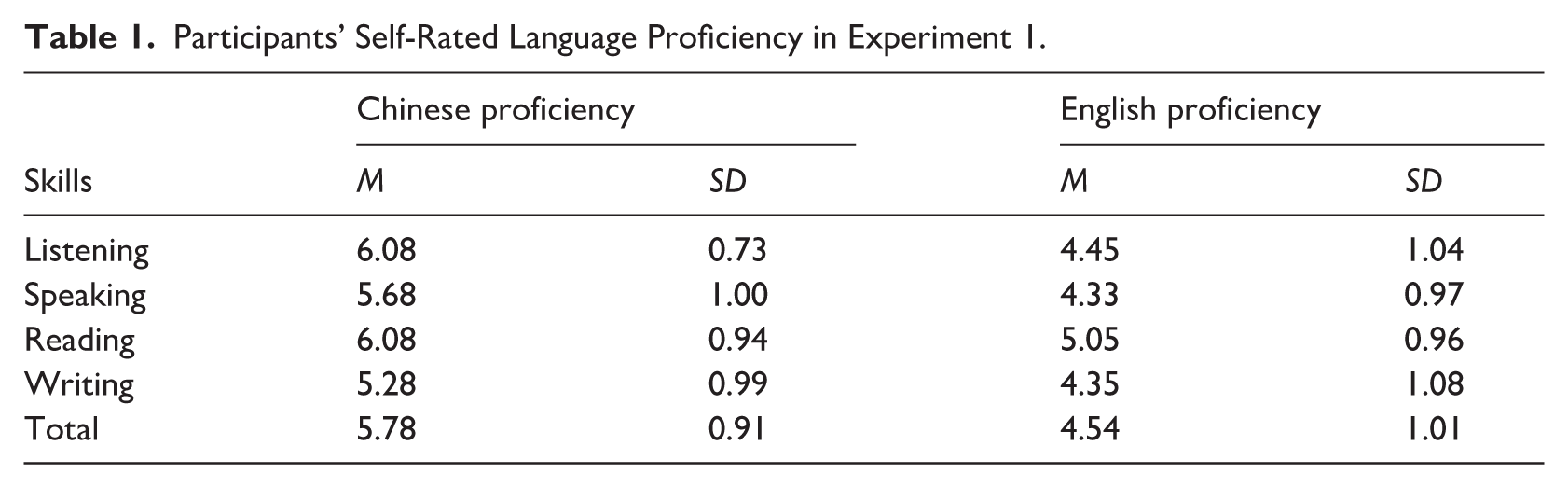
A total of 42 Chinese-English bilinguals initially participated in Experiment 1. Two participants were excluded from the final analysis due to incomplete data. The final sample therefore consisted of 40 participants (29 female; mean age = 20.83, SD = 2.05), all of whom provided complete and valid data. Before the experiment, the participants finished a Vocabulary Size Test (Nation & Beglar, 2007) and demonstrated a mean score of 8,132.68 words (SD = 2,722.57), which approached the 9,000-word benchmark for doctoral students in English-speaking academic environments according to Nation and Beglar’s (2007) criteria. Participants self-assessed their language proficiencies across four linguistic domains using a 7-point Likert-type scale (MacIntyre et al., 1997). The results of the Vocabulary Size Test and the self-rating test (Table 1) suggested that the participants had medium-high English proficiency. All participants were right-handed, with normal or corrected-to-normal vision, with no reported linguistic or neurological impairment.
Participants’ Self-Rated Language Proficiency in Experiment 1.
To assess participants’ general-domain cognitive control ability, participants finished a Flanker task (Eriksen & Eriksen, 1974). The participants were presented with a central target arrow flanked by distractor arrows and must indicate the target’s direction while ignoring the surrounding stimuli. Trials were classified as congruent when the distractors matched the target stimulus and incongruent when the distractors differed from the target. The task procedure was as follows: (a) a fixation remained for 1,000 ms, (b) a blank was presented for 500 ms, (c) the target arrow and the flankers were presented for 2,000 ms, (d) the stimuli disappeared after a response was made and the next trial began. Reaction time (RT) and accuracy (ACC) were recorded. General-domain cognitive control ability was measured by the Flanker effect, calculated as the RT difference between incongruent and congruent trials.
Stimuli
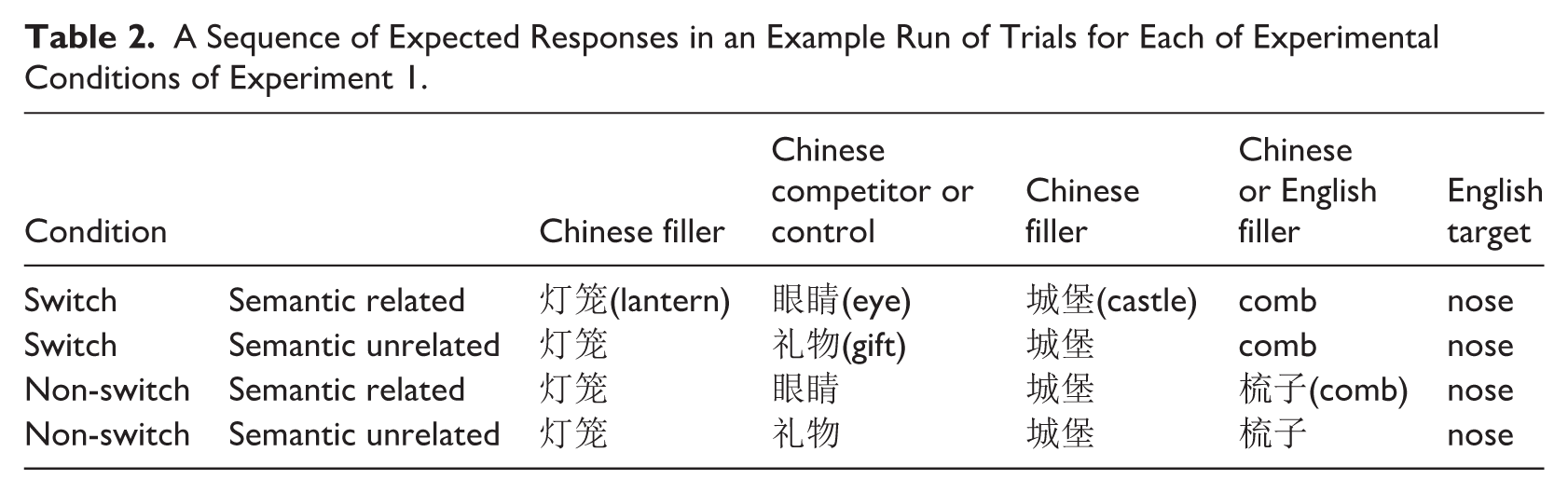
Experiment 1 investigated language control in L2 production using an adapted cross-language semantic competitor priming paradigm. Building upon the methodological framework established by Lee and Williams (2001), the study employed sequences of five trials with the second and fifth items serving as prime-target pairs, while the remaining items functioned as fillers. This Lag 3 interval, where primes and targets were separated by two fillers, was selected based on robust evidence of semantic interference effects at this interval, as demonstrated in previous studies (Tree & Hirsh, 2003; Vitkovitch et al., 2001; Wheeldon & Monsell, 1994). However, unlike the original paradigm that utilized definition-primes and picture-targets, the current experiment adopted a picture-picture priming design to ensure modality consistency, following Vitkovitch et al. (2001). Participants named primes in Chinese (L1) and targets in English (L2). A 2*2 factorial design was implemented: (1) semantic relationship between primes and targets (related vs. unrelated) and (2) language switching requirement on the fourth trial (switch vs. no-switch). Table 2 presents an example run of trials for each of the experimental conditions of Experiment 1.
A Sequence of Expected Responses in an Example Run of Trials for Each of Experimental Conditions of Experiment 1.
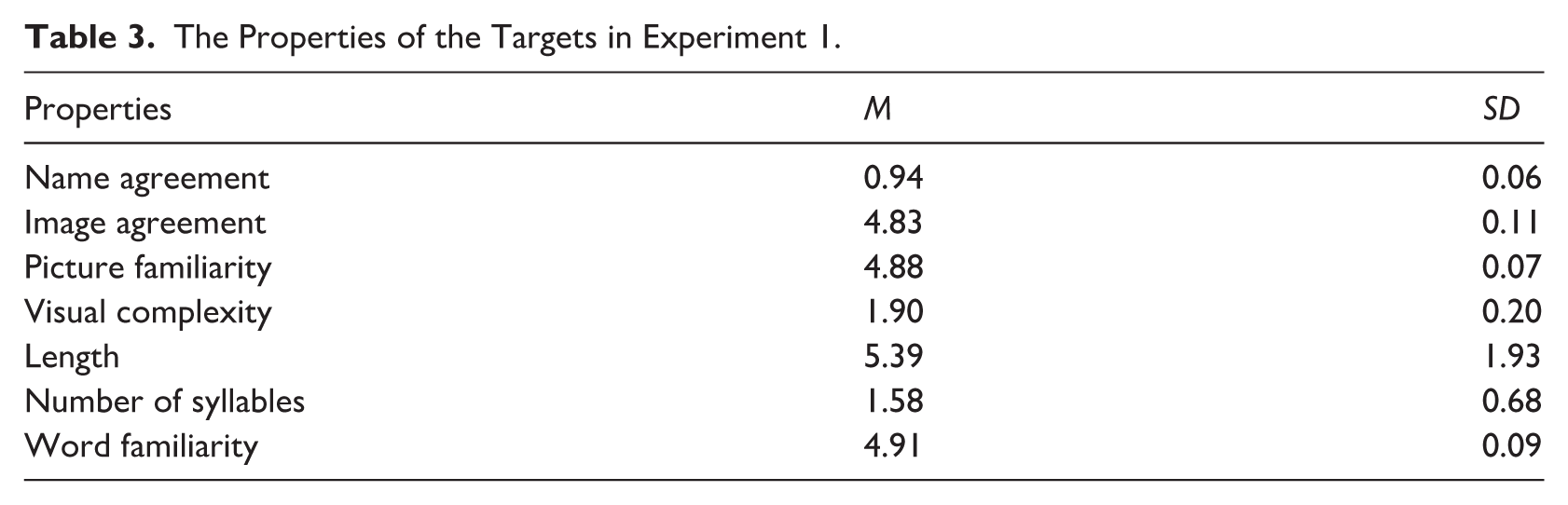
The stimulus selection followed a four-stage procedure. First, 36 pictures were selected as targets according to the following standards: (a) demonstrated relatively high name agreement (>80%), high image agreement (>4.0 on a 5-point scale), high picture familiarity (>4.0 on a 5-point scale), and low visual complexity (<3.0 on a 5-point scale); (b) possessed English names comprising 3–10 letters and 1–3 syllables, with relatively high word familiarity (>4.0 on a 5-point scale). To validate these properties, an independent sample of 30 participants who matched in language proficiency to the participants in the formal experiment completed the rating tasks. Their properties were shown in Table 3.
The Properties of the Targets in Experiment 1.
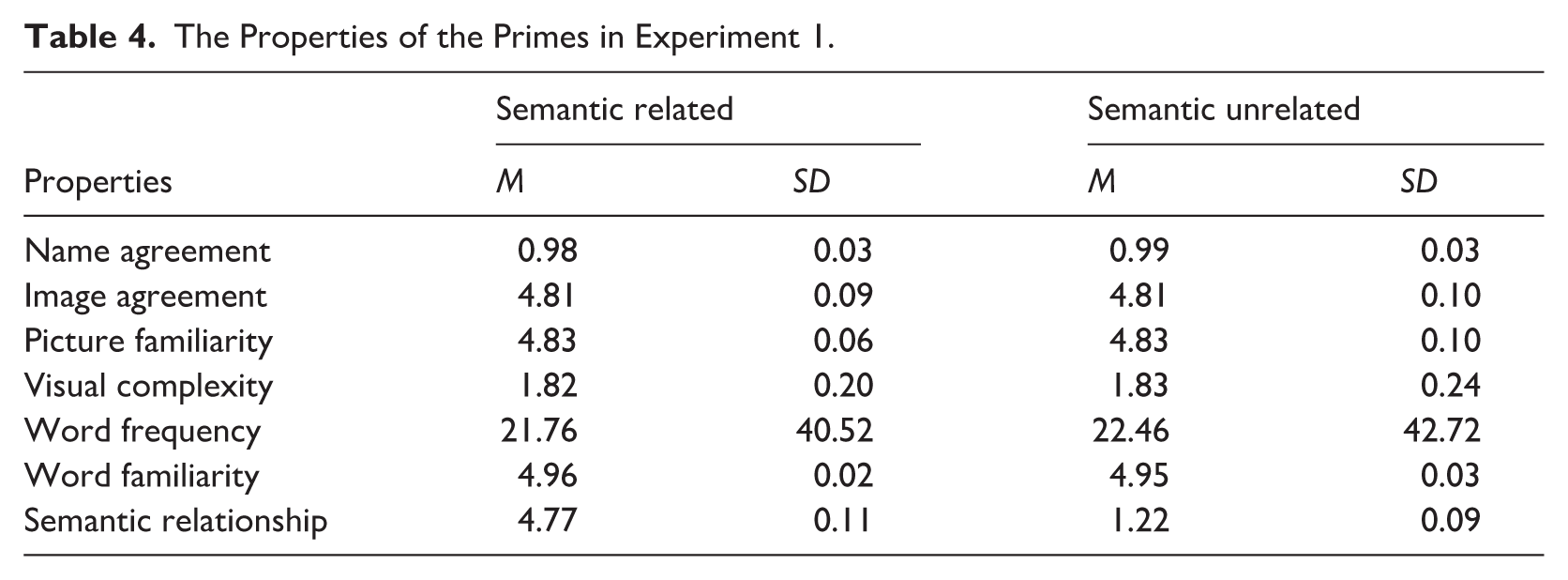
Second, 2 sets of 36 pictures were selected to serve as semantically related and unrelated primes, respectively. The two sets did not differ significantly in name agreement (t(35) = −1.01, p = .32), image agreement (t(35) = −0.17, p = .87), picture familiarity (t(35) = 0.29, p = .78), and visual complexity (t(35) = −0.15, p = .88). All primes were two-character Chinese words, with no significant differences in lexical frequency (t(35) = −1.14, p = .26) and subjective familiarity ratings (t(35) = 1.00, p = .32). Crucially, the semantically related primes were significantly more related with the targets compared to the unrelated primes (t(35) = 148.69, p < .001). Their properties were detailed in Table 4.
The Properties of the Primes in Experiment 1.
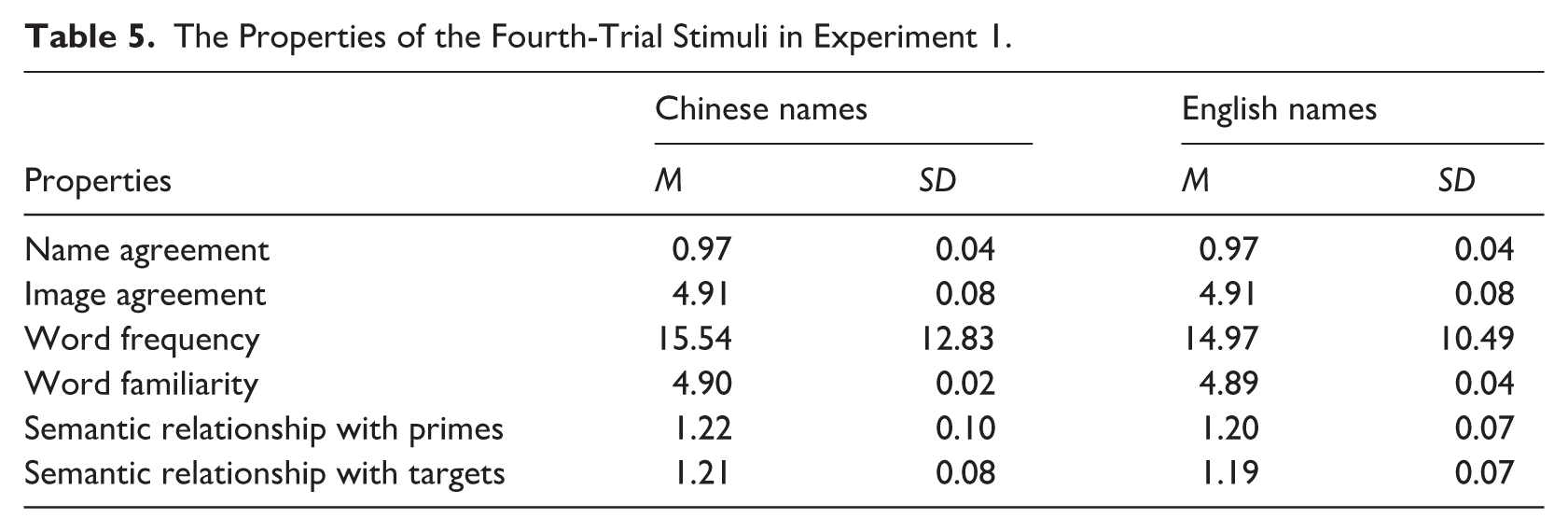
Third, 36 pictures were employed in the fourth trial position, where language was potentially implemented. The Chinese and English names for these items demonstrated comparable properties: name agreement (t(35) = 0.21, p = .84), image agreement (t(35) = 1.07, p = .29), subjective word familiarity (t(35) = 1.78, p = .08), and word frequency (t(35) = 0.49, p = .63). The Chinese and English names were controlled to be semantically unrelated to the primes (t(35) = 1.05, p = .30) and the targets (t(35) = 1.24, p = .22). Their properties were presented in Table 5.
The Properties of the Fourth-Trial Stimuli in Experiment 1.
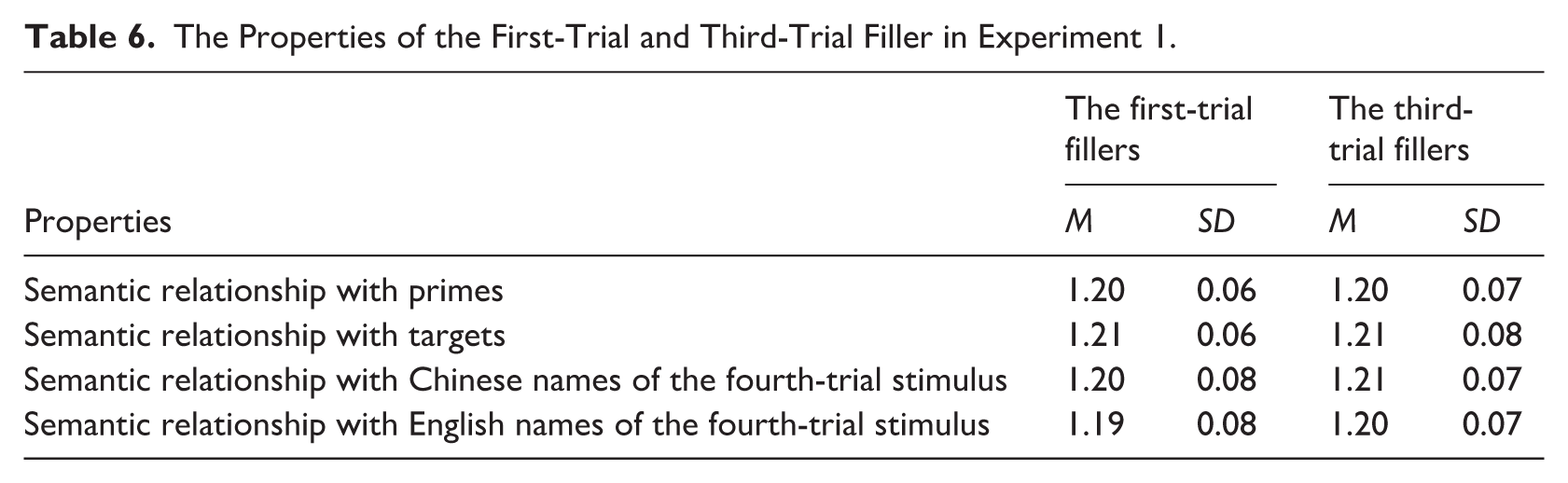
Fourth, 2 sets of 36 pictures were selected as fillers for the first and third trials. These filler stimuli were semantically unrelated to either the prime or target items nor to the fourth-trial stimuli in either language (<2.0 on a 5-point scale). Their properties were detailed in Table 6.
The Properties of the First-Trial and Third-Trial Filler in Experiment 1.
Procedure
Employing a within-participant and within-item design. A Latin square design was implemented to generate four counterbalanced lists with 36 randomly ordered five-trial sequences. Lists were administered weekly apart to avoid repetition, and list presentation order was random, minimizing order effects. Participants were individually tested in a soundproof booth, seated approximately 70 cm from a computer monitor equipped with a microphone connected to an electronic voice key. Stimulus presentation and data collection were controlled using E-Prime 3.0. The experimental session began with a picture familiarization phase. Then they were instructed to name each picture as rapidly and accurately as possible in the required language by a color cue (red for Chinese, blue for English) immediately upon stimulus appearance. Prior to experimental trials, participants completed five practice sequences. Each trial started with a central fixation point (+) that appeared for 500 ms, followed by a blank screen for 250 ms, a language cue for 800 ms, and another blank screen for 500 ms. Then, the target picture was displayed for 2,000 ms, during which naming responses were recorded. A 1,000-ms blank screen interval separated consecutive trials. Each experimental list required approximately 20 minutes to complete.
Data Analysis
Following the exclusion criteria from Lee and Williams (2001), several types of responses on targets were excluded: (1) incorrect naming responses on primes or targets, (2) responses on targets with latencies below 100 ms or exceeding 2,000 ms, and (3) responses on targets where the fourth-trial responses were produced in the unintended language. RTs on targets were analyzed using linear mixed models (LMMs), while target accuracy was evaluated through generalized linear mixed models (GLMMs), both utilizing the lme4 (Bates et al., 2015) and lmerTest (Kuznetsova et al., 2017) packages in R (Version 3.2.4). The models incorporated three fixed effects: (a) semantic relationship between primes and targets, (b) language-switching requirement on the fourth trial, and (c) participants’ general-domain cognitive control ability. Random effects included participants and items.
Results and Discussion
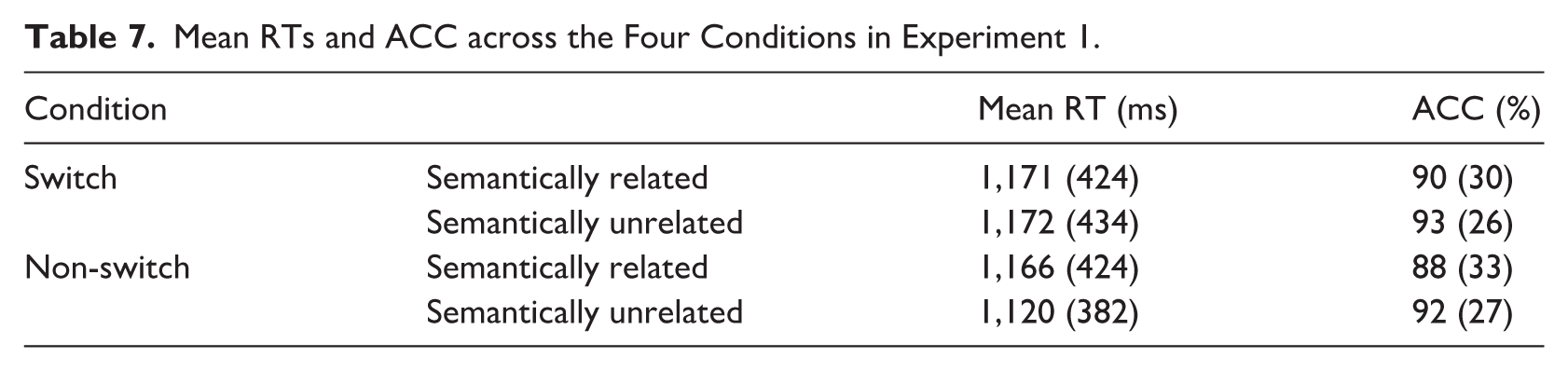
Table 7 presents the mean RTs and ACC across the four experimental conditions. LMMs on RTs (Table 8) revealed significantly slower naming latencies for targets in semantically related conditions than unrelated conditions (b = −38.96, SE = 16.87, t = −2.31, p = .02). Most importantly, a significant interaction between semantic relatedness and language was observed (b = 48.86, SE = 23.69, t = 2.06, p = .04). Further simple effect analysis (Table 9) clarified this interaction pattern: a robust cross-language semantic interference effect emerged in non-switch conditions (b = 44.24, SE = 14.42, t = 3.07, p = .01), whereas this interference effect was eliminated in switch conditions (b = −11.44, SE = 14.30, t = −0.80, p = .85). ACC data (Table 10) demonstrated significantly higher error rates in semantically related conditions (b = 0.65, SE = 0.16, t = −2.31, p = .02). No significant interaction was found in ACC.
Mean RTs and ACC across the Four Conditions in Experiment 1.
LMMs Results of RT Data in Experiment 1.
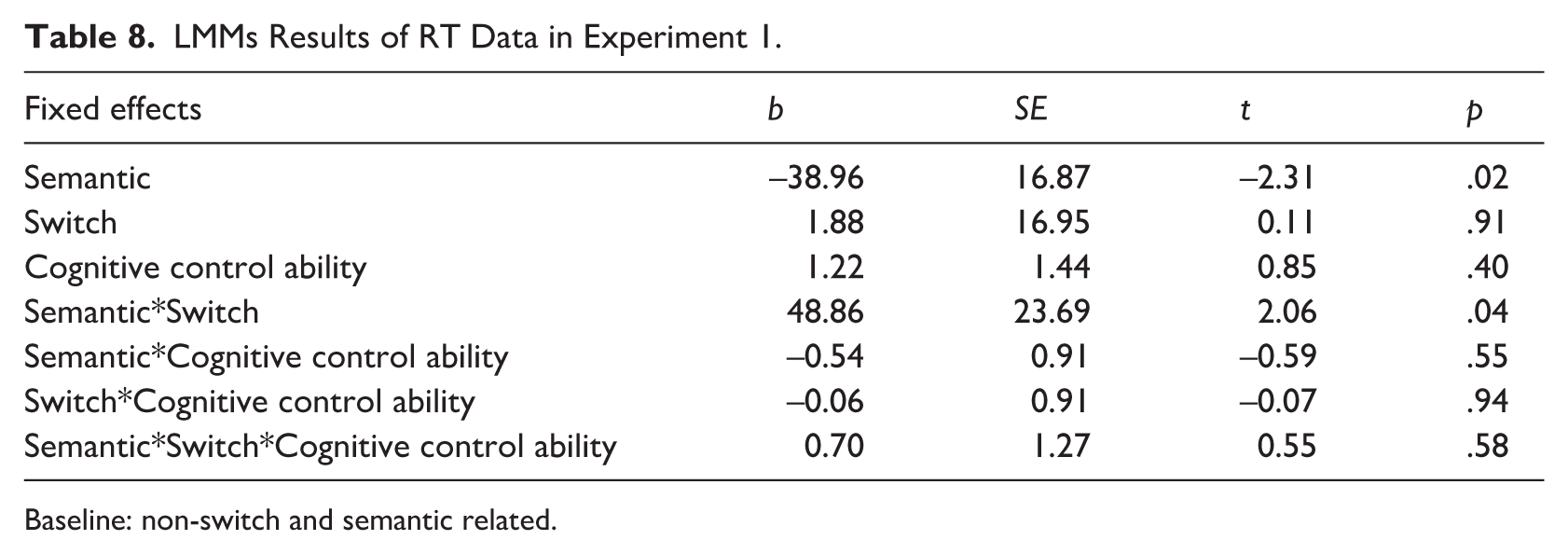
Baseline: non-switch and semantic related.
Simple Effect Results for the Interaction in RT Data in Experiment 1.
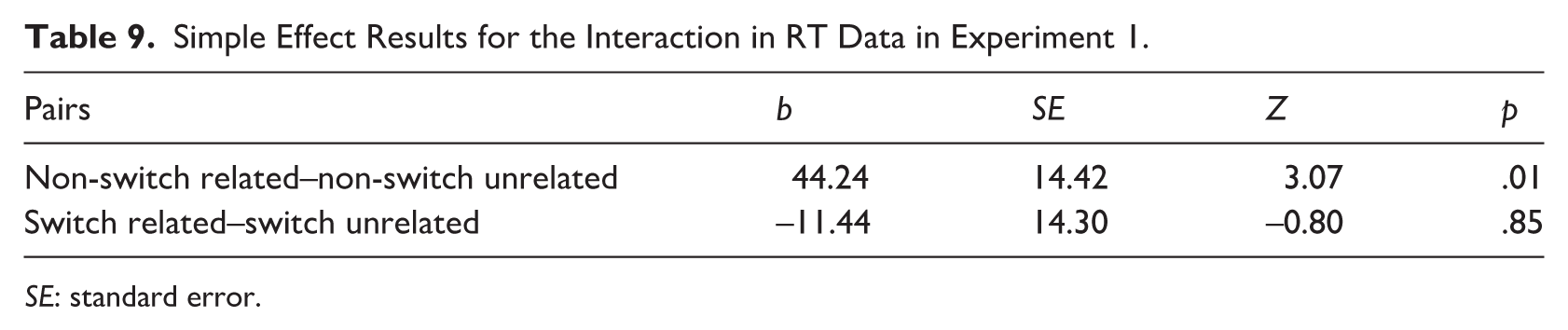
SE: standard error.
GLMMs Results of ACC Data in Experiment 1.
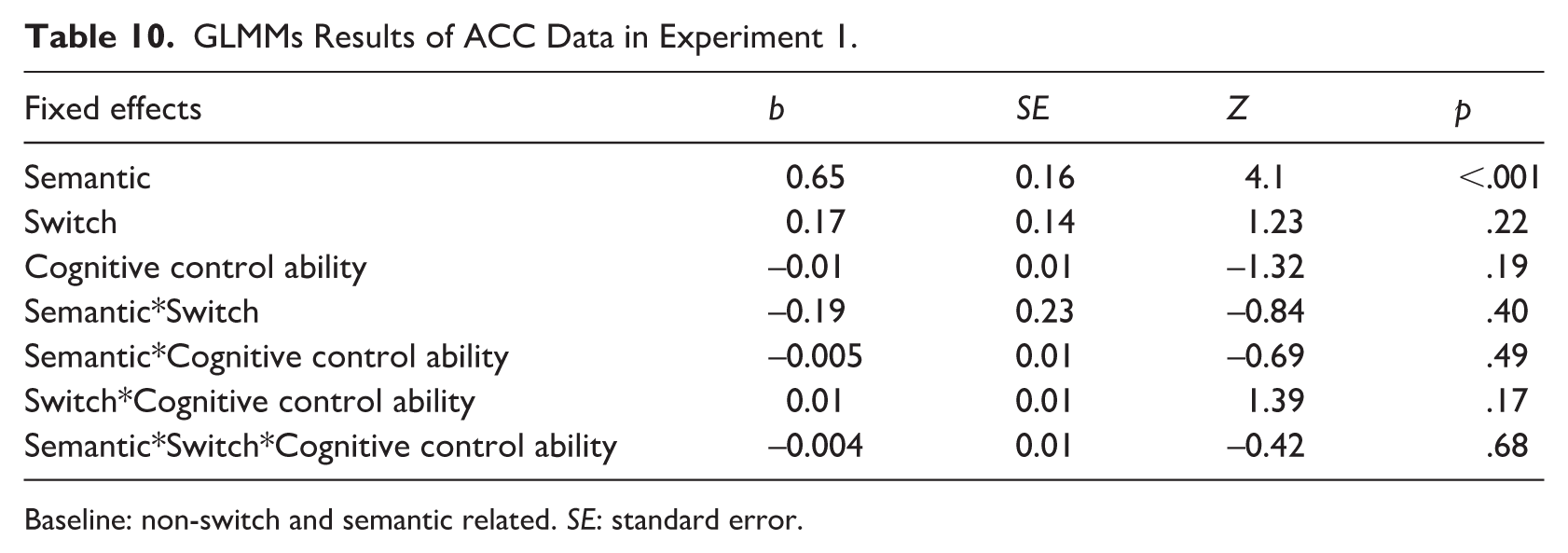
Baseline: non-switch and semantic related. SE: standard error.
The experimental findings provide compelling support for ICM. According to this framework, bilingual lexical selection involves both within-language and between-language competition. Under non-switch conditions, residual activation from prime stimuli persists, and these primes functioned as lexical competitors to the target items, leading to a cross-language semantic interference effect. The disappearance of such effects after a language switching offers strong evidence for global inhibition. When participants encountered a language switch requirement on the fourth trial, this triggered a global suppression that inhibited the previously active language. This global inhibition effectively eliminated the residual activation of cross-language primes, thereby abolishing their ability to compete with target items during lexical selection. Furthermore, the results demonstrated that individual differences in general-domain cognitive control did not significantly modulate this pattern of effects. This finding implies that the inhibitory mechanisms governing bilingual lexical access may operate independently of more domain-general cognitive control processes.
Experiment 2: Language Control in L1 Production
Participants
The participants in Experiment 2 were the same individuals who participated in Experiment 1. As in Experiment 1, 42 participants initially completed the procedure. To adhere to a within-participant design, only participants with valid data from both Experiment 1 and Experiment 2 were retained, yielding a final sample of 40 participants who were the same individuals as those who participated in Experiment 1.
Stimuli
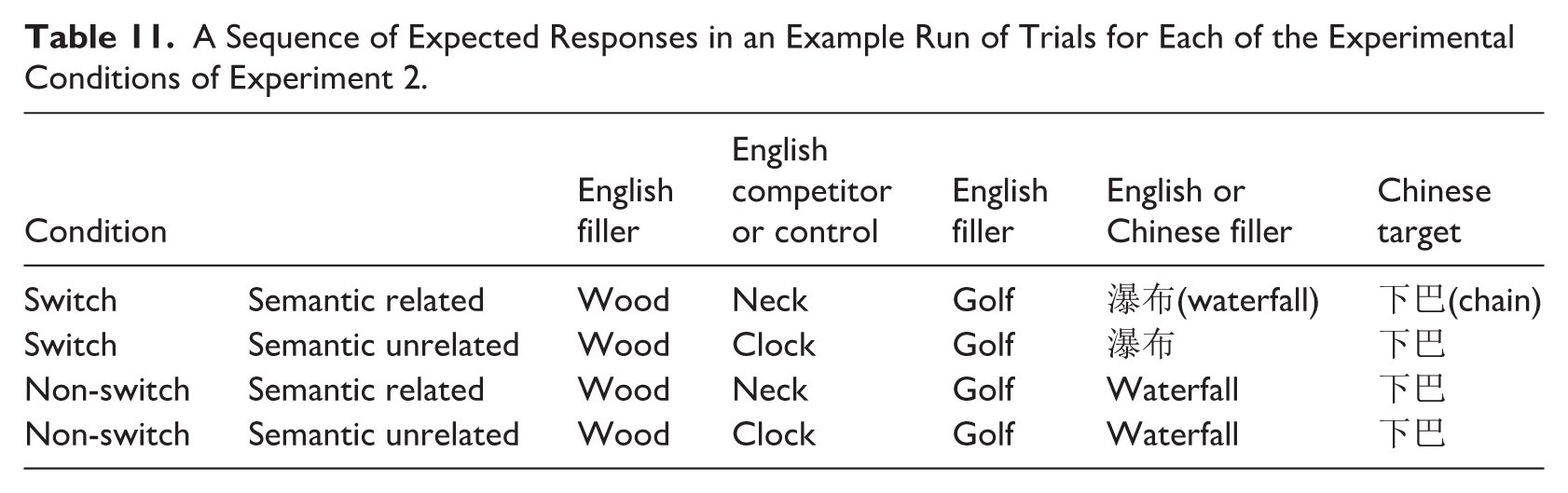
Experiment 2 examined language control during L1 production, utilizing a parallel experimental design with a reversal of naming languages. Table 11 presents an example run of trials for each of the experimental conditions of Experiment 2.
A Sequence of Expected Responses in an Example Run of Trials for Each of the Experimental Conditions of Experiment 2.
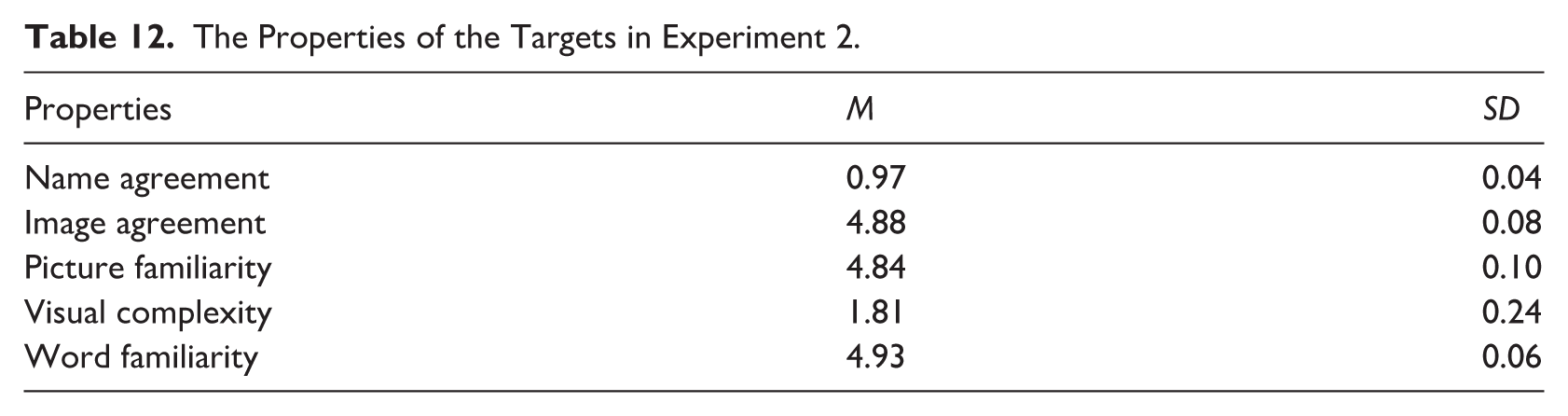
The stimulus selection also followed a four-stage procedure. First, 36 pictures were selected as targets according to the following standards: (a) demonstrated relatively high name agreement, high image agreement, high picture familiarity, and low visual complexity; (b) possessed two-character Chinese names with relatively high word familiarity. The properties of the targets were shown in Table 12.
The Properties of the Targets in Experiment 2.
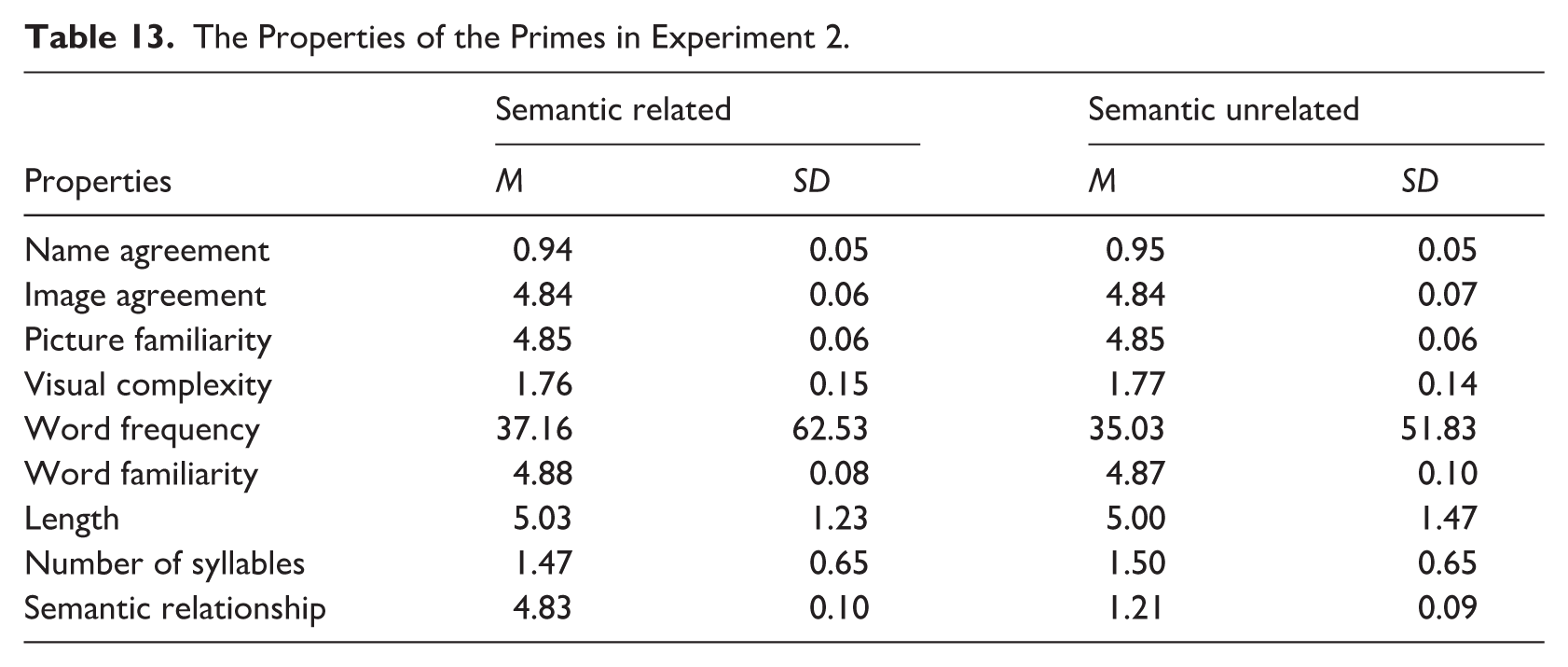
Second, two sets of 36 pictures were selected as semantically related and unrelated primes, respectively. The two sets did not differ significantly in name agreement (t(35) = −0.64, p = .53), image agreement (t(35) = −0.37, p = .72), picture familiarity (t(35) = 0.91, p = .37), and visual complexity (t(35) = −0.45, p = .66). Their English names showed no significant difference in lexical frequency (t(35) = 1.05, p = .30), subjective familiarity ratings (t(35) = 0.19, p = .85), length (t(35) = 0.09, p = .93), and the number of syllables (t(35) = −0.19, p = .85). Crucially, the semantically related primes were significantly more related with the targets compared to the unrelated primes (t(35) = 177.38, p < .001). Their properties were detailed in Table 13.
The Properties of the Primes in Experiment 2.
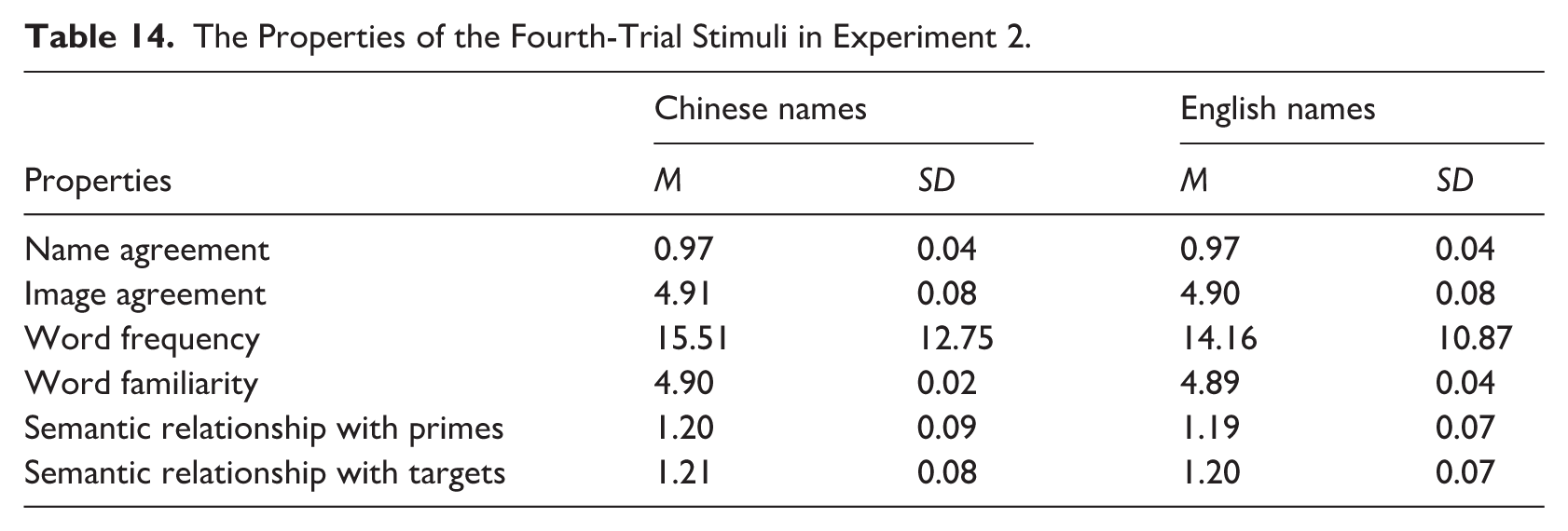
Third, the Chinese and English names of the fourth-trial items demonstrated no significant difference in name agreement (t(35) = 1.38, p = .18), image agreement (t(35) = 0.88, p = .39), subjective word familiarity (t(35) = 1.91, p = .07), and word frequency (t(35) = 1.18, p = .25). Moreover, they were both semantically unrelated to the primes (t(35) = 0.75, p = .46) and the targets (t(35) = 0.63, p = .53). Their properties were presented in Table 14.
The Properties of the Fourth-Trial Stimuli in Experiment 2.
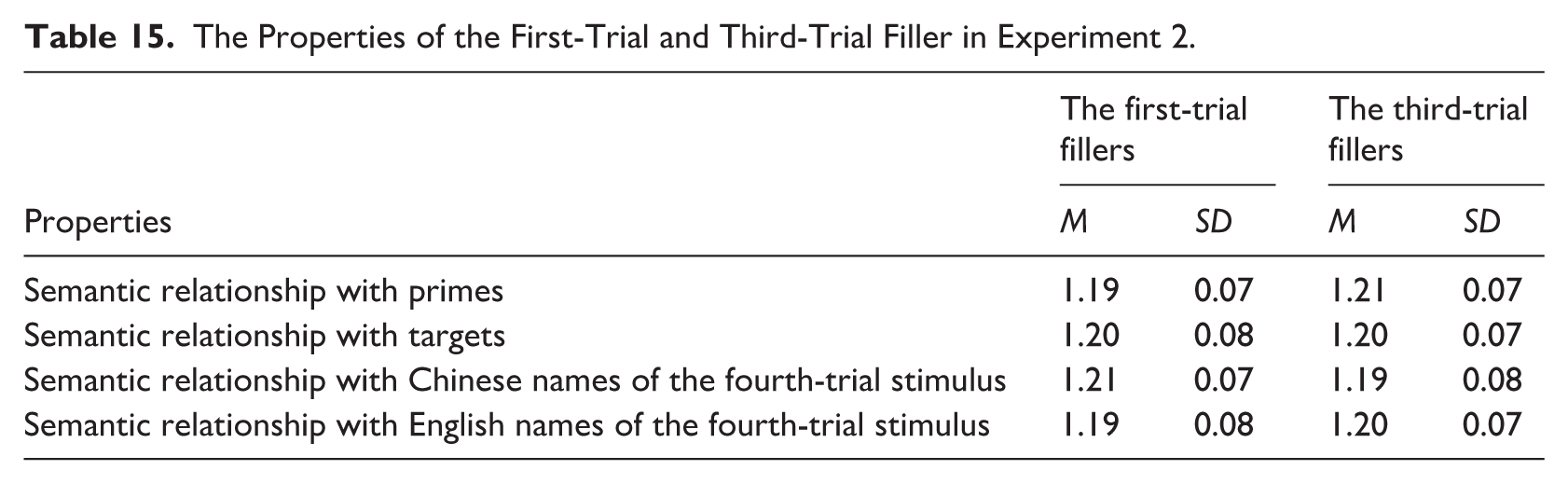
Fourth, the first-trial and third-trial fillers were semantically unrelated to either the primes or targets nor to the fourth trials in either language. Their properties were detailed in Table 15.
The Properties of the First-Trial and Third-Trial Filler in Experiment 2.
Procedure
The procedure was the same as in Experiment 1. The two experimental sessions were separated by a two-week interval, with the testing order counterbalanced across participants (i.e., half began with Experiment 1 and the other half with Experiment 2) to mitigate any potential practice effects.
Data Analysis
The data exclusion and the statistical analysis were the same as in Experiment 1.
Results and Discussion
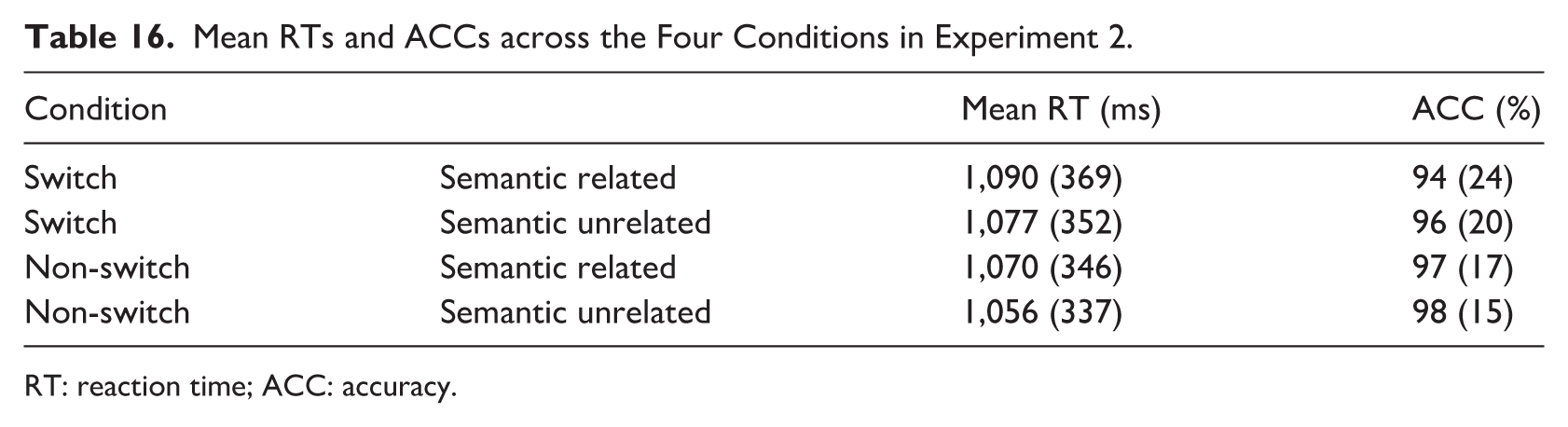
Table 16 illustrates the mean RTs and ACC across the four experimental conditions. Subsequent LMMs revealed a consistent pattern across both RTs and ACCs: neither the RT data (Table 17) nor the ACC data (Table 18) demonstrated significant interaction between the experimental manipulations. ACC analysis identified a robust effect of language switching, with significantly higher error rates observed in switch conditions than non-switch conditions (b = −0.77, SE = 0.22, t = −3.43, p < .001).
Mean RTs and ACCs across the Four Conditions in Experiment 2.
RT: reaction time; ACC: accuracy.
LMMs Results of RT Data in Experiment 2.
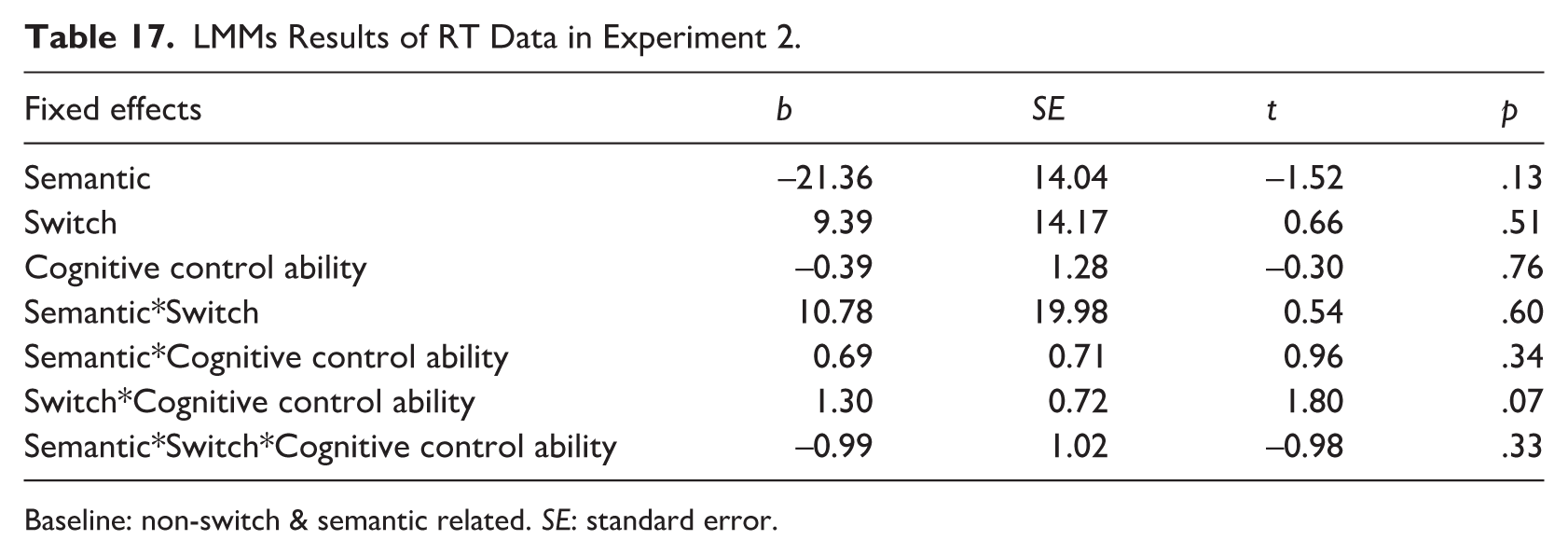
Baseline: non-switch & semantic related. SE: standard error.
GLMMs Results of ACC Data in Experiment 2.
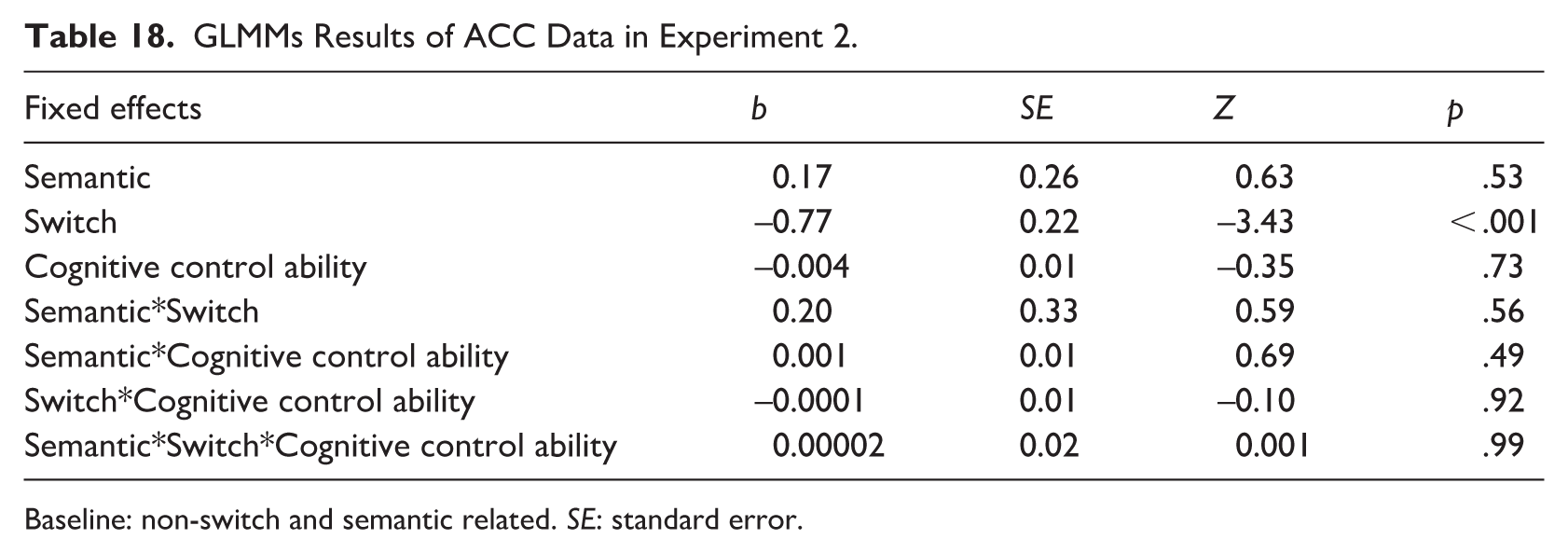
Baseline: non-switch and semantic related. SE: standard error.
The results provide the absence of cross-language semantic competitor interference effects under either non-switch or switch conditions. This pattern of findings aligns with LSSM, which posits within-language competition rather than between-language competition. Therefore, cross-language semantic primes should not function as effective competitors during L1 lexical selection, explaining the absence of interference effects in non-switch conditions. Furthermore, the model predicts that language switching manipulations should not fundamentally alter the basic architecture of lexical selection, which is consistent with the observed null effects under switch conditions. Mirroring the results of Experiment 1, individual differences in general-domain cognitive control capabilities did not significantly moderate the pattern of results.
Computational Models
Establishing Computational Models
Based on Lowry et al. (2021), a general lemma activation model quantifies semantic input and inhibition dynamics:

Equation (1) contains an inhibitory component
A subscript system was implemented that encodes some critical dimensions of experimental conditions: j indicates language switching specification (1 = language stay trials; 2 = language switch trials); k suggests lexical category classification (1 = target words; 2 = semantically related words; 3 = unrelated words); l refers to language dominance designation (1 = dominant language; 2 = non-dominant language; m stands for language intention status (1 = intended language; 0 = unintended language).
Within the inhibitory model framework, lemma activation during language stay trials can be denoted as:

Under conditions where the lexical item belongs to the intended language (
Lemma activation in language switch trials operates through a two-stage computational process. The initial phase involves the reactivation of the intended language, formally captured by the variable T₀ in Equation

The reactivation rate

The time parameter
Luce Ratio (Luce, 1986) was used to demonstrate between-language and within-language competition in the inhibitory model. More specifically, the activation level of the target must attain a specific proportion relative to the summed activation of all competitors across both languages. By designating the activation level of the target as

Through the combination of Equations 2 and 5, the time for lexical selection in stay trials can be solved. Through the combination of Equations 3 and 5, the time for lexical selection in switch trials can be determined. This time is then converted to milliseconds and combined with a stochastic noise parameter sampled randomly from an ex-Gaussian distribution characterized by three parameters: μ, σ, and τ. Notably, the total duration in switch trials requires the summation of
Subsequent to selection, activation levels of words undergo decay. Crucially, when trials in a sequence involve stimuli from the same semantic category, the initial activation levels for the target trials are initialized using the decayed activation values from the semantically related trials. Conversely, when the semantic category changes, activation levels revert to the baseline activation. This architecture enables cross-trial semantic competitor interference through spreading activation.
In the non-inhibitory model, the absence of suppression mechanisms allows for a simplified representation of lemma activation during stay trials:

For switch trials, there is also no need for a reactivation process, resulting in lemma activation as follows:

As the non-inhibitory model posits only within-language competition, the denominator in the equation is the sum of activation levels of competitors in the intended language

The present study established four computational models (2 Theoretical frameworks * 2 Experiments) and conducted four separate simulations. Model 1 (for Experiment 1) and Model 3 (for Experiment 2) adopted an ICM-based architecture with an inhibitory module, while Model 2 (for Experiment 1) and Model 4 (for Experiment 2) adopted an LSSM-based architecture without the inhibitory module.
The simulations were conducted in alignment with the number of participants and target stimuli employed in Experiment 1 or 2. Notably, the computational models aimed to evaluate the qualitative fit between the model simulation and human behavioral data, focusing on the direction of the effects and the significance pattern on RT performance. RTs on targets were analyzed using LMMs, utilizing the lme4 (Bates et al., 2015) and lmerTest (Kuznetsova et al., 2017) packages in R. The models incorporated three fixed effects: (1) semantic relationship between primes and targets (related vs. unrelated), (2) language switching requirement on the fourth trial (switch vs. non-switch condition), and (3) their interaction. Random effects included participants and items. When a significant interaction was observed, to examine the simple effects, post hoc comparisons were conducted using the emmeans package. P-values were adjusted using the Tukey method to account for six pairwise comparisons.
Manual selection of parameter values followed two principles: strict adherence to verbal theories and evidence-based realistic predictions. For instance, the inverse semantic transmission rate (
Results and Discussion
Tables 19 and 20 illustrate the predicted results of Model 1, whereas Tables 21 and 22 focus on the simulated outputs of Model 2. For Experiment 1, Only inhibitory architecture (Model 1) successfully reproduced the interaction between semantic relationship and switch condition (b = 25.54, SE = 1.04, t = 24.48, p < .001), specifically showing the cross-language interference effect in the non-switch condition (b = 25.78, SE = 0.73, t = 35.17, p < .001) and its abolition in the switch condition (b = 0.24, SE = 0.74, t = 0.33, p = .99). In contrast, the non-inhibitory model (Model 2) failed to predict any cross-language interference (b = 1.04, SE = 0.75, t = 1.40, p = .50) or its abolition (b = 0.92, SE = 0.76, t = 1.22, p = .62), regardless of parameter settings. It is important to note that the simulated data yielded high t-values. This is an expected consequence of the simulation’s low-noise nature relative to human data, which naturally results in smaller standard errors and more robust statistical estimates. Overall, L2 production aligns consistently with the mechanisms proposed by the inhibitory model.
LMMs Results of Simulated RT Data in Model 1 (Inhibitory Model).
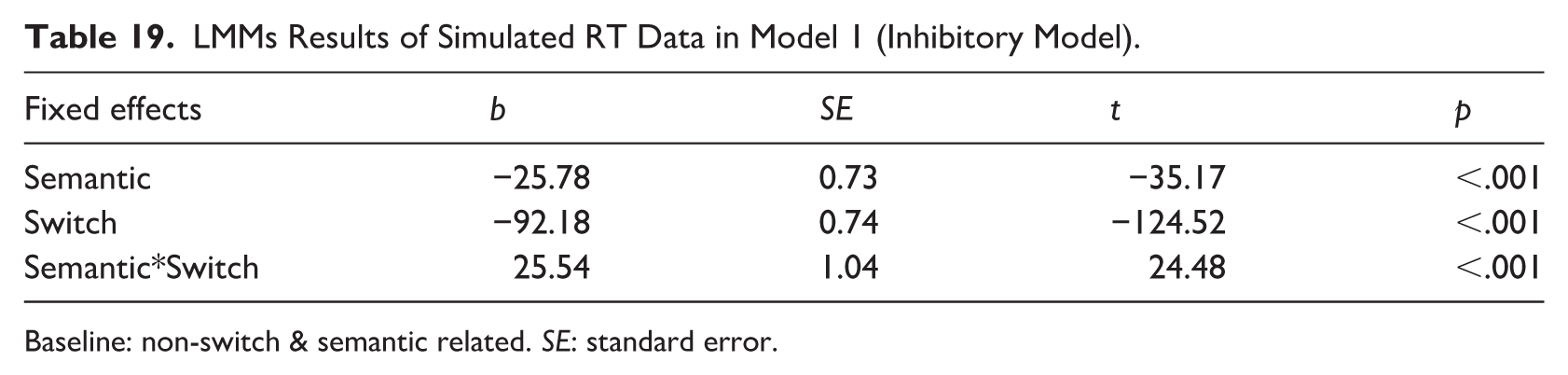
Baseline: non-switch & semantic related. SE: standard error.
Simple Effect Results for the Interaction in Simulated RT Data in Model 1 (Inhibitory Model).
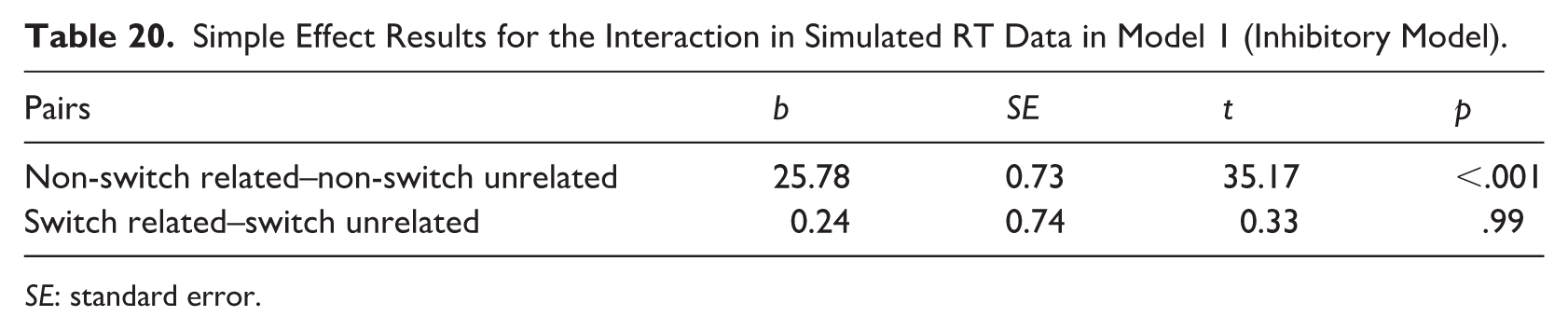
SE: standard error.
LMMs of Simulated RT Data in Model 2 (Non-inhibitory Model).
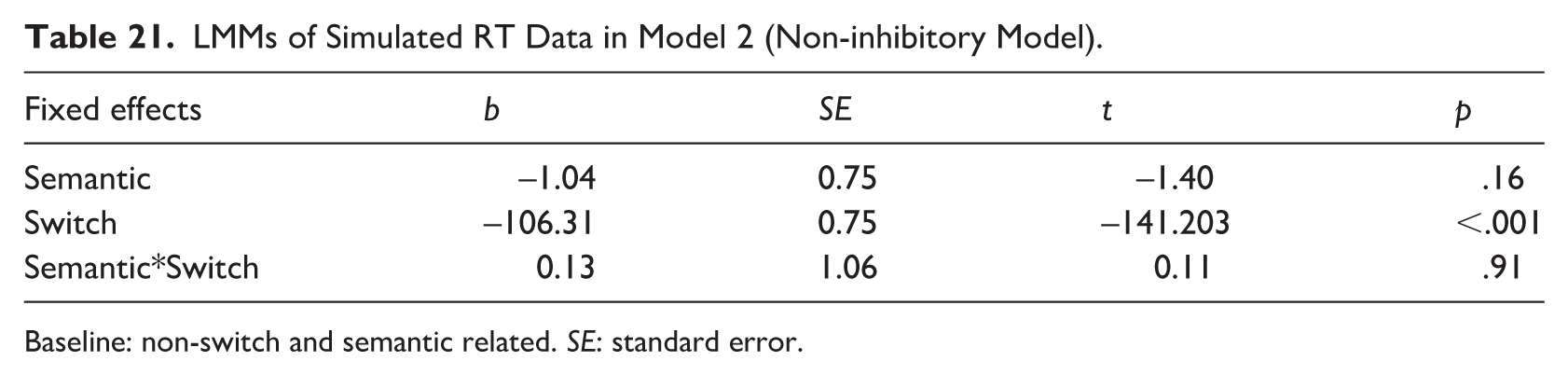
Baseline: non-switch and semantic related. SE: standard error.
Simple Effect Results for the Interaction in Simulated RT Data in Model 2 (Non-inhibitory Model).
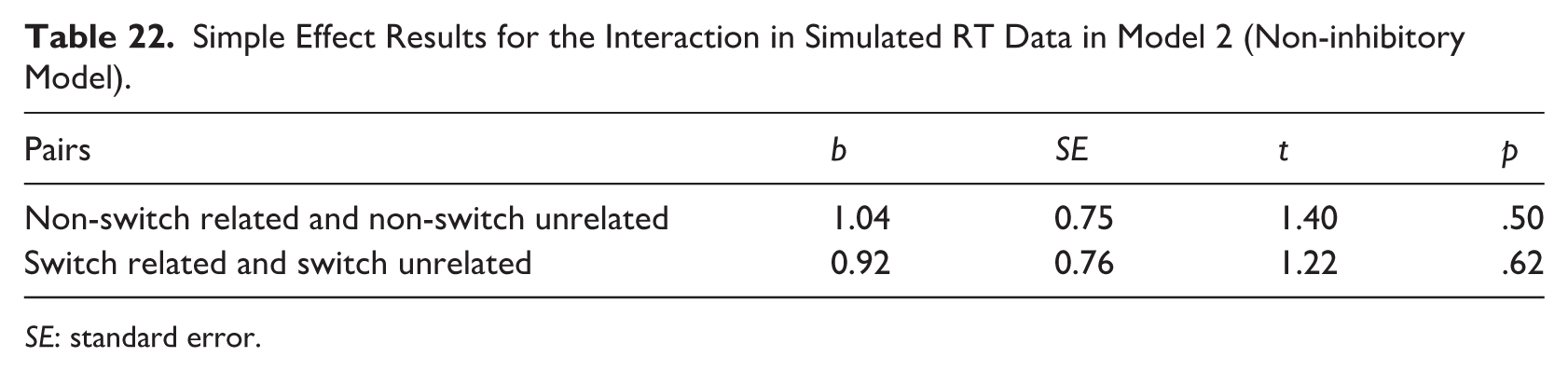
SE: standard error.
Tables 23 and 24 illustrate the predicted results of Model 3, whereas Tables 25 and 26 focus on the simulated outputs of Model 4. The non-inhibitory model (Model 4) consistently aligned with the null-interaction patterns (b = −0.69, SE = 1.09, t = −0.63, p = .53), whereas the inhibitory model (Model 3) predicted cross-language interference in the non-switch condition (b = 34.02, SE = 0.78, t = 43.74, p < .001) and an abolition in the switch condition (b = −1.53, SE = 0.77, t = −1.98, p = .19) that were not present in the behavioral data. Overall, L1 production corresponds closely to the framework of the non-inhibitory model.
LMMs Results of Simulated RT Data in Model 3 (Inhibitory Model).
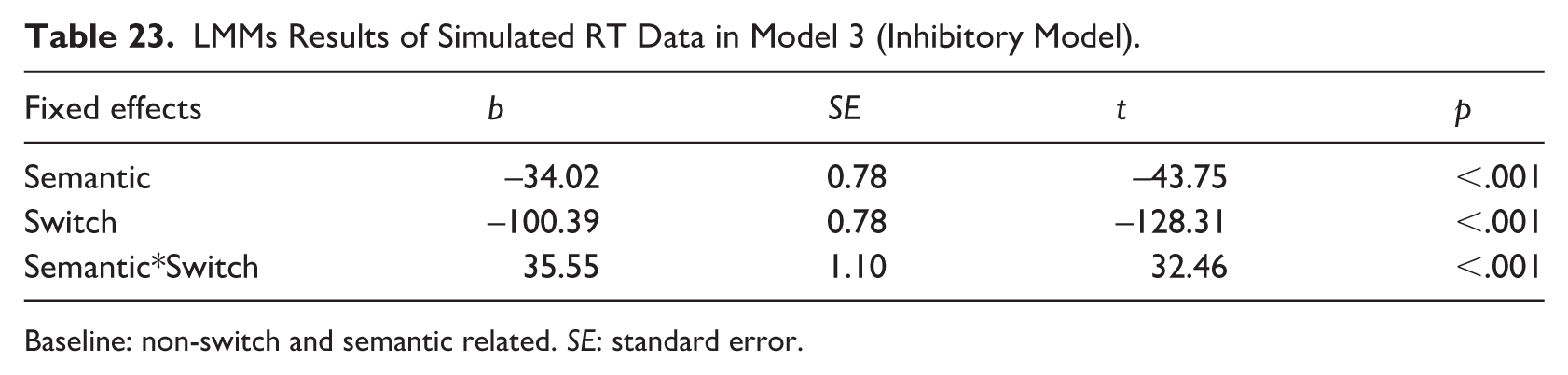
Baseline: non-switch and semantic related. SE: standard error.
Simple Effect Results for the Interaction in Simulated RT Data in Model 3 (Inhibitory Model).
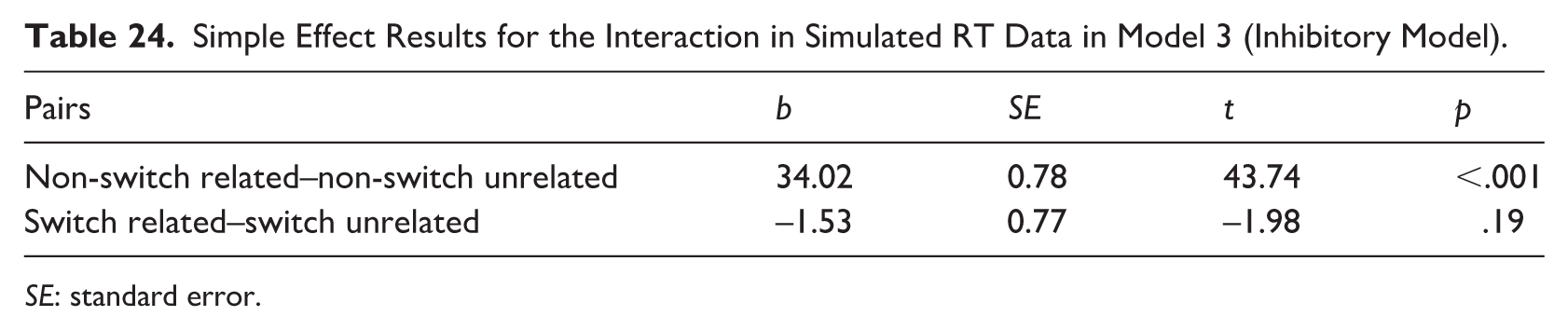
SE: standard error.
LMMs of Simulated RT Data in Model 4 (Non-inhibitory Model).
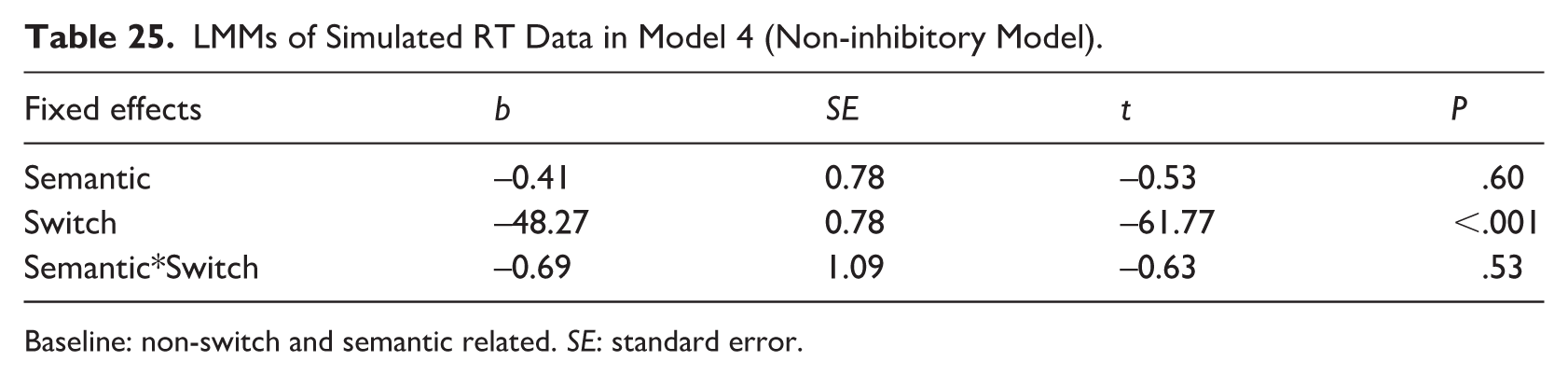
Baseline: non-switch and semantic related. SE: standard error.
Simple Effect Results for the Interaction in Simulated RT Data in Model 4 (Non-inhibitory Model).
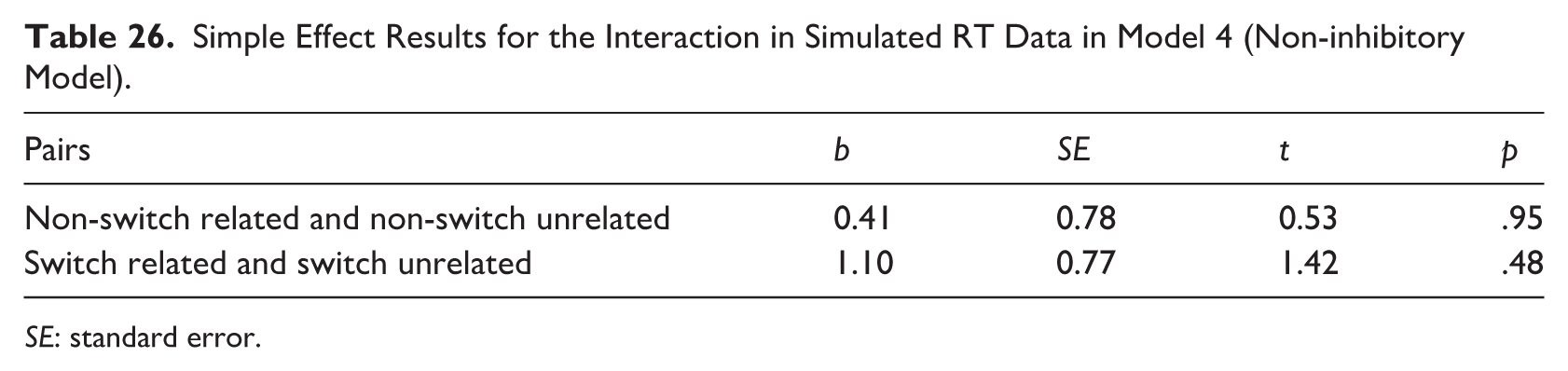
SE: standard error.
General Discussion
The present study adopted a dual-method approach, combining behavioral experiments with computational modeling, to investigate the mechanisms underlying bilingual language control. To this end, we employed a modified cross-language semantic competitor priming paradigm with embedded language switches. Four experimental conditions were created by manipulating two factors: the semantic relationship between primes and targets (related vs. unrelated) and the presence of a language switch on the fourth trial. According to ICM, cross-language semantic interference effects should emerge in non-switch contexts but disappear in switch contexts. In contrast, LSSM predicts the absence of cross-language semantic effects irrespective of the switching condition.
Beyond testing these competing theoretical predictions, the study further examined the modulating roles of language dominance and domain-general cognitive control. Language dominance was addressed by exploring language control mechanisms separately in L2 production (Experiment 1) and L1 production (Experiment 2). Domain-general inhibitory capacity, assessed via the Flanker task, was treated as an independent variable. In addition, for each experiment, we developed computational models based on ICM and LSSM to simulate reaction time patterns and compared the simulated outcomes with empirical results.
Language Control in L2 Production
In Experiment 1, a cross-language semantic interference effect was observed under the non-switch condition, whereas a language switch occurring prior to target naming diminished the interference effect. The empirical pattern was consistent with the predictions of ICM. For Chinese-English bilinguals engaged in L2 production, lexical representations from both L2 and L1 compete, and global inhibition of the dominant L1 is required to ensure successful L2 production.
The findings of L2 production align with the results reported by Lee and Williams (2001) and Lowry et al. (2021), while further extending these two studies in several aspects. First, unlike Lee and Williams (2001), who used definition-driven prime production followed by picture naming, the present study employed a continuous picture-naming design to eliminate potential confounding effects of task switching. Second, whereas Lowry et al. (2021) observed the elimination of within-language semantic effects following a language switch, the present study observed such empirical evidence in cross-language scenarios, extending the applicability of ICM. Third, the present study integrated computational simulations to quantify the predicted magnitude of cross-language semantic interference effects under both switch and non-switch conditions. This not only provides a formal empirical test of ICM’s core assumptions but also extends the application of the computational models developed by Lowry et al. (2021) to the cross-language semantic competitor priming paradigm. Future investigations incorporating both within- and cross-language competitors would be instrumental in determining whether the global inhibition can be applied in both within- and between-language semantic-competitor contexts.
However, the current results stand in contrast to Runnqvist et al. (2012), who reported cumulative semantic interference effects of similar magnitudes in language-alternating and language-invariant conditions. This discrepancy perhaps can be explained by methodological differences in paradigms. Runnqvist et al. (2012) adopted the cumulative semantic interference paradigm and presented semantic categories in clusters (i.e., all items from one category before progressing to the next), whereas the present study used intermixed categories (i.e., items from different categories alternating). In Runnqvist et al.’s (2012) clustered design, even if language switching temporarily suppressed transient activation, repeated exposure to the same category likely rendered cumulative semantic interference more prominent and less sensitive to language switching. In contrast, the intermixed presentation in the current study highlights transient activation, thereby making the ICM’s inhibition effect observable.
Language Control in L1 Production
In contrast to L2 production, the present study found no significant cross-language semantic interference effects for L1 production under either switch or non-switch conditions. This outcome directly supports the core predictions of the LSSM. This pattern finds resonance in Lee and Williams (2001). Lee and Williams (2001) observed that language-switching demands from a preceding trial exerted a measurable adverse impact on target naming only when the target language was L1, but not when the target was L2. They proposed that producing L2 words necessitates inhibition of all active L1 lexical items, which delays L1 target retrieval. In contrast, L1 production was hypothesized to involve little or no inhibition of L2 lexical representations, suggesting prior language switching does not interfere with subsequent L2 naming. Notably, Lee and Williams (2001) framed their inferences about L1 production as tentative, explicitly acknowledging: “Strictly speaking, the present study only showed that bilinguals’ L2 word production involves lexical competition with, and strong inhibition of, L1 words; lexical competition with, and/or inhibition of, L2 words during L1 word production remains to be demonstrated” (p. 244). Even so, their preliminary suggestion that L1 shields its lexical selection process from disruption by L2 resonates strongly with the definitive conclusion of the current study. The current study extends Lee and Williams (2001) by supplementing behavioral data and computational simulations on the no L2-to-L1 semantic interference effect.
Comparison of Language Control Between L2 and L1 Production
The present results, combined with the previous literature, suggest a dual-mechanism account of bilingual language control, where the ICM governs L2 production and the LSSM governs L1 production. In L2 production, L1 is the dominant language, with stronger lexical connections and higher baseline activation (Kroll & Stewart, 1994). To select L2, bilinguals must inhibit L1 globally to reduce its activation to a level where L2 lexical items can compete effectively. In L1 production, L2 is the non-dominant language, with weaker lexical connections and lower baseline activation. Even if L2 is activated, its lexical items are not sufficiently strong to compete with L1 targets. Thus, no global inhibition is needed; the language-specific filter of LSSM is sufficient to restrict competition to L1.
This dual-mechanism account suggests that bilingual language control mechanisms are flexible and adapt to the activation dynamics of each language. This pattern reflects the underlying lexical competition scenario. Specifically, there is potentially the existence of a cross-language competition threshold. For unbalanced bilinguals, during L2 production, the activation level of the dominant L1 may exceed this threshold, thereby triggering cross-language lexical competition and eliciting the engagement of global inhibition to suppress the non-target language. During L1 production, however, the activation level of the weaker L2 remains below this threshold. Consequently, lexical competition is confined to the target language, and inhibition of the non-target language is redundant. It suggests that the engagement of inhibitory control is not an all-or-none phenomenon but rather depends on whether the activation of the non-target language reaches a critical level sufficient to disrupt target-language selection. This flexibility allows the bilingual language control system to optimize performance across different production contexts, avoiding unnecessary cognitive effort when competition is minimal, while deploying control resources effectively when competition arises.
This dual-mechanism account is most applicable to unbalanced bilinguals, as it is fundamentally based on the proficiency imbalance between L1 and L2. Nevertheless, the account also generates specific predictions for language control patterns observed in highly proficient or balanced bilinguals. As L2 proficiency increases and the baseline activation of L2 rises, the activation gap between L1 and L2 narrows. Consequently, the language control mechanisms for the two languages may converge over time, shifting from a dual-mechanism to a more unified system. During L1 production in highly proficient or balanced bilinguals, L2 activation may eventually exceed the cross-language competition threshold, leading to the emergence of cross-language lexical competition and the requirement of inhibition on the non-target language. Conversely, during L2 production in highly proficient or balanced bilinguals, the need for global inhibition of L1 may diminish because L1 may become less intrusive during L2 production. Consistent with this prediction, Costa and Santesteban (2004) found that highly proficient bilinguals showed symmetrical switching costs compared to less proficient bilinguals, supporting LSSM.
Moreover, our findings indicate that individual differences in general-domain cognitive control did not significantly modulate the observed pattern of effects. This independence could be attributed to the specialized nature of bilingual language processing. In contrast to general-domain cognitive control, which is applied across a wide range of cognitive tasks, the inhibitory processes in bilingual lexical access are dedicated to resolving the language-specific interference.
In summary, the bilingual language control system is not a fixed, one-size-fits-all architecture but rather a dynamic, adaptive, and context-sensitive system that continuously monitors the activation states of both languages, flexibly recruits language control mechanisms proportional to competition demands, recalibrates with changing language experience, and operates through specialized rather than domain-general cognitive control processes. This flexibility enables bilinguals to navigate the complex demands of dual-language processing efficiently, engaging inhibition only when necessary, conserving resources when possible, and adapting fluidly across contexts, developmental trajectories, and individual differences.
Conclusion
The present study demonstrated that cross-language semantic interference effects are eliminated by language switching during L2 production, aligning with the global inhibition of the non-target language. In contrast, no such cross-language semantic interference effects were observed in L1 production, which is consistent with the notion of language-specific lexical selection.
Supplemental Material
sj-docx-1-ijb-10.1177_13670069261457760 – Supplemental material for Bilingual Language Control by Chinese-English Bilinguals: Evidence from Behavioral Experiments and Computational Modeling
Supplemental material, sj-docx-1-ijb-10.1177_13670069261457760 for Bilingual Language Control by Chinese-English Bilinguals: Evidence from Behavioral Experiments and Computational Modeling by Renhui Hou, Shifa Chen and Yule Peng in International Journal of Bilingualism
Footnotes
Acknowledgements
We thank all the subjects who participated in our experiments.

Ethical Considerations
The study was conducted in accordance with the Declaration of Helsinki and approved by the Ethics Review Committee of the College of Foreign Languages, Ocean University of China (IRB Number: OUCIRB2023013).
Consent to Participate
Informed consent was obtained from all subjects involved in the study.
Funding
The authors disclosed receipt of the following financial support for the research, authorship, and/or publication of this article: This research was supported by the National Social Science Fund of China (No. 21BYY114).
Declaration of Conflicting Interests
The authors declared no potential conflicts of interest with respect to the research, authorship, and/or publication of this article.
Data Availability Statement
The data are available from the authors upon request.
Supplemental Material
Supplemental material for this article is available online.
Author Biographies
References
Supplementary Material
Please find the following supplemental material available below.
For Open Access articles published under a Creative Commons License, all supplemental material carries the same license as the article it is associated with.
For non-Open Access articles published, all supplemental material carries a non-exclusive license, and permission requests for re-use of supplemental material or any part of supplemental material shall be sent directly to the copyright owner as specified in the copyright notice associated with the article.
