







Abstract
Shaunak Sen’s powerful documentary All That Breathes (2022) tells the story of two brothers Nadeem Shehzad and Mohamed Saud, and their assistant Salik, who have devoted their lives to saving black kites that have been dropping from the skies of Delhi in alarming numbers for over a decade. They work tirelessly in the makeshift hospital in their cramped basement, taking care of these regal creatures. This article argues that Sen’s documentary provides an example of planetary care via the portrayal of the wildlife rescue work done by the brothers. It analyzes the film’s depiction of entangled interspecies relations via a triangulation of the brothers, the kites and the material environment, arguing that the brothers’ enactment of a sense of obligation, care and commitment contrasts starkly with the abject conditions in which they live and work. In proposing a profound ethic of multispecies care, I argue that the film also subtly critiques India’s right-wing Hindu majoritarianism and the state-endorsed violence against Muslims, which provides the film’s backdrop. It does so by engaging with a discourse of disgust that is often invoked against the Muslim by majoritarian groups in India when calls are made to rid the imagined Hindu nation space of the Muslim Other. Furthermore, the tender moments of care become themselves moments for the production of an aesthetics of disgust. By intermingling depictions of care with representations of disgust, the film critiques the national politics of alterity and exclusion while urgently calling for interrelational webs of care. However, I argue that despite Sen’s attempts to humanize the Muslim Other for a majoritarian audience, the film ultimately remains somewhat circumscribed within a liberal sensibility, thereby missing the opportunity for an even more nuanced representation of human–animal entanglements and an intimate understanding of the Muslim Other.
‘What does it mean to care not only for, but with – or even against – particular nonhuman others?’ Schroer et al. (2021). ‘caring is always a practice of worlding?’ Van Dooren (2014a). ‘Disgust has. . .become not just a guardian of the mouth, but also a guardian of the “temple” of the body, and beyond that, a guardian of human dignity in the social order’ Haidt et al. (1997: 121).
Introduction
We are living in what some have called a time of carelessness. 1 Signs of the unraveling of life are everywhere around us. A series of anthropogenic crises has precipitated the decline and even end of multiple life forms. The accelerated rate of biodiversity loss and species extinction is sobering and yet, as Thom Van Dooren (2014b) points out, human exceptionalism ‘contributes to our inability to be affected by the incredible loss’ (p. 18) of more-than-human life. Scholars of care like Maria Puig de la Bellacasa (2017) have called for a move away from anthropocentric forms of care to practices of care that are relational and that pay close attention to ‘a more than human life sustaining web’ (p. 217). In other words, in such precarious times, a shift from humanitarian to planetary care is urgently needed.
Shaunak Sen’s powerful documentary All That Breathes (2022) tells the story of two brothers, Nadeem Shehzad and Mohamed Saud, and their assistant Salik, who have devoted their lives to saving black kites that have been dropping from the skies of Delhi in alarming numbers for over a decade. They work tirelessly in the makeshift hospital in their basement in a poor neighborhood of Northeast Delhi, taking care of these regal creatures. The brothers have no formal training in ornithology or avian veterinary sciences. As children, they fed the kites in the neighborhood. Later, their interest in tissues and muscles developed as they practiced bodybuilding themselves and they decided to use that knowledge to try to save the injured and sick birds they saw all around them. The film is shot in cinema vérité style, following slow, deliberate cinematography. The film’s refusal to anthropomorphize or valorize the birds, à la nature documentaries, poetically presents the more-than-human world made up of these birds, the Delhi sky thick with toxic air, and their messy entanglements with the human world. In addition to the birds, we see many other animals and insects – rats, cows, pigs, goats, mosquitoes, worms, snails, turtles, frogs and so on. The film depicts a space where the human and nonhuman live ‘cheek by jowl’, a phrase repeatedly used by Sen in interviews.
This article argues that Shaunak Sen’s documentary provides an example of planetary care via the portrayal of the wildlife rescue work done by the brothers. It analyzes the film’s depiction of entangled interspecies relations via a triangulation of the brothers, the kites and the material environment. This form of care is then contrasted with the very subtle depiction of the utter lack of care and violent othering of the country’s Muslim minority. In a number of ways, the film’s portrayal of trans-species love stands in stark relief against its depiction of the anti-Muslim hate and bigotry that consumed Delhi during the filming of All That Breathes. The upsurge in anti-Muslim sentiment that has been gripping the country for several years now is based largely on a violent politics of disgust around religion and food. The ruling Bharatiya Janata Party (BJP) put forward the idea of an imagined Hindu nation where Muslims are marked as the Other, characterized as ‘butchers, criminals, dirty and disorderly’ (Tayob, 2019). This politics of exclusion was revived during the government’s plans to bring into force citizenship laws that were exclusively designed to further marginalize and isolate the already-abjected Indian Muslim population.
In proposing a profound ethic of multispecies care, I argue that the film also subtly critiques India’s right-wing Hindu majoritarianism and the state-endorsed violence against Muslims, which provides the film’s backdrop. It does so by engaging with a discourse of disgust that is often invoked against the Muslim by majoritarian groups in India when calls are made to rid the imagined Hindu nation space of the Muslim Other. Using theories of disgust, the second half of the article will consider the ways in which Sen cleverly manipulates the pre-existing discourse of disgust surrounding Muslims in India, to suggest a deep neglect and othering of fellow citizens and to call into question such affects. This is conveyed in Sen’s documentary as a form of carelessness that starkly contrasts with the film’s portrayal of multispecies care and, in doing so, renders such exclusionary practices not only hollow and cruel but also utterly misguided. Furthermore, the filmic strategies used to underscore the urgency of relational, multispecies modes of care are the same ones used to evoke disgust – the compression of various life forms, the human and the more than human existing in close proximity, the evocative ‘beauty’ of piles of garbage and the ‘disgusting’ practices necessary to provide care. By intermingling depictions of care with representations of disgust, the film critiques the national politics of alterity and exclusion while urgently calling for interrelational webs of care. However, I also argue that despite the film’s attempts to humanize the Muslim Other for a majoritarian audience, it seems to partake in a particular kind of liberal sensibility that is ultimately distanced from and lacking intimacy with the Muslim Other.
Multispecies care in entangled worlds
With the dethronement of humanism’s notion of man as the idealized embodiment of rationality, reason and beauty, in the post-war era, anthropocentrism has come to be replaced by an egalitarianism of species. Posthumanism questions and reframes human subjectivity based on the principles of community bonding which in turn allows us to look at otherness in new ways. Rosi Braidotti’s seminal work on critical posthumanism urges us to rethink our role in the age of the anthropocene that has precipitated an ethical and epistemological crisis. Braidotti (2013) encourages us to think through relations of ‘transversal interconnection or an “assemblage” of human and non-human actors’ (p. 45). Donna Haraway’s (2008) theorizing of companion species dismantles a false dichotomy between animals and humans, and she eloquently posits that nonhuman forms also have what she calls ‘response-ability’ (p. 71). Caring is an important aspect of Haraway’s (2008) notion of ‘worldling’ or ‘becoming with’ (p. 16). She defines caring as ‘becoming subject to the unsettling obligation of curiosity which requires knowing more at the end of the day than at the beginning’ (p. 36). By asking the question, ‘whom and what do I touch when I touch my dog?’ (p. 3), she posits a rethinking of patterns of relationality and intra-actions at many levels of space-time that lead her to the idea of ‘becoming with’, central to her notion of companion species (p. 16). In her more recent work Staying with the Trouble (Haraway, 2016), she eschews the term Anthropocene, opting instead for what she calls The Chthulucene, or the epoch in which the human and nonhuman are inextricably linked in tentacular practices.
In the area of care studies, scholars like Maria Puig de la Bellacasa have refined the work of earlier feminist care scholars like Joan Tronto and Bernice Fischer. The latter offered a much-quoted, generic definition of care as a species activity that includes
everything that we do to maintain, continue and repair our world so that we can live in it as well as possible. That world includes our bodies, our selves, and our environment, all of which we seek to interweave in a complex, life-sustaining web. (Tronto, 1993: 103)
Bellacasa builds on this definition; ‘staying with the trouble’ like Haraway, she points to the transformative as well as disruptive potential of care while also moving away from Haraway’s more epistemological approach centered on curiosity and knowing. Bellacasa decenters the ‘we’ and ‘our’ in Tronto’s definition and focuses instead on relational ontologies and our ‘thick, impure, involvement’ (p. 6) in a more-than-human world. In doing so, she radically revises normative understandings of care by shifting from an epistemological approach to an ontological one that entails a relational approach to life on earth and the idea that we must care. Her model decenters human agency and ‘pays attention to a more than human life-sustaining web’ (de la Bellacasa, 2017: 217).
In the face of alarming ecological devastation, other scholars have asked: ‘how should we love in a time of extinction?’ (Rose and Van Dooren, 2011: 2). The answer to this seems to lie in what others have proposed as a form of multispecies love. Heralding a new form of science studies characterized by multispecies love, Anna Tsing (2017 [2015]) writes: ‘unlike earlier forms of science studies, its raison d’être is not, mainly, the critique of science, although it can be critical. Instead, it allows something new: passionate immersion in the lives of the nonhumans being studied’ and her book, The Mushroom at the End of the World is a testament to this kind of immersion in the matsutake mushroom. The COVID pandemic has brought home the hubris of anthropocentrism and demonstrated how flimsy the boundaries are between various species. Human dependency on other life forms is crucial for what Schroer et al. (2021) call ‘collaborative survival’, heralding a further shift from humanitarian modes of care to planetary ones.
Environmental studies critics have asked what it means to live with others ‘in entangled worlds of contingency and uncertainty’ (Van Dooren et al., 2016: 1) or in what Stacy Alaimo (2016: 2) has called ‘the dissolve’, where familiar boundaries have come unraveled by unpredictable and unknown futures. Sen’s film offers a beautiful parable for such times by depicting the human–nonhuman entanglements in his film as he ‘enchant(s) the birds, and the increasingly poisonous skies they fall out of’ (Wissot, 2022). Even before Shaunak Sen met the brothers who would become the protagonists of his film, he had a strong sense of the visual grammar of his film. He talks about ‘feeling part of a very singular sensorium’ as a resident of Delhi, a sensorium dominated by the city’s gray skies and the palpably noxious air. He was, of course, aware of the kites that dotted the Delhi sky and wanted to capture ‘this broader feeling–of the sky, the birds, and this broader sense of all kinds of lifeforms adjusting and improvising as the air conditioner of spaceship Earth goes awry’ (Wissot, 2022). Once he met the brothers in his quest for people who were in a profound relationship with the skies and the birds of Delhi, his film was able to effortlessly triangulate the three (humans, air, and nonhumans) to underscore the entanglements of life in times of deep ecological crisis.
Sen’s film conveys the urgency of addressing the ecological crisis confronting nations like India today, particularly their urban poor. Delhi’s noxious air is thick in its presence in the film. The alarming increase in the number of kites dropping from the skies, and Saud’s infant son’s chronic cough, remind us that Delhi’s polluted air is affecting humans and nonhumans alike. The powerful scenes where the filth in the neighborhood, outcomes of municipal neglect, are also depicted as spaces teeming with human and nonhuman life, underscores both the urban precarity and abjection of marginalized populations as well as their proximity to and relationship with other lifeforms. Along with air, the polluted soil and water are filmed in great detail with the use of long, slow pans, suggesting the relatedness of all elements, particularly in settings of ‘municipal disconnect’, to use Nikhil Anand’s (2012: 490) term. The film opens with a three-and-a-half-minute sequence where the camera is at ground level and very slowly pans the garbage strewn across the side of the road as dozens of rats scurry across, occasionally illuminated by the lights from the passing traffic. Following the opening sequence, the camera tilts skyward to a majestic kite gliding high above the city while we hear Saud’s voiceover commenting on the effortless flight of kites. The camera cuts back again to another scene, shot at ground level, where innumerable mosquitoes skim the surface of a dirty, stagnant pool of water. Reflected in the water are the passing lifeforms – pedestrians, goats and a cow – suggesting the density of life in these urban spaces, which Sen has referred to in interviews as ‘life writ large’, a shorthand adopted by the film crew in filming the city’s nonhumans. Even the cramped basement space (Figure 1) where the brothers work is astonishing in its compression of human and nonhuman forms. The family car sits on raised planks at one end of the often waterlogged basement; much of the remaining space is occupied by heavy machinery used to make soap dispensers (the family runs a soap dispenser manufacturing business on the side), and multiple injured birds sit in boxes awaiting treatment, while one bird struts around looking strangely out of place. The space reminds the more isolated middle-class humans of modern urbanity, who comprise the film’s audience, of the proximity in which humans and nonhumans/more than humans exist and their interdependencies in neighborhoods like the Northeast Delhi suburb depicted in the film, in which marginalized populations have been rendered abject by municipal neglect.
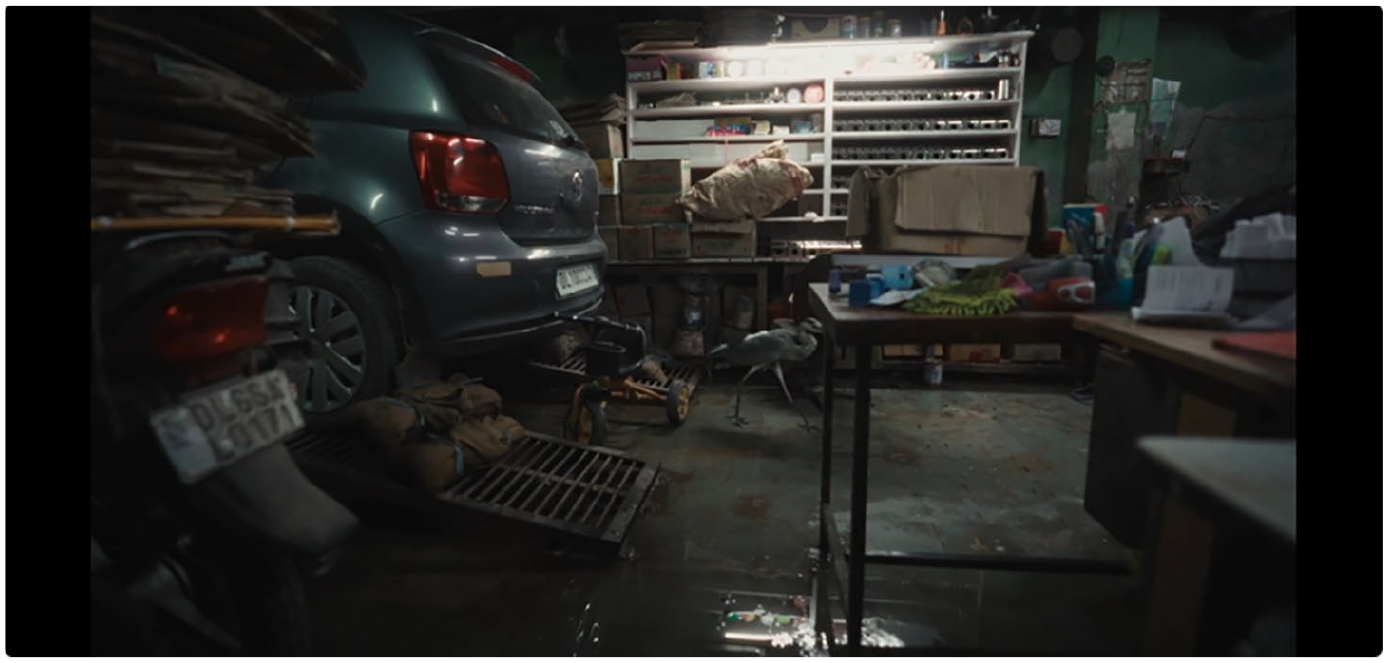
The brothers’ basement workspace.
Following feminist scholarship on the ethics of care (Engster, 2005; Kittay and Feder, 2002; Fisher and Tronto, 1990), de la Bellacasa (2012: 198) has argued that life’s essential heterogeneity and our inevitable vulnerability compel us to recognize the necessity and value of care. Consequently in such worlds, de la Bellacasa (2012) argues, ‘to care about something, or for somebody, is inevitable to create relation’ (p. 198). Sen’s film repeatedly and insistently focuses on everyday creatures, big and small, that live among humans in densely populated urban areas, thereby drawing attention to the potentialities of the human–animal entanglements. In doing so, the film seems to suggest that not only is anthropocentrism a folly in this age of climate change and species extinction, but humans have much to learn by looking at more than human life. Sen’s documentary emphasizes the relationality and interdependencies in webs of care by underscoring the work done by the kites in ‘taking care’ of the environment. Maan Barua (2019) has written about the multifarious ways in which animals often work in the shadows of capitalism, their labor rendered invisible. In particular, he mentions three kinds of animal work – metabolic labor, ecological work and affective labor (Barua, 2018). In Sen’s film, the kites perform a crucial metabolic as well as ecological task – they help reduce Delhi’s waste by consuming huge quantities of garbage. Yet these birds are denied treatment by the city’s animal hospitals because they feed on garbage and carrion and are seen as ‘non-vegetarian’ birds (thereby almost humanizing them in some sense as meat-eating Muslims or lower castes, while also rendering them abject) and therefore contaminated. As Nadeem points out, the kites have now replaced the vultures that have all but disappeared from India, wiped out by diclofenac poisoning from consuming the carcasses of cattle treated with the anti-inflammatory drug. In Thom Van Dooren’s study of the entangled multispecies relationships between humans, vultures and the dead in India, he refers to the unraveling of these relationships as a ‘painful unknotting’ (Van Dooren, 2011: 56). The scene in which we watch the count of injured birds rising gradually from 28 to 42 to 93, finally reaching the alarming figure of 172, followed by a shot of Saud sitting with the carcasses of all the birds he could not save, suggests the possibility that the kites are now in danger of meeting the same fate as the vultures. This reminds us that the multispecies entanglement and relational dependencies depicted in the film are not only urgently needed, but also implicated in patterns of survival and extinction.
Bellacasa has pointed out how ethics in an ethics of care ‘cannot be about a realm of normative moral obligations but rather about thick, impure, involvement in a world where the question of how to care needs to be posed’ (p. 6). By casting care as something that can be troubled, uneasy and unsettled rather than always benevolent, Bellacasa attempts to reclaim care from its always already idealized connotations. Such a model of care is more apt for today’s world with its multiple entanglements, ecological crises and unraveling of life forms. In the South Asian context, Radhika Govindrajan (2015) has argued through her ethnographic work in India’s central Himalayas that it is possible to see ritual animal sacrifice, which in these contexts are preceded by embodied, affective modes of care and intimacy between the human and the animal to be sacrificed, as ‘itself constitutive of interspecies kin relations’ (p. 505, italics in original). Despite the undeniable violence inherent in this interspecies kinship, the ritual sacrifice is seen as strengthening the kin relations between the human and nonhuman animals.
Sen’s film attempts to portray a similarly complex kinship between the brothers and the kites. There are constant reminders that the birds are predatory creatures and feed on the dead. In one scene, Salik asks somewhat querulously whether the birds would eat him and the brothers if they lay down and played dead. Saud chidingly responds saying he should try it and see what happens. Similarly, when Salik and Saud imagine a post-apocalyptic Delhi in the event that Pakistan launches a nuclear bomb on India, Salik asks if the migratory kites arriving in Delhi after the event will feed on them, assuming they will have all perished. Saud responds confidently saying, ‘They’ll eat bodies, they don’t care if it’s human or animal’. Such reminders of the potential for violence in the relationship between the brothers and the birds, binds them in non-normative forms of kinship.
Govindrajan’s conceptualization of love as work is useful in understanding the relationship the brothers have with the kites. She argues that the affective attachments of love have to be manifested through acts of labor (Govindrajan, 2021: 195). Instead of idealizing the portrayal of the relationship between the kites and the brothers, Sen emphasizes the untiring labor of the brothers, whether it be transporting the birds in boxes, swimming out to sea to rescue a single bird, or washing the birds. None of this is portrayed in idealized ways, but as highly demanding acts of labor. As Bishnupriya Ghosh (2023) has pointed out, in ‘Sen’s unflinching account of fraught entanglements, there aren’t any cutesy human-animal intimacies’, only a deep respect for nonhuman species. She analyzes the filming strategies used by Sen to look ‘not at but with the kite’. Yet the film communicates the density and proximity of interspecies entanglements so effectively that care becomes what Bellacasa has called a ‘non-normative obligation’ (Puig de la Bellacasa, 2010), something that is unavoidable and ‘obliges us to constant fostering’ (de la Bellacasa, 2012: 198) in order to make life livable and sustainable. Despite the film’s awareness of the messy human animal entanglements, by portraying the brothers as ultimately heroic in their endeavors, in the final analysis, the film remains somewhat circumscribed by a liberal sensibility distanced from a genuine intimacy with the Muslim Other.
The brothers’ familial kinship relations are also fraught in many ways, showing them as flawed caregivers to their human kin. Their mission to save Delhi’s kites seems almost quixotic given their modest means. It may even be argued that the brothers’ single-minded devotion to their mission leads to a neglect of their families. They seem to take no responsibility for the family business, and Nadeem neglects his civic and spousal duties by refusing to accompany his wife to the anti-CAA protests though she reiterates that this too is important. Their son’s health is a constant source of concern, but Nadeem at times seems more concerned about the kites. In contrast with these unusual kinship relations, often driven by the brothers’ imperative to care for the birds, is the film’s portrayal of the marginalization of Muslim communities in India.
Hygiene, disgust, and the Othered Indian Muslim
All that Breathes was filmed in Delhi during the time of the anti-Citizenship Amendment Act (CAA) protests staged by Muslims in the capital. Unable to quell the protests, in late February 2020 the ruling Hindu right-wing party, the BJP, gave an ultimatum to the Delhi police to clear the protestors. This led to what many, including the independent fact-finding committee formed by the Delhi Minorities Commission (DMC), have called the ‘Delhi pogrom’, resulting in the deaths of more than 53 people, mostly Muslims.
In 2019, the Parliament passed the CAA, which for the first time brought religion into determinations of citizenship. According to the CAA, non-Muslim refugees from the Muslim majority nations of Pakistan, Bangladesh and Afghanistan, who had arrived in India before 2014, would be granted Indian citizenship. The Act does not grant eligibility to persecuted Muslims from these countries, nor does it include other neighboring countries like Sri Lanka, China and Myanmar. Mahmood Mamdani finds the answers to questions raised by these inexplicable criteria in two claims – that ‘the legislation intends to present the perpetrator as Muslim, and only Muslim’ (Mamdani, 2019) and that the legislation ‘recognizes no Muslim victim’ (such as the Uyghurs and Rohingyas). This Amendment Act is in stark contrast to the earlier Citizenship Act of 1955 that does not define citizenship according to one’s religion. In yoking together religion with citizenship rights in such a bald attempt to privilege Hindus, the government set a dangerous precedent and undermined India’s secularism enshrined in the nation’s Constitution. The CAA led to violent protests around the country, resulting in the government having to withdraw the bill in Parliament.
Filmed in the early months of 2020 and 2021, the soundscape of All That Breathes subtly conveys the city’s turmoil as we hear fragments of political speeches playing on the radio and television. The India–Pakistan rivalry is evoked early in the film when Salik tells Saud he has seen on social media that a nuclear war may break out between India and Pakistan. Saud dismisses any such idea, but Salik remains concerned, interestingly not for himself or the people, but for the kites, asking what will happen to them in the event of such a catastrophe. At other moments, we hear the protest organizers addressing the crowd, urging them to ‘fight against thoughtlessness, fight for empathy and unity’ but also asking them to ‘please be orderly . . . we don’t want any harm to public property’. There is a sense that the protests are growing when we hear Nadeem’s wife wanting to join the women on the frontlines. The brothers discuss the possibility of the manner in which a perceived spelling error in their father’s name (the contraction ‘Mohd’ instead of ‘Mohammed’ on his school-leaving certificate) could be used to render him stateless. The patriarch is a mute figure who is only shown on screen when we hear the sound of the protests drifting into the house. As an elderly gentleman who has lived all his life in India and probably witnessed the convulsive violence of Partition, the father in his silence underscores the cruelty of the CAA. Toward the end of the film, the violence escalates, and Sen depicts it more directly.
In a scene late in the film, Nadeem worries that the violence is now only a mere 2 or 3 km from their neighborhood and an attack on their home may be imminent. He talks about having to patrol the neighborhood all night and being compelled to send his family to the ‘old house’ in a safer area. We know his anxiety is justified; we have already heard a Muslim man sobbing while being interviewed by one of the news channels as he expresses his acute anxiety about the safety of his family members in the face of the orgy of violence sweeping across the city. Nadeem laments the turn that religious rioting, something he remembers from his childhood, has taken more recently in India. He says, ‘This is different. This time it’s not only about hatred but also disgust. By calling people termites and rats, they have somehow made it about hygiene’. Disgust works in subversive ways in Sen’s documentary. In particular, it functions in two distinct ways: the languorous pans on the garbage piles and stagnant water in the brothers’ neighborhood serve to critique the infrastructural and civic decline of such neighborhoods, leading to the ghettoization of the already-abjected figure of the Indian Muslim. These scenes evoke the othering stereotypes (of the Muslim as unclean and polluting) already circulating in Indian society, only, however, to challenge them in other ways. Second, the close-up shots of things that most people might find disgusting almost serves to show them in a new light and, as Sen has claimed, even beautifies them. Concurrently, such things are shown as being a part of the process of care. These strategies subtly critique the discourse of disgust used by the Hindu right wing to marginalize the Muslim.
The meat (particularly beef)-eating practices of Muslims in India stigmatizes them as repulsive and disgusting in the Hindu nationalist imagination. Such stereotypes are enormously powerful, and as Ghassem-Fachandi (2012) has noted, they have the capacity to evoke intense disgust leading to feelings of moral indignation and even bodily responses such as nausea. Coupled with this is the ‘phantasmagoria of fear, anger, visceral abhorrence and particularly disgust’ (p. 14) aroused by the trope of the Muslim as criminal and terrorist aligned with the enemy state Pakistan. This potent concatenation of stereotypes is harnessed in moments of expiatory violence aimed at purging the imagined Hindu nation state of the corrupt and abhorrent Muslim, as was the case during the 2002 Gujarat pogrom. Sen’s film evocatively captures, and even draws slow, deliberate attention to, the filth of the brothers’ neighborhood – the piles of garbage, the waterlogged streets, the sewage water that repeatedly rushes into their basement, the rats combing through the garbage, flies buzzing around raw meat that the brothers prepare for the birds, the pigs that live in the swamps in front of the brothers’ housing estate, and so on. The visual grammar of the film relies on very slow and deliberate camera movements composed of languid pans and long, ground-level tracking shots. The garbage piles infested with rats and the disease-bearing mosquitoes in stagnant pools bring disgust to the fore as do many other scenes in the film. The acute municipal neglect of the brothers’ neighborhood also highlights the ways in which such territories become marked as ‘zone(s)’ of abjection driven by ‘chauvinistic cultural policies’ (Anand, 2012: 504). The camera moves deftly from ground-level shots of garbage piles overrun with rats to tilt shots looking skywards at the majestic kites soaring high. Sen has said that he ‘wanted the grey skies, and the garbage mountain to look evocative, fleshy and in a strange way “beautiful”’ (Wissot, 2022). I argue that this detailed attention to filth or things that we might categorize as disgusting, and their intimate relationship with modes of care, serves to underscore the interrelational web of life and render the othering ideologies of Hindutva, often based on disgust for the Muslim, utterly vapid and even delusional.
There is little doubt that the brothers live in filthy surroundings; their dilapidated building stands alongside a swamp teeming with pigs, the streets in their neighborhood are constantly waterlogged, and the oppressive heat and frequent power cuts mean that the meat for the birds is in perennial danger of rotting. Yet, within the confines of this cramped basement filled with hard machinery, they have created a space of deep nurturing and care for the kites. There are several scenes of the brothers washing the birds and performing their own ablutions, as if to counter any aspersions of lacking hygiene. In other scenes, we see them very carefully assessing the nature of a bird’s injury or bandaging an injured wing. These moments stand in quiet contrast to the oppressive and almost palpable heat, compression and filth that are unavoidable aspects of their daily lives. In one scene, we see the brothers preparing a bath for an injured nestling. They measure the water temperature to ensure it is not too hot. The camera zooms in on Nadeem’s hands as he gently cradles the nestling in one hand while rubbing it clean with the other in the soapy water (Figure 2). We hear Saud say, ‘How you’re cleaning it behind its ears, reminds me of how mother used to bathe us’. The film has many such moments of tenderness and care enacted in the brothers’ cramped and dilapidated apartment. Such a depiction portrays the brothers as caregivers, while also highlighting the ghettoization of the Muslim in urban India, as they are relegated to increasingly neglected neighborhoods with crumbling infrastructure and failing civic amenities.
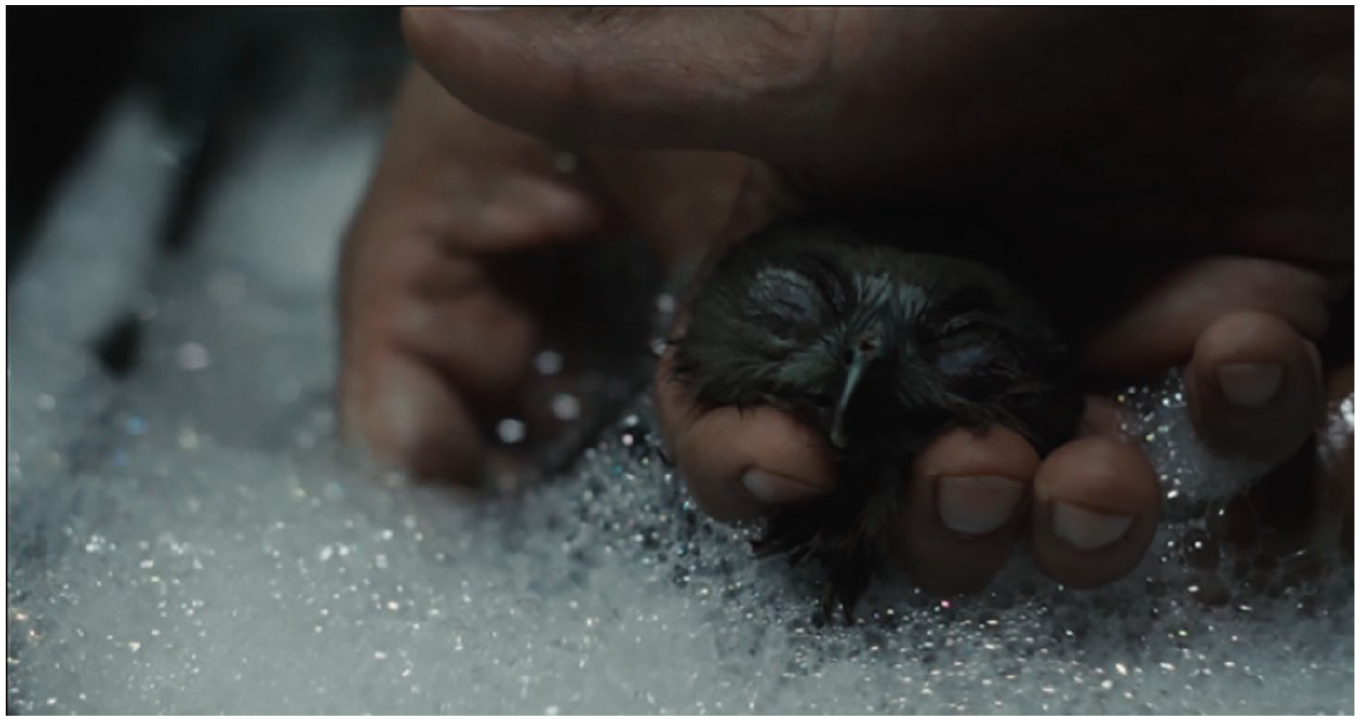
Nadeem cradling a nestling in the soapy water.
Care is not portrayed in a simplistic unidirectional manner in the film, where the brothers are the caregivers and the birds are the recipients. Instead, there are subtle suggestions that the birds and other creatures provide comfort and solace to the brothers as well. Saud has said in interviews that the brothers have received far more from the birds than they have been able to give to the regal creatures. In one scene, we see Salik riding an autorickshaw returning home with several boxes of injured birds. He gets a call from his mother who has heard about communal riots breaking out in many parts of the city and is worried about him. He assures her that things are fine where he is and that he will return home early. He searches on his phone for news of the riots, plays a brief clip where we hear the sound of angry mobs, only to cut short the clip and put his phone away. He sits for a while as though pondering something. He then retrieves a small chipmunk from his shirt pocket and plays with it, handling it gently as it climbs playfully on his fingers. Having calmed himself from the rising anxiety that the call from his mother and the news clip must have initiated, he returns the chipmunk to his pocket, the creature happily disappearing head first into the pocket as the hint of a smile crosses Salik’s facade. This brief interlude is bookended by scenes of communal violence. The scene of large fires burning in Muslim neighborhoods all night, while celebratory music can be heard playing in the background, slowly dissolves into a morning scene of smoke rising from the smoldering fires of the previous night’s violence which then cuts to Salik in the auto rickshaw. This scene is followed by an extended sequence of 2 minutes where we see brief glimpses of Delhi by night. The soundscape of this sequence is that of the news channels reporting the ‘horrific violence’ that overtook Delhi at the time. We hear the voice of a terrified man crying as he speaks in hushed tones of hiding while his home was looted and fearing for the lives of his children and elderly parents. We hear of ‘shoot at sight’ orders, ‘houses burning’, hospitals ‘overflowing’ with dozens of ‘gunshot victims’ and ‘devastation as far as the eyes can see’. What is unique about these scenes is Sen’s strategy of not showing any of this violence on the screen – simply conveying it via the soundscape – and instead focusing on animals and creatures of various kinds as they are depicted on the screen. The sequence begins with a long-tracking shot of a carriage on an empty street drawn by two horses as they trot toward the camera; in another scene, we see a man walking with a camel. These are interspersed with highly stylized black and white scenes – one showing a kite silhouetted against the moonlight and another is a close-up shot of two ants on leaves. The only human shown in these scenes is Nadeem’s wife, who is watching the news reports on her phone sitting in the dark, her face illuminated by the light from her phone screen. Sen begins showing scenes of communal violence (fires burning, mosques being desecrated) only when the sound of news reports ceases. Interspersed with scenes of violence in the last quarter of the film are scenes of the brothers taking care of the birds, tending to their wounds and gently bandaging a broken wing. Saud even recognizes the indentation made by eggs on the underside of a male bird and asks Salik to release the bird as soon as possible because ‘his chicks will be waiting in the nest’. Such moments of deep caring and tenderness contrast sharply with the violence of narrow communalism.
Aestheticizing disgust
In her study of disgust, Sara Ahmed has demonstrated the way in which disgust is generated by contact between objects. Therefore, objects are not inherently disgusting but become disgusting via contact with things that have already been designated as disgusting (Ahmed, 2014 (2013): 87). In a similar manner, the Muslim is often rendered disgusting in India because of his contact with and consumption of meat, particularly beef. Traditional practices of untouchability often used to severely marginalize Dalits (or untouchables) in India, also help to stereotype the figure of the Muslim as the carrier of abjection and revulsion. According to Ahmed, once an object is rendered disgusting, it must be expelled. In a circulatory argument ‘the expulsion itself becomes the “truth” of the reading of the object’ (Ahmed, 87, italics in original). Disgust is therefore a performative act that results in othering and exclusionary practices often used to establish hierarchies.
In Savoring Disgust, Carolyn Korsmeyer (2011) describes ‘aesthetic disgust’ as ‘the arousal of disgust in an audience, spectator or a reader, under circumstances where that emotion both apprehends artistic properties and constitutes a component of appreciation’ (p. 88). In many parts of Sen’s film, particularly in the depiction of the filth and toxicity of the brothers’ neighborhood, his cinematography simultaneously evokes disgust coupled with appreciation of the unexpected beauty of the scenes. This is very intentional on Sen’s part – he speaks of the ‘poetic or lyrical register’ (Thompson, 2022) that the film demanded, and of how he abandoned shooting with a handheld camera after six to eight months because its ‘anxious energy’ contradicted the brothers’ ‘contemplative and meditative’ vibe that demanded a ‘dreamy and aestheticized’ language (Liu, 2023). The film’s opening shot languorously follows rats and insects in the trash piles by the side of the street for four minutes. In a similar shot later in the film, we see a turtle emerge from the garbage and painstakingly clamber through it until it stops as though to contemplate the passing traffic (Figure 3). These scenes evoke disgust, but in their heightened aestheticization they also shift our attention to the survival and even flourishing of various life forms in the most toxic places. As Ghosh (2023) comments, ‘these lyrical shots provide meditative pause, a chance to notice everything entangled within the frame’.
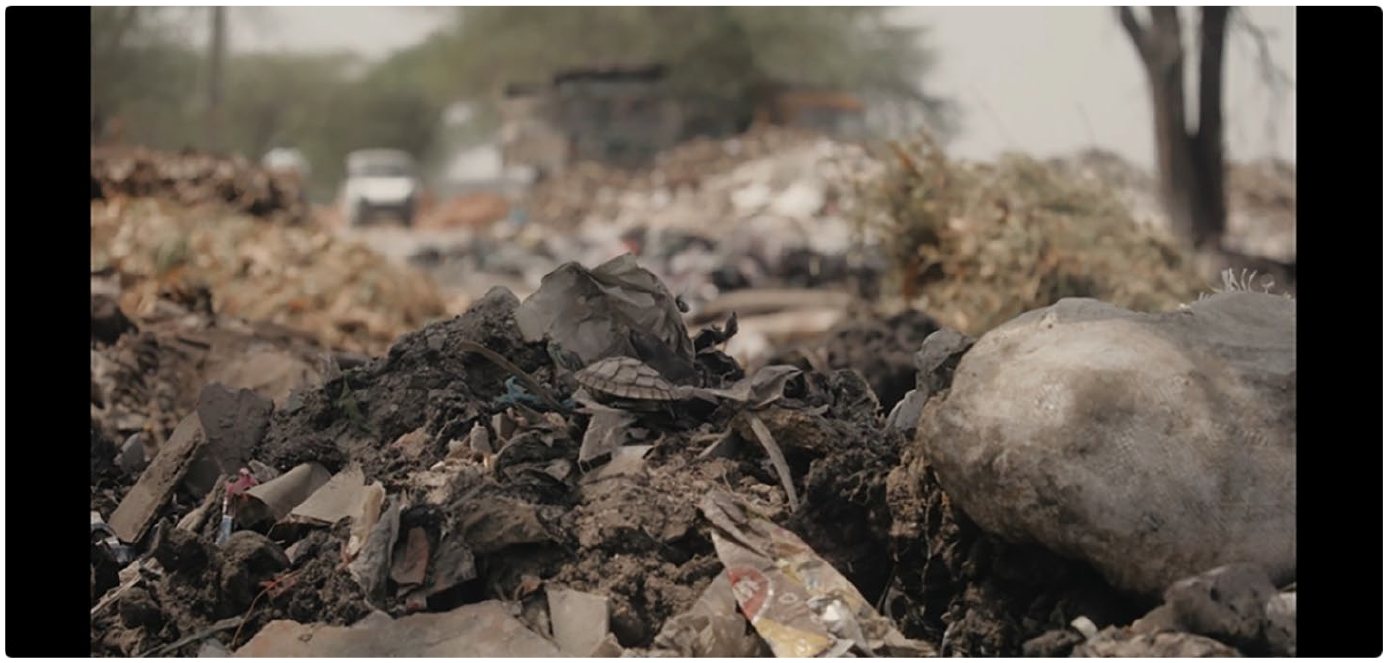
Turtle emerging from piles of garbage.
The subjects of Sen’s film – whether they be the carrion and waste-eating kites of Delhi or the Muslim brothers living in a poor, primarily Muslim neighborhood of Northeast Delhi, who nurture the birds – are deeply marginalized and othered. The birds are seen as unclean as are the brothers, interestingly both so because of their dietary preferences. Disgust is therefore a prominent affect in this context. Scholars have noted that the root of disgust is often thought to be the fear of contamination (Ngai, 2005: 336; Robinson, 2014: 62), since it began, as most agree, with a fear of ingesting poisonous food. The idea of contamination via oral ingestion also extends to the senses of smell and touch. Jonathan Haidt (2003) has further identified the impulse to ‘avoid, expel, or otherwise break off contact with the offending entity, often coupled to a motivation to wash, purify, or otherwise remove residues of any physical contact that was made with the entity’ (p. 857). Jenefer Robinson (2014) has identified this impulse as ‘a reaction to moral turpitude’ (p. 64, italics in original). In the Indian context of untouchability and disgust of the Muslim Other, the relational theme of disgust translates from the fear of contamination from disease-carrying substances to the fear and loathing of other humans based solely on casteist and religious predilections accompanied by a strong moral element. Here, we see a shift from a biological understanding of disgust, to what critics like Haidt et al. (1997) have called ‘sociomoral disgust’ or the way in which a simple biological emotion can be harnessed to serve ideological and social concerns.
In its documentary presentation of life in Northeast Delhi, All that Breathes evokes the conditions that arouse sociomoral disgust in the right-wing Hindu imaginary. However, Sen subtly undercuts this by suggesting the nobility of the brothers, the sacrificial nature of their actions, and by heightening the disgusting to the beautiful. Shaunak Sen uses ‘disgust’s distinctly polymorphic nature’ (Kendall) in highly effective ways to juxtapose stories of deep nurture and care on one hand with those of hatred and bigotry on the other hand. Kendall describes disgust as being both ‘a visceral reflex . . . and learned emotional response . . . a form of both repulsion . . . and attraction’ (Kendall, 2). The cinematic disgust of All That Breathes works in two ways – using strategies of what scholars have called aesthetic disgust or the paradox of disgust, it challenges ideas about what may be considered disgusting, complicating our visceral response to the disgusting scenes in the film. At the same time, however, it also challenges the majoritarian Indian film viewers’ stereotypical ideas about Muslims by questioning their emotional response that is, in Kendall’s words, a ‘cognitive, culturally-conditioned, evaluative’ response.
Sen has spoken of his preference for films that convey their message ‘obliquely or tangentially’. He says, ‘We have to sneak in things and whisper things to the better angels of people’s nature’ (Democracy Now, 2023). Critics have mostly identified the implied messages of All that Breathes to be about environmental degradation and the entanglement of human and more-than-human life (Leimbacher, 2023). However, I would argue that through the film, Sen may also be speaking in a coded way to Indian audiences (in this case, the majoritarian Hindu audiences), urging them to question their attitudes toward Muslims through his complex and multifarious evocations of disgust in the film. Although the brothers are portrayed as the abjected Others of Indian society, living in filthy surrounds and performing a form of care that is seen as polluting and contaminating, their profound act of caregiving heroizes them, compelling us to see them in non-stereotypical ways, shorn of the bigotry of right-wing majoritarianism.
Sen introduces the prohibitions around food, particularly meat, early in the film when the brothers tell us that the city’s animal hospital refused to take in an injured kite because it is a ‘non-vegetarian bird,’ a term that oddly anthropomorphizes the birds while also discriminating against them for their dietary preferences. The film devotes considerable time to the issue of food procurement for the kites. The brothers visit a butcher, from whom they have been buying meat for several years, to see if he can reduce prices for them given their financial difficulties. He politely refuses, making sure to let them know that he admires the nobility of their work. The brothers return home and begin to thaw and grind the meat for the kites. They first wash the meat in barrels of water. The sequence begins with an underwater shot of the water in the barrels with worms swimming around. After the brothers wash the meat, the camera focuses on the meat-grinding machine covered in flies as Nadeem complains about the sweltering heat. In a protracted sequence, we see the minced meat falling in clumps onto the tray below, as Saud presses it into the tray (see Figures 4).
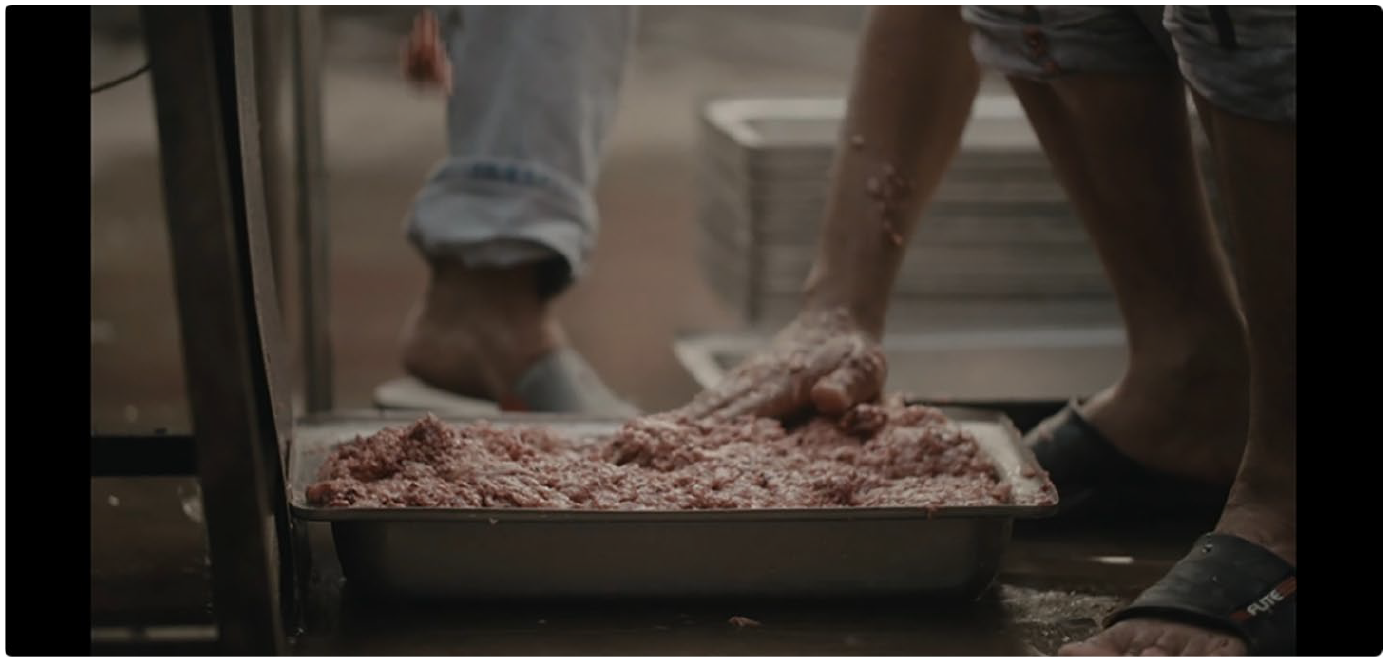
Pressing ground meat into the tray.
The close-up shots of barrels of meat, with flies and other insects swarming over the meat, and of Saud’s arms covered in minced meat as he fills the trays, would arouse disgust in many. When the machine malfunctions, we see a 5-second close-up of the grinding wheel covered in minced meat as we hear the loud buzzing of flies drawn to the meat (Figure 5). The scene then cuts to another in which we see the kites eating the meat that the brothers have just prepared. Throughout these scenes, we are acutely aware that this is a labor of love. The ‘disgusting’ process of preparing the meat is a necessary act of care for the birds.
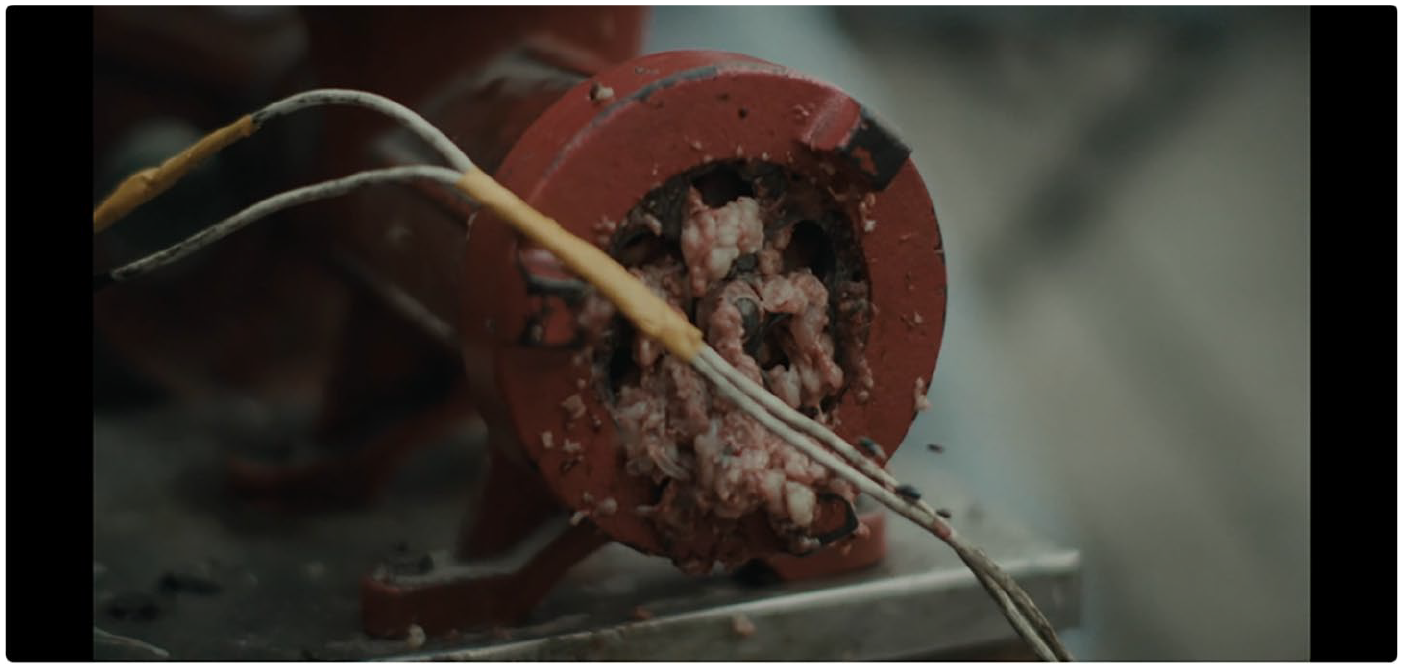
Close-up of the grinding wheel and swarming flies.
Jenefer Robinson (2014: 81) disagrees with Carolyn Korsmeyer’s notion of aesthetic disgust, arguing that there is no differentiation between the disgust aroused by life and that aroused by art, and that aesthetic disgust cannot be converted into insight. The best artworks, she argues, are those which ‘do not merely arouse emotions: They encourage their audiences to monitor their emotional responses cognitively’ (p. 82). By doing so, she further argues, the audiences are made to consider the nature and validity of their emotional responses. While this is true of all types of emotional responses aroused by art, both Korsmeyer and Robinson agree that as a notably visceral emotion, disgust ‘can deliver its insights in a particularly powerful, bodily way’ (Robinson, 2014: 82). Shaunak Sen cleverly manipulates the existing discourse of disgust in India used to maintain social hierarchies and to discriminate against and even demonize religious and caste-based minorities (Plantinga, 2016: 85), in this case, Muslims. He does so, I argue, in order to make his audiences cognitively process the disgust they feel, and justify its validity in the face of the larger story of trans-species care and love, and human – more than human entanglements that his film tells. In doing so, he irrefutably exposes the marginalizing and exclusionary practices as hollow, bigoted and particularly deleterious in times of environmental crises.
Although I would argue that Sen’s documentary goes a long way in humanizing the Muslim protagonists for a majoritarian audience, it ultimately remains somewhat circumscribed by a liberal politics and sensibility evidenced by the heroization of the brothers. While Sen is careful not to idealize the birds, the brothers’ labor of loving care ironically idealizes them in ways that distance us from the Muslim Other. In the Indian context, the Muslim is not only othered because of their beef consumption, but as Tayob has shown, also because Muslims subscribe to a complex mode of relation with animals that is caring but also violent. Similar to Govindrajan’s work on ritual animal sacrifice in the central Himalayas (2018), in his work on the anthropology of sacrifice via a study of the practice of qurbani (ritual animal sacrifice) among Muslims in Mumbai, Shaheed Tayob (2023) moves beyond the Eurocentric ‘normative aversion to sacrifice’ (p. 350) found in Christian theology as well as posthumanist thought. Instead, he sees in qurbani the enmeshing of care, love, intimacy and violence, and the ways in which ‘sacrifice through love unsettles the certainty of self and world’ (Tayob, 2023: 352). Similarly, Parama Roy discusses Gandhi’s reflective disgust at having consumed mutton as a young boy with his Muslim friend. Gandhi was troubled by the way that Islam does not seem to disavow violence in the manner that he imagines Hinduism does (Roy, 2010). By idealizing the brothers’ labor of love, the film becomes colored by a liberal sensibility and thereby misses the opportunity to present a more nuanced portrayal of human-animal entanglements that are both hierarchical and caring.
Conclusion
Recent scholars of care have called for a radical undoing of the world by rejecting the ideologies of Western modernity, that will enable us to unmake racial capitalism, cisheteropatriarchy and the carceral state through a politics of care (Woodly et al., 2021: 892). In the context of India, we might add to these casteism and religious ethnocentrism which are equally damaging. Through its portrayal of an unusual relationship of interspecies care, All That Breathes calls for such an undoing. In the film’s closing moments, Saud’s voiceover articulates the film’s urgent message: ‘You don’t care for things because they share the same country, religion or politics. Life itself is kinship. We are all a community of air. That’s why we can’t abandon the birds’. Encapsulated in this statement are allusions to both models discussed in this article – interrelational and non-normative webs of belonging between humans and more than humans (‘Life itself is kinship. We are all a community of air’) on one hand and the violently exclusionary politics of the Hindu majority (‘because they share the same . . . religion’), based on invoking disgust for the abjected Muslim, on the other hand. The urgent imperative to care that must be heeded (‘That’s why we can’t abandon the birds’) leaves us in no doubt about the preferred model.
Footnotes
Author’s note
This article is part of the special issue - Re-creating Care as Mattering Practices.
Data availability statement
Data sharing not applicable to this article as no datasets were generated or analyzed during the current study.
Declaration of conflicting interests
The author(s) declared no potential conflicts of interest with respect to the research, authorship and/or publication of this article.
Funding
The author(s) disclosed receipt of the following financial support for the research, authorship, and/or publication of this article: The project Comparative Cultures of Care and the Conference, from which this paper springs, were generously funded by the Central Reserve Allocation Committee (project no. 04A34) of The Education University of Hong Kong.
