






Abstract
This article investigates how contemporary environmental conflicts reconfigure relationships between urbanity, nature, and religion in contexts of accelerated and extended urbanization. Focusing on the 2020–2021 occupation of the Mormont hill in French-speaking Switzerland, it argues that imaginaries of nature are co-produced through spatial transformation, social practice, and discursive contestation rather than existing outside urban life. The study draws on long-term research on eco-spiritual actors, combined with ethnographic observation, media analysis, and activist publications. Mobilizing the “more-than-human” approach as a critical lens, the article identifies three competing discourses shaping the meaning of the Mormont. First, a dominant economic framing constructs the hill as a resource embedded in extractivist and growth-oriented logics. Second, a conservationist discourse, grounded in legal and scientific expertise, emphasizes biodiversity protection while remaining largely within institutional frameworks. Third, an eco-activist discourse reconfigures the hill as a more-than-human entity, articulated through affective, ethical, and spiritual practices. Particular attention is given to this latter perspective, showing how activists mobilize ritualized practices, relational ethics, and references to imagined Celtic pasts to produce what can be described as “subtle green spirituality.” The analysis demonstrates that the “more-than-human” operates not as a stable theoretical category but as a contested and situational construct, shaped by the intersection of scientific, political, and spiritual forms of knowledge. By tracing these rhetorical contestations, the article contributes to cultural studies debates on the post-secular and post-human turns, highlighting the need for critical reflexivity regarding claims to non-anthropocentric perspectives. More broadly, the Mormont case illustrates how environmental activism functions as a site for the production of new cosmologies, in which processes of re-enchantment and critiques of extractivism converge, reshaping notions of agency, responsibility, and the place of humans within increasingly urbanized environments.
Keywords
Introduction 1
Under the current circumstances of expanding urbanization, many have noticed that contemporary societies increasingly long for nature as a projective moral space with a biophysical materiality. It is particularly important to acknowledge this extension of the urban beyond the bounded city into agglomerations and peri-urban regions when studying humans’ experience and framing of nature. Historians Jörg Rüpke and Susanne Rau (Rau and Rüpke, 2020), as well as Emiliano Rubens Urciuoli (Rüpke and Urcioli, 2023), offer a productive conceptual entry point through the notion of urbanity as foregrounding the fundamentally social character, as well as its religious entanglements and cultural dimensions is particular. For these authors, urbanity encompasses social practices, ideas, imaginaries, media practices, institutions, and actors that are collectively recognized as urban (Rüpke, 2020). Rüpke and Urcioli also write that “important elements of urbanity draw on the correlation between technical, social, aesthetic, and other forms of cultural innovations, on the one hand, and a specific form and scale of human sociation, the city” (Rüpke and Urcioli, 2023: 292).
Recent studies in social and cultural studies (e.g. Camorrino, 2018; Thurfjell, 2025) observe that contemporary Western urban dwellers are drawn to nature as something external to the cities they inhabit. They actively seek encounters with nature beyond urban environments and frequently describe an ambivalent experience characterized by a simultaneous desire for fusion with nature—becoming “one” with it—and for maintaining control over it or at least avoiding subjugation by it. This ambivalence is closely tied to embodied experience: the human body becomes the primary reference point through which nature is qualified, particularly insofar as it elicits transcendent or “oceanic” emotions.
When such orientations are expressed by individuals with strong ecological commitments, particularly environmental activists, they are often accompanied—both in public discourse and academic commentary—by a degree of irony or skepticism, portraying these actors as naïve or self-centered utopians. However, drawing on 10 years of research among Swiss eco-spiritual actors and initiatives (Becci, 2024), a more nuanced interpretation emerges. The present study mobilizes insights from this body of research to analyze a case study: a 6-month occupation by environmental activists of a territory located on a hill in the region between the Jura Mountains and the cities of Geneva and Lausanne. This region exemplifies processes of extended urbanization and their socio-cultural implications.
The Jura hills and mountains are highly valued recreational destinations for nearby urban populations, offering opportunities for hiking and gastronomic tourism in small villages and farms. Yet, the spatial experience of “nature” has shifted significantly. Whereas, a decade ago, rural landscapes could be reached on foot within a short distance from Bussigny (north of Lausanne), today such access requires traversing extensive agglomerated housing for an hour or more. The rapid expansion of Bussigny illustrates this transformation. One resident, for example, described his view from a newly constructed apartment as reminiscent of a global metropolis: “At night, when I see the lights from my window, I tell myself: this is New York!” (Interview, 2023).
The hill known as Mormont occupies an ambivalent position within this landscape. For some, it represents a sanctuary of biodiversity; for others, it constitutes an economic resource, given the presence of a major cement plant at its base, operated by the multinational corporation Holcim (n.d.). 2
The industrial infrastructure, imposed upon a picturesque environment, has prompted critical artistic responses. A local artist, for instance, has referred to the plant as “the Cathedral of Concret” (Figure 1) evoking its monumental character and symbolic glorification of industrial production. The occupation of the site by environmentalists introduced a new discursive framing, within which the hill itself came to be conceptualized as a more-than-human entity.
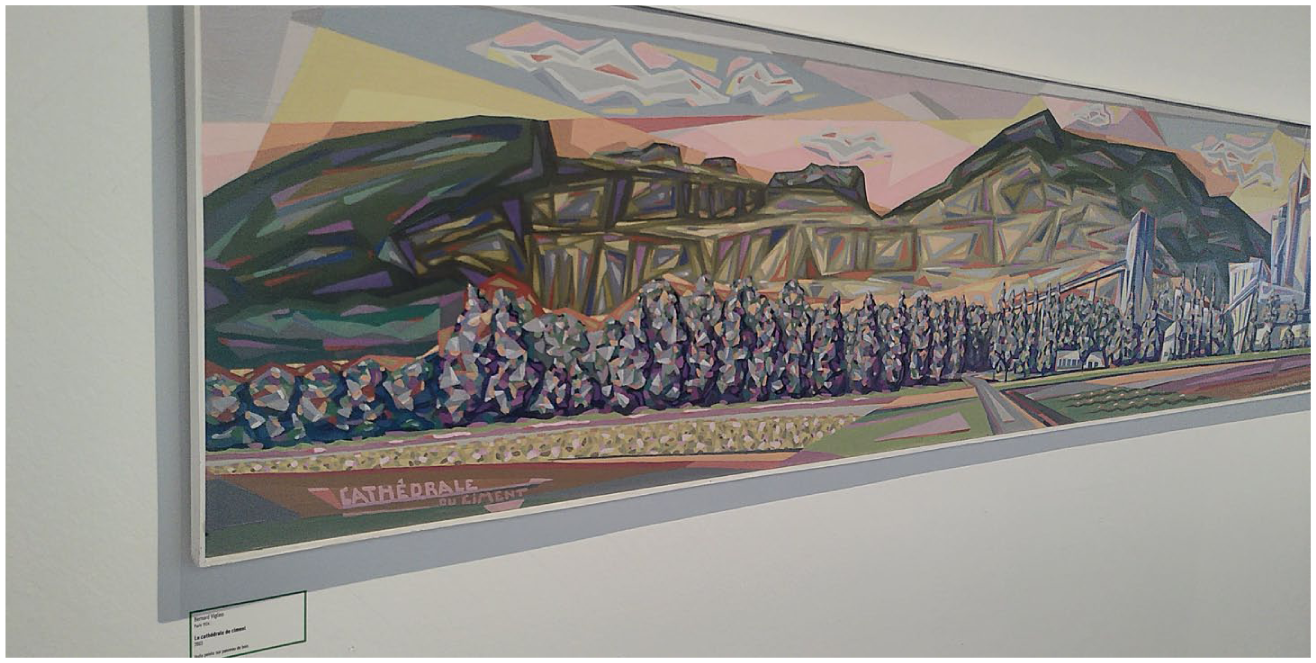
Bernard, Viglino. La cathédrale du ciment, 2003, exhibition “Sacré Mormont!” © I. Becci.
This article examines how this case raises new questions regarding the relationships between urbanity, nature, and religion. It argues that processes of urbanization and imaginaries of nature are deeply intertwined, even in contexts where specific natural features—such as a hill—are sacralized or “enchanted” and reconfigured as more-than-human beings. 3 The analysis proceeds in three steps. First, it outlines key theoretical perspectives associated with the “more-than-human” approach, understood as a point of convergence across multiple disciplines. Second, it presents the empirical case and methodological approach, drawing on printed and media sources as well as ethnographic observations, including a field visit during the occupation and subsequent encounters with participants. Third, it develops a tripartite interpretive framework to analyze the competing narratives surrounding the site, highlighting the specificity of contemporary environmentalist discourses that incorporate more-than-human perspectives. The conclusion reflects upon the broader conceptual implications of the study.
The more-than-human approach as a theoretical nexus
The social and cultural sciences have made significant contributions to debates concerning human–nature relations in urban contexts. Classical social theory already identified the ambivalent character of this relationship in modernity, oscillating between romantic-aesthetic enchantment and instrumental, economic valuation. In Western urban societies, nature is simultaneously valorized as ethically “good” and subjected to processes of commodification and institutional regulation.
More precisely, the “fusion of terrestrial conditions,” for example, deserts, forests, and islands, “into the collective singular of the one nature that confronts us” is, as German sociologist Hartmut Rosa (2022 [2016/9]) writes, a “cultural achievement that could presumably only take place after cultural life had largely emancipated itself from natural rhythms and (local) natural conditions” (p. 456 4 ). Such emancipation occurred with modernity (cf. White, 1967) and became ever more constituent with industrialization. Drawing on the writings by Canadian philosopher Charles Taylor, Rosa (2022 [2016/9]: 453) puts this idea in a nutshell: “The voice of nature is a modern invention . . . It presupposes that man and nature can be perceived as self-contained entities, each speaking its own language and therefore potentially contradicting each other.” In this sense, the very idea that “nature speaks” emerges as a distinctly modern construction.
Within the social sciences, multiple approaches have sought to problematize and move beyond the nature–culture dichotomy. French anthropologist Philippe Descola (2005) has convincingly argued for a complexification of the nature–culture link and even for its overcoming, while within sociology the Actor-network theory has opened the path for the social scientific integration of materiality. 5 Building on Judith Butler’s (1990) critique of “nature” as an externalized category, De Luca (2009 [1999]: 68) conceptualizes it as a culturally constructed ideograph, negotiated within the field of discursive politics. From this perspective, landscapes are understood as symbolic compositions emerging from the interaction between physical elements and social meanings (Greider and Garkovich, 1994). These physical elements, be they a water spring or a rock, are endorsed with symbolic value according to the location they can have in a group’s life and self-representation. As British anthropologist Mary Douglas (1978) had already emphasized, natural elements acquire significance through their incorporation into collective identities and practices. The materiality of nature contributes to building the value it has subjectively and culturally. Natural elements such as rivers can have a financial value for commercial activities (for instance, navigation or fishing) on the one hand but also a religious or sacred value on the other hand (for instance, for water rituals). Notably, in Switzerland, mountains occupy a prominent position in national imaginaries, whereas hills are less frequently foregrounded in public discourse and are rather associated to a closer nature.
Recent “material” and “spatial” turns have further expanded analytical frameworks by incorporating non-human actors and emphasizing the hybridity of what Donna Haraway (1991) terms “natureculture.” Increasingly, interdisciplinary research integrates insights from environmental sciences, challenging anthropocentric perspectives and advocating for a relational understanding of human and other-than-human entities. The notion of the “more-than-human” has emerged as a key conceptual tool in this context, enabling scholars to account for the agency of other-than-human beings and material environments without reducing them to a category defined by the absence of humans and “to reframe other-than-human entities as matters of concern and care within a broader epoch of eco-social unravelling . . . diverse beings who together compose the more-than-human world” (Price and Chao, 2023: 178).
In recent years, a growing body of scholarship has drawn on environmental studies to challenge the epistemological and political limitations of anthropocentric approaches and acknowledge that “there are always more than (just) human actors and agencies involved in the production of landscapes and communities” (Price and Chao, 2023: 180). A central concern across these interventions is the need to reposition human actors within broader ecological and material assemblages. This shift is reflected in changing research practices within the natural sciences themselves. As Nalini M. Nadkarni (2016: 415) observes, ecological research has moved away from an exclusive focus on remote and ostensibly “pristine” environments toward sites in which human impact is both visible and constitutive. Such developments signal a reconfiguration of the boundaries between natural and social inquiry.
This emerging interdisciplinary constellation brings together environmental studies, sociology, anthropology, and the study of religion in new ways. Research on environment, territory, and nature increasingly integrates attention to human practices with a focus on “more-than-human” or “other-than-human” entities and agencies. At the same time, scholars in the social and cultural sciences have expanded their analytical scope beyond institutionalized religion to encompass broader forms of spirituality, including practices often categorized as “non-religion.” These approaches foreground diffuse modes of enchantment, affect, and ritual that are frequently articulated through engagements with nature.
While such developments are often subsumed under the rubric of a “post-human turn,” this label risks obscuring important conceptual differences and tensions. The circulation of terms such as “more-than-human” across disciplinary contexts facilitates dialogue, but may also lead to a dilution of analytical precision. The convergence of scientific, spiritual, and activist discourses, for instance, raises critical questions about authority, knowledge production, and the role of expertise. Nadkarni’s (2016: 417) own practice—combining ecological research with faith-based forms of communication, including sermons on “trees and spirituality”—illustrates both the generative potential and the ambiguities of such boundary crossings.
From a cultural studies perspective, these developments call for sustained critical reflexivity. The adoption of “more-than-human” frameworks entails not only a decentering of the human subject but also a reconfiguration of agency, responsibility, and power. It requires careful attention to how different actors—scientific, religious, and activist—mobilize these concepts within specific socio-political contexts. Rather than assuming a straightforward shift beyond anthropocentrism, this article approaches the “more-than-human” as a contested and situational category, whose meanings are produced through discursive and material practices. The proliferation of terms such as “post-human” or “more-than-human” risks obscuring significant conceptual divergences across disciplines. A critical stance remains necessary to address issues of power, inequality, and epistemic authority.
Within the study of religion, a cultural approach has long emphasized the fluid and situated character of spirituality, understood as embedded in everyday practices and expressed or performed according to the perception of its opposite be it religion or secularity. The more-than-human perspective extends this approach by foregrounding the role of materiality in shaping religious and spiritual experiences. Feminist and postcolonial scholarship, particularly through intersectional analysis, provides additional tools for interrogating the power relations embedded in these constructions.
In this framework, analyzing shifts in rhetoric—from secular to spiritual—within specific spatial and temporal contexts offers valuable insight into how human–environment relations are socially constructed. The case of Mormont illustrates how a particular landscape can be simultaneously framed as a sacred environment and as an economic resource, depending on the actors, the stakes, and discourses involved. As Phaedra Pezzullo and Robert Cox (2021: 53) write, “cultural perceptions of the environment may change as new voices and interests arise to contest or challenge prevailing discourses.” Such a multiplication of contrasting views and framings has precisely occurred during the last decade in the case of the Mormont where the cement plant is located. The case introduced in this text shall illustrate how spirituality or more precisely what recent studies on environmental activism have called “subtle green spirituality” (Becci et al., 2021) is woven into these rhetorical constructions.
The hill: A short portrait
Mormont is a hill of approximately 4 km in length and 605 m in elevation, located in the northern area between the urban centers of Geneva and Lausanne. Its limestone composition constitutes a geological anomaly that has enabled the development of a particularly rich biodiversity. While the site holds considerable historical significance, this past remains only weakly inscribed in contemporary collective imaginaries. 6 Archeological and historical research situates the site within a long temporal horizon of human occupation. Celtic populations inhabited parts of the European continent between the 5th and 1st centuries BCE, prior to Roman expansion (Kruta, 2006: 3), and evidence suggests that Mormont was intermittently occupied from the Mesolithic period through to the Middle Ages. During excavations carried out by archeologists from 2006 to 2016, 7 over 250 offering pits 8 were discovered on the site dating from about the end of the 2nd century to the beginning of the 1st century before our era. Excavation of these pits reveals a complex stratigraphy, illustrating the diversity of their uses and filling methods. These findings—characterized by complex stratigraphy and deposits in the pits including food remains, artifacts, animal bodies, and human remains—have led archeologists to describe the site as “mysterious” and “enigmatic” without parallel in Celtic Europe. 9 Analysis of the distribution of the pits and their intentional deposits shows that the Mormont was used for cultic purposes over a short period of time, and that space was carefully managed. 10
Subsequent historical interventions further illustrate the layered transformation of the hill. In the 17th century, a canal of 25.3 km was constructed across Mormont to connect the Rhône and Rhine river systems, embedding the site within broader circuits of trade and mobility. 11 Although this canal is no longer used, it appears still today as a wavy blue bar in the coats of arms of one local commune crossing a big lion, taken from the arms of the medieval Lords, standing on a triple mountain, the Mormont hills. 12 The blazon stresses humans’ capacity to shape the hill for their commercial activities. Such representations resonate with broader processes identified by Jon Mathieu (2023: 32), whereby mountainous landscapes in Switzerland were progressively revalorized from the 18th century onwards through aesthetic and cultural codification. Since 1998, Mormont has been part of the Federal Inventory of Landscapes, Sites and Monuments of National Importance for its biological richness.
Installed close to the Éclépens railway station since 1953, the cement plant is the “largest site in French-speaking Switzerland” of the multinational enterprise. 13 A total of 115 employees work there to intensively quarry the limestone for exportation and providing for about 20% of Switzerland’s cement consumption, thereby contributing significantly to the economic wealth of the region. 14
In the meanwhile, the site stands under federal jurisdiction as the economic interest is considered as going beyond local issues. Once the archeological activity was closed, in 2016, Holcim obtained the right to expand its extraction. The Mormont hardly existed as an entity in local discourses, contrary to other hills nearby. 15 On the one hand, the territory is difficult to access by foot as a big part of it, the quarry, is materially separated, prevented from entering by barriers (Figure 2).
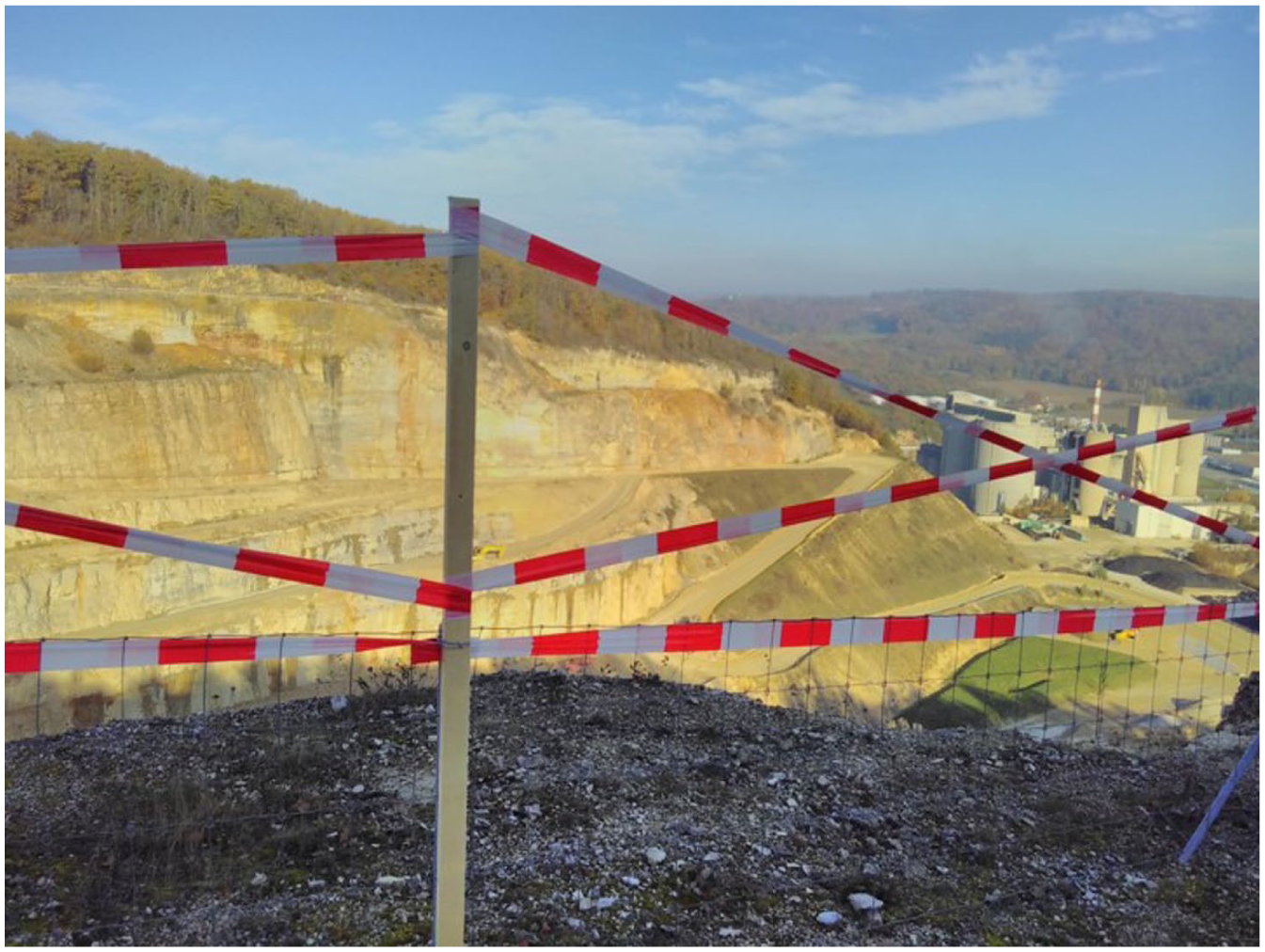
Mormont. View on the plant from the ZAD 31 October 2020. © Irene Becci.
In what follows, the occupation of the part of the hill contested to the quarry and its various implications shall be elaborated further.
The ZAD: Occupying territory and minds
The establishment of the so-called ZAD, “zone à défendre,” at Mormont echoes the natural “Zone to Defend” in Notre-Dame-des-Landes, France, an occupation by environmentalists mobilized against large-scale infrastructural projects for economic investment plans in the early 2010. What happened in Switzerland must be understood in relation to the broader conjuncture of the post-COVID-19 pandemic. Here, the partial shutdown of 2020 disrupted ongoing ecological mobilizations, temporarily slowing collective action while simultaneously creating new conditions for engagement. For some urban actors, the suspension of routine activities generated both time and reflexive distance, fostering renewed attention to local environments, artistic practices, and alternative forms of inhabiting space. Within this context, the perception that large-scale systemic change could occur rapidly—through the abrupt “stopping” of economic and social life—became a salient reference point in environmentalist discourse. It was against this backdrop that a group of predominantly young activists initiated the first ZAD in Switzerland. In October 2020, they occupied a section of the Mormont hill adjacent to the quarry, establishing the “ZAD de la Colline” with the explicit aim of preventing the expansion of extractive activities. The occupation lasted approximately 6 months before being forcibly evacuated by police in early 2021.
Participants included both local residents and activists from other regions, reflecting the hybrid composition typical of such mobilizations. Local perceptions of the occupation remained ambivalent; as one farmer recalled retrospectively, the presence of activists arriving from across the border contributed to a sense of estrangement and dislocation (fieldnotes, March 2025). Other local dwellers sincerely supported the activists and created strong bonds.
The activists’ claims were articulated at multiple scales. At a national level, they denounced the cement industry—and Holcim in particular—as a major contributor to greenhouse gas emissions in Switzerland. More broadly, they called for a structural shift away from new construction toward renovation, as well as for the development of more sustainable transport infrastructures, as cement is also used to build streets and highways, the claim was also to encourage sustainable transport systems. These demands positioned the occupation not merely as a localized protest, but as part of a wider critique of extractivist economies and growth-oriented models of development.
The ZAD at Mormont also drew on transnational repertoires of contention. It was explicitly inspired by earlier occupations in France, but also by ongoing protests in Germany’s Rhine basin, including tree occupations at the edge of the Garzweiler coal mine. These connections situate the Mormont case within a broader European landscape of environmental activism, characterized by the circulation of tactics, narratives, and symbolic forms.
During its 6-month existence, the “ZAD de la colline” functioned not only as a site of resistance but also as a space of social and cultural production. It attracted sustained local and supra-local attention, with dozens of visitors engaging daily with the occupiers, whether through brief encounters or short-term stays. The site hosted a range of political, artistic, and cultural events, while generating its own media infrastructure, including an independent radio platform (radio Mormont) with records that can still be consulted nowadays. These practices contributed to the formation of a temporary public around the occupation, extending its reach beyond the immediate locality.
The eventual eviction of the ZAD involved a large-scale police operation that dismantled the material infrastructure of the occupation. However, the event continued to resonate within the public sphere of French-speaking Switzerland. Its afterlife has been sustained through legal proceedings against participants, as well as through a proliferation of cultural productions, including books, performances, and exhibitions. The involvement and support of prominent academics and political figures further amplified its visibility, facilitating its circulation across different arenas of debate. The support of some famous university professors and political representatives probably contributed immensely to the outreach of the event.
From a cultural studies perspective, the significance of the ZAD thus lies not only in its territorial intervention but also in its capacity to produce meanings, audiences, and mediations. The following section examines how the discursive afterlife of the Mormont occupation has been shaped by exhibitions, publications, and media representations, and how these sources can be mobilized analytically.
Exhibitions, publications, and mediated afterlives
Between May 2023 and March 2024, a major exhibition entitled Sacré Mormont! was held in the center of Lausanne. Organized collaboratively by cantonal institutions—including the archeological and historical museum, the natural sciences museum, and the Cantonal Archeology Service (in partnership with Archéodunum and the Musée de Bibracte)—the exhibition drew on material uncovered during the archeological excavations conducted at Mormont between 2006 and 2016. These artifacts, preserved in cantonal archives, were recontextualized for public display within a curatorial framework that sought to render the site intelligible through scientific narration.
However, this interest was not simply a response to archeological content; it was also shaped by the exhibition’s framing strategies. The title, Sacré Mormont! (Holy Mormont!), 16 operates as a semantic hinge. In French vernacular usage, the expression conveys astonishment or emphasis rather than a strictly religious designation of sacredness. This ambiguity is analytically productive: it simultaneously invokes and displaces the category of the sacred, foregrounding the instability of meanings attached to the site. The curatorial narrative emphasized the enigmatic character of the archeological findings, highlighting ritual deposits and, in particular, evidence suggestive of anthropophagic practices. Visitors were positioned less as passive recipients of knowledge than as participants in an ongoing investigation, invited to adopt the roles of detectives or scientists tasked with interpreting fragmentary evidence. This framing privileged a register of mystery and inquiry, while also reinforcing a particular representation of the Celtic past—one marked by alterity and, at times, implicit forms of othering. By contrast, other elements, such as craftsmanship or aesthetic production, received comparatively limited attention.
Notably, the exhibition also included a section dedicated to the ZAD occupation. Yet this component remained largely visual and descriptive, consisting primarily of photographs of the built structures on site, with minimal contextualization of the activists’ discourses or practices. In this sense, the occupation was incorporated into the exhibition as an object of documentation rather than as a site of competing knowledge production. The absence of substantive engagement with activist narratives contrasts with the more elaborate interpretive apparatus devoted to the archeological material.
This asymmetry highlights the role of institutional mediation in shaping the public intelligibility of Mormont. While the exhibition foregrounded scientific expertise and archeological authority, it simultaneously bracketed contemporary contestations over the meaning and use of the site. From a cultural studies perspective, such curatorial choices are not neutral: they contribute to stabilizing certain interpretations while marginalizing others. The exhibition thus forms part of a broader field of mediated representations through which Mormont is constructed as an object of knowledge, heritage, and debate.
In parallel with this institutional framing, other publications gave more space to the perspective of the zadists. Some are linked to the pictures taken by professional photographer Nora Rupp who spent a longer period with the occupiers. Her photographs have been exposed in several Swiss cities and discussed with her at the occasion of theater performances or round-tables. 17 2023 also saw the publication of a collectively authored volume produced by participants in the occupation itself. Edited by a locally based, politically engaged press, the book assembles a heterogeneous corpus of texts written during the 6-month period of the ZAD. These include testimonies, reflections, and creative contributions that document the experience from within, thereby offering an alternative mode of knowledge production grounded in activist practice.
Questions of authorship and anonymity are central to the construction of this source. Most contributors write under pseudonyms, reflecting ongoing legal vulnerabilities linked to the occupation and its aftermath. At the same time, the volume includes a small number of signed contributions, producing a layered configuration of visibility and concealment. Juliette Rousseau, a known French environmentalist, writer, and translator who has been involved in student, feminist, and anti-globalization struggles, writes the preface. Although not living in Switzerland, she has been invited several times to present her books in Lausanne, and we met in September 2022 there, in a workshop she held together with Starhawk. Julia Steinberger, a professor in the faculty of Geography and Environmental sciences at the University of Lausanne, and the principal author of the IPCC’s sixth synthesis report, writes the postface. There are also a few texts by Jacques Dubochet, former professor at Lausanne University and winner of a Nobel Prize in Chemistry in 2019, who created together with another retired professor of Lausanne University, Dominique Bourg, the association “Les Orchidées du Mormont,” 18 in order to offer a juridical frame to defend legally the ZAD (Le collectif des orchidées, 2023: 64–65). This tension between anonymity and attribution is indicative of the broader conditions under which activist knowledge circulates: it is simultaneously constrained by juridical risk and enabled through collective forms of expression. This publication can be read as a counter-archive to institutional representations such as the Sacré Mormont! exhibition. Rather than presenting the site as an object of scientific inquiry or heritage, it foregrounds lived experience, affective engagement, and political experimentation. At the same time, the presence of well-known academic and activist figures complicates a simple opposition between “grassroots” and “institutional” knowledge. Instead, the volume exemplifies how different regimes of legitimacy—scientific, political, and experiential—are subtly articulated to sustain the visibility and credibility of the movement.
The notions used in the communications of the zadists indicate clearly that they consider their ecological struggle as anti-capitalist, anarchist, and ecofeminist. For the zadists, the occupation had not only the aim of defending the territory, it offered them also the occasion to experiment alternative ways of inhabiting the territory and to develop a politically engaged understanding of the common, in a heterotopic way. Although the activists were camping, the cohabitation culture was quite urban as defined previously: vegan food was favored, a cosmopolitan attitude fostered among the diversity of occupants.
The long book offers insights into the imaginary and the thoughts of these eco-activists whose aim is to bring about a broader social transformation. It contains an eclectic set of texts: stories, poems, speeches, analyses, letters, press releases, drawings, and photos that testify the plurality of experiences and visions, “ranging from the inevitable confrontations to the explosive joy of collective action,” as the book description on the back cover goes.
These texts, repeated visits of the exhibition, media documents, triangulated with personal conversations and meetings during and after the occupation, shall be the main source for the following analysis of the imaginaries of the mount that the zadists had during this event.
Three clashing views: The hill as economic resource, sanctuary, or more-than-human entity
Analysis of the Mormont case reveals three partly conflicting discourses through which the hill has been symbolically constructed over recent decades. These narratives not only reflect competing interests and values but also illuminate how emergent cosmologies around nature are challenging established religious, secular, and economic worldviews.
The first and most dominant discourse frames the hill primarily as an economic resource. This perspective, which enjoys a “broad, taken-for-granted status” (Pezzullo and Cox, 2021: 64) in Swiss public life, is circulated widely through promotional campaigns by the cement plant. Concrete is represented as a local, durable resource underpinning regional employment, prosperity, and infrastructure development. The rhetoric of economic utility is embedded in visual and textual advertising, strategically displayed not only in urban centers but also along rural pathways, signaling the integration of the hill into a wider economic imaginary and urbanized landscape (Figure 3).
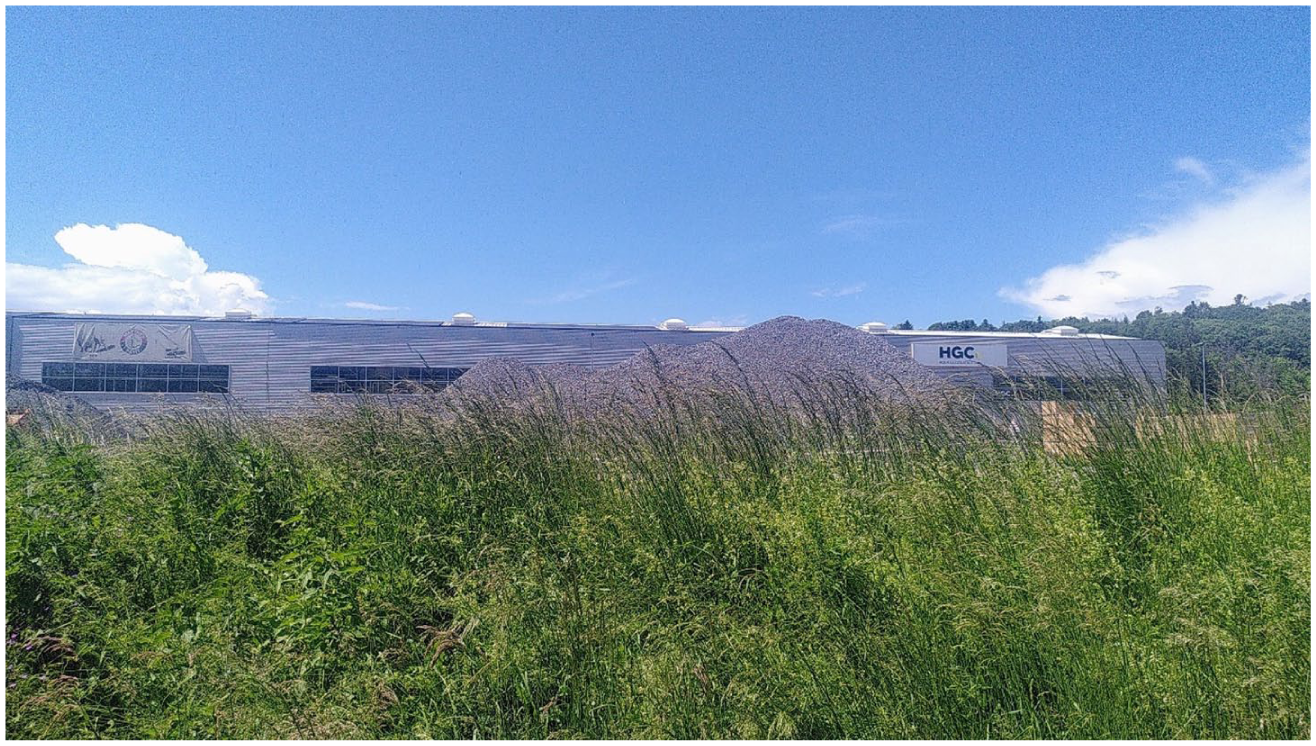
Concrete stock between Vufflens-la-ville and Bussigny on 11 May 2025. © I. Becci.
The corporation maintains a pervasive presence across Switzerland through advertising that frames its production as sustainable. While it states that it is progressively reducing its CO2 emissions, environmental studies affirm the contrary. Local actors (Pochon, 2023: 86), particularly those holding influential municipal and cantonal positions, emphasize the employment the company generates and the broader economic benefits it brings to regional small and medium-sized enterprises and local municipalities.
19
According to this discourse, prosperity is the outcome of the work done here and local population deserves the benefits coming from this work. In the context of the Mormont area, this discourse goes unquestioned and is accompanied daily simply by the sound of the village church bells, the only religious sign visible in this otherwise very secular rhetoric. There is also a local office of an evangelically oriented international environmental organization (A-Rocha) in this area that regularly organizes camps and educational initiatives with kids and adults here to raise attention to biodiversity and ecology. The context of the cement plant is simply taken as given (fieldnotes, 2025). As Kevin De Luca (2009 [1999]) writes, progress and nature, along with the other ideographs in the course of industrialism, define our society for us, justify certain beliefs and actions, and signify collective commitments, such as the belief in the necessity and possibility of unlimited growth, the belief in technology as the answer to all problems (including spiritual and environmental problems), and the treatment of all nonhuman life forms as resources to be exploited. (p. 48)
A second discourse challenges this celebratory framing by highlighting environmental harm and invoking legal and scientific critiques. This perspective is articulated both locally and transnationally. Locally, committed environmentalists and scientists have long denounced the quarry’s impact on rare flora, notably orchid populations, since the plant’s establishment in the 1950s (Pochon, 2023: 55). Activist campaigns—ranging from halting a cantonal road project in the 1970s to the creation of the Association pour la Sauvegarde du Mormont (ASM) in 2013—seek to preserve the hill’s biodiversity through legal and organizational means. The ASM brings together local residents alongside civil society actors, including Pro Natura, Helvetia Nostra, and WWF, and frames its objectives in procedural and participatory terms: defining protective measures, mobilizing interested stakeholders, and supporting aligned initiatives (ASM statutes, 2021). Despite these efforts, the movement has often been represented as a localized opposition, encapsulated in the “not in my backyard” (NIMBY) label (Rui, 2015: 140), concerned primarily with place-based extraction rather than critiquing extractive industries more broadly. Political attention garnered during the ZAD occupation, however, enabled the ASM to advance the “Save the Mormont” initiative, aiming to constitutionally protect the entire hill and to promote alternative, lower-impact construction materials (Pochon, 2023: 57). While the initiative was ultimately rejected in September 2025, the canton introduced a counter-proposal combining limited protection of unexploited areas with a circular economy framework, embedding environmental concerns within a moderated economic model.
The second discourse also intersects with global legal struggles, reflecting the transnationalization of ecological critique. In January 2023, Swiss lawyers filed a lawsuit on behalf of four Indonesian fishermen against Holcim, supported by HEKS/EPER (Bread for All), the European Center for Constitutional and Human Rights (ECCHR, n.d.), and Indonesia’s largest environmental NGO. The plaintiffs argue that Holcim’s historical CO₂ emissions materially contribute to climate-related harms, threatening the physical and economic survival of island populations in East Asia and the Pacific. This litigation frames corporate responsibility as a human rights issue under Swiss civil law, demanding both compensation and proactive emissions reductions. The case has generated significant national and international attention. In September 2025, the hearing’s audience overflowed the local courtroom, necessitating relocation to a government building, where cantonal judges presided beneath the juxtaposition of a large crucifix, the Swiss flag, and cantonal insignia—a powerful, almost theatrical articulation of law, religion, and state authority. 20 The Zug Cantonal Court’s decision to allow the lawsuit to proceed, upheld just before Christmas 2025, affirms the legitimacy of transnational ecological claims and signals a legal recognition of corporate accountability beyond local boundaries.
With the occupation of the area on the top of the Mormont in Winter 2020, a third discourse arose with regard to environment which not only named what was happening there on the mount “as a problem” but raised more fundamental questions about the relation of humans with more-than-human beings, that is in other words, about their cosmologies. It is in this context that a space emerged where enchantment, care, and sacrifice in a multi-species fashion were experienced as central for a newly created community. There has been a wide literature by anthropologists 21 on the ZAD movements in France, 22 most of which interested in its political and ethical dimensions. In the following, the attention will include the consideration about eco-spirituality.
Celtic actions on the hill, the emergence of a more-than-human entity 23
In the early texts produced by the zadists during the initial phase of the occupation, strong affective registers—excitement, awe, and even alarm—are prevalent. These writings frequently invoke Celtic myths and forms of nature-centered spirituality, often functioning less as doctrinal commitments than as legitimating devices for acts deemed illegal, by situating them within a longue durée of ancestry and landscape attachment. Whether these invocations constitute adherence to what Seraïdari and Léonard (2007: 77) describe as a “very fashionable Celtic spirituality,” particularly of a neo-druidic strand, remains ambiguous and is not the central concern here. More analytically pressing is how such ethical and spiritual references operate to mediate human engagement with the hill, contributing to the constitution of the Mormont as a more-than-human entity. In this sense, spirituality and myth are performative: they shape perceptions, enact obligations, and animate ethical relations between humans and the other-than-human environment.
While archeologists and historians possess extensive knowledge of Celtic presence in the region, this past occupies only a marginal position within Swiss public imaginaries, which tend to privilege medieval and early modern histories linked to its confederal constitution. Similarly, neo-Pagan practices, though present in Switzerland, remain largely peripheral and hardly visible in the public sphere. The archeological discourse about the Celts presented in the Sacré Mormont! exhibition thus contrasts with the imaginative, affective Celtic references mobilized by the activists. In the zadists’ rhetoric, Celtic heritage is interwoven subtly into the ethical and spiritual framings that articulate the hill as a more-than-human actor, capable of shaping social and political relations. The 2023 collection of texts on the occupation exemplifies this approach: Juliette Rousseau’s contribution, for instance, references Menhirs and Celtic practices in Brittany, highlighting how engagement with ancestral landscapes informs contemporary eco-activist imaginaries. 24
One of the first texts published also recounts the experience of an occupier participating in a “Celtic New Year ritual led by Nurra, the druid on the hill” (which is on 31 October/1 November), followed by an invitation “to draw cards from the Oracle of Women Medicine” (Le collectif des orchidées, 2023: 20).
Similarly, an architect involved in the ZAD invokes the Celts to legitimize the occupation: “The ZAD is a concept rooted in the territory . . . It is local, with the return of Celtic druids up there at the time of rituals” (Le collectif des orchidées, 2023: 117).
In the activists’ discourse, the Celtic references are interwoven with an ethic of interspecies relationality, linking the transmission of the hill’s value to the inclusion of other-than-human beings. As Arborescens, co-author and activist, observes, This hill, and more generally Mormont, is where the descendants of the chamois live—which I observed in the mist today . . . It is also where the brambles still grow, from which my mother and I used to harvest fruit for my best pies. It is next to where Nonna rests . . . It is a small limestone peak overflowing with memories, but also home to memories: those of the Celts and Helvetians who came here—presumably—with humility to perform sacred rituals. I am wary of sacralization, but I respect it. It does not fall from the tree as surely as the apple does, but on the contrary, it is the fruit of many fears, of various real or supposed dangers, of stories passed down with fear and respect. And while I have no desire to sacralize our ecosystems, our improbable galactic vessel, it would certainly be desirable to rediscover the respect we owe to the earth, as well as the legitimate fear of this environment that is our matrix and allows us to exist, without guaranteeing it unconditionally. (Le collectif des orchidées, 2023: 74)
Cornelia, another activist, is captivated by what she calls “foggy nights,” describing them as “very mysterious; you can only see the shadows of tall trees in the distance” and noting that “it’s easy to understand why the Celts chose this place as a sanctuary” (Le collectif des orchidées, 2023: 106). In drawing on archeological claims, the zadists actively appropriate the Celtic heritage to create continuity with a mythical and mystical past, contrasting with the conspicuous absence of references to Medieval or early modern figures such as Wilhelm Tell, Ulrich Zwingli, or Jean-Jacques Rousseau.
In the case of the Mormont, the zadists appear to engage with a cultural vocabulary that emerged in the 19th century, “from the borderlands of aesthetic and religious experience spread, with the leitmotif of the ‘sublime’” (Mathieu, 2023: 32). Their poetic modes of communication with the public, together with performative strategies such as disguising themselves in playful costumes—even baby clothes worn on their heads, 25 —signal a careful, affective negotiation: they foreground relational and aesthetic experience while simultaneously attenuating the violence of the extractivist industrial activity they oppose.
In the writings produced by the zadists, the Mormont hill emerges as an active participant in the narrative, endowed with feelings and a kind of subjectivity. It becomes enmeshed in the activists’ lives, initially framed in maternal terms—as an abused mother in need of protection. Chlor describes this affective entanglement: This hill becomes a full member of our lives. She conveys what she feels, through the lyrical swaying of its trees’ foliage in the west wind, its panicked tremors at the sound of mining and the mist that cloaks it on winter mornings its ire, or even her Winter’s mornings breeze mant. (Le collectif des orchidées, 2023: 201)
During the harsh winter months, when temperatures fell below zero, the activists’ accounts emphasize enchantment, contemplative attention, and affective engagement with the hill’s materiality. Flora, fauna, and insects are observed with awe. The hill is experienced through multiple sensory registers: sounds, temperatures, textures, and atmospheres are perceived intensively. Scientific knowledge, political practice, and spiritual perspectives intersect subtly; the activists do not enact ritualistic observances blindly but combine empirical awareness with affective and ethical sensibilities. Unlike 18th-century theological projects that sought to integrate science with religiosity to evoke awe (Mathieu, 2023: 28–31), the zadists’ epistemic-spiritual configuration treats scientific and spiritual-emotional inputs as mutually reinforcing, with the natural and transcendent conceived as immanent. Several participants report losing track of time, evoking classic liminality and communitas. In a local media interview, a member of the Grand Council of the canton of Vaud, who took part in the occupation, describes the ZAD as “a place where there is magic and creativity, where we live in the moment.”
Care becomes a central practice, concretized in everyday communal gatherings. A neologism—“care-ière” (Le collectif des orchidées, 2023: 106)—replaces the conventional term for the quarry (carrière), reframing the space as one devoted to collective nurturing: “A large gathering to take care of the collective and individuals.” Through such linguistic creativity, the ZAD enacts a provisional utopian sociality, constructing alternative relational and ethical practices beyond the struggle against extractivism. Gabas underscores this semiotic-political process: “Today, everywhere in our circles, the magic phrase is: ‘create new imaginaries.’ So without really knowing it, we create these new imaginaries. Our vocabulary changes because we believe in the power of words” (Le collectif des orchidées, 2023: 85).
For some activists, the occupation constitutes a temporal and spatial utopia. One participant reflects: “I have time to think, share, communicate, and receive: it’s a pretty good life! And then I can observe scientifically an ecological feature or poetically anamorphic silhouettes melting into the mist (and there’s plenty of fog here …)” (Le collectif des orchidées, 2023: 115). Here, scientific observation and aesthetic-spiritual engagement coexist, emphasizing the integration of epistemic, ethical, and affective modalities in the experience of place.
When the evacuation looms, the representations of the hill shift: the Mormont is no longer only a site in need of protection but becomes an agentive sanctuary that shelters and safeguards its inhabitants. Pourpre writes, The ZAD is an anthill where you feel like an ant. Although messy, bustling, precarious, and threatened, this hill acts as a sanctuary (not a religious one, mind you), a place of peace, a place of protection from the crazy world outside. (Le collectif des orchidées, 2023: 49)
The narrative evolves toward a bio-centric worldview, in which the more-than-human agency of the hill is acknowledged. One participant, climbing a tree during the police evacuation, recalls being struck by the disproportionate care given to the hill: her own bleeding body appeared less significant than the destruction being wrought on the mount, signaling a profound ethical reorientation and the emergence of a relational ontology in the activists’ practice (Le collectif des orchidées, 2023: 344).
Concluding remarks
The police evacuation cleared the hill of activists, and many participants continue to face ongoing legal proceedings. Holcim subsequently obtained authorization to resume limestone extraction under the condition of restoring the hill upon completion, as part of its “circular economy” plan—a stipulation that remains highly contested and continues to provoke debate. Activists reported that during the occupation, a member of the company’s board attempted to engage them in dialogue, though without addressing their demands. Interestingly, the corporation did not pursue legal action against the activists, in contrast to the cantonal authorities.
Although the physical occupation ended in Spring 2021, the ZAD of Mormont continues to reverberate in public and media discourse, generating sustained reflection on the nature–urban nexus in Switzerland. The event has become a touchstone for debates on environmental activism, territorial ethics, and the limits of extractivist capitalism in contemporary Swiss society.
This discussion must also be situated within broader demographic and social shifts. Over the past century, the proportion of the Swiss population living in urban areas has increased dramatically—from roughly one third to approximately three quarters 26 —accelerating particularly over the last 25 years and consolidating urban living as the dominant mode of habitation in the country. This urbanization intensifies the stakes of local environmental conflicts and shapes imaginaries of nature, as urban residents increasingly seek direct engagement with rural and peri-urban landscapes. In this sense, the Mormont occupation exemplifies how local sites can become arenas where ecological, aesthetic, and political sensibilities intersect, producing new forms of cultural and affective engagement with the more-than-human world. Urbanization and population densification are tangible in the daily experience of Swiss cities and agglomerations. Residents encounter rising housing blocks, the transformation of formerly green spaces into construction sites, intensifying traffic, crowded public transport, and bustling sidewalks. These phenomena are not merely material; they also shape social interactions, perceptions of space, and the cultural imaginaries of urban life. The Swiss sociologist and urban theorist Neil Brenner and Christian Schmid (2015) highlight a dual process of urbanization: on the one hand, a “concentrated urbanization” occurring within cities themselves, and on the other hand, an “extended urbanization” that unfolds across broader regions beyond the traditional urban core (p. 168). Over the past 15 years, demographic growth within city centers has been relatively modest compared to the expansion of populations in wider urban agglomerations. This urbanization produces effects that extend well beyond municipal boundaries in at least two interconnected ways. 27 Urban populations are increasingly distanced from the countryside, encountering non-urbanized contexts—or what is commonly called “nature”—only sporadically, while these environments are themselves progressively shaped and impacted by urbanization.
As the Italian scholar Giovanni Filoramo (2022) argues, conceiving of nature as animated and imbued with sacred places functions as a means to re-enchant a world that these processes of urbanization have largely disenchanted. Studies of eco-activist practices reveal that diverse spiritual perspectives are mobilized in situ, with activists strategically drawing on different cultural and symbolic resources to create chains of memory and continuity, to enchant, and to construct a non-anthropocentric or more-than-human worldview.
Rather than invoking broad, abstract notions, this analysis has adopted a constructivist approach to the eco-activist occupation of the Mormont hill, treating eco-spirituality and the “nature” of the hill as co-produced phenomena. These emerge both from civic actions and institutional interventions—including economic strategies and governmental plans—while also leaving space for unanticipated social interactions that generate innovative meanings, practices, rhetorics, and imaginaries. Eco-spirituality is understood as situationally sensitive: its content and focus shift according to the material and cultural conditions experienced. Rather than constituting a fixed repertoire of beliefs or rituals, its forms are contingent, subtle, and responsive to context and actor intentions.
The analysis has demonstrated how spirituality operates within environmental activism, mediating ambivalent encounters and redefining notions of transcendence and sacredness. It has shown that the deployment of spiritual references and practices across diverse situations facilitates collective action, frames experiences of enchantment, and produces forms of community that integrate human and more-than-human participants. Belief in the power of words and communal practices—rituals of meeting, care, and attention—reinforce these connections, rendering more-than-human entities co-actors in civic engagement. Representations of nature in spiritual terms thus emerge from ongoing negotiation and social interaction across species, producing materially perceptible forms shaped by collective imaginaries. As Greider and Garkovich (1994: 6) note, “Humans are constantly engaged in seizing natural phenomena, converting them into cultural objects, and reinterpreting them with cultural ideas.” Nature is, therefore, socially and materially organized, yet rhetorical and discursive framings often diverge, reflecting competing valuations and contested meanings.
Footnotes
Author’s Note
This paper has benefited substantially from the insights of several colleagues from the Max-Weber Center at the University of Erfurt, in particular from the Humanities Centre for Advanced Studies/Kolleg-Forschungsgruppe (KFG): “Religion and Urbanity: Reciprocal Formations” and from my current and former PhD students in Lausanne. I did my best to address their critiques, but I am aware that this paper would require further clarification and elaboration. I assume full responsibility for the arguments presented here.

Funding
The author received no financial support for the research, authorship, and/or publication of this article.
Declaration of conflicting interests
The author declared no potential conflicts of interest with respect to the research, authorship, and/or publication of this article.
Data availability statement
Data sharing is not applicable to this article as no datasets were generated or analyzed during the current study.