







Abstract
Conversations about race-specific issues with interracial conversation partners can be important to combat prejudice and foster mutual understanding. Using a national U.S. sample of 201 Black Democrats, 199 Black Republicans, 200 White Democrats, and 200 White Republicans, this study examined the role that race and partisanship play in individuals’ desire to have political discussions about race-specific topics with racial outgroups. Findings indicate that Blacks in general expected more negative outcomes of race talk with racial outgroups, and Republicans were more likely to attempt to avoid interracial conversations about race. However, these findings were qualified by an interaction between race and partisanship such that White Democrats anticipated fewer negative outcomes from cross-race conversations about race than all other subgroups, and Black Democrats expected more negative outcomes than all other subgroups. Black and White Republicans did not differ from one another and fell roughly between the two Democratic subgroups. Nonetheless, it was White Republicans who were most likely to want to avoid race-specific conversations with cross-race discussion partners, rating significantly more avoidant than Black Republicans and White Democrats, but not Black Democrats.
Race has been and will remain the nation’s most difficult subject to discuss (Kinder & Sanders, 1996). At the same time, political discussions about race-related topics are critical to improving race relations. Studies demonstrate that cross-race conversations can lead to many positive outcomes (Ensari & Miller, 2002; Eveland & Appiah, 2019; Nagda & Zuniga, 2003). Although political discussions with outgroup members can be beneficial for society (Willow, 2008), they can also be quite uncomfortable for the discussants, causing people to avoid these types of conversations (Apfelbaum et al., 2008). People are reluctant to discuss sensitive matters (C. S. Johnson et al., 2009) and generally work hard to control their behavior when interacting with outgroup vis-à-vis ingroup members (Richeson & Shelton, 2003). Discussions about recent race-specific topics in the US, including athletes kneeling during the national anthem to protest racial inequality, police shootings of unarmed Black men, and the controversy surrounding displays of Confederate flags and monuments, may be particularly uncomfortable.
People are generally unwilling to share their opinions or engage in conversations about sensitive topics when they believe their opinions are in the minority, their discussants are different in terms of factors such as political affiliation or race, or if they expect those conversations to result in negative social outcomes (e.g., Cowan & Baldassarri, 2018; Noelle-Neumann, 1993). When people talk about issues of race, they generally only discuss those issues with people who think and look like them (Ingraham, 2014). However, as society becomes more ethnically diverse, sensitive conversations about race may be increasingly harder to avoid (Apfelbaum et al., 2008).
The present study will examine the role that race and partisanship play in the desire to have political discussions about race with racial outgroups. Although talking about race with racial outgroups can be difficult, certain groups may have a stronger aversion to engaging in these types of conversations than others. Studying these tendencies can help scholars and practitioners better understand patterns of political talk and its capacity to heal or exacerbate racial tensions in the US.
Understanding Blacks’ Unwillingness to Talk Race With Whites
Many Blacks and Whites are uncomfortable talking candidly about race, particularly in interracial settings that, ironically, would likely have the most positive impact (Trawalter & Richeson, 2008). Blacks especially can be apprehensive about interracial interaction (Clark et al., 1999) because they are concerned that their feelings and experiences will be discredited (Simpson et al., 2007), they will be labeled oversensitive or paranoid (Sue et al., 2009), or they will be the target of prejudice (Bergsieker et al., 2010; Richeson & Shelton, 2007).
One significant barrier to the development of positive interracial interaction is the anxiety caused by such interactions (C. W. Stephan & Stephan, 1992). Intergroup anxiety refers to feelings of discomfort that people experience when anticipating or engaging in intergroup interaction (Corenblum & Stephan, 2001). Intergroup anxiety is positively associated with avoidance of racial outgroup members (W. G. Stephan, 2014). When interacting with another group, people may worry about reinforcing stereotypes of the ingroup and about the potential negative consequences that may result from the interaction. These concerns are generally more prevalent among members of subordinate and stigmatized groups (e.g., Blacks) than they are for members of dominant groups (Corenblum & Stephan, 2001; Crocker & Major, 1989).
Intergroup Threat Theory
The apprehension that Blacks experience when anticipating or engaging in conversations with Whites may be exacerbated by a sense of threat felt from dominant outgroup members. Intergroup threat theory (W. G. Stephan et al., 2009) was developed to explain how members of both majority and minority groups can perceive threat from each other, and how this threat leads to prejudice and negative attitudes towards outgroups (Rios et al., 2018; W. G. Stephan & Stephan, 2000). The theory suggests that people are prone to anticipate threat from outgroups. This threat is manifested when an ingroup member perceives that an outgroup member is in a position to cause harm (real or perceived) to the ingroup (W. G. Stephan et al., 2009). During interactions, the magnitude of the threat increases the more ingroup members believe their values differ from outgroup members’ (Makashvili et al., 2018). Intergroup threat theory focuses less on actual threats posed by outgroups, concentrating more on the presence and power of perceived threats (W. G. Stephan et al., 2009).
Studies demonstrate that lower status racial and ethnic groups (e.g., Black Americans) perceive higher levels of threat from higher status groups (e.g., White Americans) than higher status groups perceive from lower status groups (Corenblum & Stephan, 2001; W. G. Stephan et al., 2009).
Sensitivity to Race-Based Rejection and Ethnocultural Allodynia
Some Blacks are anxious about and sensitive to perceived threats from potential interactions with Whites, leading to extreme feelings that go beyond anxiety due to their acute sensitivity to racial prejudice and discrimination. Scholars argue that sensitivity to race-based rejection occurs when membership in, and identification with, a stigmatized group cause people to expect, readily perceive, and strongly react to rejection in majority-dominated interpersonal contexts (Mendoza-Denton et al., 2002). Mendoza-Denton and colleagues argue that, as targets of racial bias, Blacks, particularly Blacks with high race-based rejection sensitivity, not only expect rejection but are quite concerned that a negative outcome is likely to occur in White mainstream settings. They suggest that “in the presence of rejection cues, even innocuous or ambiguous ones, people high in anxious expectations of rejection should more readily perceive rejection, and they should show more intense affective, cognitive, and behavioral reactions to the perceived rejection” (2002, p. 897).
This more extreme state of consciousness whereby Blacks anxiously expect and intensely react to perceived racial stereotypes and discrimination prior to and during interracial interactions may also be explained by ethnocultural allodynia (Comas-Díaz & Jacobsen, 2001). Ethnocultural allodynia is an acute sensitivity to even trivial stimuli for fear of, and due to, prior or concurrent exposure to racial pain. This framework stems from the idea that exposure to racism can result in psychological trauma, behavioral exhaustion, racial mistrust, and physiological distress (Sanders Thompson, 1991). Psychotherapists and clinicians have argued that experiences with racism can lead to posttraumatic stress disorder (PTSD) among Blacks (Butts, 2002; Williams et al., 2018). Even perceived racism is correlated with PTSD symptoms (Chou et al., 2012; Woo, 2017) and can trigger intense negative emotions such as anger, frustration, sadness, and depression (Comas-Díaz & Jacobsen, 2001).
Previous exposure to racism and discrimination may influence the way Black people view their current and future experiences with Whites, making it more likely that they will perceive new encounters as threatening and harmful (Broudy et al., 2007). Accordingly, anxiety is likely to be present when Blacks anticipate talking to Whites about race. In addition to the aforementioned racial trauma experienced during conversations about race, there are social costs associated with disclosing personal encounters of racial prejudice with Whites, including perceptions that one is less likeable, a chronic complainer, hypersensitive, or attempting to avoid personal responsibility (Kaiser & Miller, 2001; Williams et al., 2018). This may be in part a result of situations such as reporting acts of racism directed toward them and not being believed by their White counterparts, or having to educate Whites on racial issues (Applebaum, 2017).
Blacks’ expectations that interactions with Whites are likely to be negative are not unfounded. There has been an increase in implicit and explicit anti-Black racial prejudice in recent years (Beirich, 2019; Costello, 2018; Junius, 2012; Rushin & Edwards, 2018). Moreover, Whites have been known to invalidate, reframe, and recommend how Blacks should feel during interracial conversations (Narayan, 1988). And, because some Whites believe that racism has largely disappeared in contemporary society (Kinefuchi & Orbe, 2008), they are less likely to be sympathetic to the pain and suffering expressed by Blacks.
Thus, avoiding racial trauma is a natural self-defense mechanism of the body that protects it from further stress and injury (Comas-Díaz & Jacobsen, 2001). The constant exposure to even common but subtle forms of racial prejudice such as social rejection and exclusion can lead to chronic stress (Broudy et al., 2007). It follows that, in an effort to avoid potential racism and therefore preserve their dignity, self-respect, and psychological well-being, Blacks may attempt to avoid political discourse with Whites. Taken together, Blacks may be reluctant to engage in cross-race conversations about racial issues due to prior personal interactions and an awareness of negative experiences at a societal level.
Understanding Why Whites Avoid Interracial Conversations
Whites’ reluctance to engage in interracial discussions can occur during brief interracial encounters (Crocker et al., 1998) as well as more extended in-depth interaction (Norton et al., 2006). Ingroup members may be predisposed to anticipate threat from an outgroup, and the perception of threat can lead to negative attitudes about, and prejudice towards, that outgroup (Corenblum & Stephan, 2001; Makashvili et al., 2018). In line with intergroup threat theory, high-status groups such as Whites are expected to have the greatest to lose from threats to their ingroup status (Rios et al., 2018). Specifically, Whites may be more inclined than members of lower status groups (e.g., Blacks) to fight to preserve their dominant status in society.
During cross-race interactions, Whites can become aware of the negative stereotypes about their own race (stereotype threat; Steele, 1997), which may result in anxiety and inauthentic interactions such as attempts not to appear racist (Lewis & Sekaquaptewa, 2016). This can be particularly true when anticipating or engaging in candid conversations about race in Black–White settings (Bergsieker et al., 2010; Richeson & Shelton, 2007). In fact, any conversation with Blacks, even those absent racial topics, may highlight group differences and increase the salience of threat perceptions among Whites (Rios et al., 2018).
For instance, during these conversations, Whites might perceive striking differences between groups’ cultural values or may perceive Blacks as gaining greater access to economic and political resources at the expense of Whites. Rios et al. (2018) highlight that group differences induce perceptions of threat between groups and outgroups. Interestingly, Whites are less likely to consider Blacks a source of economic threat as they are to see them as a symbolic threat because of group differences in world views (Butz & Yogeeswaran, 2011), and the belief that as a racial outgroup, Blacks may attempt to impose Black-specific values on Whites during interactions (Rios Morrison & Ybarra, 2009; Rios et al., 2018).
White Fragility
The perceptions of threat can also lead some Whites to experience heightened or even intolerable levels of anxiety and racial stress that can trigger White fragility. White fragility is a defensive response that protects Whites from their racial discomfort and leads them to become silent, defensive, or argumentative with cross-race conversation partners (DiAngelo, 2018). During these sensitive conversations, Whites may see themselves as victims and feel unnecessarily attacked or blamed. These behavioral responses can be quite common, as White fragility postulates that “even a minimum amount of racial stress becomes intolerable, triggering a range of defensive moves” (DiAngelo, 2011, p. 54). Out of concern that Blacks may likely detect their racial attitudes (Richeson & Shelton, 2005), some Whites may elect to avoid racial conversations or interactions altogether (Trawalter et al., 2009). Moreover, Whites may avoid interracial interaction due to the risk of being perceived as prejudiced, unfair, or closed-minded (Vorauer et al., 1998).
Based on this literature regarding both Blacks’ and Whites’ participation in cross-race conversations about race topics, we advance the following research question:
RQ1: Will Black or White participants be more likely to expect negative outcomes and intend to avoid a political conversation about race with a racial outgroup discussion partner?
The Partisan Divide on Issues of Race
Although Whites are roughly evenly divided between the Democratic and Republican parties (43% vs. 51%), only 8% of Blacks identify with the Republican Party (Pew Research Center, 2018). Fuerthermore, there is a substantial partisan divide when it comes to attitudes on issues related to race. Although Democrats are increasingly likely to take racially liberal stances, many Republicans want to be considered principled conservatives who hold values and positions that are based on principle but not race. A recent Pew Research Center poll (Horowitz et al., 2019) highlighted the often dramatic differences between the parties on issues of race. For example, 78% of White Democrats but only 20% of White Republicans believe that the bigger problem for the US today is “not seeing discrimination where it really does exist.” Instead, 77% of White Republicans but only 22% of White Democrats believe the bigger problem is “seeing discrimination where it does not exist.”
Abramowitz (2018) used American National Election Studies data from the Reagan era to the Obama era to demonstrate that, while racial resentment declined modestly among Democrats over time, it increased dramatically (and relatively linearly over time) among Republicans—from 44% to 64% (for a full discussion of racial resentment, see Kinder & Sanders, 1996). Moreover, in 2016, the partisan divide in racial resentment was even higher still. He concluded that, “The key to Trump’s success in the 2016 Republican primaries was the dramatic increase in racial resentment among GOP voters between the 1980s and the 2010s that created a receptive audience for his racial appeals” (2018, p. 140). Sides et al. (2018) came to similar conclusions regarding the eventual 2016 election outcome, finding that attitudes toward race and ethnicity (along with religion) were more powerful—and economic anxiety was weaker—predictors of vote choice than in prior years. They concluded that “Instead of pure economic anxiety, what mattered was racialized economics” (2018, p. 8).
These stark differences in partisan identification by race, and substantial partisan differences in views about the presence, causes, and remedies for racial inequality, suggest the importance of partisanship in willingness to discuss matters of race in a mixed-race setting. If Democrats are more likely to consider discrimination a problem, and believe that hidden racism is an issue, they should be more willing than Republicans to discuss issues relating to race and racism. Republicans, based on their views on race, would be more likely to want to avoid or downplay issues of race. Hence, there is a stark difference in racial attitudes between Republicans and Democrats that is likely to lead them to respond differently to opportunities to engage in a conversation about race. It is expected that,
H1: Republicans will be more likely than Democrats to expect negative outcomes and intend to avoid a political conversation about race with a racial outgroup discussion partner.
Race, Partisanship, Racial Attitudes, and Interracial Talk
As discussed, many Blacks feel uncomfortable during interactions with Whites. However, the magnitude of these emotions may vary based on their political affiliation. Black Republicans and Black Democrats have significant policy differences and place different value on race-neutral versus race-conscious legislation (T. R. Johnson, 2015). Black Republicans may have a higher frequency of engagement and may feel more comfortable interacting with Whites than do Black Democrats due in part to the shared race-related political positions they have with many Whites.
Moreover, although racial/ethnic identity is very important for Blacks in general (Phinney, 1996), Black Democrats are more likely to have a stronger Black racial/ethnic identity and value their membership in the group more so than Black Republicans, who likely possess a weaker Black racial identity (Cheney-Rice, 2019). Intergroup threat theory (W. G. Stephan et al., 2009) stresses that ingroup members who highly identify with and value the group are more susceptible to perceived outgroup threat. Highly identified group members consider the ingroup important to their self-identity. As a result, they should be more likely than less identified group members to both perceive and react to threats from an outgroup (Riek et al., 2006; W. G. Stephan et al., 2009).
Given their lower levels of ethnic/racial identification, Black Republicans may not perceive racism as strongly—or may be more forgiving of racially motivated transgressions—than their Black Democratic counterparts. As such, they may be less likely to experience anxiety, threat, racial trauma, and ethnocultural allodynia than Black Democrats. This would reduce Black Republicans’ drive to avoid interracial interactions with Whites compared to Black Democrats.
The level of threat and the aversion to engage in conversations with cross-race discussion partners are also likely to vary based on Whites’ political affiliation. Scholars contend that White conservatives are more fearful than White liberals of discussing politics with people with whom they disagree, particularly Blacks, out of concern of being labeled a racist (Beinart, 2017). Studies have indicated that political conservatives (e.g., White Republicans) and people with relatively right-wing political views are more prejudiced toward and politically intolerant of minority groups (e.g., Blacks) than are liberals (e.g., White Democrats) and people with relatively left-wing political views (Brandt et al., 2014). Indeed, in large part, the explanations are simply a mirror of the reasoning already described. White Democrats are more likely to share political, and more explicit race-related, viewpoints with the majority of Blacks than are White Republicans (Horowitz et al., 2019). These shared viewpoints are likely to smooth the path for interracial talk about race-related issues for White Democrats compared to Republicans.
Although all Whites may fear that the views they express in interracial conversations may lead their discussion partners to interpret their viewpoints as racist, such fears are more likely among White Republicans. Political elites and rank-and-file members of the Republican Party (the vast majority of which are White) are often called out, even by fellow Democratic Whites, as espousing racist policies, expressing racist viewpoints, or simply being racist (see Glueck & Stevens, 2019; Scott, 2019). It would not be unreasonable to make the case that there is a stereotype of (White) Republicans as being prejudiced (Rothschild et al., 2019). As such, and also simply because of their beliefs and policy positions being in strong disagreement compared to Blacks, White Republicans are likely to be more fearful than White Democrats of being perceived as or explicitly labeled racist in an interracial conversation about race. As such, White Republicans may be considerably more likely to perceive negative outcomes of interracial interactions about race, and more likely to avoid cross-race political talk than White Democrats.
A theory that may also help explain this behavior is system justification theory (Kay & Jost, 2003; van der Toorn & Jost, 2014), which maintains that conservatives in particular are motivated to protect the status quo, and that outgroups (e.g., Blacks) seeking social change and reform are considered a threat to conservatives’ values and well-being (Chambers et al., 2012). Consistent with the theory, the support of system-justifying beliefs (e.g., society is just and fair, success is based on merit, hard work is rewarded regardless of group membership) is important in understanding the different responses to interracial interaction among White conservatives (Republicans) and liberals (Democrats; Major & Sawyer, 2009; Wilkins et al., 2013). According to Chambers et al. (2012), “political conservatives are more motivated than liberals to rationalize and defend the position of higher-status groups over lower-status groups (often racial minorities), and hold system-justifying beliefs that sustain and legitimize prejudice” (p. 140). Whites who more strongly endorse these beliefs exhibited greater negativity towards Blacks, particularly those Blacks who blamed negative outcomes on racial discrimination (Major & Sawyer, 2009). When low-status groups assert they have experienced racial bias, it can conflict with and challenge conservatives’ beliefs about the fairness and legitimacy of the status hierarchy, and threaten high-status groups, who generally respond by derogating lower status group members (Kaiser, 2006).
Unlike White Republicans, White Democrats have shown a broader liberalization of racial attitudes and a decrease in overt expressions of anti-Black sentiment (Dovidio & Gaertner, 1991; Kinder & Sanders, 1996). Additionally, White Democrats possess more egalitarian views and have made a more concerted effort to adopt nonprejudiced beliefs than White Republicans (Cole, 2018). Sniderman and Piazza (1993) have long argued that many White liberals sympathize with Blacks, are internally motivated to exhibit a nondiscriminatory self-image during interracial contexts, and avoid acting in a way that could be characterized as bigoted. Because liberal Democrats are more likely than conservative Republicans to espouse egalitarian values (Monteith et al., 2002), they should express a greater willingness to engage in political discussions about race with Blacks.
Based on the literature, it is expected that,
H2: There will be an interaction between participants’ race and partisanship, such that the effect of partisanship will differ by race. Specifically, we expect that Black Democrats will anticipate more negative outcomes than Black Republicans and be more likely to intend to avoid a conversation about race with a White discussion partner. By contrast, White Republicans will anticipate more negative outcomes than White Democrats and be more likely to intend to avoid a conversation about race with a Black discussion partner.
Method
Participants and Design
Respondents for this study were recruited through Qualtrics, an online survey software platform, based on a quota sample designed to achieve balance in race (White and Black only) and partisanship (Democrats and Republicans, including leaners, only), in the spring of 2018. Eight hundred respondents were recruited, with 201 Black Democrats, 199 Black Republicans, 200 White Democrats, and 200 White Republicans. The gender split was moderately imbalanced, with 297 males (37%) and 503 females (63%). Ages ranged from 18 to 89 (M = 43.49, SD = 16.79), and the median respondent reported having some college but no degree, and a household income of $40,000–$49,999.
Our study employed “imagined interactions” (Honeycutt et al., 1990), which involve replaying and rethinking previous conversations as well as planning for important future conversations as a means of eliciting reactions to interracial conversations. Individuals engage in imagined interactions in their everyday lives when they reenact a dispute with a friend or coworker, imagine how they might have handled an awkward interaction more appropriately, or anticipate how they may engage in a troublesome future conversation such as breaking up with a romantic partner or confessing a lie (Honeycutt et al., 2015). Following others (e.g., Bergsieker et al., 2010), we used imagined interactions as a method to allow us to ask about reactions to interracial conversations on race-related issues among individuals who do and do not have interracial discussion partners, and who have and have not previously had such conversations. That is, this method permits the examination of a hypothetical situation that could be envisioned and thus evaluated by all respondents. Indeed, given our interest in avoidance of such conversations, being unable to ask respondents who had explicitly avoided such interactions in the past would leave a large gap in our understanding of this topic.
Respondents were randomly assigned to one of three hypothetical topics of discussion for which they would imagine an interaction: police treatment of Blacks (n = 266), Whites displaying the Confederate flag (n = 258), and Black NFL players kneeling during the national anthem (n = 276). Each of these topics had been covered extensively in the news during the general time frame of the study, and all had political and racial components. Moreover, within each topic, each imagined interaction was randomly assigned to be with one of four relationship types: stranger (n = 204), friend (n = 201), coworker (n = 197), and family member (n = 198). This approach, called message sampling (Brashers & Jackson, 1999; Jackson & Jacobs, 1983), is meant to avoid problems with potentially idiosyncratic experimental stimuli that then lack external validity. By asking about multiple instantiations of race-related topics, and by asking about conversations with people from a variety of social relationships, and averaging the effects across these different stimuli, we are able to make a stronger case for external validity.
Upon receiving the instructions (e.g., “Take a minute to imagine a conversation with a White friend about the issue of police treatment of Blacks in the US”), participants were further prompted to consider (but not explicitly answer) more detailed questions about the interaction, including who would initiate the conversation, how long it would last, what they might say, what the discussion partner might say, the sort of feelings they might experience, and what they might learn that they did not know before. The purpose of these prompts was to enrich respondents’ thought processes in advance of answering questions about the imagined interaction. Following these instructions, respondents were asked a series of questions about their imagined interaction, as well as various political and demographic questions.
Measures
A number of variables were measured in this study, only a subset of which are reported here. The primary independent variables of interest were respondents’ race and partisanship. Race was measured by asking respondents, “What racial or ethnic group best describes you?” with Whites coded as the higher value. Partisanship was measured with a series of questions, first asking, “Generally speaking, do you think of yourself as a Democrat, Republican, independent, or something else?” Respondents who answered something other than Democrat or Republican were asked a follow-up question: “Would you say that you lean more towards Democrats or Republicans?” Those who reported leaning toward one party or another were classified as partisans of that party; those who continued to claim “neither” were excluded from the study. Republicans were coded as the higher value.
The two dependent variables in this study were expectations of negative outcomes during the imagined interaction and the likelihood that the respondent would avoid such conversations in the real world. Expectation of negative outcomes was measured by asking respondents to check all of the answers that applied to the question, “What would be likely to happen in your conversation with a [opposite race] person?” Nine possible negative outcomes were provided: “One or both of us would get upset or offended”; “Our relationship would be harmed”; “One or both of us would not really ‘listen’”; “Bias, prejudices, and/or stereotypes would get in the way”; “One or both of us would get defensive”; “We would not find common ground”; “One or both of us would be misunderstood or misinterpreted”; “One or both of us would feel forced to act as a ‘spokesperson’ for our race”; “One or both of us would get blamed for the views or behaviors of our race.” All of the negative outcomes that respondents selected were summed to form the negative outcomes measure (M = 2.24, SD = 2.24). Intent to avoid conversations was measured with a single item (“If a [randomized relationship to a person of the opposite race] started a conversation about [randomized issue], how likely would you be to in some way AVOID engaging in the conversation?”; 1 = very unlikely to avoid, 4 = very likely to avoid; M = 2.23, SD = 1.05).
Plan for Analysis
In order to evaluate the research question and hypotheses for this paper, we analyzed the data as follows. First, for the negative outcomes dependent variable, we estimate a generalized linear model with a negative binomial probability distribution because the dependent variable is a count. For the avoidance dependent variable, we estimate a generalized linear model with a normal probability distribution (additional analyses reported in the online supplemental material replicate the main analyses using a probit approach). In models for both dependent variables, we control for the two message sampling design factors—topic and relationship—as well as a modest number of demographic variables: age, education, income, and gender (additional analyses reported in the supplemental material replicate the main analyses absent these controls). We also include our two key independent variables: race and partisan identification. For each outcome, we estimate one model without the interaction between race and partisan identification, and one model with it. Results reported in the paper include all respondents; additional analyses reported in the supplemental material replicate the primary analyses using only those respondents who passed both of two attention checks embedded in the survey. A sensitivity analysis using G*Power (Faul et al., 2009) suggests we have sufficient power to detect small effect sizes (f2 < .02).
Results
The results of the analysis for the negative outcomes measure are presented in detail in Table 1. No control variables, including the message sampling factors, were significantly related to the outcome. Furthermore, Republicans (M = 2.28) did not differ significantly from Democrats (M = 2.09) in the number of negative outcomes expected (p = .317); H1 was not supported. However, Blacks reported significantly more (p < .001) likely negative outcomes (M = 2.62) than Whites (M = 1.81). However, this main effect was qualified by a significant interaction between race and partisanship (Wald χ2 = 22.61, df = 1, p < .001), as predicted in H2. The interaction, using estimated marginal means after all control variables are included in the model, is presented in Figure 1. Pairwise comparisons of the estimated marginal means reveal that Black Democrats have higher mean negative outcome scores than White Democrats (p < .001), Black Republicans (p = .012), and White Republicans (p = .067). White Democrats have significantly lower mean negative outcome scores than Black Democrats (p < .001), White Republicans (p < .001), and Black Republicans (p = .001). These findings largely comport with our prediction in H2.
General linear models (negative binomial) predicting expectation of negative outcomes.
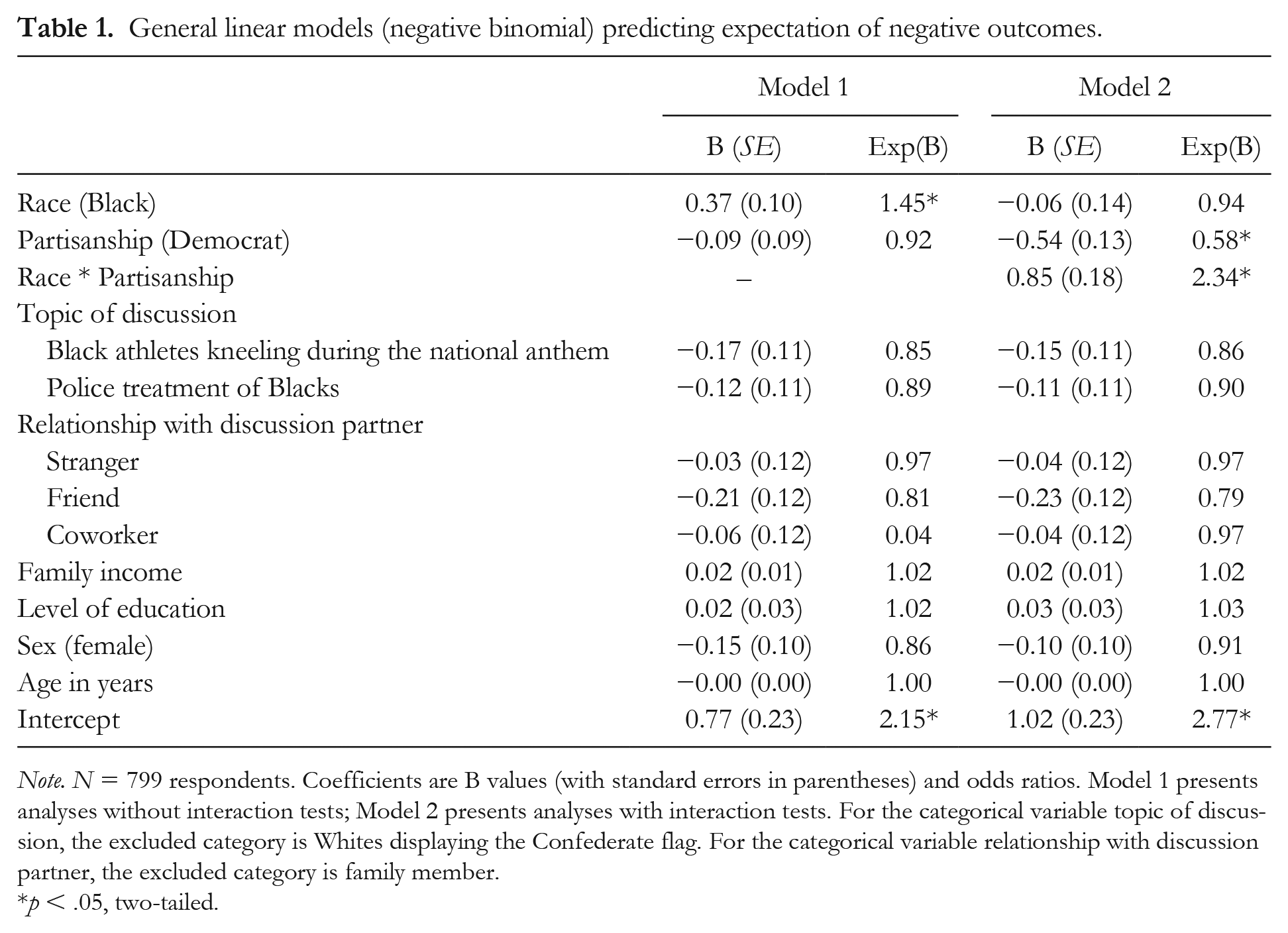
Note. N = 799 respondents. Coefficients are B values (with standard errors in parentheses) and odds ratios. Model 1 presents analyses without interaction tests; Model 2 presents analyses with interaction tests. For the categorical variable topic of discussion, the excluded category is Whites displaying the Confederate flag. For the categorical variable relationship with discussion partner, the excluded category is family member.
p < .05, two-tailed.
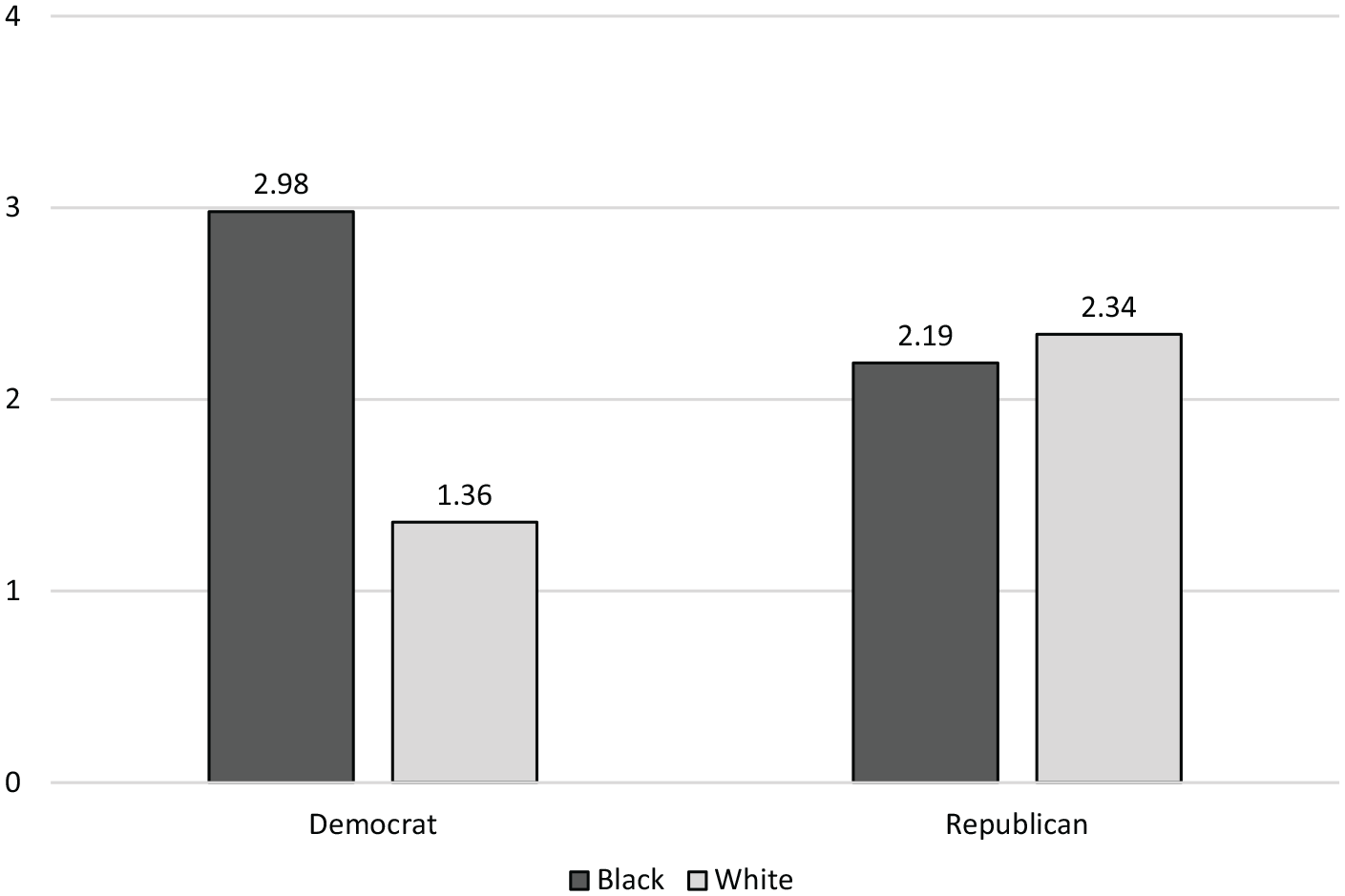
Interaction of race and partisanship in predicting number of negative outcomes expected.
Next, Table 2 presents the detailed results for avoidance of interracial discussion of race. The findings here are more complex, even though they follow a generally similar pattern. First, the two message sampling factors produced significant (or marginally significant) effects. Avoidance was significantly higher among respondents assigned to the Confederate flag topic than either the kneeling topic (p = .048) or the police brutality topic (p = .040). And, respondents in the friend relationship condition were significantly (p = .003) less likely to avoid discussion than those in the family member condition, which itself did not significantly differ from the other two conditions (p = .379 and p = .556). In terms of the focal independent variables, party identification (p = .045), but not race (p = .739), had a significant effect on avoidance. Republicans (M = 2.30) were more likely than Democrats (M = 2.15) to want to avoid interracial conversations about race, as predicted in H1.
General linear models predicting intention to avoid interracial conversations.
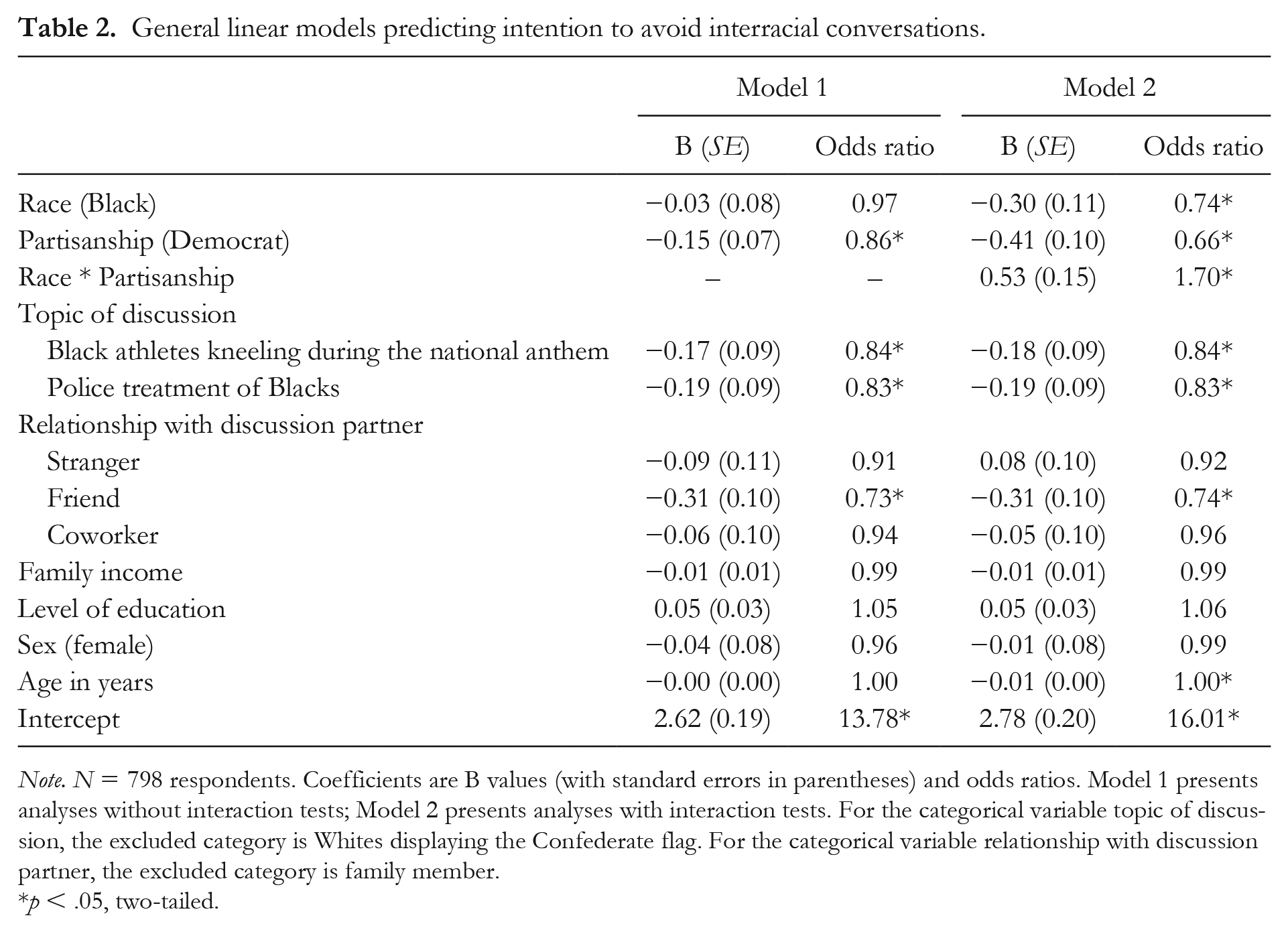
Note. N = 798 respondents. Coefficients are B values (with standard errors in parentheses) and odds ratios. Model 1 presents analyses without interaction tests; Model 2 presents analyses with interaction tests. For the categorical variable topic of discussion, the excluded category is Whites displaying the Confederate flag. For the categorical variable relationship with discussion partner, the excluded category is family member.
p < .05, two-tailed.
However, once again this main effect was conditioned by a significant interaction between race and partisanship (Wald χ2 = 12.76, df = 1, p < .001), as predicted in H2. The estimated marginal means with all variables in the model are plotted in Figure 2. This figure reveals a pattern similar to but not exactly replicating that for anticipation of negative outcomes. Pairwise comparisons of estimated marginal means reveal that White Republicans are significantly more likely to avoid cross-race conversations about race than White Democrats (p = .043) and Black Republicans (p = .036), but not Black Democrats (p = .102). No other groups differed significantly from one another. Thus, it is White Republicans who would be most likely to avoid these conversations. These findings partially support H2.
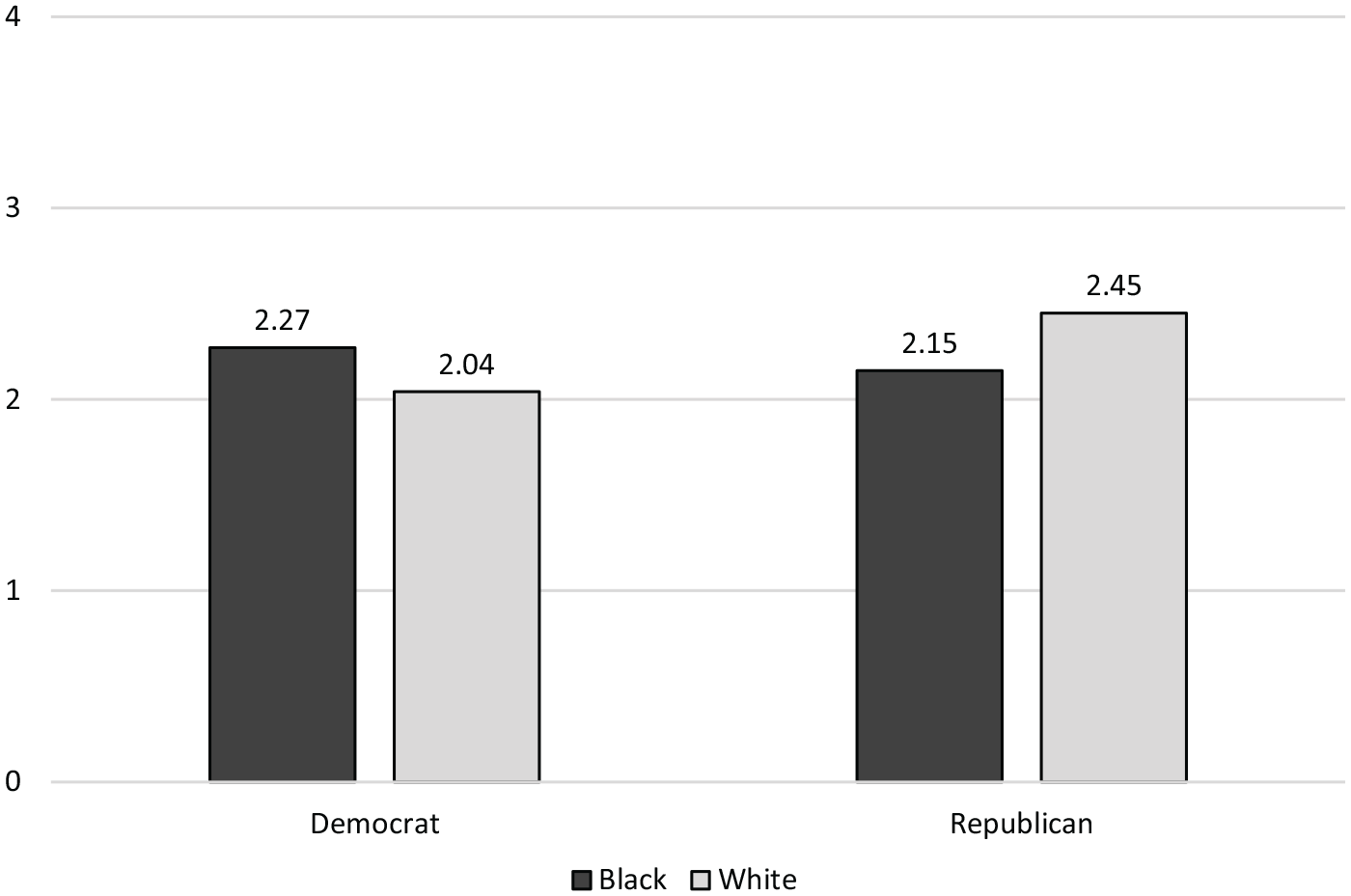
Interaction of race and partisanship in predicting seeking to avoid discussion.
Discussion
A large body of research has examined interracial interaction but few, if any, studies have explored the role that race and political partisanship play in people’s expectations of the results of engaging in interracial conversations about current race-specific political issues, especially among Black Republicans. No other study has successfully examined the mix of race and partisanship in part because of the difficulty of obtaining a sufficient number of Black participants in representative national sample surveys and the daunting task of finding and recruiting Black Republicans, who comprise only 8% of the Black population. This study tackles rarely and inadequately addressed questions about the concerns that Whites and Blacks have regarding talking about specific racial issues with each other, and the important role that partisanship may play in this process.
The findings from this study are informative, intriguing, and run counter to conventional wisdom. That is, given the rise of racist rhetoric, the growth of White supremacy, and the escalating cases of race-related police shootings, it is often assumed that Blacks, unlike Whites, seek a national conversation about race to facilitate mutual understanding and improve race relations. However, the results of this study paint a different picture, especially when considering a discussant’s partisan identification. The study demonstrates in general that Black Democrats and White Republicans seem more negative about cross-race conversations, whereas White Democrats seem more positive about them. In summary, Black Democrats expected to experience more negative outcomes of cross-race talk than Black Republicans, White Republicans, and White Democrats. White Republicans were the subgroup that was most avoidant of cross-race conversation compared to Black Republicans and White Democrats.
White Republicans and Black Republicans did not differ in their expectations of experiencing negative outcomes when having political conversations about race with a racial outgroup member. Although they both expected more negative outcomes than White Democrats, they expected fewer negative outcomes than Black Democrats. At least for Black Republicans, given their views on race may not differ much from most White Republicans (Cheney-Rice, 2019), they may expect an amicable discussion with Whites about race-specific issues compared to Black Democrats.
Some of the psychological mechanisms at work during an anticipated or actual conversation with racial outgroups may be explained by group identification and intergroup threat. For instance, Black Democrats may more strongly identify with their racial group than Black Republicans, causing them to be more likely to perceive threat when anticipating or engaging in conversations with Whites—increasing negative outcome expectations. Moreover, Black Democrats’ sensitivity to race-based rejection may cause them to expect to experience racism and/or microaggressions during race talk with Whites. Future research should measure participants’ level of group identification, as well as stereotype threat, to make more definitive conclusions about the underlying psychological processes influencing attitudes about cross-race conversations.
There are some encouraging signs about the future direction of interracial dialogue, at least among White Democrats, who appear to be more optimistic about and interested in conversations with racial outgroup members. White Democrats were least likely to expect negative outcomes of race-related talk with racial outgroups and less likely than White Republicans to want to avoid interracial conversations about race-specific topics. White Democrats’ relative willingness to indulge in interracial conversations may be due to their egalitarian values. Many progressive Whites have shown a concerted effort to not only adopt nonprejudiced beliefs (Cole, 2018), but also a willingness to sympathize with and learn more about Blacks (Appiah, 2018; Moss-Racusin et al., 2010). Moreover, some White Democrats might seek out or appreciate having cross-race conversations to take advantage of the opportunity to gain new insights and perspectives on race-related issues for self-expansion purposes (Dys-Steenbergen et al., 2016).
Interestingly, our findings suggest that although White Democrats may be less likely to avoid race-related conversations with Blacks than White Republicans, they may face challenges in finding discussion partners who are willing to engage in this talk. However, there still may exist opportunities to engage in race-specific political dialogue with racial and/or political outgroup members. Research suggests that increasing and making salient perceptions of shared identity and common interest can diminish symbolic threats and strengthen intergroup attitudes (Rios et al., 2018). Ironically, partisans often assume more disagreement between their own opinions and those of rival outgroup members than actually exist (Chambers & Melnyk, 2006). Intergroup threat theory suggests that reducing perceptions of difference between ingroup and outgroup members lessens symbolic threat and increases ingroup–outgroup similarity (Rohmann et al., 2008), which has the potential to facilitate outgroup conversations even on sensitive racial issues.
With this in mind, the future of race talk and race relations is still uncertain. With the rapidly changing racial demographics that point to a more multiethnic America, group-status threat may be increasingly salient among Whites as they become more aware of their impending minority status. For example, previous research demonstrates that simply increasing group-status threat by informing Whites of their looming population shift from a majority race to a minority race led Whites to express greater support for conservative policy positions (Craig & Richeson, 2014) and heightened the threat of hostility towards increasing racial diversity (Craig & Richeson, 2014; Major, Blodorn, & Blascovich, 2018). Studies have shown that group-status threat, not economic threat, is the key motivator for Whites’ support of Trump (Major, Blodorn, & Blascovich, 2018; Mutz, 2018), increased identification with the Republican Party (Craig & Richeson, 2014), and increased negative views about racial outgroups (Plaut et al., 2011).
Future work should test how White Democrats and White Republicans might respond to having a conversation about race-related issues with other stigmatized ethnic minority groups such as Hispanics, especially given immigration is considered by many as the most important problem facing the country (Jones, 2019). It is expected that a similar pattern of results would likely occur. In fact, the results may be heightened such that White Republicans display even stronger apprehensions and expectations of negative outcomes when imagining conversations with Hispanics than with Blacks. A Pew Research Center study (2009) found that Whites (and Hispanics) believe that the strongest conflict in America exists between immigrants and other Americans, not between Blacks and Whites.
Intergroup threat research reveals that immigration, and the rising unemployment that is often associated with it, is considered an actual threat to White ingroup members (W. G. Stephan et al., 2009), and Kinder and Sanders (1996) point out that White conservatives possess deep-seated racial resentment that manifests itself in views towards immigration and immigrants. White Americans who feel anxious or insecure about the economy or their status in society (Craig & Richeson, 2014) can be quick to blame Hispanics and immigration (Collins, 2018; Craig & Richeson, 2014). This should be especially true in 2020’s difficult economic times resulting from the COVID-19 outbreak, and due to changing demographics that suggest Hispanics are mostly responsible for the shift in Whites’ decreasing population status wherein racial minorities will soon comprise a majority in the US (see Craig & Richeson, 2014).
One limitation of this study was that only the race—but not the partisanship—of the anticipated discussion partner was manipulated. This limitation makes it challenging to parse out whether participants’ negative expectations about or desire to avoid cross-race discussions was more a product of the outgroup member’s race or their presumed political viewpoints. A series of post hoc analyses were conducted to evaluate this question. Respondents were asked to report, on a scale from 1 to 4, their expectation that they would have similar (lower values) or dissimilar (higher values) opinions than their imagined interaction partner. A 2 (race) x 2 (party identification) ANOVA revealed a significant interaction (F = 65.576, df = 1, p < .001). Dissimilarity perceptions were highest among White Republicans, followed by Black Democrats, although those two subgroups were not significantly different from one another. Black Republicans were significantly less likely to perceive difference than those two groups, but significantly more so than White Democrats, who were far more optimistic about likely agreement with their interracial discussion partner than any other group. These results reflect what appears to be an aggregate accurate projection of the opinions of modal opposite-race interactants (a White Republican for Blacks, and a Black Democrat for Whites) onto the imagined interaction partner.
Some scholars contend that similarity in values and opinions may be so fundamental as to supersede racial similarity in determining a person’s attitudes and behaviors towards an outgroup member (see Rokeach et al., 1960). This begs the question of whether our results are solely the product of perceived opinion disagreement—one of the factors expected to drive racial and partisan differences in perceived negative outcomes—or whether other factors (such as stereotype threat) may play an additional role. We therefore reestimated the models in Table 1 and Table 2 with an added control for this measure of perceived opinion dissimilarity. In these models, opinion dissimilarity was a powerful predictor (Wald χ2 = 40.09, df = 1, p < .001, for negative outcomes; and Wald χ2 = 54.08, df = 1, p < .001, for avoidance). Nonetheless, the Race x Partisanship interaction remained significant in the model predicting negative outcome expectations (Wald χ2 = 10.78, df = 1, p < .001) and nearly so in the model predicting avoidance (Wald χ2 = 3.21, df = 1, p = .073, two-tailed). These findings suggest that, although perceived differences in opinions in interracial interactions are an important driver of perceived negative outcomes and avoidance, there remain residual effects of the combination of race and partisanship that suggest other factors, such as those described in the Race, Partisanship, Racial Attitudes, and Interracial Talk section, that reaffirm our original analysis.
Nonetheless, future research should independently manipulate the race and partisan identification of discussion partners to evaluate the relative impact of similarity on each of these dimensions of group difference. This would permit us to determine whether Black Democrats would be just as likely to expect negative outcomes and avoid talking about race with White Democrats as they would with White Republicans. Given our supplementary analyses, there is reason to believe that Black Democrats’ negative expectations and desire to avoid race talk would persist irrespective of the political viewpoints of White discussion partners. Although Black Democrats would likely share more political viewpoints—even about race-related issues—with White Democrats than with White Republicans, Blacks generally feel Whites are prejudiced and any nonprejudiced behavior displayed by Whites may be an attempt to manage impressions and to conceal genuine but socially undesirable beliefs (Devine, 1989; Terkildsen, 1993).
In short, Black Democrats are often distrusting of White liberals and believe their racial prejudice and negative Black cultural stereotypes may eventually be revealed. Black Democrats may find the racial differences between themselves and White Democrats too much of a barrier to overcome and may likely avoid conversations about race-specific topics. This may have more to do with the belief that liberals possess underlying, and perhaps simply unspoken, racist attitudes.
Even well-intentioned Whites can display implicit racial biases in cross-race encounters as they make concerted efforts to listen and even engage in perspective taking. Perspective taking would generally be encouraged when interacting with racial outgroup members since it leads to improved intergroup attitudes (see Shih et al., 2009). However, an unintended consequence of perspective taking, especially among well-meaning, low-prejudice Whites, is that it can give Whites a false sense of comfort that their egalitarian values will be apparent, and Blacks will perceive them favorably as a result (Vorauer et al., 2009). Ironically, this may prompt Whites to be less concerned with managing impressions and inadvertently behave less positively during cross-race interactions. When Whites fail to proactively self-monitor and express sincere amicability towards racial outgroup members, they may instead inadvertently convey implicit racial prejudices and thus damage productive interaction between the groups, even those with similar political affiliation such as Black Democrats and White Democrats.
More research is necessary to effectively dissect and sufficiently understand this complex race–partisanship dynamic. Insights from this study provide a much-needed step in that direction.
Supplemental Material
sj-pdf-1-gpi-10.1177_1368430220967978 – Supplemental material for Why we can’t talk openly about race: The impact of race and partisanship on respondents’ perceptions of intergroup conversations
Supplemental material, sj-pdf-1-gpi-10.1177_1368430220967978 for Why we can’t talk openly about race: The impact of race and partisanship on respondents’ perceptions of intergroup conversations by Osei Appiah, William Eveland, Olivia Bullock and Kathryn Coduto in Group Processes & Intergroup Relations
Footnotes
Author’s Note
Kathryn Coduto is now affiliated with South Dakota State University.
Funding
The author(s) received no financial support for the research, authorship, and/or publication of this article.

Supplemental material
Supplemental material for this article is available online.
References
Supplementary Material
Please find the following supplemental material available below.
For Open Access articles published under a Creative Commons License, all supplemental material carries the same license as the article it is associated with.
For non-Open Access articles published, all supplemental material carries a non-exclusive license, and permission requests for re-use of supplemental material or any part of supplemental material shall be sent directly to the copyright owner as specified in the copyright notice associated with the article.
