







Abstract
Whites display an asymmetry when detecting discrimination—disparate treatment from high-status groups directed toward low-status groups constitutes discrimination but not the opposite. Whites also believe they experience just as much racial discrimination as Blacks. This latter pattern could be especially true for Whites with higher social dominance orientation (SDO)—preference for intergroup dominance and inequality. Three studies (including one pilot study) investigated whether Whites with higher (vs. lower) SDO perceived examples of institutional and individual instances of racial discrimination as evidence of racism when happening to White (vs. Black) victims. Results revealed partial support for our prediction that the asymmetry in discrimination detection for Whites with higher (vs. lower) SDO would be opposite to the previously identified asymmetry, especially for examples of institutional (vs. individual) discrimination. Implications are discussed in the context of the 2020 Black Lives Matter protests and 2021 Capitol siege.
Whites will in general be unable to understand the world they themselves have made . . . part of what it requires to . . . become a white person . . . is a cognitive model that precludes self-transparency and genuine understanding of social realities. To a significant extent . . . [Whites] will live in an invented delusional world, a racial fantasyland.
Denying that groups who are marginalized (e.g., Black people) experience racism is a tactic Whites often deploy (see Knowles et al., 2014). This is particularly true for institutional racism—or systematic racial disadvantage in social, economic, and political structures (Bonam et al., 2019; Bonilla-Silva, 2006; Nelson et al., 2013; Pager & Shepherd, 2008). This—willful—misperception (Rucker & Richeson, 2021), in part, stems from historical ignorance, preference for simplistic explanations, and self-esteem maintenance (Bonam et al., 2019; Knowles et al., 2014; Monteith et al., 2001; Nelson et al., 2013; O’Brien et al., 2009; Reid & Foels, 2010; Richeson & Shelton, 2005; Rollman, 1978). However, some Whites’ denial of institutional racism against Blacks is undergirded by motivations to maintain dominance and inequality—or social dominance orientation (SDO; Knowles et al., 2009; Unzueta et al., 2012). SDO reflects the psychological propensity to endorse behaviors, ideologies, policies, and systems that perpetuate group-based dominance and inequality (Pratto et al., 2000). One such example highlighting some Whites’ strategic denial of blatant, institutional racial disparity is the comparison of police responses to the 2020 Black Lives Matter (BLM) protests and the 2021 U.S. Capitol siege.
The peaceful and Black-led 2020 BLM protests—in response to the killings of George Floyd, Breonna Taylor, Tony McDade, and continued police brutality against Black people—were met with more violent police force than other protests (Armed Conflict Location & Event Data Project [ACLED], 2020; Barroso & Minkin, 2020). On January 6, 2021, a violent crowd of mostly White Trump supporters, some armed with weapons, stormed and occupied the U.S. Capitol to disrupt congressional certification of President-elect Joe Biden (Kois, 2021; McLaughlin, 2021). The rioters faced little police resistance and several Capitol police officers even assisted the mob, including off-duty officers from across the nation (Campbell, 2021; Caspani, 2021).
The racialized difference in police responses to the BLM protests compared to the Capitol siege was apparent; police had brutalized peaceful Black protestors for much less than what occurred at the Capitol (Booker, 2021). Nevertheless, some Whites equated these events (Watson, 2021) and argued racial bias did not factor into the disparate police responses. The National Association of Police Organizations blamed BLM’s calls for reducing nonlethal policing tactics (e.g., rubber bullets and tear gas) for the underwhelming police response at the Capitol (Michaels, 2021). Others argued White Capitol rioters were beaten, and one even killed by police, which ruled out systemic racial bias for any perceived disparate police response (B. Adams, 2021). Republican lawmakers even claimed defendants criminally charged in the Capital riot are victims of bias and are being disproportionately punished compared to BLM protesters (Richer et al., 2021).
In the face of overwhelming evidence that police responses to BLM protests were objectively more pronounced than that to the Capitol siege, how can some Whites assert that they—but not Black people—are victims of systemic racial bias? To investigate this question, the current study examined how SDO and victim race (Black vs. White) influenced whether Whites labeled instances of institutional and individual racial discrimination as evidence of racism.
SDO and the Paradox of White Victimhood
As Charles Mills argued in The Racial Contract, “White misunderstanding, misrepresentation, evasion, and self-deception on matters related to race are . . . psychically required . . . to establish and maintain the [dominant] white polity” (Mills, 1999, p. 19). To maintain their dominance and deny the historical reality that their own group’s dominance was achieved and sustained through systemic, anti-Black racism, White societies construct myths like meritocracy—or the notion that people earn and deserve their status in society (G. Adams et al., 2006; O’Brien et al., 2009). Such myths allow Whites to believe racial inequality is due to individual qualities like effort and ability, and to deny a widespread system of racism that advantages Whites and disadvantages Blacks (G. Adams et al., 2006; Kluegel, 1990; Kluegel & Smith, 1982; Knowles et al., 2014; Norton & Sommers, 2011; O’Brien et al., 2009; Unzueta & Lowery, 2008).
Relying on individualistic cultural myths to maintain group disparities reflects the motivations of Whites who have higher SDO (Ho et al., 2012). SDO is constituted by two factors—antiegalitarianism and dominance (Ho et al., 2012, 2015). Antiegalitarianism is the desire to uphold systems of inequality through subtle strategies (e.g., opposing policies that redress racial inequality), whereas dominance relates to using aggressive and forceful tactics to maintain inequality (e.g., state-sanctioned racial apartheid/segregation). People with lower SDO support policies and perspectives that attenuate social hierarchy and promote group equality (e.g., civil/equal rights). People with higher SDO seek to enhance social hierarchy by endorsing ideologies that maintain and legitimize inequality (e.g., racial segregation and meritocracy; Pratto et al., 1994).
Higher SDO can also lead to narrower perceptions of inequality between racial groups (Kteily et al., 2017), which could explain why some Whites believe they experience just as much (if not more) racial discrimination as Blacks (Norton & Sommers, 2011; Public Religion Research Institute [PRRI], 2020). For instance, Norton and Sommers (2011) found White Americans believe anti-Black bias in the US has declined precipitously since the 1950s, but anti-White bias has sharply increased, which has created a climate of reverse racism—or the idea that Whites experience systematic race-based discrimination (Fraser & Kick, 2000; Kolber, 2017). Whites’ insistence that they experience widespread reverse racism (Kolber, 2017; Norton & Sommers, 2011; PRRI, 2020) is curious given they often have difficulty identifying institutional forms of racism against Blacks (Bonam et al., 2019; Bonilla-Silva, 2006; Nelson et al., 2013; Pager & Shepherd, 2008). That is, Whites prefer focusing on individuals instead of systems, which contributes to their perception that racism against Blacks is comprised of isolated acts perpetrated by racist individuals and not systemic racial disadvantage (O’Brien et al., 2009). This individual-level framing protects Whites’ self-esteem (Iyer et al., 2003; Knowles et al., 2014; Knowles & Peng, 2005; Swim & Miller, 1999; Unzueta & Lowery, 2008), whereas an institutional conception of racism is threatening because it highlights Whites’ racial privilege relative to other groups (Knowles et al., 2014; Unzueta & Lowery, 2008).
Understanding SDO may help clarify this seeming paradox between Whites’ unwillingness to acknowledge institutional racism against Blacks while purporting to be victims of institutional anti-White bias. Higher SDO leads to prejudice against racial outgroups (Kteily et al., 2011), which can manifest as subtle forms of racism that people attempt to mask (Hodson et al., 2002). For instance, one study found high-prejudiced people discriminated against Black (relative to White) college admission applicants with mixed qualifications (e.g., low standardized test scores and high grade-point averages). Specifically, high-prejudiced participants strategically placed more importance on negative information (e.g., low standardized test scores) than on positive information (e.g., high grade-point average) to justify recommendations that denied Black candidates admission (Hodson et al., 2002).
Beyond employing strategic shifts in how they make organizational decisions (e.g., evaluate candidates), Whites with higher SDO also alter their conceptions of organizational policies and social justice principles aimed at remediating racial inequality, especially when they feel threatened by racial outgroups. For instance, in organizations where racial diversity is low, Whites with higher SDO expand their definition of diversity to include occupational heterogeneity (e.g., engineers and consultants) to still claim the label of being diverse while maintaining an unequal racial status quo (Unzueta et al., 2012). Other research found Whites with lower SDO understood Martin Luther King, Jr.’s call for colorblindness as a principle intended to reduce racial bias and strive for equal outcomes between Blacks and Whites. Whites with higher SDO shared this conception—unless they experienced intergroup threat. When they felt threatened with losing their dominant social position, Whites with higher SDO shifted their conceptions of colorblindness into a principle whereby organizations and institutions should ignore race in a way that maintains existing racial inequality (e.g., race-blind hiring/admission policies). These findings suggest Whites with higher SDO may be particularly adept at shifting their ideological conceptions, in ways that maintain their dominant social position, for principles whose meanings can be construed in varied ways (e.g., diversity, colorblindness).
Such strategic shifts in thinking may also be true for instances where discriminatory intent is difficult to establish. For instance, many forms of institutional racism are rooted in policies and practices that were once explicitly racist but have become codified as normative in contemporary times (e.g., work dress/grooming codes banning natural Black hair; Bonilla-Silva, 2006; Greene, 2017). Consequently, disparate outcomes in the absence of explicit discriminatory intent might produce uncertainty—at least among White perceivers—as to whether a practice or policy is evidence of institutional racism. This is because (a) Whites rely on intent instead of impact (i.e., disparate outcomes) to determine the occurrence of racism (Simon et al., 2017) and (b) because Whites’ ignorance about the US’s history of racism against Blacks makes them poor detectors of institutional racism (Bonam et al., 2019; Nelson et al., 2013). Given the historical racist intention is masked for many forms of institutional racism (Simon et al., 2017), Whites with higher SDO might feel they can convincingly deny institutional racism against Blacks. Moreover, because Whites, in general, have difficulty understanding or identifying institutional racism, Whites with higher SDO might also feel they can successfully portray themselves as victims of institutional racism. For instance, one study found Whites with higher SDO preferred White employees who claimed racial discrimination as a cause for not being promoted but disliked Black employees who made the same assertation (Unzueta et al., 2014).
Higher SDO Whites’ nefarious motivations might also lead to earnest, though warped, perceptions of group disparity (Kteily et al., 2017). For instance, Whites perceive anti-Black and anti-White bias as compensatory, such that decreases in anti-Black bias signal increases in anti-White bias (Norton & Sommers, 2011). This zero-sum perspective, which is associated with higher SDO (Ho et al., 2015), could explain why Whites deny racism against Blacks but identify reverse racism as a major factor contributing to their own perceived disadvantage (Fraser & Kick, 2000; Kolber, 2017). Taken together, social dominance motives could lead to zero-sum perspectives, which might influence higher SDO Whites’ perceptions of racial discrimination in a manner that denies racism against Blacks while also claiming victimhood from the same social force.
Detecting Discrimination
Although all Whites benefit from racial advantages in White-dominant societies, not all Whites are in favor of maintaining their group dominance (Knowles et al., 2014; Mills, 1999). For instance, Whites with lower SDO desire group equality and support policies to redress racial inequality (Pratto et al., 1994). Consequently, Whites with lower SDO might be motivated to accurately identify racism against marginalized groups, unlike Whites with higher SDO, who misperceive their group as victims of racism. This egalitarian motivation could explain why previous work has found patterns indicating people account for group status (e.g., race and gender) and the prototypicality of a discriminatory incident (i.e., a high-status group member exhibiting bias against a low-status group member) when making determinations of discrimination (Corning & Bucchianeri, 2010; O’Brien et al., 2008; Rodin et al., 1990). Specifically, an apparent asymmetry exists in the way people view discrimination: negative actions against low-status groups (e.g., Blacks and women) by high-status groups (Whites and men) are viewed as more discriminatory than negative actions by low-status groups against high-status groups (Rodin et al., 1990).
Research examining how context affects perceptions of discrimination has found such attributions depend on both (a) the stereotypes about the social group to which a target of discrimination belongs and (b) whether the target is being evaluated in a stereotype-congruent or incongruent domain (O’Brien et al., 2008). For example, O’Brien et al. (2008) found when equally qualified men and women were interviewed for jobs requiring skills characterized as masculine (e.g., task-focused and analytic thinking) or feminine (e.g., empathy and emotional sensitivity), observers, and the victims themselves, perceived discrimination when a man was rejected for a feminine job or a woman was rejected for a masculine job (stereotype incongruent). Conversely, when a man was rejected for a masculine job or a woman was rejected for a feminine job (stereotype congruent), the hiring decision was viewed as less discriminatory.
Although most people can identify instances of blatant—and usually person-to-person—discrimination, ambiguous instances are more likely to go undetected by some. For instance, Whites are less adept at perceiving subtle and ambiguous racial discrimination than Blacks (Carter & Murphy, 2015; Carter et al., 2015; Richeson & Shelton, 2005; Rollman, 1978). Moreover, White relative to Black observers are worse at detecting nonverbal cues of prejudice during interracial interactions (Richeson & Shelton, 2005), and some Whites simply report lower awareness of bias toward Blacks (Perry et al., 2015). Whites’ deficiency in detecting subtle forms of racial discrimination may be, in part, because of their narrow schemas for how discrimination happens (i.e., high-status group members discriminating against low-status group members), which may be an artifact of their preference for simple rather than complex explanations when evaluating racist behavior (Corning & Bucchianeri, 2010; Inman & Baron, 1996; Reid & Foels, 2010).
When evaluating complicated instances of racism, Whites rely on prototypicality more than Blacks when determining the occurrence of racial discrimination (Corning & Bucchianeri, 2010; Inman & Baron, 1996). Because Whites rely on intention (not harm) when judging whether an act or outcome is discriminatory (Simon et al., 2017), institutional forms of racism—whose racist intent may be masked by history—might register as complicated instances for them to evaluate. Consequently, Whites could be more likely to label an incident involving a Black (vs. White) victim as evidence of racism. This might be especially true for Whites with lower SDO who are motivated to strive for group equality.
The Current Studies
Altogether, the evidence suggests Whites, especially those with higher SDO, are motivated to (a) ignore institutional forms of discrimination against Blacks and (b) claim racial victimhood when they feel oppressed. Across three experiments (including one pilot study), we tested whether Whites with higher (vs. lower) SDO had different perceptions of racism when Black and White victims experienced institutional or individual racial discrimination.
In Study 1a (pilot study), we used a between-subjects design to manipulate the race of a discrimination target (White vs. Black) and the type of discrimination experienced (institutional vs. individual). Because Whites believe they experience as much or more discrimination than Blacks (Norton & Sommers, 2011; PRRI, 2020), we expected Whites with higher (vs. lower) SDO would be more likely to label instances of racial discrimination as examples of racism when victims were White compared to Black. We thought this would especially be the case for institutional (vs. individual) forms of discrimination because intent is often harder to determine, which might create more opportunity to construe victimhood in a way that maintains social dominance.
In Study 1b, we aimed to replicate Study 1a findings with a larger sample. Using a mixed design (including both between- and within-subjects factors), we again manipulated the race (Black vs. White) of a discrimination target between Whites with higher and lower SDO. This time, however, the type of discrimination (institutional vs. individual) was manipulated within-group, which means all participants saw incidents depicting both institutional and individual instances of racial discrimination. We predicted Study 1b would have similar results to Study 1a.
Finally, research suggests SDO and perceptions of racism are associated with zero-sum beliefs—that more for one group means less for another (Ho et al., 2015; Norton & Sommers, 2011). Study 2 tested the relationship between victim race (Black vs. White), SDO, and zero-sum beliefs on Whites’ willingness to label racial discrimination as evidence of racism. We predicted the relationship between victim race and labeling institutional (vs. individual) racial discrimination as racism (for White relative to Black victims) would be explained by increases in zero-sum beliefs for participants with higher (vs. lower) SDO.
Study 1a
Despite minimal supporting evidence, some Whites believe systemic anti-White bias is widespread (Norton & Sommers, 2011; PRRI, 2020). One way for Whites to maintain this perception is to strategically attend to incidents that corroborate such views and dismiss those that run counter. Study 1a tested whether Whites who are motivated to maintain dominance and inequality (i.e., have higher SDO) would more readily identify incidents of racial discrimination as evidence of racism for White (vs. Black) victims. Further, we examined whether this pattern would emerge more strongly for institutional (vs. individual) forms of discrimination because discriminatory intent might be less apparent.
Method
Participants
White participants (N = 124) were recruited through a human participant pool at a large public university in southern California in 2012 and were compensated with course credit for participation. The sample size reflected the number of participants we were able to collect during the academic term. Participants were mostly young (Mage = 21.4, SD = 4.16; range: 18–52; one not reported) women (80.65%; men = 19.35%) from middle to upper class or higher backgrounds (lower middle class/working class = 25%; middle to upper class = 75%).
Procedure/design
Participants accessed the online experiment and were told they were participating in a study concerning social attitudes. Using a 2 (victim race: White vs. Black) x 2 (SDO: high vs. low) x 2 (discrimination type: individual vs. institutional) design, participants read sentences describing incidents of racial discrimination and made ratings of whether they perceived the incident to be racist. Inquisit 2.0 (Draine, 2006) randomly assigned participants to the White or Black victim condition and the individual or institutional racial discrimination condition. Participants then completed a measure of SDO and measures of implicit and explicit anti-Black attitudes, pro-Black attitudes, implicit White identity, White privilege beliefs, colorblindness, perceived common fate, stratification beliefs, intergroup threat, meritocracy beliefs, and political conservatism in random order, which served as potential covariates. None of the covariates were meaningfully associated with our primary outcome variable, so they are not included in our main analyses (see supplemental material for covariate descriptions). Finally, participants completed a demographics questionnaire, were debriefed, and awarded course credit. Publicly available data for all studies are included in the supplement.
Measures/materials
Racism label score (RLS), discrimination type, and victim race
We adapted the Conceptions of Racism Scale (Unzueta & Lowery, 2008) to manipulate whether participants read examples of individual or institutional racial discrimination happening to a White or Black victim. The scale measured the extent to which participants characterized the examples of discrimination as racist using a 7-point Likert scale (1 = definitely not an example of racism, 4 = maybe an example of racism, 7 = definitely an example of racism). Because we were interested in examining discrimination type (individual vs. institutional) between groups, we generated additional items to expand the subscales (see Table 1).
Modified conceptions of racism items.
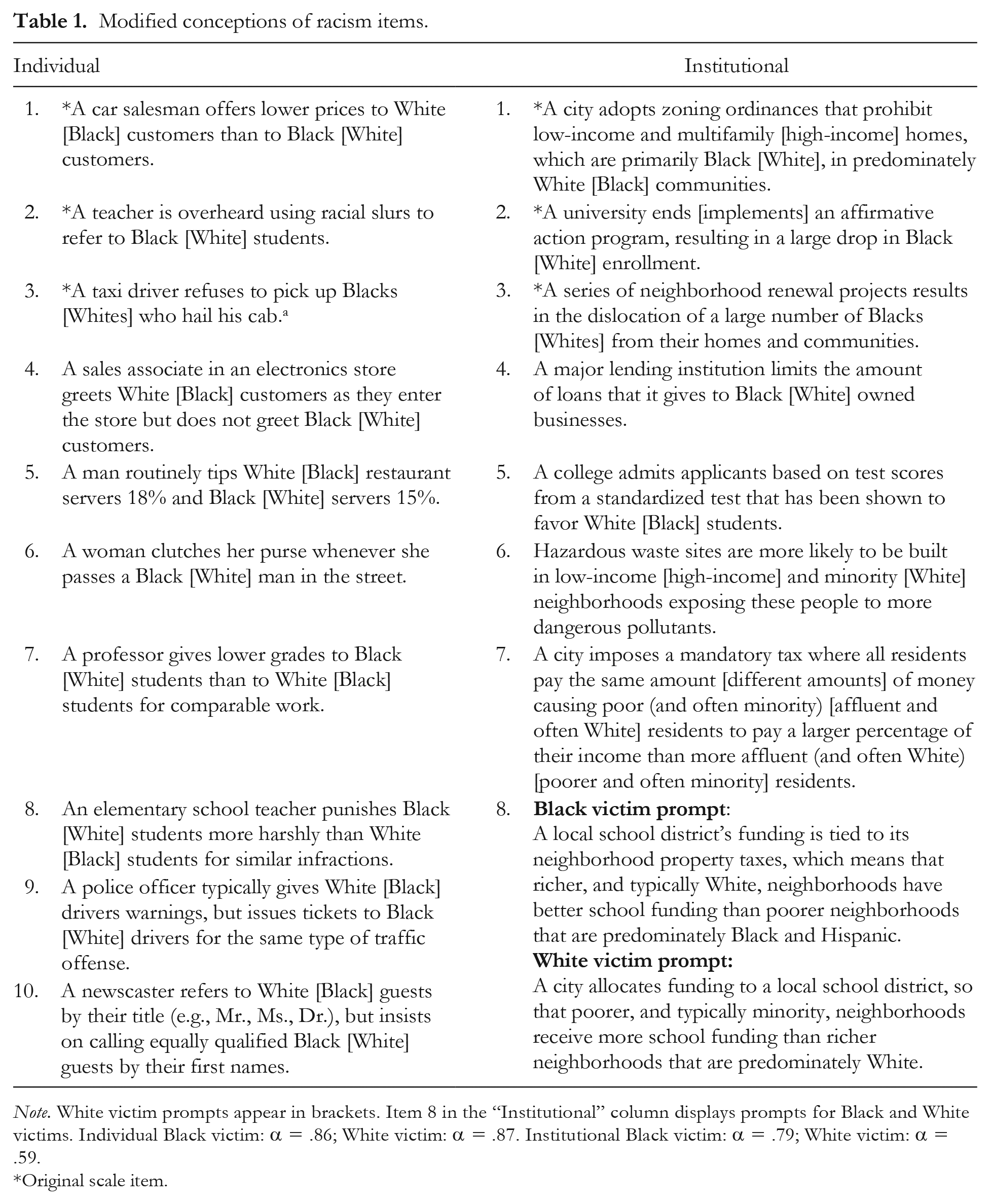
Note. White victim prompts appear in brackets. Item 8 in the “Institutional” column displays prompts for Black and White victims. Individual Black victim: α = .86; White victim: α = .87. Institutional Black victim: α = .79; White victim: α = .59.
Original scale item.
To assess racism type and victim race between groups, participants were randomly assigned to one of four conditions: individual discrimination–White victim, individual discrimination–Black victim, institutional discrimination–White victim, or institutional discrimination–Black victim. We averaged scores for each condition, which we called the racism label score (RLS). The individual discrimination measures for Black and White victims demonstrated good reliability (α = .86 and α = .87, respectively), as did the institutional discrimination measures for Black and White victims, albeit somewhat lower (α = .79 and α = .59, respectively).
Social Dominance Orientation Scale
To measure participants’ self-reported SDO, they completed the 16-item SDO6 scale (Pratto et al., 1994) that asked the extent to which they agreed with items like, “Some groups of people are simply inferior to other groups,” using a 7-point Likert scale (1 = strongly disagree, 7 = strongly agree). Items were averaged and demonstrated good reliability (α = .91).
Results
We conducted descriptive statistics for RLS and SDO by victim race and discrimination type. RLSs for institutional examples of discrimination were near the midpoint for Black (n = 28; M = 4.65, SD = 1.11) and White victims (n = 51; M = 4.29, SD = 0.78). Relative to institutional discrimination, RLSs for individual instances were generally higher for Black (n = 26; M = 6.22, SD = 0.70) and White victims (n = 19; M = 5.55, SD = 0.92). SDO for all conditions was below the midpoint: institutional–Black victim (n = 28; M = 2.43, SD = 0.97), institutional–White victim (n = 51; M = 2.21, SD = 0.91), individual–Black victim (n = 26; M = 2.21, SD = 0.97), individual–White victim (n = 19; M = 2.23, SD = 0.82). We conducted correlations among our primary variables by discrimination type (i.e., institutional/individual). For institutional discrimination, there were no associations between victim race (0 = Black, 1 = White), RLS, and SDO (all ps > .05). RLS was negatively associated with victim race for individual discrimination (r = −.39, p = .009), whereby White (vs. Black) victims elicited lower RLSs. See supplemental material for additional correlations (Table S3).
Racism label score (RLS)
Our primary hypothesis was that Whites with higher (vs. lower SDO) would be more likely to label discrimination as racism (i.e., higher RLS) when the victim was White (vs. Black), especially for institutional (vs. individual) forms of discrimination. To test this, we used ordinary least squares (OLS) multiple regression to regress RLS on victim race, discrimination type, mean-centered SDO, and all possible two- and three-way product-term interactions (see Model 1 in Table 2). No covariates were significantly associated with RLS, so we did not include them in the models. Models including covariates produced similar patterns, with some exceptions detailed in the supplemental material (see Tables S6–S7 and Figure S2).
Racism label score regressed on Study 1a variables.
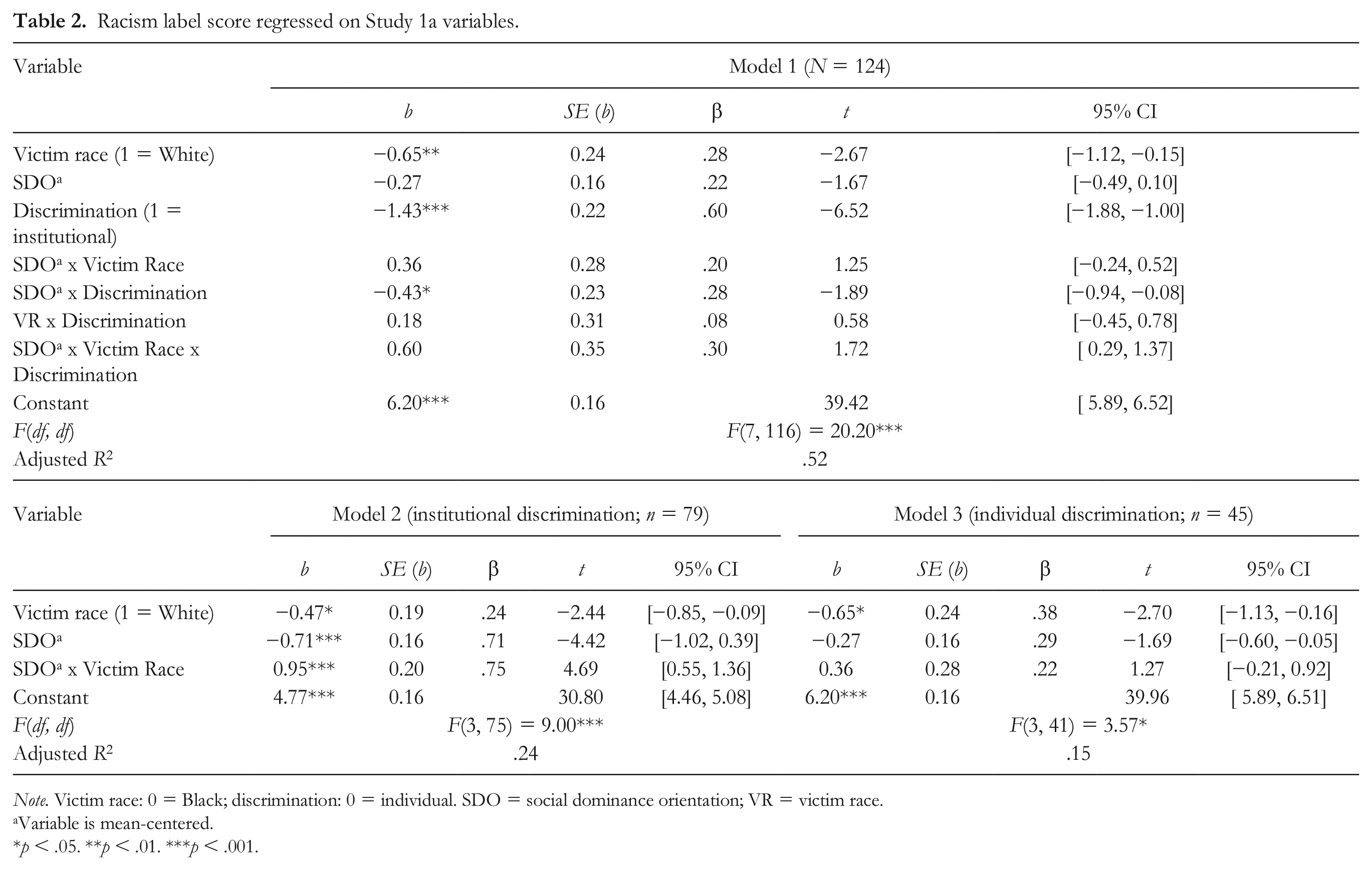
Note. Victim race: 0 = Black; discrimination: 0 = individual. SDO = social dominance orientation; VR = victim race.
Variable is mean-centered.
p < .05. **p < .01. ***p < .001.
Analyses revealed significant main effects for victim race and discrimination type, such that White (vs. Black) victims and institutional (vs. individual) forms of discrimination yielded lower RLSs. The predicted three-way interaction did not reach statistical significance. However, because our sample size may have been insufficient to detect a small to medium effect (r2 = .09) with 80% power for our largest model (Faul et al., 2009), we conducted two smaller models regressing RLS on victim race, SDO, and the product-term interaction for institutional discrimination (Model 2) and individual discrimination (Model 3), respectively (see Table 2).
Model 2 (institutional discrimination) results revealed main effects for victim race and SDO, whereby White (vs. Black) victims and higher (vs. lower) SDO predicted lower RLSs. These effects were qualified by a two-way interaction (see left panel of Figure 1). Bonferroni corrected simple slope analyses (α = .025; .05/2) revealed participants with lower SDO reported higher RLSs for Black relative to White victims, t(77) = −4.79, p < .001, 95% CI [−1.89, −0.78]. However, there were no meaningful differences in RLSs for White or Black victims among participants with higher SDO, t(77) = 1.70, p = .09, 95% CI [−0.08, 0.96]. We conducted additional Bonferroni corrected pairwise comparisons (α = .008; .05/6) to explore differences in RLSs between participants with lower and higher SDO. Analyses revealed no difference in RLSs between participants with lower and higher SDO for White victims, t(77) = 1.96, p = .054, 95% CI [−0.01, 0.92], but participants with higher (vs. lower) SDO reported lower RLSs for Black victims, t(77) = −4.42, p < .001, 95% CI [−1.91, −0.72].
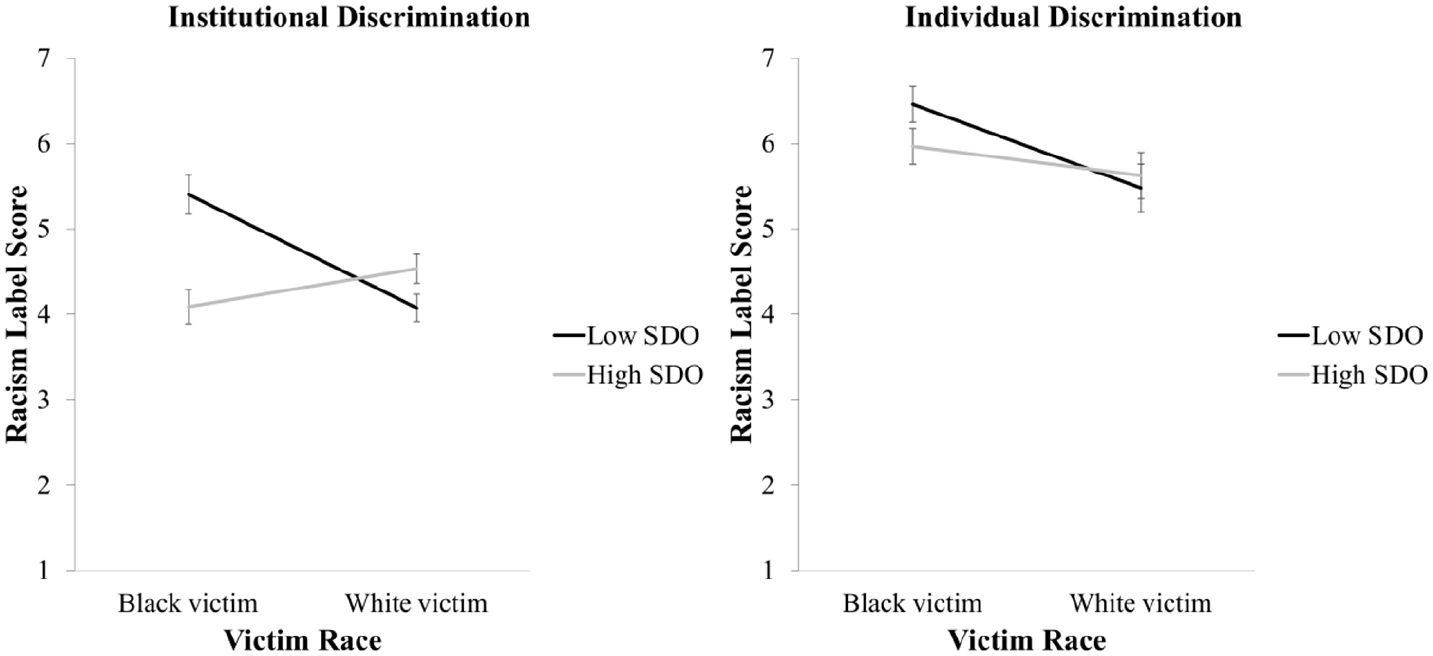
SDO by victim race predicting racism label score: Study 1a.
Model 3 (individual discrimination) revealed a main effect of victim race, such that White relative to Black victims predicted lower RLSs (see right panel of Figure 1). Although the interaction was not significant, Bonferroni corrected simple slopes (α = .025; .05/2) found those with lower SDO reported higher RLSs for Black compared to White victims, t(43) = −2.82, p = .007, 95% CI [−1.68, −0.28], but participants with higher SDO did not report statistically different RLSs for White or Black victims, t(43) = −0.99, p = .33, 95% CI [−1.04, 0.36]. Additional Bonferroni corrected pairwise comparisons (α = .008; .05/6) revealed no statistically significant difference in RLSs between participants with higher and lower SDO (ps > .008).
Discussion
We predicted Whites with higher (vs. lower) SDO would report higher RLSs when evaluating examples of institutional (vs. individual) discrimination happening to White compared to Black victims. Results revealed Whites with lower SDO demonstrated the asymmetry consistent with previous research—dominant groups victimizing subordinate groups is evidence of racism; subordinate groups victimizing dominant groups is not (Corning & Bucchianeri, 2010; O’Brien et al., 2008). Whites with higher SDO did not demonstrate this asymmetry, as they gave similar RLSs to Black and White victims. This pattern suggests Whites with higher SDO flatten disparities between White and Black victims, which is consistent with research demonstrating some Whites believe they experience as much racial discrimination as Blacks (Kteily et al., 2017; Norton & Sommers, 2011; PRRI, 2020).
Although results did not reveal the full reversal of the asymmetrical pattern among Whites with higher SDO in the institutional condition, we interpret these results as providing partial, though tentative, support for our hypothesis. Nevertheless, we urge caution when interpreting this result considering potential concerns for statistical power. Although our sample included 124 participants, an a priori power analysis suggests a sample size of 153 to detect a small to medium effect (r2 = .09) with 80% power for our model size (Faul et al., 2009). Additionally, two limitations may have influenced our results and warranted further investigation. Study 1a used a relatively small sample size, and the manipulation of discrimination between subjects diverged from previous research (Unzueta & Lowery, 2008). In our study, participants viewed institutional or individual examples of discrimination. Previous research presented participants with both types of discrimination. To address these issues, we conducted another study with a larger sample size and used a mixed design where discrimination type was manipulated within subjects (consistent with previous research), and SDO and victim race were manipulated between subjects.
Study 1b
Study 1b investigated the same questions as Study 1a, except that discrimination type (institutional and individual) was measured within subjects (i.e., participants saw instances of institutional and individual discrimination), and SDO and victim race were measured between subjects (i.e., participants saw a Black or White victim). Although discrimination type was manipulated within subjects, we conducted separate analyses for institutional and individual discrimination for RLS, which is consistent with previous work (Unzueta & Lowery, 2008). As in Study 1a, we expected participants with higher (vs. lower) SDO to report higher RLSs for White (vs. Black) victims of institutional (vs. individual) discrimination.
Method
Participants
Using a human participant pool at a large public university in Kentucky, 298 White participants were recruited in 2019 to complete an online study in exchange for course credit. An a priori power analysis indicated a sample size of 167 to detect a small to medium (r2 = .09) effect at 80% power for our largest model (Faul et al., 2009). The sample size reflected the number of participants we were able to collect during the academic term. The sample was comprised of mostly young (Mage = 19.21, SD = 3.22; range: 18–70; three did not answer), straight (91.95%, gay or lesbian = 2.01%, bisexual = 5.70%, other = 0.34%) women (64.77%, men = 34.90%, gender queer/nonconforming = 0.34%) from affluent backgrounds (lower middle class/working class = 11.75%, middle to upper class = 88.25%).
Procedure
The procedure for Study 1b was similar to that of Study 1a with some exceptions. This time, participants completed an online study and were randomly assigned to rate how racist they viewed instances of White or Black victims experiencing individual and institutional forms of discrimination. In random order, participants then completed an SDO scale and measures of attitudes toward Blacks, intergroup threat, White privilege beliefs, and political conservatism, which served as covariates in our models. Finally, participants answered a demographic questionnaire, were debriefed, and awarded course credit.
Measures/materials
Racism label score (RLS), discrimination type, and victim race
Although participants reported RLSs for both individual and institutional forms of discrimination, we calculated RLS by averaging scores for each type of discrimination by victim race. As in Study 1a, this calculation yielded an RLS for each of the four conditions (institutional–Black victim: α = .89; institutional–White victim: α = .80; individual–Black victim: α = .86; individual–White victim: α = .88).
Social Dominance Orientation Scale
To measure SDO, participants completed the SDO7 scale (Ho et al., 2015)—a shorter version of the SDO6 scale used in Study 1a. This scale has eight items, which were averaged and demonstrated good reliability (α = .80).
Attitudes towards Blacks
Participants completed three measures gauging attitudes toward Blacks. First was the Pro- and Anti-Black Sentiment Scale (Katz & Hass, 1988)—a 20-item measure capturing agreement with positive and negative sentiments toward Blacks. Participants responded to positive items such as, “Blacks have more to offer than they have been allowed to show”; and negative items such as, “On the whole, Black people don’t stress education and training,” on a 7-point Likert scale (1 = strongly disagree, 7 = strongly agree). A composite score for each subscale was created, and both the pro- (α = .85) and anti-Black (α = .85) subscales demonstrated good reliability. Participants also completed the Modern Racism Scale, which is a five-item questionnaire measuring subtle forms of anti-Black prejudice (McConahay et al., 1981). Using a 7-point Likert scale (1 = strongly disagree, 7 = strongly agree), participants indicated the extent to which they agreed with items such as, “Over the past few years, Blacks have gotten more economically than they deserve”; and an average score was calculated (α = .78). They also completed the Symbolic Racism Scale (Sears & Henry, 2003), which is an eight-item measure on a 5-point Likert scale (1 = strongly disagree, 5 = strongly agree) gauging subtle prejudicial attitudes towards Blacks. Participants marked their agreement with items such as, “It’s really a matter of some people not trying hard enough: if Blacks would only try harder, they could be just as well off as Whites.” Items were averaged into a single score (α = .84).
White privilege, threat, and conservatism
Participants completed the Perceived Intergroup Threat Scale (Bobo & Hutchings, 1996), which measured zero-sum perceptions of scarce resources in society (e.g., jobs, political power). Using a 5-point Likert scale (1 = strongly disagree, 5 = strongly agree), participants indicated agreement with four statements such as, “More good jobs for Blacks means fewer good jobs for Whites.” Participants also completed the Awareness of White Privilege Scale (Swim & Miller, 1999) and responded to statements such as, “White people have certain advantages that minorities do not have in this society,” using a 5-point Likert scale (1 = strongly disagree, 5 = strongly agree). Composite scores were computed for both measures by averaging their respective items (intergroup threat: α = .82; White privilege awareness: α = .87). Finally, participants indicated their political beliefs (1 = very liberal, 7 = very conservative) using a single item.
Results
Overall means and pairwise correlations are displayed in Table 3. Mean RLS by condition was 6.31 (SD = 0.68) for Black victims, and 5.41 (SD = 1.08) for White victims of individual discrimination; and 4.53 (SD = 1.32) and 3.93 (SD = 1.13) for Black and White victims of institutional discrimination, respectively.
Means, standard deviations, and correlations among primary Study 1b variables.
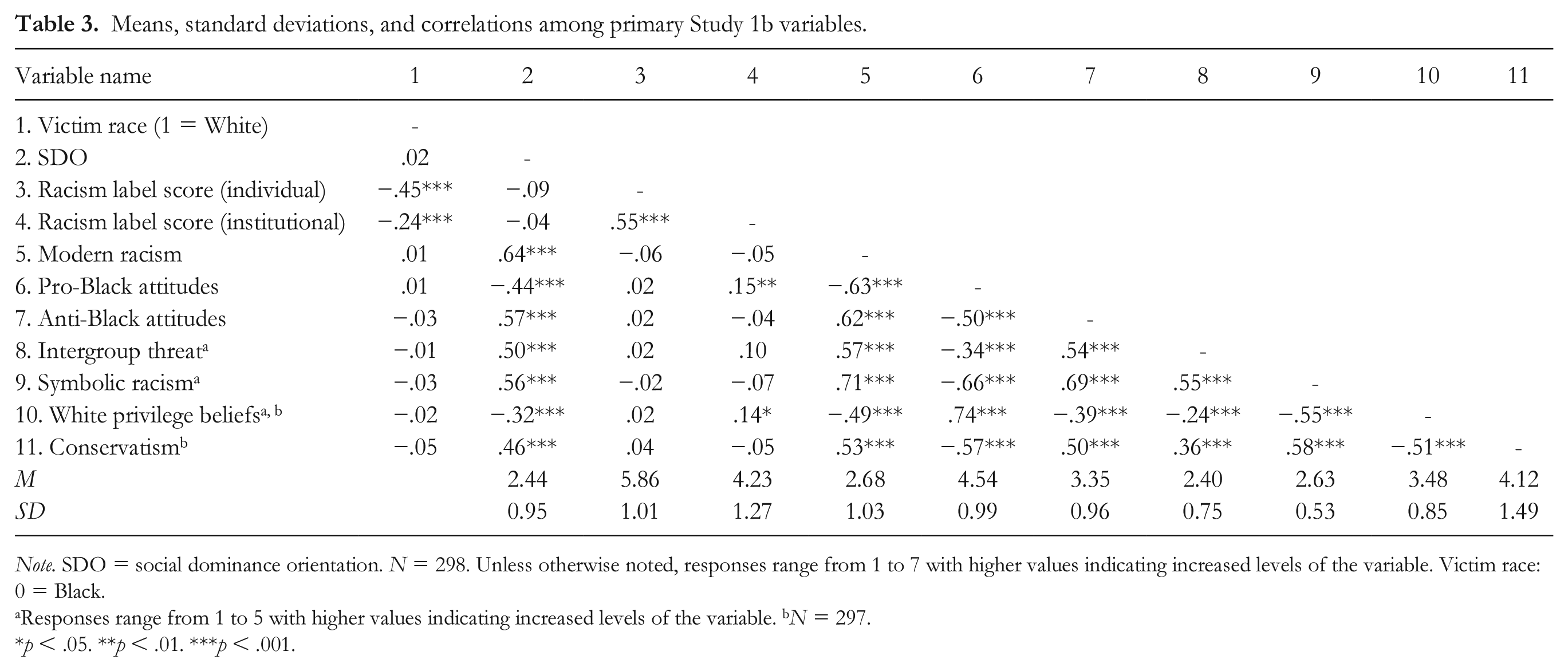
Note. SDO = social dominance orientation. N = 298. Unless otherwise noted, responses range from 1 to 7 with higher values indicating increased levels of the variable. Victim race: 0 = Black.
Responses range from 1 to 5 with higher values indicating increased levels of the variable. bN = 297.
p < .05. **p < .01. ***p < .001.
RLS, SDO, and victim race
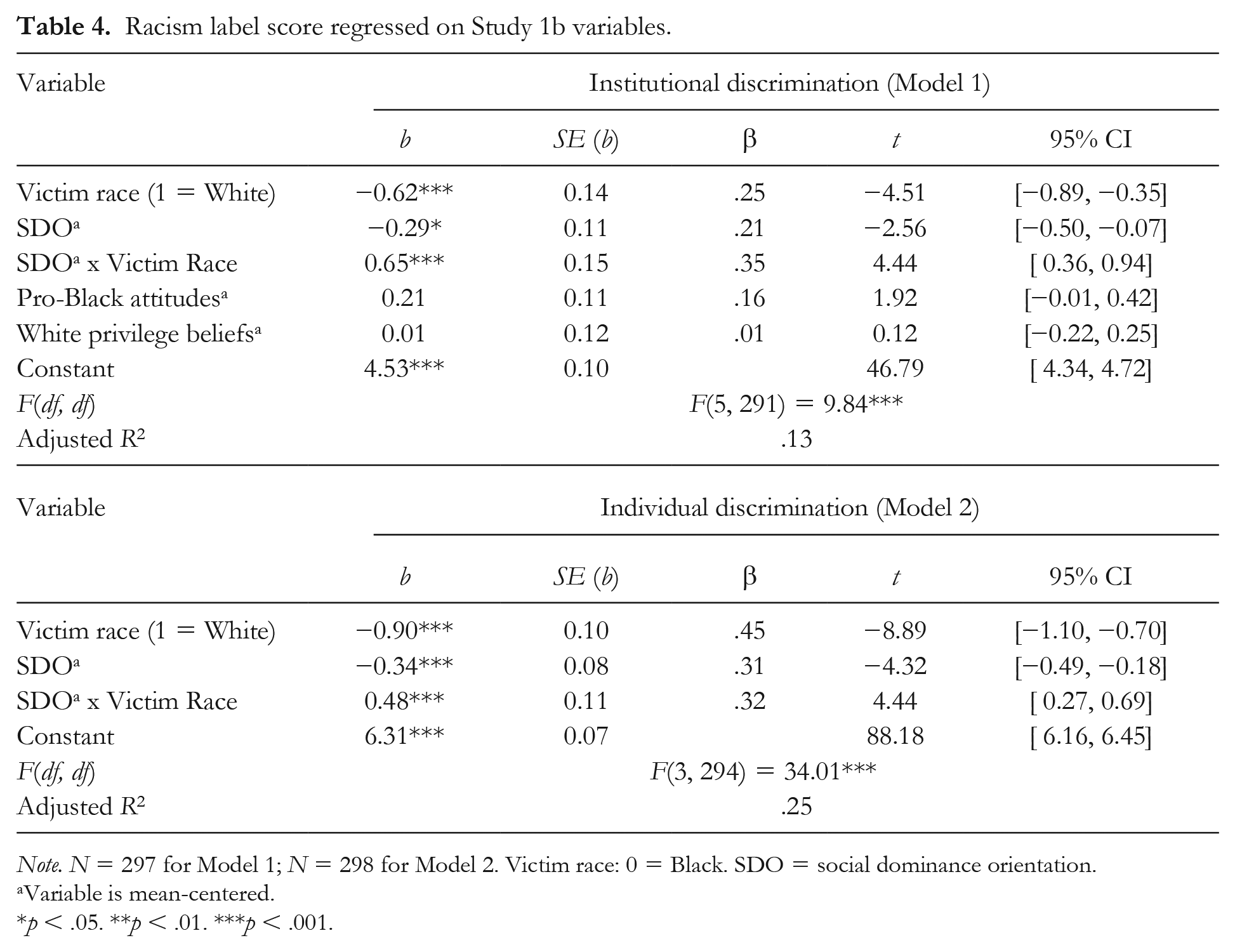
We used OLS multiple regression to examine whether victim race and SDO influenced participants’ willingness to label institutional and individual acts of discrimination as racist (RLS). We conducted two separate models (see Table 4) examining victim race and SDO on institutional (Model 1) and individual discrimination (Model 2). We predicted Whites with higher (vs. lower) SDO would report higher RLSs for White compared to Black victims of institutional (vs. individual) discrimination (Model 1).
Racism label score regressed on Study 1b variables.
Note. N = 297 for Model 1; N = 298 for Model 2. Victim race: 0 = Black. SDO = social dominance orientation.
Variable is mean-centered.
p < .05. **p < .01. ***p < .001.
Model 1 regressed RLS for institutional discrimination on victim race, SDO, and the product-term interaction while controlling for pro-Black attitudes and White privilege beliefs, which were correlated with institutional RLS. All continuous variables were mean-centered. Results revealed significant main effects for victim race and SDO, whereby White (vs. Black) victims and higher (vs. lower) SDO predicted lower RLSs. These main effects were qualified by a two-way interaction (see left panel, Figure 2). Bonferroni corrected simple slopes analyses (α = .025; .05/2) indicated participants with lower SDO reported higher RLSs for Black relative to White victims, t(295) = −6.34, p < .001, 95% CI [−1.62, −0.85]. Counter to our hypothesis, but consistent with Study 1a results, participants with higher SDO did not differ on RLSs for White and Black victims, t(295) = −0.03, p = .98.
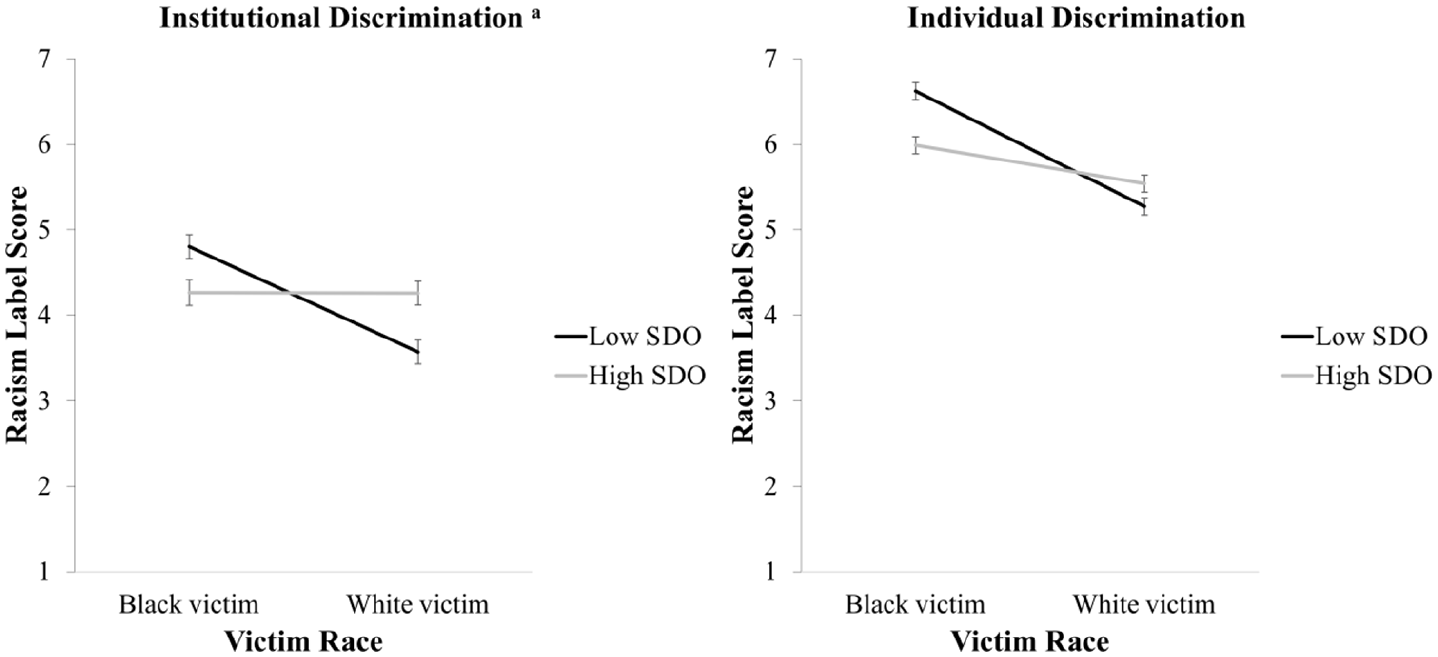
SDO by victim race predicting racism label score: Study 1b.
To probe RLS differences between Whites with lower and higher SDO, we conducted Bonferroni corrected pairwise comparisons (α = .008; .05/6). Participants with higher (vs. lower) SDO reported greater RLSs for White victims, t(295) = 3.41, p < .001, 95% CI [0.29, 1.09]. Conversely, participants with higher (vs. lower) SDO reported lower RLSs for Black victims; however, this difference did not cross the significance threshold for Bonferroni adjustment, t(295) = −2.56, p = .011, 95% CI [−0.95, −0.13].
In Model 2, we regressed participants’ RLS for individual discrimination on victim race, SDO (mean-centered), and the product-term interaction. We did not include any covariates in the model because they were not associated with individual RLS. Analyses revealed statistically significant main effects of victim race and SDO, such that participants reported lower RLSs when they had higher (vs. lower) SDO and when victims were White (vs. Black). These main effects were qualified by a two-way interaction (see right panel, Figure 2). Bonferroni corrected simple slopes analyses (α = .025; .05/2) found RLSs were higher for Black (vs. White) victims for participants with higher, t(296) = −3.13, p = .002, 95% CI [−0.73, −0.17], and lower SDO, t(296) = −9.43, p < .001, 95% CI [−1.63, −1.07]. Bonferroni pairwise comparisons (α = .008; .05/6) revealed no difference in RLSs for White victims between participants with higher and lower SDO, t(296) = 1.90, p = .058, 95% CI [−0.01, 0.54]. For Black victims, however, participants with higher (vs. lower) SDO reported lower RLSs, t(296) = 4.32, p < .001, 95% CI [−0.92, −0.35].
Discussion
As in the case of Study 1a, Study 1b results provided partial support for our hypothesis. Whites with higher (vs. lower) SDO reported lower RLSs for Black (vs. White) victims experiencing individual and institutional discrimination; however, the difference for institutional discrimination was not significant. Although results did not show a complete reversal of the asymmetrical pattern for Whites with higher SDO, these same Whites consistently gave similar RLSs for White and Black victims in the institutional discrimination conditions but not in the individual discrimination conditions. This pattern suggests Whites with higher SDO are resistant to acknowledging racial disparities between Blacks and Whites, particularly for institutional forms of discrimination.
Although these patterns are consistent with findings from Study 1a, two factors might have influenced our results. First, there is some evidence that context can shift SDO (e.g., Liu et al., 2008). Because participants completed SDO measures after being exposed to our stimuli, it is plausible our manipulation influenced their SDO scores. Second, the perpetrator’s race in the individual discrimination items of the conceptions of racism measure used to calculate RLS was ambiguous. Given that accurately detecting racism requires knowledge of both the perpetrator’s and the victim’s race, it is conceivable that participants higher in SDO reported similar RLSs for Black and White victims due to this ambiguity. Although we cannot rule this out completely, it seems unlikely that only participants with higher SDO would attend to this detail. Moreover, the pattern of results indicated Whites reported higher RLSs for Black (vs. White) victims of individual discrimination regardless of SDO. Nevertheless, it is important to specify both the race of the perpetrator of discrimination and that of the victim. Similarly, although the institutional racism items for White victims demonstrated acceptable reliability in Study 1b, reliability was relatively low in Study 1a (α = .59). This might suggest the items were less plausible, which could explain why we did not observe stronger support for our hypothesis. Finally, because neither colorblind nor meritocracy beliefs were associated with RLS in Study 1a, we sought to identify another potential variable, zero-sum beliefs, to explain the relationship between victim race, SDO, and RLS.
Study 2
To extend Study 1b and address its limitations, participants in Study 2 completed SDO measures before viewing any manipulations. We also tested whether using less ambiguous (individual) and more plausible (institutional) discrimination items would lead to stronger support for our hypothesis: Whites with higher (vs. lower) SDO would report higher RLSs for White (vs. Black) victims of institutional (vs. individual) discrimination. Finally, because SDO and perceptions of racism are associated with increased zero-sum beliefs (Ho et al., 2015; Norton & Sommers, 2011), we expected the relationship between victim race and RLS to be explained by zero-sum beliefs for participants with higher (vs. lower) SDO.
Method
Participants
Five hundred and forty self-identified White participants were recruited from ResearchMatch, a web-based recruitment platform with over 150,000 volunteers (Harris et al., 2012), to complete an online study. Fifteen participants were excluded for failing fraud prevention measures: two for failing reCAPTCHA verification, three contained duplicate subject identifiers suggesting they completed the survey more than once, and seven triggered suspicion scores consistent with automatic responses generated by online bots (i.e., not humans). The final sample (N = 528) reflects the number of eligible participants who could complete the study during September 2021. An a priori power analysis indicated a sample size of 110 to detect a small to medium effect (r2 = .12) at 80% power for our largest model (Faul et al., 2009). This effect size reflects the smallest observed effect across Studies 1a and 1b. The sample was mostly middle-aged (M = 56.29, SD = 16.60; range 19–94; one did not answer), straight (81.25%, gay/lesbian/queer = 7.76%, bisexual = 7.39%, asexual/questioning/other = 3.41, one did not answer) women (73.11%, men = 23.67%, gender queer/nonconforming = 1.52%, trans/intersex = 1.52%, one did not answer) from affluent backgrounds (lower middle class/working class = 16.10%, middle to upper class = 83.15%).
Procedure
The procedure for Study 2 closely followed that of Study 1b with one exception. To rule out the effect of our manipulation on SDO, participants first completed the SDO scale before reading incidents of individual and institutional racial discrimination directed toward Black or White victims. After providing RLS ratings, participants completed two measures of zero-sum beliefs (our mediators) and the same measures from Study 1b: attitudes toward Blacks, intergroup threat, White privilege beliefs, and political conservatism. All measures including zero-sum beliefs were randomized.
Measures/materials
Racism label score (RLS)
Participants read examples of individual and institutional racial discrimination happening to White or Black victims. To reduce ambiguity, we explicitly identified an outgroup perpetrator for all individual discrimination items (e.g., “A White [Black] taxi driver refuses to pick up Blacks [Whites] who hail his cab”). The RLSs for individual discrimination demonstrated good reliability for Black and White victims (α = .92 and α = .95, respectively).
To increase believability for the institutional discrimination examples, we only maintained Items 2, 4, and 8 (see Table 1). We made minor modifications to Items 2 and 8 (see Study 2 measures in the supplemental material), but the following substantive changes to item 4: A major lending institution implements a program designed to support locally owned [Black owned] businesses, which leads to a pattern of increasing the number of loans it gives to White [Black] business owners but decreasing the number of loans it gives to Black [White] business owners.
We also created two new items informed by news stories (B. Adams, 2021; Nasaw, 2009): “A recent report found police were more likely to use lethal force (e.g., shooting) at Black Lives Matter protests [the Capitol riot], where the crowd was mostly Black [White], compared to the Capitol riot [Black Lives Matter protests], where the crowd was mostly White [Black]” and “A city police department is now [no longer] promoting officers based on test scores from a standardized test. Relying on [Eliminating] these test scores for [from] consideration in promotion cases has led to a consistent trend of more White [Black] officers and fewer Black [White] officers being promoted.” RLSs for institutional discrimination against Black and White victims demonstrated good reliability (α = .88 and α = .85, respectively).
Zero-sum beliefs
We adapted two measures from Wilkins et al. (2015) to measure zero-sum beliefs. The first measured global zero-sum beliefs, which assessed participants’ overall perceptions of group access to resources by asking agreement with four questions using a 7-point scale (1 = strongly disagree, 7 = strongly agree), which we averaged (α = .77): “When one group gets ahead, the others are held back,” “Progress for one group does not have to come at the expense of another [reverse-scored],” “Gains for one group mean another group loses,” and “Decreased bias toward one group naturally means another group will experience more bias.”
The second measure averaged scores from 10 items to probe race-specific zero-sum beliefs using the same scale (α = .80): “Paying less attention to Black issues would improve the situation for most Whites,” “More bias against Blacks automatically means less bias against Whites,” “Black Americans’ success necessarily comes at the expense of White Americans,” “Providing opportunities for Whites leads to increased discrimination against Blacks,” “Blacks take jobs away from Whites,” “When Blacks get rights, they are taking rights away from Whites,” “Rights for Blacks means Whites lose out,” “As Blacks face less racism, Whites end up facing more racism,” “Less discrimination against Blacks means more discrimination against Whites,” and “Efforts to reduce discrimination against Blacks have led to increased discrimination against Whites.”
Results
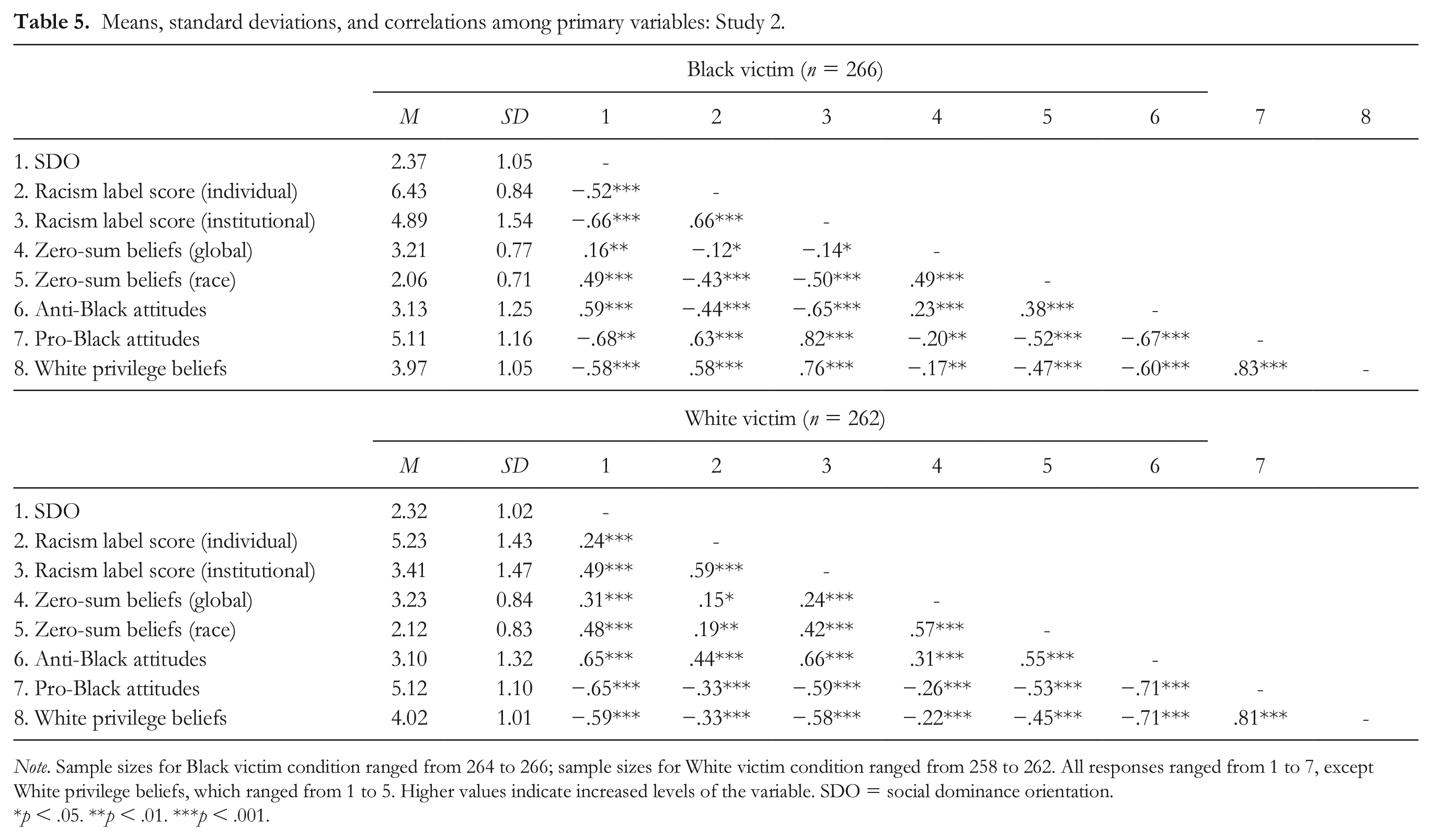
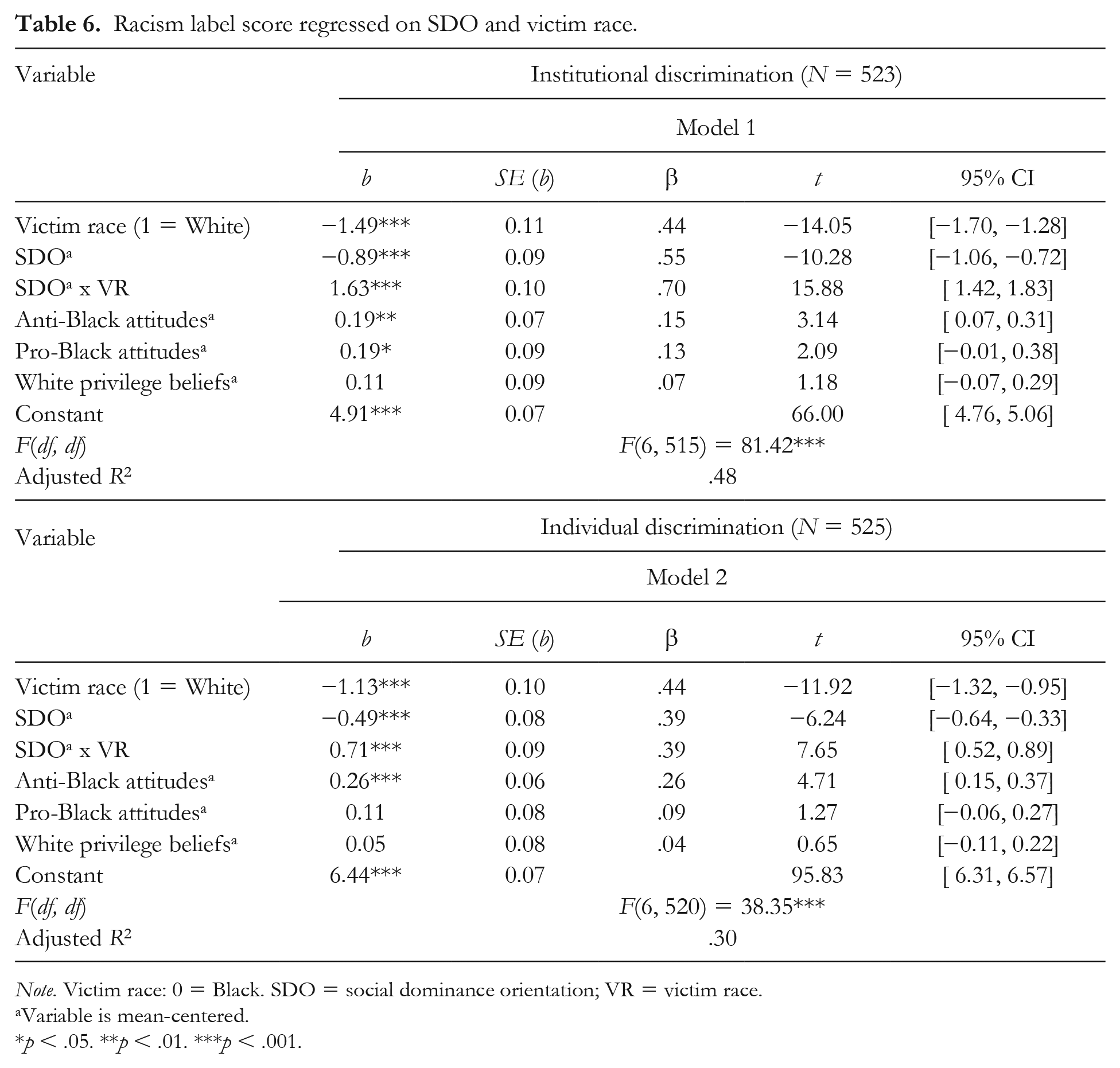
Means and correlations by victim race are displayed in Table 5. We ran two separate OLS multiple regression models to determine how victim race and SDO influenced RLSs for institutional and individual discrimination (see Table 6 for regression results).
Means, standard deviations, and correlations among primary variables: Study 2.
Note. Sample sizes for Black victim condition ranged from 264 to 266; sample sizes for White victim condition ranged from 258 to 262. All responses ranged from 1 to 7, except White privilege beliefs, which ranged from 1 to 5. Higher values indicate increased levels of the variable. SDO = social dominance orientation.
p < .05. **p < .01. ***p < .001.
Racism label score regressed on SDO and victim race.
Note. Victim race: 0 = Black. SDO = social dominance orientation; VR = victim race.
Variable is mean-centered.
p < .05. **p < .01. ***p < .001.
For Model 1, we regressed participants’ RLS for institutional discrimination on victim race, SDO, and the product-term interaction while controlling for pro- and anti-Black attitudes and White privilege beliefs because of their significant associations with institutional RLSs. All continuous variables were mean-centered. We found significant main effects for victim race and SDO, whereby White (vs. Black) victims and participants with higher (vs. lower) SDO predicted lower RLSs. The main effects were qualified by a significant two-way interaction (see left panel, Figure 3). Simple slopes analyses with Bonferroni corrections (α = .025; .05/2) revealed participants with lower SDO reported higher RLSs for Black (vs. White) victims, t(520) = −21.12, p < .001, 95% CI [−3.47, −2.88]. Consistent with patterns from Study 1b, and counter to our hypothesis, RLSs for White and Black victims did not significantly differ for participants with higher SDO, t(520) = 1.31, p = .19. To further probe the patterns, Bonferroni corrected pairwise comparisons (α = .008; .05/6) revealed participants with higher (vs. lower) SDO reported higher RLSs for White victims, t(520) = 8.27, p < .001, 95% CI [1.17, 1.89]. They also gave lower RLSs for Black victims compared to those with lower SDO, t(520) = −10.28, p < .001, 95% CI [−2.19, −1.49]. All other pairwise comparisons were significant at Bonferroni corrected levels (all ps < .001; see Study 2 results in the supplemental material).
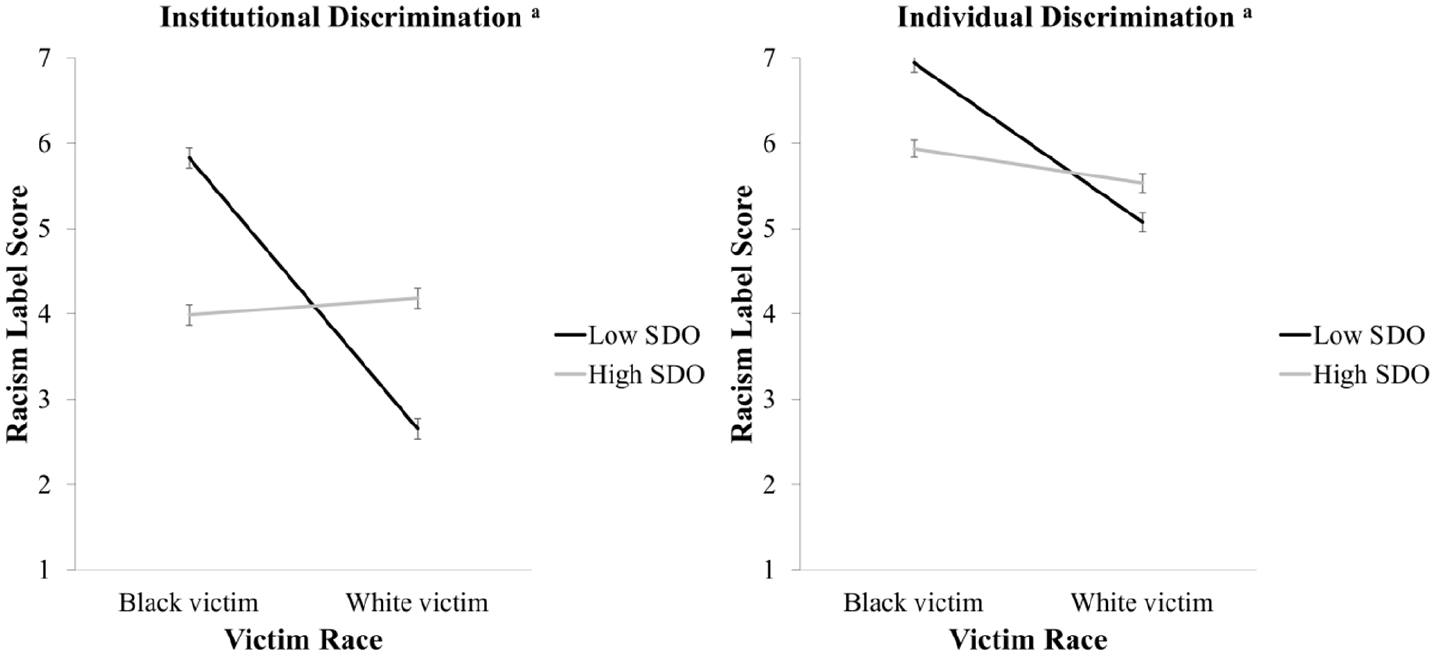
SDO by victim race predicting racism label score: Study 2.
Model 2 regressed RLS for incidents of individual discrimination on victim race, SDO, and the product-term interaction while controlling for pro- and anti-Black prejudice and White privilege, which were associated with individual RLS. All continuous variables were mean-centered. Results revealed significant main effects for victim race and SDO. Again, White (vs. Black) victims and higher (vs. lower) SDO predicted lower RLSs. These effects were qualified by a two-way interaction (see right panel, Figure 3). Bonferroni corrected simple slopes analyses (α = .025; .05/2) suggested Black (vs. White) victims elicited higher RLSs for participants with lower, t(523) = −13.83, p < .001, 95% CI [−2.13, −1.60], and higher SDO, t(523) = −2.99, p = .003, 95% CI [−0.67, −0.14]. Bonferroni corrected pairwise comparisons (α = .008; .05/6), again, revealed participants with higher (vs. lower) SDO reported higher RLSs for White victims, t(523) = 2.74, p = .006, 95% CI [0.13, 0.78], and lower RLSs for Black victims relative to participants with lower SDO, t(523) = 6.24, p < .001, 95% CI [−1.32, −0.69]. All other comparisons were significantly different (all ps < .001; see Study 2 results in the supplemental material).
Zero-sum (and White privilege) beliefs
We used the PROCESS Model 7 macro in SPSS 28 (Version 4.0; Hayes, 2018) to test our hypotheses that evaluating White (vs. Black) victims would produce increases in global and racial zero-sum beliefs for participants with higher (vs. lower) SDO, which would lead to higher RLSs when evaluating instances of institutional discrimination. We conducted two separate moderated mediation analyses to estimate indirect effects (IE) of victim race on RLS through global zero-sum beliefs (Model 1) and racial zero-sum beliefs (Model 2) as moderated by SDO. We used bootstrapping with 10,000 samples to create 95% bias-corrected estimates in each model. Counter to our hypotheses, we did not detect significant indirect effects (i.e., 95% CI contains zero) for the mediating role of global (Model 1) or racial (Model 2) zero-sum beliefs: global zero-sum beliefs, IE = 0.02, SE = 0.02, 95% CI [−0.002, 0.09]; racial zero-sum beliefs, IE = −0.002, SE = 0.01, 95% CI [−0.01, 0.03].
We also conducted a separate exploratory analysis and tested whether White privilege beliefs mediated the relationship between victim race and RLS for participants with lower, relative to higher, SDO. We observed the same nonsignificant pattern for White privilege beliefs, IE = 0.001, SE = 0.001, 95% CI [−0.01, 0.03].
Discussion
Study 2 results found patterns consistent with Studies 1a and 1b: Whites with higher (vs. lower) SDO perceived Black and White victims as experiencing equal levels of institutionalized racism. This pattern held even when SDO was measured before being exposed to a stimulus and when evaluating more plausible examples of institutional discrimination. Additionally, when compared to Whites with lower SDO, those with higher SDO reported lower RLSs for Black victims and higher RLSs for White victims. Additionally, participants with higher and lower SDO considered individual (vs. institutional) discrimination to be more racist when victims were Black (vs. White) regardless of whether the perpetrator’s race was identified.
Counter to our hypothesis, zero-sum beliefs (or White privilege beliefs) did not explain the relationship between victim race, RLS, and SDO for instances of institutional discrimination. Because participants with higher (vs. lower) SDO reported similar RLSs for Black and White victims of institutional discrimination, perhaps colorblind attitudes would have explained the relationship. Although we tested colorblind attitudes in Study 1a, we abandoned it in subsequent studies given no relationships emerged in the pilot study. Arguably, we may have detected significant effects for colorblind attitudes in Study 2, which was higher powered, and it may have successfully mediated our relationships of interest. Given this possibility, future research should test colorblind attitudes as a potential mediator between victim race, RLS, and SDO.
General Discussion
The current study found evidence that SDO, victim race (Black vs. White), and discrimination type (institutional vs. individual) influence whether Whites will consider racial discrimination evidence of racism. Research suggests Whites tend to perceive discrimination when a White actor harms a Black target, but they are less likely to perceive discrimination when a Black actor harms a White target (Corning & Bucchianeri, 2010; O’Brien et al., 2008). Although we expected victim race and discrimination type to reverse this asymmetry for Whites with higher SDO (i.e., White victims yielding more labels of racism than Black victims), the patterns did not achieve full reversal. Results from all studies, however, demonstrated consistent patterns of a previously identified asymmetry for Whites with lower SDO and the disappearance of this pattern for Whites with higher SDO. This suggests the observed effects are robust. Moreover, these findings align with research demonstrating higher SDO reduces perceptions of disparities between racial groups (Kteily et al., 2017), which might explain why the expected asymmetry did not emerge for Whites with higher SDO.
The findings regarding RLS do suggest important differences between Whites with higher and lower SDO, however. Whites with lower SDO consistently labeled incidents racist when victims were Black regardless of the type of discrimination. This is surprising, particularly for the institutional instances, given Whites rely on intent when determining whether an outcome is racist (Simon et al., 2017) and intent is often masked for institutional discrimination, which can make it difficult for Whites to detect (Bonam et al., 2019; Nelson et al., 2013). Perhaps Whites with lower SDO were driven to rely on prototypical information when making judgments because they were uncertain and wanted to avoid giving the impression of being racist themselves (Bergsieker et al., 2010). Another explanation comes from research suggesting Whites with lower SDO accurately detect inequality directed toward disadvantaged but not advantaged groups (Waldfogel et al., 2021). Relatedly, Whites with low prejudice are sometimes biased in favor of Blacks (Norton et al., 2006), which may mean participants overcorrected when making judgments to ensure minimal harm against Blacks. Alternatively, and more hopeful however, our findings might also suggest Whites with lower SDO account for power and historical inequalities when assessing discrimination (Bonam et al., 2019; Nelson et al., 2013). That is, some Whites might understand the historical and systematic disadvantages Blacks face, and how individual and institutional factors work in concert to produce and perpetuate anti-Black racism (Bonilla-Silva, 2006).
Like Whites with lower SDO, it is possible those with higher SDO were also driven by a desire to avoid appearing racist. For Whites with lower SDO, this drive may have manifested as labeling any incident involving a Black victim as evidence of racism (Corning & Bucchianeri, 2010; Inman & Baron, 1996). For Whites with higher SDO, however, perhaps offering noncommittal responses (i.e., around the scale midpoint; 4 = maybe an example of racism) regardless of victim race was an attempt to escape being labeled a racist (Apfelbaum et al., 2008). Given institutional racism is difficult for Whites to identify (Bonam et al., 2019; Nelson et al., 2013), Whites with higher SDO may not have felt confident in their ability to accurately recognize instances of racism, which led them to give similar (i.e., colorblind) racism ratings for Black and White victims.
Another interpretation is Whites with higher SDO might apply a colorblind approach when evaluating institutional forms of discrimination. Not distinguishing between Black and White victims suggests they could believe any negative action based on race constitutes racism. Although ignoring race when making judgments is sometimes done to protect Blacks (Goff et al., 2013), research finds such motivations are not likely driving Whites with higher SDO. Moreover, this colorblind approach aligns with findings demonstrating Whites with higher SDO sometimes construe colorblindness as a procedural mandate, such that people should not be treated differently on the basis of race regardless of whether the differential treatment is to correct for historical racial injustice (Knowles et al., 2009). However, we did not find evidence that colorblind attitudes (or meritocracy) were related to RLS. We also did not find evidence that White privilege or zero-sum beliefs were related to RLS.
Nevertheless, the overall pattern of our findings is consistent with tactics Whites with higher SDO use to maintain their dominance. That is, in the absence of any real change to the racial social order (i.e., intergroup threat), labeling institutional instances of discrimination as equally racist regardless of victim race could be advantageous because it subtly maintains the status quo. For instance, research finds when Whites with higher SDO perceive their dominant position to be stable, they do not evaluate Black and White victims of discrimination differently (Unzueta et al., 2014). Given Whites—even those who view themselves as egalitarian—rarely support policies that would remediate racial inequality (Smith, 2020), Whites with higher SDO might not have felt threatened because of the low likelihood that wide-sweeping institutional reform that would upset the racial hierarchy will ever take place.
Altogether, our results demonstrate high-SDO Whites’ perceptions of racism are dynamic and shift depending on the victim’s race (Black vs. White) and the type of discrimination (institutional vs. individual)—all in service of ensuring the racial hierarchy remains intact. Because Whites with higher SDO conceive of individual racism as the result of racist individuals—and not evidence of systemic bias (O’Brien et al., 2009)—overclaiming White victimhood relative to Blacks is not necessarily advantageous. However, claiming equal victimhood with Blacks for institutional forms of racism allows Whites with higher SDO to promote race-neutral policies (e.g., colorblindness), which ultimately maintain White societal dominance (Knowles et al., 2009; Kolber, 2017).
Limitations and Future Research
It is important to note some limitations of the current research. As alluded to previously, we measured but did not manipulate intergroup threat. Given previous research has found Whites with higher SDO change their attitudes depending on perceived threats to their position (e.g., Knowles et al., 2009; Unzueta et al., 2014), future research should manipulate intergroup threat when examining whether Whites with higher SDO view discrimination as evidence of racism. It is also important to note our samples demonstrated relatively low SDO. On a 7-point scale, the SDO means were well below the scale midpoint (all Ms < 2.45, all SDs < 1.06). This may explain why patterns for Whites with higher SDO were relatively flat between White and Black victims. Future research should test these questions in samples with higher SDO, as it may be that Whites with higher SDO (i.e., above the scale midpoint) would demonstrate a full reversal of the pattern shown by Whites with lower SDO.
Future research should also explore interventions that might help Whites with higher SDO perceive disparities in racial discrimination more accurately. Previous research demonstrates self-affirmations help buffer Whites’ identity against racially threatening information (Lowery et al., 2006; Unzueta & Lowery, 2008). Such interventions may also allow Whites with higher SDO to properly process information about racial inequality.
Implications
To return to the BLM protests and the Capitol siege comparison, Whites’ reactions illustrate how dominance motives can explain the paradoxical logic some Whites employ. White Republicans are less likely to support protests by Black people, only 19% of White Republicans (compared to 85% of White Democrats) supported the BLM protests, and SDO predicts White opposition to BLM (Holt & Sweitzer, 2018; Pew Research Center, 2020; PRRI, 2020). However, half of Republican voters supported the Capitol siege (Sanders et al., 2021). One explanation 82% of White Republicans offered for their (non)support of BLM was that BLM protests were comprised of people who were “taking advantage of the situation to engage in criminal behavior” (Parker et al., 2020). Yet, destruction of property and criminal behavior by Whites storming the Capitol did not seem meaningful factors for White Republicans’ support of the siege.
Beyond perceptions of these two events, we also see evidence of some Whites’ warped perceptions of racism. For instance, 57% of Republicans think Whites face a lot of discrimination, which almost matches the amount (52%) who believe Blacks experience a lot of discrimination (PRRI, 2020). However, only 17% of Republicans believe racial inequality (presumably against Blacks) is a critical issue (PRRI, 2020). These strategic shifts in logic to justify their positions are consistent with tactics Whites with higher SDO use to maintain dominance (Knowles et al., 2009; Unzueta et al., 2012, 2014). Moreover, these distorted perceptions and seemingly SDO-motivated beliefs directly map on to the results of the current study; some Whites believe they experience similar amounts of racism as Blacks.
Such blatant bias in perceptions and judgments regarding the extent of racism against Blacks is crucial to identify if societies ever truly hope to strive for racial justice. In line with this sentiment, it is important to be clear that the 2020 BLM protests were not identical to the Capitol siege. One was a legitimate response (even if it had been violent) from a social group plagued by historical and contemporary racial bias and violent oppression (Bonilla-Silva, 2006; Pager & Shepherd, 2008). The other was an attempted insurrection fueled by authoritarianism and a refusal to cede political power—all of which have only been justified by unfounded claims of voter fraud in the 2020 U.S. presidential election (Seitz, 2021). The distinguishing factor between the BLM protests and the Capitol siege is perceived versus actual oppression; the violence used by the oppressed to get free is not identical to the violence used by the oppressor to control (Freire, 1921/2000).
Remediating racial inequality has always been an important goal for societies, and the COVID-19 pandemic exacerbated racial disparities in employment and health care access, put a spotlight on racial disparities in policing, and created a context that has galvanized newfound support for racial justice movements (Marshburn et al., 2021). These conditions highlight the increasing importance for research to identify when resistance to achieving racial inequality is nothing more than strategic dominance-fueled manifestations of denial. However, researchers must also avoid investigating only the perpetrators of anti-Black racism denial. As recent work notes, race research, including the current study, overrelies on White participants’ perceptions of race-related issues (Roberts et al., 2020). Ultimately, although it is crucial to filter out perspectives that only serve to perpetuate inequality for the sake of maintaining intergroup dominance, in the fight for racial justice, it is critical we include—and prioritize—perspectives and voices from the primary victims of racism.
Research Data
sj-csv-1-gpi-10.1177_13684302221103984 – Supplemental material for Dominance motivated delusions: Whites with high social dominance orientation perceive equal amounts of institutional racism between Blacks and Whites
sj-csv-1-gpi-10.1177_13684302221103984 for Dominance motivated delusions: Whites with high social dominance orientation perceive equal amounts of institutional racism between Blacks and Whites by Christopher K. Marshburn, Brandon A. Reinkensmeyer and Eric D. Knowles in Group Processes & Intergroup Relations
Research Data
sj-csv-2-gpi-10.1177_13684302221103984 – Supplemental material for Dominance motivated delusions: Whites with high social dominance orientation perceive equal amounts of institutional racism between Blacks and Whites
sj-csv-2-gpi-10.1177_13684302221103984 for Dominance motivated delusions: Whites with high social dominance orientation perceive equal amounts of institutional racism between Blacks and Whites by Christopher K. Marshburn, Brandon A. Reinkensmeyer and Eric D. Knowles in Group Processes & Intergroup Relations
Research Data
sj-csv-3-gpi-10.1177_13684302221103984 – Supplemental material for Dominance motivated delusions: Whites with high social dominance orientation perceive equal amounts of institutional racism between Blacks and Whites
sj-csv-3-gpi-10.1177_13684302221103984 for Dominance motivated delusions: Whites with high social dominance orientation perceive equal amounts of institutional racism between Blacks and Whites by Christopher K. Marshburn, Brandon A. Reinkensmeyer and Eric D. Knowles in Group Processes & Intergroup Relations
Supplemental Material
sj-docx-1-gpi-10.1177_13684302221103984 – Supplemental material for Dominance motivated delusions: Whites with high social dominance orientation perceive equal amounts of institutional racism between Blacks and Whites
sj-docx-1-gpi-10.1177_13684302221103984 for Dominance motivated delusions: Whites with high social dominance orientation perceive equal amounts of institutional racism between Blacks and Whites by Christopher K. Marshburn, Brandon A. Reinkensmeyer and Eric D. Knowles in Group Processes & Intergroup Relations
Footnotes
Funding
The author(s) disclosed receipt of the following financial support for the research, authorship, and/or publication of this article: Portions of this research were completed with support of the National Science Foundation Graduate Research Fellowship Program (DGE-0808392).

Supplemental material
Supplemental material for this article is available online.
References
Supplementary Material
Please find the following supplemental material available below.
For Open Access articles published under a Creative Commons License, all supplemental material carries the same license as the article it is associated with.
For non-Open Access articles published, all supplemental material carries a non-exclusive license, and permission requests for re-use of supplemental material or any part of supplemental material shall be sent directly to the copyright owner as specified in the copyright notice associated with the article.
