







Abstract
We explored whether a Black female politician would alleviate feelings of invisibility among Black women even when they believed the politician deviated from the ingroup prototype by not supporting ingroup interests or by being low in ingroup solidarity. Study 1 demonstrated that relative to Black men and White men and women, Black women identified the most with Vice-President Kamala Harris and reported feeling the highest invisibility in politics immediately after Harris exited the Democratic primary election, but did not report higher support for Harris’s political platform. Study 2 further showed that a Black female politician who supported a policy that is viewed as harmful to Black Americans still helped alleviate feelings of invisibility for Black women because they strongly identified with the politician. However, a Black female politician opposing this policy was the most beneficial, demonstrating the importance of both identification and solidarity for inspiring visibility.
The experiences of Black women are often removed from conversations surrounding racism and sexism, erasing Black women’s needs from racial and gender social movements (Crenshaw et al., 2015; Goff & Kahn, 2013). Black women are aware that they face this invisibility bias and report feeling unseen in social justice causes, at work, and in U.S. society (Byers, 2020; Remedios & Snyder, 2018). Feelings of invisibility are further exacerbated by Black women’s lack of representation in U.S. political elected positions (Reflective Democracy Campaign, 2019). Consequently, a prevailing theme surrounding Vice-President Kamala Harris’s presidential campaign and her historic election as the first Black and Asian woman Vice-President centered on her inspiring visibility for those who feel unseen in politics, including Black women (Gontcharova, 2019). As one example, following the Biden–Harris win in 2020, a woman in Atlanta told a reporter that “You can’t really explain how it feels to be a Black woman and feel like you can finally see yourself in politics. Like, you see so many young women in Kamala” (Barbaro, 2020).
Although the inspirational nature of this election is evident, prior to the nomination of Kamala Harris as Vice-President, media outlets questioned whether Black voters’ disagreement with Harris’s past actions as a prosecutor would undermine the benefits associated with her representation as a Black and Asian woman (King, 2019; Leonhardt, 2020). This conversation raises an important theoretical question—can identifying with a successful ingroup exemplar help alleviate feelings of invisibility when individuals do not perceive the exemplar as caring about ingroup interests or showing solidarity with the ingroup? In the current research, we aimed to answer this question and test whether Black women would identify with a Black female politician and whether the politician would mitigate feelings of invisibility even when she is viewed as low in ingroup solidarity.
The Importance of Ingroup Representation and Solidarity
According to social identity theory, individuals derive parts of their self-image and self-esteem from their social ingroups (i.e., groups to which they belong; Tajfel & Turner, 1979). Social identity threat occurs when people believe that their ingroups are devalued in a given context (Steele et al., 2002). Social identity threat can lead to concerns about belonging and feelings of invisibility (Murphy & Taylor, 2012; Remedios & Snyder, 2018), and feeling excluded can ultimately result in disengaging from a domain or field (Lewis et al., 2017). Because of Black women’s intersecting marginalized identities, they are at unique risk of experiencing social identity threat, and report higher belonging concerns and invisibility relative to their White female and Black male counterparts (Rainey et al., 2018; Remedios & Snyder, 2018).
Various environmental cues can heighten or alleviate feelings of social identity threat (Murphy & Taylor, 2012). As examples, lacking numerical representation of one’s ingroup in an environment can exacerbate feelings of threat, whereas learning about a successful ingroup exemplar in a domain can alleviate this threat (Dasgupta, 2011). Although past research often has tested the consequences of these cues within specific environments, various signals in the larger sociopolitical landscape may lead Black women to feel valued or devalued in politics. Indeed, descriptive representation (e.g., having politicians with matching identities) can enhance Black Americans’ and women’s trust in politics broadly (Avery, 2006; Ulbig, 2007).
For an exemplar or politician to mitigate social identity threat, it is critical that the exemplar be an ingroup member and that individuals can identify with (i.e., feel similar or relate to) that exemplar (Dasgupta, 2011; Stout et al., 2011). Who is a relatable ingroup member and will act as a cue to address threat may be complicated for Black women because of their multiple ingroups and identities (e.g., gender and race; Abrams & Hogg, 1999). Self-categorization theory, which is closely related to social identity theory, posits that people are more likely to self-categorize into specific groups when those groups are salient (Turner et al., 1987). When one is part of a distinctive group (e.g., having a minoritized racial identity in a majority-White context), that group tends to be particularly salient and thus central to one’s self-concept (McGuire et al., 1978). Given that Black Americans are a numerical minority in the US, racial identity is salient and important for Black Americans (Appiah, 2002; Appiah et al., 2013).
In addition to group salience, the rejection–identification model (Branscombe et al., 1999; Schmitt et al., 2002) also proposes that when individuals feel their ingroup is rejected by society and faces discrimination, they are more likely to identify with their group. At the individual level, people identify more strongly with a specific exemplar when they perceive that exemplar as having had similar past experiences with discrimination (Pietri et al., 2019; Pietri, Johnson, et al., 2018). The salience of the Black identity, coupled with Black Americans’ awareness of the pervasive racism within U.S. society (Seaton et al., 2008), suggests that Black women would identify with Black politicians, and that Black politicians would be more effective at assuaging feelings of social identity threat than White female politicians. Supporting this possibility, research within organizational contexts has found that Black women identify most strongly with an exemplar matching their race and gender, followed by an exemplar matching only their race, and then an exemplar matching only their gender (Pietri, Johnson, & Ozgumus, 2018). Moreover, Black women indicated stronger identification with Black exemplars relative to a White female exemplar, and identification ultimately encouraged feelings of trust and inclusion in the exemplar’s organization. Because Black women struggled to identify with the White woman, she did not encourage trust/belonging relative to control conditions (I. R. Johnson et al., 2019; Pietri, Johnson, & Ozgumus, 2018).
Beyond having matching identities and thus evoking feelings of identification, politicians can also encourage higher perceptions of trust and fairness in politics when they provide substantive representation, that is when they support policies that benefit the ingroup (Dovi, 2002; Hayes & Hibbing, 2017). Believing that a politician is actively helping the ingroup may also promote perceptions that the politician feels a strong sense of solidarity with one’s group. People who show solidarity with a group are committed to helping the group and advocating for the group’s goals and causes (Jans et al., 2015; Neufeld et al., 2019). Recent work has found that people who care about supporting Black women or who show solidarity with Black women help reduce social identity threat across a variety of contexts (I. R. Johnson et al., 2019; Hildebrand et al., 2020 Moser & Branscombe, 2021). An important feature of solidarity is that both ingroup and outgroup members can demonstrate it. However, generally, people tend to perceive other ingroup members as more dedicated to uplifting their group than those outside it (I. R. Johnson & Pietri, 2020; Pietri, Johnson, & Ozgumus, 2018).
The Consequences of an Ingroup Exemplar Who Does Not Show Solidarity
In addition to highlighting the importance of salience, self-categorization theory also notes that ingroups and outgroups are cognitively represented with group prototypes, which are a set of attributes (e.g., attitudes, feelings, behaviors) associated with the typical group member (Hogg, 2001). People tend to like ingroup members more when they closely align with the group’s prototype (Hogg & Hains, 1996). Moreover, because of the motivation to view ingroups as distinctive with common opinions and norms (Leonardelli et al., 2010), individuals dislike ingroup members who have conflicting beliefs (J. D. Johnson & Ashburn-Nardo, 2014). Indeed, sharing values can be more important than overlapping racial identities for liking and supporting another person/ political candidate (Hayes & Hibbing, 2017). Thus, Black women may not support a Black female politician who promotes a policy that harms the ingroup, does not show ingroup solidarity, and thus deviates from the ingroup prototype.
An important theoretical question, however, is whether a Black female politician can still alleviate feelings of invisibility and threat in politics when she fails to demonstrate ingroup solidarity and to align with the ingroup prototype. We posit that a successful ingroup exemplar can reduce feelings of invisibility and threat in a given domain (e.g., politics) via two processes: (a) perceiving the exemplar as having had similar experiences with discrimination, which in turn encourages identification (relevant to descriptive representation), and (b) viewing the exemplar as demonstrating solidarity with the ingroup (relevant to substantive representation). If one of these pathways is not present, it is possible that an exemplar or politician can reduce threat via the other pathway. For instance, although Black women may struggle to identify with a racial outgroup member, this person can still alleviate social identity threat by demonstrating solidarity with Black women (for examples, see I. R. Johnson & Pietri, 2020; Pietri, Johnson, & Ozgumus, 2018).
The Current Research
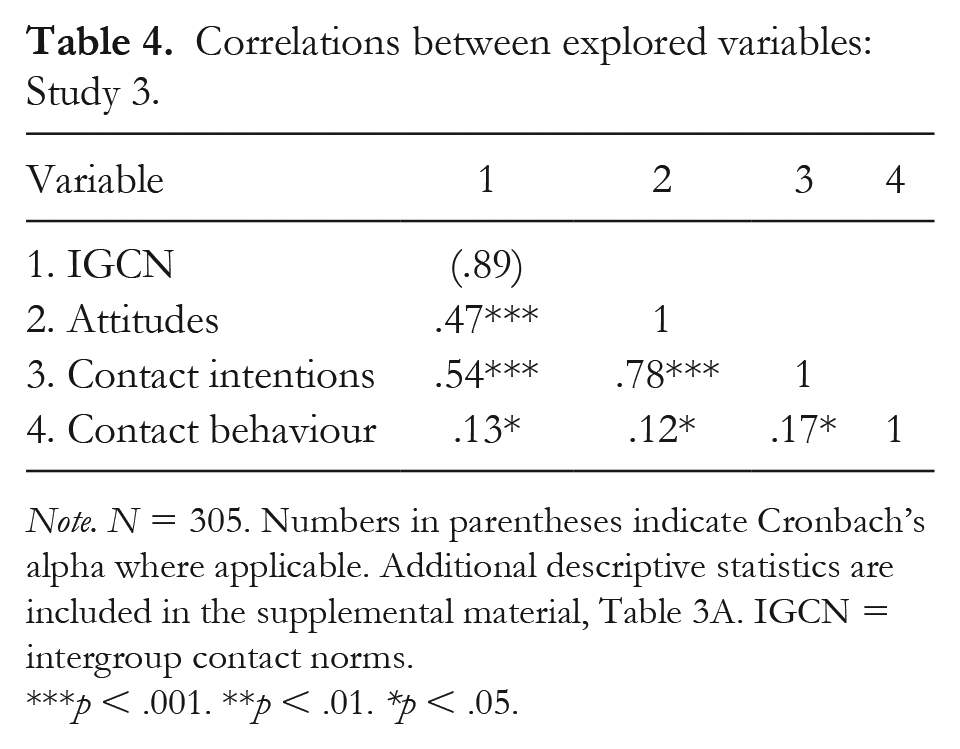
Previous research, however, has not explored whether a racial ingroup member will mitigate feelings of invisibility and threat when the solidarity pathway is absent. When a Black female politician goes against the ingroup prototype and does not show solidarity, she still possesses the salient Black identity and experiences racism. Thus, Black women may still identify with this Black female politician, and she may still mitigate feelings of invisibility in politics even when she is perceived as low in ingroup solidarity. We first tested this possibility in the context of an actual U.S. election, and looked at Black and White female and male participants’ reactions to then Democratic presidential candidate Kamala Harris exiting the 2020 Democratic primaries. Further exploring this question experimentally, in Study 2, we manipulated the race and policy stance of a fictional female politician to examine identification and solidarity as independent constructs.
Study 1
For Study 1, we recruited Black and White men and women, and explored their reactions to then presidential nominee Harris exiting the Democratic primaries in the 2 weeks following her departure. Notably, Vice-President Harris identifies as a Black and Indian woman. Because White Americans often use hypodescent to exclude Black Americans from the White ingroup (Ho et al., 2011, 2013), Black Americans believe biracials encounter similar levels of discrimination as Black people and feel a sense of shared fate with biracials (Ho et al., 2017; see also Khanna, 2010). Thus, we anticipated that even though Vice-President Harris identifies as Black-Indian biracial, Black female participants would perceive her as having had similar experiences with bias and would identify with her.
We preregistered this study on the Open Science Framework (OSF; https://osf.io/wahs5/?view_only=b9e3466a3a534d1290dff4f81f878a14). Our preregistered hypotheses were that Black women would be the most likely to believe Vice-President Harris has had similar experiences with bias, would be the most likely to identify with Harris, and would indicate the highest invisibility and exclusion in politics as a result of Harris dropping out of the Democratic primary race, followed by Black men, White women, and White men. We also predicted that because of conversations surrounding Vice-President Harris’s history as a prosecutor, there would be no effect of participant race on perceptions that Harris had shown solidarity with the ingroup or on political support for Harris during the primaries. 1
Method
Participants
Using Amazon’s Mechanical Turk (MTurk) and the affiliated CloudResearch platform, we only advertised our study to participants who identified as Black or White men or women, and prevented individuals on the CloudResearch-generated list with suspicious geolocations/IP addresses from participating (Moss & Litman, 2018). We recruited 534 participants and excluded 28 (5.4%) who did not identify as Black or White, or as male or female, during the study. Of the remaining 505 participants, we excluded 32 (6.3%) for failing the attention checks. Excluded participants did not vary across race/gender groups. We present these chi-square analyses and attention check items in our supplemental material, which is available on this project’s OSF website (https://osf.io/3qg52/?view_only=b818403cf9834a3097ca2b602f77498d).
Because we were assessing perceptions of Kamala Harris, a then Democratic presidential nominee, we only included Democrats (N = 270) in our main analyses because Democrats were not equally distributed across racial and gender groups (see OSF supplemental material). We also found differences between Black and White participants on political orientation (see OSF supplemental material) and thus, we conducted our primary analyses controlling for political orientation. In the supplemental material, we present findings for all participants (not just Democrats) and results not controlling for political orientation, which are similar to our main findings.
Among our final sample of Democrats, the mean age was 38.2 years (SD = 12.6; range: 18–80). The majority of participants (N = 265; 98.1%) indicated their country of origin as the US and English as their first language (N = 269; 99.6%). 2 A power sensitivity analysis using G*Power (Faul et al., 2007) indicated that with four groups, one degree of freedom in the numerator, and one covariate (i.e., political orientation), at 80% power, we were adequately powered to find a small to medium (f = .17) effect size at p < .05.
Procedure and measures
The current study was advertised as being interested in participants’ perceptions of politicians and politics generally. We told participants we were specifically interested in their impressions of (then) Senator Kamala Harris, who, at the time, had recently dropped out of the Democratic presidential primaries. To ensure all participants were at least somewhat familiar with now Vice-President Harris, we provided them with a picture of Harris and a brief description of her political career. After receiving this information, participants responded to a series of questions about their impression of Harris. Specifically, we assessed participants’ perceptions that Harris had had similar past experiences with bias (four items; e.g., Pietri, Johnson, et al., 2018), their level of identification with Harris using the Self–Other Overlap Scale (eight items; Goldstein et al., 2014), and their beliefs that Harris had shown solidarity with their ingroup (six items; adapted from Pietri, Johnson, & Ozgumus, 2018).
Next, we assessed participants’ felt invisibility and exclusion (eight items; adapted from Good et al., 2012; Remedios & Snyder, 2018) in politics now that Harris had dropped out of the race. Finally, to examine political support (seven items total) for Harris, participants answered six items measuring their support for Harris’s political platform and one item measuring how likely they would have been to vote for Senator Harris in the primary had she remained in the race. 3
Scale descriptive information and correlations between measures are presented in Table 1. All of the measures and materials as well as the data and syntax for Study 1 are available on the OSF project page (https://osf.io/3qg52/?view_only=b818403cf9834a3097ca2b602f77498d).
Scale information and correlations across outcome variables: Study 1.
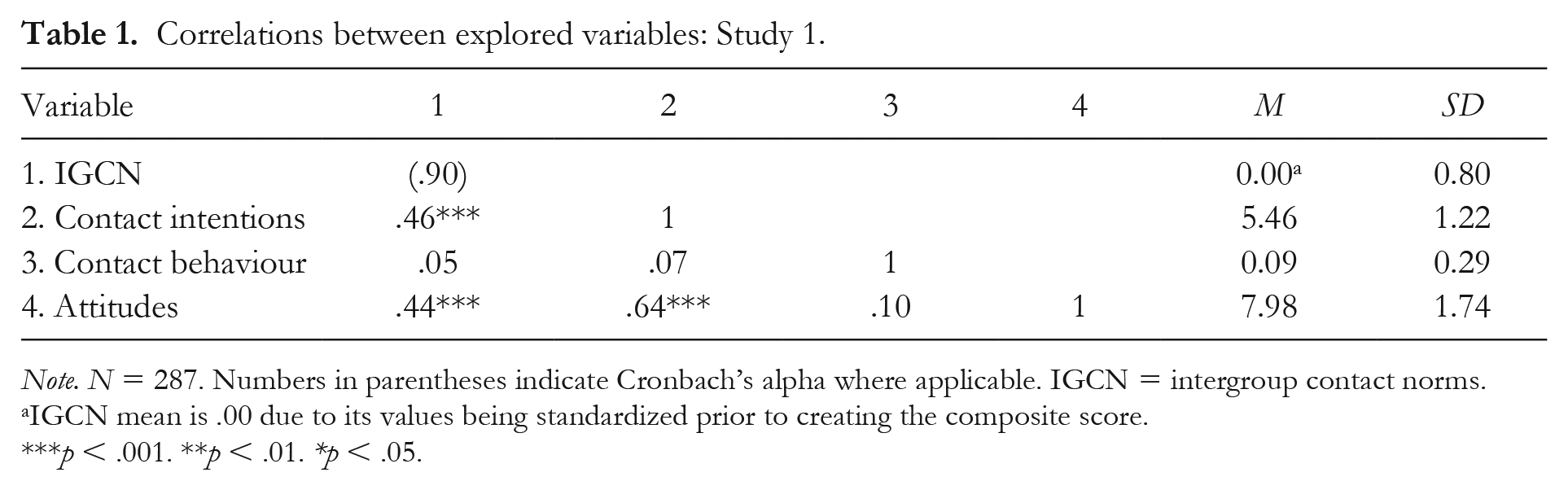
Note. Reliabilities (α) are displayed on the diagonal.
p < .05. **p < .01. ***p < .001.
Results and Discussion
To test our predictions, we ran 2 (White vs. Black participants) x 2 (men vs. women) ANOVAs. Additive main effects of both gender and race on invisibility and exclusion, without a significant interaction, would indicate that Black women participants were the most harmed by Harris leaving the race. The full ANOVA results with means and standard deviations across conditions are shown in Table 2.
ANCOVA controlling for political orientation: Study 1.
Means and standard deviations across conditions: Study 1.
Note. Within each row, means with shared subscripts are not significantly different.
Perceptions of Harris
For beliefs that Harris had faced similar past bias and for self–other overlap (i.e., identification) with Harris, we found the predicted main effects of both race and gender (all ps < .001), which were qualified by unexpected significant two-way interactions (all ps < .022; see Table 2 for effects). Compared to White men, White women perceived Harris as having had more similar experiences with bias (mean difference [MD] = 1.18, SE = 0.26, d = 0.93, p < .001), and felt more self–other overlap with Harris (MD = 1.09, SE = 0.26, d = 0.52, p < .001). Although Black women were higher than Black men on both of these measures, Black men and women did not differ on similar experiences with bias (MD = 1.17, SE = 0.45, d = 0.16, p = .233) or self–other overlap (MD = 0.29, SE = 0.23, d = 0.16, p = .222). Of note, both Black men and women were more likely to believe that Harris had had similar experiences with bias and to identify with Harris compared to White women (see Table 2).
For perceptions that Harris had shown solidarity with participants’ ingroup, as expected, we did not find a main effect of race. However, there was a main effect of gender such that women believed that Harris showed more solidarity with their ingroup than men did (MD = 0.46, SE = 0.18, d = 0.29, p = .010). Black women did not differ from Black men or White women on beliefs that Harris had shown ingroup solidarity (see Table 2).
Feelings of invisibility and exclusion in politics
As anticipated, Black participants indicated higher feelings of invisibility and exclusion in politics after Harris dropped out of the race, compared to White participants (MD = 1.14, SE = 0.18, d = 0.85, p < .001). Moreover, women reported higher invisibility and exclusion (MD = 0.62, SE = 0.18, d = 0.42, p < .001) than men. We found the anticipated two additive main effects, where out of all race/gender groups, Black women felt the highest invisibility and exclusion, differing significantly from the other three groups (see Table 2 for effects).
Political support for Harris
Finally, regarding political support for Harris, there was an unexpected interaction between race and gender (p = .041; see Table 2 for effects). White women were more likely than White men to support Harris (MD = 1.00, SE = 0.26, d = 0.79, p < .001), whereas Black men and women did not differ (MD = 0.28, SE = 0.24, d = 0.18, p = .233). Of note, White men showed the lowest support, White women showed the highest support, and Black men and women fell in between these two groups (see Table 2 for effects).
For both the current study and Study 2, we ran exploratory (i.e., not preregistered) mediation analyses to further test our predictions that identification would alleviate feelings of invisibility and exclusion, even when the solidarity pathway is absent. These mediation analyses are available in OSF supplemental material.
Study 2
Extending Study 1, in Study 2, we experimentally manipulated the race of a fictional female politician (i.e., identification/descriptive representation) as well as whether the politician supported a policy that is harmful to Black Americans (i.e., solidarity/substantive representation). Specifically, we varied whether or not the political candidate was in favor of harsh punishments for marijuana use/possession. There is a long history of Black Americans being mistreated by the criminal justice system (Hinton & Cook, 2021), and racial bias is particularly prevalent in minor drug offenses, including marijuana use (Hudak, 2020; Ohlheiser, 2013). Consequently, Black Americans typically perceive punitive sentencing for minor drug infractions as targeting and hurting their ingroup (Gilberstadt, 2020; Gramlich, 2019). We pilot-tested our manipulation and found that Black women were less likely to believe a Black female candidate had shown ingroup solidarity, and less likely to politically support that candidate, when she was in favor of harsh punishment for marijuana/drug possession compared to a candidate who was not in favor of these strict punishments (see OSF supplemental material for pilot study).
Similar to Study 1, we preregistered our hypotheses, which are available on the OSF (https://osf.io/5gv8k/?view_only=f0cba28c87104ba0ba9c65cadca7ae44). We predicted that there would be two additive main effects of race and policy condition, and no interactions. Critically, for identification with the candidate, invisibility, and exclusion in politics, we anticipated that the effect of race condition would be stronger than the effect of policy condition. In contrast, for the solidarity and political support measures, we expected the effect of policy condition to be stronger than the effect of race condition.
Method
Participants
Using G*Power (Faul et al., 2007) and an effect size of f = .23 (obtained from the pilot study on policy support; see OSF supplemental material), an a priori power analysis indicated that with four groups, one degree of freedom in the numerator, at 80% power, with alpha = .05, we would require a sample of 151 participants. To be conservative and account for exclusion criteria, we doubled our targeted sample size to 300 participants.
We employed MTurk and CloudResearch to recruit Black women, and excluded participants from suspicious geolocations/IP addresses. We collected data from 305 participants and initially excluded 19 (0.06%) who did not self-identify as a Black woman. We excluded an additional 18 (0.06%) participants for failing the attention checks. These participants did not vary significantly across conditions (see OSF supplemental material for these analyses). Our final sample was comprised of 268 Black women with a mean age of 38.7 years (SD = 13.10; range: 18–77). All participants indicated English as their first language and the majority (N = 263; 98.1%) reported their country of origin as the US. A power sensitivity analysis using G*Power (Faul et al., 2007) indicated that with four groups and one degree of freedom in the numerator, at 80% power, we were adequately powered to find a small to medium (f = .17) effect size at p < .05. 4
Procedure
Participants first viewed a campaign website for Mary Jones, a fictional female politician and state congressional representative. The website contained a variety of information about the candidate, including a brief educational history and a description of her political achievements and position on various policy issues (e.g., supporting improving trail infrastructure, balancing the state budget). The candidate was either a Black or White woman, which was manipulated by changing the photo on the website. We pilot-tested the pictures to ensure they appeared equally attractive, likable, successful, competent, and similar in age (see OSF supplemental material for pilot study). The last page of the website discussed Mary’s stance on drug punishment and indicated that she was either for or against harsh sentencing for nonviolent drug offenses, including marijuana use (see OSF supplemental material for full wording and pilot study showing effectiveness of manipulation). The current study had a 2 (race) x 2 (policy) design (Black candidate antiharsh punishment, N = 63; Black candidate proharsh punishment, N = 70; White candidate antiharsh punishment, N = 68; White candidate proharsh punishment, N = 67).
Measures
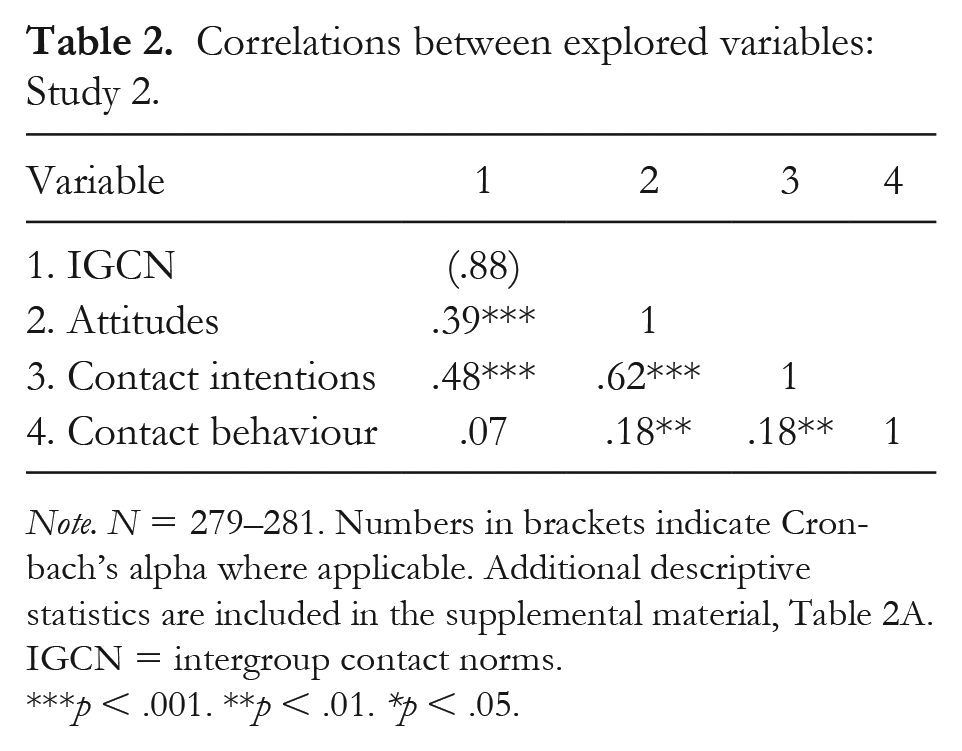
After reading about the candidate, participants completed the same measures from Study 1 assessing perceptions that the candidate had had similar past experiences with bias (four items), identification or self–other overlap with the candidate (eight items), and perceptions that the candidate had shown solidarity with their ingroup (six items). 5 Participants also reported their feelings of invisibility and exclusion (12 items; modifying this index from Study 1, we added four new related items, which are available on the OSF supplemental material). We also measured political support for the candidate (five items; altering the measure from Study 1, we dropped two items that referred to the Democratic primary). Finally, as a new measure, we asked participants to rate their agreement from 1 (strongly disagree) to 7 (strongly agree) with items measuring their interest in engaging with the candidate’s campaign (six items; e.g., “I would go door to door campaigning for Mary’s campaign”). 6 The measures, materials, data, and syntax for Study 2 are available on the OSF project page (https://osf.io/3qg52/?view_only=b818403cf9834a3097ca2b602f77498d). Scale descriptive information and correlations between measures are presented in Table 3.
Correlations across outcome variables: Study 2.
Note. Reliabilities (α) are displayed on the diagonal.
p < .05. **p < .01. ***p < .001.
Results and Discussion
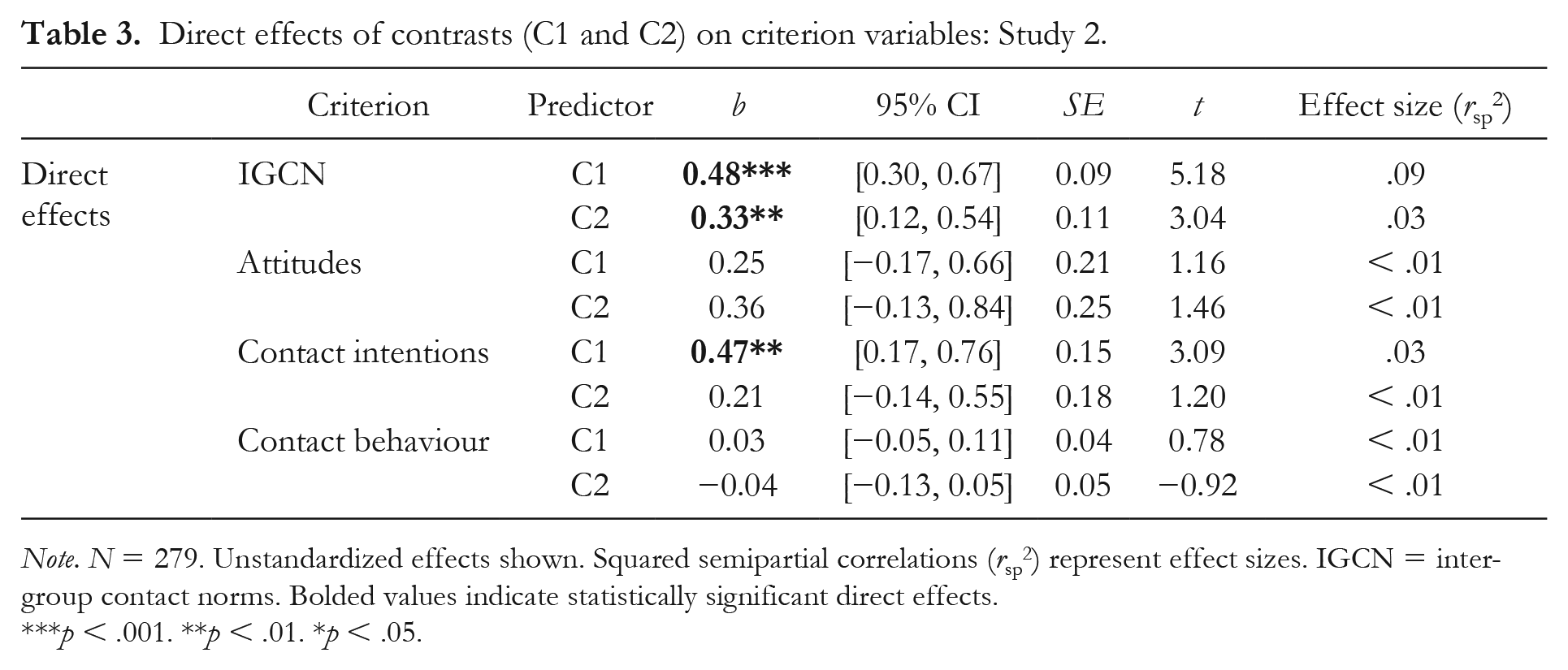
For all of the outcome measures, we ran between-subjects ANOVAs with candidate race (Black vs. White) and policy (pro- vs. antiharsh sentencing) as factors. The full ANOVA results as well as means and standard deviations across conditions are shown in Table 4.
ANOVA results: Study 2.
Means and standard deviations across conditions: Study 2.
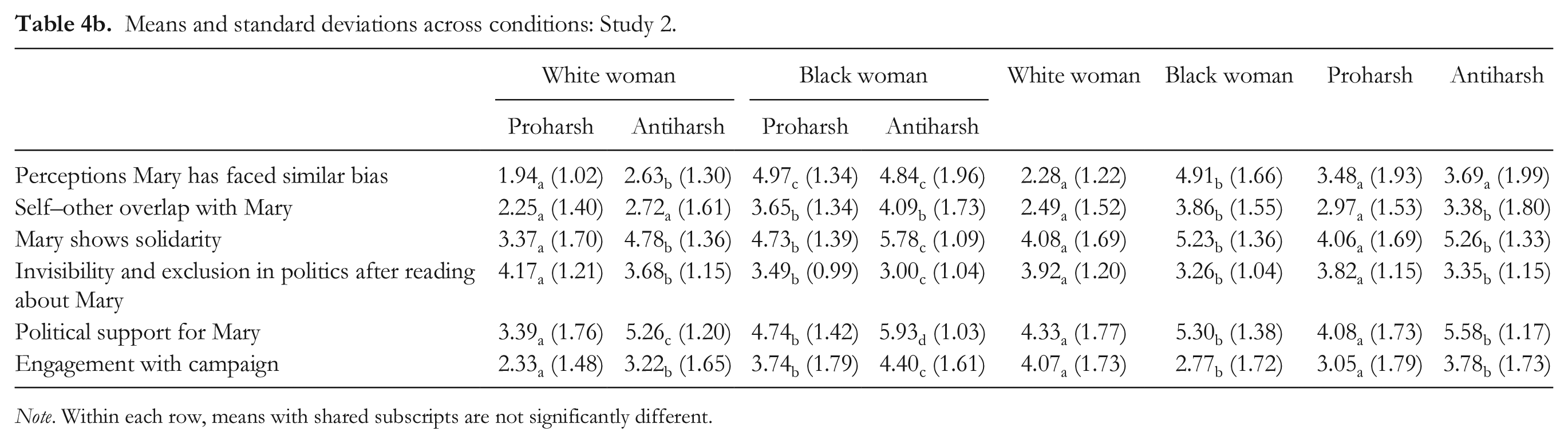
Note. Within each row, means with shared subscripts are not significantly different.
Primary analyses
Perceptions of Mary
For perceptions that Mary had had similar experiences with bias, there was an unexpected significant interaction (p = .024; see Table 4). There was no effect of policy condition in the Black woman condition (MD = 0.12, SE = 0.25, d = 0.07, p = .644). In contrast, in the White woman condition, participants thought Mary had had more similar experiences with bias in the antiharsh punishment than in the proharsh punishment condition (MD = 0.69, SE = 0.25, d = 0.59, p = .006). Of note, participants perceived the Black woman as having experienced similar bias more than the White woman had across both policy conditions (see Table 4).
We found the expected pattern of results for both self–other overlap (i.e., identification) and perceptions of solidarity, in that there were two significant main effects and no interactions. Participants identified more with Mary (MD = 1.38, SE = 0.19, d = 0.89, p < .001) and believed Mary showed greater solidarity (MD = 1.18, SE = 0.17, d = 0.75, p < .001) in the Black woman condition compared to the White woman condition. Moreover, participants had higher self–other overlap (MD = 0.46, SE = 0.19, d = 0.25, p = .015) and higher perceived solidarity (MD = 1.23, SE = 0.17, d = 0.78, p < .001) in the antiharsh punishment than in the proharsh punishment condition. As predicted, the effect of race condition was stronger than the effect of policy condition for self–other overlap, and participants identified with the Black woman significantly more than with the White woman across both policy conditions (see Table 4). In fact, although participants viewed the Black woman who was proharsh punishment as significantly lower in ingroup solidarity than the Black woman who was antiharsh punishment, participants identified equally with both Black female politicians (see Table 4).
Feelings of invisibility and exclusion in politics
Participants indicated lower feelings of invisibility and exclusion in the Black woman condition compared to the White woman condition (MD = 0.68, SE = 0.14, d = 0.59, p < .001). Participants also felt less invisibility and exclusion in the antiharsh punishment condition relative to the proharsh punishment condition (MD = 0.49, SE = 0.14, d = 0.41, p < .001). As expected, the effect of race condition was higher than the effect of policy condition for this outcome.
Political support for Mary
Regarding support for Mary’s political platform, there was an unexpected race by policy interaction (p = .029; see Table 4). For both the Black (MD = 1.19, SE = 0.24, d = 0.96, p < .001) and White (MD = 1.87, SE = 0.24, d = 1.24, p < .001) candidates, participants supported the candidate more in the antiharsh punishment condition than in the proharsh punishment condition. As expected, policy condition was more important than race condition for supporting candidate’s political platform, and the White politician who was antiharsh punishment engendered significantly more support for her platform than the Black politician who was proharsh punishment did (see Table 4 for these effects).
Finally, participants were more likely to engage in Mary’s campaign in the Black woman condition compared to the White woman condition (MD = 1.29, SE = 0.20, d = 0.79, p < .001). Additionally, participants were more likely to engage in Mary’s campaign when she was antiharsh punishments for drug offenses than when she was proharsh punishments (MD = 0.77, SE = 0.20, d = 0.47, p < .001). Interestingly, for engagement, the effect of race condition was stronger than the effect of policy condition.
General Discussion
Across two studies, we found that a Black female politician can alleviate concerns about invisibility and exclusion for Black women, even when Black women view the politician as low in ingroup solidarity. Exploring this possibility in a real-world context, Study 1 demonstrated that Black women identified most strongly with Vice-President Harris relative to Black men and White men and women, and thus, of these groups, Black women were the most harmed by Vice-President Harris exiting the Democratic primaries and reported the highest feelings of invisibility and exclusion in politics. At the same time, compared to Black men and White women, Black women were equally likely to believe that Vice-President Harris had shown solidarity with their ingroup and to support Harris politically. Using an experimental design in Study 2, we found that among Black women, compared to a White female political candidate, a Black female candidate encouraged stronger identification, higher perceived solidarity, lower invisibility and exclusion, and stronger political support. At the same time, a candidate who was opposed to harsh punishments for drug offenses also engendered more positive outcomes (i.e., identification, solidarity, visibility, support) compared to a candidate who was in favor of these punitive punishments. Supporting our predictions, the candidate’s race (i.e., descriptive representation) was more important for invisibility and exclusion, whereas the candidate’s platform (i.e., substantive representation) was more critical for political support/voting intentions.
The finding that a Black female politician generally assuaged feelings of invisibility and exclusion among Black women more so than a White female politician fits with previous work on social categorization theory and salient racial identities (Appiah et al., 2013; Hornsey, 2008). Further aligning with social categorization theory (Hogg, 1993; Hogg & Hains, 1996), we found that Black women indicated lower political support for a Black female politician who was low in ingroup solidarity and who diverged from the ingroup prototype/norms compared to a Black female politician with high ingroup solidarity. However, given the pervasive discrimination against Black Americans and in particular Black women (Eaton et al., 2019; Levin et al., 2002; Seaton et al., 2008), Black female participants also believed that the Black female politician had had similar past encounters with bias and identified with her regardless of her policy stance on drug use.
We therefore extended past work on social identity and social categorization theories by demonstrating that an exemplar who is low in ingroup solidarity can help alleviate feelings of invisibility and threat, as long as that exemplar has a salient shared identity and has similar past experiences with discrimination. If the Black female politician who supported severe punishment for marijuana use was not beneficial, we would expect no differences to emerge for a White female politician who also favored this harsh punishment. However, the Black female politician still evoked higher visibility than her White counterpart. Thus, people may not like or support ingroup members who diverge from ingroup prototypes/norms, but these ingroup members can still act as cues to help alleviate social identity threat. Highlighting the importance of both identification and solidarity, a relatable ingroup member who is high in solidarity may be most beneficial. Indeed, we found that a Black female politician who opposed punishment for minor drug offenses inspired the most visibility in politics among Black women.
The current two studies also highlight the practical importance of descriptive representation in politics for Black women. Across both studies, we found that a Black female politician encouraged visibility and inclusion in politics, which may ultimately have important downstream consequences for political engagement. Past research has demonstrated that feelings of visibility and inclusion in an environment promote higher engagement in that space (Lewis et al., 2017; Settles et al., 2019), and feeling included and trusting the political processes lead to higher participation in politics (e.g., voter turnout; Atkeson, 2003). Moreover, in Study 2, participants reported higher interest in engaging in a campaign (i.e., volunteering, donating) for a Black woman than for a White woman, and lower feelings of invisibility and exclusion in politics correlated with stronger campaign engagement intentions.
Limitations and Future Directions
In future research, it will be important to continue exploring how feelings of invisibility and exclusion might impact Black women’s political behavior, including voter turnout and seeking out more information about elections. Moreover, it will be beneficial to further test which politicians alleviate feelings of invisibility and exclusion for Black women. For instance, politicians only matching Black women’s racial identity (I. R. Johnson et al., 2019; Pietri, Johnson, & Ozgumus, 2018), or non-Black female politicians who also have marginalized identities (e.g., Latina politicians; Chaney et al., 2018; Craig & Richeson, 2012) may also assuage social identity concerns for Black women. Future research might also employ different solidarity manipulations, including whether the politician identifies as Republican or Democrat. The majority of our Black female participants identified as Democrat and would likely perceive a Black female Republican politician as diverging from ingroup interests (e.g., Reingold & Harrell, 2010). Additionally, instead of manipulating solidarity, future studies might vary the prototypically of a Black female politician by changing whether she has phenotypically Black features (e.g., straight hair vs. natural curly hair; Blair et al., 2002).
There are many recent instances of women being mistreated in politics (Krieg, 2016; “The Anti-Hillary Pins,” 2016), and future work might also examine whether reminding Black women of this sexism encourages their identification with White female politicians (Chaney et al., 2020; Pietri, Johnson, et al., 2018; Remedios et al., 2020). The findings from Study 2 also suggest that even when Black women do not identify with a White female politician, a White woman can be beneficial when she shows solidarity with Black women and acts as an ally (Ashburn-Nardo, 2018; Chaney et al., 2020; I. R. Johnson et al., 2019). Finally, future work should test these research questions with other groups who are marginalized in politics and in contexts outside of the US. Past work has found that lacking descriptive representation harms trust in politics in other non-U.S. countries, though this work has primarily been conducted in Western societies (e.g., the UK; Cowley, 2014). It will be important to explore whether our effects replicate across different cultural contexts, particularly in non-Western contexts or in contexts unlike the US where women have achieved higher or proportional representation in politics (Kumar, 2017).
Conclusion
As discussed in the introduction, arguments against Kamala Harris centered on the notion that a Black woman (or any person with marginalized identities) should not be in a position of power when she does not have the full political support of her ingroup (Khalid, 2020; King, 2019; Leonhardt, 2020). This justification will not only help maintain traditional hierarchies, given that White male politicians are not expected to have the support of all White men (i.e., their ingroup members; Pew Research Center, 2019), but will cause missed opportunities to promote feelings of visibility among minoritized individuals. The current work demonstrates that Black female politicians (including Vice-President Harris) are critical for sparking visibility in politics among Black women.
Footnotes
Authors’ note
Evava S. Pietri was at Indiana University–Purdue University Indianapolis when this research was conducted.
Funding
The author(s) received no financial support for the research, authorship, and/or publication of this article.
