







Abstract
National identification consistently predicts attitudes within and between groups. Research indicating that threat perceptions often lead to compliance with ingroup authorities suggests that heightened threat perceptions may contribute to stronger submissive national identification. However, the impact of feeling safe on a more critical (in contrast to submissive) sense of national identification remains largely unexplored. Drawing on social safety theory and attachment theory, the present investigation examined whether individual differences in feeling of safety relate to increased critical and submissive/blind forms of national identification. Studies 1A–1B and 2A–2B utilized nationally representative data from large cross-national surveys, finding that greater perceived safety related to increased pride in, emotional attachment to, and closeness to one’s nation. In Studies 3–5, we found that feeling safe in daily life and believing that one is capable of protecting oneself relate to more ingroup attachment and glorification. Notably, the association for feeling of safety and ingroup attachment was larger than that for ingroup glorification. This investigation offers consistent evidence for a positive association between how safe people feel and national identification, highlighting that more research is needed to better understand how feeling of safety could influence intergroup processes.
Several decades of research have consistently found evidence that heightened perceptions of threat often increase support for strong leadership, a characteristic feature of submissive national identification (e.g., Altemeyer, 1981, 1996, 2006; Perry et al., 2013). While this link has received significant attention, the opposite pathway remains largely unexplored. Specifically, it is unclear whether greater feelings of safety might be associated with a critical view of the (national) ingroup. The current investigation aimed to address this gap by examining whether heightened perceptions of individual safety are related to more critical, as opposed to submissive, forms of national identification. Building upon the conceptual framework presented by Roccas et al. (2006, 2008) regarding ingroup attachment, we defined critical national identification as a strong commitment to, and valuation of, one’s nation while maintaining an openness to criticism regarding its actions. In contrast, we operationalized submissive forms of national identification as unconditional loyalty and unquestioning deference to national authorities, aligning with Roccas et al.’s (2006, 2008) conceptualization of ingroup glorification. Utilizing nationally representative data from several multinational surveys, three separate student samples, and four cross-sectional crowdsourced samples (including a longitudinal investigation), we found correlational evidence in support of the novel hypothesis that increased levels of safety in day-to-day life relate to more critical modes of national identification.
Can Safety Serve as a Pathway to Critical National Ingroup Identification?
From positive and negative peace to positive and negative safety: How individual-level phenomena may influence broader group-level perceptions
While the connection between personal feelings of safety and individuals’ perceptions of their ingroup at the national level has received limited attention, it is possible to make inferences based on related phenomena and adjacent research areas. The first of these related areas of study, which served as a foundational theoretical framework guiding our rationale when formulating our hypotheses, pertains to how societies conceptualize the notion of peace as a multidimensional construct with influence on perceptions across levels of analysis (e.g., individual, intergroup, international). First, researchers have argued that peace is multidimensional, encompassing not only the mere absence of violent conflict between groups (what is referred to as negative peace; Galtung, 1969, 1996). Instead, peace also requires addressing social inequalities and injustices to eradicate structural violence (referred to as positive peace; Galtung, 1969, 1996). Adopting this framework, we argue that safety, like peace, is multidimensional, encompassing negative components like the absence of threat, and positive components like the presence of safety and security.
Second, and of relevance to the focus of the current investigation, is that the theoretical framework of positive and negative peace has been further explored by researchers who contend that positive and negative peace can occur and influence perceptions at interpersonal, intergroup, as well as international levels (Christie et al., 2008). In this way, experiences of peace at one level can have downstream consequences for other levels. Thus, according to this framework, it is possible for personal experiences of peace to influence how people construe their relationship with their national ingroup, a relationship which has been shown to be a robust predictor of attitudes toward conflict within and between nations (Li et al., 2023). By the same logic, it is possible that feelings of negative and positive safety at the personal level can have spillover across levels, influencing broader attitudes towards one’s ingroup at the level of the nation. In the present investigation, we apply this logic to investigate specifically how feeling of safety within one’s life, an individual-level phenomenon, may influence perceptions of the national ingroup, a broader group-level phenomenon.
Why perceptions of danger versus safety may evoke different modalities of national ingroup identification
Danger evokes submissive national ingroup identification: Insights from the literature on authoritarianism and conservatism
A key literature area important to consider in the present investigation is the line of scientific inquiry into belief in a dangerous world, as well as related constructs such as threat perception and their impact on authoritarianism, conservatism, and national identification. A long tradition of research on individual differences explaining support for prejudice suggests that perceptions of threat precede the formation of authoritarian attitudes (e.g., Duckitt, 2001, 2006; Duckitt & Fisher, 2003; Duckitt & Sibley, 2009, 2010; Duckitt et al., 2002; Sibley & Duckitt, 2008; for a meta-analysis, see Perry et al., 2013). Importantly, authoritarianism is a robust predictor of submissive ingroup identification (e.g., Osborne et al., 2017). Consequently, viewing the world as more dangerous—or viewing it as less safe—robustly relates to key antecedents of submissive or “blind” forms of national identity.
This relationship becomes even clearer when we broaden our perspective to encompass political conservatism in a more general sense, which correlates strongly with authoritarianism and nationalism (e.g., Osborne et al., 2017; Vargas-Salfate et al., 2020; Verkuyten et al., 2022). Political conservatism has been associated with various psychological features of dangerous world beliefs, including higher levels of death anxiety, lower tolerance for ambiguity and uncertainty, a greater need for order and closure, and a general aversion to threat and loss (Jost et al., 2003, 2007). Moreover, conservatism is associated with greater deference to social hierarchies (Morrison & Ybarra, 2009), ingroup loyalty (Graham et al., 2011), and conformity to authority (Haidt & Graham, 2007), all of which in turn predict greater ingroup glorification, especially in response to heightened perceptions of threat (e.g., Leidner & Castano, 2012). Given the identified associations, it is reasonable to speculate that heightened perceptions of danger may serve as a primary driver of the observed relationships between conservative political ideology and submissive ingroup identification. In such scenarios, individuals might cling blindly to their ingroup identity as a psychological defense mechanism to mitigate fears associated with their experience of perceived danger (see Riek et al., 2010).
Safety as a potential pathway to critical national ingroup identification
The research discussed above suggests that seeing the world as dangerous can elicit a sense of group and national identification through cultivating unconditional loyalty and blind adherence to group or national authorities. But is threat-induced ingroup glorification the predominant pathway by which national identification takes hold? We contend that the literature does not preclude but rather supports the possibility of an alternative pathway to a less blind and more critical modality of national identification motivated not by perceptions of danger, but by perceptions of safety. Specifically, we assert that the absence of perceived danger, what we term negative safety, and importantly, the presence of perceived safety and security, what we term positive safety, could instead be linked to a theoretically inverse form of national ingroup identification. Specifically, if a person’s environment is perceived as safe rather than dangerous, and in turn does not push them towards adopting the submissive or otherwise authoritarian attitudes described in the section above, it stands to reason that they may develop a greater willingness to criticize their ingroup when such criticism is warranted. Moreover, we reason that cultivating an environment of safety in which individuals are free to criticize structures of authority at the levels of their nations and groups will not inherently impede a strong sense of national ingroup identification but may in some ways promote it.
To this end, it is crucial to recognize that expressing criticism towards one’s own group does not necessarily reflect a weakened sense of group identity. Seminal insights from the social psychology of group dynamics reveal that acts of critique and a sense of identification within a group are not mutually exclusive. Instead, they can complement each other, ultimately contributing to stronger, rather than weaker, group cohesion (e.g., Jetten & Hornsey, 2014; McAuliffe et al., 2003; Spears, 2021). Of note, research emanating from the normative conflict model offers considerable evidence suggesting that it can be the individuals who identify most strongly with a group those who are most inclined to challenge and critique its norms. This tendency is often observed when group members seek to make improvements or advancements for the benefit of the group, rather than intending harm (see Packer, 2008, 2009; Van Bavel et al., 2012). Furthermore, critics within nations are often viewed more favorably compared to critics from outside nations (Hornsey et al., 2004). This is particularly evident when these ingroup critics demonstrate a strong sense of national identity. Their critiques are then more likely to be perceived as being motivated by a desire to benefit and improve the collective, rather than undermine it. Such perceptions can play a pivotal role in fostering group cohesion, as members recognize these criticisms as constructive efforts towards the group’s overall betterment.
To summarize, the literature on authoritarianism and conservatism supports a connection between beliefs and perceptions associated with danger and developing a more submissive style of national ingroup identification. Yet, this same literature hints that feelings of safety may steer people away from attitudes that support blind deference to ingroup authorities, and instead promote willingness and freedom to challenge group norms and structures of authority. Furthermore, a separate body evidence suggests that people often hold critical attitudes regarding the groups to which they belong while still maintaining a strong sense of ingroup identification. Taken together, there is reason to suspect that a phenomenological sense of safety may hold potential to engender a balanced expression of national ingroup identification, where individuals value the group’s objectives while sustaining the capacity for critical evaluation. Nonetheless, no extant research has directly addressed this possibility.
Integrating insights from social safety and attachment theories to understand critical national identification
Finally, additional peripheral support for a potential relationship between personal feelings of safety and a critical sense of national identity can be gleaned from drawing upon and synthesizing insights across two disparate theoretical frameworks. Social safety theory (Slavich, 2020) posits that the establishment and preservation of significant social connections are fundamental human motivations, and that physiological threats to one’s safety can impede the ability to forge these social ties and experience a sense of belonging. Slavich contends that this adverse impact is discernible through the substantial body of research demonstrating a connection between a heightened presence of threats in one’s life and an increased susceptibility to physical and mental health challenges. Of particular note is the argument that humans, as social creatures, live in multiple spheres of existence. These range from one’s most immediate surroundings (e.g., one’s home) to one’s broader societal context (e.g., one’s social group, community, or country). Experiences of safety or threat in one sphere of existence can have both downstream and upstream consequences across spheres. For instance, experiencing violence within one’s household may lead an individual to believe that the world, in general, is a violent place. Conversely, when a crime takes place in one’s city or when one’s nation becomes the target of a terrorist attack, these events can influence how safe someone feels in their everyday life.
We propose that a similar rationale can be applied to subjective perceptions of safety, suggesting that if individuals feel safe in their everyday lives, it could lead to downstream consequences. In particular, we contend that one potential consequence of feeling safe may be the development of a stronger sense of connection and identification with one’s national ingroup, and one that fosters a willingness to express criticism when it is justified, rather than suppressing it. While direct evidence to substantiate this hypothesis, especially concerning feelings of safety in daily life, is limited, there is some peripheral support found in the literature on attachment theory (Bowlby, 1973).
At its core, the attachment system is a fundamental mechanism designed to assist us in coping with stressors and navigating unfamiliar environments, all with the ultimate objective of ensuring our survival (Bowlby, 1973). Alternatively stated, one of the primary adaptive functions of the attachment system in humans is to ensure their safety and security so that they may confidently traverse the social landscape. In adults, attachment processes are often understood through the lens of two primary attachment styles: anxiety and avoidance. Attachment anxiety is characterized by perceptions of the self as vulnerable and helpless (Bartholomew & Horowitz, 1991). Anxiously attached individuals thus often score lower on assessments of self-esteem, and existing evidence suggests that these perceptions also track at the group level. Namely, people who experience attachment anxiety interpersonally also tend to view their bonds with broader social groups via the same anxious attachment process (e.g., Rom & Mikulincer, 2003). Conversely, the avoidant attachment is rooted in a distrust of others and characterized by an elevated sense of overreliance on the self to meet one’s needs (Bartholomew & Horowitz, 1991). On the other hand, a third attachment style, known as secure attachment, is characterized by the absence of both attachment anxiety and avoidance.
Because individuals with a secure attachment style lack feelings of vulnerability and helplessness (i.e., they have low signatures of attachment anxiety), and experience lesser distrust towards others (i.e., they have low signatures of attachment avoidance), it is logical to anticipate that having a secure attachment style might be positively associated with feelings of safety in day-to-day life. In fact, this possibility is reflected in the association between attachment styles and national identification. Emerging evidence indicates that a secure form of national identification, which we term as critical national identification, is correlated with greater satisfaction of one’s psychological needs and a stable sense of self (Cichocka et al., 2018; Marchlewska et al., 2024), outcomes that are intricately linked to greater feelings of safety in the context of one’s life (Wouters-Soomers et al., 2022). Indeed, findings from a comprehensive multistudy investigation indicate that attachment anxiety is positively linked to national narcissism, a construct strongly correlated with ingroup glorification, 1 while attachment avoidance negatively relates to national identification. Consequently, individuals with a secure attachment style, who may also have heightened perceptions of safety in their lives, may be more likely to identify with their nation, exhibiting a form of identification that involves commitment without glorification—what we refer to as critical national identification. In summary, while this supporting evidence is only peripheral, it provides a contextual framework in which safety can be viewed as a potential precursor to critical national identification. This perspective is grounded in the logical progression from secure attachment, which has been associated with heightened national identification and reduced national narcissism. Below, we expand on how we operationalize national identification and safety in the context of the present investigation.
Modes of National Identification
Researchers have utilized different approaches to the study of ingroup identification. Triandis and Gelfland (1998) studied horizontal and vertical individualism and collectivism; Schatz et al. (1999) examined differences in constructive and blind patriotism; Kosterman and Feshbach (1989) focused on patriotism and nationalism. These are but three of the most prominent approaches, which were later reviewed, summarized, and presented in a singular framework by Roccas et al. (2006). This framework generated a more parsimonious and encompassing model that adheres to the basic principles of social identity theory (SIT; Tajfel & Turner, 2004). Ingroup identification in this model comprises attachment and glorification. Attachment has two components: (a) importance (how much I view the group as part of who I am), and (b) commitment (how much I want to benefit the group). Glorification also has two components: (a) superiority (how much I view my group as superior to other groups), and (b) deference (how much I honor, revere, and submit to the group’s norms, symbols, and leaders).
Research has shown that glorification is associated with greater expressed justification of past harmful intergroup actions, lower guilt experienced as a result of these actions, greater support for retributive justice, and conflict perpetuation (Leidner, 2015; Leidner & Castano, 2012; Leidner et al., 2010, 2018; Li et al., 2016, 2017, 2023; Roccas et al., 2006; Rovenpor et al., 2016, 2019; Selvanathan & Leidner, 2020). Conversely, attachment (when controlling for glorification) leads to generally more positive intergroup responses, such as more expression of guilt, greater support for conflict resolution, and greater support for restorative justice (Leidner et al., 2018; Li et al., 2023; Roccas et al., 2006; Selvanathan & Leidner, 2020). Despite this wealth of research on the social consequences of national attachment and glorification, until the present investigation, little research has considered the antecedents of national attachment and glorification.
Facets of Perceived Safety
People spend most of their day-to-day lives in safe, familiar environments, spending time with people they know (Bureau of Labor Statistics, 2018). Consequently, to examine how safe people feel, it is imperative that researchers consider how safe they feel in day-to-day environments. In day-to-day life, one of the most prominent sources of safety-related stress is crime. Yet, evidence suggests that a person’s fear of crime does not always match the frequency of actual occurrences of crime. For instance, even though violent crimes have been steadily decreasing in the US since the 1990s (Gramlich, 2016), Americans still report heightened levels of fear related to crime (Gallup, 2021). Importantly, increased fear of crime can increase support for authoritarianism (Norris & Reeves, 2013). Thus, a person’s sense of perceived safety encompasses several major components that must be taken into account, including how safe they feel in their day-to-day life and familiar surroundings (referred to as “feeling of safety”), the degree to which they fear crime (“fear of crime”), and level of confidence in their ability to protect themselves and maintain their safety (“safety confidence”; Syropoulos et al., 2024).
By synthesizing disparate findings spanning the theoretical disciplines discussed above, we reason that different facets of safety could each exhibit distinct patterns of associations with national identification. We posit that the “feeling of safety” component should exhibit a positive relationship with critical national identification. This hypothesis is based on the idea that individuals who generally feel secure in their daily lives may be more inclined to exhibit commitment to their ingroup without necessarily glorifying it (see Cichocka et al., 2018; Marchlewska et al., 2024; Wouters-Soomers et al., 2022). Moreover, feeling safe may lead to a reduced perception of threats from others, thereby diminishing the need for a stronger group image to maintain personal safety (see Perry et al., 2013).
Conversely, “fear of crime,” which reflects perceived threats, may have associations with both forms of national identification, though the connection with glorification could potentially be stronger. Thus, we offer exploratory alternative hypotheses for this outcome. Specifically, on the one hand, research on authoritarianism and conservatism suggests that heightened perceptions of threat and danger regularly associate with a more assertive and protective image of the national ingroup (for review, see Perry et al., 2013), consistent with ingroup glorification. On the other hand, since crime is often committed within the context of a single nation—victims and perpetrators of crimes are often citizens of the same country—fear of crime may not arouse fear of international conflict in particular, which is known to be a key driver of the link between perceptions of danger and threat and submissive national identification. Moreover, due to the heightened perception of internal threats associated with fear of crime, it is possible that individuals experiencing this fear may instead be motivated to critique rather than blindly submit to internal national structures that contribute to the occurrence of crime within their society.
Lastly, when considering “safety confidence,” we raise the exploratory hypothesis that because this aspect of safety combines the anticipation of potential confrontation with a sense of personal safety (as it reflects confidence in one’s ability to remain safe), it could be related to both forms of national identification, with a potentially stronger association for glorification. This is consistent with the notion that ingroup glorification, rather than attachment, is linked to more hostile intergroup attitudes (e.g., Leidner, 2015; Li et al., 2023; Roccas et al., 2006; Selvanathan & Leidner, 2020).
The Current Studies
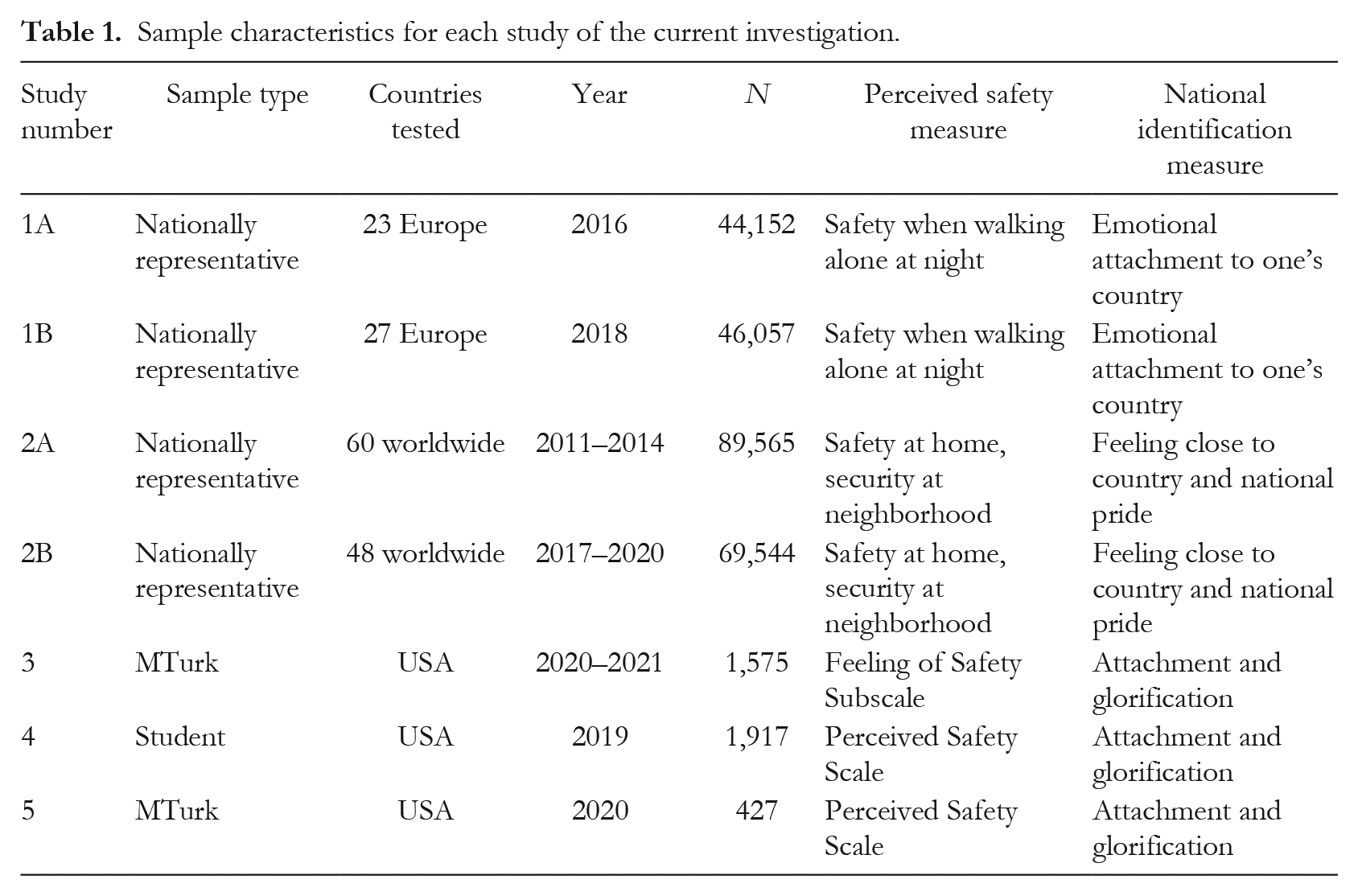
The current investigation sought to determine the nature of the relationship between perceived safety and national identification. Our approach was twofold: First, we utilized nationally representative data to examine how perceived safety can shape national identification across different countries and cultures (Studies 1A–1B, 2A–2B). We then examined this association using more in-depth measures of perceived safety that distinguish between different facets of safety, as well as more comprehensive measures of national identification that distinguish between a more constructive mode (i.e., attachment) and a more destructive process (i.e., glorification; Studies 3–5; Roccas et al., 2006). Lastly, we also sought to examine this link across time, which would allow us to determine whether there is a potential bidirectional relationship between perceived safety and national identification (Studies 3 and 5). Information relevant to the studies included in this investigation is presented in Table 1.
Sample characteristics for each study of the current investigation.
We hypothesized that greater perceived safety would be associated with increased national identification (H1). Specifically, we hypothesized that feeling safer in day-to-day life would relate to increased national attachment (H2), but not necessarily glorification (H3). Hypotheses for safety confidence and fear of crime were more exploratory. Our only expectation for these facets was that individuals who feel safer because of a heightened belief that they can protect themselves from danger (i.e., those higher in safety confidence) would identify with their ingroup more. However, they would identify in a way that also increases perceptions of threat from other groups (i.e., higher glorification). Even though we did not have an a priori hypothesis for fear of crime, since there is existing evidence highlighting that threat relates to greater ingroup identification, we also considered this possibility.
These hypotheses were not preregistered. No a priori power analysis was conducted. All relevant data and syntax files are available on the Open Science Framework (OSF; https://osf.io/5brga/?view_only=c34e427b6e864c8694e5ba548529d1b3).
Studies 1A–1B
The first set of studies utilized publicly available and nationally representative data from the latest round of data collection of the European Social Survey (ESS). In particular, the measures of interest were available in Rounds 8 and 9 of the ESS.
Methods
Participants
The data for this study were accessed via the European Social Survey (ESS) website. For the eighth round (2016; ESS ERIC, 2023a), a total of 44,152 participants (23,225 of which were female) from 23 different European countries were included in the analyses. The sample’s mean age was 49.15 years (SD = 18.59). For the ninth round (2018; ESS ERIC, 2023b), a total of 46,057 participants (24,722 of which were female) from 27 different European countries were included in the analyses. 2 The sample’s average age was 51.01 years (SD = 18.67).
Measures
The exact same measures were used across both rounds of data collection.
Perceived safety
A single-item measure captured perceived safety. This item was face-valid and measured how safe participants would feel walking alone after dark in their residential area (“How safe do you—or would you—feel walking alone in this area after dark”). Responses were given on a 4-point scale (1 = very safe, 4 = very unsafe). This measure was reverse-coded to capture greater perceived safety (Study 1A: M = 3.06, SD = 0.76; Study 1B: M = 3.07, SD = 0.77).
National attachment
A single-item measure was used to capture attachment to one’s nation. This item captured emotional attachment (“How emotionally attached do you feel to your country?”). Responses were given on an 11-point scale (0 = not at all emotionally attached, 10 = very emotionally attached; Study 1A: M = 7.79, SD = 2.20; Study 1B: M = 7.88, SD = 2.15).
Covariates
We included respondents’ reported gender, age, conservative political beliefs, satisfaction with life, and educational level in our analyses.
Results
Data analysis plan
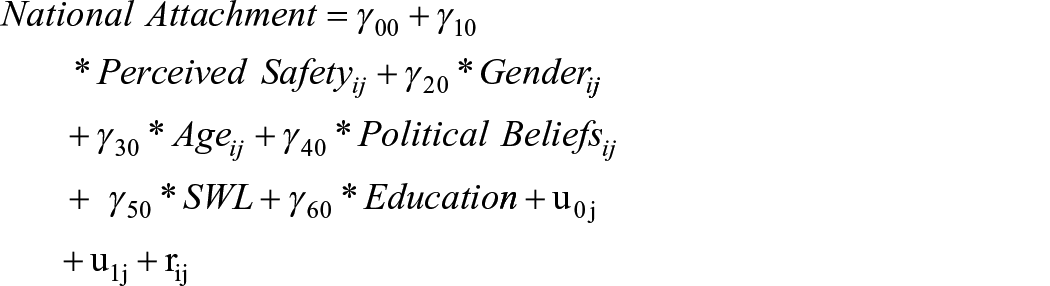
We computed multilevel models as individuals were nested in their respective country. All within-level variables except for gender (coded: 1 = male, −1 = female) were grand-mean-centered. Random slope for perceived safety were estimated, allowing them to vary randomly across nations. Thus, for an individual i nested in country j, the equation for each final model is:
Perceived safety and national attachment
Supporting our hypothesis, in the eighth round (Study 1A) of the ESS, individuals who felt safer in their lives also reported significantly higher levels of emotional attachment to their nation across the 23 countries (γ10 = .13, SE = 0.04, p < .001). This effect remained significant after accounting for all of the aforementioned covariates (γ10 = .15, SE = 0.04, p < .001). Similar results were observed for the ninth round of the ESS (Study 1B). Respondents who reported greater feelings of safety also reported higher levels of emotional attachment to their nation (γ10 = .11, SE = 0.00, p < .001), and this effect remained significant after controlling for all covariates (γ10 = .12, SE = 0.02, p < .001). 3 For a closer look at the final model, see Table 2.
Hierarchical linear models for the effect of individual levels of personal safety on national attachment a .
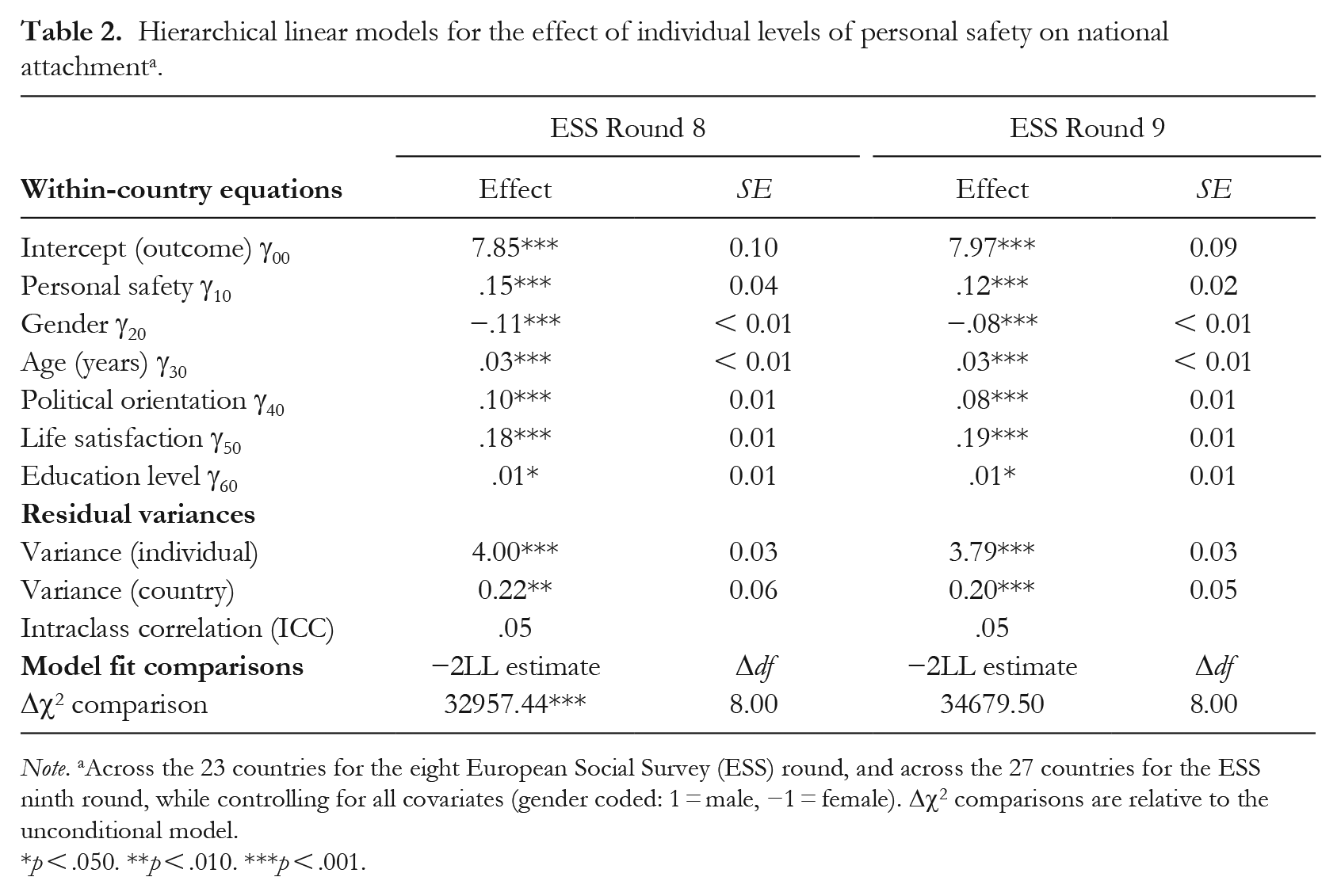
Note. aAcross the 23 countries for the eight European Social Survey (ESS) round, and across the 27 countries for the ESS ninth round, while controlling for all covariates (gender coded: 1 = male, −1 = female). Δχ2 comparisons are relative to the unconditional model.
p < .050. **p < .010. ***p < .001.
Discussion
Multilevel regressions based on nationally representative samples across 23 (Study 1A) and 27 (Study 1B) European countries supported our hypothesis. Across these countries, participants who reported feeling safer also reported being significantly more emotionally attached to their nation. Study 2 sought to expand on these findings by examining this phenomenon across a more diverse set of countries while also utilizing more comprehensive measures of perceived safety and national attachment.
Studies 2A–2B
The second pair of studies utilized publicly available and nationally representative data from the latest round of data collection of the World Values Survey (Waves 6 and 7; Inglehart et al., 2014). By doing so, we were able to examine national identification with two items (i.e., how close respondents felt to their country, and how proud they were of their nationality). Further, it allowed us to examine the association between perceived safety and ingroup identification across nations from other continents, and with the inclusion of two additional covariates (social class and income).
Methods
Participants
The data for this study were accessed via the World Values Survey website (Inglehart et al., 2022). For the sixth wave (2010–2014) a total of 89,565 participants (46,751 of which were female) from 60 different countries were included in the analyses. 4 The sample’s mean age was 41.94 years (SD = 16.55). For the seventh wave (2017–2020), a total of 69,544 participants (36,458 of which were female) from 48 different countries were included in the analyses. The sample’s average age was 42.58 years (SD = 16.27).
Measures
The exact same measures were used across both survey waves.
Perceived safety
Our predictor variable of perceptions of safety was operationalized similarly to recent investigations utilizing large publicly available datasets (Syropoulos, 2020). Thus, we averaged the two items (both of which were measured on a 1–4 scale) included in the survey, which pertained to perceptions of safety in one’s home (“In the past 12 months how often have you or your family felt unsafe from crime in your own home?”) and perceptions of security in one’s neighborhood (“How secure is your neighborhood?”). These items were moderately correlated with each other (Study 2A: r = .34, p < .001; Study 2B: r = .29, p < .001).
National attachment
We operationalized national attachment as the combined score of how close individuals felt to their country (one item: “I see myself as part of my country/nation”) and how proud they were of their nationality (one item: “How proud are you of your nationality?”). These items were displayed in different scales, and thus were standardized (M = 0.00, SD = 1.00) before we averaged them. These items were moderately correlated with each other (Study 2A: r = .34, p < .001; Study 2B: r = .32, p < .001).
Covariates
We included respondents’ reported gender, age, perceived social class, conservative political beliefs, satisfaction with life, reported annual income, and education level as covariates in our analyses.
Results
Data analysis plan
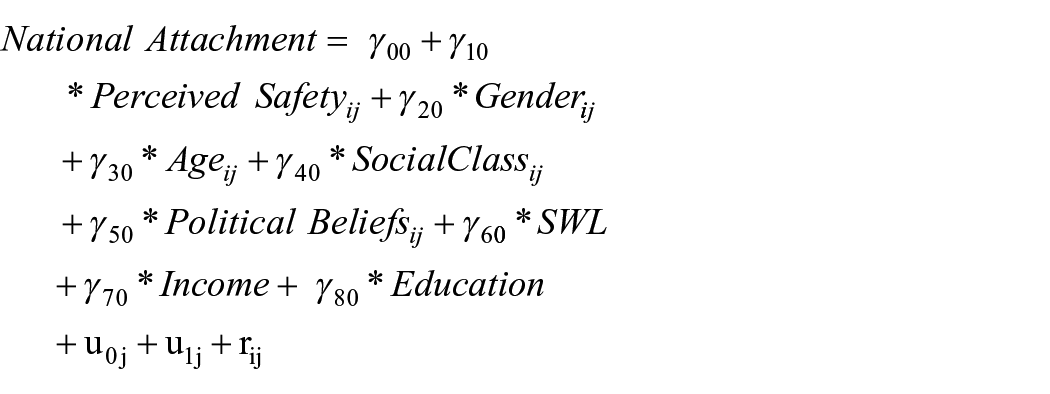
We computed multilevel models, as individuals were nested in their respective country. All within-level variables except for gender (coded: 1 = male, −1 = female) were grand-mean-centered. The random slope of perceived safety was estimated, allowing it to vary randomly across nations. Thus, for an individual i nested in country j, the equation for each final model is:
Perceived safety and national attachment
Supporting our hypothesis, in the sixth wave (Study 2A) of the WVS, individuals who felt safer in their lives also reported significantly higher levels of national attachment across the 60 countries (γ10 = .11, SE = 0.00, p < .001). This effect remained significant after accounting for all of the aforementioned covariates (γ10 = .09, SE = 0.00, p < .001).
Similar results were observed for the seventh wave of the WVS (Study 2B). Respondents who reported greater feelings of safety also reported higher levels of national attachment (γ10 = 0.11, SE = 0.004, p < .001), and this effect remained significant after controlling for all covariates (γ10 = 0.08, SE = 0.01, p < .001). 5 For a closer look at the final model, see Table 3.
Hierarchical linear models for the effect of individual levels of personal safety on national attachment a .
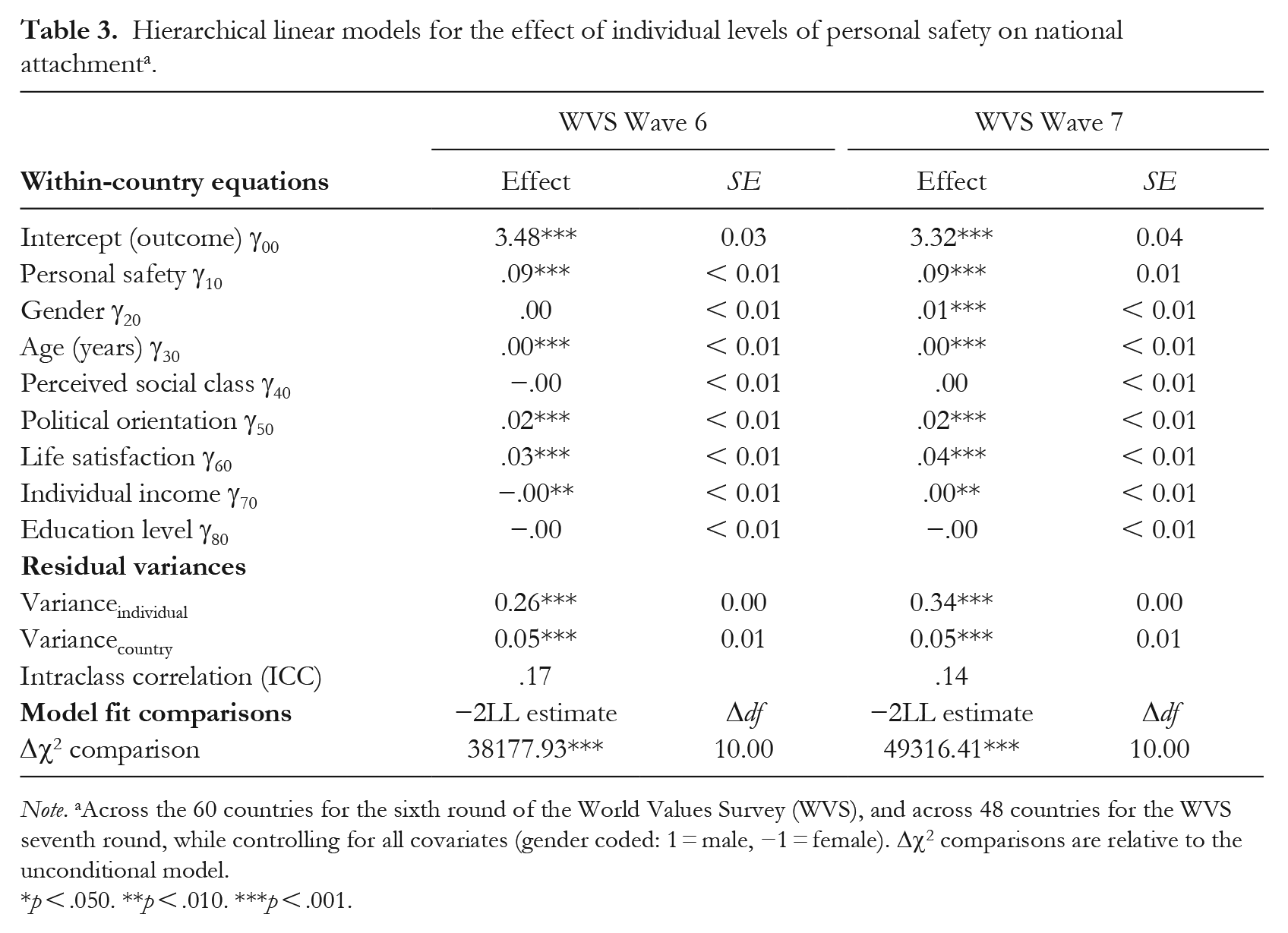
Note. aAcross the 60 countries for the sixth round of the World Values Survey (WVS), and across 48 countries for the WVS seventh round, while controlling for all covariates (gender coded: 1 = male, −1 = female). Δχ2 comparisons are relative to the unconditional model.
p < .050. **p < .010. ***p < .001.
Discussion
Utilizing nationally representative data from 70 different countries, and two separate data collection efforts, we found evidence that feeling safer in day-to-day life relates to greater attachment with one’s country. Having found consistent evidence for this association across multiple countries with more restricted measures, we sought to examine this effect with more direct measures of safety and national identification.
Study 3
Methods
Study 3 integrated four separate data collection efforts (Studies 3A–3D) from U.S. Americans. For each sample (Studies 3A–3D), we recruited subjects through Amazon’s Mechanical Turk (MTurk). Each survey lasted approximately 10–15 minutes. Despite evidence suggesting that, recently, the quality of data collected on MTurk has dropped (Chmielewski & Kucker, 2020), several investigations have found evidence suggesting that MTurk participants can provide reliable data for psychological research (Buhrmester et al., 2011; Chandler et al., 2020; Litman & Robinson, 2020; Rouse, 2015). Further, we also utilized CloudResearch, which allowed us to screen any potential bots/spam users, or respondents who would worsen the quality of our data (Litman et al., 2016). Since results are highly consistent for each study, to increase power, we combined the samples into a single larger sample. These studies were not preregistered. Thus, we only excluded participants who were not U.S. American, given that our outcome variables focused on identification with the United States. Correlations for each specific sample can be found in the supplementary material.
Participants
Study 3A
After excluding participants who were not U.S. American (n = 34), 301 participants remained. In this sample, 169 participants identified as male and 132 as female. In terms of race, 176 participants identified as White; 95 as Black, Indigenous, or people of color (BIPOC); and the rest gave an uncodable response. The average age was 37.35 years (SD = 10.39).
Study 3B
After excluding participants who were not U.S. American (n = 26), 280 participants remained. In this sample, 116 participants identified as male, 162 as female, and two as nonbinary or some other category. In terms of race, 205 participants identified as White, 61 as BIPOC, and the rest gave an uncodable response. The average age was 42.78 years (SD = 14.28).
Study 3C
After excluding participants who were not U.S. American (n = 24), 384 participants remained. In this sample, 134 participants identified as male, 247 as female, and three as nonbinary. In terms of race, 296 participants identified as White, 81 as BIPOC, and the rest gave an uncodable response. The average age was 42.27 years (SD = 14.64).
Study 3D
This study was longitudinal. Although it included three time points, each collected 1 month apart from each other, measures relevant to the investigation were collected only at T1 and T3. Thus, measurement between T1 and T3 had a 2-month gap. After excluding participants who were not U.S. American (n = 37), 610 participants remained. In this sample, 261 participants identified as male, 343 as female, and six as nonbinary. In terms of race, 456 participants identified as White, 143 as BIPOC, and the rest gave an uncodable response. The average age was 43.67 years (SD = 13.98).
At T3 (2 months later), 333 participants were retained. In this time point, 157 participants identified as male and 169 as female. In terms of race, 250 participants identified as White, 77 as BIPOC, and the rest gave an uncodable response. The average age was 46.73 years (SD = 13.63).
Materials
Across all three studies, the same measures were utilized. These measures are presented in detail below.
Perceived safety
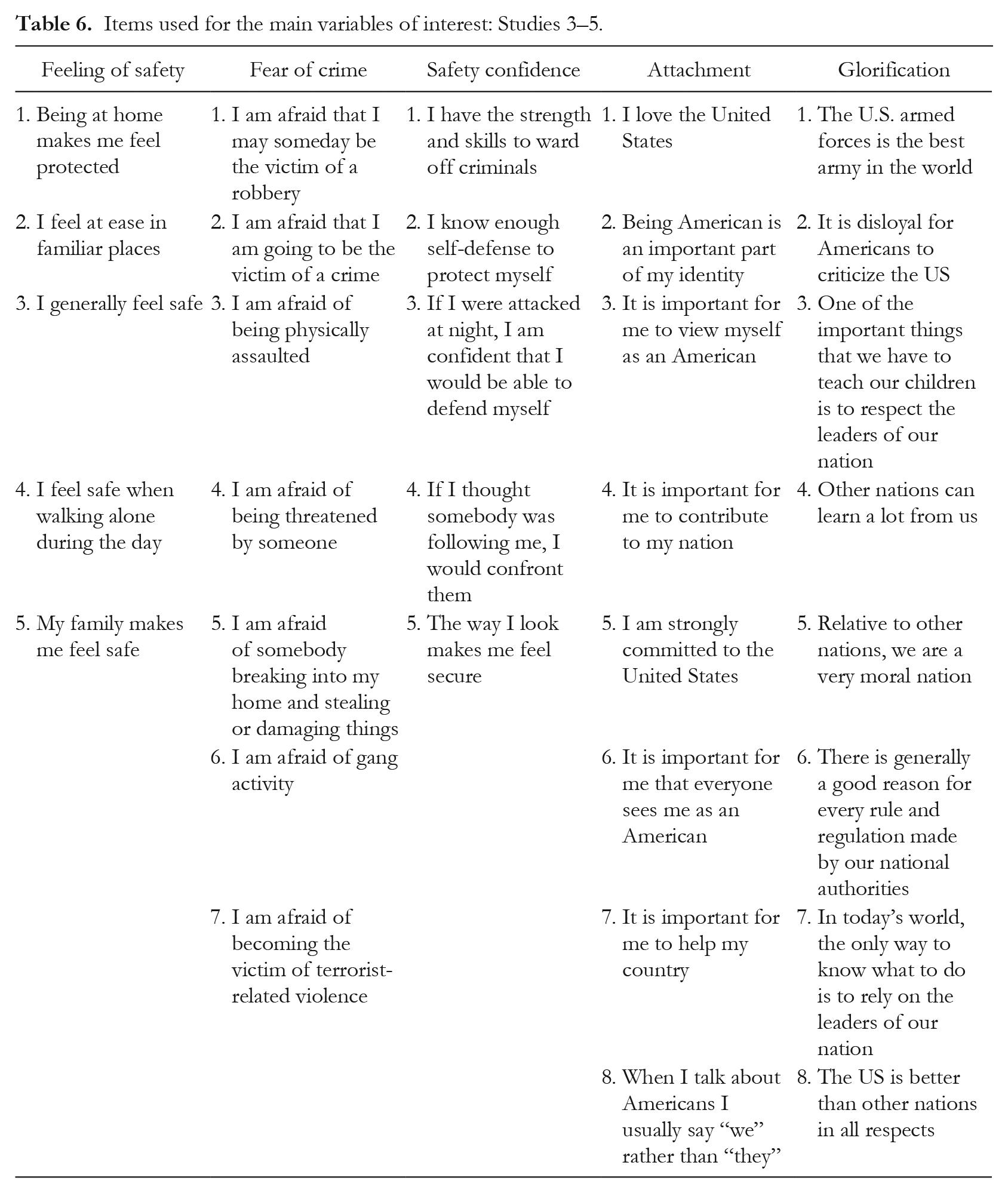
To capture individual differences in perceived safety, we used the Feeling of Safety Subscale from the Perceived Safety Scale (P-SAFE scale). The Feeling of Safety Subscale (five items; Study 3A: a = .88; Study 3B: a = .86; Study 3C: α = .81; Study 3DT1: α = .83; Study 3DT2: α = .84) captures how safe individuals feel in familiar environments where they tend to spend most of their time during their daily lives. The items for this subscale, together with other subscales of perceived safety (used in subsequent studies), are presented in Table 6.
National identification
We captured national identification utilizing the measures of attachment (eight items; Study 3A: a = .96; Study 3B: α = .96; Study 3C: α = .94; Study 3DT1: α = .95; Study 3DT2: α = .96) and glorification (eight items; Study 3A: α = .95; Study 3B: α = .93; Study 3C: α = .90; Study 3DT1: α = .91; Study 3DT2: α = .90; Roccas et al., 2006).
Results
Combining the four different studies produced a sample of 1,575 participants (nmale = 680, nfemale = 884; nBIPOC = 354, nWhite = 1,137; Mage = 41.96, SDage = 13.78). Below, we present findings for this sample both as bivariate correlations between all measures and as linear regressions with attachment and glorification covarying, as well as longitudinal analyses specifically for Study 3D.
Bivariate correlations
Feeling safe in day-to-day life was related to both increased attachment and glorification (see Table 4). Attachment and glorification were strongly correlated with each other, replicating past work (e.g., Li et al., 2023; Roccas et al., 2006).
Means, standard deviations, and bivariate correlations: Study 3.
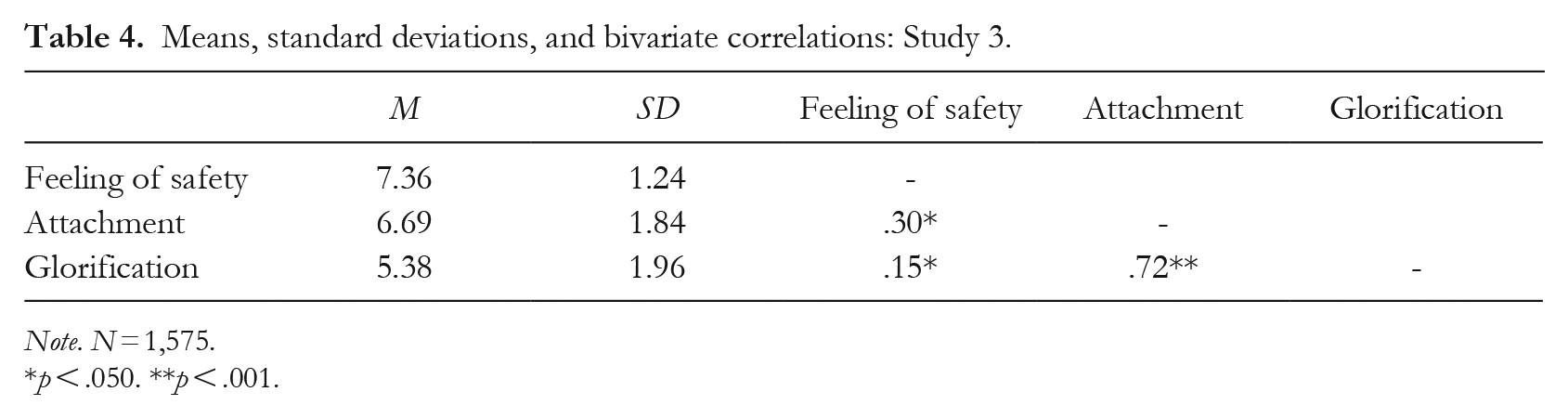
Note. N = 1,575.
p < .050. **p < .001.
Linear regressions
We regressed both attachment and glorification on feeling of safety simultaneously (thus accounting for their covariance) while controlling for age, gender, race, education, income, and political ideology. Results for these analyses are reported in Table 5. Overall, even after adjusting for covariates, feeling safe in day-to-day life related to increased attachment and glorification. Notably, the magnitude of association between feeling of safety and attachment was twice as large as that of feeling of safety and glorification.
Linear regressions for predicting attachment and glorification as parallel outcomes, controlling for demographic covariates.
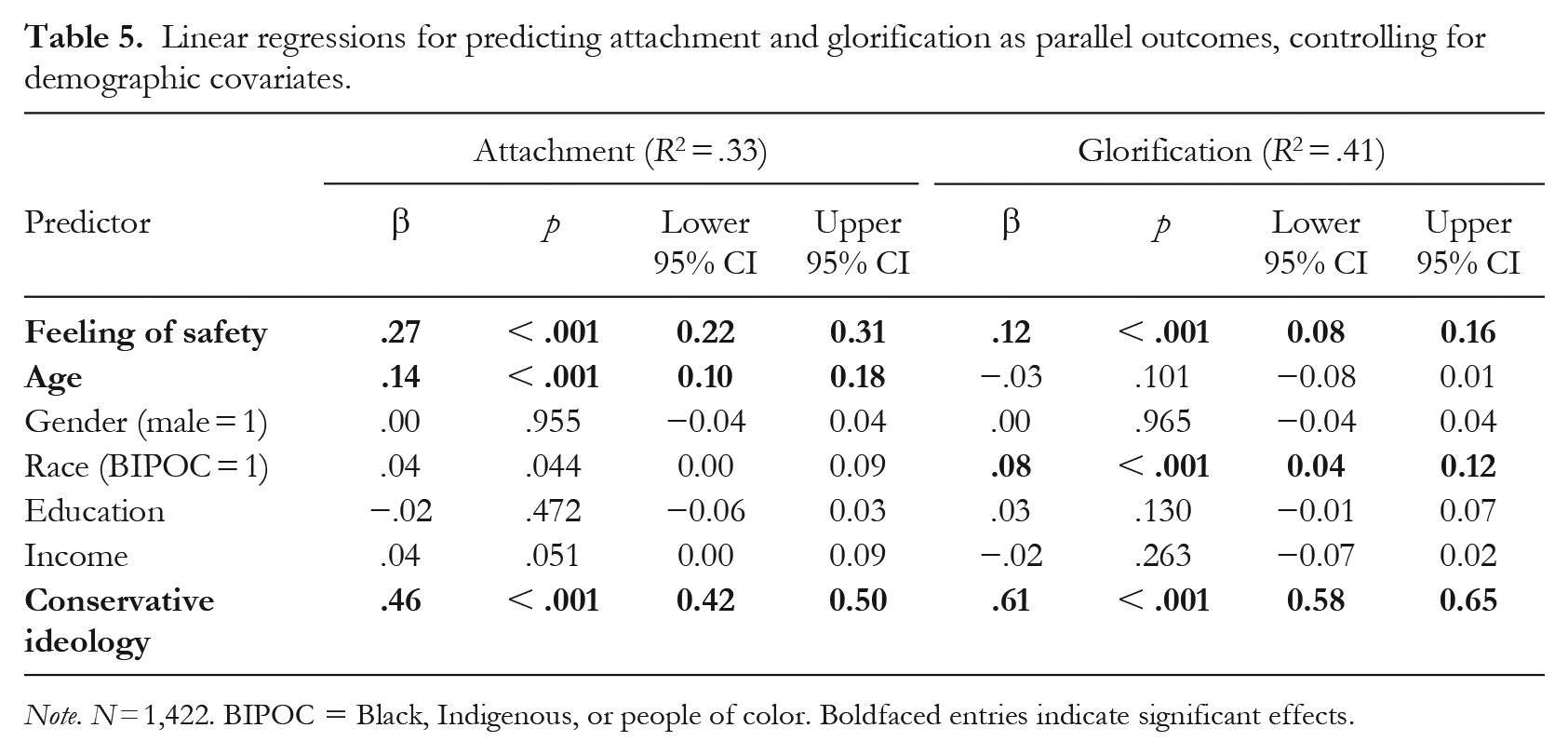
Note. N = 1,422. BIPOC = Black, Indigenous, or people of color. Boldfaced entries indicate significant effects.
Longitudinal associations
Feeling of safety related to increased attachment (r = .19, p < .001) 2 months later. However, no significant association with glorification was observed (r = .08, p = .158). When we regressed each measure at T3 on its own counterpart at T1 and included the effects of all the other measures in a cross-lagged model, we found that each measure predicted its own scores 2 months later, that attachment and glorification had cross-lagged effects, and that feeling of safety did not relate to either attachment or glorification at T3 (see Figure 1).
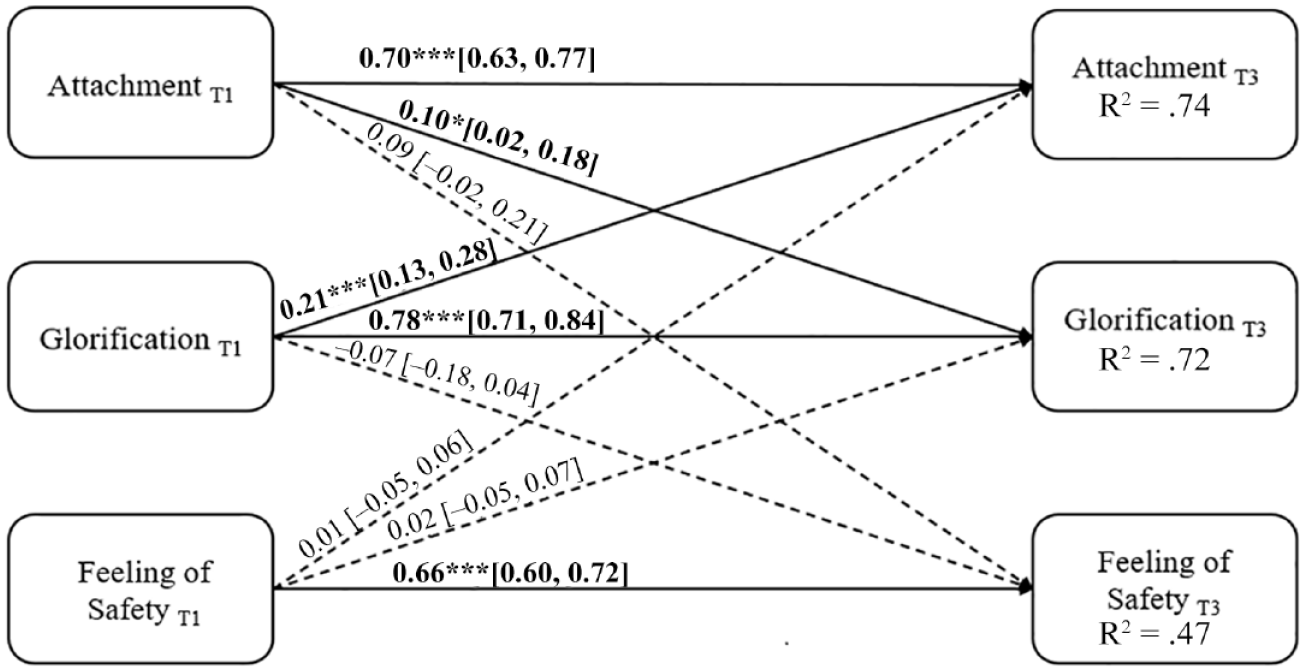
Cross-lagged model examining the association between attachment, glorification, and feelings of safety.
Discussion
In Study 3, a study which integrated four different samples resulting in a large (N = 1,575) sample, we examined the association between how safe people feel in day-to-day life and two forms of national identity. Our results suggest that feelings of safety relate to greater scores for attachment and glorification. However, the association between safety and ingroup attachment was significantly larger compared to the correlation with ingroup glorification. Further, results remained significant after adjusting for demographic covariates.
In one of the four samples, we were also able to test for longitudinal associations. Even though how safe participants felt related to their ingroup attachment scores 2 months later, when accounting for the associations with ingroup attachment at T1 and ingroup glorification at T1, feelings of safety did not relate to either form of national identification. This prevents us from establishing a more causal relationship. However, it is worth noting that ingroup attachment (r = .85, p < .001) and glorification (r = .84, p < .001) were very stable across time, and correlated with each other across time strongly as well (r = .63, p < .001). Thus, it might be worth reexamining these effects across a longer time span with more measurements to generate more precise associations.
Study 4
Study 4 combined three separate data collection efforts (Studies 4A–4C). Data collection was conducted in a large public university in the US. We examined our hypothesis with more comprehensive measures of perceived safety. In doing so, we were able to determine if this association is specific to certain aspects or types of safety. The two additional facets of perceived safety were: (a) fear of crime, which captures an individual’s fear of being the victim of specific types of crime, and (b) safety confidence, which measures how confident people feel in their ability to protect themselves (Syropoulos et al., 2024). Although our focus was to account for these different facets of perceived safety in our analyses, we expected that both fear of crime and safety confidence would be associated with greater glorification, as the former captures perceived threat (specifically from crime) and the latter relies on the perception of the self as capable of protecting oneself, both of which seem capable of projecting a more defensive form of national identification (i.e., glorification).
Methods
Participants
Study 4A
Undergraduate students from a large public university (N = 1,044) were recruited via SONA (a recruitment software for psychological studies) during the spring semester of 2019. They completed a long survey at the beginning of the semester in exchange for research credit. The sample was primarily female (n = 820) and White (n = 684). The average age was 19.76 years (SD = 1.45).
Study 4B
Undergraduate students from a large public university (N = 735) were recruited at the beginning of the spring semester of 2020 via SONA. They completed a long survey at the beginning of the semester in exchange for research credit. The sample was primarily female (n = 564) and White (n = 502). The average age was 19.62 years (SD = 1.30).
Study 4C
Undergraduate students from a large public university (N = 182) were recruited online via SONA to participate in a short online survey during the spring semester of 2020. In this study, 23 participants were not from the US, and were thus excluded from the study. Once again, the sample was primarily female (n = 131) and White (n = 119). The average age was 19.85 years (SD = 1.35).
Materials
Across all three studies, the same measures were utilized. These measures are presented in detail below.
Perceived safety
To capture individual differences in perceived safety, we used the multidimensional Perceived Safety Scale (P-SAFE scale). Previous studies have shown that this measure has good factor structure, reliability, and validity (Syropoulos et al., 2024). This measure includes three separate factors: the first is feeling of safety (five items; Study 4A: α = .80; Study 4B: α = .78; Study 4C: α = .77) measured in the same manner as in Studies 3A–3C. The second facet was fear of crime (five items; Study 4A: α = .90; Study 4B: α = .92; Study 4C: α = .94), which captures people’s fear of being victimized by different crimes. 6 The last facet was safety confidence (five items; Study 4A: α = .86; Study 4B: α = .84; Study 4C: α = .86), which taps into individuals’ ability to protect themselves and remain safe when threatened.
National identification
We captured national identification by utilizing the same measures of attachment (eight items; Study 4A: α = .90; Study 4B: α = .91; Study 4C: α = .92) and glorification (eight items; Study 4A: α = .86; Study 4B: α = .89; Study 4C: α = .91) as in Studies 3A–3D. 7 The items for all scales are listed in Table 6.
Items used for the main variables of interest: Studies 3–5.
Results
Combining the three different studies produced a sample of 1,917 participants (nmale = 393, nfemale = 1,506; nBIPOC = 554, nWhite = 1,303; Mage = 19.71, SDage = 1.39). Below, we present findings for this sample both as bivariate correlations between all measures and as linear regressions with attachment and glorification covarying.
Bivariate correlations
As seen in Table 7, replicating the results of Study 3, feeling of safety related to increased attachment and had a very small (and possibly negligible) association with glorification. Fear of crime did not relate to any type of national identification, and safety confidence had a weak positive association with both ingroup attachment and glorification.
Means, standard deviations, and bivariate correlations: Study 4.
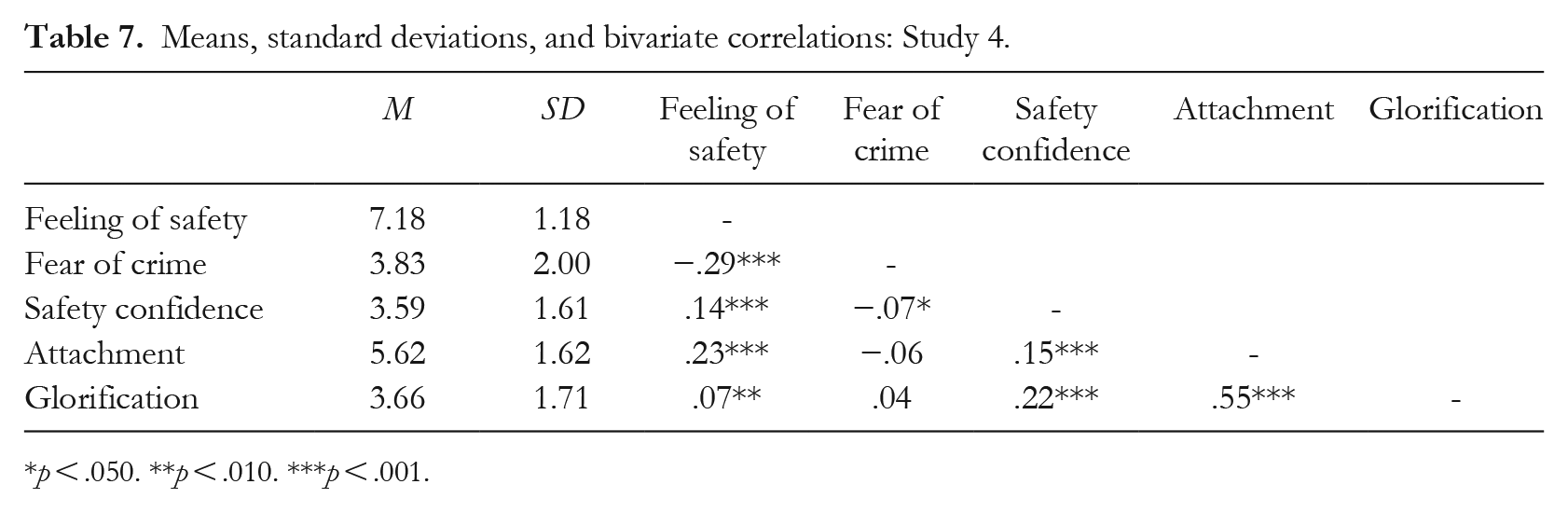
p < .050. **p < .010. ***p < .001.
Linear regressions
Controlling for age, gender, and race, feeling of safety related to increased ingroup attachment and glorification (see Table 8). Notably, the association with attachment was 3 times as large as that with glorification. Fear of crime had a weak positive association with ingroup glorification, and safety confidence related to both ingroup attachment and glorification. In this case, the association with glorification was more than twice as large as that with attachment.
Linear regressions for predicting attachment and glorification as parallel outcomes, controlling for demographic covariates.
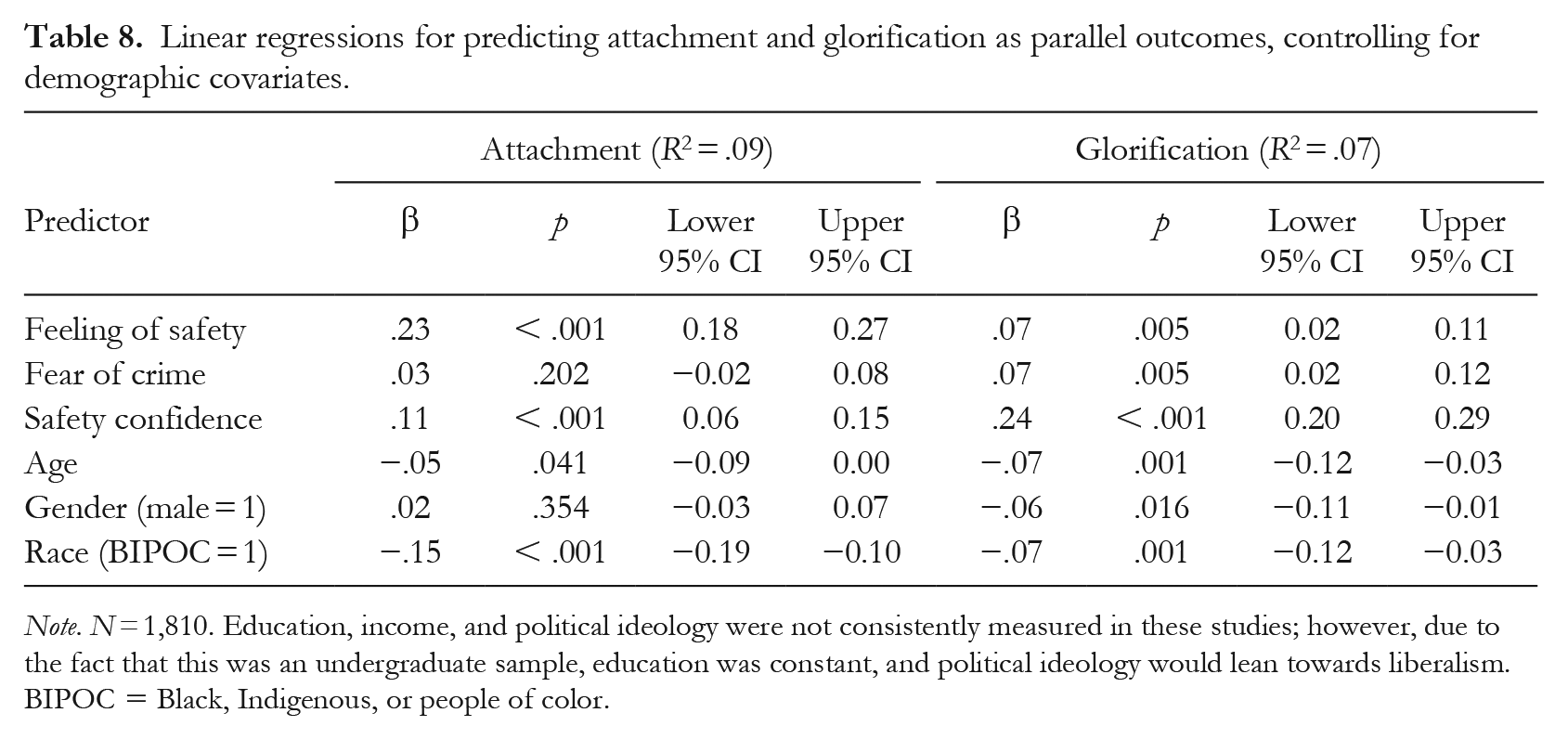
Note. N = 1,810. Education, income, and political ideology were not consistently measured in these studies; however, due to the fact that this was an undergraduate sample, education was constant, and political ideology would lean towards liberalism. BIPOC = Black, Indigenous, or people of color.
Discussion
In a large sample of undergraduate students, our hypothesis that higher levels of safety in people’s lives would relate to greater group identification was confirmed. Specifically, how safe people feel in their daily life related to ingroup attachment (after controlling for glorification) significantly more than to ingroup glorification. Conversely, how confident people felt in their ability to protect themselves related significantly more to ingroup glorification than to attachment. Fear of crime did not appear to explain meaningful variance in either form of national identification. Our final study aimed to reexamine this hypothesis across time.
Study 5
Our final study sought to reexamine the longitudinal association between perceived safety and national identification, and do so while considering all facets of perceived safety.
Methods
Participants
Data collection was conducted through CloudResearch. At T1 (May 2020), we recruited 452 participants on MTurk. From this original sample, 35 participants were excluded because they were not U.S. American. In this sample, 230 of the respondents were male, 183 were female, and one reported being other/nonbinary. In terms of race, 296 reported being White, 103 were BIPOC, and the rest gave an uncodable response. The average age was M = 37.70 years (SD = 12.70).
For T2 (collected during the first 2 weeks of June 2020), 272 participants completed the survey. In the final sample, 146 participants were male, 135 were female, and one reported being other/nonbinary. In terms of race, 204 were White, 50 were BIPOC, and 14 provided uncodable responses. In terms of age, the sample was on average M = 38.64 years (SD = 12.86).
Measures
The measures of perceived safety and national identification were identical to those used in Studies 3–4. Across both time points, reliability was high (all α > .84).
Results
Bivariate correlations
Replicating the results of Studies 3 and 4 (see Table 9), feeling of safety related to increased ingroup attachment and glorification. Safety confidence and fear of crime also related to both modes of national identification.
Bivariate correlations for T1 (N = 416) and T2 (N = 282).
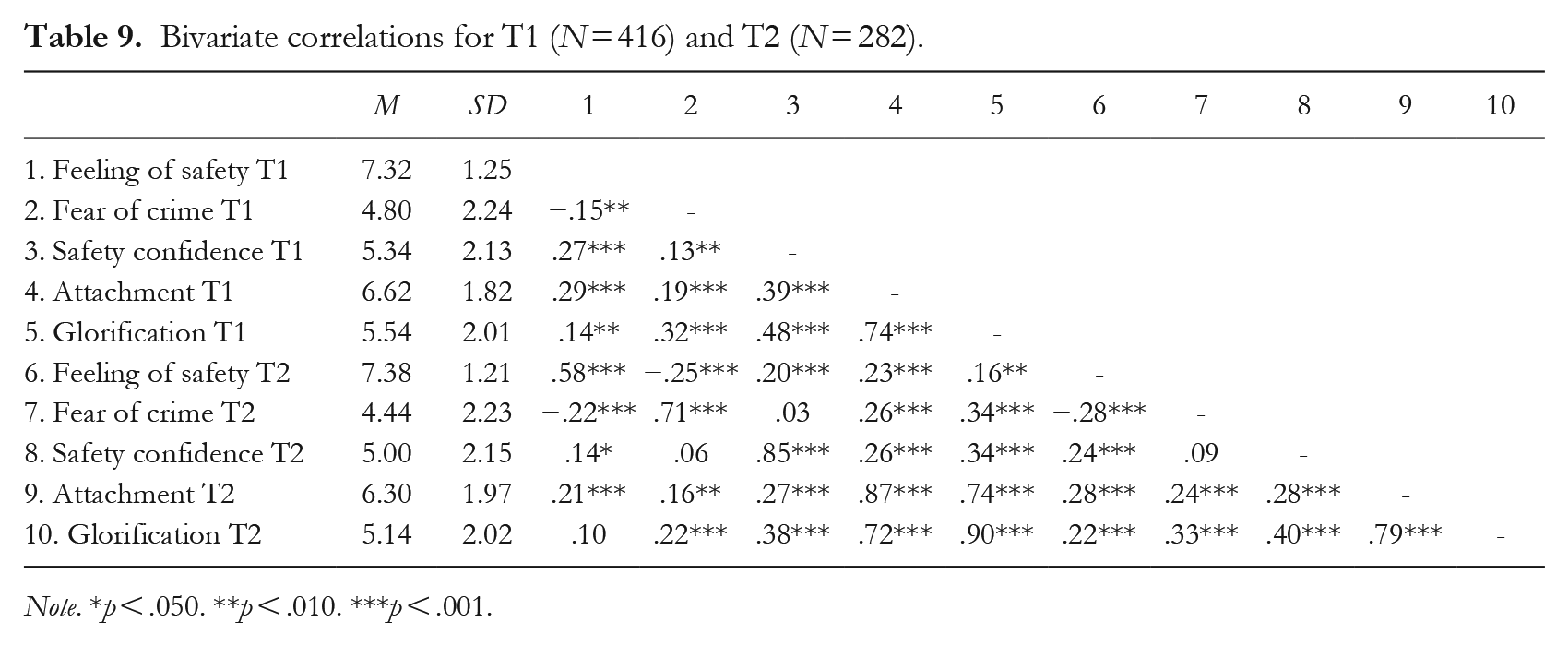
Note. *p < .050. **p < .010. ***p < .001.
Linear regressions
Even after controlling for several demographic indicators (see Table 10), feeling of safety related to increased ingroup attachment, but not glorification. Fear of crime and safety confidence related to both increased ingroup attachment and glorification.
Linear regressions for predicting attachment and glorification as parallel outcomes, controlling for demographic covariates.
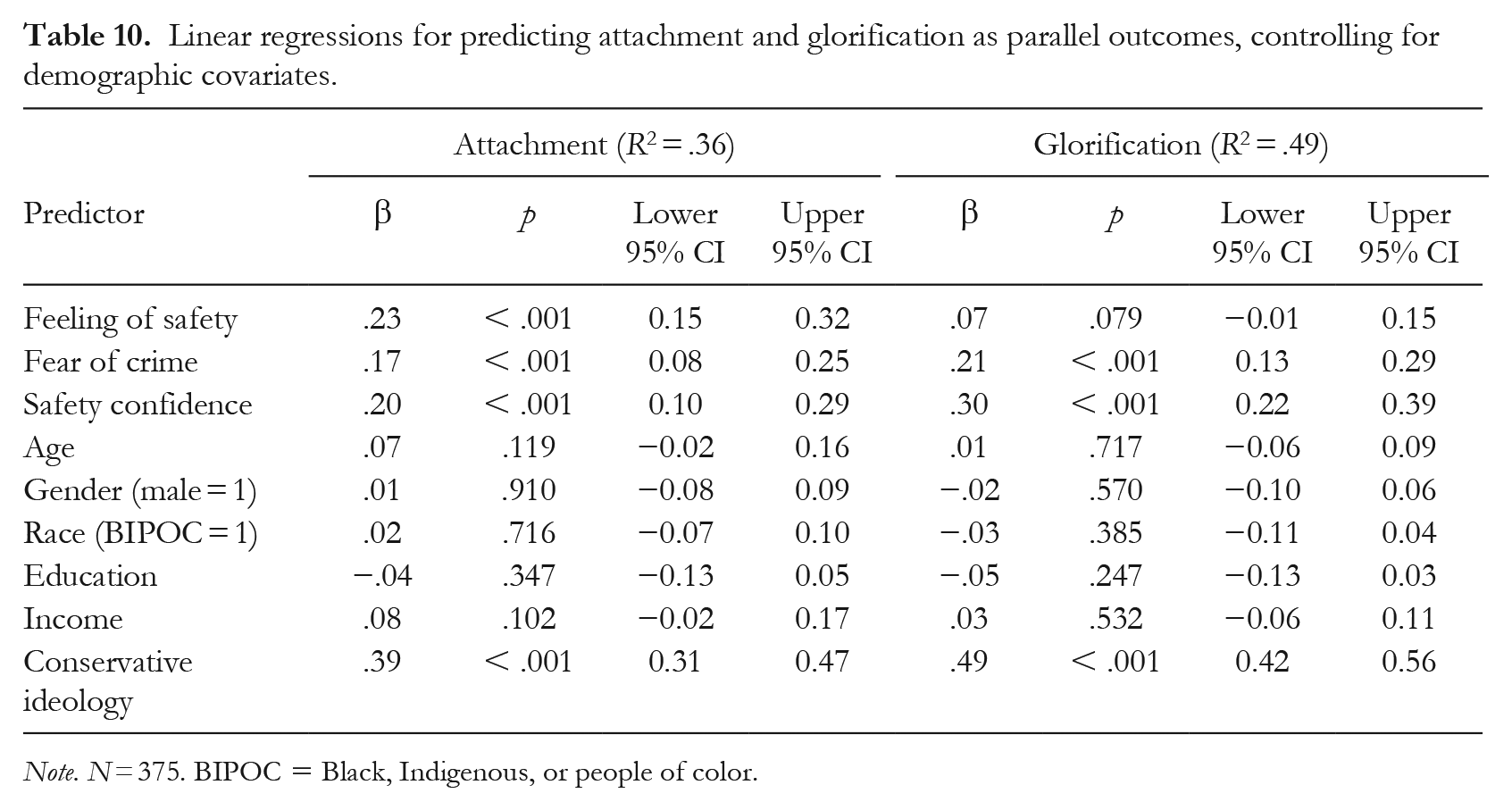
Note. N = 375. BIPOC = Black, Indigenous, or people of color.
Longitudinal associations
Results from correlations between scores at T1 and T2 suggest that all constructs were relatively stable across 1 month, with ingroup attachment and glorification being the most stable (rs ⩾ .87, ps < .001). Feeling of safety, fear of crime, and safety confidence related to greater ingroup attachment a month later. Fear of crime and safety confidence also related to increased ingroup glorification a month later.
Testing these associations in a more robust manner by accounting for lagged correlations showed that safety confidence related to increased glorification a month later, that attachment and glorification had positive effects on each other, and that glorification related to increased fear of crime, controlling for all other constructs (see Figure 2). With regard to the facets of perceived safety, fear of crime and feeling of safety negatively related to each other a month later, and, contrary to our expectation, feeling of safety related negatively to safety confidence scores a month later. All nonsignificant associations are reported in the supplemental material.
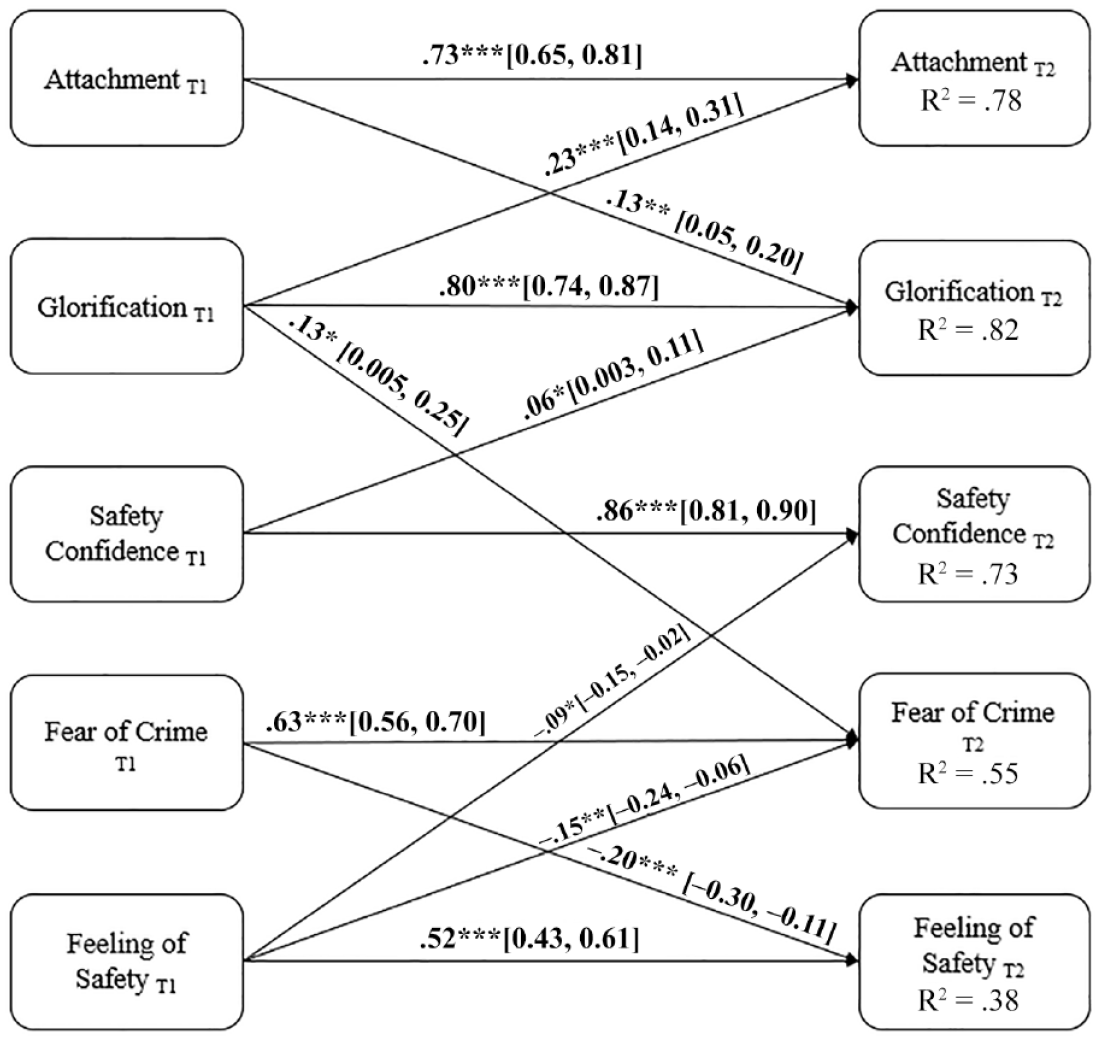
Cross-lagged model examining the association between attachment, glorification, and the facets of perceived safety.
Discussion
In our final study, we replicated the results observed in Study 5, but with a relatively more diverse sample, in a shorter longitudinal design. Our results suggest that the link between perceived safety and national identification could be reciprocal and bidirectional in its nature.
Internal Meta-Analysis
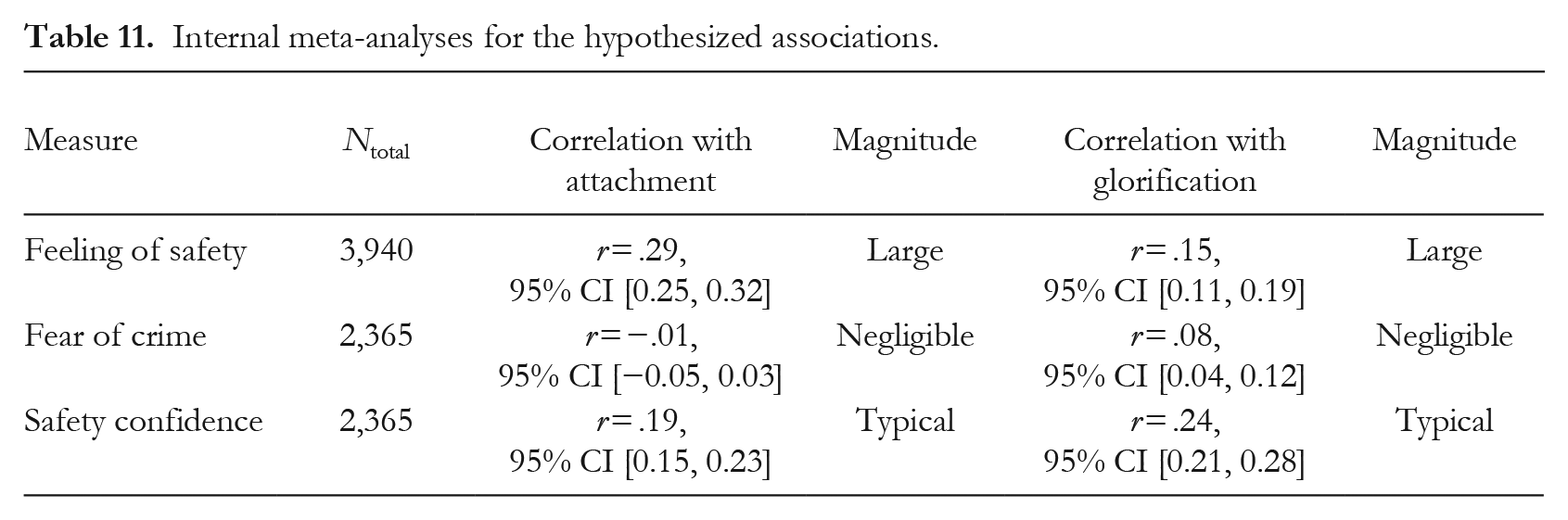
To provide the most accurate estimate of the association between the different facets of perceived safety and both modes of national identity, we conducted an internal meta-analysis of each association. We used the methodology recommended by Goh et al. (2016). The results across all studies (i.e., Studies 3–5) are presented in Table 11. These results are interpreted based on recommendations from Gignac and Szodorai (2016), who recommend that, in the absence of prior recommendations, correlations of .10, .20, and .30 could be interpreted as relatively small, typical, and relatively large, respectively. Overall, feeling of safety had a relatively large and positive correlation with ingroup attachment, and a small correlation with glorification; safety confidence had an inverse pattern of results; and fear of crime had negligible correlations with either mode of national identification.
Internal meta-analyses for the hypothesized associations.
General Discussion
Across student, crowdsourced, and nationally representative samples, we found support for our hypothesis that higher levels of perceived safety relate to greater national identification. In detail, our first four studies established this association across a large number of countries (in Europe and other continents), utilizing nationally representative data from four separate rounds of data collection. The findings from these studies also suggested that this association is significant when controlling for relevant demographic covariates in each of these samples. However, these four studies did not allow us to examine more specific facets of perceived safety or specific forms of national identification that differentiate between critical and blind/submissive identification.
Studies 3–5 rectified the lack of specificity in the measures included in the international datasets, relying on MTurk (Studies 3 and 5), and undergraduate student (Study 4) samples. Importantly, these studies were integrative analyses of several datasets, allowing access to large, and thus highly powered, samples to test the hypothesized association. Meta-analyses across all studies (Studies 3–5) suggested that everyday feelings of safety relate to greater national ingroup attachment and glorification. Importantly, the association with ingroup attachment was almost twice as large as that for glorification, supporting our hypothesis. Fear of crime, alternatively defined as perceived threat from crime, had a nonsignificant association with ingroup attachment, and a negligible positive association with glorification. Although we had a nonspecific a priori hypothesis about this facet of perceived safety, given its similarity to perceived threat, we were expecting a positive association with ingroup glorification. For safety confidence, we expected that, since this construct reflects a combination of increased safety and increased defensiveness, it would relate to both modalities of national identification positively, and potentially more strongly to glorification. We did indeed find positive associations with both modes of national identification, although they did not differ in magnitude.
These findings, however, are qualified by three caveats. First, there was a discrepancy between the student and general population samples obtained via MTurk. For the student samples, the correlation between fear of crime and glorification was much smaller than that for the MTurk samples. Second, despite this difference, for both studies (as well as for feeling of safety, specifically in Study 3), even after controlling for demographic indicators (including political conservatism, a strong correlate of national identification), these associations remained consistently significant.
Perhaps the most important note is that when we examined these findings across time, we did not find evidence for a relationship between perceived safety and national identification, possibly because of the very strong correlation between national attachment and glorification. The only significant association was a small positive relationship between safety confidence and ingroup glorification (in line with our hypothesis). Crucially, we also did not find an effect of national identification on perceived safety. We offer two considerations for this finding. The first is that the two modes of national identification were very stable across time, and thus more measurements across larger periods of time would be necessary in order to examine whether perceived safety predicts scores on these constructs even after accounting for their lagged counterparts. The second is that, compared to our correlational and regression analyses, these analyses relied on smaller sample sizes and could be potentially underpowered, a notable limitation of the present investigation. Regardless, both merit further examination, and we recommend that future research examines these relationships across larger time spans with more measurements per participant.
At a theoretical level, these studies constitute one of the first examples of how individual differences in everyday feelings of safety can influence intergroup attitudes by shaping the way by which individuals identify with their country. In this manner, the present work aligns with other emerging investigations that utilize dispositional traits relevant to safety (e.g., attachment style) to examine individual differences in national identification (Marchlewska et al., 2024). As it stands, these findings are correlational. As such, we cannot make any arguments about causality. However, it is important to acknowledge that, contrary to existing research focusing on the causal relationship between threat perceptions and national identification, our study provides correlational evidence for the opposite mechanism, safety perceptions, and does so consistently across nations (Studies 1–2) and with more comprehensive measures of safety and national identification (Studies 3–5).
Moreover, these findings offer theoretical support for social safety theory (SST; Slavich, 2020), which suggests that an individual’s environment, often referred to as a “safety schema” in the context of SST, can have an impact on various aspects of one’s life across different systems or safety schemas. Consequently, it is plausible that our personal sense of safety influences our perceptions of the safety of the groups we identify with. In the present research, associations supporting a dynamic spillover across individual- and group-level schemas can be observed in the relationship between feeling of safety and attachment, as well as between safety confidence and glorification. Specifically, feeling safe without being defensive or hypervigilant was found to be linked to critical national identification, while safety coupled with defensiveness was found to be associated with more submissive forms of national identification.
Our research additionally builds upon existing lines of inquiry that underscore the significance of attachment-related processes in shaping intergroup attitudes (e.g., Marchlewska et al., 2024). Although we can only speculate about this possibility since attachment style was not assessed in our present investigation, it is plausible that a heightened sense of safety in day-to-day life might serve as a mechanism that could help explain why individuals with greater attachment security tend to exhibit higher levels of identification with, as well as criticism of, their ingroup. If such evidence were to emerge, similar to existing research that manipulated attachment and found reductions in prejudice (e.g., Saleem et al., 2015), we could potentially discover effects mediated by increased feelings of safety leading to critical national identification. In addition to this much-needed evidence, future research should also explore the potential for perceptions of safety to account for individual differences in intergroup attitudes, such as prejudice and trust.
It is crucial to note that our findings do not necessarily contradict the extensive body of research suggesting a connection between perceived threat and authoritarianism, as well as more extreme forms of national identification, even if recent findings have raised questions about the strength of these associations (Clifton & Kerry, 2023). Instead, our argument centers around the idea that safety and threat should not be viewed as mere opposites, but rather distinct constructs in their own right. Much like the theory of negative and positive peace emphasizes the need to distinguish between these two forms of peace at the national or group level (Galtung, 1969, 1996), we also contend that the absence of threat does not automatically equate to the presence of safety.
Limitations
A few key limitations should be acknowledged when interpreting these findings. The first pertains to the fact that the samples we employed in Studies 3–5 were primarily American and White. Thus, it is possible that the association between perceived safety and national identification could differ for BIPOC. This is something that future investigations should explore in greater detail, as extant research suggests that BIPOC face a greater risk of victimization (e.g., Violence Policy Center, 2019), particularly at the hands of the government. Further, it is also possible that there are differences in national identification based on race, although no such finding has been reported with regard to attachment and glorification in the United States to date.
A second limitation pertains to some inconsistencies in our results across samples. As far as bivariate results are concerned, our meta-analysis of all studies employing comprehensive measures of safety and national identity offers clear-cut evidence for a positive association between feeling safe in day-to-day life and national attachment. In fact, feelings of safety seem to explain considerable variation (R2 = .08) in this outcome, on par with effect sizes associated with other well-established predictors of national ingroup perceptions, including belief in a dangerous world (R2 = .14; Perry et al., 2013), conservation values (R2 = .10; Roccas et al., 2010), openness to change (R2 = .11; Roccas et al., 2010), self-uncertainty (R2 = .07; Choi & Hogg, 2020), and social dominance orientation (SDO) and right-wing authoritarianism (RWA; R2 = .07; Osborne et al., 2017). To a lesser extent, feeling safe in day-to-day life exhibited associations with national glorification. Conversely, the opposite pattern was observed for safety confidence. However, when we investigated these associations using a longitudinal design, we found that almost no additional variance in national identification was accounted for by any aspect of perceived safety. Given the relatively short intervals between our longitudinal assessments, it becomes essential for future research to revisit whether perceived safety can explain additional variance in national identification beyond its lagged effect.
Despite the absence of conclusive evidence supporting a longitudinal bidirectional association, we speculate that it is conceivable for safety to exert an influence on national identification and, conversely, for national identification to impact one’s personal sense of safety in everyday life. This could potentially give rise to a reciprocal effect wherein individuals may feel safer if they possess a higher feeling of safety coupled with national attachment or, conversely, more threatened if they experience increased fear of crime and safety confidence coupled with glorification of their national ingroup. To strengthen the empirical support for these findings, it is imperative to conduct experimental investigations that actively manipulate individuals’ feelings of safety. However, it is worth noting that, on average, people tend to feel quite safe in their day-to-day lives. Consequently, manipulating this construct experimentally may present challenges, given the high levels of perceived safety at baseline.
Conclusion
The present research underscores the importance of scientific inquiry into perceptions of safety. Better understanding the factors that contribute to how safe individuals feel, as well as the downstream consequences of feeling safe, can have significant implications for both individual-level (e.g., personal well-being) and group-level (e.g., conflict resolution) outcomes alike. Specifically, feeling a sense of safety may serve as a protective mechanism against perceived threats emanating from sources at both the individual and intergroup levels. Ultimately, we also view the present research as a valuable illustration of how theoretical approaches used to study societal peace can be adapted to other related phenomena to enhance our understanding of intergroup processes. We believe that harnessing theories about the nature of peace can be particularly instrumental in comprehending when and why experiences relevant to peace—such as the focus of this investigation on perceived safety—may help to promote constructive and critical forms of national identification.
Supplemental Material
sj-docx-1-gpi-10.1177_13684302241249057 – Supplemental material for Increased perceived safety in day-to-day life relates to critical national identification
Supplemental material, sj-docx-1-gpi-10.1177_13684302241249057 for Increased perceived safety in day-to-day life relates to critical national identification by Stylianos Syropoulos, Kyle Fiore Law and Bernhard Leidner in Group Processes & Intergroup Relations
Footnotes
Declaration of Conflicting Interests
The author(s) declared no potential conflicts of interest with respect to the research, authorship, and/or publication of this article.
Funding
The author(s) received no financial support for the research, authorship, and/or publication of this article.

Supplemental Material
Supplemental material for this article is available online.
Notes
References
Supplementary Material
Please find the following supplemental material available below.
For Open Access articles published under a Creative Commons License, all supplemental material carries the same license as the article it is associated with.
For non-Open Access articles published, all supplemental material carries a non-exclusive license, and permission requests for re-use of supplemental material or any part of supplemental material shall be sent directly to the copyright owner as specified in the copyright notice associated with the article.
