







Abstract
Social mindfulness (SoMi), defined as demonstrating goodwill with minimal resources, is a central component of prosociality. Although sport participation has been associated with changes in prosocial behavior, its influence on intergroup bias in SoMi remains unclear. This research used four studies (N = 463) with adapted SoMi and minimal group paradigms to explore this issue in adolescents. Studies 1 and 2 demonstrated that sport participation significantly reduced intergroup bias, particularly by increasing SoMi behaviors toward outgroup members, with variations across different sport contexts. In Study 3, the roles of cooperation and competition within sport participation were examined separately, revealing that cooperation heightened ingroup favoritism while competition increased outgroup derogation. Study 4 examined these effects in non-sport contexts, revealing that competition fostered both ingroup favoritism and outgroup derogation, whereas cooperation did not significantly affect overall bias but alleviated outgroup derogation. These findings suggest that sport participation can substantially influence intergroup bias in SoMi through sport-specific mechanisms of cooperation and competition.
Introduction
Prosocial behaviors are defined as positive social actions intended to enhance others’ well-being (Pfattheicher et al., 2022; Van der Graaff et al., 2018). These behaviors are often investigated through economic games, such as the dictator game, ultimatum game, and trust game (Imuta et al., 2016; Thielmann et al., 2020; Van Doesum et al., 2013). Social mindfulness (SoMi), a key aspect of prosocial behavior, predicts and explains other-regarding attitudes while uniquely enhancing our understanding of prosocial phenomena (Van Doesum et al., 2025), involving minimal material costs and consideration of others’ welfare in uncertain situations (Lemmers-Jansen et al., 2018; Van Doesum et al., 2025; Van Doesum, Murphy et al., 2021; Van Doesum, Van Lange et al., 2021; Van Lange & Van Doesum, 2015). Specifically, SoMi encompasses thoughtful actions that honor others’ autonomy in interdependent settings, while still taking their needs into account (Kil et al., 2021; Van Doesum et al., 2013; Van Lange & Van Doesum, 2015).
Intergroup bias, a systematic tendency to favor members of one’s own group (ingroup) over other groups (outgroups), is frequently observed in prosocial behaviors (Efferson et al., 2024; Toppe et al., 2020; Yu et al., 2016). Nationality-based ingroup favoritism, for instance, leads to increased prosocial behavior toward compatriots (Fiedler et al., 2018), and has been documented at the group level in Papua New Guinea, where horticultural groups demonstrated more cooperation within their own group (Efferson et al., 2024). Notably, even brief categorization into groups can prompt resource allocation to the ingroup members (Tajfel et al., 1971). This bias often includes both ingroup favoritism and outgroup derogation (Hewstone et al., 2002). However, negative attitudes toward outgroups do not always align with positive attitudes toward ingroups (Brewer, 1999; Susskind & Hodges, 2007), and outgroup derogation does not necessarily stem directly from ingroup favoritism (Gardham & Brown, 2001). For instance, children from racially mixed schools may develop derogatory attitudes toward outgroups without displaying particular favoritism toward their own group (Aboud, 2003). Additionally, outgroup derogation generally emerges later than ingroup favoritism in children and is seen as a negative behavior (Inguglia & Musso, 2013). These findings suggest that ingroup favoritism and outgroup derogation can occur independently.
Although intergroup bias has been examined in the context of prosocial behavior, researches on whether it manifests in SoMi, both within established and temporary groups, remains limited. Van Doesum et al. (2016) conducted a cross-sectional study, which revealed that, in the general population, SoMi is lower among foes than among friends and strangers. Among adolescent soccer players, SoMi is lower toward opponents but higher among teammates, suggesting the need for experimental validation. In a recent experimental study, Tao et al. (2024) employed the minimal group paradigm alongside a basketball game and observed higher SoMi directed toward teammates than opponents. However, that study employed a between-subjects design, whereas recent researches suggest that a within-subjects design may be more appropriate (Arbel et al., 2022; Kievit et al., 2013). Additionally, it did not examine the combined or distinct effects of sport participation, cooperation, and competition, which warrants further investigation.
Examining intergroup bias in SoMi and exploring ways to mitigate it holds both theoretical and practical significance. In daily interactions, low-cost, considerate behaviors are common, such as being mindful of others’ feelings to avoid discomfort and respecting differing opinions instead of focusing solely on one’s own preferences. Quantifying attitudes and behaviors in intergroup interactions provides valuable insights into social strategies. Reducing bias, particularly hostility and derogation toward outgroups, can enhance intergroup cohesion and civility.
Sport participation refers to highly structured, regulated, and regularly trained team-based competitions and physical activities (Sabiston et al., 2019). It may influence intergroup bias, though findings remain mixed. Schulenkorf and Sherry (2021) propose that sport can enhance intergroup relations by fostering friendships and inclusive identities, providing “moments of togetherness” for individuals from diverse backgrounds (Schulenkorf, 2010). For example, repeated interactions between NBA coaches and players have been shown to reduce racial bias, underscoring the transformative potential of shared sport experiences (Zhang, 2017). When strategically managed, sport participation can repair damaged intergroup relations (Spacey & Sugden, 2016; Sterchele, 2013), and synchronous group movements may further strengthen social bonds (Tunçgenç & Cohen, 2016). These benefits may stem from sport enhancing neural resilience by influencing the prefrontal cortex, improving top-down control and emotional self-regulation (Belcher et al., 2021). Sport participation also increases the release of norepinephrine, cortisol, and dopamine (Athanasiou et al., 2023; Foley & Fleshner, 2008; Goto et al., 2007; Wood, 2021), which have been linked to prosocial behavior (Margittai et al., 2018; Walsh et al., 2023), although some of those hormones can also underpin aggressive and conflictual attitudes or behaviors (Armstrong et al., 2021; Calvete & Orue, 2024). However, not all outcomes are positive. According to the “Olympic paradox” proposed by Kim and Na (2022), international sport events may amplify outgroup hostility, leading to more antagonistic behaviors and attitudes during the event than before. This phenomenon has been observed among referees (Sandberg, 2018), fans (Gniewosz et al., 2013; Wann & Grieve, 2005), commentators (Schmidt & Coe, 2014), and players (Yudkin et al., 2016). Furthermore, a recent study showed that live Twitter commentaries from sport clubs tend to reveal ingroup favoritism without explicit outgroup derogation (Burgers et al., 2023). Building on these insights, this research aims to experimentally examine how sport participation affects intergroup bias, with particular focus on SoMi. We hypothesize that sport participation helps alleviate intergroup bias.
Divergent findings regarding the effect of sport participation on intergroup bias may reflect differences in cooperative and competitive contexts (Paluck et al., 2019, 2021). While cooperation typically reduces bias, competition often has more complex outcomes and can sometimes exacerbate it (Paluck et al., 2019). Increased group belonging (Bang et al., 2024; Knifsend & Graham, 2012) and improvements in social-emotional skills (Lopez-Diaz et al., 2021; Mossman et al., 2021; Wang et al., 2024) may facilitate prosocial behaviors when cooperation or competition is involved (Baldassarri & Grossman, 2013; Jones et al., 2015; Sewell et al., 2023; Simic et al., 2022). Indeed, sport that involves both cooperation and competition may directly affect prosocial behaviors (David et al., 2021; Efferson et al., 2024; Eriksson et al., 2021). Thus, this study also aims to further explore how cooperation and competition independently and collectively influence intergroup bias. We hypothesize that cooperation fosters ingroup favoritism, while competition leads to outgroup derogation.
Overview of the Study
This research has three primary objectives: (1) To examine whether sport participation affects intergroup bias in SoMi (Studies 1–2); (2) To determine whether cooperation and competition, examined independently of sport participation, influence intergroup bias in SoMi (Study 3); (3) To test whether cooperation and competition produce similar effects in non-sport contexts (Study 4). All studies were preregistered, and our study materials, data, code, and preregistrations are available on the Open Science Framework (OSF) at https://osf.io/xtp8b.
The present study focuses on adolescents aged 12–15 (junior high school students), a developmental stage where prosocial behavior tends to stabilize (Nantel-Vivier et al., 2009) and becomes critical for building social competence in adulthood (Breton et al., 2022; El Mallah, 2020; McGuire & Rutland, 2020; Mills et al., 2014). To measure SoMi, we adapt the task by Van Doesum et al. (2013), requiring participants to make choices between unique and non-unique items, thus assessing their willingness to leave certain options available for others (Altmann & Roth, 2023; Davis et al., 2023; Mischkowski et al., 2018; Van Doesum, Murphy et al., 2021). Given that SoMi can be affected by individual traits as well as cultural factors (Lemmers-Jansen et al., 2018; Mischkowski et al., 2018; Van Doesum et al., 2013, 2019, 2025; Van Doesum, Van Lange et al., 2021), this research measured or controlled for social value orientation, empathy, social dominance orientation, group identity, and sex to address potential confounding factors. In summary, we hypothesize the following:
H1: Intergroup bias exists in SoMi.
H2: Sport participation reduces intergroup bias, especially outgroup derogation.
H3: Cooperation in sport promotes ingroup favoritism while competition intensifies outgroup derogation.
H4: These effects are expected to be sport-specific.
Study 1
Method
Design
Study 1 employed a two-factor mixed design to examine intergroup bias in social mindfulness (SoMi) and explore the effect of sport participation on this bias. Participants were randomly assigned to one of two groups: the sport participation or the control group (between-subjects factor). Additionally, each participant completed SoMi measurements under three identity conditions: ingroup, neutral, and outgroup (within-subjects factor).
Participants
A priori power analysis was conducted using G*Power 3.1 (Faul et al., 2009) to determine the appropriate sample size. The analysis indicated that a sample size of 44 would be sufficient to detect a within-between interaction in a repeated measures ANOVA, with an effect size of f = .25, α = .05, and power (1-β) = .95. A total of 100 adolescents aged 13 to 14 were recruited from a junior high school. Participants reported no prior experience with social decision-making experiments or organic diseases that would restrict sport participation. Five participants were excluded for not completing the SoMi measurements, and four were excluded for not completing the scales. Ultimately, 91 participants completed the experiment and provided signed informed consent, and their data were included in the analysis. Demographic information is presented in Table 1.
Demographic information and scales scores of the four studies.
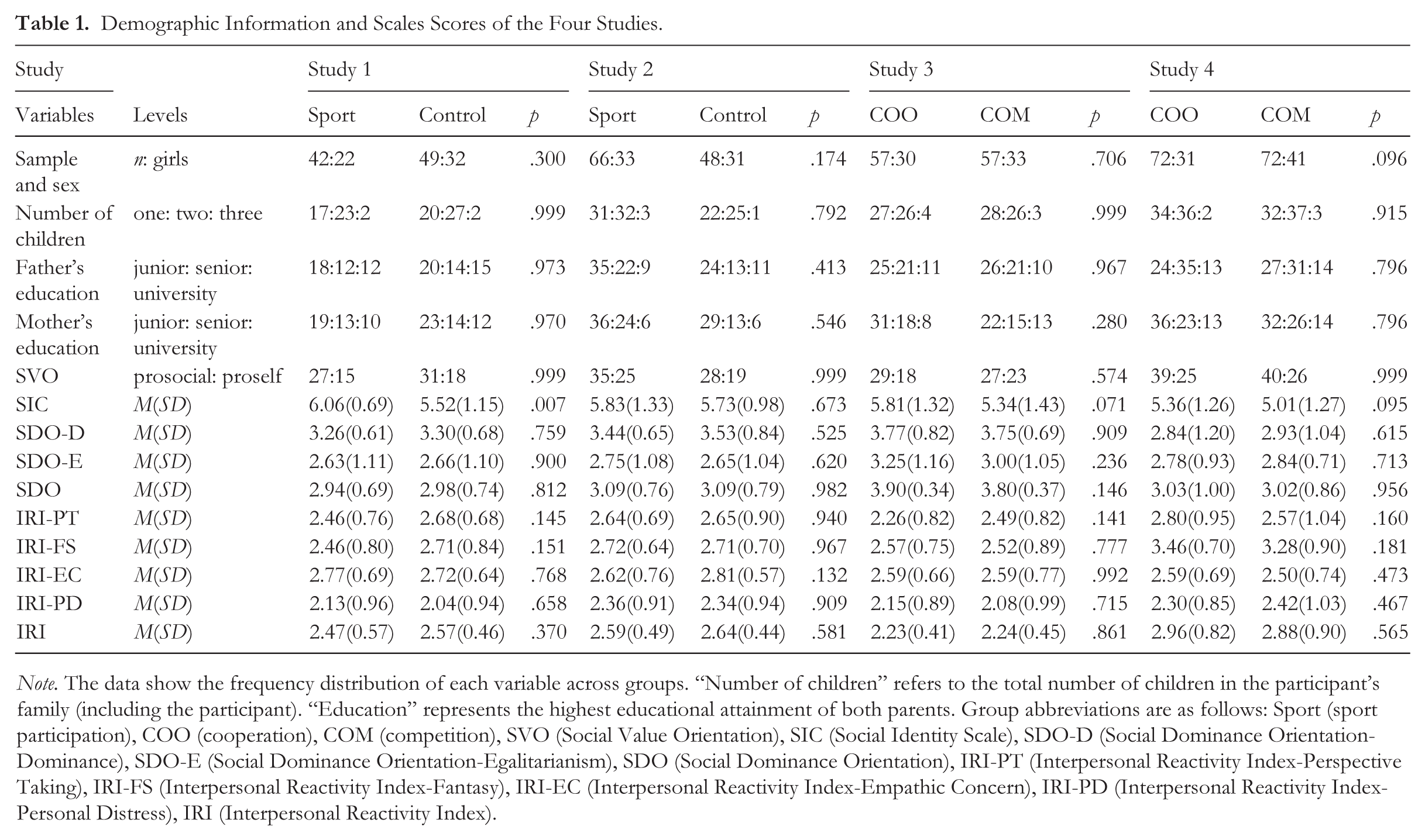
Note. The data show the frequency distribution of each variable across groups. “Number of children” refers to the total number of children in the participant’s family (including the participant). “Education” represents the highest educational attainment of both parents. Group abbreviations are as follows: Sport (sport participation), COO (cooperation), COM (competition), SVO (Social Value Orientation), SIC (Social Identity Scale), SDO-D (Social Dominance Orientation-Dominance), SDO-E (Social Dominance Orientation-Egalitarianism), SDO (Social Dominance Orientation), IRI-PT (Interpersonal Reactivity Index-Perspective Taking), IRI-FS (Interpersonal Reactivity Index-Fantasy), IRI-EC (Interpersonal Reactivity Index-Empathic Concern), IRI-PD (Interpersonal Reactivity Index-Personal Distress), IRI (Interpersonal Reactivity Index).
Materials and procedure
SoMi was measured using a modified computerized program (MATLAB R2023a) adapted from Van Doesum et al. (2013). The task consisted of 84 trials, including 72 experimental trials and 12 control trials, requiring participants to select among three to four objects. In each experimental trial, one object differed in color, flavor, or style (e.g., three blue [dark gray] caps and one yellow [light gray], as shown in Figure 1a). Participants were instructed to make their selection first, with the next person choosing afterward. A SoMi choice was defined as selecting a non-unique object in experimental trials (e.g., the blue [dark gray] cap in Figure 1a or the yellow [light gray] cap in Figure 1b), reflecting a willingness to leave the unique option for others. Control trials maintained a 2:2 ratio of unique to non-unique items, reflecting personal preference (Figure 1c). Twelve object types (e.g., apples, caps, chocolates) were used, with each type appearing once in control trials and twice in experimental trials. All images were sourced from www.socialmindfulness.nl (Van Lange & Van Doesum, 2015) and presented in random order. During each trial, the upper part of the screen displayed information about the next person. For the control group, the screen displayed one of the following messages: “The next person is your teammate” (ingroup), “The next person is a stranger” (neutral), or “The next person is your opponent” (outgroup). In the sport participation group, the screen displayed: “The next person is your teammate running with you” (ingroup), “The next person is a stranger” (neutral), or “The next person is a runner from the opposing team” (outgroup).
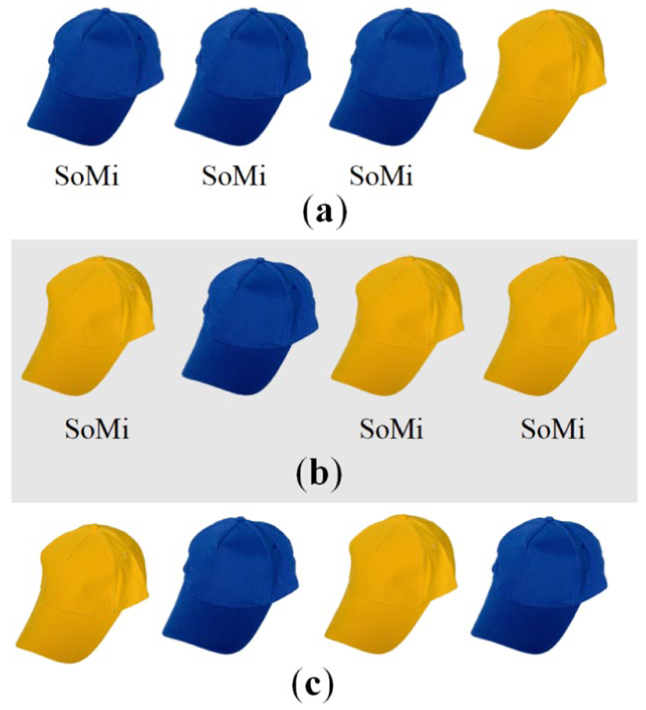
Illustration of the adapted SoMi paradigm.
In addition to the SoMi task, participants completed several psychometric assessments. The Social Value Orientation (SVO) Scale (Van Lange, 1999; Van Lange et al., 1997; Zhang et al., 2015) was used to assess resource distribution preferences, with a Cronbach’s alpha of .76. This scale consists of nine items and uses a measurement scale where participants choose between A, B, or C to indicate their preference for resource distribution. Participants who exhibited six or more prosocial responses were classified as prosocial-oriented, while those with six or more egoistic responses were categorized as egoistic. The Chinese version of the Interpersonal Reactivity Index (IRI; Davis, 1980; Siu & Shek, 2005) was used to measure empathy across four subscales: Perspective Taking (PT), Empathic Concern (EC), Fantasy (FS), and Personal Distress (PD). This scale consists of 22 items, with a 5-point Likert scale ranging from 0 (does not describe me well) to 4 (describes me very well). An example item is: “Imagine how people feel when I criticize them.” High scores on this scale reflect higher levels of empathy. The internal consistency of the scale was acceptable, with a Cronbach’s alpha of .73. The Social Dominance Orientation (SDO) Scale (Ho et al., 2015) was employed to assess preferences for group-based hierarchy and inequality. The scale consists of 16 items and uses a 7-point Likert scale (1 = strongly disagree, 7 = strongly agree). An example item is: “Some groups of people must be kept in their place.” High scores indicate a stronger preference for social dominance and group-based hierarchy. The Cronbach’s alpha for this scale was .86. Group identification was assessed using the Chinese version of the four-item Social Identity Scale (SIC; Blondé et al., 2024; Doosje et al., 1995), which included items like “I am similar to other group members,” rated on a 7-point Likert scale, with a Cronbach’s alpha of .92.
Participants were provided with a written informed consent form a day in advance, which was signed by both the participants and their parents. They were randomly assigned to either the sport participation or control group. Following informed consent and demographic information collection, participants completed the SVO, IRI, and SDO scales. They were then further divided into teams using the Minimal Group Paradigm based on color preference (Otten, 2016; Tajfel et al., 1971), with wristbands indicating team membership.
In the sport participation group, participants completed a 50-meter run in teams of exactly ten members, running in a straight line alongside their teammates. One experimenter was positioned at the start line, and another at the finish line to monitor their performance. Participants were explicitly informed that there was no competition between teams and that their run would not be timed. The primary goal was to maintain alignment with their teammates and to ensure synchronized movement throughout the 50-meter distance. They were encouraged to stay in line, rather than focusing on individual speed or sprinting as fast as possible. Only one team (red or blue) was on the track at a time, and they did not compete directly with each other during the task. Meanwhile, the control group remained seated in the classroom, being informed of potential upcoming team activities. Following these tasks, participants completed the SIC and SoMi task measurements. Finally, all participants received a gift or snack as a reward. This reward served as an incentive for participation, rather than for performance. The primary motivation for the participants was to complete the task successfully by maintaining alignment with their teammates throughout the 50-meter run. After addressing any questions, they were reminded not to discuss the experiment with peers who had not yet participated.
Statistical analysis
SoMi scores (0–1) are calculated by dividing the number of SoMi choices by total trials. For instance, if a participant selected a SoMi choice in 12 out of 24 trials, their score would be .50. To further distinguish between different forms of intergroup bias, ingroup and outgroup biases were calculated as the difference between each condition’s SoMi score and the neutral condition score. In the results of the SVO scale, responses indicating competition were combined with egoistic responses to form the proself-oriented group due to the low frequency of competitive responses. IRI scores (0–88) were standardized to a 0–4 scale, while SDO (16–112) and SIC (4–28) scores were standardized to a 1–7 scale. SoMi, IRI, SIC, and SDO scores are reported as means ± standard deviations.
All data were analyzed using R software (version 4.2.2). Independent samples t-tests were performed to compare SIC, IRI, and SDO scores between the two groups. Chi-square tests or Fisher’s exact tests were conducted for categorical control variables, including sex, parental education level, number of children, and SVO classification.
A repeated-measures ANOVA was conducted with a 2 (Group: sport participation, control) × 3 (Identity condition: ingroup, neutral, outgroup) design to analyze SoMi scores. When the assumption of sphericity was violated, the Greenhouse-Geisser correction was applied. Post-hoc comparisons were conducted using Tukey’s method for p-value adjustment. Additionally, another repeated-measures ANOVA was applied to analyze the SoMi difference with a 2 (Group: sport participation, control) × 2 (Bias condition: ingroup bias, outgroup bias) design.
Bayesian factors (BF) were calculated for hypothesis testing when p-values exceeded the significance threshold (α). BF01
Results and Discussion
Chi-square tests revealed no significant group differences in SVO, sex, parental education, or number of children (all ps > .050). No significant group differences were found on SDO (including SDO-D and SDO-E) or IRI (all subscales; all ps > .050). These findings confirm the validity of random assignment, minimizing the potential impact of confounding variables on behavioral outcomes. A significant group difference was found on SIC (t(80.06) = 2.75, p = .007), with the sport participation group scoring higher than the control group, as shown in Table 1.
The main effect of group on SoMi scores was not significant, and BF provided weak evidence (control: 0.58 ± 0.27, sport participation: 0.63 ± 0.24, F(1,89) = 1.51, p = .222, η2 = .01, BF01 = 2.56). The main effect of identity condition was significant (F(1.72,152.68) = 23.09, p < .001, η2 = .10), with significant differences across the three identity conditions. The SoMi score for the outgroup (.49 ± 0.26) was significantly lower than both the ingroup (t(89) = 5.65, p < .001) and neutral (t(89) = 4.82, p < .001) conditions. The ingroup (.69 ± 0.23) was significantly higher than the neutral (0.62 ± 0.23) condition (t(89) = 2.67, p = .025). The interaction between group and identity condition was significant (F(1.72,152.68) = 9.00, p < .001, η2 = .04), as shown in Figure 2 (left). Further analysis revealed that in the control group, the ingroup (.70 ± 0.23) was significantly higher than the neutral (0.62 ± 0.24) condition (t(89) = 2.39, p = .049). The outgroup (.41 ± 0.25) was significantly lower than both the ingroup (t(89) = 6.58, p < .001) and neutral (t(89) = 6.32, p < .001) conditions. In the sport participation group, there were no significant differences between the outgroup (.59 ± 0.25) and neutral (0.62 ± 0.23) conditions (t(89) = 0.72, p = .751, BF01 = 4.16), supporting the null hypothesis. No significant differences were found between the ingroup (.67 ± 0.24) and either outgroup (t(89) = 1.60, p = .249, BF10 = 0.61) or neutral (t(89) = 1.42, p = .337, BF10 = 0.35) conditions. For both the ingroup (t(89) = 0.72, p = .475, BF01 = 3.62) and neutral (t(89) = 0.13, p = .900, BF01 = 4.51) conditions, there were no differences between the two groups, with the BF supporting the null hypothesis. However, in the outgroup condition, the sport participation group scored significantly higher than the control group (t(89) = 3.52, p < .001).
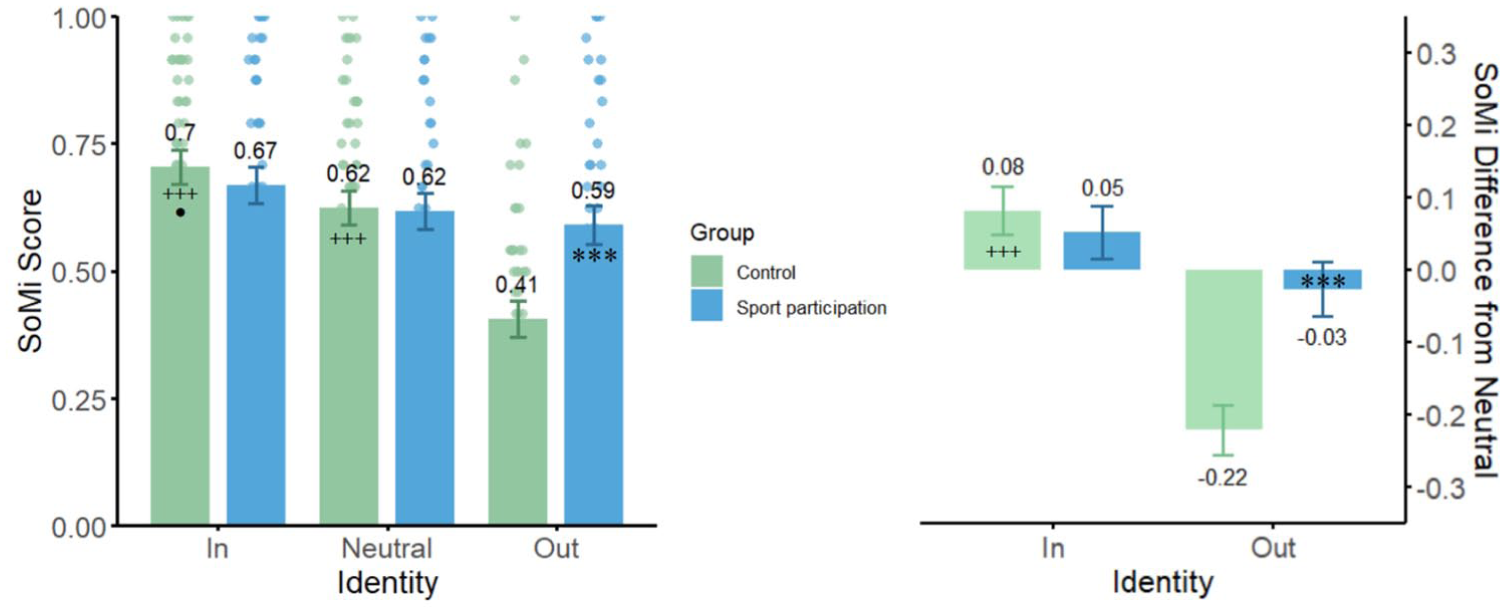
SoMi Score (left) and Bias (right) in Study 1.
The main effect of group on the SoMi difference was significant (control: −0.07 ± 0.29, sport participation: 0.01 ± 0.24, F(1,89) = 4.85, p = .030, η2 = .03), indicating a more negative bias in the control group. The main effect of bias was also significant (ingroup bias: 0.07 ± 0.24, outgroup bias: −0.13 ± 0.26, F(1,89) = 32.10, p < .001, η2 = .14), with outgroup bias being significantly more negative than ingroup bias. The interaction between group and bias was significant (F(1,89) = 11.12, p = .001, η2 = .05), as illustrated in Figure 2 (right). Further analysis revealed that in the control group, outgroup bias (−0.22 ± 0.28) was significantly more negative than ingroup bias (0.08 ± 0.21; t(89) = 6.62, p < .001). In contrast, in the sport participation group, no significant differences were observed between outgroup bias (−0.03 ± 0.20) and ingroup bias (0.05 ± 0.27; t(89) = 1.59, p = .116, BF10 = 0.61). For the ingroup bias condition, there was no difference between the control and sport participation groups (t(89) = 0.59, p = .588, BF01 = 3.90), with the BF supporting the null hypothesis. However, in the outgroup bias condition, the control group demonstrated significantly more negative bias compared to the sport participation group (t(89) = 3.81, p < .001).
Study 1 examined adolescents’ SoMi behaviors within a minimal group paradigm and explored the effect of sport participation on intergroup bias. The control group showed intergroup bias in SoMi decisions, supporting H1, with higher SoMi towards the ingroup and lower towards the outgroup, consistent with the finding of Van Doesum et al. (2016). Following sport participation, intergroup bias was eliminated, and the observed SoMi differences, along with Bayes factors, provided support for H2.
However, the different task instructions given to the two groups may have influenced the results, as suggested by the SIC group differences. A further and important limitation of Study 1 is the nature of the task itself, which required participants to maintain a straight line while running alongside their teammates—an element rarely present in naturalistic sport settings. This design prevented most participants from contributing individually to enhance team performance, as all but one team member was required to slow down instead of running as fast as they could. In this context, the task does not fully reflect the nature of sport participation, as it lacks the highly structured, regulated, and team-based competitive elements typical of such activities (Sabiston et al., 2019). In contrast, this context aligns more closely with the concept of physical activity, which primarily involves bodily movement produced by skeletal muscles that requires energy expenditure (Li & Shao, 2022). Additionally, prior research conducted within a cooperative and competitive sport participation context found intergroup bias in SoMi behavior (Tao et al., 2024), with adolescents showing higher SoMi levels toward ingroup members than toward outgroup members. Therefore, Study 2 incorporated both cooperation and competition into the sport participation context to address the conceptual and operational limitations of Study 1.
Study 2
To minimize the potential interference from task instruction differences in Study 1 and to test the hypothesis within a team sport context involving both cooperation and competition, we conducted Study 2. In the sport participation group, the relay race task was completed first, followed by measurements, while the control group completed the measurements before the relay race task.
Method
Design
Consistent with Study 1, a two-factor mixed design was used, with participants randomly assigned to either the sport participation or control group (between-subjects), and each completing SoMi measurements under three identity conditions: ingroup, neutral, and outgroup (within-subjects) to examine the effect of the team sport context on intergroup bias in SoMi.
Participants
A total of 120 adolescents (aged 12 to 13) were recruited. Four participants were excluded for not completing the scales, and two were excluded for having previously participated in similar experiments. Ultimately, 114 participants were included in the final analysis (see Table 1).
Materials and procedure
In the SoMi paradigm of Study 2, participants in both the sport participation and control groups received identical instructions regarding the identity of the next decision-maker: “The next person is your teammate” (ingroup), “The next person is a stranger” (neutral), or “The next person is your opponent” (outgroup).
The procedure closely followed that of Study 1, with the primary difference being the intervention operations. In Study 2, the sport participation group engaged in a 50-meter relay race, competing to outperform the opposing team. Each team (designated as blue or red based on the Minimal Group Paradigm) consisted of ten participants, with five members positioned at one end of the 50-meter track and the other five at the opposite end. The blue and red teams competed simultaneously. Upon the experimenter’s signal, the race began, with each participant sprinting 50 meters and handing the relay baton to the teammate at the opposite end. The relay was completed once all team members had run, and the team finishing first was declared the winner.
Compared to Study 1, this design introduced both competitive and cooperative elements: participants needed to collaborate with teammates to successfully complete the relay, while also aiming to outperform the opposing team. While Study 1’s task may be more accurately described as a form of physical activity, Study 2 exhibits characteristics more consistent with sport participation, involving structured, goal-oriented, and competitive engagement. Although both groups received the same instructions, the sport participation group completed the SIC and SoMi measurements after the relay, whereas the control group completed them beforehand, with prior knowledge of the relay’s requirements.
Statistical analysis
All variable descriptions and statistical analyses were consistent with the methods used in Study 1.
Results and Discussion
Chi-square tests revealed no significant group differences in SVO, sex, parental education, or number of children (all ps > .050). No significant group differences were found on SIC, SDO (including SDO-D and SDO-E) or IRI (all subscales; all ps > .050), as shown in Table 1.
The main effect of group on SoMi scores was non-significant, with BF providing evidence supporting the null hypothesis (control: 0.55 ± 0.27, sport participation: 0.54 ± 0.25, F(1,112) = 0.03, p = .859, η2 < .01, BF01 = 5.16). The main effect of identity condition was significant (F(1.76,197.02) = 33.80, p < .001, η2 = .11), with significant differences observed among the three conditions. The SoMi score for the outgroup (.45 ± 0.24) condition was significantly lower than both the ingroup (.64 ± 0.24) condition (t(112) = 7.18, p < .001) and the neutral (0.54 ± 0.25) condition (t(112) = 5.04, p < .001). The ingroup condition was also significantly higher than the neutral condition (t(112) = 4.06, p < .001). The interaction between group and identity condition was significant (F(1.76,197.02) = 6.03, p = .004, η2 = 0.02), as shown in Figure 3 (left). Further analysis revealed that in the control group, the outgroup (.39 ± 0.24) condition was significantly lower than both the ingroup (.68 ± 0.24) condition (t(112) = 6.59, p < .001) and the neutral (0.56 ± 0.25) condition (t(112) = 5.44, p < .001), with the ingroup condition significantly higher than the neutral condition (t(112) = 3.07, p = .008). In the sport participation group, no significant difference was observed between the outgroup (0.49 ± 0.23) and neutral (0.52 ± 0.25) conditions (t(112) = 1.39, p = .352, BF10 = 0.52). However, the ingroup (.61 ± 0.24) condition was significantly higher than both the outgroup (t(112) = 3.33, p = .003) and neutral (t(112) = 2.66, p = .024) conditions. In the neutral condition, no differences were found between the sport participation and control groups, with the BF supporting the null hypothesis (t(112) = 0.86, p = .393, BF01 = 3.58). In the ingroup condition, there were no significant differences between the groups (t(112) = 1.55, p = .125, BF10 = 0.59). However, in the outgroup condition, the sport participation group scored significantly higher than the control group (t(112) = 2.08, p = .040).
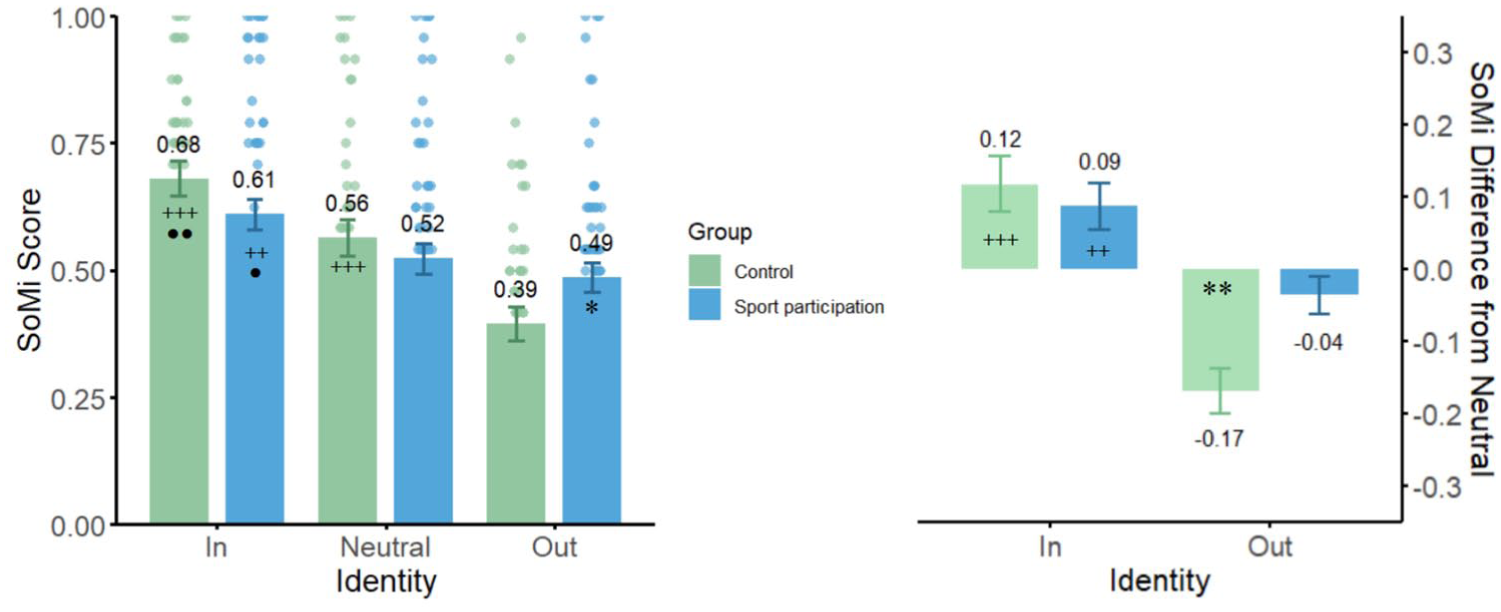
SoMi Score (left) and Bias (right) in Study 2.
Bias calculations were further analyzed. The main effect of group on the SoMi difference was non-significant (control: −0.03 ± 0.32, sport participation: 0.02 ± 0.21, F(1,112) = 2.00, p = .160, η2 = .01, BF10 = 0.46). The main effect of bias was significant (ingroup bias: 0.10 ± 0.26, outgroup bias: −0.09 ± 0.22; F(1,112) = 51.55, p < .001, η2 = .15), with outgroup bias being significantly more negative than ingroup bias. The interaction between group and bias was significant (F(1,112) = 8.15, p = .005, η2 = .03), as illustrated in Figure 3 (right). Further analysis revealed that in the control group, outgroup bias (−0.17 ± 0.26) was significantly more negative than ingroup bias (0.12 ± 0.32, t(112) = 6.59, p < .001). Similarly, in the sport participation group, outgroup bias (−0.04 ± 0.18) was significantly more negative than ingroup bias (0.09 ± 0.22, t(112) = 3.33, p = .001). For the ingroup bias condition, bias did not differ between the control and sport participation groups (t(112) = 0.61, p = .542, BF01 = 4.20), with the BF supporting the null hypothesis. However, in the outgroup bias condition, the control group demonstrated significantly more negative bias compared to the sport participation group (t(112) = 3.24, p = .002).
In summary, Study 2 investigated intergroup bias in SoMi behavior under consistent task instructions and within a team sport context. The SIC results revealed no significant differences in group identity between groups. The control group exhibited a pattern similar to that in Study 1, with higher SoMi scores for the ingroup and lower scores for the outgroup, confirming H1. In the team sport participation group, ingroup favoritism was observed, but outgroup derogation was absent. Following team sport participation, SoMi scores for the outgroup increased, and outgroup bias significantly decreased, further supporting H2. This reinforces the role of team sport contexts in promoting intergroup bias and extends previous findings by showing that ingroup favoritism and outgroup derogation do not necessarily co-occur in SoMi behavior (Brewer, 1999; Gardham & Brown, 2001; Susskind & Hodges, 2007).
It is important to note that sport participation in Study 2 produced different results compared to Study 1, particularly with significantly higher SoMi towards the ingroup, although the overall findings still support H2. The observed differences between the sport participation conditions in the two studies may stem from the inclusion of both cooperative and competitive elements in Study 2. However, this study examined only their combined effects without disentangling their individual contributions, which warrants further exploration.
Study 3
To explore the different effects of cooperation and competition on intergroup bias in SoMi during sport participation, especially in team sport, we conducted Study 3. This study introduced two distinct scenarios within the sport participation context. The first scenario involved a cooperation (COO) group, in which participants engaged in cooperation while minimizing competition. The second scenario involved a competition (COM) group, in which participants engaged in competition while minimizing cooperation.
Method
Design
Study 3 employed a two-factor mixed design: 2 groups (between-subjects factor: COO or COM) × 3 identity conditions (within-subjects factor: ingroup, neutral, and outgroup).
Participants
A total of 116 adolescents (aged 12 to 13) were recruited. One participant was excluded due to injury, and another was excluded for not completing the scales. Ultimately, 114 participants were included in the final analysis (see Table 1).
Materials and procedure
In the SoMi paradigm of Study 3, the identity of the next decision-maker varied between the COO and COM groups. In the COO group, the screen displayed: “The next person is your teammate” (ingroup), “The next person is a stranger” (neutral), or “The next person is a member of another team” (outgroup). In the COM group, the screen showed: “The next person is your classmate” (ingroup), “The next person is a stranger” (neutral), or “The next person is your opponent” (outgroup).
The procedure was identical to that of Study 1, except for the team-based operations. The COO group participated in a 10-person relay race, with only one team (blue or red) on the track at a time. They were aware of the existence of the other team, but were explicitly informed that there would be no competition and that their performance would not be compared with that of the other team. Their primary goal was to ensure their own team completed the relay as quickly as possible and to coordinate baton exchanges smoothly, focusing entirely on cooperation. In contrast, the COM group ran individual 50-meter sprints, with one participant from each team (red/blue) competing simultaneously. They were instructed to complete the sprint as quickly as possible and to beat their opponent, with no direct cooperation involved. No cooperation within their team was required, and the primary focus was on individual competitive performance.
Statistical analysis
All variable descriptions and statistical analyses were consistent with the methods used in Studies 1 and 2.
Results and Discussion
Chi-square tests revealed no significant group differences in SVO, sex, parental education, or number of children (all ps > .050). No significant group differences were found on SIC, SDO (including SDO-D and SDO-E) or IRI (all subscales; all ps > .050), as shown in Table 1.
The main effect of group on SoMi scores was significant, with the COO group scoring significantly higher than the COM group (COO: 0.59 ± 0.23, COM: 0.51 ± 0.20, F(1,111) = 5.93, p = .016, η2 = .03). The main effect of identity condition was also significant (F(1.84,204.07) = 17.47, p < .001, η2 = .05), with significant differences observed among the three conditions. The SoMi score for the outgroup (0.50 ± 0.21) condition was significantly lower than both the ingroup (0.61 ± 0.21) condition (t(111) = 5.20, p < .001) and the neutral (0.55 ± 0.22) condition (t(111) = 2.85, p = .014). The ingroup condition was also significantly higher than the neutral condition (t(111) = 3.49, p = .002). The interaction between group and identity condition was significant (F(1.84,204.07) = 3.80, p = .027, η2 = .01), as shown in Figure 4 (left). Further analysis revealed that in the COO group, the ingroup (0.67 ± 0.20) condition was significantly higher than both the outgroup (0.54 ± 0.23) condition (t(111) = 3.97, p < .001) and the neutral (0.55 ± 0.23) condition (t(111) = 4.38, p < .001). However, no significant difference was found between the outgroup and neutral conditions, with BF providing support for the null hypothesis (t(111) = 0.32, p = .945, BF01 = 6.40). In the COM group, the outgroup (0.44 ± 0.18) condition was significantly lower than both the ingroup (0.55 ± 0.20) condition (t(111) = 3.38, p = .003) and the neutral (0.54 ± 0.22) condition (t(111) = 3.70, p = .001). However, no significant difference was found between the ingroup and neutral conditions, with BF supporting the null hypothesis (t(111) = 0.57, p = .837, BF01 = 5.12). In the neutral condition, no differences were found between the two groups, with BF supporting the null hypothesis (t(111) = 0.35, p = .728, BF01 = 4.81). In the ingroup (t(111) = 3.16, p = .002) and outgroup (t(111) = 2.59, p = .011) conditions, the COO group scored significantly higher than the COM group.
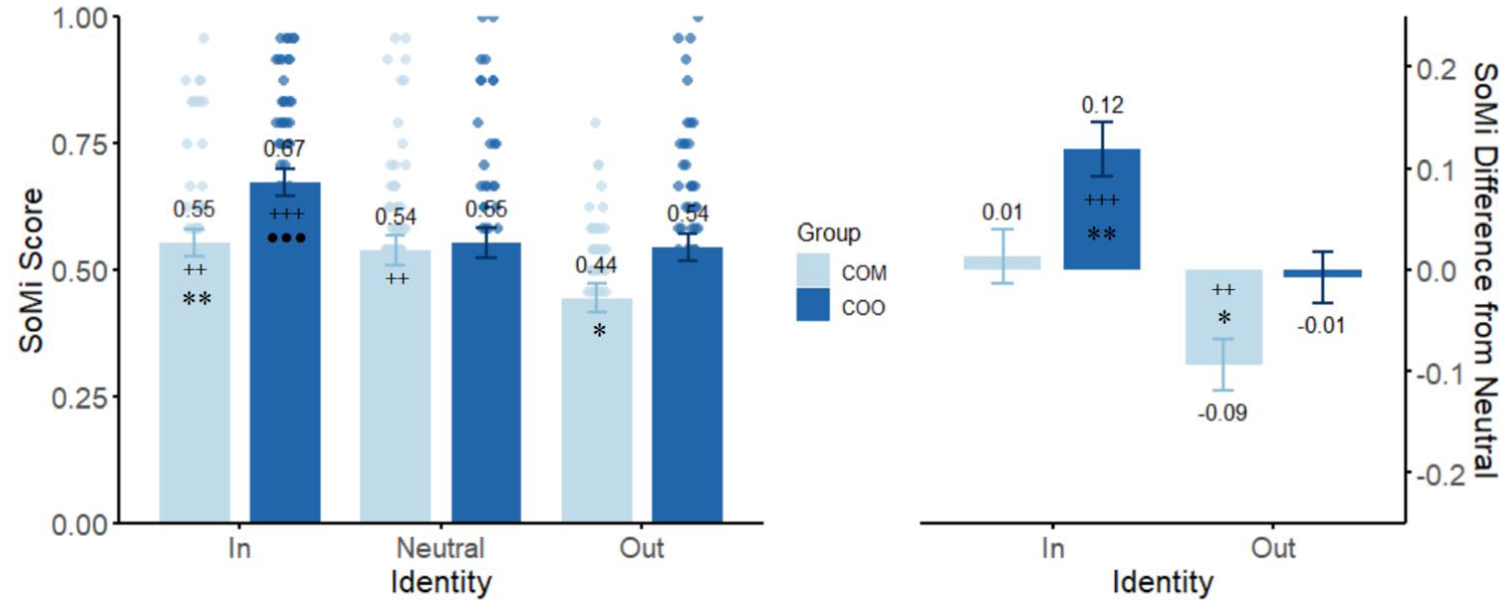
SoMi Score (left) and Bias (right) in Study 3.
Bias calculations were further analyzed. The main effect of group on the SoMi difference was significant (COO: 0.06 ± 0.22, COM: −0.04 ± 0.19, F(1,112) = 10.79, p = .001, η2 = .06), with the COM group showing a more negative bias. The main effect of bias was significant (ingroup bias: 0.07 ± 0.21, outgroup bias: −0.05 ± 0.19; F(1,112) = 26.78, p < .001, η2 = .08), with outgroup bias being significantly more negative than ingroup bias. The interaction between group and bias was non-significant, with BF supporting the null hypothesis (F(1,112) = 0.21, p = .652, η2 < .01, BF01 = 4.81), as illustrated in Figure 4 (right). In both the COM (t(112) = 3.34, p = .001) and COO (t(112) = 3.98, p < .001) groups, significant differences were found between the two types of bias. Additionally, significant between-group differences were observed in both ingroup bias (t(112) = 2.76, p = .007) and outgroup bias (t(112) = 2.42, p = .017).
In summary, Study 3 isolated the effects of cooperation and competition within sport participation. The results showed that cooperation enhanced SoMi behavior towards the ingroup, with no significant differences between the neutral and outgroup conditions. In contrast, competition reduced SoMi behavior towards the outgroup, with no differences observed between the ingroup and neutral conditions. These findings support H3, indicating that cooperation in sport promotes ingroup favoritism, while competition intensifies outgroup derogation. The findings also help explain the differing bias patterns observed in Study 1 and Study 2, suggesting that the presence of cooperation and competition may account for these differences.
However, since cooperation and competition were examined specifically within the sport participation context in Study 3, it remains uncertain whether these effects would persist if such dynamics were present in non-sport contexts.
Study 4
To explore the different effects of cooperation and competition on intergroup bias in non-sport contexts, and to determine whether the effects observed in Study 3 are specific to sport, we conducted Study 4. In this study, two scenarios were created within a non-sport context. The first scenario involved a COO group, where participants engaged in cooperation while minimizing competition in a knowledge assessment task. The second scenario involved a COM group, where participants participated in competition while minimizing cooperation in the same task.
Method
Design
Study 4 employed the same two-factor mixed design as in Study 3, with two groups (between-subjects: COO or COM) and three identity conditions (within-subjects: ingroup, neutral, and outgroup).
Participants
A total of 150 adolescents (aged 12 to 13) were recruited. Two participants were excluded for not completing the SoMi measurements, three for not completing the scales, and one for withdrawing from the experiment. Ultimately, 144 participants were included in the final analysis (see Table 1).
Materials and procedure
The SoMi paradigm, identity condition instructions and procedure were identical to those in Study 3. However, Study 4 introduced cooperation or competition within a knowledge assessment task consisting of ten questions drawn from various subjects, including physics, biology, geography, and sport. The COO group was instructed to “discuss and collaborate” to answer the questions and ensure their team’s score was as high as possible. Each session involved only one team of ten participants (either blue or red), ensuring the absence of direct competition. In contrast, the COM group aimed for the “highest performance possible and to outperform their opponents,” with their score compared to that of participants from the opposing team. In this condition, one participant from each team (red/blue) competed simultaneously in the same classroom, with no direct cooperation involved.
Statistical analysis
All variable descriptions and statistical analyses followed the same methods as those used in previous studies.
Results and Discussion
Chi-square tests revealed no significant group differences in SVO, sex, parental education, or number of children (all ps > .050). No significant group differences were found on SIC, SDO (including SDO-D and SDO-E) or IRI (all subscales; all ps > .050), as shown in Table 1.
The main effect of group on SoMi scores was non-significant, with BF supporting the null hypothesis (COO: 0.55 ± 0.25, COM: 0.53 ± 0.29, F(1,142) = 0.25, p = .616, η2 = .01, BF01 = 3.90). The main effect of identity condition was significant (F(1.71,243.17) = 12.75, p < .001, η2 = .02), with significant differences observed among the three conditions. The SoMi score for the outgroup (0.49 ± 0.27) condition was significantly lower than both the ingroup (0.59 ± 0.27) condition (t(142) = 4.24, p < .001) and the neutral (0.54 ± 0.26) condition (t(142) = 3.20, p = .005). The ingroup condition was also significantly higher than the neutral condition (t(142) = 2.45, p = .041). The interaction between group and identity condition was significant (F(1.71,243.17) = 6.25, p = .004, η2 = .01), as shown in Figure 5 (left). Further analysis revealed that in the COM group, the outgroup (0.44 ± 0.27) condition was significantly lower than both the ingroup (0.61 ± 0.29) condition (t(142) = 5.07, p < .001) and the neutral (0.54 ± 0.28) condition (t(142) = 4.07, p < .001). The ingroup condition was also significantly higher than the neutral condition (t(142) = 2.69, p = .022). In the COO group, no differences were found between the outgroup (0.53 ± 0.26) and neutral (0.55 ± 0.24) conditions (t(142) = 0.46, p = .891, BF01 = 6.58), supporting the null hypothesis. Similarly, there were no differences between the ingroup (0.56 ± 0.25) and either the outgroup (t(142) = 0.92, p = .626, BF01 = 4.25) or the neutral (t(142) = 0.77, p = .721, BF01 = 5.24) conditions, with BF again supporting the null hypothesis. For both the ingroup (t(142) = 0.99, p = .324, BF01 = 3.57) and neutral (t(142) = 0.11, p = .914, BF01 = 5.56) conditions, no differences were found between the two groups, with BF supporting the null hypothesis. However, in the outgroup condition, the COO group scored significantly higher than the COM group (t(142) = 2.16, p = .033).
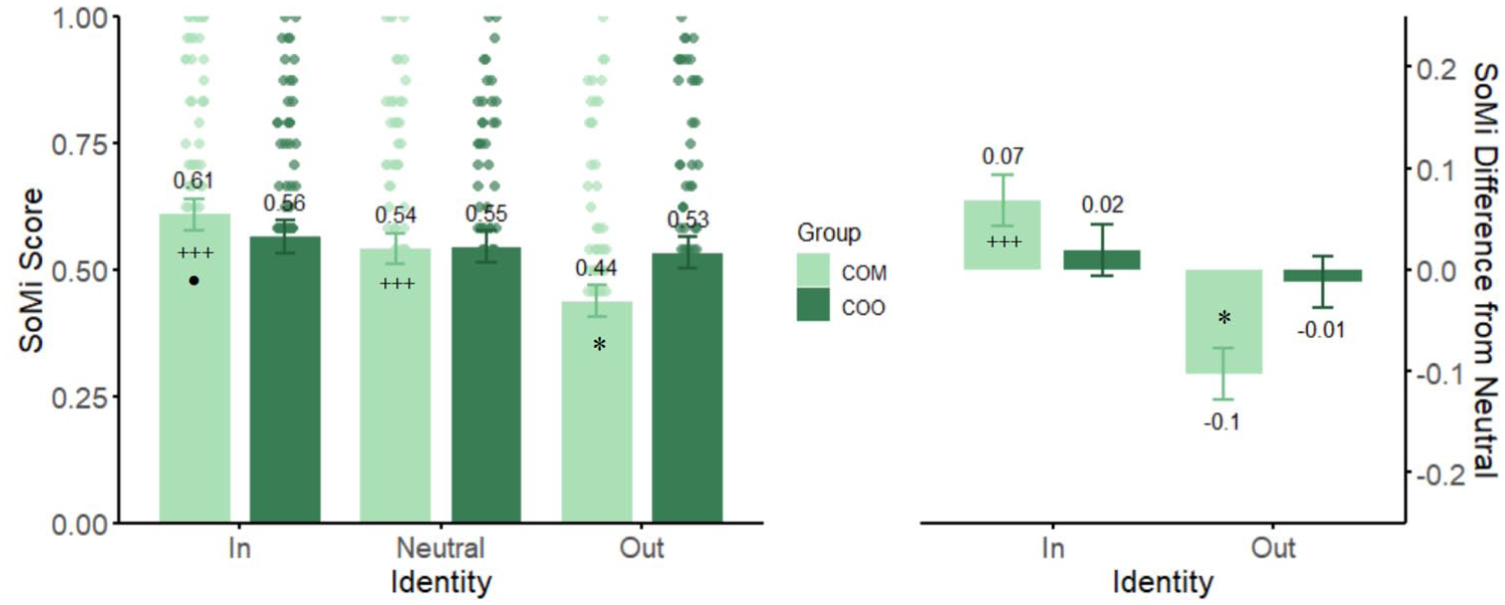
SoMi Score (left) and Bias (right) in Study 4.
Bias calculations were further analyzed. The main effect of group on the SoMi difference was non-significant (COO: 0.00 ± 0.18, COM: −0.02 ± 0.26, F(1,142) = 0.63, p = .429, η2 = .01, BF01 = 3.83). The main effect of bias was significant (ingroup bias: 0.04 ± 0.22, outgroup bias: −0.06 ± 0.22; F(1,142) = 17.98, p < .001, η2 = .05), with outgroup bias being significantly more negative than ingroup bias. The interaction between group and bias was significant (F(1,142) = 8.61, p = .004, η2 = .03), as illustrated in Figure 5 (right). In the COM group, outgroup bias was significantly more negative than ingroup bias (t(142) = 5.07, p < .001), but in the COO group, no difference was found between the two biases, with BF supporting the null hypothesis (t(142) = 0.92, p = .357, BF01 = 4.25). Additionally, significant between-group differences were observed in outgroup bias (t(142) = 2.55, p = .012), with the COM group showing higher outgroup bias than the COO group. However, no significant difference was found in ingroup bias between the two groups (t(142) = 1.36, p = .177, BF01 = 5.24).
In summary, Study 4 examined the effect of cooperation and competition on intergroup bias in non-sport contexts. The results revealed that competition led to both ingroup favoritism and outgroup derogation, while cooperation had no significant effect on either. However, cooperation did enhance SoMi behavior towards the outgroup, reducing outgroup derogation compared to competition. These findings complement those of Study 3, highlighting that the presence or absence of sport participation can affect the effects of cooperation and competition. We cautiously hypothesize that the effects of cooperation and competition on intergroup bias may be sport-specific (H4).
General Discussion
This study is the first to examine the effects of sport participation, as well as the distinct influences of cooperation and competition, on intergroup bias in social mindfulness (SoMi) among adolescents. Through four controlled studies, we found that sport participation reduces intergroup bias, mainly by decreasing outgroup derogation (Studies 1 and 2). Study 3 showed that cooperation promotes ingroup favoritism, while competition intensifies outgroup derogation. Study 4 confirmed that these effects may be specific to sport contexts.
Sport Participation Reduces Intergroup Bias
Consistent with Van Doesum et al. (2025), SoMi varies with group membership. In Study 1, the control group exhibited intergroup bias in SoMi. Following the minimal group paradigm (Otten, 2016; Tajfel et al., 1971), adolescents displayed ingroup favoritism and outgroup derogation, showing greater SoMi toward ingroup members and lower SoMi toward outgroup members. This finding aligns with prior research (Van Doesum et al., 2016) and reflects patterns commonly observed in prosocial behavior studies. For example, Efferson et al. (2024) reported that individuals in Papua New Guinea cooperated more readily with ingroup than outgroup members in a sequential social dilemma task.
Most prosocial behavior studies involve scenarios in which individuals must incur a cost to benefit others (Lemmers-Jansen et al., 2018; Van Doesum, Murphy, et al., 2021; Van Doesum, Van Lange, et al., 2021; Van Lange & Van Doesum, 2015). In contrast, SoMi, which entails minimal personal sacrifice, captures low-cost prosocial behavior that plays a vital role in social interactions. Such subtle gestures can yield unexpected benefits, including enhancing the beneficiary’s social evaluation of the actor and increasing willingness to cooperate (Dou et al., 2018; Van Lange & Van Doesum, 2015; Zang et al., 2022). This research extends the study of intergroup bias to the domain of low-cost prosocial behaviors (Lu et al., 2019; Van Doesum et al., 2025).
Interestingly, adolescents in the sport participation group, who engaged in individual physical activity (Study 1), exhibited no intergroup bias. This finding provides evidence, from a SoMi perspective, supporting the notion that sport participation can reduce intergroup bias (Schulenkorf, 2010; Schulenkorf & Sherry, 2021; Spacey & Sugden, 2016; Sterchele, 2013; Tunçgenç & Cohen, 2016). Compared to the control group, SoMi toward the outgroup significantly increased, with outgroup derogation reduced by 20%, despite similar SoMi levels in the neutral condition. This suggests that bias is primarily mitigated through shifts in attitudes and behaviors toward outgroup members following engagement in individual physical activity, a pattern consistent with the findings of Burgers et al. (2023).
In Study 2, adolescents who participated in team-based competitive sport demonstrated a similar trend: greater SoMi toward outgroup members relative to non-participants, reflecting an approximate 13% reduction in outgroup derogation. However, differential SoMi remained evident, with higher levels directed toward ingroup members and those in the neutral condition. These findings suggest that sport participation generally reduces intergroup bias in SoMi, with the magnitude of this effect being moderated by the type of sport. The primary mechanism appears to be an increase in SoMi toward outgroup members, which helps to mitigate outgroup derogation. These findings underscore the potential of sport participation in alleviating intergroup conflict and tension, fostering mutual understanding and cooperation across group boundaries.
The Role of Cooperation and Competition in Intergroup Bias
Previous research has found intergroup bias in team sport contexts (Tao et al., 2024), suggesting that variations in sport type may differentially shape the roles of cooperation and competition. While cooperation and competition are distinct interaction patterns, they often coexist in team sports. Study 3 demonstrated that cooperation and competition in sport exert divergent effects: cooperation enhances ingroup favoritism, while competition intensifies outgroup derogation. Hypothesis testing and Bayesian factor analysis further revealed that in cooperative sport contexts, adolescents favor the ingroup while treating outgroup members and strangers equally. In contrast, in competitive sport contexts, outgroup members were marginalized, with strangers aligning more closely with ingroup members. These findings reinforce the notion that ingroup favoritism and outgroup derogation are distinct psychological processes (Brewer, 1999; Gardham & Brown, 2001; Susskind & Hodges, 2007). Furthermore, the effects of competition align with the perspective of Kim and Na (2022), who suggested that competitive sport events may exacerbate negative attitudes toward outgroups. Notably, these effects are not as pronounced as those seen in politics and online electronic gaming (Havard et al., 2021).
Context-Specificity of Sport Participation Effects
When we attempted to generalize the effects to non-sport contexts (Study 4), the patterns shifted. In competitive settings, intergroup bias reverted to the default pattern of ingroup favoritism and outgroup derogation, mirroring the control groups in Studies 1 and 2. Conversely, cooperation produced a pattern similar to that observed in Study 1’s sport participation group, where all groups were treated equally. This aligns with the broader literature on prosocial and cooperative contexts, where fairness serves as a guiding moral and behavioral norm, whereas competition tends to elicit intergroup bias (McGuire et al., 2018; Zhu et al., 2015). Comparing the findings of Studies 3 and 4, we cautiously speculate that the effects of cooperation and competition on ingroup favoritism and outgroup derogation are specific to sport contexts. Future research should further examine this hypothesis across various tasks and domains.
Theoretical and Practical Contributions
This study expands intergroup bias research to low-cost prosocial behaviors like SoMi. Prior studies focused on high-cost helping (Efferson et al., 2024; Van Lange & Van Doesum, 2015), but our findings show even subtle behaviors reflect and shape intergroup attitudes. We affirm that ingroup favoritism and outgroup derogation are distinct (Brewer, 1999; Gardham & Brown, 2001; Susskind & Hodges, 2007). Study 2 shows that while engagement in sport participation can reduce bias toward outgroup members, it does not eliminate ingroup favoritism. This highlights that changes in intergroup attitudes do not automatically generalize to ingroup-directed preferences, emphasizing the partial and asymmetric nature of bias reduction. Study 3 confirms that cooperation and competition have different psychological impacts. Our work supports the super-additive cooperation model (Efferson et al., 2024), showing cooperation may enhance outgroup neutrality, while competition sharpens intergroup divisions (Kim & Na, 2022).
Practically, sport participation offers a promising tool for reducing intergroup bias, especially when it comes to outgroup derogation, in diverse communities (Schulenkorf, 2010; Schulenkorf & Sherry, 2021; Spacey & Sugden, 2016; Sterchele, 2013). Schools and community programs could leverage this potential, though attention must be paid to sport type and structure. Competitive sport may reinforce bias if not properly balanced. Our findings also contribute to debates on the “Olympic paradox” (Kim & Na, 2022), while sport can unite, large-scale competition may deepen nationalist divides. Designing inclusive sport initiatives requires awareness of these contrasting effects. As discussed in Sterchele’s (2015) work, it is crucial to avoid “sport evangelism”—the belief that sport automatically bridges groups and overcomes barriers. As we have highlighted, the effects of sporting encounters are shaped by various situational factors, interaction processes, and task characteristics, which can either reduce or reinforce intergroup bias. Therefore, the specific sport participation tasks designed for adolescents are essential. In particular, encouraging adolescents to engage in cooperative sport or physical activities is a deliberate strategy for mitigating intergroup bias.
Limitations and Future Directions
Despite its contributions, this research has several limitations. First, the sample consisted solely of Chinese adolescents, limiting the generalizability of the findings. Cultural norms and identity development influence intergroup interactions (Van Doesum et al., 2025), and future research should test whether these results hold in more diverse cultural and developmental contexts. Longitudinal studies are also needed to assess whether the effects of sport participation persist into adulthood.
Second, the study examined SoMi only in experimental tasks, not in real-life settings. While SoMi is linked to broader prosocial behavior (Van Doesum, Murphy et al., 2021), real-world interactions involve more complex factors. Future research should explore whether increases in SoMi translate into lasting behavioral changes, possibly through naturalistic field experiments in schools or sport programs.
Third, the absence of within-subject pre-post measurements limits causal interpretations. Although between-group comparisons suggest sport effects, longitudinal designs would better capture individual change and strengthen causal claims (Arbel et al., 2022).
Additionally, this study did not examine the effects of winning versus losing on intergroup bias. Previous research suggests that competition outcomes can significantly influence attitudes and intergroup behavior from a spectator perspective (Kerry et al., 2021). Given the strong impact of such outcomes on spectators, it is reasonable to assume that winning or losing could also play a crucial role in shaping intergroup dynamics among sport participants. However, due to limitations in statistical power, we were unable to fully explore this variable in the current study. We acknowledge this limitation and recommend that future research investigate the role of competition outcomes in influencing intergroup bias, as this may provide valuable insights into the complexities of sport participation and its effects on social mindfulness.
Finally, another significant limitation is the vast structural diversity across different sports, which was not adequately addressed in this study. Sports vary widely in terms of structure, such as indoor versus outdoor environments (Moeijes et al., 2019; Raney et al., 2023), individual versus team formats (Graupensperger et al., 2021), contact versus non-contact dynamics (Moeijes et al., 2019), and synchronous versus asynchronous competition (e.g., simultaneous versus separate performance). These variations might lead to different effects on intergroup bias and SoMi, depending on the nature of the sport. Moreover, each sport subculture socializes participants into distinct attitudes toward fair play, respect for opponents, and team spirit, which may influence how sport participation shapes intergroup relations (Holt & Ramsay, 2023; Newman et al., 2025; Tibbert et al., 2015). Future studies should consider these structural differences and subcultural factors, investigating how they might moderate the relationship between sport participation and SoMi.
Conclusion
This study confirms the presence of intergroup bias in adolescents’ social mindfulness. It demonstrates that sport participation significantly influences this bias, cooperation within sport contexts tends to enhance ingroup favoritism, whereas competition intensifies outgroup derogation. By extending the concept of intergroup bias to include low-cost prosocial behaviors such as social mindfulness, this study adds empirical evidence to the existing literature on the role of cooperation and competition in intergroup relations. While our findings underscore the potential for sport participation to influence social mindfulness, further exploration is needed to better understand the mechanisms through which sport may reduce prejudice and foster more positive social relationships.
Footnotes
Acknowledgements
We would like to express our sincere gratitude to Mr. Yongfeng Jin from Kingsun Foreign Language School for his valuable assistance during the data collection process, as well as to the students who participated in the study.

Ethical considerations
The study was conducted in accordance with the Declaration of Helsinki and approved by the Institutional Ethics Committee of Yangzhou University (YXYLL-2023-083; 2023).
Consent for publication
Written informed consent was obtained from all participants and their legal guardians involved in the study.
Funding
The authors disclosed receipt of the following financial support for the research, authorship, and/or publication of this article: This research was funded by the National Social Science Fund of China, 21CTY013.
Declaration of conflicting interests
The authors declared no potential conflicts of interest with respect to the research, authorship, and/or publication of this article.