







Abstract
Intergroup contact is known to predict advantaged group members’ solidarity with minority outgroups, which is crucial given persisting racial inequalities. To identify whether exposure to a conceptualization of racism can affect the contact–action relationship, two studies were conducted with White participants randomly allocated to a systemic racism, individual racism, or baseline condition, and their intergroup contact quality with racial minorities measured as a predictor of solidarity. Study 1 (N = 311) showed that higher contact quality generally predicted greater intergroup solidarity, particularly when exposed to individual racism. Study 2 (N = 322) clarified that individual racism exposure not only strengthened the positive contact–action relationship, but, relative to systemic racism exposure, could also minimize the negative contact–action relationship for lower quality contact. These findings highlight that individual racism exposure and positive contact experiences may together be conducive to promoting solidarity, offering practical considerations for future contact interventions.
Keywords
Introduction
Ongoing racial inequality has prompted many to take action against racism. For example, since the early 2020s there has been a resurgence of the Black Lives Matter movement in recognition of racism in the criminal justice system, as well as increased activism addressing COVID-related racism towards Asian people in various countries around the world including Australia (ABC News, 2020a; Chang et al., 2023). Advantaged group allies can meaningfully contribute to such social causes, particularly given that other advantaged group members are more receptive to messages confronting racism from ingroup rather than outgroup members (Gulker et al., 2013). One way to encourage advantaged group members’ intergroup solidarity with racial minority groups may be through intergroup contact. In recent decades there has emerged concern that positive intergroup contact between advantaged and disadvantaged groups may dampen the collective action tendencies of disadvantaged group members themselves, whose positive intergroup interactions may promote superficial harmony that relaxes their motivations to challenge systemic injustices (Dixon et al., 2012). However, such positive intergroup contact experiences may have the desirable effect of cultivating support from advantaged group allies for change (Tropp et al., 2018). The present research aims to shed light on the conditions under which such contact may promote advantaged group members’ intergroup solidarity with minority groups, investigating whether exposing White people to ideas of racism conceptualized as a systemic versus individual issue has an impact on this contact–action relationship.
Intergroup Contact Predicting Increased Intergroup Action
According to the Integrated Contact-Collective Action Model (ICCAM), advantaged groups’ higher quality intergroup contact (i.e., contact that is more positive) with outgroups should increase intergroup support (Hässler et al., 2021). In line with this, a recent review reported that positive intergroup contact generally predicts greater collective action by advantaged group members supporting a disadvantaged group (Cocco et al., 2023). For example, Selvanathan et al. (2018) found that White Americans’ positive contact with Black Americans was associated with a greater willingness to engage in collective action in support of Black Americans. In addition to correlational evidence (see also Çakal et al., 2021; Reimer et al., 2017), limited experimental evidence also supports this trend. In one study, German participants’ positive contact with a Palestinian-born student led to higher collective action intentions to support asylum seekers (Kotzur et al., 2019). Highlighting the importance of contact quality, rather than quantity per se, research has also demonstrated that advantaged groups’ negative intergroup contact experiences diminish solidarity-based collective action. For example, Italian people’s negative contact with immigrants predicted reduced willingness to engage in collective action for immigrant rights (Cocco et al., 2022). Overall, intergroup contact quality is important for solidarity-based action, with positive contact appearing conducive to promoting such action among advantaged group members.
Conceptualizations of Racism and Taking Action: Individual versus Systemic Racism
Conceptualizations of racism may also play a role in promoting solidarity. There are two main conceptualizations of racism—individual racism, referring to racism rooted in the attitudes and behaviors of individuals, and systemic racism referring to racism perpetrated by policies and institutions with disproportionate structural impacts among different racial groups (Fourie & Moore-Berg, 2022; Miller et al., 2021; Rucker & Richeson, 2021). While both contribute to racial discrimination in society, people tend to differentially endorse and consider each conceptualization in their lay definitions of racism, with White people generally favoring an individual conceptualization (Carter & Murphy, 2015; Fourie & Moore-Berg, 2022; Miller et al., 2021). This may be because the idea that one enjoys systemic advantages on the basis of race presents a threat to White individuals’ self-image (Unzueta & Lowery, 2008).
The distinction between individual and systemic racism is important as they have different implications for taking action against racism. Conceptualizing racism as exclusively an individual issue maintains the status quo of racial inequalities by portraying instances of racism as isolated, therefore suggesting that minimal action is needed to challenge the culture and systems that contribute to widespread racial inequality (Rucker & Richeson, 2021). Empirical evidence supports the idea that recognition of the systemic nature of racism, beyond merely individual racism, is therefore important. In one study with White participants, perceiving racism as a systemic issue was associated with greater endorsement of collective action against racism (Miller et al., 2021). Simultaneously, differences in perceiving individual racism had little to no association with collective action and, if anything, predicted reduced support for progressive collective action on some measures (Miller et al., 2021). Additionally, experimental work has shown that watching a video about systemic racism improved attitudes towards Indigenous Peoples in Canada and increased awareness of White privilege, relative to watching a video about individual racism (Efimoff & Starzyk, 2023). Although this research is highly promising, there remains a gap in investigating the causal impact of exposure to these different conceptualizations of racism, operating in conjunction with intergroup contact, on willingness to take action to address racial inequalities.
To the extent that a systemic (rather than individual) racism conceptualization lends itself to perceiving intergroup inequalities as illegitimate and thus inspiring action, it may impact the contact–action relationship in a way described by ICCAM. ICCAM posits that recognizing inequalities as illegitimate should enhance the positive impact of contact on collective action among advantaged group members (Hässler et al., 2021). Indeed, Tropp et al. (2021) demonstrated that intergroup discussions about unequal power contributed to White Americans’ collective action supporting Black Americans, as well as Turks’ collective action supporting Kurds. However, given the reality that advantaged group members often prefer to discuss group commonalities rather than differences during contact (Saguy et al., 2008), it is worth considering whether external influences that raise awareness of intergroup injustices can similarly activate the contact–action relationship. When injustices faced by the minority group are made salient—even if this occurs outside the intergroup contact experience itself—the quality of contact that advantaged group members have with minority group members should have an even greater impact on motivation to take action. This is due to the potential for positive intergroup contact experiences to reduce psychological distance with outgroup members by enhancing outgroup empathy, interpersonal closeness, and perspective taking (Borinca et al., 2025; Chen et al., 2024), therefore increasing advantaged group members’ care for the challenges faced by the minority group. As such, it is possible that positive intergroup contact may particularly predict collective action when advantaged group members are made to consider the intergroup injustice of systemic racism.
Types of Action: Collective versus Interpersonal Action
The literature reviewed so far has focused on action against racism at the collective level, such as signing a petition or participating in a protest. Scholarly attention on collective action is warranted given its crucial role in social change movements throughout history (Stott et al., 2012). At the same time, taking action can be multidimensional and may also include targeting change in interpersonal situations, such as calling out racist remarks (Aldana et al., 2019; Williams & Sharif, 2021). While existing literature demonstrates that intergroup contact quality and conceptualizations of racism are related to collective action, it is plausible that they may also relate to interpersonal action given the positive correlation between collective and interpersonal action (see Aldana et al., 2019). The present research addresses this by considering both collective and interpersonal action, as two forms of intergroup solidarity, the latter being a more exploratory consideration in this field of research.
Study 1
Study 1 Aims and Hypotheses
The aim of Study 1 was to investigate whether intergroup contact quality and exposure to a conceptualization of racism predict White individuals’ willingness to take action against racism. This was tested in the Australian context, where racial discrimination stems from the country’s colonial history and remains an ongoing issue harming various minority groups (Federation of Ethnic Communities’ Councils of Australia [FECCA], 2024). It was hypothesized that:
In addition, an exploratory hypothesis that similar patterns would be observed on interpersonal action was also investigated.
Study 1 Method
Participants and Design
All data, code, and materials for both studies are reported in this manuscript, the supplemental material, or on the Open Science framework at https://osf.io/8r5yn/overview?view_only=98c9b780ee0e417ca60b712899225ef0. The current study was approved by the Human Research Ethics Committee of a local university (Protocol No: 2023/521). Data were obtained from a broader data collection effort that included both White and racial minority people, preregistered at https://aspredicted.org/hzrb-m8r7.pdf. For theoretical and practical reasons, this paper reports on data from White participants with a focus on intergroup solidarity, rather intragroup action (i.e., support for one’s ingroup). Further deviations from the preregistration plan are reported below. Per the preregistered experimental design, participants were randomly allocated to one of three experimental conditions on a conceptualization of racism variable—systemic racism, individual racism, or a baseline condition (no mention of racism). Intergroup contact quality was a measured predictor variable.
Detection of a small-to-medium effect size was selected for an a priori power analysis on the basis that many past studies on intergroup contact and collective action report small-to-medium effect sizes (e.g., f2 = .05–.21 in Selvanathan et al., 2018; f2 = .04–.13 in Çakal et al., 2021; f2 = .04 in Kotzur et al., 2019). An a priori GPower analysis using an α of .05 and with 80% power found that a minimum sample size of 202 was needed to detect a small-to-medium effect of f2 = .07 for the overall regression model (Faul et al., 2007). Of the 390 participants who consented to the study, 79 were excluded from analysis. These exclusions included 10 duplicate responders, 43 who identified as equally Anglo White and a racial minority, 17 who failed a comprehension check, and nine who failed a suspicion check. Five participants whose reCAPTCHA scores were <.50 were retained, departing from the preregistration, as a manual inspection of their data suggested they were real human responders. The final usable sample arrived at 311 participants.
Of the final sample, 179 participants were undergraduate psychology students and 132 were broader community members. Participant ages ranged from 18 to 77 years (M = 26.92; SD = 11.21). The majority identified as female (67.20%), while the remaining participants identified as male (30.87%), non-binary (1.29%), or other/preferred not to say (0.64%). All participants self-categorized as Anglo White. Participants reported their ethnicity as Anglo or Celtic (86.82%) and/or European (30.23%). While most were not religious (70.10%), those with religious affiliation were mostly Christian (24.76%). In general, participants were relatively politically progressive compared to a neutral progressive-conservative midpoint on a political orientation scale (Jost, 2006) where 1 = progressive and 7 = conservative (M = 2.88, SD = 1.31), t(310) = −15.09, p < .001.
Procedure
Undergraduate psychology students were recruited through the university’s online recruitment platform in exchange for course credit, as well as through a psychology course tutorial activity. Broader community members were recruited through flyers for which participants could win one of four AUD50 visa gift cards, and through Prolific with a compensation of AUD4.65 per Prolific participant. The study was administered via an online Qualtrics questionnaire. After providing consent and completing a reCAPTCHA check, participants completed demographic questions, followed by an intergroup contact quality measure. Then, participants were randomly allocated to one of three experimental conditions and completed their appropriate comprehension check. Next, participants completed collective and interpersonal action items in a randomized order, followed by a suspicion check and a full debrief.
Materials
Conceptualization of Racism Manipulation and Comprehension Check
Adapted from items used by Miller et al. (2021) and Rucker et al. (2019), participants in the systemic and individual racism conditions read a short passage claiming that research has found racism to be “mainly a systemic issue” or “mainly an individual issue.” A check was administered to ensure participants comprehended the content of their experimental condition. Specifically, those in the systemic and individual racism conditions were prompted with “According to the research summarized, racism is. . .” and shown three answer options in a randomized order: “Mainly a systemic issue,” “Mainly an individual issue,” and “No longer an issue.” Participants in the baseline condition were not shown any passage prior to measurement of the dependent variables. As a filler activity to ensure comparable questionnaire length to the systemic and individual racism conditions, these participants were exposed to a short passage on climate change and asked a single open-ended question after the dependent variable measures.
Intergroup Contact Quality
Islam and Hewstone’s (1993) intergroup contact quality measure was adapted to gauge the extent to which participants’ contact quality with racial minority people typically had six particular qualities (e.g., the extent to which this contact is typically “equal”; 1 = definitely unequal to 7 = definitely equal) presented in randomized order. Higher scores reflected higher quality intergroup contact (Cronbach’s α = .85). 1
Collective Action Willingness
Following the prompt “I would be willing to. . .” (1 = strongly disagree to 7 = strongly agree), eight items adapted from Kelly and Breinlinger (1996) assessed participants’ collective action willingness (e.g., “Spend time working for a racial justice campaign”) and were presented in randomized order. Higher scores indicated greater collective action willingness (Cronbach’s α = .94).
Interpersonal Action Willingness
Following the same prompt and using the same response scale as per collective action willingness, six items in randomized order measured participants’ interpersonal action willingness (e.g., “Challenge or check others (e.g., friends, family, peers, colleagues) who make a racial joke”; adapted from Aldana et al., 2019). Higher scores indicated greater interpersonal action willingness (Cronbach’s α = .91).
Demographics and Group Membership
Demographic questions were administered, including social identification with Anglo White people measured by adapting Postmes et al.’s (2013) single-item social identification measure, “I identify with Anglo White people” (1 = minimally identify to 7 = strongly identify). Political orientation was assessed on a 7-point scale where lower scores reflected more political progressivism and higher scores reflected more political conservatism (Jost, 2006).
Attention Check
Participants responded to the attention check item “Please answer this question by choosing option number two, ‘Disagree’” (adapted from Marjanovic et al., 2014).
Suspicion Check
Participants were asked if they had heard about the study previously and what they thought the study was about (adapted from Rubin et al., 2010).
Study 1 Results
Data Screening and Preliminary Analyses
All data cleaning and analysis was undertaken using IBM SPSS Statistics Version 28. There was one univariate outlier on the contact quality scale and six on the interpersonal action scale, based on their standardized values exceeding a z-score of ±3.29 (Tabachnick & Fidell, 2014). To reduce their influence, the raw values were pulled in to correspond with a z-score of ±3.29.
To assess whether the impact of the manipulation depended on White social identity, exploratory analyses of variance (ANOVAs) examining the interactions between the conceptualization of racism manipulation and White social identity were conducted. These ANOVAs yielded nonsignificant findings for both the collective and interpersonal action dependent variables (all ps > .05), with the full statistics presented in the supplemental material.
Although analyses of covariance (ANCOVAs) were preregistered for data analysis, the data violated the assumption of homogeneity of regression when conceptualization of racism was entered as an independent variable and contact quality as a covariate, with the dependent variables of collective action, F(2, 304) = 3.10, p = .046, and interpersonal action, F(2, 304) = 3.52, p = .031. In line with recommendations from Leppink (2018), moderated regression was thus more statistically valid than ANCOVA. Nonetheless, the results of the preregistered ANCOVAs are reported in the supplemental material. The supplemental material also provide exploratory analyses on undergraduate psychology students versus broader community members, revealing that the former tended to report higher collective and interpersonal action willingness. However, as recruitment source did not alter the pattern of regression results, the main analyses reported below were performed across the entire sample.
Main Analyses
Hierarchical moderated regressions were conducted with the continuous contact quality and the dummy-coded conceptualization of racism predictors entered at Step 1, and interactions added at Step 2. Where relevant, simple slopes were analyzed using Model 1 of Hayes’s (2022) PROCESS Macro. The Benjamini-Hochberg (B-H) procedure was used with a False Discovery Rate (FDR) of 0.1 to control for Type I error when evaluating statistical significance across multiple comparisons (Benjamini & Hochberg, 1995). Apart from one simple slope, all other coefficients remained significant after applying the B-H procedure. Following Aiken and West (1991), significant interactions were probed at one standard deviation above and below the mean on the contact quality variable to represent relatively high and low contact quality. Social identification with Anglo White people was not included in any model due to its lack of significant bivariate correlation with collective and interpersonal action. All means, standard deviations, and correlations for continuous variables are shown in Table 1.
Means, Standard Deviations, and Correlations for Continuous Variables, Study 1.
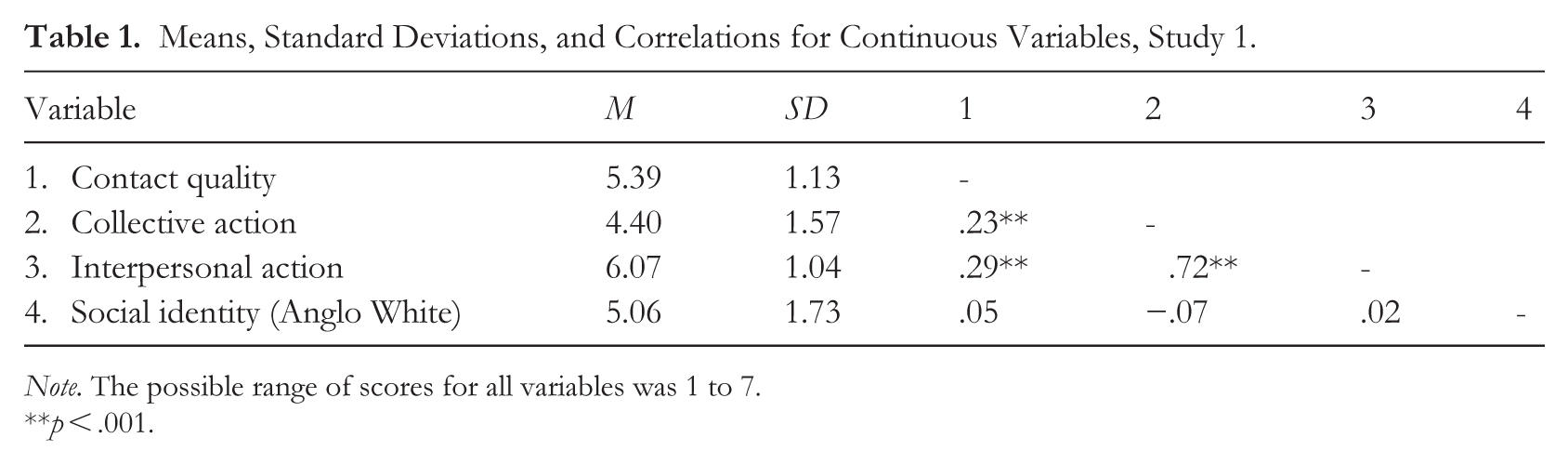
Note. The possible range of scores for all variables was 1 to 7.
p < .001.
Collective Action Willingness
The final model of the hierarchical regression examining the effects of contact quality and conceptualization of racism on collective action willingness was significant, R2 = .07, F(5, 304) = 4.74, p < .001. The addition of the interaction terms in Step 2 explained a significant proportion of variance beyond Step 1, ΔR2 = .02, F(2, 304) = 3.10, p = .046. All coefficients are listed in Table 2. In support of H1, contact quality was a positive and significant predictor of collective action willingness. H2 was unsupported as exposure to systemic racism did not predict any differences in collective action willingness compared to the individual racism or baseline conditions. Similarly, H3 was unsupported as no interaction between contact quality and the systemic racism versus individual racism or baseline condition were observed. However, an exploratory analysis revealed a significant interaction between contact quality and the individual racism versus baseline condition. Specifically, the simple slopes revealed that the lack of association between contact quality and collective action in the baseline condition differed from the positive association in the individual racism condition. This interaction is depicted in Figure 1.
Hierarchical Regressions of Intergroup Contact Quality and Conceptualization of Racism on Collective and Interpersonal Action Willingness.
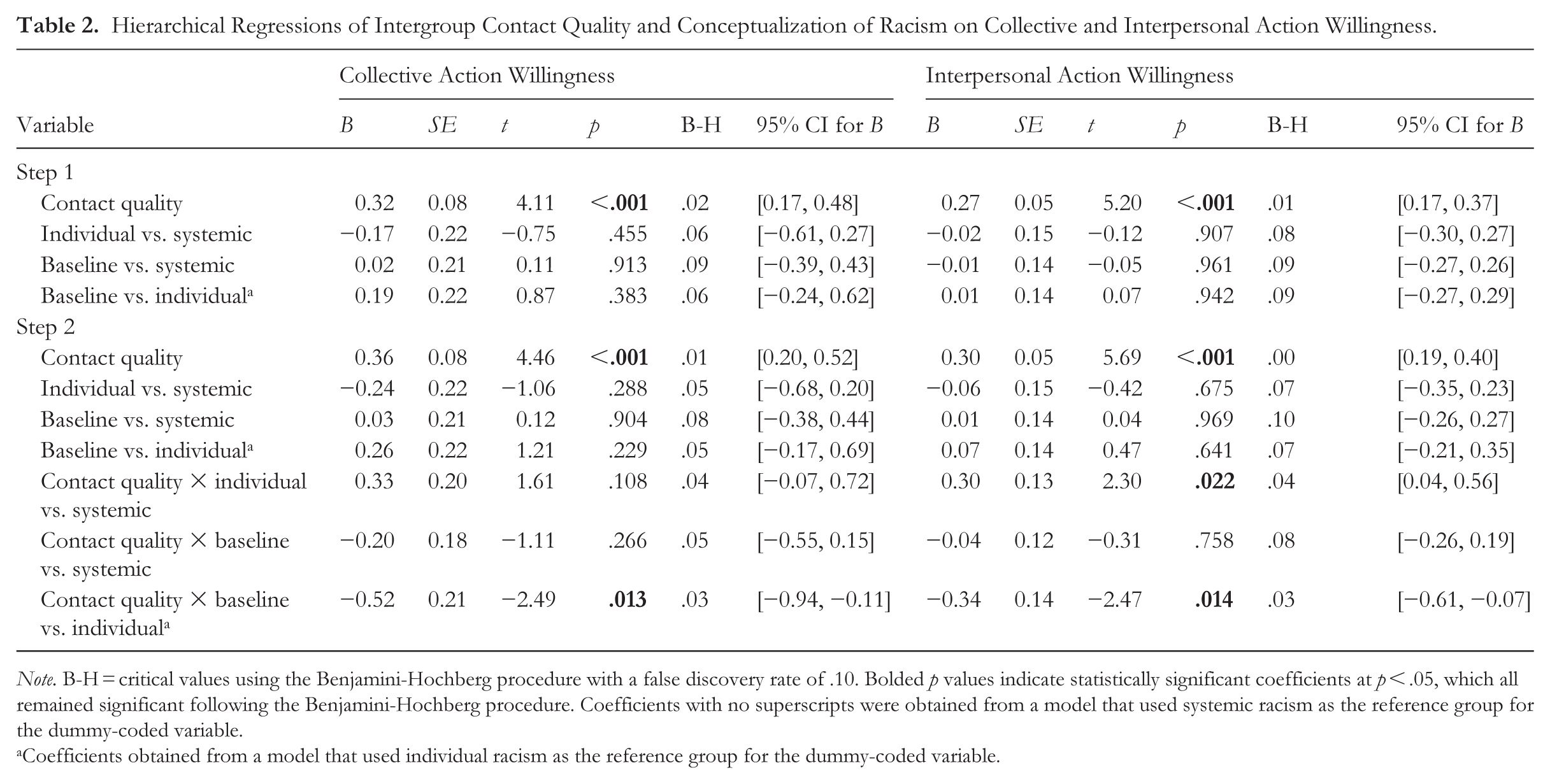
Note. B-H = critical values using the Benjamini-Hochberg procedure with a false discovery rate of .10. Bolded p values indicate statistically significant coefficients at p < .05, which all remained significant following the Benjamini-Hochberg procedure. Coefficients with no superscripts were obtained from a model that used systemic racism as the reference group for the dummy-coded variable.
Coefficients obtained from a model that used individual racism as the reference group for the dummy-coded variable.
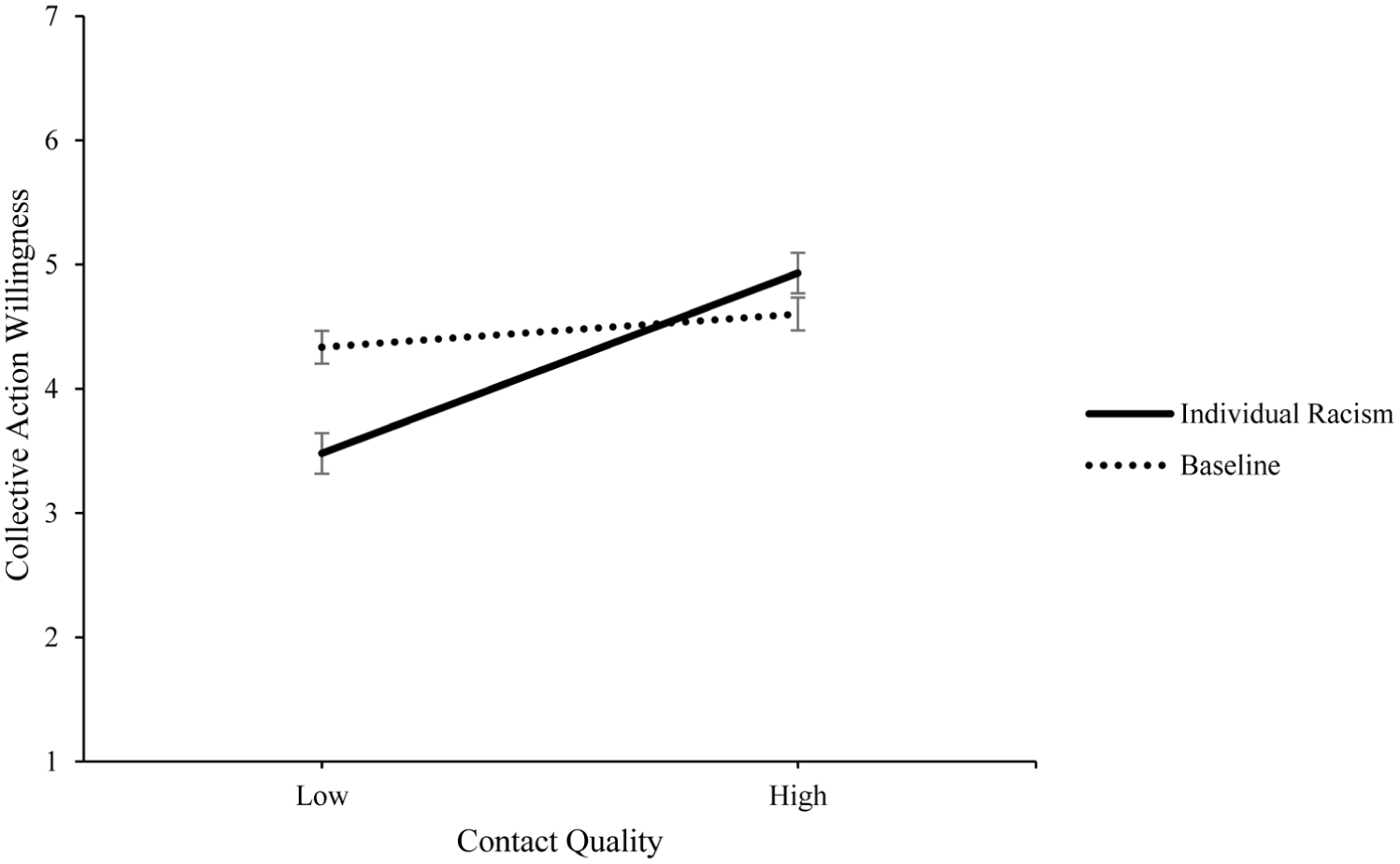
Significant interaction between contact quality and conceptualization of racism (individual vs. baseline) on collective action.
Interpersonal Action Willingness
Mirroring the collective action analyses, hierarchical moderated regressions were also undertaken for interpersonal action willingness. With contact quality and conceptualization of racism as predictors, the final model was significant, R2 = .10, F(5, 304) = 7.01, p < .001. Compared to Step 1, the inclusion of interaction terms at Step 2 explained an additional significant portion of variance, ΔR2 = .02, F(2, 304) = 3.52, p = .031. Three significant coefficients emerged in this analysis (all coefficients are listed in Table 2). First, higher contact quality predicted greater interpersonal action. Second, there was a significant interaction between contact quality and systemic versus individual racism. Finally, there was a significant interaction between contact quality and the individual racism versus baseline conditions. These two interactions demonstrated that the positive association between contact quality and interpersonal action was stronger in the individual racism condition than the systemic racism and baseline conditions (see Figure 2), with simple slopes analysis suggesting that contact quality did not predict interpersonal action in the baseline condition at all. Overall, these results generally supported the exploratory hypothesis that interpersonal action willingness would follow patterns similar to those found for collective action willingness.
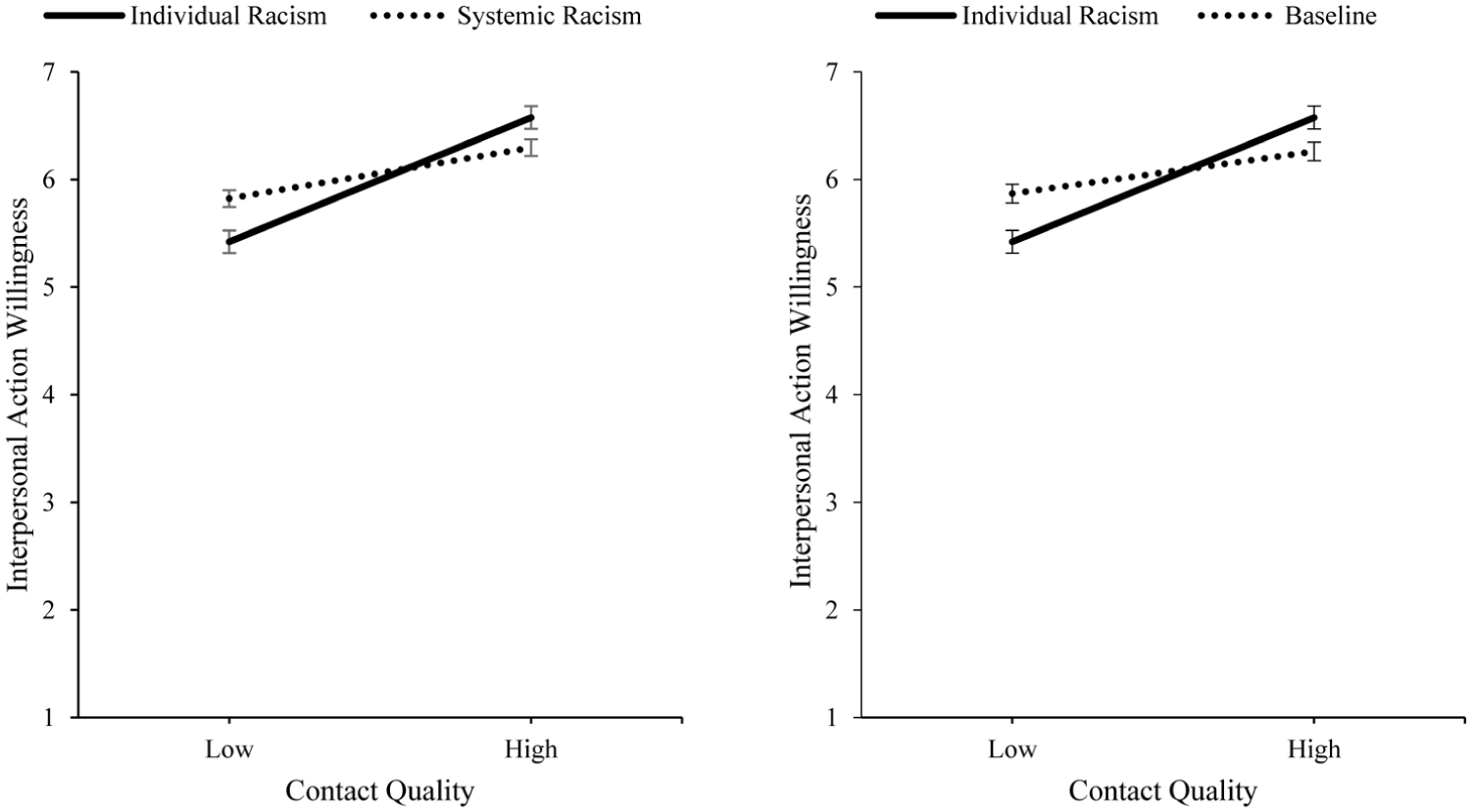
Significant interactions between contact quality and conceptualization of racism on interpersonal action.
Study 1 Discussion
Study 1 tested whether intergroup contact quality with racial minority people and exposure to a conceptualization of racism related to White people’s intergroup solidarity. As hypothesized, higher intergroup contact quality with racial minority people, reflecting more positive contact, predicted greater collective action willingness. This aligns with a wealth of existing evidence suggesting that advantaged group members’ positive contact experiences with disadvantaged groups is associated with intergroup solidarity (see Cocco et al., 2023, for a review), confirming the relevance of intergroup contact quality in mobilizing White people in the Australian context. Further, interpersonal action was also predicted by intergroup contact quality, providing evidence that the benefits of high-quality intergroup contact extend beyond well-studied collective action behaviors to also encompass solidarity-based interpersonal action.
Conceptualization of racism exposure impacted intergroup solidarity in somewhat unexpected ways. There was no support for the hypotheses that exposing White participants to a systemic racism conceptualization would lead to greater collective action than exposure to individual racism or a baseline condition, nor that this systemic racism exposure would strengthen the positive contact–action relationship. Instead, a novel finding was that exposure to an individual racism conceptualization strengthened the positive contact–action relationship, such that higher contact quality predicted greater collective action for those exposed to individual racism, but not among those in the baseline condition. Similarly, the relationship between contact quality and interpersonal action was stronger among those exposed to individual racism than both baseline participants and those exposed to systemic racism. In line with the ICCAM, exposure to individual racism, rather than systemic, may have activated inclinations towards action among those with higher quality intergroup contact by illuminating the illegitimate treatment of racial minorities as targets of individual racism (Hässler et al., 2021). These findings suggest that explicit awareness of individual racism may be needed to realize the polarizing effect of contact quality on action among White people.
There are two key limitations of the present study. First, while the bipolar intergroup contact quality measure used is well-established (Lolliot et al., 2015), more recent research has argued that positive and negative contact should be treated separately as the presence of one does not necessarily indicate the absence of the other (see Reimer & Sengupta, 2023). Separating these two constructs would help to clarify whether White people’s positive contact with racial minorities predicts greater intergroup solidarity, or if negative contact predicts reduced intergroup solidarity. A second limitation is that the target outgroup was not specified beyond racial minority people generally. It was the goal of the present study to consider White people’s actions against racism broadly, given the diverse groups affected by racism in Australia (FECCA, 2024). Although generalized collective action against racism has similarly been assessed in other work (see Ulug & Tropp, 2021, Study 3), it is possible that participants’ actions would depend on the minority outgroup in question. Further, some participants may have thought of one group when indicating their previous intergroup contact and another when indicating their collective and interpersonal action support, complicating data interpretation.
Study 2
Study 2 was designed to replicate and improve upon Study 1. This included investigating the effects of intergroup contact and exposure to conceptualizations of racism in relation to specific minority groups. While racism has existed throughout Australia’s colonial history, recent events in contemporary society have exacerbated particular tensions. For one, racism towards First Nations peoples has been especially prominent given the unsuccessful 2023 Voice to Parliament referendum which proposed to include First Nations peoples in the Constitution by establishing a First Nations advisory body to the Australian Parliament. Increased racism has been cited as both a contributing factor and consequence of this outcome, with ongoing negative impacts of this racism affecting First Nations communities (Allison et al., 2025). Meanwhile, among Asian Australians, reports of anti-Asian racism also increased in recent years following the COVID-19 pandemic (ABC News, 2020b, 2025). This is particularly concerning given the prominence of the Asian diaspora in Australia, with China consistently ranking among the top countries of birth for Australian residents born overseas (Australian Bureau of Statistics, 2024). Study 2 therefore employed a specific focus on promoting intergroup solidarity with First Nations peoples and Asian people.
Study 2 explored the effects of positive and negative contact with outgroups separately, given that empirical research not only demonstrates the benefits of positive contact but also the negative impact of negative contact specifically. For example, although it predicted collective action more weakly than positive contact, Reimer et al. (2017) found that heterosexual students’ negative contact experiences with sexual minorities was associated with lower willingness to engage in collective action supporting lesbian, gay, and bisexual rights. Similarly, among the Bulgarian majority and Bulgarian Turks, casual negative interactions with the lower status Roma minority group predicted reduced willingness to support policies aimed to benefit Roma communities (Visintin et al., 2017). Investigating the effects of both positive and negative contact are important due to the ample opportunities for diverse contact experiences to occur in everyday life (Schäfer et al., 2021).
Another reason to explore negative contact was that the bipolar contact quality measure used in Study 1 was ambiguous because it could not distinguish whether lower levels of intergroup solidarity were driven by negative contact, rather than only showing that positive contact predicted higher intergroup solidarity. It also could not rule out the possibility that negative contact interacted with exposure to conceptualizations of racism. Given that an individual conceptualization of racism may legitimize the status quo and explicitly reinforce the idea that structural changes to address racism are not needed (Adams et al., 2008; Rucker & Richeson, 2021), it is plausible that the saliency of individual racism would exacerbate the inaction predicted by negative contact. Examining positive and negative contact separately in Study 2 allowed us to test this prediction.
Finally, although Study 1 found that only individual racism exposure strengthened the positive contact–action relationship, this was unexpected in light of previous research demonstrating the merits of being exposed to ideas of systemic racism (e.g., Davidai & Walker, 2022; Efimoff & Starzyk, 2023) and ICCAM theorizing on how illuminating group differences should bolster the positive contact–action relationship (Hässler et al., 2021). We thus sought to test the reliability of our Study 1 findings, maintaining that it is possible for exposure to systemic racism to have the same positive effect as was found with exposure to individual racism in Study 1.
Study 2 Aims and Hypotheses
The aim of Study 2 was to investigate how White people’s positive and negative contact experiences with a specific target outgroup relate to their intergroup solidarity supporting that group, and whether exposure to conceptualizations of racism impact these relationships. Given the similar pattern of results between collective and interpersonal action in Study 1 and their high correlation with each other, Study 2 hypotheses were expanded to generally encompass both types of action. Overall, it was hypothesized that among White participants:
Study 2 Method
Participants and Design
Study 2 was approved by the Human Research Ethics Committee of a local university (Protocol No: 2024/HE000711) and preregistered (see Model 1 at https://aspredicted.org/wn6r-bfft.pdf) as part of a larger data collection effort. Participants were randomly allocated to a systemic racism, individual racism, or baseline condition; and either an Asian or First Nations target outgroup. Positive and negative contact with the target outgroup were measured, as was collective and interpersonal action supporting the target outgroup.
Similar to Study 1, an a priori GPower analysis assuming an α of .05 and with 80% power suggested that a minimum sample size of 223 would sufficiently detect a small-to-medium effect size of f2 = .07 for the overall regression (Faul et al., 2007). While an initial 424 participants consented to the study, 102 were excluded from analysis, including four duplicate responders, 79 participants who did not meet group membership requirements (e.g., were equally Anglo White and part of a racial minority). Nine participants who failed a conceptualization of racism comprehension check and eight who failed a target group comprehension check were also removed. Finally, one participant who failed an attention check and one who failed a suspicion check were removed. The final sample consisted of 322 participants.
Among the final sample, 186 participants were undergraduate psychology students and 136 were broader community members. Ages ranged from 18 to 83 years (M = 28.59; SD = 13.08). Most commonly, participants were female (67.08%), followed by male (31.99%) and non-binary or other (0.93%). All participants were Anglo White, with most ethnicities reported being Anglo or Celtic (78.26%) and/or European (36.45%). The vast majority of participants were Australian citizens (92.55%). Although most had no religious affiliation (67.39%), Christianity was the most common religion reported (27.33%). Overall, participants tended to be politically progressive when assessed against a neutral midpoint of a bipolar scale where 1 = progressive and 7 = conservative (adapted from Jost, 2006; M = 2.95, SD = 1.29), t(321) = −14.62, p < .001.
Procedure
Undergraduate psychology students were recruited in the same manner as Study 1. Broader community members were recruited via Prolific (same compensation as Study 1). The study was administered as an online questionnaire via Qualtrics with the measures administered in the same order as Study 1. An additional measure included for Study 2, assessing personal perceptions of systemic and individual racism, was presented after the dependent variables but before the suspicion check. Participants were fully debriefed upon study completion.
Materials
Conceptualization of Racism Manipulation and Comprehension Checks
Based on Miller et al. (2021) and Rucker et al. (2019), the conceptualization of racism manipulation employed Instagram posts to describe how racism today is either mainly a systemic or individual issue, thereby improving external validity beyond the uncontextualized text vignette used in Study 1. The materials also provided examples of systemic or individual racism specific to either Asian or First Nations peoples, depending on participants’ allocated target group. Participants in the baseline condition were shown a set of Instagram posts to ensure identical questionnaire length to those in the systemic and individual racism conditions; however, this occurred after the dependent variable measures.
A check was administered to confirm comprehension of participants’ allocated conceptualization of racism. This followed the prompt “According to the Instagram posts on the previous page, racism in today’s society is. . .,” with three answer options presented in randomized order—“Mainly a systemic issue,” “Mainly an individual issue,” and “No longer an issue.”
A second check was administered to confirm participants could identify their allocated target outgroup. Following the prompt “According to the Instagram posts on the previous page, one group harmed by racism is. . .,” three answer options were presented in randomized order—“Asian people,” “First Nations peoples,” and “White people.”
Personal Perceptions of Racism
To allow assessment of whether the conceptualization of racism manipulation impacted personal perceptions of systemic and individual racism against racial minority people, two single-item measures were included (e.g., “Racism in today’s society is caused by the negative beliefs and prejudices of individual people who treat racial minority people poorly”; adapted from Rucker et al., 2019). Participants rated their agreement to each statement on a 7-point Likert scale (1 = strongly disagree to 7 = strongly agree) such that higher values reflected greater perceptions of that conceptualization of racism.
Positive and Negative Intergroup Contact
To address the noted limitation of the bipolar contact quality measure used in Study 1, positive and negative intergroup contact with the target outgroup in Study 2 were measured separately using three items each (Chen et al., 2024; Hayward et al., 2017). These items also incorporated contact quantity, such that both the frequency and intensity of contact were captured in a single measure for each type of contact (positive and negative).
For positive contact, the first item asked whether participants had ever had positive interactions with a member of the target outgroup. If yes, participants indicated the frequency (1 = extremely rarely to 7 = extremely often) and intensity (1 = not at all positive to 7 = extremely positive) of these interactions. If no, participants were given a frequency score of 0 (i.e., never). Participants’ frequency and intensity scores were multiplied to provide an overall score where higher values reflected greater positive contact.
The negative contact measure followed an identical format, with the first item gauging whether participants had ever had a negative interaction with a member of the target outgroup, and two additional items assessing frequency (1 = extremely rarely to 7 = extremely often) and intensity (1 = not at all negative to 7 = extremely negative), whch were presented if participants responded “yes.” If “no,” participants were given a frequency score of 0 (i.e., never). The frequency and intensity scores were multiplied to arrive at an overall score where higher values indicated greater negative contact.
Collective Action
Collective action willingness was measured identically to Study 1, except each item was adapted to specify the target outgroup (Cronbach’s α = .94; Kelly & Breinlinger, 1996).
An additional collective action measure that was more behavioral was designed for the current study, based on common collective action willingness behaviors in the literature (e.g., Kelly & Breinlinger, 1996; Tausch et al., 2015). Participants were asked if they would like to be provided with any resources upon study completion. Five resources to support the target outgroup were then listed in randomized order (e.g., “Email template to write to your local MP regarding action to address racism towards Asian people”), with a sixth option provided for participants to indicate “None.” Responses were coded from 0 = none to 5 = ticked five resources, with higher values representing greater behavioral collective action.
Interpersonal Action
Interpersonal action willingness was measured identically to Study 1, except each item was adapted to specify the target outgroup (Cronbach’s α = .92; Aldana et al., 2019).
Demographics and Group Membership
Demographic information was collected in the same manner as Study 1, including measures of social identification (Postmes et al., 2013) and political orientation (Jost, 2006).
Attention Check
An attention check item was administered identically to Study 1 (Marjanovic et al., 2014).
Suspicion Check
A suspicion check was administered identically to Study 1 (Rubin et al., 2010).
Study 2 Results
Data Screening and Preliminary Analyses
All data screening and analyses were conducted using IBM Statistics Version 28. Based on their z-scores exceeding ±3.29 (Tabachnick & Fidell, 2014), five univariate outliers were identified on the interpersonal action scale and five on the negative contact scale. These outliers were associated with nine participants. None of the remaining participants were multivariate outliers based on the critical Mahalanobis distance of χ2 = 16.27. The slight differences in the pattern of significant results when analyses were conducted with versus without outliers suggested that some findings were sensitive to the presence of extreme values, and thus unreliable. The remaining sections therefore report on analyses with outliers excluded. More information on the differences between analyses with and without outliers is provided in the supplemental material.
To test the effect of the conceptualization of racism manipulation on personal perceptions of the extent to which racism is an individual and systemic issue, two one-way ANOVAs were conducted. These revealed that there was no significant effect of the manipulation on personal perceptions of individual racism, (F(2, 310) = 1.64, p = .196, ηp2 = .01), but there was on personal perceptions of systemic racism, (F(2, 310) = 3.47, p = .032, ηp2 = .02). Specifically, LSD (Least Significant Difference) post hoc tests showed that those in the systemic conceptualization condition reported higher personal perceptions of systemic racism than those in the individual conceptualization (p = .019) and baseline (p = .035) conditions. Descriptive statistics for personal perceptions of systemic and individual racism in each experimental condition are reported in the supplemental material. Exploratory ANOVAs examining whether White social identity interacted with the effect of the conceptualization of racism manipulation on the dependent variables yielded nonsignificant findings (ps> .05) and are also available in the supplemental material. Finally, exploratory t-tests (see supplemental material) on differences between undergraduate psychology students versus broader community members on the dependent variables showed that students tended to report higher interpersonal action and behavioral collective action. However, recruitment source as a predictor and its interactions with conceptualizations of racism did not alter the pattern of significance; accordingly, the analyses reported below were performed across the entire sample.
Main Analyses
Hierarchical moderated regressions were conducted, with Step 1 including the covariates of social identity, target group, and either positive or negative contact depending on which one was not the primary predictor of interest for that regression. Social identity had a significant bivariate correlation with behavioral collective action and was included in analyses across all three outcome variables for consistency (see Table 3 for correlations, means, and standard deviations for continuous variables). 2 While no particular hypotheses were derived regarding target group, the effects were statistically modelled for confirmation. In the main analyses, the target group was only included as a covariate rather than a moderator, as exploratory analyses revealed it did not interact with the key predictor variables of positive or negative contact or conceptualization of racism (ps > .05). Step 2 added the key predictor variables (i.e., contact, conceptualization of racism), and Step 3 added the interactions. Significant interactions and simple slopes were evaluated in the same way as Study 1. All significant coefficients remained significant at the α level of .05 after utilizing the Benjamini-Hochberg procedure with an FDR (False Discovery Rate) of 0.1 (Benjamini & Hochberg, 1995).
Means, Standard Deviations, and Correlations for Continuous Variables, Study 2.
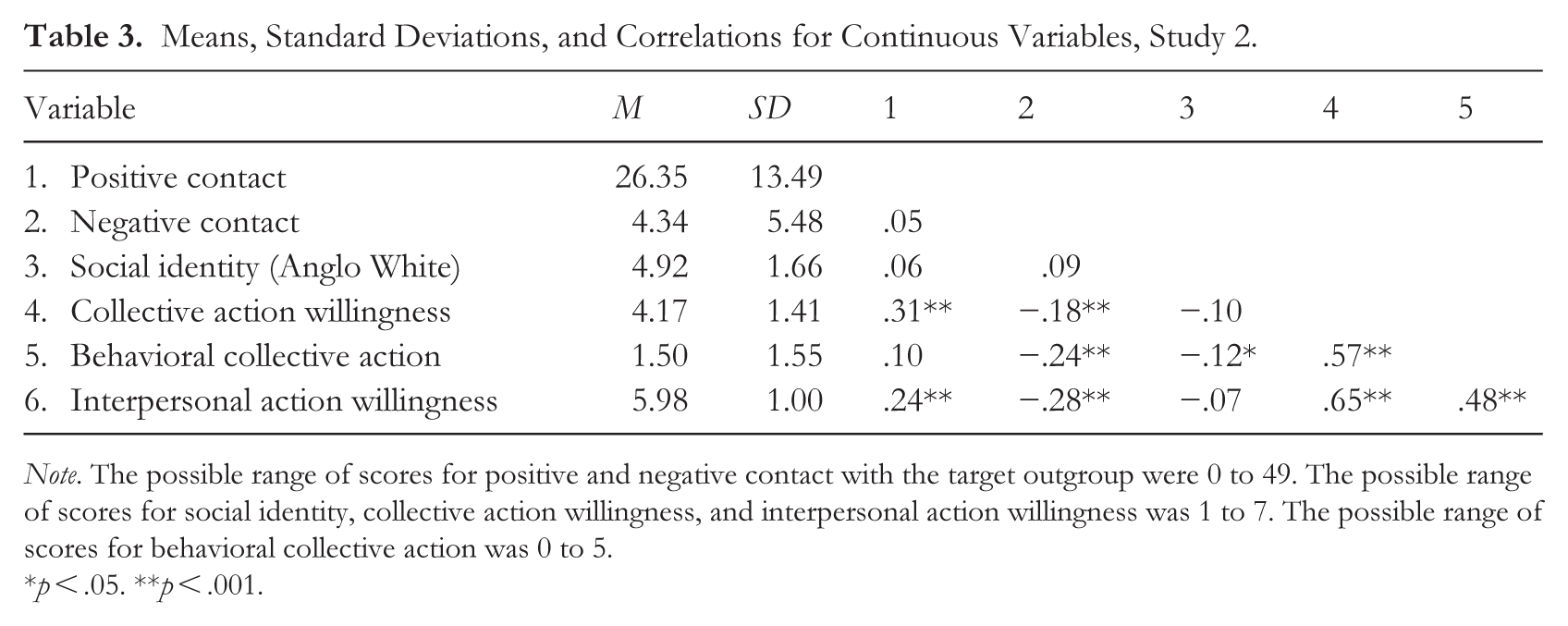
Note. The possible range of scores for positive and negative contact with the target outgroup were 0 to 49. The possible range of scores for social identity, collective action willingness, and interpersonal action willingness was 1 to 7. The possible range of scores for behavioral collective action was 0 to 5.
p < .05. **p < .001.
Collective Action Willingness
Positive Contact
The final model of the hierarchical regression on collective action willingness with positive contact and conceptualization of racism as primary predictors was significant, R2 = .26, F(8, 303) = 13.11, p < .001. Entering these predictors at Step 2 explained a significant portion of variance compared to Step 1, ΔR2 = .20, F(3, 305) = 26.54, p < .001. However, the addition of interaction terms at Step 3 provided no further explanatory power thereafter, ΔR2 = .01, F(2, 303) = 1.01, p = .366. As predicted by H1, positive contact predicted greater collective action willingness. H2 was unsupported as no interaction emerged between positive contact and individual or systemic racism versus a baseline condition. H5 was unsupported as none of the conceptualizations of racism predictors were significant (all ps > .075). Table 4 displays all coefficients tested at each step.
Hierarchical Regressions of Contact and Conceptualization of Racism on Collective Action Willingness.
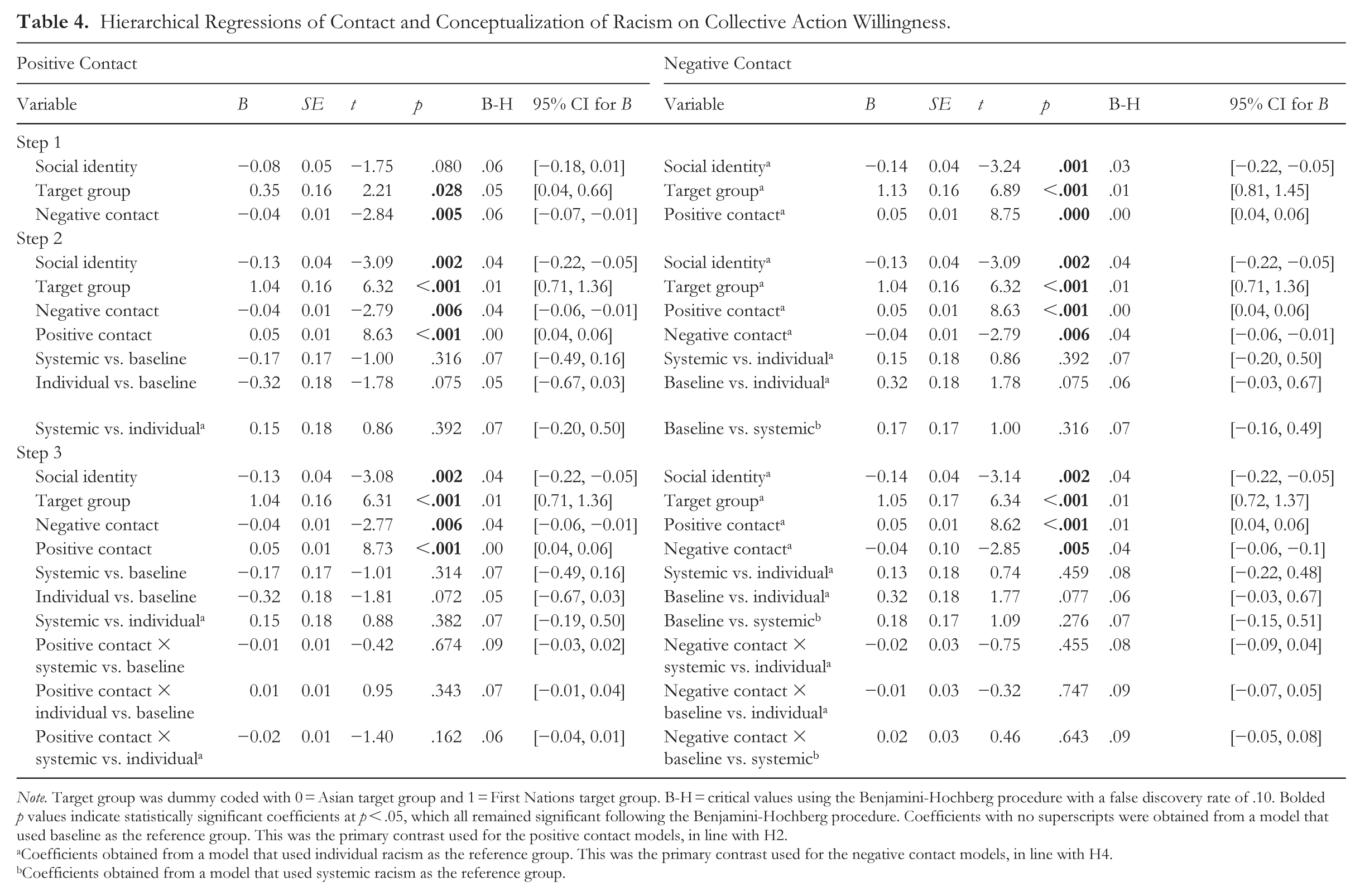
Note. Target group was dummy coded with 0 = Asian target group and 1 = First Nations target group. B-H = critical values using the Benjamini-Hochberg procedure with a false discovery rate of .10. Bolded p values indicate statistically significant coefficients at p < .05, which all remained significant following the Benjamini-Hochberg procedure. Coefficients with no superscripts were obtained from a model that used baseline as the reference group. This was the primary contrast used for the positive contact models, in line with H2.
Coefficients obtained from a model that used individual racism as the reference group. This was the primary contrast used for the negative contact models, in line with H4.
Coefficients obtained from a model that used systemic racism as the reference group.
Negative Contact
A hierarchical regression on collective action willingness was conducted with negative contact and conceptualization of racism as primary predictors. The final model was significant, R2 = .25, F(8, 303) = 12.86, p < .001. While the inclusion of these predictors at Step 2 provided additional explanatory power beyond Step 1 (ΔR2 = .03, F(3, 305) = 3.72, p = .012), the subsequent inclusion of interactions at Step 3 did not explain further variance relative to Step 2 (ΔR2 = .00, F(2, 303) = 0.28, p = .756). Supporting H3, negative contact predicted reduced collective action willingness. However, there were no significant interactions to support H4. As all conceptualizations of racism predictors were nonsignificant, no support was found for H5. All coefficients tested are displayed in Table 4.
Behavioral Collective Action
Positive Contact
The final hierarchical regression model on behavioral collective action with positive contact and conceptualization of racism as primary predictors was significant, R2 = .16, F(8, 302) = 7.32, p < .001. Relative to Step 1, entering the predictor variables at Step 2 explained an additional significant portion of variance (ΔR2 = .05, F(3, 304) = 5.84, p = .001). Adding their interaction terms at Step 3 produced a further significant increase in variance explained (ΔR2 = .02, F(2, 302) = 3.67, p = .027). All coefficients tested are listed in Table 5. In support of H1, positive contact predicted greater behavioral collective action. Although a significant interaction emerged between positive contact and the systemic racism versus baseline conditions, the effect was in the opposite direction to that predicted by H2. Specifically, the contact–action relationship was weaker among those exposed to systemic racism compared to baseline (see Figure 3). Simple slopes analysis demonstrated that while positive contact predicted greater behavioral collective action at baseline, it did not predict behavioral collective action in the systemic racism condition. Further, no significant interaction emerged between positive contact and individual racism versus baseline to support H2. Finally, H5 was also unsupported as none of the conceptualizations of racism predictors were significant (all ps > .382).
Hierarchical Regressions of Contact and Conceptualization of Racism on Behavioral Collective Action.
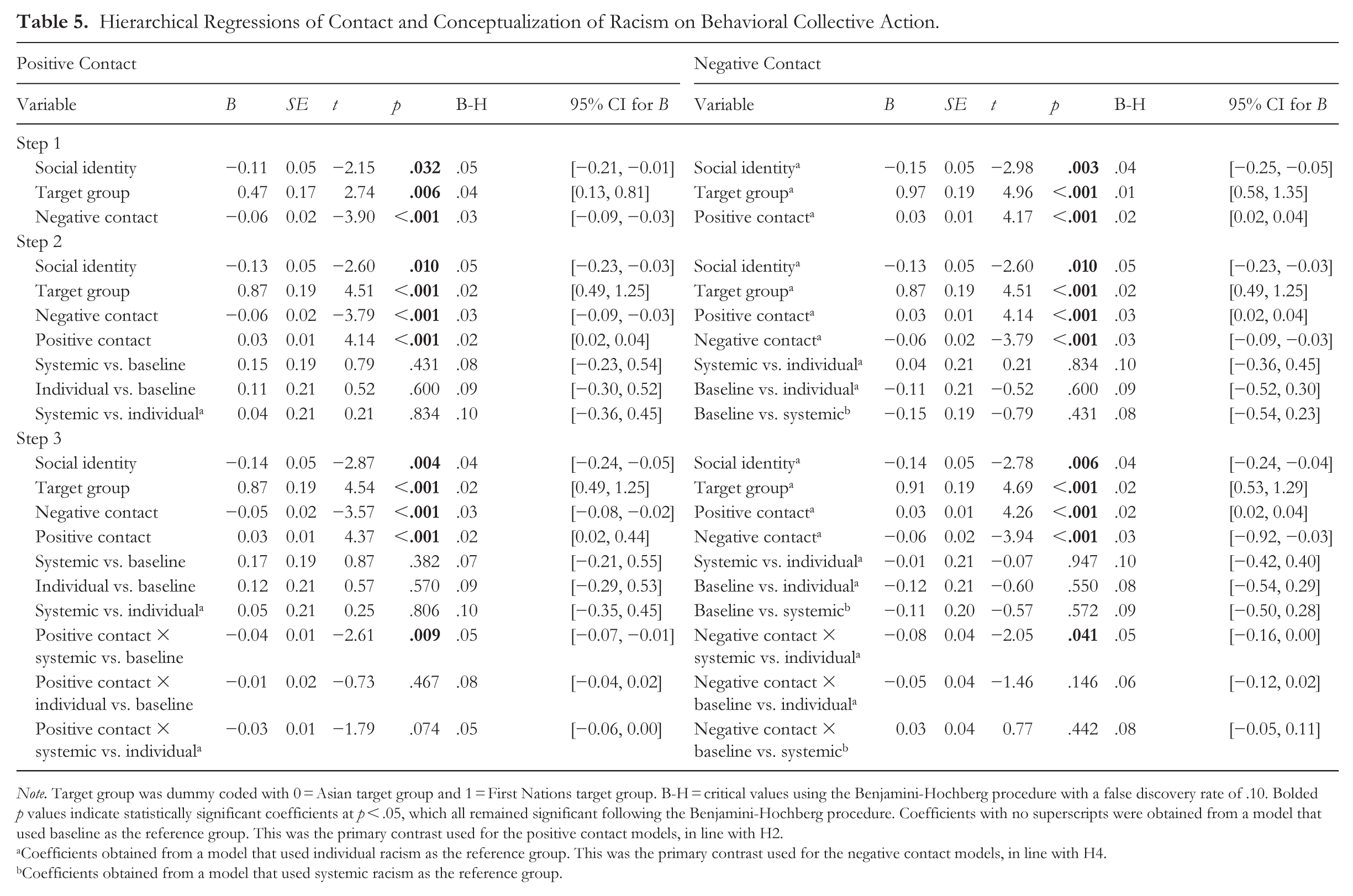
Note. Target group was dummy coded with 0 = Asian target group and 1 = First Nations target group. B-H = critical values using the Benjamini-Hochberg procedure with a false discovery rate of .10. Bolded p values indicate statistically significant coefficients at p < .05, which all remained significant following the Benjamini-Hochberg procedure. Coefficients with no superscripts were obtained from a model that used baseline as the reference group. This was the primary contrast used for the positive contact models, in line with H2.
Coefficients obtained from a model that used individual racism as the reference group. This was the primary contrast used for the negative contact models, in line with H4.
Coefficients obtained from a model that used systemic racism as the reference group.
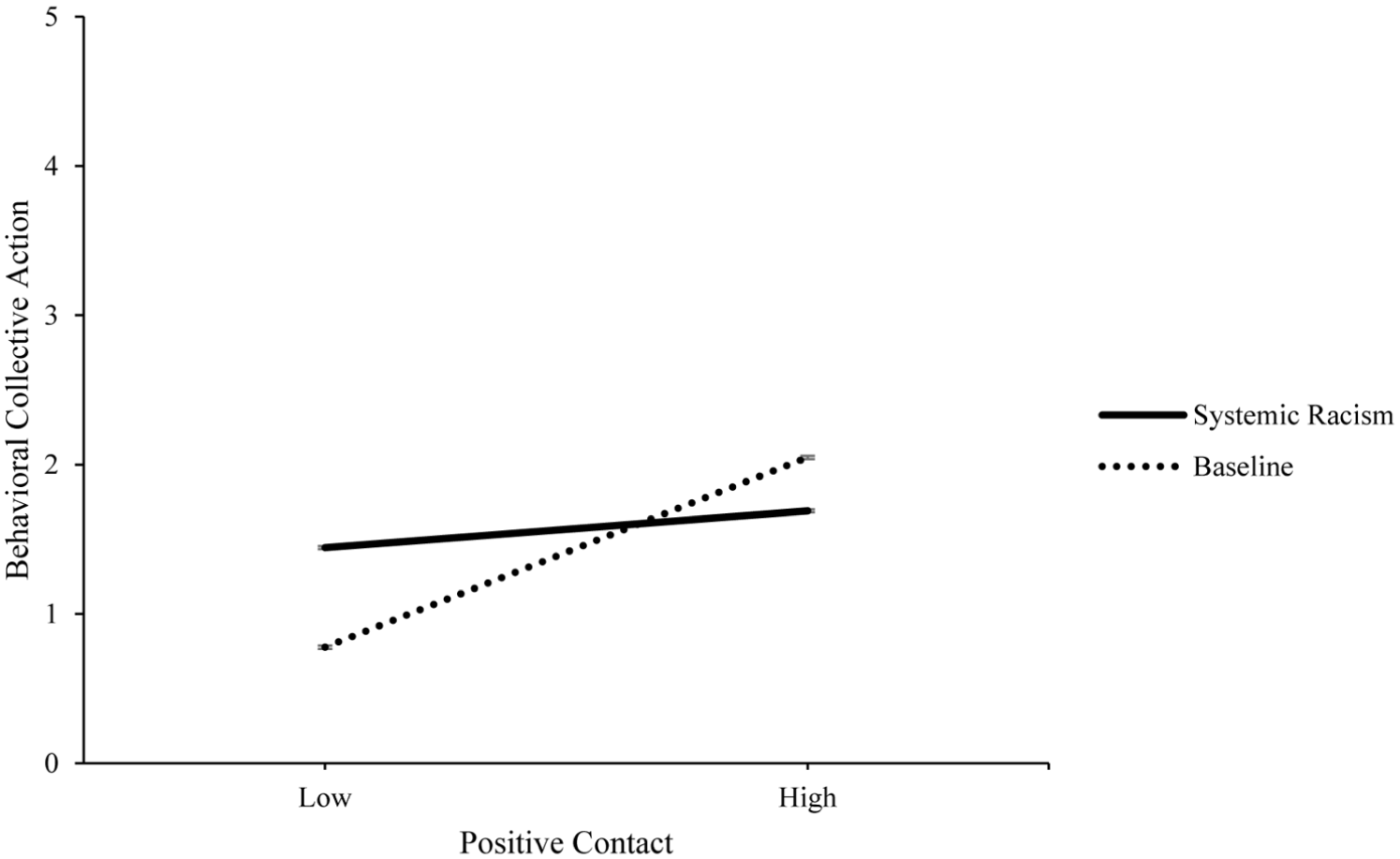
Significant interaction between positive contact and conceptualization of racism (systemic vs. baseline) on behavioral collective action.
Negative Contact
In a hierarchical regression with negative contact and conceptualization of racism as primary predictors, the final model on behavioral collective action was significant, R2 = .16, F(8, 302) = 6.91, p < .001. The inclusion of the predictors at Step 2 explained a significant amount of additional variance compared to Step 1, ΔR2 = .04, F(3, 304) = 5.13, p = .002. The inclusion of interaction terms at Step 3 did not significantly explain any further variance beyond Step 2, ΔR2 = .01, F(2, 302) = 2.27, p = .105. Table 5 shows all coefficients tested at each step. Supporting H3, negative contact predicted reduced behavioral collective action. H4 was not supported as no significant interaction emerged between negative contact and individual racism versus baseline. Moreover, while there was a significant interaction between negative contact and systemic versus individual racism, it was in the opposite direction to that expected. Specifically, the association between negative contact and behavioral collective action was more strongly negative in the systemic racism condition than in the individual racism condition (see Figure 4). A simple slopes analysis demonstrated that negative contact was not a significant predictor of behavioral collective action at all in the individual racism condition. Finally, nonsignificant coefficients of the conceptualization of racism variable indicated no support for H5.
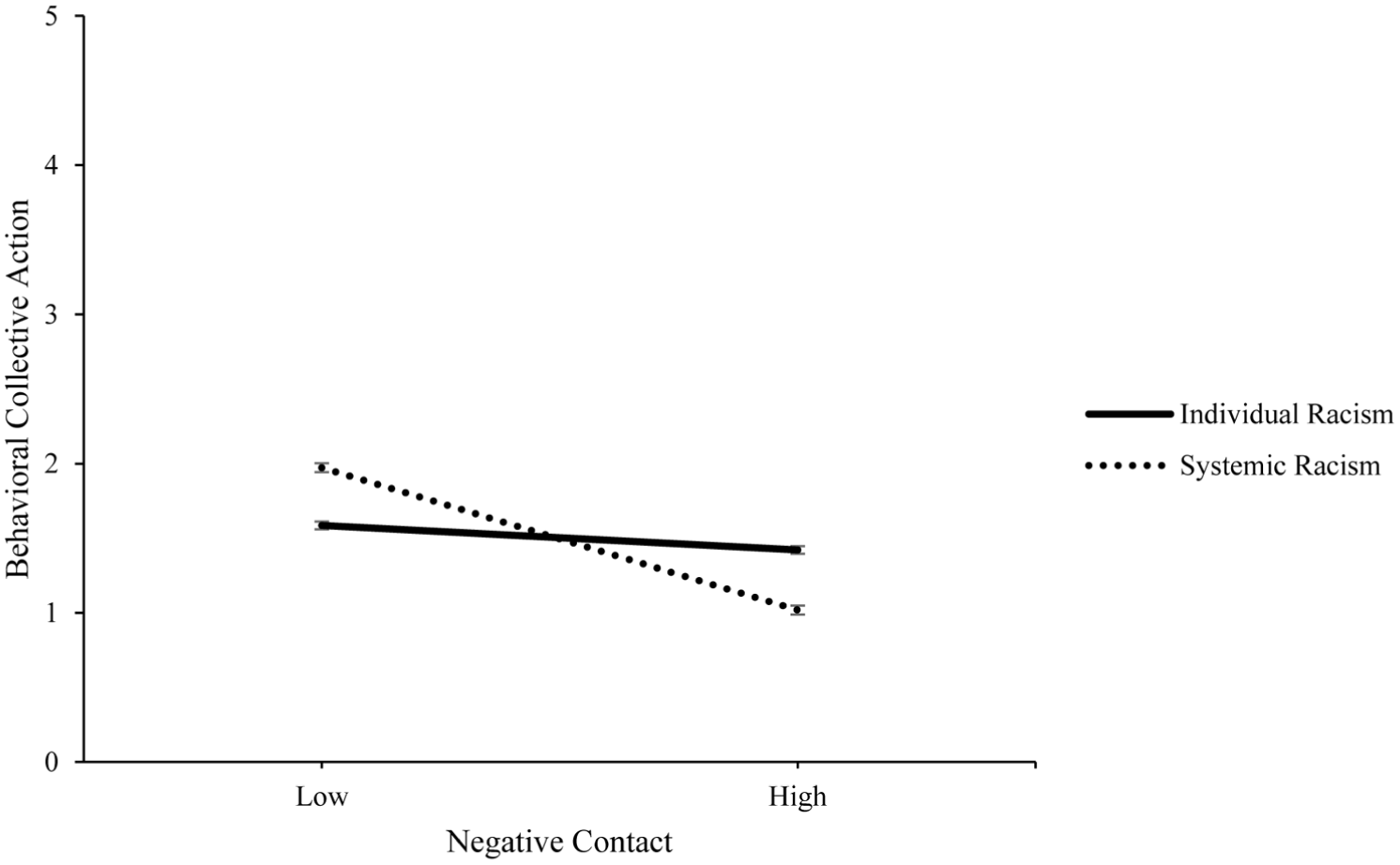
Significant interaction between negative contact and conceptualization of racism (systemic vs. individual) on behavioral collective action.
Interpersonal Action Willingness
Positive Contact
The final hierarchical regression model on interpersonal action with positive contact and conceptualization of racism as primary predictors was significant overall, R2 = .19, F(8, 303) = 9.12, p < .001. Relative to Step 1, the inclusion of these predictors at Step 2 explained additional variance, ΔR2 = .10, F(3, 305) = 12.40, p < .001. However, the inclusion of interaction terms at Step 3 did not explain any further variance beyond Step 2, ΔR2 = .01, F(2, 303) = 2.11, p = .123. Table 6 presents all coefficients. Consistent with H1, positive contact predicted higher interpersonal action. No evidence was found for the interaction pattern predicted by H2. Instead, a significant interaction between positive contact and systemic versus individual racism revealed that the positive contact–action relationship was more pronounced in the individual racism condition than the systemic racism condition (see Figure 5). There was no support for H5 as all conceptualization of racism coefficients were nonsignificant.
Hierarchical Regressions of Contact and Conceptualization of Racism on Interpersonal Action Willingness.
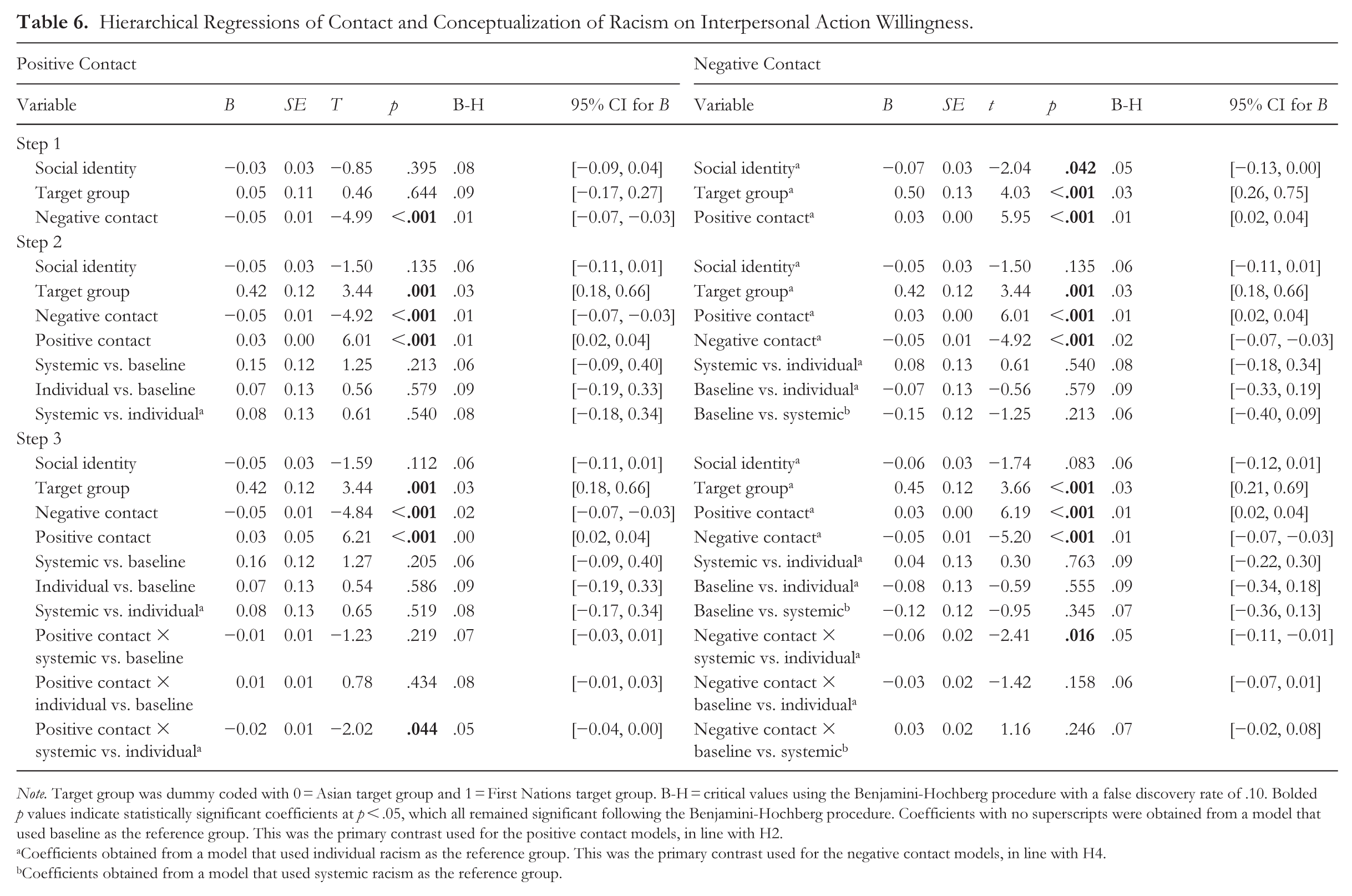
Note. Target group was dummy coded with 0 = Asian target group and 1 = First Nations target group. B-H = critical values using the Benjamini-Hochberg procedure with a false discovery rate of .10. Bolded p values indicate statistically significant coefficients at p < .05, which all remained significant following the Benjamini-Hochberg procedure. Coefficients with no superscripts were obtained from a model that used baseline as the reference group. This was the primary contrast used for the positive contact models, in line with H2.
Coefficients obtained from a model that used individual racism as the reference group. This was the primary contrast used for the negative contact models, in line with H4.
Coefficients obtained from a model that used systemic racism as the reference group.
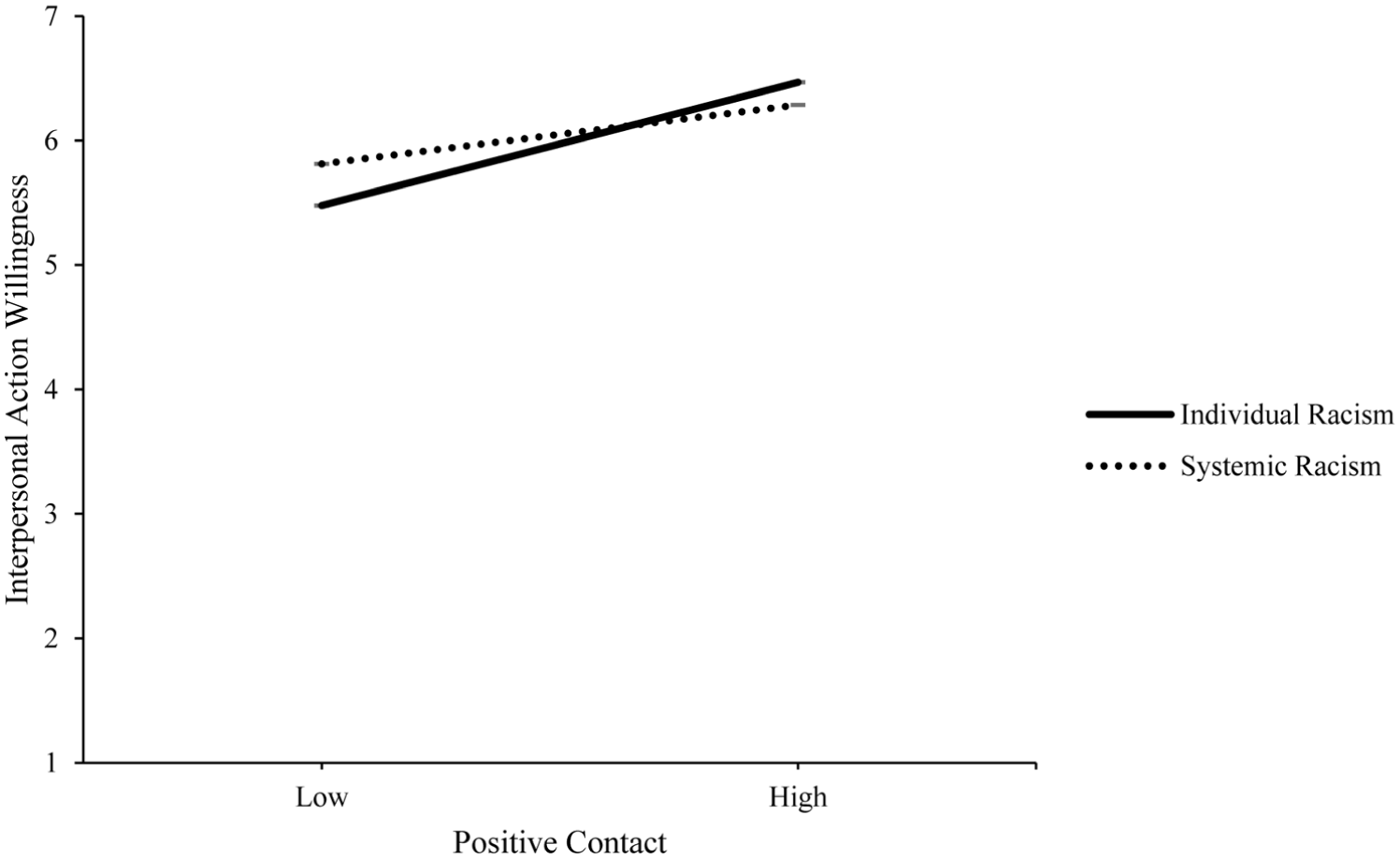
Significant interaction between positive contact and conceptualization of racism (systemic vs. individual) on interpersonal action.
Negative Contact
A hierarchical regression was performed on interpersonal action with negative contact and conceptualization of racism as primary predictors. The final model was significant, R2 = .20, F(8, 303) = 9.39, p < .001. The inclusion of the predictors at Step 2 contributed a significant increase in explained variance beyond Step 1, ΔR2 = .07, F(3, 305) = 8.90, p < .001. Subsequently, Step 3 with interaction terms included did not add any further explanatory power, ΔR2 = .02, F(2, 303) = 2.98, p = .052. Aligning with H3, negative contact predicted reduced interpersonal action. However, H4 was not supported, as a significant interaction between negative contact and individual versus systemic racism occurred in the opposite direction to that hypothesized. As per behavioral collective action, negative contact predicted lower interpersonal action willingness more strongly in the systemic racism condition, compared to individual racism for which negative contact did not predict interpersonal action at all (see Figure 6). Further, there was no significant interaction between negative contact and individual racism versus baseline. Finally, H5 was unsupported as all conceptualizations of racism coefficients were nonsignificant. All coefficients tested are listed in Table 6.
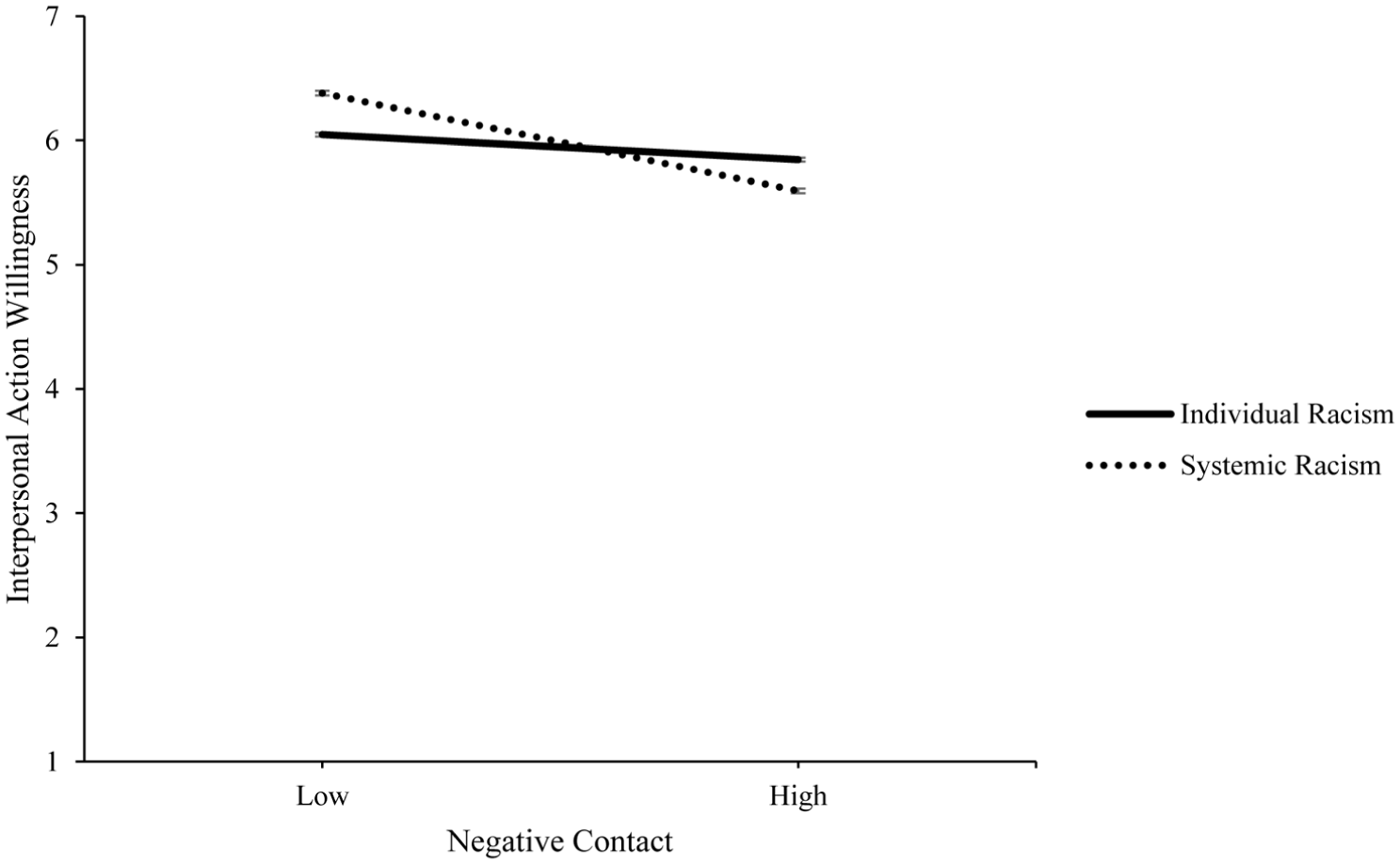
Significant interaction between negative contact and conceptualization of racism (systemic vs. individual) on interpersonal action willingness.
Study 2 Discussion
Study 2 investigated how positive and negative contact, along with exposure to a conceptualization of racism, related to White participants’ intergroup solidarity supporting a specific target outgroup. While positive intergroup contact tended to predict greater intergroup solidarity, as hypothesized (Cocco et al., 2023; Hässler et al., 2021), exposure to systemic racism via text-based social media posts unexpectedly suppressed the positive association between positive contact and behavioral collective action compared to a baseline condition. Moreover, it weakened the positive association between positive contact and interpersonal action, relative to exposure to individual racism. It is possible that exposure to systemic racism led participants to feel helpless in the face of a widespread social issue, particularly as these participants subsequently reported higher personal perceptions that racism in today’s society is indeed a systemic issue. A decrease in efficacy to take action may have therefore contributed to the present results, especially given that efficacy is an important predictor of action (see van Zomeren et al., 2008).
Support was found for the hypothesis that White people’s negative contact with a target outgroup would generally predict reduced intergroup solidarity. This aligns with previous findings that negative intergroup contact is associated with reduced collective action and policy support for that group (Cocco et al., 2022; Visintin et al., 2017). In contrast to expectations, however, the relationship between negative contact and action weakened when participants were reminded of individual racism (versus systemic racism). Exposure to an individual racism conceptualization may ensure the saliency of the issue of racism in a more accessible way to White people than a systemic racism conceptualization (Carter & Murphy, 2015; Fourie & Moore-Berg, 2022; Rucker & Richeson, 2021), and thus provide a protective factor against the otherwise harmful impacts of negative contact on action against racism.
A novel finding of the present study was that White people expressed greater intergroup solidarity supporting First Nations peoples than supporting Asian people. This could be due to the prevalence of the problematic “model minority” stereotype that portrays Asian people as having high status and therefore not in need of collective action support (see Li & Nicholson, 2021; Tseng & Lee, 2021). In addition, it may reflect sensible acknowledgment that First Nations peoples have been severely affected by the ongoing racist impacts of colonization, including the most recent outcome of the Voice Referendum (Allison et al., 2025). Indeed, data collection for Study 2 took place immediately in the year following the referendum when the outcome was salient in public consciousness.
The sociopolitical context may also account for why social identification with White people was associated with lower intergroup solidarity in Study 2, but not Study 1. In Study 2, social identity was associated with lower intergroup solidarity supporting First Nations peoples but was not associated with intergroup solidarity supporting Asian people. This may be due to the perceived symbolic threat posed by the First Nations outgroup to the White ingroup’s values and cultural identity (Rios et al., 2018). There is evidence that White Australians express entitlement on the basis of being “real” Australians (Dandy & Pe-Pua, 2013), and therefore those who have high White social identity may feel that their ingroup identity is threatened by First Nations peoples who are the first Australians. Overall, differences that emerged on the basis of target outgroup in the present study open avenues for future research to consider how narratives in popular discourse relating to specific groups may impact efforts to promote solidarity.
General Discussion
Overall, the present research demonstrated that intergroup contact quality and exposure to conceptualizations of racism play a role in White people’s intergroup solidarity supporting outgroups. Replicating previous literature, both studies demonstrated that more positive contact with outgroups positively predict collective action against racism (Cocco et al., 2023). A novel finding was that more positive contact also predicted greater interpersonal action against racism, suggesting that interpersonal actions are an important way that individuals may choose to take action against racism in addition to collective action support (Aldana et al., 2019). The present research shows that the opposite trend also holds—that is, White people’s negative contact predicts lower intergroup solidarity, aligning with existing correlational evidence (e.g., Reimer et al., 2017). Taken together, this research demonstrates that the quality of advantaged group members’ contact with outgroups is a key predictor of intergroup solidarity.
While exposure to a systemic racism conceptualization was insufficient alone to affect White people’s intergroup solidarity, it had an impact in combination with previous intergroup contact in somewhat unexpected ways. Specifically, exposure to systemic racism did not strengthen the positive contact–action relationship in the pattern predicted by the ICCAM (while exposure to individual racism did; Hässler et al., 2021). If anything, this systemic racism exposure weakened the typically positive relationship between positive contact and action. This finding is similar to Vázquez et al. (2021), who showed that men’s intergroup contact with women predicted reduced feminist collective action when discrimination against women was highlighted. The authors reasoned that highlighting discrimination against women may have been psychologically threatening to male participants, who responded by protecting their group’s interests (i.e., by withholding support for social change for women).
While others have similarly shown that White people may react defensively to ingroup critiques that threaten their group’s image (Carter & Murphy, 2015; Fourie & Moore-Berg, 2022; Rucker & Richeson, 2021; Unzueta & Lowery, 2008), the present work interestingly did not find that the effect of the conceptualization of racism exposure on intergroup solidarity depended on White social identity. One possibility for this is that the manipulation may not have framed systemic racism strongly enough to elicit identity-protective responses. Previous research suggests that a defensive reaction among advantaged groups is particularly likely when their ingroup has been explicitly critiqued (e.g., the idea that White Americans are responsible for anti-Black racism; Adra et al., 2020). While the conceptualization of racism manipulations in the present work discussed disadvantages for minority outgroups, it did so without explicitly emphasizing the perpetrator. Consistent with this interpretation, exposure to systemic racism in Study 2 did lead participants to perceive higher levels of systemic racism on average than those in other conditions. Alternatively, the role of social identity may require further refinement, such as by differentiating between secure and narcissistic forms of group identity as the former may be more strongly associated with defensive reactions (see Górska et al., 2020). Regardless, the combined role of intergroup contact and systemic racism exposure demonstrates that in brief textual format, systemic racism exposure generally has little impact on willingness to take action and, if anything, may harm the contact–action relationship.
Given that individual racism is a relatively common conceptualization of racism, it may have provided a more accessible way of rendering the illegitimacy of group differences salient to White people (see Rucker & Richeson, 2021). Previous research demonstrates that White people tend to perceive racism as an individual issue more than a systemic issue (Miller et al., 2021), suggesting that the former is a less controversial conceptualization of racism. Further, individual racism is highly relevant in Australia, with various news reports outlining overt racism occurring in interpersonal contexts, particularly against members of the Asian community following the COVID-19 pandemic (e.g., verbal abuse, physical attacks; ABC News, 2020b, 2025). There have also been recent news articles highlighting a substantial increase in reports of racism experienced by First Nations peoples over the past decade, including instances of verbal abuse and physical violence (Morse, 2025). Importantly, the present findings do not suggest that exposure to the concept of individual racism elucidated in these examples is universally beneficial, but rather, may be conducive to intergroup solidarity when paired with positive contact experiences.
Limitations and Future Directions
One limitation of the present research is that contact was measured via self-report. This prevented causal inferences and did not enable control over the content of intergroup contact experiences. (Cocco et al.’s (2023) narrative review revealed that the content of intergroup contact experiences is important, as the most mobilizing intergroup contact for advantaged group members is that which heightens their awareness of injustices experienced by minority groups. Future research may thus wish to explore whether discussions of individual or systemic racism within an intergroup interaction may be effective to inspire intergroup solidarity.
A second limitation relates to the text-based manipulation of exposure to conceptualizations of racism. While other studies show that exposure to textual information can increase awareness of issues of racial disparities (e.g., Davidai & Walker, 2022; Eckerle et al., 2023), thus lending merit to this approach, the Instagram posts used in the present study remained a static way to increase the saliency of conceptualizations of racism. Previously, Efimoff and Starzyk (2023) demonstrated the positive effects of exposure to systemic racism via videos, which may be a more engaging medium. Future research investigating the effects of conceptualization of racism should consider more immersive methods.
The present research exclusively considered the views of White people, which is important given that advantaged group members’ solidarity with minority groups can be important for realizing social change (Gulker et al., 2013; Subašić et al., 2008). However, in light of concerns that positive intergroup contact can backfire for minority group members’ own-group collective action (Dixon et al., 2012; Hayward et al., 2018), the experiences and perspectives of minority groups also need to be considered before positive intergroup contact can be fully embraced. Further, in modern multicultural societies, White people are not the only potential allies for racial justice. Non-White communities also have an opportunity to engage in intergroup solidarity with each other—a perspective that few social psychology researchers have considered to date (see Kim et al., 2023, for an exception). Future research could consider the extent to which intergroup contact and exposure to conceptualizations of racism may have an impact among diverse communities in motivating support for other groups.
Given persistent racism in contemporary society, active support from White people who can be allies remains crucial. The present research was the first to demonstrate the combined relevance of intergroup contact and exposure to conceptualizations of racism in predicting action among this group. The findings offer promise for the utility of positive valenced, or high-quality intergroup contact, to encourage White people to engage in intergroup solidarity-based action, while cautioning that negative valenced, or low-quality contact, is associated with reduced action. Further, exposure to an individual racism conceptualization appears to have the potential to strengthen the positive contact–action relationship for high-quality contact and lessen the negative contact–action relationship for low quality contact. By shedding light on the factors predicting solidarity-based action, this research provides important empirical insights for future intergroup contact interventions and ultimately contributes to a more equitable and inclusive society.
Supplemental Material
sj-docx-1-gpi-10.1177_13684302261454838 – Supplemental material for Mobilizing the Majority: The Role of Intergroup Contact and Exposure to Conceptualizations of Racism in Promoting Intergroup Solidarity
Supplemental material, sj-docx-1-gpi-10.1177_13684302261454838 for Mobilizing the Majority: The Role of Intergroup Contact and Exposure to Conceptualizations of Racism in Promoting Intergroup Solidarity by Ellen Shi, Fiona A. White and Rebecca T. Pinkus in Group Processes & Intergroup Relations
Footnotes
Ethical Considerations
Data collection for this manuscript was approved by the University of Sydney Human Research Ethics Committee (Protocol No: 2023/521 for Study 1 and Protocol No: 2024/HE000711 for Study 2).
Consent to Participate
Participants indicated informed consent to participate via an online questionnaire.
Consent for Publication
Participants indicated consent for publication of their data via an online questionnaire.
Funding
The authors received no financial support for the research, authorship, and/or publication of this article.
Declaration of Conflicting Interests
The authors declared no potential conflicts of interest with respect to the research, authorship, and/or publication of this article.
Data Availability Statement
Data, code, and all research materials are available on the Open Science framework here: https://osf.io/8r5yn/overview?view_only=98c9b780ee0e417ca60b712899225ef0. Preregistrations are available on AsPredicted for Study 1 here: https://aspredicted.org/hzrb-m8r7.pdf and Study 2 here:  .
.
Supplemental Material
Supplemental material for this article is available online.
Notes
References
Supplementary Material
Please find the following supplemental material available below.
For Open Access articles published under a Creative Commons License, all supplemental material carries the same license as the article it is associated with.
For non-Open Access articles published, all supplemental material carries a non-exclusive license, and permission requests for re-use of supplemental material or any part of supplemental material shall be sent directly to the copyright owner as specified in the copyright notice associated with the article.
