






Abstract
This study draws from the literature in group processes and intergroup relations, metacognition, motivational processes, and criminology to identify risk factors for joining an extremist group, classifies individuals into risk profiles, and examines how the risk profiles moderate efforts at recruitment into such groups. The results of a latent profile analysis (N = 721) demonstrated the existence of three risk profiles (i.e., low, moderate, and high), and an experiment demonstrated that those in the low- and moderate-risk profile were significantly less likely to identify with a violent online political group compared to non-violent online political groups whereas those in the high-risk group were equally likely to identify with a violent or non-violent political online group. By taking a broader perspective, this study provides a more comprehensive understanding of individual susceptibility to being drawn into a violent online extremist group and has important implications for those seeking to combat online radicalization.
Introduction
In August 2017, a collective of far-right and White nationalist supporters gathered in Charlottesville, Virginia, ostensibly to protest the removal of a statue of Confederate General Robert E. Lee (see Anderson, 2017; Demby, 2017 for an alternate explanation about what motivated the original organizer of the event). The event, known as Unite the Right, quickly became violent, resulting in multiple injuries and the death of one counter-protester, who was killed when a Unite the Right protester intentionally drove his car into a group of counter-protesters (Spencer, 2017). The deadly event in Charlottesville appears to have been primarily organized online (Diep, 2017; Hendrix, 2022), and the organizers appear to have been anticipating, if not outright desiring, violence to occur (Hendrix, 2022; Sankin & Pham, 2017).
A shocking event to many, the Unite the Right rally was a harbinger of things to come. More specifically, it was an early indicator of a resurgence of domestic extremism in the United States (O’Harrow et al., 2021), and the increasingly important role of social media (e.g., Facebook) and encrypted chat services (e.g., Telegram) in helping extremists to recruit, radicalize, and mobilize ideologically like-minded individuals (O’Harrow et al., 2021; Shuster & Perrigo, 2021; see also Hemphill, 2022).
According to the three-phase model of radicalization (Doosje et al., 2016), radicalization is a process that can lead “normal people” to participate in violent forms of extremism (e.g., terrorism) (p. 81). In phase 1, the sensitivity phase, some individuals, as a result of individual- and societal-level factors, are open to the social influence of extremists with whom they identify on some level (Doosje et al., 2016). When an individual’s current belief system is unstable, and they are open to adopting a new belief system (i.e., they have a cognitive opening; Trip et al., 2019), they are likely to be particularly susceptible to recruitment messages from extremist groups (Jensen et al., 2020). In phase 2, the group membership phase, those individuals with a cognitive opening are persuaded to join an extremist group (Doosje et al., 2016). Extremist groups typically perceive society as severely flawed, institutions as unable (or unwilling) to solve the problem, and their group’s norms and values as superior, and, most importantly, they “embrace an ideology that legitimizes violence to address their concerns, and this violence is often directed at an outgroup viewed as the culprit responsible for creating the grievance” (Doosje et al., 2016, p. 80). In phase 3, the action phase, individuals, encouraged by a violence-justifying ideology, begin to use violence against others on behalf of the group (Doosje et al., 2016). Taken together, the three-phase model of radicalization suggests that to understand why some individuals engage in ideologically motivated violence, it is important to consider the role of social identity in motivating individuals to join extremist groups.
Much scholarly research identifying the potential risk factors for joining or supporting extremist groups has emerged from work drawing on the three-phase model of radicalization (e.g., Feddes et al., 2020; Macdougall et al., 2018; Mahfud & Adam-Troian, 2021; Mann et al., 2020; Pfundmair et al., 2022). Similarly, much of the research has focused on the risk factors related to group processes and intergroup relations. Given this, I will begin by drawing from the group processes and intergroup relations literature, which largely takes a group-level perspective on extremism. I will then move into the metacognition literature, the motivational processes literature, and the criminology literature. These bodies of literature largely take an individual-level perspective on extremism. Understanding both the group-level and individual-level factors is an important first step to developing a comprehensive set of risk factors and understanding what may drive an individual’s decision making (see Horgan, 2009). Further, these bodies of literature focus on psychological variables that allow for the development of psychological risk profiles that are independent from broader structural factors (e.g., economic conditions) despite possible interactions between the two.
Past research has identified psychological and criminogenic risk factors as particularly important to understanding individuals’ susceptibility to radicalization; however, these factors have largely been investigated in independent research silos (see Wolfowicz et al., 2021). Better integration of these different bodies of literature would likely improve our understanding of susceptibility to radicalization. Relatedly, much of this research has focused on offline radicalization, which is problematic for those interested in understanding online radicalization since the profile of someone who is likely to radicalize offline may differ substantially from the profile of someone who is likely to radicalize online (see Kenyon et al., 2023). Therefore, it is important to answer the call of those who have suggested a need to integrate psychological and criminological approaches to the study of radicalization (see Wolfowicz et al., 2021) and those who have called for understanding how risk factors “collectively combine to influence risk” of online radicalization (Neo et al., 2017, p. 1129). The present study seeks to accomplish both of these goals: First, by developing partisan risk profiles based on key risk factors identified in extant psychological and criminological literature, and then by conducting an experiment using those risk profiles to assess susceptibility to online recruitment initiatives. By taking a broader perspective and examining the literature across these separate bodies of literature, this paper may provide a more comprehensive understanding of the antecedents of extremism, in general, and susceptibility to being drawn into violent online extremist groups, more specifically.
A Framework for Online Radicalization
Online extremist groups may contribute to the radicalization process by providing a supportive virtual community for extremism to grow and flourish (Wahlström & Törnberg, 2021) and by providing a space for ideologically likeminded individuals—who may have otherwise never come into face-to-face contact—to connect with each other (Gaudette et al., 2022). As such, these online extremist groups may serve as a launching pad for individuals to participate in offline political action on behalf of the group (Evans & Williams, 2022).
According to the social identity model of deindividuation effects (SIDE), when individuals are embedded into online networks there is often a sense of anonymity (Reicher et al., 1995). This anonymity, while not necessary, is often sufficient to increase the cognitive salience of a shared social identity (Reicher et al., 1995). When a shared social identity becomes salient, individuals are likely to experience depersonalization (i.e., the shift from thinking in terms of one’s personal identity to thinking in terms of one’s social identity) (Postmes et al., 1998). When depersonalization occurs, individuals tend to adopt the norms of the group and behave in ways that are consistent with those norms (Reicher et al., 1995). As such, the SIDE model would suggest that politically homophilous online networks may serve to enhance individuals’ internalization of a shared social identity and adherence to any social norms of the group.
While these politically homophilous online networks may provide fertile ground for political extremism to develop or intensify (Cloudy et al., 2024), not all individuals who join these networks are initially supportive of the most hateful and extreme parts of the ideology. However, through conversation with more extreme group members, some of those individuals may come to adopt the same positions as the most extreme members (Wojcieszak, 2010).
Once an individual is integrated into an extremist network, it is difficult to de-radicalize them (Doosje et al., 2016). Continued exposure to identity-consistent messages likely serves to reinforce prior beliefs and attitudes (Finkel et al., 2020) which, in turn, may strengthen resistance to de-radicalization attempts. Indeed, there is evidence to suggest that, for some extremists, communication with family, friends, and acquaintances who challenge their extremist attitudes only serves to reinforce those beliefs and attitudes (Wojcieszak, 2010).
As such, it is important to establish interventions that prevent individuals from becoming integrated into such networks in the first place. The National Security Council (2021) has called on academia, in combination with other public and private sectors, to contribute to the cultivation of strategies “that can empower the American public to resist those who would use online communications platforms and other venues to recruit, radicalize, and mobilize to violence” (p. 14). To achieve this mission, it becomes important to understand which partisans are most susceptible to being drawn into violent online extremist groups, in order to intervene in a timely manner.
Identifying Risk Factors
In the academic literature, extremism and radicalism are often used interchangeably and often refer to “socio-political forces that exist at the edges of liberal-democratic societies” (see Bötticher, 2017, p. 75). For clarity, this study will rely on the term extremism to refer to the state of being at the edge of the ideological spectrum and will rely on the term radicalization to refer to the process of becoming more extreme (Bötticher, 2017; see also Doosje et al., 2016).
Extremism is largely viewed as a social phenomenon (Post, 2005), and radicalization is often viewed as a social process (Horgan, 2009). While radicalization may not be sufficient to lead to violent extremism, it is argued to be a necessary step (Horgan, 2009). As such, to prevent violent extremism, it is important to first consider how social identity processes can lead to individual radicalization (see Stephens et al., 2021).
Group Processes and Intergroup Relations and Extremism
Individuals often engage in context-dependent categorization of themselves into various groups, which both provides the individual with a sense of self and enables social action (Tajfel & Turner, 1979). According to intergroup threat theory (Stephan & Stephan, 2000), individuals are likely to respond to threats to their ingroup in hostile ways. While both realistic threats (i.e., threats to the physical or material well-being of a group) and symbolic threats (i.e., threats to the values or ideology of a group) can result in hostile cognitive, affective, and behavioral responses from group members toward the threatening outgroup (Stephan et al., 2009), symbolic threats should be more likely to result in “dehumanization, delegitimation, moral exclusion of the outgroup, and reduced empathy for the outgroup” (Stephan et al., 2009, pp. 52–53). Symbolic threats should also be more likely to increase adherence to ingroup norms and lead to violent behavioral responses (Stephan et al., 2009). Additionally, perceptions of symbolic threat have been shown to predict preference for violent organizations over nonviolent organizations (Macdougall et al., 2018).
Individuals may be particularly motivated to join violent extremist organizations in response to threats that are particularly intense or persistent, as they may come to feel a sense of inferiority and humiliation under such conditions (Obaidi et al., 2018). Feelings of inferiority and humiliation may play an important role in predisposing individuals to violent extremist ideologies by triggering a quest for significance (Kruglanksi et al., 2014a). According to significance quest theory (Kruglanski et al., 2022), individuals have a fundamental need for significance (i.e., the “desire to matter, to feel worthy and appreciated by others whose positive regard one seeks” [p. 1051]). In some circumstances, this need for significance can lead individuals to adopt radical ideologies and support the use of violence (Kruglanski et al., 2014b). In order for an individual to be radicalized via a significance quest, the quest for significance must be activated through significance loss, or the threat of significance loss, or an opportunity to gain significance (Kruglanski et al., 2022). When individuals perceive their significance loss to be unjust (Kruglanski & Orehek, 2011) and/or other avenues to gain significance appear unavailable or insufficient (Bélanger, 2021), individuals may become motivated to support violence independently or through social contact with others who hold a violence-justifying ideology (Kruglanski et al., 2014b).
Importantly, feelings of significance or injustice are not necessarily based on objective circumstances. Instead, feelings of significance and injustice are relative and based on perceptions of what should be (Kruglanski & Orehek, 2011). As such, significance loss may stem from perceptions of relative deprivation (Kruglanski & Orehek, 2011). Perceptions of relative deprivation occur when “people feel unjustly treated or inadequately compensated when they compare themselves to some standard of reference” (Crosby, 1976, p. 85). When individuals perceive their individual or collective deprivation as unjust, “a culprit can be identified, and violence can be justified” (Kruglanski & Orehek, 2011, p. 162). Under such conditions, they may come to adopt a belief system that is radical in nature (Kruglanski et al., 2014b) and support violent action on behalf of their group (Kunst & Obaidi, 2020). Indeed, both individual relative deprivation and collective relative deprivation, along with a lack of perceived procedural justice (i.e., a lack of perceived fair treatment), have been shown to independently predict preference for a violent organization over a nonviolent organization (Macdougall et al., 2018).
Metacognitive Ability and Extremism
In addition to social psychological variables, it is also important to consider cognitive factors in predisposing individuals to extremism. For instance, cognitive rigidity, a metacognitive deficiency, has been shown to predict support for violent extremism (Zmigrod & Goldenberg, 2021). Those who are more cognitively rigid (i.e., unable or unwilling to adapt to new situations) appear more susceptible to extreme ideologies (Zmigrod, 2020). This may be due to the fact that those who are cognitively rigid are less tolerant and less accepting of others, and the “strictness, clarity, and categorical worldview which many doctrines espouse” may provide them with a safe haven from the nuance and complexity they are predisposed to avoid (Zmigrod, 2020, p. 36). For those individuals who are committed to an ideologically motivated group, increased cognitive rigidity is linked to greater readiness to fight and willingness to die on behalf of their group (Zmigrod et al., 2021).
Importantly, certain personality traits may be related to metacognitive deficiencies (Wissing & Reinhard, 2017). For example, those with dark personality traits tend to have inflated self-views (Giammarco et al., 2013), which may contribute to weaker metacognitive sensitivity (Ames & Kammrath, 2004; Wissing & Reinhard, 2017). Indeed, those who score higher on the dark triad traits (i.e., Machiavellianism, subclinical narcissism, and subclinical psychopathy) have demonstrated less ability to accurately judge their deceptive abilities (Wissing & Reinhard, 2017). The dark triad traits are three personality traits that are considered aversive and socially undesirable (Paulhus & Williams, 2002). Given its antisocial nature, subclinical sadism was added to the dark triad to create a new construct referred to as the dark tetrad (Međedović & Petrović, 2015).
All four traits are argued to relate to aggression in distinct ways (Paulhus et al., 2018). Individuals who exhibit these dark personality traits are considered to have problematic but not necessarily pathological levels of antisocial personality traits (Paulhus & Williams, 2002). According to Jones and Paulhus (2011), those high in Machiavellianism are cold, calculating, and manipulative. Those high in subclinical narcissism are egocentric, entitled, and are prone to grandiosity (Jones & Paulhus, 2011). Those high in subclinical psychopathy are callous and impulsive thrill-seekers (Jones & Paulhus, 2011). Those high in subclinical sadism are sensitive to threats and find joy in the suffering of others (Pfattheicher & Schindler, 2015). Individuals high in dark tetrad personality traits may be attracted to ideologies and political action that provide them with the opportunity to satisfy their desire for thrills and positive self-presentation (Krispenz & Bertrams, 2024).
Motivational Processes and Extremism
In addition to considering how certain personality traits may increase the likelihood that an individual will engage in politically motivated violence, it is also important to consider the motivational factors that drive individuals toward ideologies that embrace the legitimacy of violence as a political tool. According to the dualistic model of passion (Vallerand et al., 2003), when individuals are passionate about something it is likely to become a core part of their identity. For some, their passion will become disruptive as it begins to take up a disproportionate amount of space in their identity and they come to feel compelled to engage with it obsessively (Vallerand et al., 2003). This obsessive passion results from either social pressure to engage in the passion (e.g., a sense of social acceptance from engaging in the passion) or an uncontrollable sense of excitement to engage in the passion (Vallerand et al., 2003). In the case of obsessive ideological passion, individuals’ self-worth can become dependent on the success of their ideology (Bélanger, 2021). When one’s sense of self-worth becomes predominantly or exclusively attached to their ideology, “their identity becomes progressively unidimensional and psychologically impoverished” resulting in a weak and uncertain sense of self (Bélanger, 2021, p. 3), which may increase the likelihood that they are drawn to extremist groups who provide a means of restoring their sense of self (Bélanger et al., 2020).
Criminology and Extremism
In addition to the psychological factors that have been considered, it is also useful to consider the individual-level, criminogenic factors that are generally associated with engaging in illegal and violent activity. According to the general strain theory of crime and delinquency (Agnew, 1992), crime and delinquency are the result of negative relationships with others. More specifically, general strain theory argues that when individuals feel they are not being treated the way they would like to be treated (i.e., experience strain), they experience negative affective responses (e.g., anger) which predisposes them to offend (Agnew, 1992). Those high in negative emotionality and low in constraint are more likely to engage in criminal activity in response to strain (Agnew et al., 2002).
Negative emotionality and constraint are two of the personality traits identified by Tellegen (1985). Those high in negative emotionality are more likely to experience life as stressful and recover less quickly from upsetting situations, to worry and be anxious, and to feel victimized and resentful about perceived slights (Tellegen, 1985). Those low in constraint are more likely to be impulsive, to take risks, and to reject conventional expectations of morality and behavior (Tellegen, 1985). It is unsurprising, then, that those high in negative emotionality and low in constraint are more likely to react to strain in antisocial ways given that they are more likely to experience intense negative emotions and less able, or less willing, to control their behavior (Agnew et al., 2002).
Given the similarities between susceptibility to crime and susceptibility to extremism (Bouhana, 2019), general strain theory has also been applied to the study of terrorism (Agnew, 2010). A key difference between the general strain theory of crime and delinquency and the general strain theory of terrorism is the type of strain that is expected to motivate antisocial behavior. According to the general strain theory of terrorism (Agnew, 2010), terrorism is most likely to occur when individuals experience collective strains because terrorism is typically committed on behalf of a social identity, as opposed to common crimes which are typically committed on behalf of an individual’s self-interest.
Risk Factors for Extremism
Drawing across these four bodies of literature, two types of factors emerge: motivational factors and personality traits. The motivational factors are (1) group identification, (2) personal loss of significance, (3) group loss of significance (4) personal uncertainty, (5) obsessive passion, (6) individual relative deprivation, (7) group relative deprivation, (8) perceived injustice, and (9) symbolic threat. The personality traits are (10) cognitive rigidity, (11) Machiavellianism, (12) subclinical narcissism, (13) subclinical psychopathy, (14) subclinical sadism, (15) negative emotionality, and (16) low constraint.
The review of the current literature demonstrates that a number of different theories to explain extremism have been developed and, therefore, a large number of potential risk factors for extremism have been identified. However, it remains unclear what type of individuals are most at risk of being drawn into a violent online extremist group. As noted by Horgan (2009), there are many different pathways to becoming a violent extremist, and, as such, there may be a number of different risk profiles for extremism that vary both by severity and by kind. Therefore, this study first seeks to examine:
Recruitment into Online Extremist Groups
In addition to identifying a set of risk profiles based on a comprehensive set of risk factors for extremism, this study also seeks to understand an individual’s susceptibility to being recruited into a violent online extremist group based on their risk profile membership. With the proliferation of social media, extremist groups have been able to actively reach out to large numbers of people with highly sophisticated online messages aimed at radicalizing and recruiting them (Frazer, 2023).
Some extremist groups attempt to obscure the true nature of their group by claiming nonviolence while using coded language in public-facing messages to signal their violent posture to sympathetic individuals (Lowe, 2017). For instance, the Proud Boys often rely on public-facing messaging that presents a vague, conservative-leaning ideology “expressed through offensive language, controversial memes, shocking imagery” as well as “inside jokes and trolling. . . to hide the group’s true intentions and draw in recruits” (Carless, 2021, para 11), perhaps to evade content moderation and law enforcement scrutiny (see ADL, 2023; see also Kozlowska, 2018). However, they are also intentional about signaling their general openness to the use of violence (ADL, 2023), which Proud Boy leaders publicly refer to as justified violence (Dreisbach, 2021). Additionally, they appear to seek out aggressive individuals (Zantow, 2023b) as they have a history of glorifying violence in their recruitment materials (Zantow, 2023a). Individuals who express interest in joining the group are invited to a private online group before being invited to an in-person meeting to be vetted (Carless, 2021). Once they are vetted, they are invited to a different private online group, and it is in that group that the true nature of the group is on full display (e.g., racist content and violent rhetoric) (Carless, 2021).
Importantly, not all individuals are willing to join online groups that appear to support illegal and/or violent forms of political action (McCauley & Moskalenko, 2017; see also Shuman et al., 2016). While some individuals may, indeed, be drawn to more nonnormative forms of political action (i.e., political action that violates the societal or legal norms of a given society), others are likely to be drawn to more normative forms of political action (i.e., political action that conforms to the norms of a given society) (Shuman et al., 2016).
Shuman et al. (2024) have recently proposed a typology to delineate between different forms of political action. More specifically, Shuman et al.’s (2024) typology identifies three different types of social protest (i.e., “a form of political expression that seeks to bring about social or political change by influencing the knowledge, attitudes, and behaviors of the public or the policies of an organization or institution”) based on the tactics deployed by the group or groups involved in the protest (p. 253). First, normative nonviolent protests are peaceful protests that use tactics which fall within the bounds of the social and legal norms of a particular society (e.g., peaceful demonstrations and rallies) (Shuman et al., 2024). Second, nonnormative nonviolent protests are disruptive protests that use tactics that are nonviolent but violate societal and/or legal norms (e.g., civil disobedience and blocking traffic) (Shuman et al., 2024). Third, nonnormative violent protests are violent or destructive protests that violate both societal and legal norms (e.g., riots and vandalism) (Shuman et al., 2024).
This study seeks to understand how an individual’s risk profile shapes the effectiveness of different recruitment messages that vary based on the type of political action advocated for by the group. While extremist groups are often careful in how they craft their recruitment messages (Gerstenfeld et al., 2003), they often provide subtle signals that identify the nature of the group (Lowe, 2017). As such, the type of political action that the group advocates for can serve as a proxy to help individuals identify the values and norms of the group. Therefore, this study seeks to examine:
Method
To answer the research questions, a survey, with a between-subjects experiment embedded within (political action: normative nonviolent [peaceful], nonnormative nonviolent [disruptive], nonnormative violent [violent]), was administered to 750 US adults who identify as ideological partisans (i.e., liberal or conservative). This study was approved by the Texas Tech University IRB (IRB2024-31). The questionnaire with full question wording, stimuli, and data sets for the current study and the pilot study, as well as a full write up of the pilot study, can be found at https://osf.io/fr52v/overview.
Participants
Participants were recruited via CloudResearch Connect, an online panel service, and paid for their participation. While CloudResearch attempted to provide a fully census-matched sample, some quotas were relaxed in order to facilitate timely data collection. Among the sample, the mean age was 45.65 years old (SD = 15.63). The sample was approximately split by sex (49.3% male, 49.7% female, 1 person self-described, and 6 cases not reporting). The sample was 79.9% White, 14.5% Black, 5.2% Asian, and 2.3% Native American (note: these percentages include individuals who selected more than one racial category). The sample was 15.3% Latino/Hispanic. Among the sample, the median education was a college degree, and the median household income was $60,000–$74,999.
Procedure
Participants completed the pre-test questionnaire, which included measures of the risk factors. After completing those measures, they were shown a prompt introducing them to and explaining X (formerly Twitter) communities and randomly assigned to see one of three X posts purported to be from an X community. The X posts (formerly tweets) advocated for either peaceful, disruptive, or violent political action. After viewing the X post, participants completed the post-test questionnaire, which included measures of their identification with the X community they were introduced to as well as basic demographic characteristics, political orientations, and news diet.
X was chosen as the platform for the fictitious X communities because, while some extremist groups have been successfully removed from mainstream platforms such as Facebook, they have found refuge on fringe and niche platforms (e.g., VK, Parler, and MeWe) (Shuster & Perrigo, 2021; Williams et al., 2021) and mainstream platforms with weaker safeguards such as X (Center on Extremism, 2022). These platforms have allowed individuals who are interested or otherwise susceptible to extremist ideologies to find one another (Evans & Williams, 2022). Over time, these individuals are able to build rapport and relationships with one another, which can, in turn, facilitate participation in offline, extremist activities (Evans & Williams, 2022).
Measures
The questionnaire included measures to capture the risk factors for extremism, identification with the X community, demographic characteristics, political orientations, and news diet. All responses were measured on a 7-point scale (e.g., 1 = strongly disagree, 7 = strongly agree) unless stated otherwise. All measures were adapted to change the category of reference, if needed (e.g., race), to reflect the present study’s focus on political ideology (i.e., liberal or conservative).
Risk Factors
Risk factors for extremism include both motivational factors and personality traits that predispose individuals to supporting extremist groups.
Group Identification
Group identification was measured using four items from Doosje et al. (1995) (e.g., “I identify with other [liberals/conservatives]” and “I feel strong ties with [liberals/conservatives])” (M = 5.41, SD = 1.24, α = .94).
Loss of Significance
Loss of significance was measured for both personal loss of significance and group loss of significance using three items each from Webber et al. (2018). Personal loss of significance was measured by having participants indicate the frequency with which they personally experience feelings of humiliation, shame, and people laughing at them in their daily life (M = 1.95, SD = 1.00, α = .83). Group loss of significance was measured using the same items to capture the extent to which participants feel those who share their political ideology have had those experiences in their daily life (M = 2.43, SD = 1.12, α = .90).
Personal Uncertainty
Personal uncertainty was measured using seven items from Rast et al. (2012) (e.g., “I am uncertain about myself” and “I am concerned about my place in the world”) (M = 3.49, SD = 1.61, α = .94).
Obsessive Passion
Obsessive passion was measured using the passion scale (Marsh et al., 2013; Vallerand et al., 2003) adapted by Bélanger et al. (2020). Specifically, obsessive passion was measured using six items (e.g., “I have almost an obsessive feeling for being involved in political causes I care about” and “Being involved in political causes I care about is so exciting that I sometimes lose control over it”) (M = 1.88, SD = 1.19, α = .91).
Relative Deprivation
Relative deprivation was measured for both personal relative deprivation and collective relative deprivation using three items each from Doosje et al. (2013). Personal relative deprivation was measured with three items (e.g., “I think I do not get as many chances as others in the United States” and “It makes me angry how I am treated compared to others in the United States”) (M = 2.96, SD = 1.60, α = .86). Group relative deprivation was measured using the same items modified to capture the extent to which participants feel those who share their political ideology are deprived compared to others in the United States (M = 2.89, SD = 1.44, α = .87).
Perceived Injustice
Perceived injustice was measured using two items from Rabinowitz (1999). The items capture the extent to which (1) participants experience discrimination because of their political ideology and (2) those who share their political ideology experience discrimination (M = 2.91, SD = 1.57, rsb = .85).
Symbolic Threat
Symbolic threat was measured using three items from González et al. (2008). Specifically, symbolic threat was measured with three items (e.g., “American identity is being threatened because there are too many [liberals/conservatives]” and “[liberals/conservatives] are a threat to American culture”) (M = 4.33, SD = 1.85, α = .95).
Cognitive Rigidity
Following García-Mieres et al. (2020), cognitive rigidity was measured using an adapted version of the Beck Cognitive Insight Scale (Beck et al., 2004). The Beck Cognitive Insight Scale is composed of two subscales. First, the four (out of nine) items with the highest factor loadings in the original article were used to capture self-reflectivity which measures introspection and willingness to acknowledge fallibility (e.g., “At times, I have misunderstood other people’s attitudes toward me” and “Some of the ideas I was certain were true turned out to be false”). Second, the four (out of nine) items with the highest factor loadings in the original article were used to capture self-certainty which measures certainty about beliefs or judgments (e.g., “If something feels right, it means that it is right” and “I cannot trust other people’s opinion about my experiences”). The four (out of six) items with the highest factor loadings in the original article were retained. The eight items were combined into a single composite measure (M = 4.28, SD = 0.88, α = .68).
Dark Tetrad
The dark tetrad was measured using an adapted version of the dark triad scale using the four (of nine) items with the highest factor loadings in the original article each for Machiavellianism, narcissism, and psychopathy (Jones & Paulhus, 2014) and an adapted version of the sadism scale using the four (of nine) items with the highest factor loadings in the original article (Plouffe et al., 2017). The Machiavellianism items capture the extent to which an individual is cold, calculating, and manipulative (e.g., “It’s wise to keep track of information that you can use against people later” and “There are things you should hide from other people to preserve your reputation”) (M = 3.68, SD = 1.38, α = .79). The narcissism items capture the extent to which an individual is egocentric, entitled, and prone to grandiosity (e.g., “I hate being the center of attention” (R) and “I know that I am special because everyone keeps telling me so”) (M = 3.26, SD = 1.19, α = .62). The psychopathy items capture the extent to which an individual is callous and impulsive (e.g., “Payback needs to be quick and nasty” and “People who mess with me always regret it”) (M = 1.95, SD = 1.17, α = .85). The sadism items capture the extent to which an individual enjoys being cruel to and dominating others (e.g., “When I mock someone, it is funny to see them get upset” and “Watching people get into fights excites me”) (M = 1.63, SD = 1.12, α = .86).
Tellegen Personality Traits
The Tellegen traits were measured using 27 items from the Iowa Personality Questionnaire (Donnellan et al., 2005). Constraint was measured with 12 items (e.g., “I plan carefully for the future” and “I am extremely strict. I believe in rules and discipline”) (M = 4.92, SD = 0.78, α = .72). Negative emotionality was measured with 15 items (e.g., “I am extremely aggressive, always ready for a fight” and “I am extremely sensitive. My feelings are easily hurt”) (M = 3.04, SD = 0.82, α = .79).
Identification with the X Community
Identification with the X community was measured using nine items from Hogg et al. (2010). Participants were asked about their desire to get to know the group’s members, join the group, stand up for the group and the extent to which they identify with the group, like the members of the group and the group as a whole, perceive personal similarity to the group and its members, and felt ties to other members (M = 2.88, SD = 1.70, α = .98).
Stimulus Check
To ensure participants paid attention to the X post that they saw and received the manipulation as intended, they were asked whether the X post was advocating for political action that is (1) protesting peacefully and voicing concerns, (2) taking to the streets and creating a disruption, or (3) taking to the streets and fighting using whatever means necessary (83.9% answered correctly).
Demographic Characteristics, Political Orientations, and News Diet
Demographic Characteristics
Demographic variables included participants’ age, gender, race, ethnicity, education, and household income.
Political Orientation
Political orientation variables included political interest and political ideology. Political interest was measured with an item that asked participants how interested they are in information about what’s going on in government and politics (M = 5.18, SD = 1.51). Political ideology was measured using two items that asked participants how liberal or conservative they were on (1) social and (2) economic issues (M = 3.91, SD = 2.11, rsb = .91).
News Diet
News consumption was assessed by asking participants, “how often do you consume news from each of the following. . .” (1) newspaper articles (print or online), (2) television news (TV or online), (3) online news websites, and (4) news on social media sites (M = 3.66, SD = 1.14, α = .62). Conservative news consumption was assessed by asking participants how often they consumed conservative news (M = 2.68, SD = 1.65). Liberal news consumption was assessed by asking participants how often they consumed liberal news (M = 2.78, SD = 1.60). Alternative news consumption was assessed by asking participants how often they consumed “news not reported by the traditional media” (M = 2.85, SD = 1.64). All items were measured on a 5-point scale (0 = never, 1 = less than several times a month, 2 = several times a month, 3 = several times a week, 4 = once per day, 5 = several times per day).
Results
Latent Profiles within Risk Factors
Research question 1 asked what latent risk profiles would emerge from the data. Latent profile analysis was conducted using Mplus to identify the presence of latent profiles based on participants’ responses to the risk factor measures. The latent profile analysis resulted in a sample of 721, as 29 participants could not be fit into a latent class and were automatically removed by the software. A series of latent profile models, ranging from a 1-profile to a 4-profile solution, were examined (see Table 1). Model 3 was retained as the best model to fit the data because the magnitude of the decrease in the Akaike Information Criterion (AIC), Bayesian Information Criterion (BIC), and the sample size adjusted BIC (SABIC) values appears to become less meaningful between Models 3 and 4 as compared to the decrease in these values between Models 2 and 3 (see Figure 1) and the smallest profile contained more than 5% of the sample. As noted by Ferguson et al. (2020), “when a small number of participants from the sample are represented in a profile . . . it is difficult to be confident the profile represents a distinct group that might be generalizable to other samples” (p. 464).
LPA Model Fit Summary.
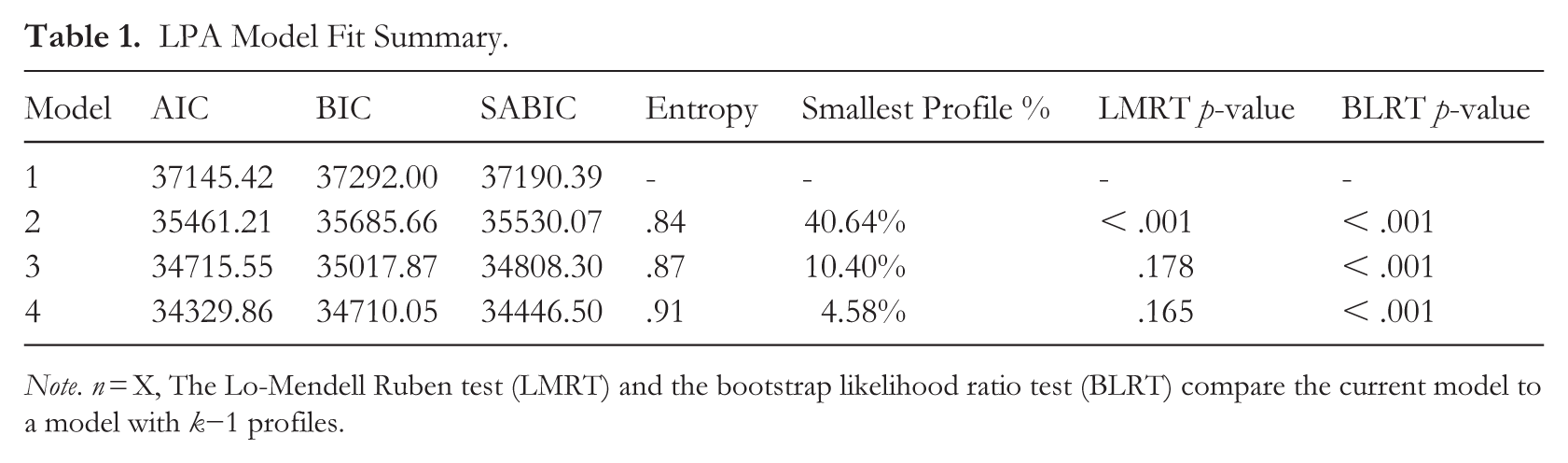
Note. n = X, The Lo-Mendell Ruben test (LMRT) and the bootstrap likelihood ratio test (BLRT) compare the current model to a model with k−1 profiles.
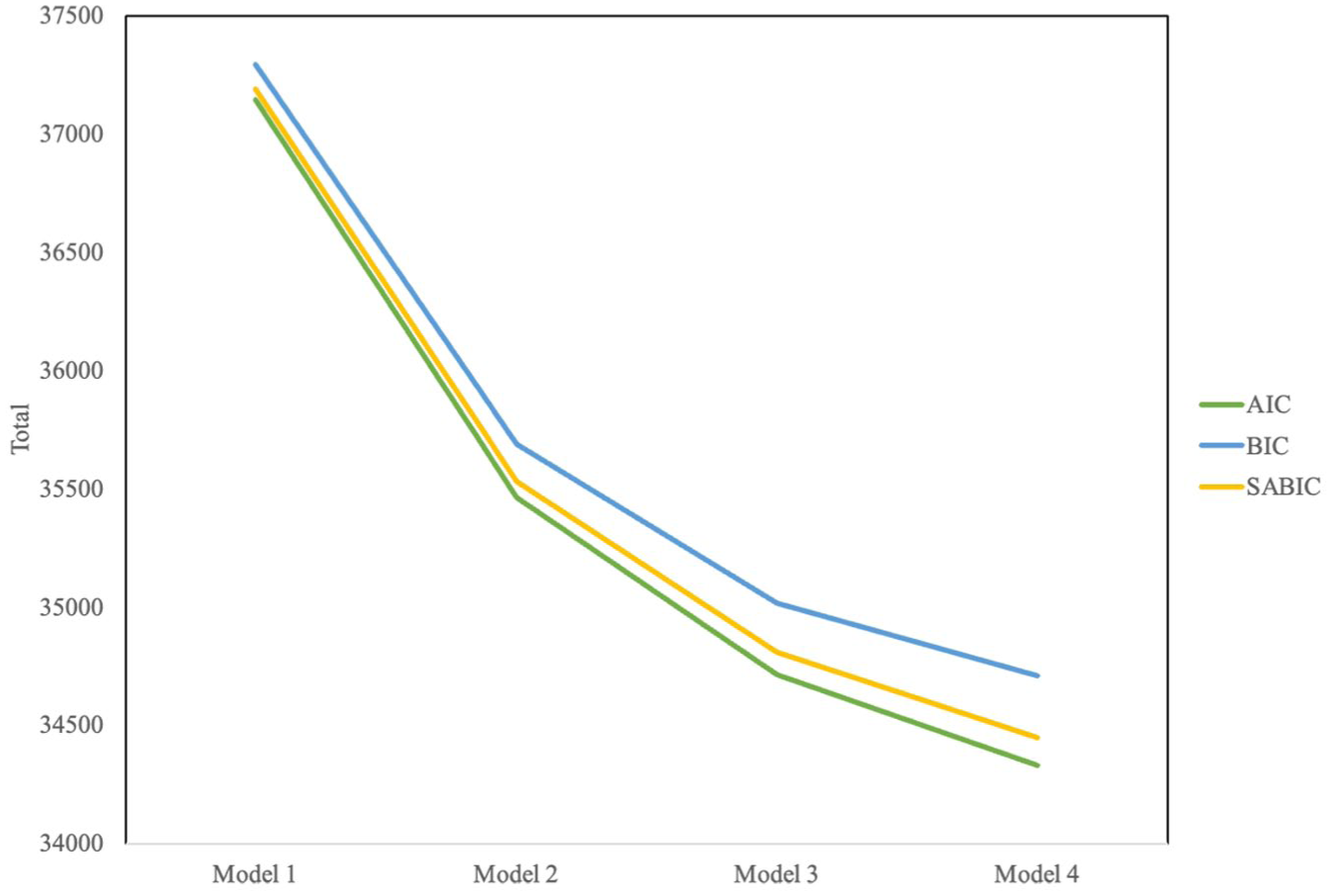
Relative fit indices for different model fits.
The three latent profiles are interpreted as follows:
(1) Low Risk: The first profile captures those with lower risk for identifying with extremist organizations. Those in this profile scored around or below the mean for the majority of the risk factors.
(2) Moderate Risk: The second profile captures those with a moderate risk for identifying with extremist organizations. Those in this profile scored around or slightly above the mean for the majority of the risk factors.
(3) High Risk: The third profile captures those with higher risk for identifying with extremist organizations. Those in this profile scored above the mean for the majority of the risk factors. Moreover, they were above the scale midpoint for group identification, personal uncertainty, personal relative deprivation, symbolic threat, cognitive rigidity, Machiavellianism, narcissism, psychopathy, and negative emotionality. Additionally, they scored at least two scale points higher than the other profiles on obsessive passion, psychopathy, and sadism.
See Table 2 for mean scores on the different risk factors for each of the three profiles and Figure 2 for a bar graph comparing the three profiles across the different risk factors.
Risk Factor Mean Scores for the Three Latent Profiles.
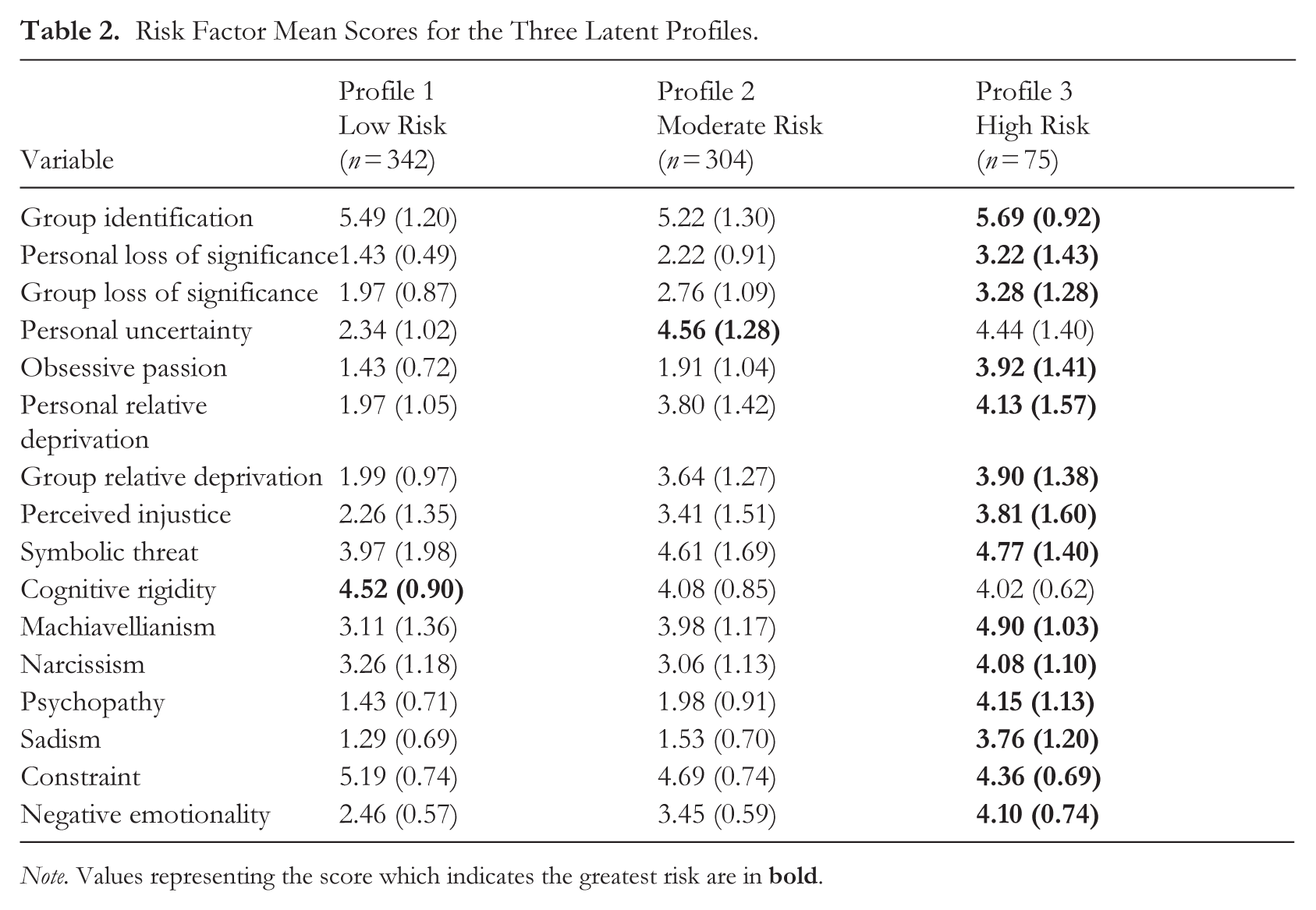
Note. Values representing the score which indicates the greatest risk are in
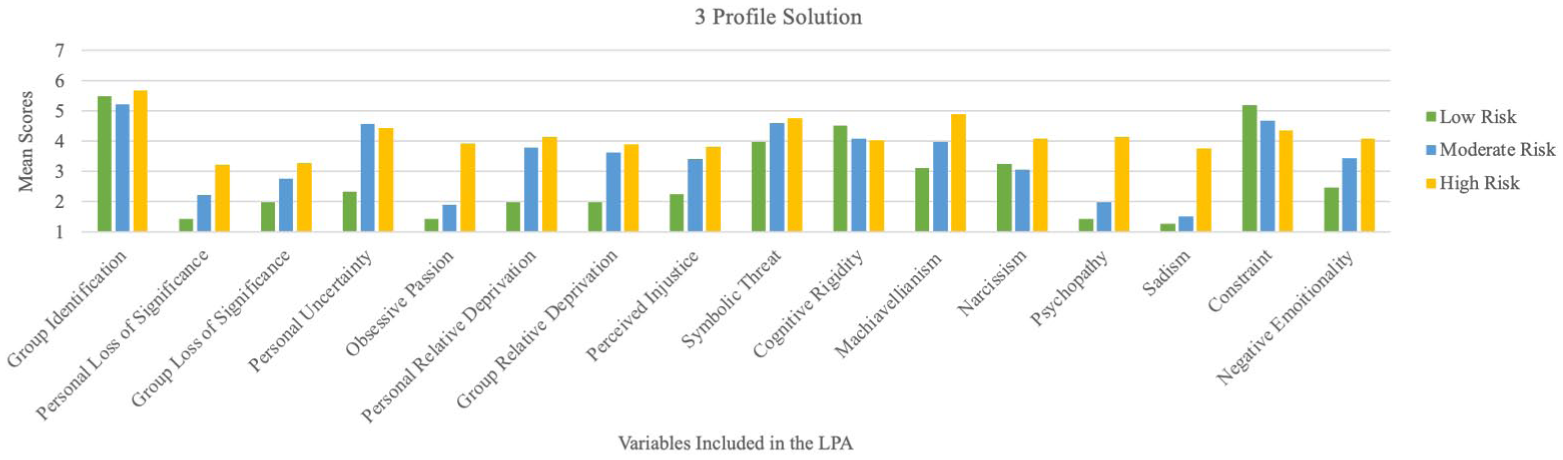
Graph of risk factor mean scores for the three latent profiles.
Characterization of Profiles
Research question 2 asked how the latent profiles compare on demographics, political orientation, and news diet. In comparison to the other two profiles, those in the high-risk profile appear to be younger, more likely to be male, less likely to be White, and have a higher income. Additionally, those in the high-risk profile tend to consume more news generally, as well as more conservative, liberal, and alternative news. Table 3 provides a summary of the demographics, political orientations, and news diet across the three profiles.
Summary Characteristics of the Three Latent Profiles.
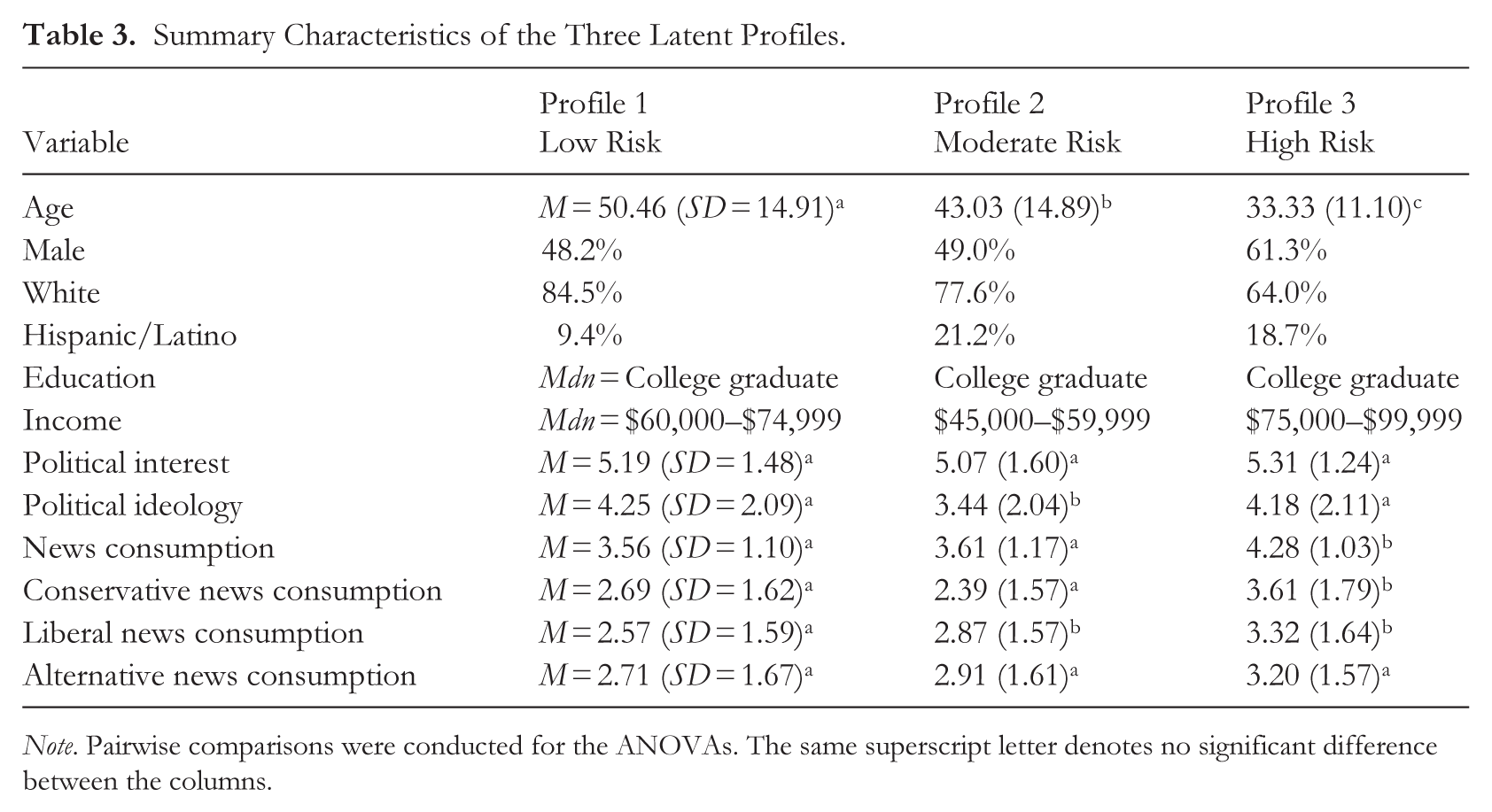
Note. Pairwise comparisons were conducted for the ANOVAs. The same superscript letter denotes no significant difference between the columns.
Additionally, analyses explored whether there were significant differences in the characterization of each profile, and pairwise comparisons using the Bonferroni correction were examined to see where those differences occurred (see Table 3). A series of ANOVAs were conducted using SPSS to examine whether age, political interest, political ideology, and news diet differed significantly between the three profiles. There was a statistically significant difference between profiles on age, F(2, 718) = 50.44, p < .001, political ideology, F(2, 718) = 13.01, p < .001, news consumption, F(2, 718) = 12.92, p < .001, conservative news consumption, F(2, 718) = 17.18, p < .001, liberal news consumption, F(2, 712) = 7.60, p < .001, and alternative news consumption, F(2, 718) = 3.26, p = .039. There was not a statistically significant difference between profiles on political interest, F(2, 717) = 0.96, p = .384.
A chi-square test was conducted to examine the association between the profiles and gender, race, and ethnicity. There was not a significant association between the profiles and gender, χ2(2) = 4.40, p = .111, Cramer’s V = .08. There was a significant association between the profiles and race, χ2(2) = 16.94, p < .001, Cramer’s V = .15. Additionally, there was a significant association between the profiles and ethnicity, χ2(2) = 17.94, p < .001, Cramer’s V = .16.
A Mood’s median test was conducted to examine whether the medians for education and income differed across the profiles. The results suggested that there was no significant difference in the medians for education, χ02(2) = 1.13, p = .569. The results suggested there was a significant difference in the medians for income, χ02(2) = 18.02, p < .001.
Interaction between Risk Profiles and Political Action Message
Research question 3 asked how the latent risk profiles moderate the effects of the political action message on identification with the X community. A series of ANCOVAs were conducted to examine how the risk profiles moderate the effects of the political action message on identification with the X community, controlling for age, gender (male = 1), race (White = 1), ethnicity (Latino = 1), education, income, political interest, political ideology, and the attention check (correct = 1). There was a statistically significant main effect of the political action message on identification with the X community, F(2, 689) = 33.17, p < .001, partial η2 = .09. There was also a statistically significant main effect of the risk profiles on identification with the X community, F(2, 689) = 24.52, p < .001, partial η2 = .07. However, these main effects were further qualified by a statistically significant interaction between the political action message and the risk profiles, F(4, 689) = 2.70, p = .030, partial η2 = .02. See Figure 3 for a bar graph comparing the estimated marginal means of identification with the X community across the three political action messages within the three risk profiles.
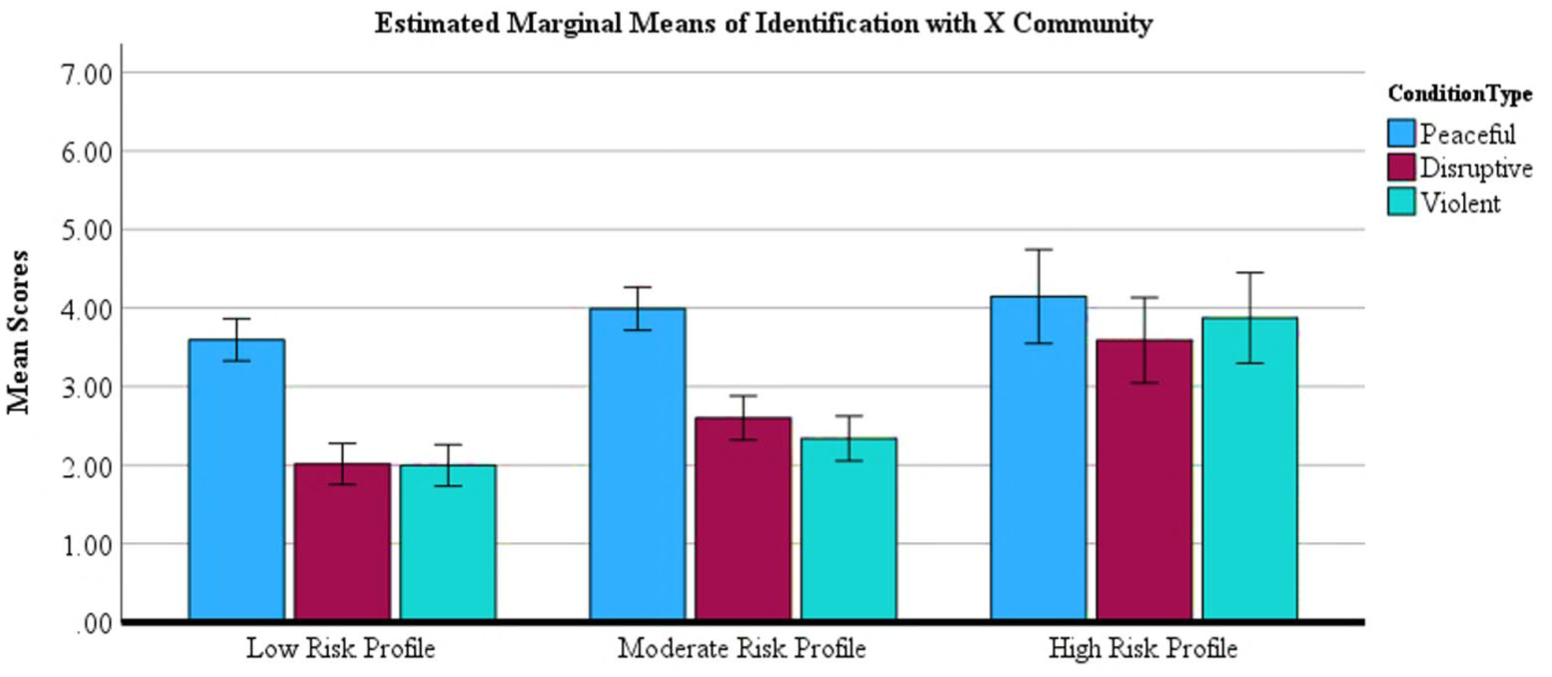
Estimated marginal means for risk profile by political action message.
The mean differences between the political action message and identification with the X community across the three risk profiles was further explored using pairwise comparisons using the Bonferroni correction. For the low-risk profile, results showed that the level of identification with the X community was significantly greater in the peaceful action message (EMM = 3.59, SE = 0.14) than in the disruptive action message (EMM = 2.01, SE = 0.13), p < .001, and the violent action message (EMM = 2.00, SE = 0.13), p < .001. However, the level of identification did not significantly differ between the disruptive action message and the violent action message, p = .929.
For the moderate-risk profile, results showed that the level of identification with the X community was significantly greater in the peaceful action message (EMM = 3.99, SE = 0.14) than in the disruptive action message (EMM = 2.60, SE = 0.14), p < .001, and the violent action message (EMM = 2.34, SE = 0.15), p < .001. However, the level of identification did not significantly differ between the disruptive action message and the violent action message, p = .201.
For the high-risk profile, results showed that the level of identification did not significantly differ between the peaceful action message (EMM = 4.15, SE = 0.30) and the disruptive action message (EMM = 3.59, SE = 0.28), p = .509, nor the violent action message (EMM = 3.87, SE = 0.29), p = .512. Moreover, the level of identification did not significantly differ between the disruptive action message and the violent action message, p = 1.000.
Discussion
This study sought to develop risk profiles to identify which partisans are most susceptible to being drawn into violent online extremist groups. The results of this study suggest the existence of three risk profiles (i.e., low, moderate, and high) that differ by severity, not kind. However, the results also suggest that there are certain risk factors that may be particularly important contributors to individuals’ susceptibility to being recruited into a violent online extremist group. Specifically, psychopathy, sadism, and obsessive passion appear to be particularly important contributors, as the score differential between those in the high-risk profile and those in the other two risk profiles was the greatest on those three factors.
Those who are high in psychopathy are more likely to participate in direct acts of physical and verbal aggression (Paulhus et al., 2018), while those high in sadism “gravitate toward vicarious rewards where a safe distance can be maintained” (Paulhus et al., 2021, p. 216). As such, those who are high on both psychopathy and sadism may be particularly inclined to begin their foray into violent extremism online where they can enjoy the fruits of their or others’ aggression without exposing themselves to risk before eventually moving into offline activities. While psychopathy and sadism may be particularly important factors that prime individuals for aggressive behavior generally, obsessive passion may be a particularly important motivating factor for individuals to participate in violence that is politically motivated. Obsessive individuals, motivated by private goals or grievances, may decide to join with likeminded others to maximize their chances of achieving their goals. As obsessive individuals join with likeminded others, their private goals and grievances may be collectivized and move those individuals who initially joined the group for relatively personal reasons toward a shared social identity (see Gøtzsche-Astrup, 2021). Taken together, it appears that partisans who are obsessively passionate and emotionally cold are particularly primed to become integrated into an ideologically congruent online group that offers a means for them to achieve their political goals, which is consistent with work from Bélanger et al. (2023).
Susceptibility to Violent Extremism as a Personality and Self-Regulatory Issue
The results of this study are somewhat surprising as they suggest that personality factors and motivational factors related to self-regulatory abilities, rather than identity, may be the key differentiators between those who are at high risk for identifying with violent online extremist groups and those who are not.
Doosje et al.’s (2016) three-phase model of radicalization may provide an explanation to bridge the findings of this study with the extant literature that suggests that social identity is a key factor in violent extremism. They define radicalization as “a process through which people become increasingly motivated to use violent means against members of an out-group or symbolic targets to achieve behavioral change and political goals” (Doosje et al., 2016, p. 79). In phase 1, the sensitivity phase, Doosje et al. (2016) argue that some individuals have a cognitive opening that makes them susceptible to joining extremist groups. While Doosje et al. (2016) argue for a number of identity-related risk factors (e.g., loss of significance, personal uncertainty, and relative deprivation) as key contributors to individuals’ cognitive opening, the results of this study suggest that personality (i.e., psychopathy and sadism) and self-regulatory (i.e., obsessive passion) risk factors may be the most important contributors. Once an individual with a cognitive opening decides to join a violent extremist group, they enter phase 2.
In phase 2, the group membership phase, individuals begin to adopt the norms and values of the group, which may include, or even be centered around, outgroup hostility (Doosje et al., 2016). This phase is crucial as no individual simply spawns into the world one day as a violent extremist; they become violent extremists “through involvement and engagement. They have to learn and be trained, make sense of what they learn and express that learning in various ways” (Horgan, 2009, pp. 144–145). Online groups may provide a particularly fertile ground for this process to occur (Cloudy et al., 2024). According to the SIDE model, when a shared social identity becomes salient and individuals within the online group begin to experience depersonalization, they are likely to begin thinking and acting in ways consistent with the group’s norms and expectations (Reicher et al., 1995). As such, the norms of the group become essential in guiding the behavior of group members (Otten, 2017).
Finally, in phase 3, the action phase, committed individuals begin to use violence against an outgroup on behalf of the group (Doosje et al., 2016). In order to prepare new group members for the use of violence in phase 3, the group is likely to dehumanize the outgroup and identify the outgroup as an existential threat to the group (Doosje et al., 2016), which may create an implicit or explicit expectation of action that directs group members’ aggression toward that outgroup.
Considering Doosje et al.’s (2016) model in combination with the findings from this study, suggests that there are differences between what makes a non-radicalized person susceptible to joining a violent extremist group and what makes a radicalized person susceptible to joining a violent extremist group or committing an act of violence. That is, those who are not yet radicalized may be susceptible to the recruitment tactics of a violent extremist group, if that group appears to offer the best path to address their political goals and grievances (see van den Berg & van Hemert, 2023), because they may already have a higher tolerance for the use of violence as a means of achieving their goals but not necessarily because they are motivated to use violence against an outgroup. However, once they become integrated into a violent extremist group, they may become radicalized and their higher tolerance for using violence may be harnessed and directed toward an outgroup. Meanwhile those who are already radicalized may already view violence against the outgroup as a necessary step to achieve their goals, which may motivate them to join with likeminded others who can help them act against that outgroup or they may simply act on their own (see McCauley & Moskalenko, 2008).
Individual Susceptibility for Identifying with Violent Online Extremist Groups
After developing the risk profiles, this study investigated how these profiles moderated the effects of different recruitment messages from ideologically congruent online groups on identification with the online group. The results suggest that the endorsement of violence may be a prohibitive factor for those in the low- and moderate-risk profiles. Meanwhile, those in the high-risk profile are not necessarily pro-violence, but they appear to view violence as less prohibitive than others and, therefore, they are more willing to identify with an online group that appears open to the use of violence. Of note, Horgan (2009) argues that any potential violent extremist must not view violence as morally impermissible and, while that belief can be refined over time by external influences, an individual who eventually engages in terroristic activity is likely to hold such a belief to some extent prior to being integrated into the violent extremist group. Concerningly, those in the high-risk profile appear equally comfortable with the use of peaceful, disruptive, or violent means to achieve their ideological goals.
While this study was largely focused on individual susceptibility to joining online extremist groups, the findings may also contribute to the growing literature on lone-wolf extremists. First, lone-wolf extremists seem particularly likely to radicalize online (Kenyon et al., 2023). Second, lone-wolf extremists may not be as alone as they seem on the surface. Indeed, much of the recent scholarship in this area challenges the assumption that lone wolves lack ties to ideological social networks (Hofmann, 2020). That is, online networks may “play an important and sometimes even critical role in the adoption and maintenance of [the lone wolf’s] motivation to commit violence” (Schuurman et al., 2019, p. 773). The recent scholarship on lone wolves only serves to increase the significance of understanding what makes certain individuals susceptible to joining online extremist groups even if they never go on to commit acts of violence themselves (see Kenyon et al., 2023) because the supportive milieu they provide may be the difference between someone committing an act of seemingly lone-wolf violence.
Limitations
This study suffers from the common limitations of online survey research (e.g., reliance on self-report measures and assumed honesty in responding). As such, the findings of this study should be considered in light of those limitations as well as additional design limitations.
First, this study utilized the traditional categories of liberal and conservative to represent political ideology. It is possible that those who are at the highest risk of being radicalized may be less likely to identify with traditional liberal or conservative labels (see Alto et al., 2022). Future studies may benefit from allowing participants to self-identify their ideology.
Second, the generalizability of these findings may be limited to political partisans. That is, the findings may potentially differ for religiously motivated, single issue, or nationalist/separatist individuals (see Doosje et al., 2016). Future studies should attempt to replicate the risk profiles across different publics (e.g., recruiting participants from different religious affiliations or issue publics) and testing identification with extremist groups who share the same concerns as members of those publics. Additional studies will also be required to assess both the stability of the three-profile solution that varies by severity rather than kind, in general, and the importance of psychopathy, narcissism, and obsession passion in distinguishing the high-risk profile, specifically.
Conclusion
Despite these limitations, the results of this study have important implications for scholars working to better understand the determinants of violent extremism, particularly in the US context. Much of the scholarship in this area has focused on the role of intergroup processes in motivating individuals to participate in violent extremism (e.g., Doosje et al., 2016; Kruglanski et al., 2022). This focus on intergroup processes has shifted much of the scholarly attention toward social identity explanations for what motivates individuals to join violent extremist groups (e.g., Doosje et al., 2013; Hogg, 2007). The results of this study, however, suggest that more scholarly attention should be placed on the role of personality and self-regulatory factors in contributing to individuals’ susceptibility to joining violent extremist groups, especially those that may exist online. More specifically, the results of this study suggest that personality and self-regulatory factors may be particularly important in shaping how individuals’ feel about the use of violence to achieve their political goals, which may provide an explanation for why some individuals are willing to join violent extremist groups and others are not, even if they share similar ideological beliefs and similar levels of partisan identification. By directing more attention toward the role of personality and self-regulatory factors, scholars may be better positioned to explain how individuals develop a cognitive opening that can be exploited by violent extremist groups.
While not all of the individuals who become integrated into violent online extremist groups will move to committing acts of offline violence (Kenyon et al., 2023; see also Horgan, 2009), one key factor that makes extremists a security threat, regardless of whether they play a direct role in perpetrating violence, is that they support the use of violence as a legitimate political tool (Lowe, 2017). As such, they provide a supportive milieu that enables a larger network of extremists to actively participate in violent actions (Sedgwick, 2010). Given the potential for violent online extremist groups to facilitate the use of political violence, it is important to develop interventions that discourage individuals from joining such groups. The results of this study may help concentrate attention toward interventions that focus on the personality and self-regulatory factors that may be less obvious but still crucial to differentiating those who are open to joining an extremist group that expresses an openness to violence.
Footnotes
Acknowledgements
I would like to thank Drs. Melissa R. Gotlieb, Bryan McLaughlin, Megan Condis, Michael J. Serra, and Devin J. Mills for their helpful feedback on this manuscript.

Ethical Considerations and Informed Consent Statements
This study was approved by the Texas Tech University Institutional Review Board (IRB2024-31). Written informed consent was provided to participants prior to participating.
Funding
The author disclosed receipt of the following financial support for the research, authorship, and/or publication of this article: This work was supported, in part, by the CH Foundation and the Texas Tech University Graduate School through the Graduate Student Research Support Award and by the Texas Tech University College of Media & Communication through the Bill and Avis Ross Graduate Student Research Award for Mass Communication.
Declaration of Conflicting Interests
The author declared no potential conflicts of interest with respect to the research, authorship, and/or publication of this article.