







Abstract
Drawing upon 157 responses to Freedom of Information Requests sent to Higher Education Institutions across England, Scotland and Wales, this article explores how the Prevent Duty has been enacted within UK higher education. The article shows how the duty has seen considerable repositioning and restructuring across the sector, conflated counterterrorism with safeguarding and introduced further bureaucracy. The article also explores the low number of Channel referrals, the justifications provided for these and the several instances in which institutions refused to disclose this information. We argue that these disproportionate developments have brought harmful depoliticising effects while also enhancing the mechanisms of surveillance and governance. Furthermore, we argue that our findings demonstrate the value in Freedom of Information Requests as a means of approach and suggest a continued need for critical researchers to explore the specific functioning of the duty to complement the broader critiques that are levelled at the policy as a whole.
Keywords
Introduction
Prevent is the UK’s counter-extremism strategy and is designed to stop people being drawn towards, or coming to support, terrorism. Framed as a ‘softer’ element of the counterterrorism strategy, Prevent looks to engage with communities and public bodies to identify vulnerable people and interpose. In an effort to expand Prevent’s coverage, the Counter-Terrorism and Security Act (CTSA, 2015) came into law in September 2015 and with it so too did the Prevent Duty (henceforth ‘the duty’). The duty made it the legal requirement of a series of public sector ‘specified authorities’ to pay ‘due regard to the need to prevent individuals from being drawn into terrorism’ (CTSA, 2015). The duty broadened the coverage of Prevent to include all the people that work within these specified authorities as well as those who ‘go through’ them – a group that would cover almost the entirety of the population in England, Scotland and Wales. 1
As an extension of an already controversial and criticised strategy (Awan, 2012; Elshimi, 2017; Qureshi, 2015; Stevens, 2011; Thomas, 2010) the duty has also been the recipient of critique and resistance (NUS Connect, 2017; Spiller et al., 2018; UCU, 2015: 4). The duty’s appearance in UK higher education (UKHE) has raised concerns about its acting as a form of (racialised) surveillance on campus, its potential to curtail academic freedom and freedom of expression and that it will have a chilling effect on topics both taught and researched (Barrett, 2018; McGovern, 2016). Coverage of the duty is, of course, not wholly negative (Greer and Bell, 2018) and given the degree of contestation, some scholars have identified Prevent as a prime example of an ‘intractable policy controversy’ (Lewis, 2018).
Our article aims to contribute to this discussion and explores the duty within one of these specified authorities, UKHE. While there exists a robust debate around the duty in UKHE, there is still a lot that is not known about how it has been enacted as well as a dearth of research about the impact it is having. In this article we look to address this gap and speak of these issues, concerns and disagreements by shedding light on how the duty has been enacted within UKHE, how it is functioning and, finally, to consider the impact it has had. To achieve this, we have drawn on findings from 157 Freedom of Information Requests (FOIs) sent to higher education institutions (HEIs) between November 2018 and February 2019.
In our article we aim to make three main contributions. First, we produce an evidence-informed picture of how the duty has been enacted within UKHE, drawing attention to structures, training and policy as well as referrals made to Channel. Second, we highlight the depoliticising effects these developments have had, how they have enhanced the mechanisms of surveillance and governance and consider the proportionality of the duty. Finally, we make a methodological contribution around the use of FOIs and argue for the value of this approach to answer questions around public sector security deputisation.
The article proceeds in four sections. First, we survey the relevant literature to identify the focus of previous research and provide a wider context within which to situate our study. Second, we speak about the method, explaining how we used FOIs to generate our data and why this approach was appropriate to answer our research questions. Third, we present our findings from the FOI data, organising this across the themes of restructuring and repositioning, safeguarding/counterterrorism, compliance and bureaucratic conservatism and finally, referrals to Channel. Before concluding, we reflect on the implications of the duty within UKHE both in terms of its depoliticising effect, the extension of surveillance/governance practice, and its proportionality.
The Prevent Duty within higher education
Compliance with the duty in UKHE is monitored by the Office for Students (OfS) and a succinct list of what is required from HEIs is included on the OfS website (Office for Students, 2020):
Assess the risks associated with Prevent and draw up a plan to mitigate these;
Have effective welfare support systems, linking to DfE Prevent coordinators, local authorities or the police if necessary;
Have systems for assessing and mitigating risks around external speakers and events on campus, while maintaining the existing duty to promote freedom of speech;
Arrange ongoing Prevent training for relevant staff;
Have an IT usage policy, and where appropriate a research policy, which cover the Prevent Duty;
Engage with students and ensure that students’ unions and societies are aware of policies concerning activities on campus.
These requirements and the duty itself have been met with significant criticism and opposition. McGovern (2016: 56), for instance, argues that the appearance of the duty represents the ‘securitisation of civil institutions’ meaning that, ‘citizens increasingly become not only the object of surveillance but its means’. From the legal perspective, criticism has identified how the duty compromises the public sector Equality Duty as well as possibly contravening the European Convention on Human Rights (ECHR) (Barrett, 2018; Cram and Fenwick, 2018; Zedner, 2018). However, such positions are contested and Greer and Bell (2018) disagree that the duty is unlawful citing the various exemptions to the ECHR and means by which other legal obligations could be satisfied.
The framing of the duty as a safeguarding concern may have helped public sector workers navigate their newfound security roles (Jerome et al., 2019). However, serious concerns remain that it conceals ‘the performance of anticipatory counterterrorism under the rubric of welfare and care’ (Heath-Kelly and Strausz, 2019: 89). Adopting a safeguarding approach has the effect of understanding radicalisation as a ‘contagious virus’, ignoring the political context and replacing it with a ‘medicalised language of intervention, isolation, virus and decontamination’ (Qurashi, 2017: 8). In so doing, it endangers an understanding that disengages with macro explanations of terrorism (e.g. economic inequality, foreign interventions) in favour of the micro/meso factors such as alienation and rejection (Barrett, 2018). For McGovern (2016: 53), this represents ‘de-politicised and psychosocial models of explanation and causation’ and as Qurashi (2017: 1) adds, provides very little space for ‘critically orientated academic expertise’.
For critics, the coming together of counter terrorism and safeguarding is a productive relationship that has helped to (re)produce a rationale for the duty where radicalisation is akin to a form of abuse which, in turn, necessitates an intervention (Stanley et al., 2017). That safeguarding exists as an established and credible concept, combined with the framing of the duty in this way, helps establish it as common sense and normatively good while also making it difficult to argue against a preventive intervention (Acik et al., 2018). Assessments are contextualised by an individual’s (layperson) interpretation within dominant discourses which give way to bias and undermine safeguarding as a ‘politically neutral’ concept (Revell, 2019). For example, despite an effort within recent versions of Prevent to make explicit that the strategy is interested in all forms of extremism, entrenched Islamophobic discourses across the media and elsewhere remain prominent and shape understandings of what terrorism ‘looks like’ (Allen, 2016; Heath and Kelly, 2017; Jackson, 2018).
Ramsay (2017) argues that what we have witnessed across the public sector is the repositioning of staff into the security and surveillance bureaucracy. Individuals, most notably within health and education, have been coopted into the counter terrorism apparatus not through fear of mass insurgency but because of their significant access to the public (Heath and Kelly, 2017). Staff in UKHE, for example, feel uneasy about what is being asked of them (Spiller et al., 2018), feeling caught between upholding principles of academic freedom and being obligated to identify signs of radicalisation.
The duty has been characterised as a governmental measure that fits in with a modern university culture, of audits, targets, reputation and staff compliance (Qurashi, 2017). Absorbing the duty into existing structures such as external speaker protocols or ethical approval of research has resulted in increased monitoring, often in the form of extended processes and additional paperwork (Spiller et al., 2018). This places a growing burden on staff for whom their primary role is education, research, or administration and not Prevent (Mountz et al., 2015). However, more concerning is the evidence that this risk-averse approach has actually seen speakers and events cancelled on account of fears that they may contravene the duty (Cram and Fenwick, 2018; Office for Students, 2019: 10).
Surveying this literature provides us with a number of foci around which research has been organised to date. In our analysis, we speak of these and add unique empirical depth based on the data we have generated via our FOIs. Before embarking on this analysis it is first necessary to comment on our method and the means by which we used FOIs to illustrate the effect the duty is having within UKHE.
Using FOIs
To provide a broad picture of how the duty is operating in UKHE, we utilised FOIs which we sent to HEIs across England, Scotland and Wales. Within the UK context there does exist a body of work examining the value of FOIs for research purposes (Michener and Worthy, 2018; Rodríguez and Rossel, 2018; Savage and Hyde, 2014; Worthy, 2012); however, the use of FOIs has tended to be one more commonly utilised by journalists, nongovernmental organisations and campaigners (Worthy, 2012) and less frequently by academic researchers (Brown, 2009).
We opted for this method on account of its ability to achieve an extensive coverage across UKHE and quickly generate a workable dataset (replies should be returned within 20 working days). Thus, facilitating access and gaining targetted answers to our questions in a manner that would typically be incredibly time and resource intensive (Lippert et al., 2015; McClean, 2010; Morrill et al., 1999). Despite these advantages, using FOIs had limitations and we faced issues around the promptness of the replies, their quality and the use of exemptions that meant information being withheld from us. Moreover, FOIs are well suited to giving direct answers to succinct and straightforward questions, but they often lack the ability to provide tremendous explanatory detail. A large part of this comes down to the need for the researcher to design questions that are unambiguous and unlikely to be considered ‘vexatious’. Consequently, FOIs prove most effective asking ‘what’, ‘when’ and ‘how’ rather than ‘why’. Nevertheless, the ability for FOIs to provide us with a unique means of approach and allow access across the sector meant they were well suited to our objectives. Our findings provide different insights compared with previous research that has often made use of interviews and usefully complements these studies while developing the critical research agenda. 2
For our study we sent our FOIs to 158 HEIs across England, Scotland and Wales to which we received 157 replies. Our list of HEIs was drawn from the Higher Education Statistics Authority (HESA, 2019) and only excluded those where either the duty did not apply (Northern Ireland) or where an institution was not beholden to the FOIA (private institutions). Each FOI was identical and consisted of the following seven questions:
What is your organisation’s Prevent Duty structure? (i.e. management structure and the title of the roles of those involved).
Does your institution hold Prevent Duty guidance on the University’s intranet and, if so, can I receive copies of this material?
What training do you provide to your staff in relation to the Prevent Duty?
How many of your staff have received Prevent Duty training?
How many people has your organisation referred to the Channel programme since September 2015?
Of those referred how many were students?
What were the justifications given for the referrals?
Upon receiving replies we began inputting our data by institution into a spreadsheet and then started the process of surveying the entire dataset for initial codes, themes and features. Having put together an initial list for further examination we pursued these in more detail, taking into consideration the themes that had emerged from the literature and collecting numerical data around aspects like training and referrals where it was provided. Once this was complete and we felt that no further theoretical categories were being produced (Milliken, 1999: 234), we ceased our analysis.
Enacting the Prevent Duty within higher education
The analysis that follows highlights how the duty as been enacted within UKHE and is organised around four areas. The restructuring and repositioning that has occurred in the sector; the uneasy alliance that has been formed between safeguarding and counter terrorism; the increasing compliance, managerialism and bureaucratic conservatism; and referrals to Channel.
Restructuring and repositioning
A common development within HEIs in response to the duty has been the formation either of new Prevent committees and working groups or the subsuming of the duty within existing bodies. Of the 157 HEIs we asked about the structures in place to oversee the management of the duty, a total of 128 (81%) provided us with some form of relevant information and 80 (51%) gave specific information about their committees. In all, 44 (28%) of these 80 confirmed that a specific Prevent-related group/committee had been established, while 26 institutions (16%) stated that the duty was being managed by other groups such as safeguarding, health and safety, or the board of governors. The 10 remaining institutions (6%) responded that they had both sorts of groups in place.
What we observed across the sector in terms of committee membership was heterogeneous and included, for example, the Vice Chancellor’s Office, Academic Registrar, Office for Student Experience, Students’ Union, the Professional Services Directorate, Safeguarding Teams, Security, Police, Equality and Diversity, Health and Wellbeing and academic staff. However, given the Government’s focus on Prevent as safeguarding, well-being and student services staff were particularly commonplace as was the involvement of legal, administrative and management staff.
In some instances, accountability and oversight were provided by very senior levels such as the Vice Chancellor’s Office or University Boards and councils. Such decisions could speak of the seriousness with which the duty is treated, however, not every development should necessarily be taken as evidence of enthusiastic compliance. Where the duty is viewed with scepticism, these groups could be a means of paying ‘lip service’ to the duty or even be purposefully staffed with those who the HEI knows will apply a ‘light touch’ approach.
Notably, HEIs have sought to include groups who have spoken actively in opposition to the duty. For example, representation from Students’ Unions is a feature and while the government has stated that it expects cooperation from Student’s Unions (HM Government, 2019), this desire comes among vocal opposition from the National Union of Students. Our data tell us little about the specific motivations for this inclusion, but there are important questions to consider here. For example, does this inclusion speak of the desire to give formal representation to students so that they can feedback on a law that directly affects them? Or, being mindful of the government’s expectations, should such moves be interpreted primarily in terms of institutional compliance that provides a veneer of legitimacy and allows for a more straightforward implementation?
Motivations may be difficult to discern from our data but many of the Prevent policies provide a clear explanation of the relationship between the University, Prevent and groups like the Students’ Union. For example, one university’s Prevent policy stated the following: Students’ Union staff and Officers will participate in the Prevent training being provided by the University and will be aware of the duty of the Students’ Union to protect students on campus from dangerous or radical bodies . . . The University requires that the Students’ Union ensures that no religious, spiritual or philosophical event hosted by students may be permitted unless hosted by a recognised SU society and that any society wishing to host such an event will communicate with SU officers who will pass the proposed booking and speaker history to the Prevent Coordinator at least 30 days in advance of the proposed event. (HEI 1, Wales)
What we observe in this policy is an example of the repositioning that has taken place alongside the broader restructuring that has occurred across HEIs. This repositioning has seen university personnel – primarily members of staff – receive additional responsibilities and workloads as part of a wider effort to deputise the duty throughout the institution. A crucial aspect of this process comes via mandatory training.
In total, 155 of the 157 institutions (99%) provided information on training. There was a mixture of training packages and modules offered to staff that covered different issues, struck different tones, spoke to various audiences and had different individuals or groups involved in delivery and design (Table 1).
Training packages and modules mentioned in response to question 3.
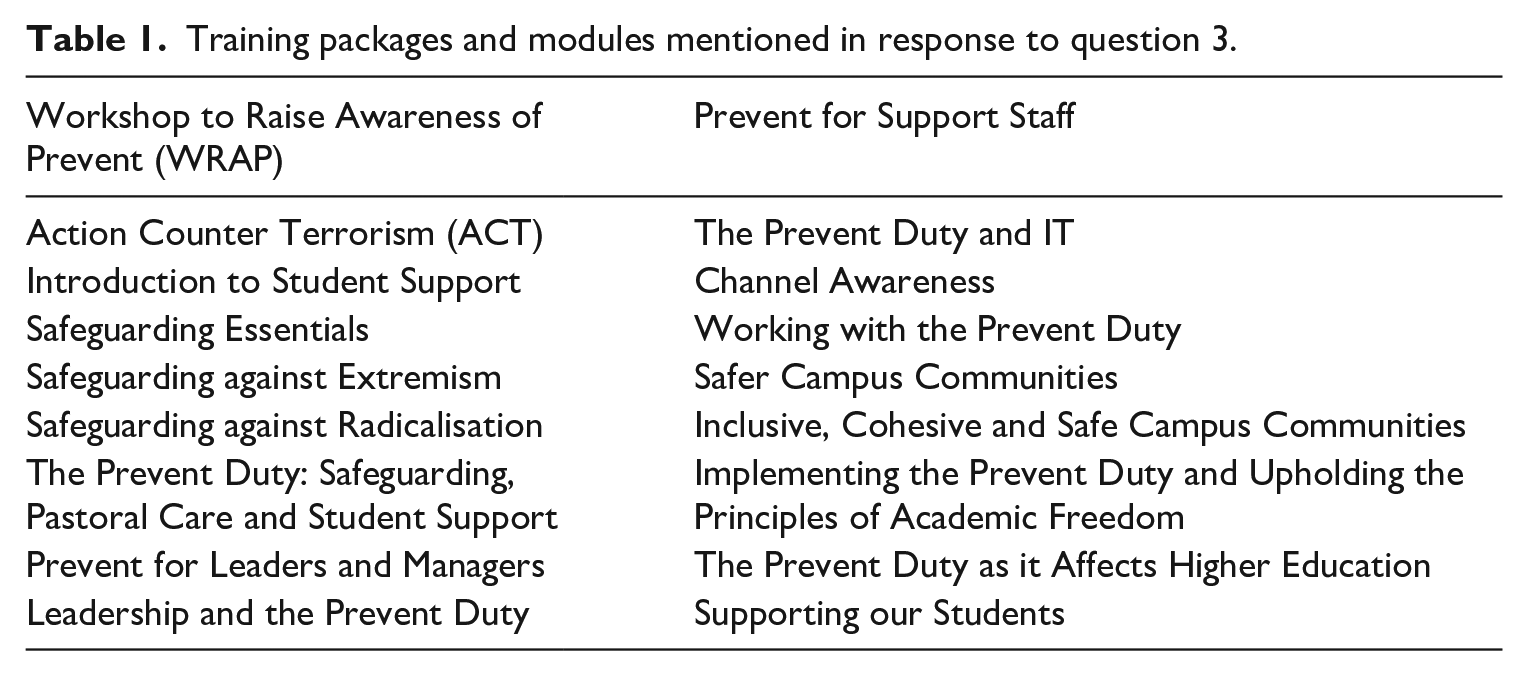
Training packages/modules such as ‘Prevent for Leaders and Managers’, ‘Prevent for Support Staff’ and ‘Working with the Prevent Duty’ demonstrate how broadly the duty is being deployed as well as how it has been absorbed into the bureaucratic structures of staff training and professional development. There is also evidence here of the tensions that exist between Prevent as safeguarding and Prevent as counter terrorism, which we consider in more detail in the next section. For example, ‘Supporting our Students’, ‘The Prevent Duty as it Affects Higher Education’ and ‘Action Counters Terrorism’ provide quite different interpretations as to the purpose of Prevent.
Where we were provided with information pertaining to who was delivering face-to-face training, the range of individuals or groups varied considerably. We saw examples of training delivered by the head of student services (HEI 2, South West; HEI 3, London; HEI 4, Wales), the deputy school secretary, the learning and development manager (HEI 5, London), campus security (HEI 6, North West), members of internal Prevent working groups (HEI 7, London; HEI 8, London) (including the coordinator) (HEI 9, North West), line managers (HEI 10, North West), regional Prevent coordinators (HEI 11, South West) and the police (HEI 12, Wales). Similar conclusions can be drawn here about who HEIs deemed appropriate to deliver training and what this says about their interpretation of its objectives.
Training is a requirement of compliance with the duty, therefore the fact that many institutions confirmed this was happening should not come as a surprise. However, it was striking to observe that 56 HEIs (36%) confirmed they had absorbed mandatory Prevent training into the induction or probation process. Non-compliance had consequences and one HEI confirmed that where a staff member had not completed the relevant e-learning package within the stated 3 months from the start of their employment, they had ‘been stood down from the specific duties that require them to have completed the training until it has been done’ (HEI 13, South East).
Having the training as part of the induction or probation process is certainly attractive from a compliance point of view. Yet, it also provides a seamless internalisation of Prevent within staff responsibilities and will play a role entrenching the duty’s existence in UKHE that further normalises its presence. This is not to say that making staff do the training as part of their induction equates to either comprehension or acceptance. As Younis and Jadhav (2019b) explain, such an approach can lead to staff simply ‘clicking through’ training, opposing the policy but becoming resigned to its implementation.
Away from decisions about mandatory training, we also observed other decisions relating to training that demonstrated further evidence of the way the duty had repositioned different parties. For example, one institution confirmed that senior members of staff such as the Deputy School Secretary and Learning Development Manager have received accreditation to deliver the ‘Workshop to Raise Awareness about Prevent’ training (WRAP) (HEI 5, London), while another confirmed that WRAP training was available to both staff and students (HEI 14, South East).
Staff with timetabling and room booking responsibilities in one institution were now required to partake in ‘controversial meetings’ training (HEI 15, London). This presumably relates to the external speakers’ provision of the duty but has potentially serious ramifications around free speech and raises questions about what criteria ‘controversial’ was being measured against. In another institution, we saw how efforts to monitor and enforce compliance with the duty were being devolved to specific Faculty members, designated as ‘local advisors’ and responsible for training and raising awareness of the duty (HEI 16, London). Elsewhere, staff in one institution can be called upon to contribute to a ‘Prevent Compliance Group’ (HEI 17, Scotland) and in another a Senior Lecturer is selected from a joint staff liaison group to sit on a Prevent Duty committee (HEI 18, Scotland). One institution mentioned that they were also providing ‘unconscious bias’ training alongside the mandated training (HEI 19, South East). This training is likely a sign that they recognised some of the criticism and controversy around Prevent and perhaps even an institutional uncomfortableness with what the law had mandated.
What we witness then is both a macro-level restructuring found in the formation of new structures of governance and monitoring and micro-level repositioning evidenced via the co–option of individuals across the institution. Both have powerful implications for the formalisation of a more direct engagement between the University and the duty. This, in turn, helps to enforce the duty, establish its legitimacy and diffuses compliance ‘across’ the sector and ‘downwards’ through the institutions.
The uneasy alliance between safeguarding and counter terrorism
Our data demonstrated how the ‘Prevent as safeguarding’ message had resonated across the sector and it was observable across structure and training but, in particular, staff guidance. The excerpt below, taken from an introductory video shown to staff at one HEI prior to completing the mandatory training, characterises the safeguarding message and some of the anxieties staff may have about the duty: You may already be aware that the Prevent duty places an obligation on all universities – as well as a range of other public bodies – to have due regard to the need to prevent people being drawn into terrorism. But I am conscious that some of the language and debate around this area makes it sound pretty forbidding and has led to it being the focus of some discontent and natural anxiety about its implementation. I want to assure you that the University is undertaking its obligations in a measured and sensitive way. The University seeks to place Prevent firmly within a safeguarding framework – one which recognises risk and vulnerability across a wide range of areas, particularly when it comes to the proactive support we offer to students. (HEI 19, South East)
A sympathetic reading of the framing of Prevent as safeguarding may well see the good intention behind the objectives of the strategy, the need to interpose early with vulnerable young people and, thus, the intuitiveness of embedding this into existing safeguarding mechanisms/expertise. However, drawing on the language and practice of safeguarding allows for the obfuscation of a political endeavour (Prevent) with something that is viewed as politically neutral and ultimately positive (safeguarding). Figure 1 is the front page of the ‘Think Prevent’ document produced by the Prevent Delivery Unit in Scotland and disseminated to HEIs as guidance. It provides a good visual example of how the safeguarding frame distances Prevent from counter terrorism.

Front page of the ‘Think Prevent’ Guidance leaflet (HEI 20, Scotland).
Prevent as a safeguarding responsibility presents students as simultaneously ‘at risk’ and ‘risky’, thus rendering them ‘preemptively governable’ (Heath-Kelly, 2012: 83). We arrive at this position, in part, on account of assumptions inherent within its logic, such as approaching the ‘condition’ of radicalisation with certainty and predictability despite much evidence to the contrary (Heath-Kelly, 2013: 397; Kundnani, 2012; Taylor and Soni, 2017: 248) and considering extremism through the prism of victimhood (Dresser, 2018: 136).
The manner in which safeguarding discourses have been deployed and associated staff coopted into the duty’s implementation helps to establish instruments such as the framework of ‘vulnerability factors’ enforcing the ‘depoliticised and psycho-social models of explanation and causation’ (McGovern, 2016: 53). Safeguarding staff in Prevent lead roles and related committees allow access to the accepted legitimacy and importance of welfare structures as well as the skills and expertise already utilised in existing safeguarding procedures.
Safeguarding’s application to this field helps simplify it to something more familiar and manageable. For instance, one institution told us that designated staff would receive specific training for Prevent in the same way they would for drug, alcohol or mental health issues (HEI 19, South East). This is of note given the renewed focus on the university’s role in student welfare during an ongoing mental health crisis (Shackle, 2019). However, it should be approached with some trepidation on account of the possibility for safeguarding to be hijacked or at least stretched as part of a political/security project that takes advantage of the duty of care staff have towards students (Acik et al., 2018).
Our data also give examples of the tension that exists around the relationship between Prevent and safeguarding and evidence suggesting that Prevent is being, or has been, primarily understood as a security issue. For example, one institution stated that the duty was under the supervision of a ‘Deterring Terrorist Activities’ working group in which meetings were attended by the Director of Student Services, the President of the Students’ Union, the Head of Security and a local counter terrorism police officer (HEI 15, London). Another confirmed that Prevent was previously monitored by the ‘security working group’ but had recently been moved into the remit of the well-being agenda (HEI 21, London). These sorts of examples were not typical but do provide an interesting case study on the competing priorities within implementation and the difficulty of reconciling safeguarding and counterterrorism. This is particularly apparent when contrasted with another institution in which there is no dedicated Prevent structure in place and the duty has been wholly brought within their existing well-being agenda (HEI 22, North East).
Divergence in how the duty is being framed across the sector speaks of its ambiguity and that HEIs may still be unsure about how to meet their obligations. Deploying the discourse of safeguarding and utilising related staff from within the institution for delivery gives some insight into one tactic that has been used to reposition particular staff. Doing so succeeds in exerting compliance beyond the lawyers and managers who oversee implementation and coopts those who have constant contact with students who may be deemed ‘vulnerable’.
Compliance, managerialism and bureaucratic conservatism
The cultures of compliance within the modern university revolve around accountability, discipline and the management of reputation (McGovern, 2016). We saw these priorities reflected through the significant involvement of managers, administrators and lawyers; formalised via the creation or expansion of committees and working groups. This culture of compliance and risk aversion has given rise to the big data approach that is adopted to identify patterns of risk (Heath and Kelly, 2017), as well as in this instance those who can be deputised to mitigate it. For example, with regard to staff training, one institution confirmed that analysis had been conducted to formulate a list of staff involved in student well-being so that they could be invited to complete an online Prevent module (HEI 23, Scotland). We also witnessed the development of strategic plans and training matrixes to determine what training must be completed and by whom (HEI 24, Yorkshire and the Humber).
This training is subject to monitoring and reporting as are other areas of the public sector where Prevent’s reach is felt. Research into the duty within the health sector (Younis and Jadhav, 2019b) explores the effect that this has on staff, concluding that it has compelled overworked staff to become overly concerned with maximising efficiency and institutional evaluations of their performance. The internal discipline that this inculcates helps dampen criticism and facilitate compliance.
There were also further examples of ‘bureaucratic conservatism’ that has been explored in previous research into the duty within UKHE (Spiller et al., 2018). This term refers to the manner in which the institution is becoming increasingly bureaucratised in such a way that it prioritises risk mitigation over the more straightforward operation of core University functions (e.g. external speakers, room booking and research ethics). We witness from our data not only new standalone Prevent policies but also how the duty has been integrated into a variety of other institutional policies, for example, within counselling and service assessment forms (HEI 19, South East).
Figure 2 provides a good example of the sorts of processes now in place in UK HEIs when looking to invite an external speaker onto campus. This diagram is taken from a 40-page document entitled, External speakers in higher education institutions, designed to, ‘provide a framework for institutions to review their approach to managing external speakers’ (Universities UK, 2014) that was provided to us as part of a reply from an HEI in Scotland (HEI 25, Scotland). An everyday part of university life/work, bringing in external expertise for lectures or seminars, is now something that requires a rigorous vetting process and is described in the diagram as having a ‘lifecycle’.
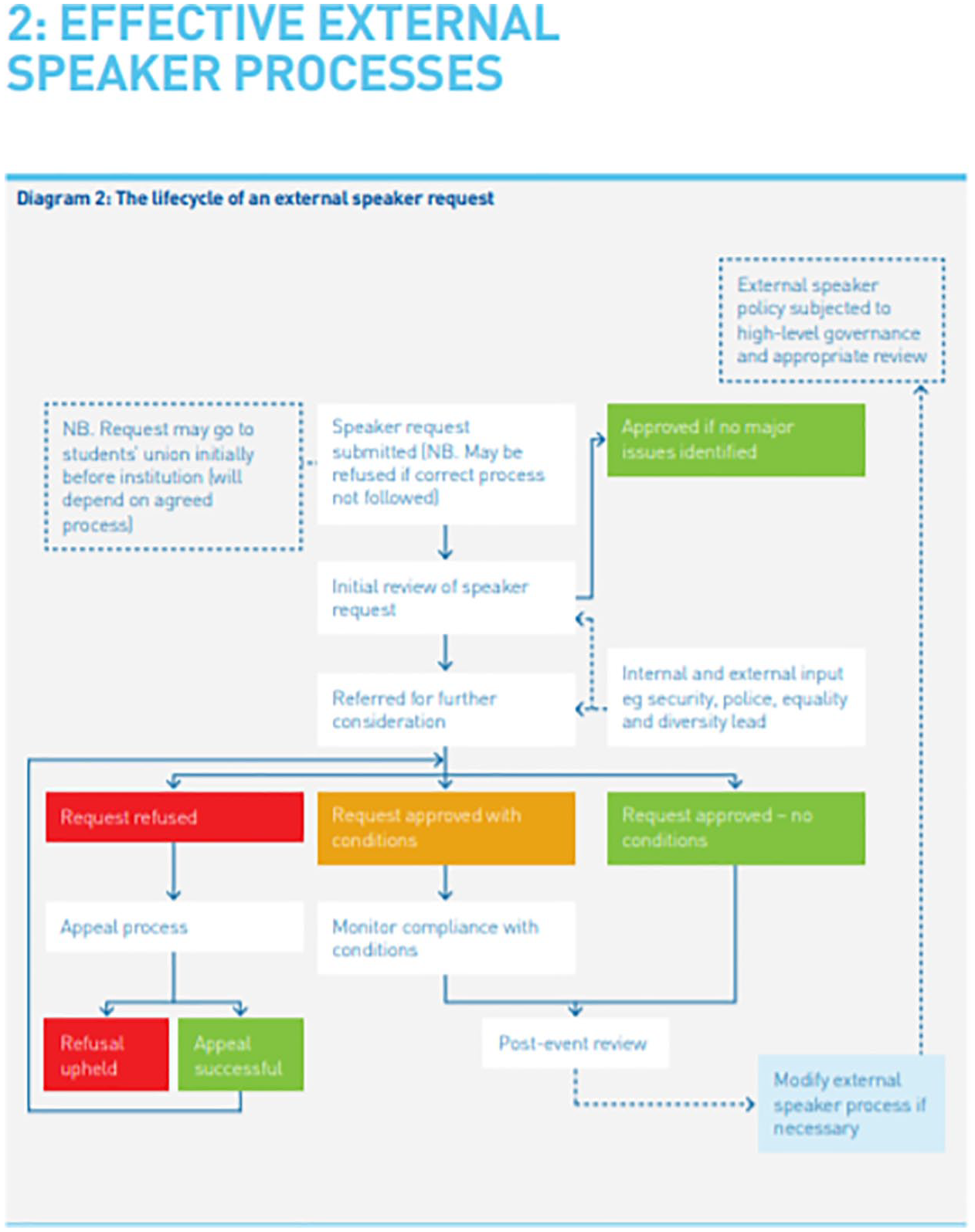
Process for vetting external speakers (Universities UK, 2014: 14).
Other policies that have been introduced or amended in light of the duty include research protocols, information technology, safeguarding and the use of multifaith facilities. These hardwire the duty into the bureaucratic fabric of the intuition, inculcating a conservative approach that makes use of the institutional apparatus and its accepted legitimacy to ensure compliance. They also add to the increasing burden on the sector, accruing significant work hours to draft, amend, approve and implement. For those seeking ethical approval for research, organising an external speaker or making a safeguarding referral this new bureaucracy frequently manifests as additional processes and paperwork that present further hurdles and workload to what are fundamental aspects of the job.
Referrals to Channel
Our final three questions concerned people that had been referred to Channel 3 since September 2015, the proportion of these that were students and the justification for their referral. As Channel does not operate in Scotland these questions were of relevance to 140 of the 157 HEIs in our list, those that were in England and Wales. Of these 140 HEIs, 23 (16%) confirmed they had made referrals, 89 (64%) stated that no referrals had been made, 27 (19%) refused to provide us with any information and 1 (1%) stated that they ‘do not have any records of these referrals’ (Chart 1).
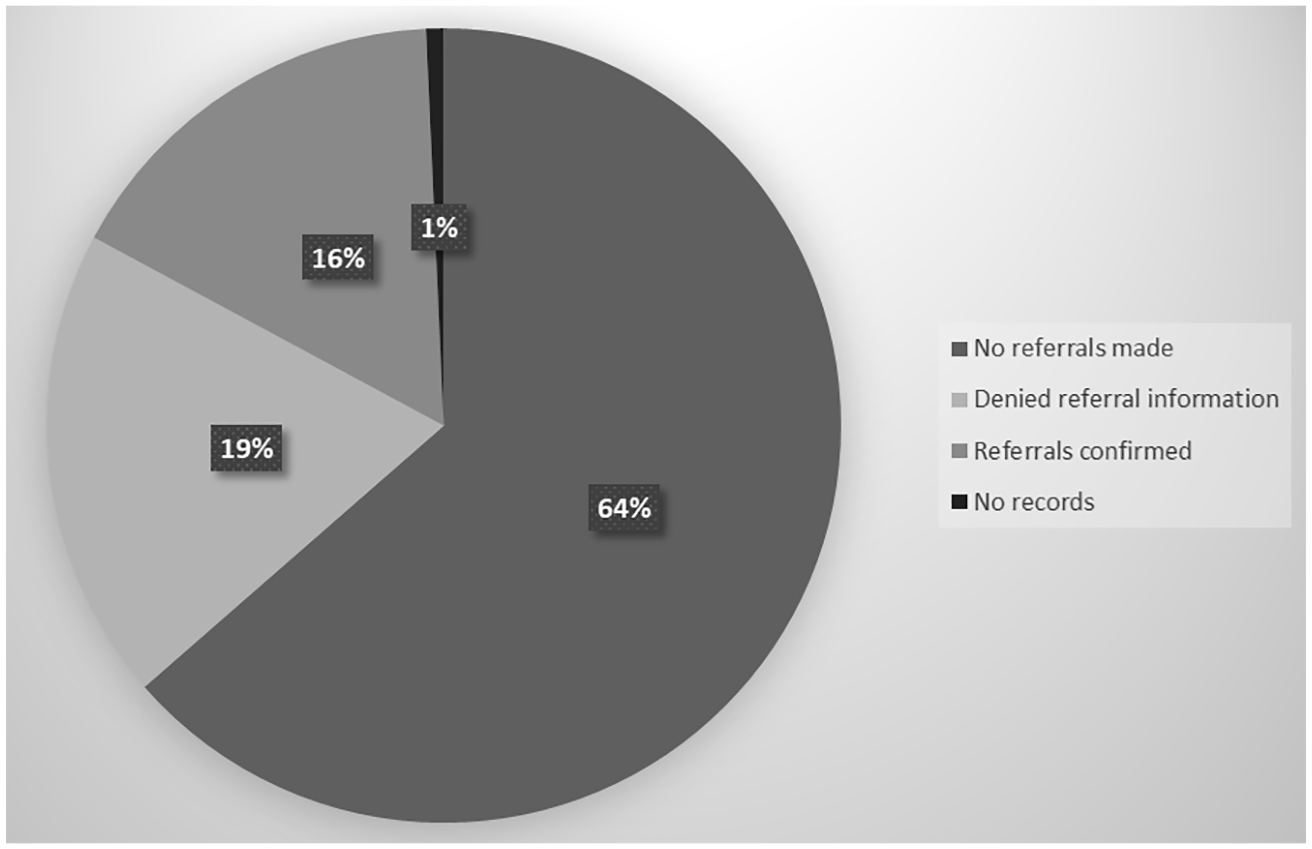
Breakdown of responses to question 5 about referrals made to Channel.
In all, 13 of the 23 HEIs who confirmed referrals had been made gave us a specific number. The remaining 10 fell into two groups. The first group actually refused us information but did so citing section 40 or 41 of the FOIA (2000) that covers exemptions based on personal information or confidentiality. So, while this group were refusals of sorts, they included an important qualification that confirmed that there was an individual or individuals involved. An example of this sort of reply is included below: We are unable to provide a response to this question on the grounds that it could lead to individuals being identified and thus breaching the principles of the Data Protection Act [see Section 40 (2) of the Freedom of Information Act]. (HEI 26, West Midlands)
The second group included those that rather than giving us a specific positive number instead gave us an approximation (e.g. <5), citing the same reasons as included above for not wanting to be any more specific for fear that small numbers could lead to identification.
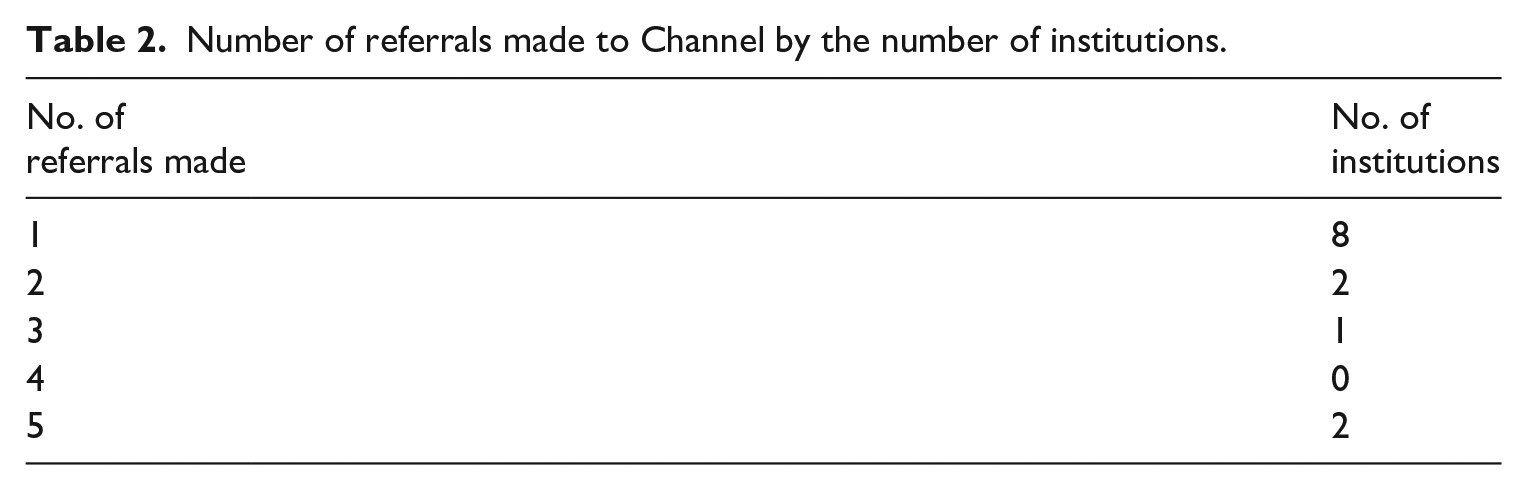
The combined number of referrals across the 13 institutions that provided a specific positive number was 25. One of these HEIs explained that of the five people they had referred, only three were students (HEI 27, East Anglia). Understandably, much of the discussion around the duty in UKHE has been focused on students. However, this HEI confirming that two referrals were for people other than students demonstrates that the duty has been used to raise concerns about other populations – presumably members of staff (Table 2).
Number of referrals made to Channel by the number of institutions.
Eight HEIs that confirmed referrals had been made also provided justifications for their decisions. In total we were provided with 10 separate justifications from these eight institutions, with one institution providing 3. Below, we include the entire list of justifications we received:
Risk of being radicalised;
Believed to be vulnerable to radicalisation;
Concerns about vulnerability;
Concerns raised by staff, students and third parties;
Evidence to suggest the individual may have been radicalised;
Behaviour witnessed on campus;
Threats of violence and concerns over mental health.
Attempting to view an extremist website;
Social media activity and behaviours;
Proclamations on social media about being a god/prophet and the rights/wrongdoings of the Quran/Bible.
Numbers 1–5 are quite straightforward and offer less specific detail; however, they do reveal something about the referral process. For instance, number 4 clarifies that the information informing referrals can come from third parties and taken collectively, these 5 also give a sense of the different points along the radicalisation ‘process’ individuals have been referred. For example, numbers 1–4 suggest that these referrals were made earlier in the process, when the situation was one of risks, beliefs and concerns. Number 5 appears to have come later with evidence existing that they had become radicalised.
Numbers 6 and 7 relate specifically to behaviour that these individuals have exhibited, with the former clarifying that this took place on campus and the latter providing no details about location but specifying the form (threats of violence). A referral to Channel would not typically be the first option to address this sort of behaviour and perhaps this is why number 7 also provides further context, stating that there were also mental health concerns.
Finally, numbers 8–10 all relate to behaviours exhibited online. The duty asks that HEIs have IT usage policies that cover Prevent so it could be that these have been picked up as a result of this enhanced monitoring. Number 8 concerns access to an extremist website, while 9 corresponds to activity on social media. The latter implies that reporting on vulnerability goes beyond just university-affiliated communication and extends to the individual’s social media activity. Number 10 is the only explanation that gives any indication about the type of extremism that was observed and suggests the referral related to Islamic extremism.
Where our requests were rejected, the HEIs often made reference to sections 24, 31and 40 that cover grounds for non-disclosure that include safeguarding national security, not prejudicing law enforcement and protecting the privacy of the individual. Speaking in general terms about ‘eroding’ trust in the Prevent and Channel process (HEI 28, Yorkshire and the Humber) as well as more specific concerns about the potential for disclosure to ‘inhibit the full and frank exchange of information regarding any proposed Prevent referrals’ (HEI 29, North West) reflected one set of reasons for refusing us information. There were also fears about what telling us about referrals could mean for ongoing or future investigations. The logic here was that by telling us about referrals they may ‘tip off the subject(s) or potential subject(s) of a referral’ (HEI 30, South East) that could lead a ‘terrorist group’ to ‘alter their activity and, as a result, impede any monitoring or investigation that may be on-going’ (HEI 3, North West). Conversely, where police were unaware of terrorist activity, ‘it would serve to confirm that they could continue their pursuits’ (HEI 32, Wales).
Linked to this but operating at a less localised level were those HEIs that were worried that giving us information ‘would allow criminal and terrorist organisations to target areas where it may be perceived that the Prevent/Channel process is less effective’ (HEI 13, South East). This was a frequently cited justification for refusing us information and is encapsulated well in the below response: This information, when combined with similar information from other universities, would allow a picture to be developed at a national level identifying which higher education institutions have effective measures in place to counter terrorism and extremism and which institutions have a less developed safeguarding infrastructure. This would enable terrorists and extremists to target their activities, avoiding institutions where they were more likely to be detected and targeting those with fewer counter-measures in place. (HEI 33, London)
One HEI stated their concern that this information could be combined with other information in the public domain to establish an ‘attack vector’ that would ‘threaten the safety of our staff and students and increase the likelihood of Prevent related incidents’ (HEI 34, South West). Another was concerned that if referrals were disclosed and they were high, it could lead to an increase in ‘racially or religiously motivated crime being committed due to wrongful identification of individuals as being involved in terrorist activity’ (HEI 13, South East). In a similar vein, another HEI was fearful that referral locations would be viewed as those areas of greatest risk and threat which may lead to ‘unwarranted wider assumptions being made about the level of radicalisation and terrorist activity’ that could lead to ‘an increased risk of community tensions and public order issues’ (HEI 28, Yorkshire and the Humber).
Finally, one HEI that cited exemptions under section 24 (concerning national security) explained that they were worried that disclosing their referral data could lead ‘the public to believe that there is a network of radicalised individuals in attendance at the University’, which may encourage other radicalised individuals involved in terrorism to apply in an, ‘attempt to radicalise other students or develop a network within the University’ (HEI 35, West Midlands).
Clearly, there are legal and ethical considerations when it comes to disclosing this sort of information about individuals. However, it appears some of these HEIs have been quite conservative in their interpretation to regard providing a number with the option of not adding any further identifying information as something that could undermine national security (to take an oft cited example). Providing this data is not without precedent either as referral information makes up part of the annual report to the OfS. Indeed, even within our own sample, 80% of the institutions within England and Wales provided information about referrals, so the discrepancy demonstrates inconsistency with how the data are viewed and how the FOIA (2000) is being interpreted.
It is possible that the more conservative approach taken by the 28 institutions who denied us information was informed by our requests being FOIs and there being no guarantee that the information would be aggregated as it is in the OfS report. Nevertheless, this was not something that prevented others and we need to remain mindful of the way in which organisations use these bureaucratic strategies to protect against external scrutiny as a means of reputational self-preservation (Luscombe and Walby, 2017; Torres, 2020). This has been a strategy consistently used by the Home Office when asked via FOIs for information about how Prevent is operating (Counter Terrorism Review Project, 2018; Spiller et al., 2018).
Other plausible explanations for this approach could include not wishing to draw ‘negative’ attention to themselves for having referred someone. One of the above examples does appear to reveal a reputational concern (HEI 35, West Midlands) but, conversely, institutions may also refuse information because they do not wish to appear overzealous in how they have applied the duty given the controversy that surrounds it.
It is also notable how security-focused some of the rejection rationales were. Speaking of how providing referral data risked ‘prejudicing the Police’s attempts to prevent or detect their potential crimes’ (HEI 36, Yorkshire and the Humber) or compromising ‘operations and future prosecutions’ (HEI 37, West Midlands) gives the impression that this information is, in part at least, serving as intelligence for the police and security services. There will be those who consider this a sensible and uncontroversial decision to ensure public safety, but the fact is that the government has been at pains to emphasise that Prevent is not about intelligence gathering but safeguarding vulnerable people. As discussed above, whether Prevent (and the duty) is a safeguarding initiative or a security one is not merely semantics, but a fundamental issue about the policy’s objectives and therefore its place within UKHE.
Considering the effects of the duty
The extent of both the new macro-level structures and the micro-level repositioning that we have identified shows how the duty has seamlessly become embedded within the fabric of UKHE. Our conclusions from this are not that the duty is being enthusiastically and zealously enacted by staff; our FOI data tell us little about attitudes towards the duty and, in fact, previous research implies a degree of passive resistance (Spiller et al., 2018). HEIs are keen to avoid the negative publicity associated with ‘controversial’ issues or to single themselves out as a dissenter. Consequently, the duty has been implemented throughout the entire institution, developing or reformulating structures, policies and processes that help tie Prevent to the fabric of the institution and provide an unprecedented degree of oversight across teaching, research, events and student/staff interaction. Whether or not HEIs believe in or support the duty, the imposition of additional hurdles threatens an inhibiting effect that could stifle individuality, creativity and dissent.
Such developments are best thought of as symptoms of the government’s ideology of radicalisation. This has justified the new requirements of the duty that are designed to protect an ‘at risk’ student population from ‘extremist’ speech, treating them as depoliticised consumers of education that require shielding from ‘dangerous’ ideas while simultaneously casting the entire sector as their protectors. In addition to these depoliticising effects our findings also reveal how, in an era defined by ‘precautionary risk’ (Aradau and van Munster, 2007: 103), the breadth of the coverage afforded by the duty has helped to naturalise its existence in this space and enhance the mechanisms of both surveillance and governance. Prevent has mandated the involvement of various parties from across HEIs, asking that they pool their expertise and work as part of a ‘whole institution approach’, but one that operates within the narrow and predefined confides of Prevent and forecloses possible avenues of resistance or dissent. The question from the outset is, “how can you help deliver Prevent?’, with possible preceding questions such as “should we deliver Prevent?” removed by virtue of the statutory footing.
As outlined in section 26 of the CTSA (2015) performing the obligations of the duty inevitably puts a greater onus on monitoring populations within the university (e.g. numbers of staff having undergone training) as well as the actions and behaviours of individuals (e.g. students and external speakers). This unprecedented level of oversight burdens HEIs with the near-impossible task of predicting how students will respond to different forms of speech, which has resulted in a cautious and risk-averse approach with negative consequences such as external speakers being cancelled.
However, more worrying is how an incredibly ambiguous and ‘catch all’ criteria of potentially concerning behaviour and speech is operationalised into deputised forms of monitoring and reporting. By broadening the spectrum of concerning behaviour and speech that might be linked to terrorism and making it the legal responsibility of HEIs to police this, both behaviour and speech inevitably become objects of institutional control. Figure 3 provides an example of the sort of simplified and ambiguous message that stems from the duty’s requirements (HEI 6, North West).
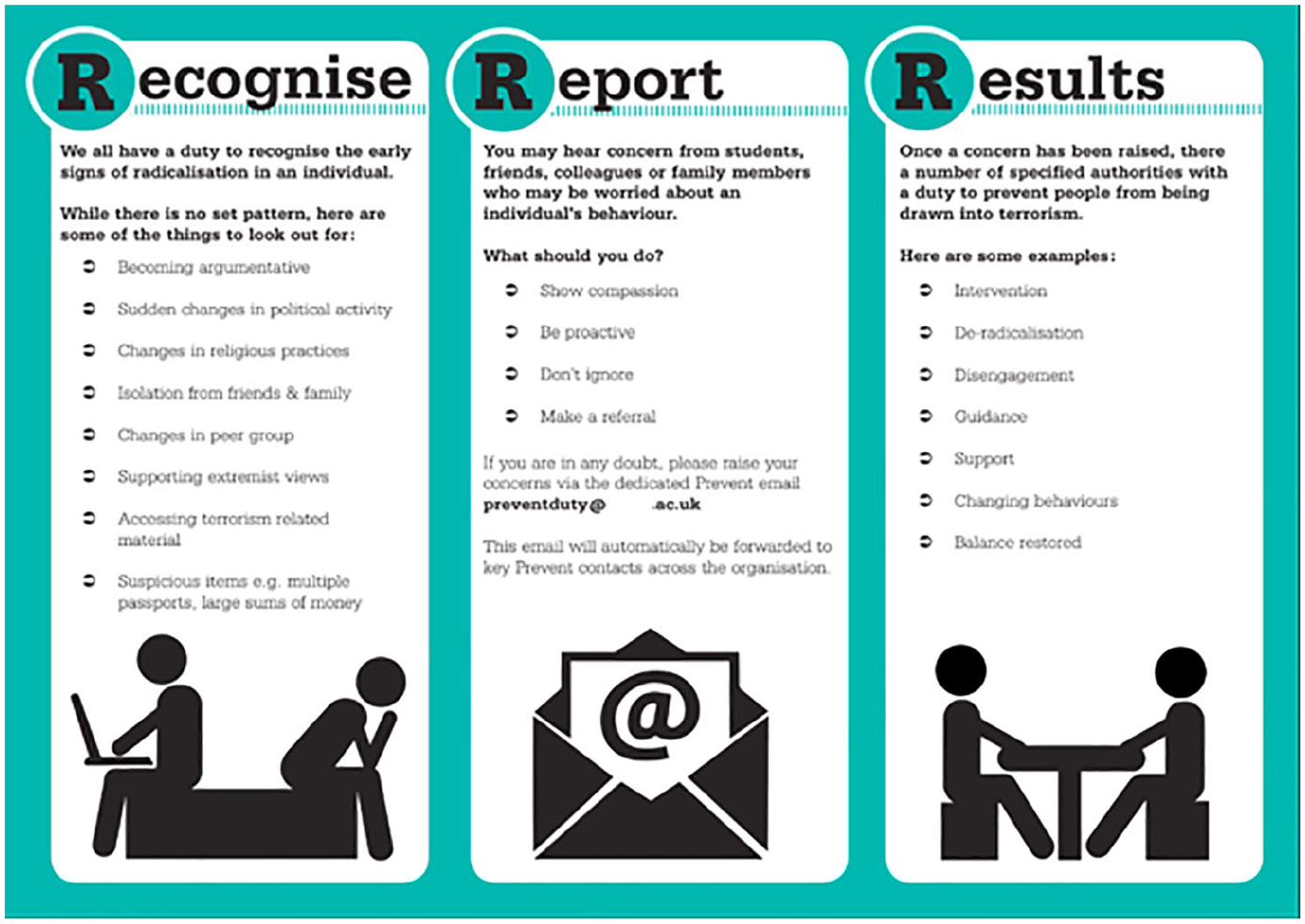
Staff guidance on spotting and reporting signs of radicalization.
In this example we see how an individual’s potential to be radicalised, while following ‘no set pattern’, could involve anything from changes in their peer group to accessing terrorism related material. To be safe, the advice is to ‘be proactive’ and ‘not ignore’ anything; if there is ‘any doubt’ contact Prevent. Such guidance indicates how the duty encourages HEIs to deputise their staff as part of a wide and ill-defined surveillance initiative. The formal placement of UK counter terrorism within UKHE will not only make more difficult the transformative potential of Higher Education but also endanger a harmful securitisation that risks suspicion, prejudice and structural violence with counterproductive effects for deradicalisation efforts.
Given these considerations, it is important to reflect on whether the duty is a necessary and proportionate response to the objectives it sets out to achieve. While the duty is not simply about referring vulnerable people, the information we received about referrals to Channel clarifies how low the most concerning cases that occur in UKHE are. This is not lost on the government and has been highlighted in the OfS annual evaluations (Office for Students, 2019: 10). Projections will always be approximations, but using figures from the HESA website for the 2017/2018 academic year (HESA, 2020), we arrived at a total student and staff population of 2,459,080 for the 140 institutions we sent FOIs to in England and Wales. Of this population, our confirmed referral number of 25 would represent 0.00001%. When you consider referrals to Channel are first vetted by a ‘Channel panel’ before decisions are made, there is also no guarantee that these 25 were considered to need support specific to radicalisation (Home Office, 2019a).
Clearly, universities have a duty of care to their students and staff. Academic staff frequently have formal pastoral responsibilities as part of their contracts and can come to expect more informal emotional labour and support when working alongside students who are often at a transitional stage of their life. The issue then is not whether universities should support staff and students but whether a specific, sector-wide terrorism-related initiative that imposes so much and coopts so many is necessary, proportionate or even effective in achieving its own stated objectives. When the government has brought in something as extensive as this duty, it is vital that we reflect upon the impacts it is having rather than becoming resigned to its existence.
Conclusion
Prevent is currently undergoing an independent review, although this has stalled after the individual heading it up – Lord Carlisle – was stood down from his position after a legal review (Bowcott, 2019). When announcing the review, ex-security Minister and current Secretary of State for Defence, Ben Wallace, spoke favourably about Prevent and singled out its critics, challenging them to provide ‘solid evidence’ for their claims rather than the ‘distortions and spin’ they often employ (Home Office, 2019b). These comments are either a deliberate mischaracterisation of the research agenda Wallace refers to or demonstrate a lack of awareness of the findings. The independent review is welcome and is happening in no small part because of the pressure brought upon the government by researchers across civil society. However, Wallace’s comments imply that a reluctance to engage fully with critical researchers still exists and this will likely remain a challenge going forward.
Our article has sought to respond to this challenge and further develop this critical research agenda in new directions. By utilising FOIs as a novel means of approach, we have demonstrated how the duty has restructured the institution and repositioned individuals within it, sought to situate a counter terrorism initiative within a safeguarding frame and deepened bureaucratic conservatism within the sector. These developments both threaten a depoliticising effect across the sector and expand the mechanisms of surveillance and governance. Given these implications and considering the small number of referrals to Channel, pressing questions remain about the necessity and proportionality of the duty within UKHE.
