







Abstract
A novel self-centering prestressed concrete pier with external energy dissipators has been developed to realize seismic resilient performance and enhanced corrosion-resisting property. Self-centering capacity of the pier is provided by the unbonded post-tensioned tendons and damage is mostly concentrated on the replaceable dissipators. To investigate the seismic behavior of the proposed pier, a detailed analytical model considering interface opening and dissipator deformation was developed and verified through existing cyclic load tests. Based on the proposed model, a prototype reinforced concrete pier and a self-centering prestressed concrete pier with similar backbone curves are designed, and fragility analyses are conducted on the two piers through incremental dynamic analysis. One maximum drift-based performance limit state (i.e. collapse prevention) and two residual drift-based performance limit states (i.e. emergent usage and reconstruction) are defined for seismic capacity evaluation. Fragility curves indicate that the self-centering prestressed concrete pier has a slightly higher peak drift demand owing to its inferior dissipating capacity as compared with the reinforced concrete pier, while sustains a much lower residual drift demand due to its inherent self-centering characteristic.
Keywords
Introduction
Reinforced concrete (RC) bridge in highly seismic regions is supported on ductile piers to prevent structural collapse during a strong earthquake, and the damage mostly concentrates around the plastic hinges at pier ends. As a result, large residual deformation may exist and induce high repair costs or even demolition (Kawashima et al., 1998). Therefore, residual deformation has been regarded as an important parameter in evaluating the post-earthquake functionality of bridge structures (Mackie and Stojadinovic, 2004). Recently, an increasing interest in the development and use of prestressed tendons has been observed, which aims at mitigating residual deformation and structural damage after large earthquakes (Billington and Yoon, 2004; Dazio, 2004; Jeong et al., 2008; Kwan and Billington, 2003a, 2003b; Lee and Billington, 2009; Sakai and Mahin, 2004; Zatar and Mutsuyoshi, 2000, 2002). However, displacement demand of prestressed pier may be excessively high due to its inherent low hysteretic behavior. Within the Precast Seismic Structural Systems (PRESSS) program (Priestley et al., 1999), a hybrid system characterized by gap opening and closing was proposed, where additional energy dissipators (EDs) were attached at the precast component interface. During an earthquake, damage is concentrated on the EDs, while prestressed tendons provide self-centering capacity, producing a “flag shaped” hysteretic loop (Stanton et al., 1997). Subsequent researches incorporating different forms of dissipators have validated the superiority and flexibility of the proposed system (Chou and Hsu, 2008; ElGawady et al., 2010; Hewes and Priestley, 2002; Marriott et al., 2009; Ou et al., 2006; Palermo et al., 2007).
More recently, a novel self-centering pier, that is, the SCPC pier with external dissipators, has been proposed by Guo et al. (2015). The unbonded post-tensioned (PT) tendons in the precast pier are made of fiber-reinforced polymer (FRP), and aluminum bars are used as the external EDs. Besides, FRP jacket is shop fabricated at column base to protect concrete toe from crushing when the column rotates relatively to the foundation. Hysteretic loop of the proposed pier is flag shaped under cyclic loading, indicating that negligible residual drift would be observed after an earthquake (Cao et al., 2015). Moreover, a remarkable improvement in pier durability is expected due to the application of FRP and aluminum material.
However, the aforementioned studies focus on the pier configuration, numerical modeling, and cyclic loading tests, while researches on the benefits of reduced residual deformation considering the uncertainties of seismic events are insufficient. In this article, fragility analyses were carried out to evaluate the seismic fragility of the SCPC pier. Two demonstration piers (i.e. the RC pier and the SCPC pier) are developed and analyzed through the incremental dynamic analysis (IDA), so as to provide a quantitative relationship between failure probability and seismic intensity.
Analytical model of SCPC pier
Configuration and mechanical behavior of SCPC pier
Figure 1(a) shows a schematic representation of the proposed SCPC pier. Precast column and foundation are field assembled using the internal unbonded PT tendons that are made of FRP and anchored on the top of the column. Lateral force–displacement behavior of SCPC pier is similar to that of a monolithic column until lateral force increases to certain amplitude. After that gap opens at base interface, the column begins to rotate. The pier is pulled back to the original position by the tendon after rocking, leaving minimal residual deformation. To prevent concrete toe from crushing during rocking, bottom segment of the pier is encased in a FRP jacket, which can also be used as formwork during construction. Aluminum bars with modified properties are used to provide energy dissipation capacity. As shown in Figure 1(b), every dissipating bar that passes through the ED duct is fixed to the RC corbel through bolts on the upper and bottom surfaces of the corbel, respectively. Sleeves are used to connect aluminum bars to the thread rods embedded in the foundation. Diameter of the bar is locally reduced so that plastic deformation is concentrated on the weakened part, making installation and replacement convenient. To avoid bar buckling under compression, weakened part of the bar is sheathed in a confining tube with epoxy inside.
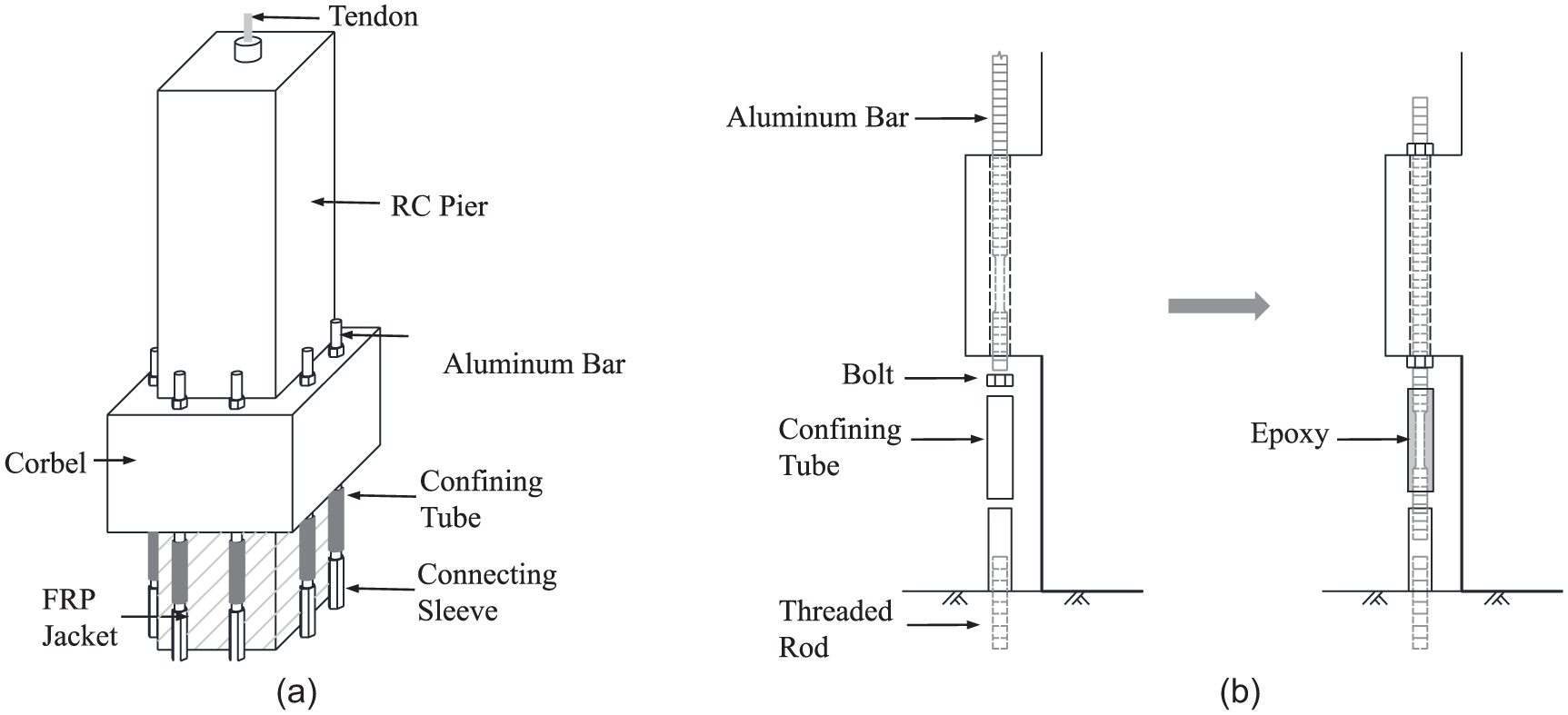
Schematic illustration of a SCPC pier: (a) 3D view of SCPC pier and (b) installation of the aluminum bar.
Flexural behavior of SCPC pier is characterized by gap opening and closing at column–foundation interface under cyclic loading, as shown in Figure 2, where G is the dead weight of the superstructure and F denotes the inertial force resulting from horizontal ground motion. Fp0 represents initial prestress force, which increases to Fp as the tendon elongates along with gap opening. Fsi is the axial force of the ith bar, and fc is the extreme fiber stress at rotation toe. Hysteretic loop of the SCPC pier under cyclic loading is characterized by a double-flag shape, as shown in Figure 2(d), where Δ denotes the lateral displacement of the superstructure. Point 1 is defined as “decompression” since strain of the extreme fiber away from the rotation toe is zero at this moment. Prior to point 1, the column–foundation interface keeps closed, and Δis totally contributed by column bending deformation. From point 1 to point 2, Δ consists of both bending deformation and rigid body rotation of the column, which is reflected in a reduced stiffness in the hysteretic loop. Contact depth c, at column base is gradually decreased with the rotation, and moment capacity at this stage is mostly contributed by the tendon and dissipators. Point 3 is defined as the limit state of SCPC pier, where the displacement value can be decided according to maximum tendon strain or other measures (Dawood and ElGawady, 2013). Provided that unloading precedes point 3, Δ is gradually reduced under the tendon force, and the interface is closed again at point 4. The area surrounded by curves 1-2 and 2-4 is equal to the dissipated energy in half cycle. If the ratio between self-centering force and dissipator force is designed properly, at point 5 negligible residual drift would be left when all lateral force is removed. A complete reversal of F will result in a similar pier behavior in the opposite direction, as shown in Figure 2(d). Note that Figure 2 shows the deformation of a single pier, while for the frame piers gap opening may occur at the pier–bent cap interface as well. As a result, the drift of the frame piers would be smaller under the same lateral load (ElGawady and Sha’lan, 2011).
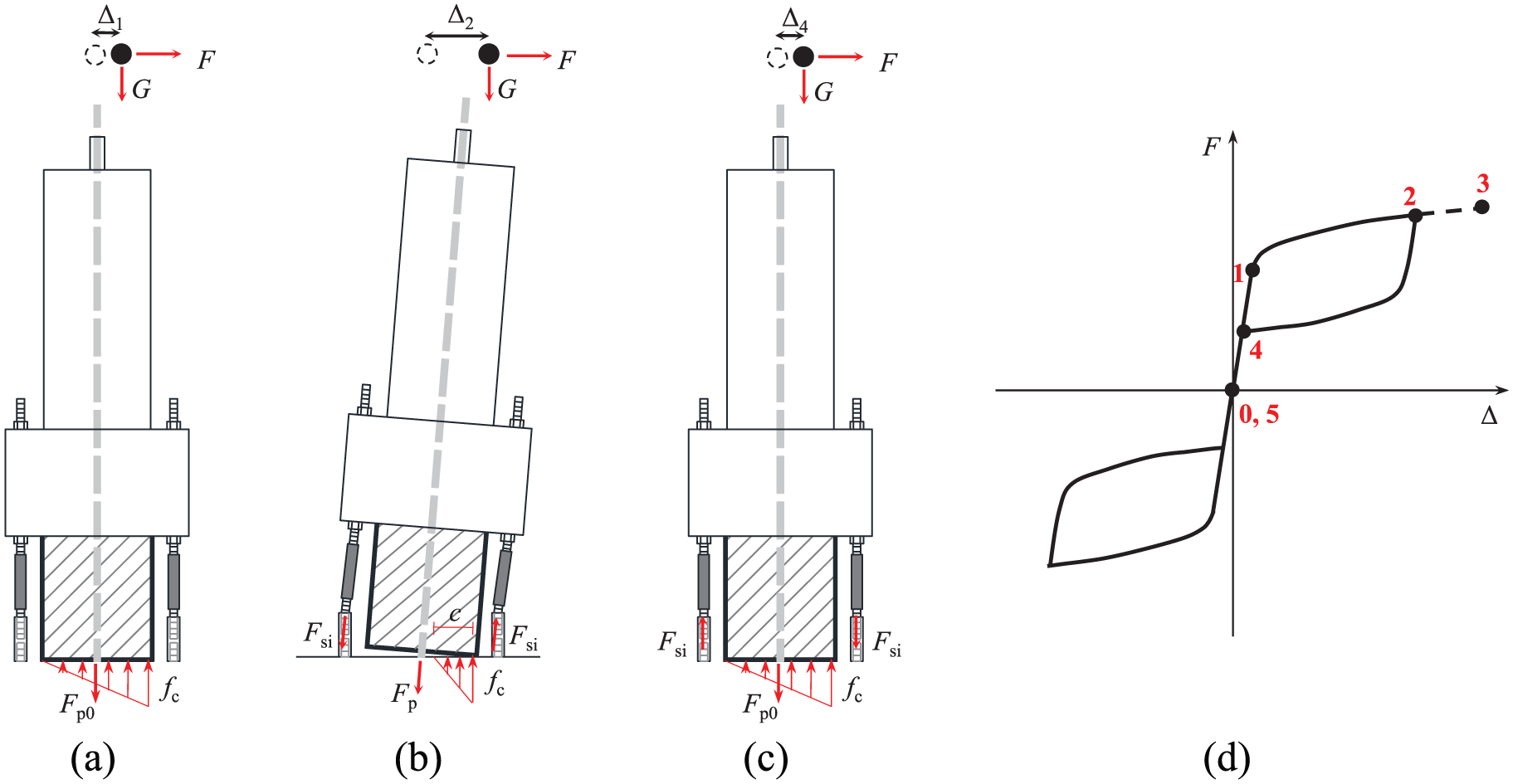
Working mechanism of SCPC pier: (a) point 1, (b) point 2, (c) point 4, and (d) conceptual F–Δ behavior.
Experiment validation and numerical simulation of SCPC pier
To investigate the behavior of the proposed SCPC pier under cyclic loading, one 1:3 scaled RC column and three precast columns have been fabricated and tested at the Key Laboratory of Concrete and Prestressed Concrete Structure of Minister of Education at Southeast University. Two unbonded PT tendons which are made of basalt fiber–reinforced polymer (BFRP) are placed at the center of the column. Elastic modulus and ultimate strength of the BFRP tendon are 44 GPa and 1080 MPa, respectively. Despite its high tensile strength, the tendon may be pinched off by the wedges due to the relatively low shear strength, and a special anchorage system is thus designed to replace the wedges. RC corbels are field cast with the column, and each contains two ED ducts. Considering that the strength of pure aluminum is only from 80 to 100 MPa, aluminum alloy with modified properties (i.e. higher strength and equal ductility) is used in the experiment. Tensile test showed that ultimate strain of the material is as large as 22%, while the ultimate strength is about 220 MPa, which is comparable to that of the mild steel. To prevent concrete toe from crushing, the pier is encased in a glass fiber–reinforced polymer (GFRP) jacket at the base. The elastic modulus of saturated GFRP plates was approximately 32 GPa, and the ultimate strength was 558 MPa (corresponding to an ultimate strain of 1.7%). The GFRP plates were made of several layers of GFRP sheets, with fibers either horizontally or vertically oriented; therefore, the GFRP tube was bi-directional, though the glass fiber itself is unidirectional.
A total of 15 tests were conducted on the specimens, so as to investigate the influence of various parameters. At the end of the tests, extensive cracking and concrete toe crushing were observed on the RC specimen, while no visible damage could be observed on the Self-centering (SC) specimens except for the fracture of aluminum bars in some tests. Residual drift of the RC column reaches about 2.25%, while the maximum residual drift for the SC specimens is no larger than 0.21%, exhibiting desirable self-centering behavior. Note that the BFRP tendons have lower elastic modulus and strength, and therefore, the self-centering capacity of the pier with BFRP tendons is in general smaller than that with steel strands; however, the BFRP tendons do not have corrosion problems, though special anchorage is required. In addition, lower elastic modulus of the FRP material is usually beneficial because the stress increment after gap opening occurs is slower so that tendon rupture could be more easily avoided. More detailed information about the experiment can be found in Guo et al. (2015).
A two-dimensional analytical model is built using the finite element structural analysis program OpenSees (Open System for Earthquake Engineering Simulation, 2009), as shown in Figure 3. RC column is modeled using the dispBeamColumn element assigned with fiber section property. BFRP tendons are modeled using the truss elements with the nodes at the pier foundation fixed, and nodes at the top of pier coupled with the pier node in 3 degrees of freedom. To model the gap opening and closing at column–foundation interface, two vertical zeroLength elements with compression-only material property are used, respectively, at end nodes of a horizontal rigid element at pier bottom surface, which is based on the elasticBeamColumn element assigned with large axial and bending stiffness. Aluminum bars are modeled using the dispBeamColumn element at different segments with corresponding fiber section properties. RC corbel is modeled using two elasticBeamColumn elements assigned with large axial and bending stiffness, and they are set on the upper and bottom surfaces, respectively. A total of four zeroLength elements with compression-only material property are used between the corbel end nodes and aluminum bar nodes to model the contact relationship between bolts and corbel surfaces. Horizontal degree of freedom of the pier bottom node is fixed to consider the friction force and displacement limiting device.
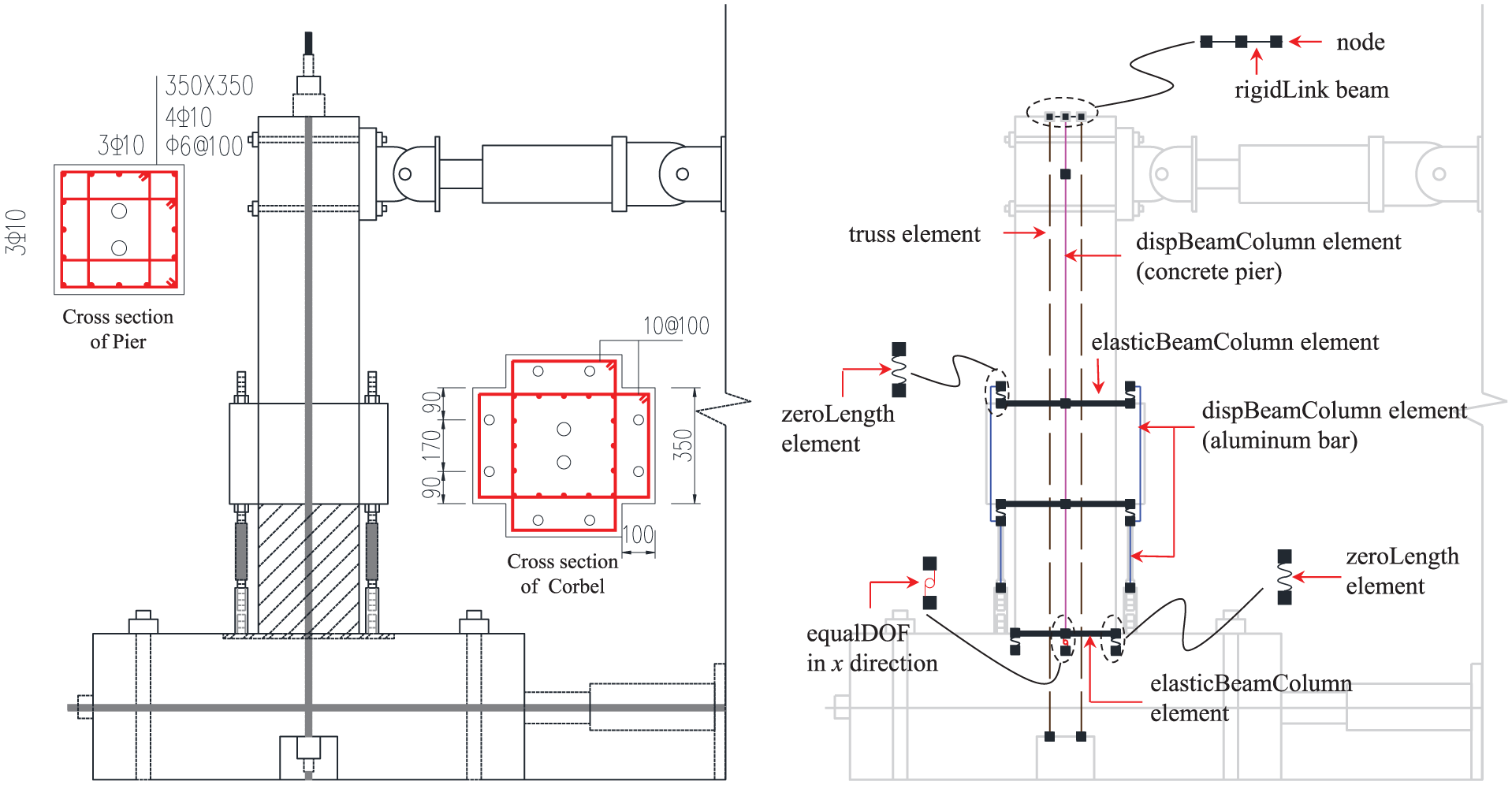
Numerical model in OpenSees.
Each section of the RC column and aluminum bars is subdivided into a number of fibers assigned with uniaxial stress–strain relationships of the materials. The Concrete01 material, based on the Kent–Scott–Park model (Kent and Park, 1971), is used to model cover concrete and core concrete confined by stirrups, and the transverse confinement effect to the core concrete is considered by increasing the strength and deformation capacity of unconfined concrete. The ConfinedConcrete01 material, which is based on the model proposed by Braga et al. (2006), is used to model core concrete to take the transverse confinement from both stirrups and the GFRP jacket into account. Longitudinal reinforcements are modeled using the Steel02 material which is based on a Giuffre–Menegotto–Pinto constitutive model (Menegotto and Pinto, 1973), so as to consider the Bauschinger effect and stiffness degradation under cyclic loading. Aluminum is modeled using the RambergOsgoodSteel material which is based on the Ramberg–Osgood constructive model (Ramberg and Osgood, 1943), capturing strain hardening and smooth transformation of stress–strain curve after yielding. FRP tendon is modeled using the elastic material with an initial strain value to impose prestress force. To consider the possible fracture of FRP tendon and aluminum bars, ultimate strain of respective material is modeled using the Minmax material. Figure 4 shows the comparison between test results and numerical simulation, where good agreement is observed, while the fracture of aluminum bars is reflected in a gradual decrease in simulation instead of a sudden drop in the test.
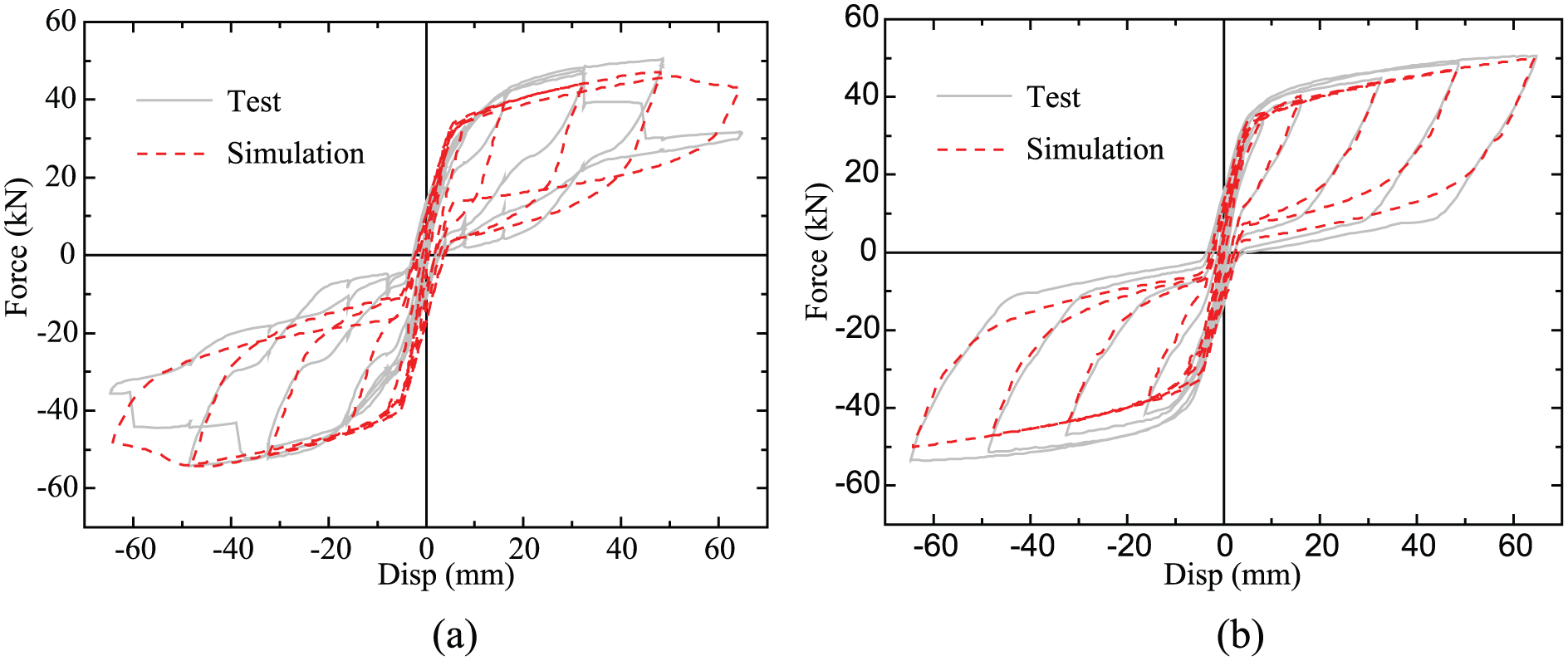
Comparison between test results and numerical simulation: (a) test 3 and (b) test 5.
Prototype bridge pier
A prototype RC pier is designed and assumed to be located on the field with stiff soil (Class D, FEMA 450), as shown in Figure 5, where the superstructure is simplified as a mass point connected to the column through a rigid link. The RC pier is designed with an axial compression ratio of 10%, that is,
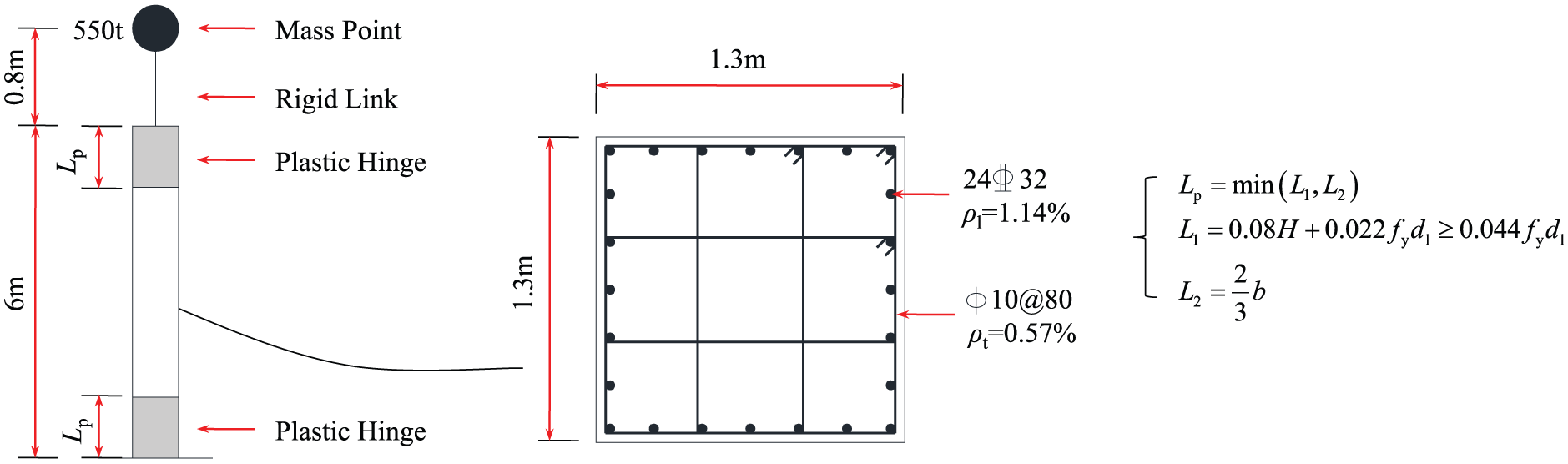
Analytical model of the RC pier.
A two-dimensional nonlinear analytical model is built in the OpenSees, in which the RC pier is modeled using the beamWithHinges element considering lumped plasticity at column ends. Rather than the conventional concentrated plasticity, nonlinear behavior of the element is located in the plastic hinges with a predefined length, along which the cross section is fiber-based with the uniaxial material constructive model, as shown in Figure 5. The length of the plastic hinge, Lp, is calculated according to the Guidelines for Seismic Design of Highway Bridges (JTG/T B02-01, 2008), as shown in Figure 5, where H denotes the pier height, b denotes the pier width, and fy and d1 denote the yield strength and the diameter of longitudinal bar, respectively. More details about the element are presented by Scott and Fenves (2006). Pier concrete is modeled using the Concrete02 material which considers transversal reinforcement effect and linear softening in tension. Longitudinal rebar is modeled using the ReinforcingSteel material which considers the Bauschinger effect and inelastic buckling. Furthermore, degradation of unloading modulus and ultimate tensile strain under cyclic loading are taken into account (Chang and Mander, 1994; Dodd and Restrepo-Posada, 1995). Rigid link is modeled using the elasticBeamColumn element assigned with large axial and bending stiffness.
To assess the potential benefits of reduced residual deformation, one SCPC pier is designed with the same configuration and reinforcement details as the RC pier, as shown in Figure 6(a). The main design parameters of the SCPC pier include the initial PT force and the number of PT tendons and dissipators. The initial PT force is determined according to the required stiffness, and in this study, the SCPC pier is designed with the same backbone curve with the RC pier. Besides, the initial PT force should be large enough to prevent gap opening under the frequent earthquake (GB 50011-2010, 2010). The number of PT tendons is determined through R0, which is the initial stress normalized by the yield stress of the tendon, and a value of R0 around 0.4 is recommended. The dissipators are used to dissipate seismic energy, and can be designed according to the equivalent damping ratio, of which the expressions are given by Cao et al. (2015). In this study, two prestressed BFRP tendons with an unbonded length of 7.5 m are placed at the center of the cross section, producing a total axial force of 1100 kN. Diameter of the aluminum bar is 100 mm and reduced to 56 mm in the weakened segment. There are four bars on the west and east sides of the column, respectively, to dissipate the seismic energy input in the transversal direction, and each bar is 0.25 m away from the column edge. The moment capacity of SCPC pier is similar to RC pier at the same lateral displacement, which is reflected in the similar backbone curves in Figure 6(b). Note that the numerical simulation of SCPC pier is based on the aforementioned methods, in which vertical force from the superstructure and P–Δ effect is taken into consideration.
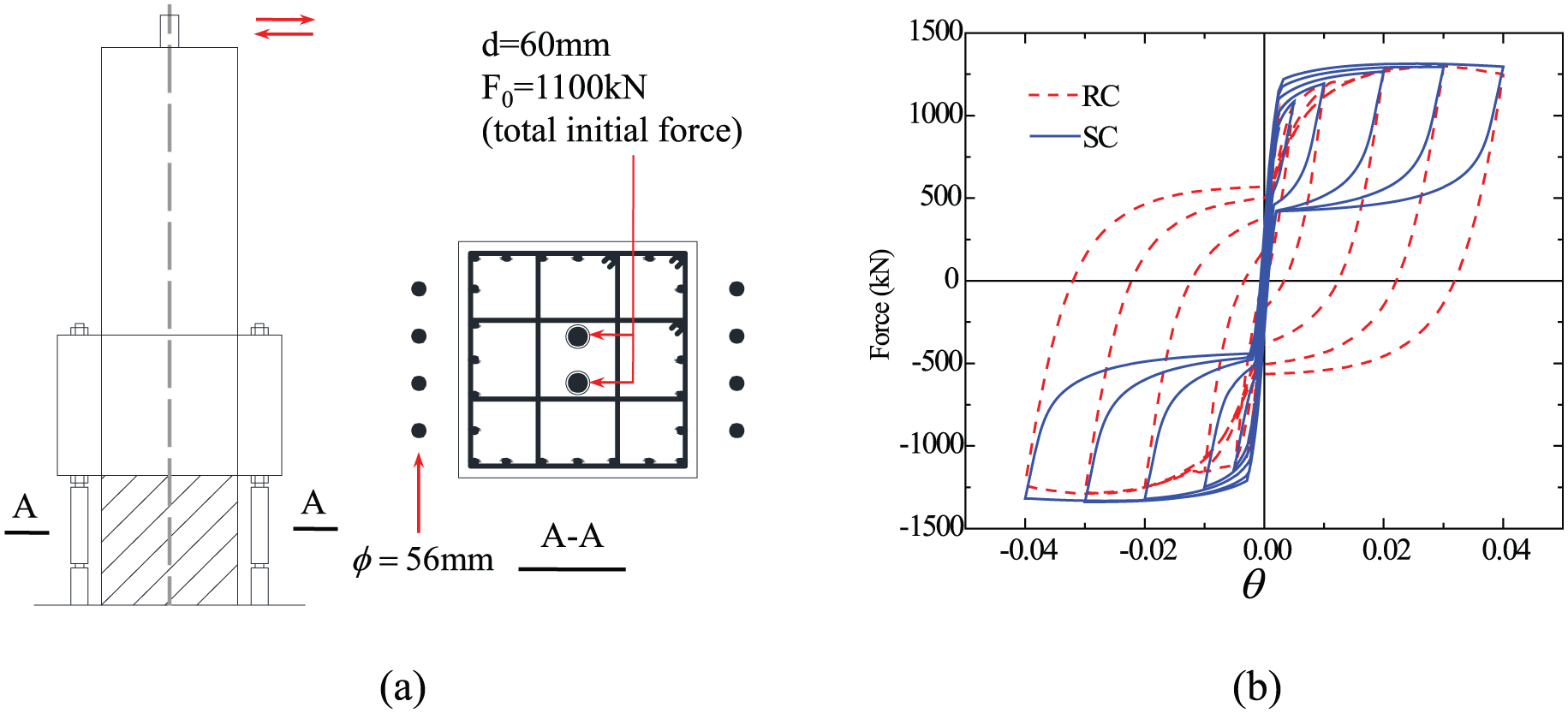
Design of the SCPC pier: (a) pier configuration and (b) simulated F–θ relation under cyclic loading.
Framework for structural fragility analysis
Theory of fragility analysis
Fragility analysis has become an effective tool for the seismic risk assessment of a structure, where seismic fragility is defined as a conditional probability that structure or component meets a specific damage level for a given ground motion measure. Fragility curve is usually expressed in a mathematic form, that is, fragility function

where LS represents a certain limit/damage state of structure or component, IM denotes the ground motion intensity measure, and Pf represents the conditional failure probability.
However, LS can be seen as a condition when structural demand (structural response) D meets or exceeds structural capacity C, which is defined by a specific damage state (e.g. concrete cracking or longitudinal bar yielding or collapse of the structure). Generally, both D and C are described by a lognormal probability distribution (Hwang et al., 2001; Shinozuka et al., 2000), which means that LS is expressed as a standard normal distribution function
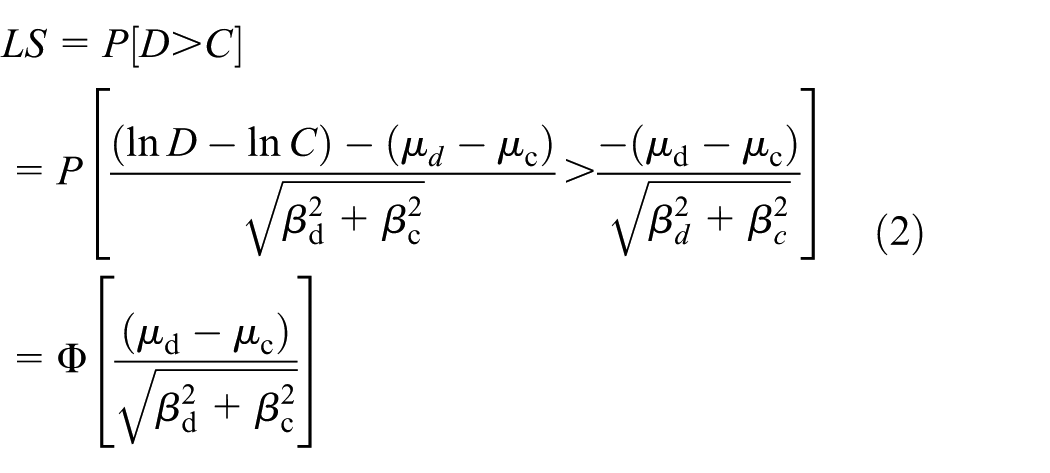
where µ and β denote median value and standard deviation, respectively;
According to Cornell et al. (2002), the median demand (µd) could be estimated through a function about IM

Therefore, fragility function can be written as follows
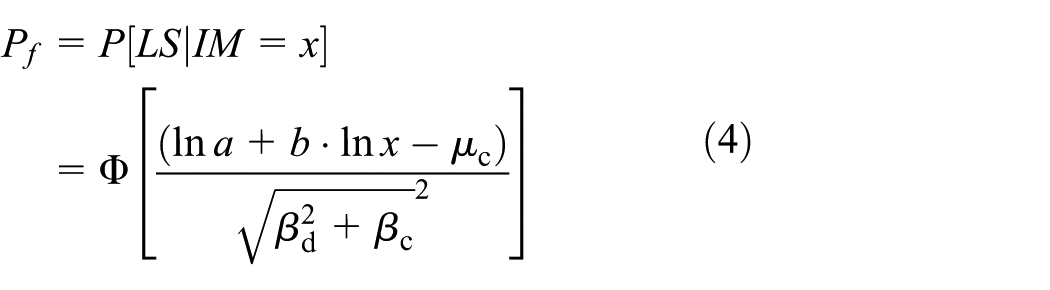
In previous studies, the capacity median value µc is considered constant at a given damage level (Deodatis et al., 2000; Karim and Yamazaki, 2000), and an empirical value 0.6 for
Definition of µc
Structure capacity, either force-based or displacement-based, can be seen as a series of conditions defining damage states. Despite the detailed damage levels of RC bridge provided by HAZUS99 (1999), in which the failure of material, component, and foundation are considered, it is unlikely that SCPC piers will experience the damage such as concrete cracking or reinforcement yielding in an earthquake. In this article, “Collapse prevention” is selected as a performance level which could be defined by the maximum drift of the pier, θmax. According to the Guidelines for Seismic Design of Highway Bridges (2008), θmax of RC piers in the prototype bridge is calculated as 2.5% for collapse prevention; according to Dawood and ElGawady (2013), θmax of SCPC pier is recommended as 4.5% to avoid collapse. For safety and comparison, the smaller value is selected as capacity measure, that is, µc1 = 2.5%.
To evaluate the potential benefits from reduced residual drift ratio (θres) of the SCPC pier, two performance levels associated with residual drift which were used in a previous research (Itoh et al., 2005) were adopted in this study, that is, the “Emergent-usage” and “Reconstruction” performance levels, with the corresponding maximum allowable residual drift ratios of 1/300 and 1/100, respectively. The “Emergent-usage” performance level is a state in which structural damage is obvious while the minimum function for emergent usage is achievable, and the “Reconstruction” performance level is a state where damage becomes so severe that repair is difficult or uneconomic and demolition is more appropriate. The two values are decided by referring to a research report released by Japan Society of Civil Engineers (Usami, 1996).
Earthquake ground motions
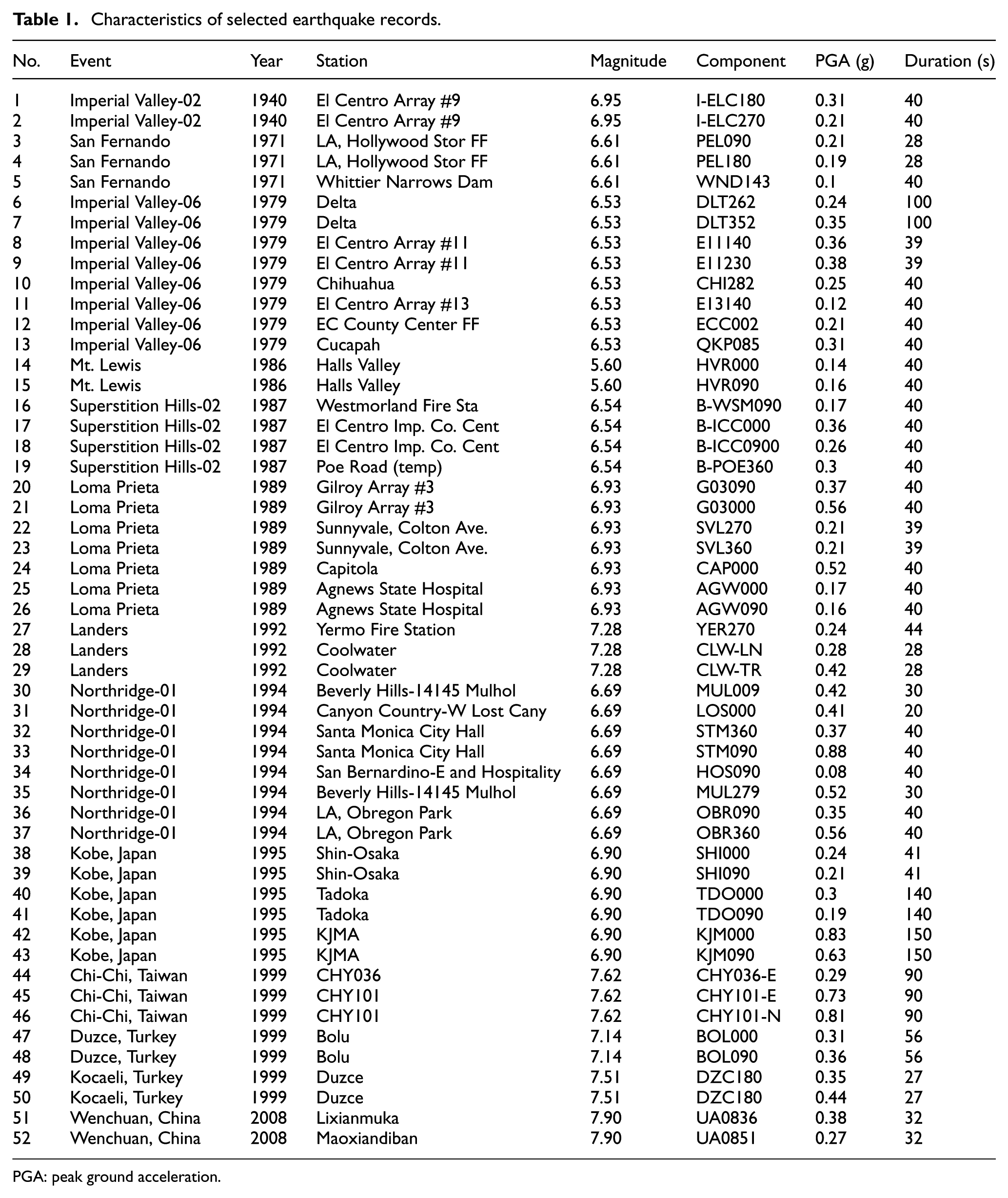
In order to establish the relationship between bridge response and seismic intensity, a series of nonlinear time history analyses known as the IDA (Vamvatsikos and Cornell, 2002) are carried out with 52 ground motion records. Selection of the ground motions is based on the site class (Building Seismic Safety Council, 2004), and to investigate the influence of uncertain earthquake input, they have different peak ground acceleration (PGA), magnitude, and duration, as shown in Table 1. Figure 7 shows the respective and mean spectra of the selected ground motions, as well as the DBE spectrum of FEMA 450. Note that Sa(T1, 5%) represents the first-mode spectral acceleration at 5% damping ratio.
Characteristics of selected earthquake records.
PGA: peak ground acceleration.
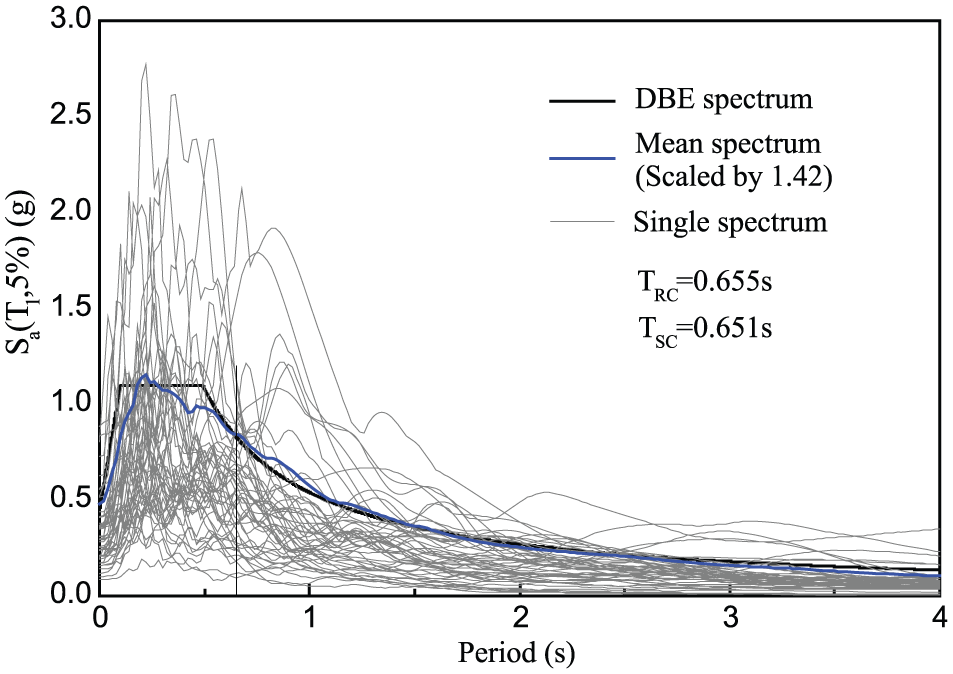
Scaled mean spectrum of 52 ground motions.
In this article, Sa(T1, 5%) was chosen as the seismic intensity measure. When performing the IDA procedure, 0.1g was chosen as the interval, where g represents the gravity acceleration. For an unscaled ground motion that the corresponding Sa(T1, 5%) equals λ g, the acceleration data were multiplied by a scaling factor that equals to (0.1×i×1.42/λ) during the ith analysis, where 1.42 denotes the scaling factor in Figure 7, and i(=1, 2, …) denotes the sequence number of time history analysis. Maximum and residual drifts of the pier corresponding to the scaled Sa(T1, 5%) were recorded before non-converge occurs.
Figure 8 plots the simulated drift records subject to the I-ELC180 ground motion with different scaling factors. Under small ground motion amplitude (i=4), residual drifts for the RC and SCPC piers are 0.03% and 0.02% respectively, and both of these two values are well below the maximum allowable value corresponding to the “Emergent-usage” limit state. Maximum drifts of the SCPC and RC pier are observed as 1.6% and 1.1%, respectively, which shows little difference. As the drifts under large ground motion amplitude (i=8) are compared, the superiority of SCPC pier can be easily observed in terms of residual drift. The observed residual drift of SCPC pier is 0.08%, which still meets the demand of “Emergent usage”; however, this value of RC pier has increased to 0.5%, which means that repair work has to be carried out. As shown in Figure 8(d), the sudden decrease in lateral force of SCPC pier is considered as the result of breaking of dissipators.
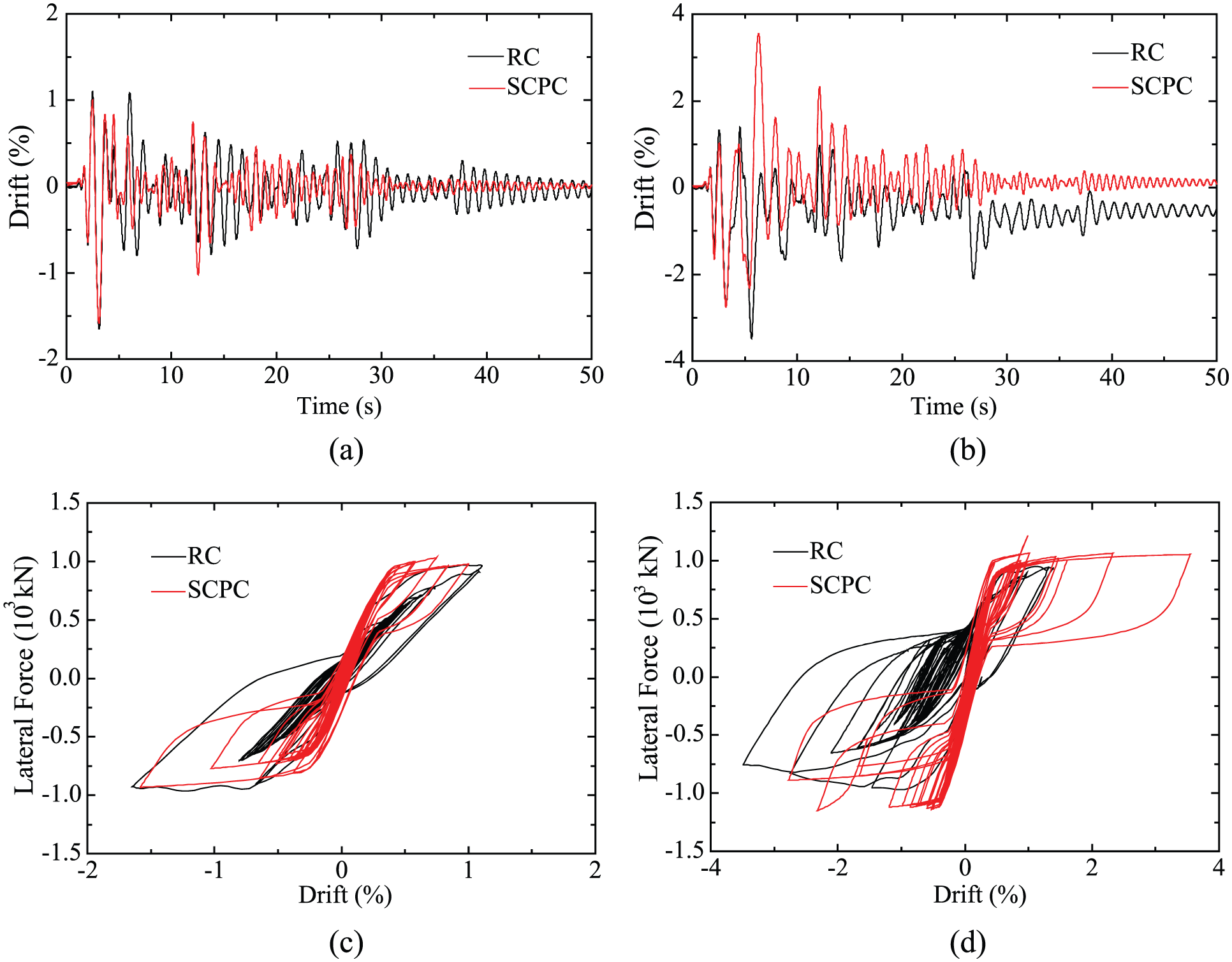
Comparison of pier responses with different scaling factors under the I-ELC180 ground motion: (a) drift record (i = 0.4), (b) drift record (i = 0.8), (c) hysteretic loop (i = 0.4), and (d) hysteretic loop (i = 0.8).
Analysis of IDA curves
For each scaling factor, the corresponding maximum and residual drifts of the pier are recorded and the results corresponding to the 52 ground motion are shown in Figure 9. This is followed by a nonlinear regression analysis to obtain the parameters of a and b in equation (3), and the respective values are given with regard to different responses. As shown in Figure 9, relationships between pier response and Sa(T1, 5%) are described through the black lines, namely, IDA curves. No obvious difference is observed between the curves of RC and SCPC piers with respect to maximum drift θmax, while remarkable difference is observed regarding the residual drift θmax. Residual deformation of the RC pier increases rapidly as Sa increases, while this increment on the SCPC pier is negligible. Fragility curves of the pier with regard to maximum drift and residual drift are drawn based on equation (4), and the results are shown in Figure 10.
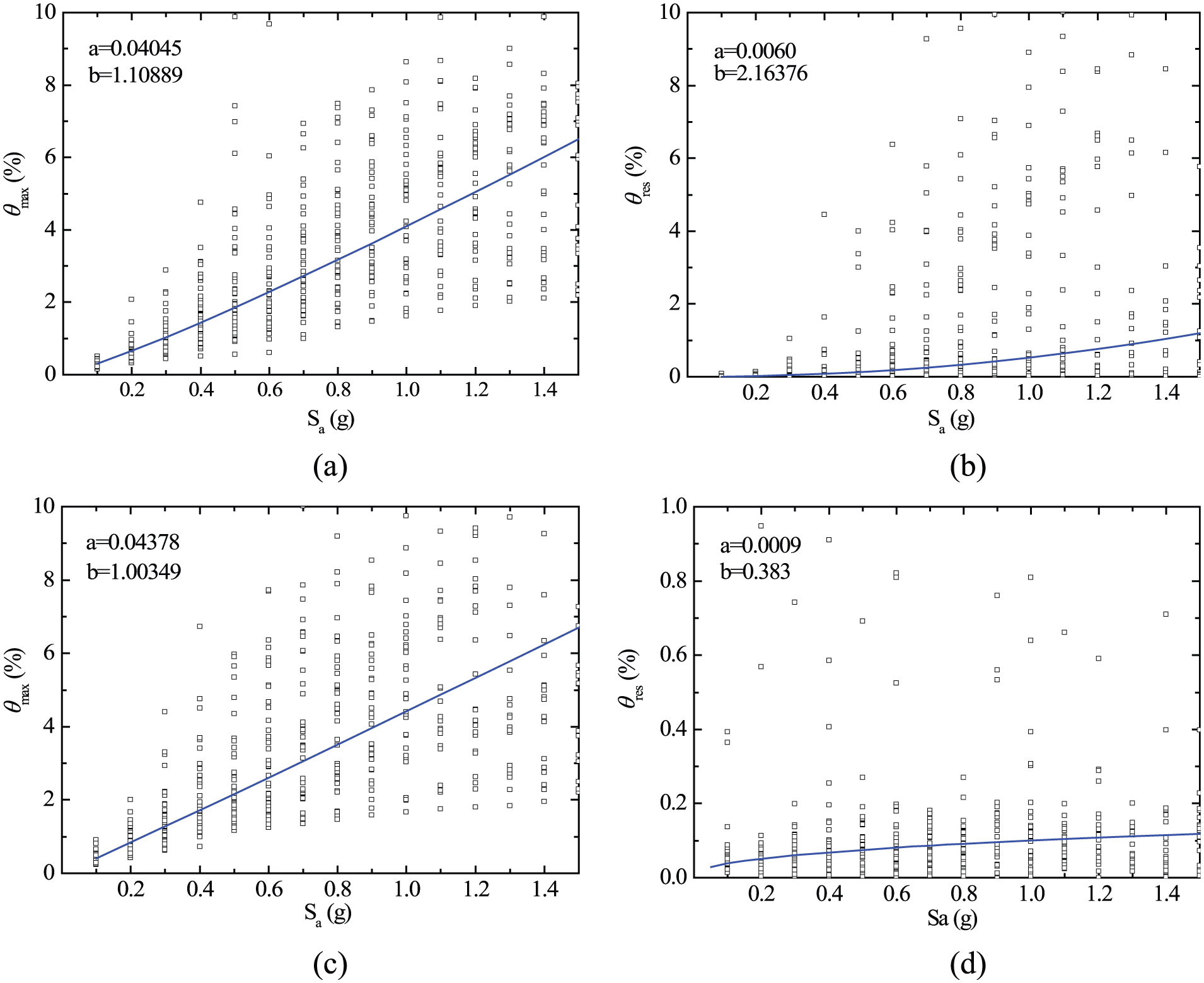
Results of the IDA of the two piers: (a) RC pier: maximum drift, (b) RC pier: residual drift, (c) SCPC pier: maximum drift, and (d) SCPC pier: residual drift.
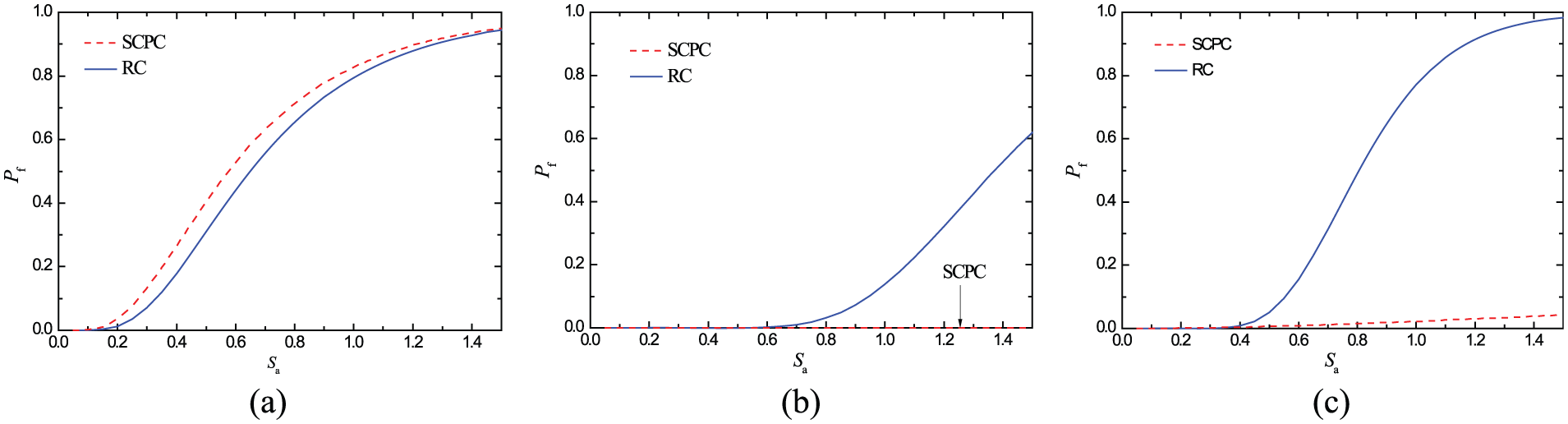
Probabilities of exceedance corresponding to (a) collapse prevention (maximum drift = 2.5%), (b) reconstruction (residual drift = 1/100), and (c) emergent usage (residual drift = 1/300).
It can be concluded that seismic vulnerability of the piers varies significantly depending on different performance levels. Figure 10(a) shows the seismic fragility curves based on the maximum drift. It is observed that fragility of the two piers are similar for the “Collapse-prevention” performance level, while fragility curve of the SCPC pier “shifts to the left” as compared with that of the RC pier, indicating that SCPC pier is more vulnerable for collapse-prevention performance limit state. This phenomenon is mainly due to the inherent inferior dissipating capacity of the SCPC pier, as shown in Figure 6.
Figure 10(b) and (c) shows the seismic fragility curves based on the residual drift. Despite the relatively low probability of exceedance (POE) for the “Reconstruction” performance level, the POE of the RC pier corresponding to the “Emergent-usage” performance level remains basically the same as that for “Collapse prevention,” indicating that extra repair or highway closure is needed after a strong earthquake. However, the POE of the SCPC pier is minimal and increases slowly with Sa, indicating that the probability of failure arising from residual drift is rather small. The significant difference between the POE of the two piers reveals that SCPC pier can effectively reduce the risk of downtime losses due to structural repair or demolition.
Summary and conclusion
Post-earthquake functionality of structure has become a topic of increasing interests, while conventional RC piers are expected to experience significant residual deformation after strong ground motions, which induces expensive repair costs or even demolition. This article presents the numerical model of a previously proposed SCPC pier and its validation through cyclic load tests. Based on the proposed model, one benchmark RC pier and a SCPC pier are designed. IDA is performed to estimate the seismic vulnerability using a set of selected earthquake records. Seismic fragility analysis is then conducted to make a quantitative comparison of the relative performance between the two pier systems. Based on the presented analysis results, the following conclusions can be drawn:
The proposed numerical simulation method can well capture pier behaviors including gap opening at base, contact between bolts and the corbel, rupture of aluminum bars, and so on, which is crucial to the seismic fragility analysis. The simulated results in general match well with the existing test results.
Time history analyses of the RC pier show significant residual drifts after the major earthquakes, while the residual deformation of the SCPC pier is insignificant. However, the SCPC pier has a slightly higher maximum drift demand due to its inherent inferior dissipating capacity.
Seismic responses of the piers are highly random under different ground motion, and therefore, it is necessary to evaluate the seismic fragility. Two performance levels associated with residual drift are used as the fragility evaluation criteria. Compared with the traditional RC pier, the SCPC pier experiences much smaller probabilities of exceedance for the “Reconstruction” and “Emergent usage” performance levels, resulting in an expected reduction in downtime losses due to structural repair, replacement, or demolition.
Note that in this article, the bridge with single SCPC pier instead of multiple SCPC piers is investigated, while the fragility of bridges with multiple or frame SCPC piers requires further investigation in the future study.
Footnotes
Declaration of Conflicting Interests
The author(s) declared no potential conflicts of interest with respect to the research, authorship, and/or publication of this article.
Funding
The author(s) disclosed receipt of the following financial support for the research, authorship, and/or publication of this article: The research described in this paper was financially supported by the National Key Research Program of China under grant no. 2016YFC0701400, the Natural Science Foundation of China under grant no. 51378107, and the Priority Academic Program Development of Jiangsu Higher Education Institutions under grant no. CE02-1-8.