







Abstract
An efficient meta-heuristic algorithm, named beetle swarm optimization (BSO), is proposed to localize and quantify structural damage using limited vibration measurement data. The beetle antennae search (BAS) algorithm that imitats a random walking mechanism in nature was recently developed to solve the optimization problem. However, the ratio of convergence of this algorithm significantly relys on the random direction and deviation for high-dimensional problems. To overcome this shortcoming, the BSO inspired by the swarm intelligence strategy is proposed. In the iterative search process of the BSO, each beetle swarm moves in a random direction like the BAS and the swarm of beetles is cognitive with the optimal one for the searching behavior. Consequently, the optimal one is updated step by step until a better beetle appears. To demonstrate the capability and robustness of the BSO, numerical and experimental studies using limited vibration measurement data of an offshore wind turbine structure are carried out for structural damage identification. An novel objective function is established by combining natural frequencies with mode shapes of the structure. The numerical results show that the BSO can accurately localize and quantify various types of damage even in a noise and temperature variations polluted environment. Moreover, it has higher accuracy and faster convergence speed than the BAS and the particle swarm optimization (PSO) algorithms. These promising performances could contribute to establishing a structural monitoring system for safety assurance of wind turbine structures.
Keywords
Introduction
Wind power has been considered as one of the most promising renewable energies in the world. More and more wind turbines are installed on onshore and offshore wind farms. For sustainable development, these structures equipped with larger capacities, taller towers, and longer blades have been presented as the future tendency. Compared with other large-scale civil engineering structures (e.g., buildings and bridges), the wind turbine structures work in a more harsh ocean environment and are subjected to complex wave, current, typhoon, and seismic loadings. During their life span of service, damage is continuously accumulated. To ensure structural safety, online structural health monitoring and real-time assessment of structural condition have become the inevitable tendency (Koh and Dyke, 2007; Oliveira et al., 2018; Seyedpoor, 2011; Shi et al., 1998; Wang et al., 2012, 2019; Yuen, 1985; Zhan et al., 2020).
During the past few decades, there has been an increasing interest in structural damage identification by vibration-based methods, whicn are able to assess the damage state of structures. Many alternative approaches have been available so far. One of the essential categories is the two-stage method. More specifically, one approach is applied for determining the damage in the first stage and the other algorithm is implemented to quantify the corresponding severity in the second stage after the location of damage has been approximately predicted. For instance, the vibration-based approach and meta-heuristic optimization algorithm have been widely adopted (Seyedpoor, 2011, 2012; Srinivas et al., 2011; Villalba and Laier, 2012). One primary problem with the two-stage method is that the precision of severity estimation hugely depends on the accuracy of damage localization (Xu et al., 2019a).
Conversely, the overall goal of the second category is to localize and quantify the damage simultaneously. Generally, the damage identification has been regarded as an optimization process to minimize the error of the modal parameters between the predicted and measured structures. For example, these optimization-based methods have been widely used, e.g., the genetic algorithm (Chou and Ghaboussi, 2001; Rao et al., 2004) and the particle swarm optimization (Kang et al., 2012). Excellent performances have been obtained to localize the damage and estimate the corresponding severity simultaneously because of their powerful search capabilities. However, the identified result of these methods usually diverges, and the computational burden increases rapidly when the measured noise and spatially incompleteness of modal parameters are considered.
The support structure of a wind turbine is vital to its operational safety (Yang and Zhu, 2015). Most recently, many studies have been conducted to monitor the damage of the support using the numerical and experimental data, such as the frequency spectrum change-based methods (Opoka et al., 2016; Soman et al., 2018), total modal energy-based methods (Li et al., 2018), and vibration-based methods (Luczak et al., 2019). These methods can detect and localize the damage of wind turbine structures successfully; however, few investigations attempt to assess the severity of damage to guide the following structural state assessment, such as remaining life prediction. Furthermore, the identified modal parameters are noise-polluted and spatially-incomplete due to the accuracy of the measurement equipment and the difficulty of installation, therefore a challenging problem arises in damage identification by using noise-polluted and limited data. Thus, a robustness approach should be badly needed to implement for structural damage identification of the wind turbine structure.
The beetle antennae search (BAS) (Jiang and Li, 2017) algorithm that imitats a random walking mechanism in nature was recently developed to solve the optimization problem. Compared with other meta-heuristic algorithms, it only uses one beetle, and the corresponding computational burden could be dramatically reduced. However, the ratio of convergence of this algorithm significantly relys on the random direction and deviation for high-dimensional problems. Inspired by the swarm intelligence, the beetle swarm optimization (BSO) is developed to overcome these shortcomings. To demonstrate the capability and robustness of the BSO, numerical and experimental studies using limited vibration measurement data of an offshore wind turbine structure are carried out for structural damage identification. An objective function is also established by combining the natural frequencies with limited mode shapes. Comparative studies are also conducted with different objective functions, weighting factors of the frequencies and mode shapes, and optimization algorithms. The uncertain parameters of the measurement are also considered.
The study structure is arranged as follows. Firstly, the novel objective function, and the original BAS and the novel BSO are introduced as the theoretical backgrounds for structural damage identification. Then, numerical and experimental studies are performed to investigate their effectiveness, respectively. Some conclusions are finally drawn.
Optimization-based damage identification
Objective function
Typically, minimizing an objective function established by the change of modal parameters is the principle of the optimization-based damage identification method. The changes in modal parameters and their combinations are widely utilized to construct an objective function (Frigui et al., 2018; Meruane and Heylen, 2011; Pandey and Biswas, 1994; Pandey et al., 1991; Perera et al., 2009; Shabbir and Omenzetter, 2016; Villalba and Laier, 2012). Among them, the natural frequencies are easier to be measured and have high sensitivity to damage (Hakim and Razak, 2013); besides, their measurement errors are negligible compared to that of mode shapes (Perera et al., 2009). Therefore, these frequencies are widely used for damage identification at first. However, the spatial information cannot be reflected in these frequencies (Yan et al., 2007). The mode shape-based functions, such as modal assurance criterion (MAC) (Meruane and Heylen, 2011) and co-ordinate modal assurance criterion (COMAC) (Lieven and Ewins, 1988), are preferred in some situations. In this study, a novel objective function is established by using the changes in natural frequencies and COMAC for structural damage identification.
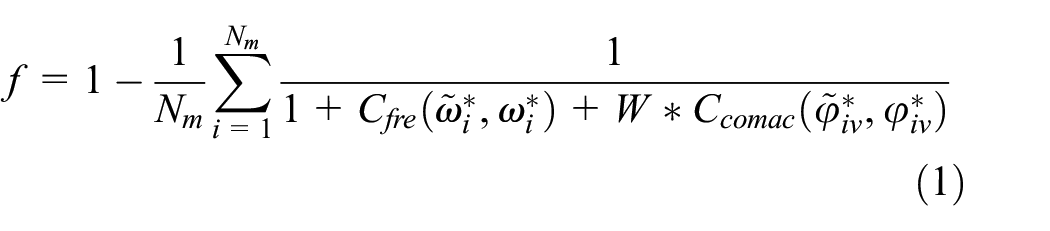
where

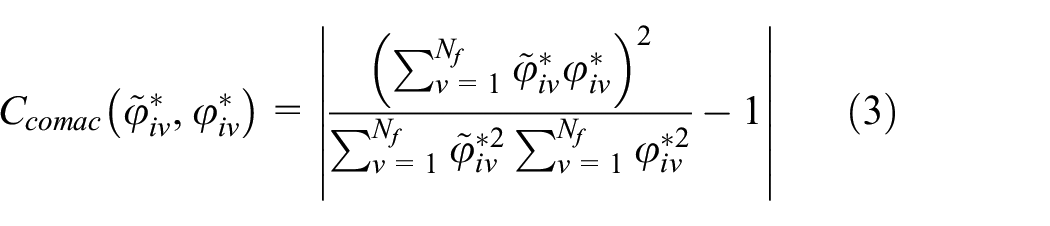
Note that
Original BAS
The BAS was recently proposed and used in the optimization problem, which imitates the beetle’s random walking mechanism for searching in nature. Figure 1 shows the searching behavior of the beetle. The longhorn beetle uses the right and left antennae to feel the odor’s concentration and moves to the next position based on the best side of the antennae. Under the propagation of odor (the black line in Figure 1), the beetle traces the headstream of the odor step by step based on the searching behavior, and the headstream and trajectory (the blue line in Figure 1) of the beetle is finally obtained.
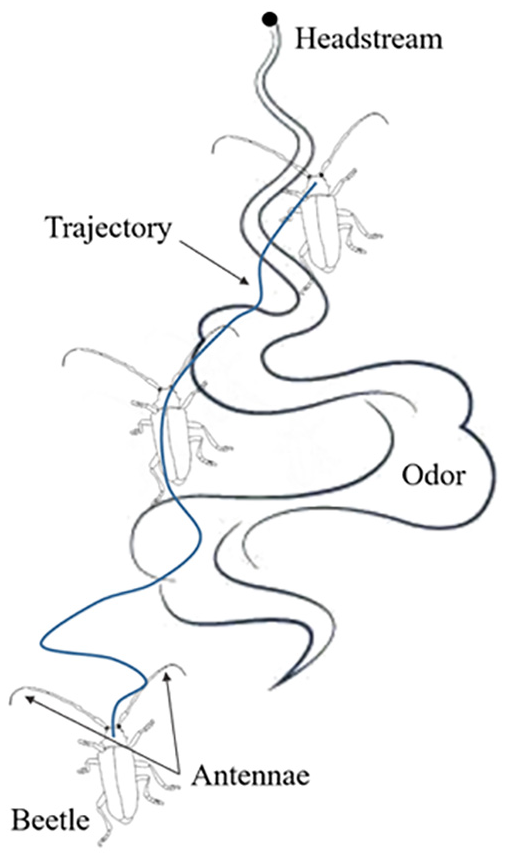
Searching behavior of the beetle in the BAS algorithm.
Compared with other meta-heuristic algorithms, it only uses one beetle, and the corresponding computational burden could be dramatically reduced. Thus, the original BAS are firstly selected for structural damage identification. In this study, the t-th beetle’s position and the odor’s concentration were regarded as the damage severity

where


Note that
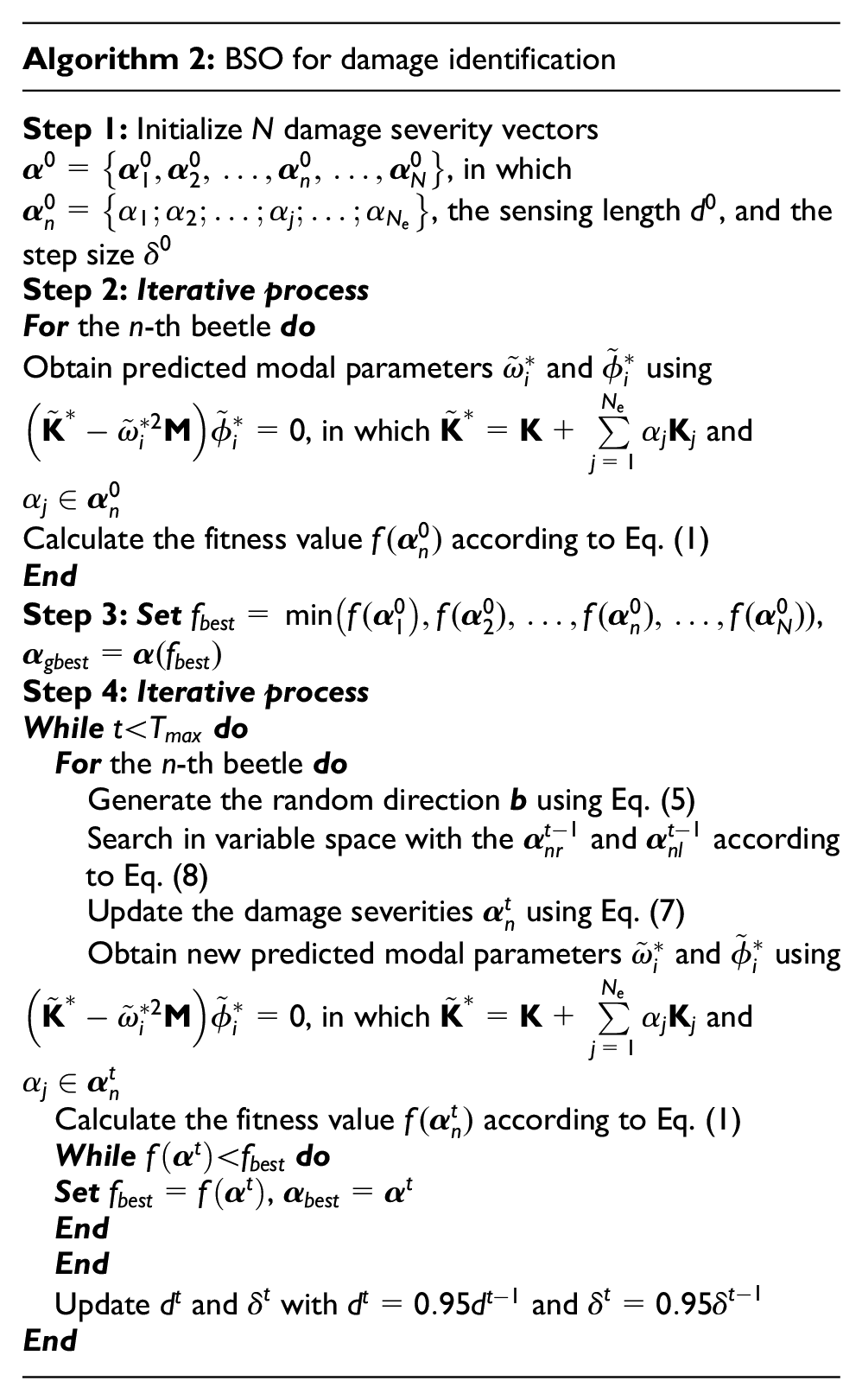
The process of the BAS for damage identification can be summarized, as shown in Algorithm 1.
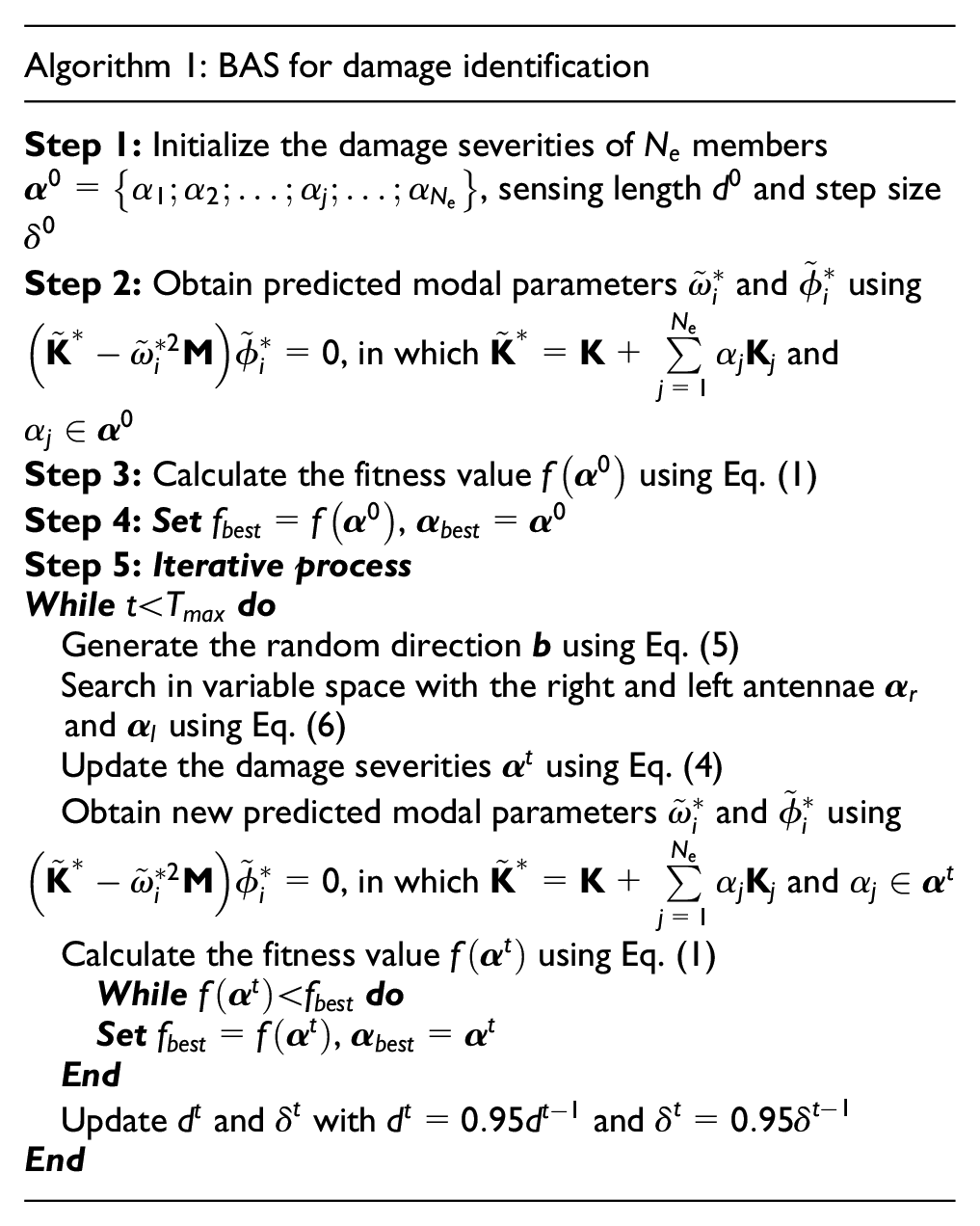
Novel BSO
Generally, there are some shortcomings for the BAS. The first is that only one beetle is used, and it moves in a random direction at each iteration. It cannot guarantee the effective move of the beetle for searching the optimal solution. The second is a lack of swarm cognitive by using only one individual. These results deviate significantly, especially for a high-dimensional optimization problem. Inspired by the PSO, the BSO is proposed by combining the BAS with swarm intelligence. In each step, a group of beetles are employed for searching behavior, and each beetle moves in a random direction based on the BAS. The optimal-global beetle is updated step by step once a better one appeared. Until the BSO cannot found a better one, the iterative process is completed. The optimal-global beetle is the estimated solution to the optimization problem. With the swarm intelligence and the group cognitive strategy, the possibility of finding an optimal position of beetle, can be significantly enhanced. Thus the BSO can quickly obtain a more accurate solution than the BAS.
The iterative model can also be generated by considering the BSO’s searching behavior, and the n-th beetle at t-th iteration

Note that the move strategy contains three parts. The first is the inertial part

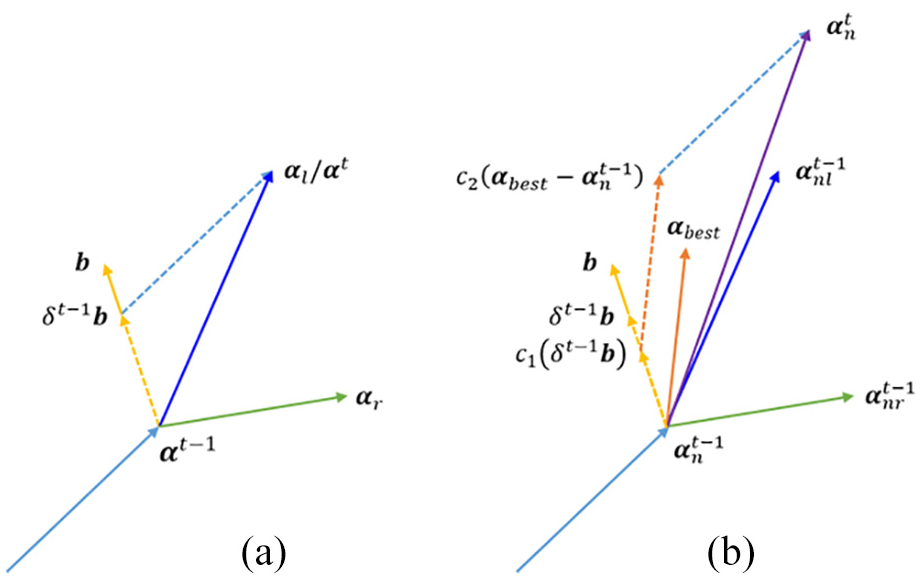
Iterative model: (a) in the BAS and (b) in the BSO.
It is noteworthy that the move strategy of the original BAS can be regarded as a particular case of the novel BSO when
Similarly, the process of the BSO can be also showed in Algorithm 2.
Numerical simulation
Wind turbine structure
A finite element model of the tripod wind turbine structure is established in this study, as shown in Figure 3. It comprises 18 nodal points and 20 uniform beam elements, including two middle column (Nos. 16-17), three tower (Nos. 18-20), three diagonal (Nos. 13-15), three transversal (Nos. 10-12), and nine pile braces (Nos. 1-9), as shown in Figure 13(b). The diameters of the middle column, tower, and other braces are 30 mm, 30 mm, and 20 mm, respectively. The wall thicknesses have the same dimension as 2 mm for all the members. The height of the structure is 2.5 m, and a 3.3 kg weighted steel plate is mounted on the top of the tower to simulate the lumped mass of blades. The wind structure was fixed on the ground, and the detailed dimensions can be found in section Experiment setup. The essential material properties are as follows: Young’s modulus E = 2.06×10¹¹ Pa, mass density
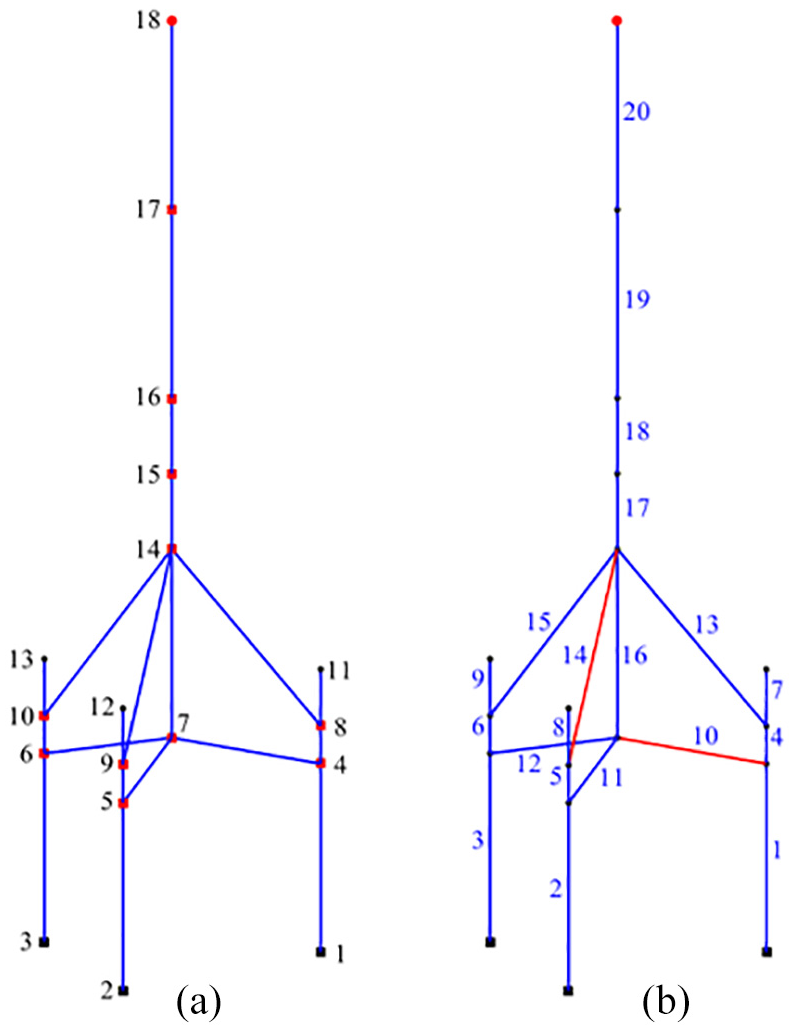
Sketches of the tripod wind turbine: (a) nodal points and (b) elements.
A structural modal analysis of the baseline model was executed. The obtained first five natural frequencies are 4.5377 Hz, 4.5746 Hz, 23.7421 Hz, 24.8588 Hz, and 38.1706 Hz, and the corresponding mode shapes are exhibited, as shown in Figure 4.
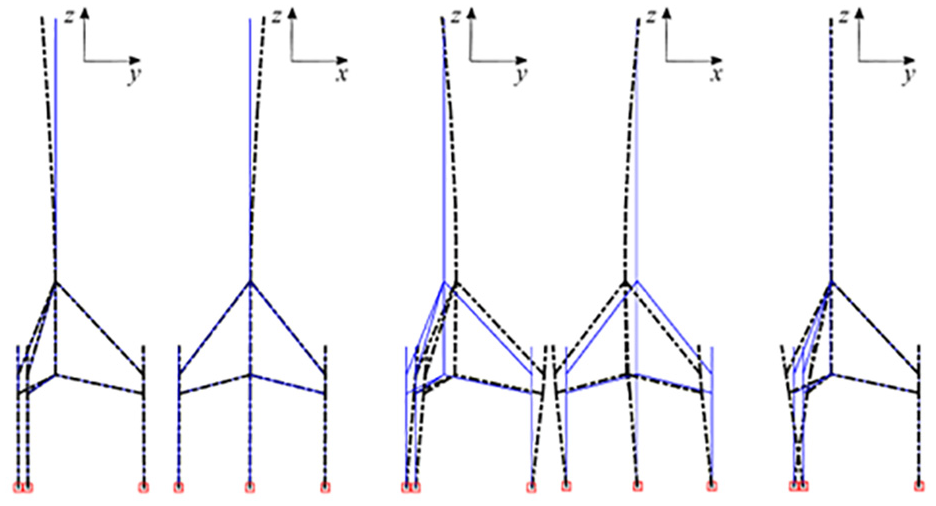
The first five mode shapes of the structure.
Damage cases and measured noise
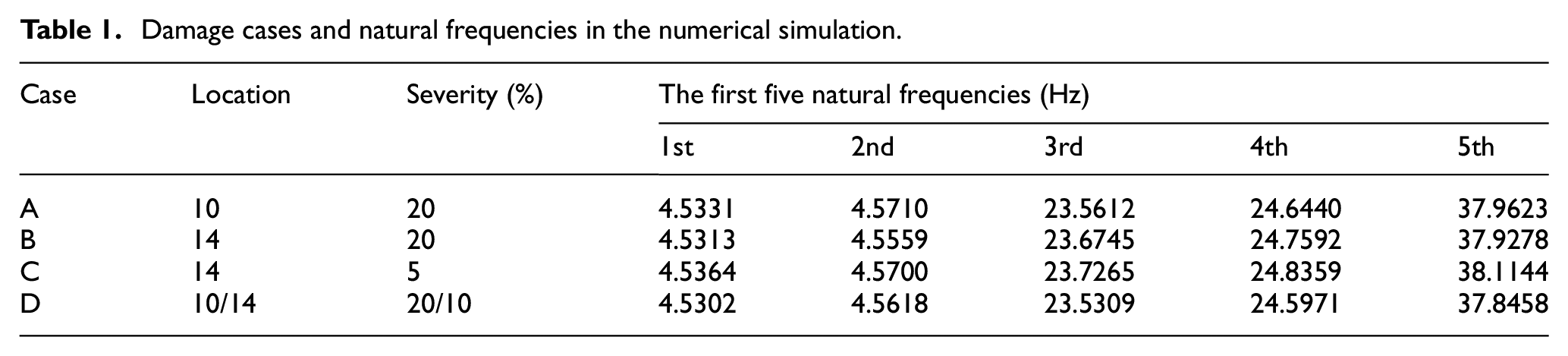
For acquiring modal parameters of the damaged structure, the structural damage is simulated by reducing the corresponding elasticity modulus of the damaged element (Dessi and Camerlengo, 2015; Koh and Dyke, 2007). Four damage cases are studied considering different types of members and severities. As listed in Table 1, the transversal brace has a 20% stiffness loss in the first damage case. The 20% and 5% stiffness losses of the diagonal brace 14 are considered for the next two damage cases. The last is a double-damage case with the 20% and 10% stiffness losses of the mentioned transversal and diagonal braces. The first natural frequencies among different damage cases are also listed in Table 1.
Damage cases and natural frequencies in the numerical simulation.
In general, the measured modal parameters contain noise and errors, including the measurement noises and uncertainties parameters. To demonstrate the robustness of the proposed optimization algorithm, the i-th noise-polluted natural frequencies and mode shapes at v-th DoF, denoted by


where
Damage identification
The original BAS and the novel BSO were utilized to localize and quantify the damage in numerical simulation. In this section, all the elements, i.e.,
Noise-free scenario
Figure 5 presents the estimated results of damage identification in the noise-free scenario, where these results by using the BAS and the BSO are exhibited in sub-figure Figure 5(a) to (c) and (d) to (e), respectively.
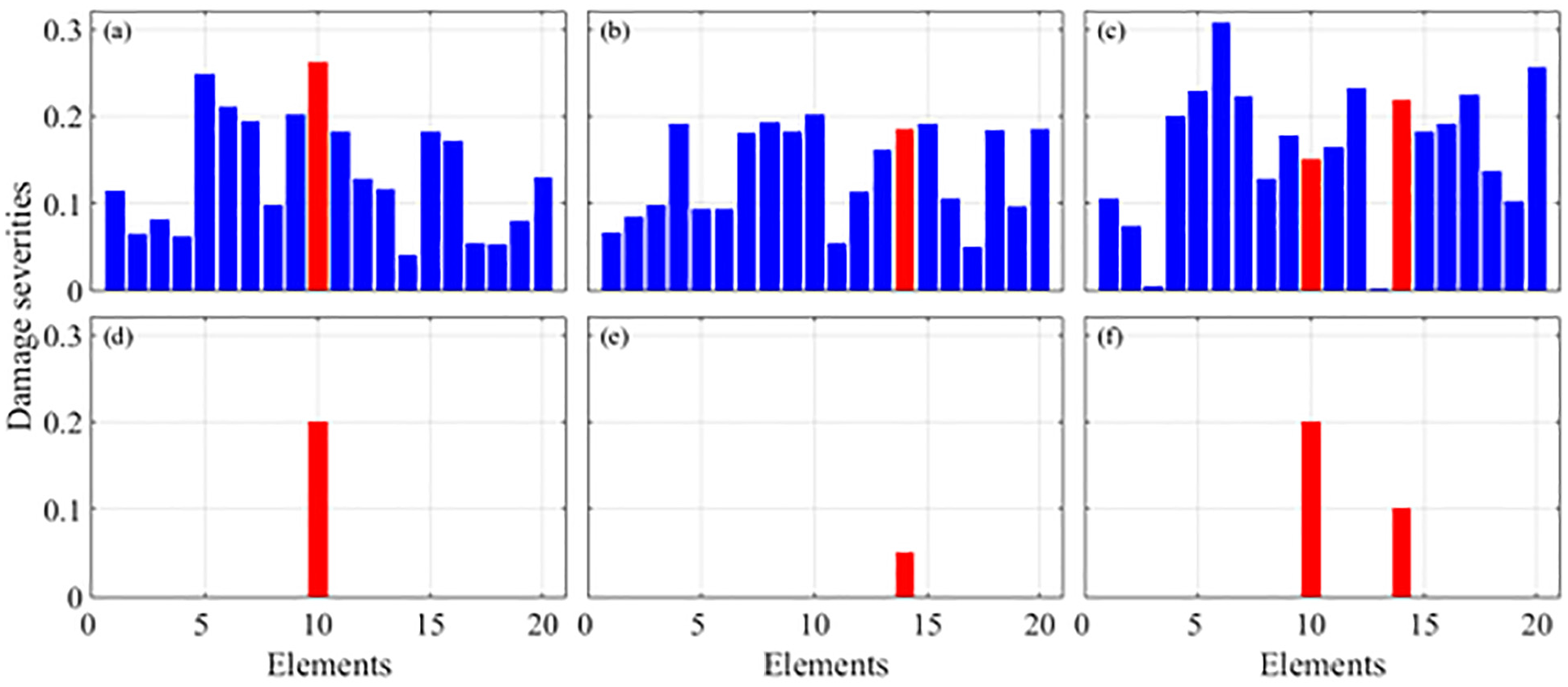
Damage identification results in the noise-free scenario: (a) case A-BAS; (b) case C-BAS; (c) case D-BAS; (d) case A-BSO; (e) case C-BSO and (f) case D-BSO.
As shown in Figure 5(a), one can find that the actual damaged member 10 is damaged due to the most considerable severity of the damage. However, several intact members (e.g., {5-7,9}) are suspected to be damaged, considering their high severities. The BAS can identify the actual damage, but also cause false-positive errors. In contrast, the BSO locates the actual damage without any errors, as shown in Figure 5(d). Besides, the estimated severity of damage is 20.00%, which is precisely equal to the correct value of 20%. Similar results were obtained from the damage case B. It is concluded that the BSO performs better on the damage localization and severity estimation for the single-damage case in the noise-free scenario.
Figure 5(b) and (e) shows the identified results of the minor-damage case C. The damaged member 14 and several other intact members {4,7-10,15,18,20} are suspected due to their relative severities of damage (see Figure 5(b)). Only the actual damage is located without any errors by using the BSO, as shown in Figure 5(e). Furthermore, the BSO can accurately quantify the severity of the minor-damage. It is also suggested that the BSO outperforms the BAS for damage identification in the minor-damage case.
For the double-damage case D, the estimated damage identifications results are exhibited in Figure 5(c) and (f), respectively. The BSO performs better on structural damage identification than the BAS in the double-damage case, as shown in Figure 5(c) and (f). In total, the BSO outperforms the BAS for structural damage identification in the noise-free scenario.
The convergence histories by using the BAS and the BSO are showed in Figure 6. These fitness values of the BSO converge to 0 (less than 10−5), which are significantly smaller than these values of the BAS (e.g., 0.0465, 0.0565, and 0.0701 for the damage cases A, C, and D). The estimated results of the BSO are consequently more accurate than these of the BAS. The identified results using the BAS are not reliable even in a noise-free scenario. The main reason is that the BAS is easily trapped in local minima, especially in a high-dimension search space. Moreover, the convergence speeds of the BSO are faster than the BAS, as shown in Figure 6. It is concluded that the BSO has a better performance on optimization problems with a more accurate solution and faster convergence speed.
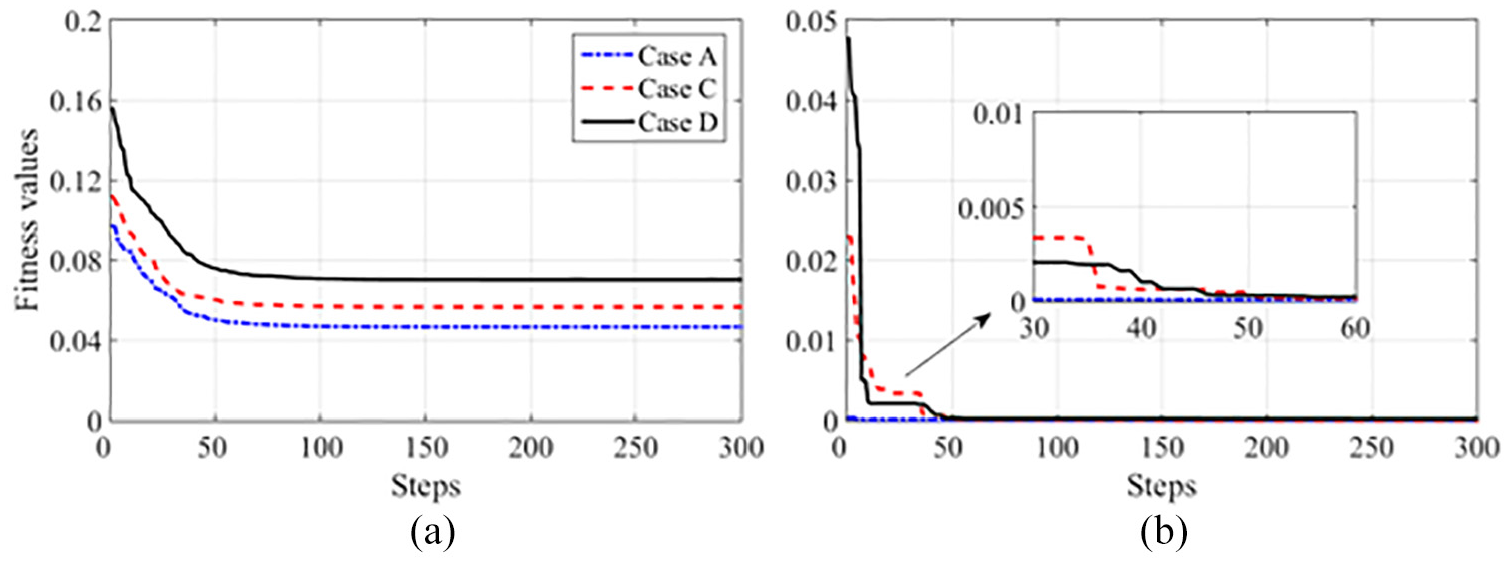
Convergence histories in the noise-free scenario: (a) BAS and (b) BSO.
Noise-polluted scenario
In this section, the measurement noise was considered and simulated based on equations (7) and (8) to investigate the robustness of the damage identification approach. A standard noise of 0.15% and 3% as the benchmark of natural frequency and mode shape was suggested (Dinh-Cong et al., 2019; Messina et al., 1998; Seyedpoor, 2012). The noise levels
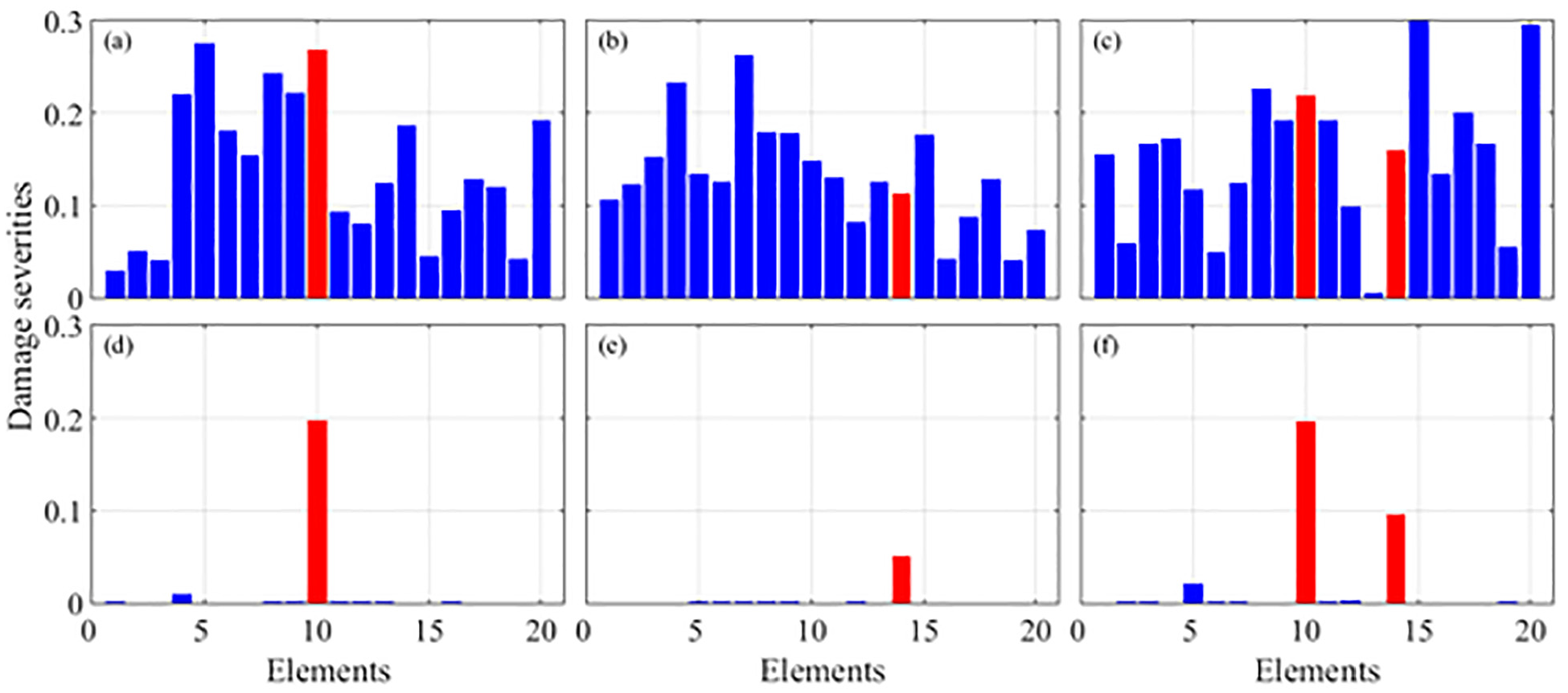
Damage identification results in the noise-polluted scenario: (a) case A-BAS; (b) case C-BAS; (c) case D-BAS; (d) case A-BSO; (e) case C-BSO and (f) case D-BSO.
From Figure 7(a) and (d), one can see that the BSO performs better than the BAS. It is observed that the spurious damage occurs on several members (5 and 10) by using the BAS. And the BSO can accurately locate the true damaged member without any errors. The estimation of damage severity by using the BAS is 26.83% with a relative error of 34.15%, while the BSO gets 19.78% severity with only 1.10% relative error. Thus, the BSO holds a higher precision in the damage severity estimation. Surprisingly, one can notice that the estimated severity of member 4 (precisely the neighbor of member 10) in Figure 7(d) has a negligibly small value. Generally, the nodal displacement of the damaged member could mutate. Consequently, the estimated severity of the connected member 4, which shares the same nodal point 4 with the damaged member 10, rises to some degree.
In minor damage, some high damage indicator values occur at intact members (e.g., 4 and 7) by using the BAS, as shown in Figure 7(b). Further, the actual damage locations are challenging to be identified by the BAS. In contrast, the BSO (shown in Figure 7(e) and (f)) can accurately determine the actual minor- and double-damage and estimate the severity of the damage. For example, the estimated severities of members 10 and 14 are 19.63% and 9.60%, with the small relative errors 1.85% and 4.00%, respectively. Thus, the novel BSO has an outstanding performance both in localizing and quantifying the minor-damage and double-damage. Note that the estimated severity of member 5 (shares a nodal point 9 with the actual damaged member 14) also has a negligibly small value. An explanation can be found in the damage case A.
By analyzing the convergence histories, one can conclude that the BSO has better performance with a more accurate solution and faster convergence speed in the noise-polluted scenario.
Noise robustness
In this study, four noise levels (0.15%, 1%, 3%, and 5%) of the natural frequencies and mode shapes were considered to illustrate the robustness of the BSO. Monte Carlo simulations were carried out for each noise combinations. Figure 8 shows the noise robustness performance using the two indicators (such as accuracy of localization and relative errors of the severity of damage). The accuracy of localization reduces as noise levels increases. The accuracy is about 75%, even in the high noise levels (
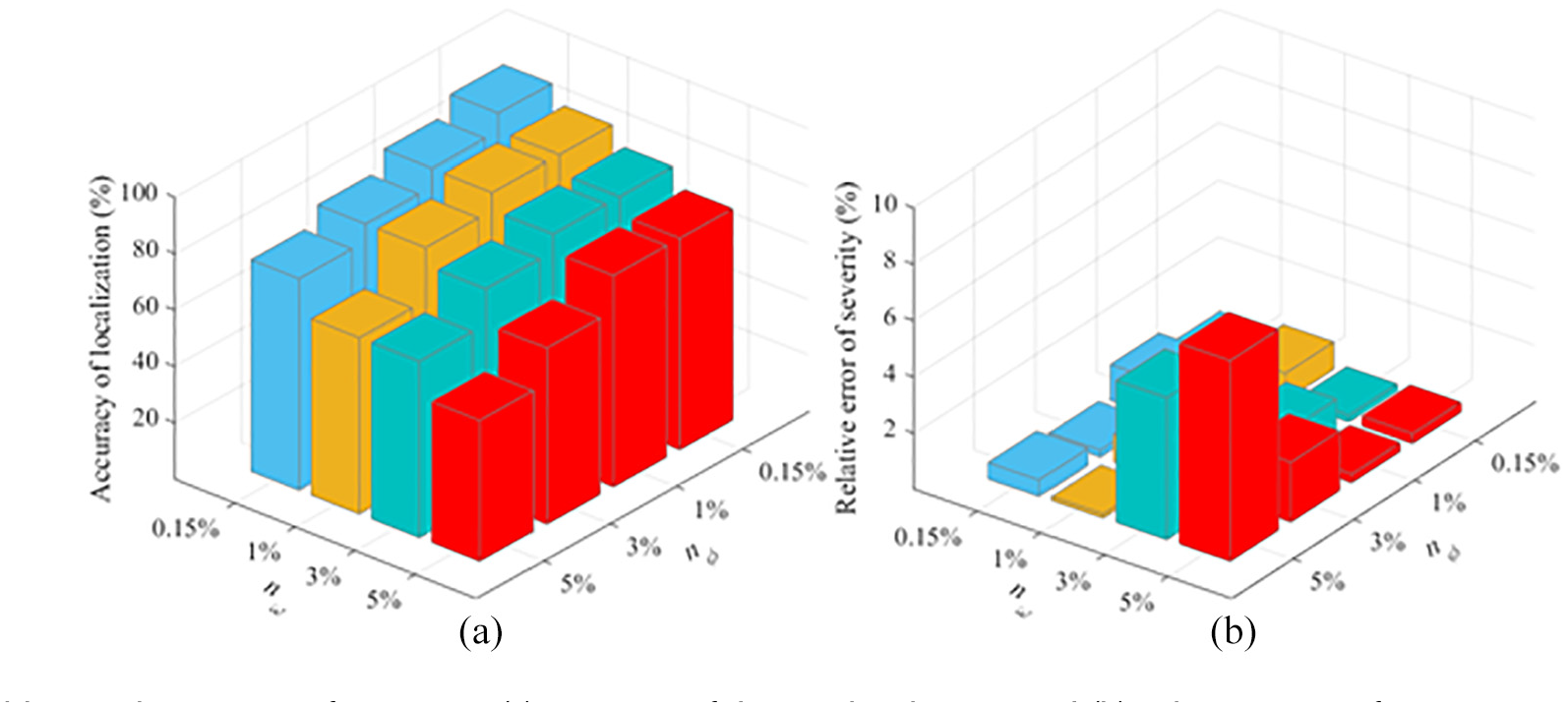
Noise robustness performances: (a) accuracy of damage localization and (b) relative error of severity.
Discussion
Objective functions
The proposed objective function is compared with the other functions. The damage case B with preset noise is discussed in the following research.
(a) The modal flexibility-based function (Pandey and Biswas, 1994)

where
(b) The weighted function (Villalba and Laier, 2012)
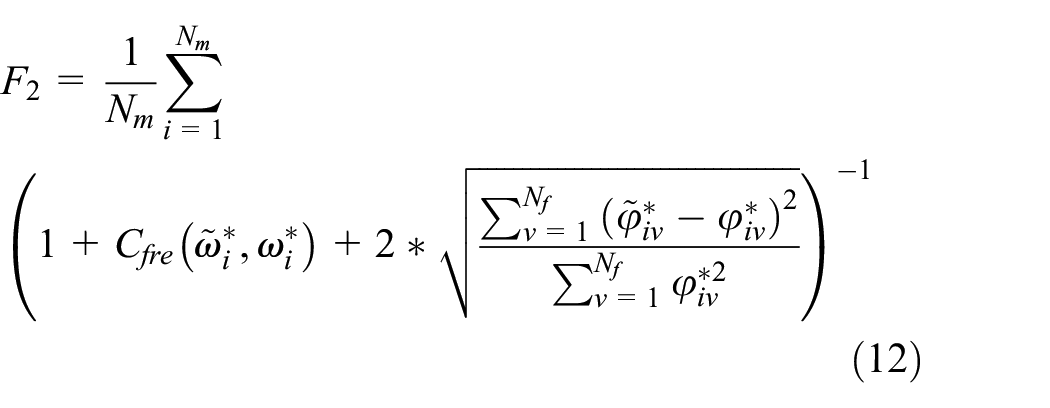
(c) The proposed objective functions, where
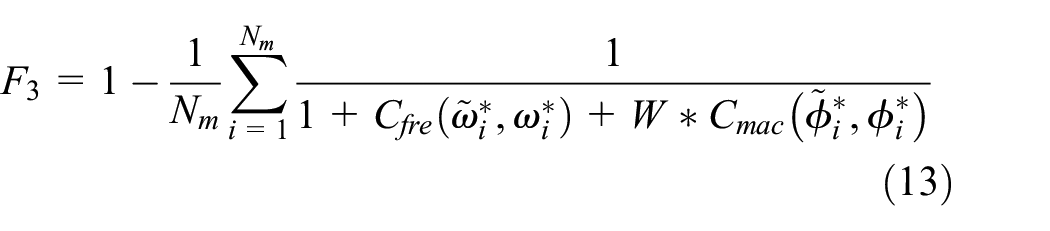
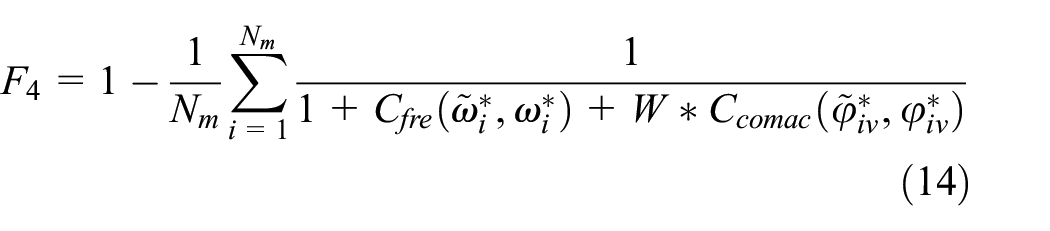
where

Because only partial DoFs are available, the modal expansion process (Zhang and Wei, 1999) is required to acquire the spatially complete mode shapes
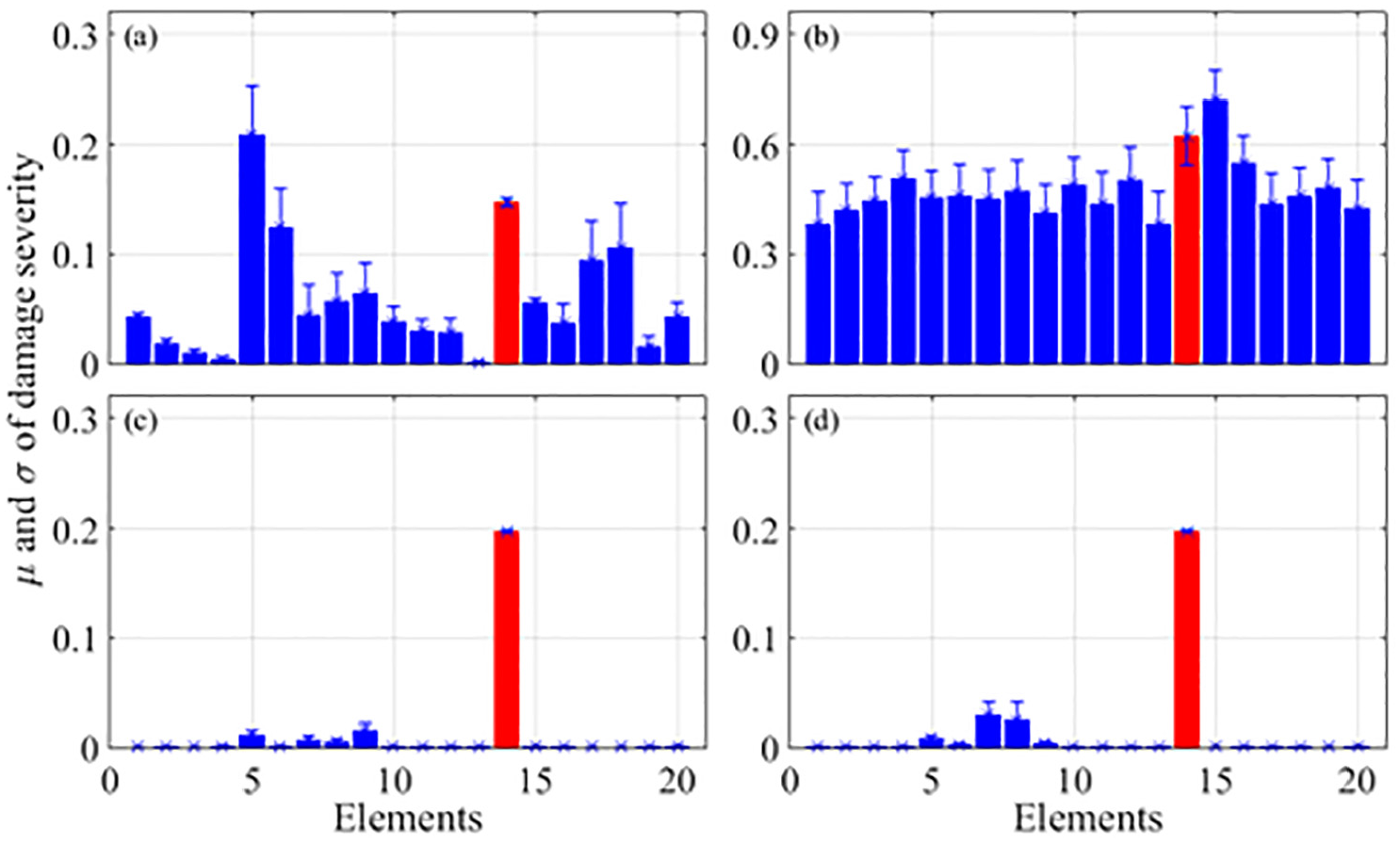
Damage identification results using: (a)
Figure 9(a) shows that the damaged member 10 has a high severity value by using
Weighting factors
Table 2 shows the estimated results using the proposed objective function
The estimated results using different weighting factors.

Optimization algorithm
The performance of the proposed BSO is also compared with other well-known optimization algorithms, namely BAS and particle swarm optimization (PSO). For comparison, the number of the particles and the maximum number of iterations are identical to those of the BSO, that is, 60 particles/beetles and 300 iterations.
The BSO can accurately locate the actual damage and quantify the severity of the damage, as shown in Figure 10. The PSO can identify the actual damage but also cause some false-positive errors. This is because the PSO has the shortcoming of the premature convergence. Unsatisfied results can be obtained for the BAS.
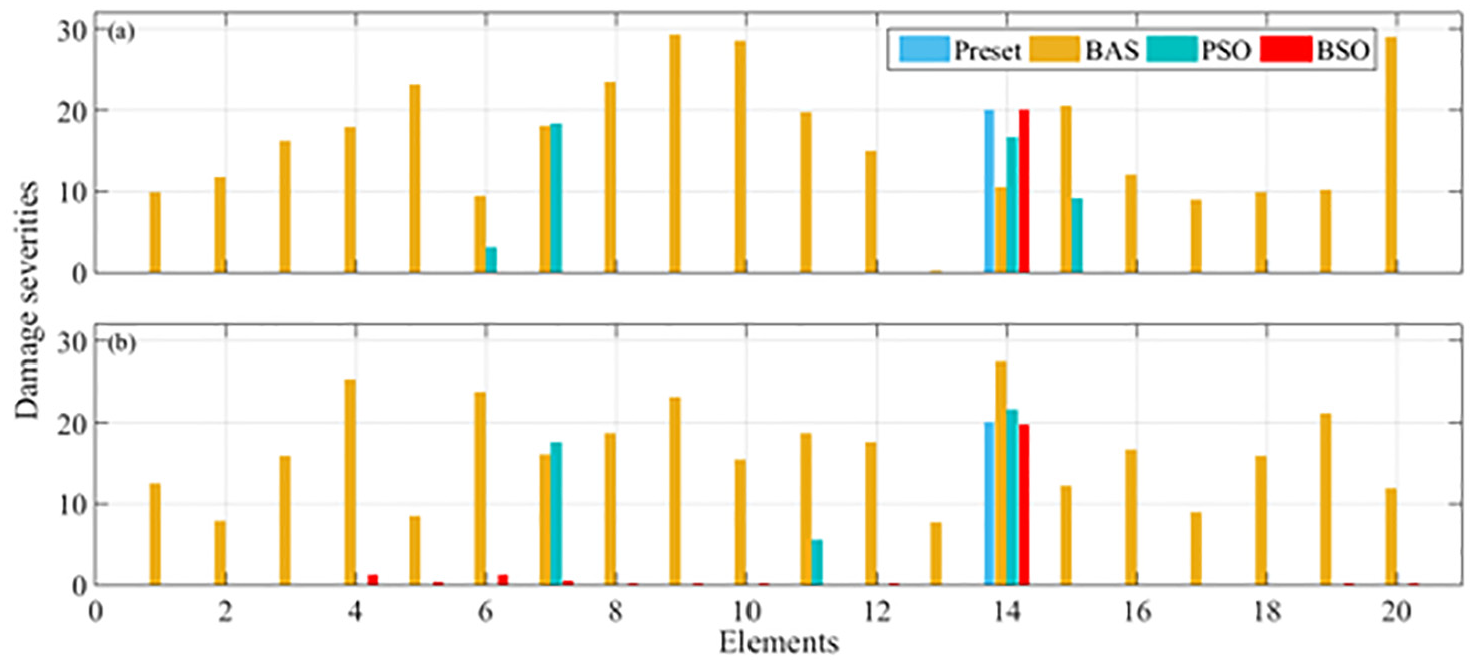
Damage identification results among different optimization algorithms: (a) in the noise-free scenario and (b) in the noise-polluted scenario.
Figure 11 displays the convergence history of different algorithms. It is suggested that the convergence speed of the BSO is significantly faster than that of the BAS but slightly slower than the PSO. The BSO is more effective in solving the damage identification problem with high accuracy and fast convergence speed.
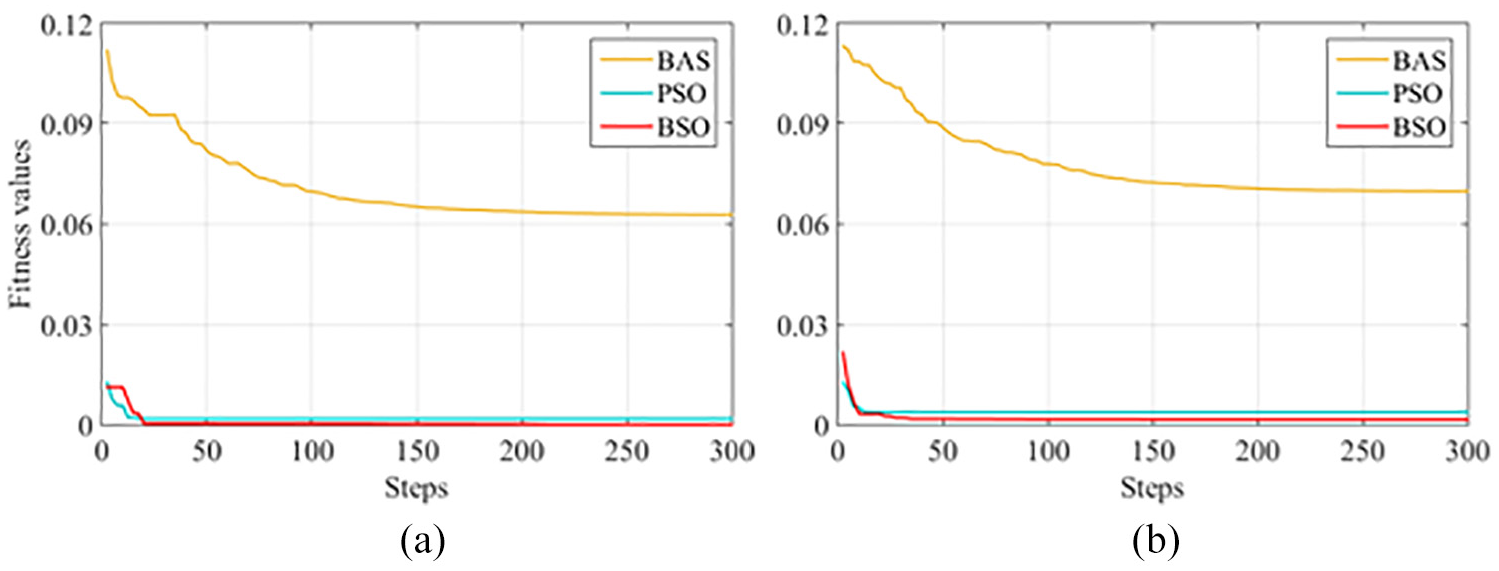
Convergence histories among different optimization algorithms: (a) in the noise-free scenario and (b) in the noise-polluted scenario.
Uncertain parameters
Generally, the vibration measurements are accompanied by various types of uncertainties, one of which is the change in ambient conditions. The temperature is the most common condition that has been widely investigated in published literature. (Xia et al., 2006; Xu et al., 2019b; Wang et al., 2020). The effect of temperature is considered in this study. It was assumed that Young’s modulus depends linearly on the temperature according to the experimental investigation (Woon and Mitchell, 1996). Note that the still water level was assumed to be precisely located on the connection between the tower and supporting structure and was not changed during the simulation. Structural members 17 to 20 were exposed into air, and the others were beneath the water surface. The air temperatures were considered as a Gaussian process with a mean 10°C and standard deviation 8°C, while the water temperature with a mean 15°C and standard deviation 4°C.
Figure 12 shows the identification results evaluated based on the mean value
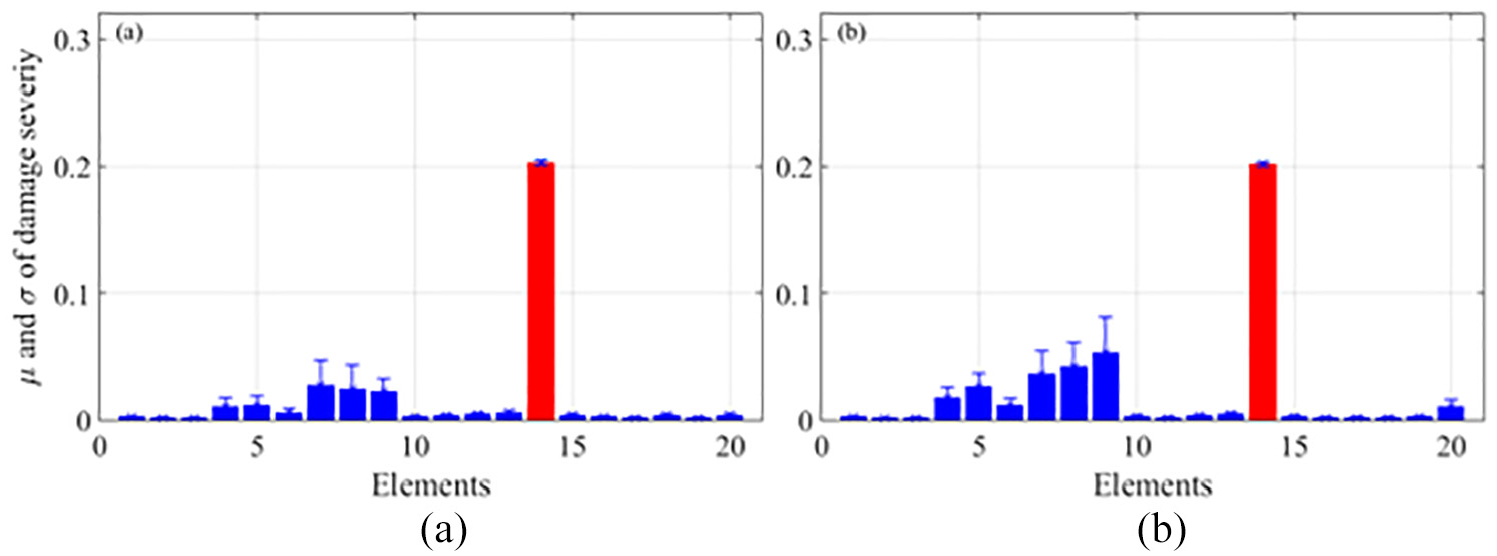
Damage identification results of damage case B under the temperature effect: (a) in the noise-free scenario and (b) in the noise-polluted scenario.
Experimental validation
Experiment setup
Modal tests on the wind turbine structure were conducted (Li et al., 2018). As shown in Figure 13(a), it was welded with Q235-steel cylindrical pipes, and the physical structure was fixed to the basin ground. The pile function was equivalent to three fixed piles with a 0.5 m depth. In the experimental setup, the excitation was simulated by beating the top plate of the wind turbine structure via a hammer to acquire enough vibration response and excite all the modes in the band of interest. For simulating the damage, two flange replacements were preset on the brace, as shown in Figure 13(c). The damage appeared by loosening those bolts in the flanges, and the damage recovered by re-tightening these bolts. Totally 11 three-component acceleration sensors (Model 4803A-0002) were installed at nodal points {4-10,14-17} to measure the translational motions in 33 DoFs. A data acquisition system (CRONOS PL 64-DCB8) was connected to these acceleration sensors to collect signals. A typical signal with a 200 Hz sampling rate was used, as showed in Figure 14. The modal parameters are identified by using the eigen-system realization algorithm (Wang and Liu, 2010).
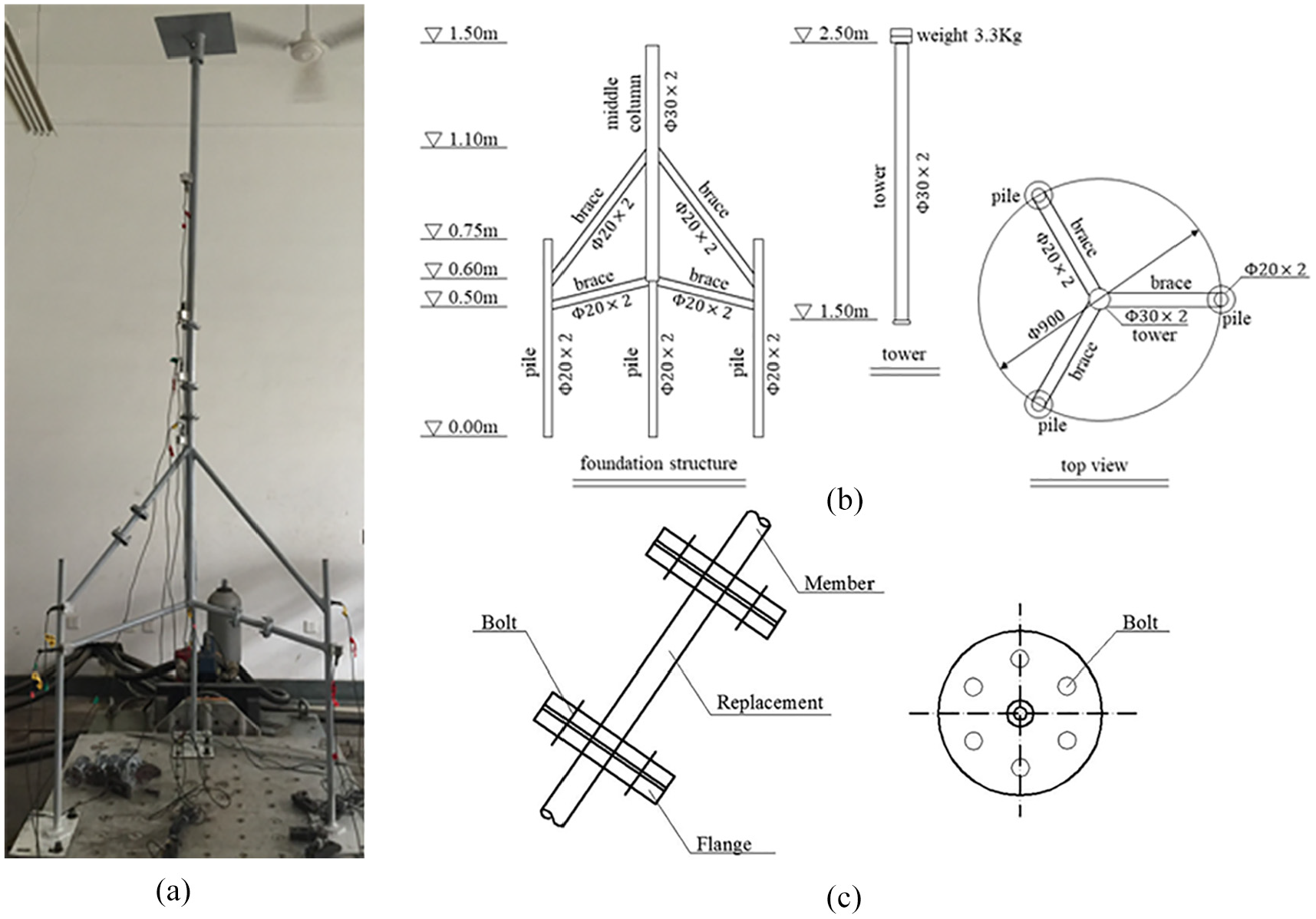
(a) Physical structure of the wind turbine; (b) dimension and element type of the wind turbine and (c) physical structure of the flange replacement.
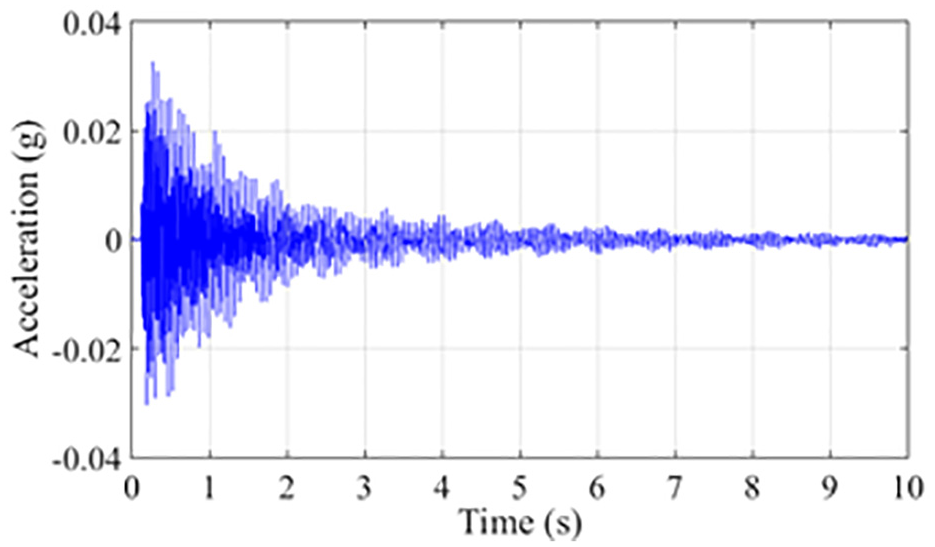
Measured signal in the time domain.
Damage cases
The experimental tests of three damage cases were carried out:
Case I: the transversal brace 10 with half of the bolts loosen;
Case II: the diagonal brace 14 with half of the bolts loosen;
Case III: a combination of members 10 and 14 with half of the bolts loosen.
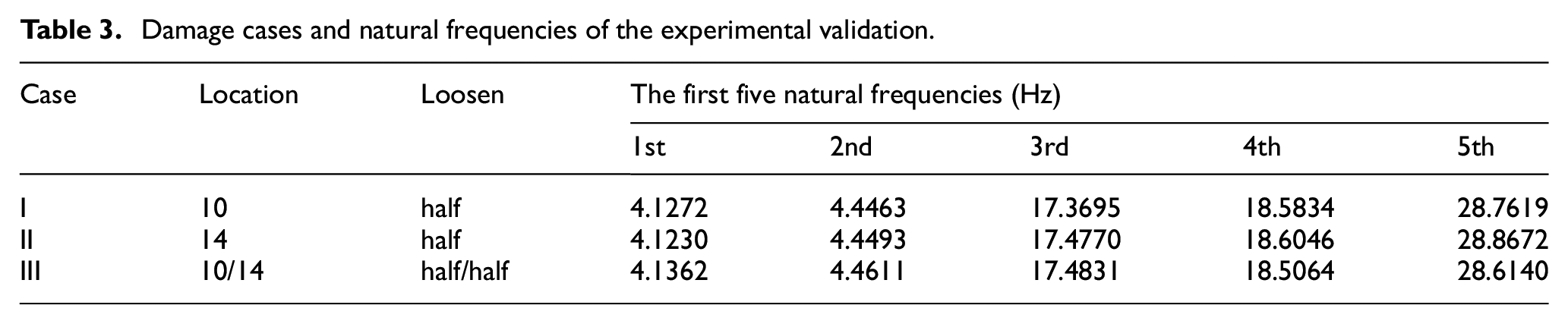
Three damage cases and natural frequencies are listed in Table 3.
Damage cases and natural frequencies of the experimental validation.
Finite element model
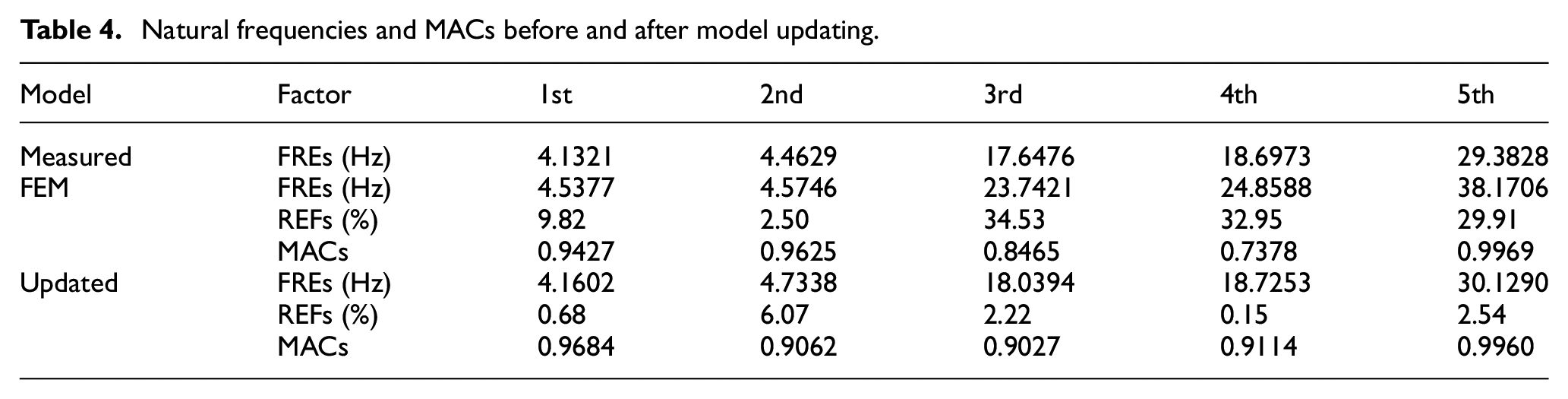
A finite element model (see Figure 3) was constructed based on the physical parameters. Three parameters, including the first five natural frequencies (FREs), a relative of frequencies (REFs), and MACs, are listed in Table 4. The last three FREs (23.7421 Hz, 24.8588 Hz, and 38.1706 Hz) are significantly higher than those of the measured structure. Thus, model updating was necessary to obtain a reliable updated model. Using the CMCM (Hu et al., 2007), one can get the updated model, and the corresponding parameters are also listed in Table 4. Good agreement between the updated and measured model is obtained, and the updated model is utilized for the following damage identification.
Natural frequencies and MACs before and after model updating.
Damage identification
Figure 15 shows the estimated results of the damage cases I-III. The damage location can not be accurately detected when using the BAS since almost all the elements have a considerable estimation value. In contrast, BSO can correctly locate the damage with ignorable errors. For example, the estimated severities of members 2 and 8 exceed zero but quite small (e.g., 3.21% and 2.44%), as shown in Figure 15(e). Note that these low values also have physical meaning, as the two members share the same nodal points with the damaged ones. Thus, the BSO has better performance on the structural damage localization.
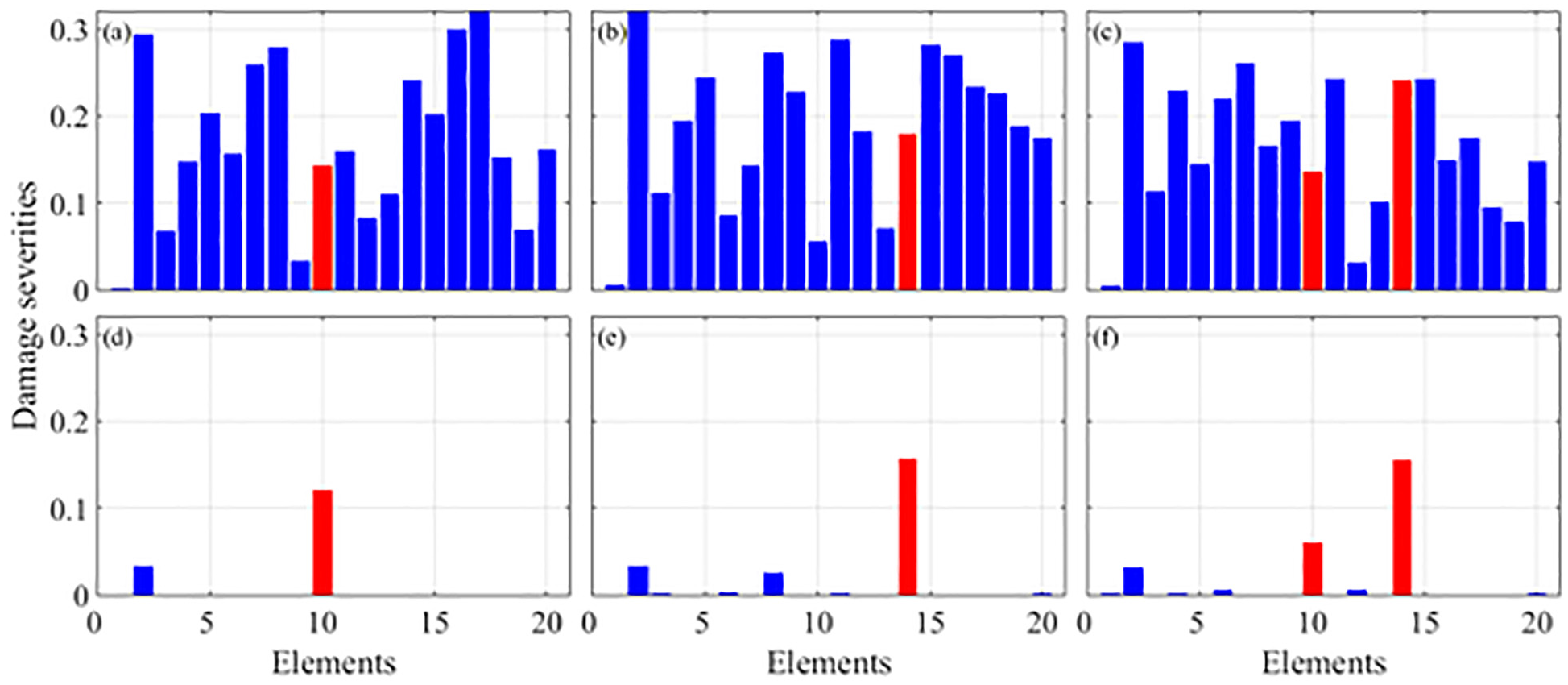
Damage identification results: (a) case I-BAS; (b) case II-BAS; (c) case III-BAS; (d) case I-BSO; (e) case II-BSO and (f) case III-BSO.
Besides, one can see that the estimated severities of damage are 12.00%, 15.60%, and 6.01% and 15.42% for the three damage cases. Thus, the BSO could determine and assess the severity of the bolt-loosening damage. One question that whether the severities of transversal brace 10 and diagonal brace 14 with identical loosened bolts are equal to each other also should be discussed. As a more critical supporting member, the diagonal brace would suffer more breakage than the transversal brace with the same damage. However, the diagonal brace severities are nearly the same as in the cases II and III, which indicates the consistency of severity estimation from the BSO. Note that the severity of transversal brace is underestimated compared to that in the case I. It is because that the damaged diagonal brace could produce a considerable influence on the dynamic characteristics of the transversal brace.
Conclusions
By combining the BAS with the swarm intelligence strategy, the BSO algorithm was first developed to localize and quantify the damage of the wind turbine structure. A novel objective function was developed for structural damage identification with the combined use of natural frequencies and COMAC. The effectiveness and robustness were numerically investigated and experimentally verified using limited data. Comparative studies with other functions, the weight factor of the proposed objective function, and different optimization algorithms were also discussed. Some conclusions can be drawn:
The BSO can localize and quantify the damage of the wind turbine structure accurately, even in a noise and ambient temperature polluted environment. It also successfully located and quantified the bolt-loosening damage in the experimental test.
The BSO has higher accuracy and more robust reliability of optimization problems than the BAS and PSO algorithms.
The objective function combining natural frequencies with COMAC is better adapted for damage identification than the flexibility and the natural frequency-mode shape functions.
It is noteworthy that the estimated severities of damage by using the experimental data are not compared to the actual reduction of stiffness. Because the damage of the tested wind turbine structure was simulated with two half loosened bolts and the stiffness reductions are unknown. In practice, the loosened bolts would result in the nonlinear characters of the structure. Thus, further work is envisaged for the actual severity estimation of the nonlinear damage using the measured signals directly. Note that only the hammer excitation is considered in this study. More realistic excitations (such as wave, rotor, or wave and rotor (Soman, 2020)) should be investigated in future work.
Footnotes
Declaration of conflicting interests
The author(s) declared no potential conflicts of interest with respect to the research, authorship, and/or publication of this article.
Funding
The author(s) disclosed receipt of the following financial support for the research, authorship, and/or publication of this article: This work was supported by the National Science Fund for Distinguished Young Scholars [grant numbers 51625902]; the National Key Research and Development Program of China [grant number 2019YFC0312404]; the Major Scientific and Technological Innovation Project of Shandong Province [grant number 2019JZZY010820]; the National Natural Science Foundation of China [grant number 51809134]; the Taishan Scholars Program of Shandong Province [grant number TS201511016]; and the Natural Science Foundation of Shandong Province [grant number ZR2017MEE007].
