







Abstract
The heat exchange between bridges and external environments is the primary cause of the temperature effect on bridges. The complexity of the two-phase (gas–solid) heat transfer mechanism, the diversity of the surface characteristics of bridge materials, and the uncertainties of the environment in which bridges are located make the numerical calculation of the heat exchange between bridges and external environments difficult. Several studies have been conducted by scholars around the world. In this work, the research on convective and radiative heat exchange between bridges and external environments is surveyed, analyzed, and summarized. The influencing factors and calculation methods of bridge temperature are examined, and the convective heat transfer and radiation mechanisms, theoretical calculations, and experimental measurement methods used to investigate the relation between bridges and external environments are summarized and analyzed. The value determination methods for convective heat transfer and radiation absorption coefficients in the calculation of the bridge temperature field are summarized. In addition, the problems and shortcomings of current research are evaluated, and future research directions are identified and discussed.
Keywords
Introduction
Bridges are important infrastructure and key nodes of traffic systems, and they have contributed greatly to the social and economic development of countries. During the decades or even centuries in a bridge’s service life, severe external environments and excessive loads make the bridge structure seriously diseased and damaged, and performance degradation occurs, resulting in serious negative effects. Bridge accidents occur frequently and cause massive losses of life and property and negative social effects. Between 2000 and 2021, several large-bridge collapses have occurred around the world (Deng et al., 2016; Lee et al., 2013; Tan et al., 2020). Meanwhile, bridge diseases and damage lead to high operation and maintenance costs. In 2019, more than 42% of bridges in the United States had been in service for 50 years or longer, 7.5% of the bridges are structurally deficient (in poor condition), and the estimated future repair and reinforcement costs reached US$125 billion (ASCE, 2021).
Bridges bear heavy traffic loads and resist harsh external environmental effects. Environmental effects include temperature, radiation, wind load, rain erosion, chemical rust, and freeze–thaw cycle, all of which lead to structural material aging, concrete cracking, peeling, steel corrosion, fatigue, and other diseases and damage. These diseases and damage exert adverse effects on the structural responses and operational safety of bridge structures. Temperature is a major environmental load on bridges (Li et al., 2023a; Zhou and Yi, 2013). In the external environment, bridge structures are subjected to temperature loads with obvious variations in spatiotemporal characteristics (Shan, Jing, et al., 2023; Shan, Li, et al., 2023), resulting in considerable structural, static, and dynamic characteristic changes (Zhou et al., 2020a; 2020b, 2021), which lead to cracks and local damage (Hossain et al., 2020; Niu et al., 2020), damage or even failure of bearings and expansion joints (Billah and Todorov, 2019; Lima and De Brito, 2010; Liu et al., 2022; Xia et al., 2020), changes in the dynamic characteristics of bridges (Cao et al., 2011; Ding and Li, 2011; Xu and Wu, 2007; Zhou and Yi, 2014), and increased bridge structural responses (Li et al., 2023b; Xia et al., 2022; Zhou et al., 2016). The effects of temperature on bridges not only degrade the service performance and safety of bridges but also considerably increase the operation and maintenance costs. Therefore, intensive research must be conducted on bridge temperature fields and temperature effects to control bridge temperature diseases and damage and improve bridge safety and durability.
The acquisition of accurate 3D temperature fields that reflect the spatiotemporal characteristics of bridge structures is the basis of the analysis and evaluation of bridge temperature effects. At present, in-situ testing and finite element calculations are primarily used to obtain the bridge temperature field. The time-varying spatial temperature field of the structure is obtained with the finite element calculation method through simulation analyses of the heat exchange between the bridge and external environment and the whole process of heat transfer inside the bridge. This method has high efficiency, provides a large amount of information, and is inexpensive, so it has been widely used. Bridge temperature is affected by the external meteorological environment and its thermal properties. Convective heat transfer and radiation absorption coefficients are key parameters that affect the heat exchange between bridges and external environments and remarkably influence the structural temperature field and temperature effect (Chen et al., 2014; Liu and Geng, 2005). Numerous theoretical and experimental studies on material surface heat transfer have been conducted by scholars worldwide. In addition, a relatively perfect theoretical system and accurate laboratory test methods for correlation coefficients have been developed. However, accurate numerical calculation of the heat transfer between bridges and external environments is difficult due to the complexity of the two-phase (gas–solid) heat transfer mechanism, the diversity of the surface characteristics of bridge materials, and the uncertainty of the environment. The calculation results of actual bridge temperature effect analyses are directly affected by how reasonably and accurately the convective heat transfer and radiation absorption coefficients are determined. At present, the selection of the two coefficients is performed differently. A unified method has not been established thus far, and most existing methods are based on mutual references. Moreover, the factors that affect heat exchange, especially the surface characteristics of structures, are complicated and comprehensive. As a result, the accuracy and reliability of temperature field calculation are greatly affected, and the demand for accurate simulation calculation of the temperature field in bridge engineering is difficult to satisfy.
In this study, the research on convective heat transfer and various types of radiation in bridge temperature effect analysis are summarized and analyzed. Relevant research results are sorted, and the heat transfer mechanism, theoretical analysis, experimental test, and engineering application are summarized and assessed. The values of convective heat transfer and radiation correlation coefficients in bridge temperature field calculations are summarized. A review is performed for readers to conduct scientific research and engineering calculations. Moreover, the problems and shortcomings of current research are analyzed, and future research directions are identified and discussed.
Factors that influence the bridge temperature field
Heat exchange between the bridge and external environment and its influencing factors
Bridge structures in the natural environment are affected by environmental temperature, wind, solar radiation, and other meteorological factors, resulting in temperature changes, structural temperature stresses, and deformations. The thermal boundary conditions should be determined first before calculating the bridge temperature field (Bergman et al., 2011; Janna, 2018). The direction and intensity of the heat exchange between a bridge and the external environment are controlled by thermal boundary conditions, which define and provide the values of the relevant parameters that affect heat exchange and transfer. The heat conduction inside a bridge follows the Fourier heat conduction differential equation

A large amount of measured data shows that the heat transfer along the length direction of bridge members can be ignored; therefore, bridge temperature is often simplified into a 2D heat transfer mode that ignores the longitudinal (along the bridge length) temperature difference. Therefore, equation (1) can be simplified as

The third type of thermal boundary condition is commonly used for thermal analysis calculations (Zhou et al., 2016).
The heat transfer conditions between the surface of the object and the surrounding fluid at each time are given by heat transfer coefficient h and fluid temperature T
a
. The temperature field is solved as follows:


The typical thermal environment of a bridge in an external environment is shown in Figure 1. The heat exchange between the bridge and external environment and the heat conduction process within the structure occur at all times. The change in the external meteorological environment is the fundamental reason for the temperature change in the structure. The temperature field of a bridge structure under the external environment is affected by several factors. According to existing research results (Kehlbeck, 1981; Li et al., 2019; Liu et al., 2019; Tayşi and Abid, 2015), the factors that affect the temperature fields of bridges can be divided into three categories: structural, climatic and geographical. The various influencing factors are given in detail in Table 1. Typical thermal environment of a bridge. Factors That Affect the Temperature Fields of Bridges.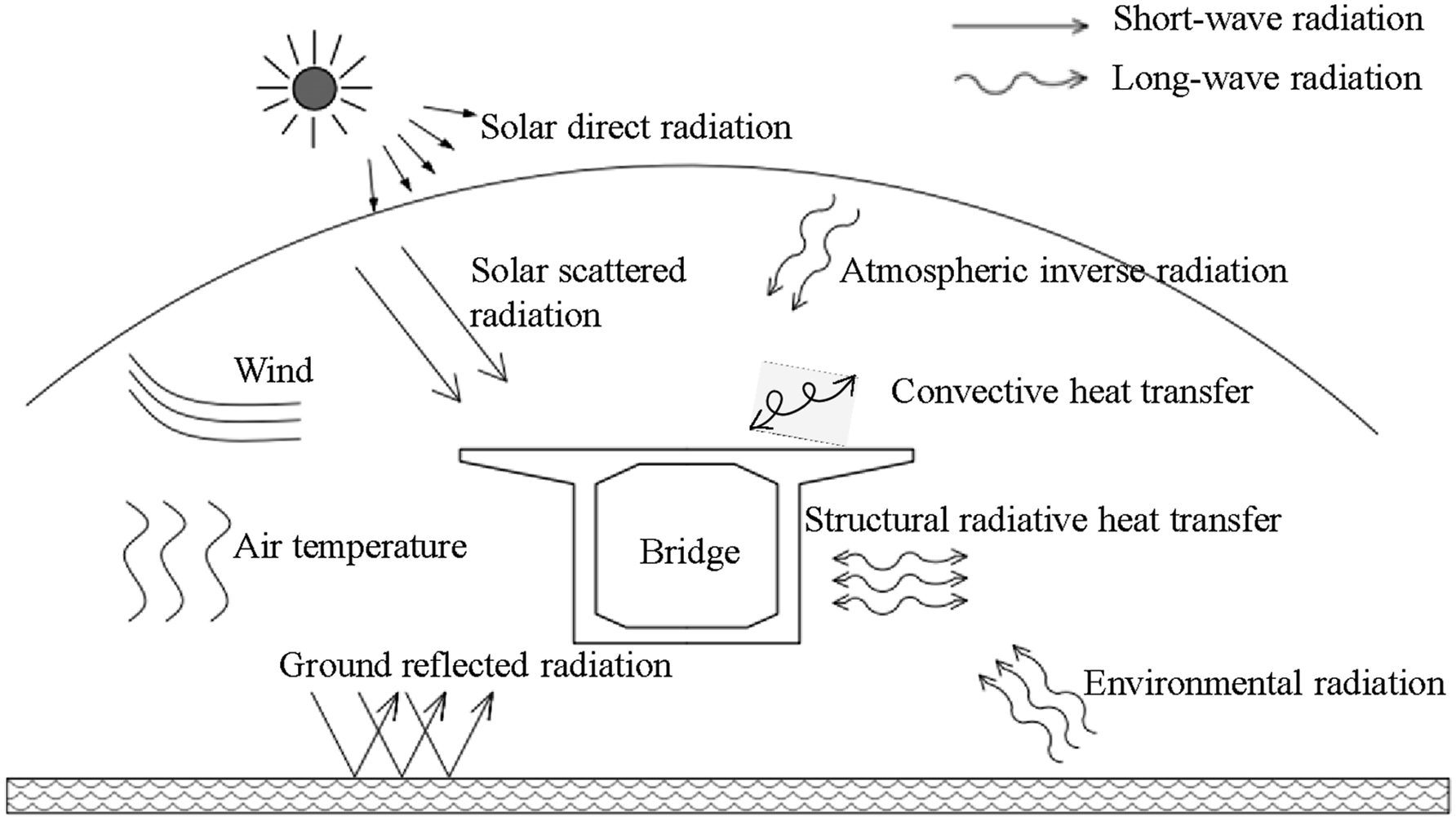
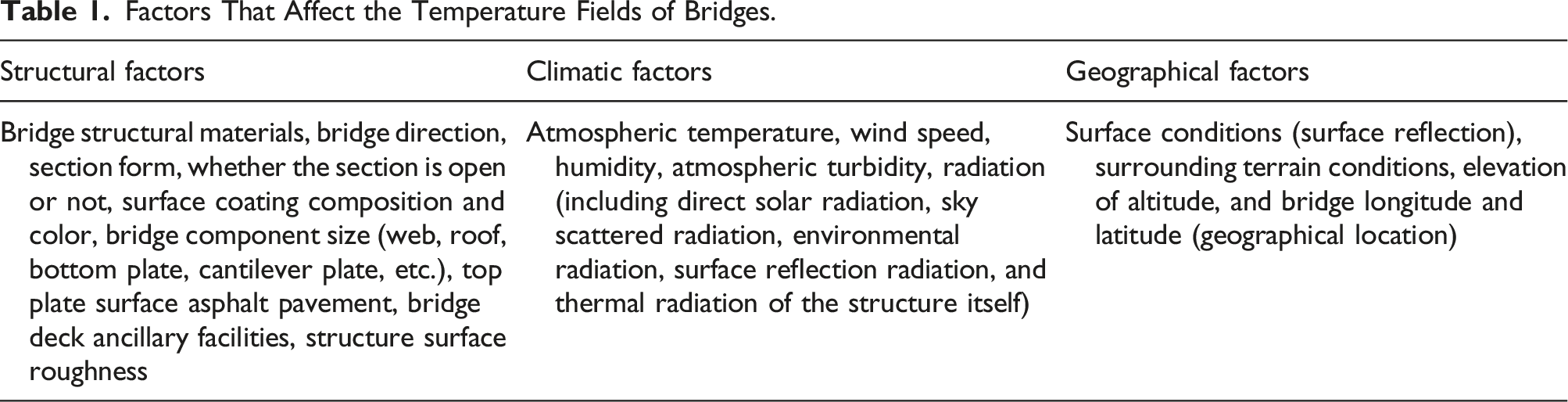
Among the influencing factors, high wind speed, rough surface, and open section accelerate convective heat transfer and make the bridge temperature field uniform. A light-colored coating layer on the structure surface can reduce solar radiation absorption, the temperature, and the degree of temperature unevenness. The larger the bridge component is, the more uneven the temperature distribution is. The stronger solar radiation is and the worse the thermal conductivity of the materials is, the greater the variability of the bridge temperature distribution is.
Influence of convective heat transfer and radiation absorption coefficients on bridge temperature
Accurate acquisition of bridge temperatures is the basis of bridge temperature effect analyses. In recent years, China’s transportation network has gradually extended to extremely arid desert areas and high-altitude regions in the northwest, and the construction of various types of large and complex bridges across rivers and seas is increasing. As bridges’ external environments become increasingly complex and harsh, accurate calculation and analysis of the bridge temperature field and temperature effects are also becoming increasingly important for bridge design, construction, operation, and maintenance. Currently, measurement (Sofi et al., 2022; Tao et al., 2021; Xia et al., 2012) and numerical calculation (Abid et al., 2021; She et al., 2019; Strauss et al., 2018) are the main methods used to determine the bridge temperature field. In field measurement, a bridge structure monitoring system is established, the temperature measurement points are laid out, and data are collected. The obtained bridge temperature data are real and reliable; however, the test is expensive and time consuming, and only a small number of discrete points of structure temperature can be obtained, resulting in limited information. Numerical calculation of the bridge temperature field is based on finite element simulation analysis, which simulates the complete heat exchange process between the bridge and external environment. This method has high efficiency, provides a large amount of information, and is inexpensive. Convective heat transfer and radiation absorption coefficients are key factors in the numerical calculation of bridge temperatures (Kehlbeck, 1981; Li et al., 2019; Liu et al., 2019). At present, studies on the convective heat transfer and radiation absorption coefficients on the surface of bridge materials in the external environment mainly perform calculations through the inversion of measured data. The research conclusions are mostly limited by specific structural and environmental factors, and no standard experimental test protocols and calculation methods with certain universality have been developed. Convective heat transfer and radiation absorption coefficients are determined by scholars from various countries on the basis of structural spatial characteristics, material types, external environment, and other factors and with reference to similar previous studies.
Convective heat transfer between bridges and external environments
Theory and calculation method of gas–solid two-phase heat transfer
The basic theory and analysis method of gas–solid two-phase heat transfer are available in literature (Bergman et al., 2011; Janna, 2018). The convective heat transfer coefficient of the bridge structure surface characterizes the heat transfer capacity between the structure surface and the surrounding air, which is defined as the heat exchanged per second per square meter area when the temperature difference is 1°C, and its unit is W/(m2 
Test method of convective heat transfer coefficients
At present, the convective heat transfer coefficients of building materials are mainly determined by laboratory measurement and regression using site-measured data. Liu (2006) conducted wind tunnel tests on cylindrical plain concrete specimens and systematically studied the convective heat transfer and total heat exchange of concrete. Other researchers examined the inversion analysis method of isothermal parameters on the basis of the backpropagation neural network (Zhang et al., 2013), boundary element method (Taler et al., 1997), fuzzy theory (Li and Liu, 2004), standard particle swarm optimization algorithm (Sun et al., 2019), genetic algorithm (Wang et al., 2007), and others. The research on inverse analyses of thermal parameters for large-volume concrete, such as dams, is extensive, but the research on the convective heat transfer and radiation absorption coefficients of the structure surface is scarce. Liu (2006) designed a circular tube concrete with closed ends, heated it internally on the basis of Newton’s cooling formula, and installed it in a wind tunnel. The researcher studied the convective heat transfer coefficient of a smooth concrete surface when the wind speed was 1–25 m/s and obtained good precision and reliability. However, the cost of testing is high, and the method has not been used in studies on other building materials, such as steel and asphalt. Currently, no test procedure or universal calculation method is available for the convective heat transfer coefficients of building material surfaces.
Convective heat transfer coefficient in bridge engineering
Many studies have been conducted on the surface convective heat transfer of building materials in bridge civil engineering. The research results of different scholars are summarized below on the basis of bridge building material categories for convective heat transfer coefficients.
Concrete bridges
The thermal inertia of concrete materials, the complexity of the thermal convection interface, the time-varying and uncertain external environment parameters, and other adverse factors make the calculation of the convective heat transfer coefficients of concrete bridges difficult. Different suggestions for the values of convective heat transfer coefficients on concrete surfaces have been proposed by scholars worldwide. Liu (2006) conducted wind tunnel tests on cylindrical concrete specimens and established the convective heat transfer formula h
c
= 4.11 + 3.06 v, where v refers to wind speed. The researcher also fitted the convective heat transfer coefficient formulas of bridge structures proposed by some domestic and foreign scholar s and derived the following convective heat transfer formula that considers the influence of different orientations of bridge structure: h
c
= 5.44+ 3.66 v. Song et al. (2010) inversely calculated the convective heat transfer coefficient of a concrete surface as h
c
= 10.22 + 2.53 v on the basis of the 1D heat conduction equation and thermal boundary conditions. Liu (2000) reported that the convective heat transfer coefficient of solid (concrete, etc.) surfaces with medium roughness can be approximated as hc = (2.5 − 6.0) + 4.2 v on the basis of domestic research results on building thermophysics. Guo et al. (2011) performed a reverse calculation analysis and established the following convective heat transfer formula of concrete that considers wind speed and relative humidity:
The temperature effect of box-type bridges is complex and unfavorable. Scholars have proposed different convective heat transfer formulas for studying the temperature field of box-girder bridges. Riding et al. (2007) studied the relationship between the box-girder structure and the external atmospheric temperature difference, average temperature, and wind speed and provided the convective heat transfer equation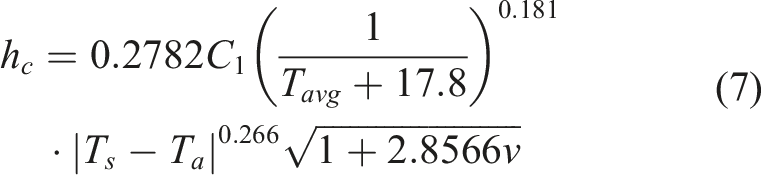
When the temperature of the bottom horizontal surface is higher than the environmental temperature or the temperature of the top horizontal surface, C1 = 10.15 and vertical surface C1 = 15.89. In Reference (Kehlbeck, 1981), Raiss Masuch presented a convective heat transfer coefficient formula that accurately calculates the temperature effect of structures in the field of civil engineering.
This method considers the influences of the temperature difference between structures, atmosphere, and wind speed.
Calculation Formulas for the Convective Heat Transfer in Different Parts of Box-Girder Bridge.
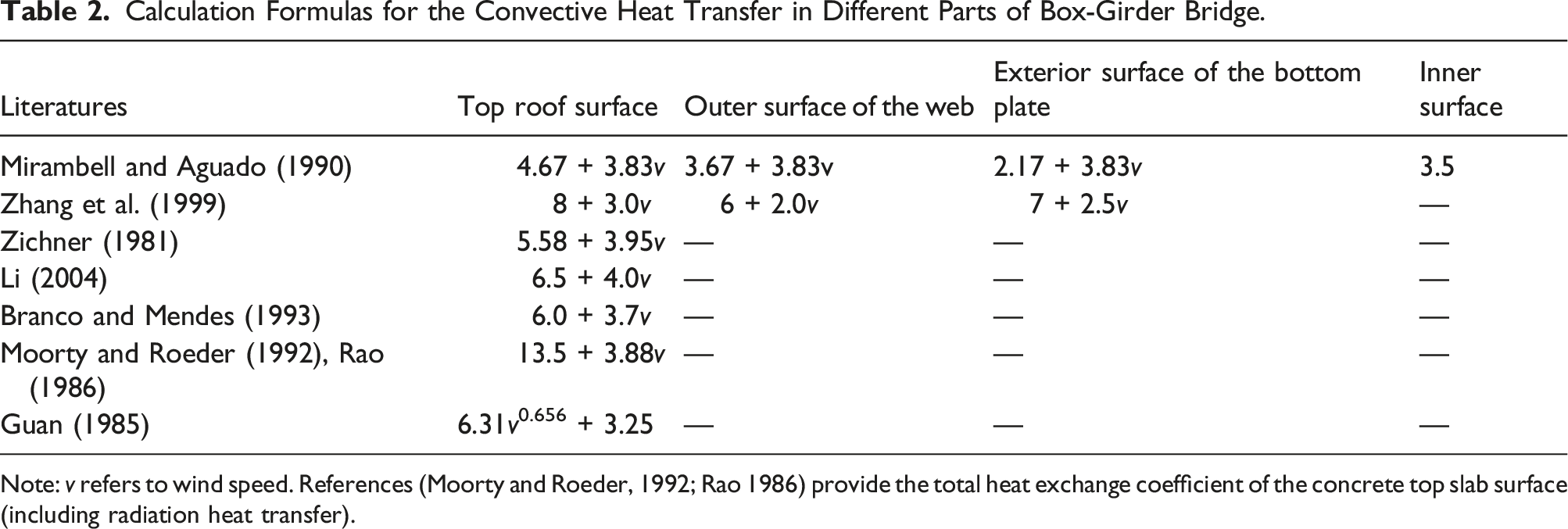
Note: v refers to wind speed. References (Moorty and Roeder, 1992; Rao 1986) provide the total heat exchange coefficient of the concrete top slab surface (including radiation heat transfer).
Figure 2 shows the relationship between the convective heat transfer coefficient and wind speed calculated using the formulas listed above. The results in Reference (Xia et al., 2012), the average temperature, T
avg
, is assumed to be 25°C, and the temperature difference between the structure and outside world, |T
s
−T
a
|, is assumed to be 10°C, which is in line with the actual bridge external environment. Overall, the convective heat transfer values given in References (Kehlbeck, 1981; Larsson and Thelandersson, 2011; Lee, 2012; Li, 2004; Saetta et al., 1995) are larger than the values provided by other studies, and the slope of the formula is also larger. The values of convective heat transfer obtained by Riding et al. (Riding et al., 2007) and Guan (1985) are relatively small. When v ≥ 4 m/s, the value of convective heat transfer obtained by Riding et al. (Riding et al., 2007) is much smaller than that obtained by other scholars, and it is 48.53% smaller than that derived by Li (2004) when the wind speed is 10 m/s. When the wind speed is 0, the natural convection heat transfer coefficient given by Song et al. (Song et al., 2010) is relatively large; it is 3.145 times larger than the value provided by Guan (1985). Under the same conditions, the slope and value of the convective heat transfer formula given by References (Kehlbeck, 1981; Wei, 1989; Riding et al., 2007; Larsson and Thelandersson, 2011) are similar. Given that the temperature difference between the bridge wall and the air is not a fixed value, the values obtained from the formula of Raiss Masuch (Kehlbeck, 1981) are reasonable because the formula comprehensively considers the influence of the temperature difference between the wall and the air and wind speed. Convective heat transfer coefficient versus wind speed.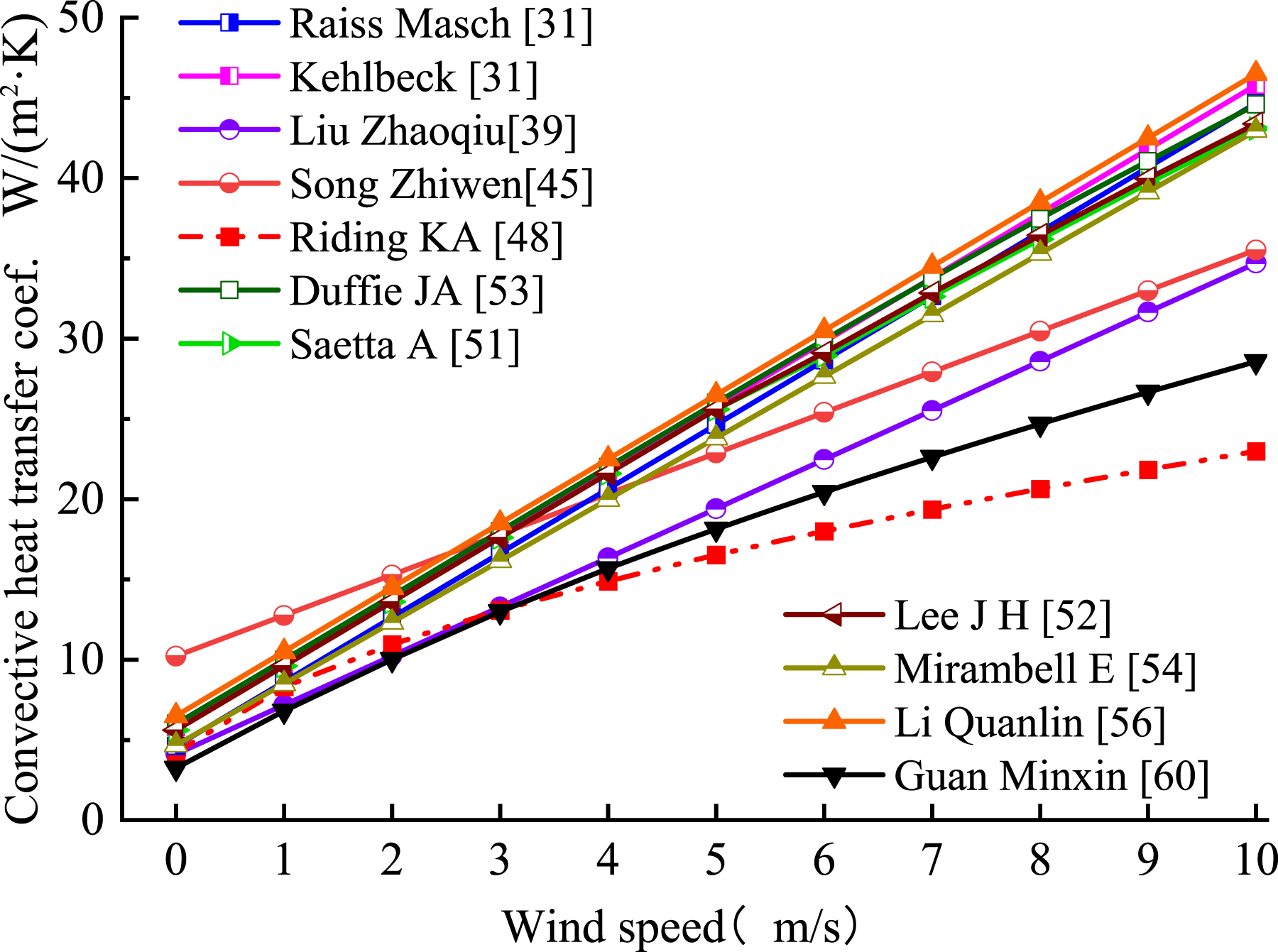
Existing studies have shown that most scholars’ concrete surface heat transfer coefficients have a linear relationship with wind speed, but some studies (Guan, 1985; Saetta et al., 1995; Riding et al., 2007; Larsson and Thelandersson, 2011; Lee, 2012) have provided nonlinear calculation methods for the two. The wind field near the bridge surface in practical engineering has complex time–space variation characteristics due to the influence of many factors. Among the abovementioned researchers, only Mirambell and Aguado (1990) and Zhang et al. (1999) provided corresponding convective heat transfer values for different parts of the box girder. Reference (Li et al., 2019) suggested that during the calculation of the temperature gradient of a concrete box beam, the convective heat transfer coefficient can be calculated in the following ranges: 3.5–6.0 W/(m2
When the outer surface of the structure is moist because of rain, evaporation-phase heat transformation of water occurs and results in the convective heat transfer coefficient of the wet surface being considerably greater than that of the dry surface. Liu and Liu (2008) used Lewis’ analogy law to establish the ratio of evaporative heat transfer to convective heat transfer for moist walls as follows:
The analysis above shows that all convective heat transfer coefficients are related to wind speed. At wind speeds ranging from 0 m/s to 10 m/s, the convective heat transfer coefficients of concrete surfaces proposed by different scholars differ by 1.118–3.145 times, indicating substantial differences. The wind speed and direction in different parts of the bridge, particularly at different orientations, are bound to differ. Therefore, different wind speeds should be selected to consider the convective heat transfer coefficient at different positions of the bridge. Moreover, when the external surface of the structure is wet, the existence of evaporative heat transfer greatly increases the heat transfer coefficient of the structure surface, and its influence cannot be ignored. Few studies have been conducted on the influence of air humidity on convective heat transfer. The available research results indicate that the influence of air humidity is substantial. However, no studies have considered the influence of air humidity in the calculation and analysis of the bridge temperature field and temperature effect.
Steel bridges
Steel has good thermal conductivity. Under similar conditions, the heat transfer between steel and the external environment is faster than that in thermally inert materials, such as concrete. Therefore, steel is more sensitive to temperature changes in the surrounding environment compared with thermally inert materials. The heat transfer coefficients of the upper and lower surfaces and the interior of steel bridges vary with the position and wind speed because of different exposure conditions. The convective heat transfers between the components and surrounding environment is one of the main factors that affect the results of daylight temperature field analyses.
Convective Heat Transfer Coefficients of Steel Bridges (W/(m2K).

Using the theoretical formula, Qian et al. (2014) calculated the convective heat transfer coefficient to study the non-uniform temperature field and its effect on the structure of a 65-m radio telescope. The convective heat transfer coefficient of a plate with length L along the wind direction, in consideration of the fluid characteristics, can be divided into the following:
Laminar flow:
Turbulent flow:
At present, only a few studies have been conducted on the convective heat transfer coefficient of steel in the analysis of the bridge temperature effect, and a calculation method that uses its value has not been established. Various scholars have proposed calculation methods with reference values for specific situations. In addition, different convective heat transfer coefficients are provided in fire protection codes for specific fire types. The European EC 1 Code (EN 1991-1-2, 2002) states that for standard and external, parametric, and hydrocarbon combustion fires, the convective heat transfer coefficients are h
c
= 25 W/(m2
Asphalt paving layer on the bridge deck
The asphalt mixture used for bridge pavements is a type of temperature-sensitive and high radiation-absorbing material. It is affected by solar radiation for a long time on the surface of the bridge and has a considerable influence on the spatiotemporal variation characteristics of the bridge temperature field. The surface thermal properties of asphalt materials have been extensively studied in road pavement engineering. The convective heat transfer coefficient of the asphalt concrete surface has been provided in literature (Kim et al., 2015; Zhang et al., 1999). Wang et al. (2009) considered the climatic characteristics and pavement types in the Qinghai–Tibet Plateau region and recommended the convective heat transfer coefficient of 150 W/(m2
The Solaimanian empirical formula is often used to calculate the convective heat transfer coefficient of an asphalt pavement surface in engineering (Mallick et al., 2009; Solaimanian and Kennedy, 1993; Xiao et al., 2021).
In addition, according to References (Hall et al., 2012; Nagai et al., 2009), the empirical Jurges equation is used to obtain the formula of the convective heat transfer coefficient of asphalt pavements with the best fit to the experimental value as h c = 5.8 + 4.1 v. Hall et al. (2012) summarized several empirical models, Nicol, Kimura, and Sturrock gave the equations h c = 7.55 + 4.35 v, h c = 1.824 + 6.22 v, and h c = 5.7 + 6.0 v, respectively. These formulas show that the convective heat transfer coefficient of asphalt pavements is linearly related to wind speed, and wind speed affects the values of the convective heat transfer coefficient of asphalt pavements more than it affects the values for concrete and steel. In addition, the asphalt convective heat transfer model proposed by the American Society of Heating, Refrigerating and Air-Conditioning Engineers (ASHARE) and Loveday is exponentially related with h c = 18.6·v 0.605 and h c = 16.15·v 0.4 , respectively.
A comprehensive analysis of these calculation methods indicates that the Solaimanian empirical formula considers asphalt surface temperature, air temperature, and average temperature and is therefore reasonable. However, its application scope has a clear limit, so it is unsuitable for areas where the asphalt surface is cold in winter and hot in summer. In general, existing calculation methods have differences in the value of the convective heat transfer coefficient under the same conditions, and no unified and universal method has been developed.
Comparative analysis of the convective heat transfer coefficients of different materials
For concrete materials, h
c
= 6.0 + 3.7 v is obtained by the average fitting formula on the basis of the formula in Figure 2. The constant term considers the influence of natural convection heat transfer, and the coefficient before wind speed comprehensively considers the effect of different orientations of the bridge structure. For steel, the formula h
c
= 4.17 + 3.83 v given in Reference (Kim et al., 2015) is used, and for asphalt, the average value of the formula is obtained based on the five formulas listed in References (Hall et al., 2012; Nagai et al., 2009), and h
c
= 170.24 − 163.56 ✕ 0.964
v
is obtained. The comparison diagram as shown in Figure 3. In the natural convective heat transfer state in a windless environment, the convective heat transfer coefficient is the smallest at 4.17 W/(m2·K) for steel, followed by 6.0 W/(m2·K) for concrete; the largest value of 6.68 W/(m2·K) is for asphalt. When the wind speed is ≤5 m/s, the convective heat transfer coefficient of concrete is slightly larger than that of steel, and when the wind speed is ≥5 m/s, the convective heat transfer coefficient of steel is slightly larger than that of concrete. Asphalt has the largest convective heat transfer coefficient among the three materials. When the wind speed is 5 and 10 m/s, the convective heat transfer coefficient of asphalt is 11.12 and 18.31 W/(m2·K) larger than that of concrete, respectively. The reason may be that the steel and concrete surface conditions are similar, and the asphalt surface is coarse. In a windy environment, wind friction resistance increases, which is conducive to the heat exchange between gas and solid surfaces. In addition, part of the asphalt pavement still has high internal porosity, large surface area, and good heat dissipation after compaction to realize drainage (Xia and Zhang, 2010). Comparison of convective heat transfer equations for different bridge materials.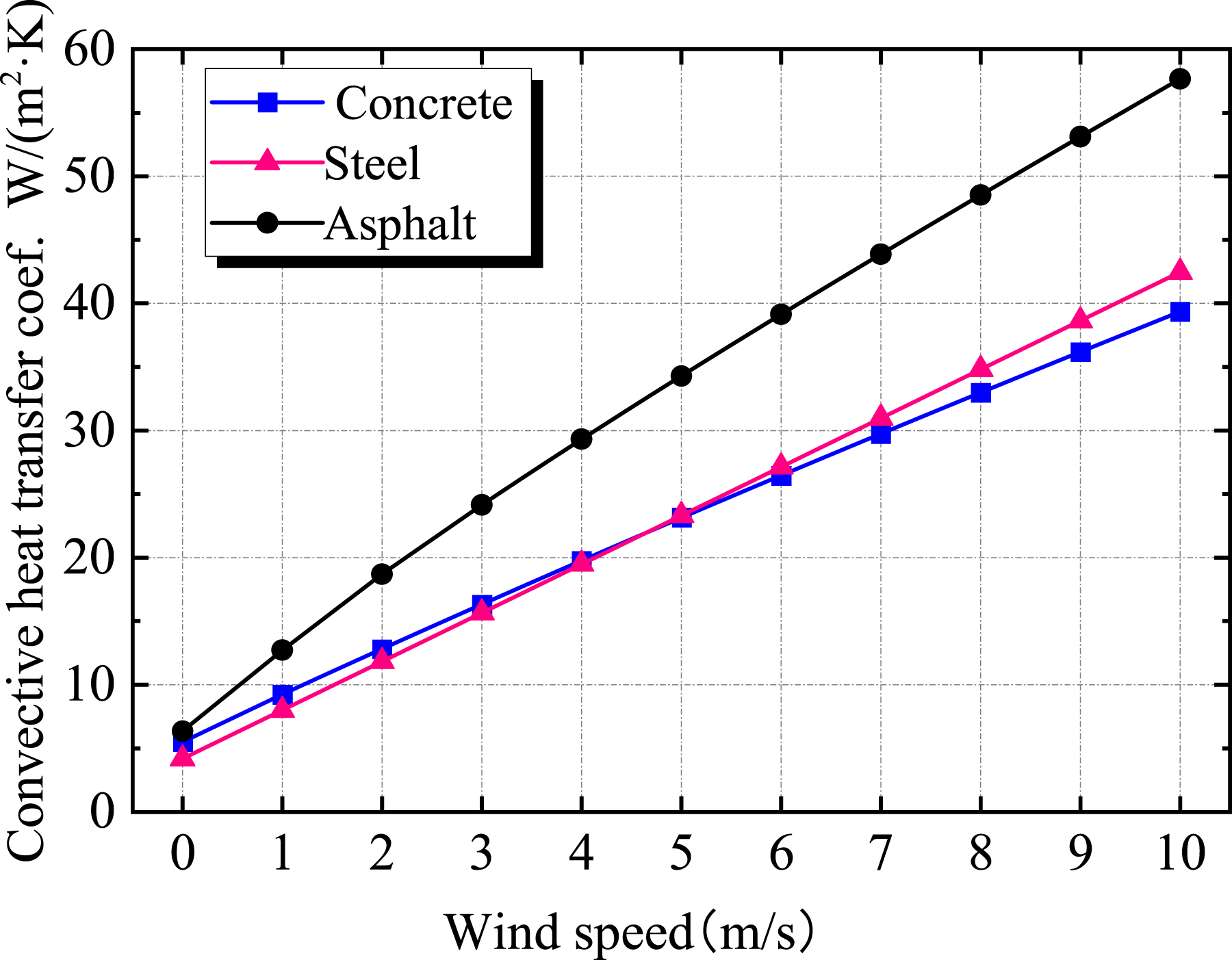
At present, mature theories and many research results on the convective heat transfer of different bridge materials are available, but a unified calculation method has not been developed. In consideration of the complexity and uncertainty of bridges and the external environment, the mechanism of the influence of the surface characteristics of structural materials (roughness, coating system, etc.) on heat transfer needs to be quantified, and the heat transfer coefficient under the coupling of multiple meteorological factors needs to be comprehensively examined. A standard test scheme and a value standard for the convective heat transfer coefficient need to be established, and the relevant contents in current specifications need to be improved.
Influence of structural surface characteristic on convective heat transfer coefficients
The bridge surface coating is located at the boundary layer where the bridge structure exchanges heat with the external service environment, and its characteristics, such as material, surface roughness, colour, etc., directly and significantly affect the heat exchange behaviors between the bridge and the external environment, subsequently influencing the temperature of the bridge structure. Not many studies have been conducted on the effect of bridge coatings on temperature, and they mainly focus on the effect of the coating materials on solar radiation coefficients and test method (Cao et al., 2010; Chen et al., 2014; Dong et al., 2012; Yuan et al., 2019).Considering the influence of structural surface characteristics and coatings on the convective heat transfer between the surface of building materials and the external environment, Zhou et al.(2023) and Li (2023) proposed and designed a set of experimental measurement system and calculation method for the convective heat transfer coefficient of the surfaces of building materials, and carried out tests and calculations of convective heat transfer coefficients of relative large-size concrete and steel panels under natural environment. The results show that: 1)Surface roughness significantly affects the convective heat transfer between the structural surface and the external environment, and the heat transfer coefficient increases with the increase of surface roughness, and forced convection is more affected by surface roughness than natural convection; (2) The convective heat transfer coefficients of the concrete surfaces with different roughness in the range of wind speed of 10 m/s vary by 40.1%∼77.4%; (3) The surface coating materials of concrete structures have little effect on convective heat transfer coefficients, but the coating materials on steel surfaces have a significant impact, with noticeable differences between different coating materials; and the difference between different coating materials is more obvious; (4) Based on the regression analysis of the experimental data, the calculation of convective heat transfer coefficients of the concrete and steel surfaces with typical surface roughness and coating materials of bridges is provided. Generally speaking, there is a lack of research on the surface properties of bridges and the influence of coatings on bridge temperature and calculation methods, and almost no research has been reported on the analysis of the temperature field and effect of bridges considering surface coating systems.
Various types of radiation to bridges in external environments
A bridge in the external environment constantly exchanges energy with its surrounding environment and within itself in the form of heat conduction and radiation, causing the structure’s temperature to change all the time. Radiation is the main factor that affects bridge temperature. Bridges are exposed to radiation, including direct solar, solar scattered, atmospheric inverse, ground reflection, and environmental radiation. At the same time, bridges emit thermal radiation related to their own temperature. The typical thermal radiation environment of a bridge is shown in Figure 1.
Bridge radiation heat transfer and theoretical calculation methods of various radiation types
Radiation heat transfer mechanism
Thermal radiation is a type of electromagnetic wave that is emitted by a radiation body and propagates in a straight line. When it encounters a substance, part of it penetrates into the substance and is converted into heat, and the rest is reflected or scattered back into space through the surface. The basic theory and analytical method of the radiation absorption coefficient are available in literature (Modest, 1992). For solid materials in engineering, only a very thin layer is involved in the absorption and emission of thermal radiation lines. In addition to receiving radiation, any object whose temperature is higher than absolute zero degree Kelvin produces thermal radiation, which transmits energy through the radiation emitted from the surface of the object.
Calculation methods for various types of radiation
Direct solar radiation
The amount of radiation that the sun projects directly to Earth’s surface in the form of parallel light is called direct solar radiation (Im). The direct solar radiation value can be calculated in accordance with the zenith angle and day order value N, by using the empirical formula proposed by Kehlbeck (1981). In clear weather, direct radiation intensity Iθ for a structure surface with solar incident angle θs is calculated as follows:
For box-type bridges, the box girder bottom plate facing downward, the bottom surface of the flange, and the box girder web shaded by the cantilever flange cannot receive direct solar radiation. The key tasks in boundary condition treatment are to judge whether each surface of the box girder is shaded and to calculate the length of the box girder web shadow at each time. When the angle between the incident sunlight vector and the external normal direction vector of the plate surface is less than 180°, the surface can be directly radiated by the sun. The shadow length of the box girder web is calculated as
Solar scattered radiation
Solar scattering is the radiation that is absorbed by the atmosphere and then scattered back to the surface when the energy radiated by the sun passes through the atmosphere. In accordance with the empirical formula (Kehlbeck, 1981), the value of solar scattered radiation to the horizontal surface in clear weather is calculated as follows:
The value of solar scattered radiation I
β
for an arbitrary oblique surface can be expressed as follows:
Ground-reflected radiation

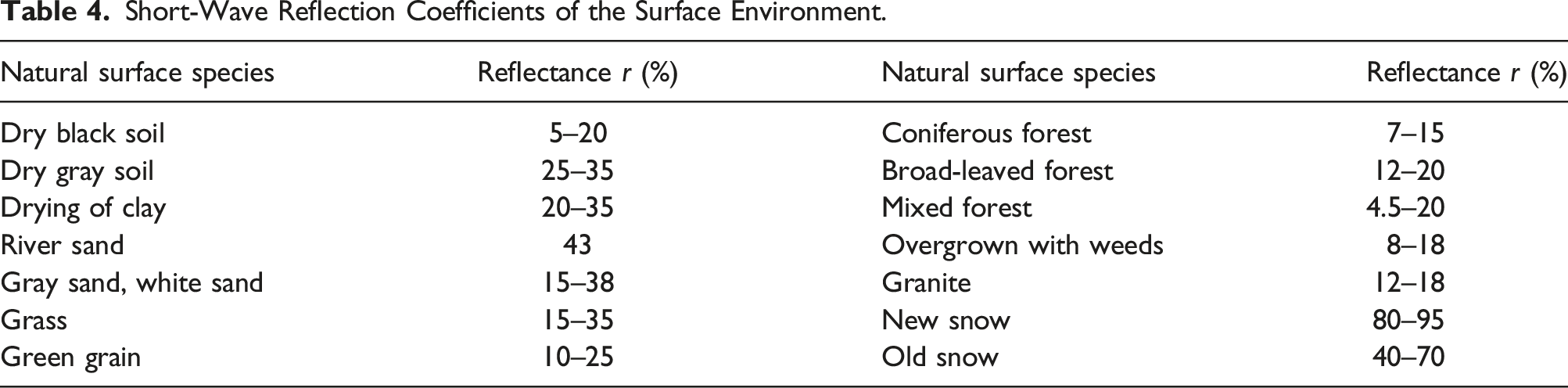
Short-Wave Reflection Coefficients of the Surface Environment.
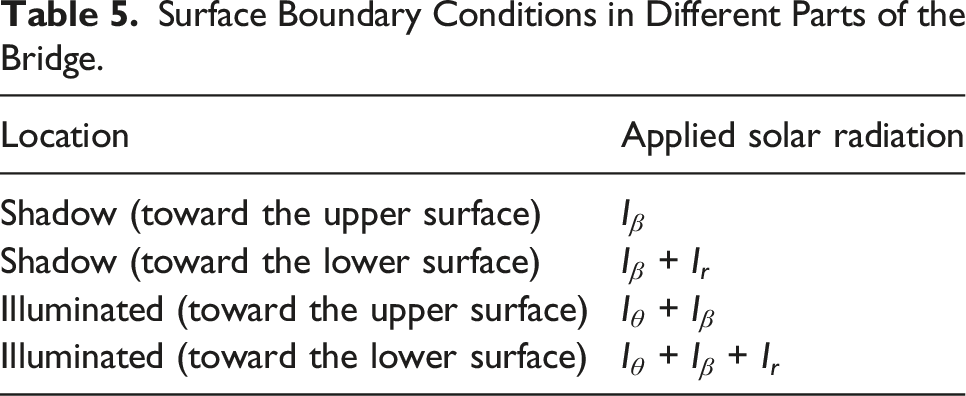
Surface Boundary Conditions in Different Parts of the Bridge.
Atmospheric inverse radiation and environmental radiation
While the atmosphere absorbs reflected radiation from the ground, it radiates radiation energy to the outside, and the downward part is called atmospheric inverse radiation G
a
. The radiation intensity to a certain inclined plane can be calculated by the following empirical formula (Yang et al., 2021):

Environmental radiation can be calculated as[52]
External heat radiation and radiative heat transfer coefficient of bridges
When the bridge structure surface absorbs external radiation energy, it emits an inherent radiation related to the external surface temperature. The external heat radiation intensity of the structure can be approximately calculated with the following equation:
The radiative heat transfer coefficient between the bridge and external environment can be calculated as
As shown by the formula, the main factors that affect the radiative heat transfer coefficient of the bridge surface include material type, structure temperature, and external atmospheric temperature.
Radiation absorption coefficient of building materials that considers wavelength difference
Solar radiation is absorbed by the ozone layer, water vapor, and atmospheric molecules and eventually reaches the surface. A solar radiation wavelength between 280 and 2500 nm denotes short-wave radiation. The short-wave radiation related to solar radiation received by bridges in the external environment includes direct solar, scattered, and surface-reflected radiation. Long-wave radiation is radiation with a wavelength in the range of 4–120 μm. The atmospheric inverse radiation in the thermal environment of a bridge, the ground environment radiation, and the external thermal radiation of the bridge material belong to long-wave radiation.
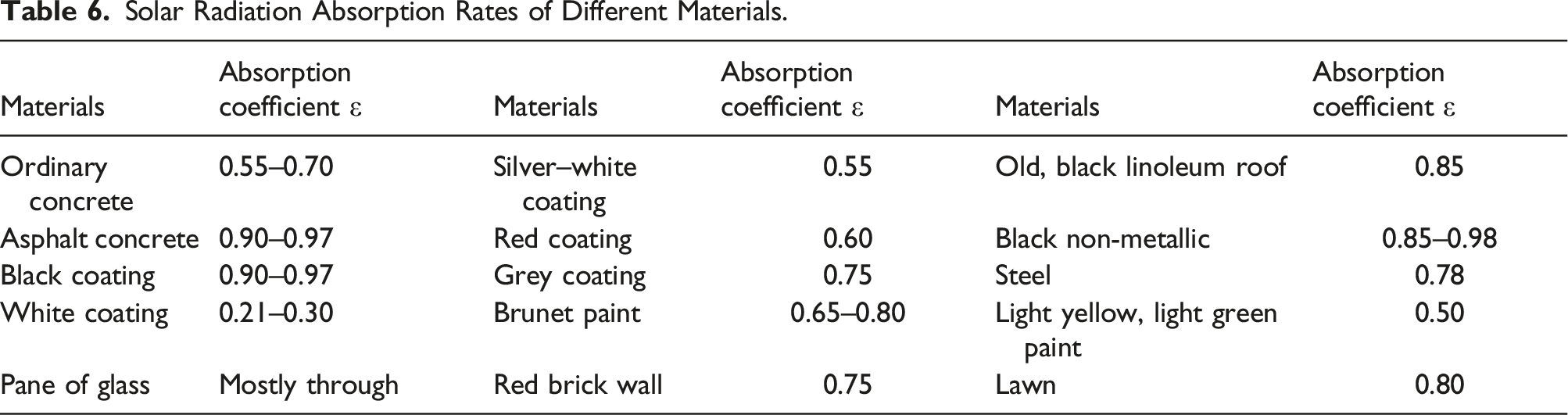
The energy density of radiation at different wavelengths varies, and the absorption of radiation energy at different wavelengths by the same material differs. Radiation amounts and radiation absorption coefficients can be calculated using theoretical or empirical formulas. In an external environment, the absorbance of short-wave radiation ε and long-wave radiation β by bridge materials also varies, and the radiation absorption coefficient is affected by many factors, such as material and surface characteristics. Therefore, the selection of the radiation coefficient is essential for bridge temperature field calculation. For conventional engineering construction materials, such as concrete, steel, and asphalt, long-wave radiation and absorption essentially function as a gray body. According to Kirchhoff’s law of thermal radiation, the emissivity of a gray body is equal to its absorption rate, that is, ξ = beta. The long-wave emissivity of an object’s surface depends on the composition of the structural material, surface features, temperature difference from the surrounding environment, and other factors. The long-wave radiation coefficients of concrete and asphalt are 0.88 and 0.92, respectively, according to Kehlbeck (1981).
Solar Radiation Absorption Rates of Different Materials.
Solar Radiation Absorption Coefficients of Common Maintenance Structures.
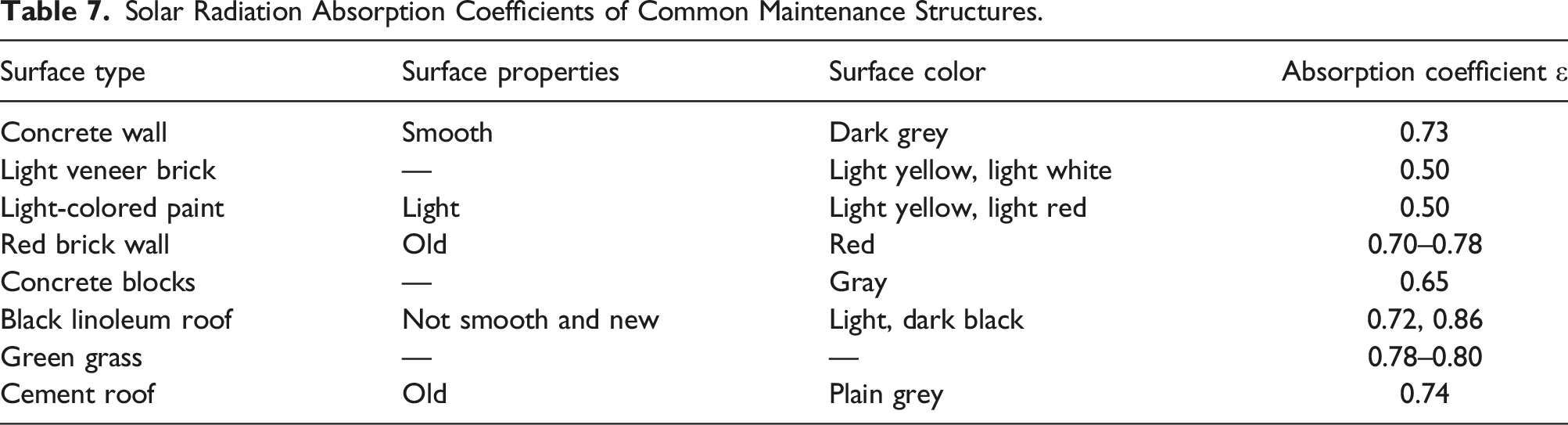
The short- and long-wave radiation absorption coefficients on the surfaces of building materials exert a substantial effect on the temperature field and temperature effect analysis of bridge structures, and their values are affected by structural materials, surface characteristics, and other factors. Therefore, the values should be carefully determined based on the actual situation.
Comparative analysis of the radiative heat transfer coefficient of typical bridge materials
Radiative Heat Transfer Coefficients.
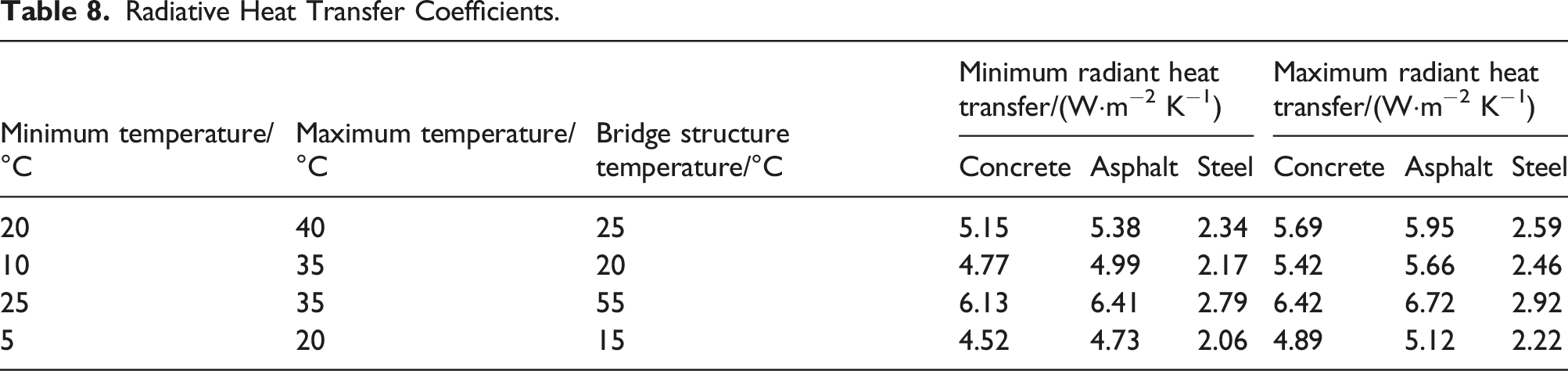
As indicated in Table 8, when the external atmospheric temperature and the structure’s temperature change, the variation range of the radiant heat transfer coefficient of different structural materials fluctuates in the range of 2.06–6.72 W/(m2·K), which is close to the corresponding material heat transfer coefficient in the natural convective heat transfer state and about 50% less than that under 1 m/s wind speed. The changes in external ambient temperature and bridge temperature have little influence on the radiant heat transfer of the bridge, which is much smaller than the convective heat transfer between the bridge and external environment.
Test method of the radiation absorption coefficient
Absorption, reflection, and transmission occur when radiation reaches the surface of building materials. According to the law of conservation of energy, the following relations exist:
The integration method calculates the reflection ratio by measuring the reflection indicator value of the tested part and that of the contrast specimen (known reflection ratio) read from the detection instrument and then obtains the solar radiation absorption coefficient. Its expression is as follows:
The reflectance ratio of a material at each wavelength can be accurately measured with the spectral method by using a spectrophotometer with an integrated sphere accessory. The radiative illuminance of sunlight at each wavelength is the weight coefficient used to calculate the average value. The total reflectance ratio is obtained, and the solar radiation absorption coefficient is calculated. The spectral method can be divided into absolute and relative methods (Chen et al., 2014). The difference between the two is the use of a standard whiteboard (material: barium sulfate, magnesium oxide, and Teflon). The formula for the absolute method is as follows: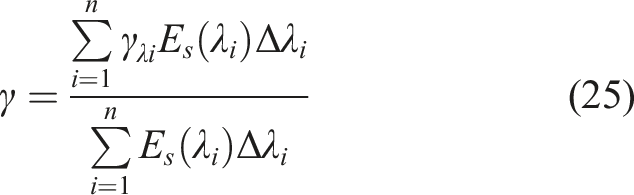
The relative method conducts baseline scanning with the standard whiteboard and then tests the spectral reflection ratio of the specimen relative to the standard whiteboard when the wavelength is λi. The expression is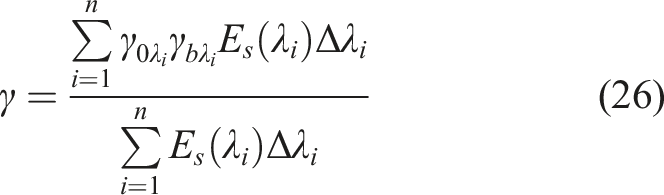
Integration and spectral methods generally require the measured sample to be a 3–5 mm sheet, a requirement that is unsuitable for other bridge building materials with a large minimum specimen scale, such as concrete. At present, no uniform and applicable test scheme or value standard is available for the solar radiation absorption coefficients of bridge building materials.
Bridge radiation absorption coefficient that considers the influence of coating
Bridge surface coating has decorative, heat insulation, shielding, and corrosion inhibition functions, which can considerably improve the service life of bridges; therefore, it is widely applied. The current anticorrosion technical conditions for bridge structure surface coating are relatively mature. For example, the anticorrosion coating of the concrete and steel structures of highway bridges is specified in detail in the Chinese transportation industry standards JT/T695-2007 (Specification of anti-corrosive coating for concrete bridge structure) (JT/T 695-2007, 2007)and JT/T 722-2008 (Specification of protective coating for highway bridge steel structure) (JT/T 722-2008, 2008). The international authoritative bridge coating standards are ISO 12944 (Paints and varnishes - Corrosion protection of steel structures by protective paint systems) (ISO 12944, 2018) and the “Steel Road Bridge Painting Fact Sheet” developed by the Japan Road Association.
Excessive temperature effects can lead to structural stress, deformation, and damage, which in turn influence service and static and dynamic performance. The application of reflective heat insulation coating is essential for extending the service life of civil engineering infrastructure. Studies (Cao et al., 2010; Yuan et al., 2019) have shown that a layer of reflective heat insulation coating on the bridge pier surface can effectively reduce the temperature effect of the nonuniform spatial distribution caused by direct solar radiation. A thermal reflection coating can also considerably reduce the temperature of asphalt pavements in a sunny environment. Chen et al. (2014) determined the solar radiation absorption coefficients of 17 different coating systems via a spectroscopic method using a spectrophotometer and found that among all the factors that affect the solar radiation absorption coefficient, the color of the top coat is the most important, followed by the material of the top coat. The solar radiation absorption coefficients of white fluorocarbon, polyurethane, and chlorinated rubber paint specimens are 0.32, 0.26, and 0.40, respectively. Dong et al. (2012) found that the roughness of the coating surface has no obvious effect on the solar radiation absorption efficiency of a building, and the radiation absorption coefficient of brown smooth coating is 0.89. Peng et al. (2006) reported that the emissivity of a nonmetallic coated surface can be approximated by β = 0.9. Yang et al. (Yang et al., 2019) determined that the solar radiation absorption coefficients of concrete coated with white, red, and gray and uncoated concrete are 0.22, 0.26, 0.35, and 0.55, respectively. Considering the influence of structural surface properties and coatings on convective heat transfer between the building material surface and external environment, Li et al. (2023) proposed and designed a system for test of the solar radiation absorption coefficient and a method of calculating it. Tests and calculations of solar radiation absorption coefficients of relative larger-size concrete and steel panels in natural environments were carried out. The results show that the surface roughness affects the absorption of short-wave radiation on the surface of concrete, and the absorption coefficient increases with the increase of surface roughness. The radiation absorption coefficient (α) of concrete with different surface roughness (δ) can be calculated by the formula α = 0.42 + 0.07δ. The solar radiation absorption coefficient of the bridge coatings is affected most by surface colour, and followed by the type of the material. The light-coloured coatings, such as white, can significantly reduce the absorption of solar radiation, and then reduces the adverse effects of solar temperature on the structure. Based on the experimental determination, recommendations are given for the values of solar radiation absorption coefficients for commonly used coating materials and colours for concrete and steel bridge surfaces.
Therefore, in addition to the aesthetic requirements of bridge construction, the influence of the radiation absorption property should be considered during the selection of the color of the bridge top coat. The solar radiation absorption coefficient of light-colored coating is smaller than that of the dark-colored coating, and the former coating can effectively alleviate temperature-induced structural effects. Furthermore, bridge coating influences the convective heat transfer described above, and relevant studies should be conducted to determine its effect.
Conclusions and discussion
In this work, the studies on convective and radiation absorption coefficients in bridges and external environments are systematically reviewed, summarized, and analyzed. The conclusions are as follows: (1) The wind speed flowing through the structure surface is the main factor that affects convective heat transfer, and the convective heat transfer coefficient has a linear growth relationship with wind speed. At the same time, convective heat transfer is considerably affected by the surface characteristics of the structural material, and a rough surface has high convective heat transfer. However, only a few studies have been conducted on this aspect. (2) Concrete, steel, and asphalt concrete are commonly used building materials for bridges. Under the same external environment, asphalt has the largest convective heat transfer coefficient among the three, and the convective heat transfer coefficients of concrete and steel have little difference. (3) The material surface’s color is the main factor that influences the radiation absorption of the bridge. The darker the surface color of the material is, the larger the absorption coefficient is. Material type and surface roughness also considerably affect radiation absorption. Among the three materials, asphalt concrete has the largest short-wave radiation absorption coefficient, followed by steel and concrete. Air temperature and structural temperature have little influence on the radiation heat transfer of bridges. (4) The surface coating of the bridge structure can improve the durability and appearance of the structure and reduce the temperature effect of the structure because of its diffused reflection and low absorption coefficient.
At present, the heat transfer and radiation absorption coefficients of gas–solid relative flow have mature research results and a highly accurate laboratory measurement method at the material level. Many studies have been conducted on the heat transfer between bridge structures and external environments. However, due to the complexity and uncertainty of bridges’ external environments, no unified calculation method has been established for the heat transfer coefficient, and the following aspects need to be further studied and improved: (1) The mechanism of the influence of structural material surface characteristics (roughness, coating system, etc.) on heat transfer and the calculation method of the heat transfer coefficient should be quantified, subsequently, the surface coating technology of structural materials with adjustable heat transfer coefficients could be studied so that the adverse effects of structural temperature can be alleviated or inhibited; (2) The measurement of the material surface heat transfer coefficient at the component scale in the natural environments should be implemented by comprehensively considering the calculation of the heat transfer coefficient under the coupling effect of multiple meteorological factors; (3) A study on the thermal coefficients of new bridge materials (ultra-high-performance concrete, engineered cementitious composites, fiber-reinforced polymers, and other high-performance composite materials) in the natural environments of bridges should be performed;
Footnotes
Declaration of conflicting interests
The author(s) declared no potential conflicts of interest with respect to the research, authorship, and/or publication of this article.
Funding
The author(s) disclosed receipt of the following financial support for the research, authorship, and/or publication of this article: This work is supported by the National Natural Science Foundation of China (52078220), the International Science & Technology Cooperation Program of Guangdong Province (2023A0505050155), and the International and Hong Kong, Macao and Taiwan Talents Communication Program of Guangdong Province.
