







Abstract
River-crossing bridges often utilise curved design to account for the highway profile change, distribute traffic loads and manage water flow. The vehicle-curved bridge interaction (VBI) is complicated, especially combining with environmental thermal effects. These thermo-mechanical interactions differ substantially from those in straight bridges and warrant detailed study. In this study, a curved bridge is modeled as a Timoshenko beam (TB) with pinned supports at both ends. Governing equations are derived using the four-node isoparametric beam element and cubic polynomial shape function. The vehicle is modelled as a half-car model to account for its bouncing and pitching motions. Thermal effects are represented by a linear temperature gradient through the beam depth, which is converted into equivalent thermal loads. An analytical framework that superimposes moving vehicle loads and thermal loads within the coupled motion equations is developed. The dynamic response of the VBI system is analyzed using a zero-order displacement and velocity overshoot (U0-V0) iterative method. The parametric study reveals that: (1) the shear deformation significantly affects high vibration modes; (2) the bridge stiffness increases when the radius of its curvature reduces, which induces the reduction of bridge and vehicle displacement responses; (3) the thermal bending and expansion of the bridge have a large effect on dynamic amplification factor (DAF), while the impact of its curvature on dynamic load coefficient (DLC) becomes dominant for high vehicle speeds. These findings provide valuable insights for the design, analysis, and maintenance of curved bridges operating under combined vehicular and thermal loading conditions.
Keywords
Introduction
Vertical curved beams are widely used in bridge engineering, and their vibration characteristics have received significant attention due to their outstanding performance in long-span and high load-bearing capacity (Mohamed et al., 2024; Zhong et al., 2021; Zhou et al., 2024), such as the arch bridges (Ding et al., 2023) and slightly curved beam bridges (Ye et al., 2020). The dynamic interaction between vehicles and bridges plays a crucial role in modern bridge engineering, particularly in applications such as load rating in bridge design, structural condition monitoring, and ride comfort assessment (Li and Feng, 2023). Initial studies primarily utilized Euler–Bernoulli (EB) beam theory to model bridge dynamics under moving vehicle loads (Deng et al., 2023; Li et al., 2022a; Liu et al., 2013; MacLeod and Arjomandi, 2023). Although EB theory is effective for slender structures, it assumes plane sections remain plane and neglects shear deformation, limiting its accuracy for short- to mid-span highway bridges with small aspect ratios and thick decks (Zhang et al., 2020). To overcome these limitations, researchers have employed Timoshenko beam (TB) theory, which incorporates both shear deformation and rotary inertia, providing a more realistic representation of bridge dynamics under vehicular loading (Gao et al., 2022). Several studies have examined Timoshenko beams subjected to moving forces or moving masses. Wang (1997) analyzed the dynamic behavior of multi-span Timoshenko beams under constant moving loads. Yavari et al. (2002) adopted a discrete element technique to study moving loads on bridge. Kocatürk and Şimşek (2006) used polynomial-based trial functions to capture beam deflection and rotation under harmonic loads. Others, such as Attar et al. (2017), explored the effects of cracks and flexible foundations, and Esen (2020) incorporated size-dependent behavior using two-node finite elements. The slope-inertia-based TB theory has also been developed to enhance model fidelity for thick beam under dynamic loading (Lei et al., 2022). The Timoshenko beam under moving masses has been studied (Esmailzadeh and Ghorashi, 1997). Lou et al. (2006) presents a finite-element formulation of a Timoshenko beam subjected to a moving mass. The time-dependent matrices for the equation of motion were derived using the variational approach. Pirmoradian et al. (2015) investigated the instability and resonance of a Timoshenko beam excited by a sequence of moving masses using the incremental harmonic balance method. The stability and resonance behaviors of the Timoshenko beam employing more sophisticated deformation theories were different from Euler-Bernoulli beam. While the moving force and mass models capture different aspects of vehicle loading, these models do not fully account for the dynamic coupling between the vehicle and the bridge (Green and Cebon, 1997). Moghaddas et al. (2009) addressed this limitation by formulating the weak form of the coupled VBI problem using TB theory. Similarly, Wang et al. (2020) used a state-space approach to analyze a coupled system with a single-degree-of-freedom quarter-car model. These works underline the importance of VBI coupling and road surface effects. As above, bridge geometries are typically assumed as straight, and the curvature of the bridge has not been considered (Lu et al., 2019).
Bridge structures often feature vertical or horizontal curvature due to terrain constraints or aesthetic considerations. Some studies have been conducted on the dynamic behavior of such curved structures under moving loads (Zhai et al., 2023; Zhang et al., 2022). Wu and Chiang (2003) analyzed radial and out-of-plane vibration of circular arches under moving loads using curved beam elements. Rostam et al. (2015) studied vibration suppression in curved beams subjected to off-center moving loads, while others examined the effects of crack location, load speed, and structural geometry (Wu and Chiang, 2004). These investigations have demonstrated that the curvature can significantly influence the dynamic response by altering stiffness distribution and mode shapes. The implications for VBI modeling are profound, as ignoring curvature may lead to inaccurate predictions in real-world bridge systems (Poojary and Roy, 2021).
In addition to mechanical loads, environmental thermal effects can significantly impact the dynamic response of bridge structures. Changes in environmental temperature induce thermal expansion and bending of the bridge, altering its stress distributions and dynamic characteristics. Several studies have explored the interaction between thermal effects and dynamic loading. Paganelli (2014) analyzed beams and plates under combined thermal and moving loads, while Zhong et al. (2015) and Caddemi et al. (2017) incorporated prestress and axial forces in their dynamic analyses. Al Rjoub and Hamad (2020) studied the forced vibration response of axially loaded Euler-Bernoulli and Timoshenko beams using a modal expansion method. Li et al. (2020) investigated the dynamic response of an axially loaded Timoshenko beam under a moving load. The thermal expansion under temperature variation was considered as the axial load. Further investigations have examined functionally graded materials and micro-scale behaviors (Wang and Wu, 2016). Abdelrahman et al. (2021) developed a finite element method for Timoshenko microbeams subjected to thermal and moving mass effects. Liu et al. (2018) reported that thermal loads can significantly alter bridge responses under dynamic loads. Despite these advancements, most existing work considers straight beams and simplified thermal fields, such as uniform or axial gradients.
While some studies have investigated either the effects of bridge curvature or thermal loading independently, their combined impact on dynamic vehicle-bridge interaction remains largely unexplored. This gap is particularly relevant for real-world bridge systems exposed to environmental temperature variations and designed with vertical curvature for functional or aesthetic reasons. The novelty of this work lies in the development and analysis of a vertically curved Timoshenko beam bridge model subjected to both moving vehicle loads and thermal effects, capturing the coupled dynamic behavior that is often oversimplified in prior research. This integrated approach provides insights critical for the design and maintenance of modern highway bridges.
Formulation for VBI and thermal loads
Linear temperature rise model along the beam depth
Consider a beam with rectangular cross section of width b and depth h, the temperatures at the top and bottom surfaces of the beam are T
t
and T
b
, respectively. As shown in Figure 1, the temperature distribution in the beam is assumed to be linear through the depth of the beam. Considering the reference temperature Linear temperature distribution along the cross-section.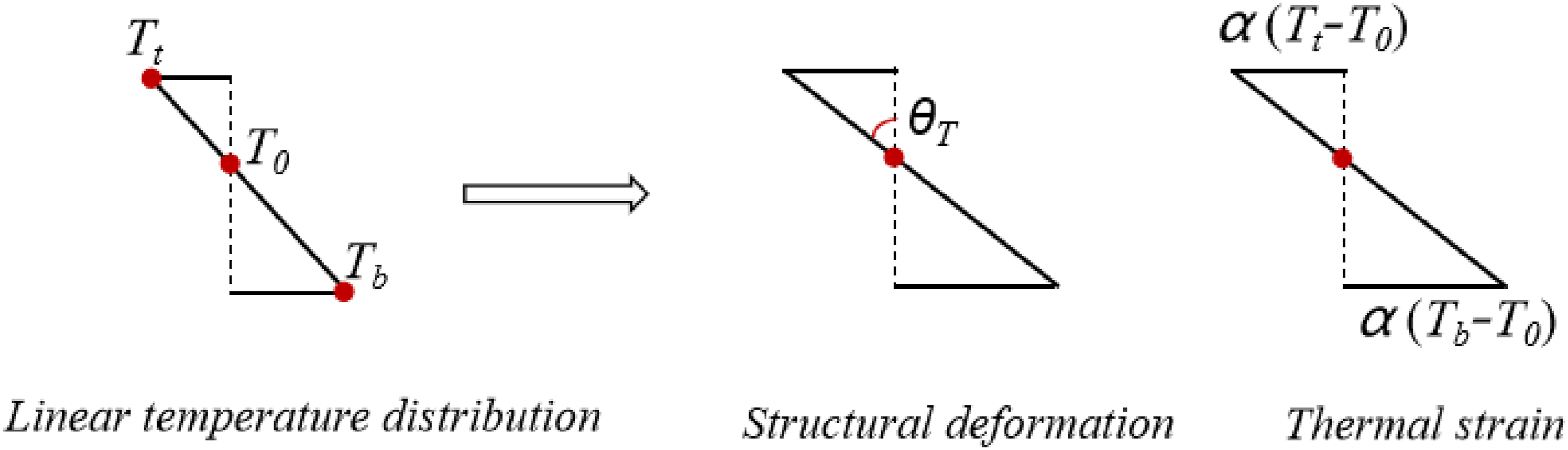

While the linear temperature gradient assumption is commonly adopted for analytical tractability, it represents a simplification of actual thermal behavior in bridge components. In real-world conditions, such as during intense solar exposure, rapid environmental temperature changes, or asymmetric heating, the through-thickness temperature distribution may become nonlinear. These nonlinear gradients can introduce additional thermal stresses and affect deformation patterns, potentially altering the dynamic response of the structure. Therefore, while the linear gradient is appropriate for moderate thermal conditions, its application should be approached with caution under extreme environments. Future studies may consider incorporating nonlinear thermal profiles to improve the accuracy and robustness of dynamic analyses involving complex thermal loading.
Governing equation of the vehicle model
The vehicle and bridge models employed for dynamic analysis are shown in Figure 2. The bridge is represented by a pinned-pinned curved beam with a span length L. The pinned supports are widely used to the planar curved beams that is critical to study the thermal behaviors of the beams (Rostam et al., 2015; Zhou et al., 2024). Vehicle-bridge interaction model.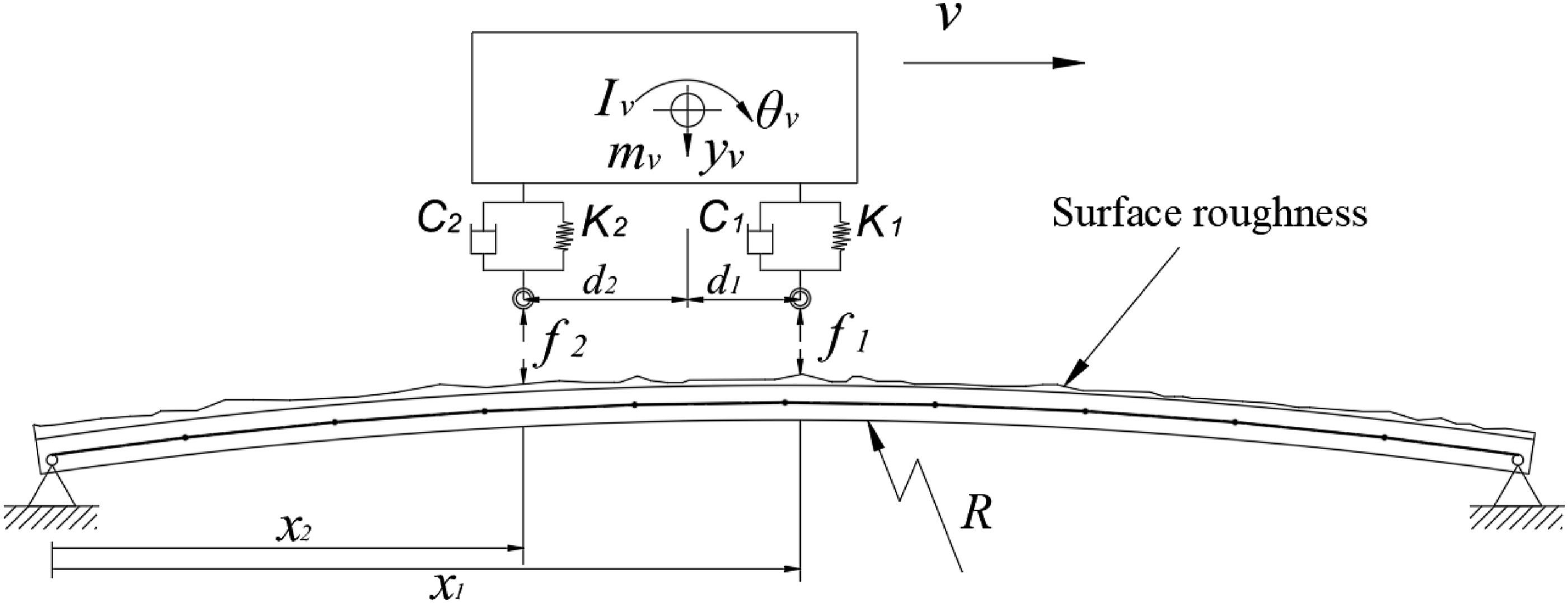
The vehicle is considered as a half-car model, which contains two independent degrees of freedom corresponding to the bounce y
s
and pitch rotation


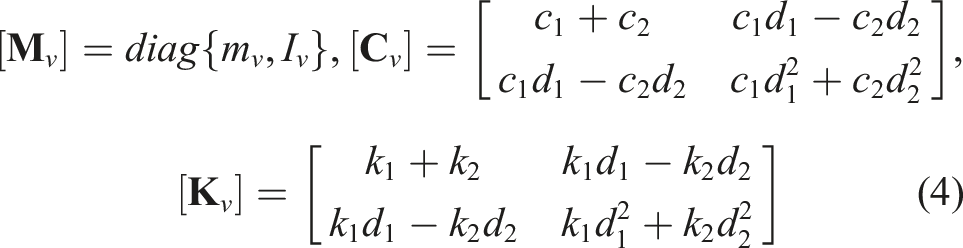
The mass, damping and stiffness matrices are as,
The total contact-point force between vehicle wheel and bridge represented by

Governing equation of vertically curved Timoshenko beam bridges
The curved beam is discretised as a sequence of straight beam elements (Yang et al., 2024). If


The stress constitutive equations based on Hooke’s law can be written as,


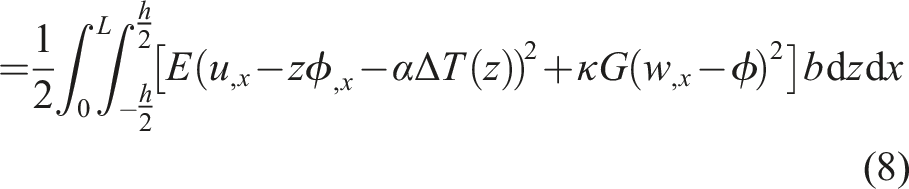
The potential energy includes contributions from the axial deformation, shear deformation, bending deformation, and thermal effects as,





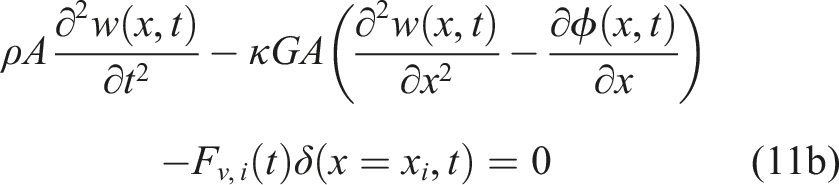
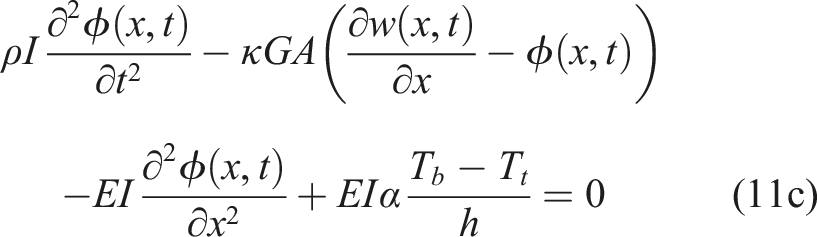
In practice, the time for a vehicle to cross the bridge is significantly shorter than that required for environmental temperature changes to affect the bridge. In this study, environmental thermal effects are considered as equivalent static loads derived from the linear temperature gradient. These loads induce initial displacements and internal stresses in the structure prior to the vehicle entry. When the vehicle enters the bridge, the dynamic load interacts with this thermal state. Although thermal effects are considered as time-invariant under slowly varying environmental conditions, they affect the structural stiffness, boundary force distribution, and initial deformation profile. As a result, dynamic responses by the moving vehicle differ from that of a non-thermally loaded structure. Therefore, the interplay between thermal-induced quasi-static deformations and time-varying vehicular excitations is essential to accurately capture the dynamic behavior of the bridge-vehicle system.
Road surface roughness
As listed in equation (3), the road surface roughness has a significant effect on dynamic behaviour of the VBI system. The road surface roughness is described as (Li et al., 2022b),

Solution procedures
Finite element modeling
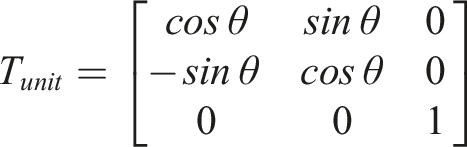
The bridge is discretised into beam finite elements. To derive the elemental stiffness and mass matrices, the principle of virtual work is applied. Consider a four-node isoparametric TB element of length l, the nodal variables are the longitudinal deflection

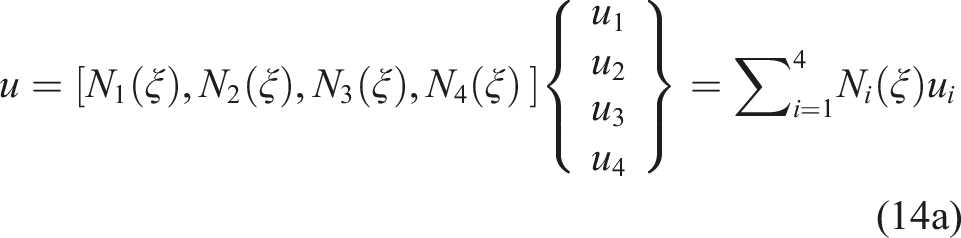
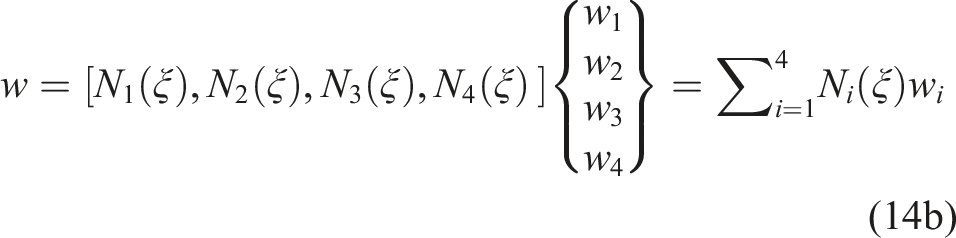
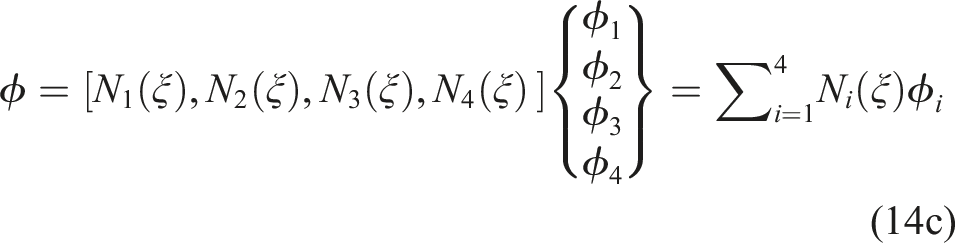
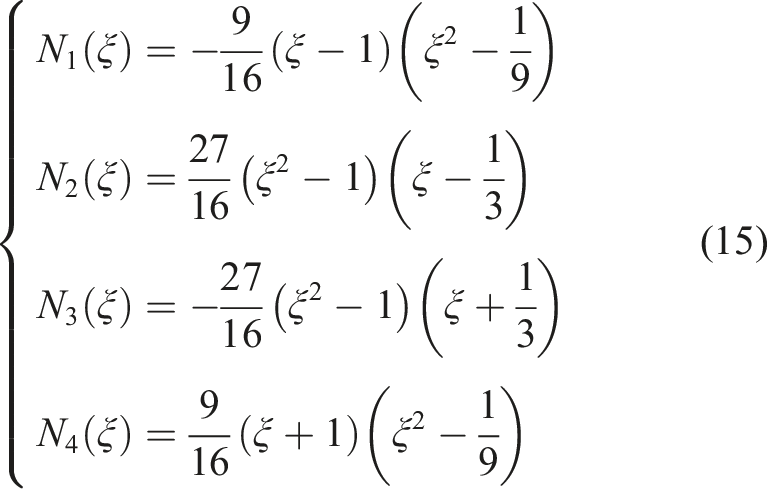
The Jacobian matrix is defined as
By interpolation functions, the stiffness and mass matrices of the beam element can be derived from strain energy and kinetic energy expressions by substituting equation (14) to equation (11). The local axial



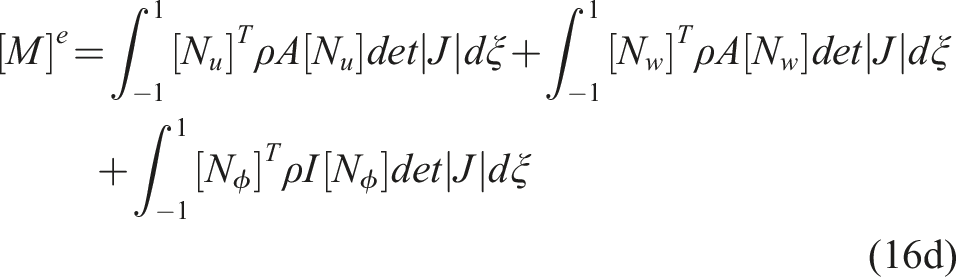


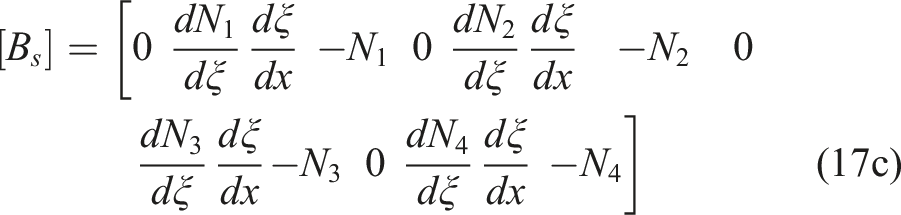



The numerical integration in equation (16) is performed by using Gaussian quadrature. For the exact numerical integration of matrices


Numerical calculation of governing equations
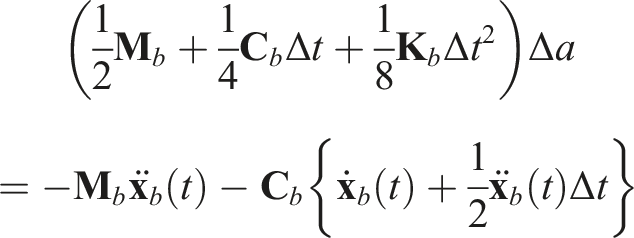
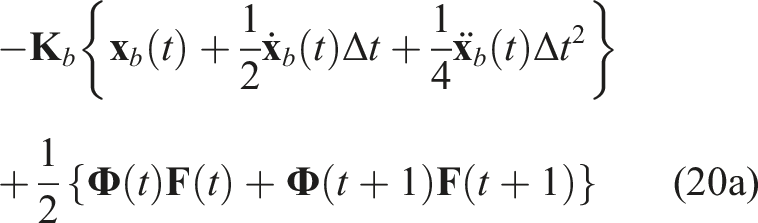
A zero-order displacement and velocity overshoot (U0-V0) technique, which is one of the generalized single step single solve (GSSSS) algorithms (Papazafeiropoulos and Plevris, 2018; Zhou and Tamma, 2004), is used for the dynamic analysis. The mid-point rule (MPR) a-form, that is a particular case of optimal numerical dissipation and dispersion U0-V0 method, is used in this study. Considering the equation of motion for the bridge, given



Iterative procedure for the VBI analysis
As shown in equations (2) and (19), the VBI system includes two uncoupled equations for the vehicle and bridge subsystems respectively. These two uncoupled equations could be solved individually and the analysis of dynamic interaction between the vehicle and bridge is implemented in an iterative procedure. The first step is setting initial parameters including vehicle moving speed, time interval for the calculation, number of beam element and assumed static initial conditions of VBI system at time step IT = 0; The second step is to calculate and assemble matrices, i.e., Iterative procedure for the VBI analysis.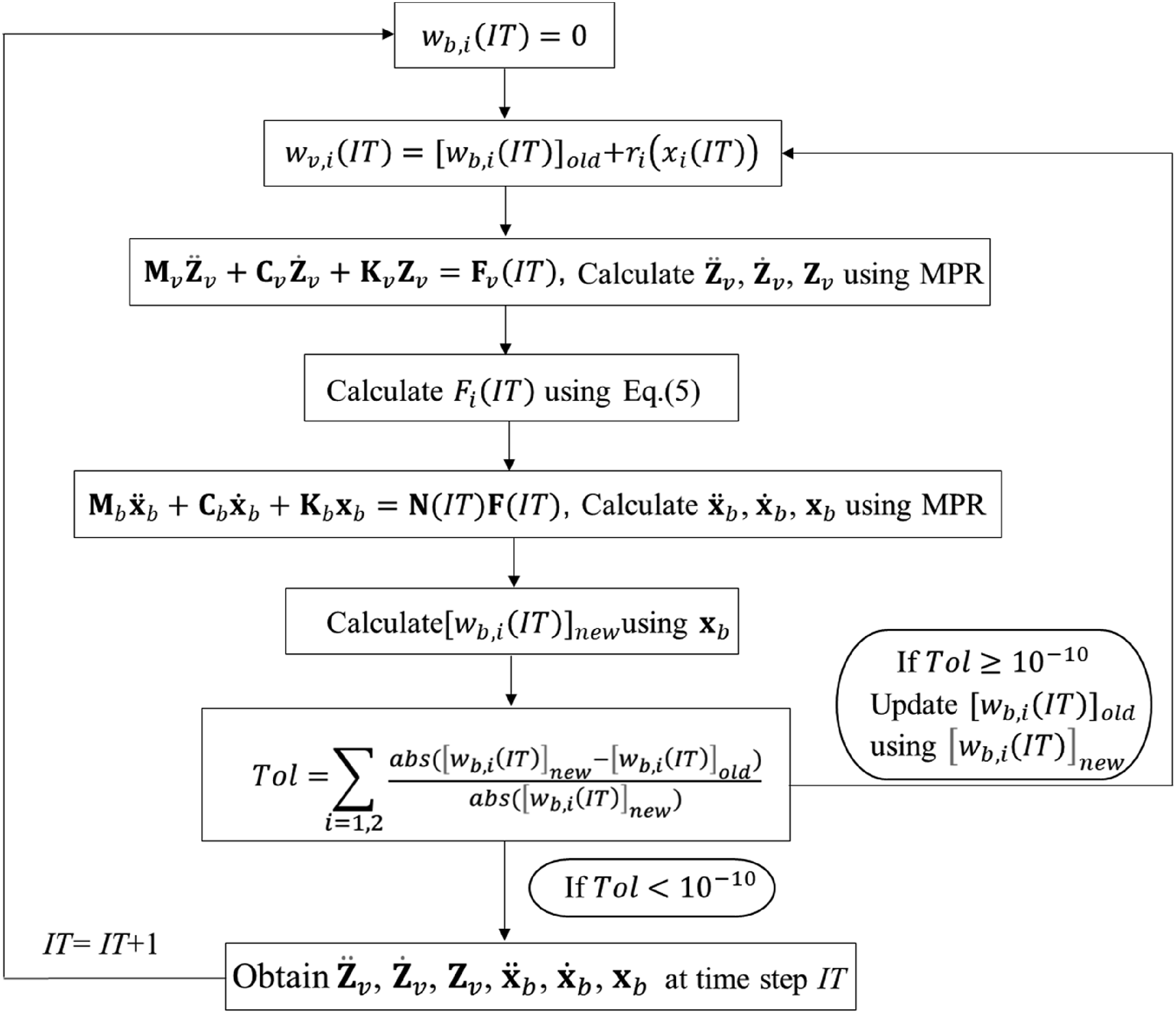
Verification of the proposed method
Transient responses of the VBI system
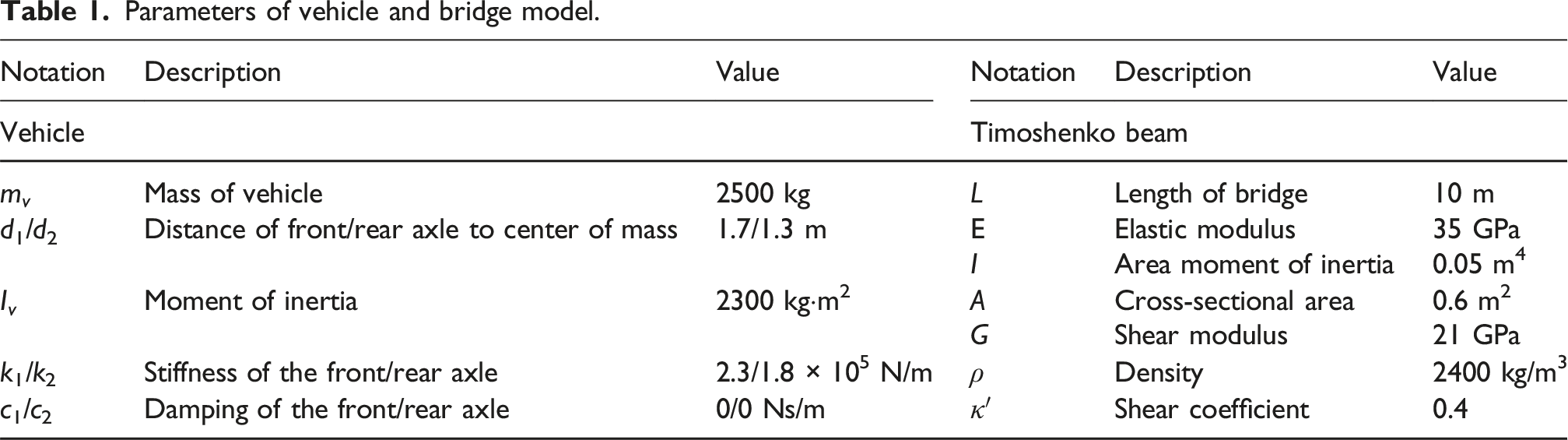
Parameters of vehicle and bridge model.
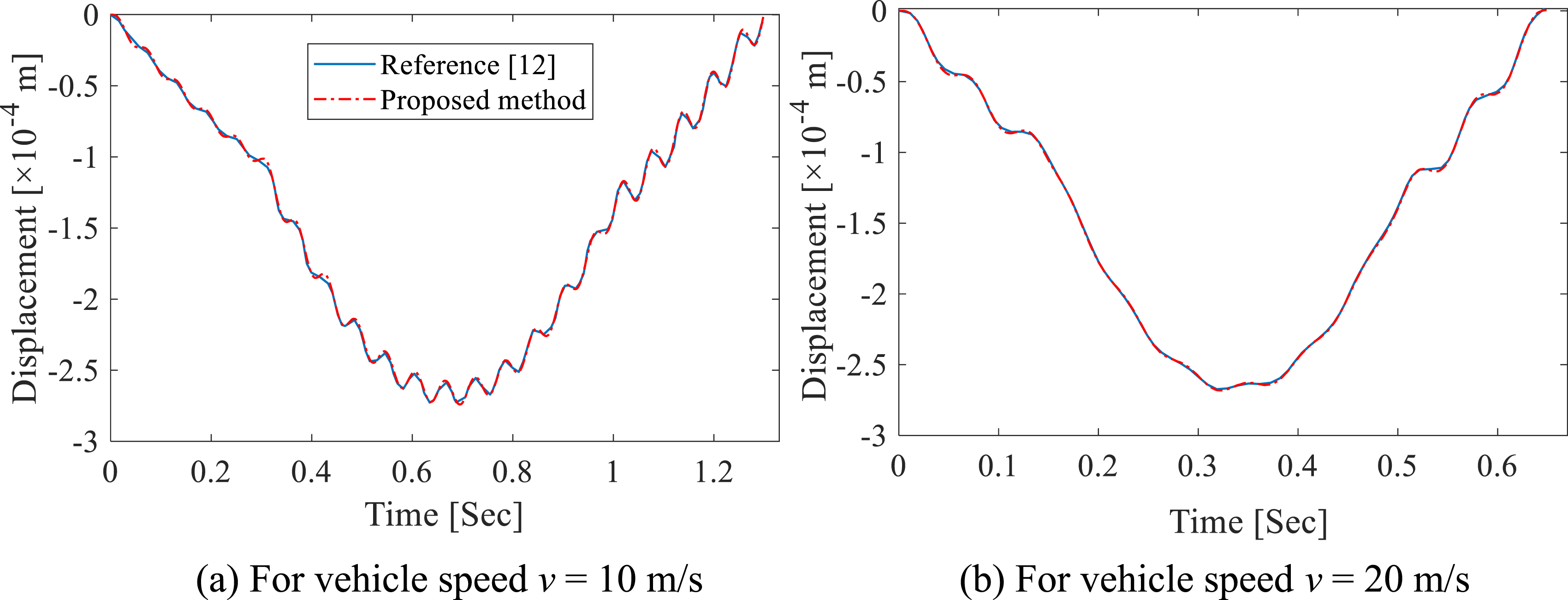
Displacements at midspan of a bridge subjected to a moving vehicle. (a) For vehicle speed v = 10 m/s (b) For vehicle speed v = 20 m/s.
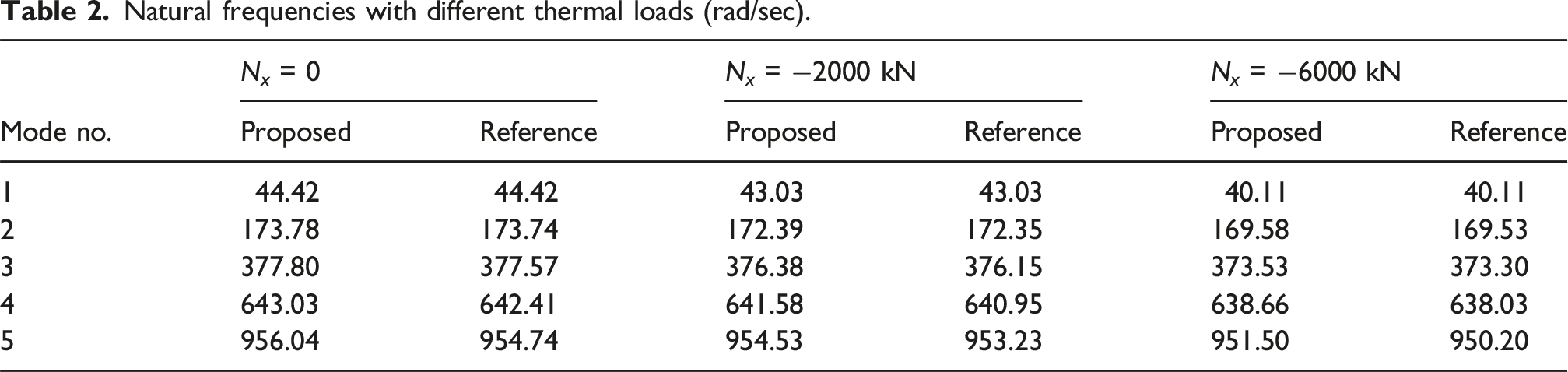
Eigenvalue analysis considering the thermal axial load to the beam bridge
Natural frequencies with different thermal loads (rad/sec).
Numerical investigation
Dynamic responses of bridges using different beam theories
Dynamic responses of the beam bridge under a moving vehicle using TB and EB theories are compared in this section. The bridge parameters are same as those used for eigenvalue analysis except that the bridge damping ratio is set as 2% without loss of generality. The vehicle parameters are listed in Table 1. Figure 5 shows displacement responses at midspan of the bridge subjected to a moving vehicle at a speed of 10 m/s and 20 m/s, respectively. In the figure, there is a slight difference in bridge displacement responses using TB and EB theories. The maximum beam deflection at midspan using TB is larger than that with EB. The moving speed changing from 10 m/s to 20 m/s only increases the maximum deflection of the beam slightly. The first six natural frequencies of the bridge are obtained using these two beam theories, listed in Table 3. From the results, the difference of the first two modes using two theories is less than 5% and it is increased with the mode order. The frequency difference reaches 18.57 % for the sixth mode. The results indicate that the shear deformation considered using TB theory has more significant impacts to high vibration modes. Bridge responses with different vehicle speeds using EB and TB theories. (a) For vehicle speed v = 10 m/s (b) For vehicle speed v = 20 m/s. Natural frequencies corresponding to different axial load (rad/sec).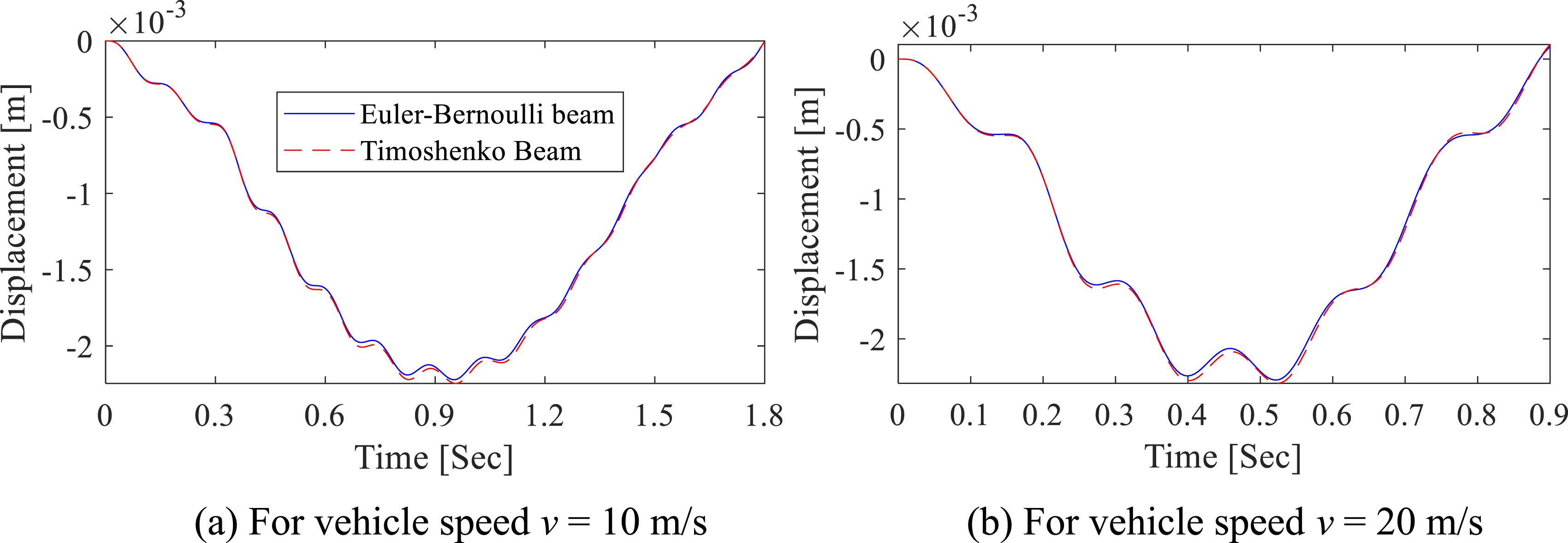

Effect of bridge curvatures on dynamic responses of VBI systems
Exemplary planar curved beam bridges with uniform cross-section similar to the beam models in references (Mohamed et al., 2024; Paganelli, 2014; Ye et al., 2020; Zhong et al., 2021) are adopted to study the effect of bridge curvatures on dynamic responses of VBI systems. Four beam bridge cases with different curvature radius are considered, i.e., R0 = ∞ (Straight beam), R1 = 200 m, R2 = 100 m, R3 = 50 m, respectively. Figure 6 shows mid-span displacements of the bridges with different curvature radius subject to a vehicle with the moving speed of 5 m/s and 10 m/s, respectively. The results show that the maximum mid-span displacement of the bridge decreases with the curvature radius. The dynamic component of the bridge deflection is increased with the vehicle speed. Figure 7 shows the vertical displacement of the vehicle for different speeds and different curvature radius of beams. The vehicle displacement response is reduced with the decrease of bridge curvature radius. The local fluctuations of the vehicle responses are suppressed with a high vehicle speed. Bridge mid-span displacements considering different curvature radius. (a) For vehicle speed v = 5 m/s (b) for vehicle speed v = 10 m/s. Vehicle displacements considering different curvature radius. (a) For vehicle speed v = 5 m/s (b) for vehicle speed v = 10 m/s.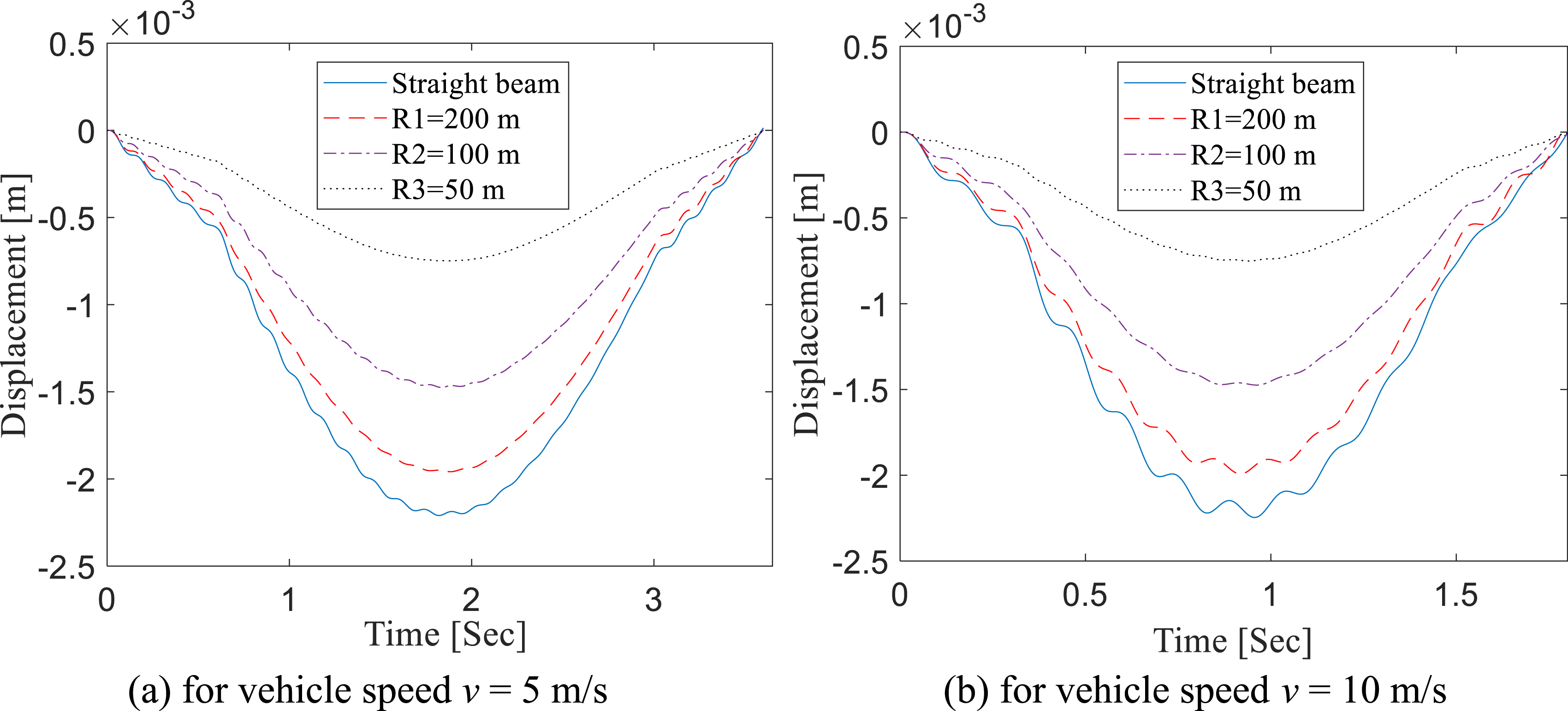
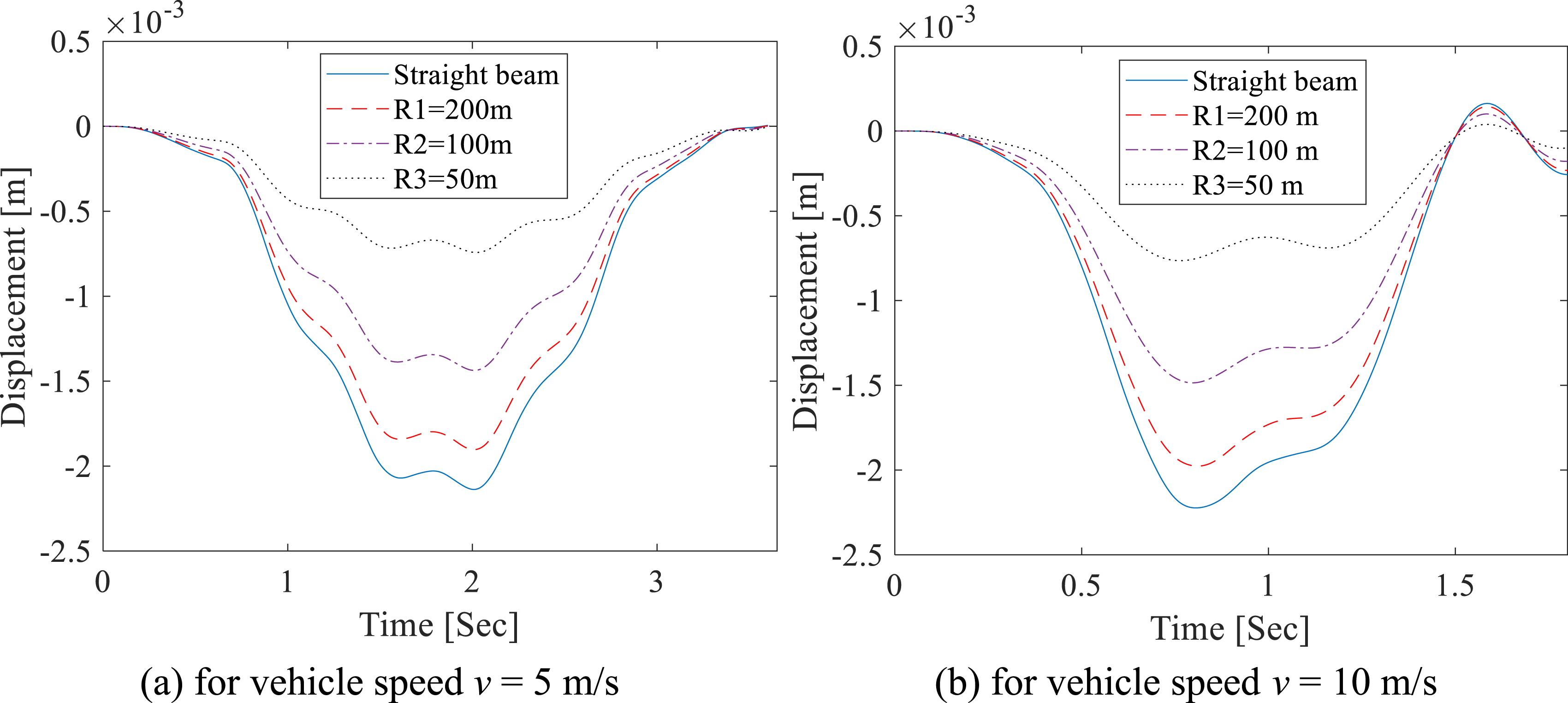
The observed reduction in bridge and vehicle displacement with decreasing curvature radius can be attributed primarily to the geometric stiffening effect introduced by vertical curvature. In a vertically curved beam, axial forces are coupled with bending deformation, resulting in an increased overall stiffness as curvature becomes more pronounced. This axial-bending coupling mechanism effectively enhances resistance to vertical deflection, especially near the mid-span where bending effects dominate. The influence of geometric nonlinearities is not explicitly captured in the current linear formulation, but the results suggest that curvature-induced stiffness plays a key role in moderating displacement responses.
Effect of temperature changes on dynamic responses of VBI systems
The thermal effects considering different temperatures on the vehicle-bridge dynamics are studied when the bridge curvature radius of 100 m is considered. The vehicle speed is set as 5 m/s and four thermal cases are studied. The first is the baseline study with no thermal loads. The second case is thermal expansion only. The temperatures at the top and bottom of the beam are the same as Bridge mid-span displacement considering different thermal effects. (a) Total displacement. (b) Displacement due to thermal effects (c) Displacement due to dynamic vehicle load. Vehicle displacement considering different thermal effects.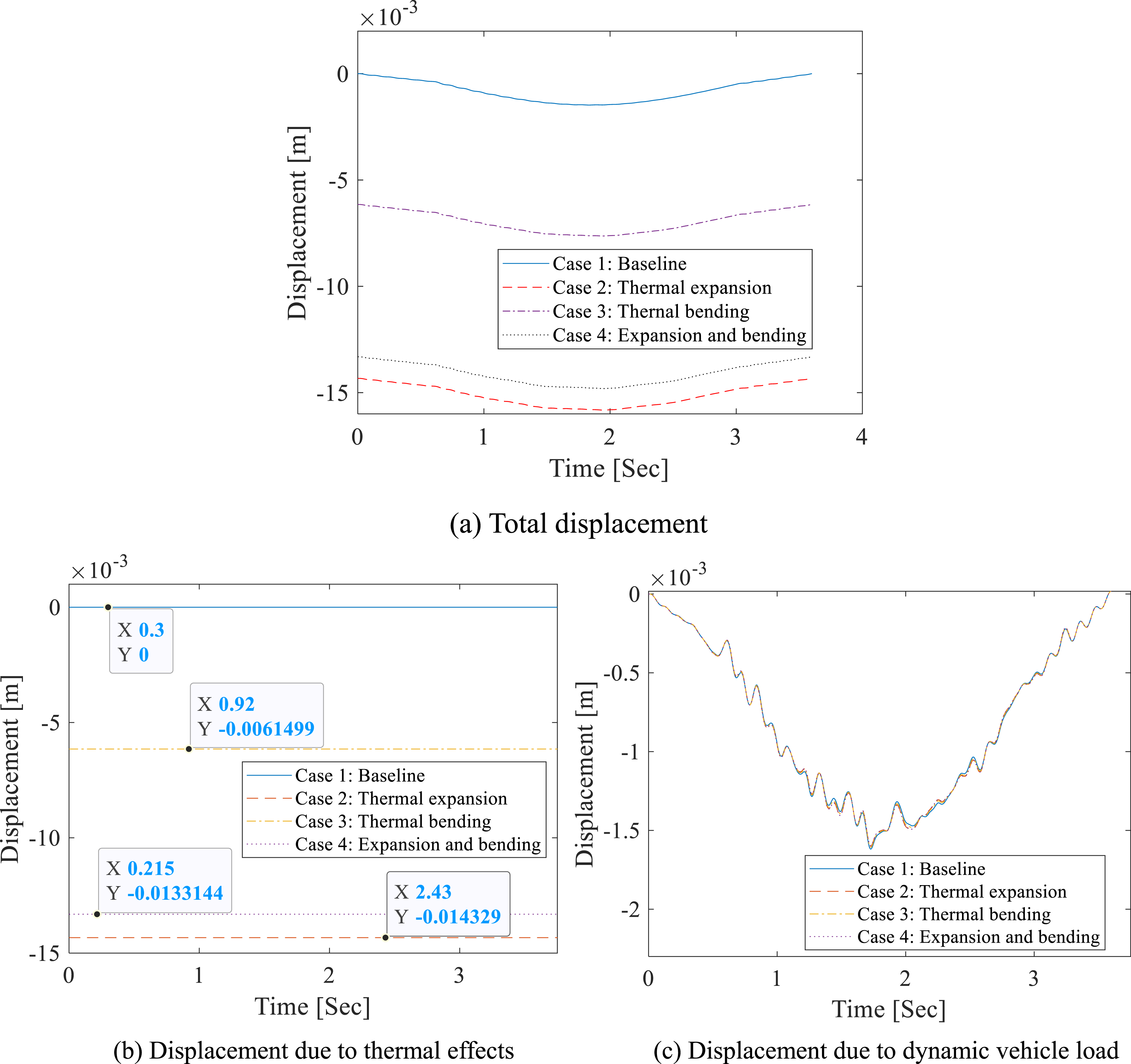
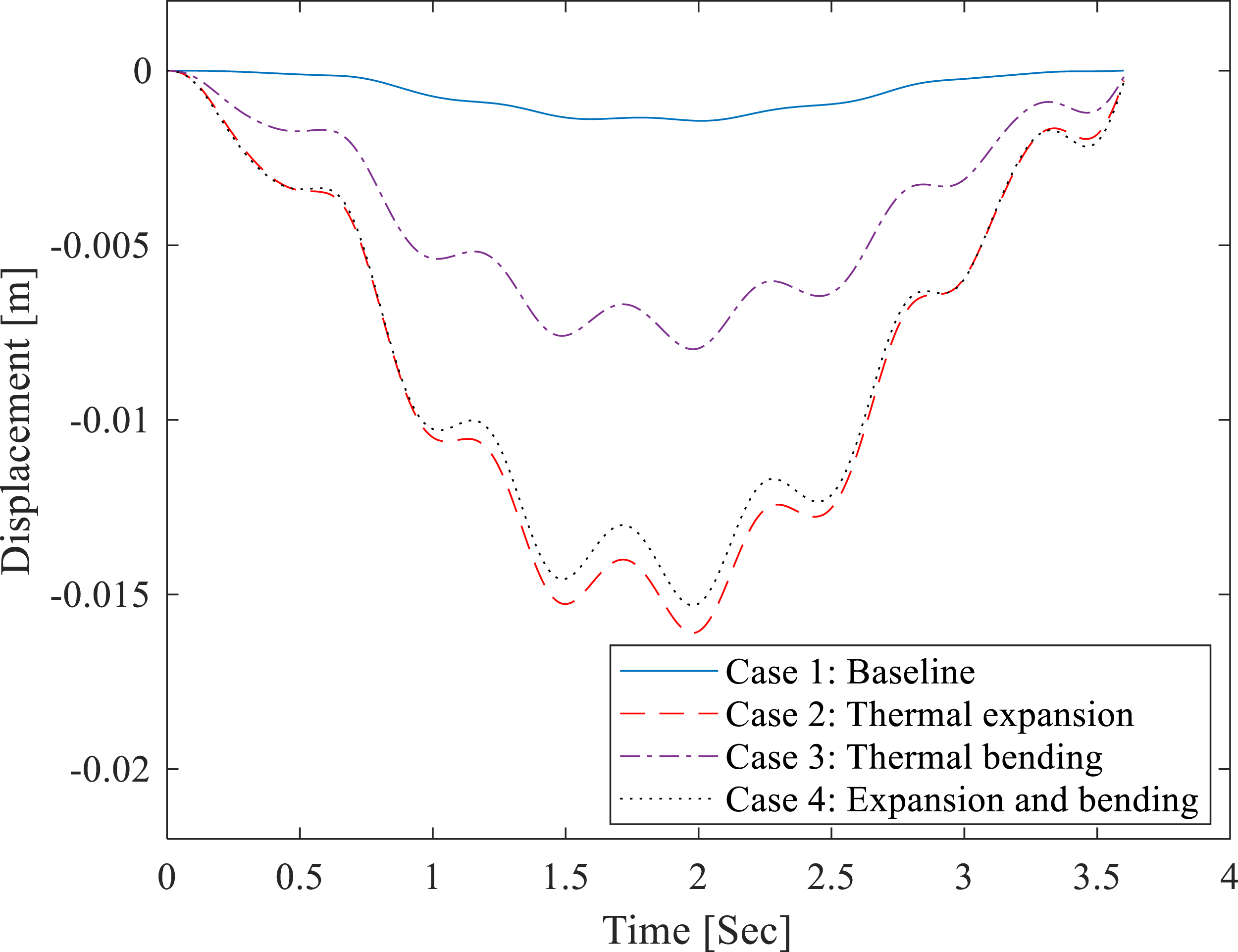
The numerical results reveal that thermal bending induces a pronounced increase in the bridge displacement and vehicle response. This distinction has important implications for bridge design and maintenance. Current bridge design codes typically address thermal effects primarily through expansion allowances, such as bearing movements, without explicitly accounting for differential thermal gradients that can cause bending. However, the results here indicate that thermal bending can lead to higher mid-span deflections and dynamic amplification, potentially affecting serviceability and fatigue performance. These findings highlight the need for bridge codes to consider both thermal expansion and bending effects in evaluating displacement limits and load factors, particularly for structures exposed to significant temperature gradients.
Effect of road surface roughness
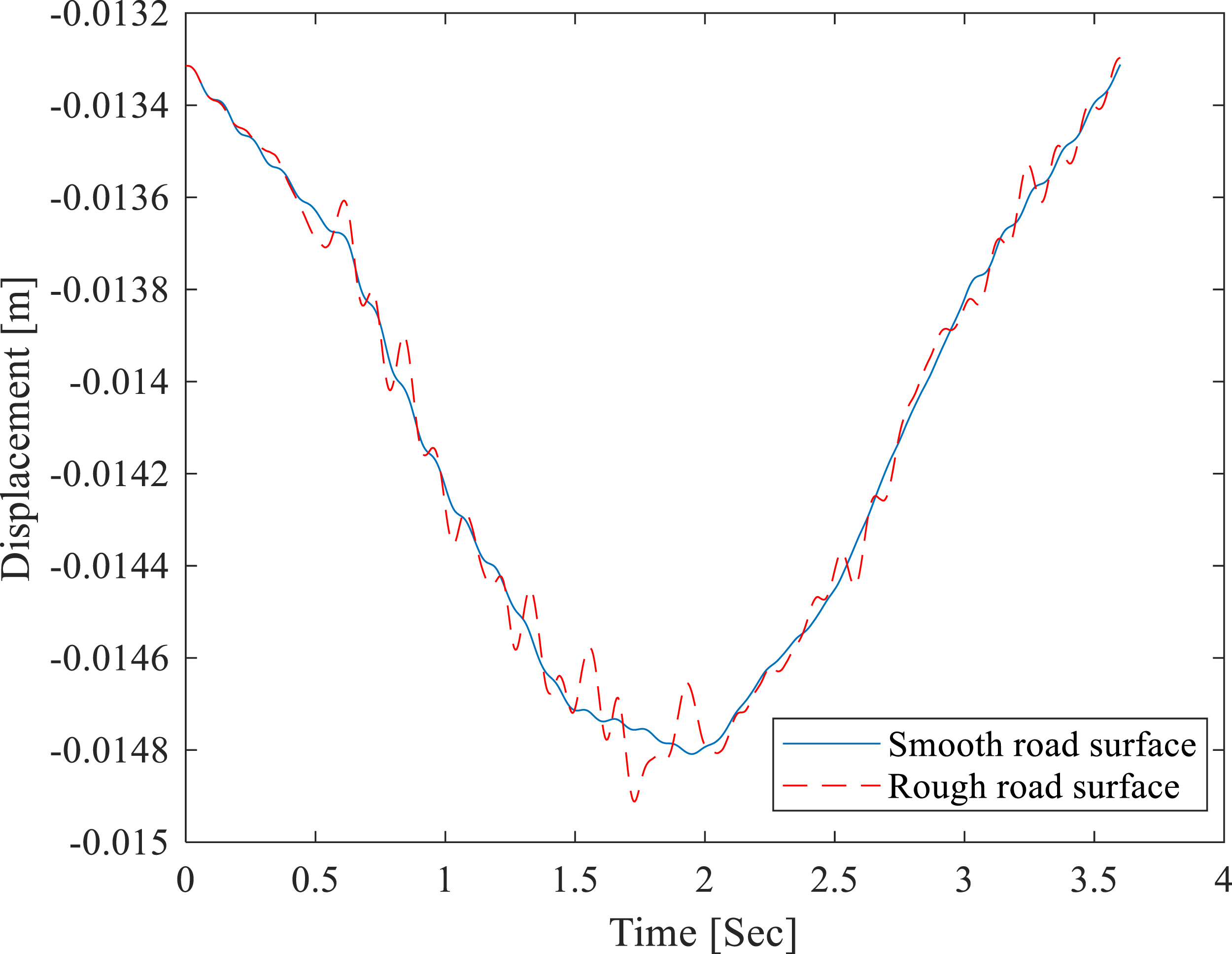
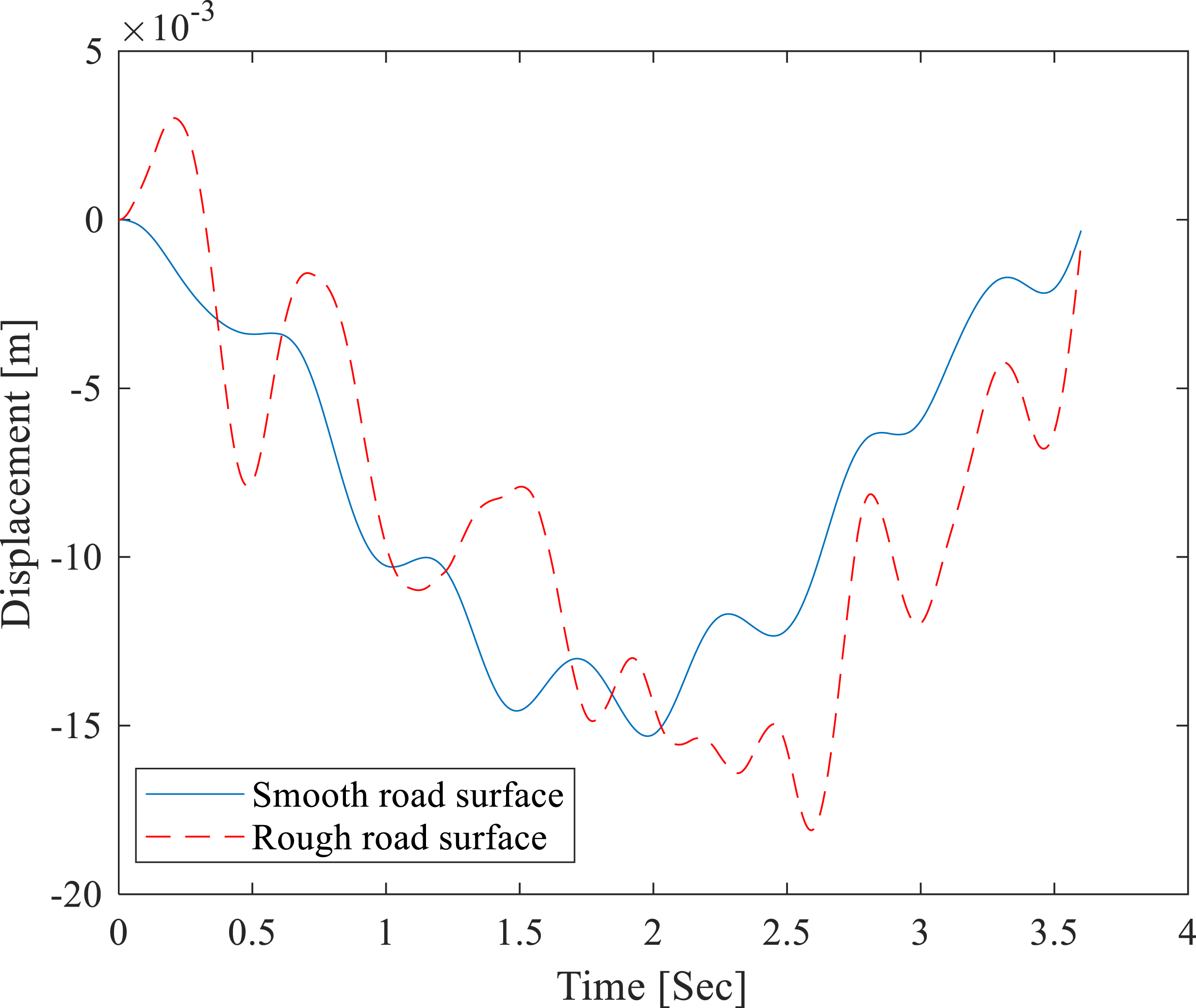
A set of road surface roughness is presented in Figure 10. The road surface roughness is incorporated into the VBI model to study its effects on the system dynamics. Figure 11 presents the bridge mid-span displacement when the curvature radius of 100 m and combined thermal effect are considered. It can be seen that the road surface roughness causes local fluctuations of the displacement response compared that with smooth road surface. Figure 12 shows that there are large fluctuations in the vehicle response for the bridge with road surface roughness. A set of road surface roughness. Bridge mid-span displacement considering road surface roughness. Vehicle displacement considering road surface roughness.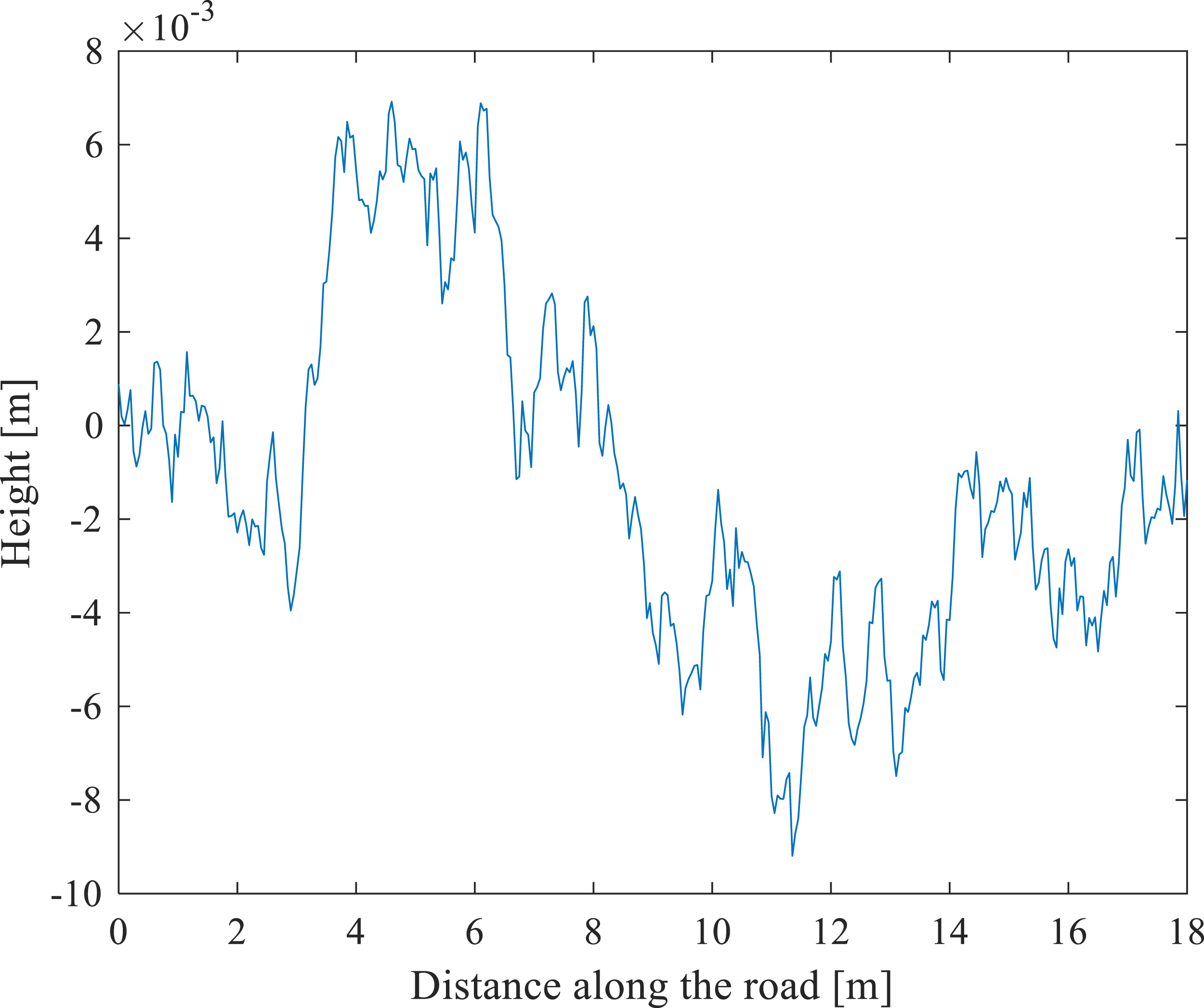
Dynamic load coefficient and dynamic amplification factor
Dynamic impact of moving vehicles on bridges is an important and long-standing concern in the design and evaluation of bridges (Deng et al., 2015; Ding et al., 2009). Effects of the bridge curvature radius, the speed of the moving vehicle and the thermal strain on the dynamic amplification factor (DAF) and dynamic load coefficient (DLC) are analyzed. The DAF is defined in terms of the dynamic response of the bridge, as the ratio of the maximum bridge deflection Thermal effects on DLC with different vehicle speeds. Thermal effects on DAF with different vehicle speeds.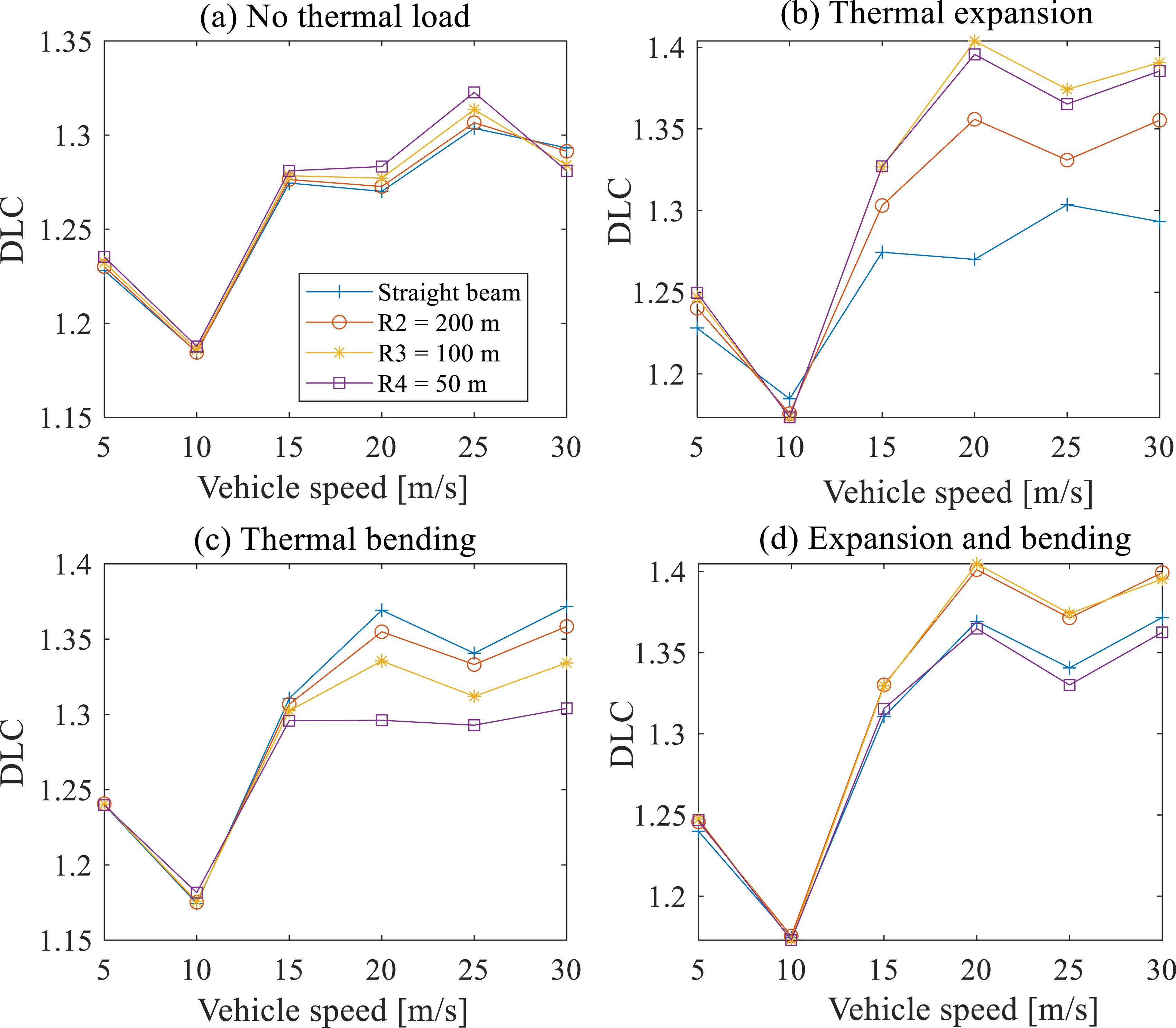
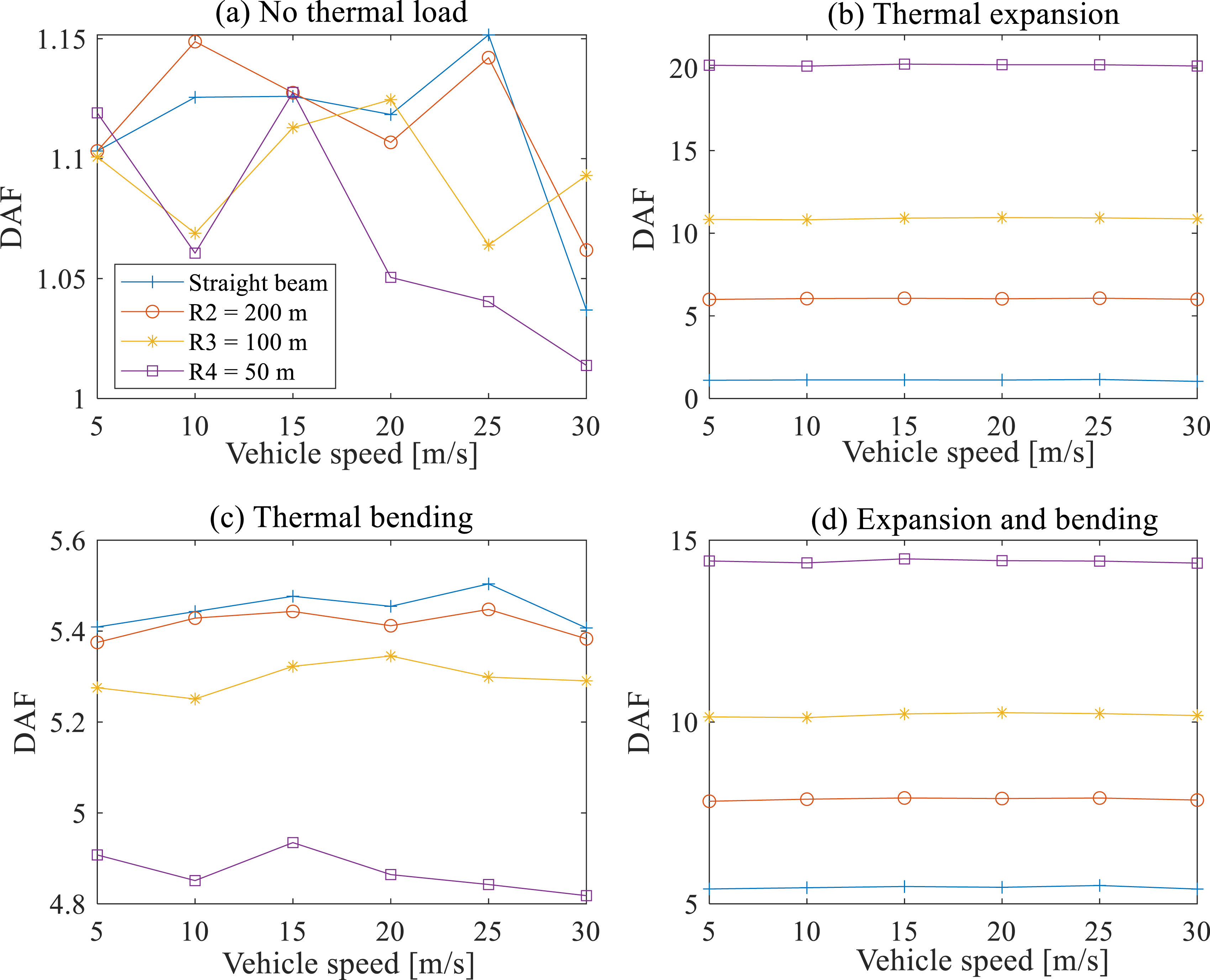
It is important to note that the displacements and DAF values are computed based on a chosen reference temperature. This temperature serves as the baseline for evaluating deviations in thermal loading. As a result, the magnitude and direction of thermal expansion or bending are directly influenced by this reference point. If different reference temperatures were used (e.g., based on daily mean, seasonal average, or construction time conditions), the initial deformation state of the bridge could change, potentially altering the dynamic amplification characteristics. This highlights the need for considering the reference temperature in thermal analysis, especially for serviceability assessments and fatigue-sensitive design.
In the present study, pinned-pinned boundary conditions are employed to represent typical support configurations in simply supported bridges and to allow direct comparison with existing literature. While this assumption is commonly accepted for analytical purposes, actual bridge supports often display partial rotational restraint and flexibility due to elastomeric bearings. To incorporate more realistic boundary conditions, a sensitivity analysis is conducted using elastic supports modeled by transverse and rotational springs at both beam ends. The stiffness values for the vertical and rotational springs are adopted as Thermal effects on DAF considering elastic beam supports.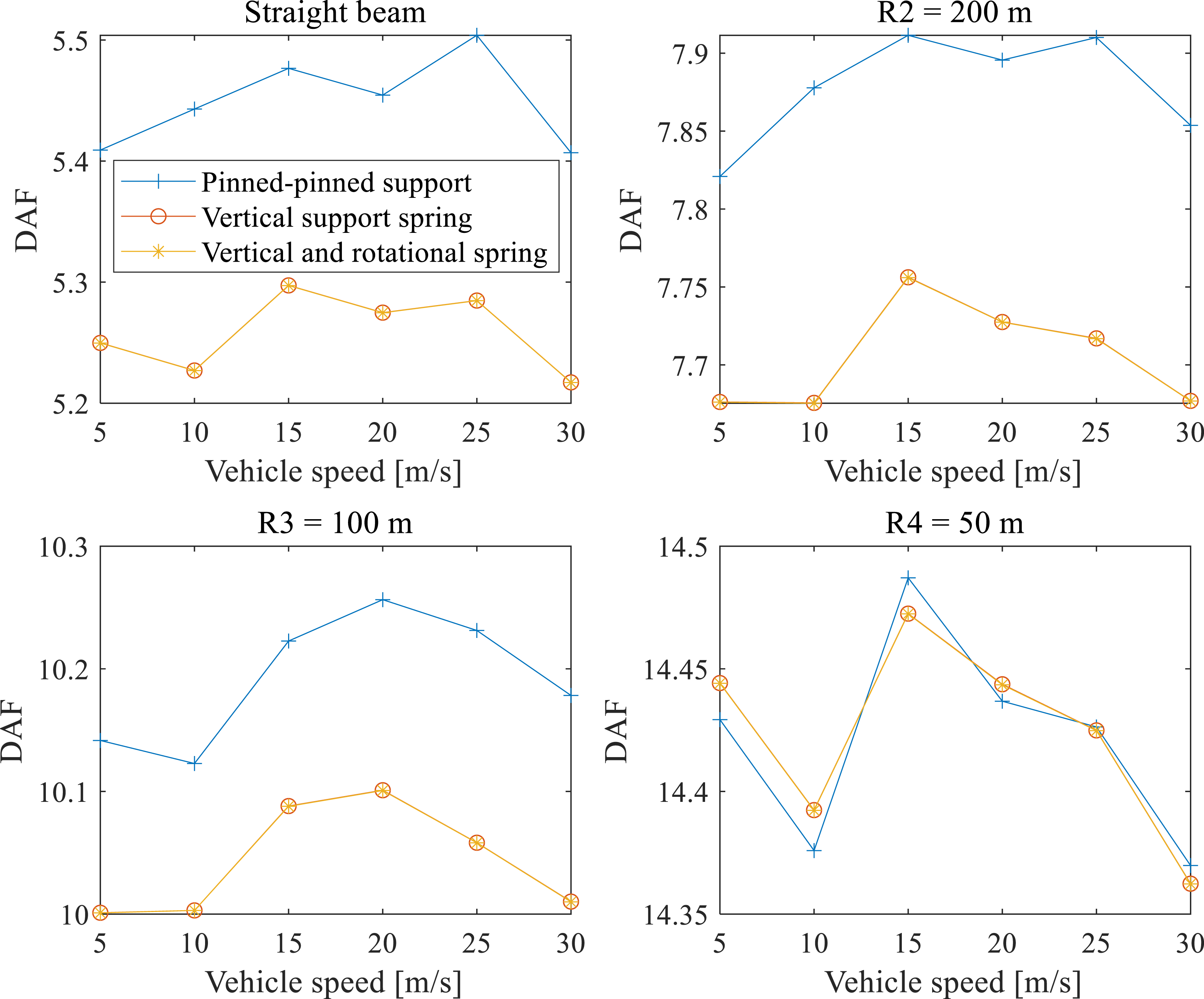
Conclusions
An advanced VBI model for vertically curved beam bridges is developed to include thermal effects through a linear temperature gradient. The bridge is modeled using Timoshenko beam theory to capture shear deformation and rotary inertia, while the vehicle is represented by a two-axle half-car. The uncoupled equations are solved iteratively via the zero-order displacement and velocity overshoot method. The existing results have been used to validate the proposed method. Some conclusions can be obtained as below. (1) Numerical results highlight that the shear deformation has a significant effect on the vibration mode. Compared with the EB theory, the frequency difference is increased with the mode order. (2) The results show that the vehicle and mid-span bridge displacements increases with the bridge curvature radius. This is due to the reduction of the bridge curvature radius induces the increase of the bridge stiffness. The thermal loads induce the bridge initial deflection and the dynamic deflection of the bridge under the moving vehicle does not have the obvious change. (3) Thermal loads and the bridge curvature have significant effects on both DAF and DLC. The DAF value of the curved bridge due to the thermal expansion could be 20 times larger than that of the straight bridge. These findings provide practical insights for bridge design and maintenance under combined thermal and dynamic loading. (4) The linear temperature gradient along the depth of the cross-section is considered in the study. Further study is needed to consider the extreme temperature environment with the nonlinear temperature gradient and the effect of the reference temperature is also needed to be considered.
Footnotes
Acknowledgments
The authors gratefully acknowledge the financial support provided by the National Natural Science Foundation of China (Grant No.:52108288) and China Postdoctoral Science Foundation (Grant No.: 2023M733407).

Funding
The authors disclosed receipt of the following financial support for the research, authorship, and/or publication of this article: This study is supported by National Natural Science Foundation of China (Grant No.:52108288) and China Postdoctoral Science Foundation (Grant No.: 2023M733407).
Declaration of conflicting interests
The authors declared no potential conflicts of interest with respect to the research, authorship, and/or publication of this article.