







Abstract
The degradation of reinforced and post-tensioned concrete structures due to chloride-induced corrosion poses a significant threat to structural safety and durability. This paper offers a critical review of chloride-induced corrosion mechanisms, modeling, and structural analysis of corroded reinforced concrete (RC) structures. The review first examines chloride diffusion modeling, which governs corrosion initiation once chloride concentrations at the reinforcement exceed threshold values, and compares methods for estimating diffusion coefficients and chloride thresholds. Existing models for corrosion-induced damage, including corrosion rate, concrete cracking, reinforcement cross-section loss, and rebar–concrete bond deterioration, are then reviewed with emphasis on their assumptions and limitations. The paper further synthesizes studies on service-life prediction and structural performance—such as seismic response under corrosion effects—typically evaluated using rebar-section-loss and crack-propagation models. Special modeling considerations for post-tensioned bridge structures are also discussed. Overall, this review highlights that while corrosion modeling plays a central role in the assessment and management of RC structures, many existing approaches lack adequate validation, standardization, and robustness. Key research gaps are identified to guide future developments in corrosion modeling for RC structures.
Keywords
Introduction
The construction industry relies heavily on reinforced concrete (RC) for durability, strength, and cost-effectiveness. However, these structures are susceptible to environmental degradation, particularly chloride-induced corrosion. Chloride ions penetrate concrete, causing corrosion of steel reinforcement in marine environments, de-icing salts, and contaminated water. This damages the structure, reducing its capacity and lifespan.
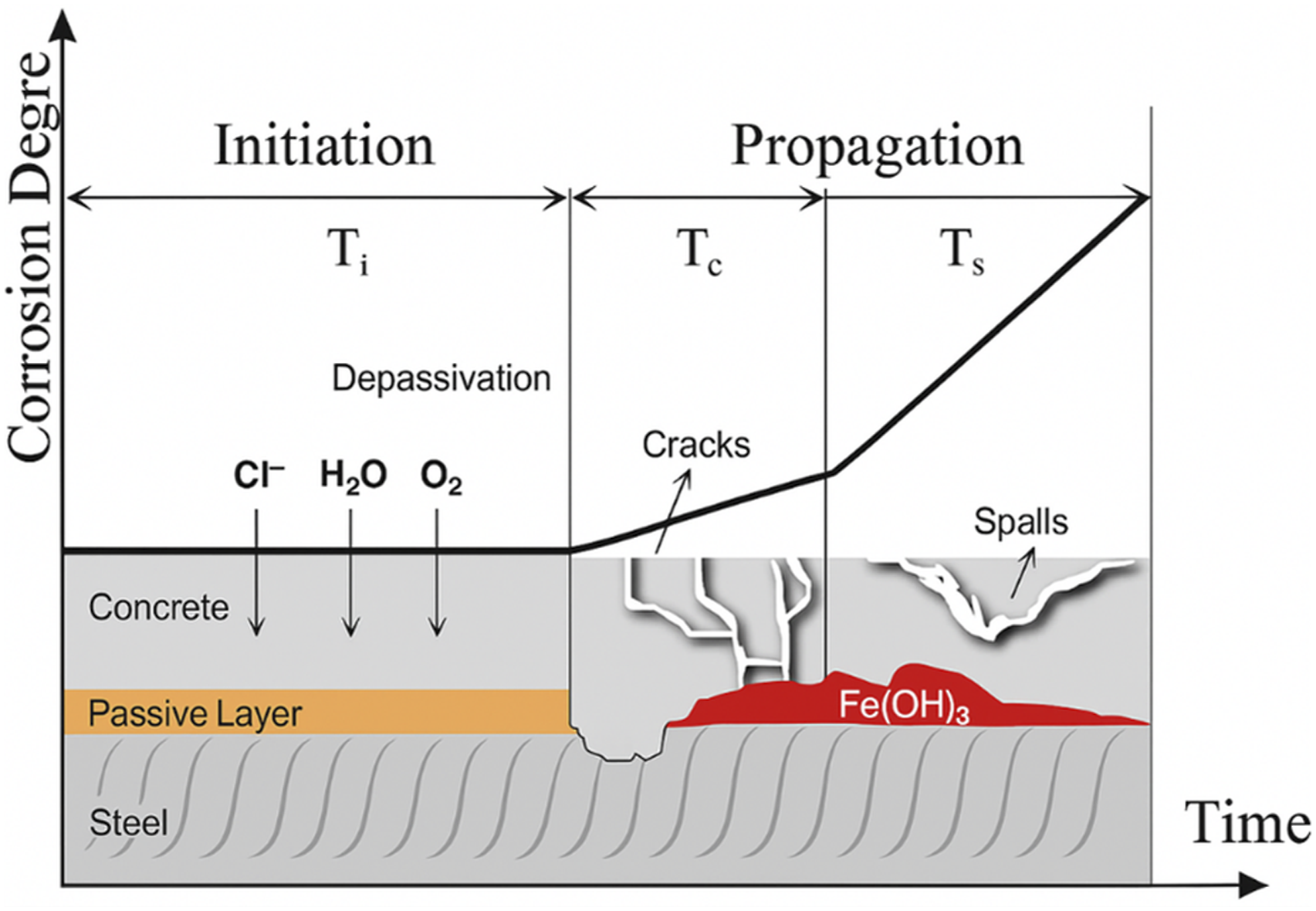
The protective passive layer on steel remains stable when concrete is highly alkaline, preventing corrosion. However, chloride ions can break down this passive layer when their concentration exceeds a critical threshold, leading to corrosion reactions involving iron, oxygen, and pore water as the electrolyte. Concrete service life can be estimated by assessing the time to chloride ingress and the time to concrete cover cracking. Time-dependent corrosion is typically described in three stages (Castaneda and Okeil, 2020), as shown in Figure 1: • Stage I - Initiation period (Ti): The steel remains passive during this period, but concrete cover undergoes changes. The concrete absorbs chloride ions through its pores when chloride-contaminated water contacts the concrete surface. Depassivation occurs when aggressive ions surpass their critical threshold value which marks the start of the following stage. • Stage II - Propagation period (Tc): Corrosion products formed during this stage create volumes two to three times larger than the original steel. Cracks develop in the concrete cover as the expanding corrosion products exceed the concrete’s tensile strength. The rate of deterioration increases as cracking and spalling increase environmental exposure. • Stage III - Active corrosion state (T
s
): In this stage, the reinforcement bar becomes exposed to water, oxygen, and chlorides, resulting in continued section loss and unacceptable safety levels. Three stages of time-dependent corrosion modified from (Castaneda and Okeil, 2020).
Corrosion degrades the structural performance of RC structures by reducing the cross-sectional area of steel rebar, deteriorating bond, and inducing internal stresses, thereby causing concrete cracking. Reinforced concrete’s vital role in infrastructure necessitates urgent predictive corrosion modeling. These models help engineers and decision-makers forecast corrosion, assess structural integrity, and plan maintenance, lifecycle costs, and rehabilitation.
Past reviews of chloride-induced corrosion in RC structures often focus on one or a limited number of aspects of the problem, such as chloride diffusion, corrosion initiation threshold, or specific corrosion-induced deterioration processes. In particular, corrosion modeling, structural performance, and service-life prediction have not been reviewed holistically, and post-tensioned concrete systems receive limited attention. As a result, existing reviews provide valuable but fragmented insights. This paper, however, provides a comprehensive and integrated review of chloride-induced corrosion modeling in reinforced and post-tensioned concrete structures, spanning chloride ingress and diffusion modeling, chloride threshold determination, corrosion propagation modeling, service-life prediction, and structural performance assessment. Within each aspect, representative analytical, empirical, and/or numerical models are systematically compiled and compared, and their underlying assumptions, advantages, limitations, and applicability are critically evaluated. By offering a comprehensive, unified context that systematically traces chloride-induced deterioration from corrosion initiation through propagation to structural- and system-level performance, this review advances understanding of the impact of corrosion deterioration modeling and identifies critical research gaps to guide future studies.
Chloride-induced corrosion mechanism
Chloride diffusion modeling
Chloride concentration in concrete varies over time and location and determines the initiation, stages, and degree of corrosion in RC structures. By modeling chloride diffusion, one can incorporate the evolution over time of environmental parameters into corrosion modeling, thereby quantifying the climate change impact on the life-cycle design, assessment, maintenance, and management of RC structures exposed to corrosion (Nava et al., 2023; D’Iorio et al., 2025).
The one-dimensional solution of Fick’s second law, a diffusion equation, is commonly used to model chloride penetration below:

However, there are three drawbacks to Fick’s second law. First, chloride-ion movement through concrete initially does not follow a linear diffusion pattern, which is assumed in Fick’s second law. Second, the classical solution considers only the diffusion coefficient (D cl ), ignoring other concrete properties, such as the water-to-cement ratio and supplementary cementitious materials. Third, Fick’s second law uses the total chloride concentration, but only free chloride ions in the pore solution cause steel corrosion. Note that chloride ions in concrete are either bound or free. Bound chlorides are chemically or physically attached within cement hydration products, trapped in gel pores or capillary voids, while free chlorides are mobile ions that can reach reinforcement and cause corrosion. Thus, modeling chloride penetration should be based on free chloride concentration.
Instead of using only Fick’s second law to determine total chloride, combining Fick’s first and second laws is able to estimate the concentration of free chloride ions (Kong et al., 2002). Fick’s first law can describe the movement of chloride ions through a unit area of saturated concrete per unit time:




Multiple studies assessed corrosion mitigation methods by slowing down chloride penetration. Krauss et al. (1996) investigated epoxy-coated reinforcing bars in four structures subjected to deicing chemicals for the Minnesota Department of Transportation (MnDOT), and findings showed low w/c (water-to-cement) ratio, dense concrete overlay, or epoxy-coated reinforcements reduce chloride penetration and corrosion amount, but cracks cause localized high chloride concentrations that lead to local corrosion. Moreover, Smith and Virmani (2000) tested various epoxy-coated rebars, and emphasized that good design, proper concrete cover, corrosion inhibitors, and low-permeability concrete alone can’t prevent corrosion because concrete tends to crack but recommended using them in all reinforcement for concrete decks.
Hagen (1982, 1979) conducted research for MnDOT on protecting and repairing bridge decks, evaluated concrete overlays, sealers, membranes, and coated rebars against chloride penetration, using visual inspections, delamination testing, chloride levels, cover depth, and electrical potential measurements; results showed that membrane systems and thick overlays are effective, but membranes are less durable than overlays. Furthermore, some studies (Zhang et al., 2021a) have shown that mechanical stresses modify concrete pore structures, leading to delayed chloride penetration in compressive areas and increased penetration in tensile areas—effects that traditional Fickian diffusion models cannot predict.
Another important limitation of traditional diffusion modeling is the assumption of one-dimensional (1D) chloride transport. Biondini et al. (2004) adopted a cellular automata approach to simulate diffusion processes described by Fick’s laws in 1D, 2D, and 3D. Titi and Biondini (2016) compared analytical 1D solutions with 2D numerical diffusion models at the cross-sectional level under one-sided and multi-sided exposure conditions and showed that multidirectional chloride ingress can substantially alter predicted steel damage and structural capacity.
Concrete diffusion coefficient
The diffusion coefficient of concrete is a fundamental property that determines how quickly ions pass through the material, enabling the evaluation of concrete durability against environmental effects. Concrete diffusion coefficients can be determined by standard testing methods or other calculation approaches.
The ASTM C1556 (2004) standard in the United States requires at least 2.5 months to complete the steady-state diffusion test. The Rapid Chloride Permeability (RCP) test compared with ASTM C11202 (2009) can be completed within a few days after the standard curing period (28-day). The ASTM C1202 standard does not measure the diffusion coefficient directly. The test evaluates the total electrical charge transfer (in Coulombs) to determine concrete chloride ion permeability levels using predefined Coulomb thresholds. Stanish et al. (1997) explained that the RCP test has two drawbacks: (1) it detects all ions in the pore solution, not just chloride; (2) the high voltage raises the temperature, speeding up ion migration.
As an alternative to the RCP test, the Nordtest (1999) method is commonly adopted in Northern Europe. Similar to the RCP test, NT Build 492 is also an electrical method, that takes place between 24 and 96 hours following the completion of the standard 28-day curing period. NT Build 492 differs from other methods in that it measures the diffusion coefficient directly rather than providing a chloride permeability index. Its results are unaffected by environmental factors, making it a reliable method for predicting the service life of reinforced concrete structures (Vancura and Engineers, 2018a). The ASTM C1202 test overestimates transport in accelerated assays, but long tests (ASTM C1556 or NT Build 443) are time-consuming and may miss penetration in low-permeability concretes (Szweda et al., 2023).
Using Fick’s second law is another approach for calculating the concrete diffusion coefficient by calibrating the chloride content profile obtained from coring samples. Vancura and Engineers (2018a) implemented an iterative approach to solve Fick’s second law by adjusting C s and D cl to minimize the difference between the measured chloride profiles in coring samples and those predicted by Fick’s second law (error term), ultimately determining the optimal value for the concrete diffusion coefficient. Moreover, the parameter C s has a correlation with the ambient factor of a resistivity model (Medeiros-Junior and Bem, 2020).
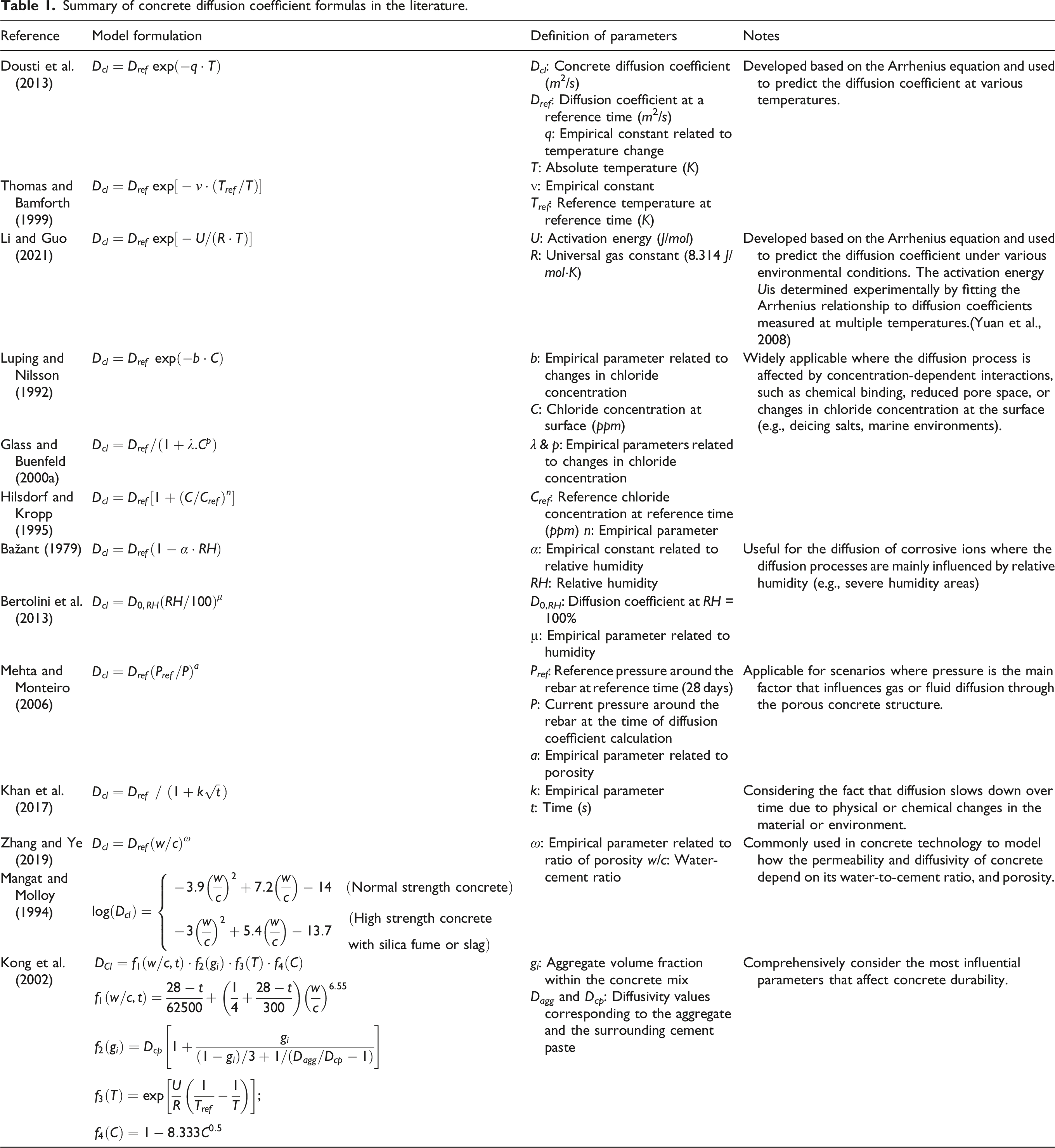
Prediction models have also been developed as alternatives to calculate the concrete diffusion coefficient. For example, Stanish and Thomas (2003) showed that there is a reduction in the concrete diffusion coefficient over time, which can be captured by using a decay coefficient (m), as shown below:

D
cl
(t) = diffusion coefficient at time, t, and D
ref
= diffusion coefficient at a reference time t
ref
. Additionally, Alexander and Thomas (2015) developed a formula to estimate m considering the impact of slag and fly ash in the concrete mixture, as shown below:

Summary of concrete diffusion coefficient formulas in the literature.
Chloride limitation threshold
Summary of existing methods for determining chloride threshold.
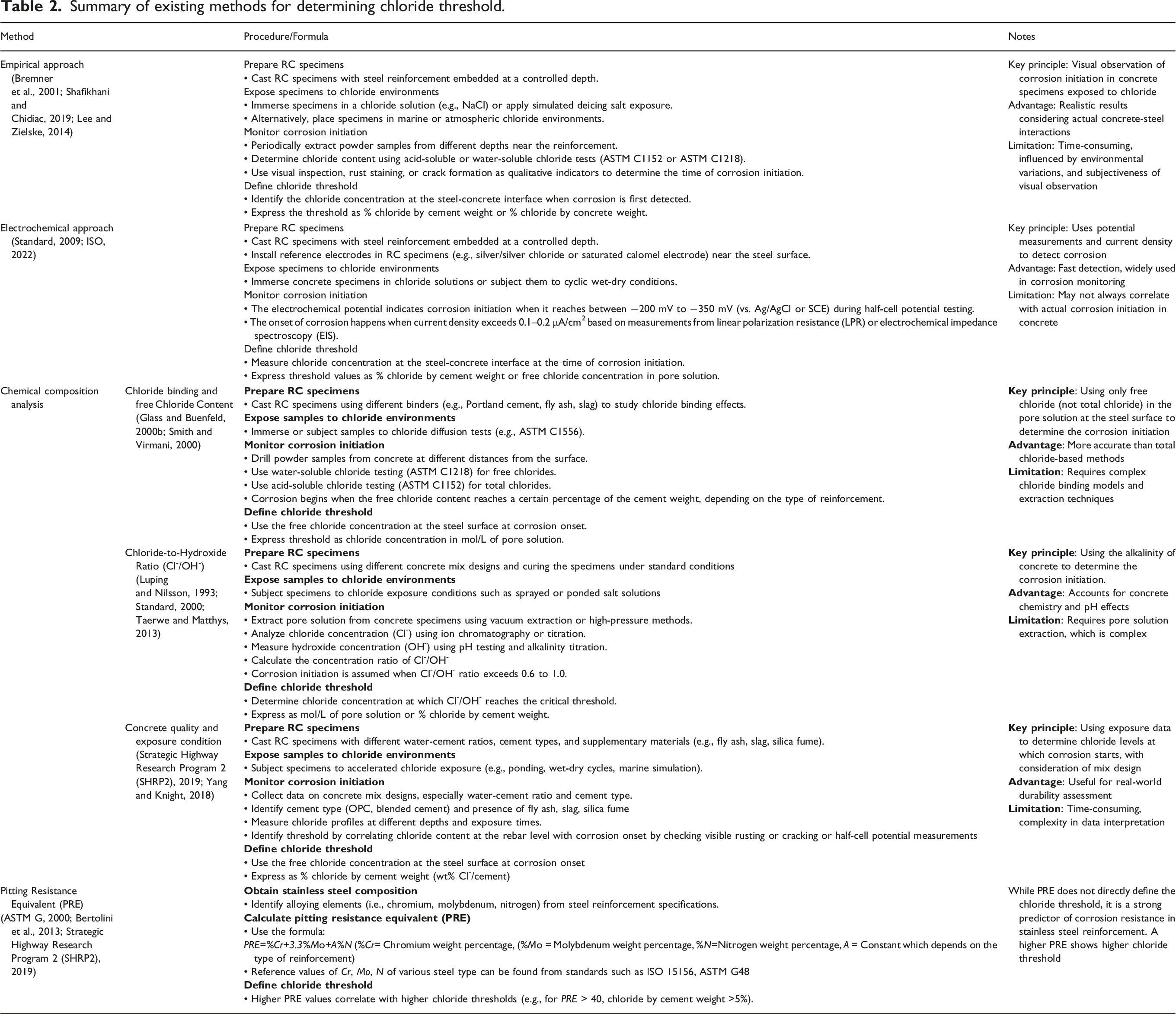
The methods summarized in Table 2 differ primarily in how corrosion initiation and the chloride threshold are defined. Empirical approaches rely on visual or physical indicators of corrosion onset and provide realistic results under real-world exposure conditions, but they are time-consuming and subject to observational error. Electrochemical methods offer faster detection and quantitative monitoring through potential and current measurements; however, their correlation with true corrosion initiation in concrete can vary with moisture, oxygen availability, and concrete resistivity. Chemical-composition–based methods, including free chloride concentration and Cl - /OH - ratio approaches, explicitly account for concrete chemistry and pore-solution alkalinity and are therefore more mechanistically linked to depassivation, although they require complex extraction and testing procedures. Approaches that incorporate concrete quality, exposure conditions, and rebar type improve applicability to real structures by reflecting material variability, while PRE-based methods extend threshold evaluation to stainless steel reinforcement by linking corrosion resistance to alloy composition rather than relying solely on chloride concentration. Overall, no single standardized chloride threshold applies to all concrete structures, since corrosion initiation is defined differently across empirical, electrochemical, chemical, and material-based methods. As a result, threshold values may vary, and each approach involves assumptions and limitations. Method selection should therefore be guided by the intended application and exposure conditions.
Chloride limits for new construction proposed by ACI committee 222 (Shakouri et al., 2017).
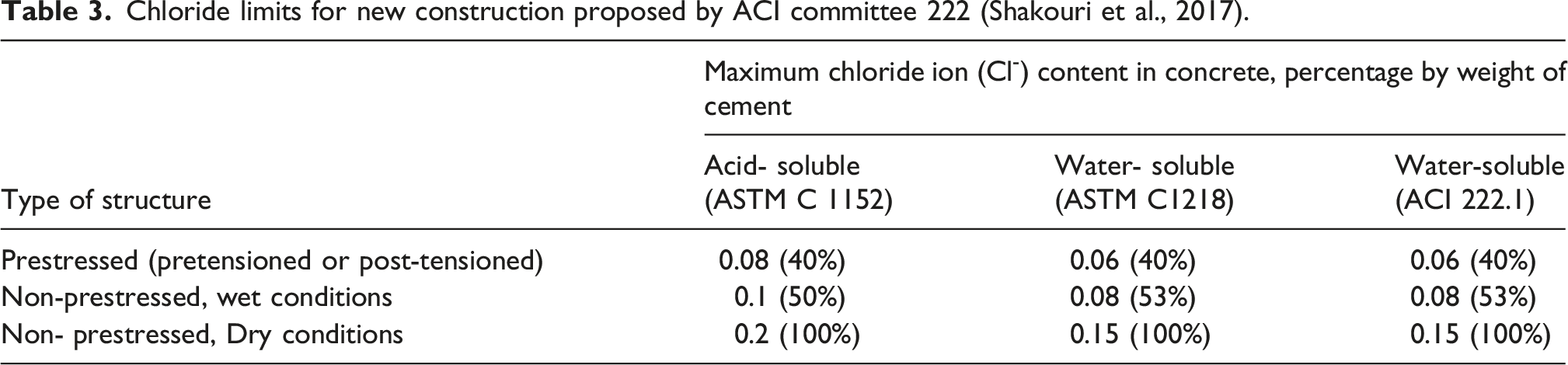
Chloride limits for new construction in other codes (Kamaitis, 2002).
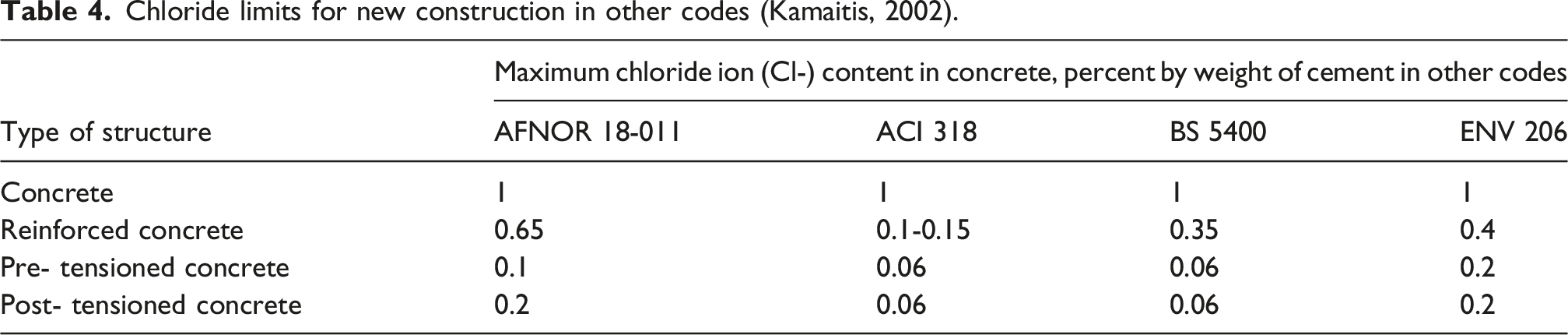
The Strategic Highway Research Program 2 SHRP2 (2019) includes Appendix C, as well as research by Kamaitis (2002). Chalhoub et al. (2020), Broomfield (2023), and Vancura and Engineers (2018b) reported chloride threshold values expressed as percentages of cement weight for various reinforcement materials (including carbon steel, epoxy-coated carbon steel, galvanized carbon steel, low-carbon chromium steel, stainless-steel-clad carbon steel, austenitic stainless steel, and duplex austenitic–ferritic stainless steel). Figure 2(a)–(c) present the histograms (frequency used in various specifications and research studies) of chloride threshold values for black rebar, epoxy-coated rebar, and stainless-steel rebar, respectively. These figures highlight the variability in reported threshold values and the differences arising from material type, testing methods, and environmental assumptions across various studies. In addition, the corresponding minimum, maximum, average, and standard deviation values are summarized in Table 5. Histogram of average chloride threshold values by rebar type across references: (a) black rebar; (b) epoxy-coated rebar; and (c) stainless steel rebar. Extracted chloride threshold values for different rebar types (% weight of cement).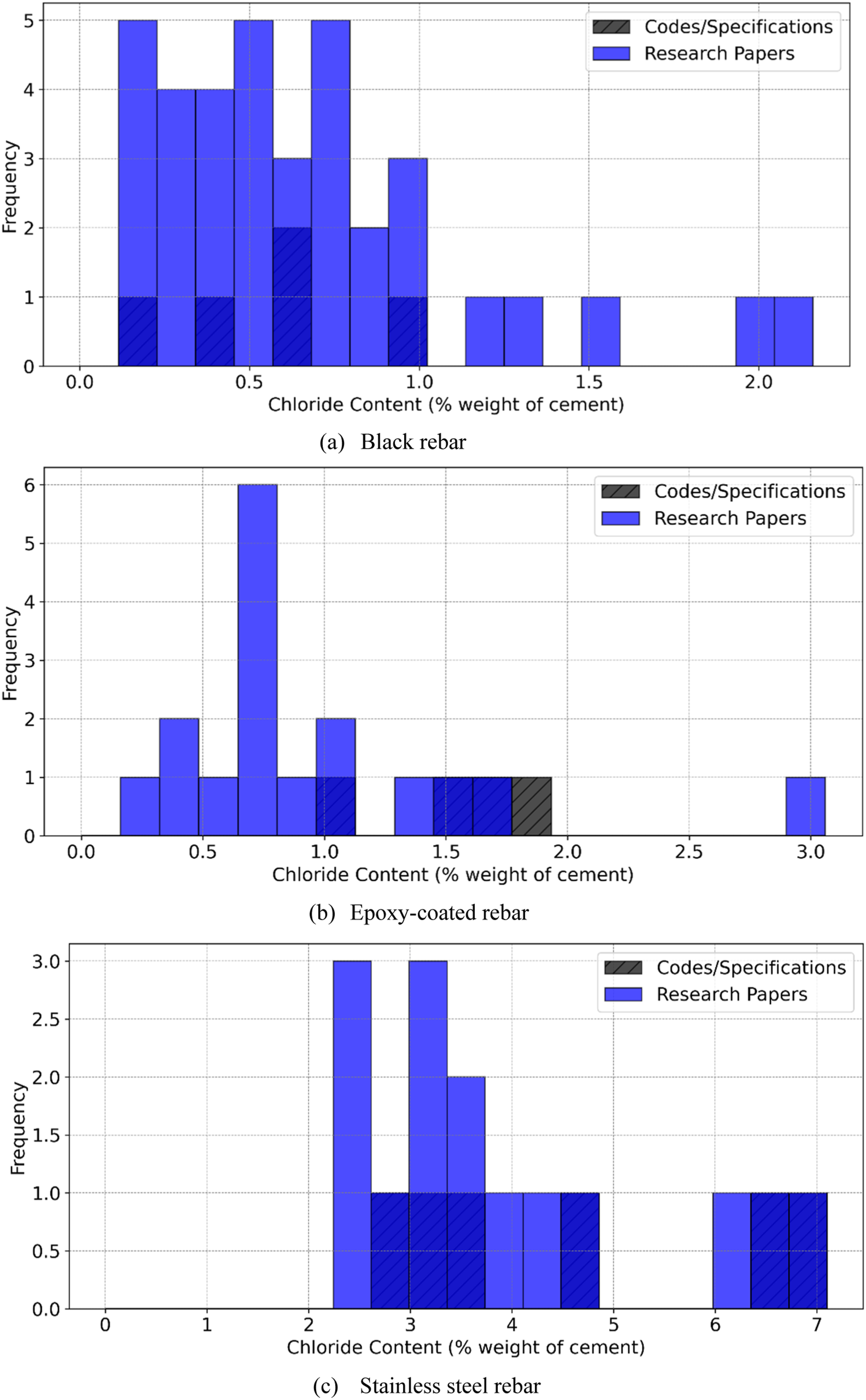

Figure 2(a) shows that chloride threshold values for black rebar span a relatively wide range, from approximately 0.15% to 2.2% by weight of cement. However, the highest frequency of reported values is concentrated within a narrow interval of 0.5% to 1.0%, which is adopted by many codes and practical design applications. As shown in Table 5 and Figure 2(b), epoxy-coated carbon steel rebar exhibits a higher average value but a wider distribution of chloride threshold values than black rebar. The presence of the epoxy coating theoretically delays the initiation of corrosion by limiting chloride ingress to the steel surface, thereby allowing greater chloride tolerance before depassivation. Figure 2(c) and Table 5 further indicate that stainless steel reinforcement has substantially higher chloride threshold values, with reported averages exceeding 4% by weight of cement and a larger standard deviation. This behavior reflects the superior corrosion resistance of stainless steel in chloride-contaminated environments, whereas the greater scatter highlights the influence of alloy type, surface condition, and environmental conditions.
It should also be noted that some studies have proposed chloride threshold values without explicitly distinguishing between rebar types. For example, the National Cooperative Highway Research Program (Ford et al., 2011) evaluated protective strategies for concrete bridge decks using a corrosion threshold of 1.5 lb/yd3. Similarly, Hagen (1979, 1982) suggested threshold ranges of 1.1–1.6 lb/yd3 (approximately 280–410 ppm) for Minnesota bridges incorporating various protection systems. Oh et al. (2004), combining experimental testing and finite element analysis, reported total chloride threshold values ranging from 0.45% to 0.97% by weight of cement, with free chloride thresholds of approximately 0.1%, depending on cement type and mixture proportions.
Research gaps
Diffusion modeling and testing
Despite decades of research on ionic diffusion in concrete, several critical gaps remain in diffusion modeling. Existing models fail to account for multiple exposure directions, which is typical for most structures, because they consider chloride transport in only one direction from a single exposure face, which is assumed in one-dimensional Fick’s diffusion formulations reviewed in this study. This can lead to unsafe service-life predictions for structures with multiple surfaces under chloride attack. In addition, concrete diffusivity and microcracks within concrete are time-dependent under aging and loading conditions, as described earlier. However, many service-life prediction models summarized in the reviewed literature still assume a constant diffusion coefficient and a homogeneous, uncracked material, thereby oversimplifying reality.
The current modeling of chloride binding and multi-ion interactions (such as with sulfates or carbonation) relies on empirical factors or constant coefficients that do not capture the complex, time-dependent processes in concrete, as reflected in the simplified binding formulations in the reviewed studies. Additionally, Liu et al. (2024) highlighted the importance of coupling mechanical loading with carbonation-driven corrosion models, noting that stress states can modify pore structure and microcrack development, thereby altering the effective diffusion coefficient and carbonation depth. Thus, future research should develop multi-physics models that integrate transport, chemical reactions, moisture variations, and mechanical loading to more accurately simulate real-world chloride ingress and durability performance. As mentioned earlier, different standardized tests (steady-state bulk diffusion vs rapid migration) yield variable diffusion coefficients, with magnitude differences even for identical concrete samples, as reported across the reviewed experimental studies, underscoring the need for standardized testing protocols to improve consistency.
Traditional Fickian finite-element models, as commonly implemented in the diffusion-based numerical simulations reviewed herein, struggle with concrete heterogeneity and evolving properties because of their spatial uniformity and fixed-diffusion assumptions. They require extensive calibration for 2D or 3D applications. Researchers explore multi-scale and stochastic methods like lattice or cellular automata models that incorporate time-dependent diffusion and damage effects (Ma and Lin, 2022). These approaches show potential for realistic diffusion–damage interactions but are underused due to limited validation, high complexity, high computational demands, and a lack of robust software tools. Based on the reviewed numerical and computational diffusion studies, for computational tools for simulating diffusion processes, which have been extensively explored in recent years, future research should focus on experimental validation of these methods, improvements in computational efficiency through model refinement and algorithm development, and the development of standardized, user-friendly simulation tools for practical adoption.
Chloride threshold
The current models and codes determine corrosion initiation based on rebar type and water-to-cement ratio, while disregarding environmental factors and other time-varying variables (e.g., steel surface conditions and concrete quality), as evidenced by the wide ranges of threshold values reported in the reviewed experimental and field studies. This may be why the reported threshold values show large variation, leading to significant differences (of several decades) in the predicted corrosion initiation times when these values are directly incorporated into service-life prediction models. In addition, standardized testing protocols are lacking, leading to inconsistent laboratory results across the studies summarized in this review.
Future research should focus on reducing uncertainty by developing integrated models that combine chloride-transport simulations with material-property evolution and time-dependent corrosion-threshold formulations informed by the reviewed experimental evidence. A standardized testing protocol that considers comprehensive influencing factors should be developed to generate consistent, reliable data for model development, and a probabilistic approach should also be adopted to account for uncertainty in threshold determination and application. On the other hand, one could develop a new approach to predict the time to corrosion initiation without relying on the chloride threshold. The definition of corrosion initiation could shift from chloride concentration at the rebar surface to a corrosion rate threshold. The approach defines active corrosion initiation based on measurable corrosion kinetics, using a critical corrosion-rate threshold rather than chloride-content thresholds, consistent with corrosion-monitoring and electrochemical approaches discussed in the literature review.
Corrosion modeling
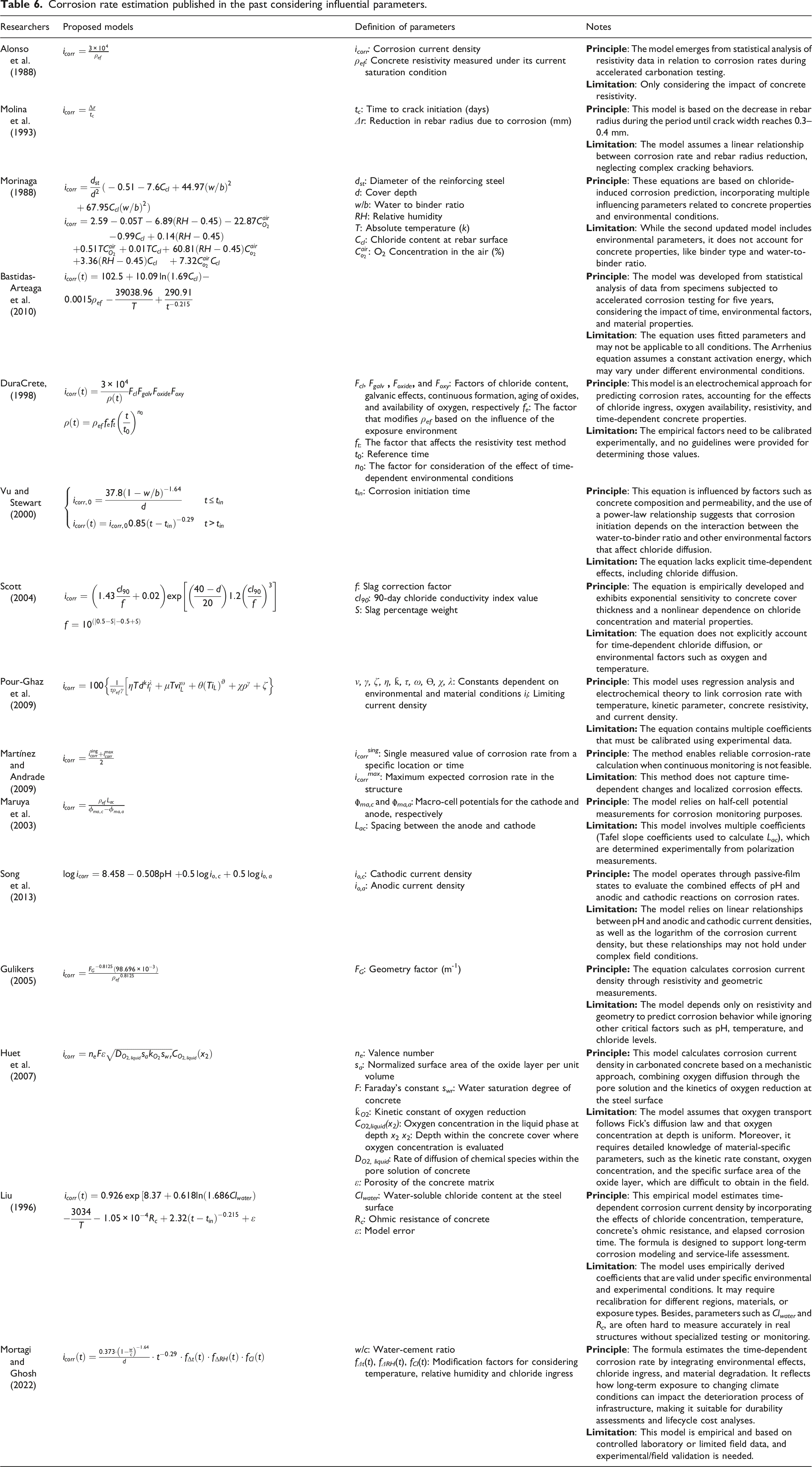
Corrosion rate & corrosion current density
Corrosion rate, r, describes how fast metal deteriorates, typically measured as metal oxidized per unit surface over time (e.g., µm/yr.), or as corrosion current density (i
corr
) that refers to electrical flow during corrosion (in amperes/cm2 or coulombs/cm2·sec) (Shafei and Shi, 2022). Corrosion current density, i
corr
, and corrosion rate, r, are related through the equation below (Shafei and Shi, 2022):
Corrosion rate estimation published in the past considering influential parameters.
Section loss
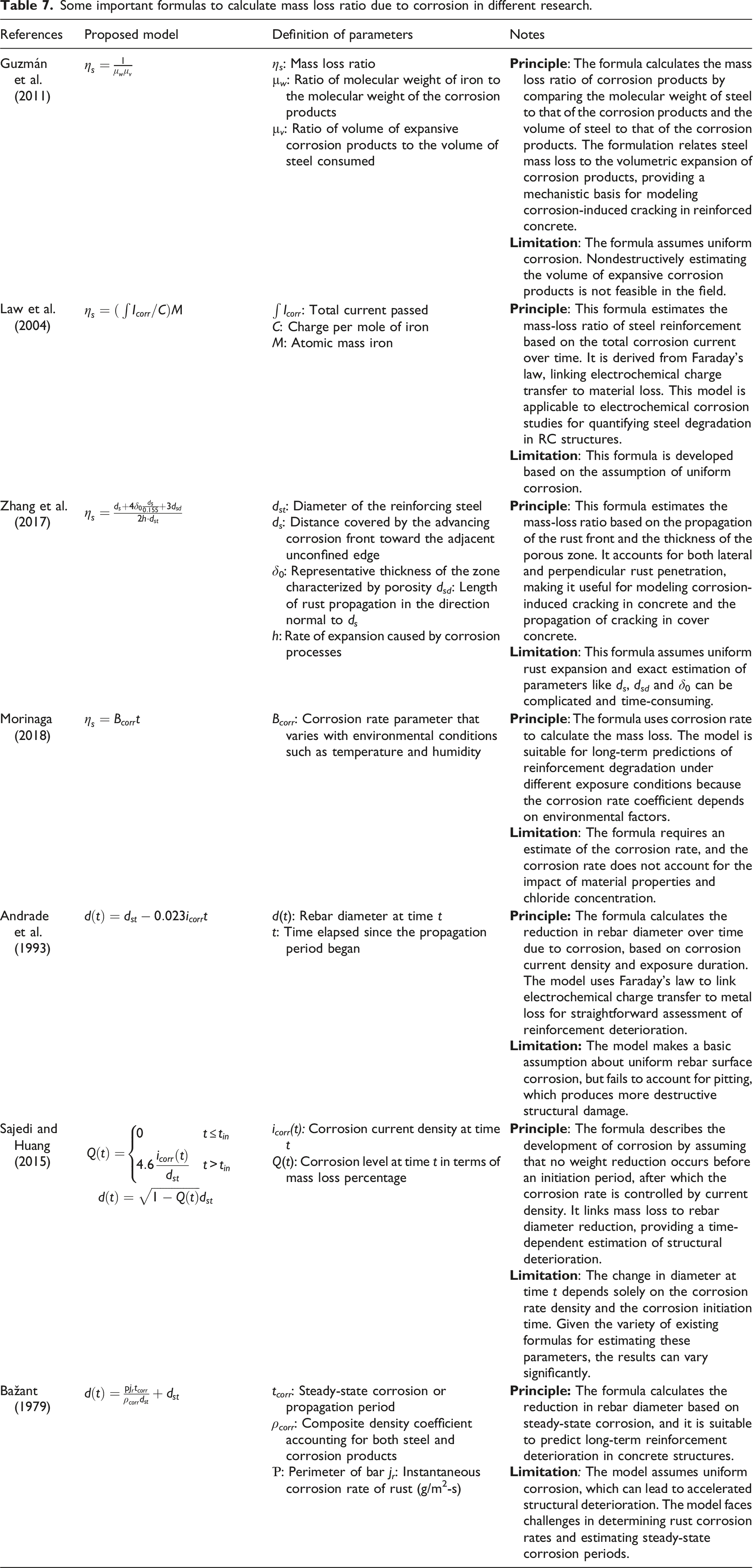
Corrosion in RC structures results in a reduction of tensile rebar diameter and yield strength over time, which impacts the structural performance (Sajedi et al., 2017). One can calculate steel loss (η
s
) using iron’s atomic weight (M
Fe
), reaction valence (n), corrosion current density (i
corr
), and Faraday’s constant (F) via the equation below. (Guzmán et al., 2011; Guzman et al., 2012; Shafei and Shi, 2022):
The mass loss ratio in lab experiments compares the initial rebar weight (m0) to that after corrosion and cleaning (m
s
) (Alipour et al., 2013):
Some important formulas to calculate mass loss ratio due to corrosion in different research.
Corrosion cracking
Pressure needed for concrete cover cracking
Corrosion produces rust that exerts radial pressure on rebar, leading to concrete cover cracking when the pressure reaches its maximum. This pressure arises from rust-induced expansion within the rebar. Calculating this pressure is vital for modeling corrosion cracks, which affect chloride-ion diffusion and indicate corrosion progression, thereby compromising the integrity of RC structures. Additionally, steel corrosion correlates with concrete cover cracking (Zhao and Jin, 2006). Recent experimental work has also shown that sustained mechanical loading significantly influences corrosion-induced cracking behavior. Recent accelerated corrosion tests by Ma et al. (2025) on RC beams under varying loading conditions revealed that moderate sustained compression can delay cracking due to matrix densification, while high biaxial stress accelerates crack growth through lateral expansion. They also found that stirrups, by restricting expansion, increased internal strain. Based on these findings, a biaxial stress-dependent expansion model was proposed to capture the interaction between mechanical loading and corrosion-induced cracking behavior.
Some important formulas to calculate pressure-induced cover cracking due to corrosion.
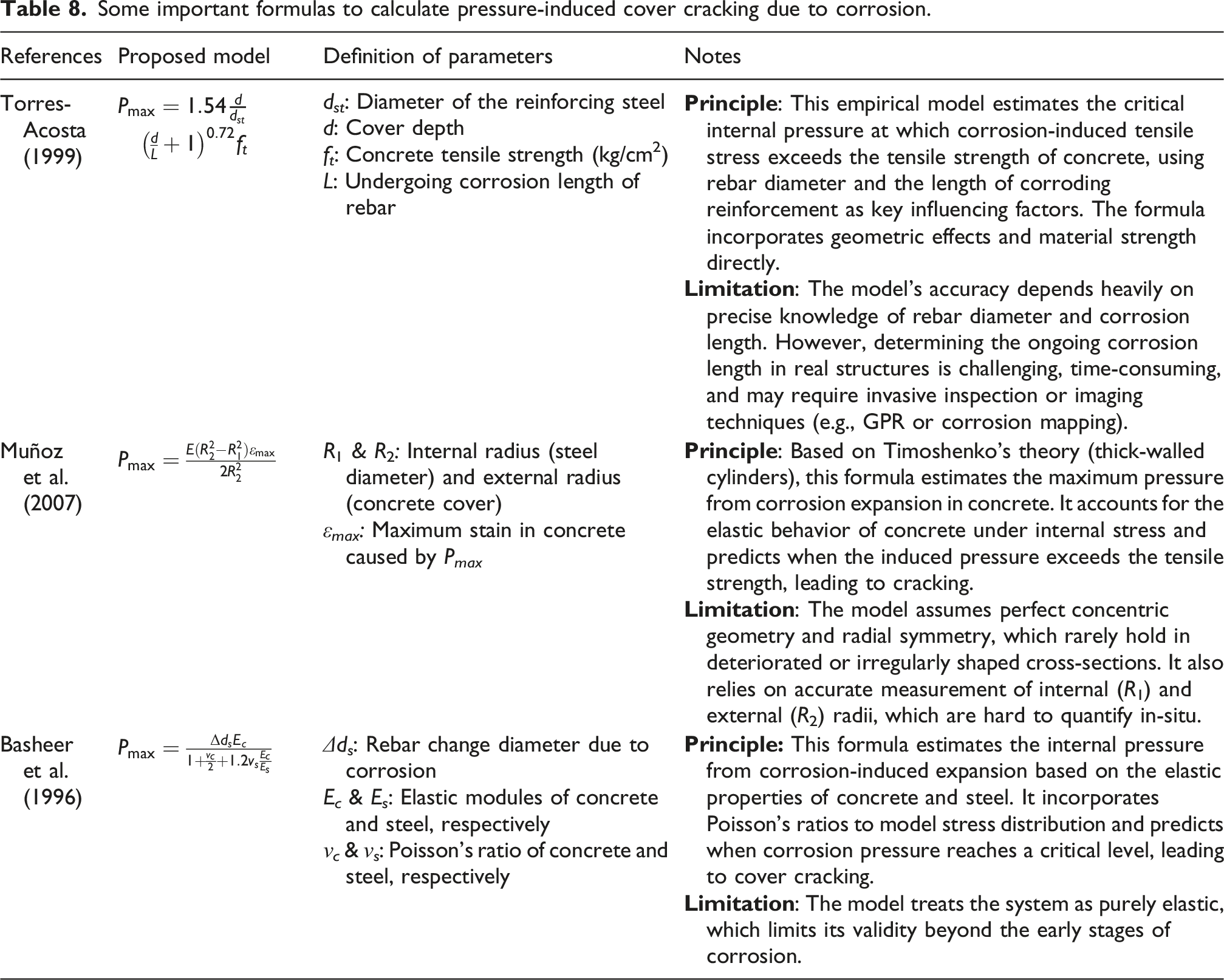
Munoz et al. used a laboratory process to evaluate and validate the existing equations shown in Table 8 (Muñoz et al., 2007). Figure 3 describes the mechanical process of corrosion product expansion based on Timoshenko’s theory (thick-walled cylinders): steel is treated as a metal cylinder with initial radius ri
0
, immersed in a semi-infinite concrete medium with cover depth d, and undergoing corrosion over a length L. As corrosion progresses, the original radius r0 decreases by x, while the effective radial expansion Δr
ref
due to corrosion-induced stresses in the concrete causes cracking and spalling. Munoz et al. used strain gauges to measure the maximum strain at the time of crack initiation on the sample surface. Results showed P
max
aligns better with values from equations by Torres-Acosta (1999). The process of internal pressure occurring needed for cracking the cover (Muñoz et al., 2007).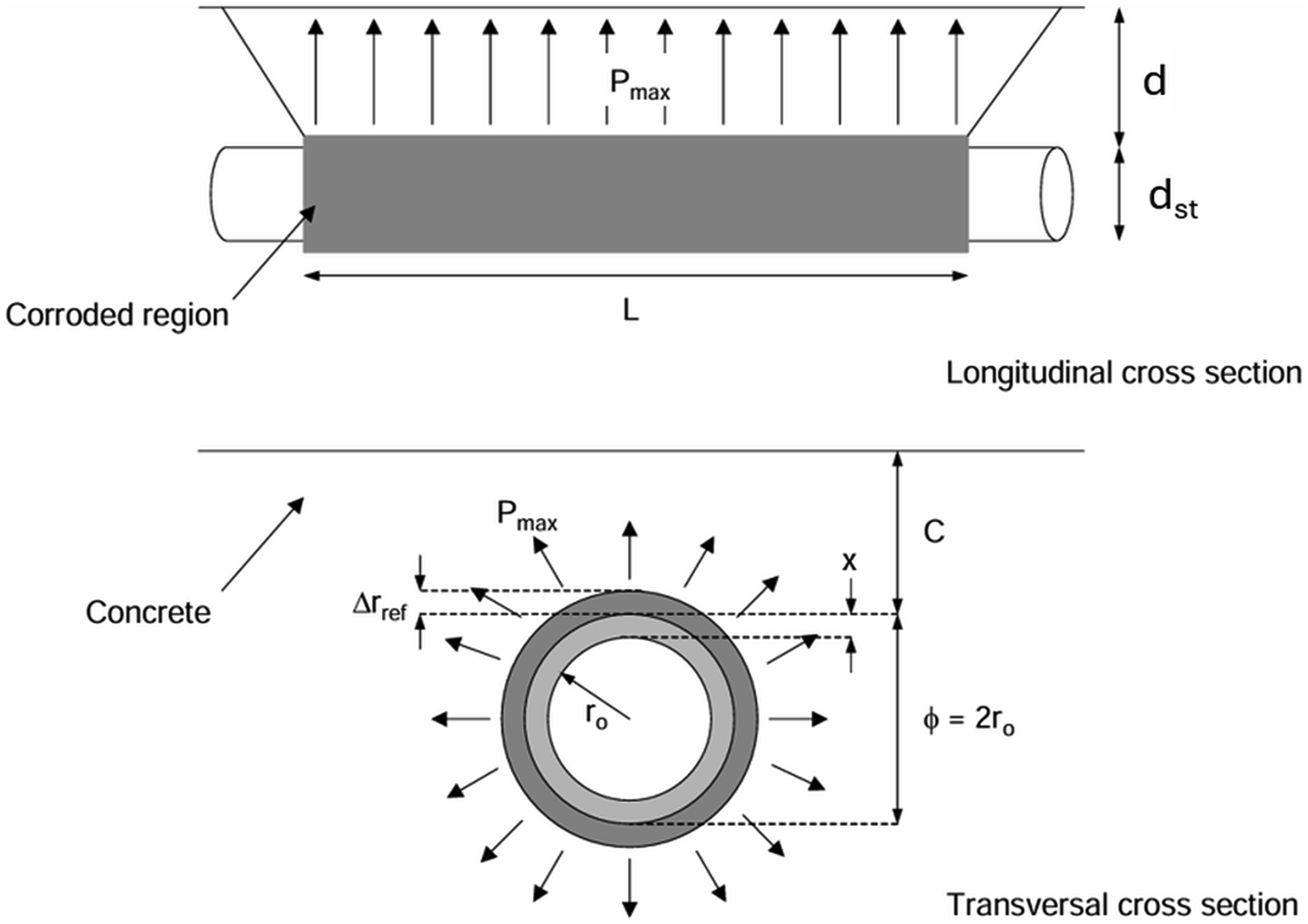
Crack width
Some important formulas to calculate concrete crack width due to pressure generated by corrosion.
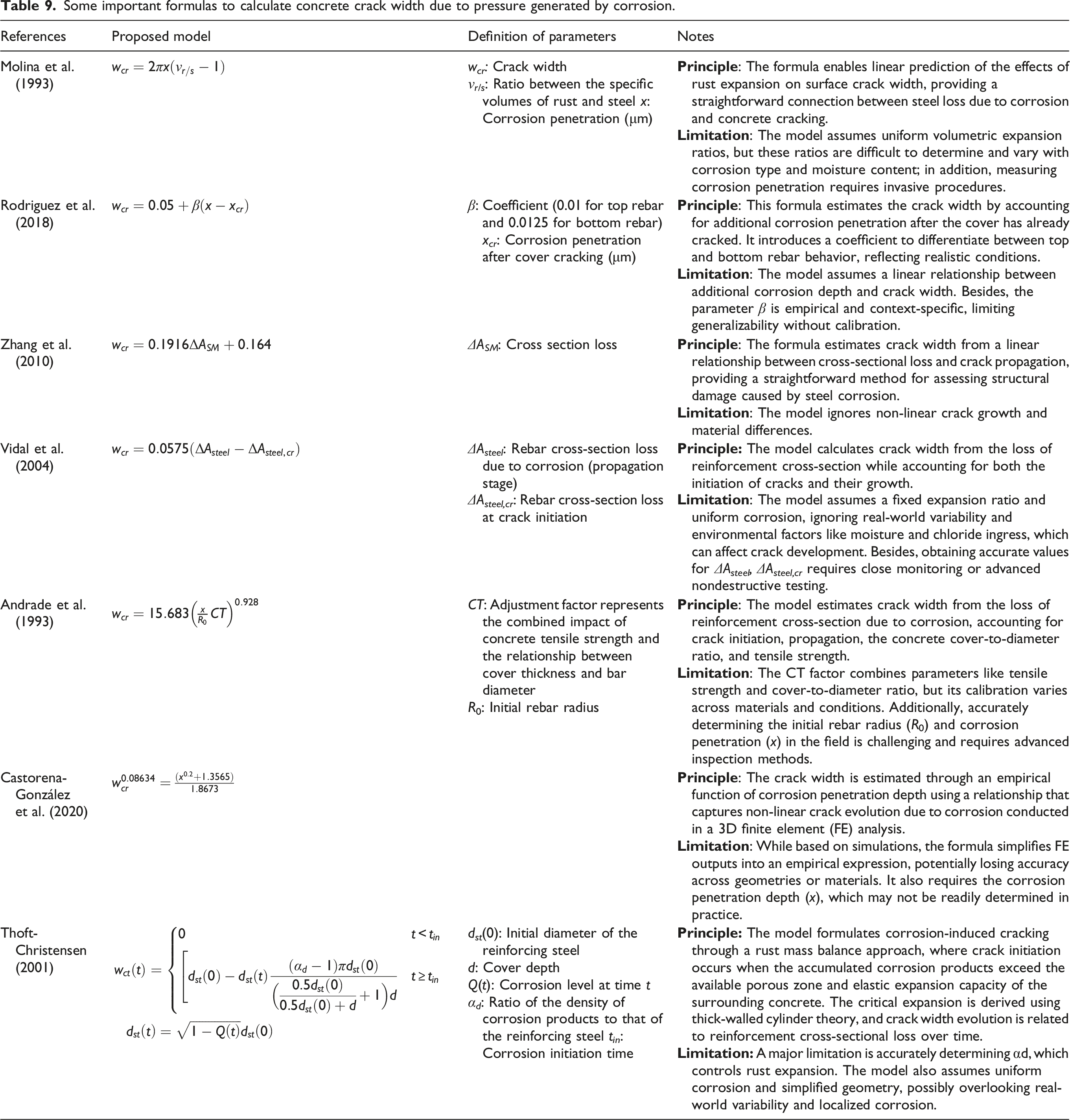
As shown in Table 9, early empirical relationships (e.g., Molina et al., 1993; Zhang et al., 2010) directly relate corrosion penetration or to reinforcement cross-section loss to crack width, offering simple, computationally efficient tools for durability assessment; however, these models typically assume uniform corrosion and linear crack growth. Extensions of these formulations (e.g., Rodriguez et al., 2018; Vidal et al., 2004) distinguish between crack initiation and propagation stages and account for additional corrosion after cover cracking, thereby improving their applicability to real exposure conditions but still relying on empirically calibrated parameters that limit generalization. Models incorporating geometric and material factors such as cover thickness, bar diameter, and concrete tensile strength (e.g., Andrade et al., 1993) provide a stronger physical interpretation of crack development, though accurate estimation of input parameters remains challenging in field applications. More advanced approaches, including finite-element-based and time-dependent formulations (e.g., Castorena-González et al., 2020; Thoft-Christensen, 2001), capture nonlinear crack evolution and the coupling between corrosion progression and mechanical response, but their complexity and data requirements restrict routine implementation. Overall, simpler empirical models are suitable for screening-level durability evaluation, whereas mechanics-based and time-dependent formulations are more appropriate for detailed service-life analysis when sufficient material and corrosion information is available.
Concrete strength
Reduction of concrete strength due to corrosion is one of the critical reasons for degradation in concrete structure performance (Shayanfar et al., 2016). Higher concrete compressive strength is typically associated with lower porosity and reduced chloride diffusivity; thus, theoretically, it could improve durability of RC structures exposed to chloride environments. Concrete compressive strength depends on two main factors: the mixture composition (water-cement ratio, aggregate type, cement type) and curing conditions. Concrete structures with higher strength generally exhibit lower porosity, resulting in reduced chloride permeability and delayed corrosion initiation, thereby enhancing the protection of embedded reinforcement in chloride-contaminated environments. However, the relationship between concrete strength and long-term structural durability considering corrosion is not straightforward and involves multiple interacting mechanisms influenced by material properties, exposure conditions, and degradation processes (Mozafarjazi and Rabiee, 2024; Vishnu and Sharma, 2012).
High-strength concrete could develop microcracks during curing or under mechanical stress. The expansion of corrosion products within the concrete matrix creates substantial tensile stresses, leading to cracking and spalling, especially when concrete has both high strength and low porosity, as high-strength concrete exhibits brittle behavior once corrosion begins. Cracks in concrete provide pathways for chloride ions to enter, thereby intensifying the corrosion reaction. Thus, the delay of corrosion initiation by stronger concrete does not necessarily lead to better long-term durability during corrosive exposure (Daniyal and Akhtar, 2020; Soraghi and Huang, 2022). Studies also show similar corrosion rates in high-strength concrete to standard concrete under tensile stresses exceeding its tensile strength (Gil-Martín et al., 2023).
On the other hand, research shows that supplementary cementitious materials (SCMs) such as fly ash, slag, and silica fume improve the durability of high-strength concrete against chloride corrosion by creating refined pore structures and reducing permeability (Shaikh and Supit, 2015). Adding these materials, along with functionally graded materials (FGM), helps minimize microcracks and enhance durability. Their long-term benefits, however, depend on a proper mix design and curing methods (Si et al., 2024; Tangtakabi et al., 2024). In summary, RC structural durability depends on concrete strength, which should be evaluated through a holistic analysis of microcrack and tensile-stress crack formation, as well as concrete permeability and SCM use.
Rebar mechanical properties
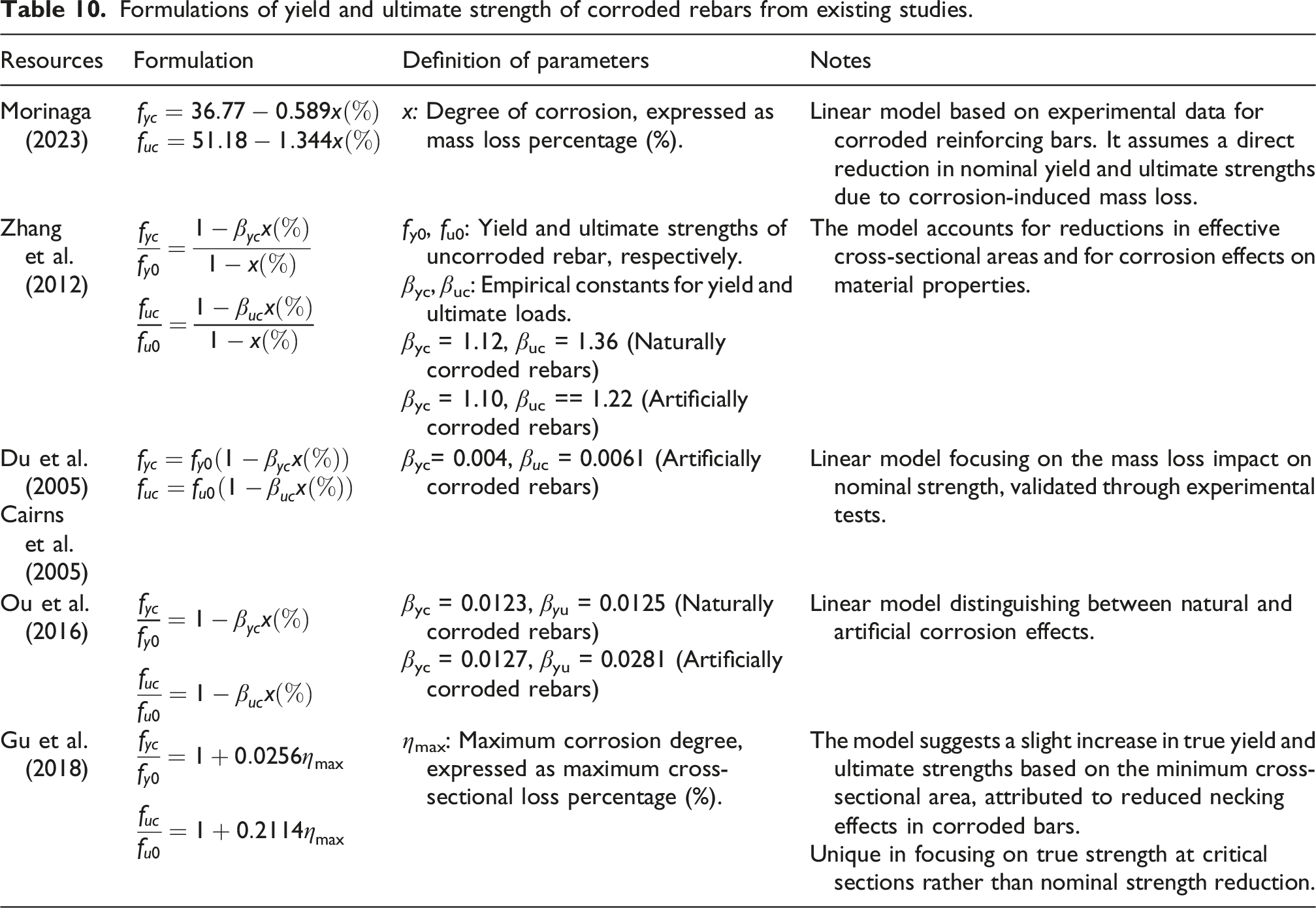
Evaluating the mechanical properties of corroded steel bars under standard loading conditions remains essential for assessing the performance of RC structures. The mechanical performance of steel bars under corrosion progressively shifts from ductile to brittle failure, accompanied by reductions in yield strength, strain-hardening capacity, and ultimate strain (Cairns et al., 2005; Ou et al., 2016; Stewart, 2009). The yield plateau disappears at approximately 16.7% corrosion (Ou et al., 2016), and fracture strain becomes equal to yield strain at about 20% corrosion (Cairns et al., 2005), which Stewart adopted as a critical corrosion threshold. Zhang et al. (2016) further reported that the ductile-to-brittle transition becomes pronounced when corrosion levels reach approximately 20–30%. While many degradation models relate strength reduction to average corrosion measures, Gu et al. (2018) demonstrated that failure behavior is strongly influenced by corrosion non-uniformity and introduced a corrosion non-uniformity factor, R, to quantify this effect. This concept has since been applied in performance- and reliability-based studies to improve structural behavior prediction over different service-life stages (Guo and Dong, 2022; Guo et al., 2020, 2021, 2023, 2024).
In addition, loading conditions can alter the impact of corrosion on rebar mechanical properties. For example, experimental studies have shown that high strain rates can enhance both the yield and ultimate strengths of corroded reinforcement under tensile loading (Zhang et al., 2016). Other studies found that the reduction in deformation capacity, strength, and fatigue life of corroded reinforcement due to corrosion could be more significant under impact or explosion loading conditions (Apostolopoulos and Papadopoulos, 2007; Zhang et al., 2012).
Formulations of yield and ultimate strength of corroded rebars from existing studies.
Concrete-rebar bond behavior
Concrete and reinforcing steel function as a composite system, enabling RC structures to resist applied loads effectively, with the bond between concrete and steel playing a critical role. Such a bond is severely weakened when reinforcing steel corrodes, thereby reducing the structural performance of RC elements (Sajedi and Huang, 2015). When corrosion initiates at the rebar, the corrosion products form and expand, causing internal stress and microcracks at the rebar interface, reducing bond strength. Continued corrosion creates additional cracks, reduces concrete confinement, and causes surface spalling, thereby further degrading bond efficiency. This bond deterioration impairs stress transfer and accelerates structural decline (Feng et al., 2021). It has been shown that bond strength and initial bond stiffness increase slightly at first, then decline sharply as corrosion progresses, reflecting the rapid loss of confinement and mechanical interlock (Zhang et al., 2020). Figure 4 illustrates how corrosion causes cracking, spalling, and a weakened bond between concrete and steel (Syll and Kanakubo, 2022). The effect of corrosion on concrete-rebar bond (Gheitasi and Harris, 2015).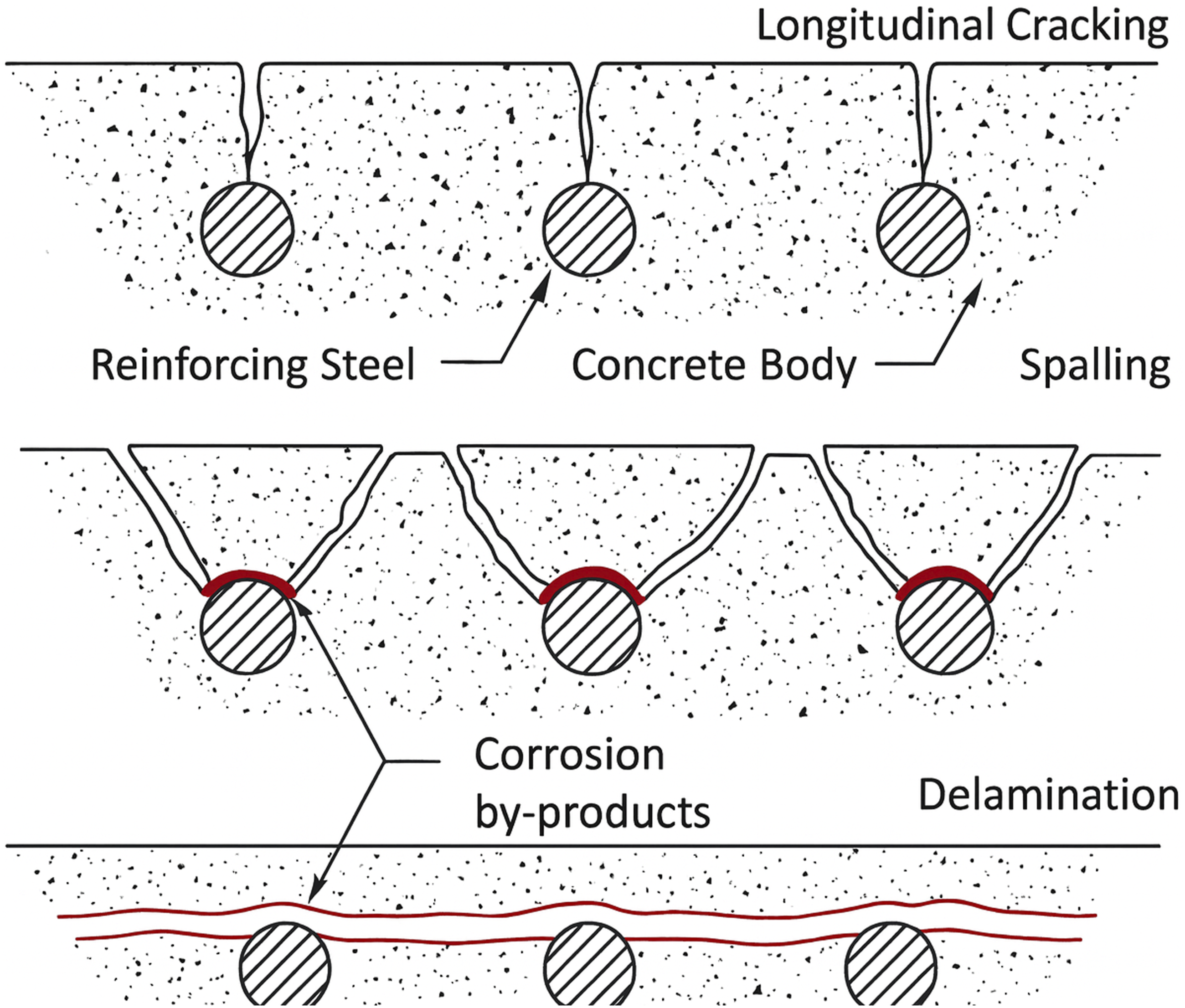
Bond failures include Mode I tensile (splitting), Mode II shear (pull-out), and Mixed Mode combining both. Mode I causes radial cracks around rebar, especially when confinement is insufficient. Mode II involves shear slip and crushing, common in smooth bars. When both stresses are significant, often due to corrosion or damage, a Mixed Mode causes concrete crushing and splitting, especially in corroded or deteriorated systems. (Elbusaefi, 2014). The bond failure mode at the steel–concrete interface depends on concrete cover and confinement. Increased confinement and thicker cover prevent transverse cracking and splitting, thereby avoiding pull-out failure.
Figure 5 shows the bond stress (τ
b
) –slip behavior of rebars in concrete. Figure 5(a) depicts a smooth bar, where the bond is mainly due to adhesion and friction, as smooth bars lack surface ribs for mechanical interlock. Initially, cement paste adheres to the steel, providing resistance through chemical adhesion. As the load increases, this adhesion fails, leading to frictional slip. Smooth bars do not cause significant radial pressure or cracking; therefore, the bond-slip response is primarily Mode II debonding, with failure via pull-out and limited residual strength. The transition region shifts from frictional resistance near the loaded end to elastic slip at the far end. Due to their weaker bond, smooth bars achieve only 15–20% of the bond strength of deformed bars, necessitating additional anchorage, such as hooks or longer embedment (Beton, 2013; Elbusaefi, 2014; Hong and Park, 2012). Bond behavior and failure mechanisms in (a) smooth and (b) deformed bars (Elbusaefi, 2014).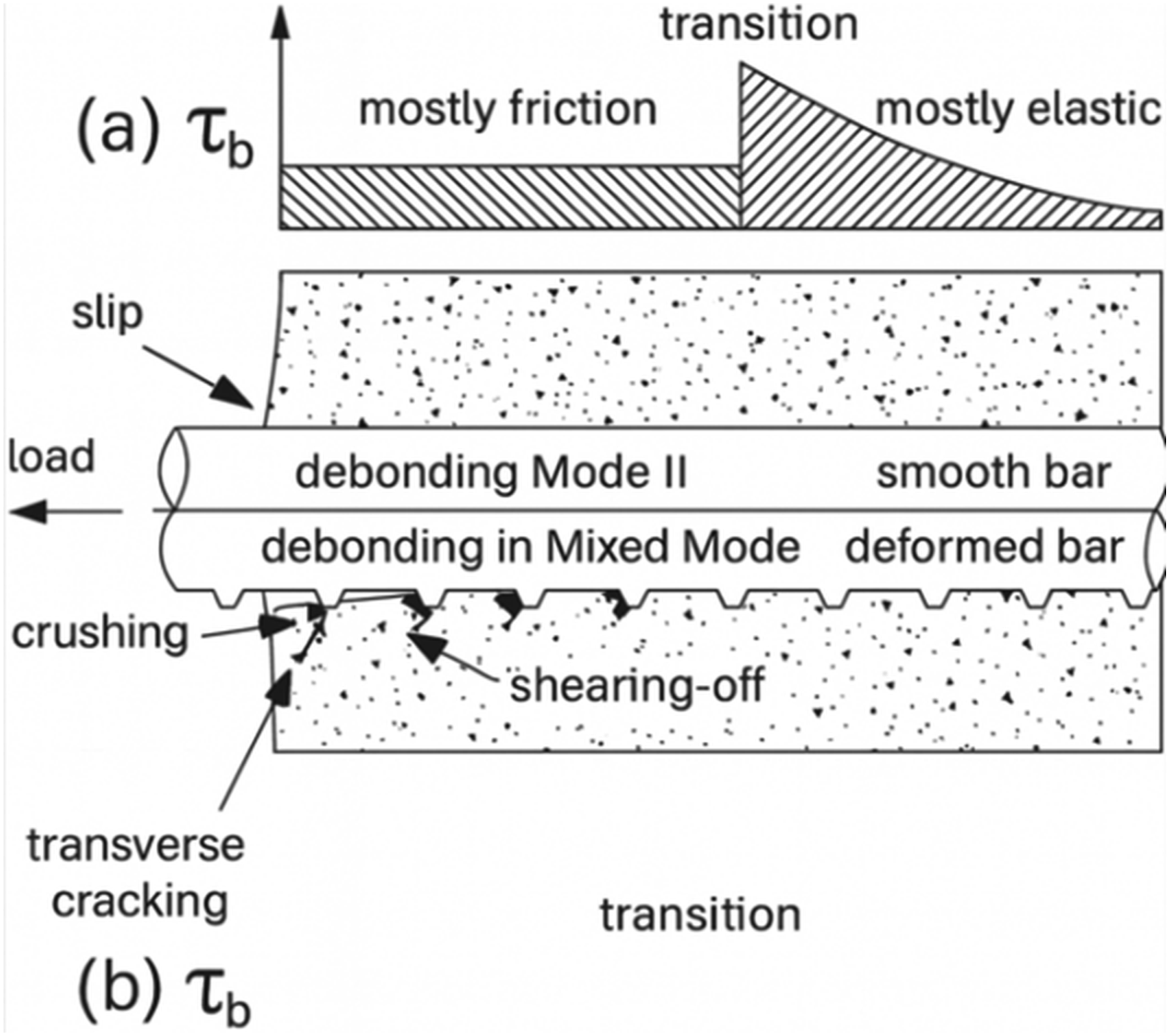
Figure 5(b) shows a deformed bar’s bond behavior, where bond strength results from degradation mechanisms like crushing, shearing-off, and mechanical interlocking between the ribs and concrete. The bond-slip response has four stages: initial adhesion, rib engagement and microcracking, peak bond resistance, and post-peak degradation due to concrete failure. Initially, the bond develops through adhesion, like smooth bars. As loading continues, ribs press against concrete, increasing shear resistance. Bond stress increases with slip until it peaks, indicating that concrete crushing or shearing occurs. Degradation occurs via pull-out or splitting failure under radial tensile stresses, reflecting a mixed-mode debonding mechanism. Overall, deformed bars have higher bond strength and a more ductile, complex failure pattern than smooth bars, making them preferable in reinforced concrete. (Elbusaefi, 2014; Hong and Park, 2012).
The CEB (Beton, 2013) guidelines provide two commonly adopted models to represent the relationship between bond stress c and relative slip (s) associated with pull-out failure and splitting failure, respectively, as illustrated in Figure 6. Two key parameters define the ascending bond-slip curve, which determines the initiation of bond failure: bond strength (τmax), representing peak stress transmitted from the reinforcement to concrete, and peak slip (s1), indicating slip at this maximum. In splitting failure (Figure 6(a)), τ increases nonlinearly with slip to τmax, then drops abruptly to residual stress (τ
f
) due to friction, remaining constant afterward. In pull-out failure (Figure 6(b)), τ also rises nonlinearly to τ
max
, stays constant between s1 and s2, then decreases linearly past s2 to τ
f
at s3, covering the distance between ribs. To model bond behavior with corrosion, s1 and τmax are typically adjusted accordingly. Bond-slip model based on CEB (Beton, 2013). (a) Splitting; (b) pull-out.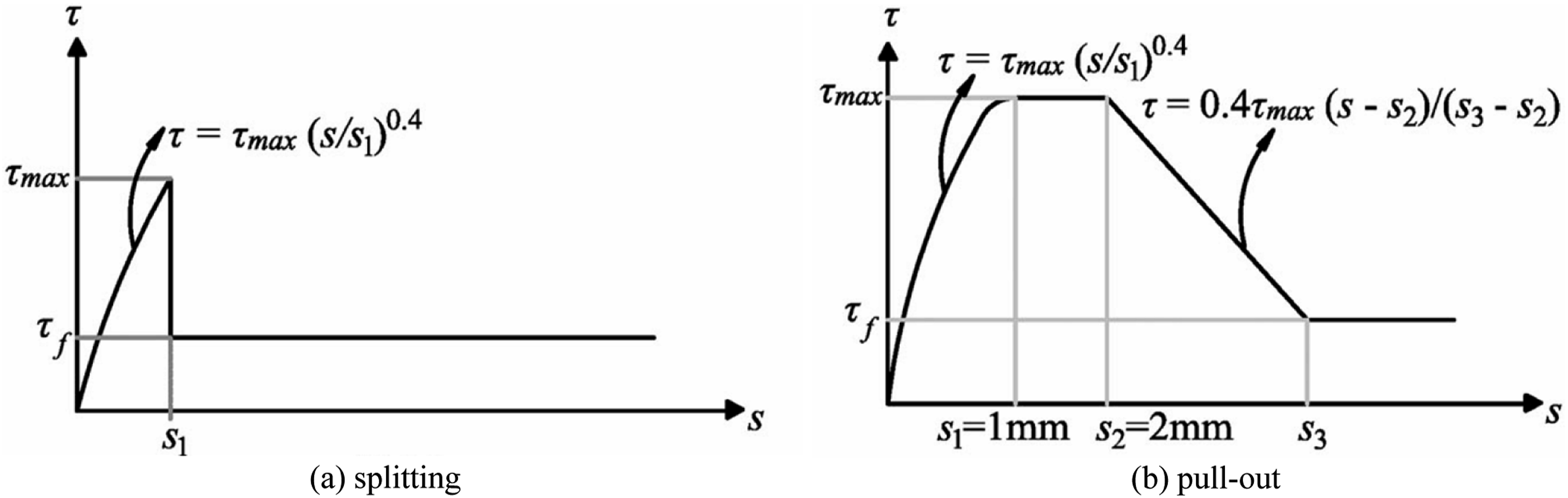
Summary of existing studies for peak slip (s1).
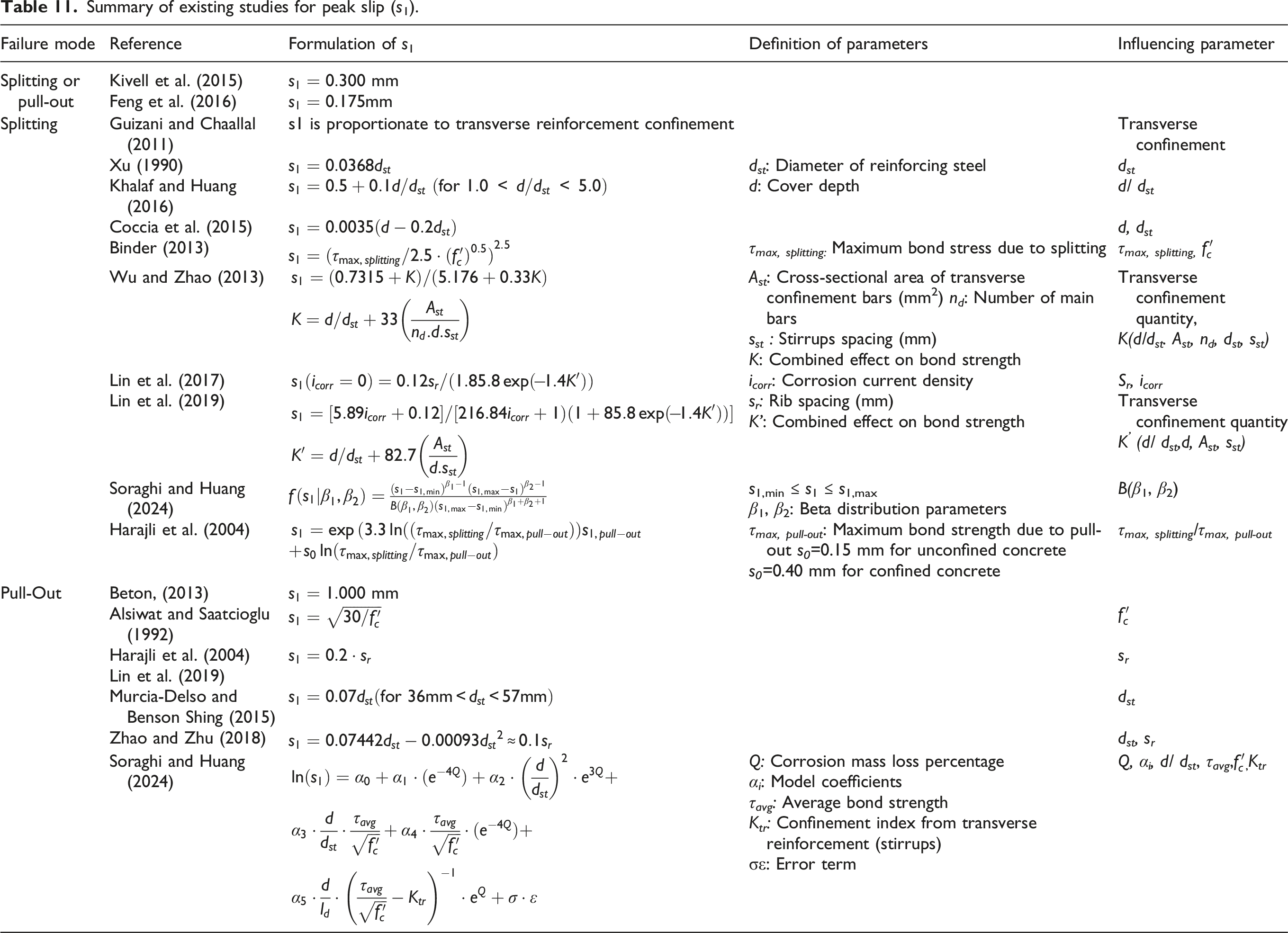
Table 11 reveals a clear progression from simplified constant-based expressions toward parameter-dependent models that explicitly capture confinement and corrosion effects on bond behavior. Constant s1 models are suitable for reference or code-type applications under assumed “average” conditions, but they lack sensitivity to geometry, confinement, and deterioration mechanisms. In contrast, confinement-based formulations explicitly relate s 1 to the effectiveness of transverse reinforcement and cover geometry, making them more appropriate for splitting-controlled behavior in RC members with varying levels of confinement. Corrosion-explicit models further advance this framework by accounting for the degradation of confinement and interfacial concrete resulting from steel loss and corrosion products, thereby improving the physical consistency of deteriorated structures. However, these models typically require prior identification of the governing failure mode and calibration within defined corrosion ranges, indicating that no single formulation is universally applicable. Overall, the comparison highlights a trade-off between simplicity and physical realism, with corrosion- and confinement-aware models preferable for durability- and service-life-oriented assessments.
The maximum bond strength (τ max ) is a key quantity to assessing bond behavior but cannot be measured directly. Instead, the average bond strength (τ avg ) is typically used, defined as the maximum applied force per unit contact area between concrete and rebar. Recognizing that bond stress varies along the reinforcement length, τ max can be estimated from τ avg . Following the widely accepted recommendation by Perry and Thompson (1966), it is commonly assumed that τ max ≈ 1.5 τ avg , which provides a practical method to estimate τ max though experimental and analytical studies.
Existing prediction models for bond strength in terms of corrosion.
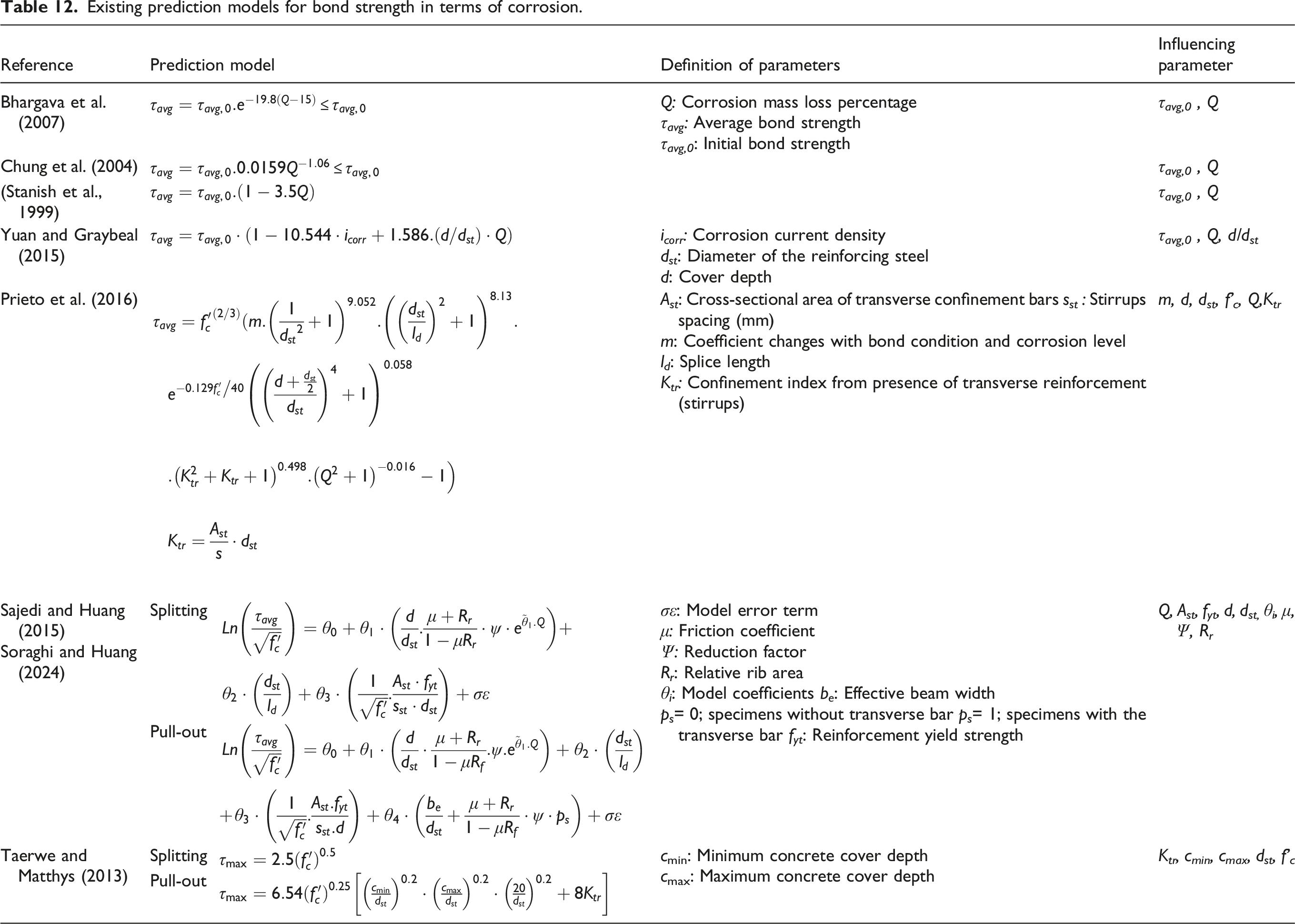
Corrosion-induced degradation of bond significantly reduces the service life of RC structures (Sajedi et al., 2017). Additionally, bond failure mechanisms in corroded RC structures depend on the severity of corrosion and the quality of the concrete. Severe corrosion often causes splitting of the concrete cover, resulting in rapid loss of load-bearing capacity, while less severe corrosion leads to gradual bond degradation due to corrosion product accumulation at the steel–concrete interface (Soraghi and Huang, 2021). Several studies have investigated methods to improve bond performance in corrosive environments. Stainless steel, epoxy-coated reinforcement, and corrosion inhibitors can delay corrosion initiation and reduce bond degradation rates (Lee et al., 2018). Non-corrosive alternatives such as fiber-reinforced polymers (FRPs) have also been proposed, as they eliminate corrosion-related bond deterioration (James et al., 2019). However, these approaches require careful evaluation under different environmental and loading conditions.
Research gaps
The modeling of corrosion current density (i corr ) remains highly uncertain because it is sensitive to environmental fluctuations and concrete microstructure, as demonstrated by the wide variability reported in the corrosion rate studies reviewed in Corrosion rate and corrosion current density section. The majority of research models i corr as a function of concrete resistivity or chloride concentration at rebar, while disregarding the time-dependent effects of moisture redistribution and oxygen availability discussed earlier in corrosion kinetics and transport-controlled corrosion mechanisms. Future research needs to develop dynamic models that combine environmental sensors with electrochemical data and probabilistic frameworks to model i corr variability.
Current prediction models of steel section loss mainly depend on Faraday’s law under the assumption of uniform corrosion, as commonly adopted in the corrosion propagation models summarized in Section loss section, which is not suitable for predicting localized pitting that has a significant section loss compared to uniform corrosion. The models fail to account for how rust accumulation hinders oxygen diffusion, which leads to self-regulation of corrosion advancement, a phenomenon observed in several experimental studies reviewed herein. The suggested future work includes calibrating the current formulations with a wide range of data - different concrete materials and environmental testing conditions, and using stochastic or multi-scale methods to model localized corrosion effects, which can be verified through the rust front morphology and propagation using imaging techniques such as X-ray CT (computed tomography).
The majority of cover crack modeling is based on elastic fracture mechanics and thick-walled cylinder theory under the assumption of perfect geometries together with uniform material properties and continuous rust growth, as outlined in the analytical and numerical cracking models reviewed in Corrosion cracking section. The future work on cover cracking models should consider the propagation of multiple cracks or the effects of environmental substances entering through cracks (which impact the rust growth), and validate the predictions through strain-based measurements or acoustic emission monitoring.
The deterioration of concrete strength due to corrosion is not well understood. More research is needed to understand the complex relationships among compressive strength, permeability, microcracking development, and confinement, and how supplementary cementitious materials (SCMs) affect crack propagation resistance.
The current corrosion models determine rebar capacity reduction through area loss measurements only. Corrosion adversely affects the mechanical properties of reinforcement, including yield strength, ultimate strength, ductility, and strain capacity. These effects become increasingly pronounced when corrosion levels exceed approximately 15–20%, particularly in the presence of pitting corrosion, which induces high stress concentrations at localized pit sites. The structural analysis should consider those mechanical property changes with the pit distribution.
The process of bond deterioration remains understudied compared with corrosion modeling of other structural aspects. The current bond-slip models do not consider rebar surface condition, type of corrosion (pitting vs uniform), or bar location
Structural performance with corrosion considerations
Service life prediction
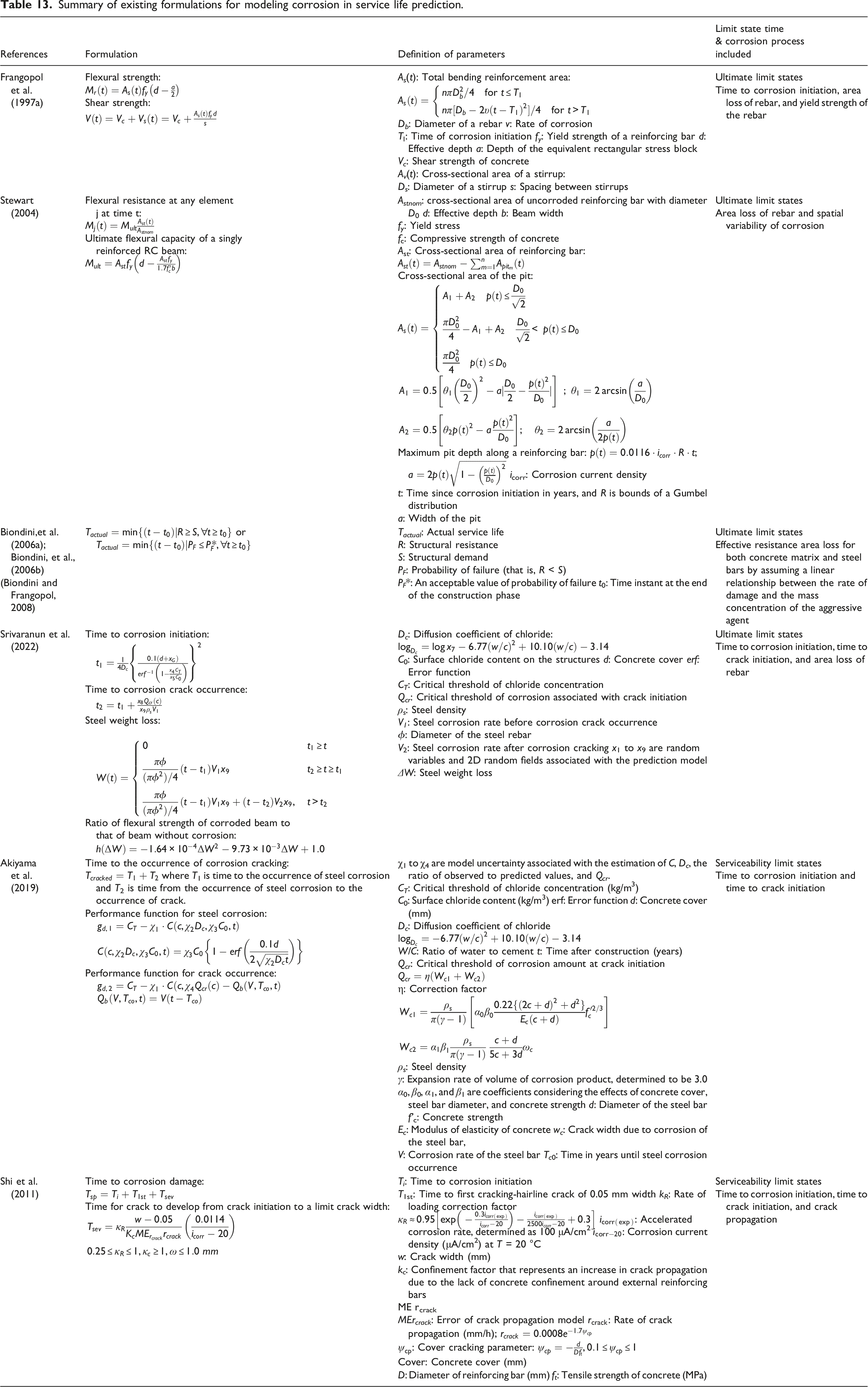
RC structures degrade their resistance to chloride-induced corrosion, increasing the likelihood of bending, shear, and serviceability failures. The development of probabilistic time-dependent analysis tools for the service-life prediction of RC structures has received extensive research attention. These analyses usually follow a three-stage procedure that includes corrosion initiation, followed by corrosion propagation and then time-dependent/time-variant reliability analysis (Enright and Frangopol, 1998; Frangopol et al., 1997b; Stewart and Rosowsky, 1998a, 1998b). In the first stage, Fick’s second law of diffusion is widely used as the primary model for chloride penetration during the initiation of corrosion (Crank, 1975), with the surface chloride concentration and diffusion coefficient as the essential parameters. Rebar corrosion starts when chloride levels reach a critical threshold at rebar depth, leading to propagation that reduces rebar diameter (Ann et al., 2009; Kiesse et al., 2020; Reichert et al., 2024). This threshold and corrosion rate are key parameters studied via field monitoring and experiments. Reduced rebar diameter weakens RC structures’ resistance to bending and shear, aiding failure probability assessments under corrosion (Andrade and Alonso, 1996; Angst et al., 2009; Montemor et al., 2003).
The corrosion of reinforcement produces rust products that expand by as much as 300%. The development of tensile stresses in concrete leads to longitudinal cracking, which eventually causes spalling of the concrete cover. This serviceability failure can be evaluated by setting the time to concrete spalling (Stewart et al., 2011) or the critical amount of steel corrosion product (Akiyama et al., 2019; Biondini and Vergani, 2015) developed a 3D RC beam finite element for nonlinear analysis by modeling the damage effects of uniform and pitting corrosion in terms of reduced cross-sectional area of corroded bars, decreased ductility of reinforcing steel, deterioration of concrete strength, and spalling of concrete cover; their results demonstrated the model’s ability to replicate the effects of local corrosion damage on the overall structural response. Tran et al. (2022) demonstrated that sustained service-level loading during corrosion exposure can significantly accelerate steel loss and reduce flexural capacity. Their experiments on RC beams showed a linear relationship between load level and corrosion severity, with higher sustained bending loads resulting in up to 30% mass loss of steel and corresponding reductions in strength. These findings highlight the importance of accounting for load-corrosion interaction in service-life prediction models, particularly in evaluating residual capacity under combined mechanical and environmental deterioration.
To determine the service life, the uncertainties inherent in corrosion modeling must be quantified and accounted for. Corrosion of steel reinforcement varies spatially in RC structures due to factors like environmental exposure, concrete quality, and cover. Ignoring this variability can lead to overestimating structural reliability. Consequently, researchers are increasingly modeling corrosion variability in reliability assessments using, for example, the pitting factor (maximum pitting depth divided by average pitting depth) and the spatial variability factor (average cross-sectional area divided by minimum cross-sectional area). Another indicator is the maximum steel weight loss over 50 mm relative to the mean, which is used in finite element models to evaluate reliability considering non-uniform corrosion (Gu et al., 2018; Lim et al., 2016, 2019; Stewart, 2004, 2009; Val, 2007; Zhang et al., 2019). In addition to corrosion modeling, various physical properties and environmental factors need to be incorporated into a reliability framework to accurately forecast the structure’s service life. Strauss et al. (2013) analyzed concrete samples from bridges to update chloride distribution. Akiyama et al. (2018) used visual inspection results to update Markov chain deterioration probabilities. Srivaranun et al. (2022) updated corrosion prediction models using observed crack widths. Lu et al. (2019) developed an empirical model for steel corrosion rates, enabling reliability-based life predictions. Researchers also investigated how marine environments, CO2, and rising temperatures affect chloride-induced corrosion in RC structures (Akiyama et al., 2010; Kiesse et al., 2020; Stewart et al., 2011). Recently, Anghileri and Biondini (2025a, 2025b, 2026) adopted a Bayesian updating approach to update residual performance, safety, and reliability predictions for existing structures using experimental tests.
Summary of existing formulations for modeling corrosion in service life prediction.
Seismic behavior
Reinforced concrete (RC) bridge structures exposed to chloride-induced corrosion experience progressive material degradation that significantly influences their seismic response. Corrosion reduces reinforcement cross-sectional area, alters mechanical properties of steel and concrete, weakens bond behavior, and may change failure mechanisms under cyclic loading. When combined with the inherent uncertainty of earthquake ground motion, these deterioration processes introduce substantial complexity into seismic performance evaluation. As a result, understanding the interaction between corrosion-induced damage and seismic demand has become a major focus in recent years, particularly in the context of life-cycle performance and reliability assessment of aging bridge infrastructure.
Numerous studies have investigated how corrosion affects seismic behavior at both structural and component levels. For example, Guo et al. (2018) examined the time-dependent seismic failure modes of coastal bridge piers by accounting for height-dependent corrosion variations. Their findings showed that plastic hinge locations may shift from the pier base toward splash and tidal zones as corrosion progresses, and that strength reduction becomes more pronounced when concrete cover cracking and bar buckling occur. Experimental investigations further validated these numerical observations, highlighting the importance of spatially varying corrosion models.
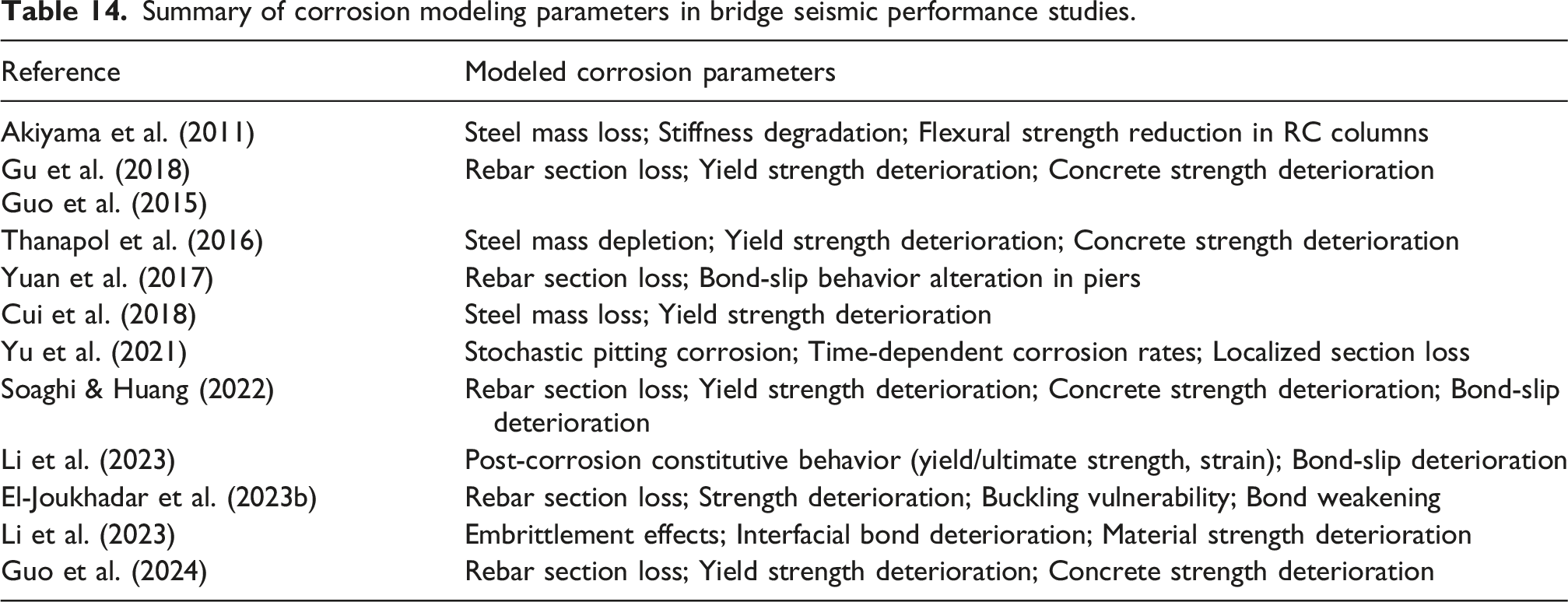
To address time-dependent deterioration within reliability frameworks, early studies primarily represented corrosion through uniform steel mass loss or stiffness degradation. Akiyama et al. (2011) incorporated probabilistic airborne chloride effects into seismic reliability assessment of bridge piers, enabling evaluation of flexural capacity reduction under corrosion. Thanapol et al. (2016) extended this approach by estimating the mean and variance of steel weight loss in plastic hinge regions using inspection data, demonstrating that improved inspection strategies reduce uncertainty in reliability predictions.
Subsequent research expanded corrosion modeling beyond global mass loss assumptions. Guo et al. (2015) evaluated time-dependent seismic demand and fragility for sea-crossing bridges considering corrosion during residual service life. Shekhar et al. (2018) compared seismic life-cycle cost analyses under varying chloride exposure conditions and proposed corrosion-deterioration modeling strategies. More refined parameterizations incorporated reinforcement section loss, yield strength deterioration, and concrete strength degradation (Guo et al., 2018; Thanapol et al., 2016), improving representation of strength and ductility loss in plastic hinge regions. In addition to considering rebar size, rebar strength, and concrete strength, which are affected by corrosion, Soraghi and Huang (2022) incorporated corroded rebar slip at the column footing into lateral displacement calculations under seismic loading by developing a simple bar stress-slip macromodel.
More recent developments emphasize localized and non-uniform corrosion mechanisms. Yuan et al. (2017) and Cui et al. (2018) incorporated pitting corrosion, post-cracking corrosion rates, and bond–slip deterioration into fragility assessment frameworks. Li et al. (2023) further addressed post-corrosion constitutive behavior, including changes in yield strength, ultimate strain, and bond performance. To facilitate practical implementation in structural analysis (El-Joukhadar et al., 2023a), proposed modifications to nonlinear FE models by introducing calibrated reduction factors for strength, stiffness, and drift based on corrosion severity. Their framework enables practical updates to seismic capacity evaluations for aging corroded columns, offering a performance-based approach aligned with experimental data.
Summary of corrosion modeling parameters in bridge seismic performance studies.
Life-cycle analysis
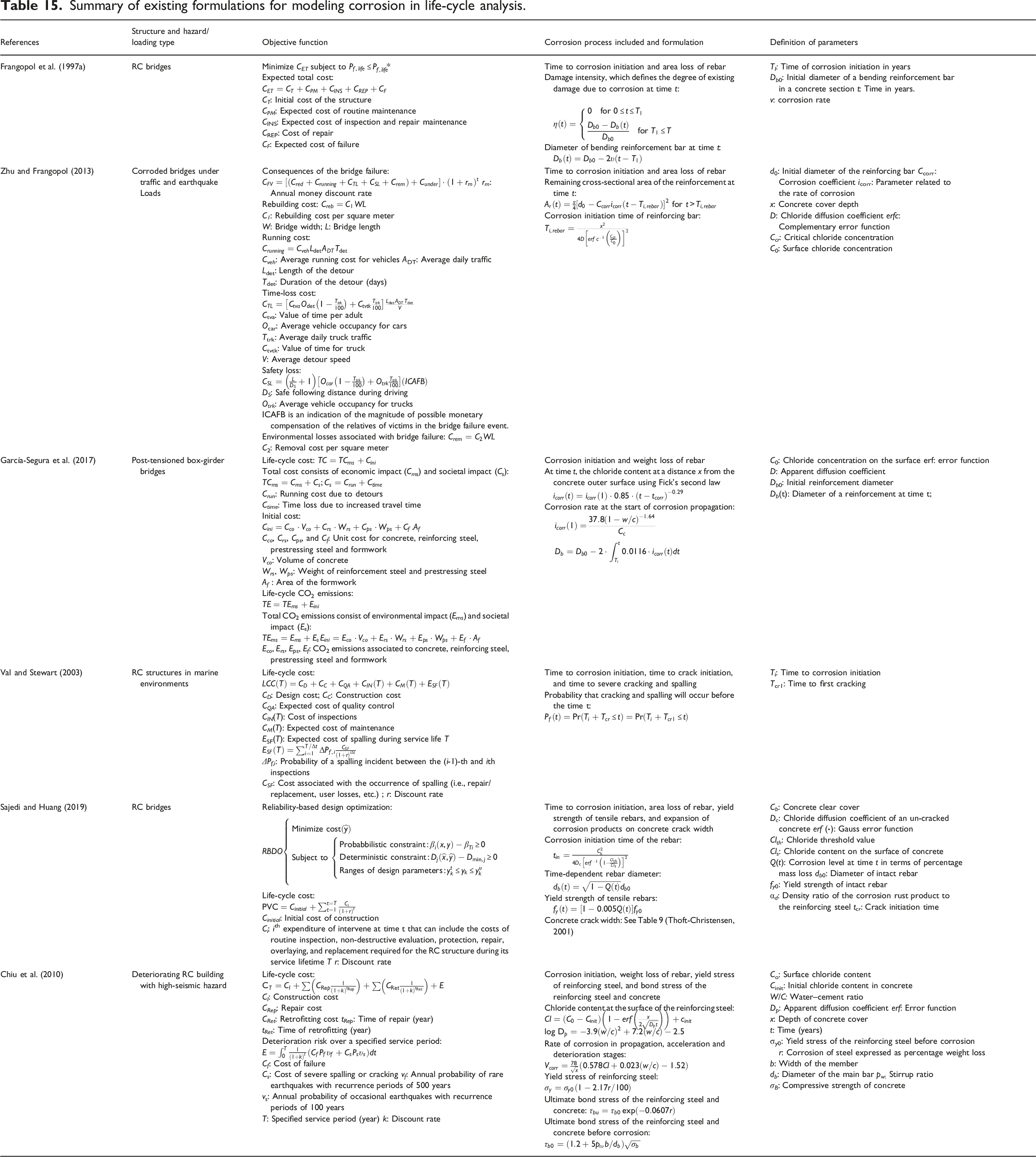
The holistic framework of life-cycle analysis (LCA) enables a comprehensive assessment of chloride-induced corrosion effects on RC structures from construction through their entire operational period. Corrosion deterioration influences not only structural performance but also inspection, maintenance, and failure costs over time. Consequently, evaluating infrastructure performance through a life-cycle perspective has become essential for managing aging RC bridges and optimizing long-term investment decisions. LCA provides a systematic framework for quantifying economic, environmental, and societal impacts associated with corrosion deterioration and maintenance interventions throughout the service life of infrastructure systems. Biondini and Frangopol (2016, 2018) provided a thorough review and survey, respectively, on the life-cycle performance of general deteriorating structural systems.
Typically, the life-cycle costs (LCCs) of RC structures include the initial cost, inspection and monitoring costs, maintenance expenses, and failure risk costs. The initial costs consist of material, design, and construction expenses that are established during project initiation (Val and Stewart, 2003). Inspection and monitoring activities are essential for detecting corrosion damage and include visual inspections (Frangopol and Liu, 2019; Kim and Frangopol, 2011), coring samples (Orbán and Gutermann, 2009; Ramanathan et al., 2021), and structural health monitoring technologies such as fiber-optic sensors (Casas and Cruz, 2003; He et al., 2022). Carsana et al. (2025) presented a diagnostic procedure that employs effective methods and criteria (including in-field nondestructive testing and chemical, physical, and microstructural analyses) to assess corrosion in existing concrete bridges. Maintenance costs exhibit significant time-dependent variation and include both direct and indirect components. Direct costs refer to activities aimed at preventing or mitigating corrosion damage, such as painting and overcoating (Liu et al., 2019; Mullard and Stewart, 2012). Indirect costs include broader social and economic impacts, such as traffic delays, increased fuel consumption, and environmental consequences including higher carbon dioxide emissions (Soliman and Frangopol, 2015). Failure risk, often expressed as life-cycle structural failure cost, is typically quantified by multiplying the probability of exceeding specific limit states by the associated failure consequences (Gong et al., 2019; Val and Stewart, 2003).
LCA also provides an effective framework for planning inspection and maintenance strategies throughout the service life of RC structures subjected to corrosion, thereby supporting budget allocation and maximizing service life. Maintenance strategies are commonly categorized as reactive (essential) and proactive (preventive
Determining optimal inspection and maintenance strategies typically involves solving an optimization problem that minimizes LCCs while maintaining required reliability levels (Frangopol et al., 1997a) first proposed a lifetime inspection and repair strategy for deteriorated RC structures, demonstrating that non-uniform inspection intervals can be more economical than uniform inspection schedules. Subsequent studies confirmed that preventive maintenance can significantly reduce the frequency and cost of essential maintenance and lower environmental impacts (Han et al., 2021; Navarro et al., 2019). The timing of initial maintenance actions has also been shown to strongly influence long-term deterioration and associated costs (García-Segura et al., 2017). More recently, optimization techniques such as genetic algorithms have been applied to determine maintenance strategies that balance safety, cost, and environmental impacts (Xie et al., 2018). In parallel, there has been increasing interest in incorporating sustainable and durable materials, such as corrosion-resistant steel (Cheng et al., 2020; Kere and Huang, 2019; Okasha et al., 2012), low-clinker cements (Cassiani et al., 2022), high performance concrete (Sajedi and Huang, 2019), and fiber-reinforced polymer reinforcements (Cadenazzi et al., 2019), to reduce long-term maintenance requirements and LCCs.
Summary of existing formulations for modeling corrosion in life-cycle analysis.
Post-tensioning bridges
A large number of Post-Tensioned (PT) bridges have been built to leverage their strength, faster construction, and the aesthetic benefits of a shallower superstructure. Despite these advantages, certain issues, particularly corrosion, remain persistent challenges for PT tendons, which are among the most vital structural elements of PT bridges. Instances of premature failure in PT tendons, primarily driven by recurring factors such as corrosion (see Figure 7), underscore the need for targeted, proactive maintenance strategies. Types of damage to PT Tendons. (a) corrosion and rupture of strands; (b) corrosion in anchorage; (c) corrosion and rupture of internal tendons and concrete spalling; (d) corrosion of wires visible by borescope; and (e) free water inside tendons.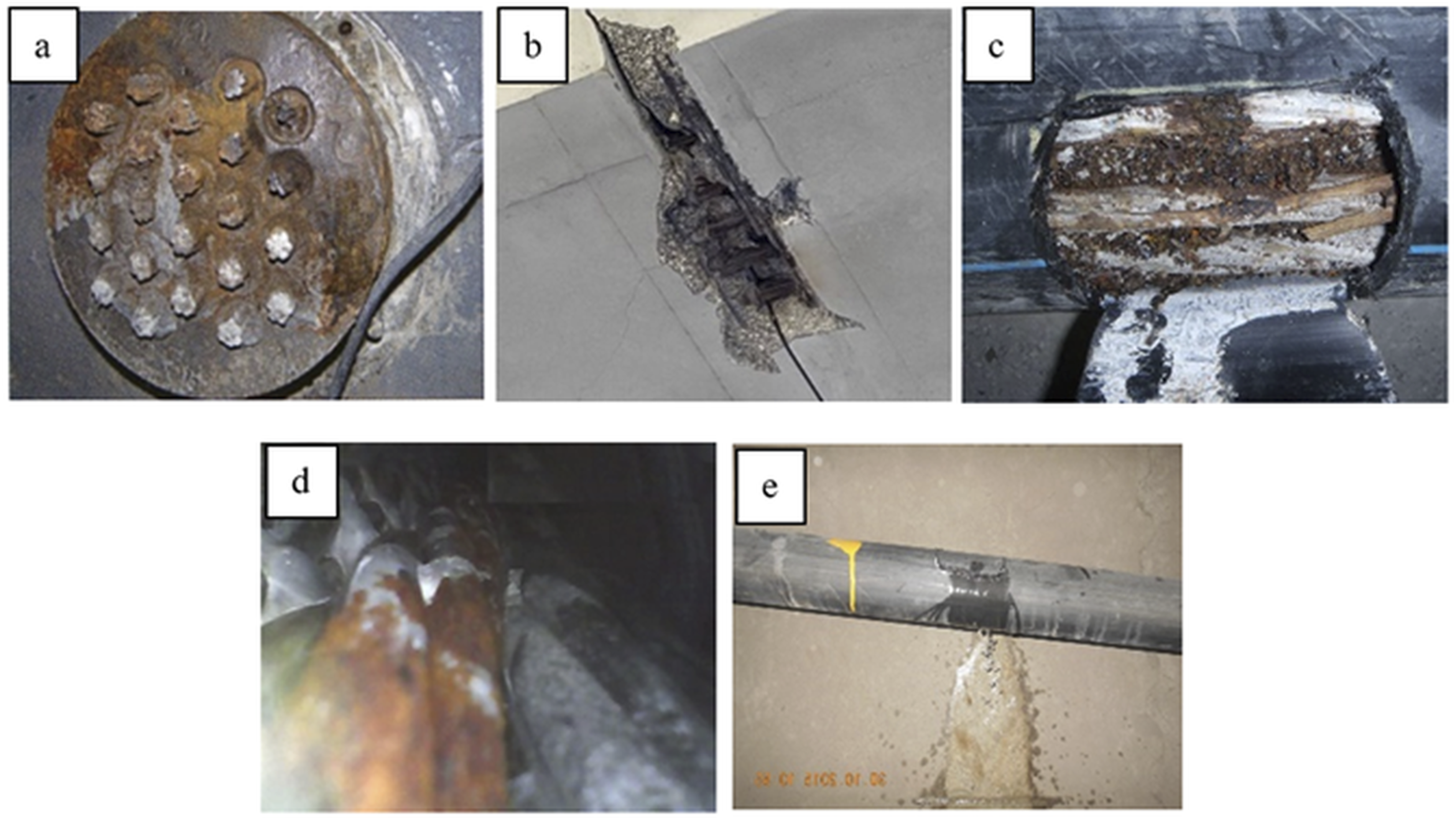
PT tendons are associated with a range of damage types and mechanisms (Hurlebaus et al., 2016). Severe corrosion of external tendons causes strand ruptures (Figure 7(a)), and damage at anchorages (Figure 7(b)). Internal tendons often show corrosion and rupture only after concrete damage (Figure 7(c)), and these may be detectable only through coring or borescope inspections (Figure 7(d)). Issues like grout separation and bleeding (Figure 7(e)) have been reported, compounded by inconsistent standards across PT systems. Some tendons exhibit significant flaws due to material, design, and workmanship issues, prompting research into alternative corrosion inhibitors, such as flexible fillers, led by the Florida Department of Transportation (Cox, 2017).
In steel main tension elements of post-tensioning members, corrosion can be classified as uniform or localized. Uniform corrosion is the primary factor contributing to the degradation of structures. Extensive research has been conducted to assess and predict the corrosion rates of high-strength steel used in post-tensioned structures. Li et al. (2014) developed a model for uniform corrosion in high-strength bridge wires. Trejo et al. (2009) and Pillai et al. (2010) studied the corrosion of post-tensioning strands under various environmental conditions, presenting results on chloride concentrations, moisture levels, and stress effects. Zhang et al. (2021b) explored the corrosion performance of high-performance steel in bridge applications. Yuan et al. (2021) analyzed the temporal and spatial variability of uniform corrosion in high-strength steel wires. Kalina et al. (2011) evaluated the corrosion resistance of improved post-tensioning materials following long-term exposure in Texas. Additionally, Li et al. (2015) proposed a deterioration model for high-strength steel wires, incorporating uniform corrosion and emphasizing the need for such models in post-tensioned structures.
Corrosion testing of grout for post-tensioning ducts and stay cables to address localized corrosion began in 1992, following the publication of a report by Thompson and Michael, funded by the US Federal Highway Administration (FHWA) (Thompson et al., 1992). The testing procedure was further refined by Hamilton et al. (2000) to mitigate the corrosion of steel strands caused by off-specification grout. Subsequently, Hamilton et al. (2014) simulated prepacked grout bleeding under field conditions. Lau and Lasa (2016) reviewed the properties of post-tensioning elements, providing insights into localized corrosion issues in Florida and identifying various grout deficiencies. Meanwhile, Wang et al. (2005) investigated the corrosion of anchorage systems within post-tensioned grouted assemblies.
Summary of literature review on uniform and localized corrosion.
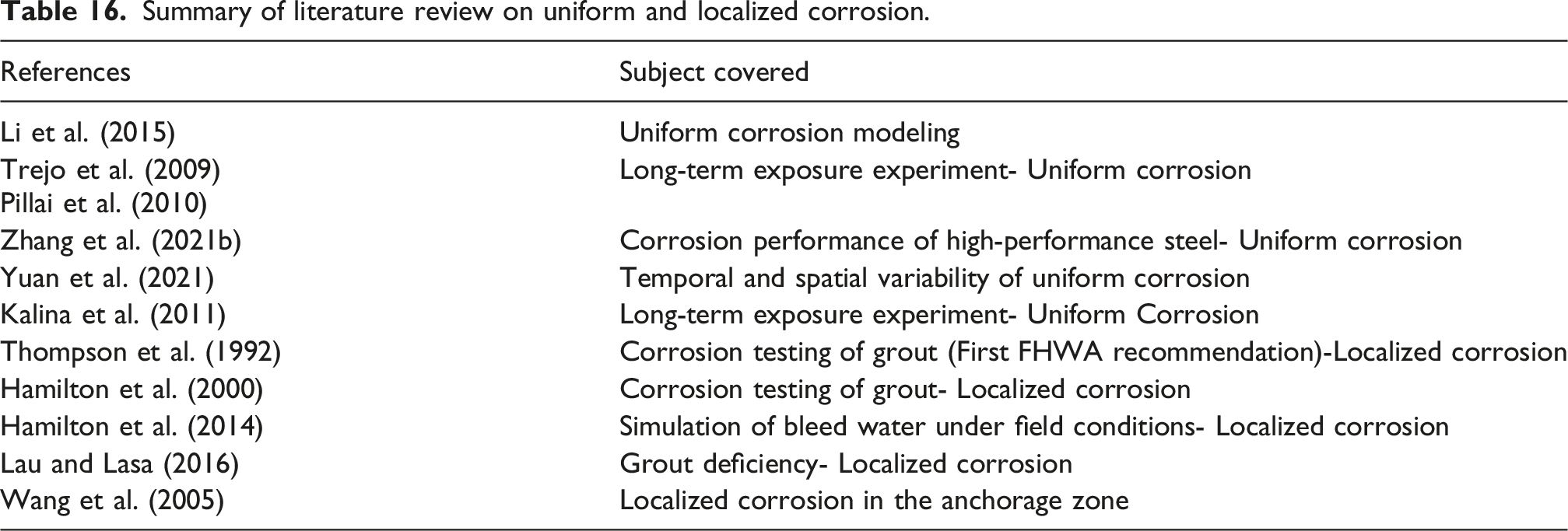
In contrast, research on localized corrosion highlights the critical role of grout quality, bleeding, segregation, and anchorage detailing in accelerating tendon deterioration, often leading to rapid strand rupture without visible external indicators (e.g., Hamilton et al., 2000; Lau and Lasa, 2016; Thompson et al., 1992; Wang et al., 2005). Localized corrosion models and experimental investigations reveal that even limited defects in grouting can significantly compromise tendon durability, underscoring the inadequacy of uniform corrosion assumptions for PT systems. As summarized in Table 16, uniform corrosion studies emphasize material behavior and exposure effects, whereas localized corrosion research focuses on construction quality, inspection techniques, and failure-prone zones such as anchorages and ducts. Consequently, Table 16 illustrates that comprehensive durability assessment of PT bridges requires combining uniform corrosion models for long-term degradation with localized corrosion evaluations to capture abrupt, brittle failure mechanisms. This distinction is essential for developing effective inspection, monitoring, and maintenance strategies tailored to the unique vulnerability of post-tensioned systems.
Typically, localized corrosion, a severe consequence of excessive bleed water, manifests within a decade of construction (Permeh and Lau, 2022). The layout and elevation of tendons in the PT system influence grout segregation and localized corrosion. Uniform corrosion involves a consistent corrosive effect across the surface, mitigated by corrosion protection barrier strands. Taeby and Mehrabi (2022) investigated both localized and uniform corrosion and proposed a deterioration model that considers factors for both types and developed equations to estimate failure risk from each and together, based on experiments and literature. In their deterministic model, the remaining cross-sectional area of steel tendons/strands can be expressed as:

Research gaps
Service life prediction
Despite substantial advances in modeling chloride-induced corrosion, a significant gap persists between corrosion process models and structural service-life prediction. This gap arises from both limitations in corrosion degradation modeling and the challenge of representing the interaction among multiple deterioration mechanisms that jointly govern structural performance. For example, for corrosion initiation, the accurate determination of chloride threshold values remains uncertain due to their sensitivity to material properties and environmental exposure (Andisheh et al., 2016) leading to large variability in predicted initiation time. Similarly, the modeling of corrosion propagation effects—particularly rust-induced cracking, spalling, and loss of confinement—remains insufficiently validated at the field scale, regardless of whether mechanical or empirical approaches are used. Furthermore, pitting corrosion represents a critical unresolved issue in service-life prediction. Most existing models represent pitting via fixed amplification factors applied to uniform corrosion rates, thereby failing to capture the stochastic nature of pit initiation, growth, and coalescence under variable material quality and exposure conditions. These simplifications obscure the translation of corrosion damage into structural limit states.
On the other hand, probabilistic methods should be used in service-life prediction to account for uncertainties; however, researchers lack sufficient, high-quality data to quantify uncertainties in essential variables, including diffusion coefficients, thresholds, and modeling errors. The lack of sufficient data leads researchers to select distribution parameters from various sources, including laboratory tests, expert judgments, and literature reviews, which may yield inconsistent results depending on the sources used. Since the service life of RC structures depends on multiple degradation processes, data-driven and statistical models that incorporate factors such as environmental exposure (humidity, temperature), chloride exposure, and structural characteristics (rebar type, cover depth, concrete quality) are effective. These models can analyze interacting factors and serve as practical tools for service life prediction.
Seismic behavior
The seismic performance of aging RC structures affected by corrosion remains inadequately characterized, particularly when corrosion-induced degradation interacts with cyclic loading demands. Time-dependent seismic fragility studies have shown that reinforcement mass loss, corrosion-induced bond degradation, and confinement deterioration collectively reduce strength, stiffness, and ductility. However, current modeling approaches adopt widely varying assumptions regarding corrosion morphology (uniform vs localized), bond–slip degradation laws, corrosion-induced cracking patterns, and post-cracking corrosion rates. These assumptions are frequently calibrated using small-scale specimens or accelerated corrosion techniques, limiting their applicability to naturally corroded structures.
A key research gap lies in the lack of validated constitutive and hysteretic models that explicitly account for corrosion-altered mechanical behavior under seismic loading. Corrosion affects not only cross-sectional area loss but also cyclic degradation mechanisms such as energy dissipation capacity, stiffness degradation, and failure modes. In addition, the spatial variability of corrosion damage, particularly pitting corrosion, introduces localized weaknesses that are rarely incorporated into seismic demand and capacity models. Another important gap concerns the updating of seismic risk and fragility functions as corrosion progresses and maintenance actions are implemented. Although inspection and repair strategies can significantly alter structural performance, their integration into time-updated, corrosion-informed seismic risk assessment frameworks remain limited. Developing standardized workflows that couple corrosion inspection data, repair actions, and seismic fragility updating represents a high-value research direction.
Life-cycle analysis
Life-cycle assessment (LCA) and life-cycle cost analysis (LCCA) of corrosion-affected RC structures are limited by the absence of standardized methodologies that consistently incorporate corrosion deterioration modeling. Existing studies employ disparate corrosion models, intervention strategies, discounting assumptions, and user cost formulations, leading to inconsistent outcomes and limited comparability. A fundamental challenge is that uncertainties in corrosion initiation and propagation timing strongly influence maintenance scheduling and cost projections, yet these uncertainties are often treated simplistically or deterministically in LCA/LCCA framework.
Furthermore, robust optimization of corrosion mitigation and maintenance strategies remains constrained by the lack of reliable deterioration and cost models capable of handling high levels of uncertainty and multiple constraints. Data limitations further compound these issues, particularly in quantifying indirect consequences of corrosion-related interventions, such as traffic disruption, environmental impacts, and cascading network effects. Addressing these gaps requires corrosion-centered probabilistic frameworks supported by standardized reporting practices and long-term field data collection.
Post-tensioning bridges
Corrosion in post-tensioned bridge systems presents unique challenges due to the interaction of environmental exposure, construction practices, material properties, and high sustained stress levels. While chloride-induced corrosion has been widely studied, other degradation mechanisms—including sulfate attack, grout incompatibility, corrosion–fatigue interaction, stress corrosion cracking, fretting corrosion, and hydrogen embrittlement—remain insufficiently integrated into existing corrosion models (Permeh and Lau, 2022; Taeby et al., 2023b). High-strength prestressing steel subjected to sustained and variable stress levels can experience coupled deterioration mechanisms, including corrosion–fatigue interaction, stress corrosion cracking, fretting corrosion, and hydrogen embrittlement, as reviewed in Post-tensioning bridges section. The combined effects of these mechanisms on tendon performance and long-term reliability are not sufficiently captured in existing modeling frameworks and require more comprehensive, coupled corrosion–mechanical formulations.
From an engineering perspective, there is a critical need for deterioration models that directly link corrosion damage in post-tensioned tendons to structural capacity retention, serviceability, and maintenance decision-making. The presence of non-cementitious barriers, such as plastic sheathing, further complicates corrosion modeling by altering moisture and ion transport paths, particularly near anchorages and deviators. Experimental studies evaluating the long-term performance of protective systems, grout or filler materials, and anchorage detailing under realistic exposure conditions remain limited. In addition, although inspection technologies for detecting corrosion in post-tensioned systems have improved, accurately quantifying corrosion severity in primary tension components remains challenging. Fully probabilistic frameworks that integrate corrosion detection, deterioration modeling, and reliability-based maintenance planning are needed to support risk-informed management of post-tensioned bridge systems.
Summary and conclusions
This paper presented a comprehensive review of modeling approaches for chloride-induced corrosion in reinforced concrete (RC) and post-tensioned (PT) concrete structures, integrating material degradation mechanisms with structural performance and long-term management considerations. The deterioration process was examined from chloride ingress and corrosion initiation through corrosion propagation, concrete cracking, bond degradation, and reinforcement mechanical deterioration, highlighting their combined influence on service life and structural safety.
Chloride ingress is commonly modeled using Fickian diffusion formulations, while more advanced approaches incorporate chloride binding, time-dependent diffusion coefficients, and environmental variability. Effective diffusion behavior is strongly influenced by concrete mix design, curing practices, and exposure conditions, and models that account for material aging and variability yield improved long-term predictions. Corrosion initiation is governed by critical chloride thresholds that vary with reinforcement type and environmental conditions; however, simplified or fixed threshold assumptions remain a major source of uncertainty in service-life estimation. Following corrosion initiation, progressive steel section loss, rust-induced cracking, and bond deterioration gradually degrade structural capacity rather than cause sudden failure. Time-dependent corrosion rate models offer more realistic predictions than constant-rate assumptions, particularly when coupled with crack development, which accelerates chloride ingress and alters transport mechanisms. These degradation processes reduce stiffness, ductility, and energy dissipation capacity, with notable implications for seismic performance and increased vulnerability to brittle failure under cyclic loading.
The review further emphasizes the importance of integrating corrosion models with probabilistic structural analysis, inspection data, and life-cycle cost assessment. Such frameworks enable reliability-based evaluation of aging infrastructure and support optimization of inspection, maintenance, and repair strategies. The effectiveness of interventions such as patching, overlays, and reinforcement replacement can be assessed within these time-dependent models, particularly when combined with monitoring and data assimilation techniques for early detection of critical deterioration stages.
Post-tensioned concrete structures require specialized consideration due to the distinct corrosion mechanisms affecting prestressing tendons, often exacerbated by grout-related deficiencies. Differentiating between uniform and localized tendon corrosion is essential for accurate risk assessment, as material variability, grout quality, and environmental exposure strongly influence failure potential. Dedicated modeling approaches for PT systems are therefore necessary to improve deterioration prediction and guide targeted maintenance planning.
Overall, corrosion modeling has progressed from simplified material-based formulations toward integrated multi-scale frameworks that link chloride transport, corrosion kinetics, mechanical degradation, structural response, and life-cycle management. While these advances provide a more realistic basis for durability-oriented design and infrastructure management, further efforts are needed to improve model validation, uncertainty quantification, and cross-stage integration. Continued development in this area will enable more reliable service-life prediction and contribute to the sustainable design and preservation of RC and PT concrete structures in aggressive environments.
Footnotes

Funding
The authors received no financial support for the research, authorship, and/or publication of this article.
Declaration of conflicting interests
The authors declared no potential conflicts of interest with respect to the research, authorship, and/or publication of this article.