







Abstract
The hostile and corrosive environments may leave the conductive heterostructures vulnerable to the pitting corrosion which undermines the structural integrity and safety. It is imperative to non-intrusively detect and evaluate the pitting corrosion with high detection depth and spatial resolution via non-destructive evaluation (NDE) methods before it progresses further. In light of this, following the investigation of pulse-modulation eddy current (PMEC) testing, in this paper a ferrite-cored funnel-shaped probe is proposed for quantitative screening of the pitting corrosion in conductive heterostructures. Closed-form expressions of field quantities are formulated via the semi-analytical modelling for theoretical simulations. The simulation results reveal the better characteristics of the probe particularly in terms of high-sensitivity testing and capability of balancing the eddy current penetration depth and planar concentration. In parallel, experiments have been carried out to further investigate the imaging of the pitting corrosion with the proposed probe. The experimental results further confirm the superiority of the proposed PMEC probe.
Keywords
Introduction
The pitting corrosion could take place in conductive heterostructures of engineering apparatus such as pressure vessels, 1 etc., and poses a severe threat to the structural integrity and safety. Even though eddy current testing is preferable for inspection of conductors, further investigation involving the uniform and rotating eddy current testing method 2 and optimized probe structures3,4,5 has been conducted for better evaluation of corrosions in the specimen. The challenge still remains in regard to evaluation of the pitting corrosion residing in the bottom layer facing the corrosive substances whilst the inspection is carried out over the surface of the upper layer of the stratified conductor. Such issue arises from the location in depth of the deeply buried corrosion with relatively small opening area and the limited penetration depth of the incident field excited by the testing probe.
As indicated in Figure 1, it is noteworthy that even though to increase the dimensions of the excitation coil particularly the coil inner radius could enhance the penetration depth, 4 the eddy-current planar concentration is simultaneously undermined, reducing the eddy-current response to pitting corrosion and the spatial resolution in the corrosion imaging.5,6 This implies that the penetration depth of eddy currents contradicts the eddy-current planar concentration. The two factors that the testing sensitivity closely relies on need to be balanced for optimisation of the testing performance. In an attempt to improve the penetration depth and planar concentration of eddy currents induced within a conductor, a ferrite-cored funnel-shaped probe of pulse-modulation eddy current testing (PMEC) 7 is proposed. The proposed probe structure is portrayed in Figure 2. As can be observed from Figure 2, the probe consists of a funnel-shaped excitation coil 8 for generation of the incident field, a ferrite core for field concentration and magnetic-field sensor such as the tunnel magnetoresistance (TMR) sensor for sensing the net magnetic field. It is noticed that the bottom section of the excitation coil and the ferrite core are placed over the specimen surface in a bid to achieve high eddy-current planar concentration whilst the coil upper section with a larger dimension is employed for improvement of the eddy-current penetration depth.
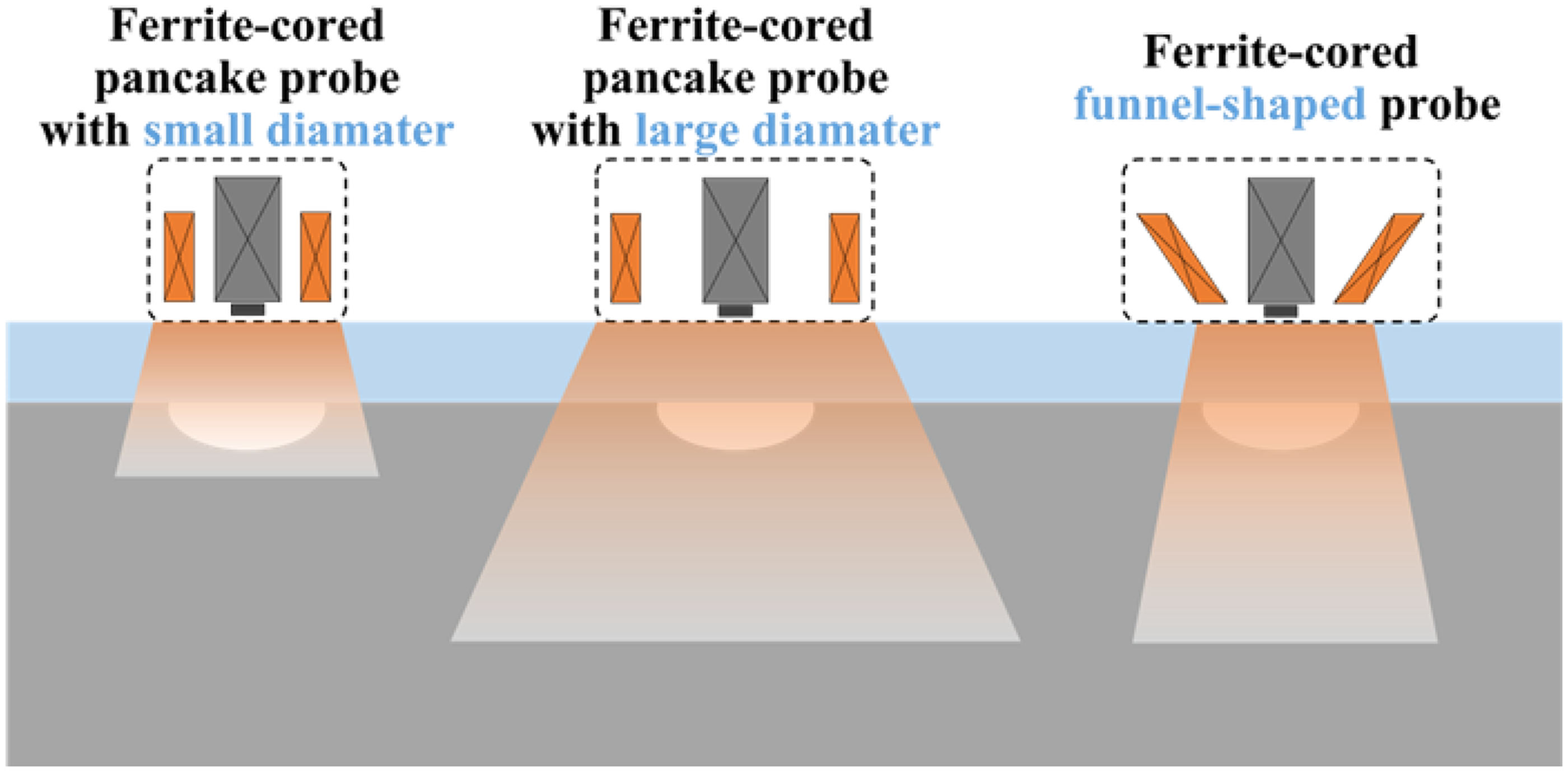
Characteristics of eddy current distribution for different probe structures.
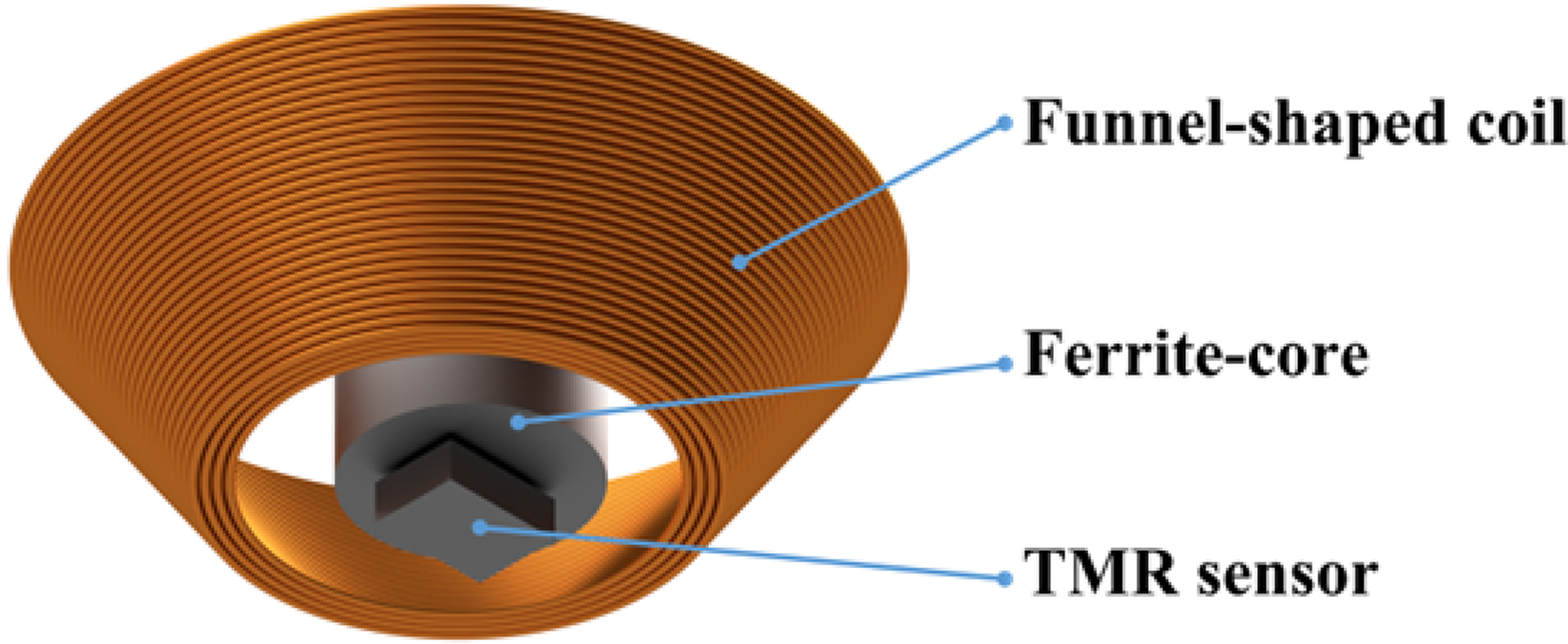
The structure of the ferrite-cored funnel-shaped probe.
Field formulation
In order to evaluate the testing performance of the proposed probe, a theoretical model has been established. The schematic illustration of the model with the proposed probe deployed over the surface of a double-layered conductor subject to a pitting corrosion is portrayed in Figure 3.
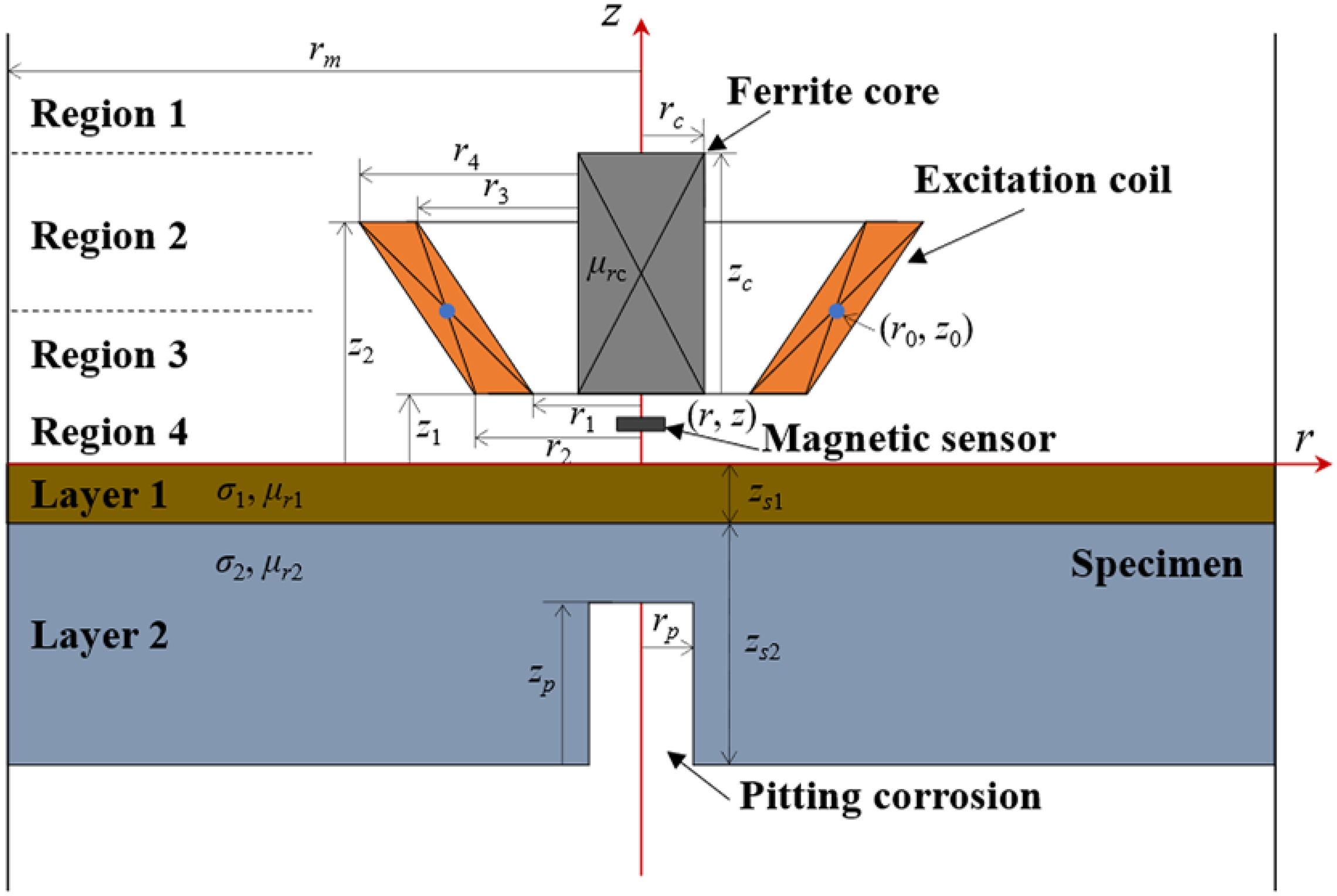
A 2D axi-symmetric model of PMEC testing of a pitting corrosion in a double-layered conductor.
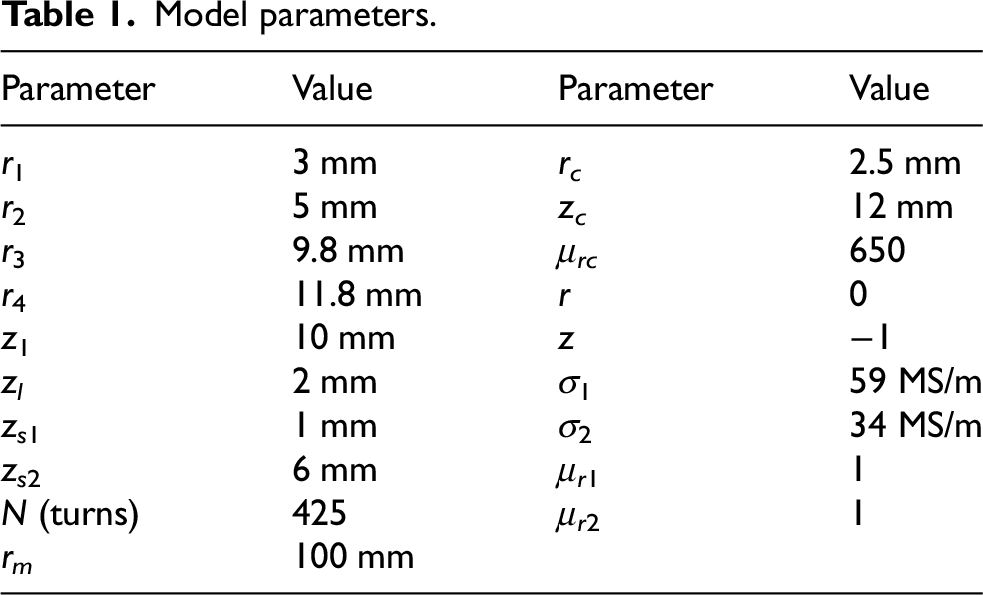
The probe comprises a funnel-shaped excitation coil along with a ferrite core for generating the focal incident field, and a magnetic sensor for sensing the net magnetic field which is the superposition of the incident/primary and eddy-current-induced/secondary fields. The model parameters used in theoretical simulations are tabulated in Table 1.
Model parameters.
Based on the extended truncated region eigenfunction expansion (ETREE) modelling.7,8 The closed-form expression of the net field in Region 4 can be written in the matrix notation as:


Theoretical simulations for analysis of probe testing performance
Based on the theoretical model, the testing performance of the proposed probe is analysed, and compared with that of the traditional ferrite-cored pancake probe. The schematic illustration of the model for a traditional ferrite-cored pancake probe is portrayed in Figure 4.
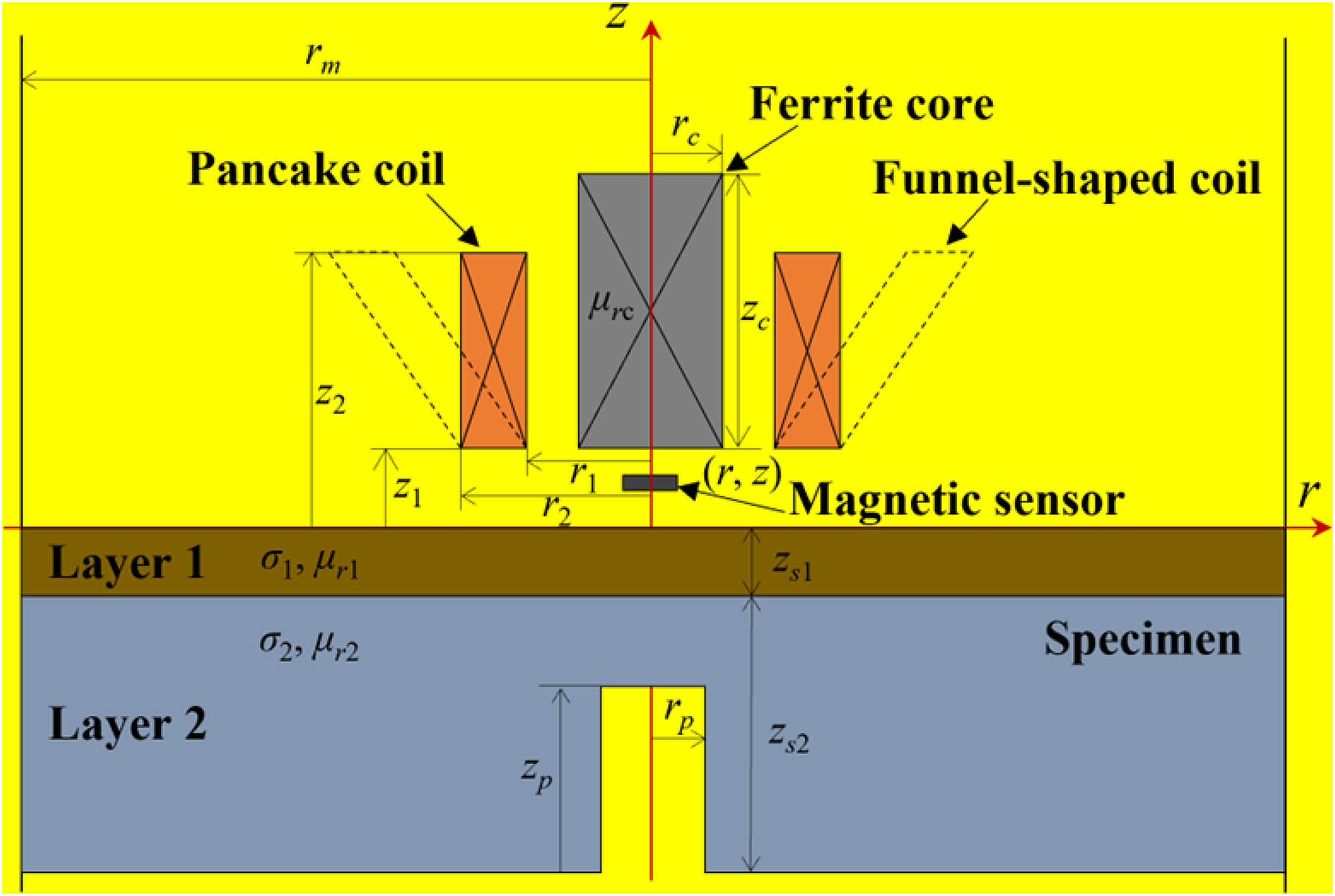
A 2D axi-symmetric model of PMEC testing with a traditional ferrite-cored pancake probe.
In order to intensively investigate the characteristics of eddy currents induced by different probes, a flawless conductive half-space is taken as the specimen, and introduced to the theoretical model. For each probe case, the eddy-current density averaged over one excitation cycle against the conductor depth is computed, and portrayed in Figure 5. At a specimen depth, it is computed by: (1) averaging the temporal amplitude of the eddy current density over the circular area with the diameter of 4r4; and (2) extracting the maximum value of the averaged eddy current density over one excitation cycle. Note that in Figure 5, the result for the ferrite-cored funnel-shaped probe is labelled as “Funnel” whilst “Pancake” is adopted regarding those for the traditional ferrite-cored pancake probe.
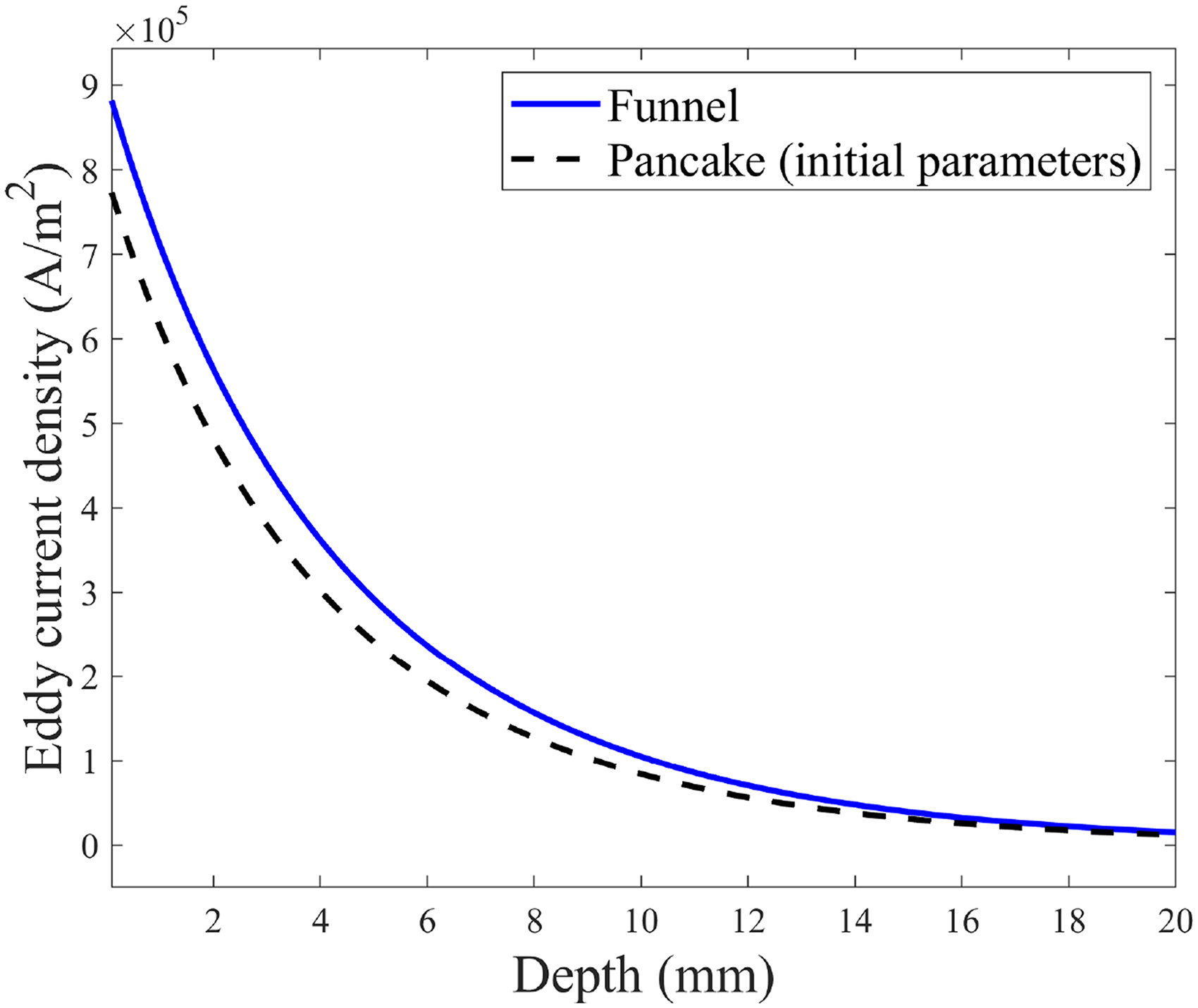
Averaged eddy current density in different conductor depth.
It can be observed from Figure 5 that at every conductor depth the averaged density of eddy currents induced by the proposed probe is higher than that of the pancake probe, indicating larger eddy-current penetration depth for the proposed probe. The standard penetration depth (SPD) where the eddy current density decreases to 37% of its value over the specimen surface, is utilised in a bid to find the inner radius of a pancake probe realising the eddy-current penetration depth comparable to the proposed probe (SPD = 5.1 mm). The SPD against the inner radius of a pancake coil is presented in Figure 6. As shown in Figure 6, the sought value of the pancake-probe inner radius is 5.7 mm which is approximately two times larger than the initial value (3.0 mm). The eddy-current distributions over the conductor surface for the proposed probe and pancake probe with the inner radius of 5.7 mm (namely “Pancake #1”) are shown in Figure 7 along with the values indicating the eddy-current planar concentration.
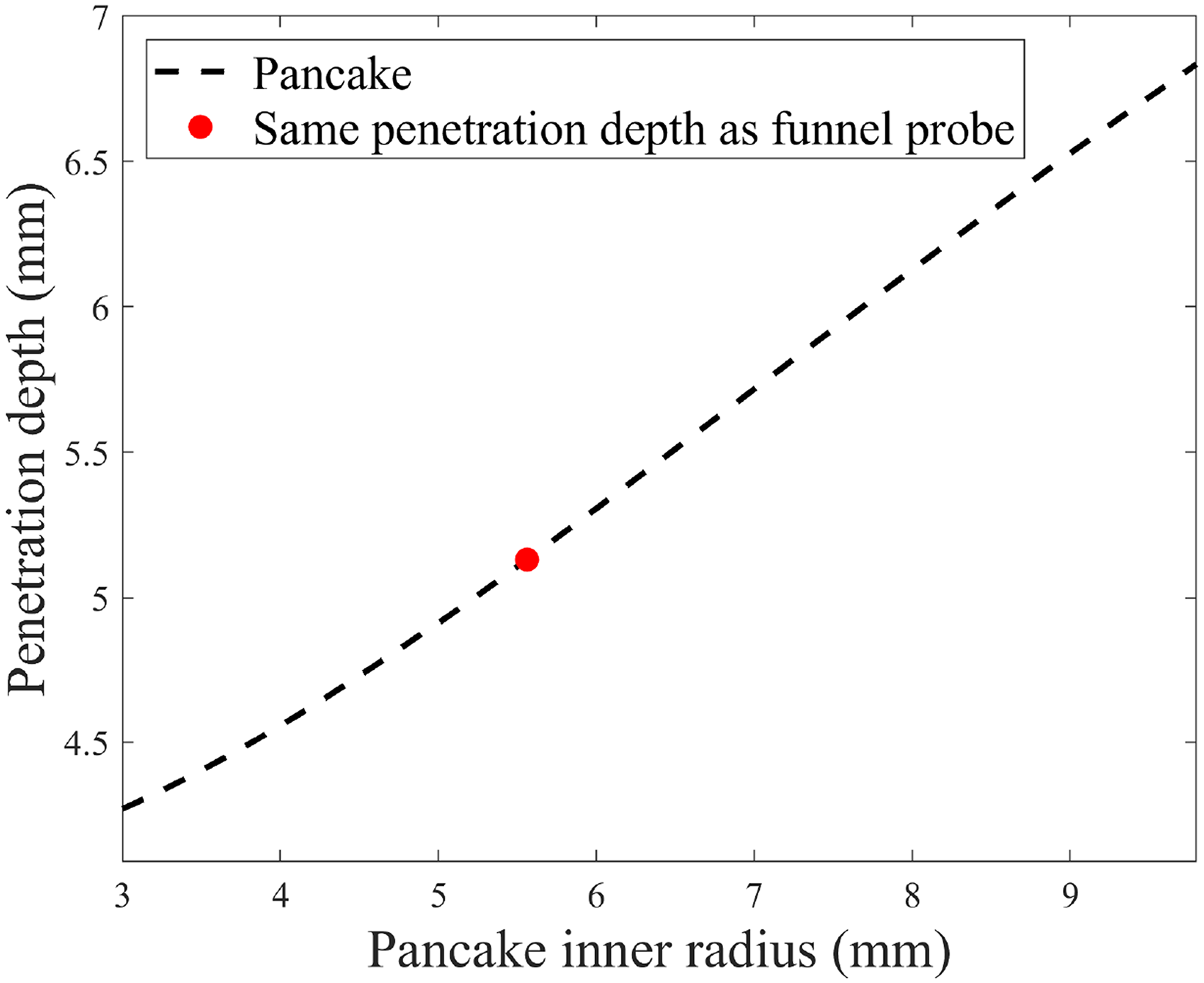
Standard penetration depth against the coil inner radius.
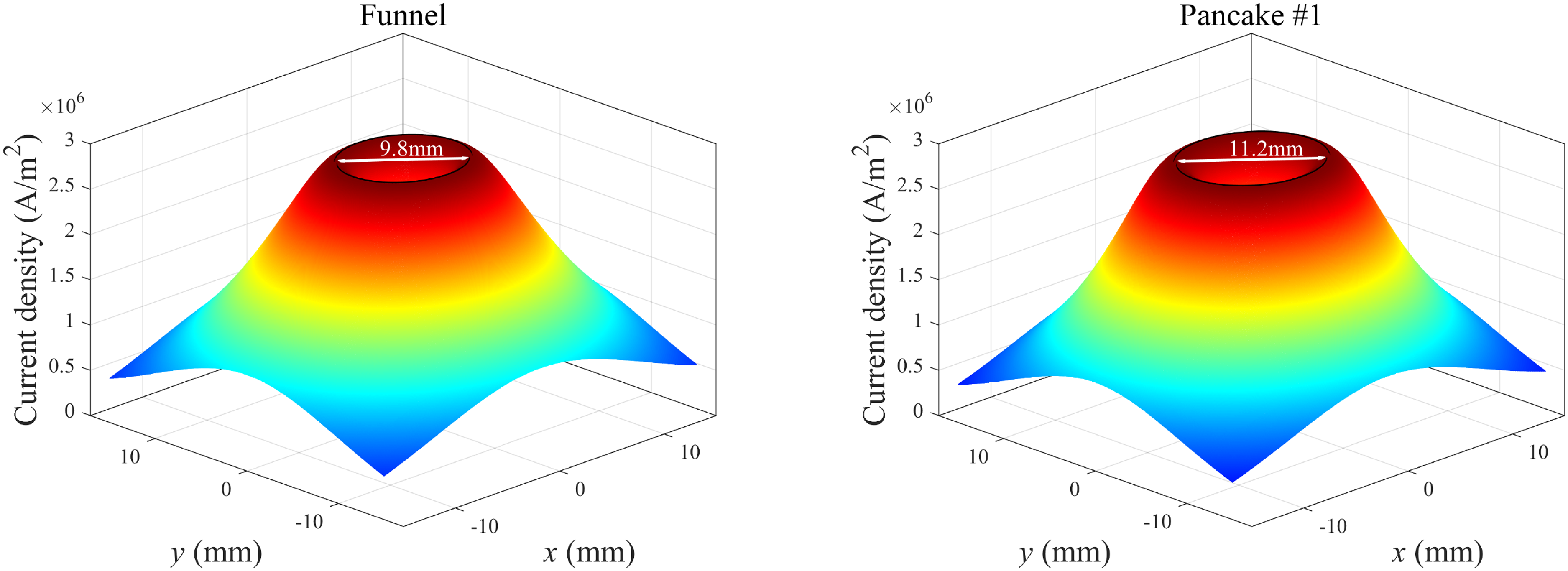
Eddy current distribution in horizontal direction for the proposed probe and Pancake #1.
It is noticeable from Figure 7 that the diffusion of eddy currents in the horizontal direction for Pancake #1 is more severe, and thus leads to low concentration degree of 11.2 mm, compared with 9.8 mm for the proposed probe. In light of this, the inner radius of the pancake probe is updated to achieve the eddy-current planar concentration comparable to the ferrite-cored funnel-shaped probe. The reciprocal of the diameter of the circular area enclosed by the maximum values of the eddy current density is defined as an indicator for the eddy-current planar concentration. For different inner radius of pancake probe, data in Figure 8. shows a negative relationship between planar concentration and inner radius.
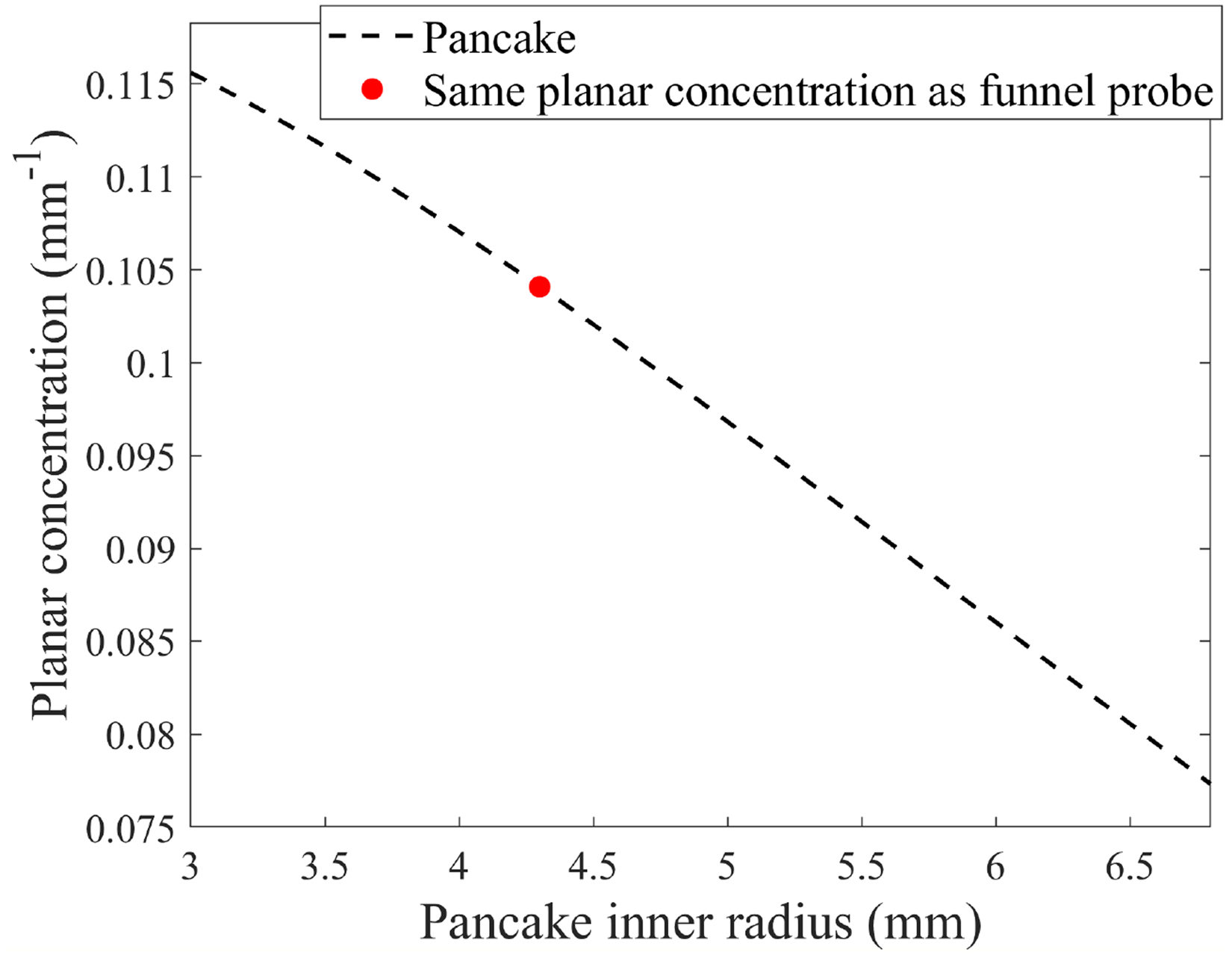
Planar concentration against coil inner radius.
Based on Figure 8, the inner radius of the pancake probe, which has a planar concentration comparable to that of the proposed probe, is found to be 4.3 mm. Whereas, the pancake probe with the inner radius of 4.3 mm (namely “Pancake #2”) has lower eddy-current penetration depth (4.7 mm), in contrast to the proposed probe. Therefore, the eddy-current penetration depth and planar concentration comparable to the proposed probe can barely be realised simultaneously for the pancake probe particularly with the inner radius from 4.3 mm to 5.7 mm.
Further investigation is carried out with the established model involving the pitting corrosion within the double-layered conductor. The testing sensitivity to the pitting corrosion with the variable depth and diameter is compared between the proposed probe and pancake probe. It is noteworthy that: (1) the testing signal is normalised to the maximum amplitude of the reference/defect-free signal; and (2) the differential signal where the peak value is extracted is acquired by subtraction of the normalised testing signal from the reference signal. The normalised signal responses to corrosions with different sizing parameters are exhibited in Figure 9 whilst the resulting differential signals are presented in Figure 10.
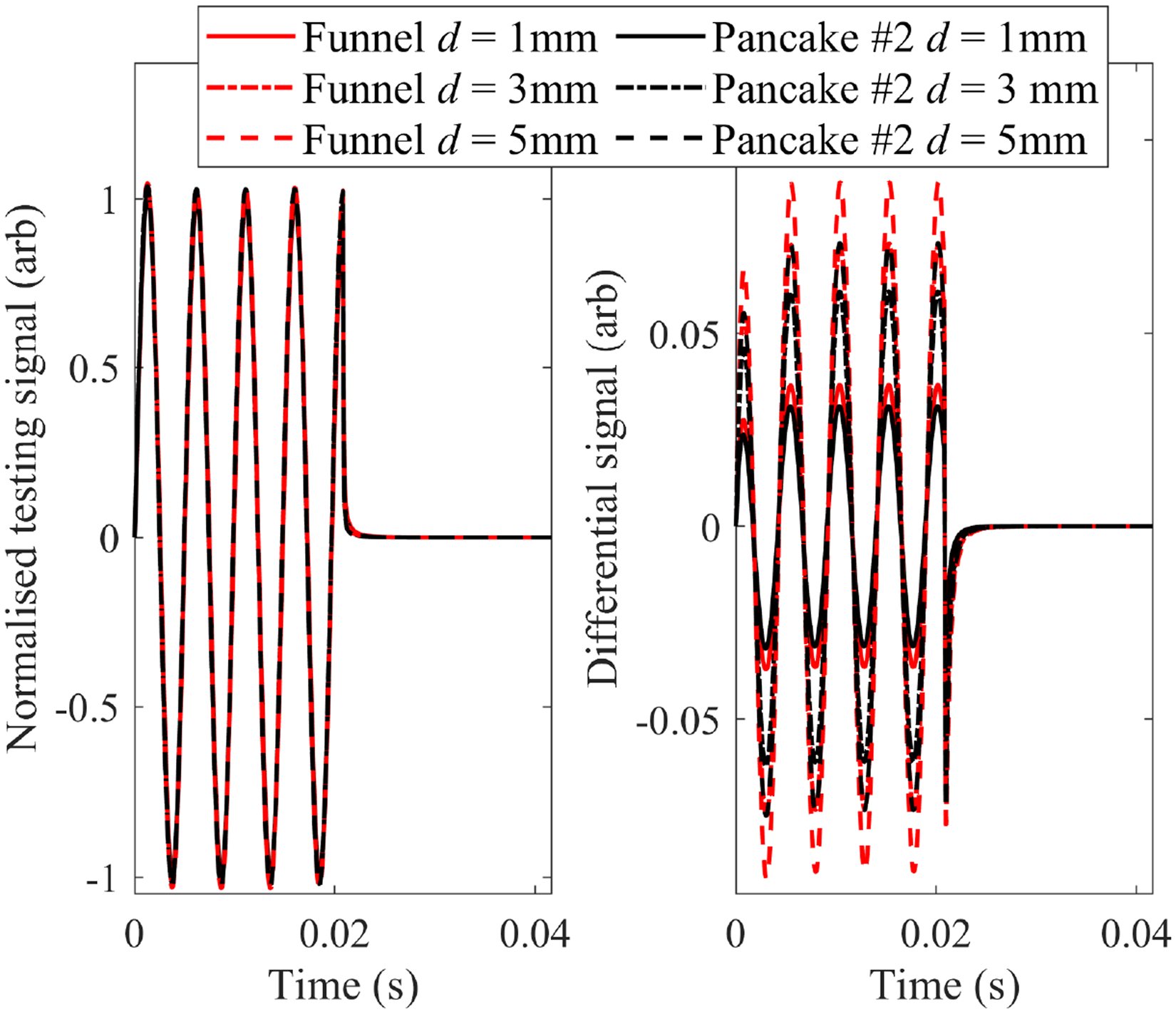
Normalised testing signals and differential signals under different corrosion depth.
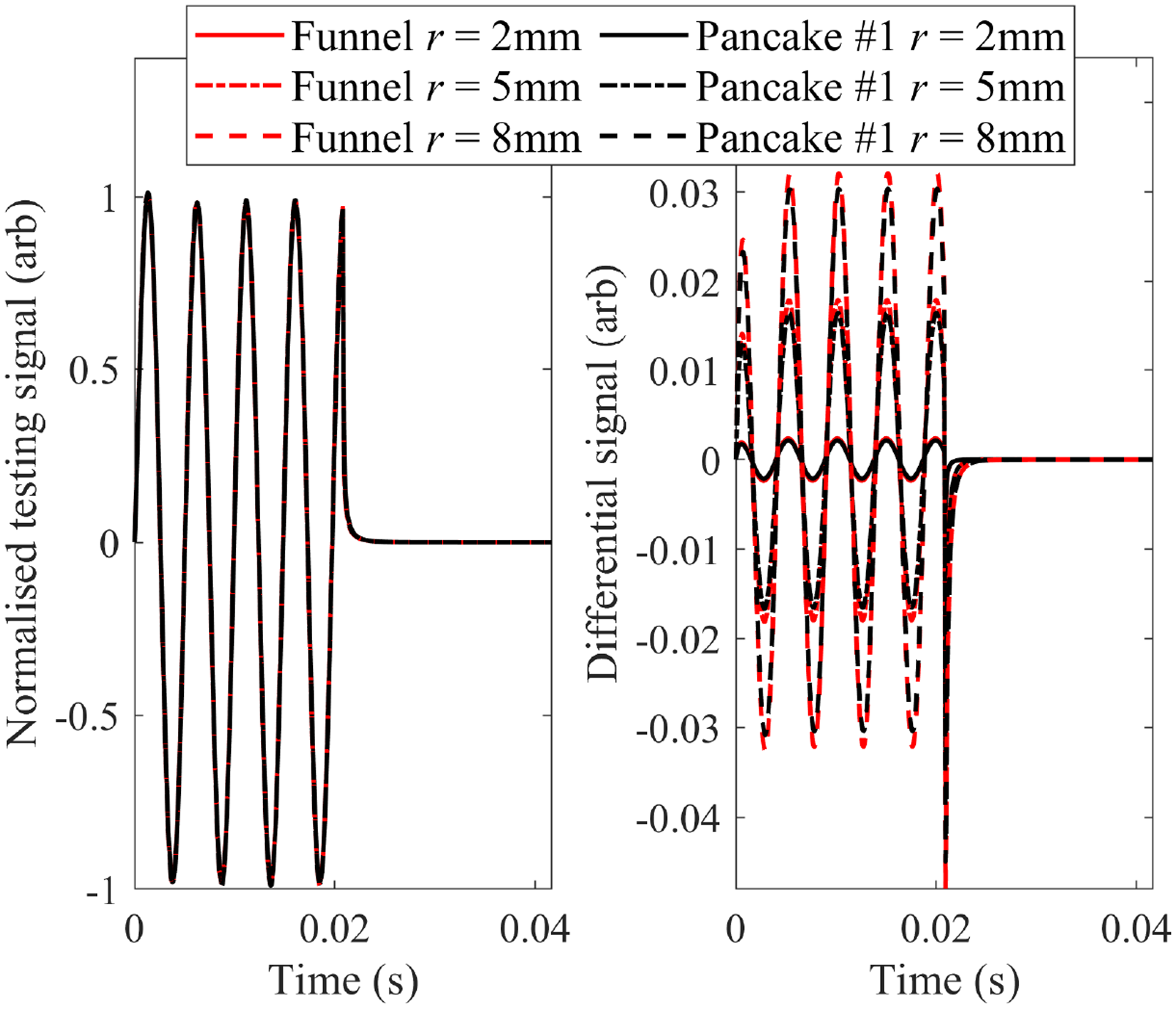
Normalised testing signals and differential signals under different corrosion radius.
The correlations of the peak values extracted from the differential signals with the corrosion depth and diameter are portrayed in Figures 11 and 12. The testing sensitivity of the proposed probe and Pancake #2 to the corrosion with the depth varying from 1 mm to 5 mm with an incremental step of 1 mm and fixed radius of 12 mm are portrayed in Figure 11 which can be observed that the proposed probe has higher testing sensitivity (i.e., the ratio of the peak value to the corrosion depth) than Pancake 2#.
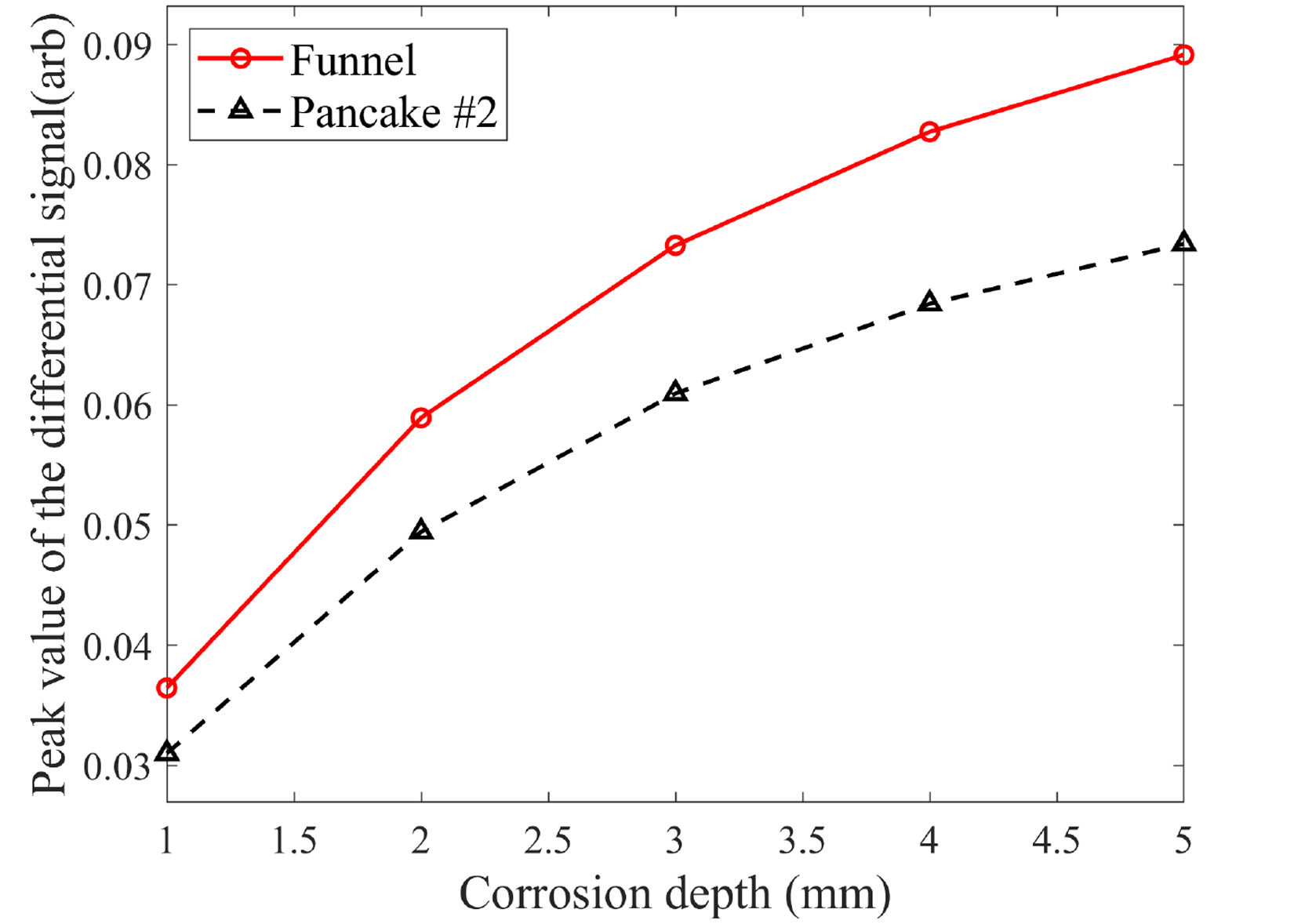
Peak values against corrosion depth.
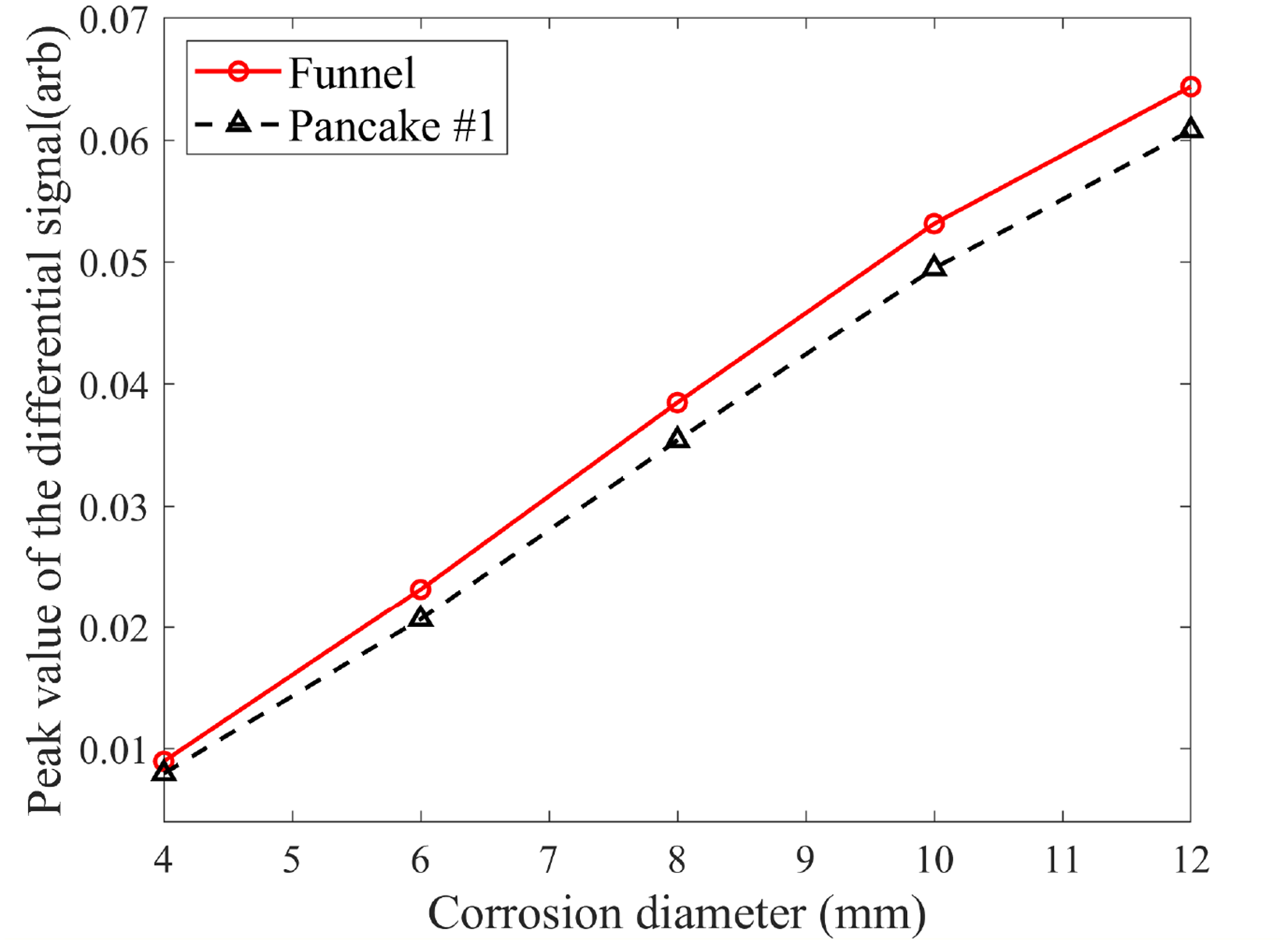
Peak values against corrosion diameter.
The testing sensitivity of the proposed ferrite-cored funnel-shaped probe to the corrosion with the radius varying from 4 mm to 12 mm with the step size of 2 mm and fixed depth of 1 mm is further compared with that of Pancake #1 and shown in Figure 12. It can be seen from Figures 11 and 12 that the ferrite-cored funnel-shaped probe is superior to Pancake #1 and Pancake #2 in terms of the peak value and its ratio to the corrosion depth. The theoretical simulations regarding the eddy-current characteristics and testing sensitivities of different probes reveal that for evaluation of pitting corrosion buried within the layered conductor, the ferrite-cored funnel-shaped probe is capable of balancing the eddy-current penetration depth and planar concentration, and thus enhances the testing sensitivity.
Experiments
In parallel to the theoretical simulations and analysis, experiments are conducted for imaging the subsurface pitting corrosion in a double-layered specimen. The ferrite-cored funnel-shaped probe and pancake probes with either same penetration depth (Pancake #1) or same planar concentration (Pancake #2) of eddy currents are employed to further scrutinise and compare the testing performance of each probe. The schematic illustration of the PMEC system is shown in Figure 13.
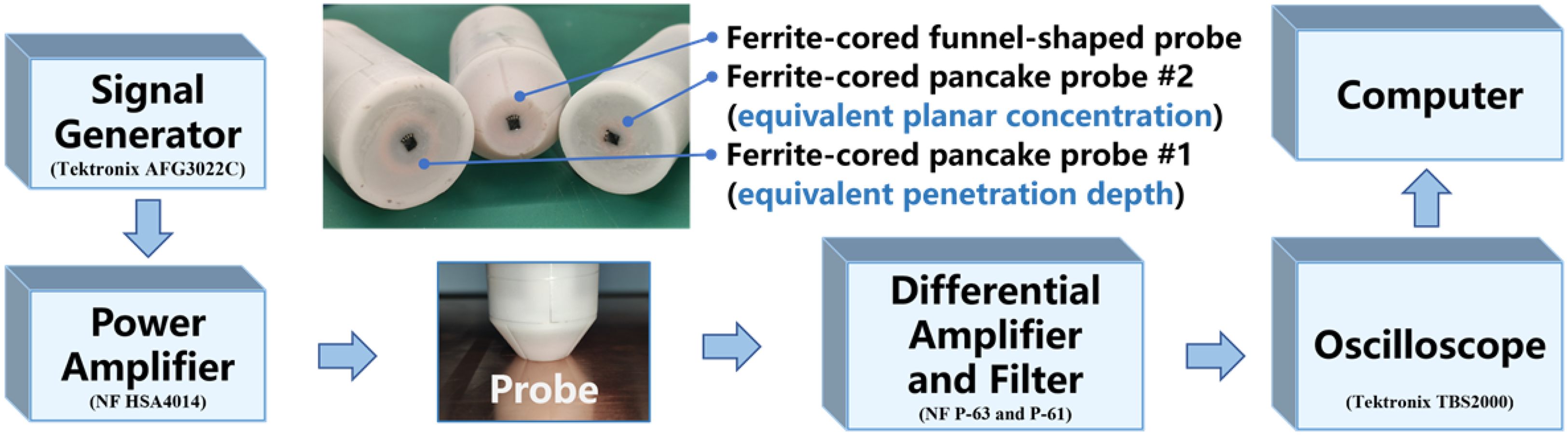
Schematic graph of the PMEC system.
The parameters of each probe and double-layered specimen are the same as simulations. The imitative pitting corrosions which are located in the surface of the bottom layer of the specimen are presented in Table 2 along with their sizing parameters.
Parameters of the imitative pitting corrosions.

2D scanning of each testing probe over the specimen is conducted for imaging the buried corrosion. At each scanning position, the testing signal is acquired, and further pre-processed by using the same processing procedures (i.e., the normalisation and subtraction for acquisition of differential signals) which are adopted in the simulations. The differential signals when the probe is positioned right over the defect centre are presented in Figure 14.
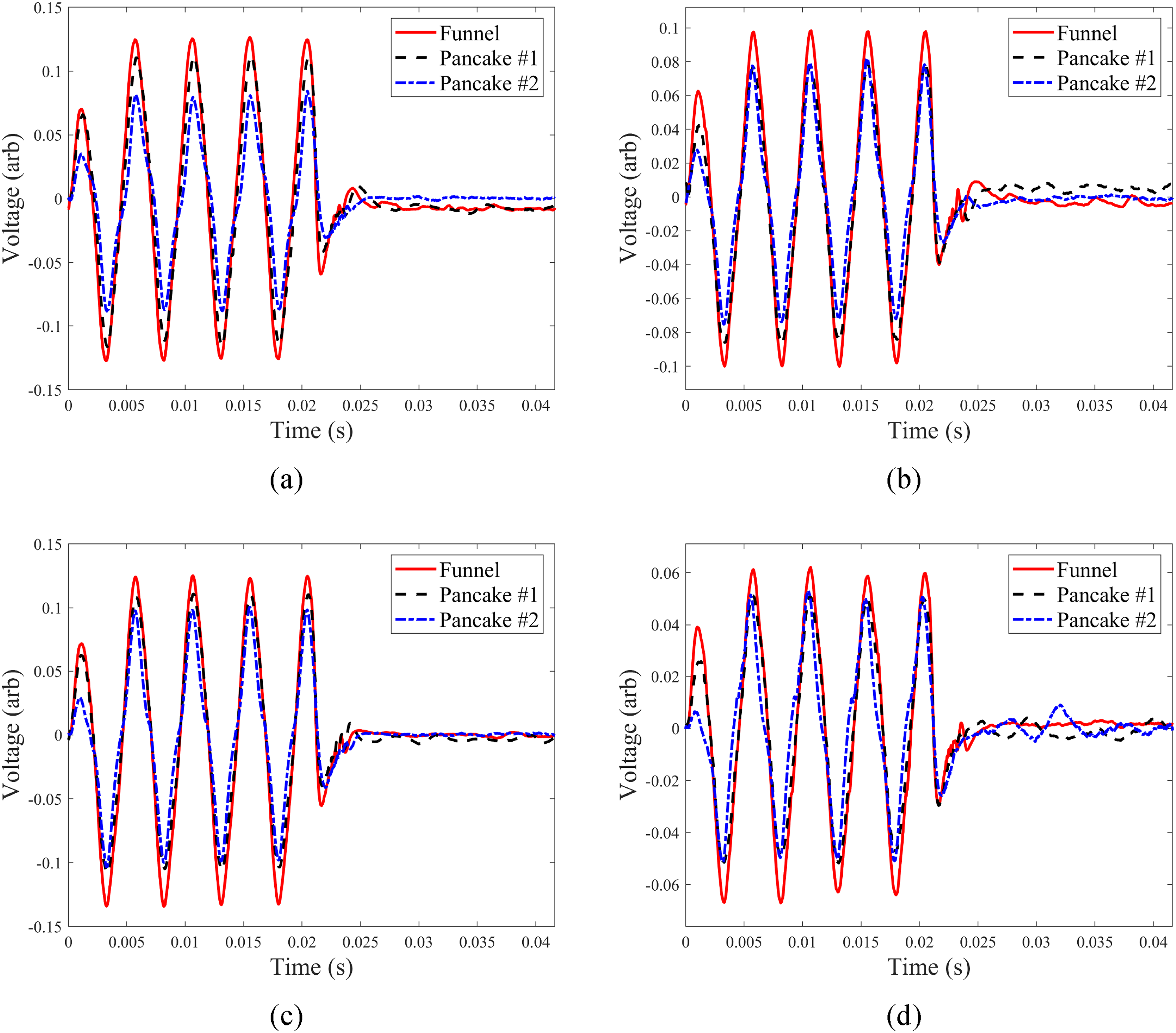
Differential signals of various corrosions. (a) Differential signals of corrosion #1. (b) Differential signals of corrosion #2. (c) Differential signals of corrosion #3. (d) Differential signals of corrosion #4.
It can be seen From Figure 14 that for each defect case the differential-signal magnitude of the proposed probe is the largest, compared with the pancake probes. This implies that the testing sensitivity of the ferrite-cored funnel-shaped probe to the buried corrosion is higher than that of the pancake probe, in spite of the optimisation regarding the pancake-coil dimension for realising either the eddy-current penetration depth or planar concentration comparable to the funnel-shaped probe. The testing performance of each probe is further quantitatively compared by analysing the peak value extracted from the differential signal. The comparison result is exhibited in Figure 15

Comparison of the peak value for different probes.
It is noticeable from Figure 15 that for every defect scenario the peak value for the ferrite-cored funnel-shaped probe ranks the first. Further analysis reveals that compared with the pancake probe the averaged peak value can be increased by 23% with the ferrite-cored funnel-shaped probe, indicating the highest testing sensitivity achieved by using the proposed probe in lieu of the pancake probes. With the 2D scanning, the extracted peak values are further utilised for producing the defect images. For every probe, the imaging results regarding various corrosion scenarios are portrayed in Figure 16.
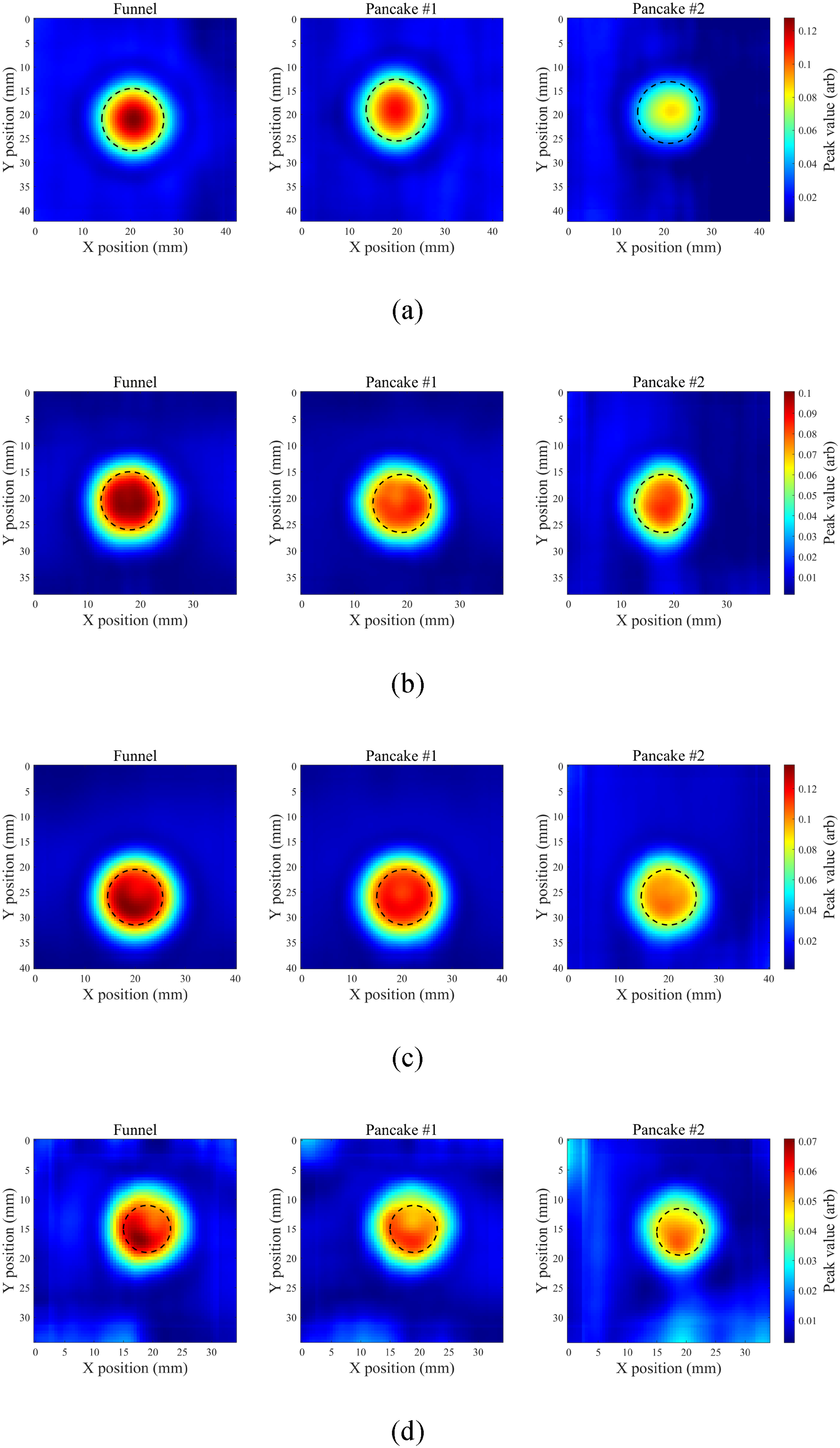
Imaging results for various corrosion scenarios. (a) Imaging results for corrosion #1. (b) Imaging results for corrosion #2. (c) Imaging results for corrosion #3. (d) Imaging results for corrosion #4.
It can be observed from Figure 16 by intuitively analysing the image contrast that the ferrite-cored funnel-shaped probe has the highest testing response to the corrosion buried within the sample. This further implies that by using the proposed probe the eddy-current penetration depth and planar concentration can be balanced, enhancing the testing sensitivity in defect visualisation. In contrast, the optimal testing sensitivity can barely be sought through the optimisation of the pancake probe structure for improvement of the testing performance based on either eddy-current penetration depth or planar concentration.
Conclusion
In this paper, a ferrite-cored funnel-shaped probe for PMEC evaluation of the buried corrosion in conductive heterostructures is proposed and analysed through theoretical and experimental investigation. A semi-analytical model of PMEC testing of the pitting corrosion with the proposed probe has been established, along with the formulated closed-form expressions of field quantities. Through the theoretical analysis regarding the penetration depth and planar concentration of eddy currents induced within the conductor, the advantage of the ferrite-cored funnel-shaped probe over the pancake probe is identified. This is further affirmed via experiments of PMEC evaluation and imaging of subsurface corrosion in a double-layered conductor. The results from theoretical simulations and experiments reveal that the ferrite-cored funnel-shaped probe is superior to the pancake probe in achieving the optimal penetration depth and planar concentration of eddy currents simultaneously. This would benefit the enhancement of the testing sensitivity in detection, characterisation and quantitative screening of the pitting corrosion hidden within the conductive heterostructure.
Footnotes
Acknowledgements
The authors would like to thank the National Magnetic Confinement Fusion Program of China (Grant number: 2019YFE03130003), National Natural Science Foundation of China (Grant numbers: 52177007, 52311540018, 11927801) and Fundamental Research Funds for the Central Universities of China (Grant number: XZY022022011) for funding this research.

Funding
The authors received no financial support for the research, authorship, and/or publication of this article.
Declaration of conflicting interests
The authors declared no potential conflicts of interest with respect to the research, authorship, and/or publication of this article.