







Abstract
Background
Ferromagnetic materials are widely used in industry, requiring precise quality assessment. Magnetic adaptive testing (MAT) provides higher sensitivity and simpler operation than traditional NDT methods but is limited by insufficient feature utilization.
Objective
To enhance the assessment of plastic deformation in SS400 steel by fully exploiting MAT signal information.
Methods
A multi-feature extraction and fusion evaluation (MFE-FE) method was developed to extract diverse features from raw and integrated MAT signals—including original, rectified, histogram, and envelope forms—and combine them through a fusion algorithm.
Results
Predictive models based on the fused features were experimentally validated, showing markedly improved detection accuracy and sensitivity compared with conventional approaches.
Conclusions
The proposed MFE-FE method maximizes MAT signal utilization, enabling more accurate evaluation of plastic deformation and offering strong potential for industrial applications.
Introduction
Ferromagnetic metallic materials are widely used in modern industries due to their excellent magnetic properties and engineering performance. With technology advancement, the demand for precise quality assessment of these materials is surging continuously. As an emerging nondestructive testing (NDT) technique, magnetic adaptive testing (MAT) offers superior sensitivity and simpler operation compared to traditional magnetic NDT methods. 1 It has been successful applied to evaluate material damage.2–6 However, the MAT still faces significant limitations in practical applications. Conventional MAT not only suffers from insufficient diversity in feature extraction, but also relies on an overly simplistic feature evaluation framework. In most cases, feature quality is assessed solely by the slope of feature variation with respect to material damage, i.e., sensitivity. Although several studies have attempted to refine sensitivity calculations or to apply smoothing operations to two-dimensional sensitivity evolution images constructed from feature sets, these approaches also face notable limitations.7–9 The former offers only limited dimensional expansion and thus may yield marginal performance improvement, while the latter often leads to ambiguous physical interpretations, making it difficult to elucidate the intrinsic mapping between damage evolution and feature variation.
This paper proposes a multi-feature extraction and fusion evaluation (MFE-FE) method based on MAT for assessing the plastic deformation of SS400 steel. MFE-FE extracts diverse features from raw and integrated time-domain MAT signals—including original, rectified, histogram, and envelope forms—and employs a fusion algorithm for more accurate evaluation. Specifically, the fusion algorithm evaluates individual features comprehensively from three complementary perspectives, i.e., correlation with plastic deformation, stability against measurement fluctuations, and discriminability among different deformation states. MFE-FE not only enables richer and more diverse feature extraction, but also provides a tool for more comprehensive feature evaluation. Predictive models built on these features are experimentally validated, showing that the approach significantly improves detection accuracy and sensitivity, with valuable implications for industrial applications.
Experimental
Specimens
This study investigated SS400 steel, a typical ferromagnetic metallic material for reactor pressure vessel. Standard plate tensile specimens were machined with geometry and dimensions shown in Figure 1 and (a) thickness of 5 mm.
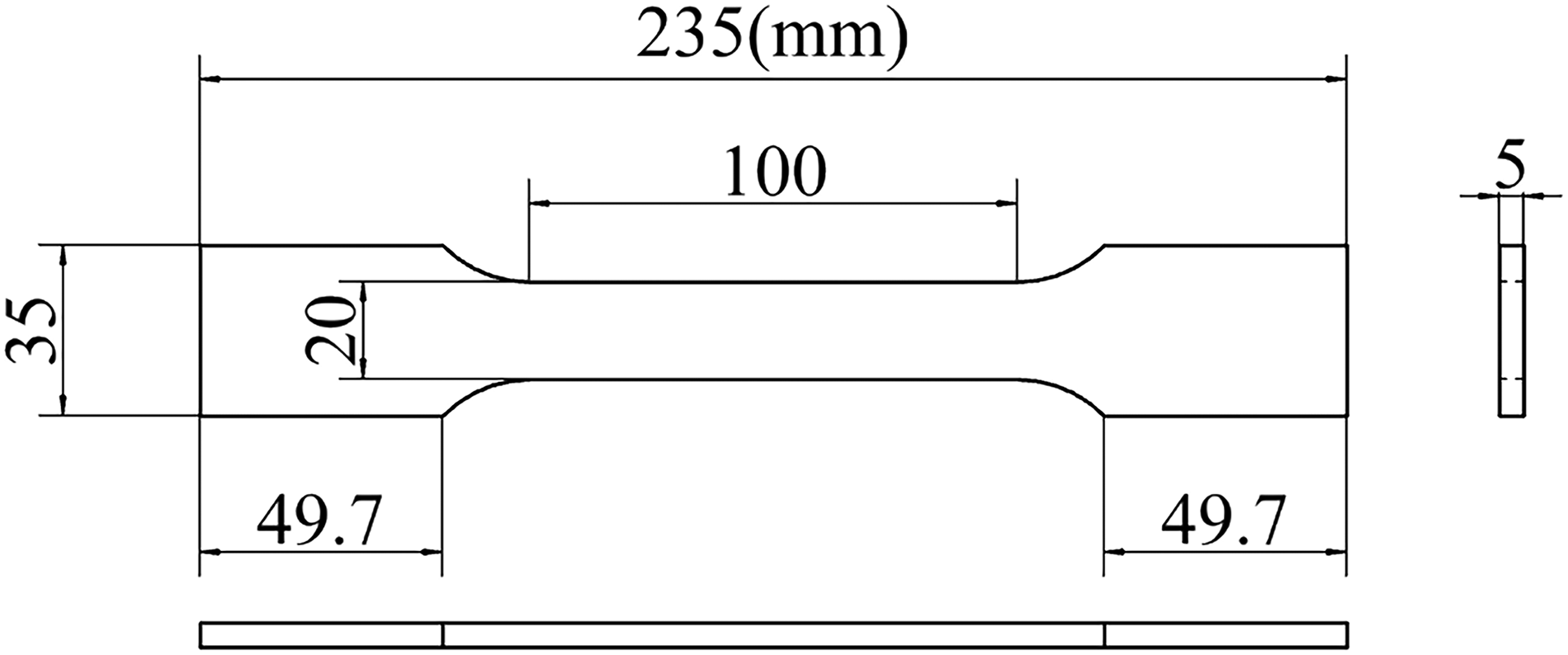
The geometry and dimensions of the specimens (unit: mm).
The specimen surfaces were polished to remove micro-grooves that may cause stress concentration. Tensile tests were conducted at a strain rate of 1 mm/min, with strain measured using an extensometer. Based on the stress–strain curve, SS400 steel specimens were unloaded at predefined strain levels to achieve plastic deformations ranging from 0% to 15% in 1% interval, with one specimen prepared for each plastic deformation level.
Magnetic adaptive testing
Based on the principle of the MAT described in Reference, 1 a MAT system was established. Figure 2 shows the flowchart of the MAT system, a triangular excitation signal with constant slope and increasing amplitude is generated and amplified to drive the excitation coil, producing an approximately linear magnetic field in the specimen. The response voltage, induced in the detection coil, is amplified, filtered, and acquired for further analysis. This voltage signal is approximately proportional to the differential permeability of the material. By discretizing the signal, a set of features is extracted to characterize the magnetic hysteresis behavior in the unsaturated region.
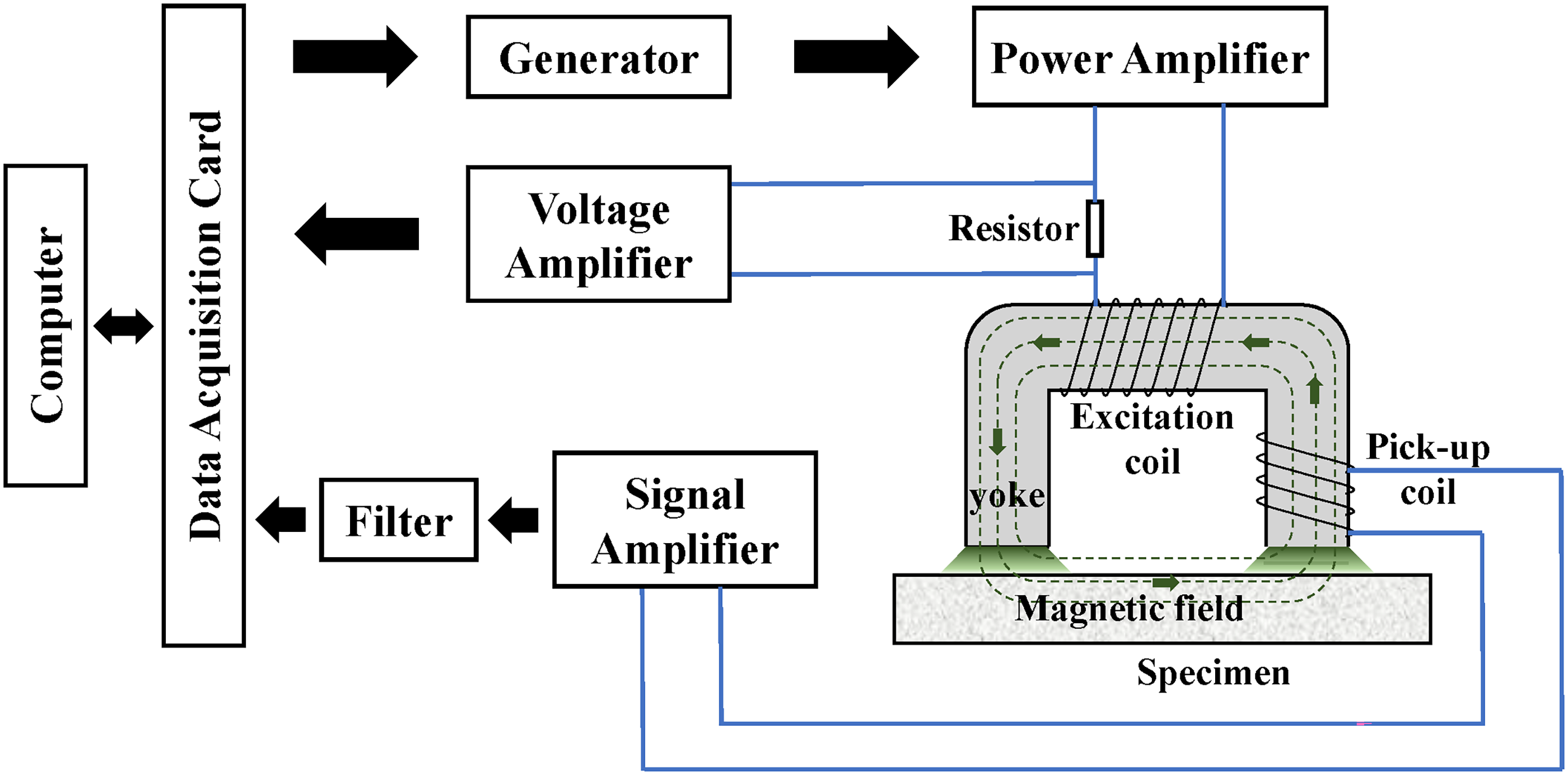
Flowchart of the MAT system used in NDT experiments.
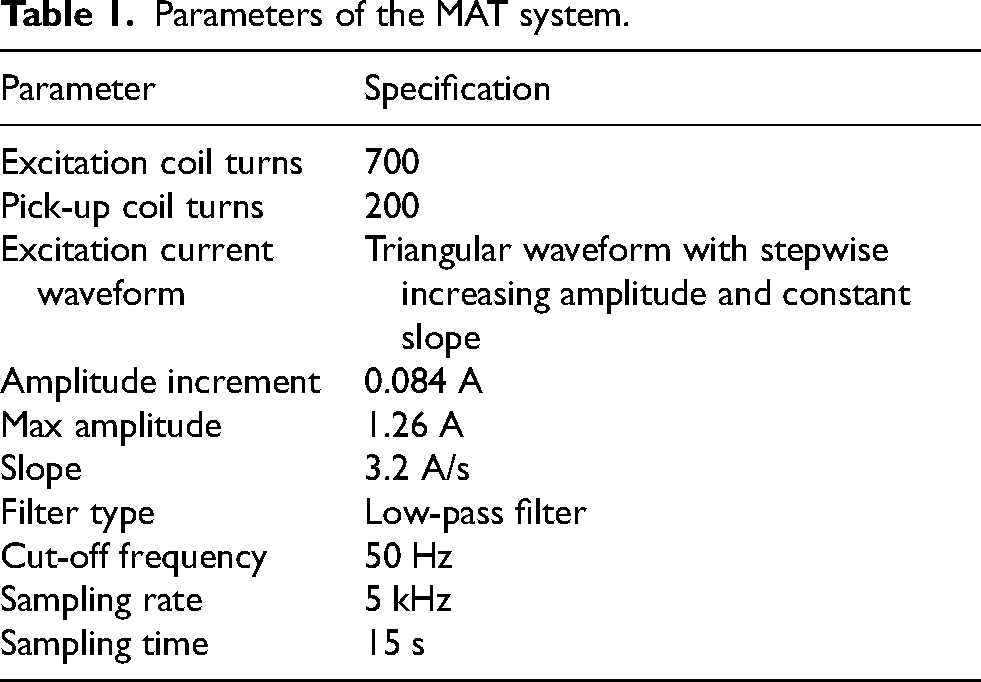
The developed MAT probe consists of a U-shaped permalloy yoke (45 mm high, 7.5 mm wide, 15 mm thick, 25 mm leg spacing), and the other MAT parameters are listed in Table 1. For each measurement, the sample was fixed at the same point, with three repetitions, each consisting of ten data acquisitions, resulting in 30 data sets per sample.
Parameters of the MAT system.
Method
Feature extraction
As previously noted, MAT features are closely related to the differential magnetic permeability, which is influenced by factors such as microstructure and stress state, making accurate distinction challenging. Plastic deformation also alters other magnetic properties beyond permeability, making conventional MAT features insufficient. This underscores the need for multi-feature extraction and analysis. Figure 3 shows the multi-feature extraction process based on raw and integral time-domain signals. The raw signal reflects differential magnetic permeability, while the integral signal represents magnetic flux density. All features are normalized to the 0–1 range before evaluation and subsequent predictive model development.
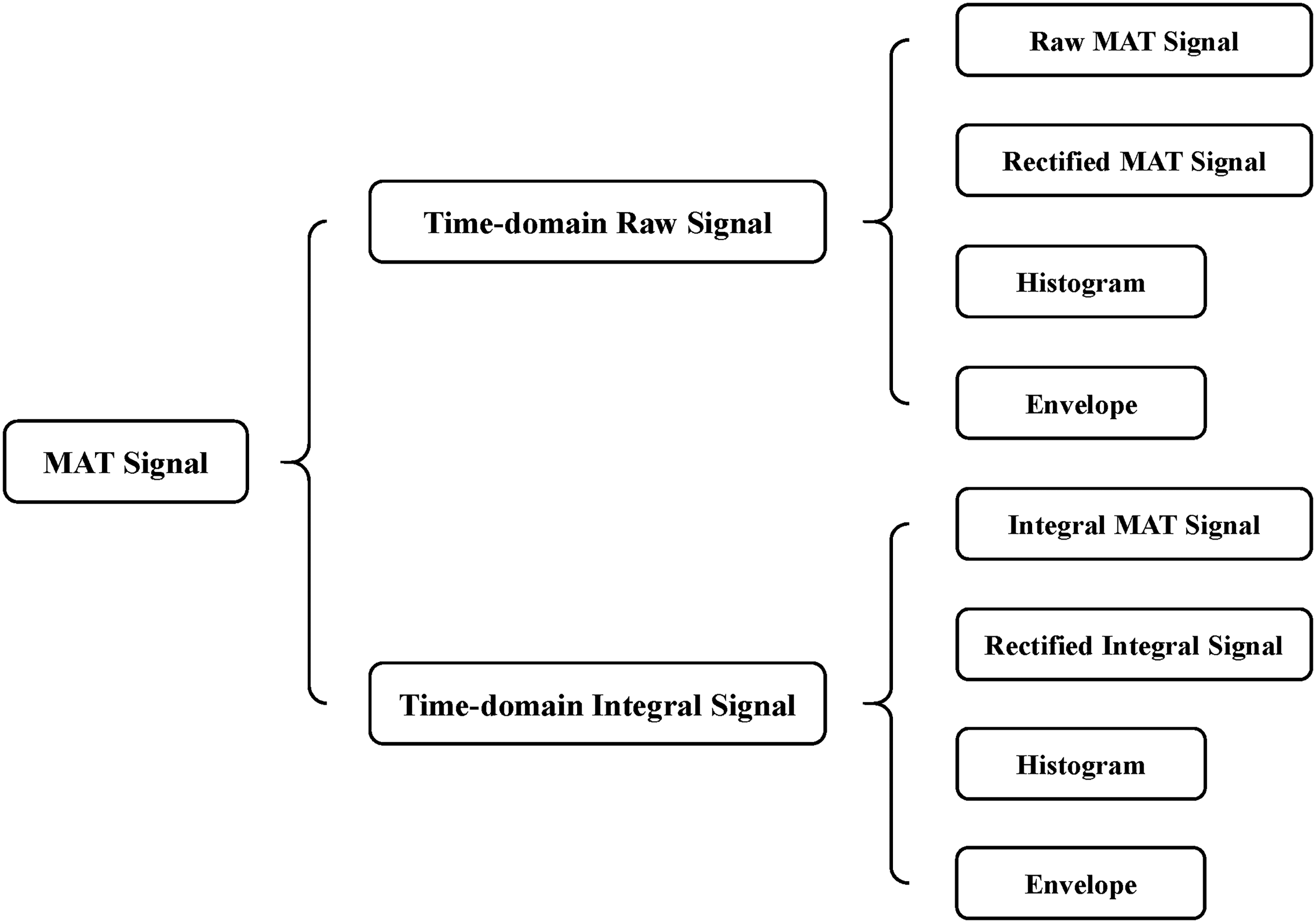
Multi-feature extraction for MAT.
The raw MAT signal in the time domain is defined by Eq. (1), where 
Features extracted from the raw MAT signals.
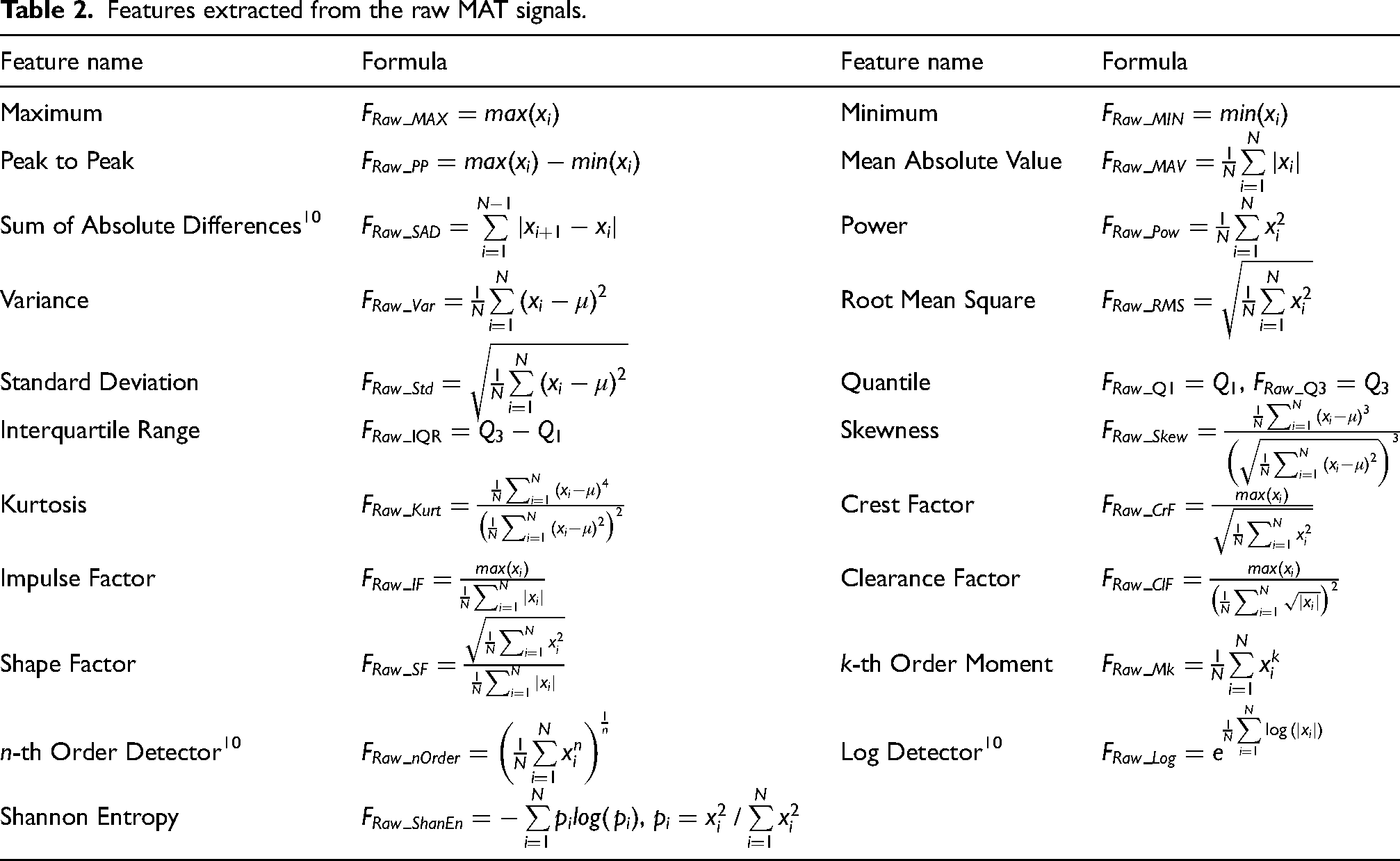
The rectified MAT signal is the absolute value of the raw MAT signal. In addition to the feature extraction methods for the raw MAT signal, an additional feature is extracted from the rectified signal. Specifically, burstiness is closely related to the abruptness and intensity of collective magnetic domain reversal events during magnetization and is defined as follows
10
:

Feature extraction methods, as described in sections 2.2 and 3.1, were applied to the MAT time-domain integral signals.
Feature evaluation
The features extracted from the MAT signals in section 3.1 were compiled into a set of 800 attributes, which were then normalized to the[0,1] range for evaluation. This paper presents a fusion evaluation algorithm for feature assessment, similar to the approach in. 10 The algorithm evaluates features using three criteria: correlation, stability, and discriminability, as illustrated in Figure 4.
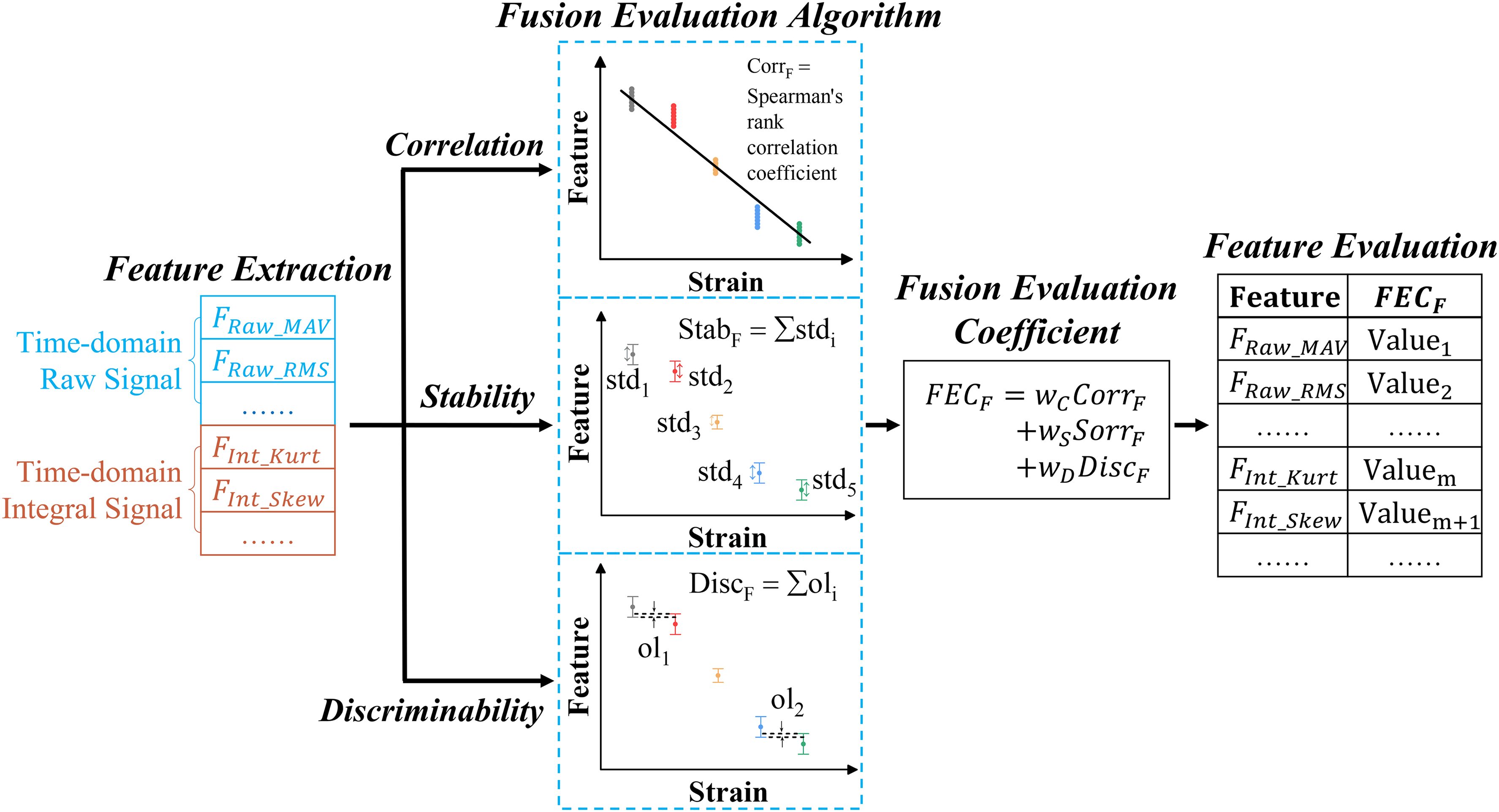
Schematic of the fusion evaluation algorithm.
An effective feature should correlate strongly with plastic deformation. The spearman correlation coefficient is used to quantify the monotonic relationship between each feature and deformation:

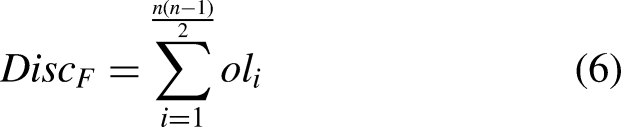
The fusion evaluation coefficient for each feature in the set is computed as:
A higher
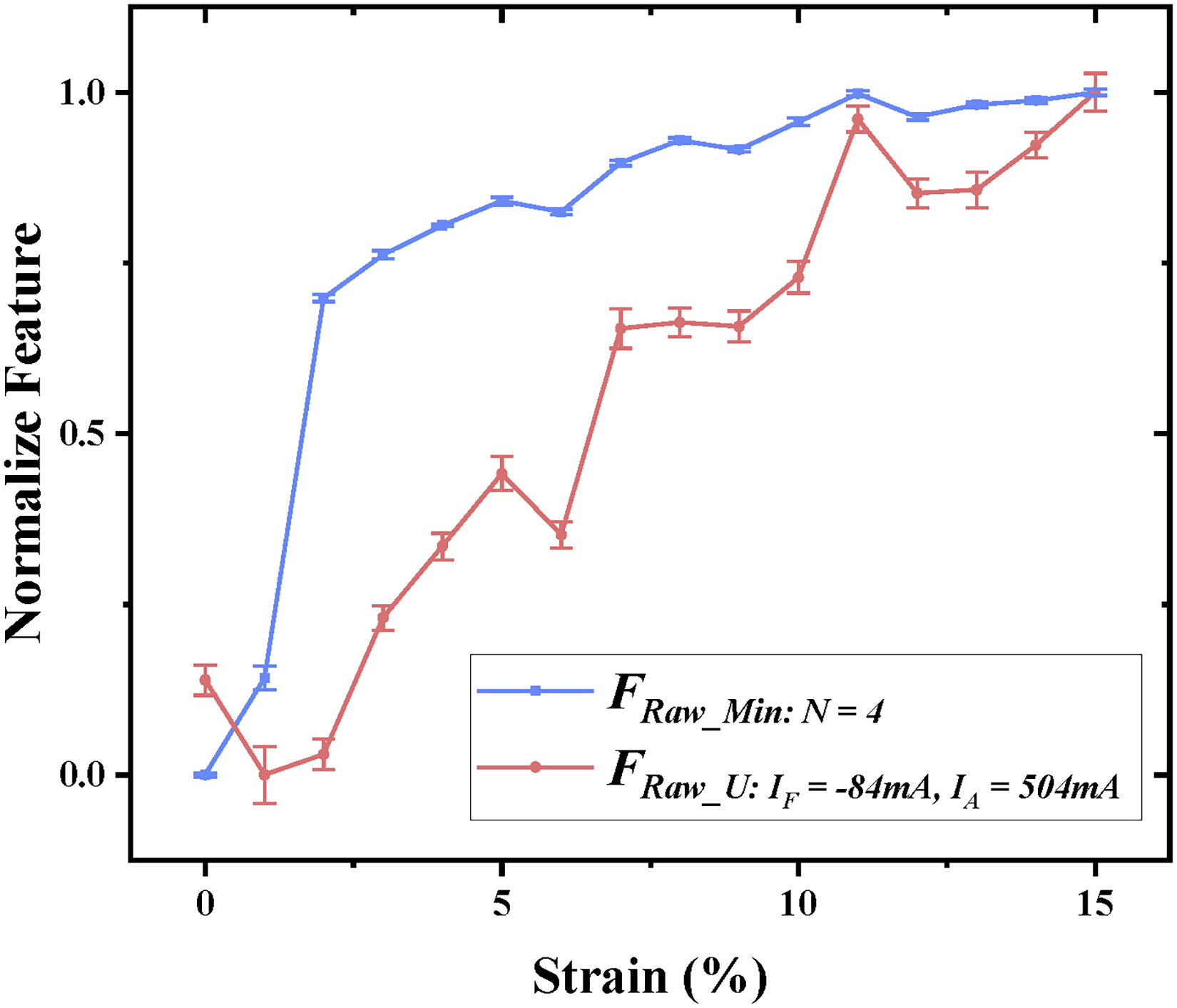
Comparison of the variations in
Results and discussion
This section presents plastic deformation prediction models for SS400 steel based on the MAT features evaluated in section 3.2. Two datasets are used: a complete dataset for predicting known plastic deformations and an incomplete dataset for predicting unknown ones. The complete dataset includes all deformation levels, with 80% of each used for training and 20% for testing. In the incomplete dataset, samples with 7% deformation are reserved for testing, and the rest for training. Model performance is evaluated using the coefficient of determination (
Prediction results based on the complete dataset
Figure 6 illustrates the performance of different models as a function of the number of selected MAT features (ranked by
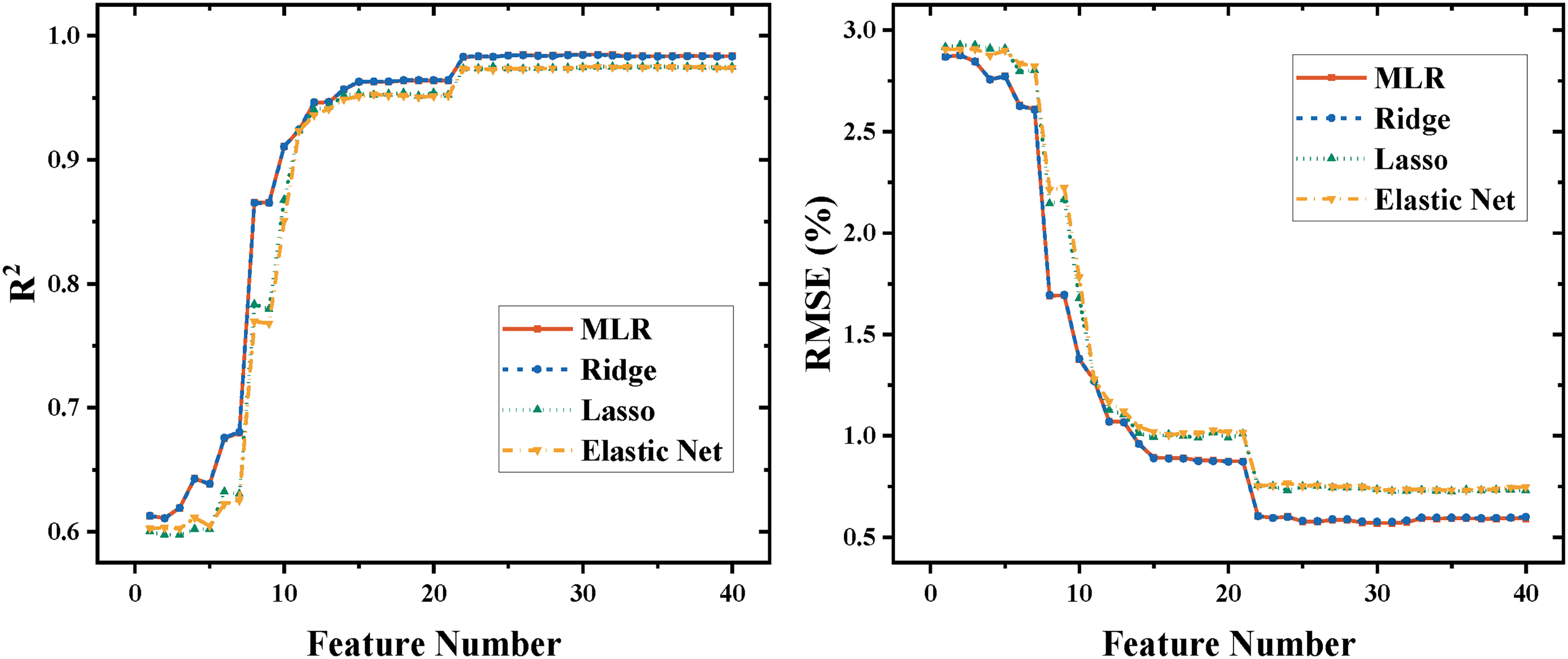
Prediction results of various models using the complete dataset. (Left)
Figure 7 compares the prediction accuracy of models developed using the MFE-FE method (with the optimal number of features determined from Figure 6) and the conventional MAT method, based on the complete dataset. The results clearly show that models developed using the MFE-FE method exhibit significantly higher
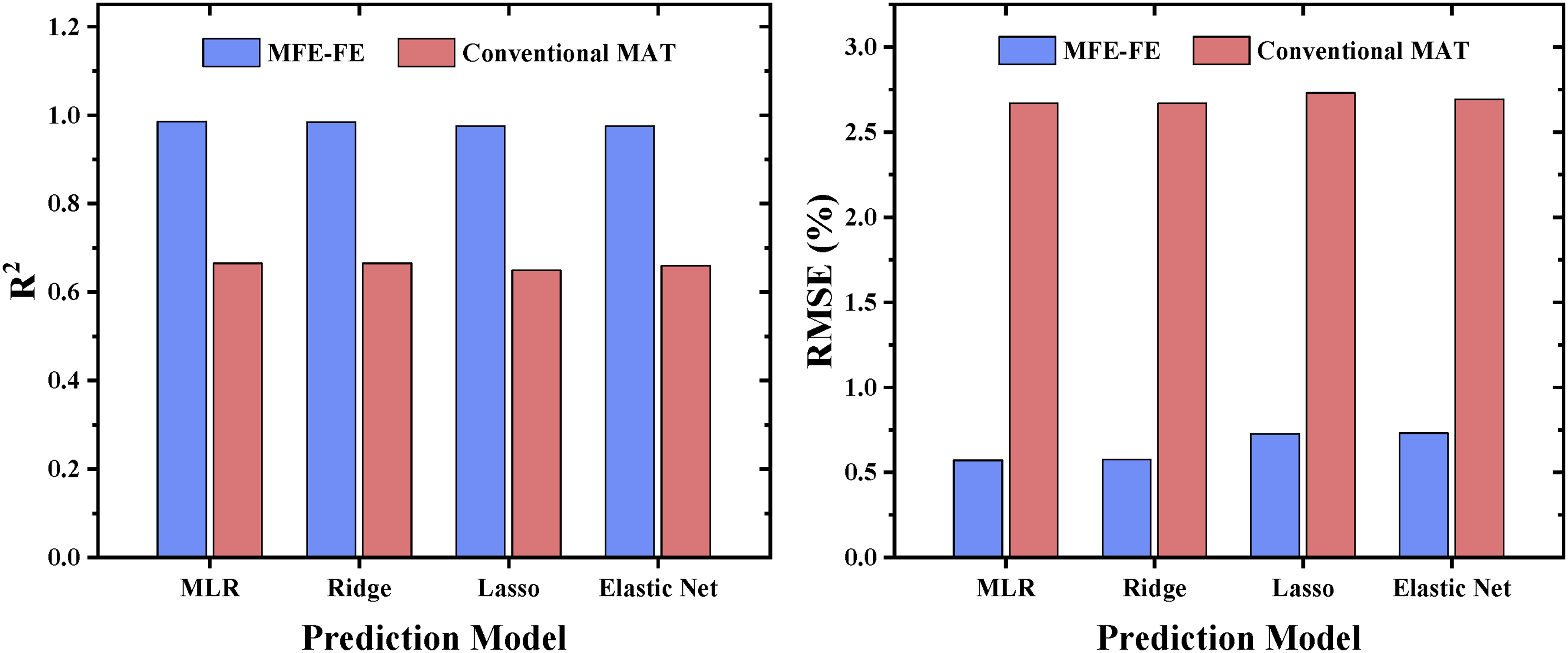
Comparison of prediction accuracy for models developed using the MFE-FE method and conventional MAT method based on complete dataset.
Prediction results based on the incomplete dataset
Figure 8(left) shows the prediction performance of different models using the incomplete dataset. The RMSE is notably lower when more features are used, indicating better predictive accuracy. However, when fewer features are used, model accuracy tends to decrease as feature count increases. This may be due to the high correlation among the top-ranked features, leading to multicollinearity and a decline in predictive performance. Future studies could incorporate principal component analysis (PCA). Figure 8(right) compares the prediction accuracy of models developed using the MFE-FE method—employing the optimal number of features determined from Figure 8(left)—and conventional MAT method, based on the incomplete dataset. The results show that models based on the MFE-FE method achieve significantly lower RMSE, demonstrating superior accuracy and generalization capability in predicting unknown plastic deformations. This improvement highlights the effectiveness of the MFE-FE method in selecting informative and robust features compared to the conventional MAT approach.
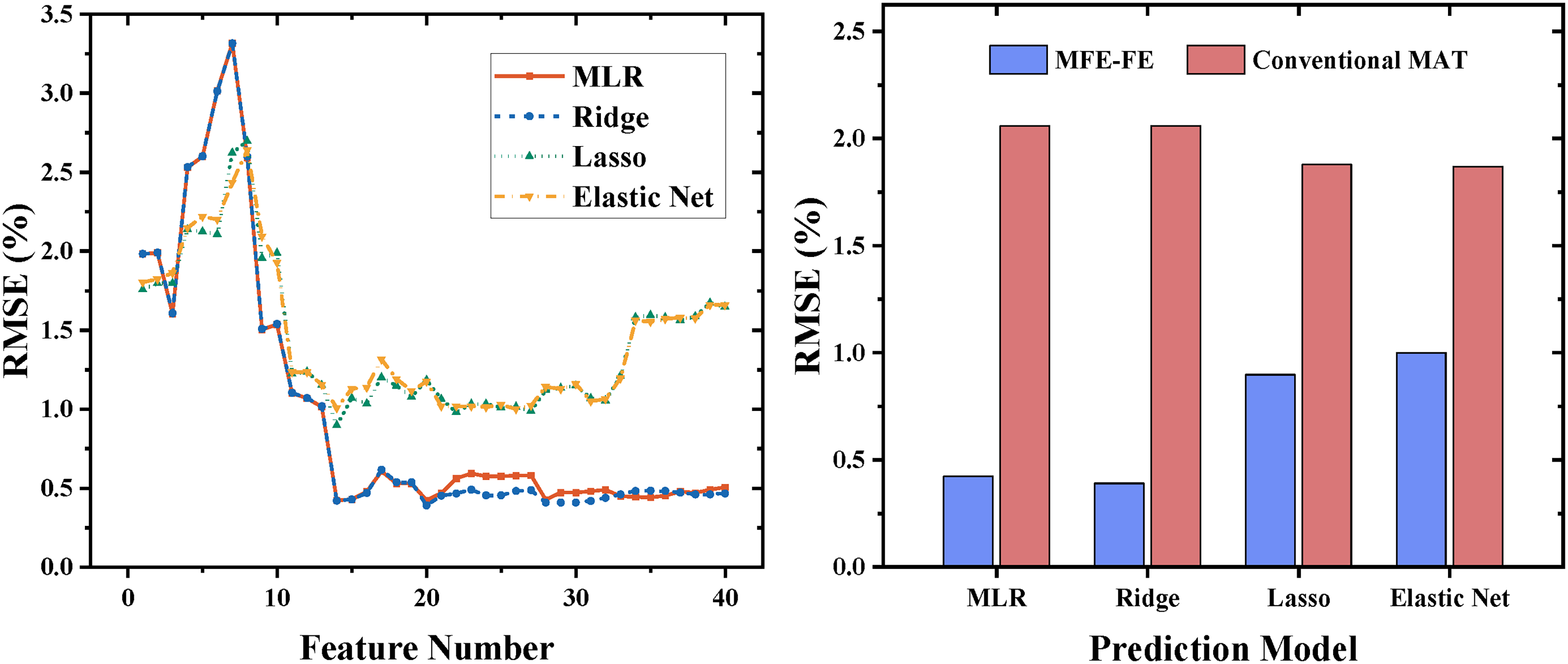
Prediction performance using the incomplete dataset. (Left) Results of various models; (Right) Comparison between models developed using the MFE-FE method and conventional MAT method.
Conclusion
This paper proposed a multi-feature extraction and fusion evaluation method based on the MAT signals and developed predictive models for plastic deformation in SS400 steel. The main conclusions are as follows:
Compared to conventional MAT feature parameters, the parameters derived from the MFE-FE method exhibit stronger correlation with the plastic deformation, higher stability, and better discriminability, enabling more accurate assessment of plastic deformation levels. For known plastic deformations, the models using the MFE-FE method achieve higher accuracy as more features are included, clearly outperforming models based on conventional features. Similar superiority is observed in predicting unknown plastic deformations, where MFE-FE-based models consistently yield lower errors. Future work should explore more efficient feature extraction techniques, such as principal component analysis for dimensionality reduction and redundancy suppression among correlated features, as well as deep learning–based methods for automatic hierarchical feature learning from raw or minimally processed signals. In addition, more advanced predictive models, including convolutional neural networks, could be employed to capture localized patterns and nonlinear relationships in magnetic response data, thereby improving prediction accuracy and robustness.
Footnotes

Ethical statement
This study does not involve human participants or animals. Therefore, ethical approval and consent are not applicable.
Funding
The authors disclosed receipt of the following financial support for the research, authorship, and/or publication of this article: Supported by China National Key R&D Program 2022YFB3707202 and NSFC Project 52477015.
Declaration of conflicting interests
The authors declared no potential conflicts of interest with respect to the research, authorship, and/or publication of this article.