






Abstract
This editorial introduces the Special Issue of the European Journal of Social Security, A Social Security Perspective on Traineeships. As traineeships have become a structural feature of the transition between education and the labour market, the working conditions and social protection of trainees have been given regulatory attention. A good example are the proposals at the level of the EU to reinforce the existing Quality Framework for Traineeships with a new Recommendation and a Directive. Access of trainees to social protection, however, has not be given the same attention in the legal literature as their legal status, their working conditions and the quality of traineeships. The editorial presents the main objectives of the Special Issue and the different contributions it contains. Drawing on the latter, it also maps the social security coverage of trainees across seven jurisdictions (Belgium, Finland, France, Germany, Poland, Spain, and the United Kingdom). The mapping serves as a basis for discussing the access of trainees without employee status to formal, effective and adequate coverage, considering principally the Council Recommendation of 8 November 2019 on access to social protection for workers and the self-employed. Findings reveal a highly segmented regulatory model where inclusion is primarily determined by the category of the traineeship rather than the existence of remuneration. While formal coverage for healthcare and occupational risks is common, and a hesitant movement towards the extension of social security can be observed, significant gaps persist. The regulation of social protection of trainees reflects a model of transition from education to work based on exclusion and individuation, and contributes to a panorama of systemic discrimination against young workers. Insufficient justification of the model reinforces the need for binding instruments that guarantee equal treatment in social protection for all trainees.
Keywords
Introduction: Trainees as workers and the relevance of their social protection
The status and rights of trainees have recently gained attention among international labour law scholars, as traineeships, also called internships, become increasingly prevalent forms of work provision (Stewart et al., 2021a; Eleveld et al., 2022; Helme, 2024). The European Union has also given increased attention to the regulation of what Council Recommendation 2014/C 88/01 of 10 March 2014 on a Quality Framework for Traineeships (QFT) defines as ‘limited period[s] of work practice, whether paid or not, which include a learning and training component, undertaken in order to gain practical and professional experience with a view to improving employability and facilitating transition to regular employment’. Under that framework, traineeships are further divided in four different categories: (i) those that are part of curricula of formal education or vocational education and training; (ii) those whose completion is a mandatory requirement to access a specific profession; (iii) traineeships that are part of active labour market policies; and (iv) open-market traineeships. 1
Based on the evaluation of the implementation of the Recommendation (European Commission, 2023a) completed in 2023, the European Commission presented a proposal for a Directive on improving and enforcing working conditions for trainees and combatting regular employment disguised as traineeships, 2 as well as a proposal for a Council Recommendation on a reinforced Quality Framework for Traineeships 3 This regulatory activity is driven by the need not only to improve the quality principles of the 2014 Recommendation and their monitoring and enforcement, but also to include aspects related to pay and access to social protection. These were found to be lacking, according to the 2023 evaluation. 4
In the context of a 2023 Eurobarometer survey, 78% of young people (aged 18-34 years) stated that they had done at least one traineeship. At the national level, this figure varied between 53% in Sweden, 67% in Poland, 74% in Finland, 80% in Belgium, 82% in Spain, 87% in France and 90% in Germany. However, according to the same survey, only 33% of respondents had access to social protection like regular employees and 28% declared that as trainees, they had access to ‘some elements’ of social protection. More than a quarter of respondents did not have access to social protection and 12% did not know whether they had access or not. Moreover, only 55% of respondents replied that they were paid or offered financial compensation for their last traineeship (European Commission, 2023a).
The lack of pay and access to social protection not only puts ‘the welfare and (mental) health of trainees at risk’, but also contributes ‘to their economic uncertainty, precariousness and risk of poverty’. 5 They also have an influence on the exclusion of young people from less favourable backgrounds from access to traineeships (O’Higgins and Pinedo Caro, 2021). 6 This is even more worrying, because the normalisation of this form of work has had an inflationary effect. The completion of traineeships has changed from being a competitive advantage to a minimum requirement for young job seekers to be considered in selection procedures (Stewart et al., 2021b).
The Decision on the merits of the European Committee of Social Rights in the Youth European Forum v. Belgium case 7 highlighted another crucial problem related to the use of traineeships: their use by employers to cover productive needs, without any real intention to train or subsequently hire young job seekers. This has also been acknowledged by the European Commission through its proposal for a Traineeship Directive. The abuse of traineeships displaces standard employment and contributes to the precarisation of the labour market for young workers. 8 These problems are partially facilitated by a legal environment characterised by insufficient and fragmented regulation which lacks clarity. Despite having already been identified by the 2014 QFT Recommendation, those problems persist in numerous Member States (European Commission, 2023b). And when regulation exists, it seems to reflect the general European model of exclusionary regulation of the transition between education and work, transferring responsibilities for that transition onto young people themselves (Steiert, 2025).
The most prominent mechanism of exclusion, even if not universal, is the lack of recognition of employment status. This has consequences for access to social security. Traineeships with employment status involve generally the highest level of protection, at least in relative terms (European Commission, 2024, p. 38). It is above all in respect of the non-employment forms of traineeships that the most gaps and challenges to social protection can be identified, as shown in this issue.
This is problematic given the contested nature of the distinction made between employment and traineeships, 9 which allows us to characterise them as a form of non-standard work. Under the EU framework, the distinction between the status of the trainee and that of worker has even been described as paradoxical. As argued by Helme (2024, 690), the QFT does not consider trainees generally to have worker status, but to comply with the quality principles of the QFT, a traineeship must involve ‘solid and meaningful’ learning content, which excludes ‘menial tasks.’ Furthermore, according to the CJEU, engaging in ‘real and genuine’ activities as an employed person involves the recognition of worker status. Despite these problems, trainees do not generally enjoy employment status, or the social protection rights attached to it.
Because the question of the access of trainees to social protection is gaining some regulatory relevance, at least at the EU level, and because of the lack of legal literature dedicated to the subject, a Special Issue of the European Journal of Social Security dedicated to the social protection of trainees seemed timely.
This editorial aims to introduce the Special Issue in the following manner. First, a brief analysis of the existing and proposed EU legal framework relevant to the social protection of trainees sketches the main context in which most of the contributions to this issue are made, and justifies the study of the extension of social protection to trainees. It is followed by the presentation of the objectives of the Special Issue, as well as the different contributions it includes. The three subsequent sections are dedicated to presenting and discussing some of the findings that can be extracted from the different contributions, mainly through a mapping exercise of the cases appearing in each article. In most national cases, there exists a certain degree of coverage of trainees, however, with important gaps and generally through fragmented regulation. The concluding section reflects on the possible justifications for this exclusionary regulatory model and highlights its discriminatory consequences.
The existing and future EU legal framework: A segmented approach
The current QFT does not contain any reference to the social protection of trainees. However, following the CJEU case law recognising worker status, without resolving completely the question of which trainees enjoy such recognition, 10 the Council Recommendation of 8 November 2019 on access to social protection for workers and the self-employed (the ‘social protection Recommendation’) 11 seems to recognise trainees as workers to be included under its scope. 12 Moreover, the Commission's proposal for a Recommendation on a reinforced QFT, recommends in its point 16 to grant trainees ‘access to adequate social protection, including necessary coverage in line with national legislation, and taking into account, where applicable,’ the social protection Recommendation, recognising that the latter applies to ‘trainees who are workers’. The inclusion of the phrase ‘necessary coverage’, however, raises some doubt as to the extent to which trainees, who would not otherwise be considered as workers, should be included.
The term ‘necessary coverage’ does not appear in other EU instruments. Would every branch referred to by the social protection Recommendation be included? Or would only the branches mentioned in the proposed Recommendation on a reinforced QFT be included, that is, sickness, healthcare and accidents at work and occupational diseases? The latter interpretation does not seem to be adequate, as the reference made to social protection in the Recitals of the Recommendation and the explanation of the Commission in the context of the proposal do not seem to limit the branches under which trainees should be included and generally refer to the Recommendation on social protection.
The hard law proposals which are currently being discussed at EU level must be welcomed, but with some skepticism where social protection is concerned. Firstly, the Commission's proposal for a Traineeship Directive only applies to trainees in an employment relationship, considering the CJEU case law, possibly leaving out traineeships that are not considered as such. It does not mention social protection rights for the trainees included in its scope. However, it contains an equal treatment clause in respect of trainees falling within its scope and comparable employees of the same undertaking as regards working conditions. Following the argument of Barrio and Jacqueson (2025, p. 524) in the context of the Platform Work Directive, the reference to working conditions may involve the inclusion of some aspects of social protection.
It could also be suggested that the Directive might have as an effect the extension of social protection rights to trainees through its provisions aimed at promoting the reclassification of ‘regular employment disguised at traineeships.’ However, the proposal does not contain an obligation for Member States to create a presumption of employment as in the Platform Work Directive. The reclassification mechanisms that should be adopted are aimed at combatting abusive practices of individual employers. In such cases, the existence of a ‘bogus traineeship’ should involve the recognition of a regular employment relationship and therefore, access to the same protection rights as regular employees. However, the Directive does not provide that trainees falling under the new hybrid category of ‘having an employment relationship as defined by the law, collective agreements or practice in force in every Member State with consideration to the case law of the Court of Justice’ 13 should be considered as ‘regular employees’. 14 The proposal leaves thus the possibility for Member States to continue to deprive trainees with EU worker status of ‘national’ employee status for social protection purposes, as long as the national legal traineeship regimes grant them characteristics used by the Directive to distinguish them from ‘regular employment’ (e.g., a significant learning or training component and a reasonable duration). 15
On the other hand, the amendments suggested by the Parliament to the proposal of the Commission, contained in the report adopted by Committee on Employment and Social Affairs on 23 September 2025, would make the Directive applicable to traineeships regardless of the existence of an employment relationship, but would exclude traineeships that are mandatory for the obtainment of a qualification. This proposal, on which the mandate given to the Committee to participate in trilogues on the future Directive is based, also institutes a right to equal treatment for trainees and workers of the same establishment in matters of social protection, in addition to working conditions - or at least that is what is provided for under Recital 22, 16 because such an extended principle is not to be found in the amended provisions themselves. The latter provisions only provide, under Article 2.a.3, that ‘traineeship providers shall provide trainees with access to social protection in accordance with national schemes’, with Recital 16b stating that those schemes should include health insurance, unemployment benefits and pension contributions. 17 The Parliament's proposal also limits the scope of the proposed Directive to open-market traineeships, traineeships in the context of active labour market policies and traineeships that are a mandatory part of professional training. According to the Parliament's initial proposal, the access of other trainees to social protection (traineeships that are mandatory for the obtainment of qualifications) should be regulated under a Decision of the Council and the Parliament. The decision should guarantee ‘respect’ of access to social protection and, in particular, guarantee ‘coverage in terms of health and accident insurance as well as sick leave.’
It seems thus that future European instruments are setting up a framework where access to social protection will be segmented, with only the Parliament's proposals in the matter being legally binding. Under the Commission's proposals, broad access to social protection will depend on trainees having EU worker status, in which case the social protection Recommendation will apply. 18 This will leave other trainees with only the right to ‘necessary coverage’, pursuant to the reinforced QFT, another instrument of soft law. Under the Parliament's proposal, segmentation will be based on type of traineeship. Under the proposed Directive, those falling under favoured categories should be given access to social protection ‘in accordance with national schemes (including unemployment benefits, health insurance and pension contributions). However, it remains unclear whether a clause on equal treatment with regular employees should also apply to those traineeships. Still, according to the Parliament's proposals, traineeships that are part of curricula of formal education or vocational education and training (which will not fall under the scope of the Directive) should come with access, following the application of a Decision, to health and accident insurance and sick leave only. 19
Objectives of the special issue and presentation of the contributions
As commented above, the social protection Recommendation applies to trainees with EU worker status, and the adoption of more specific or binding EU standards on the social protection of trainees are being discussed. 20 This creates the need for analysis, at the Member State level, of how social security is extended to the non-standard form of work that traineeships constitute, and more specifically when they are not undertaken as part of an employment relationship as defined at Member State level. 21 Considering the principles of the social protection Recommendation as the most precise legal framework under which extension should be developed, the contributions of this Special Issue aim to answer the following questions.
Firstly, to what extent are trainees who are not in an employment relationship included in different European social security systems and what are the conditions for inclusion? Secondly, when included, are they covered for all social risks, or is coverage incomplete? These two first questions correspond to the idea of formal coverage promoted by the social protection Recommendation.
Thirdly, what are the challenges in respect of sufficient and efficient protection? This corresponds to the ideas of effectiveness and adequacy of social protection promoted by the Recommendation.
Finally, to what extent do social protection systems for trainees comply with other international instruments, and above all, the EU traineeship-specific legal framework?
On another note, the debates on the challenges to adequate regulation of traineeships and traineeships as precarious work arrangements have been developed mostly from the point of view of labour law, rather than social security law (Freedland and Kountouris, 2012; Rosin and Erikson, 2014; Rosin, 2016, 2017; Stewart et al., 2021a; Helme, 2024) The focus has been placed on employment status, pay, health and safety, non-discrimination, working time and the guarantee of effectiveness of the training component or the transition into paid employment. However, insufficient attention has been given to those debates from the point of view of social security law or the social risks that trainees are facing. Moreover, the way in which traineeships are formalised by social security law should also shed light on the general debate on the regulation of traineeships, and more particularly on the question of the status of trainees, and the quality of traineeships.
There is also insufficient comparative legal work on the subject. 22 This Special Issue proposes thus the analysis of a balanced composition of cases, reflecting different approaches to the regulation of traineeships in general, and social protection of the latter in particular. The cases also represent different European Welfare State models. Some contributions focus on a single case, and others consider several cases in their analysis.
The first contribution, by Alexandre de le Court and Arnaud Carracelas Expósito, aims to explore more general questions related to the regulation of traineeships from the perspective of social protection. The different aspects of the exclusionary regulatory approach to traineeships are analysed from the perspective of the debates on the productive rationale of social law. The article questions whether traineeships are regulated as a form of productive work or can be seen rather as an example of a form of work which is formalised and protected because of its socially useful character. It concludes on the eminently productive character of traineeships, confirmed by the dominant logic behind their protection under the EU framework and in three national cases (France, Germany and Spain). This productive character reinforces the questioning of an exclusionary model of regulation in respect of the transition between education and employment, which transfers on to young workers the responsibility for their integration in the labour market.
The remainder of the contributions focus mainly on single cases but evenly address more general questions relating to social protection in respect of (mainly non-employment) traineeships.
In the second article of this issue, Annika Rosin focuses on a specific type of traineeship within the Finnish framework, the vocational education traineeship. She shows the tensions that exist between the EU framework and the Finnish regulation, and examines the social protection of trainees within a social security system tending towards universality, meeting the principles of formality, effectivity, adequacy and transparency of the social protection Recommendation.
The third article, by Pepa Burriel Rodríguez-Diosdado, shows how while Spain is moving towards comprehensive coverage, gaps sill remain for the following reasons. The regulatory approach to traineeships that is still highly fragmentary. It focuses only on traineeships linked to tertiary education, and some branches are excluded from protection. An interesting point in respect of the Spanish approach is the fact that, despite inscribing non-employment traineeships in the social security system for employees, there is no requirement for remuneration for inclusion or the determination of benefits, with contributions and benefits calculated on the basis of a fictive income. In this sense, the model is interesting for the study of the extension of social security to unpaid activities.
The contribution of Ewa Staszewska-Kozłowska is an exhaustive analysis of the different types of non-employment traineeships regulated in Poland, and the access they grant to social security rights. She describes the Polish case as an example of an incoherent framework, where neither pay nor the category of traineeship as defined under the EU framework can be considered as criteria for inclusion, and where trainees in comparable situations (or in comparable situations with employees) do not enjoy the same protection.
In his contribution, Amaury Mechelynck discusses the Belgian case, which also includes an analysis of the Decision of the European Committee on Social Rights in Youth European Forum v. Belgium to stress the challenges around the social protection of trainees even when (partial) formal coverage is guaranteed, due to the particularities of the conditions associated with traineeships, including low levels of pay.
Finally, Kate Ewing's contribution provides an overview of the social protection of trainees in the UK, a system which has formalised the intermediary category of ‘worker’ between that of ‘employee’ and other forms of work not recognised under labour law. She shows the extent to which open-market traineeships, which are characterised by a high level of informality, provide access to social protection rights open to workers, through the application of the right to a minimum wage. She stresses the lack of enforcement as the most important challenge to the level of coverage, which remains partial.
The work done in all the contributions has been complemented with individual research, with the aim of sketching a first proposal for a mapping of the social protection of trainees across different cases. The mapping exercise considers three of the four categories of traineeships used under the EU framework (open-market traineeships; traineeships as part of an academic or vocational qualification; traineeships which are associated with ALMPs). Traineeships that are mandatory to access a profession are not considered here. This is because they are generally less problematic from the point of view of inclusion in social protection systems. A significant part of such traineeships is completed under contracts of employment, and the remainder generally involves comprehensive inclusion. As the objective is to analyse and assess the extension of social security to forms of work that are not necessarily included by national legislation, the mapping follows the categories and principles used under the Recommendation on access to social protection. Therefore, compulsory coverage by the following social security branches is considered: unemployment, healthcare, sickness benefits, invalidity benefits, maternity/paternity benefits, old-age pensions and occupational risk benefits. 23 This also facilitates an assessment of the level of compliance with the provisions on social protection of the different proposed EU instruments on traineeships. However, not only is formal coverage assessed. Another section considers and discusses how the principle of effective and adequate coverage is met. However, before assessing the existence of formal, effective and adequate coverage for trainees, attention is first focused on the different challenges that emerged while doing this exercise. A discussion of those challenges is relevant to comparative work on the subject.
Comparing the social protection of trainees across different cases and categories of traineeships: The challenges
The first challenge for comparative work on the matter is that traineeships, as defined under the EU framework or in the literature, can be undertaken under different types of arrangements regulated by different sets of rules. This problem has already been highlighted by Owens (2021). More particularly, there is nothing in the different legal and doctrinal definitions or categories of traineeships that does not permit or require them to be undertaken under a contract of employment. 24 Some of the cases analysed in this issue provide examples of employment contracts that are to be considered as traineeships, or traineeships that when undertaken in the same context can be qualified alternatively as contracts of employment or not. Section 11 of the Spanish Estatuto de los Trabajadores regulates two fixed-term employment contracts: one for open-market traineeships concluded once a tertiary education qualification has been obtained and another to be used for traineeships during study, while other legal instruments provide for non-employment traineeships for similar circumstances (see Burriel Rodriguez-Diosdado, this issue). The Finnish Vocational Education Training Act originally provided for an option for the parties to a training agreement to qualify it as an employment contract, before recently excluding that option (see Rosin, this issue). In the case of university traineeships, that option still seems to exist and is generally decided by collective bargaining, or incentivised by universities through subsidies (Rosin, 2016). In Poland, the regulation of traineeships undertaken to obtain a qualification excludes the application of part of labour law, but it is not excluded that those same activities can be completed under a contract of employment (see Staszewska-Kozłowska, this issue). This is a source of confusion that can give rise to problems of classification for comparison. It can also influence possible analysis of the rights of trainees in different contexts. 25
A second problem arises when one tries to compare the different categories of traineeships, again following the classification contained in the literature (Owens, 2021) and in the Quality Framework for Traineeships (QFT), as explained above. Certain categories of traineeships in the national cases analysed do not always correspond to this classification. For example, the German legal system treats traineeships that are not obligatory as part of academic study, but undertaken by students, as open-market traineeships in terms of determining the right to obtain remuneration (to which social security rights are attached). In Spain, ‘curricular’ traineeships, compulsory for the obtaining of qualifications; and ‘extra-curricular’ traineeships, which are not compulsory for obtaining qualifications but are recognised by education institutions, are regulated under the same terms considering their inclusion in the social security system. It is thus not clear whether such extra-curricular traineeships should be considered as open-market traineeships, as in the German case (freiwilliges zwisschenpraktikum), or as traineeships which lead to a qualification. It is also not clear whether a sandwich year in the UK should be considered as an open-market traineeship or a traineeship in the framework of the obtaining of a qualification, or whether it should not be considered a traineeship at all, as proposed by Kate Ewing (this issue). In Belgium, the convention d’immersion professionnelle is considered by the European Commission (2021, p. 15) as an open-market traineeship, but the public employment services have a say in the training component, possibly placing it in the ALMP traineeship category. These are just a few examples of potential problems of misclassification, complicating comparison, and involving the need for a contextualised and detailed approach, explaining possible mismatches between categories. A
The formal coverage of trainees without employment status in Belgium, Finland, France, Germany, Poland, Spain and the United Kingdom
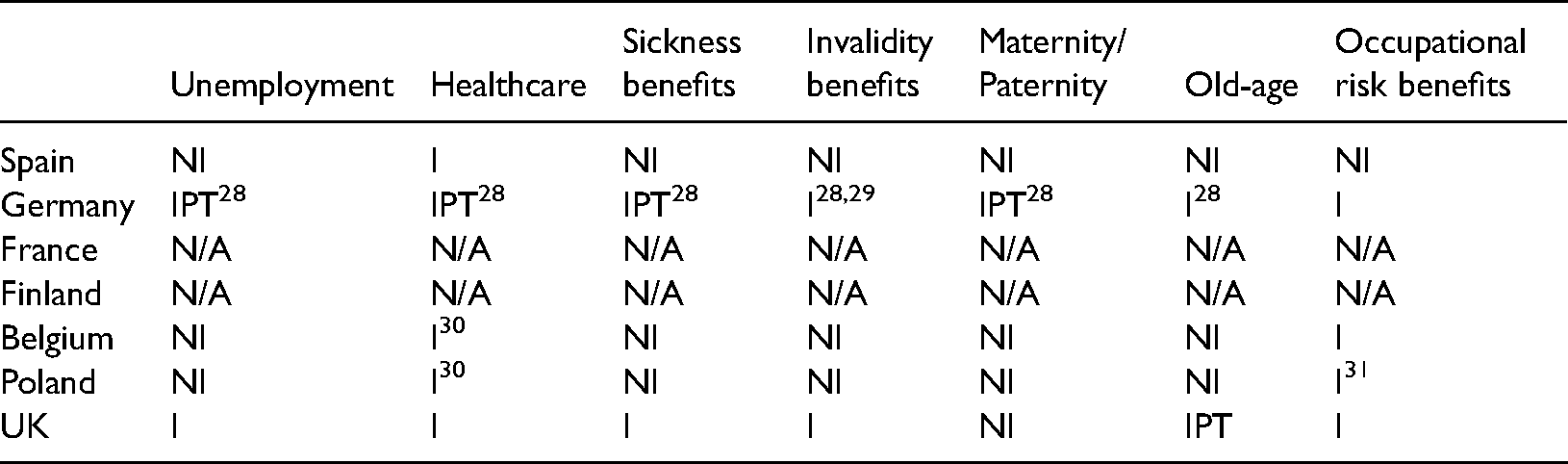
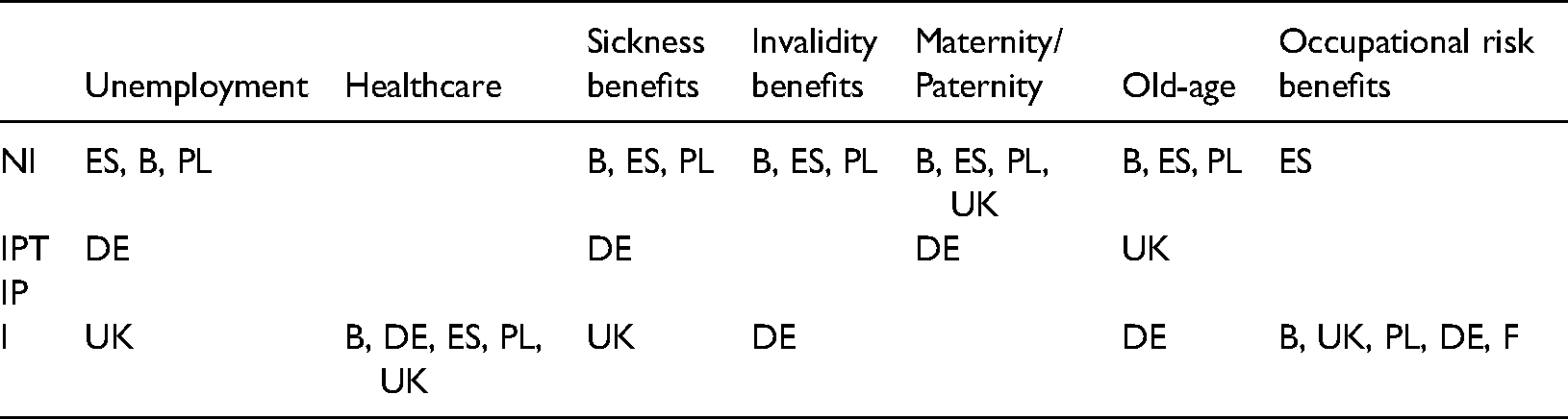
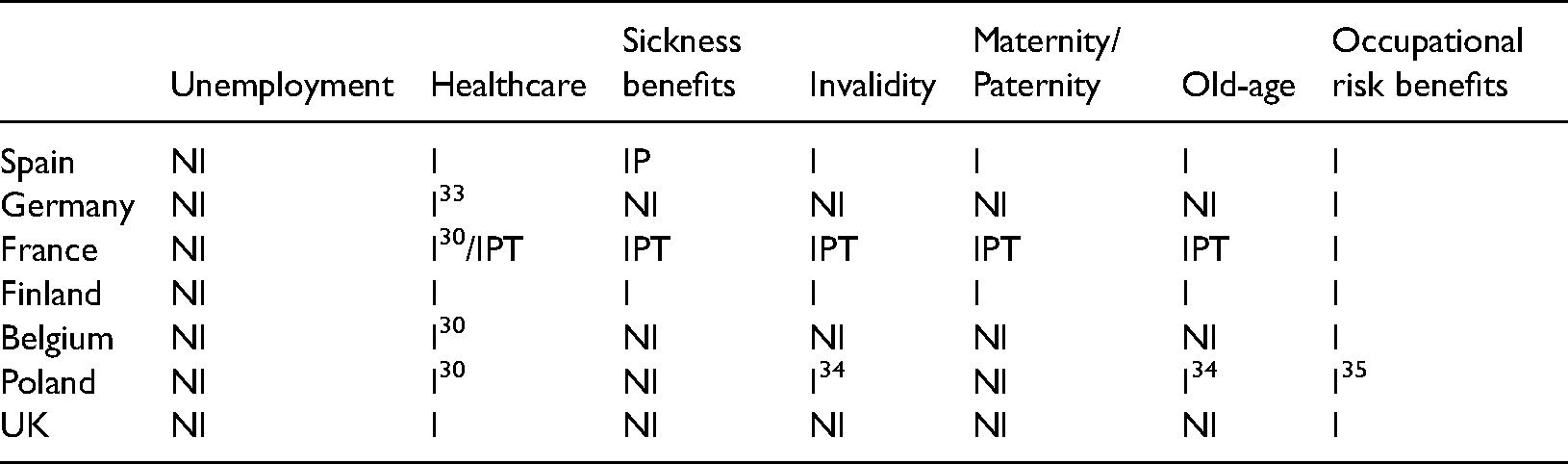
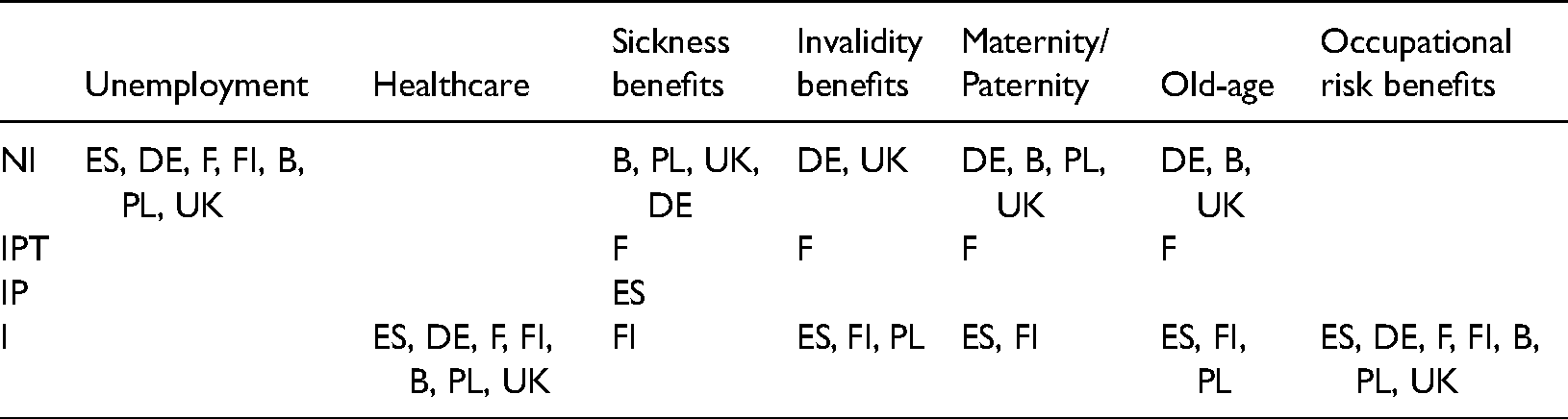
The information in the following tables is not limited to the existence or non-existence of formal coverage by the different branches of social security. It may be relevant to provide more information on possible additional conditions for formal inclusion. Therefore, for each branch, four states are considered: 1) not included (
Open-market traineeships 27
Traineeships that are part of vocational or academic study 32
ALMP traineeships 36
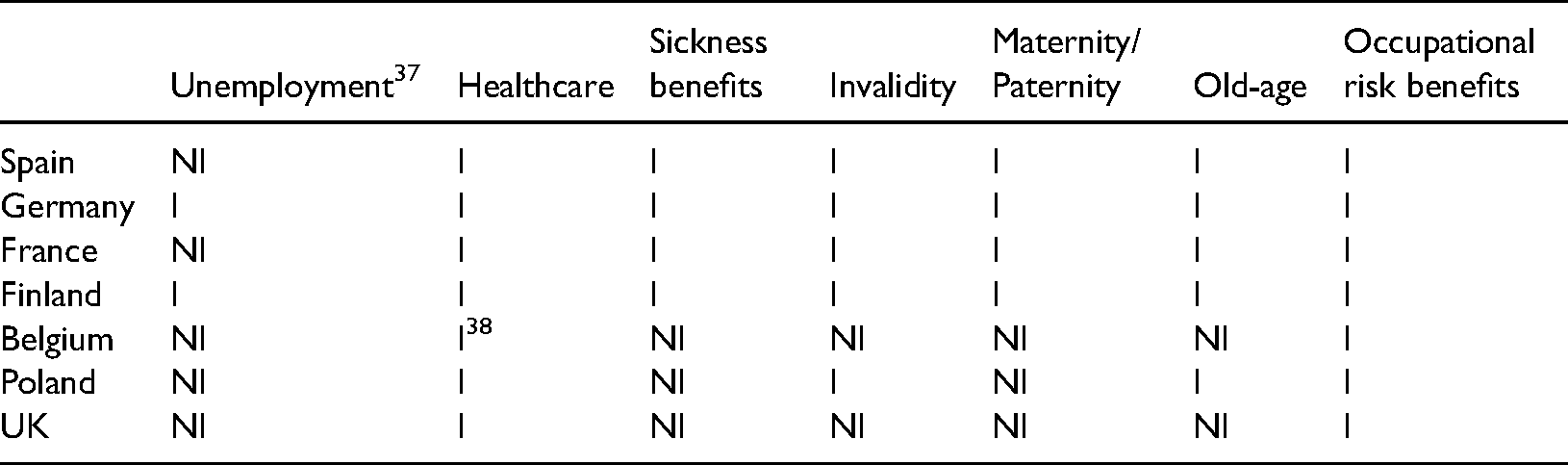
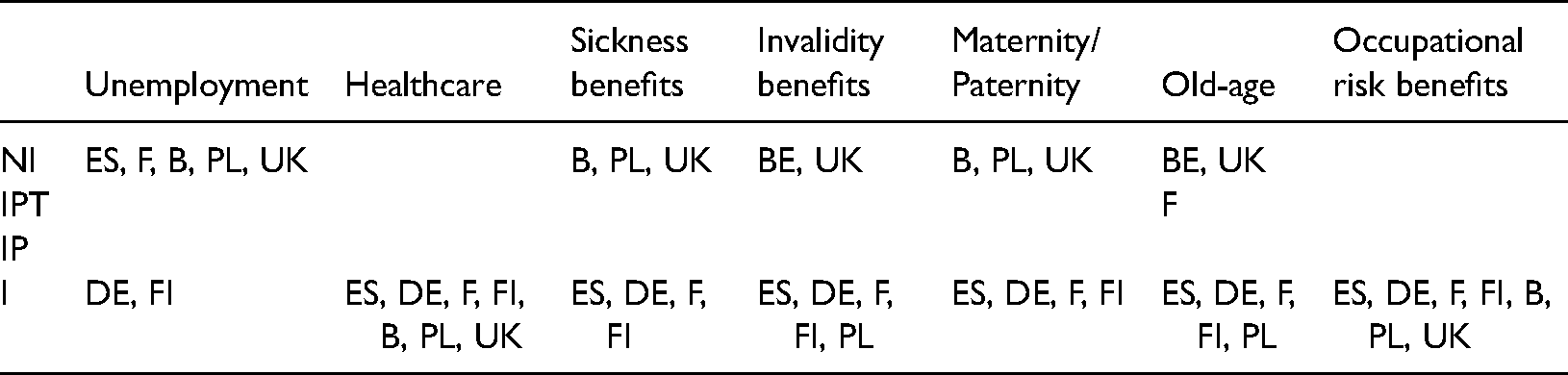
Findings to be extracted from the mapping
In the cases analysed, the existence of an allowance or another type of remuneration does not seem generally relevant as a primary factor of inclusion; rather, it is the category of traineeship that serves that function.
Spain includes most traineeships within the framework of VET or higher education in social security, irrespective of pay, and only residual forms of regulated traineeships depend on pay for their inclusion. Open-market traineeships (which can also be undertaken under a specific traineeship employment contract), are not included, irrespective of the payment of remuneration. In Germany, traineeships linked to the obtaining of qualifications are excluded from most branches of social security, irrespective of the payment of remuneration. However, open-market traineeships are included when they involve the right to minimum wage, which is the case when undertaken after obtaining a qualification. Finland excludes VET traineeships from employment status, and thus access to schemes that are supplementary to the universal system based on citizenship, even if all trainees, irrespective of category, are covered by the latter. In Poland, inclusion only extends to some of the branches of social security and is only guaranteed for traineeships that are part of education or ALMPs. Belgium does not recognise almost any social security rights for trainees who are not in employment. The UK only seems to include open-market traineeships, through the probable recognition of the worker status of the trainees involved, but excludes other categories of traineeships. France might be an exception in that respect, but it is mainly because most types of traineeships are prohibited, leaving almost only the traineeships within the framework of education as the authorised, non-employment forms of traineeship. Vocational education traineeships, however, seem to involve inclusion. This shows a clear trend towards segmentation between categories of trainees not in employment.
However, the common trends seem to end there. An attempt to identify generally better protected categories is destined to fail. Among non-employment traineeships, Poland and Spain provide for better inclusion for the categories more formally related to education, while in Germany, Finland and the UK, those categories enjoy lesser degrees of inclusion. However, it is difficult to identify conscious policy options behind the differences. The exclusion of students would reflect a conception of social security inclusion that is dependent on closer links with the labour market, which could be an acceptable explanation for the rationalisation in the German system (as it also explains the right to the minimum wage, which is the main factor behind broad inclusion). 39 However, extending that logic to the other cases would require more contextualisation.
In France, open-market traineeships are prohibited. Hiring young workers after education thus requires a contract of employment, involving ‘full’ inclusion in the social security system. Finland and the UK could be said to reflect that logic to a certain extent. In Finland, open-market traineeships are supposed to be undertaken under contracts of employment. In Spain, while traineeship contracts of employment exist, non-employment open-market traineeships are not technically forbidden. In the UK, open-market traineeships are supposed to be undertaken with worker status, providing partial coverage in social security through the right to the minimum wage.
Poland and Belgium are two cases that fit the least with the ‘closer relation to the labour market’ logic - the former because it seems to adopt the contrary approach, and the latter because of the lack of protection provided for all types of traineeships.
Another possible justification for exclusion might be the duration of traineeships, which are generally considered as being undertaken for a short period. 40 In Germany, traineeships are not limited in duration (except for ALMP traineeships), but those necessary to obtain a qualification generally last between two and six months, and open-market traineeships after education can be longer. In any case, there, duration has an influence on social protection, as the right to minimum wage (and thus, inclusion in social security, if the marginal employment threshold is attained) applies after three months, except for open-market traineeships after education, which involve an ‘immediate’ right to minimum wage. 41 In France, the right to pay at the threshold for inclusion in healthcare, sickness, invalidity and maternity benefits applies once the traineeship lasts more than two months (or more than 309 hours per year if there are interruptions). Here, again, duration and social security are linked through the right to remuneration. In Poland, while the differences between the levels of inclusion are not significant, one could say that the traineeships with the least protection (open-market traineeships) are also those with the shortest duration (a maximum of three months compared to six to 12 months for ALMP traineeships and six months for traineeships for the purposes of obtaining a qualification). It seems thus that there is some degree of correlation between duration and inclusion in social protection. This is relevant when considering the EU framework, where legislative proposals are oriented towards limiting the duration of traineeships.
Another interesting element to point out is that VET traineeships seem to enjoy better conditions of inclusion than traineeships linked to other types of education systems. This can be seen in France, with better protection for the ‘stages de formation professionnelle’; in Spain, where the use of arrangements other than the employment contract is being phased out (see Burriel Rodríguez-Diosdado, this issue); and in Germany, where VET traineeships can be classified as apprenticeships (Waas, 2021). This difference in treatment may be related to the unclear line of separation between apprenticeships and traineeships, and the links between such separation and the type of professions to which the relevant qualification leads (Helme, 2024). However, again, such an approach is not taken in Finland, where VET traineeships are excluded from employment status (Rosin, this issue), or in Poland, where VET traineeships and those related to academic qualifications are treated in the same way (Staszewska-Kozlowska, this issue).
The fact that the category of traineeship seems to be the primary factor of inclusion in social security has an implication for the debate on the right of trainees to remuneration. The right to pay is considered an important element in guaranteeing access to quality traineeships (O’Higgins and Pinedo Caro, 2021) and equality of opportunity (Tzanakou et al., 2021; Helme, 2024). Accordingly, the Commission's proposal for a Recommendation on a reinforced Quality Framework for Traineeships recommends remunerating trainees. However, it seems that such remuneration would not have a significant direct effect on guaranteeing inclusion in social security. This does not mean that pay is completely irrelevant as a factor of inclusion.
In Spain, the existence of an allowance is a condition for receiving sickness benefits for traineeships linked to the obtainment of a qualification. It is also a general condition for the inclusion of some categories of traineeships that are not covered by the 52nd additional provision to the Social Security Act. Germany is a case where not only pay, but also pay above a certain threshold, is relevant to inclusion. However, that threshold relates to the marginal work policy, 42 which is not limited in its scope of application to traineeships, but also applies to employment and other work relationships in general (Konle-Seidl, 2021). In France, pay at a certain threshold involves inclusion in most branches of social security (even if as a right it depends on the duration of the traineeship). The UK case shows that the right to minimum wage is central to the granting of protection, but again, it is linked to the traineeship category.
Another conclusion that can be drawn is that there is rarely inclusion in all the main branches of social security. However, two branches stand out: healthcare and insurance against industrial accidents and professional diseases. The general inclusion in the former can be explained by the fact that, in several cases, trainees are included on the basis of holding other statuses (student status, as a family member insured through their parents, as registered unemployed or a recipient of unemployment benefits). This goes generally together with the lack of inclusion in other branches, contributing to the invisibility of traineeships from the point of view of social protection, and reinforcing their position as an informal form of work. In some cases, as in Spain and Finland, inclusion in healthcare is due to the universal character of coverage by that branch.
The systematic inclusion in insurance against occupational risks reflects the long tradition of broad application of those schemes (Schoukens and Bruynseraede, 2021, p. 54). The latter can be explained by different factors, like the link with broadly applied occupational health legislation and the responsibilities it attributes to the employer, as well as the fact that the risk is closely tied to company control over the activity and thus, the generation of the risk.
Another common characteristic is the exclusion from unemployment benefits, above all for students, with a few exceptions such as open-market traineeships in the UK and Germany, and ALMP traineeships in Germany and Finland. In some cases, the exclusion rests on legal technicalities. The French and Spanish unemployment schemes contain stricter definitions of their scope of application than the general inclusion in the social security system (e.g., ‘employee’ 43 vs. ‘worker, under whatever title’ 44 in France). In Spain, this exclusion has not been found to be discriminatory, because the pay received by a trainee is to be considered as an allowance, and not a salary (de le Court, 2021, 272). However, there is a clear policy direction towards exclusion from this branch, probably linked with the idea that traineeships are to be considered an instrument facilitating the transition to work. Favouring access to unemployment benefits for trainees is thus probably considered to be a disincentive as regards labour market integration, reinforcing a model of negative activation.
The level of inclusion in respect of other branches is more mixed, with old-age and invalidity benefits enjoying wider application (the latter partly because of the organic link between both branches in some cases). The greater ‘generosity’ in respect of maternity benefits might be explained by its important function in promoting gender equality.
Effectiveness and adequacy of the coverage of non-employment traineeships
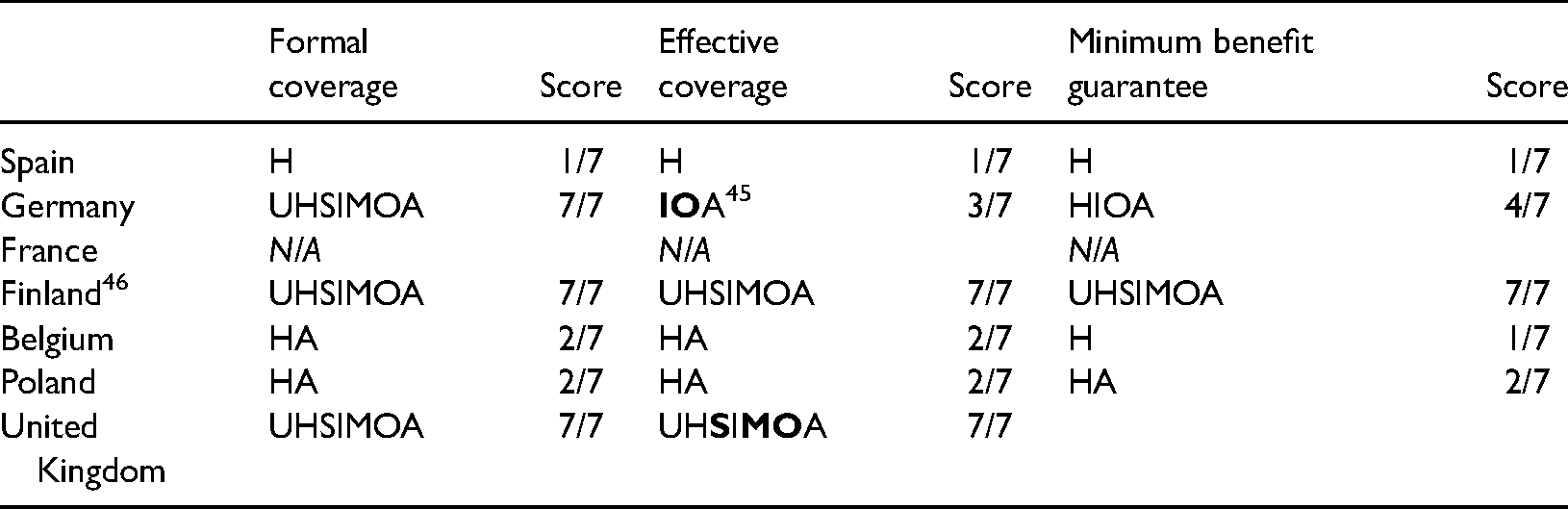
Not only is formal coverage of trainees relevant under the social protection Recommendation, but effective coverage should also be promoted. It is thus necessary to assess whether the rules governing contributions and entitlements do not prevent formally included trainees from accruing or accessing benefits as a result of their status as trainees or because they belong to a certain category of trainees. In some cases, the effectiveness of the coverage is compromised not because of the status of trainee, but rather because trainees generally belong to the broader category of workers who have recently entered the labour market (European Commission, 2022, p. 13). This is particularly the case when access to benefits depends on previous contribution periods.
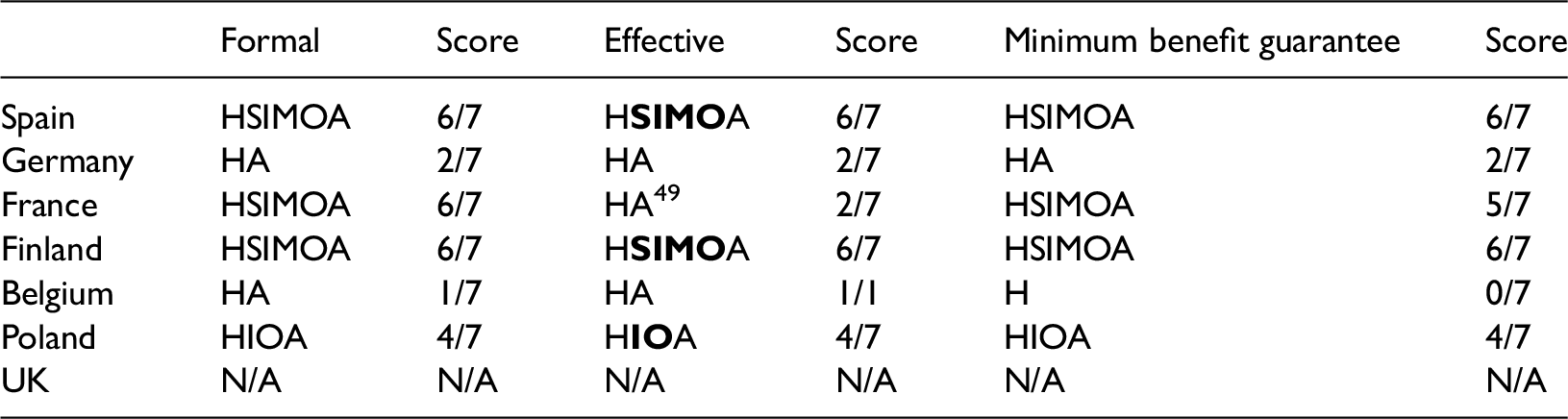
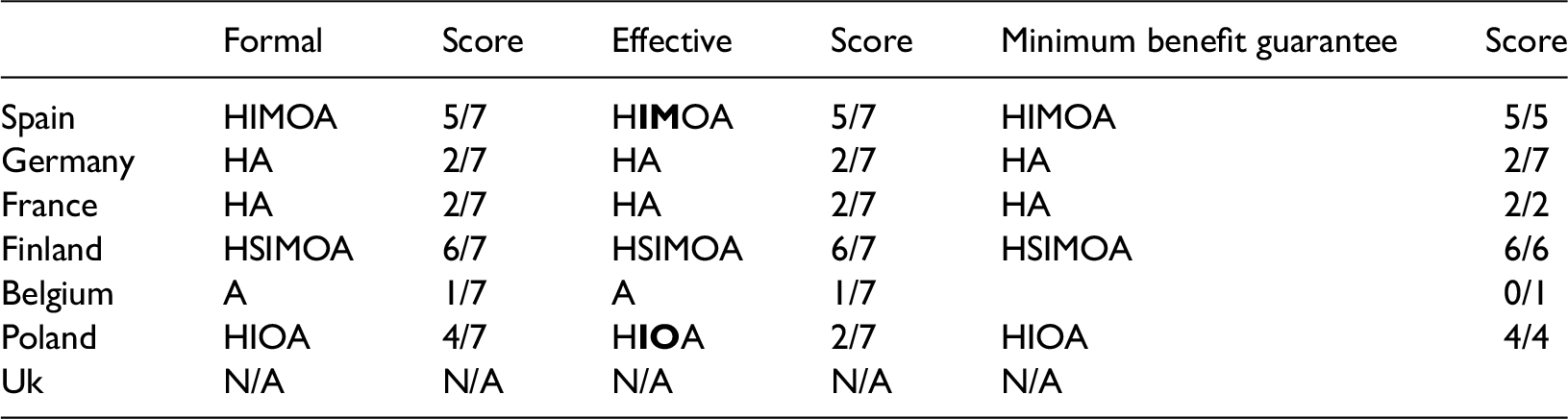
It does not seem that recent entry into the labour market is included in the Social Protection Recommendation under the concept of labour market status as a ‘prohibited’ obstacle to effective protection. However, it is relevant for an assessment of the effectivity of coverage of trainees as recent labour market entrants. To reflect that possibility, where effectivity is impacted by such circumstances rather than by status as a trainee, the letter of the affected branch appears in bold in the tables below.
Effectiveness is also affected by factors like the application of income thresholds or duration of the contract (e.g., in Germany, the application of the marginal work or ‘minijob’ exemption, or the short-term work exemption).
Finally, the concept of adequacy refers to the idea that the level of protection should allow the maintenance of a decent standard of living, with appropriate income replacement that at least prevents the risk of poverty. For simplification purposes, adequacy will be taken for granted if the rules on calculating the level of benefits for trainees are the same as those for employees, or guarantee at least minimum benefits, irrespective of the earnings of the trainee. This shortcut is used because the aim here is to consider the specific situation of trainees, and not the general (in)adequacy of some (minimum) benefits. The concept of adequacy used here is thus slightly different than that used in the Recommendation, as a minimum benefit for trainees (e.g. minimum pension in case of invalidity) might be below the at-risk-of-poverty level but will be the same as for employees in the same conditions accessing the minimum benefit.
Adequacy in terms of the Recommendation might also depend on the receipt of supplementary benefits, for example social assistance, an element of social protection that is not addressed here. Therefore, the adequacy level will be considered met if a minimum benefit is guaranteed, irrespective of the payment of remuneration or its level.
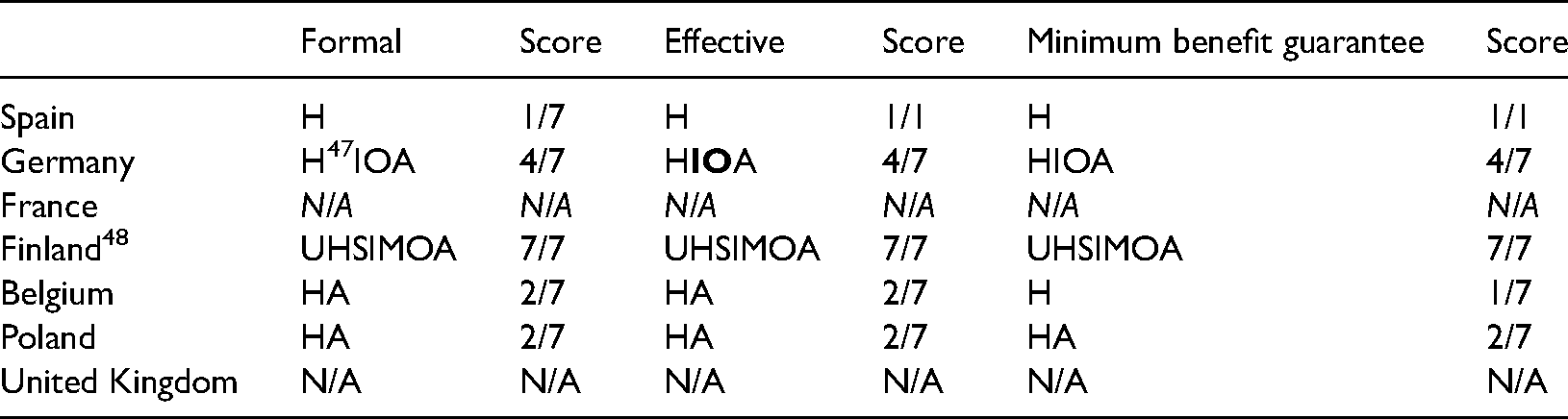
The lack of effectiveness of coverage by a branch does not rule out that some trainees can have access to the benefits concerned. Therefore, branches excluded from the effectiveness column will be taken into consideration to assess the ‘adequacy’ of benefits for those trainees who have effective access to those branches. For each category, a score is calculated, taking into account the number of branches included in the Recommendation as calculated in the mapping of the formal coverage of the different branches above: unemployment (U), Healthcare (H), Sickness Benefits (S), Invalidity benefits (I), Maternity/paternity benefits (M), Old-age pension (O) and accidents at work and professional diseases (A). Compliance with the social protection Recommendation is then assessed for two categories of traineeships, each subdivided into paid and unpaid. The idea is to reflect on one of the central debates around the existing proposals of the Commission and Parliament, and the selective application of the Recommendation on Social Protection to paid trainees, if pay is central to the recognition of EU worker status, as the Commission seems to understand. This also facilitates a discussion of the extent to which guaranteeing pay for trainees has an influence on the effectiveness of their inclusion in particular social security branches.
Paid open-market traineeships
Unpaid open-market traineeships
Paid traineeships to obtain a qualification
Unpaid traineeships to obtain a qualification
Discussion
It seems that the biggest challenge faced by certain categories of traineeships is formal coverage by social security schemes, rather than effectiveness. There is generally no difference between both scores in the different tables, except for German open-market traineeships (due to the marginal jobs exemption) and French legally authorised traineeships (due to the application of a minimum pay threshold for protection).
Now, the less problematic character of effective coverage does not mean that access to benefits, when formal coverage exists, is generally guaranteed. This is due to the application of qualification periods which new entrants in the labour market, who are generally young persons, will have more difficulty in meeting. In France, sickness benefits are accessed when applicants have worked 150 hours in the last 90 days (which is around one third of maximum working time). In Spain, applicants must have worked 180 days in the last five years. A French trainee might access sickness benefits more easily than a Spanish one. However, there is a right to benefits only if the trainee is in receipt of an allowance above a certain threshold. On the other hand, a paid Spanish trainee will most probably only have access to sickness benefits if she has already worked as a trainee or employee before, but the level of pay is irrelevant, and benefits might be higher, as they are calculated on the basis of a fictive monthly basis of around €1,300.
These examples again show the difficulties in comparing the level and intensity of coverage and its effectiveness when thinking in terms of ‘direct’ access to benefits, as well as the problem faced by trainees in accessing benefits in general. It also shows that inclusion in social protection does not necessarily guarantee sufficient material conditions to allow persons from different backgrounds to undertake traineeships.
However, there is another dimension to this, consisting in the fact that in all cases analysed, when formally included, traineeship periods help with the accrual of rights. The fact of having worked as a trainee in a formally covered category of traineeship will therefore not be considered as delaying future access to benefits. On the other hand, there is a recognition here that traineeships are part of a professional career. The fact of being a ‘mere’ student does not generally involve such recognition. It is the fact that traineeships are a form of work, a form of contractual exchange of services and value between an employer and a worker normally followed by standard employment, that might be seen as justifying their inclusion. This is also a form of recognition of, or response to, the fact that the rise of traineeships is forcing young people to delay the start of their ‘contributory careers’, with potential immediate effects on the balance between contributors and beneficiaries and future complications in relation to access to benefits.
Finally, even if it is not the object of the social protection Recommendation, it is important to take into consideration the access of trainees to minimum income schemes. Access to such schemes could be included in the concept of necessary coverage referenced in the proposal for a reinforced QFT. Access to those minimum income schemes could compensate for a lack of formal (above all in unemployment insurance), effective or adequate coverage.
However, in Spain and France, access to such schemes is not guaranteed, because of the minimum age requirements in place (European Commission, 2022, p. 62). For those countries that grant access to minimum income schemes, the question of the compatibility between the traineeships, the student status and the rules around receiving social assistance is important. In Germany, traineeships for those in receipt of the Bürgergeld (ex-ALGII) must be approved by the Jobcenter and must be in line with the labour market reintegration obligations of the trainee. Pay will be deducted from the benefits when above a certain threshold. In Belgium, the fact of an applicant being in receipt of the revenu social d’insertion is not incompatible with them undertaking a traineeship, under supervision of the competent office (CPAS), and the allowances received under some ALMP traineeships are not considered when calculating the benefit threshold. 50 Poland, in principle, does not allow workers to access minimum income schemes, so it seems that such access would be incompatible with paid traineeships; on the other hand, inactive students or the unemployed have access to such schemes (European Commission, 2022, 62).
Conclusions: Social protection of trainees and the model of exclusory regulation of the transition between education and work
The analysis of the social protection of trainees in the cases discussed in this Special Issue confirms its insertion in an exclusionary model of transition to work, leading to individuation (Steiert, 2025). However, the exclusion from employment status does not lead to a total lack of social protection. The picture painted throughout this Special Issue is more nuanced than that. It shows that access to social protection depends mainly on the type of traineeship. The existence of remuneration only acts as a secondary factor, downplaying the role of a right to be paid in guaranteeing better protection against social risks.
However, despite a certain degree of extension of social protection to this non-standard form of work, exclusion from employment remains central. But the conceptual distinction between employment and traineeships remains inherently vague, if not entirely impossible to make (Paz-Fuchs, 2021; Helme, 2024). At best, we may situate the various forms of traineeships along a spectrum between formal training and employment. There, the justification for the distinction might be found in the proximity of a traineeship to the formal training end of the spectrum, on the understanding that the integration in a trilateral relationship between the education institution, traineeship provider and trainee better guarantees the training component or the quality of the traineeship. Exclusion may thus be justified by the guarantee of quality. However, various elements nuance such ideas. Firstly, as evidenced, the involvement of an education institution in an arrangement does not necessarily guarantee quality (Hewitt, 2021). Secondly, the future EU framework seems to consider social protection, along with pay, as a standalone condition of quality. Thirdly, ALMP traineeships generally involve trilateral relations as well, with theoretical supervision of PES or other institutions. But they can be associated with better social protection than traineeships related to the obtainment of a qualification. Finally, that logic cannot be applied to all the cases studied in this issue. Spain and Poland, for example, provide better social protection for traineeships linked to the obtainment of qualifications than for non-employment open-market traineeships. It is also striking that in both cases, and in France, the regulation has been explicitly justified by the need to avoid disincentivising the offer of traineeships by employers. However, this is a consequence of their structural character, their prevalence and their being an almost compulsory part of the transition between education or unemployment and employment. 51
The weak character of these justifications acquires a special dimension when considering that this exclusionary model of regulation of transitions has potential discriminatory implications. This is the case not only in terms of gender, above all when social protection is related to pay (as female trainees are less likely to be paid than male trainees (López López, 2021)), but also in terms of socio-economic background, involving possible cases of indirect discrimination (Helme, 2024, p. 701). It is also important to consider that the lack of social protection contributes to systemic discrimination against young people (López López, 2021; de le Court, 2021). For example, the general exclusion from coverage by unemployment insurance 52 delays access to unemployment benefits for those who have undertaken traineeships. This is even more concerning considering that young workers (aged 18-24) are more likely to transition from employment to unemployment than the overall working population. 53 Exclusion from the retirement pension branch of social security (with associated effects on permanent invalidity benefits, which are linked to it in some cases) has to be seen from the perspective of ever longer minimum contributory periods. Therefore, the introduction of a framework on equal treatment between trainees, whatever their status, and comparable employees, as set out in the proposed Traineeship Directive, should be extended to matters of social protection. This might improve formal coverage, but the impact on effective coverage, as understood under the social protection Recommendation, will be rather limited, at least in the cases researched in this Special Issue. When formal coverage exists, the greatest obstacle to effectiveness will generally be linked to the new labour market entrant status of trainees. This reinforces the idea that insufficient protection is linked to age, rather than trainee status. Therefore, the proposal for a Council Directive on implementing the principle of equal treatment between persons irrespective of religion or belief, disability, age or sexual orientation 54 could complement equal treatment approaches under a future Traineeship Directive, provided the latter includes in its scope a broad range of traineeships that are not dependent on ‘being in an employment relationship, with consideration to the case law of the CJEU’. The proposed Horizontal Equal Treatment Directive will bring social protection in the scope of (indirect) age discrimination, and involve greater scrutiny of the justification for the lack of formal and effective coverage of trainees. 55 However, the lack of progress on the proposal, and even the plans of the Commission to withdraw it, 56 will leave us with a framework with a binding instrument with limited material and personal scope. Even the Recommendation complementing the Directive will not promote extended social protection for all trainees.
Footnotes
Acknowledgments
I thank the editors of the European Journal of Social Security for their support for this Special Issue, and for their valuable comments and suggestions on the Special Issue in general and this introduction, in particular.
Declaration of conflicting interests
The author declared no potential conflicts of interest with respect to the research, authorship, and/or publication of this article.
Funding
The author received no financial support for the research, authorship, and/or publication of this article.
