







Abstract
Based upon a sample of 78 firms operating in Indian automotive component industry for the period 2000–2018, this research empirically examines the role of business-group affiliation, overseas investment and technology in determining exports. It applies panel Tobit and Probit model estimated with the maximum likelihood estimator. This research finds that technology imports, firm’s age, overseas investment and affiliation to a business group significantly affect industry’s export performance. However, some variables, such as past R&D intensity, firm’s size and companies with overseas investment and being part of a group have been found to have had a detrimental effect. All these results show that being outward-oriented in terms of overseas investment and being affiliated with a business group makes a significant difference concerning export success.
Introduction
In recent years, emerging economies are progressively cultivating themselves to develop into export hubs of technology-intensive standardized products, as part of the global supply chain, due to relative cost advantage and trade policy reforms resulting in the removal of bureaucratic constraints and reduction in the transactional costs of the businesses (Chakrabarti & Mondal, 2017; Corley-Coulibaly, 2015; Nicita et al., 2013; OECD, 2013). The technology-gap models of international trade also emphasize that once the standardization of an innovative product is complete and reaches the maturity phase, production of the same would give less-developed countries an edge over developed countries for their relative cost advantage (Krugman, 1979; Posner, 1961; Vernon, 1966). The efforts to integrate local with the global economy while offering many unprecedented opportunities also expose the long-protected industries to the global competition, forcing them to devise a strategy to survive, then catch up and finally compete with them. However, due to the formation of international free-trade arrangements, concerns of geostrategic priorities and the complexities of the political economy worldwide, the challenges have slightly eased. The milieu for the Indian automotive component industry has also not been very different. Kumaraswamy et al. (2012) argued that India’s component industry had adopted catching up strategies by acquiring technological know-how/procurement of technology licenses/alliances with transnational corporations. Over the period from 2000–2001 to 2018–2019, exports from this industry rose at a compound annual growth rate (CAGR) of 90% and the proportion of exports to overall industrial output for this industry accelerated from 19.25% in 2000–2001 to 26.77% in 2018–2019 (ACMA, 2020).
Interestingly, existing firms’ response to this increased competitive intensity has been diverse, probably because of the differing degree of access to resources, such as capital, technologies or expertise. It has been argued that business-group affiliates are better positioned to exploit the broadened set of prospects made available by the pro-market reforms due to their interconnectedness, governance dynamics and use of these linkages for resource appropriation and performance improvement (Bhaumik et al., 2016; Colli & Colpan, 2016; Lin et al., 2019; Manikandan & Ramachandran, 2015; Pradhan & Neelam, 2011). Therefore, the affiliated and non-affiliated firms are likely to formulate different operational strategies over a span of time: shorter for the firms with corporate-group affiliations. The pace at which associated businesses can execute a catch-up plan on account of access to capital can also open up a wide window of opportunities that may not be accessible to other companies. It has further been reported that affiliated firms respond differently by raising their investments compared with stand-alone firms in response to overseas players’ entry into the domestic market (Ayyagari et al., 2009; Pradhan & Neelam, 2011). Nevertheless, the relationship between the business group and exports by an affiliating firm is somewhat contentious. Some studies show an enabling role of business-group affiliations in promoting exports due to their superior networking; others report a restraining role due to their business heterogeneity (Chakrabarti & Mondal, 2017). The conflicting findings could largely be ascribed to the diversity in the business groups’ characteristics within the country and across the borders (Carney et al., 2011). It has also been observed that in some countries, like Japan and Italy, privileged access to groups’ resources might sometimes reduce the incentives to explore international markets (Colpan, 2006; Hundley & Jacobson, 1998; Sterlacchini, 1999). Nevertheless, the benefits of being associated with a business group can be transferred internationally (Garg & Delios, 2007). For instance, an affiliate can learn from other internationally operating-group firms’ experiences and access their networks (Elango & Pattnaik, 2007; Lamin, 2013) and thus reduce the potential risk associated with the international market operations (Becker-Ritterspach & Bruche, 2012). It appears that group affiliated firms adopt more or less similar strategies for internationalization through further strengthening connectivity between various business-group networks and direct and indirect equity participation (Shukla & Akbar, 2018). Interestingly, the Indian automotive component industry has demonstrated an appreciable upward turn in exports as a percentage of production, with 27 out of 78 firms are found to have undertaken foreign direct investment (FDI) abroad. Literature also suggests that the relationship between direct overseas investment and export are either substitutionary or complementary. It could be substitutionary if the investments are horizontal and complementary if they are vertical. In all likelihood, the results are expected to be complementary due to the industry’s very nature. As the component industry is a suppliers’ industry that supplies components to the original equipment manufacturers (OEMs) or tier 1 suppliers, it makes vertical investments.
Based upon a sample of 78 firms operating in the Indian automotive component industry for the period 2000–2018, this research empirically examines the role of business-group affiliations, overseas investment and technology in determining exports. It may be noted that the intensified competitive environment in this industry, owing to the pro-market reforms, may have pushed the existing players to catch up and move ahead of rivals en route through technical know-how collaboration or acquisition of technology licenses or in-house research and development (R&D). Business-group affiliated firms with access to common-group resources are perceived to be better positioned to catch up and perform better in the export markets than the stand-alone firms. Research studies have also reported that the interaction between group affiliation and technological innovation creates a ground for better overseas markets performances (Iona et al., 2013). It could be so because the internationalization of the business opens a wide window of opportunities and tempts the existing firms to venture into overseas markets. Though the relationship between overseas investment and export is expected to be complementary, it is assumed that business-group affiliated firms might indulge in horizontal expansion in overseas markets due to their access to the group’s resources. It may be noted that in India, the reforms were implemented in the early nineties and matured by the end of that decade. The trajectory of reforms became very clear in the subsequent years to the existing players to reorient their strategy and catch up. The period chosen for this study started when the maturity of reforms was compacted, as catching up was a dynamic process.
This research contributes significantly to the existing literature on export performance. Since business groups have a dominant presence in emerging economies’ industrial landscape, like India, this research hypothesize that business-group firms have an advantage over stand-alone firms when it comes to international operations. This research also attempts to address the dearth of industry-specific studies in emerging economies’ settings. The rest of the study is organized as follows: The second section discusses the trends and patterns of exports in the Indian Automotive Component Industry. The third section presents a brief overview of the theoretical evolution and supporting empirical evidence over time of all explanatory variables used in this article. The fourth section discusses the data, measures and estimation techniques. The fifth section discusses the estimated model results, while the sixth section presents the findings.
Trends and Patterns of Exports
India’s automotive component industry is one of the sunrise industries and has proliferated over time. This industry’s total production has grown swiftly at a CAGR of 104% (from ₹231.17 billion to ₹3,959 billion) from 2000–2001 to 2018–2019. During the same period, export grew expeditiously at a CAGR of 90% from INR 44.51 billion to INR 1,060 billion. This industry’s integration to the global supply chain is evident from the export of over a quarter of its total output at 26.77% in 2018–2019, up from 19.25% in 2000–2001, suggesting a rise in the competitiveness of the Indian automotive component industry. Also, the nature of exports from the component industry has transformed dramatically over the period. From being an exporter mostly to the overseas replacement markets in the 1990s, it graduated to manufacturing components for OEMs or tier 1 suppliers in the overseas markets. The adoption of modern management practices and quality control measures has dramatically enhanced the industry’s competitiveness in domestic and overseas markets, enabling them to compete in quality and price (Singh et al., 2007). It appears that improvement in the in-house technological capabilities also had trickled down to enrich the industry’s export performance. Figure 1 depicts growth in the Indian automotive component industry’s production and export from 2000–2001 to 2018–2019.
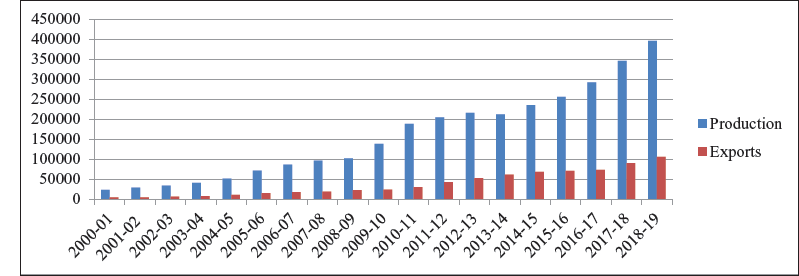
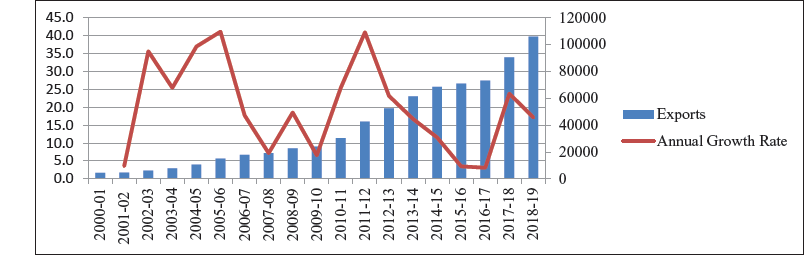
Figure 2 depicts the annual growth of exports from 2000–2001 to 2018–2019. It shows that even though exports have risen steadily over the period, the annual growth rate has fluctuated widely. It rose rapidly initially and tapered off after 2007–2008. Since the demand for the component industry products is closely tied with vehicle assembler’s production, a slowdown in vehicle demand after the subprime induced worldwide recessionary trend beginning 2008–2009 had affected component manufacturers. Though exports growth for this industry recovered in 2010–2011, it again witnessed a fall in 2012–2013 due to a general slowdown of vehicle demand in developed countries, mainly Europe, North America and emerging economies, like China. The export growth recovered in 2017–2018. Nevertheless, the growth of exports from this industry, despite a general demand slowdown, testifies the industry’s resilience to withstand a major crisis.
Direction of Exports from the Indian Automotive Component Industry.
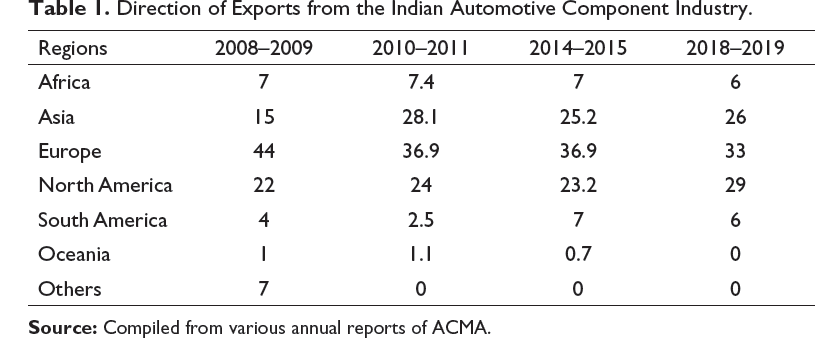
While examining the exports based on country-level destinations, the United States accounted for 25% out of the total 29% exported to North America and has emerged as a dominant destination of exports for this industry. It was followed by Germany and the United Kingdom accounting for 7% and 5% of the exports, respectively, out of the total 33% for Europe in 2018–2019. In Asia, Thailand, Bangladesh and the United Arab Emirates emerged as major export destinations (ACMA, 2020).
Classification Based on Ownership Patterns and Overseas Presence of the Sample Firms Across Various Segments.
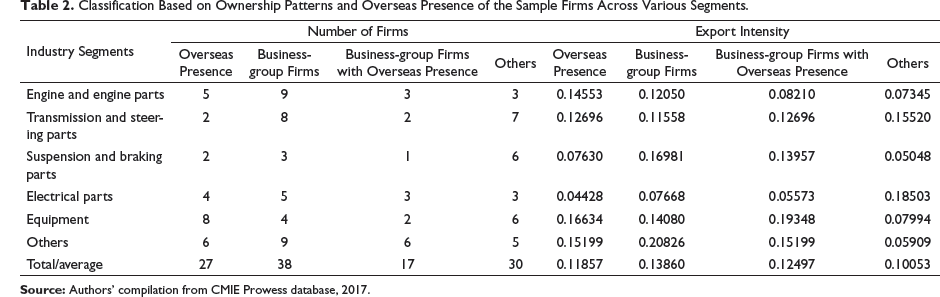
Table 2 shows that most of the sample firms are affiliated to some business groups. The number of business-group firms having an overseas presence, out of the total firms having an overseas presence is considerably high at 17. The average XI is highest among the firms affiliated with a business group, followed by business-group firms having an overseas presence. It indicates that the access to various resources and capabilities of a business group and business group’s ability to cushion its affiliates from the potential risk associated with the international market operations have a critical role in promoting exports from this industry. The XI is the highest in the ‘Others’ segment for firms affiliated with a business group. Equipment segment has the highest XI among the firms with overseas presence and least in electrical parts segment. Electrical parts segment has the highest XI among the unaffiliated firms without any overseas presence and least in suspension and braking parts segment.
Theoretical Framework and Empirical Evidence
Technology and Export
In several studies that report a fair degree of complementarity and interdependence between R&D and exports, the impact of technology on exports has been studied empirically (Cieślik et al., 2018; Esteve-Pérez & Rodríguez, 2013; Guarascio & Pianta, 2017). A most plausible explanation for a perceived strong association between R&D and exports could be that the more sophisticated demands of the importing countries may necessitate the production of differentiated products and services by the exporting firms by strengthening their technological base, innovative capacity and competitiveness (Aw et al., 2011; Chen, 2013; Golovko & Valentini, 2011). Other studies have also reported similar findings by undertaking a few industry-level studies in Portugal (Neves et al., 2016), Spain (Golovko & Valentini, 2011), Ireland (Girma et al., 2008) and Israel (Hirsch & Bijaoui, 1985). Nevertheless, the evidence is on the conflicting side for German and British firms (Roper & Love, 2002). Thus there seems to be a lack of consensus on this issue. It appears that the firms that invest in R&D experience notable efficiency gains that are then mirrored in their self-selection into the exporting phase, that is, the most dynamic R&D-oriented companies are more likely to become exporters (Hahn & Park, 2011; Neves et al., 2016). Becker and Egger (2013) find that product innovation plays a more proactive role than process innovation in enhancing exports from a German firms’ sample. Some studies in the recent past have also indicated the presence of causality between exports and R&D (Altomonte et al., 2016; Çetin & Cincera 2015; Filipescu et al., 2013; Galović, 2015; Kuo & Su, 2015; Yüksel, 2017). In the Indian context, studies have reported a positive influence of innovations on the exports in the chemical industry (Bhat & Narayanan, 2009; Lall, 1986), technology-based industry, such as information technology (Aggarwal, 2002; Majumdar, 2010), electronics, pharmaceutical and auto-components industry (Bhaduri & Ray, 2004; Goldar, 2013; Singh, 2013; Srinivasan & Archana, 2011; Tyagi & Nauriyal, 2017). Overall, a positive relationship between innovation driven by R&D and exports are observed for Indian firms (Chakrabarti & Mondal, 2017; Grazzi et al., 2017; Singh, 2009).
Overseas Investment and Export
Literature suggests that the relationship between overseas direct investment and export could either be substitutionary or complementary depending upon investments’ character (Bouras & Raggad, 2015; Filippaios & Kottaridi, 2013; Liu & Graham, 1998; Mundell, 1957; Swenson, 2004; Wang, 2007). The overseas investment could also be horizontal or vertical (Du et al., 2012; Sass & Fifekova, 2011). It is horizontal where the investment results in developing facilities that produce products or services in an overseas country similar to that of its home economy’s products or services. Vertical direct investments, On the other hand, result in the development of facilities that manufacture intermediate products or locating one or more production stages in an overseas country (Carr et al., 2001). The relationship between overseas investment and export is substitutionary if the investment is horizontal, supported by the proximity-concentration trade-off argument (Brainard, 1993; Egger, 2001). Accordingly, firms will resort to export over investment if the fixed costs for establishing a production facility in an overseas country are relatively higher than their trade costs. However, where the trade costs are higher than fixed costs, investment over export will be considered the preferred route to enter an overseas market. The association is expected to be complementary if the investment is vertical (Helpman, 1984). The firms may resort to such investments to tap the abundant availability of certain factors like cheap yet skilled labour in an overseas country. This relationship has been verified empirically in several countries and exhibits a complementary relationship in vertical and horizontal investments (Lipsey & Weiss, 1984). A complementary relationship was found for a sample of Swedish firms in vertical investments and a substitutionary effect in horizontal investments (Svensson, 1996). Similar results were reported for product-level study on Japanese manufacturing firms (Blonigen, 2001). Chang and Gayle (2009) find that increased instability in overseas markets will force firms to undertake overseas investments to compensate for such uncertainties in overseas markets over home country exports. Nishitateno (2013) finds a complementary association between overseas investments and exports of intermediary products in Japan. Among the emerging countries in Asia, exports are substituted by overseas investment in the long run (Bhasin & Paul, 2016). The impact of overseas investment on exports varies from sector to sector in China (Yingxin, 2007). On the contrary, complementary effects are exhibited in Taiwan (Chow, 2012). Liu et al. (2016) find a complementary association between overseas investments and exports from the home country in countries in their initial stages of overseas investments and a substitutionary association for countries in the matured overseas investments stage. A complementary relationship is established in most empirical studies conducted at the country and industry levels (Forte & Silva, 2017). A complementary relationship has been reported between overseas investment and exports for Indian manufacturing firms, including Indian automotive components (Pradhan, 2004; 2007), though a study reports existences of the traces of both complementary and substitution effects in the Indian components industry (Singh, 2013).
Business-group Affiliation and Export
Three major theoretical perspectives: institutional-based view (Garrido et al., 2014; Peng et al., 2017), resource-based view (RBV; Nkuda, 2017; Raduan et al., 2009) and economic sociology (Chung & Luo, 2018; Mandják & Szántó, 2010) have made significant inroads into business-group literature. Research conducted under institutional-based view argues that emerging economies, unlike their developed peers, are marked by underdevelopment of capital, labour or product markets. It leads to market imperfections in such economies where the flawed rule of law and weak legal institutions find it difficult to enforce contracts, creating a predominant institutional void (Khanna & Palepu, 1997). The business groups take advantage of this prevalent institutional void by granting access to their affiliates the group’s resources, such as financial capital, the pool of technical and scientific workforce and accumulated technological know-how, etc. This access to group’s resource stock enhances their prospects to perform better than the unaffiliated firms (Khanna & Palepu, 2000a; 2000b). The central premise of RBV, on the other hand, is that instead of competing at the dynamic marketplace landscape to get a niche in the industry or an advantage over competitors and risks, the company should instead look within at the resources and potential (its own and group’s) already available. Thus, RBV probes how well affiliates develop unique capabilities by combining various internal and external benefits associated with a business group which are not open to unaffiliated firms. The external advantages include branding and other associated benefits, like privileged access to resources and capabilities, external to a firm, that only an affiliate could attain (Becker-Ritterspach & Bruche, 2012). Hence, the capabilities thus generated by combining internal and external resources obtained from foreign and local sources could render affiliates highly competitive in domestic and international markets. The economic sociology perspective dwells on how social relations and networking affect the economic behaviour of business organizations. Economic sociologists argue that society’s contemporary social dynamics have a bearing on the firms’ prevailing discourses. The analysis of East Asian economies also reveals that the variation in authority patterns has a varied impact on their business organizations. Orru et al. (1997) find that in countries where the vertical social relationships dominate, the general social discourses, like in South Korea, have several business groups established by a single entrepreneur making inroads into the markets. Nevertheless, such a phenomenon has not been observed in Japan and Taiwan, where vertical social relationships do not lead to the dominant social discourses. In brief, affiliates get access to the business group’s resources and capabilities of a business group. An extensive business-group cushions it from the possible risk associated with international market operations (Becker-Ritterspach & Bruche, 2012). Hence, in the context of seeking access to overseas markets, the part played by business groups in providing these capabilities and resources and the probable cushioning of risk associated with international operations gives the affiliates an edge over other domestic competitors.
Empirical results of the effect of affiliation to a business group on exports are mixed. Garg and Delios (2007) find that benefits associated with affiliation to a business group are conditionally transferable internationally. These benefits are transferable and improve the affiliate’s prospects of success only if it operates in a developing country. Findings are mixed In the case of developed countries. Elango and Pattnaik (2007) find that the parental network, like affiliation to a business group, is advantageous for acquiring international markets’ awareness. Hundley and Jacobson (1998) found that membership of a business group in Japan does not enhance its affiliates’ export performance. The cartelization of the business groups might probably reduce the affiliates’ export competitiveness. Among Italian small and medium enterprises, membership of a business group does not enhance their export performance (Sterlacchini, 1999). On the other hand, in the United Kingdom, affiliated firms with superior innovative capabilities perform better in the international market (Iona et al., 2013). The small and medium enterprises in sub-Saharan Africa displayed superior export performance for firms affiliated with a business group (Tajeddin & Carney, 2019). A study conducted within India’s manufacturing sector indicates a positive relationship between group affiliations and exports (Singh, 2009). Lamin (2013) found that for international business, deregulation in the Indian software industry concerning international bandwidth and internet access provided a business-group-affiliated firm upper hand over the unaffiliated firm. A business-group-affiliated firm has sturdier international experience and is reported to be endowed with better technological and marketing capabilities than unaffiliated firms in India (Gaur et al., 2014). However, another study discovered a negative association between group affiliations and exports (Chakrabarti & Mondal, 2017). Shukla and Akbar (2018) find that as the connectedness of various types of business-group networks, like direct and indirect equity networks, increases, group affiliated firms will exhibit equivalent internationalization degrees. Mukherjee et al. (2018) argue that the extent of the affiliated firms’ geographical reach depends, to an extent, on the quality of credibility of its parent network, that is, the business group. Purkayastha et al. (2018) found that group affiliation strengthens the positive association between research intensity and internationalization among Indian firms.
Firm’s Size and Export
Intuitively, larger firms with superior tangible and intangible resource stock are more likely to venture into external markets primarily due to scale economies in production and distribution, research and marketing capabilities and their capacity to bear and manage perceived risks in international marketing (Williams, 2011). The research conducted in export marketing considers that larger firms may possess the necessary resources to venture into international markets, like acquiring information or cushion themselves from the potential risk associated with the entry into an external market (Kumar & Siddharthan, 1994). Small firms’ export activities, on the other hand, are perceived to be constrained by limited managerial/financial resources and international marketing capacity and skills. Empirical evidence exhibits a mixed picture, but most studies indicate a positive association between firm’s size and export (Bonaccorsi, 1992; Cieślik et al., 2018). Some empirical studies on Indian industries have demonstrated a strong and positive association between firms’ size and export (Aggarwal, 2002; Bhaduri & Ray, 2004; Bhat & Narayanan, 2009; Rentala et al., 2014; Singh, 2009; Srinivasan & Archana, 2011; Tyagi & Nauriyal, 2017). However, empirical evidence also shows that small firms in specific sectors, like the technology/innovation-intensive sector or niche segments, can also generate such capabilities to venture into external markets (Bonaccorsi, 1992; Golovko & Valentini, 2011; Love et al., 2016; Nazar & Saleem, 2009; Pickernell et al., 2016; Siddharthan & Nollen, 2004; Yu et al., 2015). Thus empirical findings on this issue are inconclusive, indicating a lack of consensus, probably due to dissimilar environmental factors, that leave a gap in our collective understanding of the firms’ export behaviour. This study is likely to shed some light on this issue.
Firm’s Age and Export
The resource-based approach argues that older firms with a fair domestic market presence, superior resource stock, and a wider business network can better handle the risk associated with operations in an international market (Bloodgood et al., 1996). Older age is also seen as a reflection of experience and learning, critical inputs for overseas operations, primarily because of the international markets’ diversity (Williams, 2011). However, the empirical evidence is diverse, and there does not seem to be any consensus on the incrementalist model of international expansion. The extant literature suggests that firms’ capacity to create and exploit knowledge and their entrepreneurial orientation play a predominant role than the size or age (Ali Madadi Jani, 2011; Crick, 2004; Kuuluvainen & Paavilainen-Mantymaki, 2010; Nahan-Suomela, 2020). It has also been argued that with all the resource stock, the entrepreneurial spirit fades out among the older dispensations. On the other hand, newer firms might quickly adopt strategies that focus on overseas expansion. Hence, the association between firm’s age and export is very ambiguous. Some empirical studies like Roberts and Tybout (1997) and Rasiah et al. (2010) suggest that export competitiveness is better for older firms than younger firms. At the same time, other studies such as Singh (2009), Chakrabarti and Mondal (2017) and Tyagi and Nauriyal (2017) found the export competitiveness of younger firms much better than the older firms.
Methodology
Data and Sample
The dataset used in this study comprises an unbalanced panel of 78 publicly listed Indian automotive component firms for the period 2000–2018. The firm-level data have been taken from Centre for Monitoring of Indian Economic (CMIE) Prowess database, one of India’s prominent databases that provide information on the listed firms’ financial parameters. Since this study attempts to identify the factors influencing export performance at an industry-level setting, the selection of firms to the sample is limited only to exporting firms in any given year of the study period.
Estimation Method
Export performance in this study is represented by export intensity, a censored variable. The dependent variable’s limited nature is that either the firm does not export during the years of the research period or the data are not available for some reasons. Since the dependent variable, that is, XI, is of censored nature, the use of the ordinary least squares (OLS) method on the panel dataset (both fixed as well as random effect approach) could render the results biased and inconsistent. Application of censored regression models on such data might result in unbiased and consistent estimation of the same. However, fixed effect approach for estimating censored regression models is inappropriate due to its inherent nonlinearity introduced by censoring. Overtime, several approaches were developed to deal with this issue. Chamberlain (1984) discussed about a fixed effect estimator that required parametric specification for the consistent estimation of censored panel. Even though this approach gave consistent estimate of parameters as well as its marginal effects, these estimates tends to be biased and inconsistent if the model is not specified correctly. Another approach which overcomes this problem was advanced by Honoré (1992). This approach is semiparametric in nature, which permits the model to bypass the assumptions concerning the distribution of the error terms or the individual effects. Even though this approach is able to obtain consistent estimate of parameters, its semiparametric nature makes the estimation of its marginal effects rather difficult. Later, Charlier et al (2000) developed an estimator based on generalized method of moments (GMM) framework for estimating censored panel with individual effects. But this estimator is always not as efficient as Honoré’s estimator. Greene (2004) found two main shortcomings for the application of maximum likelihood estimator (MLE) on fixed-effect panel data model with censored dependent variable. One major limitation of the model is the difficulty in computing numerous dummy variable coefficients through MLE. Another limitation is more of methodological in nature, is the incidental parameters problem that invokes reservations about the statistical properties of MLE. Hence, the pooled panel Tobit with robust standard errors, estimated with MLE is applied here. This technique provides consistent estimates for a censored sample. The generic specifications of the model are as follows:


where 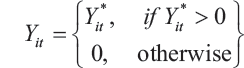
Here,
Model

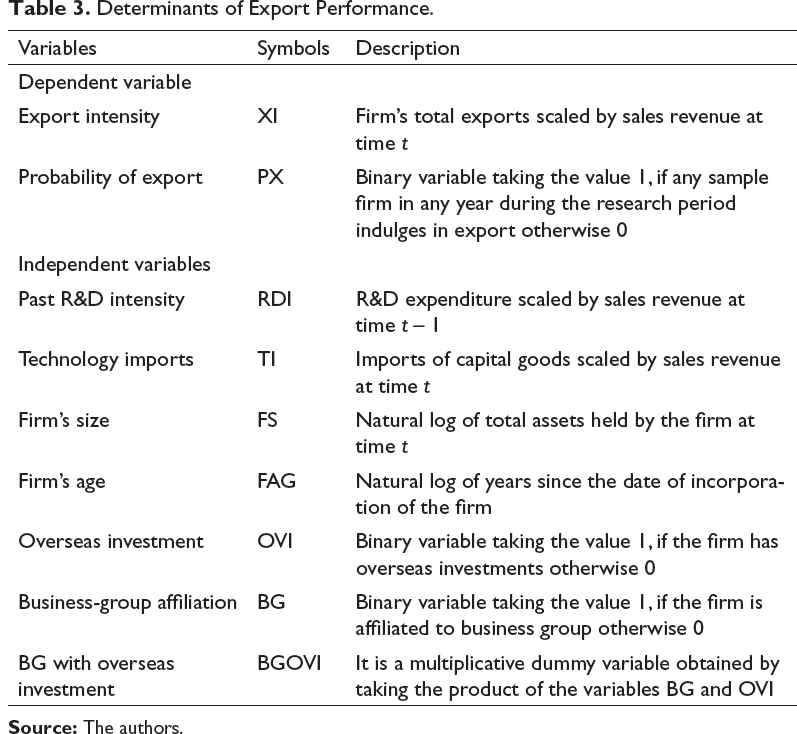
Determinants of Export Performance.
Results
Descriptive Statistics.
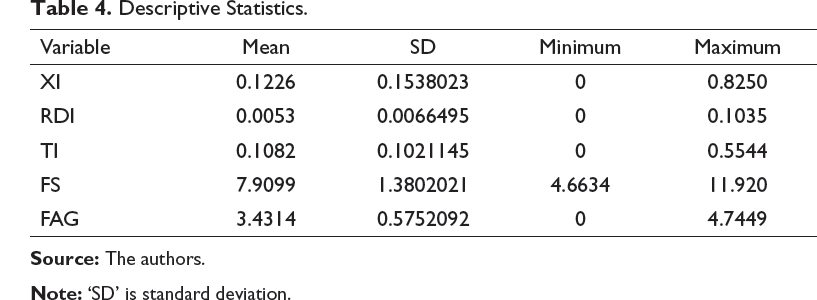
Table 4 reveals that the variables, firm’s size, firm’s age, technology imports are not volatile since the standard deviations of these variables are below their respective means. The variables R&D intensity and XI, on the other hand, seem to be volatile. The variable XI volatility implies that the firms’ XI varies much, which means that some firms in the sample may export more than other peers. The variable R&D intensity volatility suggests that variation exists among selected firms in terms of its R&D outlays incurred. It indicates significant variations in research spending of the firms. The variables, firm’s size, age and technology imports, are found to be non-volatile, implying that firms in the sample are more or less similar in terms of size, age and technology imports.
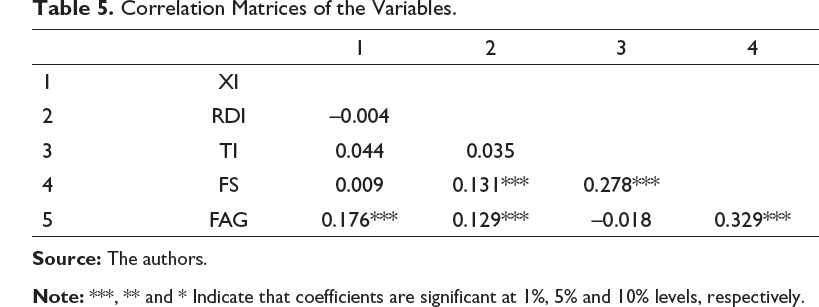
Correlation Matrices of the Variables.
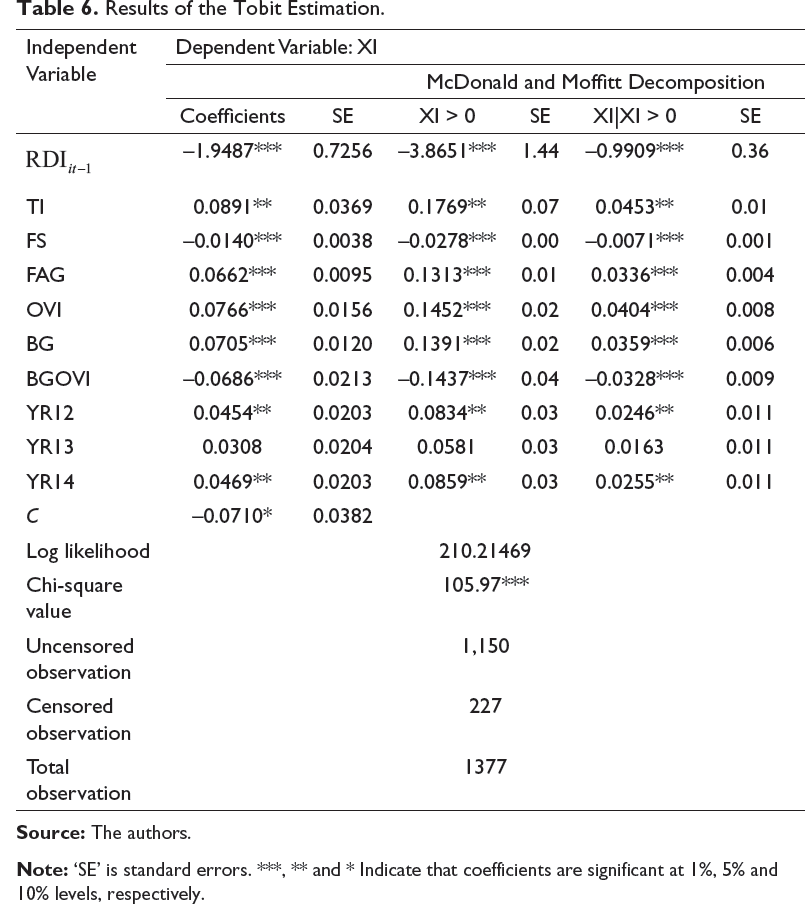
Results of the Tobit Estimation.
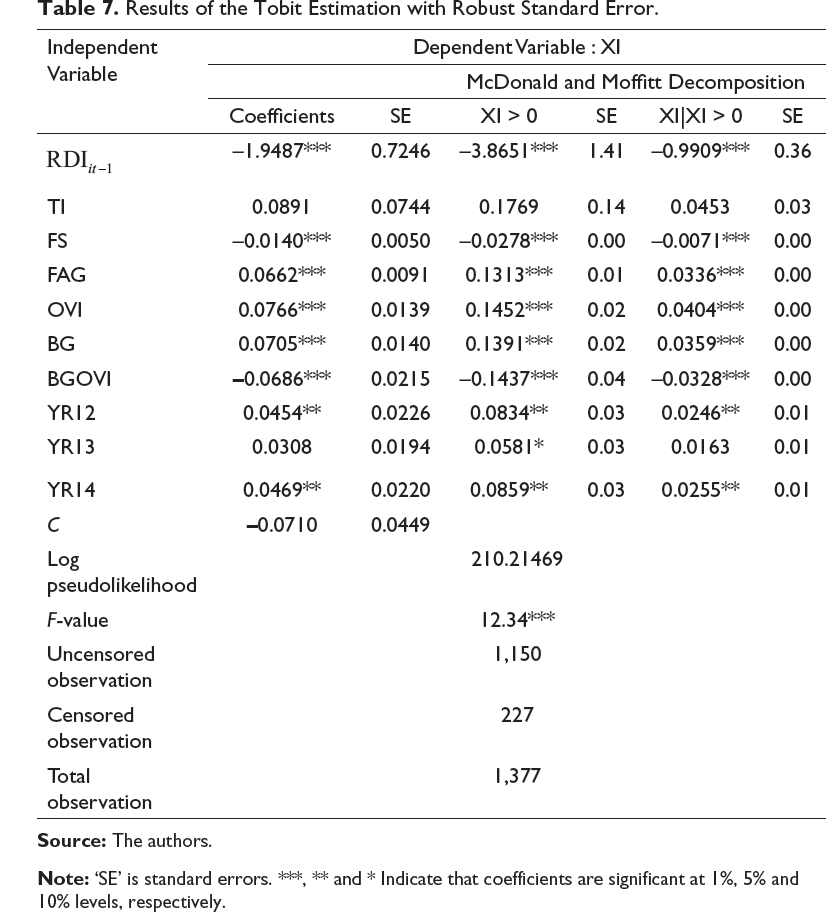
Results of the Tobit Estimation with Robust Standard Error.
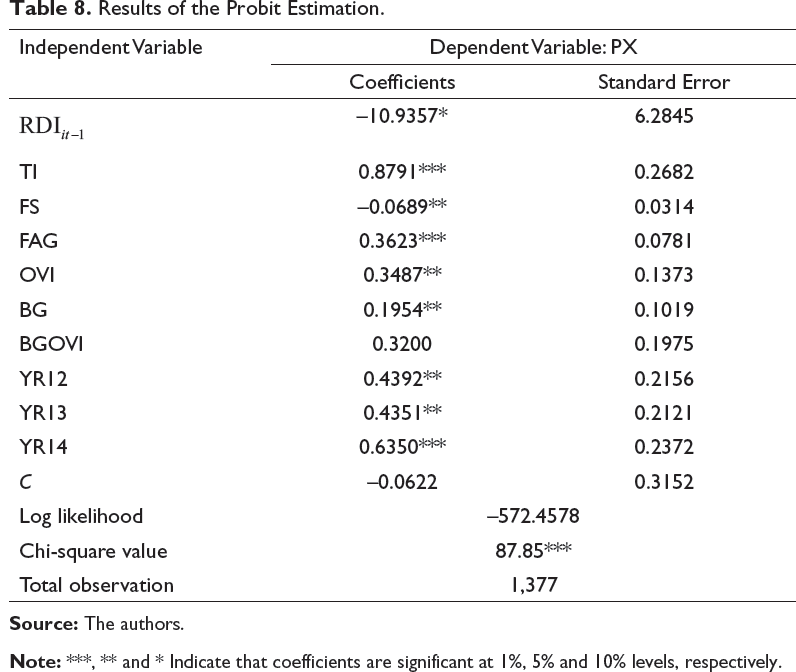
Results of the Probit Estimation.
The results depicted in Tables 6 and 7 indicate a significant negative association between the technology variable, that is, R&D intensity lagged by 1 year and XI. In a study of 206 publicly listed bio-pharmaceutical companies, firms were found to have closed the cutting-edge technological gap in three ways in response to their rivals’ new product launches. Some focussed on in-house R&D; some engaged in strategic alliances and collaborations with external partners; and most of the firms preferred technology licensing, primarily to enhance their competitive positions, as it gave the firms the ability to directly and quickly adjust to the shifting competitive landscape (Moreira et al., 2020). This probably was the case with India’s automobile component industry, as well. The negative association of R&D intensity and XI suggest that these all options were primarily directed more towards the home automobile market requirements (Bhargava & Seetha, 2010; Chugan, 1998; Kumaraswamy et al., 2012; Narayanan & Bhat, 2009; Singh, 2013; Tiwari & Kalogerakis, 2017; Tiwari et al., 2011). However, the competitive advantage gained thereof also played a significant and enabling role in enhancing the industry’s XI, as is revealed by the positive association between another technology variable, that is, technology imports (technology embedded in capital goods), with the exports. Technology is embedded in capital goods and the import of the same can improve the technological capabilities of the importing firms. This form of acquisition of technology is known embodied technology acquisition. Hence, the competitive advantage gained as a result of embodied technology acquisition might sometimes trickle down to enhance export performance as well. On the other hand, disembodied technology acquisition includes purchase of licences against a payment in the form of royalty. Kumaraswamy et al. (2012) found that firms in Indian component industry undertook catching-up activities en-route technology acquisition and by forming joint-ventures with multinational firms. Further, this study found that as reform matures, creation of new knowledge through in-house research becomes one of the prominent strategies to carry on with this catching-up. The results indicate that technology imports act as a catalyst to achieve better export performance. Some research studies on Indian manufacturing and the pharmaceutical industry also revealed a positive relationship between technology imports and export (Aggarwal, 2002; Rentala et al., 2014).
Firm’s size seems to have negatively and significantly influenced XI in both models. This finding implies that smaller firms have an edge over bigger ones in export performance. This finding is contrary to expectations since larger firms are perceived to possess extensive resource stock to cushion them from the probable uncertainties arising in an overseas market. However, empirical evidence shows that smaller firms are far more innovative and export-oriented if they operate in the technology/innovation-intensive sector (Love et al., 2016; Pickernell et al., 2016; Yu et al., 2015). The auto-component sector is also quite dynamic and innovation driven, hence this result.
A firm’s age represents the accumulated knowledge and experiences which it derives from participation in international operations. It is argued that older firms can perform better than their more recent peers in international markets with their longer experiences. The empirical finding for this industry supports this argument that older firms with accumulated capabilities due to prolonged exposure over time to external markets may translate into better export performance. The result is in sync with previous studies (Rasiah et al., 2010; Roberts & Tybout, 1997).
Overall, overseas investments display an enabling role in promoting export from this industry. This finding implies that the relationship between overseas investments and exports is complementary, that is, more critical overseas markets promote exports from this industry. The finding of complementary relationships for this industry is not surprising due to the very nature of the component industry. The component industry is a supplier industry which supplies component to the assemblers or OEMs. Singh (2013) found a complementary association between investments from firms likely to be exporting to OEMs and exports. This finding indicates greater integration of the component industry with the automobile industry’s global supply chain and implies that this industry promotes the intermediary products’ exports. On the other hand, evidence exhibits that the ownership pattern significantly alters the association between investment and export for this industry. The results display a significant negative association between overseas investments from business-group affiliated firms in this industry and XI. It implies that the relationship between overseas investment from business-group affiliated firms and XI is substitutionary, that is, more significant investments in overseas markets from business-group affiliated firms displaces home-country export. It implies that the business-group affiliated firms, with their access to common-group resources, embark upon the path of horizontal expansion in overseas markets.
Similarly, business-group affiliations too displayed an enabling role in enhancing export performance for this industry. This suggests that the benefits associated with the affiliation to a business-group are transferable internationally. This finding further strengthens the argument that parental networks, like affiliation to a business group acts as facilitator in the international markets. Hence, access to common-group resources and business groups to cushion uncertainties associated with international operations give the affiliates an edge over other stand-alone domestic competitors. Affiliates could also get access to networks of fellow affiliates that are already active in international operations and learn from them to formulate strategies to exploit the opportunities arising in overseas markets optimally. The finding is in sync with earlier studies on the Indian manufacturing and software service industry (Lamin, 2013; Singh, 2009).
Conclusion
This research empirically examines the role of business-group affiliations, overseas investment and technology in determining exports in an industry-specific setting, that is, the Indian automotive component industry. The research finds that various independent variables, such as technology imports, firm’s age, overseas investment and affiliations to business groups exercise positive effects on improving industry’s export performance. The finding of at least one technology variable exhibiting an enabling role in promoting export indicates that industry’s catching up process is a work in progress. As far as overseas investment is concerned, the finding of overall complementary relationships in this industry indicates export of intermediary products from this industry. The result that group affiliation enhances export performance indicates that various business-group networks work in unison to strengthen their affiliates’ competitiveness in overseas markets. Some other variables, such as past R&D intensity, firm’s size and business-group firms with overseas investment have been found to have exercised negative influence. The finding of a negative association between past R&D intensity and export implies that in-house technology development might be explicitly directed towards developing products that meet the home market requirements. As far as business-group firms with the overseas investment are concerned, it implies that business-group-affiliated firms displace home-country export by indulging in overseas investment. How are these findings relevant to the industry? All the results indicate that being outward-oriented in overseas investments and being affiliated with a business group creates a significant difference in the firms’ export performance.
Footnotes
Declaration of Conflicting Interests
The authors declared no potential conflicts of interest with respect to the research, authorship and/or publication of this article.
Funding
The author(s) received no financial support for the research, authorship and/or publication of this article.
