







Abstract
Aim: The aim of this systematic review is to obtain a better understanding of the association between unemployment among young people and mental health. Methods: After screening the title and abstract of 794 articles drawn from four electronic databases, 52 articles remained for full-text reading. Of these, 20 studies met the inclusion criteria and were assessed on methodological quality. All steps were performed independently by two reviewers. Finally, a total of 17 articles were included in the systematic review. Results: Analysis of cross-sectional studies (N = 5) showed an association between unemployment among young people and mental health. An effect of unemployment on mental health was found when considering cohort studies (N = 12) that did not control for confounders (7/7). When controlling for confounders except mental health at baseline, this effect decreased in most studies leading to mixed results, although the majority (6/8) still found an effect. However, when taking mental health at baseline into account as one of the confounders, only a minority of studies (3/8) found a significant effect of unemployment on mental health.
Background
The life-period of ‘emerging adulthood’ is characterized by high instability in the areas of education, work, love and habitation [1]. This instability in work is also reflected by the percentage of unemployed 15- to 29-year-olds, which was about 15% in the European Union in 2016 [2]. Unemployment in this age group is often referred to as ‘unemployment among young people’ [3] and has been described as having serious consequences for society and for the individual. For instance, previous research has shown increased financial costs for society due to unemployment benefits, underuse of production potential [4] and foregone tax payments [5]. On the individual level, several studies have suggested that unemployed young individuals are more likely to have poor physical health [6–7], increased risk of cardiovascular disease [8], engage more frequently in criminal behaviour [9] and express poorer lifestyle behaviours such as smoking [10], increased alcohol consumption and substance abuse [9, 11]. Furthermore, unemployment in this age group has been associated with higher mortality rates due to suicide [9, 12], alcohol-related mortality [13], lower income and poorer quality of employment later in life [14] and is related to a wide spectrum of mental health problems such as increased stress [4] and psychosomatic symptoms [15], decreased mental wellbeing [16], lower life satisfaction [17], increased risk of depression [18], anxiety [19], other psychiatric disorders [20] and decreased mental health later in life [21].
Despite this growing body of literature that focuses on the relationship between unemployment among young people and mental health, to the best of our knowledge no systematic review has been conducted to summarize and interpret these results. Previous systematic reviews and meta-analyses have focused on age-mixed populations, with three reviews published in 1999, 2005, and 2009 finding evidence for an association between unemployment and mental health and supporting a possible causal relationship [22–24].
Murphy and Athanasou, who included 16 longitudinal studies in their meta-analysis, concluded that unemployment had negative effects on mental health. Moving from unemployment to employment was associated with an improvement in mental health with a weighted average effect size of Cohen’s d = 0.54 (based on seven studies). Alternatively, the effect of moving from employment to unemployment was less clear due to the small number of studies included (five studies with 616 participants in total) and showed an average effect size of Cohen’s d = 0.36. The results of this meta-analysis were based on studies that covered both youth and adulthood and only two of the 16 studies included in the meta-analysis controlled for mental health at baseline [24].
In another meta-analysis, McKee-Ryan et al. examined the effects of unemployment on wellbeing across 104 empirical studies. Although the majority of these included studies concerned adult unemployment, no results for specific age groups were reported. Based on 52 cross-sectional studies included in the meta-analysis, it was found that unemployed individuals had lower mental health compared to employed individuals, with a weighted mean effect size of Cohen’s d = -0.57. In addition, findings from 15 longitudinal studies showed that reemployment improved mental health (d = -0.89) whereas eight longitudinal studies indicated that becoming unemployed decreased mental health (d = -0.38). Based on the performed analyses, it was concluded that there is strong support for a causal relationship between unemployment and mental health [23]. Unfortunately, no information was given on how confounders, including mental health at baseline, were controlled for.
Thirdly, Paul and Moser compared the mental health of unemployed and employed persons using the results of 237 cross-sectional and 87 longitudinal studies. Results from the cross-sectional studies showed that unemployed individuals had higher levels of distress and lower wellbeing than employed individuals, with an overall average effect size of Cohen’s d = 0.54. Longitudinal studies indicated a significant increase in distress for individuals that became unemployed (d = 0.19), whereas a decrease in distress was observed after reemployment (d = -0.35). Notably, for youths that became unemployed right after school, no significant increase in distress was observed. From this, it was concluded that unemployment has a negative effect on overall mental health with Cohen’s d = 0.5122 [22]. Unfortunately, no separate analysis was provided for studies that controlled for confounding variables including mental health at baseline and results were not reported for the different age groups.
Within the literature available on the relationship between unemployment and mental health, one of the key concerns is the distinction between selection and exposure effects of unemployment. An exposure effect would mean mental health is the result of unemployment and would thus propose a causal relationship, whereas a selection effect would assume unemployment is the result of mental ill health and the association between unemployment and mental health occurs because individuals with lower mental health have more difficulties in finding a job and have a higher chance to become unemployed [22]. The problem of causality is impossible to solve using evidence from cross-sectional studies, because these data do not contain any information regarding the direction of the association [26]. From a research point of view, an experimental design where individuals are randomized into either the unemployment or the employment condition would provide the best evidence for a possible causal relationship between unemployment and mental health. Obviously this is not possible due to ethical reasons; however, cohort studies that examine the relationship between unemployment and mental health are widely available. Although ultimately experimental designs will be necessary to find evidence for a causal relationship between unemployment and mental health, these longitudinal cohort studies that control for confounders including mental health at baseline could provide support for a causal hypothesis [27].
Aim
The aim of this systematic review is to better understand the association between unemployment among young people and mental health. The following research question will be answered: what effect does unemployment between the ages of 16 and 30 have on the mental health of individuals in high-income countries?
Methods
Terms and definitions
To operationalize mental health the World Health Organization (WHO) definition was used, which explains mental health as ‘a state of wellbeing in which the individual realizes his or her own abilities, can cope with normal stresses of life, can work productively and fruitfully, and is able to make a contribution to his or her community’ and is ‘not just the absence of mental disorders’ [28]. In addition, anxiety and depression [29] were used as these are the two most common mental health disorders among youth. Furthermore, to have a broad scope for studies, mental ill health was broadly operationalized by decreased mental wellbeing, feelings of stress or distress, feelings of depression or anxiety, or diagnosed depression or anxiety disorders.
‘Unemployment among young people’ was operationalized as a self-reported or registered period of not working in paid employment between the ages of 16 and 30 years.
Because the economic situation of a country can influence the magnitude of consequences of unemployment, for example due to differences in unemployment protection systems and equality of income distribution [22], only high-income countries were compared in this systematic review. The World Bank classification system [30] was used to define high-income countries.
Search strategy
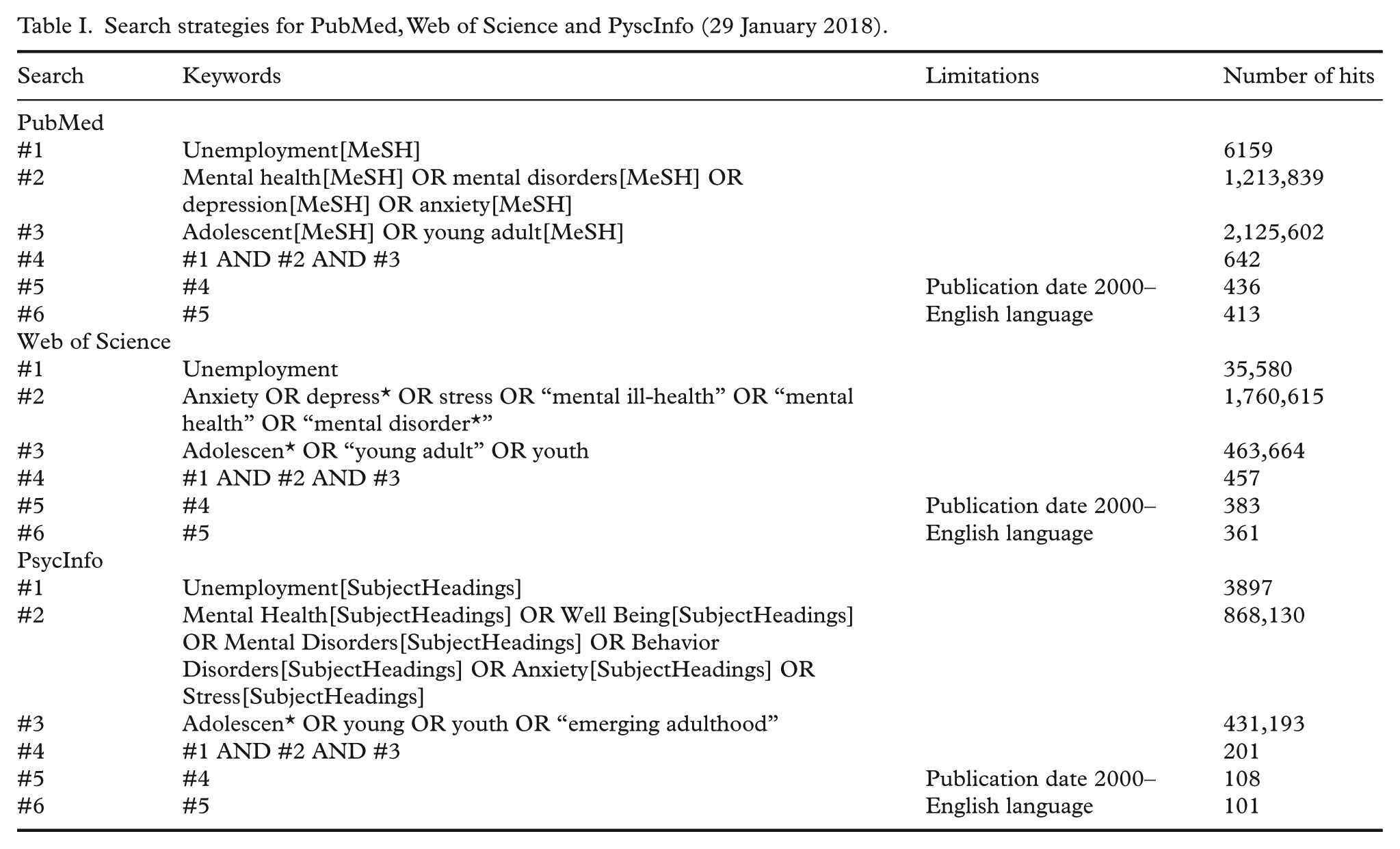
Three electronic databases (PubMed, Web of Science and PsycInfo) were used to systematically search for articles that assess the association between unemployment among young people and mental health (see Table I for the search strategies of PubMed, Web of Science, PsycInfo). Google Scholar was searched as a supplementary source using the search terms ‘youth unemployment’ and ‘mental health’. The first four pages of hits were compared with the articles found through the other electronic databases. Only unique articles were included. The search was limited to English language articles published in a peer-reviewed journal between 1 January 2000 and 29 January 2018. Additional articles were searched through reference lists of included articles.
Search strategies for PubMed, Web of Science and PyscInfo (29 January 2018).
Inclusion and exclusion criteria
Articles were included if they described the association of unemployment between the ages of 16 and 30 years and were performed in high-income countries. To assess whether the study was performed in a high-income country, the World Bank classification [30] was used. Articles were excluded when (a) they were not available in full text; (b) p values were not provided in the results; (c) the exposure measure was not defined as a period of unemployment between 16 and 30 years old; (d) the outcome measure did not consist of mental health problems (operationalized as low mental wellbeing, stress or distress, feelings of depression or anxiety, or diagnosed depression or anxiety disorders); or (e) mental health and unemployment were not assessed within the same individual.
Study selection and evaluation
Two reviewers (VB and KZY) first individually screened titles and abstracts for suitable articles and then discussed the results and solved disagreements by consensus. Articles eligible for full-text assessment were handled in the same manner and were first independently assessed based on the inclusion and exclusion criteria by the same reviewers, then discussed to reach consensus on which articles to include. After this, the methodological quality of the included articles was independently assessed by the same reviewers using the Effective Public Health Practice Project
Quality assessment of the studies (N = 20) using the Effective Public Health Practice Project (EPHPP) quality assessment tool. 31
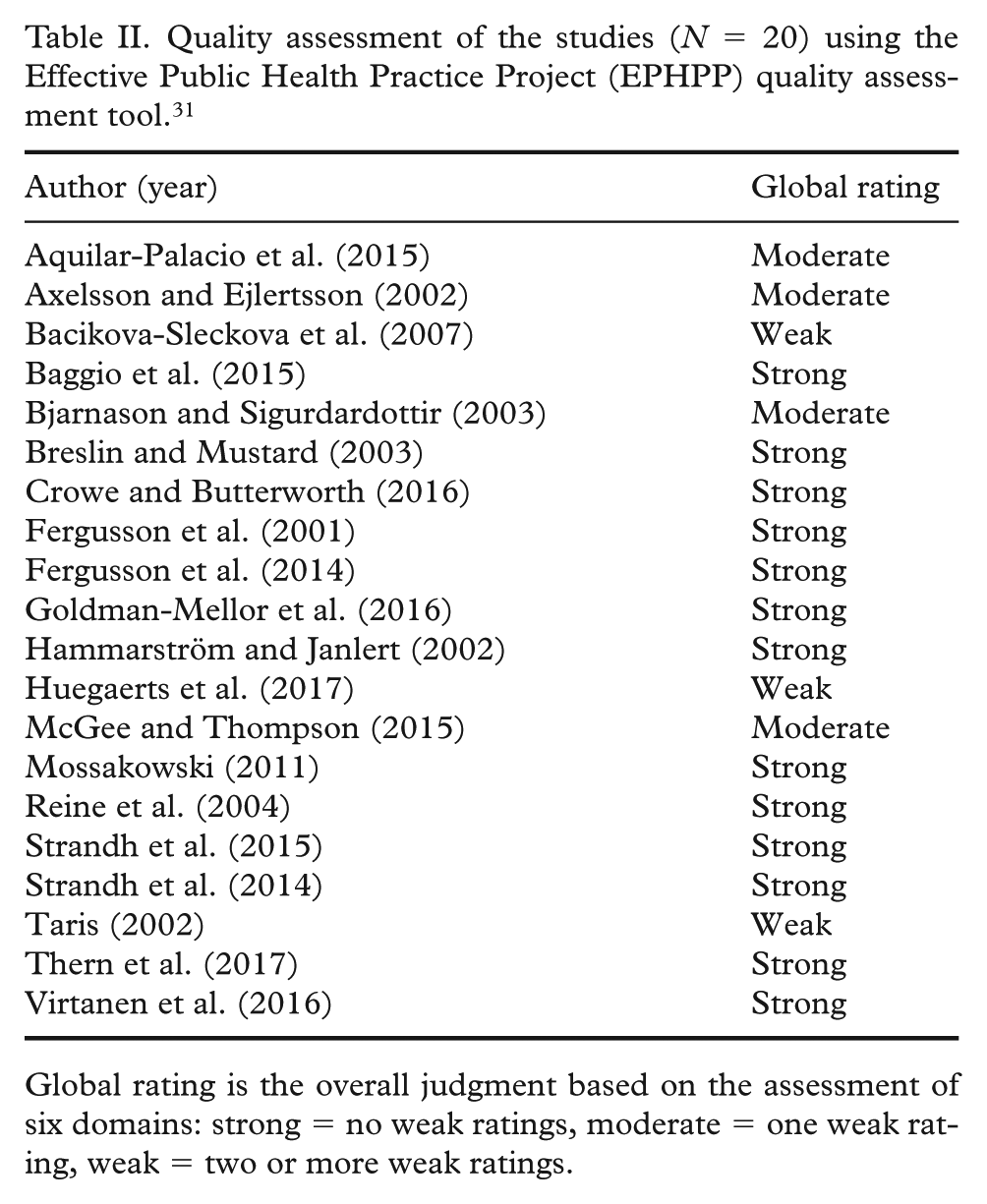
Global rating is the overall judgment based on the assessment of six domains: strong = no weak ratings, moderate = one weak rating, weak = two or more weak ratings.
Results
Selection of studies
A flow chart describing the article selection process according to the PRISMA guidelines [34] can be found in Figure 1. The initial electronic search provided a total of 878 articles, of which 794 remained after removal of duplicates. Subsequent screening of titles and abstracts further reduced this number to 51 articles that remained for full-text assessment. Based on the reference lists in the selected articles, one more study was included at this point. A total of 52 articles were assessed for eligibility in full text, where after a total of 20 articles remained for quality assessment. During quality assessment, three more articles were excluded. Finally, a total of 17 studies met all criteria and were included in this systematic review. An overview of the distribution of different study characteristics among the included studies can be found in Table III.
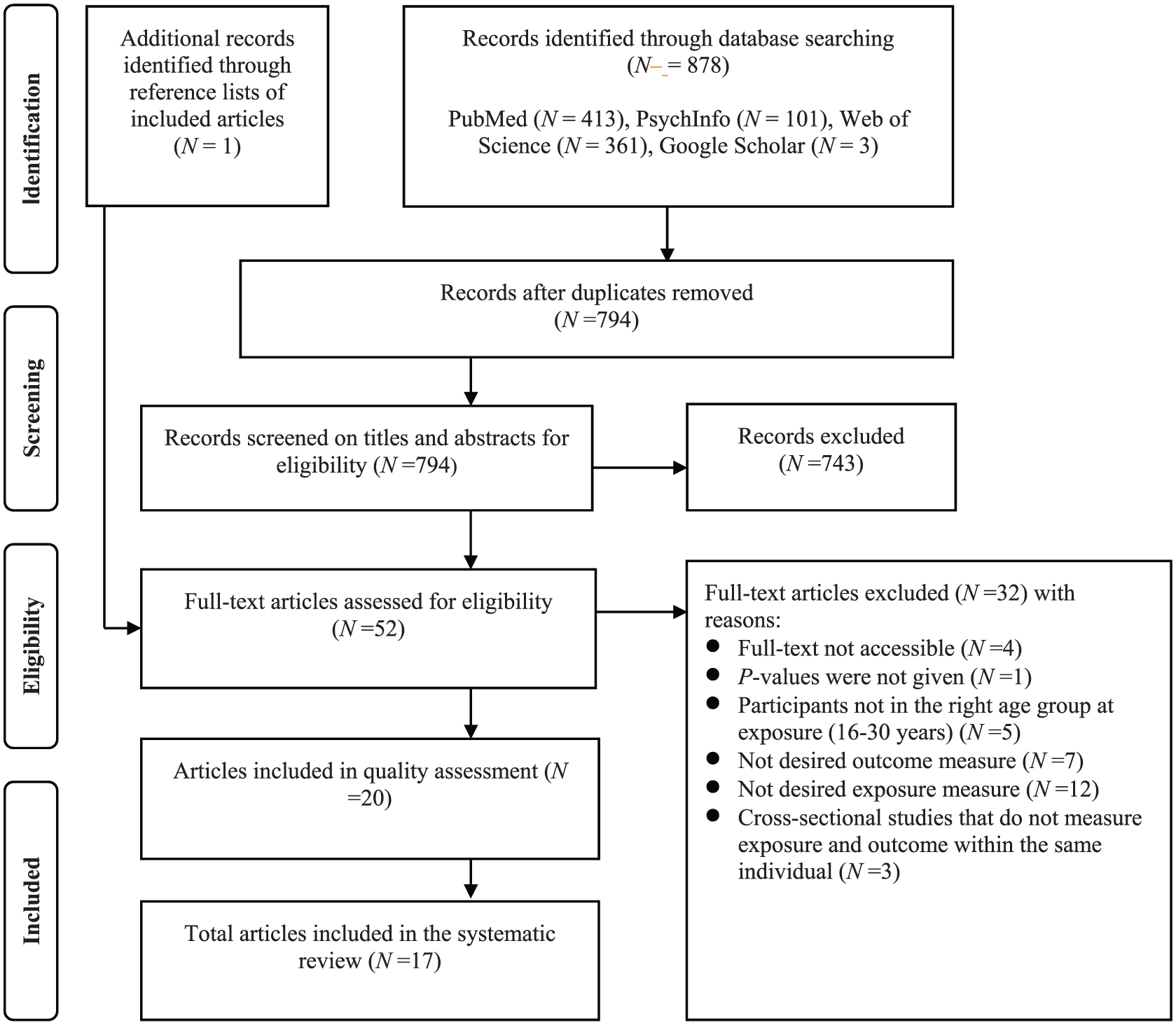
Flow chart of study selection according to Preferred Reporting Items for Systematic Reviews and Meta-Analyses (PRISMA) guidelines.
Characteristics of included studies.
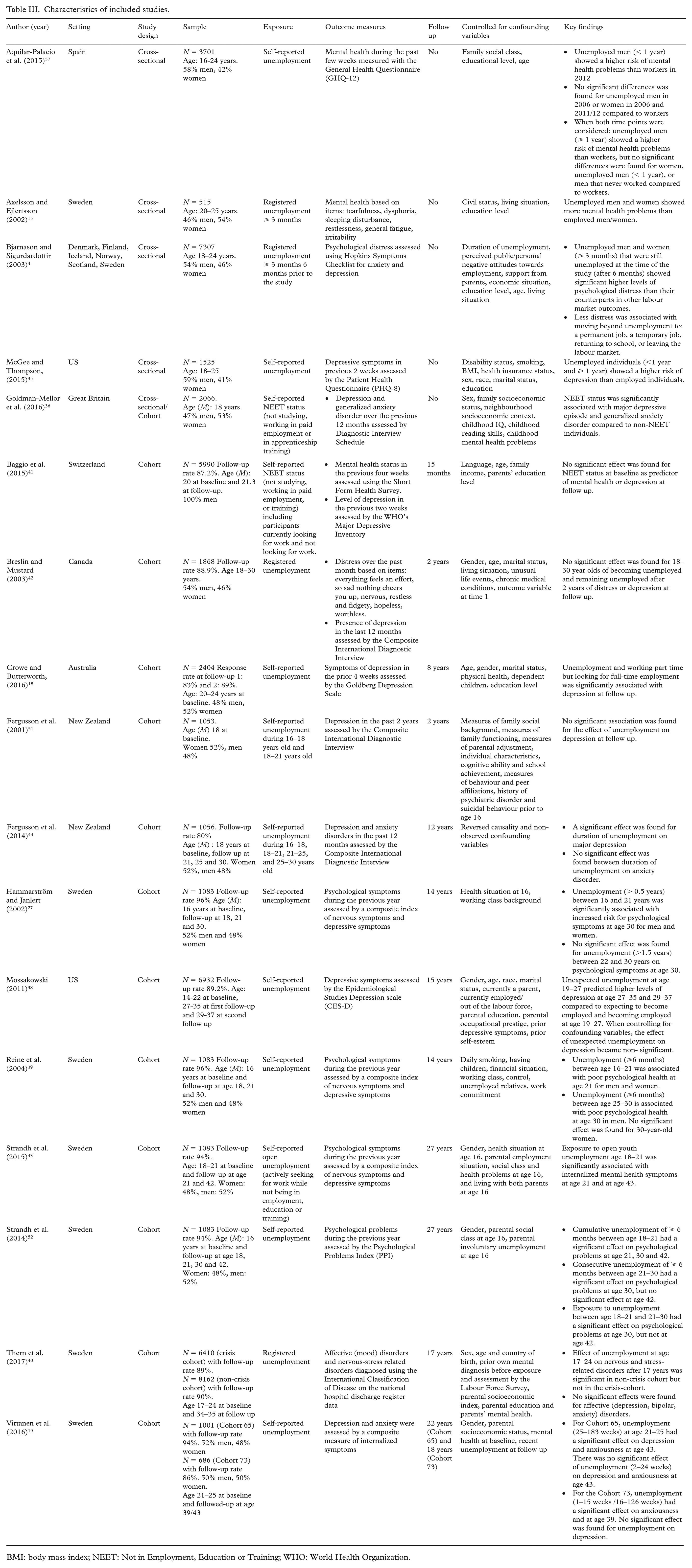
BMI: body mass index; NEET: Not in Employment, Education or Training; WHO: World Health Organization.
Cross-sectional studies
Four out of five cross-sectional studies reported mainly significant differences or increased risk of mental health problems for unemployed young people compared to employed young people. Both Axelsson and Ejlertsson and Bjarnason and Sigurdardottir found a significantly higher level of mental health problems among youth up to 24 years old that were registered as unemployed for at least 3 months compared to employed individuals [4, 15]. In addition, Bjarnason and Sigurdardottir found in their sample of youths from different European countries that this difference remained significant when comparing unemployment with other labour market outcomes (permanent job, temporary job, returning to school or leaving the labour market) and that moving beyond unemployment was associated with a reduction in mental health problems [4]. McGee and Thompson showed that 18- to 25-year-old unemployed Americans had up to three times higher odds of depression compared to employed individuals [35] and Goldman-Mellor et al. found that 18-year-olds Not in Education Employment or Training (NEET) in Great Britain had a higher risk for both major depressive and generalized anxiety disorder than non-NEETs [36]. Only one study found mixed results: Aguilar-Palacio et al. found a significant higher risk for mental health problems for young Spanish men (aged 16 to 24) that were unemployed compared to employed young men in 2012 (a recession period). However, they failed to find similar results in 2006 (no recession period). For women, no significant differences were found between employed and unemployed individuals either in 2006 or 2012 [37].
Cohort studies – not controlling for confounders
Of the 12 cohort studies, seven provided information on the effect of unemployment at a young age on mental health without controlling for confounders. All of these studies (seven out of seven) found mainly significant effects of youth unemployment on mental health.
Cohort studies – controlling for confounders except mental health at baseline
When controlling for confounding variables (see Table III for the confounders included in the different studies) but without considering mental health at baseline, the effect of unemployment at a young age on mental health was reduced in most cases compared to not controlling for confounders. Nevertheless, the majority of the studies (six out of eight studies) still found mainly significant effects of unemployment among young people on mental health.
For instance, unemployment at age 20 to 24 in Australia was significantly associated with depression at age 24 to 32 [18]. A similar effect was observed in the United States, where unexpected unemployment between age 19 and 27 was found to have a significant effect on depression at age 29 and 37 [38]. Additionally, high exposure (16 to 183 weeks) of self-reported unemployment at age 21 to 25 in Sweden was found to have a significant effect on depression and anxiousness at age 39 or 43 in times of economic boom and recession [19]. Age-related differences were observed in a study by Strandh et al., which showed that although unemployment of more than 6 months among Swedish youths between age 18 and 21 had a significant effect on psychological problems at age 21, 30 and 42, unemployment of more than 6 months at age 21 to 30, or being unemployed both at age 18 to 21 and at age 21 to 30, had a significant effect on psychological problems at age 30 but not at age 42 [21]. Similarly, age- and sex-related differences were observed by Reine et al., who showed that being unemployed for more than 6 months between age 16 to 21 was significantly associated with poor psychological health at age 21 for both Swedish men and women, whereas more than 6 months of unemployment between the age of 25 and 30 was significantly associated with poor psychological health for men at age 30, but not for women [39]. Finally, Thern et al. found that registered unemployment at age 17 to 24 for more than 6 months significant effected mental health at age 34/35. In addition, total unemployment (including short-term unemployment) affected nervous- and stress-related disorders at times of financial prosperity, but not at times of financial crisis in Sweden, but did not affect depression and anxiety disorders. However, because inpatient discharge data were used to assess these outcomes, only patients that needed inpatient care were captured in their analysis [40].
In contrast, in a cohort of Swiss men, no significant effect was found for NEET status at a mean age of 20 on mental health or depression 15 months later [41]. Furthermore, Breslin and Mustard found no significant effect of registered unemployment in Canada at age 18 to 30 on clinical depression or distress after 2 years of follow up [42].
Cohort studies – controlling for confounders including mental health at baseline
Eight studies reported results on the effect of unemployment among young people on mental health while controlling for confounders including mental health at baseline. The inclusion of this confounder reduced the effect size in all of these eight studies and resulted in mixed results: three out of eight studies showed mainly significant effects of unemployment at young age on mental health, one study found mixed effects, whereas four studies did not find significant effects.
Three studies showed significant effects when controlling for confounders including mental health at baseline: Strandh et al. showed that Swedish 18- to 21-year-old NEETs who were actively seeking for work had more internalized mental health problems at age 21 and 43 than employed individuals [43]. Thern et al. still found a significant effect of registered unemployment for more than 6 months at age 17 to 24 on mental health at age 34/35 when controlling for mental health at baseline [40]. In addition, Virtanen et al. still found a significant effect of high exposure (16 to 183 weeks) of self-reported unemployment at age 21 to 25 on depression and anxiousness at age 39 to 43 in times of economic boom, but no longer on depression in a period of recession [19].
One study found mixed effects: Hammarström and Janlert found that more than 6 months of unemployment between age 16 and 21 was significantly associated with increased risk of psychological symptoms at age 30 for both men and women. However, no significant effect was found for more than 18 months of unemployment between age 22 and 30 on psychological symptoms at age 30 in Sweden [27].
Four studies found no significant effect: Breslin and Mustard still did not find a significant effect for registered unemployment on depression or distress after two years of follow up when controlling for mental health at baseline [42]. Fergusson et al. found no effect in a New Zealand cohort study of unemployment between ages 16 to 21 on major depressive disorder at age 21 after controlling for confounding variables including mental health at baseline [9]. Similarly, in another study by Fergusson et al. using the same cohort, the significant effect of duration of unemployment between age 16 to 25 on major depression and anxiety disorder as a pooled result for the ages 18, 21, 25 and 30 disappeared when controlling for confounders including mental health at baseline [44]. Lastly, Mossakowski et al. no longer found a significant effect of unexpected unemployment between age 19 and 27 on depression at age 29 and 37 when controlling for mental health at baseline in addition to other confounding variables [38]. A summary of the findings of the cohort studies can be found in Table IV.
Summary of effects of unemployment among young people on mental health expressed in Beta coefficient (β) or OR found in cohort studies (N =12).

= p <0.05; ⋆⋆ = p <0.01; ⋆⋆⋆ = p <0.001.
NS: not significant; NA: information not available; MH: mental health; OR: odds ratio.
Discussion
Discussion of findings
The aim of this study was to better understand the association between unemployment among young people and mental health. The results of this study show that unemployment at a young age is associated with mental health problems. Reviewing the results of cross-sectional studies, the findings were largely consistent in finding an association between unemployment among young people and mental health: almost all studies found evidence for a significant difference in the mental health of unemployed compared to employed young people.
However, to answer the research question ‘what effect does unemployment between the age of 16 and 30 have on the mental health of individuals in high-income countries?’, the results of the cohort studies should be considered. Results of cohort studies not controlling for confounding variables consistently showed an effect of unemployment on mental health: seven out of seven studies found a significant effect. However, controlling for confounding variables but not considering mental health at baseline already resulted in a reduced effect in most cases as well as mixed results: six out of eight studies showed a significant effect. Importantly, when controlling for confounding factors including mental health at baseline, the observed effects decreased in all cases and only a minority of the studies (three out of eight) showed a significant effect.
Interpretation of results
To our knowledge, this systematic review was the first to assess the association between unemployment and mental health specifically for young people. The finding of an association between unemployment and mental health is in line with previous meta-analyses and systematic reviews on unemployment and mental health among mixed-age groups [22–24]. However, our findings do not replicate the results of these studies that support a causal relationship between unemployment and mental health. There are several reasons that might explain the difference between the conclusions of the current study and previous systematic reviews and meta-analyses.
First of all, our study shows that outcomes differ quite substantially depending on whether confounders are considered. As previous reviews did not differentiate studies based on the inclusion of confounders, it remained unclear how much of the relationship between unemployment and mental health found in previous meta-analyses could be explained by confounding factors, such as mental health at baseline, low socioeconomic status of the parents, etc. The importance of a number of factors that could potentially confound this relationship have been described in previous studies. For example, mental health problems at an early age were found to have a significant effect on mental health further into adulthood [27, 38] and worrying about family finances was shown to lead to more mental health problems among adolescents [45].
Second, the present review only considered evidence from cohort studies specifically related to unemployment to answer the research question. In contrast, previous systematic reviews and meta-analyses on mixed age groups combined evidence from studies investigating the effect of both unemployment and reemployment and in most cases included evidence from cross-sectional studies to reach their conclusion. However, even in these reviews, a small effect of unemployment on mental health was observed when only considering cohort studies [22–25]. In addition, Paul and Moser provide separate evidence from a natural experiment on a factory-closure study and showed the effect of unemployment on mental health decreased tremendously compared to cohort and cross-sectional studies [22].
Third, the present study focused specifically on unemployment among young people instead of a mixed-aged population as has been done in previous reviews and meta-analyses [22–24]. The effect of unemployment on health may differ between young people and adults based on differences in financial and family responsibilities as well as differences in the role that work plays in identity development [35, 39, 46]. This is also supported by the findings of Paul and Moser, who demonstrate that that a significant effect for adults can only be found when analysing evidence for adults and youths separately [22].
Methodological considerations
The main strength of this study is the overall good quality of the included studies. In total, 13 of the 17 included studies had a global rating of ‘strong’ in the quality assessment. Another strength is that only the evidence from cohort studies was used to assess the effect of unemployment on mental health and a differentiation was made between results without controlling for confounding variables and controlling for confounding variables, with and without mental health at baseline.
A limitation of the study is the heterogeneous character of the included studies due to differences in time of measurement, unemployment characteristics and definition of mental health. This limitation of heterogeneity was reduced by including only studies that measured mental health problems as stress, low mental wellbeing, depression, or anxiety and only focusing on high-income countries to increase the comparability of the studies. A second limitation is the over-representation of Swedish studies. Five of the 12 cohort studies are based on data from the Northern Swedish Cohort, which causes an over-representation of this cohort. However, this cohort was characterized by a high response rate, a long follow-up time and all studies received a global rating of ‘strong’ in the quality assessment. Therefore, these studies were expected to hold reliable and valuable data, which should not be disregarded. Moreover, as the included studies had different baseline measures, follow-up times and/or outcome measures, no quantitative synthesis of results was done. Instead, studies were described separately in a narrative synthesis.
Implications
The results of this study show that unemployed young people are a high-risk group for mental health problems. Ensuring appropriate services and support for this group should therefore be a priority for policymakers not only from an economic perspective but also from a public health perspective. However, to produce a sufficient knowledge base to inform policymakers on this topic, more research should be done to increase the understanding of the effect of unemployment among young people on mental health and the role that confounders play in this relationship.
Future research
To increase comparability across studies, unemployment should be defined more uniformly in future studies. This would make it possible to cluster results in a meta-analysis. In addition, a greater focus on the role of confounders, including mental health at baseline, would increase the understanding of how much of the association between unemployment at a young age and mental health is causal and what role confounders play in this relationship. This evidence would strengthen the hypothesis that there is an exposure effect of unemployment on mental health.
A second area of future research should consider the quality of employment when examining the effect of unemployment among young people on mental health. Changes in the labour market in Western European countries have led to more flexible working arrangements that also influence the quality of work [47]. This is in line with a suggestion made by Dooley, who points out that to gain a full picture of the effect of unemployment on mental health, employment should be considered as a continuous variable instead of a dichotomized one by also taking into account the quality of employment [48]. One of the few studies focusing on quality of employment in the relationship between unemployment and mental health showed that underemployment is associated with internalized mental health problems [49]. In addition, low job security is shown to be associated with increased risk on mental health symptoms and mental disorders [50]. So, to develop a full picture of the relationship between employment status and mental health, more studies considering the quality of employment are needed.
A third suggestion for future research would be to investigate the role of context in the relationship between unemployment and mental health by, for example, examining the role that unemployment benefits and active labour market programmes play in this relationship.
Conclusions
This systematic review shows an existing association between unemployment among young people and mental health. The majority of the cross-sectional studies showed that unemployment was associated with increased mental health problems, depression and anxiety disorders. However, whether there is a causal relationship between unemployment at young age and mental health is less clear. Cohort studies that did not control for confounding factors showed an effect, but when controlling for confounding factors, the effect reduced in most cases and the results were mixed. When mental health at baseline was then considered among the confounding factors, the effect decreased in all cases and only a minority of the studies found an effect. To understand how much of the association between unemployment and mental health can be considered as causation, more evidence is needed. In particular, natural experiments and longitudinal studies that control for confounding variables could provide more definite evidence.
Footnotes
Acknowledgements
The authors would like to thank the Public Health Agency of Sweden for providing the conditions to make this study possible.
Authors’ Note
Vicky H. M. Bartelink is also affiliated with Centre for epidemiology and community medicine, Stockholm county council, Stockholm, Sweden.
Conflict of interest
The authors declare that there is no conflict of interest.
Funding
This research received no specific grant from any funding agency in the public, commercial, or not-for-profit sectors.
