







Abstract
This paper discusses the emission of formaldehyde and VOCs from wood-based panel products and the effect on indoor air quality (IAQ). The formaldehyde concentration monitored in four energy efficient test houses over a 7-year period has been included to illustrate the long-term effect of emissions from E1 wood-based panels used in dwellings. Formaldehyde emissions from wood-based floorboard obtained from investigation of sick buildings are included for comparison. Also discussed was the impact of fitting of a “low formaldehyde emitting” wardrobe in an energy-efficient test house and in an apartment home. The exposure risk of an individual unpacking the packages of the flat-packed wardrobes and during assembly was illustrated by measurement made in a 22 m3 chamber and in a test house. A variety of VOCs can be released from wood-based panels and associated materials. There is also a concern about the possible emission of wood preservative residues, such as pentachlorophenol from products made from contaminated wood sources. To minimise impact of formaldehyde and VOC emissions in homes and other buildings, building developers and designers should insist on certification of products based on available labelling schemes and this is required in some countries for assessment of Green Buildings.
Keywords
Introduction
Emission of volatile organic compounds (VOCs) has been an important factor in the consideration of environmental and health issue regarding indoor air quality (IAQ) and is one of the criteria for assessment of Green Buildings based on health and well-being issues [1–12]. Wood-based products are widely used in homes; in the fitting-out of commercial, public buildings and schools. The emissions from these products have been the major concern in relation to IAQ for the building practitioners. The social and political concerns related to formaldehyde emissions from wood-based panels used in homes and other buildings, have led to development of low formaldehyde emitting products, the so-called E1 boards. In addition to formaldehyde emission, the emissions of other VOCs from wood and associated materials (such as coatings and adhesives) have also been a concern to the industry.
In recent years, increasing volumes of recycled materials are produced, meeting the governments’ policies requirement for sustainable development in different parts of the world. However, there are concerns about contaminants that can be present in disposed wood. The presence of previous treatment chemicals could adversely affect the consistency and quality of the recycled products. The possible emission of wood preservative residues and other treatment chemicals from the recycled products installed in buildings, could present a risk to the health of occupants. There could be environmental, and health and safety concerns, relating to the emission of toxic chemicals during processing and handling of the treated wood at the production plant. There might also be a need to use a higher proportion of urea–formaldehyde binding resin for the recycled product, which could compromise the industry’s effort to produce low formaldehyde emitting panels, and thereby off-set the advantage of using recycled wood, such as having low moisture content for particleboard manufacture.
Furthermore, the EU Biocidal Products Directive 98/8/EC and current environmental regulations in Europe, requires exposure risk assessment of all biocides and chemicals for regulatory purposes. The exposure risk assessment should include examination of the emission of chemicals during all stages of the life cycle of the products; from production, formulation, processing, use (service life of treated material) and recovery or disposal of the treated materials. The emission of wood preservative residues and their associated chemicals from the recycled wood products should also be included in a full assessment.
Formaldehyde Emissions from Wood-based Panels
Wood-based particleboard and MDF manufactured with urea–formaldehyde and melamine formaldehyde binding resins constitute the major elements of building components and furniture fitments in many buildings. The surface areas covered by wood-based products used in a home (for flooring, ceiling, wall partitioning and furnishing) can be large in comparison with other materials used indoors. They contain “free” formaldehyde that is present in the resin at manufacture and also weakly bound formaldehyde that may be released by chemical reactions during their service lives [13]. The reactions that occur involve the hydrolysis of polymer chains and these are accelerated by warm and humid conditions. The release of this formaldehyde can be an important contributory source of formaldehyde in indoor air [14]. A further source of formaldehyde associated with wood and wood-based products are urea–formaldehyde lacquers, used as finishes on a wide range of furniture and fitments. Moisture resistant (MR) graded plywood may also emit formaldehyde owing to their binder composition. The emission of formaldehyde from a range of furniture (carpets, cupboards, shelving, dining tables, leather chairs, desks and interior doors) at temperatures between 20–30°C and 20–60% relative humidity has been reported [15].
The problems caused by formaldehyde emission in non-industrial indoor air have been reviewed and well documented [14]. Symptoms displayed by humans after short-term exposure are irritation to the eye, nose and throat, together with exposure-dependent discomfort, lachrymation, sneezing, coughing, nausea and dysproea. Generally symptoms are subject to adaptation. On 15 June 2004, IARC released a press release (International Agency for Research on Cancer, press release No. 153), which reported that there is now sufficient evidence that formaldehyde causes nasopharyngeal cancer in humans, a rare cancer in developed countries (http://www.iarc.fr/en/media-centre/pr/2004/pr153.html). To avoid effects on sensitive people in non-industrial buildings, the World Health Organization (WHO) has recommended that its concentration in air should be below 0.1 mg m−3 as a 30-min average [16]. The human exposure risks to various indoor concentrations of formaldehyde have been reported and these indoor concentrations were shown to have a significant correlation with the types of homes and wood-based materials used in the furniture and for floor and wall panelling in the house [17–22].
In the UK, a survey of indoor air pollutants in 876 homes was conducted in England [23]. The survey has provided an indicator of the possible impact of the use of wood-based products for building homes. Formaldehyde concentrations were higher in newer homes (increasing from 1940 onwards); in homes with a particleboard floor, and in summer and autumn than in winter or spring. The mean concentrations were well within the WHO air quality guideline, but the guideline was exceeded in six homes (0.7% of the total), of which five were under 3 years old. A geometric mean of 22.2 µg m−3 was measured in the survey [23].
Formaldehyde concentrations (3-day mean values) found in studies of English homes

The social and political concerns relating to the emissions of formaldehyde have existed in Europe for over 20 years, and this has led to development of “low formaldehyde emitting panels – the E1 boards”, which has more or less replaced the former standard UK products, satisfying the current market demand of wood-based panels for building and furniture.
The use of low formaldehyde emitting particleboard for flooring can contribute to achieving a lower formaldehyde concentration in homes. This was demonstrated by a study of the sources and concentrations of four energy efficient test houses built in 1992 [27]. The unoccupied “Swedish” test houses were built to meet the energy requirements of the Scandinavian insulation standards. The house was built with higher airtightness specifications than the normal standard types of UK housing and has a timber framed construction, cladded by brick and tiling externally. All windows and doors are triple glazed with the following arrangement of rooms: the front door entrance to the hallway leading to the staircase on the left, an internal door to an open plan lounge/diner on the right and door to the kitchen at the back, leading to an exit to the outside via a back door. There are three bedrooms, a bathroom and an airing cupboard upstairs. The suspended timber floor is insulated with 220 mm rockwool, laid between 220 mm joists at 555 mm centres, backed by hardboard, and with 22 mm particleboard flooring covering the top surface. The rooms in the house have 15 mm plywood partition walls covered with 12.5 mm plasterboard and coated with emulsion paint. The house is carpeted throughout, except the bathroom, kitchen and airing cupboard. The bathroom and kitchen have vinyl floor coverings. All the internal doors are coated with white gloss paint. The external windows and doors are wood stained. All the ceilings are coated with emulsion paint. Medium weight curtains with motorised cord pulls are fitted to the lounge/diner and bedroom windows.
The formaldehyde concentration monitored by passive sampling over a 7 years period (July 1992 – July 1999) has illustrated the impact of the material on the long-term concentration of formaldehyde in an unoccupied home (Figure 1). The formaldehyde sampler was a badge (GMD 570) containing 2,4-dinitrophenylhydrazine coated filter paper which was exposed for 3 days at 28 days intervals and was determined by high performance liquid chromatography [24]. The average air exchange in the test houses was 0.5 h−1. The test houses were generally maintained at 20–23°C and 30–50% relative humidity, but during summer the conditions were not controlled and the temperature occasionally rose to 30°C.
Indoor formaldehyde concentration monitored over a 7-year period in an energy-efficient unoccupied test house (August 1992 – April 1999).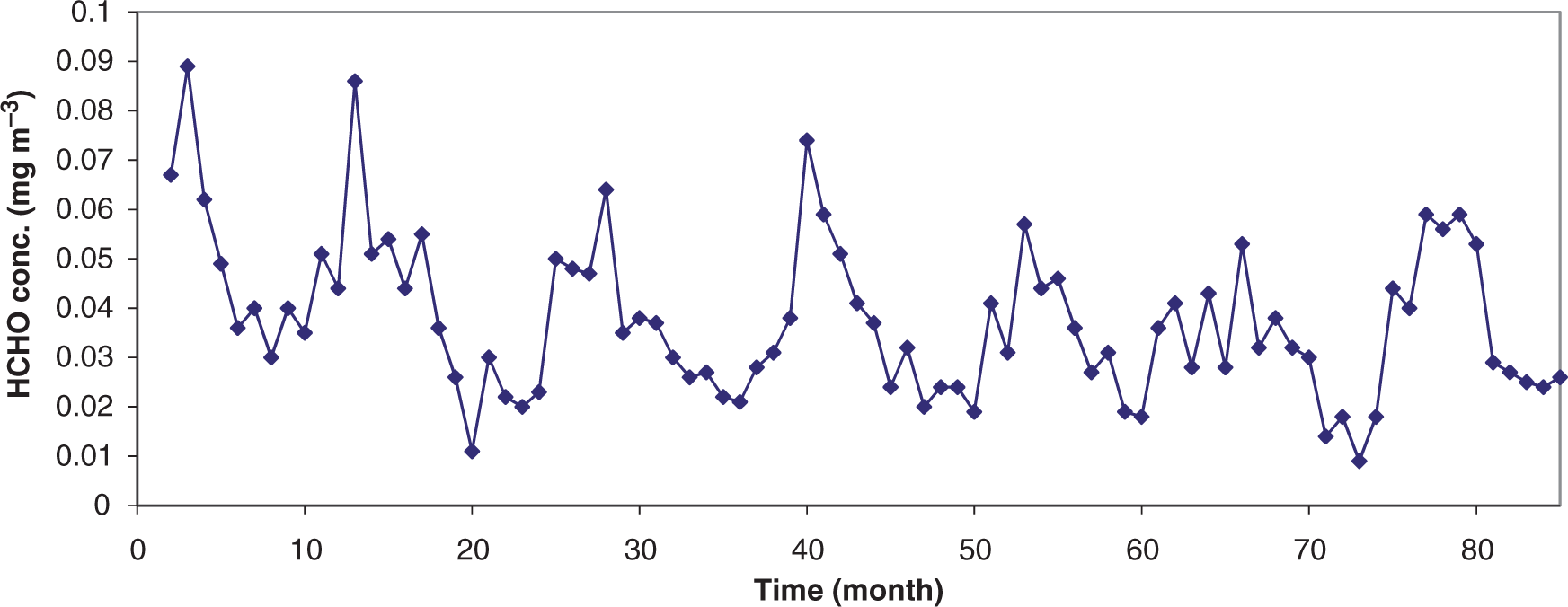
Figure 1 shows the formaldehyde concentration in one of the timber framed test houses over the July 1992 to July 1999 period. This shows that a long-term slight gradual decline in concentration of formaldehyde over the 7-year period with superimposed fluctuations related to season; higher emission during higher summer temperatures giving elevated formaldehyde concentrations. The summer concentration since built was between 50 and 90 µg m−3 and in winter was between 10 and 40 µg m−3. The first year annual mean formaldehyde concentration was 52 µg m−3 and this declined to a steady annual mean value of 35 µg m−3 during the following years.
Formaldehyde emission rates of particleboard flooring obtained from a test house and from homes with an air quality problem [28]

Also shown in Table 2 for comparison are formaldehyde emission rates of particleboard collected from homes, where occupants had complained of formaldehyde emission problems [29,30]. The measurement in the holiday home was of a particular interest, as the occupant believed he was sensitised to the effects of formaldehyde. The 3-day mean formaldehyde concentration in the home changed from about 0.1 to 0.03 mg m−3, after the particleboard flooring was replaced by timber panels in the upstairs bedroom. The homeowner found this lower level of formaldehyde concentration acceptable and did not suffer further illness after the remedial work.
Steady-state formaldehyde emission rates of wood-based wardrobe panels
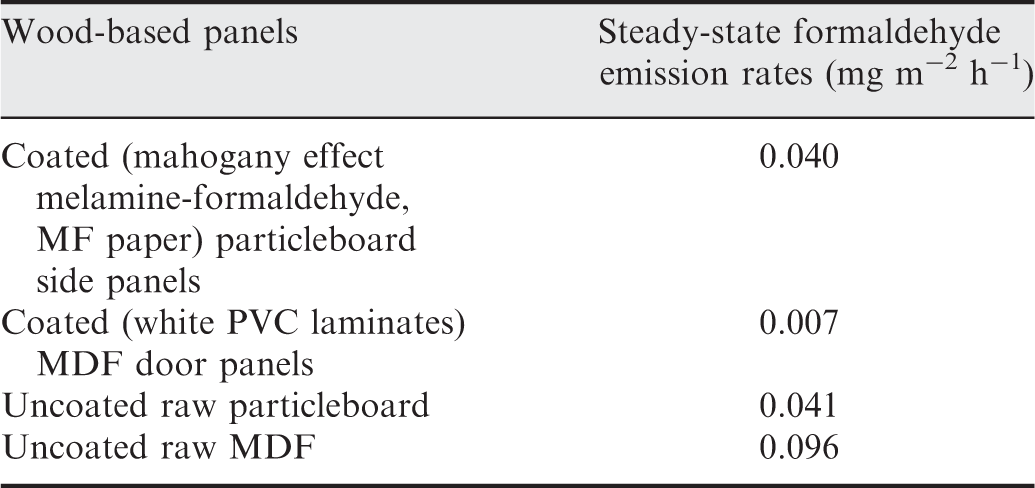
The fully built, double-door wardrobe unit has the following dimensions: 2.090 } 0.888 } 0.590 m3. The door panels were made of MDF and the main wardrobe panels were made from particleboard. The exterior surfaces of these panels were coated with white PVC laminates. Some of these wardrobe units have mirror faced door panels. The interior surfaces of the door panels were coated with pine effect MF paper and the interior surfaces of the main wardrobe were coated with mahogany effect MF paper.
The effect of formaldehyde emission from a flat-packed wardrobe product supplied by the retailer were determined during assembly and exposure of the fitted wardrobe in a room-size (22 m3) environmental chamber, and in a small bedroom (18.9 m3) of an unoccupied energy efficient test house, which would provide data under controlled conditions of a furnished house. The doors of the wardrobe were kept closed. Formaldehyde concentrations in the 22 m3 chamber and ‘normally’ furnished unoccupied test house was monitored once per day for 3 days using pumped sampling (ISO 16000-3:2001) and diffusive sampling (3 days mean) methods (ISO 16000-4:2004).
The energy efficient test house [27] was mechanically ventilated and had heat recovery installed to maintain a constant temperature of about 20 ± 2°C, 25–55% relative humidity and about 0.3–0.5 h−1 air change rate. The sources and concentration of formaldehyde in the indoor air of the test house have been discussed above and elsewhere [27].
The wardrobe was also fitted and installed in a normally occupied one bedroom ground floor converted apartment flat and the impact on the indoor formaldehyde concentration was also determined. The furnished flat has a one bedroom (approximately 4 } 6 m2), a living room (approximately 4 } 6 m2), a bathroom and a kitchen. The background formaldehyde concentration (about 0.021 mg m−3) before the installation of the wardrobe was below the geometric mean of the 876 English homes. The living room is situated at the front of the end-of-terrace house, with a passage leading to the bedroom and at the end of the passage was the kitchen and adjoining bathroom. The bedroom was carpeted. The living room and kitchen had parquet floor and the bathroom had linoleum floor. In the living room, there was a 3-month-old MDF computer table and lounge suite. In the kitchen, a dining table was possibly also made of MDF. In the bedroom, there was a bed and built-in cupboards and the fitted wardrobe.
The dimensions of the room-size environmental chamber were: 3.7 m length } 2.45 m width } 2.43 m high. The chamber was constructed using aluminium panels and the joints were sealed with aluminium tape. The test chamber was built within a concrete cell having temperature control (approximately 23°C) in the outer compartment. The interior surfaces of the aluminium wall panels were degreased by cleaning with acetone, and the chamber was then flushed at a high flow setting and heated at an elevated temperature (about 30°C) for about a week before it is ready to conduct a control experiment prior to testing. The chamber received temperature controlled supply air from an air vent extraction system, ducting from outside the building above the roof level. The supply air entered the chamber at an air vent near the bottom of the room and exhausted at a position diagonally opposite the air entry near the ceiling on the other side, close to the door exit. The wardrobe was built inside the test chamber and was positioned along the wall facing the door and air sampling ports side, so to avoid creating turbulence within the test chamber, obstructing the airflow mixing. A circulation fan was positioned at the air inlet side, at the far end of the room. The positioning of the wardrobe and the airflow arrangement mimicked a real bedroom situation, where air entering under a door or through flooring and exiting through a vent or window. The wardrobe was erected against a side wall. Temperature and humidity loggers were mounted near the centre to monitor the conditions inside the chamber. Once the wardrobe was built, the door was closed and sealed by aluminium tape. Air sampling ports were built along the side wall of the chamber on the door side to enable sampling of airborne formaldehyde emitted from the wood-based wardrobe. The temperature and relative humidity of the chamber environment were monitored every 5 min by a data logger system during the whole of the four weeks testing period. The average temperature in the chamber was 23°C and the relative humidity was about 30%. The average air exchange rate in the room-sized environmental chamber was 0.4 h−1 measured by a tracer gas method (ISO 16000-8:2007).
Formaldehyde concentration while preparing and assembling wardrobe in the room-size environmental chamber and in the small bedroom of a test house

The investigation of the effect of installing a new flat-packed wardrobe in a small bedroom (18.9 m3) on the airborne formaldehyde concentration in an unoccupied test house, in an occupied one-bedroom flat and in a room-sized (22 m3) environmental chamber showed that although the initial rise in formaldehyde concentration in the small room could reached 0.12 mg m−3, which is the WHO air quality guideline value, immediately after assembling the furniture, the concentration declined rapidly within a day and reached a steady-state concentration of 0.063 mg m−3 after 9 days. The concentrations in the unoccupied test house environments and in the occupied flat after 4 weeks were about 0.01 mg m−3 higher than before fitting the wardrobe in these houses. Figures 2, 3 and 4 show the effect on formaldehyde concentrations in the room-sized chamber, test house bedroom and one-bedroom apartment flat after fitting of the wardrobe. Table 5 shows a comparison of the formaldehyde concentrations in the small bedroom where the wardrobe was installed, the adjacent main bedroom, living room of the test house before and after installation of the wardrobe. Table 6 shows the formaldehyde concentration in the occupied flat after installation of the wardrobe.
Formaldehyde concentrations during exposure of the wardrobe in the 22 m3 environmental chamber. Formaldehyde concentrations in the small bedroom monitored by the diffusive method, after installation of the wardrobe. Formaldehyde concentrations in the bedroom of an occupied flat, after installing the wardrobe. Comparison of the steady-state formaldehyde concentrations measured (by diffusive method) in the test house, during 30 October – 27 November 2001 and 7 January – 2 February 2002 Formaldehyde concentration in the test house, measured prior to installation of the wardrobe. Steady-state formaldehyde concentration in the occupied one bedroom flat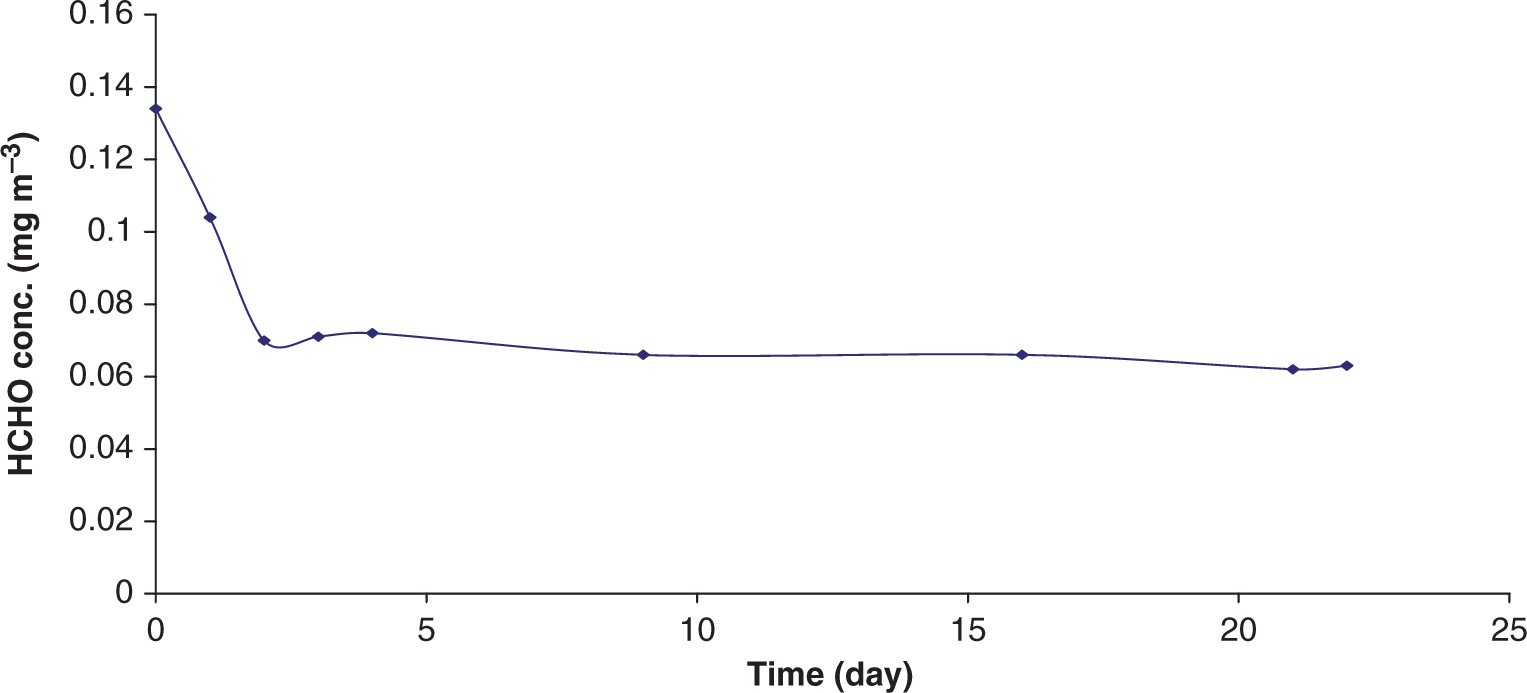
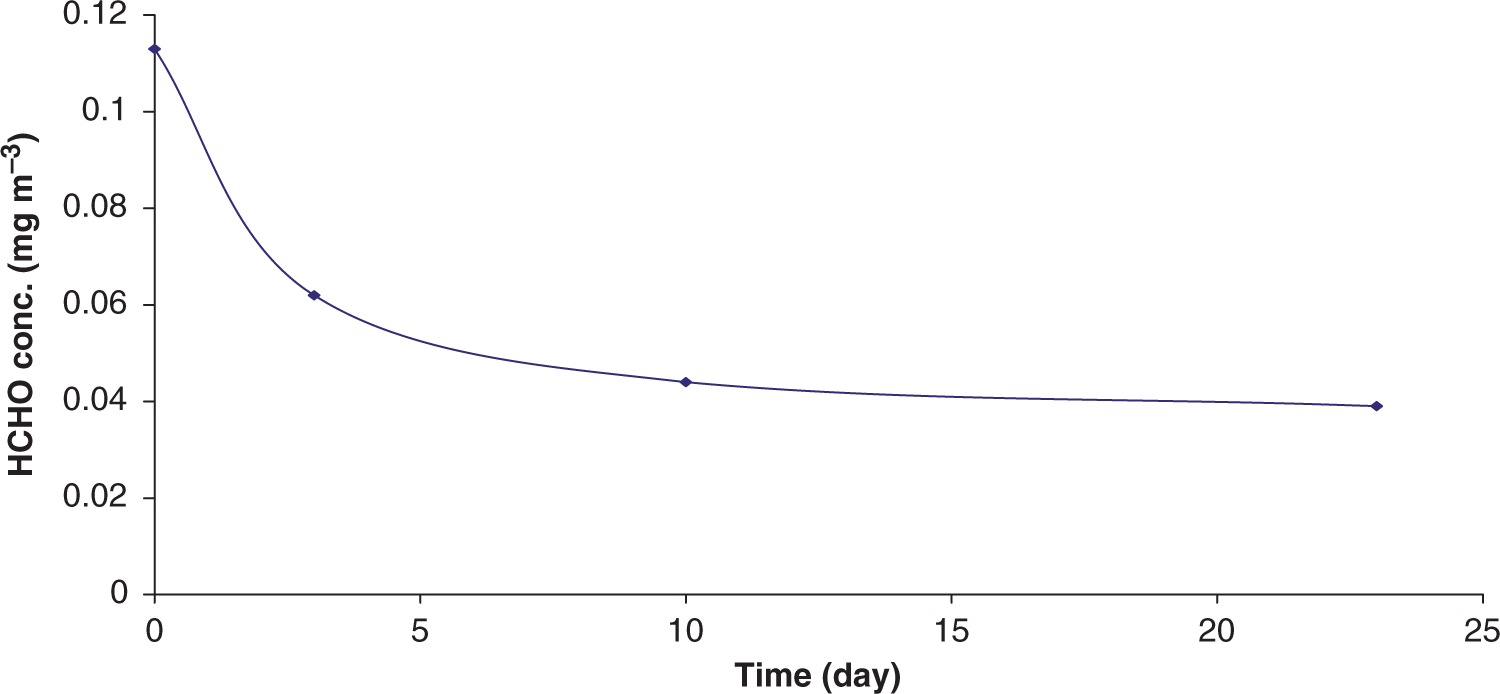
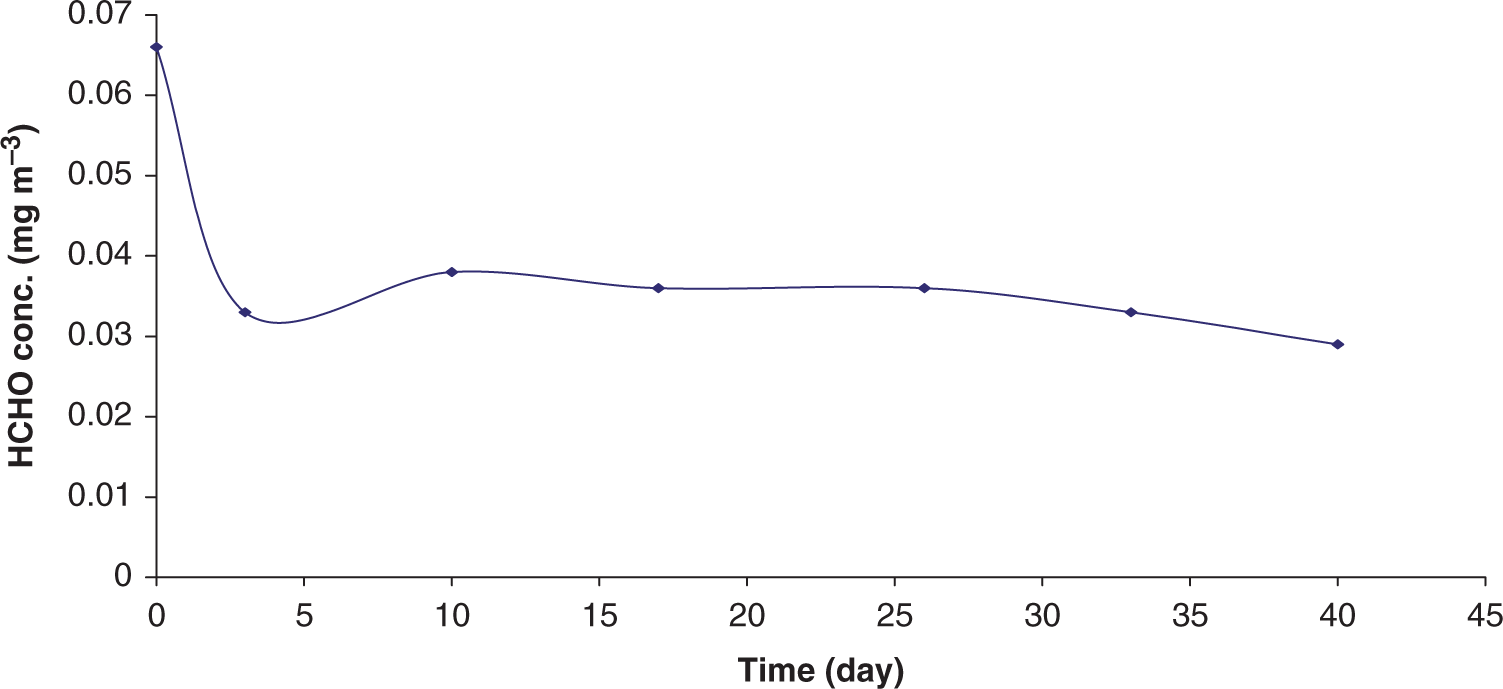


The significance of the effect of installing the “low emitting” wood-based wardrobe on formaldehyde concentrations in the small bedroom of the test house and in the occupied flat can be shown by comparison with the geometric mean of 0.022 mg m−3, and the 75th percentile value (0.035 mg m−3) measured in the 876 homes in England [23]. The formaldehyde concentration in the living room in the occupied flat was close to the geometric mean found in the survey despite fitting the wardrobe in the bedroom. There was good mixing of air in the test house. The formaldehyde concentration in the main bedroom was about 60% of the small bedroom, initially after the wardrobe was installed and the living room, 50%. After about 1 week, the formaldehyde concentration in the main bedroom was about 90% of the small bedroom and the living room was about 75%. The concentration became steady in the house after about 3 weeks; a concentration gradient of approximately 80–90% was shown between the small bedroom where the wardrobe was installed and the rest of the house. The repeat experiment in the test house concurred with the findings of the first test.
Labelling Schemes for Regulating Formaldehyde Emission from Products
A number of labelling schemes have been introduced in Europe [1, 32–35], for controlling formaldehyde emission from building products. The German “Blue Angel” scheme for “environmentally friendly” products was introduced by the German Federal Environment Agency (RAL), and in 1995 a “Blue Angel” label RAL-UZ-76 was established for particleboard and fibreboard [32]. Under this scheme, a “Blue Angel” label is awarded to wood-based products, which do not produce more than 0.05 ppm (<62.5 µg m−3) formaldehyde concentration when tested in an environmental chamber [33]. Emissions of VOCs, is also included in the “Blue Angel” scheme [33]. The Danish “Indoor Climate Label” includes assessment of emission by comparison with irritation thresholds, and predicted concentration in a standard room [34]. The “Finnish Classification of Finishing Materials” [35], requires formaldehyde emission from board materials to be <0.05 mg m−2 h−1; an assessment of odour acceptability (<15 %) is also required to award the M1 label for products that can be used indoors where good air quality is required.
In America, the emissions of VOCs from building materials is included as one of the certified issues in LEED (Leadership in Energy and Environmental Design) for rating of green or sustainable buildings [1]. There are different labelling schemes for certification of different types of products in the USA (e.g. Green Guard for walls, ceiling and flooring products). LEED also include assessment of indoor air quality as a part of assessing ventilation performance and source control. Indoor formaldehyde concentration should be less than 33 µg m−3 based on the Criteria of LEED. The U.S. Department of Housing and Urban Development (HUD) has set limits for formaldehyde emissions from plywood and particleboard used in mobile homes which should not exceed a formaldehyde concentration of 0.2 ppm and 0.3 ppm, respectively, to maintain indoor air concentrations of formaldehyde in mobile homes below 0.4 ppm. The California Air Resource Board (CARB, 2005) has published indoor air quality guidelines for formaldehyde (from composite wood products) and formaldehyde emission from hardwood plywood (both the veneer and composite cord) are restricted to less than 0.05 ppm; particleboard ≤0.09 ppm; MDF ≤0.11 ppm and thin (≤8 mm) MDF ≤0.13 ppm tested by environmental chamber ASTM E1333-96 method.
In Japan, the Committee on Sick House Syndrome of the Japanese Ministry of Health, Labour and Welfare included indoor concentration of formaldehyde for regulation which should not exceed 100 µg m−3[36], similar to the Australian requirement [37]. Formaldehyde emission from wood-based panels, wall coverings, adhesives and paints is regulated by the Japanese Building Standards Law [38], tested by desiccator method according to JIS A1460 or by small chamber method, JIS A 1901. Products are classified by their emissions: F**** ≤5 µg·m−2h−1; F*** ≤20–5 µg·m−2·h−1; F** ≤120–20 µg·m−2h−1; F* >120 µg·m−2h−1.
In Korea, indoor formaldehyde concentration is regulated by the Indoor Air Quality Management Act of Korea, which should not exceed 0.12 mg m−3. Plywood, fibreboards and particleboards are required to satisfy the labelling requirements of a KS mark. Currently they are labelled based on their formaldehyde emission rates under the desiccator test condition. Panel boards that emit formaldehyde more than, 1.25 mg·m−2·h−1 (JIS A 1901, small chamber method) are prohibited for use in buildings [39].
In China, the GB 50325, 2001: Regulations on Control of Indoor Environment Pollution for Civil Buildings, regulates indoor formaldehyde concentration to not higher than 0.08 mg m−3 [40]. Regulations are in place for labelling of products, to be assessed as a part of a Green Building Certification Scheme required by GB 50325, 2001. The wood-based panels are classified according to their formaldehyde emission rates: Grade A ≤0.12 mg·m−2·h−1; Grade B <2.8 mg·m−2h−1; Grade C ≥2.8 mg·m−2h−1.
In Hong Kong, the emission of formaldehyde from wood-based panel is restricted by the labelling certification of construction products ≤0.13 mg m−3, under the Hong Kong Green Building Label Scheme. The Hong Kong Guidance Notes for management of indoor air quality in offices and public places set the criteria for indoor formaldehyde level: 30 µg m−3, Excellent; 100 µg m−3, Good [41].
In Europe, the measurement of formaldehyde emission rate is required by the harmonised European standard, BS EN 13986:2004, “Wood-based panels for use in construction – Characteristics, evaluation of conformity and marking”, for classification of products to comply with the European Commission, Construction Products Directive 93/68/EC, “Hygiene, Health and Environment” essential requirement. The standard includes classification of products based on the environmental chamber test (BS EN 717-1:2004) of formaldehyde emission. The wood-based materials are classified as formaldehyde emission class E1 or E2. For formaldehyde class E1 board, the concentration of formaldehyde in the environmental chamber should be ≤ 0.124 mg m−3. Products that release a formaldehyde concentration greater than 0.124 mg m−3 are classified as E2 board. The BS EN 717-1:2004 is the environmental chamber test of formaldehyde emission from the wood-based board over a 28 day period, at 23°C and 45% relative humidity; and would require sampling and analysis of formaldehyde twice daily to determine the steady-state formaldehyde concentration. This test is required by the BS EN 13986:2004, for initial type testing of products.
Once the emission class of a product is established, the product may be tested for formaldehyde content, based on the BS EN 120:1992 method [13]. This is a spot check of the formaldehyde content of MDF and particleboard. The test does not provide information about emission of the product, except if the manufacturer has established a correlation between the formaldehyde content and the emission of the board material. The test involves boiling a piece of the board material in toluene under reflux for 2 h, then analysis of the extract for formaldehyde content, and the result is expressed as mg/100 g of dry board. BS EN 120:1992 is acceptable for marking of the product according to the BS EN 13986:2004; however, adequate interpretation of the result in term of emission of the board is still required. The gas analysis test by BS EN ISO 717-2:1997 could be used for testing formaldehyde content of MDF and particleboard, but it is really for plywood and coated panels [13]. In essence, this method heats the board in a small 4 L cylindrical chamber, at 60°C for 4 h, to drive the emission of formaldehyde. This method is really a thermal desorption of formaldehyde from the board, to determine the formaldehyde content. Again, the result would need interpretation when the correlation against the emission rate of the board tested by BS EN 717-1:2004, is known.
Although the E1 boards are now prevalent in the market, there is a need to reassure clients of their possible impact on indoor environments. A market advantage might be gained by the manufacturer providing labelling to inform clients of low emitting products. Product labelling, based on health, safety and durability, can be a valuable tool to assist consumers and building specifiers in the selection of products. Certification can be a good marketing tool for the industry to demonstrate the quality of products and provide a harmonised basis for comparison of quality for materials to be used in building applications. Concerns about formaldehyde are also significant market factors outside Europe. For example in Japan, the amended Building Standard law (July 2003) restricts the amount of formaldehyde emitting material used in buildings [42].
VOC Emissions and Possible Contamination in Recycled Products
Also included in the BS EN 13986: 2002 standard for testing is the content of pentachlorophenol as one of the performance characteristics of wood-based panels for internal and external use. Pentachlorophenol is a broad-spectrum wood preservative (light oil solvent preservative, LOSP), which has been widely used in the world for wood protection. The presence of pentachlorophenol in the wood-based products could indicate the preservative residue that remained from their disposed treated wood sources used for the products.
Wood preservatives, tar oil, fire-retardant adhesives and coatings often contaminate wood waste [43] (http://www.wrap.org.uk/reports_index.asp?ReportID = 302& MaterialID = 2); and because of the increasing environmental pressure and requirement from government, there is now an increasing focus on recycling of contaminated disposed wood into panel products and this has also caused a concern for the wood panel industry [44]. The “UK Waste Strategy 2000” (http://www.defra.gov.uk/environment/waste/strategy/cm4693/), stated that the quantity of waste produced must be tackled by breaking the link between economic growth and increased waste. The main theme of the strategy is “where waste is created we must increasingly put it to good use – through recycling, composting or using it as fuel”. The strategy also recognises the need to develop new and stronger markets for recycled materials. This development has now become a particular issue as increasing volumes of recycled material are now being produced, complying with the UK government’s policy on sustainable development. There is a concern about contaminants that can be present in disposed wood; the presence of previous treatment chemicals could adversely affect the consistency and quality of the recycled products [45]. The possible emission of wood preservative residues and other treatment chemicals from the recycled products installed in buildings, could present a risk to health of occupants [46–49]. There could be environmental, and health and safety concerns, relating to the emission of toxic chemicals during processing and handling of the treated wood at the production plant [50].
Owing to the environmental and economic considerations, there is now an increasing demand for the wood industry to incorporate waste wood as raw material for wood-based products or to re-use in furniture applications [44]. The presence of treatment chemicals could affect the recyclability of the material. The quality of the wood chip generated from the recycling of waste wood may be of lesser quality than the virgin wood material, and may require a higher proportion of urea formaldehyde binding resin. This could compromise the wood panel industry’s efforts to produce lower formaldehyde emission products.
Current environmental regulations restrict the use of wood preserved with pentachlorophenol and creosote oil mixtures from use in residential, industrial and commercial interiors. There are the following concerns within the manufacturing and recycling industry [45]: The presence of the preservative and the associated solvent chemicals reduces the technical and economic advantages of recycling waste wood. These contaminants can reduce the bonding of the urea-formaldehyde adhesive with the wood fibre to produce composite wood-based panel. Health and safety concerns regarding the emissions of the volatile toxic chemicals during the processing of the contaminated waste wood at the manufacturing plant. The emission of the toxic chemicals that remained in the recycled wood-based products could present a risk to health of building occupants. Health and safety concerns regarding the handling of toxic arsenate or borate-treated timber waste. Occupational exposure to wood dust particles containing preservative treatment chemicals, during various wood preparations in refurbishment and building activities. Contaminated wood waste exposed to rain can produce toxic leachate that will cause environmental harm. The release of toxic chemicals from the contaminated wood waste disposed in the landfill site could cause harm to people living adjacent to these disposal sites.
The need to reduce waste at all stages of construction was central to the message of “rethinking construction”, the 1998 report of the Construction Task Force on the scope for improving the quality and efficiency of UK construction (http://www.dti.gov.uk/construction/rethink/report/). In order to minimise waste, and to promote the recycling of disposed wood, there is a need to assess the extent of the contamination in disposed wood. Although some of these contaminated woods can be identified visually or by odour, most preservative treated wood requires analytical procedures to assess the extent of contamination and the suitability of the material for recycling or reuse. An evaluation of the chemical emissions from treated timber and recycled products has the benefits that it would: provide the manufacturers with data to optimise the treatment of their products; reduce harmful chemical emissions from treated timber and subsequently the recycled products for use in buildings; reduce the environmental impact caused by contaminated waste wood in landfill; allow the industry to consider the environmental impacts during the various stages of the life cycle of products; assist the wood industries to consider the technical and economic advantages of recycling; encourage the building and wood products industries, to incorporate recycling of waste wood in their business strategy; and assist the CEN TC 38 technical committee towards the development of a European standard for classifying timber products based on their chemical emission.
It is therefore important to undertake research to characterise contamination in wood waste, to collaborate with the different sectors of manufacturing and building industries, to reduce the preservative content of wood in order to determine the disposal and recycling options, to support the government’s policies for recycling to reduce wastes and building a better quality of life.
According to EU Biocides Directive 98/8/EC (May, 2000), environmental exposure assessment would form an integral part of the risk assessment of a biocidal product, including wood preservatives or an active ingredient for regulatory purposes. Preferably, representative data from well-designed field studies should be used to form the basis for the exposure risk assessment. The regulations (http://ecb.jrc.it/biocides/; http://europa.eu.int/comm/environment/biocides/index.htm); require the environmental and health hazards of all existing biocidal active substances, those on the EU market in May 2000, to be subjected to a review at EU level in a ten year programme starting in 2002. The exposure risk assessment should examine the emissions that would occur during all stages of life cycle of a wood preservative, from production, formulation, processing, use (service life of treated material) and recovery or disposal of the treated products to landfill sites.
There are a wide variety of VOCs that could be emitted from wood-based panel products used in building of homes or commercial offices [27,51,52]. The testing of VOC emissions from products would be by environmental chamber method in accordance with the International standard, ISO 16000-6:2004.
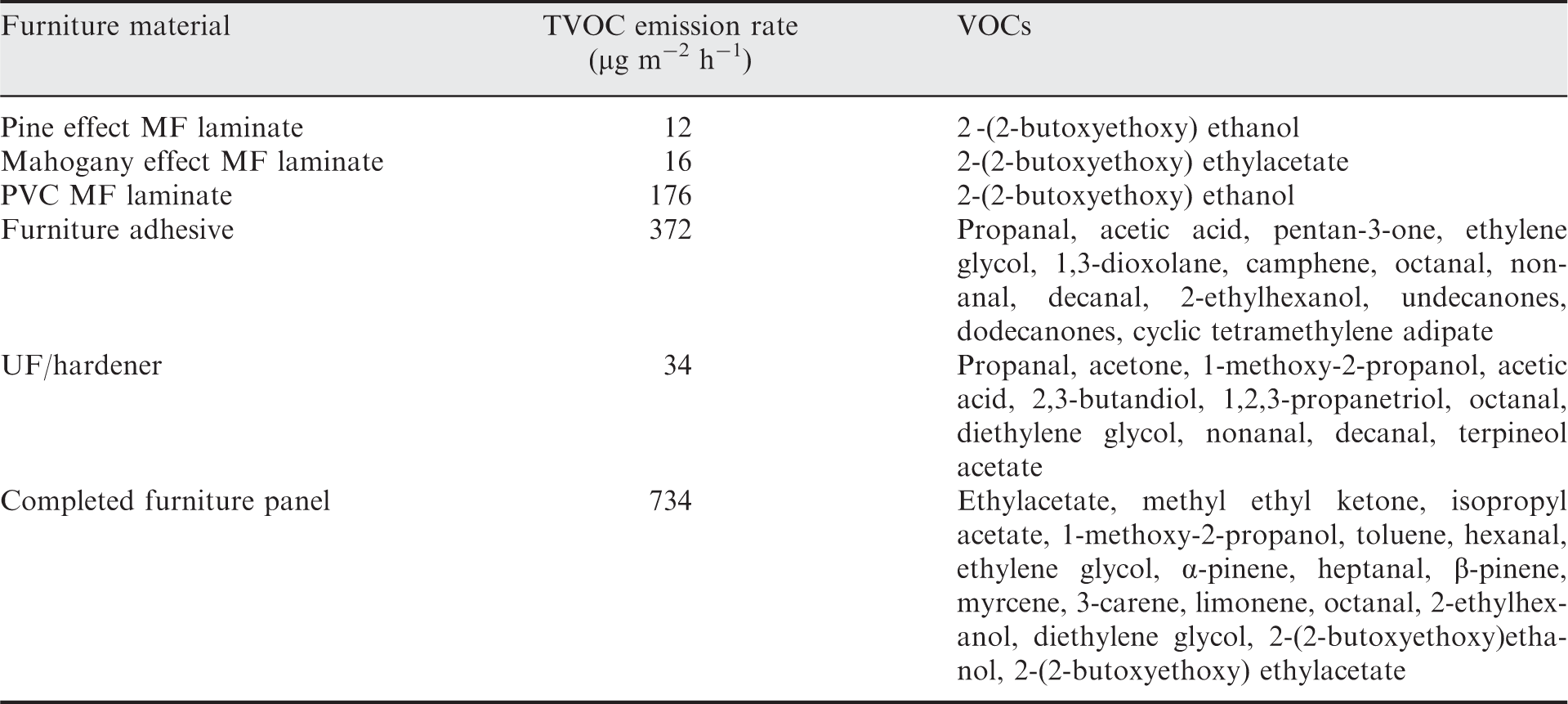
VOCs can be emitted from wood, wood preservative residues, binding adhesives and other associated materials, such as coatings of the manufactured wood-based products. The VOC emissions from the coating laminates, a furniture adhesive, a hardener and a completed furniture panel are shown in Table 7. It is important that the industry is aware of these emission issues in addition to the formaldehyde issue, which can have an impact on the competitiveness of products in the EU market and internationally. Furthermore, as discussed previously, it is a requirement by the European Commission for products placed in the European market, to provide a review of exposure risks of any possible release of volatile chemicals by the materials in indoor environments.
VOC Emissions from MF coating laminates, a furniture adhesive and hardener, and the completed furniture panel after 1 day of exposure in an environmental chamber
Conclusions
The emissions of formaldehyde and other VOCs from wood-based products are important considerations for the wood-based panel manufacturers and housing developers. IAQ is an important social and political issue in different countries and could affect the competitiveness of products. There is therefore a need to assess the impact of emissions of VOCs and formaldehyde in indoor environments as a part of the evaluation of products based on a Green Building Certification scheme.
Low formaldehyde emitting wood-based products are now prevalent in the market. Product labelling, based on health, safety and durability, can be a valuable tool to assist consumers and building specifiers in the selection of products. Certification can be a good marketing tool for the industry to demonstrate the quality of products.
The development of new wood preservatives in response to the restriction in use of some of the traditional types of wood preservatives by the EU Biocides Directive 98/8/EC; has presented a new opportunity for widening of the wood resources for the wood-based panel industry, once the sustainability of these wood resources have been established by on-going research.
A variety of VOCs can be emitted from wood and associated materials (such as coatings and adhesives) that formed the finished wood-based product. Already eco-labelling schemes in some European countries are requiring assessment of VOC emissions into air, water and soil and it is expected that the market impact of these schemes will increase over the next few years.
Footnotes
Acknowledgements
This work was supported by the National Research Foundation of Korea (NRF) grant, funded by the Korea government (MEST) (No. 2011-0001031).