







Abstract
Building materials are important sources of volatile organic compounds (VOCs) and formaldehyde in indoor environments. There is a requirement from the building designers to provide sustainable development of buildings that would encompass the consideration of health risks which could be posed by the high emissions of VOCs, formaldehyde and other organic chemicals from indoor materials and furniture, particularly during the early few years after completion of a building. Buildings are now being built with much higher air-tightness requirement according to building regulations and there should be a corresponding need to further examine the emissions from building materials and to develop a system to evaluate the possible impact on indoor concentrations as a part of indoor environmental evaluation based on zero or low-carbon building scenarios. This paper provides a review of the emission parameters for characterisation of material emissions, including a consideration of airflow, material loading, air exchange, diffusion, sink effects, barrier layers and sorption of VOCs in both environmental chamber and in realistic built environment of an apartment or a room in a house. The development of emission parameters would allow the simulation of material emissions and prediction of indoor concentrations of VOCs in indoor environments.
Keywords
Introduction
Building and furnishing materials are important sources of indoor concentrations of volatile organic compounds (VOCs) and formaldehyde (HCHO) [1–2] which are receiving particular attention from research scientists, government regulators and building planners due to the possible adverse health effects that could be caused by these emissions on building occupants [3–8]. There are now guidelines and regulation standards exist in different countries such as in Europe [9–11], USA [12], Canada [13], China [14], Japan [15], Korea [16], Hong Kong [17], Australia [18] and Singapore [19], which have been introduced to provide important standards to reduce risks of these indoor pollution on health and well-being of occupants.
Buildings can be a huge investment in time and money for building developers and owners, not just at the design and construction stage, but throughout their service lives until the buildings are demolished. There is now an increasing demand for building designers and developers to provide buildings that are sustainable and with a careful consideration of indoor environmental parameters that would impose minimum adverse impact on indoor environment to ensure an adequate indoor environmental quality for occupants [20–22]. There are now different green building certification schemes in different countries introduced to provide building developers and owners a rating of the environmental credential of their buildings in terms of energy efficiency, material emissions, health and well-being, land use, water and resource efficiency, pollution and on other environmental factors contributing to sustainable development of these buildings [23]. The selection and testing of building materials is a crucial part of these building environmental assessments to control pollution, promote comfort (including a consideration of ventilation, thermal and glare conditions) and minimise environmental exposure to emissions of VOCs and formaldehyde from building materials in homes and offices, so as to provide a healthy working environment in commercial buildings, thus increasing the letting/selling potential of these buildings. Creating and maintaining a comfortable, healthy, efficient and cost-effective indoor environment is a complex task and will involve understanding and optimisation of a range of systems, technologies and building materials, to assess how they interact with a balancing view of occupants’ needs and comfort. There is a need to form an overall strategy for building design and management to incorporate the thinking of “sustainable development” that is with due respect for people, and a better quality of life for everyone. Buildings are now being built with much higher air-tightness requirement according to Building Regulations and there should be a corresponding need to further examine the emissions from building materials and to develop a system to evaluate the possible impact on indoor concentrations as a part of indoor environmental evaluation based on the zero or low-carbon building scenarios [24]. Canadian’s IAQuEST (Indoor Air Quality Emission Simulation Tool) [25] and US EPA’s IAQX [26] are examples of such evaluation tools which allow building designers to predict indoor concentrations of VOCs and HCHO based on ventilation and material loading scenarios used for construction of a new building in these countries.
The purpose of this paper is to review the testing of VOCs emissions from building materials and the requirements for indoor simulation to allow an evaluation of these emissions data in realistic building apartment situations. The evaluation of data would thus provide the building designer a valuable tool to assess possible impact for the type of building materials used and therefore minimising concentrations of VOCs in indoor environments.
Characterisation of VOC Emissions and Testing of Materials
Emissions of VOCs and formaldehyde have been widely investigated using environmental chambers of inert surfaces (polished stainless steel or glass) to characterise these emissions particularly from building materials since the late 1980s and early 1990s [27]. These studies are generally based on the mass transfer processes of solid materials following a first-order kinetics in almost perfectly controlled conditions: negligible sink and sorption effects of chamber surfaces, constant air changes, temperature and relative humidity and well mixing [28]. The emission of an individual VOC is determined by an emission rate factor (EF), µg·m−2·h−1, which is dependent on the concentration (C), µg·m−3 of the VOC, loading of the material (L), m2·m−3 from which the VOC was emitted and the air change rate (N), h−1 as represented by equation (1)

The loading L is the ratio of the total surface area of the materials exposed to the volume of air in the chamber. The air change rate provides the flushing and dilution of the VOC and is determined by the flow of clean air to the chamber in an hour per volume of the chamber. The emission rate for a new dry solid material, a typical first-order emission profile would be expected as described by equation (2)

The emission of VOCs from a new solid building material is generally a diffusion process or a combination of diffusion and evaporation process [28]. The diffusion of VOCs within a material is determined by Fick’s law of diffusion and the air circulation and air flow rate over the surface of the material can have a significant influence on the outcome of an emission rate measurement. In majority of emissions testing, a small environmental chamber (1–0.125 m3) would be used and these chambers would have a strict control of all environmental conditions of temperature, humidity, air circulation, air speed and air change rate to provide the almost ideal environment to limit external effects that could affect the emission rate measurements [28,29]. The sorption on walls of VOCs would also be minimised due to the smooth, almost inert wall surfaces (polished stainless steel) of the chamber. The diffusion of the VOC at the surfaces of the material is a function of the diffusion coefficient (or diffusivity) of the specific compound which is dependent on the compound’s molecular size, boiling point and polar charges, temperature and molecular structure of the material within which the diffusion of VOCs occurs. The diffusivity of a VOC within a mixture of VOCs can be affected by the composition of VOCs and could also be affected by the inhomogeneity of the material [28].
For small and large environmental chamber (walk-in chamber) testing (ISO 16000-9:2006), the loading of a material and air change rate are important parameters for the measurement of emission rates of VOCs from a material. These parameters should be realistic and should be based on how the material is applied in a real environment of a room in a house situation. For example, for testing of floor covering, a loading of 0.4 m2·m−3 would generally be used and for gloss paint, a loading of 0.1 m2·m−3 would be applied to reflect a gloss paint application on an internal door of a room. For testing of formaldehyde emission from wood-based panel such as particleboard or medium density fibreboard, a loading factor of 1 m2·m−3 and an air change rate of 1 h−1 are used (EN 717-1:2004) [30,31]. The potential impact of emission rates of VOCs from the material measured by the chamber test should be scaled to determine the possible concentrations of these VOCs in a standard room of 17.4 m3 with a floor area of 7 m2, wall area of 24 m2 and an air exchange rate of 0.5 h−1 [32] according to the international standard, ISO 16000-9:2006.
For emission testing using a microchamber or emission cell (ISO 16000-10:2006), an area specific air flow rate would be used to determine the area specific emission rate, µg·m−2·h−1 of VOCs from a material. The area specific air flow rate, m3·h−1·m−2 (qA) would also be applied to determine the emission rate of a VOC by chamber testing. The area specific emission rate is determined by multiplying the concentration of a VOC at time, t by the area specific airflow rate.
The use of mass transfer models [33] for determining emissions of VOCs from indoor materials would simplify testing procedure and allow the determination of the emission rate profile of a VOC over time from a surface coating or paste material based on equation (3), in which gas phase mass transfer data of concentration and weight (Cv and M0) and coefficient (kg) can be applied for the determination [34]

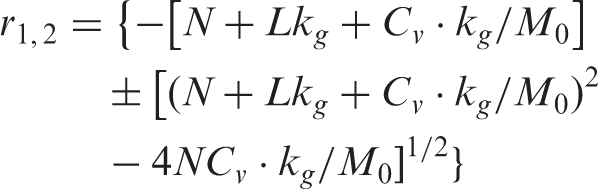
Cv can be obtained from static chamber tests or from published data; M0 would be the weight of the coating applied or by analysis; and kg is the Nusselt–Reynolds number correlation. These parameters can be applied to modelling of IAQ [35,36].
Small-scale environmental chamber would allow an assessment of emissions of VOCs from a material in a controlled idealised environment [27]. An emission cell, however, can provide a relatively more convenient way to assess emission rates of VOCs with minimum consideration of sink effects or sorption losses and in many cases allow a quick screening of the material emissions for an initial assessment of their impact, in an indoor air pollution investigation [1]. Full-scale environmental chamber would enable assessment of emissions of VOCs of whole assembly of furniture and allow realistic loading of a material in a room to be investigated but again, this would be limited by the size of the chamber and the typical room where the material is to be fitted [27].
The airflow over the surfaces of the material being investigated in an environmental chamber is an important consideration. For determination of emissions of VOCs from an evaporative source, e.g. from paints and coatings, the airflow condition whether in stagnation, laminar or turbulent flow such as would occur in a built environment of a room can have a significant effect on the emission rates of VOCs during the various stages of curing of a paint film or coating material [37–39]. The understanding of the effect of air velocity and turbulence on emissions of various types of VOCs would therefore assist a better prediction and determination of the concentrations of these VOCs in indoor environments [37–44]. Paint film thickness and substrate material can have an important effect on VOC emission rates [45,46]. The empirical model for characterisation of VOC emissions have been reported by the European Commission Collaborative Action [47].
There is a need for a method that would accurately assess the performance of an environmental chamber test of VOC emissions from material. This would allow a more consistent evaluation; a problem that was highlighted by previous international interlaboratory comparisons of chamber testing, particularly for liquid and paste materials [32,48–51]. A paper by Wei et al. [52] proposed a quality assurance method for chamber testing called liquid-inner tube diffusion-film-emission, which provides a new standard reference to assess precision of chamber testing which would be useful for calibrating chamber systems for testing indoor material and furniture. The three key emission parameters: the initial emittable concentration (C0), the diffusion coefficient of the target VOC in material (Dm) and the material/air partition coefficient (K), which are generally used to predict material emissions by physical models, were determined to validate the chamber calibration using a three-parameter optimising regression, so that the material emissions determined by chamber testing would be similar and equate to the real situation in real built environment of a room. An analytical dimensionless model was used to optimise the factors influencing the emission rates; these were validated by their subsequent emission testing results.
Indoor Sinks, Sorption and Diffusion Layer
Sorption of VOCs on walls and other surfaces in indoor environment is an important consideration when considering sink effects, where VOCs, formaldehyde and other indoor pollutants are lost or temporary lost and reduced from the indoor atmosphere. The VOCs being adsorbed on walls could be released later from the wall surfaces and thus maintaining a steady source of emissions of these VOCs in the built environment. The indoor sink effects are dependent on the characteristics of the VOCs, the sorptive building materials and environmental conditions. In a situation such as the emission of VOCs from adhesives, the emissions would be restricted if applied under plywood floor covering. The thick and complex structure of plywood composition would slow down the emissions of VOCs from the adhesive. Whereas, the emissions of VOCs from adhesive applied under the wall paper would diffuse quickly to the surface of the thin, porous wall paper to impose a higher impact on the environment [53]. The adsorption of VOCs to the internal surface of the porous medium and irregular diffusion path would slow down the mass transfer through the material. However, the thicker material generally delay the emission to a lower level then after a certain threshold, the emission of VOCs became more prominent and rising to a higher level even after the adhesive had cured and emission was ceased to a lower level. This is particularly the case when a more sorptive carpet is applied to an adhesive on flooring [54,55]; the delay action of the carpet would be for a comparatively shorter period due to the more porous and sorptive nature of the carpet in comparison to the plywood. However, due to the sorptive nature of these materials, emissions of VOCs are prolonged and would cause a continuous impact on the indoor environment. The effectiveness of various types of coatings or laminates as a barrier to formaldehyde emission from wood-based panels had been previously determined [56].
Recently particularly in Japan, there has been a lot of interest in the use of sorptive building materials to reduce the concentrations of VOCs and formaldehyde in indoor environments [57–66]. The mass transfer coefficients, material loading and air change rate can influence the sorptive behaviour, particularly in respect to formaldehyde concentration in air [58,67]. The performance of sorptive building material can be evaluated by a sorption flux method using an equivalent ventilation rate [57]. The effectiveness of the sorptive material for reducing indoor concentrations of VOCs would depend on the air exchange rate, loading of the sorptive material and the mass transfer coefficient.
In order to apply emission testing data to indoor environment, there is a need to account for the sorption effect, although sometimes this could be negligible when assessing the installation of a new material covering a large surface of a well ventilated room with well mixing. However, the presence of an adsorbent, e.g. uncoated plasterboard walling or carpet or wallpaper, could prolong the emissions of the VOCs over a much longer period in the indoor environment and there has been proposal to incorporate a determination of sorption effect of the VOCs on building components as a part of the labelling of building materials [68]. The performance test for evaluation of reduction of formaldehyde concentration by sorptive building materials is prescribed by the international standard, ISO 16000-23: 2009 and the performance test for evaluation of reduction of VOCs concentrations by sorptive building materials is prescribed by the international standard, ISO 16000-24:2009 [69].
Barrier layers on the surface of building materials can play an important role in reducing the emission of VOCs. He et al. [70] determined the transport properties such as the solid-phase diffusion coefficient (D) and the solid/air partition coefficient (K) for diffusion of VOCs in barrier layers, using dynamic–static chamber method with zero air change rate. They demonstrated that D and K were independent of the low concentrations of VOCs emitted within their studied range. A multilayer mass transfer model [71] was used to demonstrate the reduction effects of barrier layers on VOC emissions from building materials. The D- and K-values of barrier layers can be useful for predicting VOC emissions from building products to encourage development of low-emission building products incorporating barriers. The diffusion of VOCs through porous material was described by Xiong et al. [72] using a macro–meso two-scale model for predicting the diffusion coefficients and diffusion characteristics of some porous building materials which involved a determination of the porosity of the materials using mercury intruding porosimetry experiments.
Diffusion studies often describe the diffusion of VOCs through surfaces of porous materials via rate-determining diffusion process and mass transfer principles of Fick’s Law of diffusion through material–air interface. The parameters for consideration include: the initial concentrations of VOCs adsorbed on the material, C0; VOC diffusion coefficient through the material, D; and the VOC partition coefficient between the material and air, K which have been determined by experiments [73,74].
Often, sorptive behaviour of low concentrations of VOCs in indoor environment would follow a linear adsorption isotherm and due to the low concentration, competitive sorption of VOCs on material would not be expected. There are models reported which provide description of the sorption of VOCs in indoor environments [75–77]. There is a need to account for sorption of VOCs of various functional groups which could be reactive and interact with the surfaces of the material in indoor environment and in chamber studies [77,78].
Liu et al. [79] studied the various sink effects of some VOCs as surrogates to chemical warfare agents and toxic industrial chemicals of some building materials (carpets, wallboards, vinyl flooring and mortars) in small chambers. The gas phase concentrations of the potential contaminants were predicted using Langmuir-isotherm and diffusion models as function of time, validated by chamber experiments. They found strong correlations between equilibrium partition coefficients determined by the Langmuir-isotherm model and equilibrium partition coefficients and effective diffusion coefficients determined by sink diffusion model.
As a rule, the sorption of VOCs increase with a lowering of vapour pressure of the compounds and typically compounds with a higher molecular weight and lower vapour pressure such as the semi-volatile organic compounds (SVOCs) would have a much higher potential for sorption on building materials and, therefore, a longer residence time in the various indoor environments. The majority of these SVOCs, such as biocides, polyaromatic compounds, phthalates plasticisers, fire-retardant polybrominated diphenyl ethers and polychlorinated biphenyls and organophosphate esters, are widely used in a wide variety of household products and materials; they are omnipresent in virtually all kinds of built environments in every country. Also, some of these compounds can have an important health effects on people by dermal contact and ingestion via sorption on food and dust [80–82]. Increasingly, products standards will need to include emission criteria for these SVOCs to demonstrate fitness for use in buildings considering their possible health impact on people. There is a need to characterise the emissions of these types of SVOCs, so to evaluate their fate and behaviour and to predict concentrations in indoor environments by modelling. Unlike the studies of VOCs involving diffusion and mass transfer, partitioning into the gas phase and sorption onto interior surfaces, particulates and dusts are important consideration for the assessment of SVOC concentrations in building atmosphere [83,84]. Also, because of the properties of SVOCs, different kinds of emission testing, sampling and analytical procedures would be needed and these will need to be validated as well as the emission modelling for assessing impacts of these products in building environments [5]. Understanding the partitioning of SVOCs between gas phase and settled dust is necessary to characterise the fate of these chemicals in indoor environments and the various pathways for human exposure [83,84].
Weschler and Nazaroff [83] reviewed the partition of SVOCs in gas phase on settled dusts in indoor environments and evaluated the predictive potential of octanol-air partition coefficient, Koa for quantifying SVOC partition between air and dusts [85]. They collected dust–air data for 66 individual SVOCs which are frequently found in a thousand buildings reported in the literature. They used a Kdg term (equilibrium coefficient) to describe a SVOC’s partitioning between settled dust and the gas phase. Kdg is the ratio of the mass fraction in dust (µg of dustborne SVOC g−1 of dust) to the gaseous SVOC concentration (ng of gas-phase SVOC m−3 of air), they defined the relationship between Kdg and another term Kdust, which is a ratio of the SVOC concentration in dust (ng SVOC m−3 dust) to the gas-phase SVOC concentration as shown by equation (5)


Weschler and Nazaroff [86] have also estimated the SVOC abundances adsorbed on hand skin lipid surfaces (Chum) based on the relationship given by equation (7), as follows

The partition coefficient, Khum, is specific to the skin oil of the human’s stratum corneum and can be calculated based on the Koa, the octanol-air partition coefficient of the SVOC, given by equation (8), as follows

Indoor Simulation of Concentrations in Real Buildings
For the emission testing data to have any meaning, there is a need to correlate these data to the indoor concentrations of these VOCs emitted from building materials. Emission evaluation tools [25,26] for prediction of indoor concentrations of VOCs are important for designers and these are based on database of emission data collected from environmental chamber testing of building materials using the parameters discussed in the above sections, taking into account of the loading of the materials used, airflow and air velocity and air change rate of the room, the emission rate factors and sink effects for determination of indoor concentration VOCs and formaldehyde.
The first approach using dimensionless analysis to obtain the generalised VOC emission correlations for building material was done by Xu and Zhang [87]. Based on the most recently published mass transfer model of emissions of VOCs from dry building materials, Qian et al. [88] and Xiong et al. [89] used four dimensionless parameters: the ratio of mass transfer Biot number to partition coefficient (Bim/K), the mass transfer Fourier number (Fom), the dimensionless air exchange rate (Nδ2/Dm) and the ratio of building material volume to chamber or room volume (Aδ/V) to obtain estimation of emission rates from dry building materials by numerical analysis and data fitting to determine the dimensionless correlations for these parameters as functions of total emission quantity. The correlations were validated against the predictions made by the mass transfer model. Using the correlations, the emission rates of VOCs from dry building materials can be evaluated without having to solve the complicated mass transfer equations. Basing on this relationship, the emission data from a given building material tested in a static chamber with zero air change rate can be scaled to those under realistic environment of an apartment room. Also, the relationship developed can explicitly evaluate the impacts of air velocity, loading and air exchange rate on the emission rates of VOCs measured by chamber testing of the building materials, which should be the same as in the realistic situation in a room of an apartment or in a house.
Such studies are invaluable for building designers to estimate emission rates of VOCs to predict indoor concentrations when using selected building materials of their choice for the fitting of a room in an apartment or in a house. This especially the case when considering air-tight building and testing and modelling of building material based on static chamber would be informative for such applications. The correlations have established the explicit power relationship between emission rates and dimensionless parameters and thus similar principles can be applied to assess the emission characteristics of VOCs in a realistic environment of a room in a house [89], where under almost zero air exchange of a sealed home, the concentrations of VOCs would continue to rise to a steady concentration due to the emissions from building materials and furniture. Such modelling scenario would also provide exposure risk assessment of emissions of VOCs from a building material in a worst case situation in a living apartment. For evaluation under a realistic room environment, the emission rates can be determined by:
analyses of VOCs; by applying chamber test data and use the correlation of the mathematic model given by Xiong et al. [89].
Conclusions
This paper has reviewed the state-of-the-art knowledge on characterisation of emission behaviour of VOCs and formaldehyde from building materials and emphasised the need to consider diffusion and sink effects as an overall strategy for modelling emissions of VOCs from materials so as to develop evaluation tools for estimating or predicting concentrations of VOCs in indoor environments.
The development of barrier layer combined with the use of diffusion layer could help to reduce emissions of VOCs from the core building material. The partition of SVOCs emitted from building materials could be adsorbed on settled dusts and this could pose a health risk to building occupants via air–skin transmission.
For simulation of VOC emissions in indoor environment, the use of dimensionless parameters described to determine the dimensionless correlations for prediction of emission rates under almost zero air exchange condition would provide a realistic route to assess the impact of VOC emissions in indoor environment of a sealed room of an apartment or a house.
Footnotes
Acknowledgments
This work was supported by the National Research Foundation of Korea (NRF) grant funded by the Korea government (MEST) (No. 2012-0000609).