







Abstract

This editorial is taken from a British perspective, but it may chime a little with those in other countries. In 1974, a BBC Horizon programme investigated how new technology was impacting on people’s lives. A modern movement building in the North East of England had recently been completed. Its function was to house a computer, which was a very large piece of equipment. The computer was also very delicate – prone to draughts, changes in temperature, humidity and sunlight. It was also indifferent to the view. Thus, the building was sealed, with constant temperature, dry atmosphere, little natural light and no sunlight. The employees, on the other hand, craved variation from their indoor environment and a view to the outside. The employers could not understand why the staff always felt demotivated, listless and unwell, while absenteeism and staff turnover were well above the norm. It was little surprise, even Le Corbusier, the doyen of the modern movement had stated that people had to learn the spirit living in mass-production buildings. 1 The implication being that buildings would be constructed in accordance with worthy principles, and users would have to change their behaviour to fit the buildings. However, in the 1970s, there was little energy conservation. U values had been introduced to the building regulations, but they were easily achieved with cavity wall construction. Nevertheless, the buildings inspired by modernism presented new challenges. Regardless of whether they were living accommodation or workplaces, concrete frames and concrete cladding were prone to condensation and cold bridges. This generated an industry of insulation production that would become increasingly significant towards the end of the 20th century. The 1970s were significant in other ways. Indeed, the Horizon programme itself was responding to the global oil crisis in late 1973 and the three-day week (January to March 1974). The Heath Government had taken this dramatic action to avoid Britain’s industry grinding to a halt as a result of a combination of the oil crisis and an impending strike by the National Union of Mineworkers. It involved cutting electricity supplies to three consecutive days a week to conserve coal stocks. This was observed by an up and coming thrusting politician named Margaret Thatcher, who vowed that if she ever became Prime Minister, the Country would never be placed in this position again. Her actions in the 1980s included reform of the Unions and promotion of energy conservation. The most significant legislation was the 1984 Building Act that produced a new generation of Building Regulations. These seemed to be revised almost on an annual basis, and of all the sections, part L – Conservation of Fuel and Power was changed the most. First, U values were radically reduced to combat fabric losses, then the whole system for evaluating building designs was totally changed, and air infiltration was targeted, with the progressive sealing of buildings. During this period, the 1992 Rio Earth summit on climate change and reduction in use of fossil fuels introduced Agenda 21, part of which was to conserve resources. It was followed by the Kyoto Protocol, which started in 2008, as an international agreement linked to the UN convention on climate change. It was based on the premise that global warming exists, and man-made CO2 emissions have caused it. All of these provisions were generating an unstoppable momentum. The proponents of the measures would state that they are all totally reasonable, and the only failing was that they should have been introduced earlier. This is a justifiable position, but as with all evangelical movements, the lack of challenge is unsettling. Local authorities from the north of Scotland to the Tropic of Capricorn in Australia were making similar proclamations. Aberdeenshire Council, for instance, pointed out that reducing energy has many advantages. It saves money, reduces carbon emissions, can improve a working environment and will enhance the Council’s reputation. The Authority’s solution was to appoint energy champions from the staff, to carry out walk-rounds encouraging other staff to save energy. One point that champions should make is to discourage staff from using thermostats as on/off switches. In addition, they should emphasise that if staff members are opening windows when heating is on, they are wasting energy and money. Their recommended temperatures were between 19℃ and 21℃, and these should be maintained throughout. 2 At the same time, the Queensland Government in Australia was stating that saving energy in a business is also saving money. Therefore, business may benefit from an energy efficiency assessment, which measures the current energy use and greenhouse emissions to provide priority recommendations for energy efficiency action. These could include installing locking covers on thermostats to prevent employees from tampering with the temperature settings. 3
According to the Centre for Sustainable Energy, for the UK to meet its target to reduce emissions by 80% by 2050, the initial decisions that organisations make should be social, i.e. they are made by individuals acting within, and influenced by, an employment culture and not necessarily based on rational criteria such as cost/benefit. 4 Moreover, pressure is coming from Europe, in which it is considered that improving human behaviour can reduce energy consumption by 20%. 5 Some researchers suggest that the workplace environment introduces a number of barriers that must be overcome. They claim that employees do not have a direct financial interest to conserve energy at work as they do at home. Nevertheless, they suggest that the workplace is even more conducive to modifying behaviour than the residential environment. Employees are a ‘captive’ audience that can be more easily targeted through low-cost means such as motivational appeals delivered through email or newsletters. Furthermore, energy use is more easily observed by one’s peers in the workplace than in the home environment and may therefore be more vulnerable to processes of normative influence in which an individual feels pressure from one’s peers to conserve energy.6–8 Thus, they are suggesting that peer pressure may coerce employees to comply with the energy-saving doctrine, regardless of how they really feel. Two interventions – peer education and group-level feedback, were developed to target energy-saving behaviour in a number of workplaces. Peer educators would send monthly emails. Similar to Aberdeen Council’s Energy Champions, these were members of staff who were unpaid to undertake this function, which would reduce costs for the employer and/or building owner. Even the authors admitted that it was not particularly successful, as the simple act of sending emails was only partially completed. Unfortunately, they did not investigate why. It could have been that the people concerned realised that they were being used as unpaid advocates of an employer’s energy strategy, or that their fellow workers resented being educated in this manner. 9 Other research has identified further implications of an energy-saving strategy. The most obvious and commonly cited example of the potential link between low-carbon buildings and health outcomes is related to indoor air quality, whereby the requirement for greater air-tightness (to reduce ventilation heat losses) can result in poor ventilation rates. 10 It is unlikely to be the cold air but more likely the air-conditioning that is the problem. In hermetically sealed working environments, the chances of airborne diseases such as colds and flu spreading are greatly increased. 11 Studies have identified several domains which could be affected, including: physical and mental health, psychological wellbeing, social cohesion and inequalities, 12 and there are calls to mitigate the tyranny of energy conservation with trade-offs that promote workers’ health, well-being, comfort, stimulation and arguably productivity. As Ucci and Yu 10 point out, it is a much more complex set of circumstances than merely saving energy, reducing carbon emissions and spending less money.
Internal climate standards. 13
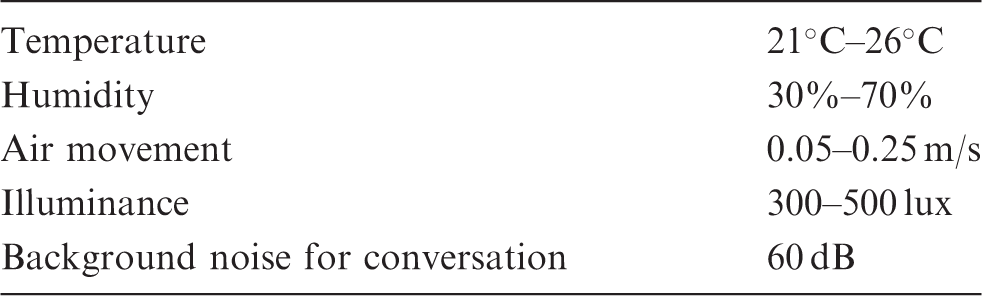
There is still some debate about the association between personal control of the internal climate and productivity, but a high proportion of research supports the notion that control has a positive impact on stimulation.
14
Most workplaces constructed from the latter part of the 20th century are part of energy conscious design and offer little personal control
15
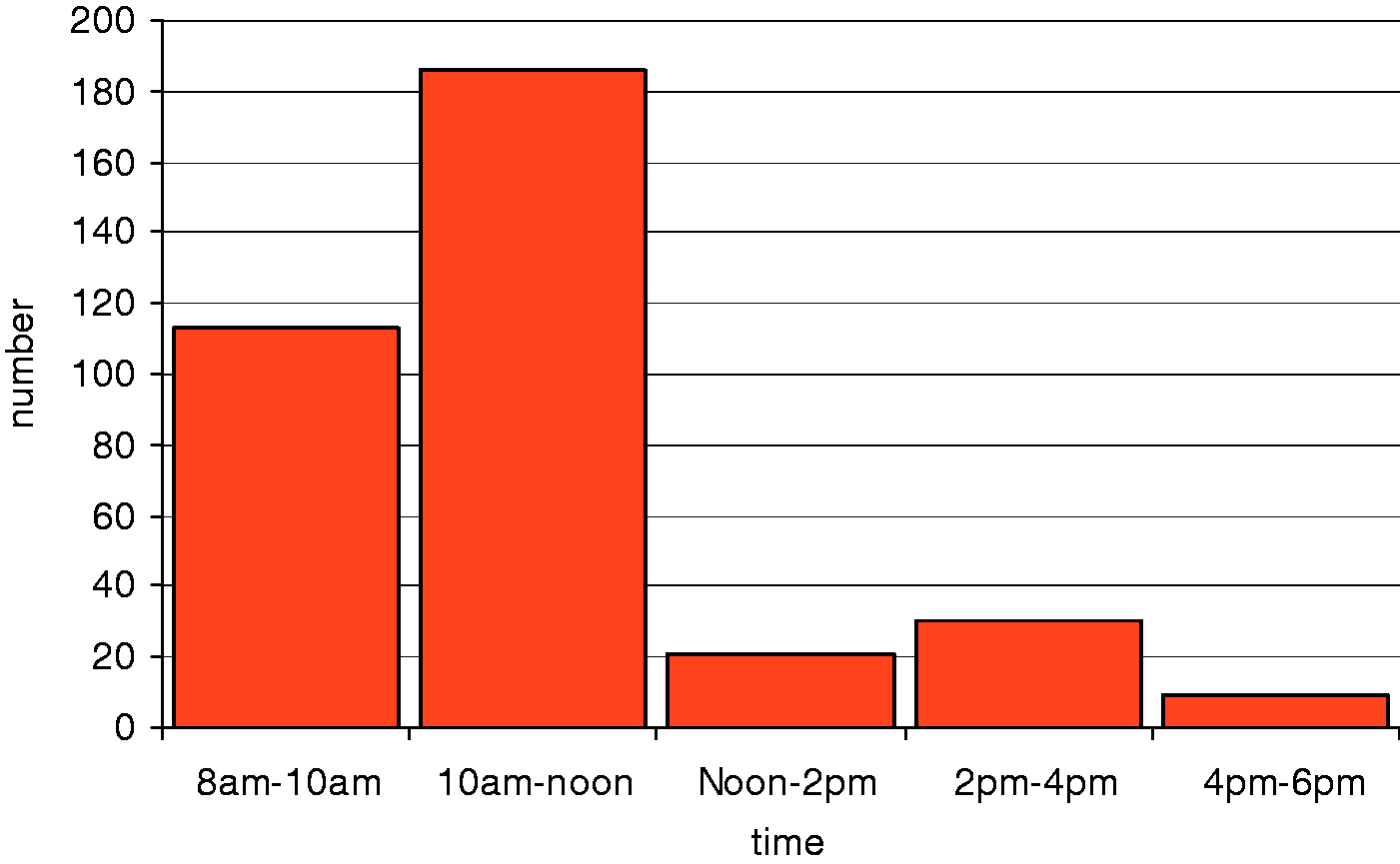
; despite the widely held belief that it is unreasonable to expect everybody to be satisfied within a uniformly controlled environment.16–18 Employees’ perception of internal climate is focussed on temperature and air movement, and these were nominated as significant predictors of stimulation levels and perceived productivity in a research programme. It also confirmed the well-established pattern of the time of day when users feel most alert (Figure 1).
Time of day when users felt most alert.
13
Experiments in workplaces during the working day revealed that general changes in temperature and air movement were not actually stimulating. This could have been due to the inability of building management systems to create significant variation. However, the employees stated that changes to suit individuals would be stimulating, i.e. personal control. This includes opening windows as a means of regulating both temperature and air movement. Yet, satisfying employees’ personal needs is not as simple as merely supplying each of them with personal control over their own environmental conditions. Each individual’s needs should be satisfied, without having a negative impact upon the environment of others. The introduction of effective personal control therefore requires a holistic approach to evaluating its impact, and consideration of the most effective way in which to implement it. In determining the design of workplaces, there needs to be strong and credible leadership from the management of organisations, so as not to appear to be waiting for direction. Yet, it is also vital that users engage and take metaphorical ownership of their place of work. 13
There is an overwhelming amount of literature about office space and its changes over the years as a result of the requirement for it to support new work styles, mobility within the office, hot desking, flexible working patterns, home working and a number of other aspects. 19 In addition, a study of 24 towns and cities outside central London in 2013–2014 found that there are 26.7 m ft2 (2.5 million m2) of vacant private sector offices, equivalent to more than double Leeds’ entire 11 m ft2 (1 million m2) office stock. Of the 3160 vacant properties identified in the research, 44% of the floorspace was in 316 centrally located properties. The study estimates a £2.9 bn potential loss in rent for the vacant stock over the next decade. 20 This is a consequence of a major structural change. Office demand has reduced due to working practices, technology, downsizing and the recession. Meanwhile, contraction is also occurring in the public sector. For example, the results of the workplace strategy undertaken by Gateshead Council has produced a situation in which 75% of the Council’s entire office based workforce is now located in the Civic Centre. The Council’s satellite offices have been added to the quantity of empty office space now flooding onto the property market. 19 In the 20th century, the industrial city gave way to the commercial city. It may be that the era of the commercial city is now coming to an end.
One of the reasons for the reduction in demand for office premises has been that successive iterations of the technology investigated by the 1974 Horizon programme have been progressively taking over from employment of a repetitive nature. This means the roles that have been retained are predominantly for professional employees, who are highly skilled human beings in considerable demand, with intelligence and wills of their own; and mobility. One of the challenges for the commercial and public sectors is to retain and stimulate clever, self-willed, questioning people that are needed by modern service organisations in an increasingly competitive economic environment. The simplistic emphasis on cost cutting overlooks the more subtle and less direct notions of effectiveness, generated by different ways of space use. The aim of re-organising space use should be to encourage interaction, to stimulate creativity and break across previously impenetrable organisational silos. Saving energy, reducing carbon emissions and cutting expenditure must be put into the context of the search for greater effectiveness. In order to achieve this aim, human relations skills may need to be developed. 21
The purpose of this editorial has been to show that it is not uncommon for technological advances to demand that people change their behaviour because of these advances. It is actually the duty of policy makers and building designers to produce accommodation that is the most conducive for the users, and not to demand that they change to suit the technology. In the case of energy conservation in the workplace, discontented employees could negate the prospective efficiency savings that might be gained. It may be that workplaces will become more challenging than might have been supposed. The reduction in demand could severely affect the quantity of new buildings delivering current standards. Highly skilled professionals with significant mobility may increasingly be the majority among workplace users. These professionals could be more resistant than others, to their comfort and even their health, being compromised by a top-down energy conservation doctrine.
Footnotes
Author’s contribution
Bob Giddings is the only contributor for this article.
Declaration of conflicting of interests
The author declared no potential conflicts of interest with respect to the research, authorship, and/or publication of this article
Funding
This research received no specific grant from any funding agency in the public, commercial, or not-for-profit sectors.