







Abstract
Indoor environmental control has been proven to be a critical consideration for preserving in situ unearthed relics in archaeology museum. An air curtain system has been proposed to separate the local environment of funerary pit from its large-space exhibition hall. The isolation efficiency of the air curtain is formulated by using stream function method in this study. The geometrical dimensions and jet flow parameters were investigated in this study through the theoretical formula, to determine their effects on the isolation efficiency and suitable operation mode, respectively. An experimental setup was constructed to investigate the performance and validate the feasibility of an air curtain system for preservation of historical terracotta figurines in their semi-exposed pits in the exhibition hall. The experimental results showed that the air curtain system could be orientated to isolate the relics or buried treasures unearthed in pits from the large open space of the exhibition hall. These results have significant implications for protecting the relics from deterioration in a control environment of a national museum and will contribute towards sustainable protocol for long-term preservation of unearthed relics in archaeology museums.
Introduction
Museums for preserving cultural relics in China can be mainly categorized into two types of indoor-display museum and archaeology museum according to their exhibition methods for the cultural relics.
1
For indoor-display museum, the collection is preserved in an enclosed cabin or showcase such that a small independent space is provided to separate the relics from the visitors' environment. Equipped with technical devices, e.g. active air ventilation, positive pressure or with inert gas, the environmental control for showcases can be implemented based on the preservation requirements of the relics. Many research studies have been carried out on the topic of establishing the desired steady temperature, humidity and air quality for cabins or showcases for exhibition of relics.2–5 Archaeology museum is constructed to protect immovable historical relics on site, and it plays an important role in protecting unearthed cultural relics from natural weathering caused by the sun, wind and rain and in helping visitors to understand a certain history and our cultural archaeological heritage. However, due to the unique exhibition requirements and building characteristics, the environmental control of archaeology museum is still a challenge to the archaeologists, conservators and environmental scientists and technologists, to provide a suitable preservation microclimate for the immovable excavated site. Many of relics that preserved in archaeology museum are suffering deteriorations or even ruins due to improper preservation environment adopted for maintenance of relics.6,7 The reasons could be attributed to as follows.
The architectural design of archaeology museums is mainly orientated towards accommodating the panorama of unmovable ancient sites and cultural relics in a single space, resulting in most archaeology museums, an open and large-space layout in exhibition hall. Large indoor space dimensions mean intense air convection, and therefore, the indoor air would always be in an unstable state that enhances the heat and mass transfer between the relics and their exposed surrounding.8,9 On the other hand, the unearthed relics in a museum are directly exposed to the atmosphere and tourist so that the relics suffer deterioration owing to dust, pollutants, climatic fluctuations or pests. These pollutants play a fundamental role in the deterioration process of relics, e.g. the production of gypsum and sodium sulphate on the surface of relics and these could be related to the interaction between SO2 or SO2–4 in the aerosol in the air and cations (Na+, Ca2+) in the soil and surfaces of relics.
10
The indoor environmental requirements of the unearthed relic preservation and the visitor comfort in archaeology museum are different conceptions. The recommended thermal comfort standard for human visitors is required to maintain the indoor temperature within the range of 24–28 ℃ and a relative humidity (RH) in the range of 40–65%,
11
whilst the necessary environmental conditions for unearthed relics can vary widely, depending on material properties and the soil environment.2,5 Furthermore, the operating mode of the current environmental control system designated for visitors is very different to that required for preservation of relics. The operating hours of the museums for visitors are usually from 9 A.M to 5 P.M.; therefore, the facilities for relics would be operated 24 h/day.
The diverse needs of visitor and relic in archaeology museums described earlier indicate that the preservation area should be separated out from the large-space hall; moreover, the environmental control should be served by different systems. Nonetheless, the specialized needs of the unearthed relics are usually ignored in many archaeology museums due to financial and technological reasons. Most of the environmental control systems are mainly concerned with the thermal comfort for visitors and works only 9 h a day. Independent environmental control satisfying the real need of in situ relic preservation and visitors should be implemented to protect in situ relics against undesirable environmental influences (e.g. temperature, humidity, pollutants) and mechanical impact (e.g. volume expansion caused by the production of gypsum and sodium sulphate). In order to realize the purpose of space division in a large exhibition hall to allow independent environmental control, respectively, for relic preservation and visitors' domains, an air curtain system has been proposed by the authors. 1 We have previously undertaken preliminary monitoring of the environmental conditions including microenvironments and pollutants in the Emperor Qin's Terracotta Warriors and Horses Museum. 1 We have also investigated such an air curtain system using numerical modelling based on a computational fluid dynamic method. 1
In this study, the effects of geometrical parameters on the isolation efficiency of the air curtain were evaluated to determine the efficacy of such a system. This was validated by tests through theoretical analysis and by experiment with a setup consisting of a funerary test pit and an air curtain system, to evaluate the operation mode of such an air curtain system.
Theoretical analysis of the air curtain system
Isolation efficiency
The strategy of employing an air curtain to reduce the penetration of contaminants and heat through open doorway has been widely used in public buildings.12–14 Usually an air curtain consists of jets blown horizontally or vertically across the opening interface. The jet flow would reduce the free air movement through the doorway, and thus would decrease the heat and mass transfer through the opening interface.12,13 The air curtain technology has been introduced
1
to create an invisible separation between the relics' conservation domain and visitors' passage, as shown in Figure 1.
Diagram of horizontal air curtain jet over the pit in the archaeology museum.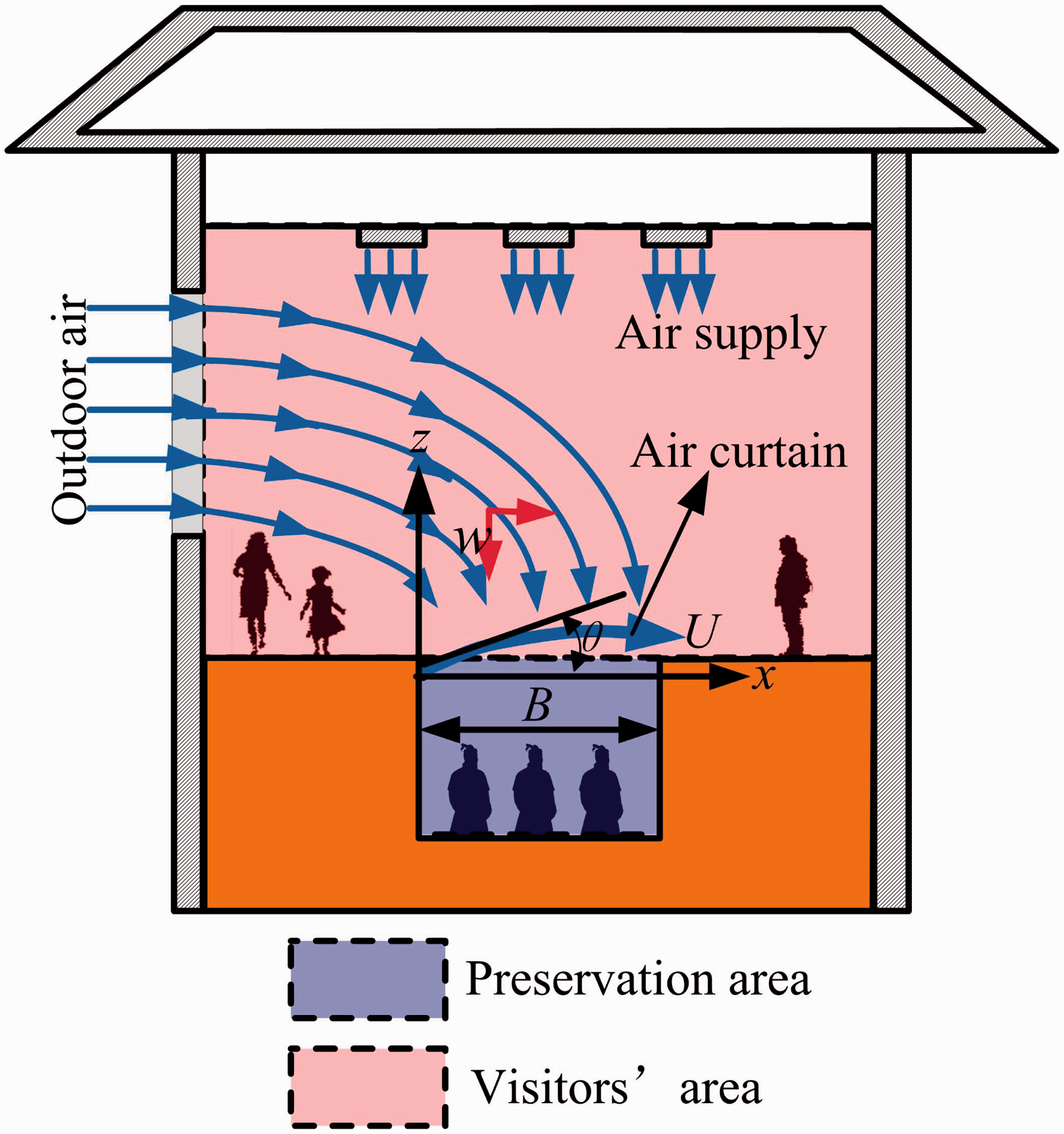
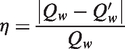
The performance of an air curtain system (η) can be evaluated by the isolation efficiency, as defined by equation (1)




Operation mode of air curtain system
For a particular application, the geometrical parameters of the pit as defined in equation (5) are usually inherent or prescribed, with suitable jet velocity and jet elevations which are the key factors to implement the isolation and environment control for the local funerary pit area, as shown in Figure 2.
Schematic of trajectories of the air curtains with different jet velocities and jet elevations.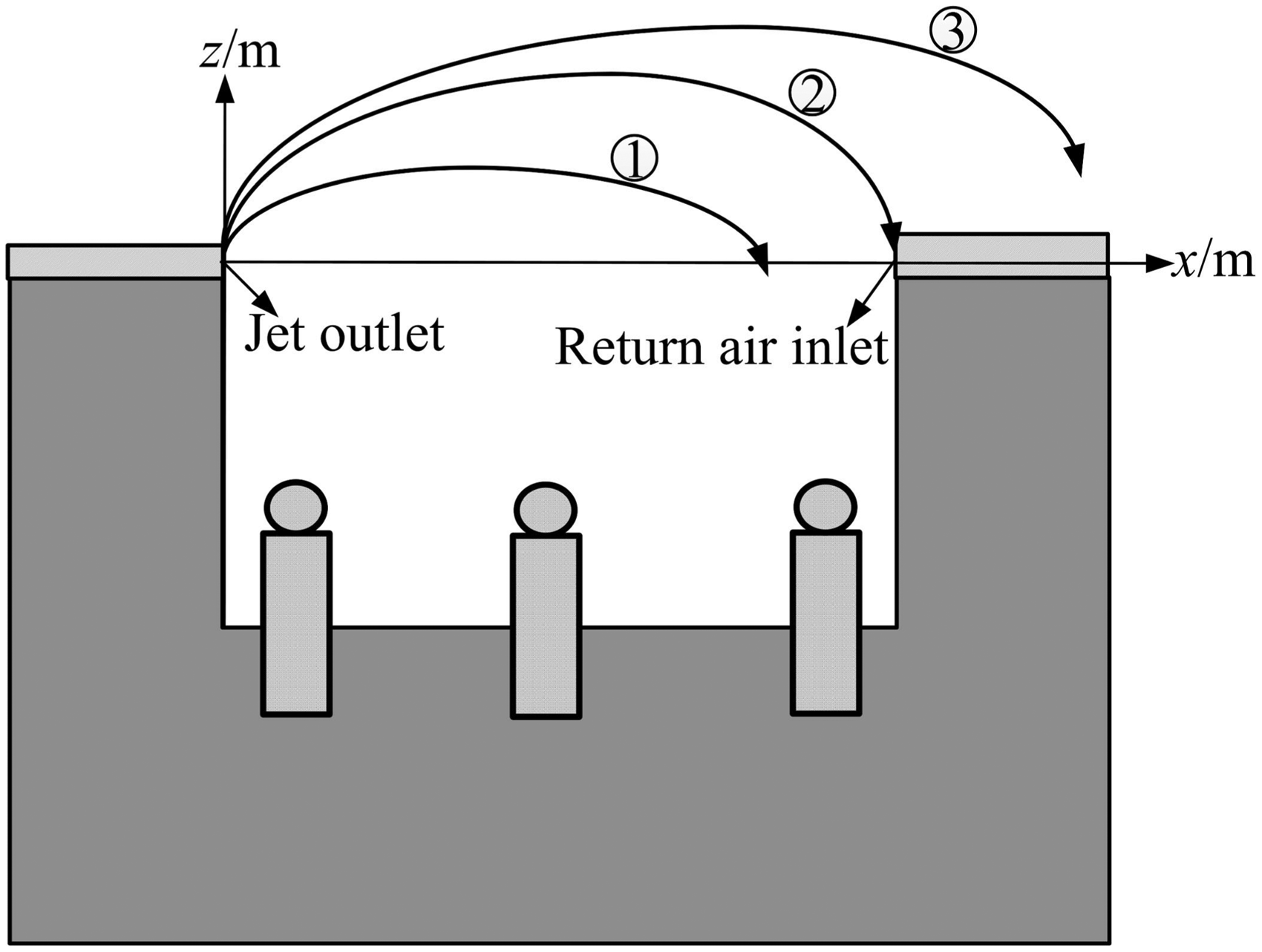
The trajectories of the air curtain's core region can be categorized into various types depending on the jet velocity and jet elevation:
The jet velocity and elevation are not large enough to form an integrated air curtain covering the opening interface between the funerary pit and the upper atmosphere (indicated by Mode ①), the trajectory curve goes down rapidly and short of reaching the other side with the jet air falling down into the pit. This mode has a very low isolation efficiency. The jet velocity and jet elevation and trajectory curve are exactly the values required to allow the integration of the air curtain covering the opening interface between the pit and the upper atmosphere, as is indicated by Mode ②. The jet velocity, the elevation and trajectory are too high and over the target, such that an oversized air curtain is formed, as indicated by Mode ③. Both Mode ② and Mode ③ can satisfy the requirement for separating the pit regime from the exhibiting zone. Although Mode ③ would have a high isolation efficiency, however, more energy expenditure would be required to maintain this air curtain.
Experimental and monitoring system
Experimental setup
To investigate the performance of an air curtain system, an experimental funerary pit with an air curtain and relevant data measurements was developed and set up for testing. The funerary pit is a rectangular excavation in the ground with dimensions of 4, 2.8 and 1.8 m in length, width and depth, respectively, as shown in Figure 3(a). The width and depth of the experimental funerary pit are consistent with those of the Emperor Qin's Terracotta Warriors and Horses Museum and Hanyangling Museum.
The diagram of the experimental pit with the air curtain system. (a) The funerary test pit. (b) Schematic of an air curtain over the test pit. (c) The lining of the air curtain system.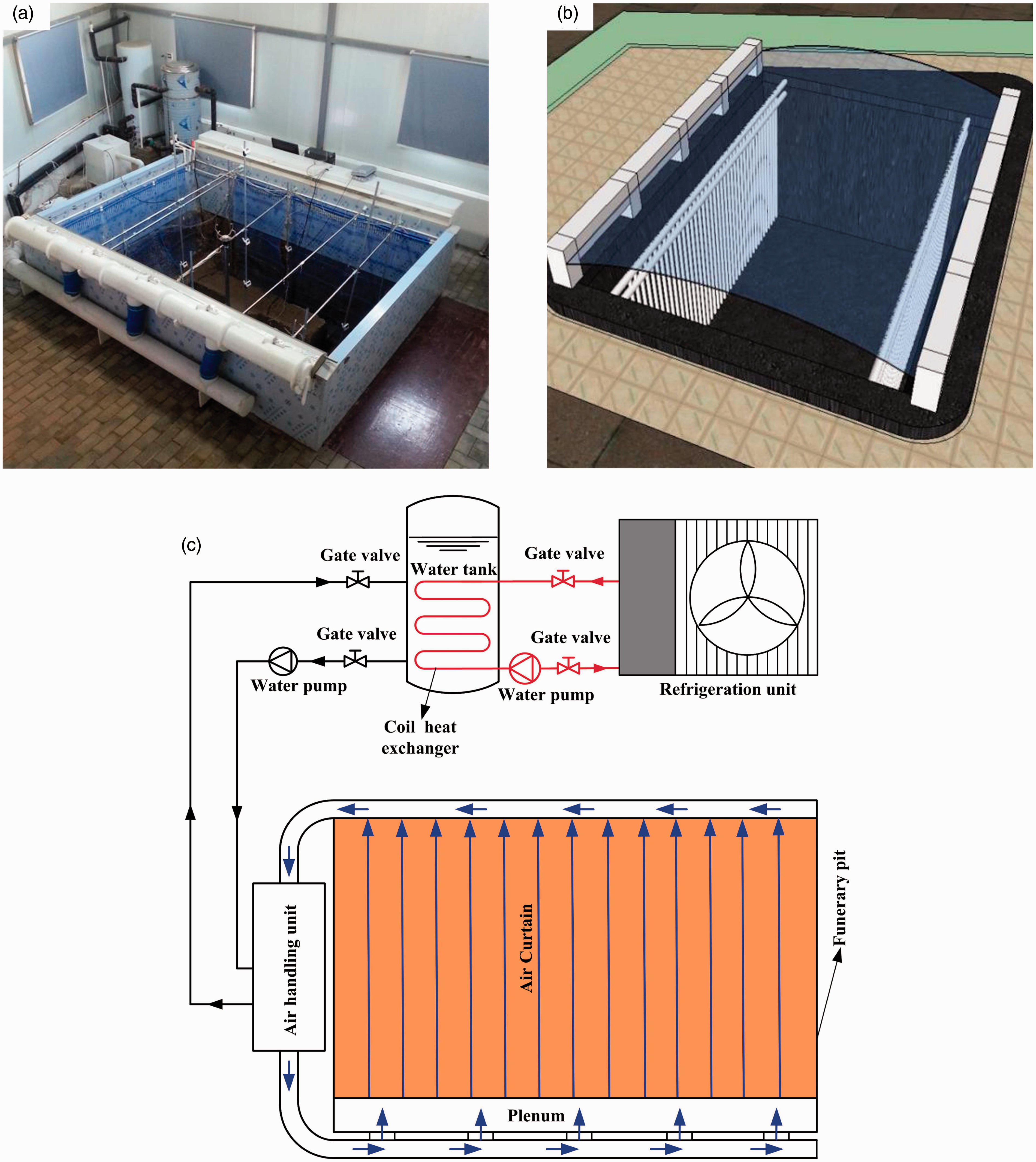
The air curtain system consists of an air handling unit, an air supply system and a cold/heat source system, as shown in Figure 3(b) and (c). The return air of the air curtain system can be purified, heated or cooled in the air handling unit and then supplied to the plenum to form an air curtain. The cold/heat source system provide hot or cold water, to allow adjustment and conditioning of the supply air to control the heat to maintain a desired temperature. This can be switched automatically by the use of a thermostat system. The fluctuation in water temperature can be minimized by the use of a 0.3 m3 water tank as an energy storage unit.
The dimension of the jet outlet is the key to the air curtain system and therefore plays a vital role to deliver the required performance necessary for an air curtain system. The width and length of the jet outlet for the present experimental system are 0.015 and 4.0 m, respectively. The jet elevation and jet velocity at the outlet can be adjusted according to the experimental requirement within
Monitoring test points and instruments
In this test, the monitoring parameters are the dry bulb temperature, RH, jet velocity and air velocity in the pit; and also the temperature of the supply and return water for environmental control of the test pit. The monitoring positions of these parameters are shown in Figure 4. The test parameters monitored and instruments used are summarized and listed in Table 1.
Schematic diagram of monitoring points. Summary of test parameters and instruments. RH: relative humidity.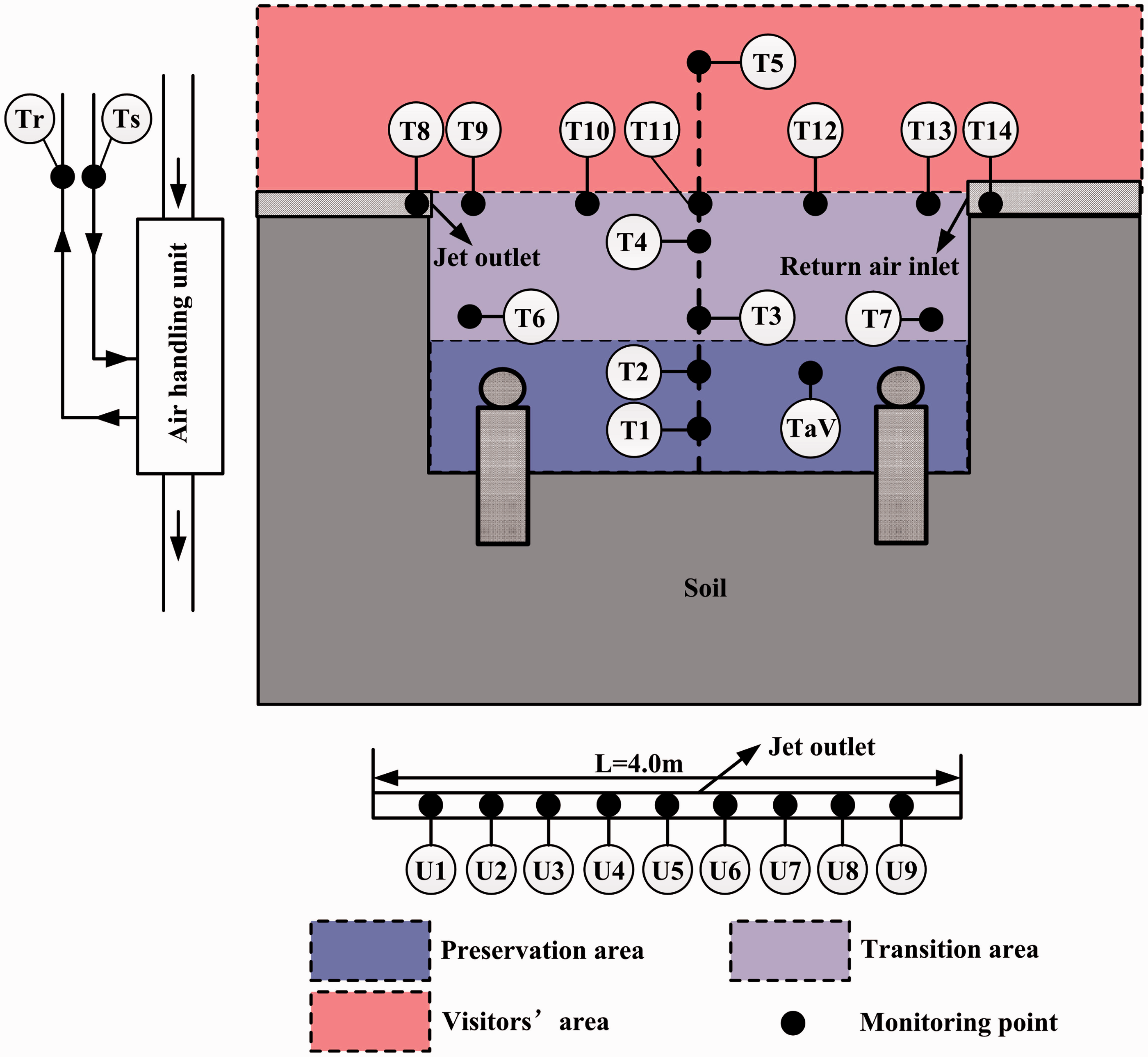
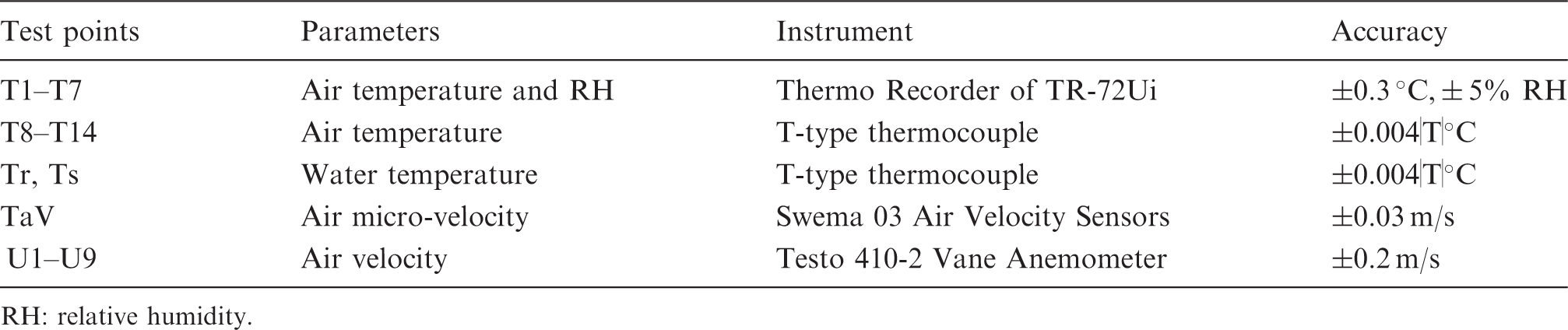
The circles (T1–T7) are the monitoring positions for air temperature and RH. The monitoring positions of T1–T5 were arranged vertically along the centreline of the funerary pit to obtain the thermal stratification required. The distances from monitoring positions T1 to T5 measuring from the bottom of the pit are 0.3, 0.7, 1.3, 1.9 and 2.6 m, respectively. T4 is regarded as approximately the boundary point between the pit area and visitor area. In particularly, T5 is situated at a height of 0.5 m above the boundary level to monitor the temperature and RH in the visitor passage. The monitoring positions of T6, T3 and T7 were positioned horizontally to investigate the thermal uniformities at a specific height (h = 1.3 m). The monitoring positions T8–T14 were arranged horizontally along the top of the pit to investigate the attenuation characteristic of temperature along the centre plane of the supply jet and return air inlet. The temperature of water supply (Ts) to and return (Tr) from the air handle unit for temperature control was monitored within the pipe work. Vane Anemometer was placed at the positions of U1–U9 to measure the jet velocity along the length direction of the jet outlet, and the micro-velocity of the preservation area (TaV) was monitored within the pit preservation area of the terracotta figurines. For all the experimental tests performed in this study, a 10-min sampling interval was set for monitoring the temperature, RH and micro-velocity.
Sensitivity analysis for the theoretical isolation efficiency
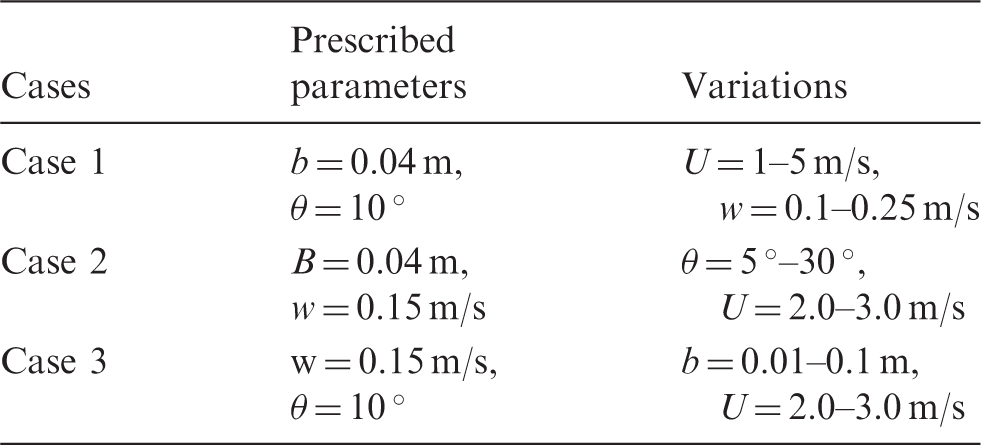
Summary of parameters for sensitivity analysis cases.
Results and discussions
The predicted profiles of isolation efficiency for Cases 1–3 are shown in Figure 5. The results illustrate isolation efficiency would vary directly with jet velocity, elevation angle and the width of jet outlet. For Case 1 (see Figure 5(a)): when Variation of the isolation efficiency. (a) Case 1, (b) Case 2, (c) Case 3.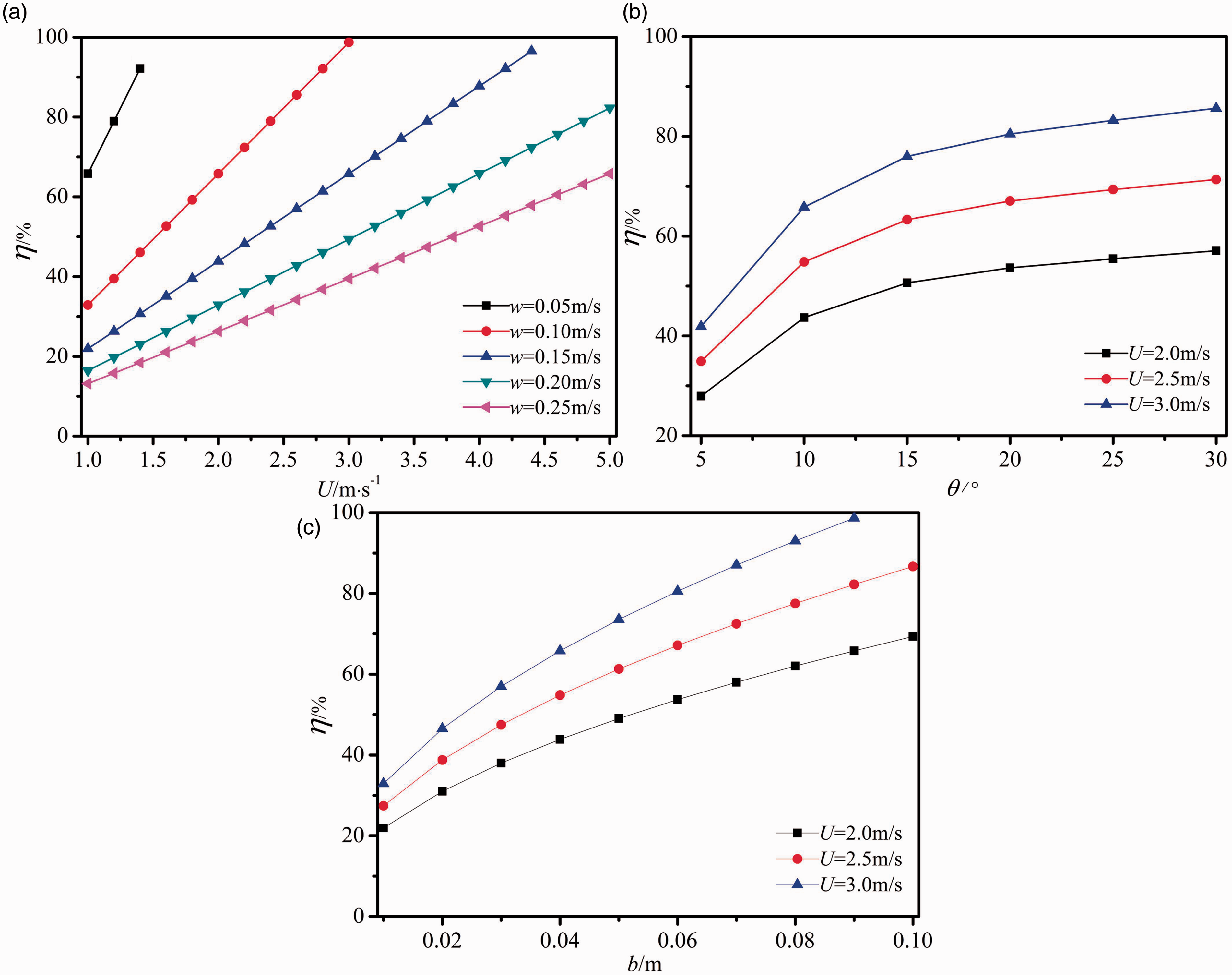
To achieve the optimum isolation efficiency and the operation modes, the following considerations are required:
(i) The elevation of the jet should be controlled no more than 15 °, since the isolation efficiency curves of the air curtain would become flat when θ > 15 ° and larger elevation would cause the air curtain to operate as in Mode ③. (ii) The vertical component of the indoor air movement (w) is usually very small, e.g. about 0.1 m/s in Hanyangling Museum,1,8,15 for this kind of small air velocity conditions. The jet velocity with the range of 2.0–3.0 m/s would be sufficient to produce a relatively high isolation efficiency for the air curtain system.
Uniformity of air supply at the jet outlet
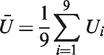
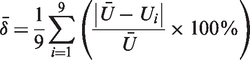
The relation between the fan frequency and mean jet velocity.

The velocities at the monitoring points with f=15, 25 and 45 Hz are shown in Figure 6.
Schematic diagram of monitoring points.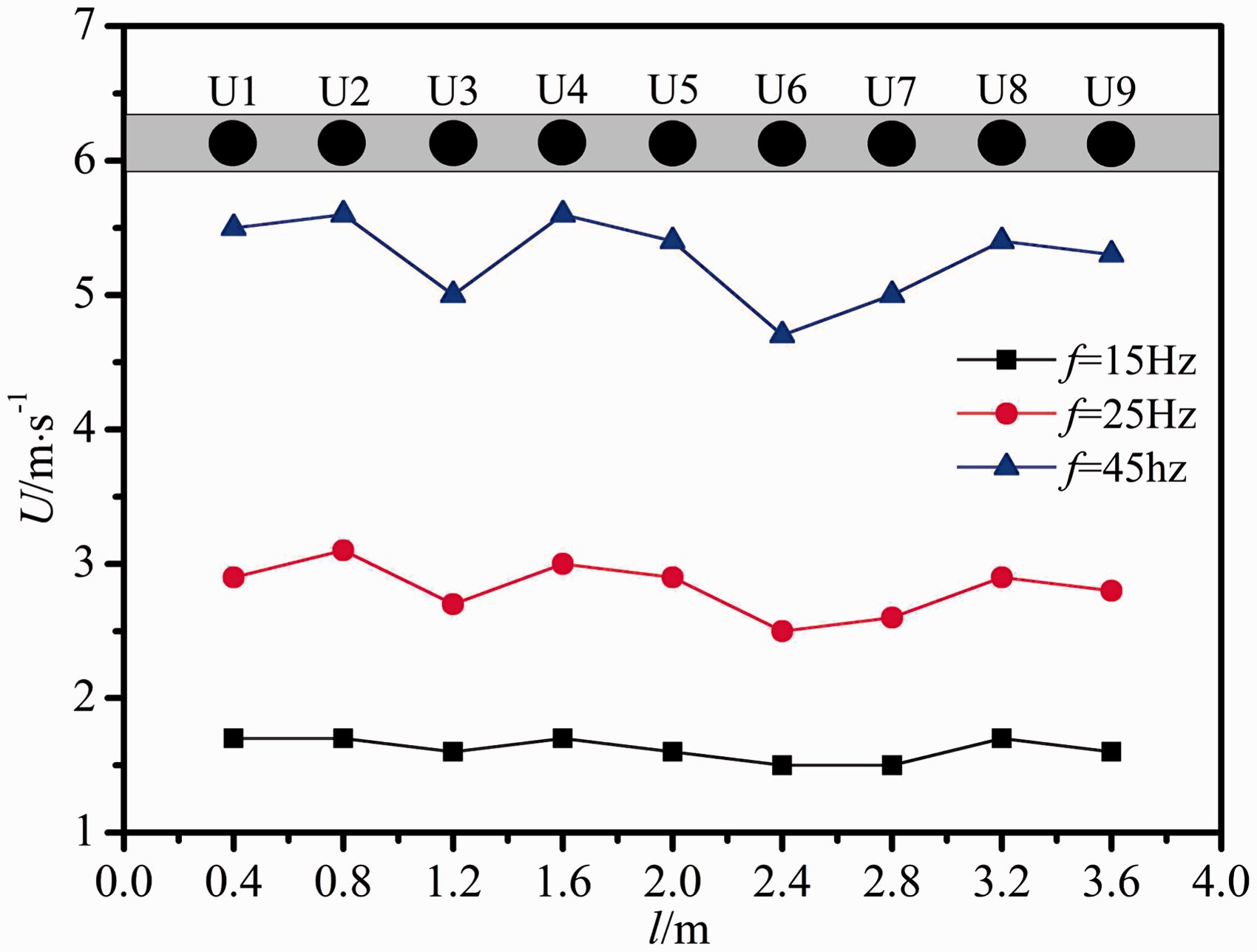
Although there are some fluctuations of the jet velocity at different monitoring points, the average relative error
Temperature and RH distribution
Considerable fluctuations of temperature and RH could be the main cause of thermal stress rupture found on the relics' surface. At the same time, the low air velocity in the preservation regime is also an important environmental parameter since air convection might enhance the heat and mass transfer between the air environment and earthen sites. As mentioned earlier, the air curtain system can prevent not only air pollutant penetrating into the pit, but also heat transfer in the pit by controlling an appropriate temperature of the supply air, just as it has been used in food display cabinets in supermarket.17,18
Test when the air curtain system was switched off
Once the air curtain system was switched off, the fluctuations of environmental parameters (temperature, RH and air velocity) in the integrated pit are shown in Figure 7. Significant fluctuations of temperature and RH were observed during the daytime in the integrated pit environment. The fluctuation of temperature at the monitoring positions, T1–T5 was 3.3 ℃, 4.5 ℃, 7.2 ℃, 10.4 ℃ and 12.3 ℃, respectively. These fluctuations are much greater than the specified value (≤1.5 ℃) given for appropriate preservation of relic collections in indoor-display museums.
3
The temperature and RH distributions in the pit demonstrate that the fluctuation occurs mainly during the daytime. The air curtain system would be used to mainly prevent the air pollutants and dusts including particulates penetrating into the pit in the night time and also to prevent the penetration of air pollutants and to control the pit thermal environment during the daytime. The air curtain system therefore should be operated isothermally in the night time while non-isothermally in the daytime by supplying cool air. Irrespective of obvious air velocity fluctuations during the daytime in the pit for the preservation (see Figure 7(c)), the average air velocity during the daytime (8 A.M. to 20 P.M.) was very low, only 0.013 m/s.
Monitoring environmental parameters at the integrated pit area (monitored on 25 July 2014). (a) Temperature, (b) RH, (c) air velocity at the preservation area.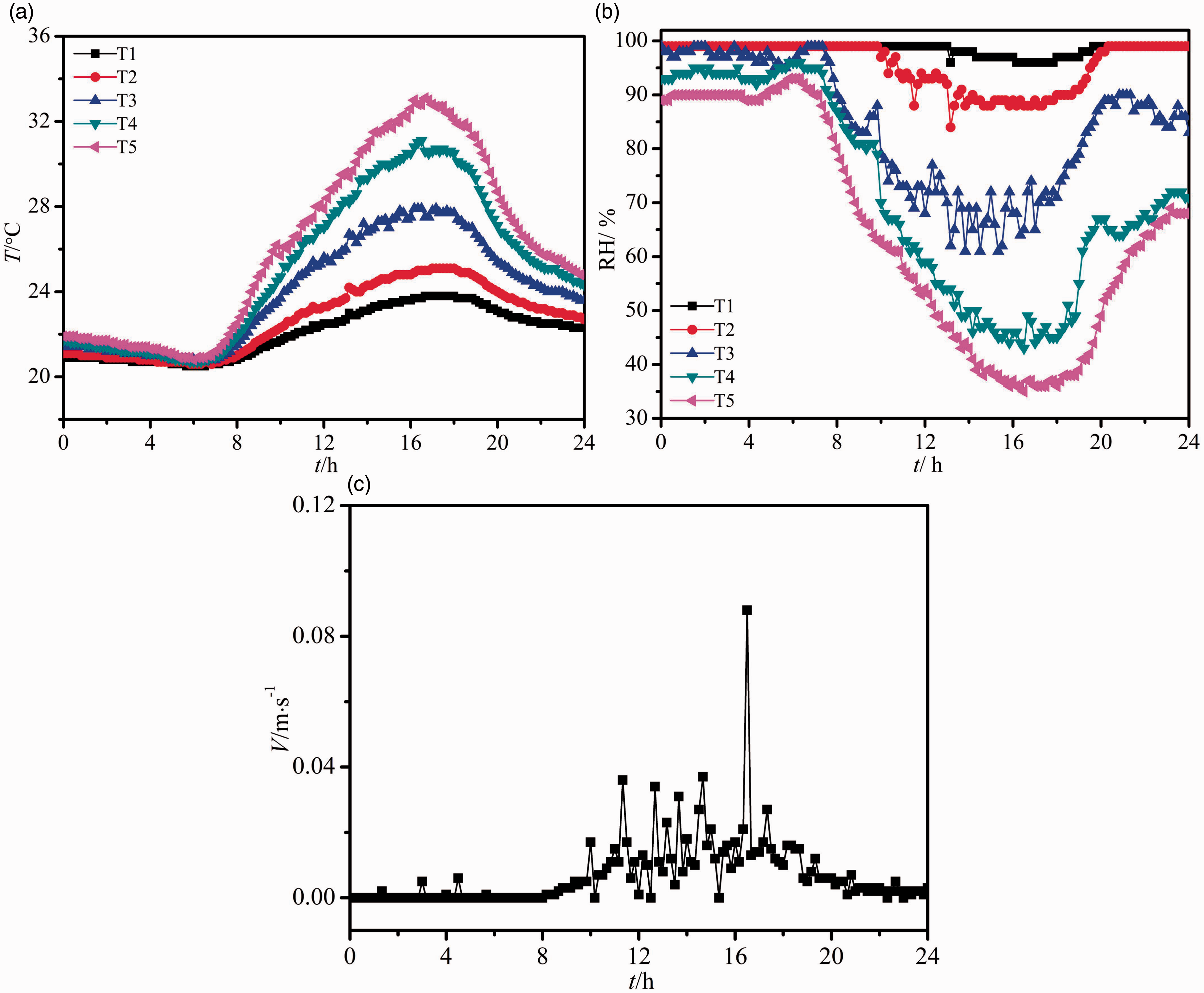
Test when the cool air curtain system was switched on
A test was conducted with the cool air curtain system being switched on to investigate the performance of local environment control. The experimental test was performed on 23 August 2014 with the jet velocity and elevation set at 2.8 m/s and 10 °, respectively. The air curtain system was switched on from 9:40 A.M. To cool the supply air of the air curtain, the temperature of the supply water to the air handling unit for air cooling was sustained within the range of Temperatures of the supply water (Ts) and return water (Tr).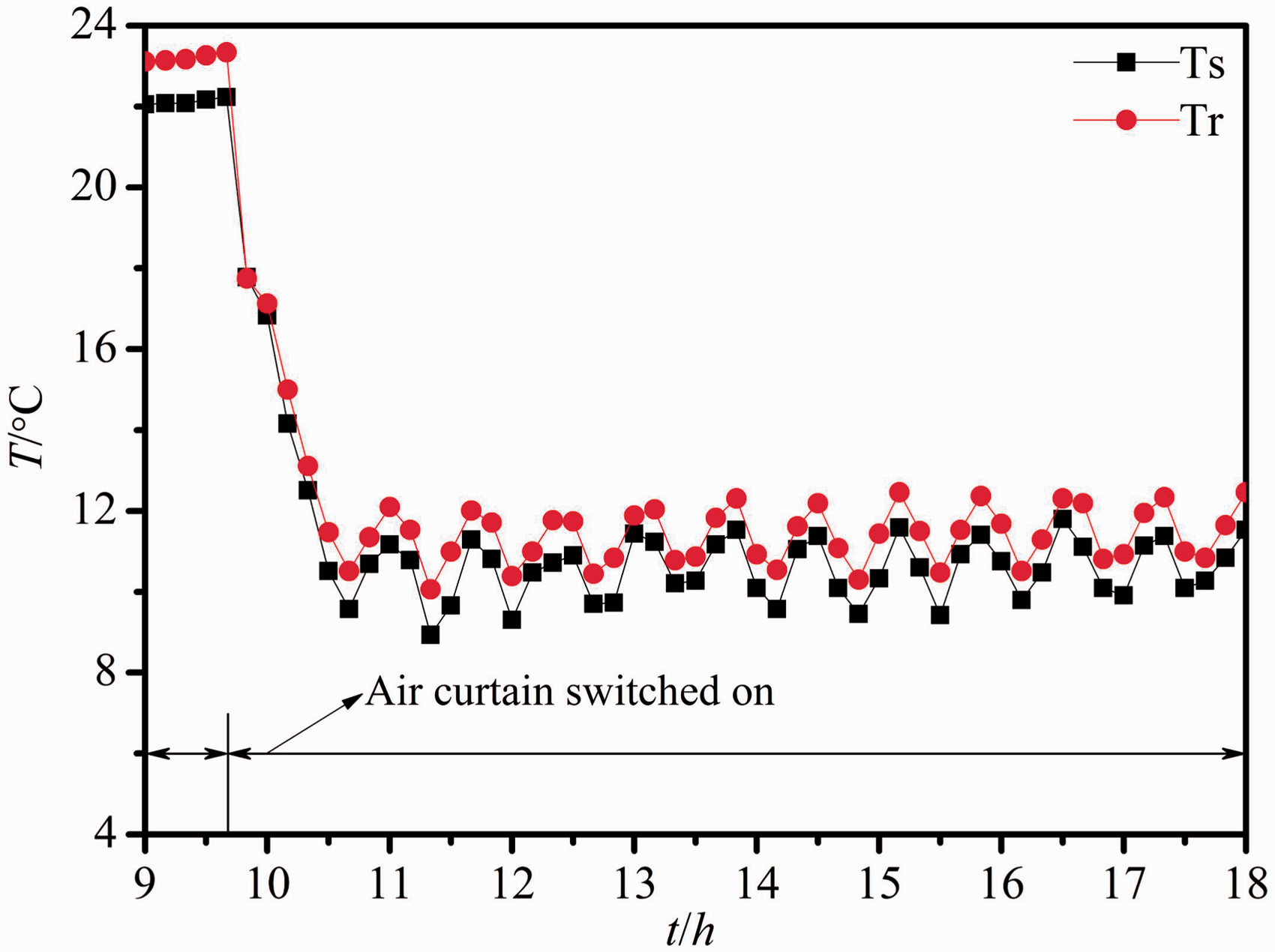
Figure 9 shows the vertical distribution of temperature and RH along the centreline of the funerary pit and the horizontal distribution of temperature and RH distributions at 1.3 m height from the bottom of the pit after switching on the cool air curtain system. The outdoor air temperatures (Ta) were recorded as a reference. The rapid reduction of temperatures at the monitoring points in the pit is the direct consequence after switching on the air curtain at 9:40 A.M. Although higher temperatures and higher fluctuations were recorded in the visitor's gallery area and outdoor environment (see T5 and Ta in Figure 7(a), respectively), a steady environmental condition was recorded in the pit for the preservation of relics. The air temperature variations in the preservation area when the air curtain system was switched on are much lower than when the air curtain system was not in operation (see Figure 7). The air curtain system has enabled a steady temperature in the pit and the variation was kept to less than 1.6 ℃ and 2.7 ℃ maximum. In addition, although the test point of T5 was placed at 0.5 m above the pit to represent the visitor's passage, there was still an obvious reduction of temperature starting when the cool air curtain system was switched on at 9:40 A.M. This was due to the curved air jet flow of the air curtain above the pit and T5 was within the curved region of the jet flow.
Temperature and RH distributions along the vertical centreline of the funerary pit and at the height of 1.3 m from the bottom of the pit in the case of U = 2.8 m/s. (a) Vertical distribution of temperature. (b) Vertical distribution of RH. (c) Horizontal distribution of temperature. (d) Horizontal distribution of RH.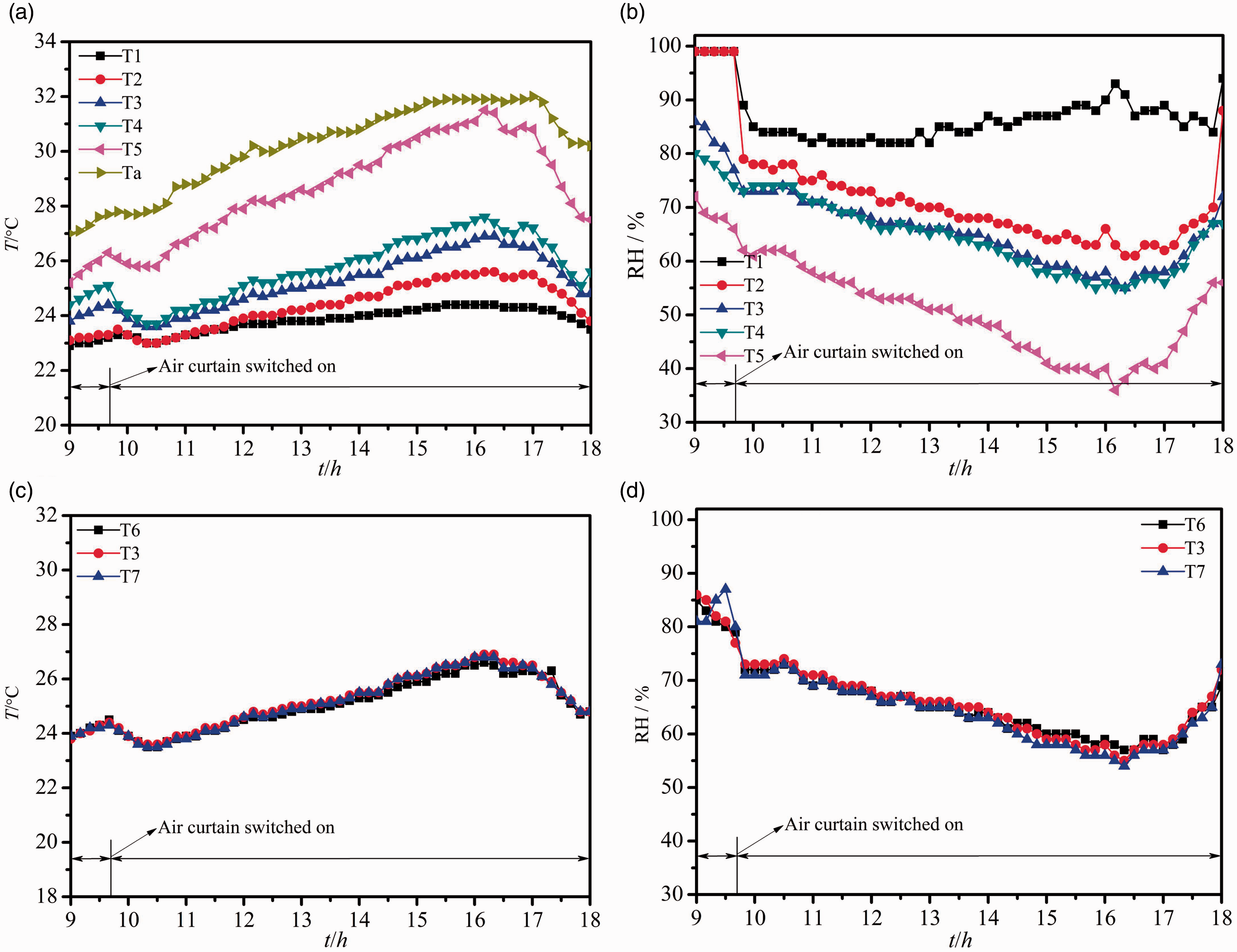
The RHs of these test points were affected by the air curtain system as well. In particular, the RH at the bottom of the pit (point T1) was maintained at a steady value of about 85% (see Figure 9(b)), which was lower than the value without having the air curtain system being operated (see Figure 7(b)). The reason could be attributable to the slight air convection in the pit induced by the air curtain system such that the water vapour being evaporated from air–soil interface is easily and quickly dispersed. The horizontal distributions of temperature and RH at the same height of 1.3 m (T6, T3 and T7 in Figure 5) are shown in Figure 9(b) and (c), respectively. Consistent values of both temperature and RH were illustrated at the three monitoring positions (T6–T7) and thus indicating that the operation of a cool air curtain system is an effective way to sustain a uniform spatial distribution of pit environmental conditions.
The centre plane of the supply jet and return air inlet (z = 0 m) represents a virtual ceiling of the pit area, or the upper boundary of the pit, therefore, the temperature distribution at the monitoring positions along this plane (see T8–T14 in Figure 5) is regarded as the upper boundary conditions of the pit, as shown in Figure 10. Although there is an attenuation of temperature at the outlet of the air curtain (between the outlet of air curtain, at T8, x = 0 m, and at T9, x = 0.2 m), only a very small temperature difference exists between monitoring positions of T9–T14 in the entrainment zone indicating that the temperature distribution on the upper boundary of the pit is relatively uniform. On the other hand, although the temperatures at T9–T14 vary greatly at different time of the day (11 A.M., 13 A.M., 15 P.M., 17 P.M.) due to the room temperature fluctuations and the entrainment of the air curtain, the uniform temperature distribution of the preservation area, especially at the bottom of pit, is maintained (see Figure 9(a)).
Variations of air temperatures on the upper boundary of pit at different time.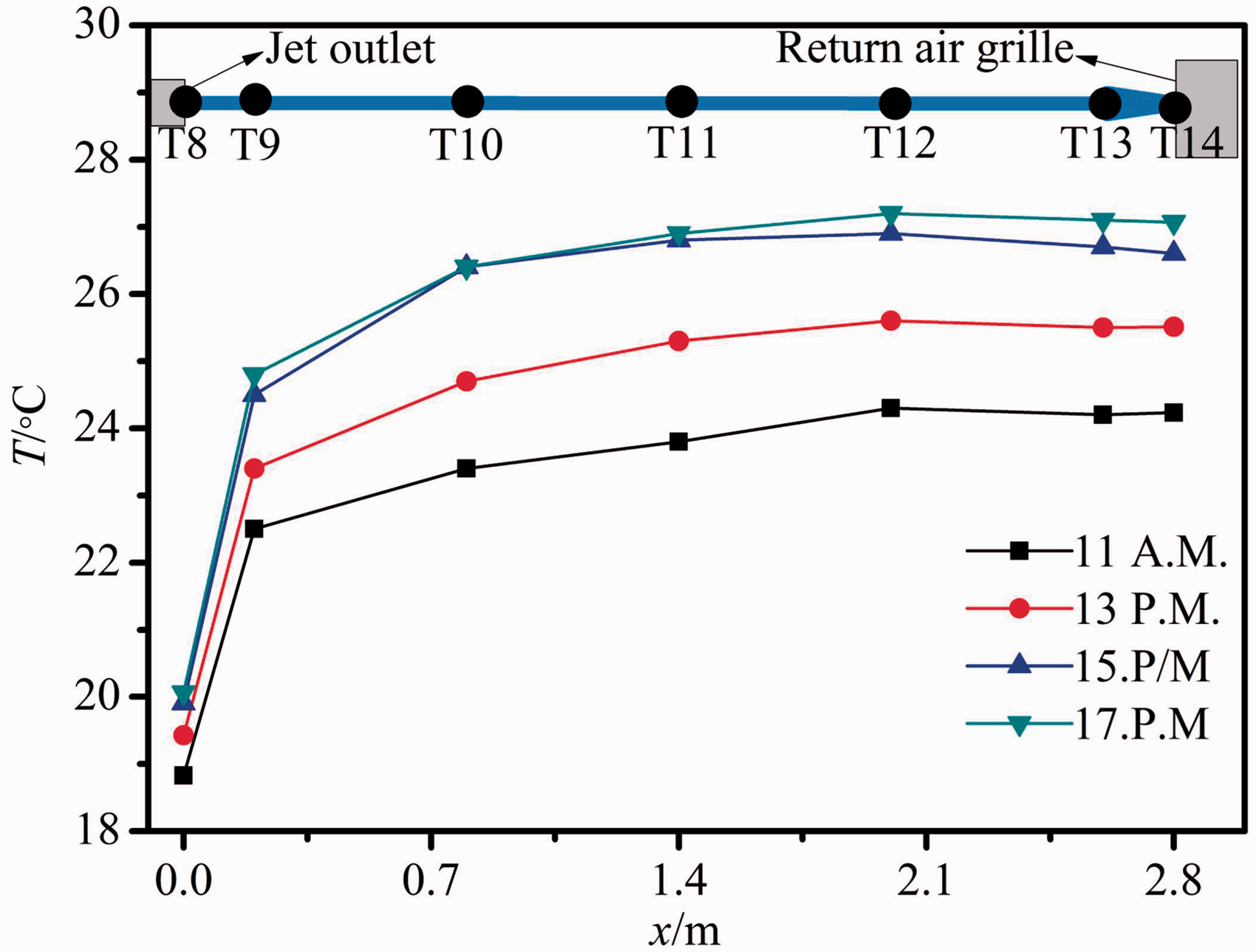
Generally, the heating and cooling process of the air conditioning system may induce higher indoor air velocities, such that the heat and mass transfer between the soil and atmosphere could be significantly enhanced in the open archaeology museum. However, when the air curtain system is used for the pit local environmental control, the air velocity at the height z = 0.7 m from the bottom of the pit is shown in Figure 11. The average air velocity is 0.049 m/s, and thus the air movement induced by the air curtain system is statistically insignificant, this is because the jet velocity of the air curtain system, with an elevation of 10 °, is large enough to form an integrated air curtain covering the whole pit such that only a small amount of supplied air could be induced into the preservation area (as indicated by ② in Figure 2).
Variation of air velocity with time.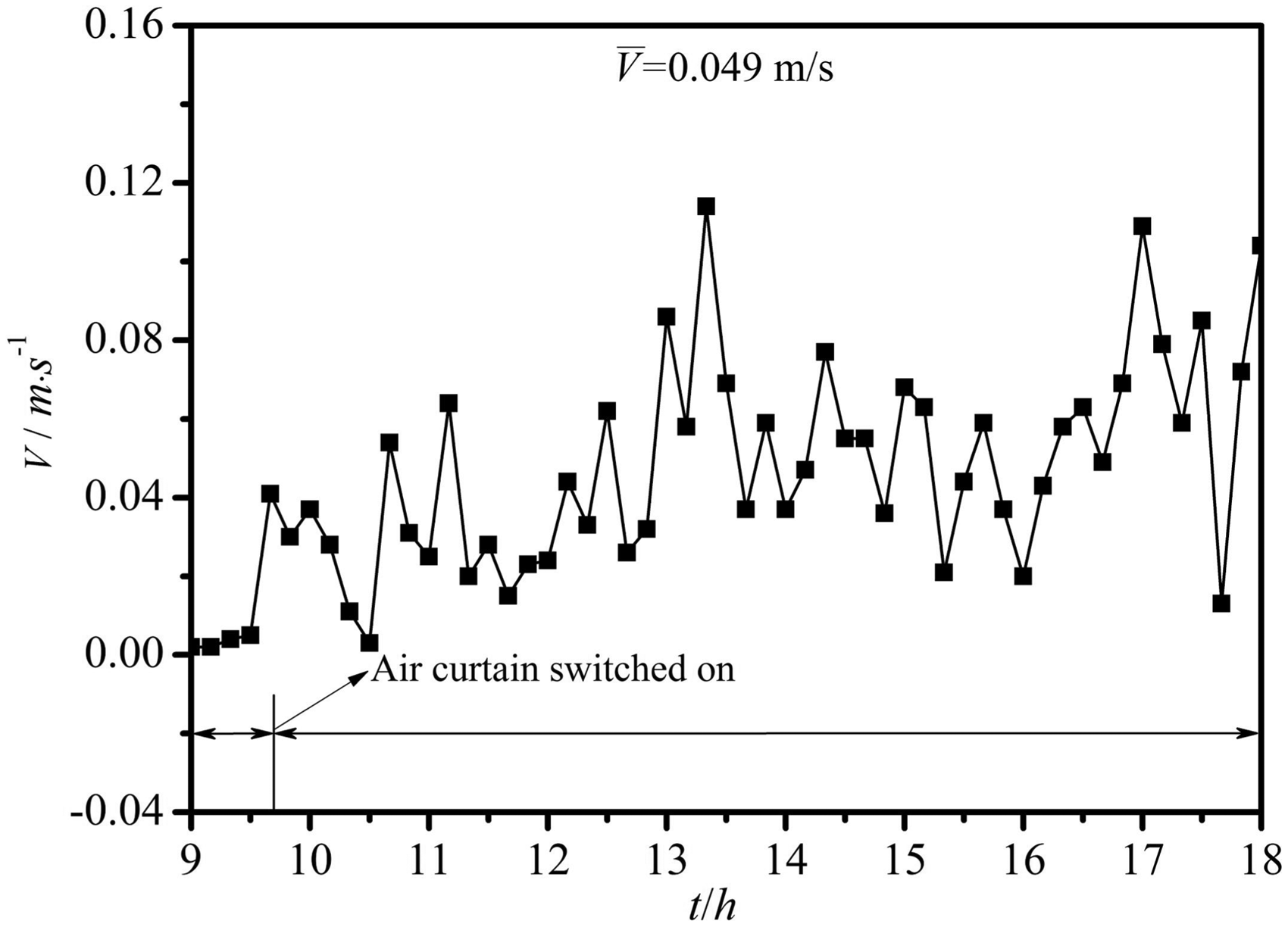
Conclusions
The display of cultural heritages, e.g. relics or buried treasures being preserved in in-situ funerary pits is an important exhibition form in archaeology museums in China. In this research, both theoretical and experimental investigations were conducted to verify the applicability of an air curtain system in separating the local environment of funerary pit from the large-space exhibition hall, and these were shown to have different environmental requirements.
Based on the geometrical structure of the funerary pit in the Emperor Qin's Terracotta Warriors and Horses Museum and Hanyangling Museum, a theoretical formula for calculating isolation efficiency of an air curtain system was derived by using stream function method. The geometrical and jet flow parameters' contributions on isolation efficiency were analysed by using the theoretical formula. The results have shown that the air curtain system can effectively separate the local pit environment from the large-space exhibition hall with isolation efficiency greater than 80%. Therefore, the operation mode and appropriate parameters of an air curtain system for the local environmental control of funerary pits were therefore proposed.
The efficacy of an air curtain system has been investigated by our study. A favourable uniform velocity distribution of the air curtain at the jet outlet was obtained with a relative error of average velocities about 5.0%. The flow parameters of the air curtain, such as temperature, RH and air velocity distribution in the integrated pit environment were also investigated. The experimental results have illustrated that the air curtain system would prevent the penetration of air pollutants and dusts into the pit. The system can also create a steady environment in the preservation area with negligible enhancement of air movement. The fluctuation of environmental parameters in the pit under the air curtain system was much smaller than without the air curtain system. Furthermore, the air curtain system can provide environmental control of the pit relic independent of the air conditioning system used in the visitors' viewing gallery. The system can be operated all day to control the local pit environment with a low level of energy consumption.
Author's contribution
All authors contributed equally in the preparation of this manuscript.
Footnotes
Declaration of conflicting interests
The authors declared no potential conflicts of interest with respect to the research, authorship, and/or publication of this article.
Funding
This study was supported by the National Natural Science Foundation of China (under Grant No.51306150), National Science and Technology Ministry of China (Under Grant No.2012BAK14B01), China Postdoctoral Science Foundation (Under Grant No.2014M552454), State Administration of Cultural Heritage (Under Grant No.2013-YB-HT-014) and the Shaanxi Provincial Natural Science Foundation (2014 Jm2-5071).