







Abstract
Moisture becomes problematic in underground civil air defence work because of heavy rusting of protection equipment, mould and construction deterioration. This study conducted long-term measurement of the heat and humidity environment in a residential and a non-residential underground civil air defence work in Beijing. The thermal environment was very stable at a good level except in some summer days in the non-residential civil air defence work because of moisture insulation in summer and straw board interior wall furnishing, whereas it was very severe and varied with changing outdoor conditions in the residential civil air defence work. The humidity environment in the residential civil air defence work was wet or very wet (RH > 80%) for over 20% of the year, which may cause mould growth and surface condensation, because of low indoor temperature in winter and occupant activities and natural ventilation in summer. The findings of this study may prove important in elucidating the formation mechanism of thermal environment in civil air defence work and to develop appropriate desiccant solutions.
Introduction
Underground civil air defence work (CADW) are typically constructed for the purposes of command centres, personnel shelters, storehouses of civil air defence, medical treatment and rescue buildings during wartime and for parking lots, offices, hotels, markets, restaurants, etc. during peacetime. There are a large number of CADW in Chinese cities. For example, a new building in Beijing requires a supporting construction of CADW for 9%–11% of the floor area.
1
Until the end of 2010, over a thousand million square metres of CADW were used during peacetime.
2
Because the internal temperature of a CADW in summer is generally lower than on the outside, underground CADW becomes wet more easily than buildings on the aboveground.
3
Figure 1 shows some photographs of a CADW in Beijing. Although some Chinese technical codes (GB/T 50038-2005 and GB/T 50108-2008) provide measures for prevention of moisture at the design stage,4,5 moisture has been a major problem in the use of CADW, giving rise to heavy rusting of protection equipment and hence degrading protection during wartime. Therefore, resolving the moisture problem is of substantial significance to ensure a proper operation of CADW. Note that the heat and humidity conditions in a CADW could vary with its location, construction, uses, ventilation and outdoor climate. In winter, the air in a CADW is warmer than the outdoor air, and the outdoor air with its low humidity ratio effectively removes the moisture from the CADW by ventilation. At the same time, air exchange with the outdoors would reduce the temperature and excessive air exchange would enhance the relative humidity (RH) in the CADW. In summer, the outdoor air is generally warmer with a higher humidity ratio than the air in the CADW during daytime. Ventilation could transfer a net moisture into the CADW. At the same time, air exchange could warm the CADW and this would thus reduce the RH. A protocol for routine monitoring to control moisture development in old and new buildings to mitigate potential harm to building fabrics has been reviewed.
6
A study of condensation characteristics of cold surfaces and the thermal and humid environment near the surfaces under radiant cooling system has been reported.
7
Moisture damages in houses and their associate health risk have also been reported.8,9 Field measurements10,11 and simulation
12
studies have shown that to avoid high RH in underground spaces, proper air exchange rates and ground covers must be used, such as plastic sheets or insulation materials, covering the foundation soil to avoid ground heat or moisture intrusion into building construction. In underground CADW, ground covers are typically reinforced concrete with thickness of more than 500 mm; therefore, achieving optimal ventilation in CADW is a pressing concern for moisture reduction. The use of CADW during peacetime, internal moisture generation is another essential and uncontrollable factor. To avoid high RH, the imperative action is to first develop a database of long-term measurements of the heat and moisture environment in CADW and analyse the factors behind the moisture problems. However, availability of such data is so far quite limited.
a civil air defence work in Beijing.
In this study, two types of typical CADW in Beijing, China were selected to carry out a year-long field measurement of indoor temperature and humidity variations. The differences in the thermal environment as well as high humidity levels were analysed in these two types of CADW. In addition, the effect of humidity control by straw board furnishing was examined. The findings of this study may prove important in elucidating the formation mechanism of thermal environment in CADW and to develop appropriate desiccant solutions.
Outline of measurement
Research object
Figure 2 shows photographs of two types of typical civil air defence work in Beijing. CADW A was constructed in the 1960s and was designed as a command centre for communication engineering. This centre is generally not used for residence and was used as a command centre during wartime. Therefore, there is almost no moisture source inside, except that management people travel around the construction for daily internal inspection. The construction consists of five independent sections as shown in Figure 3.
Civil air defence work (CADW); (a) and (b) CADW A, (c) and (d) CADW B. A Plan view of civil air defence work A.
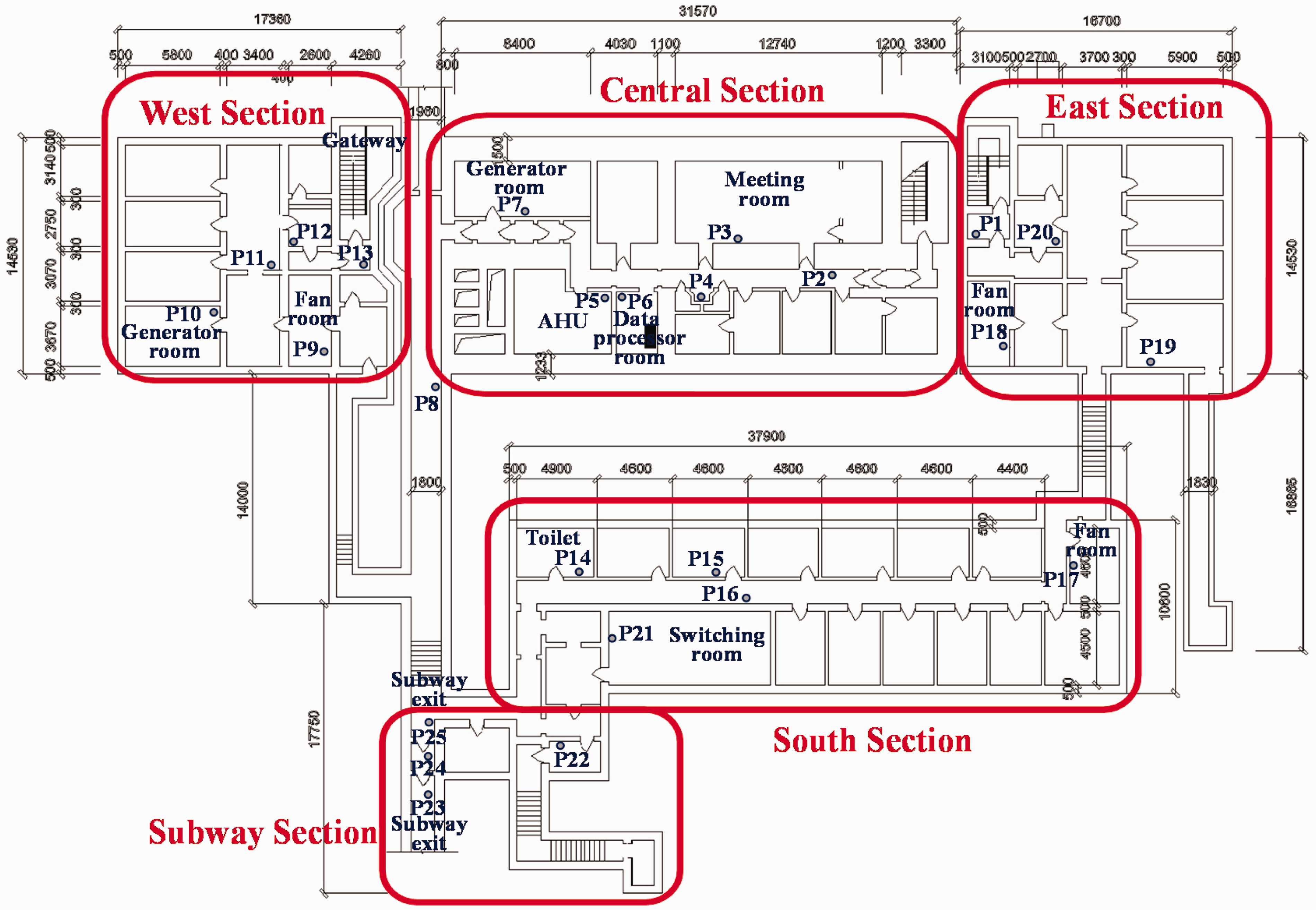
The eastern, central and western sections are located in basement 1, whereas the southern and subway sections are located in basement 2. These sections are connected by a long corridor with enclosed doors. The constructions of external walls, roofs and floors are consisted of 300–500 mm reinforced concrete and waterproof membrane. In addition, the interior walls are furnished with 50 mm thick straw board in the eastern and western sections as shown in Figure 2(b), whereas polyvinyl chloride (PVC) boards nearly without moisture buffering performance are used for the interior wall surfaces of rooms in other sections. A mechanical ventilation system is installed in the corridor but is only operated temporarily in transient seasons. Most of the time in a year, there is no mechanical or natural ventilation in CADW A. The equipment pumps are coated with an anti-rust paint, and the cracks are sealed with mortar when the equipment pumps crossing the construction. Except the gateways at eastern and western sections, there is no opening in the building envelope, which makes the building air and water tight.
CADW B is used during both peacetime and wartime. Figure 4 shows the plan view of basement 1 consisting of the eastern, central and western sections.
A Plan view of civil air defence work B.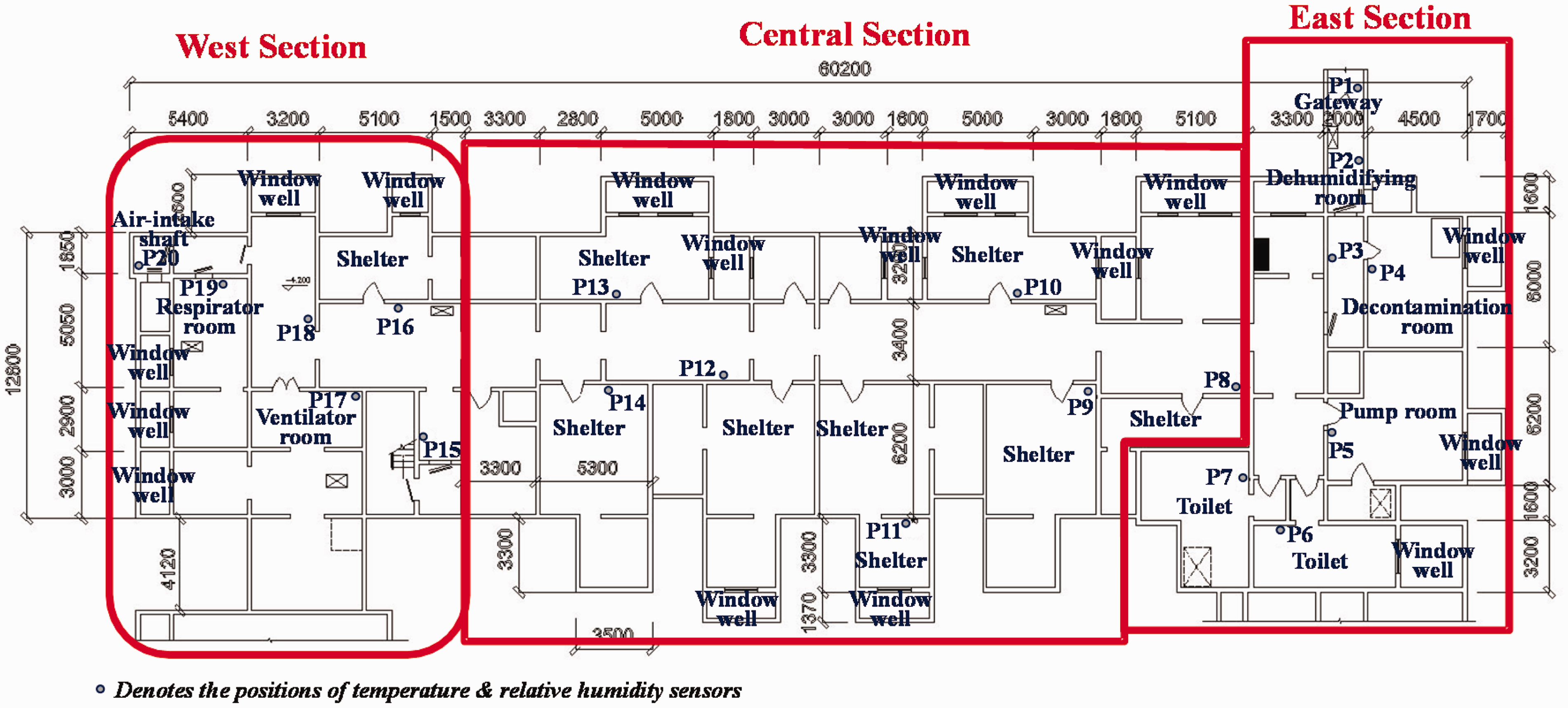
The construction is enclosed by 200–300 mm reinforced concrete coated with interior paint. Each shelter room has a fan inlet over the door and a grid at the lower end of the door. However, the fan is also operated temporarily during transient seasons. There are also many window wells to the outdoor around the construction, where the windows can be opened for natural ventilation and lighting. The shelter rooms of this construction were used as rented dormitories without kitchen or bathroom. Occupants usually hang their clothes up to dry in the corridor. This activity is one of the indoor moisture sources, and the other main moisture source in CADW B is from human body perspiration.
Measurement points
To understand the temperature and humidity distribution in CADW, 25 and 20 measurement points were set in CADW A and B, respectively (Figures 3 and 4). These measurement points were set in typical rooms distributed in the two constructions, such as gateway, dehumidification room, ventilator room, toilet, air handling unit (AHU), shelter and fan room. The measurement equipment of temperature and humidity was DEI-02FA manufactured by Taiwan DEI with a precision of ±0.5℃ and ±3% RH. The equipment recorded the temperature and humidity for a full year (from 1 August 2012 to 31 July 2013) at every 30 min intervals.
Results
Thermal environment over one year in CADW A and B
Figure 5 shows the hourly temperature, RH and humidity ratio profiles (mean, maximum and minimum at measurement points) over one year in CADW A based on all the recorded data taken from the 25 measurement points. The outdoor temperature reached a minimum at −10℃ in winter and a maximum over 35℃ in summer. Nevertheless, the indoor temperature was very stable throughout the year with a mean temperature of approximately 20℃. The differences between maximum and minimum temperatures caused by the different measurement points were within a narrow range of 6–8℃ regardless of the season. RH was comparatively low in winter and high in summer. Although high RH exceeding 80% existed in some places in summer, the mean RH was lower than 80% throughout the year. In addition, the daily variations were very small, less than 5%. The humidity ratio in CADW A varied smoothly from a higher value compared to the outdoor air in winter to a lower value in summer.
The hourly profiles of temperature, RH and humidity ratio (mean, max and min at measurement points) over a year in the civil air defence work, CADW A.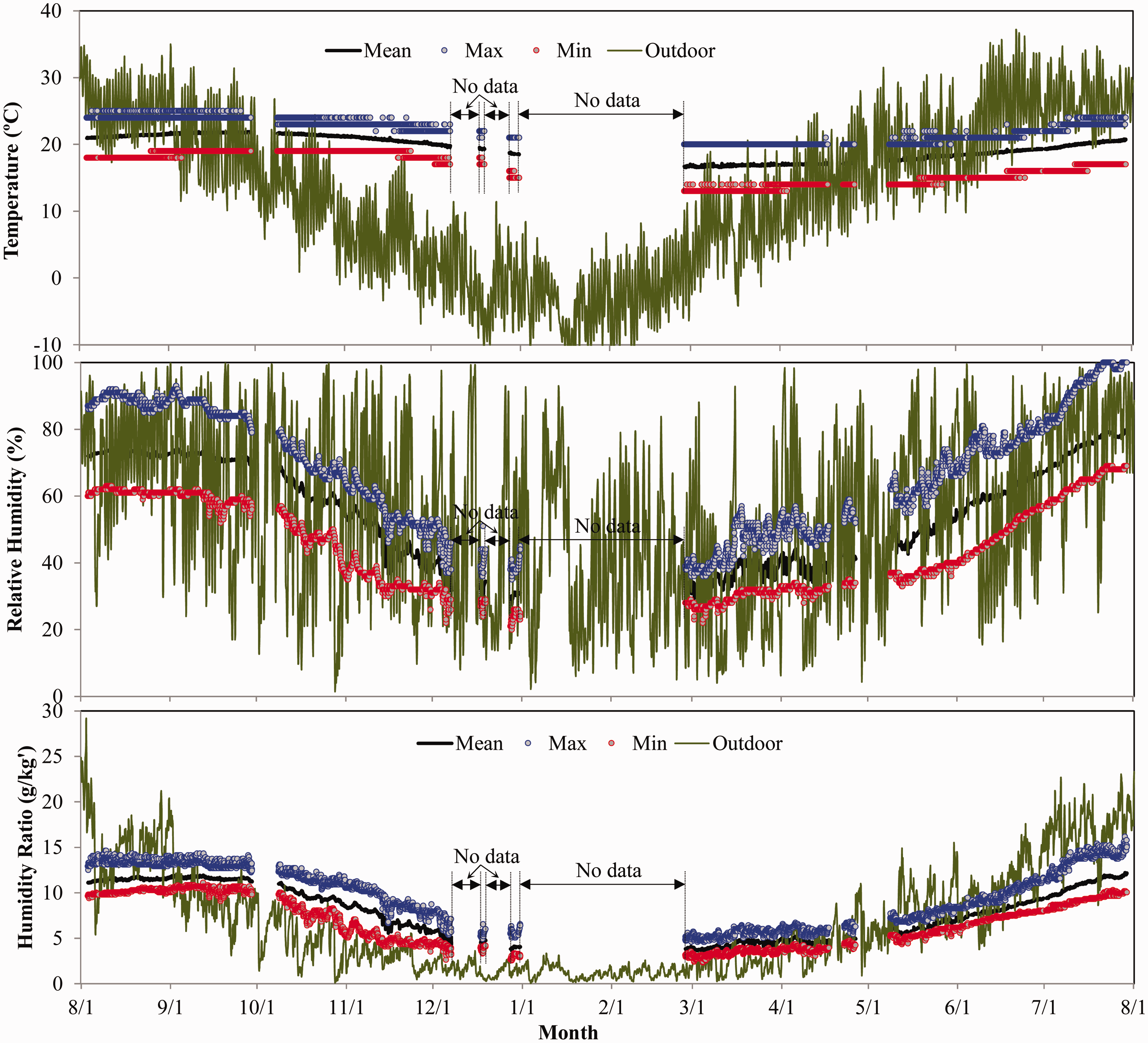
Figure 6 shows the hourly temperature, RH and humidity ratio profiles (mean, maximum and minimum at measurement points) over one year in CADW B based on all the recorded data taken from the 20 measurement points. The indoor temperature and humidity ratio varied with changing outdoor meteorological parameters. The mean indoor humidity ratio was slightly higher than that of the outdoor air. RH varied rapidly, and high humidity was found in almost every month. The indoor RH rose above 90% in summer, with an average of more than 80%.
The hourly profiles of temperature, RH and humidity ratio (mean, max, and min at measurement points) over a year in civil air defence work, CADW B.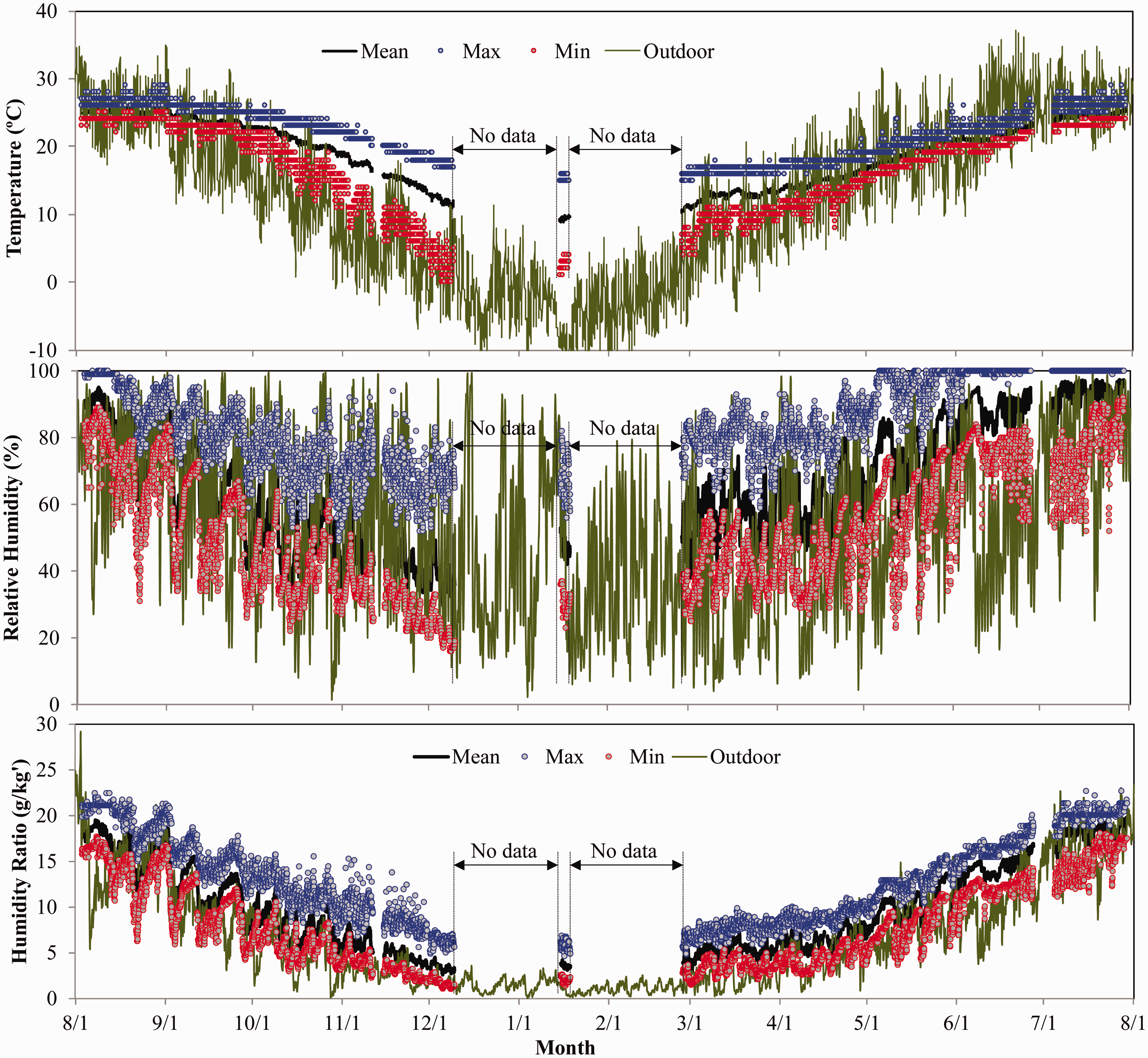
The temperature and humidity results for CADW A and B show clear differences in their internal thermal environments according to the differences in their usage. In CADW A, although there was mechanical ventilation system installed, this did not operate in summer to avoid external heat and moisture intrusion. CADW A was built more than 50 years ago, and therefore there was almost no moisture gain from the surrounding walls. This was also because no occupants had lived or worked inside the construction. In CADW B, the occupants regularly dried their clothes in the corridor, cooked in the shelter and opened the windows adjacent to window wells. In addition, the occupants continued to access, and therefore the air sealing performance was very poor. Human activities and construction management were the fundamental reasons for the large difference in the thermal environment between the two CADW.
Thermal comfort in different seasons
Figure 7 shows the outdoor air temperature and humidity conditions on five typical days in winter (3–7 December 2012) and summer (13–17 July 2013). In winter, the outdoor temperature varied within the range of −10.9–1.3℃ and RH was mostly lower than 50%. In contrast, in summer, the outdoor temperature varied within the range of 18–31℃ and RH varied sharply and was mostly higher than 80%. The humidity ratio in winter was lower than 3 g/kg, whereas in summer this varied within a wide range of 8–18 g/kg.
Outdoor temperature and humidity conditions during typical days in winter and summer.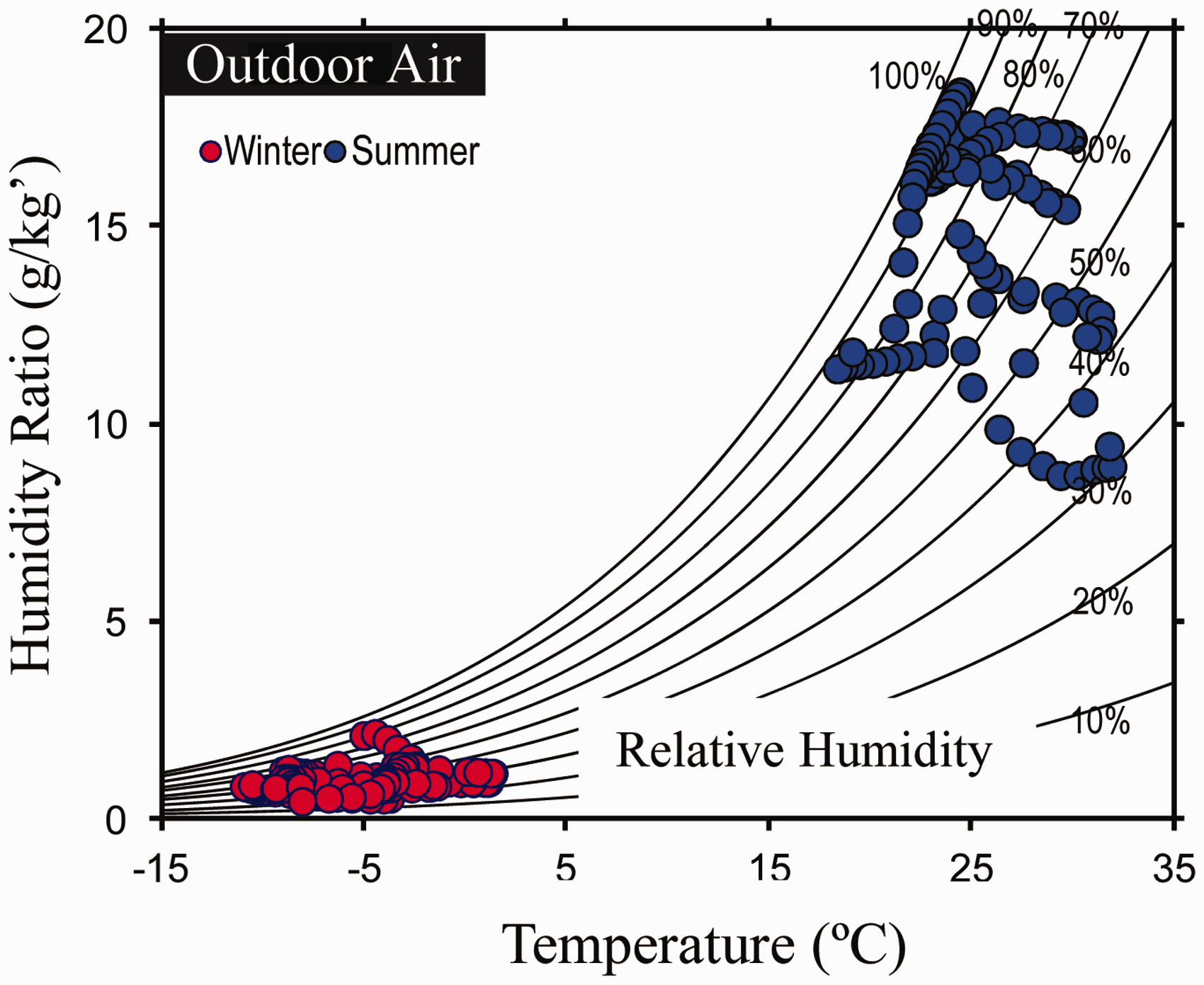
Figure 8 shows the measured temperature and humidity conditions in CADW A and CADW B during the same days in winter and summer. The red and blue polygons are the thermal comfort zones defined by ASHRAE 55: 2013
1
3
for winter and summer, respectively. In CADW A in winter, the temperature was stable at 16–22℃ despite no heating operation and RH varied within the range of 20–50%. Although the temperature was slightly low, especially in the south and subway sections, the thermal comfort in winter in this construction was considered adequate. In summer, the temperature did not show large differences with the winter temperatures, but RH was higher, especially in the subway section, with values rising above 80% during some days. To improve the thermal comfort in summer, temperature should be increased by approximately 5℃. The humidity ratio in winter was almost higher than 3 g/kg and was lower than 15 g/kg in summer. The fluctuations in moisture content were smaller than in the outdoor air.
Temperature and humidity conditions in different sections of civil air defence work in winter and summer (left: CADW A; right: CADW B).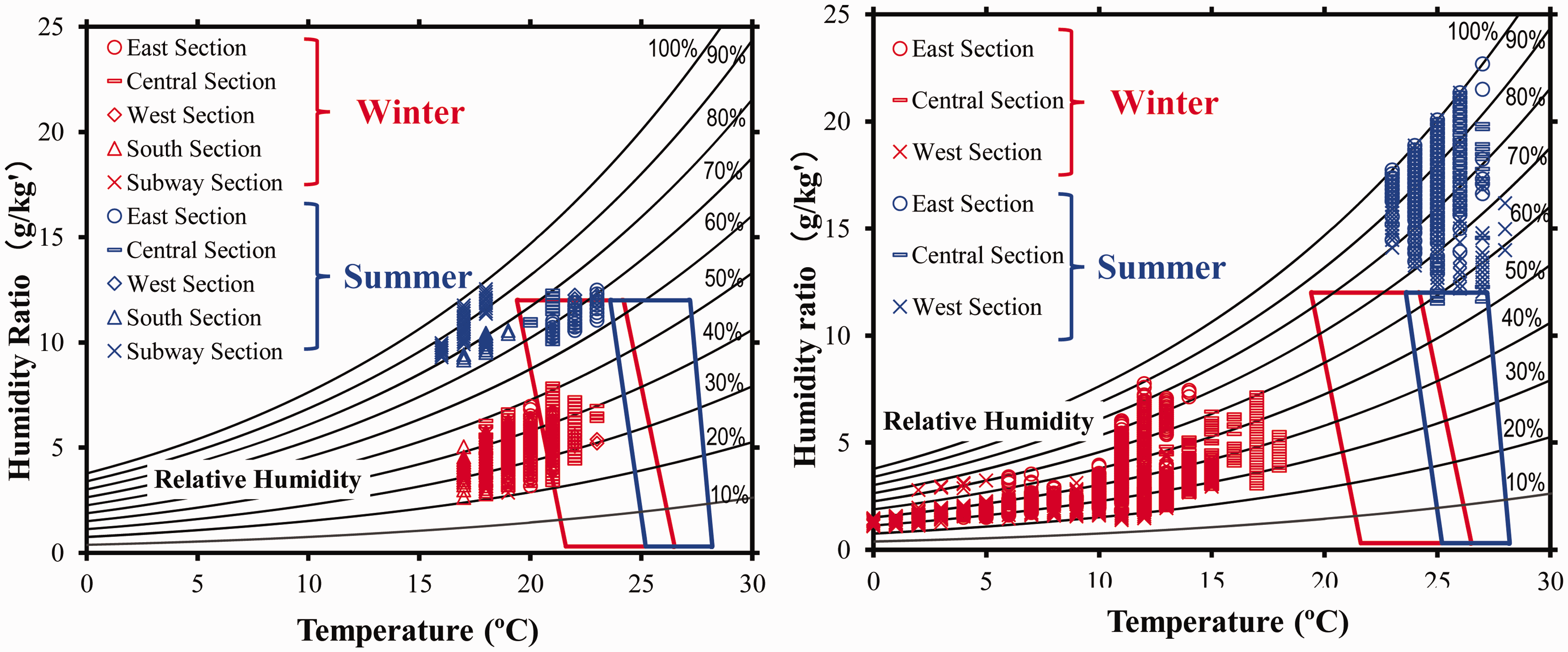
In CADW B in winter, the temperature was clearly below the comfort range. In particular in the eastern and western sections, which have inlets and outlets and many window wells, the temperature varied within a wide range of 0–15℃. RH varied within the range of 20%–60% for most of winter. In summer, the temperature was maintained within a comfortable range of 23 – 27℃, but the humidity was above the comfort zone. RH was higher than 70% for most of summer, and even reached 100%. Regardless of the season, the thermal environment in CADW B was completely out of the comfort zones. To improve the thermal comfort in this construction, temperature control should be vastly improved in winter, and dehumidification is necessary in summer.
Humidity level
The frequency distribution of RH throughout the year in CADW A and B is shown in Figure 9. Bimodal distributions of internal RH can be observed in CADW A, one in winter with a peak of 35–40% and the other in summer with a peak of 65–70%. Over 90% of RH was distributed within the range of 30–80% in CADW A, whereas in CADW B, RH was uniformly distributed within the range of 30–100%. A high humidity environment (exceeding 70%) appeared in CADW B for over 40% of the year.
Frequency of RH in civil air defence work, CADW A and B.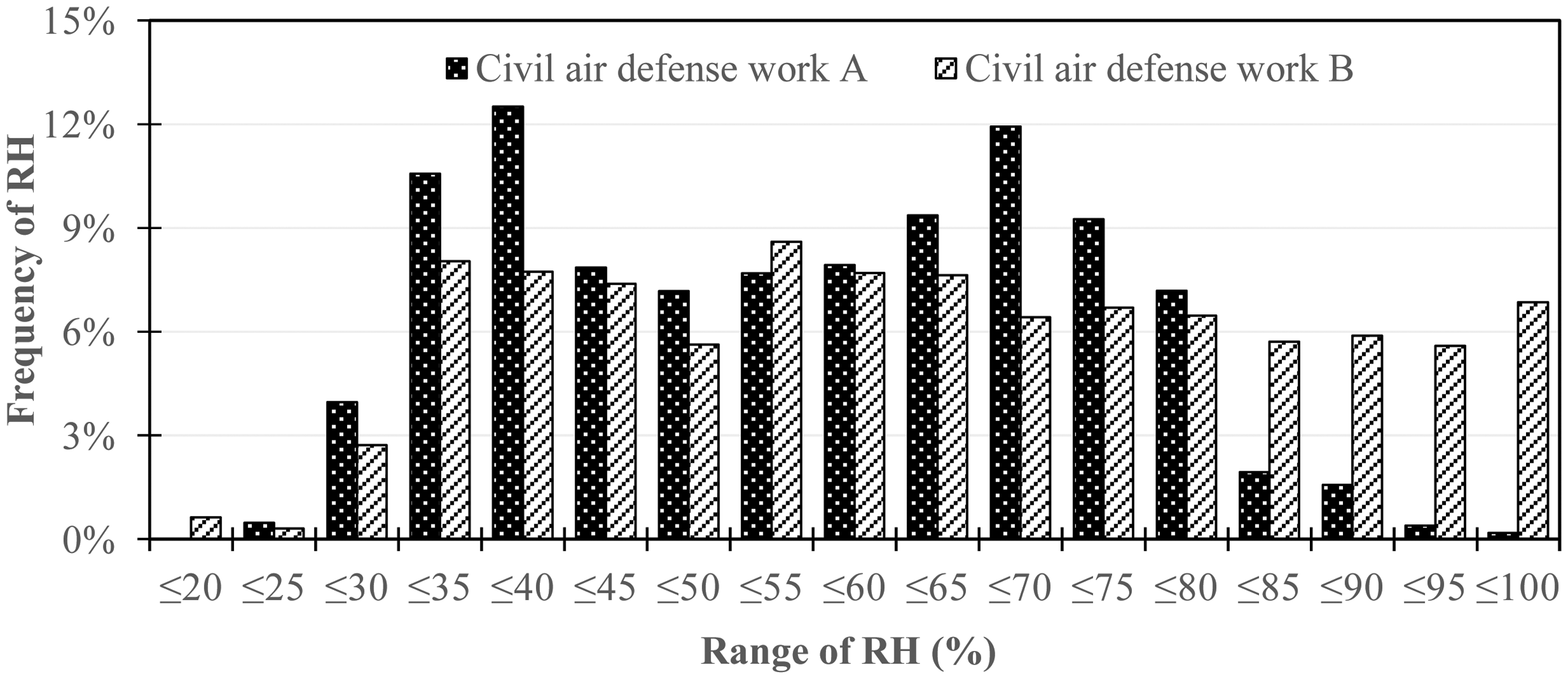
Because dampness can have detrimental effects on occupants’ health as well as on the structure and equipment of CADW, high humidity conditions should be carefully monitored and remediated where necessary. 14 Samuelson 3 reported that in underground spaces, an RH over 75%–80% during a period of several weeks or months can cause mould growth. Johansson et al.15,16 chose 10 building materials to conduct a series of laboratory experiments at specified temperatures (10℃ and 22℃) and RH conditions (75–95%). The results showed that some materials are tolerant to high RH in ambient air without mould growth occurring, whereas others are less tolerant and mould can grow when RH is as low as 75%. In addition, some studies17,18 showed that organic materials are naturally acclimatized to a mid-range RH of approximately 50% and daily variations in RH may present risks: a 10% variation would represent a low risk to most organic materials, 20% would be dangerous to some composite materials and 40% would be destructive to most organic materials. The Chinese design code, GB/T 50038-2005 4 stipulates that RH should be controlled at less than 70% in medical treatment and data processing rooms, 75% in machine and generator rooms, offices and hotels and 80% in personal shelter rooms. These stipulations ensure that the equipment in above-mentioned rooms can be used normally. Therefore, the actual humidity status of individual rooms should be further clarified.
Proportion of humidity levels at each measurement point in CADW A.
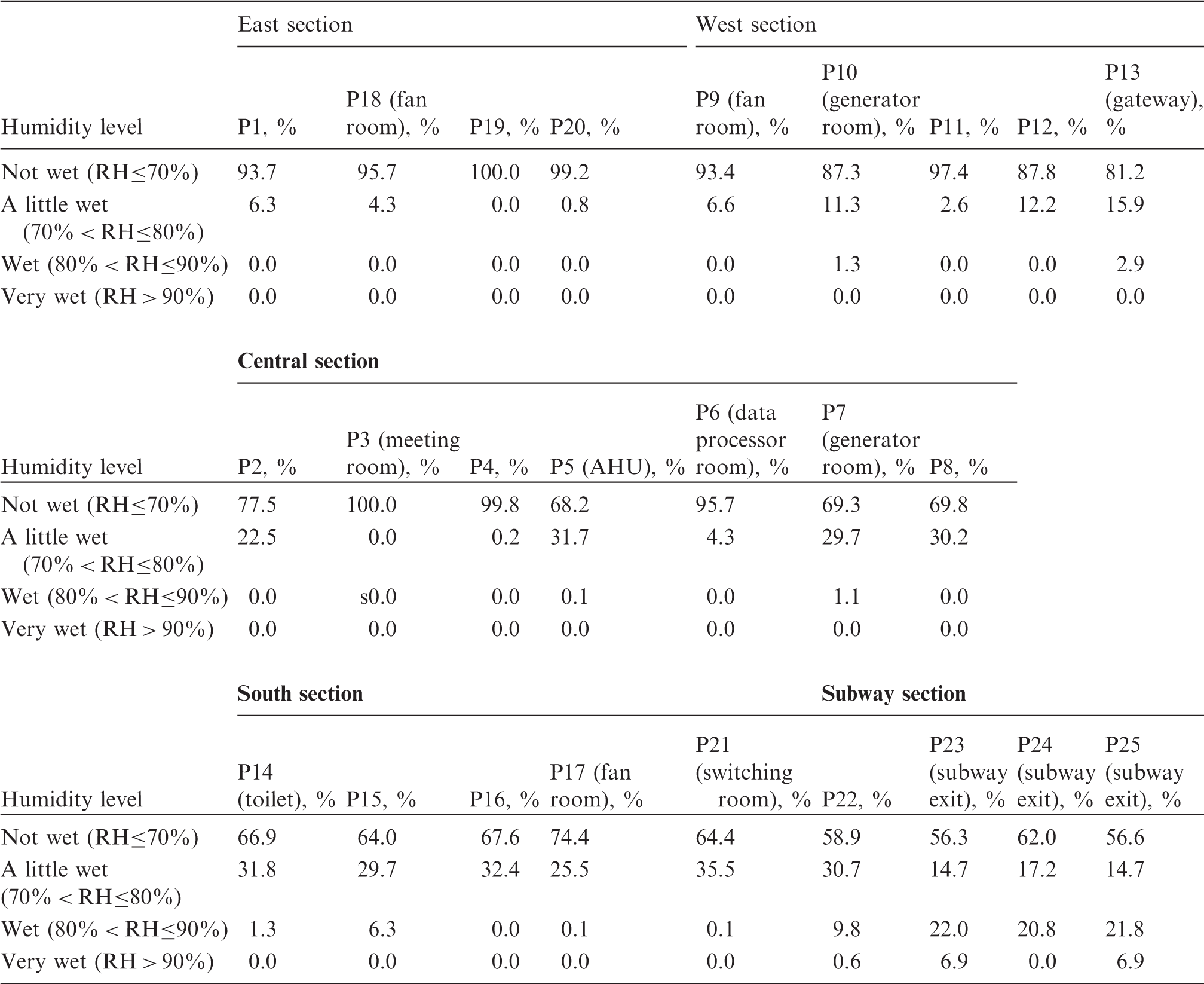
Proportion of humidity levels at each measurement point in CADW B.
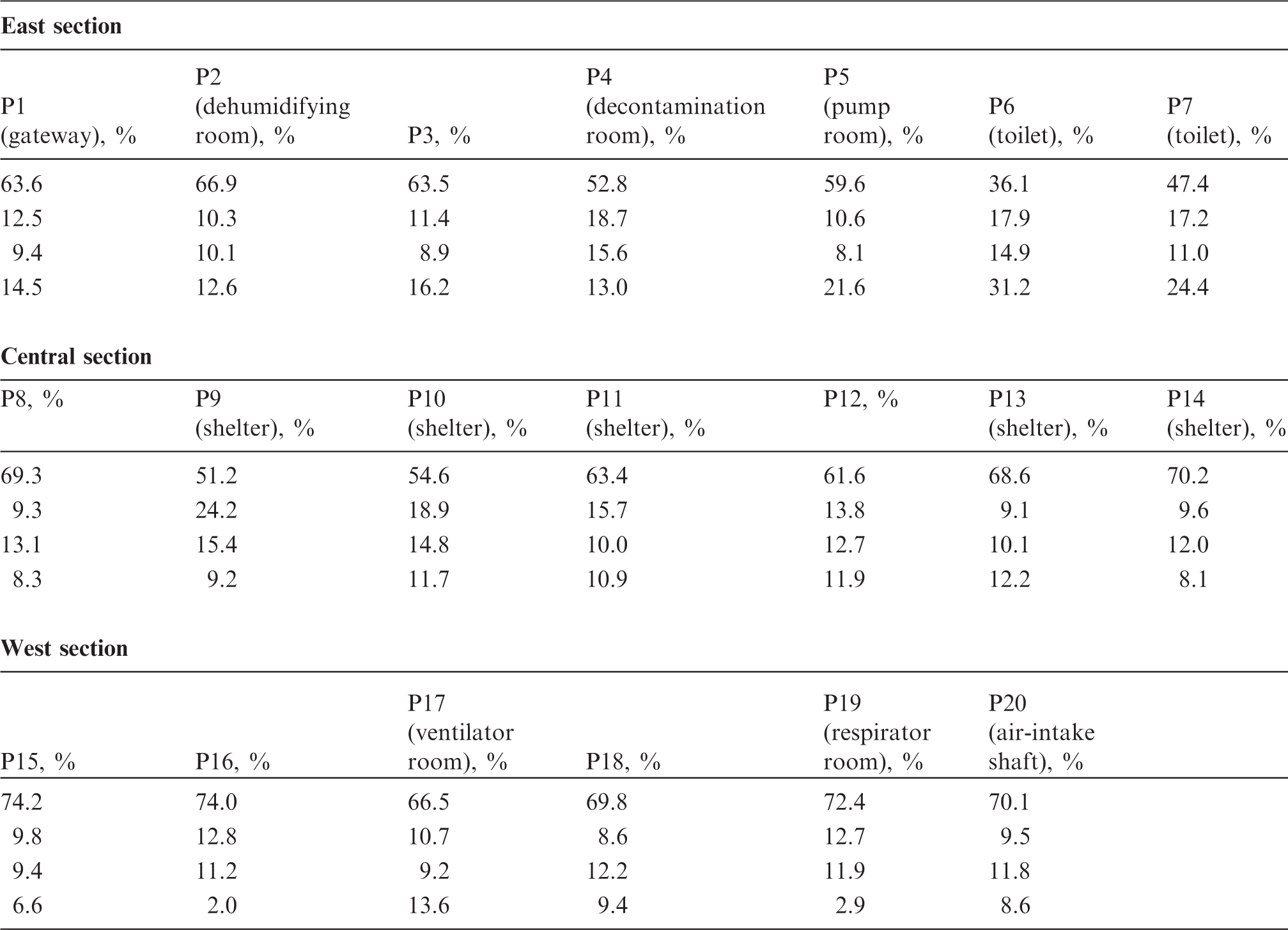
In CADW B, for more than 20% of the year, almost all internal locations had humidity levels of wet or even very wet. In particular, the pump room (P5) and toilet (P6, P7), which had additional internal moisture sources, were very wet for over 20% of the year. The shelter rooms (such as P9–P15) where occupants were living still had humidity higher than 80% for over 20% of the year.
Fungal growth
The fungal index is a biological climate parameter that expresses the fungal response unit (ru/week, which was proposed as a measure of the fungal growth response) during the exposure period (week) at a certain temperature and relative humidity,
19
as shown in Figure 10. The fungal index represents the environmental capacity to allow fungal growth. The possibility of fungal contamination can be evaluated using the fungal index.
20
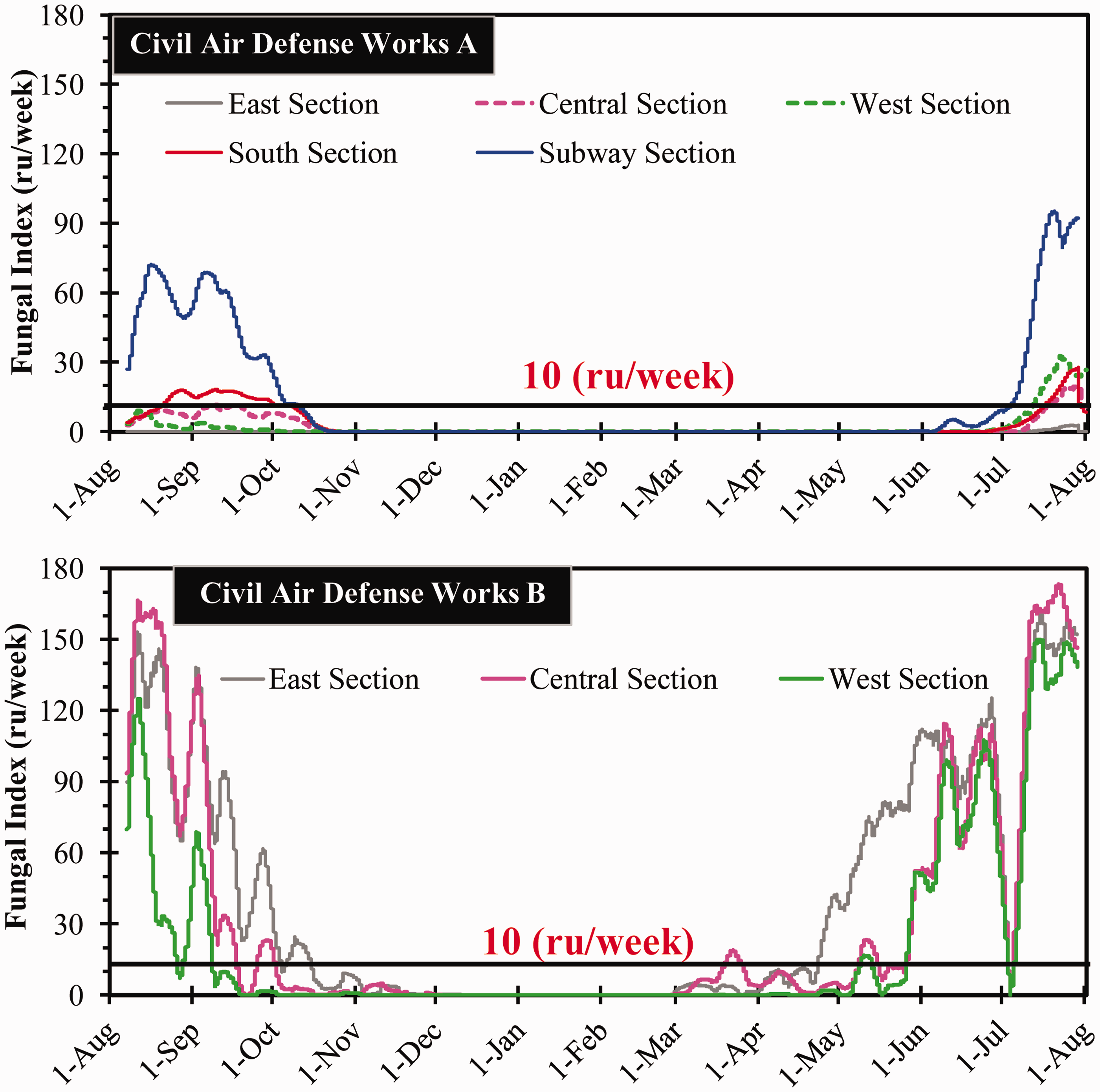
In this study, the fungal index of the two constructions throughout the year were calculated and are shown in Figure 11. Here, starting from the most unfavourable perspective, the maximum value in each section at the same moment was selected as the representative value. Past research has shown that there is a high possibility of fungal contamination if the fungal index is above 10 ru/week.
21
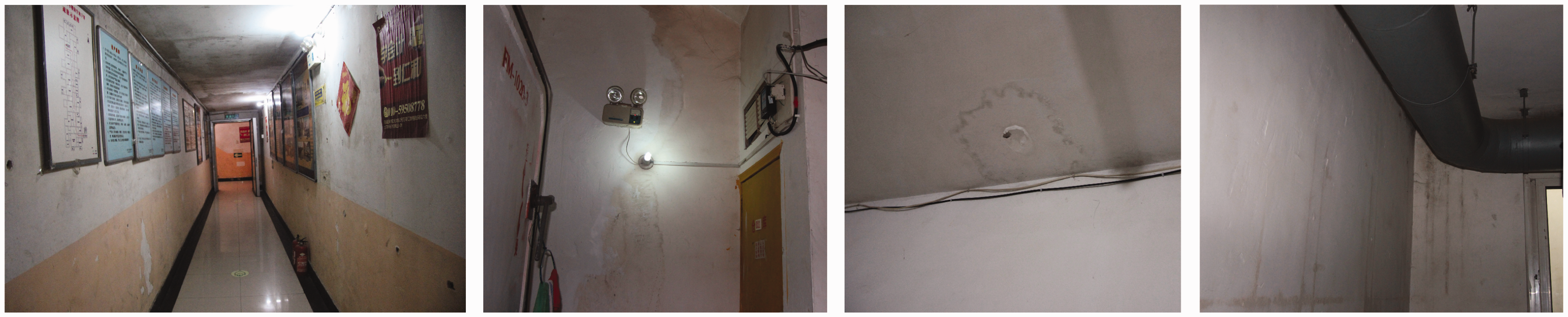
Figure 11 shows that fungal contamination appeared in CADW A mainly in summer, especially in the subway section where the fungal index reached 90 ru/week at one point. The other sections had almost no fungal contamination except for some days in the months of July to September. In CADW B, the fungal index exceeded 10 ru/week from March to October. In particular, the index was very high in all sections from June to September and reached 170 ru/week at one point. Therefore, fungal contamination occurred in CADW B for around half the year, including summer. During the in-situ investigation in summer, we had no dampness feelings and did not find the visual fungal growth in CADW A. However, we had strong dampness feelings in CADW B, and moisture-induced damage such as fungal growth, off-painting and condensation water stains (as shown in Figure 12) were found at many places on interior envelope surfaces. Based on the above predicted results and in-situ exploration, we strongly suspect that there are mould proliferation in the construction and the air inside rooms of CADW B, thereby endangering the occupants’ health.
Fungal response unit at a certain temperature and RH.
19
Yearly fungal index in civil air defence work, CADW A (top) and civil air defence work, CADW B (bottom). Pictures of moisture-induced fungal growth, off-painting and condensation water stains in civil air defence work, CADW B.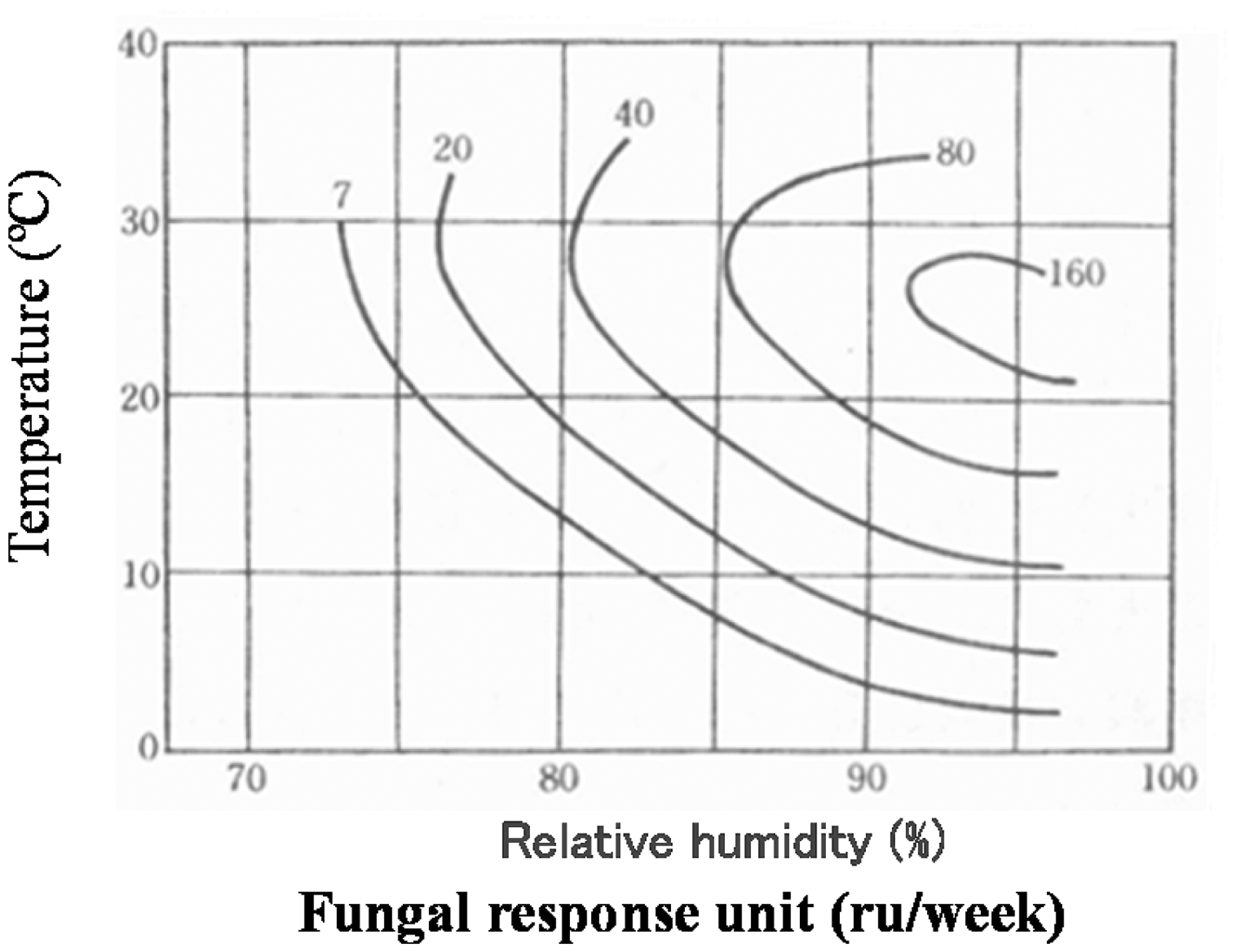
Humidity environment influenced by straw board
Straw has been used in the construction of buildings because of its inherent low carbon content and excellent thermal insulation properties.22,23 Moreover, straw compressed to board panels has abundant porous fibres, and thus can adsorb and desorb moisture from ambient air. In CADW A, 50-mm thick straw board was furnished on the walls of the eastern and western sections as the interior material (Figure 2). To examine the effect of straw board on the thermal comfort, temperature and RH in the rooms in each section were monitored and recorded yearly. The outdoor air was also measured and is presented in Figure 13. The yearly average temperature was around 20.5℃ in the eastern, western and central sections and 17℃ in the southern and subway sections of CADW A. The effect of straw board for wall lining on temperature was not obvious. The average RH was below 50% in the eastern and western sections, and was within the range of 52–60% in the other sections. As previously described, there was almost no ventilation and no moisture source inside CADW A, the differences of air humidity between these sections could be due to the yearly moisture buffering effect caused by interior furnishing materials. Due to the measured data loss in most of winter time, moisture release from the straw board in eastern and western sections could not be included in Figure 13. Nevertheless, the gateway is located in western section, which could result in the RH of the section to be easily influenced by the outside air, the average and standard deviation of RH in the eastern and western sections were smaller than in the other sections. Therefore, the straw board could be concluded to have mitigated humidity variations in the eastern and western sections. Figure 13 reveals that in this type of underground construction in Beijing without human activity, yearly RH (average + SD value) can mostly be maintained at less than 65% by furnishing 50-mm thick straw board on interior wall surfaces. In the other sections without the straw board, RH was sometimes higher than 65% and even 70%. From the perspective of moisture insulation, applying straw board as the interior material in this type of CADW without occupants can mitigate daily and monthly humidity variations, to achieve a good humidity environment.
Yearly temperature and RH in each section of civil air defence work, CADW A and outdoor air.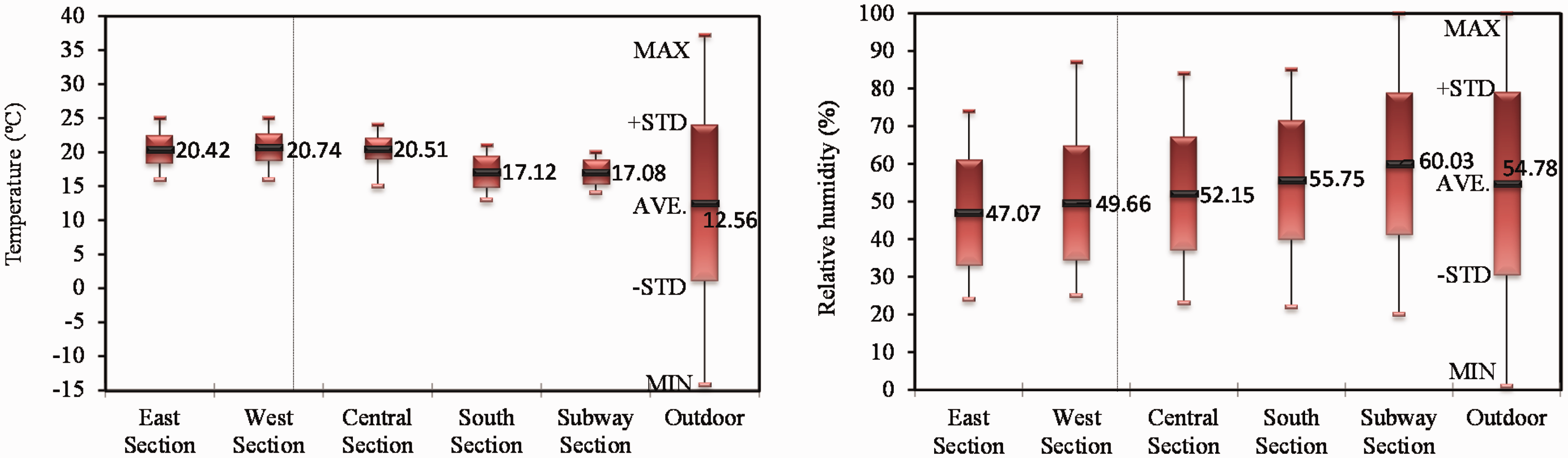
Surface condensation risk
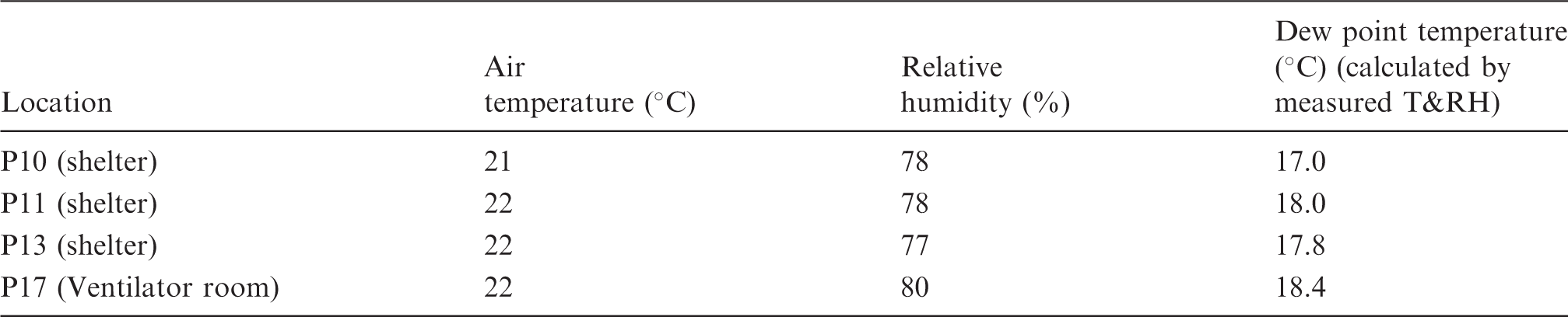
In CADW B, the average RH was almost higher than 80% from June to August (Figure 6). The surface temperatures were generally lower than the outdoor air temperature in summer, which may cause surface condensation in this construction. Field measurements of the surface temperature were carried out at around 10:00 AM on 14 June 2012 by using a thermal imager. Figure 14 shows the measured surface temperature of some locations in CADW B, and Table 3 gives the room air temperature and RH which were recorded in the same room simultaneously. A comparison of Figure 14 and Table 3 reveals that surface temperatures at lower places were lower than room air temperature, especially at the measurement points P13 located in the room, the average surface temperature was 19.0℃ and the minimum reached the dew point temperature of 17.8℃. However, because RH varied sharply, and RH levels were higher in July and August than this in-situ measurement, wall surface condensation should be a serious concern for the building manager. The damage caused by condensation water is shown in Figure 12 which has also exhibited this important issue. To avoid surface condensation in CADW B, RH in room air should be maintained at least less than 80%.
Surface temperatures of some locations in civil air defence work, CADW B (10:00 AM, June 14, 2012) (e) Room upper corner (P13) (f) Room lower corner (P13) (g) Room upper corner (P17) (h) Room lower corner (P17). Air temperature, RH and dew point temperature of some rooms in civil air defence work, CADW B.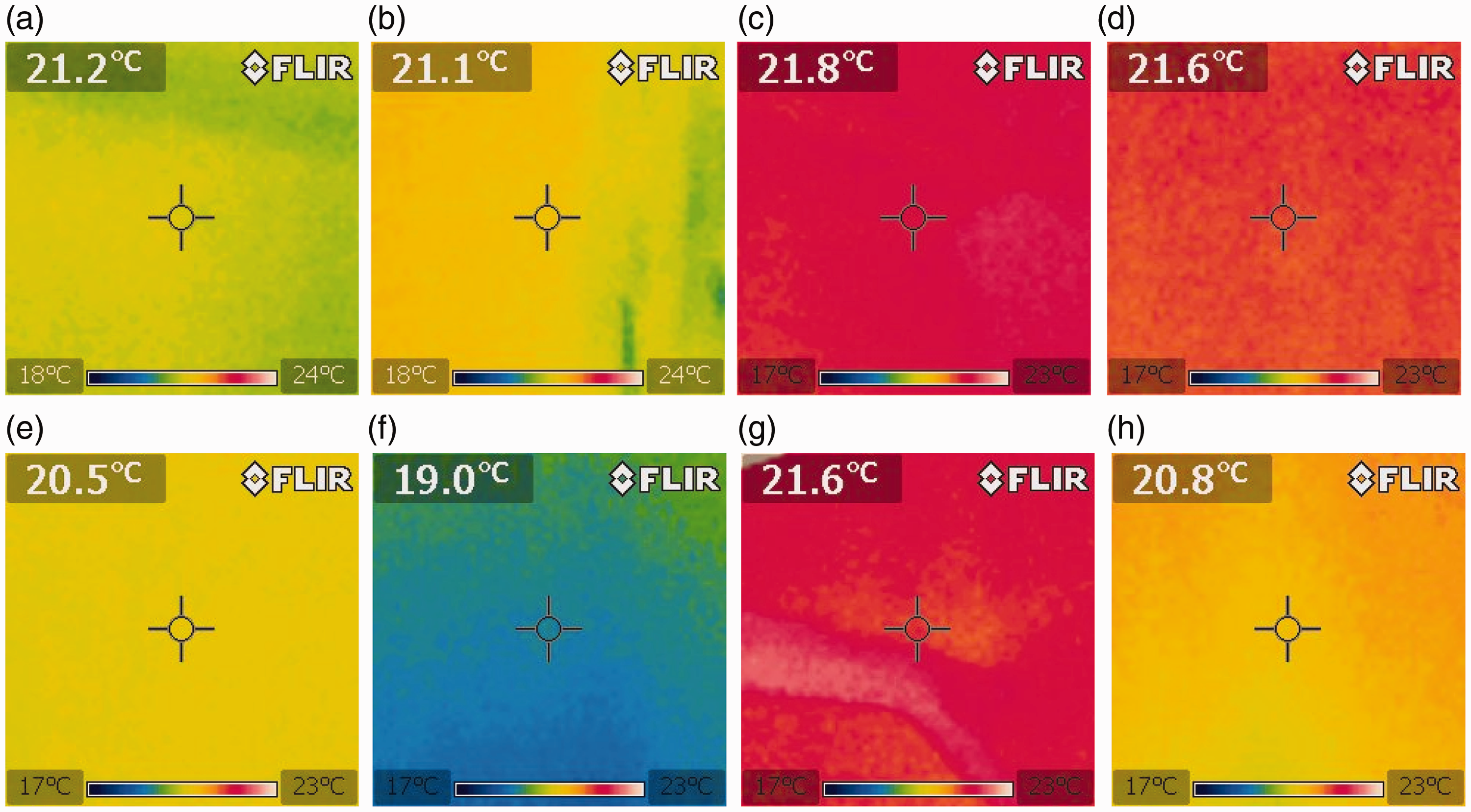
Discussion
Ventilation and human activities may notably affect the indoor temperature and humidity environment of underground CADW. The field investigation found that drying clothes in the corridor, cooking and heating water were common activities in CADW B. Air tightness was very poor with occupants continuously accessing the building, and exterior window wells were being frequently opened. In contrast in CADW A, which generally had no residents, there were almost no heat and moisture load inside and had little air leakage. These factors are the fundamental reasons that caused a large difference in heat and humidity environments of the two CADW.
Moisture proofing points should be different for different types of CADW. In the CADW A which is generally in a state of not being used, the thermal environment was essentially satisfactory. Moisture proofing should be mainly applied in summer due to the high humidity ratio in outside air and low surface temperature on building envelope of CADW A. In addition, furnishing moisture control material such as straw board is an effective measure for mitigating humidity variations and to prevent a high humidity environment in a building. In the CADW, e.g. CADW B, that is used for living, high humidity could occur in both winter and summer. The key reasons for high humidity were human activities and ventilation in summer. Therefore, measures such as enhancing daily management for damp monitoring, reducing moisture load inside and appropriate ventilation are very important. Active ventilation and dehumidification are necessary in summer. Problems such as ventilation volume, dehumidification capacity and their relationships with outdoor meteorological conditions should be further investigated by other research methods.
Conclusions
Based on a long-term field measurement of thermal environment of two types of typical CADW in Beijing, the following conclusions may be reached:
The temperature and humidity environment in underground CADW showed great differences based on the use and application of the CADW. Human activity and ventilation could greatly affect the indoor thermal environment. In the non-residential CADW, the temperature and humidity were relatively stable over a 12-month period from the perspective of moisture and air insulation in summer and furnishing moisture control material on interior walls. Although high humidity occurred occasionally during summer, the thermal environment was essentially satisfactory throughout the year. In the residential CADW, the temperature and humidity varied greatly over a 12-month period and were easily affected by external conditions. The temperature in CADW B was lower than in CADW A in winter, whereas in summer, the temperature was higher. High humidity of more than 80% was maintained for long periods in both summer and winter, and the thermal environment was completely out of the comfort zones. We suspect fungal proliferation and surface condensation problems exist in this CADW.
Footnotes
Authors’ contribution
Huibo Zhang, Jing Liu and Chunan Li designed the research; Huibo Zhang analysed the results and wrote the manuscript; Jing Liu assisted with the analysis of data; Zhiwei Lian supervised the project and gave comments on the manuscript.
Declaration of conflicting interests
The author(s) declared no potential conflicts of interest with respect to the research, authorship, and/or publication of this article.
Funding
The author(s) disclosed receipt of the following financial support for the research, authorship, and/or publication of this article: This study was financially supported by the National Natural Science Foundation of China (no. 51308333) and was a part of technology research and development topics from China State Construction Engineering Corporation (No. CSCEC-2014-Z-1-2-01). The authors would thank Zongxin Li and Jinghua Hao, who helped us to carry out the survey. The authors are also grateful to the partial support by Beijing Civil Air Defence Bureau.