







Abstract
In peri-urban areas of Bogota, people harvest and use untreated rainwater. Initial research indicates that water collected from roofs contains high turbidity values, as well as high concentrations of total suspended solids, biochemical oxygen demand 5-Day and heavy metals. Moreover, these areas do not generally have access to public sewer systems. An eco-productive green roof with the aim of reducing poverty and improving the quality of life of the communities located peri-urban areas of Bogota has been described and examined. These eco-roofs are made with cheaply attainable materials (e.g. recycled plastic bottles). The aim of this study was to understand the hydrological benefits of this type of green roof. We built an experimental set-up consisted of six independent eco-roof modules planted with different crop plant species and a reference roof to serve as a control. The results obtained showed that the crop type had significant influence over the results of both hydrological behaviour and pollutant concentrations measured on the runoff from roofs. The eco-roof can retain up to 65% of the runoff volume and can reduce the runoff peak up to 80%; the eco-roof helped in retaining high concentrations of zinc. The results obtained represent a meaningful positive impact for the eco-roofs tested for stormwater harvesting and suggest that these systems could offer hydrological benefits that might help re-establish hydrological values for marginal urban areas.
Introduction
Green or eco-roofs1–3 are a kind of sustainable urban drainage system (SUDS). 4 These systems, besides reducing flood risks, seek to reduce local pollution and risks associated with conventional drainage systems by incorporating stormwater management and infiltration into drainage network design. 5 Green roofs have proven to provide a means of rainwater harvesting, aesthetic pleasure 6 and thermal regulation. 7 Although several studies demonstrate the potential benefits of the use of vegetation on roofs1,3,7,8 (e.g. urban cooling, reduction of roof storm-water runoff), more research is still needed to fully understand and quantify these benefits9–11 especially in other parts of the world.
In Colombia, rainwater runoff from roofs is frequently used to meet certain household needs, such as for toilets, floor and wall washing, irrigation and animal and human consumption. All of this is carried out without the prior assessment of the water’s quality, most notably in communities with limited or poor access to drinking water or where the cost of the service is not commensurate with income levels. 12 However, despite its current use to satisfy certain household uses in peri-urban areas of Bogota, Torres et al. 12 found that the rainwater runoff from these roofs is not suitable for any of these uses, primarily because of high turbidity values and high concentrations of total suspended solids (TSS), biochemical oxygen demand 5-Day (BOD5) and heavy metals. These findings are of the same magnitude as those reported in the literature for rainwater runoff from roofs.13–15
With the aim of reducing poverty and improving the quality 'of life of these communities, Forero et al. 16 devised an eco-productive green roof that was launched in La Isla neighbourhood, Altos de Cazucá, Soacha, Cundinamarca, Colombia. This green roof built with recycled materials can be easily replicated and can meet multiple objectives as food production, stormwater management and rainwater harvesting. 17 In addition, the families (the owners) can take part in the construction process, creating a sense of attachment to the project’s success. This type of eco-productive green roof has been studied from different points of view – productivity 18 and seismic evaluation 19 – but the hydrological benefits have not yet been thoroughly studied.
In order to understand the eco-productive green roof performance in terms of water quantity and quality and in the context of Bogota (an Andean tropical zone), a monitoring project was recently launched at the Pontificia Universidad Javeriana (PUJ) campus in Bogota, Colombia. The objective of the current study is to compare the performance of six independent green roof modules in order to quantify their hydrological performance during four months.
Materials and methods
In the study of Forero and Devia.,
18
they installed the eco-productive green roof in houses of the peri-urban areas of Bogota. These roofs have an area of 2.80 m × 3.60 m. In order to replicate similar conditions, we built an experimental system, which was located on the roof of a building on the PUJ campus (Figure 1) in Bogota Colombia. Its tropical Andean weather usually has two main rainy periods, one in March to May and the other in September to November (with a maximum mean annual precipitation of 1441 mm in the urban area – 1971 to 2000).
20
Eco-productive green roof with corresponding module number and 3-dm3 recycled bottle (the functional unit; see bottom left figure).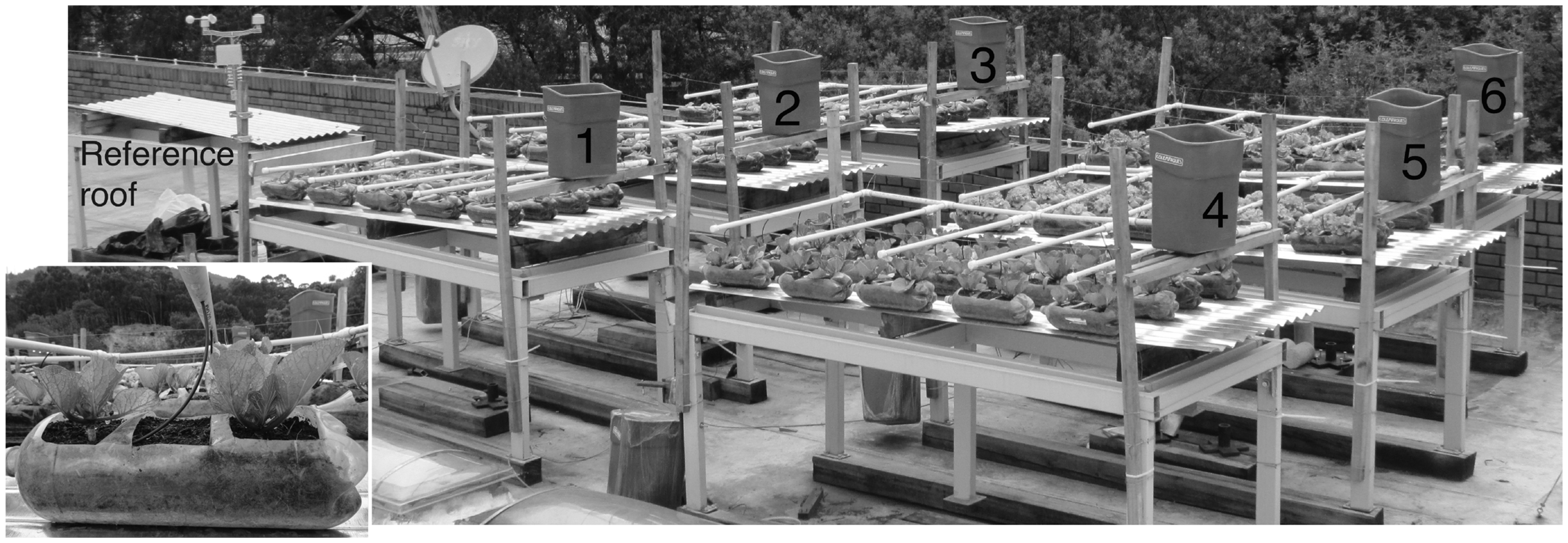
The experimental system was launched on 30 July 2013. It consisted of six independent green roof modules and a reference roof, which serves as a control to assess the performance of the green roofs. These seven roof modules had an area of 2.80 m × 0.90 m that is equivalent to a fourth part of the roofs used by Forero and Devia. 18 Each roof module was composed of (Figure 1): (i) a standard zinc roof supported by a metal structure (2.80 m × 0.90 m) with a 5% slope (in line with those most commonly used by displaced communities in Bogota); (ii) a metal gutter and a plastic container (to collect runoff); (iii) an irrigation system for dry periods (except the reference module) and (iv) a monitoring system.
Based on the method proposed by Forero and Devia, 18 each green roof module was equipped with 20 3-dm3 recycled bottles (Figure 1, bottom left) distributed throughout the roof in a 4 × 5 array. Each of these 3-dm3 recycled bottles and the surrounding roof area was collectively referred to as a ‘functional unit’. To facilitate soil and crop placement within the functional unit, three holes 7 cm × 10 cm were created; by the same token, three 0.5 cm perforations were made 5 cm below the bottle’s mouth, aiding in water filtration throughout the functional unit. The average soil depth was 8 cm: 60% black dirt and 40% rice husk. Every dry day, the plants have to be irrigated in the early morning and in the evening: 15 dm3 of water per module was used each time. In dry periods, we used the collected runoff water (in a plastic container) for this purpose.
The hydrological performance of the green roof could be influenced by the frequency of crop irrigation. However, we did not measure this influence in order to get closer to the normal operation: this irrigation practice is the one used by the green roof owners for whom the crops growing efficiency is the main objective. Additionally, following the recommendations of Forero and Devia, 18 every week we applied an organic liquid fertilizer (BP-150 Safer AgroBiologicos©) to each functional unit. This fertilizer was composed of phosphorus pentoxide (P2O5) 34 g/dm3, total nitrogen (N) 45.05 g/dm3 and oxidizable organic carbon 53.7 g/dm3.
Modules 3 and 6 have Batavia Lettuce, modules 2 and 5 Green Leaf Lettuce and modules 1 and 4 China Chard. These species were chosen due to their suitability for human consumption, short harvest period around two months and short roots. 21 We bought seedlings of these species for each harvest.
According to Forero and Devia, 18 the green roof maintenance is every two months in the harvest time, and the recycled bottles are changed every two years or whenever is needed. The maintenance involves the cleaning of the irrigation system and tanks, ground renewing and replanting. This activity is required to avoid sediment accumulation on the water tanks that can affect the water quality.
Each module contained two digital scales: one beneath the roof (Figure 2(a)) and the other in the tank that collects runoff (Figure 2(b)). The reference roof has only one digital scale, the one in the tank. The range capacity of these scales is 1–110 kg, and the precision is 1/1000. The data provided by these scales were recorded every minute. In order to characterize the collected rainwater runoff in the plastic containers, the value of pH, conductivity, TSS, BOD5 and heavy metals (Cd, Pb and Zn) total concentrations were determined in the water quality laboratory of the School of Engineering at the PUJ, following the procedures established by the Standard Methods.
22
In the case of the heavy metals, these pollutants were determined using the Flame Atomic Absorption of the Standard Methods: 3111B. Cd, Pb and Zn were selected because these are the prevalent pollutants in stormwater runoff.12,23
Digital scales: one beneath the eco-productive green roof (a) and the other in the tank that collects runoff (b).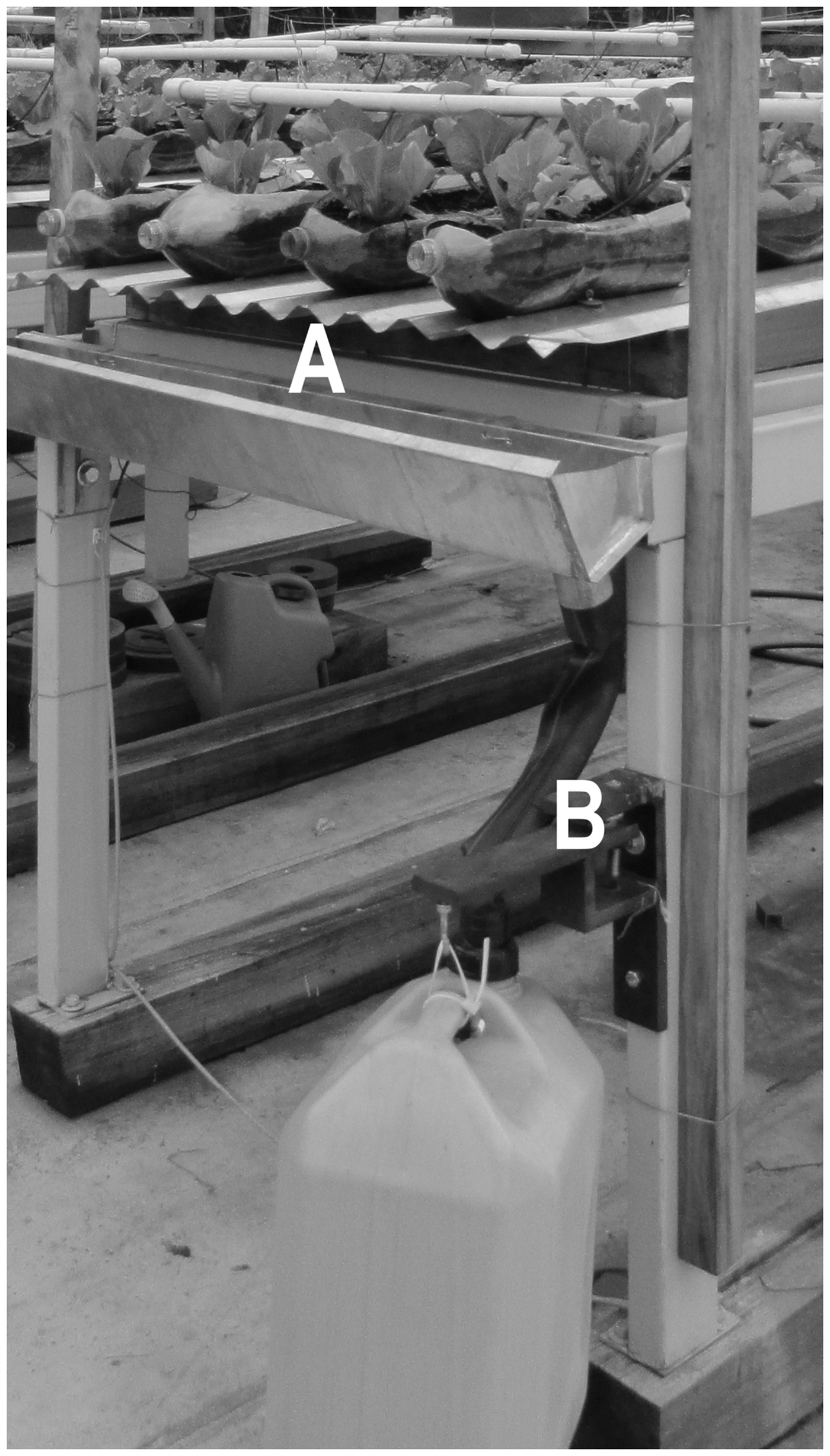
We collected the data from the scales between August and November 2013, the second rainy season of the year. Twenty rain events were analysed: five in August, four in September, four in October and seven in November. The measured weights were converted into volume considering water density (1000 kg/m3) and then into runoff rate. The lag-time (k) for each rain event and each module was calculated as the difference between the hydrograph time-based centroid of the green roof module (Cenmod) and the hydrograph time-based centroid of the reference module (CenRef), after defining the beginning and end of each rain event. The hydrograph was constructed in x-y graph with y-axis represented the flow rate as a function of time–x-axis: a shape was obtained and the geometric centre in the x-axis was calculated. For each rain event, two runoff coefficients were calculated: (i) Cv as the ratio between the total runoff volume of each module and the total runoff volume of the reference roof; and (ii) Cp as the ratio between the peak runoff flow rate of each module and the peak runoff flow rate of the reference module. With the water collected from the reference roof, we estimated the rainfall intensity from both runoff depth and roof area.
Initially, the authors of the study intended to perform ANOVA and t-tests with R software 24 in order to identify the significance of influence of the event and crop type on the water retention capacity of eco-productive green roof (k, Cv and Cp). However, after running variance homogeneity (Bartlett test) and normality (Shapiro-Wilk test) tests, it was concluded that the Kruskal-Wallis test and Wilcoxon signed-rank test would be conducted in all cases given the fact that neither the homogeneity of variance nor normality (p < 0.05) was obtained. In order to use the tests mentioned before, two discrete factors (categorical variables) were chosen: ‘the event’ and ‘crop type’. ‘The event’ includes all variables used to characterize each rain event (antecedent dry weather period (ADWP) in days; total height of rain event (H) in mm; duration of rain event (D) in minutes; duration of antecedent rain event (Da) in minutes; mean intensity of rain event (I) in mm/h and mean intensity of antecedent rain event (Ia) in mm/h).
As far as water quality is concerned, analyses were done on samples collected from all the seven modules and in seven rain events: one in August, three in October and three in November. As neither the homogeneity of variance nor normality (p < 0.05) was obtained, Kruskal-Wallis and Wilcoxon signed-rank tests were performed with R software 24 in order to identify the influence of the event and crop type on the variability of water quality results obtained: pH, conductivity, TSS, BOD5 and heavy metals (Cd, Pb and Zn). Correlation tests were applied to assess the relationship between pollutant concentrations for each module and the characteristic values of rain events (‘the event’). We performed these correlation tests with the Pearson and Spearman methods, considering the results of the Shapiro-Wilk normality tests with R software. 24
Results and discussion
The hydrological characteristics of the 20 rain events analysed are summarized in Table 1 and for illustrative purposes we show some hydrographs (modules 2, 5 and reference roof) for each analysed month in Figure 3. These results showed that the eco-productive green roofs delay runoff hydrographs between 0.5 and 18 min (see kmax for all modules in Table 1). Although there was a difference between the peak runoff flow rates for the reference roof and our green roof modules, this difference was mitigated by the non-continuous coverage provided (the result of gaps between each functional unit, see Figure 1).
Hydrographs per month for modules 2 and 5 versus reference module. Rainfall characteristics and eco-productive green roof performance. These columns show the minimum and maximum values obtained from modules, with the number (#) corresponding to the module.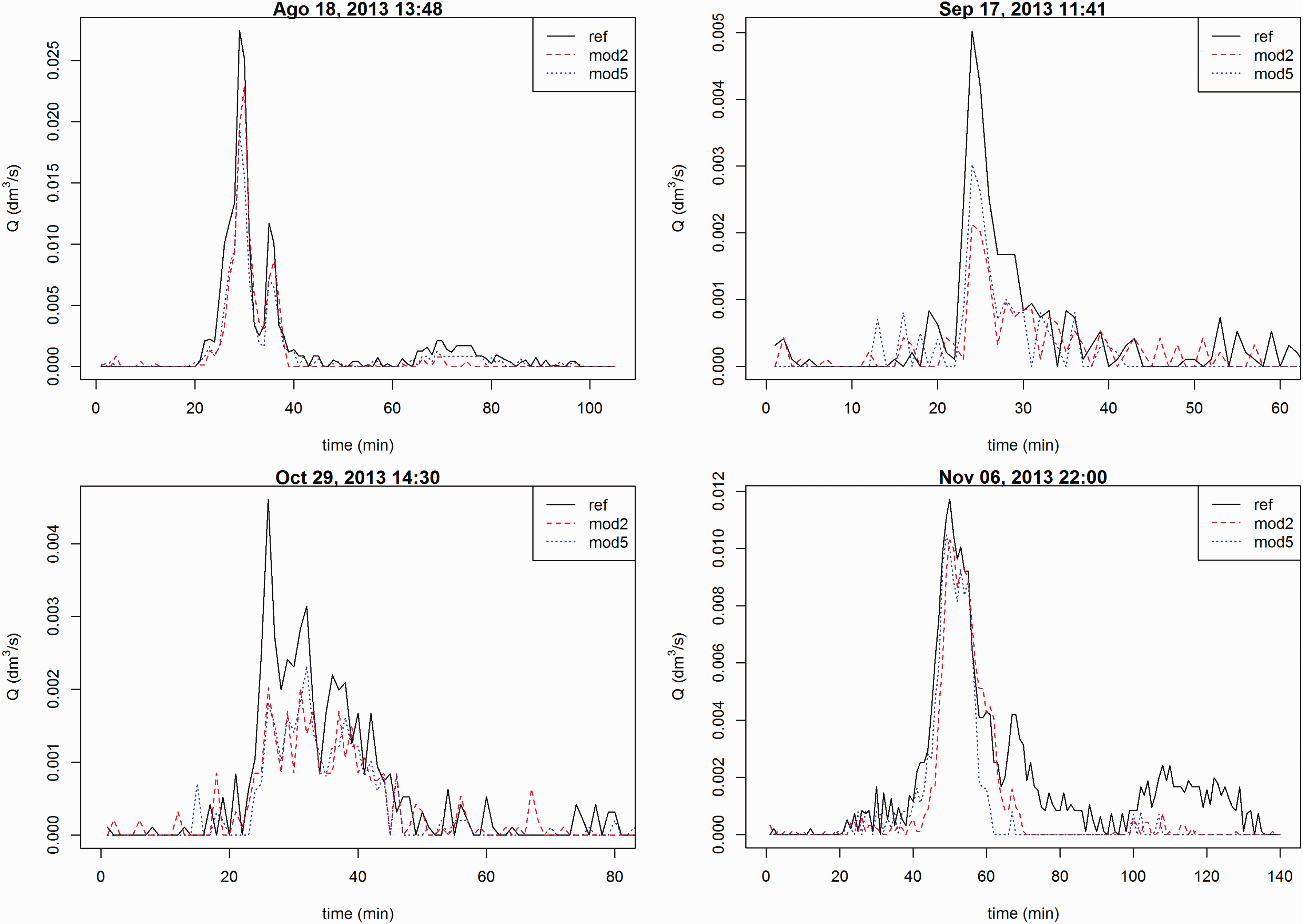
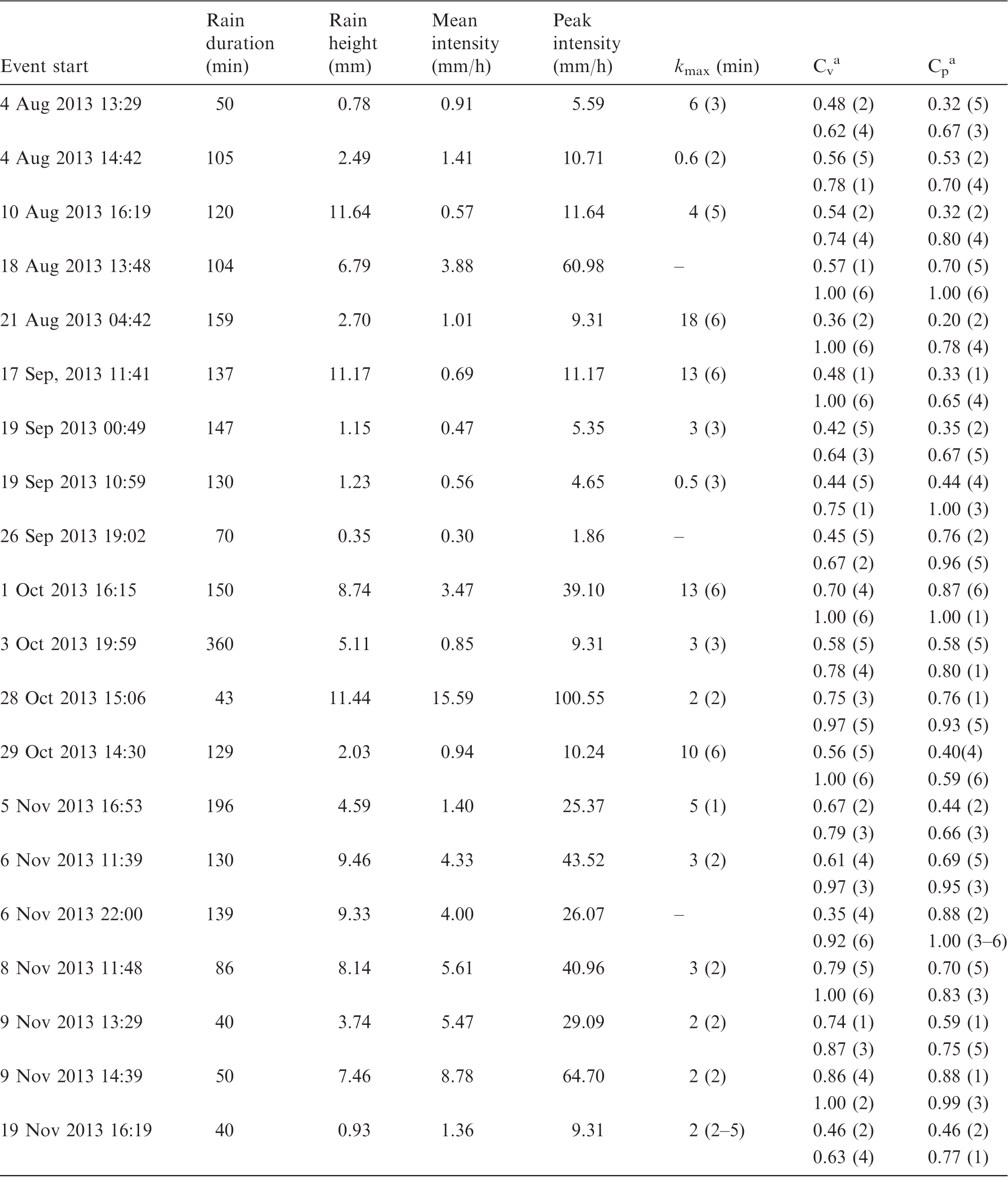
The relation Cp (ratio between the peak runoff flow rate of each module and the peak runoff flow rate of the reference module) for all the modules varied between 0.2 and 1 (see Cp in Table 1), while the volumes retained by the green roof modules reached up to 65% of the total rainfall volume (see Cv in Table 1). The modules with maximum values of lag-time (k) were 2, 3, 5 and 6: those with Batavia Lettuce (modules 3 and 6) and Green Leaf Lettuce (modules 2 and 5), as opposed to those with China Chard (modules 1 and 4). Moreover, we found that the modules that had better performance with respect to Cv and Cp are 5 and 2, the ones with Green Leaf Lettuce. Taken together, these two pieces of observational evidence reinforce the hypothesis that Batavia and Green Leaf Lettuce (Figure 4) had greater capacity to retain water than China Chard due to the size and amount of their leaves (coverage area). Future work will consider the measurement of the ratio between surface leaves and total surfaces of each module and its potential incidence on runoff quality and quantity variables.
Green Leaf Lettuce (left) and China Chard (right).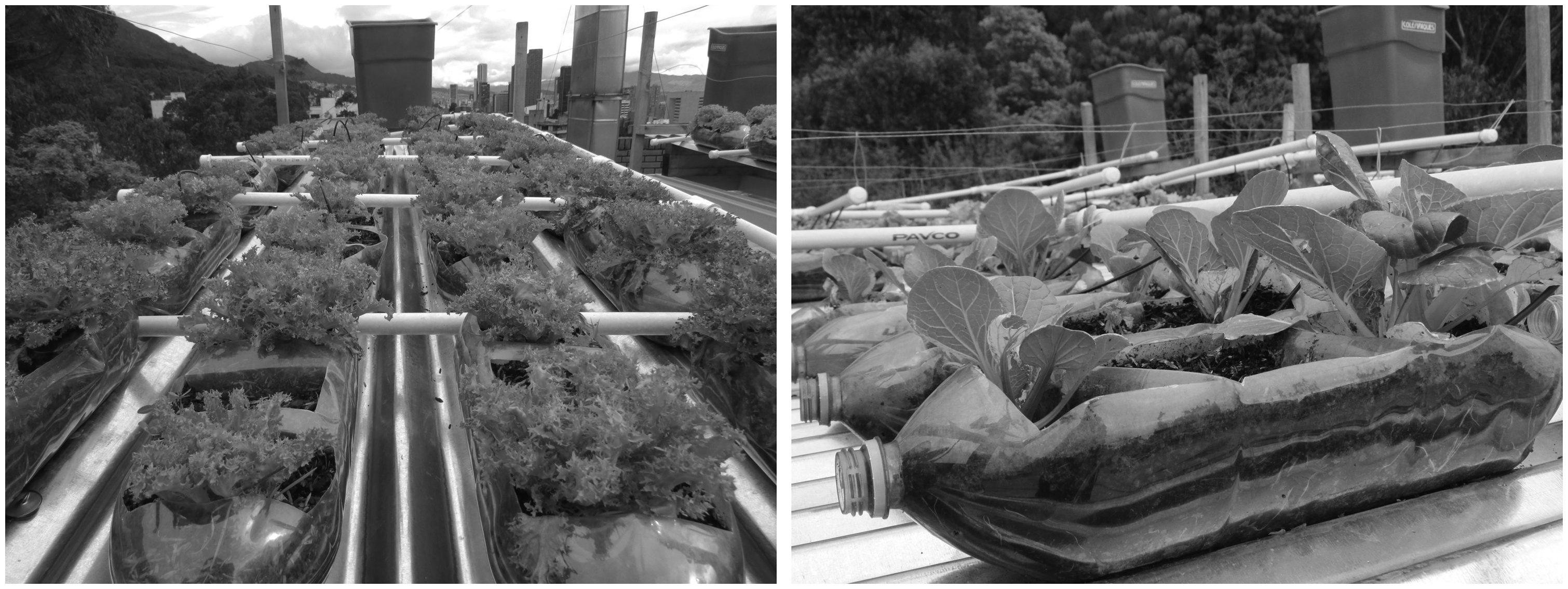
In general terms, the Kruskal-Wallis test provided significance evidence (p < 0.05) that event and crop type affect the variability of the water quantity variables: k, Cv and Cp. The Kruskal-Wallis test revealed that 62% of the variability of k was related to the event, 29% to the crop type, with a remaining 9% related to unmeasured variables such as evapotranspiration. In the case of Cv, the crop type accounted for 64% of variability, while the event (32%) and unmeasured variables accounted for the remaining 4%. On the other hand, Cp showed a different pattern: event (62%), crop (34%) and unmeasured variables (4%).
The relative weakness of the influence exercised by the crop type on k (lag-time) was magnified by the Wilcoxon signed-rank test. That is to say, this test did not establish significant differences for k based on the crop type, as well with the event (Figure 5, left).
Box-plot of k (left) and Cv (right) versus type of crop. China Chard (crop 1), Green Leaf Lettuce (crop 2) and Batavia Lettuce (crop 3).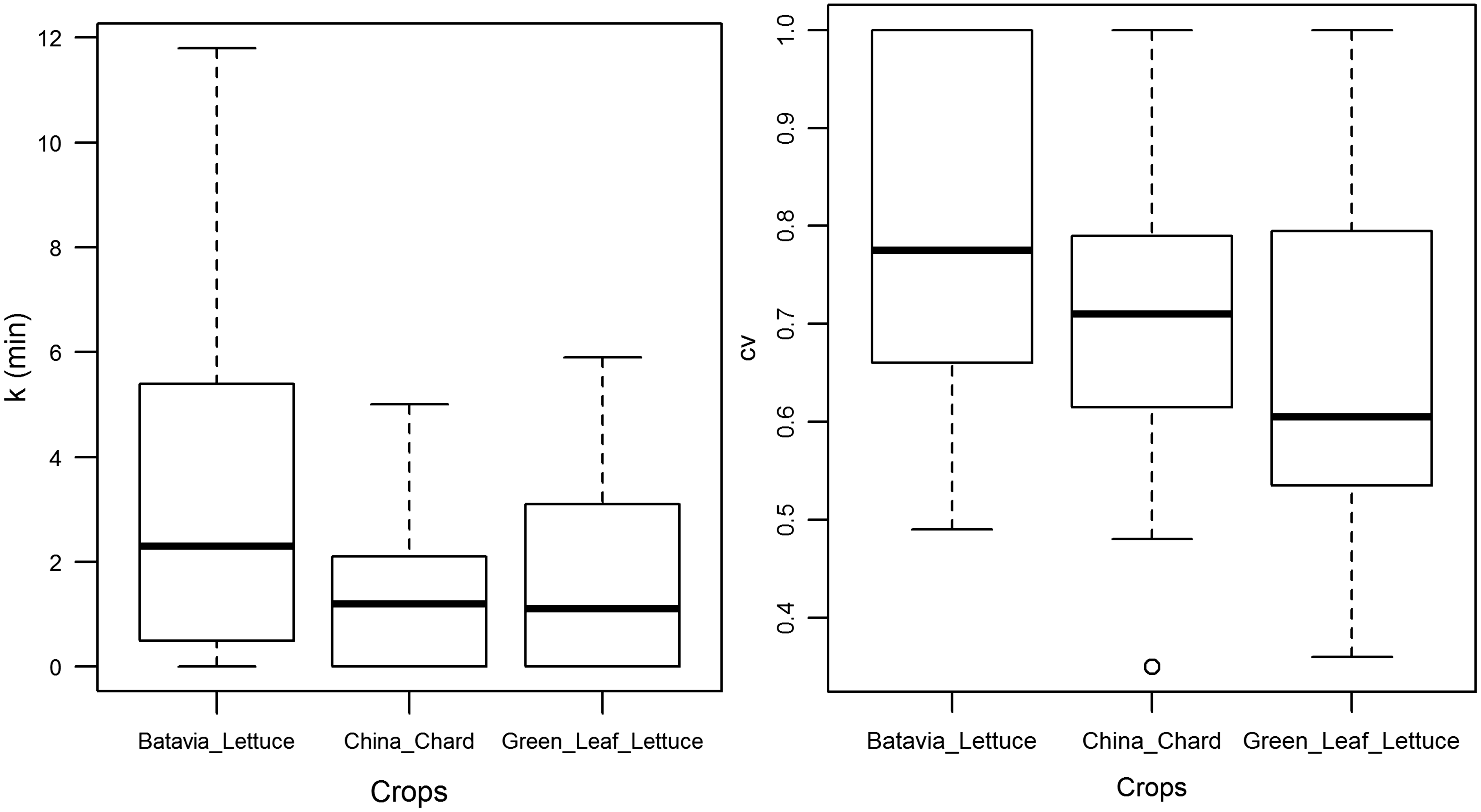
As regards to Cv and Cp, the Wilcoxon signed-rank test provided similar results: no significant differences for Cv and Cp based on the event were observed. This let us to focus our analysis on crop type: for the case of Cv on one hand (Figure 5, right), Green Leaf Lettuce (crop 2) and Batavia Lettuce (crop 3) exhibited significant differences (p < 0.05). On the other, China Chard (crop 1) and Batavia Lettuce (crop 3) and China Chard (crop 1) and Green Leaf Lettuce (crop 2) did not (p > 0.05). With these results, we can conclude that Green Leaf Lettuce (crop 2) was the best crop for reducing Cv. For the case of Cp, the test did not establish significant differences based on the crop type.
Quality analysis results: minimum and maximum values for pH, conductivity, TSS, BOD5; Pb and Zn.
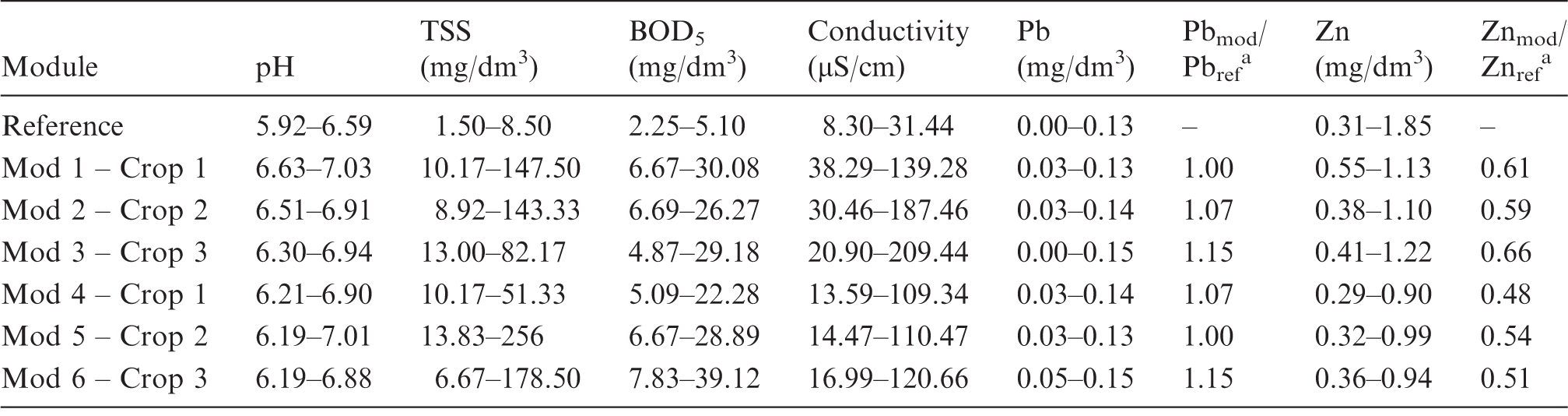
Ratio of retention between each module and reference, using Pb and Zn maximum values.
While the previous values generally increase, eco-roofs were shown to have a maximum efficiency of 88% when it comes to Zn removal. From the standpoint of Zn removal, this observation was important because it implies that eco-roofs tested could bring important benefits to water quality for rainwater harvesting purposes. Earlier studies 12 have found high Zn concentrations in conventional roofs like the ones obtained in the present study. Nevertheless, the eco-roofs did not diminish biochemical oxgen demand or TSS concentrations, which suggest that future work is required in order to improve the design of this kind of roofs. Concentrations of Cd were below the limit of detection. Pb concentrations, at least for six of the seven events, displayed similar values (between 0.04 and 0.15 mg/dm3) across all modules, including the reference one.
From the Kruskal-Wallis test performed on the water quality results obtained, the following was concluded: (i) both the temporal variability (the event) and the crop type had significant influences on the results of all measured water quality parameters (pH, conductivity, TSS, BOD5, Pb, and Zn; p < 0.05); (ii) pH, Pb and Zn variabilities appeared to be more influenced by the event than by the crop type (between 35% and 94% of the total variance); (iii) the variability of the other water quality parameters considered (conductivity, TSS, BOD5) seemed to be more related with the crop type than with the event (between 53% and 69% of the total variance); (iv) for all the tests performed, residuals were below 7% of the total variance and systematically lower than the percentage related to the factors considered (events and crop type), which indicates that the structure for the tests was correctly chosen.
The results from the Wilcoxon signed-rank test demonstrated significant differences for TSS, BOD5 and conductivity based on the type of crop and module. That is to say, conductivity and TSS and BOD5 concentration values obtained from the reference roof’s runoff water (‘no crop’) showed significantly lower concentrations (p < 0.05) than those obtained for the green roof modules (China Chard: ‘crop 1’, Green Leaf Lettuce: ‘crop 2’, Batavia Lettuce: ‘crop 3’) (see Figure 6, left for TSS). In the case of Pb (Figure 6, centre–Pb of all modules) and Zn (Figure 6, right – Zn of all modules), the test displayed significant differences based on the events. Events 5 (ev05), 6 (ev06) and 7 (ev07) contained significantly higher levels of Pb than events 2 (ev02), 3 (ev03) and 4 (ev04). For Zn concentrations, events 6 and 7 demonstrated significantly lower values than the other events. These results showed a temporal build-up of Pb, which suggest a possible dependence from a rain event’s characteristics. Another reason was the possible reuse of the collected runoff water, which in dry periods was used for the eco-roof plant irrigation. According to Rowe,
10
there is a possibility that the air pollutants captured by the vegetation will wash off during a rain event. Also some studies have shown that green roofs can act as source and sink of pollutants;23,25 however, others have found no substantial release of heavy metals.14,26 Speak et al.
27
found high concentrations of Pb in their green roofs runoff; they suggested that the green roofs soil could act as a source of Pb due to the wind-blown contaminated sediment deposition.
Box-plot of TSS (right) versus crop type; and Pb (center) and Zn (left) versus events. China Chard (crop1), Green Leaf Lettuce (crop 2) and Batavia Lettuce (crop 3). Seven events (e.g. first event: ev01, third event ev03; sixth event ev06).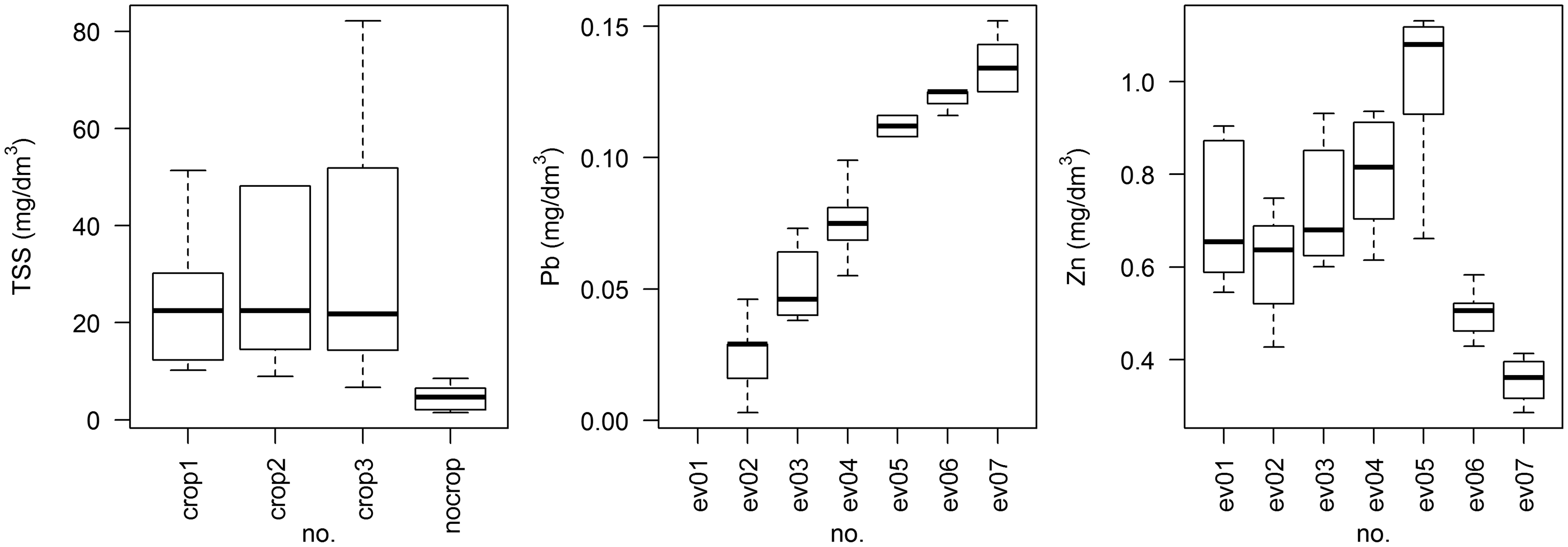
Further studies, including atmospheric pollution data, the analysis of the rainwater concentrations and green roof soil ought to be done in order to explain the Pb results obtained. In contrast to Pb accumulation, a wash-off process was observed for Zn, which could be related to rain characteristics. However, correlation tests for each module did not identify significant correlation between Zn concentrations of the water samples from each module and the characteristic values of rain events (ADWP, H, D, Da, I and Ia). Ye et al. 28 found that the plants of a green roof could retain heavy metals as As, Cu, Cr and Zn. Future studies will consider more sampling campaigns, including more rain events with different characteristics and analysis of heavy metals on the plants.
Conclusions
Our results obtained have shown that aside from the benefits of eco-productive green roofs regarding food production and poverty reduction, these systems could also offer hydrological benefits that might help re-establish hydrological values for marginal urban areas without adequate planning and sanitation infrastructure.
This study shows that the type of crop employed on green roofs could significantly influence the results of both hydrological behaviour and pollutant concentrations measured in roof runoff. The retention of the green roof modules could reach up to 65% of the total rainfall volume and can reduce runoff peak up to 80%. In terms of Cv and Cp reduction, Green Leaf Lettuce outperforms the other crops (China Chard and Batavia Lettuce) studied in the present article.
From a water quality point of view, eco-roofs could help offset high zinc concentrations typical of conventional roofs. Seeing as this type of roof (zinc) is one of those most commonly utilized on houses in peri-urban areas in Bogota, these results represent a meaningful positive impact for the eco-roofs tested for stormwater harvesting. Observed Pb concentrations display an increase due to reuse of the collected runoff water, which in dry periods was used for the plants irrigation. Nevertheless, the eco-roofs do not diminish BOD or TSS concentrations and even could increase them, which suggests a release (during rain events) of solids and organic matter, probably from the ground used. This finding suggests that an improvement of the eco-productive green roof tested is required, for which filters or supplementary soil layers to retain solids could be considered. Additionally, future studies are suggested, perhaps one involving atmospheric pollution data, as well as more specific organic pollution runoff characterization (including e.g. TN and P), soil samples characterization (e.g. TC, TN and P), and vegetables analysis in terms of heavy metals retention for human consumption suitability.
Footnotes
Authors’ contribution
All authors contributed equally in the preparation of this manuscript.
Declaration of conflicting interests
The author(s) declared no potential conflicts of interest with respect to the research, authorship, and/or publication of this article.
Funding
The author(s) disclosed receipt of the following financial support for the research, authorship, and/or publication of this article: This study was funded by the Pontificia Universidad Javeriana as part of Project 4656, “Proyecto piloto de techos verdes como alternativa de preservación del medio ambiente, seguridad alimentaria y fortalecimiento comunitario en Usme” (“Green roof pilot project as an alternative for environmental preservation, food security and community empowerment in Usme, Bogota, Colombia”).