







Abstract
This paper focuses on the importance of occupant satisfaction with indoor environmental quality in buildings as well as the effect of indoor environmental quality towards occupants’ satisfaction. This research applied post-occupancy evaluation as a method to indicate the building occupants’ needs, their satisfaction and comfort level. The research is based on a case study approach whereby a questionnaire survey was conducted among 25 organizations involved in managing office buildings. A total of 115 questionnaires were returned for evaluation of occupants’ overall satisfaction from aspects of indoor environmental quality in these buildings and to determine the occupants’ satisfaction level within these buildings. The findings revealed that indoor environment factors that could contribute to occupants’ satisfaction consists of lighting, air quality and aesthetic perception. These classifications were made based on the factor analysis done with 22 attributes of the indoor environment. The majority of occupants are satisfied with their health conditions and do not face any serious health problems. However, occupants highlighted that some environmental conditions, health effects, air movement, ventilation and air freshness are important criteria for their satisfaction and comfort. This study provides insights into how occupants perceive their indoor environment and comfort, and identify problems that could arise in buildings.
Introduction
A building is a fundamental component which provides shelter and facilities for individuals to perform daily task. The quality of indoor air is very important for human health and well-being because most people spend their time indoors; in offices, schools and homes. 1 The health risks of exposure to indoor air pollution are greater than those caused by outdoor air pollution. Various aspects of the indoor environment could affect human well-being and performance. The air and environment can be affected by chemical, biological and physical agents resulting from occupants’ activities and the presence of volatile organic compounds (VOCs) from other contaminants and pollutants released by certain building materials or from the ambient environment. 2 Other factors affecting the indoor environment quality (IEQ) are lighting, natural ventilation, thermal quality and indoor air quality (IAQ). However, high-performance design and green buildings can provide a better and healthier environment for occupants. 3
Some research studies have been conducted to determine the role of indoor environment on occupants’ productivity and efficiency.3–6 Occupants’ opinion towards building indoor environment can be obtained through questionnaire survey. Kamaruzzaman et al. 3 stressed that findings from the questionnaire survey should be able to assist in identifying particular aspects of the environment that require adjustment and improvement and aim to provide a better internal environment for occupants.
The most prevalent and established data collection method across diverse disciplines including psychology, social, health and building sciences, is an occupant survey which results in post-occupancy evaluation (POE). Previous studies that adopted this method include Kamaruzzaman et al. 3 and Huang et al. 4 In 2013, Kim et al. 5 carried out a research, which studied the relationships between the indoor environment and behaviour, perception and comfort of building occupants. Kim et al. 5 found that female respondents are less satisfied with all IEQ factors, with the lowest satisfaction scores for IEQ factors given to temperature, followed by air quality and acoustical conditions (noise and sound privacy).
Occupant satisfaction can be defined by various perspectives, depending on the scope of the study. Frontczak et al. 7 stated that occupant satisfaction is associated with IEQ (thermal, visual, acoustic and air quality) and workspace as well as building features (including size, aesthetic appearance, furniture and cleanliness). These authors have highlighted the degree of importance of the indoor environmental parameters which could vary between studies, but thermal environment is generally ranked slightly higher compared to air quality, acoustic environment and visual environment. Sound privacy and IEQ (temperature, noise and air) are ranked highest in term of level of dissatisfaction. The most important factors for workplace satisfaction among occupants are the amount of space, noise level and visual privacy.
IEQ is an important quality aspect for office buildings. From the occupants’ perspectives, the ideal situation is an indoor environment that satisfies everyone. Bluyssen and Cox
8
noted that unhealthy indoor environment can affect building occupants’ health. Several factors can contribute to a healthier indoor environment including:
Source control: reducing emissions from sources of indoor pollution Ventilation: reducing exposure to pollution sources Maintaining comfortable physical conditions: temperature, humidity and lighting.
Factors relating to indoor environmental quality.
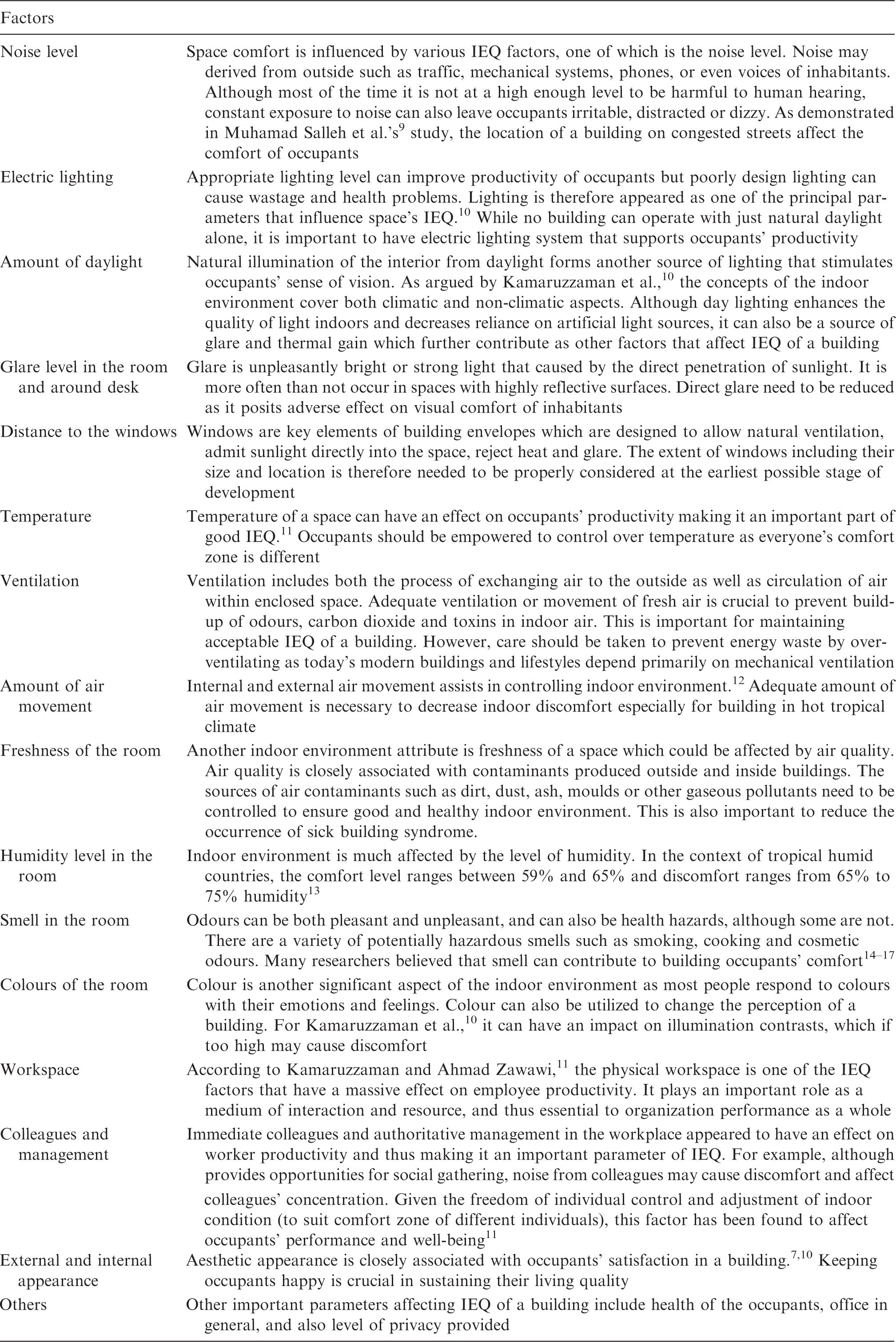
The negative effects of poor IEQ are physical discomfort, such as fatigue and sick building syndrome. The poor quality of facilities and building design are associated with occupants’ performance and achievement. The building’s interior and characteristics are major influences on exposure to indoor pollutants and other indoor physical parameters. Studies conducted3,20 have identified several criteria that could affect occupants’ health and work performance, but there is still a gap in the information about building occupants’ assessment of IEQ. Thus, this provides an impetus for us to undertake this particular study area. This paper applies POE as a method to indicate occupants’ needs in buildings, their satisfaction and comfort level. Thus, we applied systematic POE to evaluate occupants’ perceptions about their buildings or workspace.
The broad aim of this paper is to contribute to the discussion of the impact of overall occupant satisfaction from aspects of IEQ in buildings and to determine occupants’ satisfaction levels within buildings, and with particular reference to buildings in Kuala Lumpur, Malaysia. The analysis is based on survey responses directly collected from occupants. The findings of this study provide insights into how occupants perceive their indoor environment and to identify the set of problems that could arise in buildings. The findings should contribute to existing knowledge about perceived comfort and satisfaction of occupants of buildings.
Research design and methodology
A questionnaire survey was developed on the basis of extensive literature reviews. The primary aim of the questionnaire survey is to examine overall satisfaction of building occupants with aspects of IEQ in buildings. Bluyssen and Cox 8 considered that IEQ can be treated as a part of TOBUS, namely thermal comfort, indoor air quality (humidity, pollutants and ventilation), lighting and noise. They incorporated work-related factors, personal characteristics and ergonomics in their study. On the other hand, Wolfinbarger and Gilly 21 informed us that the type of questionnaire a researcher adopts may consist of multiple choice questions, close-ended questions and Likert-type questions. The questionnaire for the study reported in this present article is adapted from Levermore et al., 22 that was developed in the UK and is used by a number of organizations including consultancies in London.
Likert style questions were employed to rate 22 factors relating to satisfaction with offices and buildings. The questionnaire comprises important factors in the design of an ideal office and comfort of occupants in buildings. The research is based on a case study approach, with a focus on 25 organizations in Malaysia involved in managing office buildings. The office buildings selected consist of low, medium and high rise, and up to maximum of 60 m height. The main reason for this threshold is that Nguyen and Altan 23 highlighted that buildings with more than 20 storeys, or more than 60 m in height, could have dramatic effect on building processes including design, planning, construction, maintenance and deconstruction. This also supports the views espoused by the renowned architect or engineer Fazlur Khan. 24 In addition, it represents the typical layout settings pertain in Kuala Lumpur, the capital of Malaysia.
Through the support of top management in 25 participating organizations, building occupants were gathered and a short explanation about the survey was presented. All respondents were allowed to complete the questionnaires for approximately 1 h before collecting back the questionnaires.
The questionnaire was divided into three main sections. Section A deals with the demographic profile of the occupants; section B deals with comfort levels, using semantic differential rating questions; and section C asks about the ‘degree of likeness’ and ‘importance’ in their offices. These are needed to determine occupants’ satisfaction with their building. According to Lai and Yik, 25 it is important that attributes such as indoor environmental factors should be understandable by all levels of respondents, not only professionals but also end users who may have little knowledge of some technical terms. In other words, jargon must be avoided in order to gain responses about IEQ attributes without doubt or confusion. The length, structure and design of the questionnaire were short and straight forward so that it was easy to complete and did not cause fatigue to respondents. This could significantly motivate and encourage respondents to become involved in the survey and indirectly increase the response rate of our survey. 26
‘Liking’ score
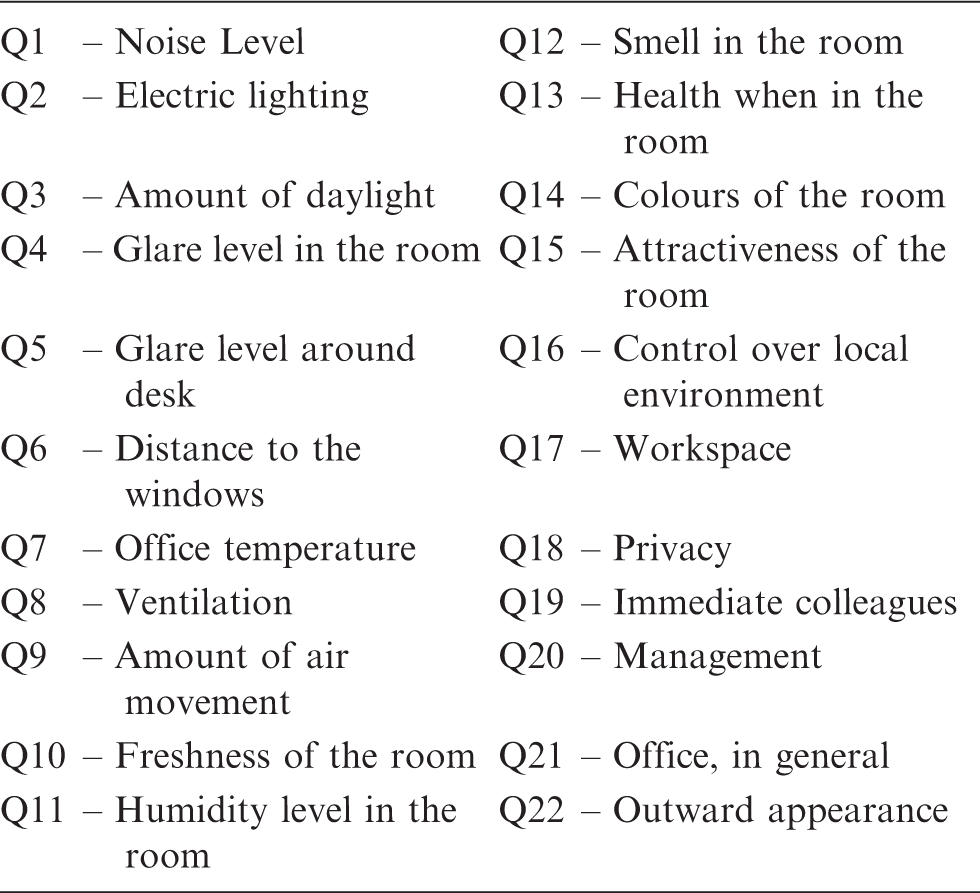
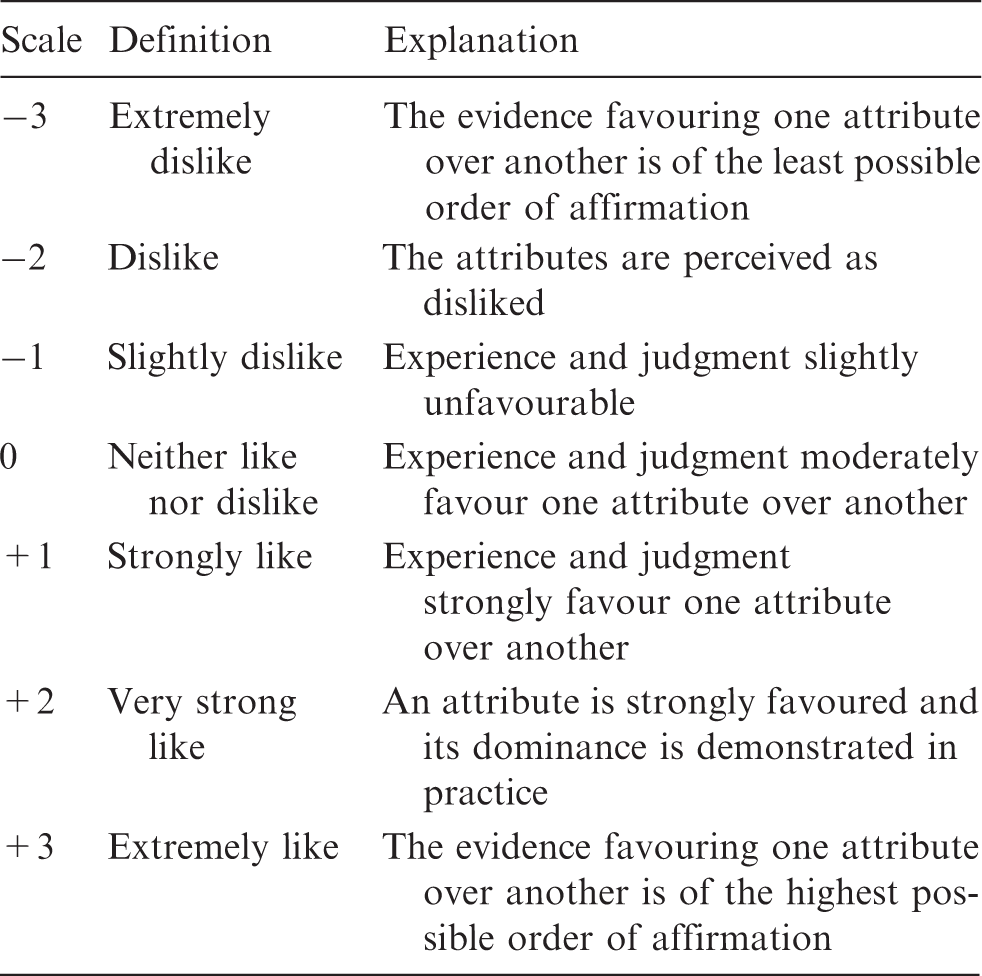
Section C used a double Likert scale for the construct of ‘liking’ and ‘importance’ of a number of factors relating to the indoor environment and organization. The seven-point scale for ‘like’ and ‘dislike’ used in the questionnaire is as shown below:
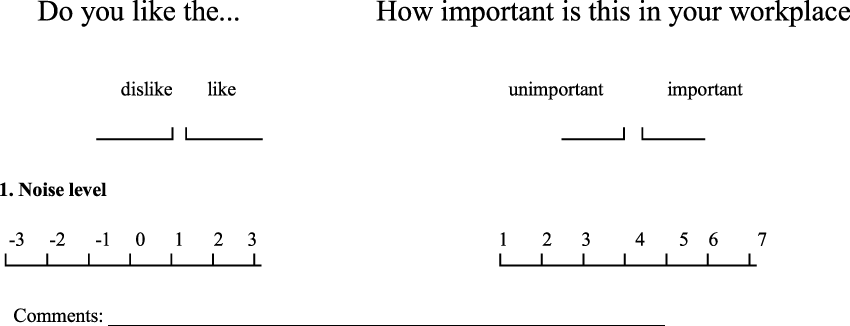
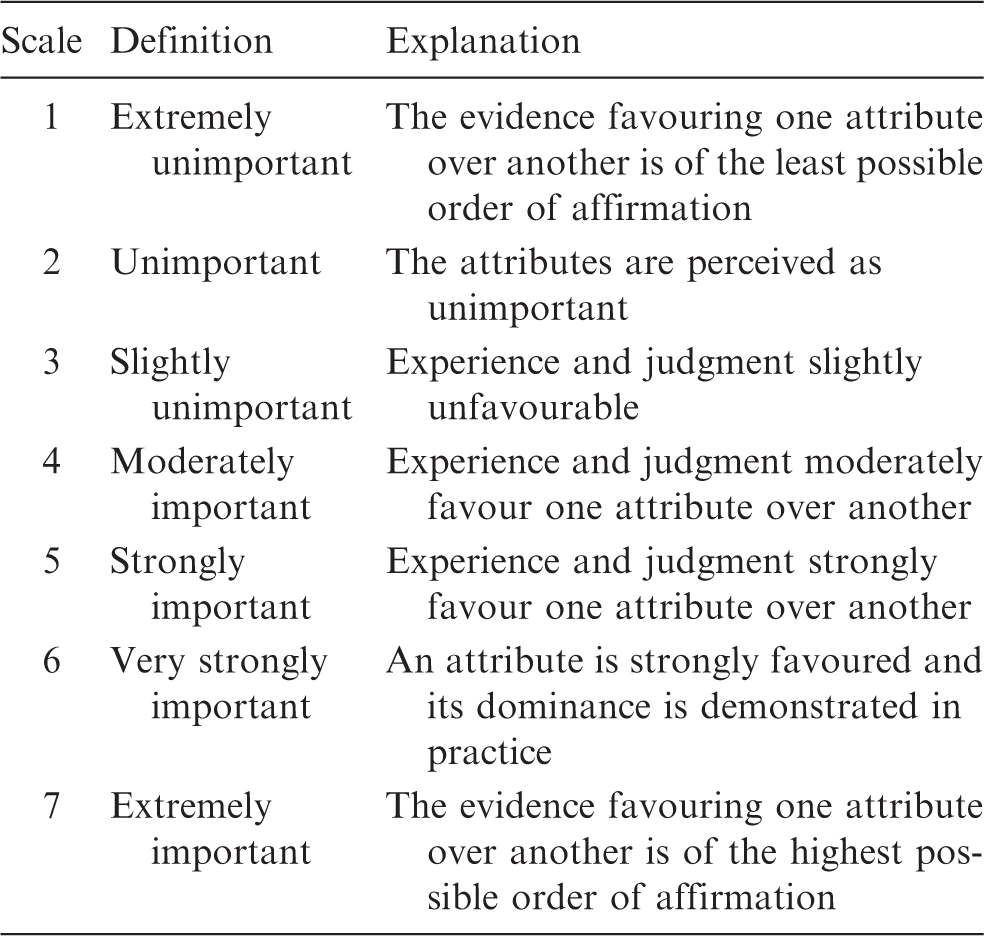
The questionnaire consists of both occupants’ ratings of their satisfaction with the internal environment and their ratings on how important they find these environmental conditions. The first part of the analysis is to find the satisfaction score. The satisfaction score of a building (an overall rating for a building’s indoor environment) can be determined using equation (1)22,27,28

The second part of the analysis provides a graphical representation of the totals for each answer. This is called a fingerprint, which normalizes each question to a score between +100% and −100%,22,27,28 as described by equation (2) as follows

The third part of the analysis is similar to the second. However, by using equation (3) as given below, a normalized individual score, between +100% and −100%, for each person can be calculated.

Results
Demographic profile of occupants
Building occupants’ information.
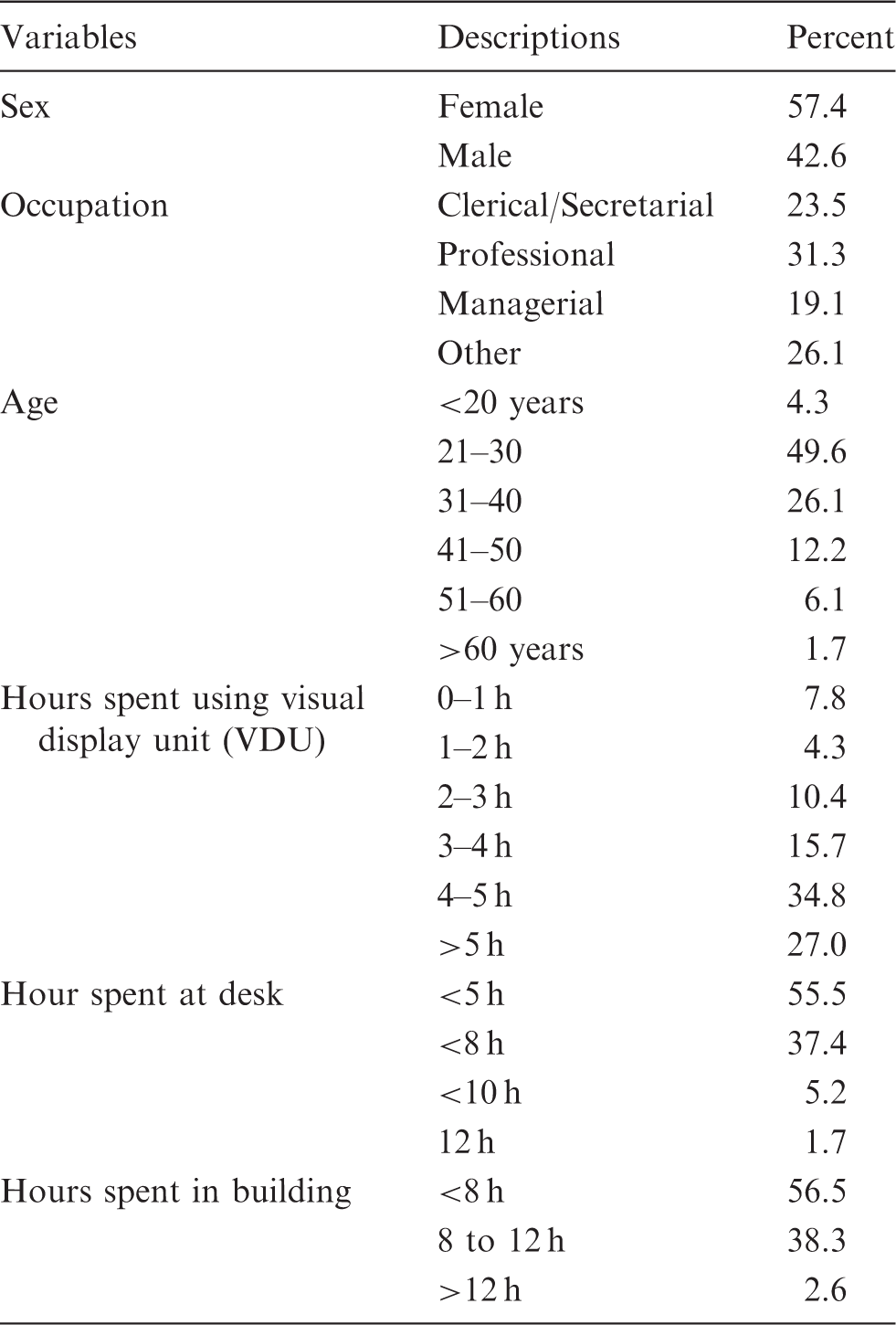
The findings of this study revealed that the majority of respondents are professional females (57.4%) aged between 21 to 30 years old. Most of these respondents stay in the building for less than 8 h but spent most of their time using visual display unit (VDU) for around 4–5 h per day.
Satisfaction levels of occupants
The audit satisfaction score revealed that the majority of occupants are satisfied with their indoor environments as shown in Figure 1. Occupants who are very satisfied with their office environment gave a score of +1.27 (highest positive score). In contrast, occupants who are not satisfied with the distance from the window gave a least positive score, +0.54, followed by glare level in the room (+0.55) and glare level around desk/VDU (+0.57). The lowest ranking of all satisfaction attributes are related to glare. Thus, the glare level is an important consideration in determining building occupants’ satisfaction and comfort. Providing an optimum and good environment is essential to increase the productivity of occupants, as majority of respondents spend almost 8 h a day in their building.
‘Importance’ factors of IEQ
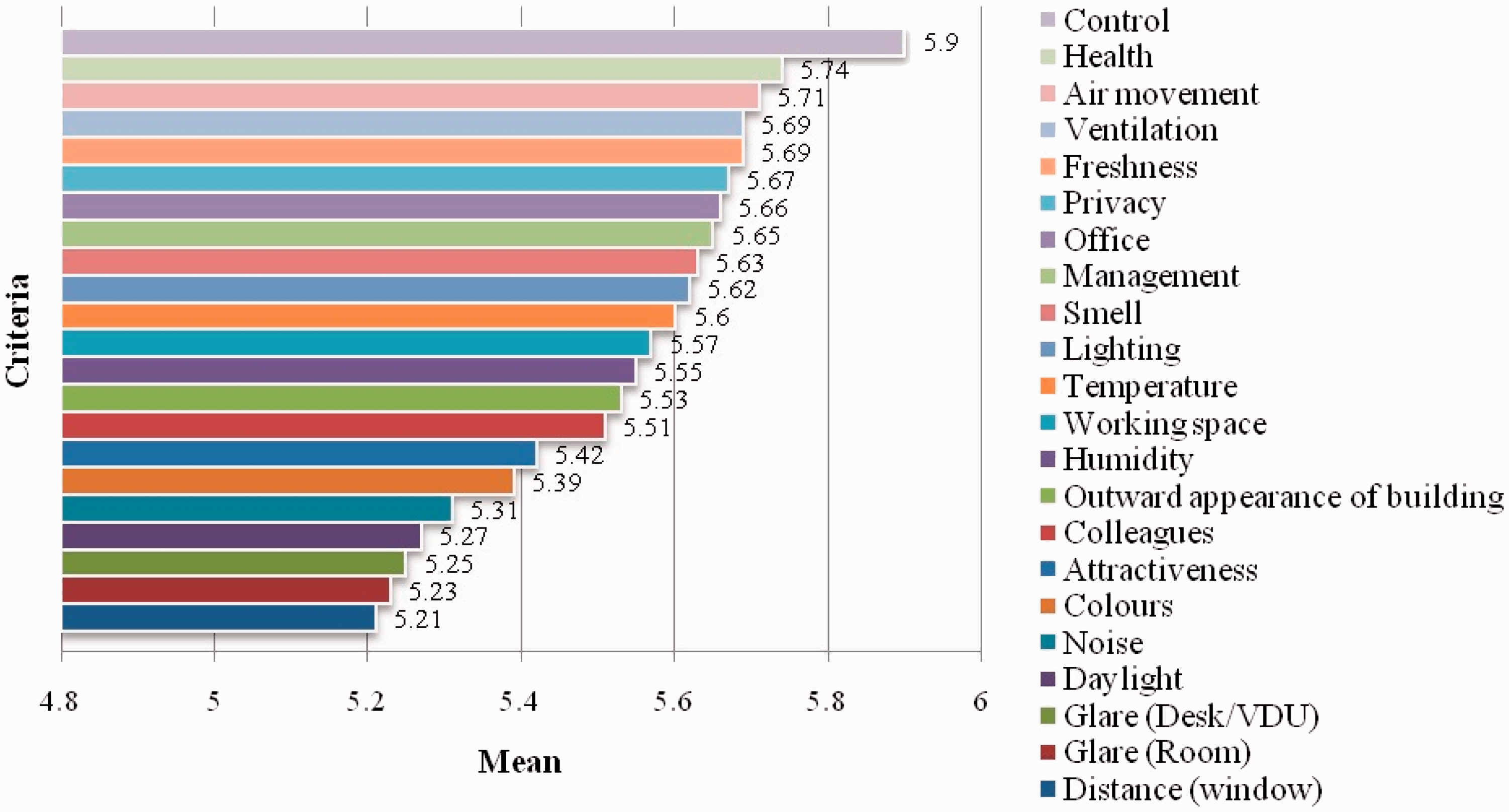
Figure 2 illustrates the ranking of IEQ factors according to building occupants’ perceived level of importance. The distance from the window was by far the least important factor, followed by room glare, desk/VDU glare and daylight. The glare level may result from the lighting and being carefully designed for VDU use. The most important factors are control over the environment, health, air movement, ventilation and freshness. These results suggest that the environment and ventilation systems of the indoor environment are critical to ensure the comfort of building occupants.
Occupant satisfaction score. Importance factors of occupants score.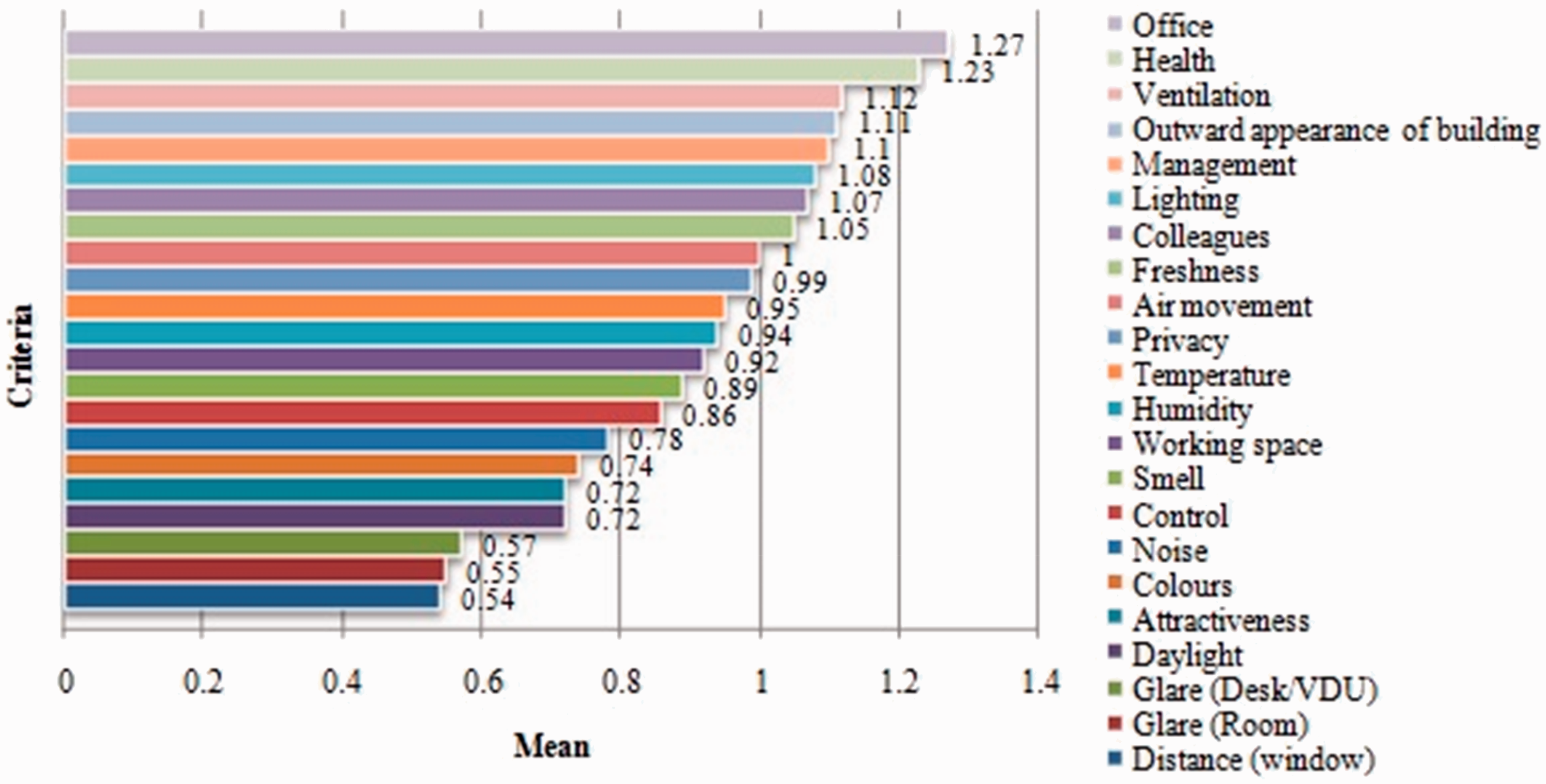
Comfort level of occupants
The comfort level of occupants was measured using a 7-point Likert scale. Factors considered in identifying comfort level include: aesthetics, relaxing, colour, brightness, glare, draught, heat, noise and dryness. Figure 3 illustrates comfort levels of male and female respondents, showing that both male and female respondents are in the comfort zone, since the mean values of all elements are above 3.00. The respondents are therefore satisfied and comfortable with all aspects of their current room environment.
Comfort level.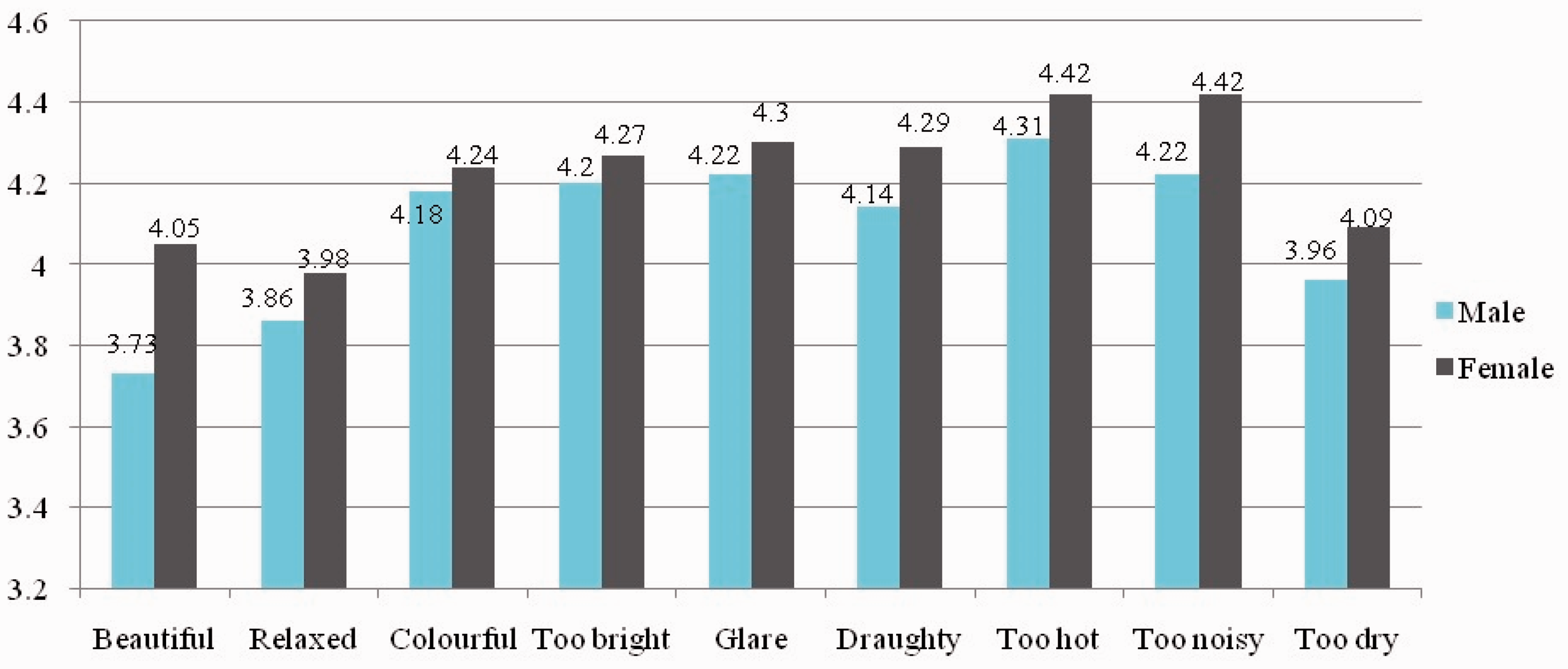
Factor analysis
Grouped variable according to factor loading.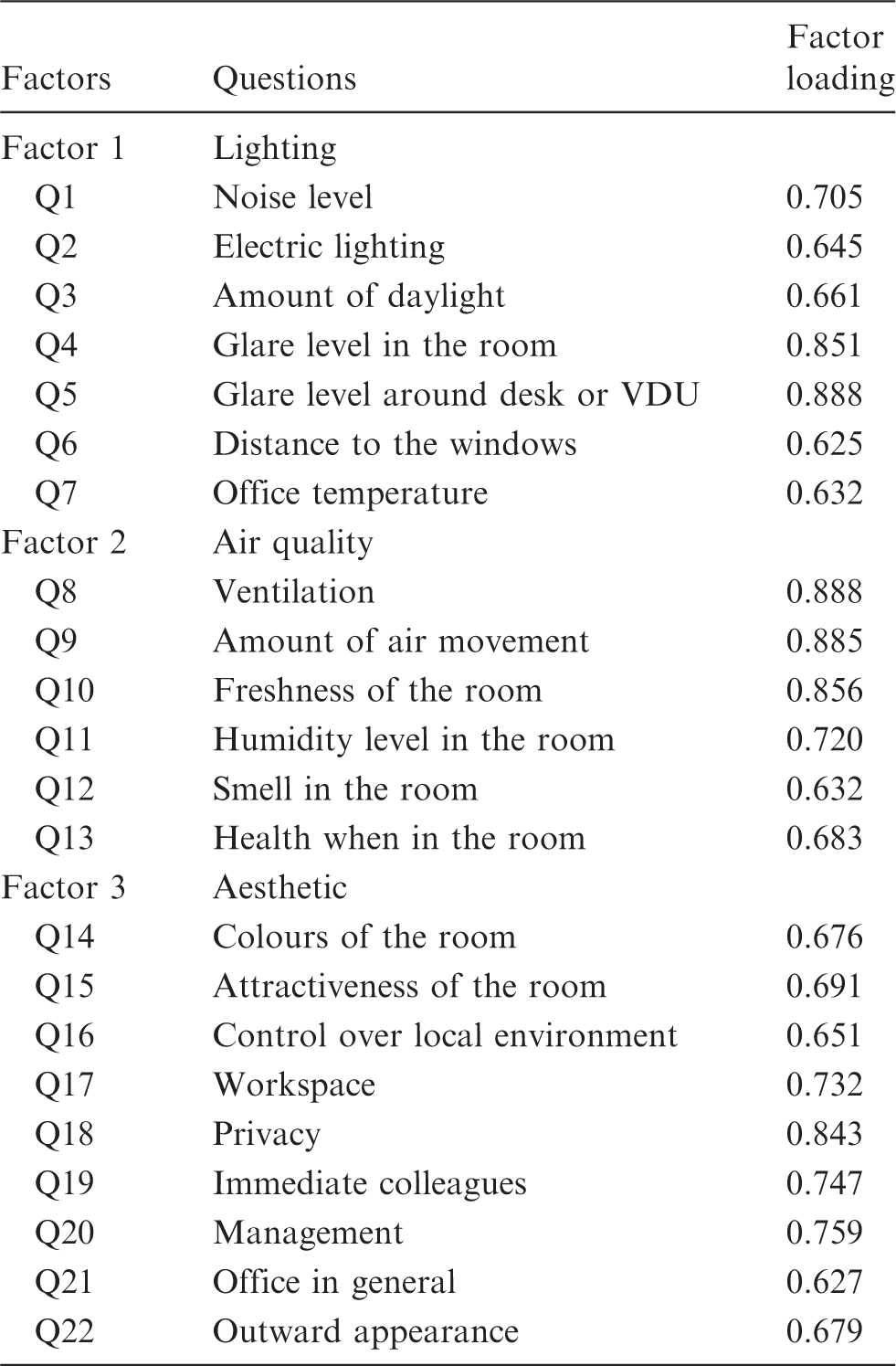
Relation between IEQ and occupants’ level of satisfaction
Three factor scores were generated from occupants’ responses, using the regression analysis.
Assessing the impact of IEQ on occupants’ satisfaction
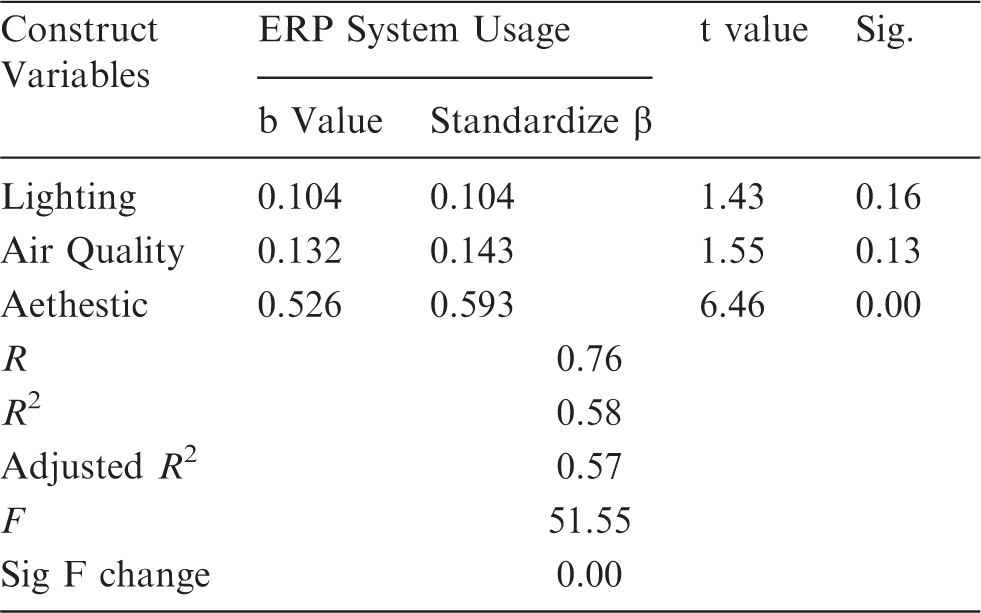
The majority of the variation in occupants’ satisfaction (58%) was accounted for by the IEQ lighting, air quality and aesthetics. The standardized β values also explain the importance of the socio-psychological factors in the model used in this study. It gives a measure of the contribution of each independent variable to the model. The findings in Table 4 shows that aesthetics is the most influential factor for occupants’ satisfaction (β = 0.593, t = 6.46, p < 0.05) while lighting and air quality did not significantly influence satisfaction within the building.
Influence of indoor environment quality on building occupant’s level of satisfaction.
Association of indoor environment quality and occupant’s satisfaction.
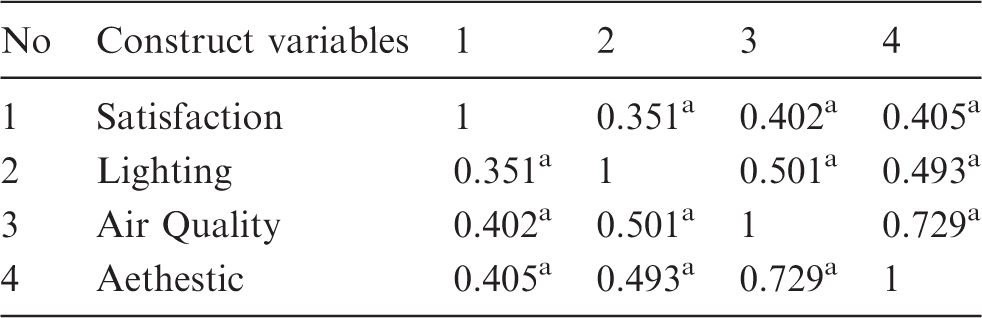
Correlation is significant at the 0.01 level (two-tailed).
Discussion
Our research findings revealed that the indoor environmental factors that could contribute to occupants’ satisfaction consist of lighting, air quality and aesthetic environment. These classifications were based on the factor analysis done with 22 attributes of the indoor environment. This is in line with research carried out by Groth, 29 which highlighted the concept of the indoor environment including all aspects of the relationship between occupants and contents of a building, as well as their surroundings, which can be considered as climatic and non-climatic aspects of indoor environment.
This study found that occupants were less satisfied with the distance from window, glare level in the room and glare level around desk/VDU. Most occupants spend almost 8 h a day in the building, so the glare level is very vital. The dissatisfaction among occupants was due to the low level of glare and distance from window. Occupants spend a lot of time inside buildings, where physical conditions could influence their wellbeing and indirectly influence their performance and productivity. The respondents ranked control over the environment, health, air movement, ventilation and freshness as important factors of IEQ. These findings support the previous study where important IEQ factors for occupant satisfaction were the amount of space available for individual to work, noise level and visual privacy. 7 In terms of comfort level, respondents were satisfied with the condition of their ‘current rooms’. In short, occupants were comfortable with the appearance, serenity, colour, brightness, noise and temperature of their building or their room.
This study found a moderate positive relationship between IEQ attributes and occupants’ satisfaction with their buildings. The extent of the influence and relationship between these attributes could be impacted by gender and type of respondents and by duration of stay in the building 25 (Choi et al. 30 ). The duration of stay in the building could also influence the relationship between these attributes. The factor of adaptation could affect responses given in study. The level of satisfaction with the IEQ condition among occupants in their buildings is different according to the duration of their stay. In addition, Agha-Hossein et al. 31 pointed out that employees’ self-reported productivity, well-being and enjoyment at work increased with a higher level of satisfaction towards work environment. This means that the work environment could significantly influence the productivity and performance of building occupants. Thus, managers in organizations should provide a good working environment to ensure the greatest satisfaction level among occupants in their buildings. All IEQ factors should be assessed in order to provide comfort and satisfactory conditions for all occupants in their buildings. On the other hand, further studies are needed to ensure that occupants’ level of satisfaction would be consistently maintained.
Conclusion and policy implications
The assessment of occupants’ satisfaction towards IEQ in buildings is critical because it can affect occupants’ health, comfort, performance and productivity. This study highlighted the need for an assessment of IEQ satisfaction among occupants. The assessment acts as a pioneer in assessing indoor environment problems based on human’s view and perception. Indoor environment study is essential in order to satisfy requests linked to critical functions of occupants because most people spend their time living inside buildings rather than outdoor. The study of IEQ is complex and made up of many factors, which are intricate, inter-linked and often difficult to disentangle and study.
The paper presents the comparison of results from the questionnaire survey. The satisfaction of occupants is affected by the comfort level of the building environment. This study found that occupants are less satisfied with daylight, glare levels in the room, glare level around desks/VDU, and distance from the window. Thus, interior designers should take note and due cognizance of these in order to maximize occupants’ level of workspaces. Occupants who are satisfied with their overall working environment would have improved job satisfaction, work performance and productivity. In conclusion, occupants’ level of satisfaction depends on their satisfaction with elements of the indoor environment, but perceptions can vary depending on individual characteristics.
In addition, IEQ can also contribute to energy saving. Sarbu and Sebarchievici 32 noted that the energy consumption of buildings depends on the criteria used for the indoor environment (temperature, ventilation and lighting), building design and operation. The design of rooms can reduce energy consumption and influence comfort levels.
IEQ is an important aspect of the discourse on sustainability of buildings. It is one of the assessment criteria for Green Building Index (GBI), which is implemented in Malaysia, and in which IEQ accounts for 21% of a total of 100%. IEQ is the second highest contributor after energy efficiency. Other constructs such as air quality, thermal comfort, lighting, visual and acoustic comfort are evaluated in order to achieve green building recognition in Malaysia. Elements such as day lighting, daylight glare control and lighting levels are evaluated under lighting. Thus, the satisfaction level with all factors are essential in ensuring that buildings could operate in a sustainable way, and that building occupants could perform well with optimum overall surrounding conditions. Factors suggested in this research can be applied for the GBI index evaluation to improve the health and well-being of occupants and their performance in buildings
Practical implication
This study was conducted in order to identify building occupants’ needs and satisfaction and to address key issues relating to their level of satisfaction. It is suggested that all actors, including designers, engineers, developers and facility managers need to be cognizant of factors identified in the study as these actors are directly involved in building and operation processes. This study has shown that building occupants’ level of satisfaction with IEQ can have a significant impact on creating changes needed to improve a building’s environment. It provides lessons and feedback for owners and relevant parties involved, directly and indirectly, in environmental improvement work. In addition, findings from this study could empower end users and provide a benchmark to identify building design and its environmental management to meet occupants’ needs. The study has also identified a number of issues that could lead to the disruption of building performance and deterioration of buildings.
Further studies can focus on understanding on differences and association between factors that impact occupants’ level of satisfaction, including differences in gender, type of occupants and duration of stay in the building as they relate to IEQ attributes. Exploring whether a variable is causally linked or different to a particular IEQ attribute can provide a richer and better understanding of differences between IEQ and occupants’ level of satisfaction. Therefore, these findings and knowledge can lead to further improvements in the indoor environment of buildings.
Footnotes
Authors’ contribution
SNK designed/modification of research instrument and performed, analysed data and wrote the main paper; CE supervised the project, performed data collection, analysed data and wrote the paper; NM administered the data collection, assembled input data, analysed data and wrote the paper; EMAZ gave technical support, conceptual advice, supervised its analysis and wrote the paper; SJLC analysed and interpreted the data, performed major upgrading and wrote the paper; NFA gave technical support, performed major upgrading and wrote the paper.
Declaration of conflicting interests
The author(s) declared no potential conflicts of interest with respect to the research, authorship, and/or publication of this article.
Funding
The author(s) disclosed receipt of the following financial support for the research, authorship, and/or publication of this article: The authors gratefully acknowledge the financial support of the High Impact Research (HIR) grant, no. UM.C/625/1/HIR/ASH/013, obtained from the University of Malaya.