







Abstract
Information about indoor conditions of classrooms in Qatari schools is very scarce and availability of indoor air quality (IAQ) data is important as children are vulnerable to health hazards and spend long times in classrooms. Therefore, IAQ was investigated in 16 mechanically ventilated schools in Qatar during the winter season. Parameters such as temperature, relative humidity, carbon monoxide (CO), carbon dioxide (CO2) and particulate matters (PM10 and PM2.5) were measured indoors and outdoors simultaneously. High indoor CO2 and PM concentrations were found in many classrooms and exceeded the ASHRAE standard and US-EPA air quality standards as there are currently no established IAQ standards in Qatar. The mean indoor CO2 concentration in all classrooms was 1776 ± 887 ppm with mean indoor/outdoor ratio of 3.89 ± 2.03. The mean indoor PM10 and PM2.5 concentrations were 93.2 ± 42.4 µg/m3 and 60.1 ± 28.8 µg/m3, respectively. High indoor PM concentrations were found to be highly influenced by outdoor levels. Mean indoor/outdoor ratios for PM10 and PM2.5 in all classrooms were 0.87 ± 0.43 and 0.80 ± 0.34, respectively. The current study also identified many factors associated with increased indoor levels of PM. According to results of this study, some recommendations were suggested to reduce exposure of school children to high indoor levels of these pollutants as well as to provide comfortable learning environments.
Introduction
Indoor air quality (IAQ) has become an important issue to scientists and the public in recent years as it considerably contributes to the total personal exposure and has an effect on human health.1,2 Most people including the sensitive group of elderly and children spend more than 90% of their time indoors, so they are more exposed to air pollution indoors than outdoors. 3 IAQ is affected by outdoor air quality, variation and magnitude of indoor sources, adequacy of ventilation, removal mechanisms of air pollutants (chemical decay and surface deposition) and volume of the indoor space.4,5 Indoor exposure can potentially be a greater threat and may cause more harmful health effects than exposure to outdoor air, since indoor concentrations of many air pollutants are often higher than typically encountered outdoors. 6 Exposure to indoor air pollutants was increased due to many factors, such as changes in construction designs and increased energy-efficiency and tightness of buildings, poor ventilation and maintenance, raising indoor pollutant levels through emissions from synthetic building materials and furnishings, as well as increased application of cleaning agents, pesticides and personal care products. 7
Children are more susceptible to air pollutants than adults because they breath higher volumes of air relative to their body weights as their tissues and organs are developing.8,9 Schools are considered to be one important indoor environment where good indoor environmental quality (IEQ) should be maintained in order to provide a healthy and comfortable learning environment. IEQ factors including indoor pollutants and thermal conditions in schools are known to have a great influence on health, performance, attendance and comfort of students.10,11 Children spend more time in schools than in any indoor environment other than homes (i.e. most of daytime and up to 30% of their time in schools); schools can therefore contribute substantially to children’s daily exposure to air pollutants. 12 Indoor air pollution could cause both short- and long-term health problems for students and teachers as well as degrade the pupil’s learning environment and comfort.13–15 IAQ in schools depends on many factors including ventilation efficiency, frequency of cleaning and area of classrooms in relation to number of students.16,17 Other factors including characteristics of buildings (e.g. design, location, ventilation, etc.) and the status of ambient air quality are also seen to be relevant.18–21 In many developing countries, shortages of funding could also lead to inadequate maintenance and renovation of facilities.
Many studies have revealed that school air may contain a wide range of air pollutants, which constitute a great risk to the health of children.10,22,23 Among these indoor air pollutants, there is an increasing interest in the measurement of particulate matter (PM) concentrations. Measurements of PM10 (particulate matter with aerodynamic diameter less than 10 µm) and PM2.5 (particulate matter with aerodynamic diameter smaller than 2.5 µm) in schools have been conducted and published in many recent studies.24–28 These studies have shown that there is a growing evidence of relatively high concentrations of particulate matter in classrooms as a result of inadequate ventilation particularly in winter seasons, inadequate cleaning of surface dust and dust re-suspension due to children’s indoor activities. During the transport of air pollutants from outdoor to indoor, filtration can be an important factor on IAQ. In naturally ventilated buildings, filtration is rare and ventilation may increase exposure to PM if the source is outdoors. 29 Also, ineffective filtration in mechanically ventilated buildings may increase indoor PM concentrations with increasing ventilation if outdoor air is polluted.30,31 Elevated levels of particulate matter in classrooms can affect the health of exposed children.32,33 However, nothing is currently known about IAQ in schools of Qatar. This is due to the scarce studies available in the literature on air quality in Qatar in general and IAQ in particular. The current study aimed to assess the indoor concentrations of PM10 and PM2.5 at a number of schools in Qatar and the relationship with outdoor levels as well as to determine influencing factors for these health-related PM fractions. The study also aimed to measure temperature and relative humidity (RH) as important comfort parameters, CO and CO2 levels in the classrooms and suggest, if required, some recommendations to improve the IAQ and protect health of children attending these schools.
Materials and methods
Selected schools
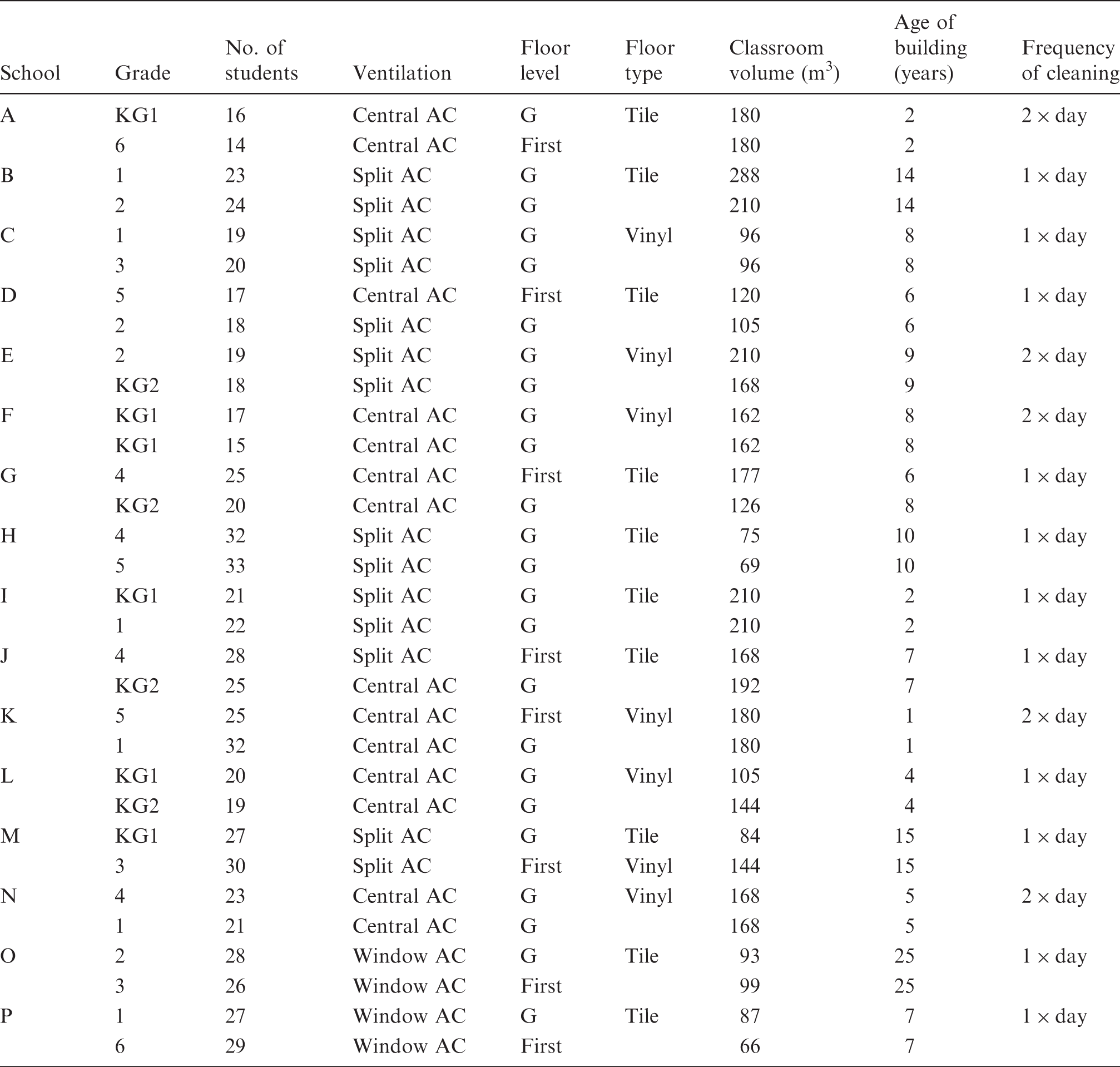
Indoor and outdoor air samples were collected from 16 randomly selected schools during the period from December 2015 to March 2016. The selected schools are all located in urban residential areas of three municipalities including: Al Wakra (school A), Doha (schools: G, H, J, K) and the rest in Al Rayyan municipality, with different distances from major traffic roads ranged from 30 to 750 m. Figure 1 shows the municipalities of Qatar and the geographical distribution of the 16 schools. The age of school buildings in which the selected classrooms exist varied from 1 to 25 years old. For each school, two classrooms were selected to perform air measurements with a total of 32 classrooms during the study period. The floor areas of these classrooms varied from 22 to 96 m2, with heights ranging from 2.5 to 3.6 m. The selected classrooms were for kindergartens (KG1 and KG2) with children’s age ranged from 3 to 5 years old, as well as for primary level (grades 1–6) with children’s age ranged from 5 to 12 years old. The number of pupils in all surveyed classrooms ranged from 14 to 33. The selected classrooms were located either on ground floor or first floor and the type of writing board was whiteboards using markers in all classrooms. The classrooms were all mechanically ventilated using air conditioning (AC) systems where doors and windows were kept closed during teaching hours. Floors in all studied classrooms were either of vinyl or ceramic tile for the purpose of easy cleaning, which was performed either once a day (before or after school hours) or twice a day (before and after school hours). In each classroom, air measurements were conducted for 5 h (from 8:00 am to 1:00 pm) during one school day. Information on the general conditions in the surveyed classrooms was collected using a pre-prepared standardized form and is listed in Table 1.
Geographical distribution of the 16 surveyed schools in Qatar. Main characteristics of classrooms in each school.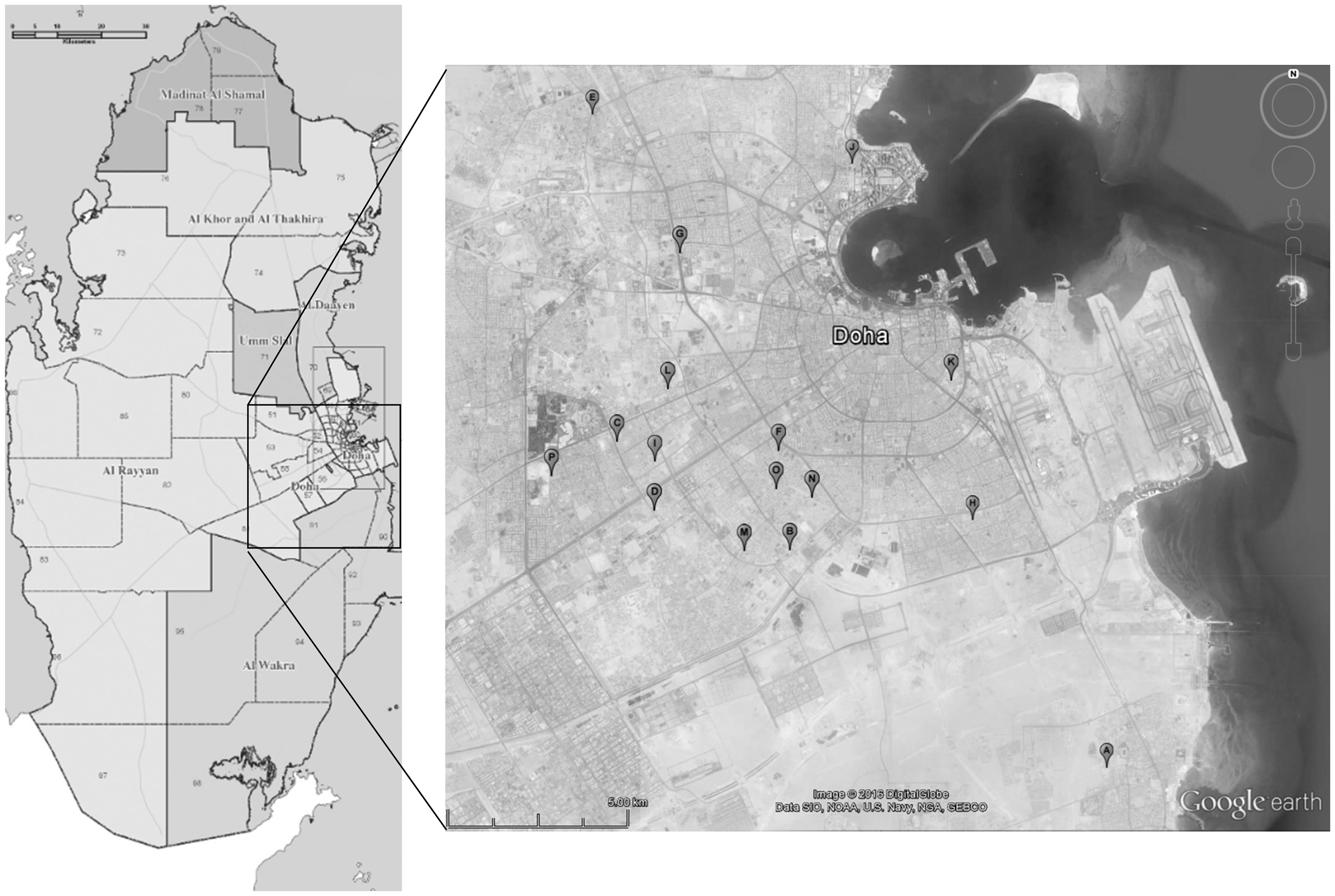
Sampling and analysis
Two portable Q-Trak monitors (model 7575–X; TSI Inc., Shoreview, MN, USA) were used simultaneously to monitor the indoor and outdoor temperature, RH, CO and CO2 concentrations. The monitor is able to detect CO2 levels based on the mechanism of non-dispersive infrared (NDIR). It is also equipped with a thermistor and a thin-film capacitive sensor for temperature and RH measurements, respectively. Furthermore, this monitor is provided with an electro-chemical sensor for CO detection. The two monitors were programmed for a 1 min data logging interval. Multipoint calibration of the Q-Trak monitors was performed by the manufacturer for each parameter. In addition, zero and span checks were performed before field measurements. Also, indoor and outdoor samplings of PM2.5 and PM10 were conducted simultaneously using the Marple PM2.5 and PM10 environmental monitor samplers, respectively (model 200 Personal Environmental Monitor (PEM); MSP Co., Minneapolis, MN). 34 PM2.5 and PM10 were collected on 37-mm diameter Teflon membrane filters (2 µm pore size) at a flow rate of 0.6 m3/h. Flow rates were monitored at the start and end of each sampling period with a calibrated rotameter. Particle bounce was controlled by applying mineral oil coating on the surface of the impaction plates. Before weighing, all filters were conditioned in a desiccator at least for 24 h in a controlled temperature and RH room. Before and after sampling, gravimetric analysis was performed to both blank and sampled filters using a microbalance (Mettler Toledo AG245; Mettler-Toledo Inc., Columbus, OH) (readability 0.01 mg), where each filter was weighed 3 times and average values were calculated. Unexposed blank filters were used to eliminate weighing errors produced by differences in temperature and humidity between weighing. Filter assembly and disassembly were performed with great care to avoid particle loss or sample contamination prior to the final weighing.
The sampling and measuring position in each classroom was opposite to the white board at a distance of about 1 m inward from the centre of the back wall, and around 1 m above floor level in order for the measurements to occur in the breathing zone of a seated pupil. 35 This was chosen as a typical location inside the classroom in order to be away from the door, thus avoiding disturbances and potential interferences from air currents. Similarly, all outdoor measurements were conducted in the school playgrounds at approximately 1 m above the ground. The indoor concentrations of the above air pollutants were measured while classrooms were occupied. Only one pair of air samplers was used in this study due to space limitations in these classrooms as well as to avoid any inconvenience to both the staff and students. Prior to the sampling campaign, parallel (side-by-side) testing of paired samplers was performed in the lab for the verification or correction of the calibration factors, which were then used to scale the readings to give true results.
Statistical analysis
All statistical analyses of data were carried out by Microsoft Excel and Statistical Package for Social Sciences (SPSS) for Windows, using two-tailed tests and a 5% level of significance (i.e. statistical significance refers to p < 0.05). Statistical tests were applied after description of the distribution of investigated parameters. Correlations among measured air pollutants as well as between indoor levels of air pollutants and other influencing factors were analyzed by Spearman’s rank correlation test. Differences in measured indoor PM concentrations by floor covering (vinyl vs. ceramic tile), floor level (ground vs. first floor), frequency of cleaning (once vs. twice per day) and academic grade (two categories) were tested by the Wilcoxon rank sum test.
Results and discussion
Temperature, RH, CO and CO2 levels
Temperature, RH, CO and CO2 levels in indoor and outdoor air of target classrooms.
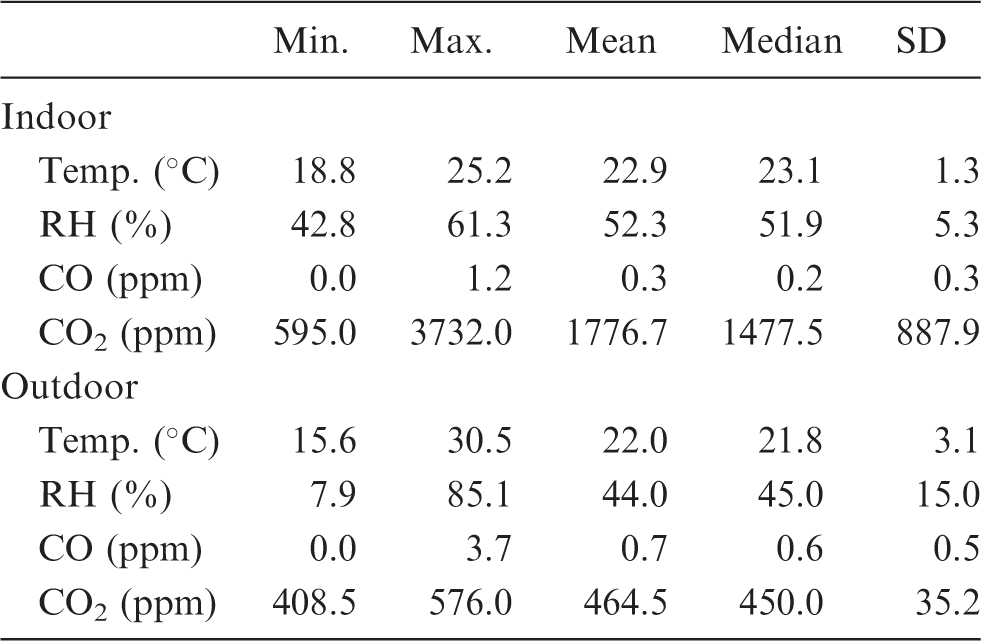
The ANSI/ASHRAE Standard 55-201336 specifies the combination of indoor environmental and personal factors that produce acceptable thermal conditions to a majority of occupants within a space. Assuming slow air movement and 50% indoor RH, the operative temperatures recommended by ASHRAE range from 20.0℃ to 24.0℃ in the winter season. ASHRAE also recommended that indoor RH be maintained at or below 65% (ANSI/ASHRAE 55-2013). The US-EPA recommends maintaining indoor RH below 60%, ideally between 30% and 50%, to control mould growth. 37 During the monitoring campaign, indoor temperature and RH were not entirely in accordance with international standards and therefore better control of temperature and RH in classrooms is needed to comply with these standards. Furthermore, continuous attention and maintenance of applied AC systems are also required in order to maintain comfortable and productive learning environments. High or low temperatures make students less able to concentrate, restless and less attentive. High or low RH can also be uncomfortable to occupants and create IAQ problems. High RH above 60% can supply sufficient moisture to condense on surfaces and provide wetting of surfaces, which ultimately lead to mould, mildew and other microbial growth, which are associated with allergic reactions and asthma attacks. 38 RH below 30% can accelerate the release of fungal spores into the air, which is associated with occupants’ discomfort and various respiratory problems. Low levels of humidity also cause a decrease of mucous available to the eyes and nose leading to drying of these organs and thus irritation.
The mean indoor CO concentrations were found to be lower than those measured outdoors (Table 2). CO is considered as one of the most characteristic traffic-related air pollutants in urban areas where it is emitted from the incomplete combustion of fossil fuels. CO occurs indoors either directly as a result of emissions from indoor sources (e.g. vented and unvented combustion appliances, tobacco smoke and the burning of incense) or indirectly as a result of infiltration of CO from outdoor air into the indoor environment (e.g. from vehicles in attached garages and major roads nearby). 39 No significant indoor sources of CO were observed in classrooms under investigation. A statistically significant correlation was observed between indoor and outdoor CO concentrations (r = 0.72, p < 0.05), suggesting that the main source of CO was from outdoor sources. The low CO levels (mostly < 1 ppm) may contribute to the good correlation. Distance from major roads correlated significantly with outdoor CO concentrations (r = –0.78, p < 0.01), but to a lesser extent with indoor CO levels (r = –0.53, p < 0.05). The mean indoor/outdoor (I/O) CO concentration ratio was found to be 0.42 ± 0.21. The mean daily indoor concentrations of CO in all classrooms were less than the 1- and 8-h standards set by the United States Environmental Protection Agency (US-EPA) of 35 and 9 ppm, respectively. Similarly, the mean daily indoor concentrations of CO in all classrooms were also less than the 1- and 8-h WHO guidelines of 30.6 and 8.6 ppm, respectively. 39 There are currently no established IAQ standards in Qatar.
For CO2, the mean indoor CO2 concentrations were found to be much higher than those measured outdoors (Table 2). The mean outdoor CO2 concentration of 464 ± 35 ppm was relatively constant except during some occasions of few peaks, likely from traffic emissions or other sources. No significant correlation was found between indoor and outdoor CO2 concentrations at p < 0.05. No correlation was found between indoor CO and CO2 concentrations suggesting that both have different sources of emissions. The mean I/O ratio of CO2 in the observed classrooms was found to be 3.89 ± 2.03 (range: 1.03–8.58; median: 3.35), indicating that the main contributor of CO2 in classrooms is from indoor sources. The American National Standards Institute/American Society of Heating, Refrigerating and Air-Conditioning Engineers, Inc. (ANSI/ASHRAE) Standard 62.1-201340 recommends an indoor level less than 700 ppm above outdoor CO2 concentration in the ambient air, which is typically about 300–500 ppm. The mean indoor CO2 concentration of 1776 ± 887 ppm exceeded this standard. During the measurement period, 78% of the surveyed classrooms did not meet the ANSI/ASHRAE Standard 62.1-2013. Indoor CO2 levels exceeding this threshold can result from high occupancy combined with inadequate ventilation.26,41 A significant correlation was found between indoor CO2 concentrations and the degree of occupancy of a room, the number of pupils per m2 (r = 0.66, p < 0.01). Therefore, high number of pupils combined with small classroom volumes could considerably increase indoor CO2 concentrations. Accordingly, decreasing the number of students, particularly in small classrooms, can reduce indoor CO2 concentrations in schools with crowded classrooms. It is also suggested to increase ventilation and number of breaks between classes to alleviate high indoor CO2 levels.
Indoor and outdoor concentrations of PM
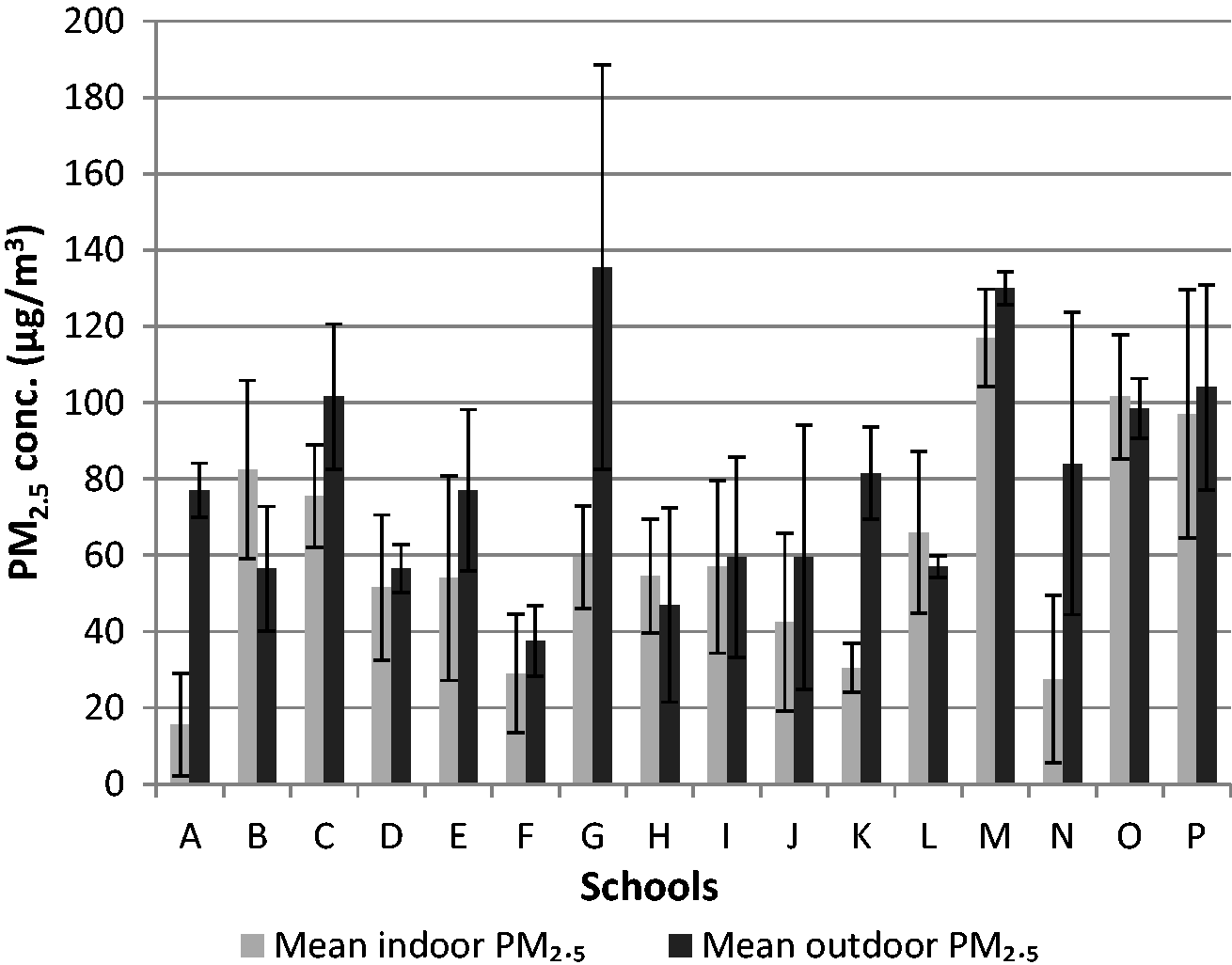
The indoor and outdoor mean daily concentrations of PM10 and PM2.5 in 16 schools are shown in Figures 2 and 3, respectively. Error bars are shown on these figures based on calculation of the standard deviations. Mean indoor concentrations of PM10 and PM2.5 in classrooms were found to be lower than mean corresponding outdoor values. The mean indoor PM10 and PM2.5 concentrations were 93.2 ± 42.4 µg/m3 (range: 28.6–170.4 µg/m3; median: 86.0 µg/m3) and 60.1 ±28.8 µg/m3 (range: 15.5–117.8 µg/m3; median: 55.8 µg/m3), respectively. The corresponding mean outdoor levels were 115.3 ± 40.1 µg/m3 (range: 59.5–184.0 µg/m3; median: 113.0 µg/m3) and 78.9 ± 28.7 µg/m3 (range: 37.5–135.5 µg/m3; median: 77.0 µg/m3). The indoor and outdoor mean levels of PM10 were higher than the recommended US-EPA 24-hr PM10 standard of 150 µg/m3 for only 6% and 19% of the selected schools, respectively. For PM2.5, the indoor and outdoor mean levels were higher than the recommended US-EPA 24-h PM2.5 standard of 35 µg/m3 for 75% and 100% of schools, respectively. The high outdoor levels of PM10 and PM2.5 at some schools including schools C, G, M, O and P with mean values of 164.2 ± 18.9 µg/m3 and 113.9 ± 17.4 µg/m3, respectively, were mainly attributed to the location of outdoor air sampling that was generally in close proximity to the unpaved sandy playgrounds of these schools. Dusty playgrounds in other schools (such as schools: A, E, K and N) were also realized during the measurement campaign. Distance from major traffic roads was not found to correlate significantly with indoor PM10 and PM2.5 concentrations at p < 0.05. The prevailing wind was from the north-west direction during the period of the measurement campaign. Only 19% of the sampling sites were found to be located downwind of major traffic roads, whereas 73% of the sampling sites were located upwind and other directions of major roads. The indoor–outdoor correlations for PM10 and PM2.5 were conducted to show the dependency of indoor particles on their corresponding outdoor ones. This could be influenced by the use of AC systems in the classrooms through the filtration mechanism of the outdoor air as the filters of the air conditioners are used to reduce amounts of PM from entering into classrooms.42,43 However, a statistically significant, but weak, correlation was found between indoor and outdoor concentrations of PM10 (r = 0.39, p < 0.05). A more statistically significant correlation was found between indoor and outdoor concentrations of PM2.5 (r = 0.47, p < 0.01). This is probably due to the increased infiltration of the fine outdoor particles because of their smaller size as well as the fact that smaller PM fractions are less susceptible to re-suspension from settled dust. Moreover, the age of school buildings in which the surveyed classrooms exist was significantly correlated with indoor PM10 (r = 0.52, p < 0.01) and PM2.5 (r = 0.61, p < 0.01) concentrations. This was shown in many previous studies that old schools are more susceptible to direct penetration of outdoor PM than newer ones.44,45 No significant differences were observed between PM10 concentrations measured in classrooms on the ground floor and those measured in classrooms of the first floor. Similar results were also found for PM2.5 concentrations with no significant differences between the ground and first floor levels.
PM10 mean indoor and outdoor concentrations in 16 schools. PM2.5 mean indoor and outdoor concentrations in 16 schools.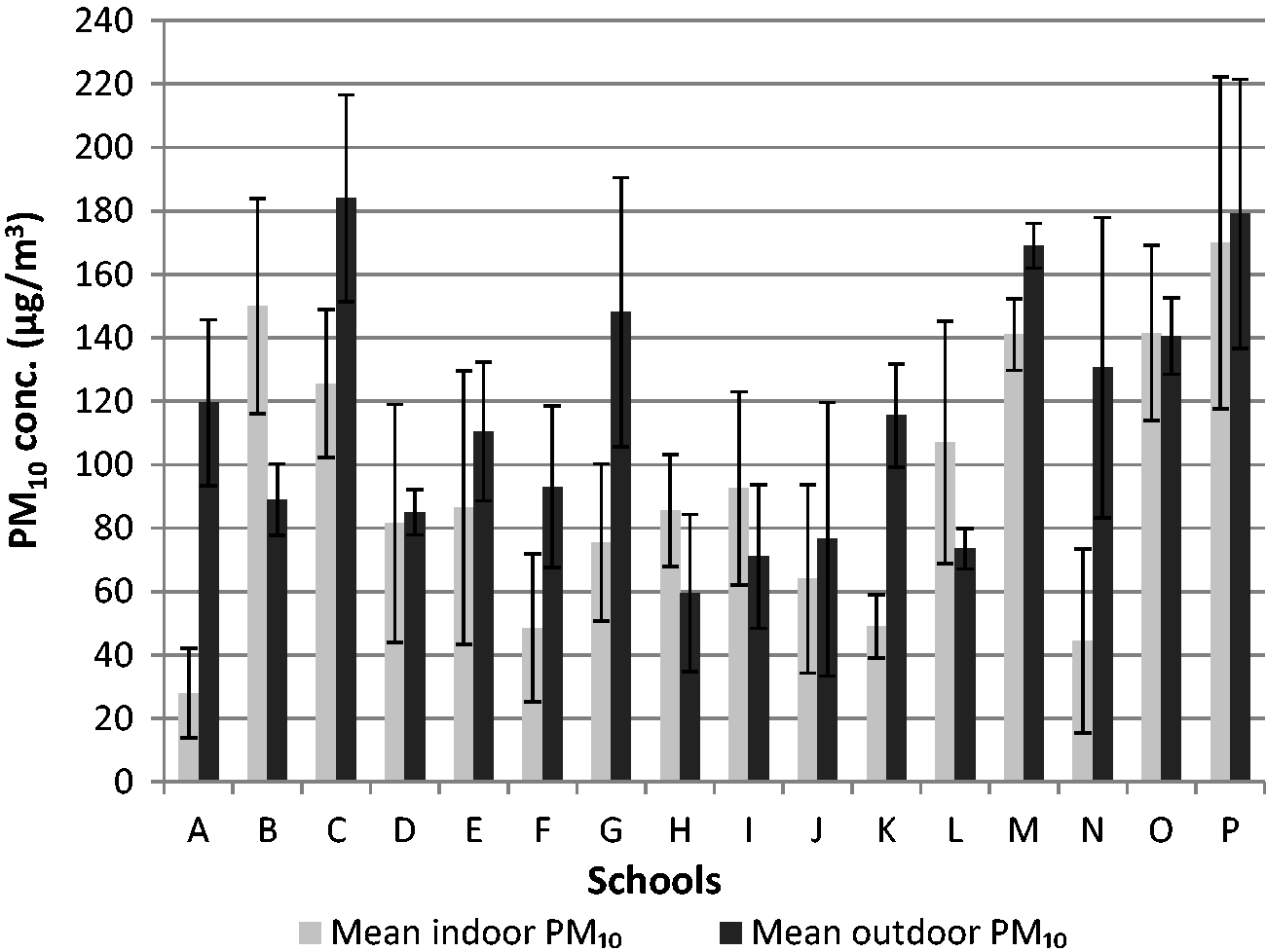
The mean indoor/outdoor (I/O) ratios for PM2.5 and PM10 for all schools are presented in Figure 4. The mean PM10 I/O ratio was 0.87 ± 0.43 (range: 0.23–1.69; median: 0.84). For PM2.5, the mean I/O ratio was 0.80 ± 0.34 (range: 0.20–1.46; median: 0.83). Generally, the PM10 I/O ratios were higher than those for PM2.5. This was observed in a previous study
24
that larger particles have higher I/O ratio (up to 5 times) than the I/O values of smaller particles in the presence of occupants activities. I/O ratios above unity indicate significant contribution from indoor sources and possible PM-generating activities. As shown in Figure 4, five schools with I/O > 1 for PM10 were found (schools: B, H, I, L and O) and four of which (schools: B, H, L and O) also had I/O ratios above 1 for PM2.5. The high I/O ratios in these schools could be as a result of many combined indoor factors including degree of room occupancy, efficiency of filtration system and ventilation rate, and the frequency of cleaning.
Mean I/O ratios for PM2.5 and PM10 in all surveyed schools.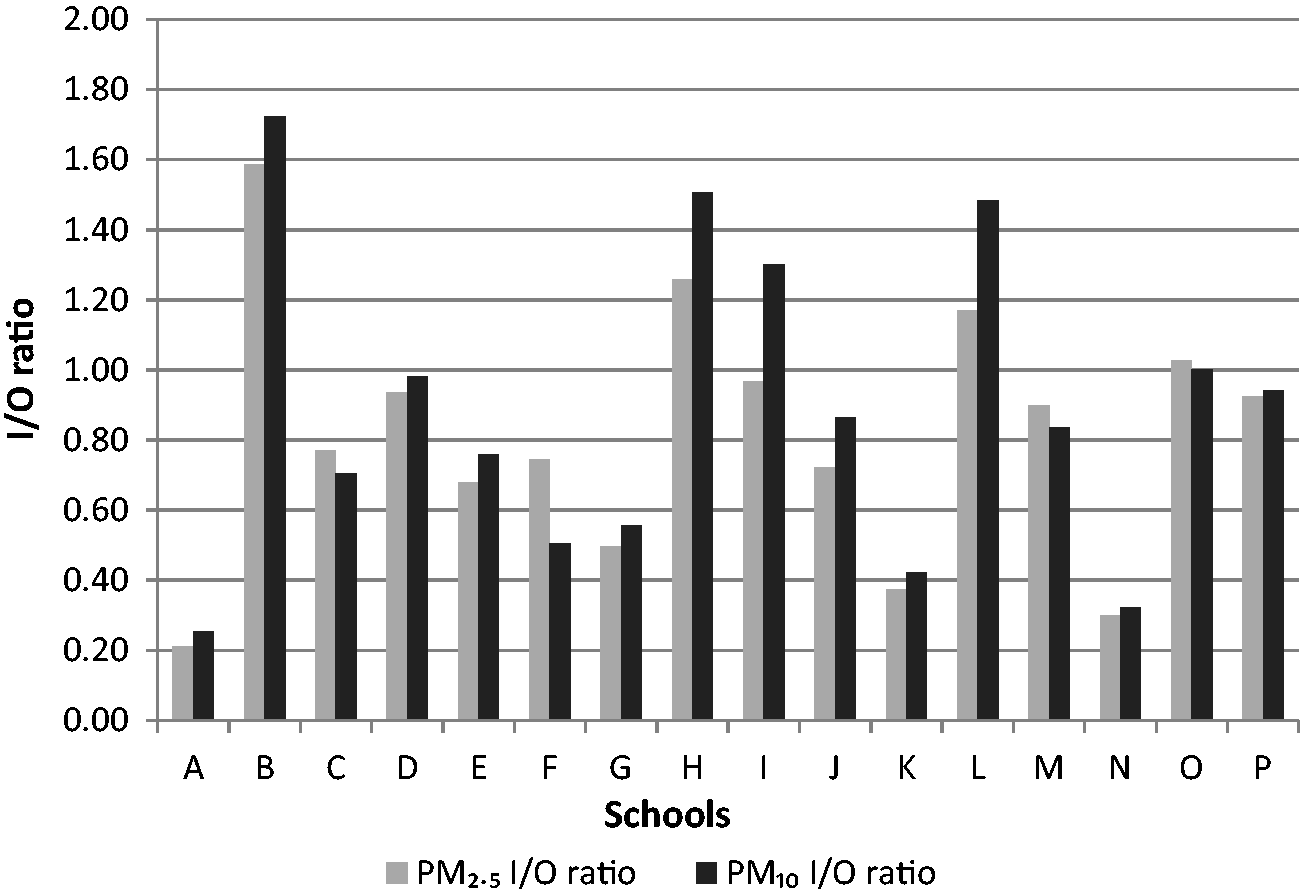
Indoor factors affecting PM levels in classrooms
Mean indoor PM10 concentrations were strongly correlated with mean indoor PM2.5 levels (r = 0.95, p < 0.01), suggesting that both PM fractions originated from similar sources in classrooms. Mean PM10 concentrations measured in classrooms within the same schools were found to be significantly correlated (r = 0.62, p < 0.01) and this intra-class correlation within the same school was significantly higher for PM2.5 (r = 0.69, p < 0.01). The better correlation for PM2.5 than PM10 is because of the higher impact of re-suspension on larger particles than on smaller particles. Accordingly, internal factors within schools play an important role in the classroom levels of PM10 and PM2.5. Classroom volume was found to be significantly correlated with indoor levels of PM10 (r = − 0.36, p < 0.05) and PM2.5 (r = − 0.41, p < 0.05). Occupancy and occupant activities such as movement are important factors that strongly influence the indoor concentration level of airborne PM through re-suspension of previously deposited particles and possible particle generation.46,47 Indeed, significant but weak correlations were found between number of students and indoor concentrations of PM10 (r = 0.43, p < 0.05) and PM2.5 (r = 0.41, p < 0.05). Furthermore, grade level was found to significantly influence the indoor PM levels, where mean PM10 and PM2.5 values in class levels from KG1 to grade 2 were significantly higher than their corresponding values in classrooms from grade 3 to 6. This could be as a result of the intense physical activity of the younger children. Many studies have also revealed that the physical activity of students, particularly with younger children, highly contributes to the re-suspension of sedimented particles.16,26,48 Also, a statistically significant difference of the frequency of cleaning (once vs. twice per day) on the PM10 and PM2.5 indoor levels was apparent. The mean indoor PM10 and PM2.5 concentrations in classrooms cleaned once per day were 112.2 ± 41.2 µg/m3 and 73.1 ±27.4 µg/m3, respectively. In classrooms cleaned twice a day, the mean indoor PM10 and PM2.5 levels were reduced significantly to 51.3 ± 28.3 µg/m3 and 31.3 ±18.9 µg/m3, respectively. This indicates that deposited particles are only partly removed in classrooms cleaned only once per day and this leads, in combination with a large number of occupants in small volume classrooms, to continuous re-suspension of PM from surfaces of classrooms to their indoor air. However, no significant differences were observed between PM concentrations in classrooms with ceramic tiles floors and those with vinyl floor. Moreover, the association of PM concentrations in the classrooms with other indoor parameters including temperature, RH, CO and CO2 levels were also determined. No correlation were reported between indoor PM concentrations and indoor temperature, RH and CO levels at p < 0.05. A significant but weak correlation was found between indoor PM10 and CO2 concentrations (r = 0.51, p < 0.05) as well as between indoor PM2.5 and CO2 levels (r = 0.48, p < 0.05). The higher correlation found between indoor PM10 and CO2 results from the correlation between indoor CO2 and room occupancy, and the relation between room occupancy and re-suspension. This also indicates that insufficient ventilation in classrooms during the winter season reduces removal and dilution of air pollutants and plays a major role in the development of poor IAQ.
Recommendations to reduce indoor PM levels
On the basis of the PM results of the current study, it is recommended to pave sandy playgrounds or use another proper ground cover in some schools (e.g. schools: C, G, M, O and P). Also, thorough and frequent cleaning of the playground areas routinely in all schools is recommended. This could greatly help to reduce both outdoor and indoor PM levels. Furthermore, renovation of old schools such as schools: B, M and O could reduce the infiltration of outdoor PM to the indoor air of classrooms and therefore lower indoor PM concentrations. The use of air cleaners in classrooms could also be another possible mitigation action if the renovation of buildings and the pavement of sandy playgrounds will take long time. Generally, air cleaners should be used to reduce indoor levels of PM when it inevitably occurs at high concentrations. Also, continuous inspection and maintenance of existing AC systems are highly recommended in all classrooms to maintain both effective filtration of outdoor air and efficient ventilation to distribute adequate amounts of air to occupants, in addition to controlling indoor temperature and RH to provide thermal comfort. The results also confirmed the importance of conducting more frequent and thorough cleaning to effectively remove deposited particles and minimize re-suspension. Moreover, reducing the number of students particularly in small volume classrooms as well as in classrooms of low grade levels could also reduce re-suspension of deposited particles. These measures could reduce the exposure of children in surveyed schools to high levels of PM. However, further and more comprehensive IAQ research in schools is needed to confirm findings of the current study, to identify additional determinants of indoor PM levels, to assess the toxic potential on indoor PM and to develop effective actions to improve IAQ in schools. Furthermore, quantitative information on causal relationships between health symptoms and exposures to air pollutants with high potential of causing health problems is necessary for establishment of IAQ standards and for development of cost effective mitigation measures.
Conclusions
The current study presents results of the first IAQ study in 16 air conditioned schools located in three different municipalities of Qatar during the winter season of 2016. Insufficient ventilation is very common during the winter period, which reduces removal and dilution of air pollutants from classrooms and could therefore develop IAQ problems.
Data on indoor air climate parameters (temperature and RH), CO, CO2, PM10 and PM2.5 were collected. Outdoor measurements of these parameters were also measured concurrently. The findings of this study explained the presence of high levels of some measured parameters including PM and CO2 in most classrooms and suggested some corrective actions to reduce exposure of children and staff and improve IAQ in classrooms. High CO2 levels in classrooms were mainly attributed to indoor sources and as a result of high occupancy combined with inadequate ventilation. Indoor PM concentrations were significantly associated with outdoor levels. Additionally, many other factors were correlated with increased PM values in classrooms including increased age of buildings, small classroom volume, lower frequency of cleaning and high indoor CO2 levels. The latter indicates the impact of occupancy on IAQ in classrooms. Also, increased levels of PM in classrooms with high number of students and in low grade levels suggest that the physical activity of students, particularly of younger children, contributes to re-suspension of deposited particles. However, more elaborate future studies are necessary to confirm these findings and to better determine the extent of IAQ problems in Qatari schools. Moreover, effective strategies must be developed to improve IAQ in schools as well as to reduce exposure and health risks of children and staff. Additional research is also needed to monitor relationships between indoor levels of specific air pollutants and prevalence of respiratory symptoms and allergic diseases among school children. It is recommended to take all required actions to establish IAQ standards for schools in order to protect children from harmful exposure and provide comfortable learning environments.
Footnotes
Acknowledgements
Special thanks are due to the students, teachers and managers of all schools participated in this study for their interest and valuable support.
Author’s contribution
Mahmoud M. M. Abdel-Salam is the only contributor for this article.
Declaration of conflicting interests
The author(s) declared no potential conflicts of interest with respect to the research, authorship, and/or publication of this article.
Funding
The author(s) received no financial support for the research, authorship, and/or publication of this article.