







Abstract
A study was conducted to assess the concentration of uranium and dissolved radon in drinking water samples collected from Jalandhar district of Punjab, India. The samples were analysed for dissolved radon using scintillation cell method. Laser fluorimetry was used for measurement of uranium concentration. Correlation analysis of radon and uranium concentrations and salinity and total dissolved solids with uranium was carried out. The uranium concentration in water samples varied from a minimum value of 1.53 ± 0.06 mg m−3 to 50.2 ± 0.08 mg m−3 with a geometric mean value of 14.85 mg m−3. The radon concentration in water varied from a minimum value of 0.34 ± 0.07 kBq m−3 to a maximum value of 3.84 ± 0.48 kBq m−3 with a geometric mean value of 1.46 kBq m−3. Ingestion dose to local population, due to radon and uranium in drinking water, for different age categories, was computed and results are being reported in this paper.
Keywords
Introduction
Radioactive contamination of ground water is a matter of great concern as it could lead to ingestion dose in humans. Uranium, a naturally occurring radioactive element, is important from a point of view of environmental radioactivity as it contributes a number of radioactive elements through its decay chain. Uranium is found naturally in different valance states from +2 to +6 with hexavalent state being most common. 1 It is found in nature in different types of rocks such as granites, sand stones and other mineral deposits. 2 Through the process of leaching from natural deposits, uranium enters the ground water and ultimately reaches the food chain through plants and drinking water. Though the normal concentration of uranium in ground water is reported to be in the range 0.1 to 10 mg m−3, higher concentrations are possible in areas having elevated levels of uranium in rocks and soil. 3 Concentration of uranium in groundwater depends on geomorphological, lithological and geological conditions of the area. 4 Health risks to humans from uranium are twofold: radiation exposure through its decay chain and chemical toxicity. The major contribution of radiation dose in uranium decay series comes from Radon (222Rn) and its short-lived progenies, which is the largest single source of radiation exposure to humans. Of the total radiation received by humans, radon and its decay products contributes 51% through inhalation and 0.21% through ingestion. 5 Due to this reason, past studies had focused on measurement of radon concentration in indoor air in order to assess the inhalation dose. Radon dissolved in water could lead to radiation exposure through ingestion in addition to its contribution to indoor air. 6 Radon in water if accompanied by elevated levels of uranium could lead to significant radiation dose in children and infants. 7 Therefore, a proper assessment of radon and uranium together in drinking water is essential to assess the radiation dose and the associated health risk to public if any. Very few studies have been conducted in India to measure the uranium and radon concentration in drinking water.8–11 In this context, a survey was carried out to assess the concentration of dissolved radon and uranium in drinking water samples in Jalandhar district of Punjab, India. The survey also assumes significance, since elevated levels of uranium has been reported, in some samples, from adjoining regions of Punjab state in recent studies.12–14
Study area and geology
The study area for this survey, as shown in Figure 1, lies between 30° 59': 31° 37' north latitude and 75° 04': 75° 57' east latitudes. The study area is part of Bist Doab tract, having inter alluvial plain between rivers Sutlej and Beas. The Jalandhar district has tropical and dry subhumid climate. The district has geological formation of quaternary age with recent alluvial deposits.
15
Some parts of the district have undifferentiated aeolian flat sand sheet while the major portion has fertile soil. Ground water is the main source of water supply for rural as well as urban areas.
Map depicting the study area.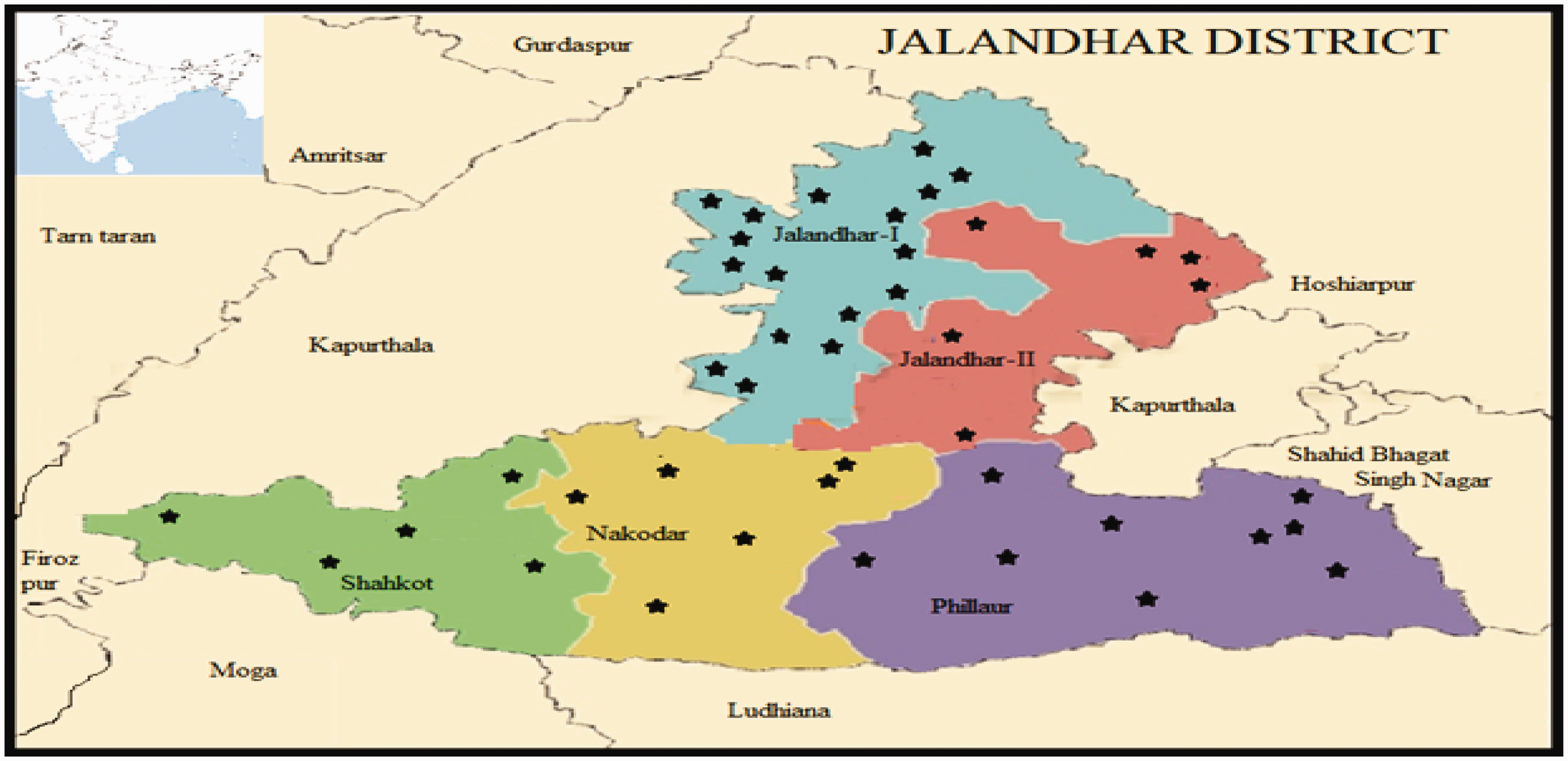
Experimental
A total of 43 water samples, from different sources like hand pumps, tube wells, wells etc. were collected in leak tight bottles. During collection, due care was taken to avoid loss of dissolved radon, by avoiding bubbling. Measurements for pH of collected samples were taken at the sampling site, while measurements for physico-chemical parameters such as salinity, TDS (total dissolved solids) and dissolved radon were performed in our laboratory on the same day. Commercially available standard water testing kit was used for measurement of physico-chemical parameters. After completion of measurements for physico-chemical parameters and dissolved radon, water samples were analysed for uranium using laser fluorimetry. Brief details of experimental procedures adopted for radon and uranium measurements are described below.
Radon measurement in water
A schematic diagram of the experimental set up to measure dissolved Radon in water samples is shown in Figure 2. The set up consists of a water bubbler and a continuous radon monitor, SMART RnDuo (BARC, Mumbai). SMART RnDuo is a commercially available, portable continuous monitor for radon, thoron and gross alpha in air. It is based on the principle of detection of alpha particles by scintillations with ZnS:Ag. The details of detection and measurement principle are discussed elsewhere.
16
The water bubbler was connected to RnDuo as shown. The bubbler kit is capable of transferring major fraction of radon dissolved in water to air volume within 1 min. Before the start of experiment, radon in the set up including detector volume was flushed out for 5 min by operating the inbuilt micropump of the monitor. Then connection was made as shown in Figure 2, and the pump was kept on again for 5 min so that the dissolved radon was transferred to detector volume in the monitor.
A schematic of experimental setup for radon in water measurement.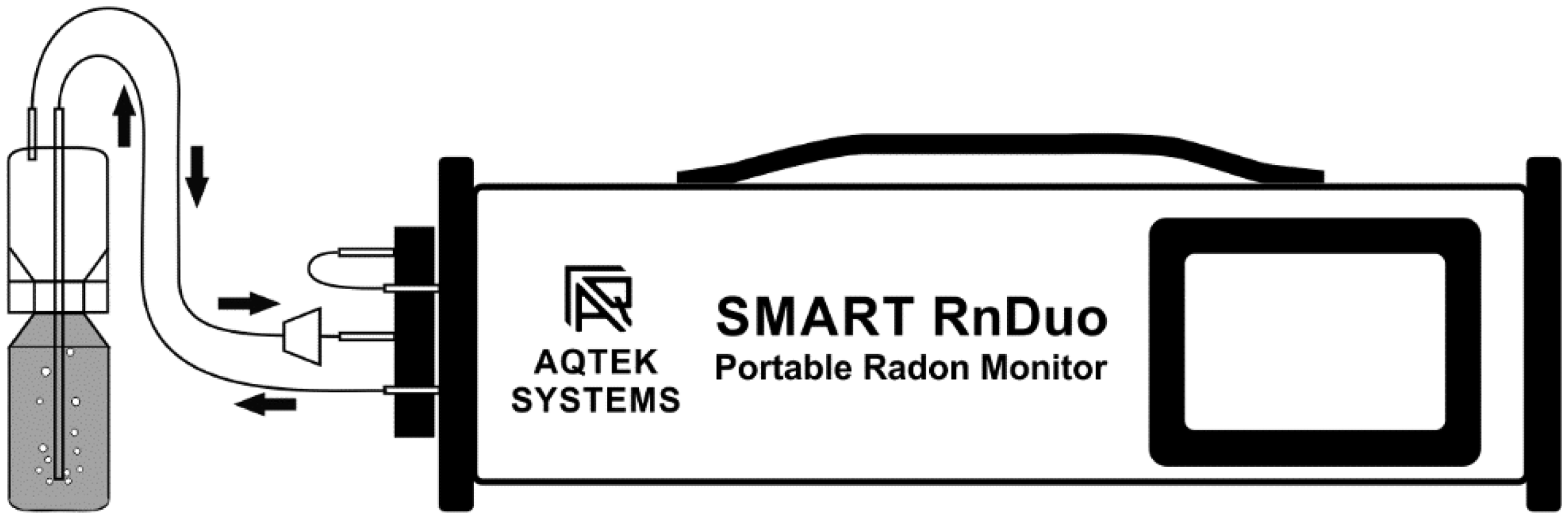
SMART RnDuo was operated in 15 min cycle and the measurement was continued for 1 h. The radon concentration in water was calculated from the concentration measured in air by using equation (1)

Uranium measurement in water
The uranium concentration in water was measured using laser fluorimeter LF-2 (Quantalase, India). The fluorimeter uses, as excitation source, pulsed UV LEDs emitting at 400 nm using suitable filters. The instrument has dynamic range of 0.26 mg m−3 to 1000 mg m−3 and an accuracy of better than 10%. The instrument requires an analyte volume of 6 ml. The set up was calibrated using the standard solution before measurements. Measurements were taken in calibrated fluorescence mode. Details of measurement protocol are described elsewhere. 17
Calculation of ingestion dose
Ingestion dose to local population due to uranium and radon in drinking water has been calculated for different age categories, i.e., for children of age 1 year, 10 years and adults. Different daily water intake for each age category has been considered.
Ingestion dose due to uranium has been calculated using equation (2)

Similarly, ingestion dose due to radon has been calculated using equation (3)

Average daily intake of 1.3 × 10⁻³ m3 has been considered for children of age 1 year. Average daily intakes of 2.1 × 10⁻³ m3 and 2.4 × 10⁻³ m3 have been taken for female and male children of age 10 years, respectively. For adult females and males, values of 2.7 × 10⁻³ m3 and 3.7 × 10⁻³ m3 per day, respectively, have been taken. 3 Dose conversion factors of 2.3 × 10⁻⁸, 5.9 ×10⁻⁹ and 3.5 × 10⁻⁹ Sv Bq−1 have been considered for calculating the ingestion dose due to radon for age categories of 1 year, 10 years and adults, respectively. 18 Similarly, dose conversion factors of 1.2 × 10⁻⁷, 6.8 × 10⁻⁸ and 4.5 × 10⁻⁸ Sv Bq−1 have been taken for calculating the ingestion dose due to uranium for the three age categories. 19 Conversion factor of 25 Bq mg−1 was used for converting uranium mass to activity. 20
Results and Discussion
The frequency distributions of measured values of radon and uranium water are shown in Figure 3.
Frequency distribution of radon and uranium in ground water.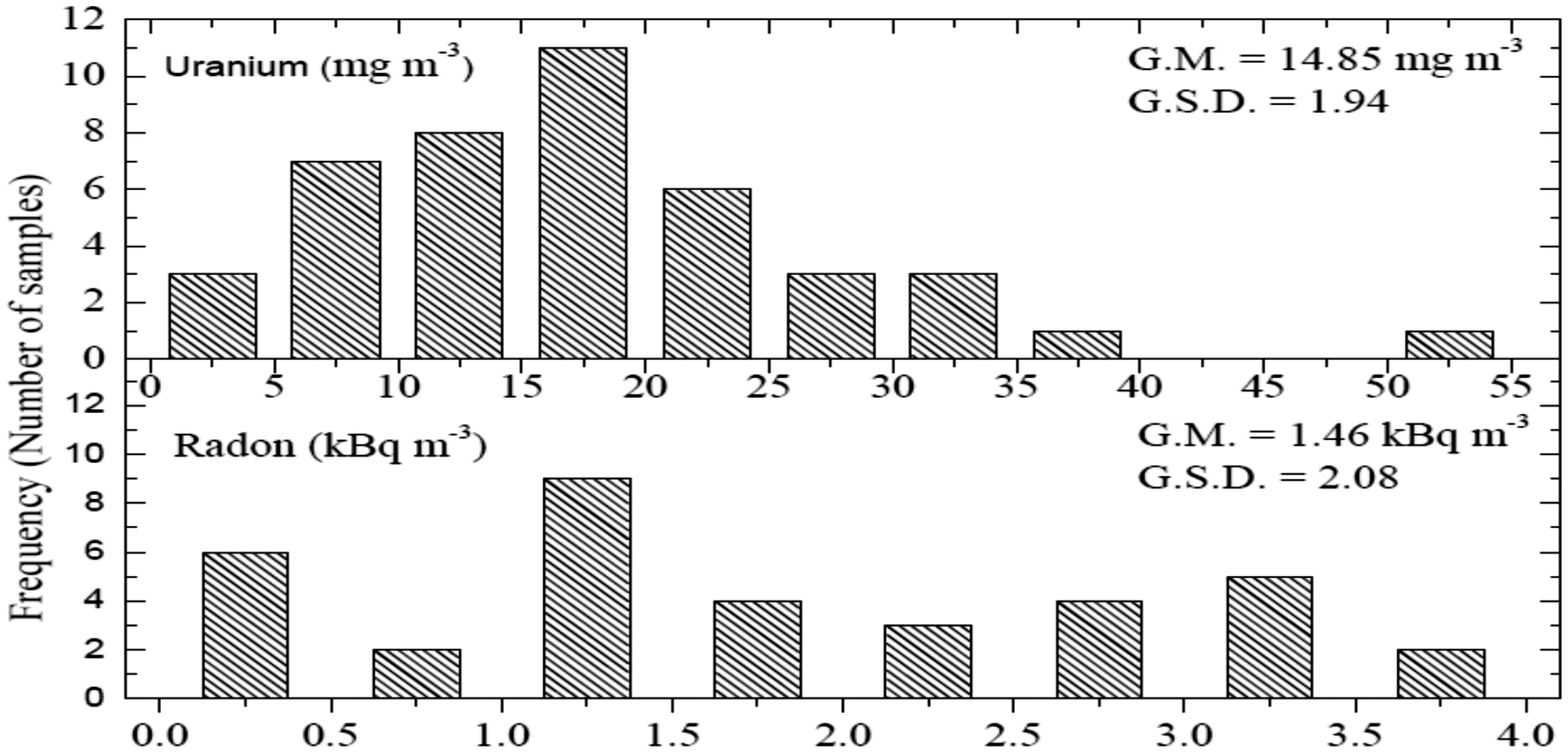
Summary of results of measurements and statistical analysis.
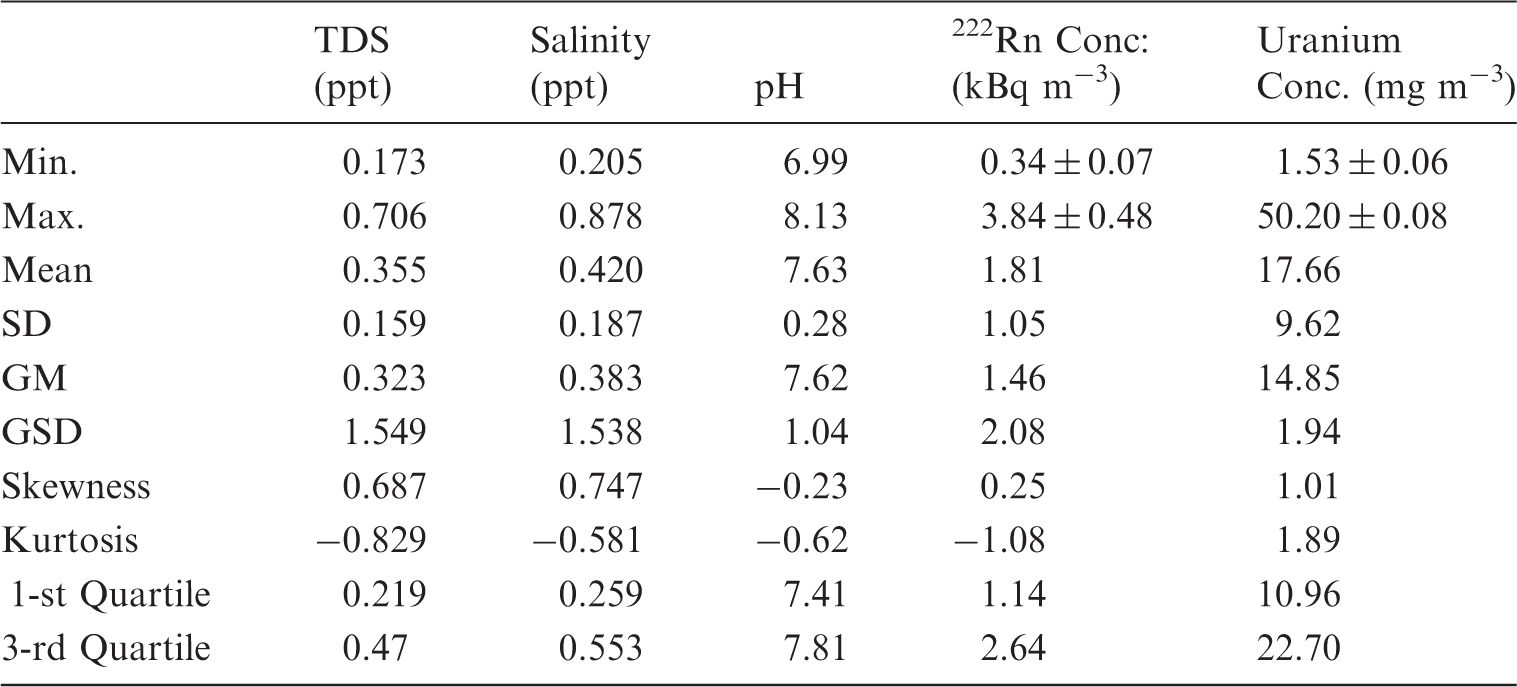
ppt: parts per thousand; TDS: total dissolved solids.
The values of radon and uranium measured in water are consistent with earlier reported results from other regions of the state. Uranium concentration in water in samples from Amritsar and Gurdaspur district of Punjab have been reported to be in the range 1.24 mg m−3 – 45.42 mg m−3 with mean value of 14.91 mg m−3. 14 Water samples from Malwa region of Punjab state have reported values of uranium in the range 5.41 mg m−3 – 43.39 mg m−3. 13 The values of radon in water samples from Mansa and Muktsar districts of Punjab have been reported to be in the range 0.4 kBq m−3 – 17 kBq m−3, while for Bathinda district, values have been reported in the range 0.9 kBq m−3 – 5.1 kBq m−3.23–24
The pH for water samples was in the range 6.99 to 8.13. The measured values of TDS for water samples were in the range 0.173 ppt to 0.706 ppt. Totally nine water samples had TDS value greater than the permissible limit of 0.500 ppt. The values of the salinity for analysed water samples were in the range 0.205 ppt to 0.878 ppt. The correlations of U with radon, salinity and TDS are shown in Figure 4. For both salinity and TDS, a correlation with uranium concentration was established with correlation coefficients of 0.69 and 0.68, respectively. Uranium is present in the form of soluble complexes under oxidising conditions, and in reducing conditions, it is present in the form of insoluble complexes.
25
Soluble complexes are released into ground water in high ionic strength conditions due to high salinity and TDS.
17
Poor correlation has been observed between radon dissolved in water and uranium concentration with correlation coefficient being 0.04.
Correlation analysis of uranium with TDS, salinity and radon.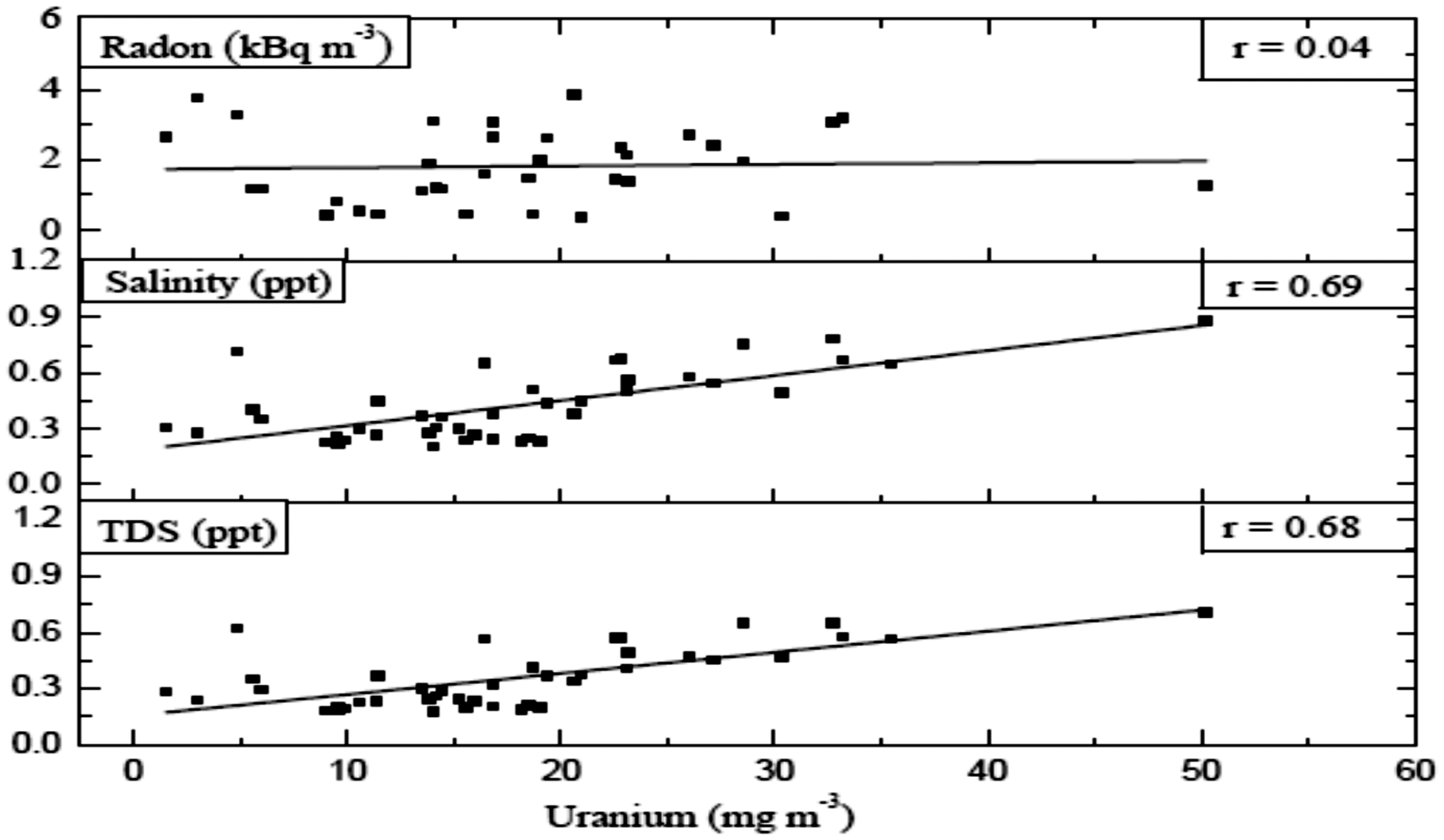
Similar results have been reported by Ryan et al. 26 The possible reason for this poor correlation may be the fact that radon in ground water is transported to very limited distance due to its lower half-life (3.82 days) as compared to Uranium (∼ 109 year), which can travel a very long distance. Hence, radon in water is virtually an indicator of radioactivity in local rocks while Uranium in water is an indicator of radioactivity in local as well as distant rocks. Due to this reason, radon and Uranium in water may not correlate well.
Calculated values of ingestion doses due to radon, uranium and total ingestion dose.
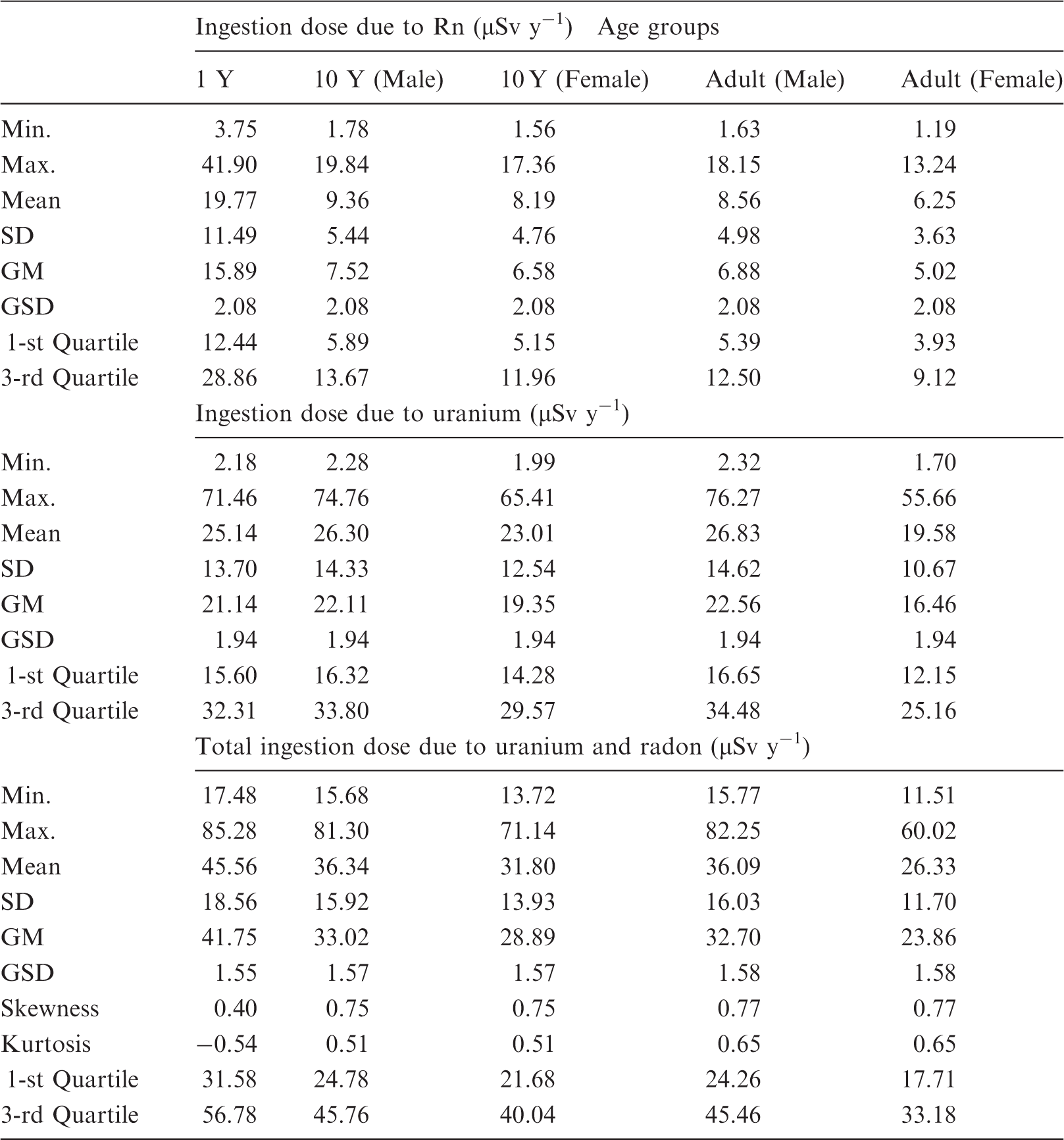
Similarly, ingestion dose due to uranium in water is maximum for males of age group 10 years and minimum for adult females. Again the dose conversion factors and annual intake of water are the main controlling factors for variation of dose rates among different age groups. Total ingestion dose due to radon and uranium is again maximum for age group 1 year with a geometric mean value of 41.75 µSv y−1 and minimum for adult females with geometric mean value of 23.86 µSv y−1. These results indicate that the age group of 1 year is most radiosensitive and most vulnerable to radiation hazard as compared to other age groups. However, all the calculated values of annual dose are within the safe limit of 100 µSv y−1 recommended by World Health Organisation (WHO). 27 Contribution of Rn to total ingestion dose varied from a minimum value of 3.7% to a maximum value of 93.0% with a geometric mean value of 26.3% and GSD value of 1.99. The first quartile and third quartile values of this distribution are 19.1 and 40.9, respectively. These values indicate that for 25% of cases, contribution of Rn to total ingestion dose is less than 19.1%, and for 75% of cases, the contribution of Rn is less than 40.9%. So we can say that major component of ingestion dose due to water comes from the uranium concentration in water.
Conclusions
The measured concentrations of uranium in water samples from the district were in the range 1.53 ± 0.06 mg m−3 – 50.2 ± 0.08 mg m−3 with geometric mean value of 14.85 mg m−3. The radon concentration in water was in the range 0.34 ± 0.07 kBq m−3 – 3.84 ± 0.48 kBq m−3 with geometric mean value of 1.46 kBq m−3. These values are within the safe limits prescribed by regulatory bodies such as US EPA and Atomic Energy regulatory Board India. Total ingestion dose to local population due to radon and uranium, for all age groups, varied from a minimum value of 10.21 µSv y−1 to a maximum value of 85.28 µSv y−1. This is also within the safe limit of 100 µSv y−1 prescribed by WHO. The ground water of the district under investigation can be labelled safe from radioactive hazard. Ingestion dose values come out to be maximum for age group of 1 year. Contribution of radon to total ingestion dose for 75% of the samples is less than 40.9%.
Footnotes
Author’s Contributions
Manish Kumar (MK), Anjali Kaushal (AK), Atul Bhalla (AB) and Rajan Jakhu (RJ) were responsible for field studies and experimental work. B. K. Sahoo (BKS), Amit Sarin (AS), Rohit Mehra (RM) and Navjeet Sharma (NS) were responsible for analysis of data, interpretation of results and drafting of this manuscript.
Acknowledgements
Authors express their gratitude to Board of Research in Nuclear Sciences, Department of Atomic Energy, Mumbai, India for providing financial assistance under a major research project (Project No. 2013/36/54-BRNS) for this work.
Declaration of conflicting interests
The author(s) declared no potential conflicts of interest with respect to the research, authorship, and/or publication of this article.
Funding
The author(s) received no financial support for the research, authorship, and/or publication of this article.