







Abstract
Hearing impairment is a part of the natural ageing process for many people, similar to the occurrence of wrinkles on the face. In order to improve the quality of life for old age seniors, it is necessary to provide a built environment that is appropriate for hearing impairment. The listening ability of the elderly is significantly diminished, particularly in noisy and reverberant environments due to hearing loss. A basic design guideline for houses built for hearing impaired seniors is that excessive noisy and reverberant environments should be avoided. The purpose of this paper is to develop housing acoustic design guidelines that consider hearing loss due to old age relative to natural factors of everyday life, through a detailed literature review. The guidelines take into consideration floor impact sound, heavyweight floor impact sound, unit-to-unit sound insulation, indoor background noise sources, reverberation time, ceiling height, light–fan switch, bell–chime system and illumination level.
Introduction
Presbycusis is a form of age-related hearing loss. Its symptoms occur gradually in both ears, rather than suddenly. In its early stages, the ability to hear high tones is reduced, but this extends to the low tone region over time. The voice of a man is easier to hear than the high pitch voice of a woman, and it becomes difficult to detect the direction of sound. Sometimes, the words of another person seem mumbled or elusive, causing conflicts when listeners do not accept their hearing deficiency and blame others for their pronunciation.
It can be dangerous if one cannot hear nor determine the direction of a high-pitched alarm sound. In addition, difficulty in communicating may lower one’s self-confidence and lead to social isolation or depression. A building’s design should consider hearing loss of the elderly, whose intelligibility is drastically reduced in reverberant environments. The acoustic design guidelines for houses for hearing impaired seniors are studied in this paper, from the perspective that hearing loss due to old age is a natural process of life.
The International Standardization Organization, ISO 7029-2000(E) standard, 1 notes that age-related hearing loss from 18 to 70 years is statistically significant. Hearing loss appears to be prominent in the high-frequency band above 3000 Hz, especially in men.
Hearing impairment in the elderly tends to result in an increase in the minimum audible level of high-frequency sound, which causes an overall decline of sound recognition ability due to a listening disorder in the consonant region. This decline is a factor that leads to social isolation as a result of the difficulty of communication. 2 In particular, the quality of life of the elderly is substantially reduced due to the worsening hearing impairment and diminished cognitive ability, especially for alarm tones, ringing of a phone and conversation tones. Listening and conversation are strongly influenced by the presence of background noise in a reverberant space for the elderly. Specifically, listening impairment influences the formation of social relations. In addition, the lack of adequate sound insulation of housing for the elderly can limit their ability to increase the volume of electronic media due to concerns regarding the transmission of noise to adjacent households. 3
The results of various studies have shown that it is necessary to keep the background noise level low because the influence of ambient noise on accurate listening is more pronounced for the elderly. An acceptable reverberant environment could reduce problems associated with indoor listening in regard to watching TV or listening to a notification sound for example. Improvement of the inter-household and inter-floor sound insulation performance could prevent disputes between neighbours due to loud noises (e.g. from TV viewing). Another consideration is a more reliable guidance system for unexpected accidents or fires.
Case studies
The cases of Australia and the United States of America were studied as indices of the guidelines because they are typical examples of elderly societies. Special care should be provided to seniors to help them to maintain their social activities in their later years. These cases focus primarily on noisy environments and sound absorption.
Australian building code 4
The Building Code of Australia (BCA) 4 outlines building codes for elderly residences in three categories. These criteria provide greater flexibility in the design of housing for the elderly and describe a reasonable range of protection for the elderly at home. BCA Class 3 is the standard for long-term residences (Hostel), Class 9a refers to Nursing Homes and Class 9c refers to the building standards for the ageing in place. The latter class is the most similar category to Korea’s elderly housing situation, except that the individual should be placed for 24 h emergency evacuation considering that the behaviour may be inconvenient. The criteria of the BCA Class 9c are defined in the following section.
Definition of criteria
In Class 9c of the BCA, 4 acoustics is defined as sound insulation between adjacent spaces and absorption control in the same space. The field of sound insulation includes issues related to air transmission noise, shock noise and lateral transmission noise.
Sound insulation
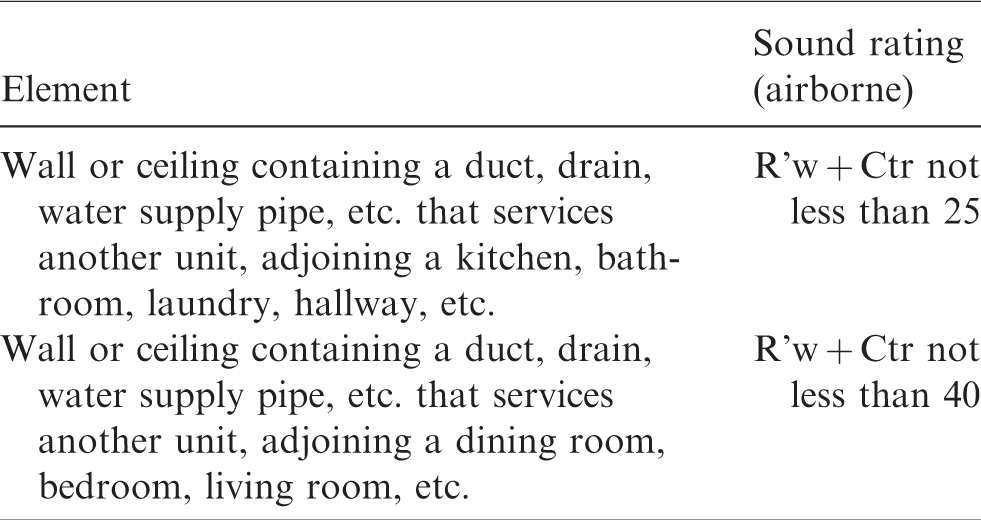
Sound insulation performance evaluation in BCA Class 9c is based on R’w of ISO 717-1:2013. 5 Sound rating for walls and floors in the standard is shown in Table 1. R’w is appropriate to compare different systems with each other, although it cannot be used to assess the impact of all frequency bands. The wall-type selection in elderly housing facilities should be made according to the degree of performance required and the noise level of the surrounding space, based on the behavioural characteristics of the elderly. The lateral transmission noise should be taken into consideration for indirect transmission paths including the surrounding of walls, ceilings and ducts. Even if the wall has sufficient sound insulation performance, great care should be exercised because a bad noise environment can still result from lateral transmission noise if the installation is only up to the bottom of the ceiling or it is not sealed with a sound insulation joint. The criteria for the sound insulation performance of BCA Class 9c are shown in Table 2. 4 Noise sources such as outdoor traffic and home theatres have a considerable amount of low-frequency components. In addition to BCA regulations, it is recommended that the following should be considered with regard to noise issues in elderly housing facilities:
Sound rating for walls and floors. 5

Sound rating for building services. 4
- Inflow of external noise through walls and windows.
- Noise caused by rainwater on the roof.
- Noise through the joints connecting walls to the ceiling, which refers to lateral transmission noise.
- Inflow of machine room noise.
- Equipment noise of air conditioners, etc.
Sound absorption
A short reverberant time (RT) is desirable for the acoustic comfort of the elderly in most living rooms and bedrooms. RT is a factor that affects linguistic intelligibility, speech privacy, voice size and various acoustic factors. It should be carefully noted that the size and shape of a room, the use of the sound absorbing material, etc. affect the RT. In the case of rooms where communication between residents is common such as in a living room and in a restaurant setting, a short RT is extremely important. The easiest way to accomplish this is to finish the ceiling with sound absorption. However, it is desirable to evaluate and use the sound absorption in ceiling material following the recommendations of noise reduction coefficient.
Building facilities
Air conditioners and water supply facilities are important sources of noise. It is necessary to reduce equipment noise using approaches such as the insulation of air ducts and pipes. It is necessary to maintain the sound insulation performance level of air conditioners at R’w 45. 4 The BCA sound insulation performance standard of Class 9c is shown in Table 2.
Extension of the BCA Class 9c concept
Based on the BCA criteria of the Australian Government, the local governments of Queensland and Victoria have developed separate elderly housing design guidelines for designers and developers which outlines important standards.
US architectural code and design guidelines 6
The International Building Code (IBC, known as Uniform Building Code), which was first issued by the International Council of Building Officials in 1927 and revised every three years, describes the minimum performance standards related to sound insulation in apartment houses as shown in Table 3. 6 Unlike the Australian building code, it does not have a separate subclass that considers the inconvenience of the elderly. The 12th section of this code covers the overall standard for the indoor environment, and the 7th section outlines the minimum standard for sound insulation performance of an apartment house. The majority of countries around the world use the ISO evaluation unit, R’w, while US architectural codes are based on sound transmission class (STC, ASTM E336-14) 7 and impact insulation class (IIC, ASTM E1007-14) 8 , which are the national standards of the United States.
Residential sound isolation criteria. 6
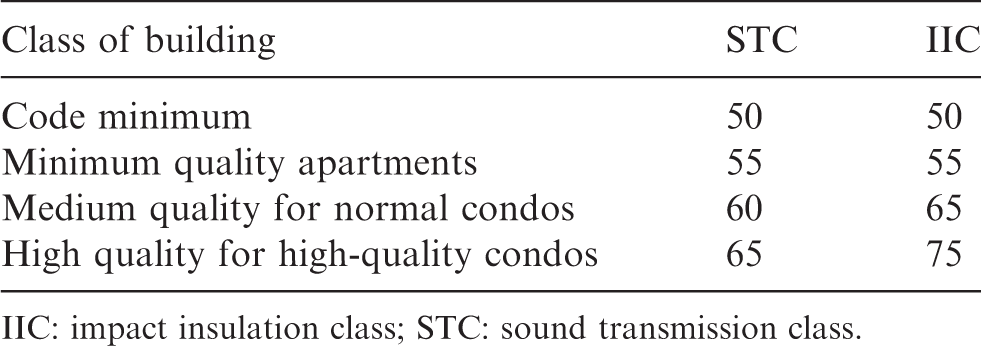
IIC: impact insulation class; STC: sound transmission class.
This code outlines a set of minimum standards, but the expectations of residents are often higher. Therefore, it is necessary to prepare a more detailed performance standard for IBC architectural code for residential projects of various quality requirements.
9
Based on the American architectural code, the American Society of Interior Designers offers more detailed acoustic design guidelines that consider elderly hearing loss in more detail as follows
10
:
It is necessary to make the indoor environment sound absorbable using carpets, fabric, etc. and to design the ceiling of the social activity space in the dining room of a house, etc. so that it is not too high. It is necessary to separate the noise generation space and the quiet space. The design of sound insulation and sound absorption is needed to reduce the background noise level. It is desirable to select indoor appliances that are quiet. It is advisable to exclude the use of switches that turns on both the lamp and the exhaust fan, and to exhaust after the user leaves the bathroom. Listening to the entrance doorbell at various places inside the house, such as the dress room or bathroom should be considered. A signal device that can signal using lights in combination with the doorbell should be installed. A signal device that can sense motion when a person arrives and signal with light or sound should be installed. The elderly suffering from hearing loss tend to observe the movements of the speaker’s lips when talking at the same time, so the arrangement of furniture and the brightness of the room should be considered. Consider amplification devices such as telephones, TVs, radios, etc. and pay attention to the noise level with adjacent households.
Acoustic guidelines for seniors with dementia
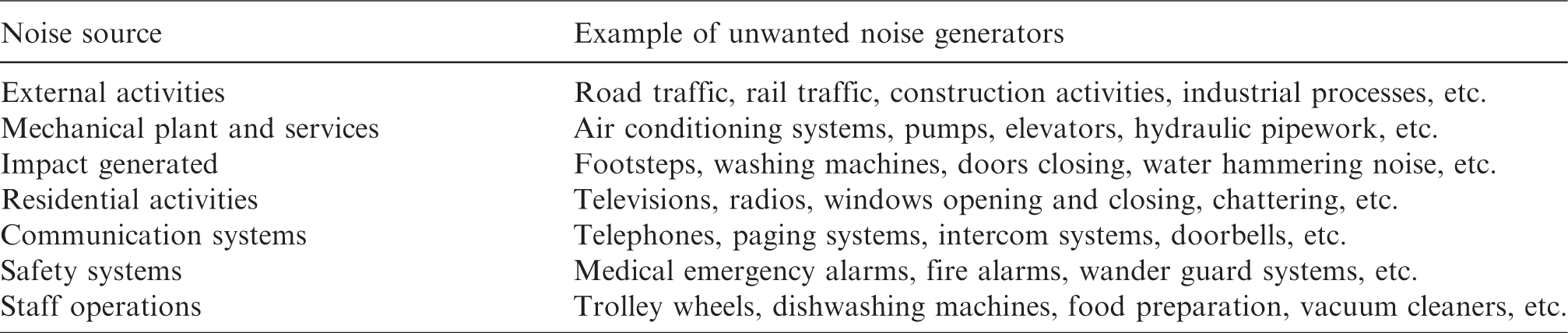
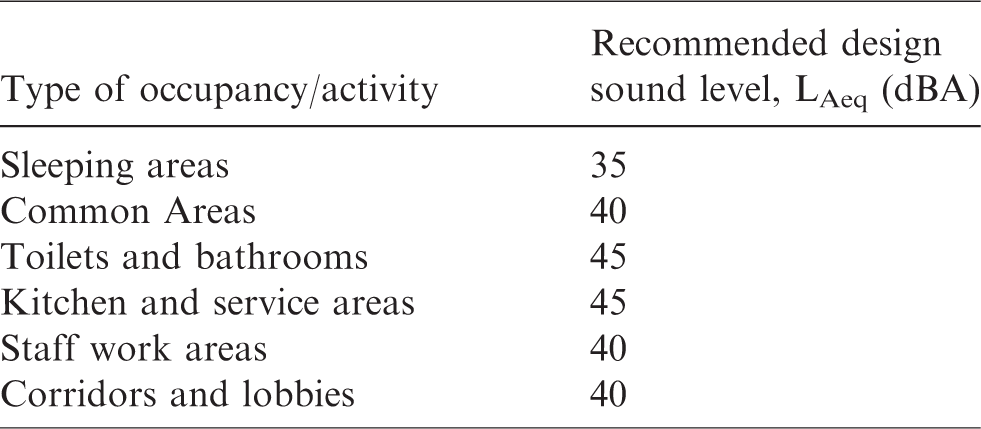
In a study on acoustic environment design guidelines for elderly people with dementia, Hayne and Fleming 11 introduced two principles of design which should minimize the influence of internal and external noises and control the RT. Based on these principles, the main noise sources (Table 4) are defined and these have provided comprehensive design guidelines; giving the recommended sound level (Leq) and the degree of sound insulation (R’w/STC) for the layout of the house, toilets, kitchens, exterior spaces, bedroom, social spaces such as dining rooms, etc. (Tables 5 and 6). 11 The sound insulation performance of the walls used in these instances is generally above R’w 50 and is higher than recommended by the BCA standard in Australia. The recommended standard value of indoor noise is about 40 dBA, which requires a somewhat quieter environment than the general house in Korea which has a recommended standard value of 43 dB. In addition, it was recommended that the reverberation times of the bedroom, living room, toilet, etc. should be as short as possible within 0.8 s, so that designers of residential environments for the elderly could control the sounding of rooms based on a specific goal. 6
Noise sources to be controlled. 11
Recommended design sound levels. 11
Recommended acoustic performances for bedrooms. 11
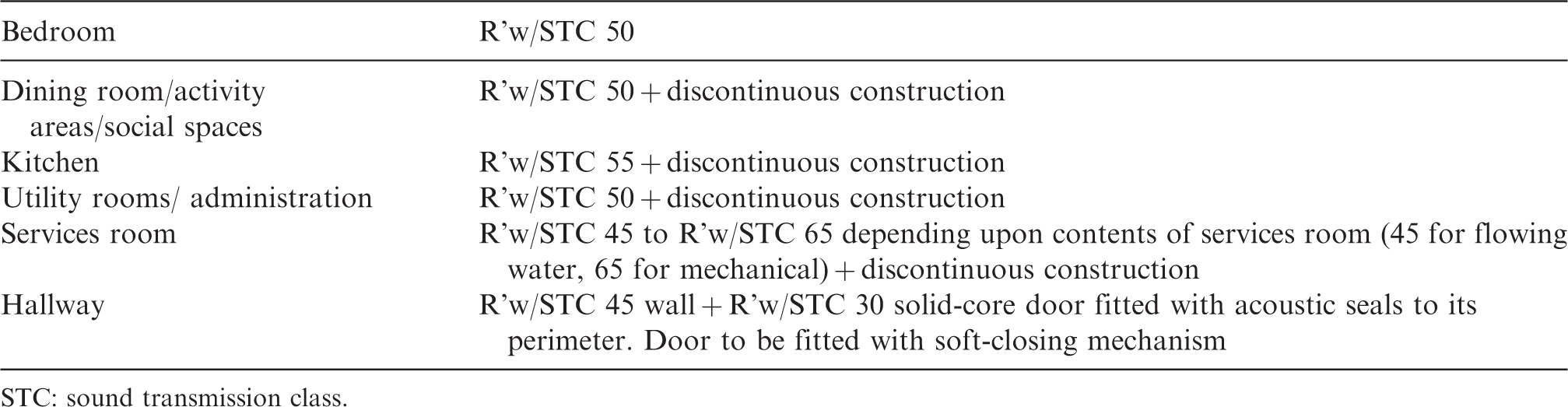
STC: sound transmission class.
Acoustic environment standards and status of houses in Korea
General status
In Korea, the standard, consideration and policy for ageing have not yet been established, and many elderly individuals live in general apartment houses, especially old apartments for low-income earners. Therefore, it is possible to obtain an overall understanding of the acoustic environment of the elderly residences by examining the acoustic environment standards and performance status of general apartment houses. The acoustic environment standards of apartment houses are presented as regulatory standards in the ‘Housing Act’, the ‘Rules on housing Construction Standards, etc.’, the Presidential Decree and the ‘Rules on housing Construction Standards, etc.’ The Ordinance of the Ministry of Land, Infrastructure and Transport, and the detailed rules are determined by the standards of the Ministry of Land, Infrastructure and Transport in each field.
Noise environment standards and status
Standards and status of external noise
Article 9 Paragraph 1 of the ‘Rules on housing Construction Standards, etc.’ stipulates that the external noise level of apartment houses is measured by Leq (equivalent continuous sound level). 12 This is the steady sound level that has the same total energy as the fluctuating noise over a given period of time and should be less than 65 dB. However, because it is not possible to reduce the external noise of high-rise buildings through architectural design, there are exceptions to the rule that the indoor noise level should be less than 45 dB when windows are closed for indoor spaces above six storeys in an urban area apartment house as denoted in Table 7. Since noise reduction measures can be established by installing soundproof wall for up to five storeys or less of apartment houses, the aforementioned indoor noise exception rule is not applied. Detailed measurement methods based on this rule are prescribed by the Ordinance of the Ministry of Land, Infrastructure and Transport. 12
Indoor noise class of noise from outside. 12
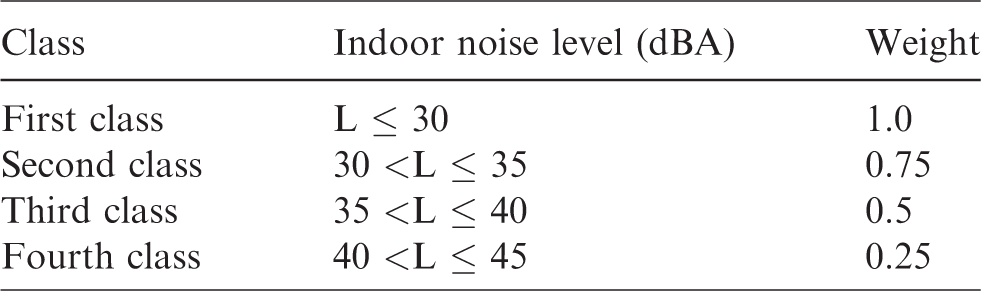
The actual status of up to five storeys or less of apartment houses appeared in many places where the external noise level exceeds 65 dB, contrary to the intent of this noise environment standard. It should be noted that the external noise level up to the fifth storey or less of five urban dwellings measured as a part of a study by Kim et al. 13 exceed the legal standard of 65 dB. It is very difficult to reduce the external noise level by increasing the structural performance of the apartment house, because the external noise of the urban property cannot be controlled via architectural intervention. It is a realistic but unreasonable to regulate external noise by utilizing the differential evaluation of the externally and the internally measured values according to vertical height, as is the case in the current standard.
Standards and status of floor impact sound
The standards for light and heavy floor impact sounds of apartment houses are presented in Article 14-2 of the ‘Rules on Housing Construction Standards, etc.’ 21 The minimum slab thickness of the ramen structure and the wall structure is specified, and the lightweight impact sound should not exceed 58 dB while the heavyweight impact sound should be 50 dB or less. The detailed rules of implementation take into consideration the standard impact source, measurement method and certification procedure. These three aspects including the type and application of the standard floor structure are each prescribed by Ordinance of the Ministry of Land, Infrastructure and Transport as presented in Tables 8 and 9.14,15
Noise class of floor impact sound. 14

Noise class of heavyweight floor impact sound. 15

The floor impact sound has changed significantly from 2004 based on quantitative figures from the ambiguous qualitative expression that the performance criterion is ‘a satisfactory structure’. Article 14 Number 3 of Rules on Housing Construction Standards promulgated by the Ministry of Construction, Ministry of Construction and Transportation on 22 April 2004 prescribed The floor of the apartment house shall be such that the floor impact sound of each floor is lower than the impact sound of 58 dB as given in KS F 2863-1
16
standard and the heavy weight impact sound of 50 dB or less as given in KS F 2863-2 standard.
17
The purpose of the enactment of the Regulations on the Housing Construction Standards, etc. in 2004 was to ‘improve the floor impact sound insulation performance of apartments in the future by using the performance satisfying 50% of the present apartment as the minimum standard’ as presented in the study 18 which was the background of the Regulation. That is, according to the standard promulgated in 2004 for a one-year reservation period and fully implemented from July 2005, in the case of apartment buildings that were approved for business prior to the enforcement, and regarding to the construction period of three years, until the year of 2008, 50% of them have a performance that does not meet the current standard of light impact sound at 58 dB and heavy impact sounds at 50 dB.
Standard and status of sound insulation performance
The inter-household boundary walls of apartment houses should satisfy the standards of sound insulation performance. Generally, in case of concrete walls installed in an apartment house, sound insulation performance is superior to other materials of the same thickness. This is because this material is heavy and tight if there are no gaps or construction defects. Therefore, the sound insulation performance is defined by the thickness of the wall in the case of reinforced concrete or non-reinforced concrete (including concrete blocks, bricks, stones, etc.) and the prefabricated concrete plates. In the case of walls made of other materials, the performance standards were set to ensure sound insulation performance. Article 14(1) and (2) of the Regulation on Housing Construction Standard, 19 etc. prescribed that reinforced concrete, etc. or other structures not specified in this regulation shall be used in accordance with sound insulation structure approval and management standards of walls. Table 10 shows the sound insulation structure rating criteria of walls according to this standard.
Noise insulation class of wall panels.
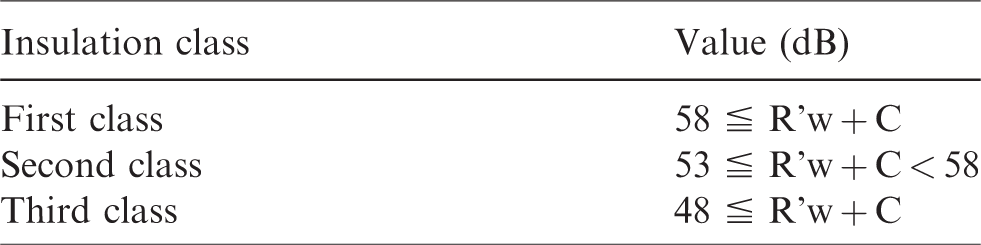
However, in reality, this criterion for wall members results in a significant difference from the actual sound insulation performance. 20 The sound insulation performance of inter-household wall members was excellent, but the actual sound insulation performance after the installation (DnTW), between generations that have turned into a living room wall connected to a reflective staircase and the front door of low sound insulation performance, extended to vulnerable fire exits was measured much lower than the sound insulation performance of the members (R’W). When compared to the case of a household sharing the same wall, it satisfies the specification regulation, but in the case of generations connected by the staircase, the single numerical evaluation value is 42–43 dB. 20 This value does not satisfy the minimum performance standard. On the other hand, the inter-household noise isolation performance without lateral transmission noise through the staircase satisfies the wall sound insulation performance standard of 49 dB and the single numerical evaluation value is 42–43 dB. As a result of investigating the problem of sound insulation performance inconsistency of walls with the same thickness and material, the result of measurement in the case of installing an additional middle door to replace the fire door and unshared staircase shows similar results by the frequency band, and that even if the staircase is shared, when the sound insulation performance of the door is compensated, the single index is increased by 7 dB. It is confirmed that the problem of inter-household sound insulation performance deterioration is influenced by lateral transmission noise. Therefore, in the approach for evaluating the sound insulation performance, it is suggested that the evaluation method of sound insulation performance using a single member of the wall should be reconsidered.
Standards and status of facility noise
In Korea, there is no criterion for housing facility noise. As a special case, noise standards of water supply and drainage facilities were proposed in the ‘Industrialized Housing Performance Recognition System’, which was implemented to encourage the diffusion of industrialized houses from the early 1990s.
21
The regulation states that the noise level of the water supply and drainage facilities according to noise level measure method determined by Korea Industrial Standards, KS A ISO 1996,
21
shall be less than or equal to 40 dB (A)
22
for each house, and there shall be a corresponding sound insulation plan.
Noise reduction class of plumbing devices. 23
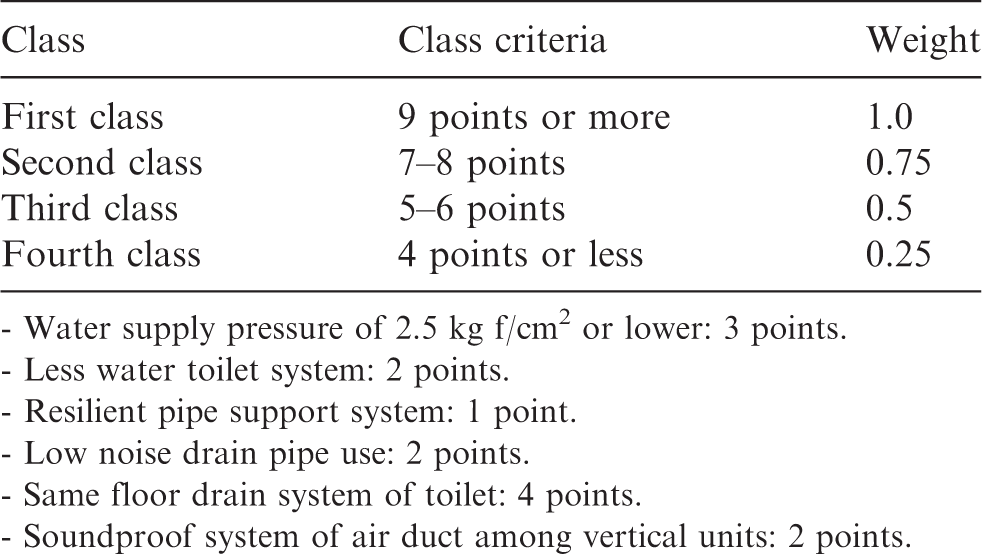
- Water supply pressure of 2.5 kg f/cm2 or lower: 3 points.
- Less water toilet system: 2 points.
- Resilient pipe support system: 1 point.
- Low noise drain pipe use: 2 points.
- Same floor drain system of toilet: 4 points.
- Soundproof system of air duct among vertical units: 2 points.
The noise of the water supply and the drainage system is the second most important dissatisfaction factor after heavy floor impact sounds, for the residents of apartment houses. 23 As a result of the study, values of 49.2 dBA (main room) and 47.4 dBA (living room) were obtained. These values are higher than 45 dBA, which is the standard of industrial housing performance before 2012. The results are presented in Figure 1 and Table 12.
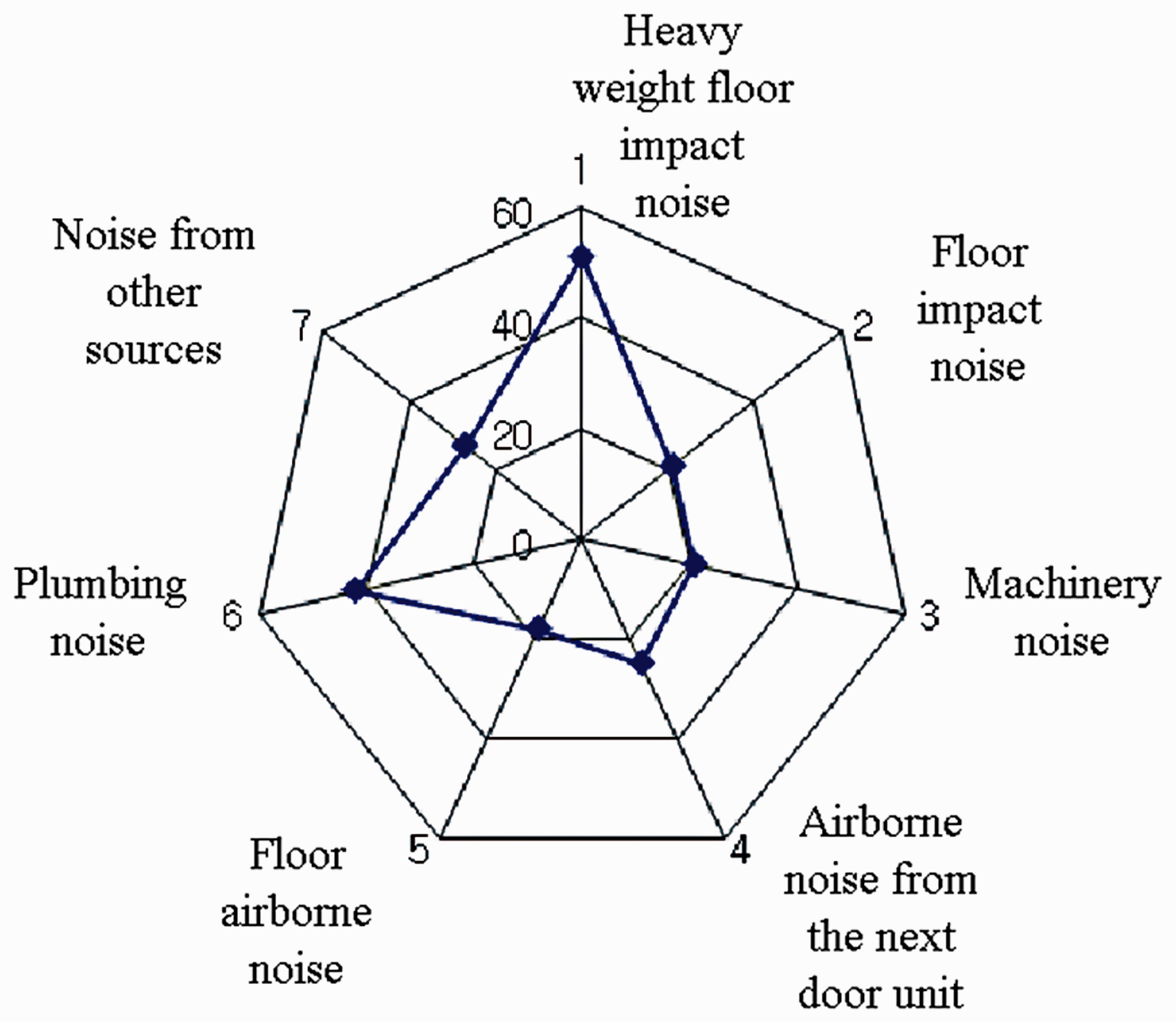
General percentage of dissatisfaction. 23
Plumbing noise measurement in apartments. 23
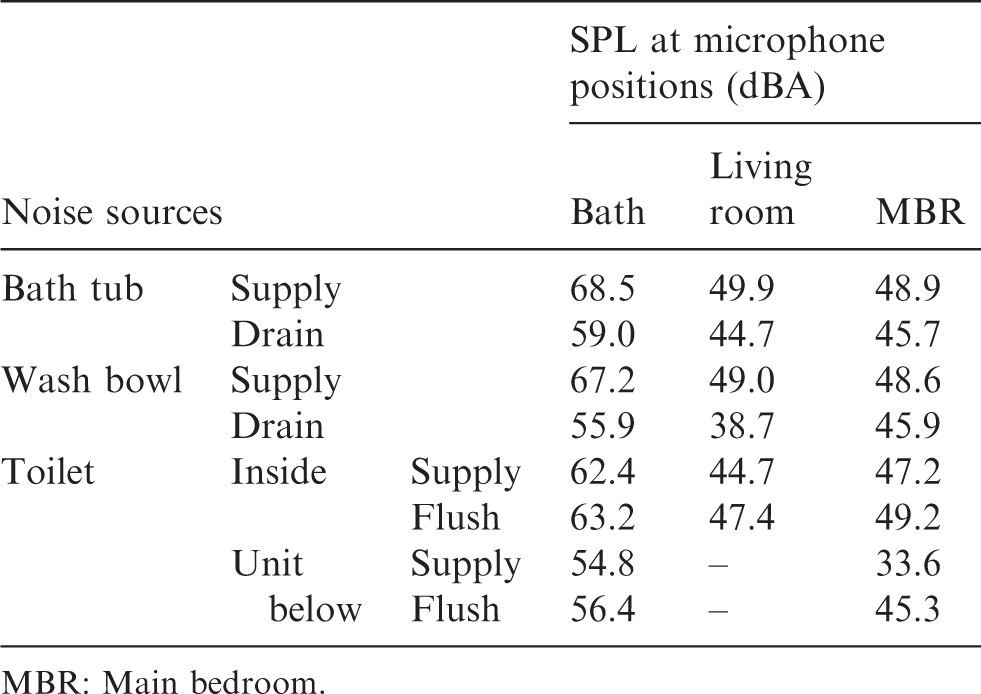
MBR: Main bedroom.
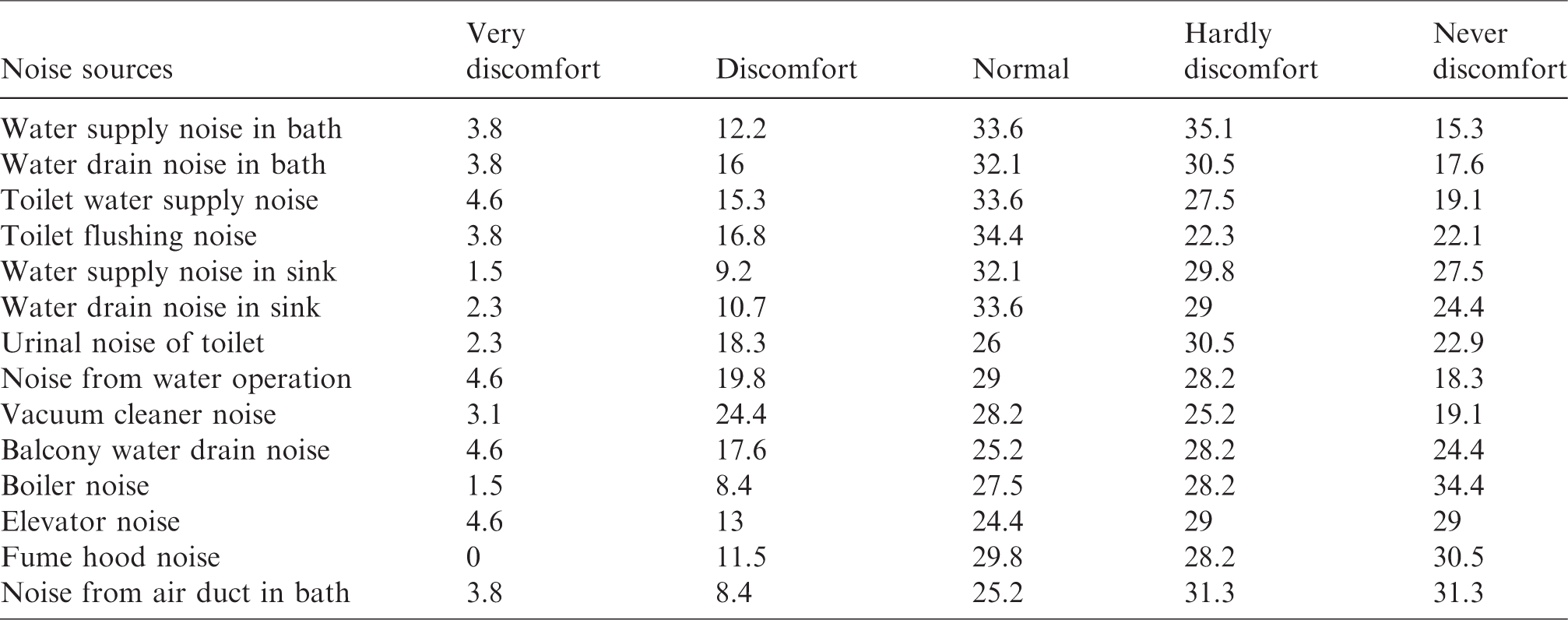
In a recent investigation in 2015, it was confirmed that the noise problem had not improved based on the fact that the dissatisfaction with the level of noise associated with water supplies drainage systems and appliances was still high as presented in Table 13. 25 Unlike the interest in other inter-storey noise, the problem of facility noise has not been standardized and remains in a rudimentary status.
Degree of comfort at building service noise. 25
Standard and status of reverberant environment
There is no standard for the reverberant environment of a typical house in Korea. The existing standard is only intended to address the general reverberant environment for application to some types of acoustic evaluation. The national standards 26 for measuring floor impact sound levels in houses and the Ministry of Land, Infrastructure and Transport Administration Standard 14 require that the reverberation time of a living room is 0.5 s and the floor impact sound level should be calibrated. The reverberation time is the time required for reflections of a direct sound to decay to 60 dB. The standardized impact sound pressure level, L′nT, is the value obtained by calibrating the measured floor impact sound level according to the reverberation time of a lower room.
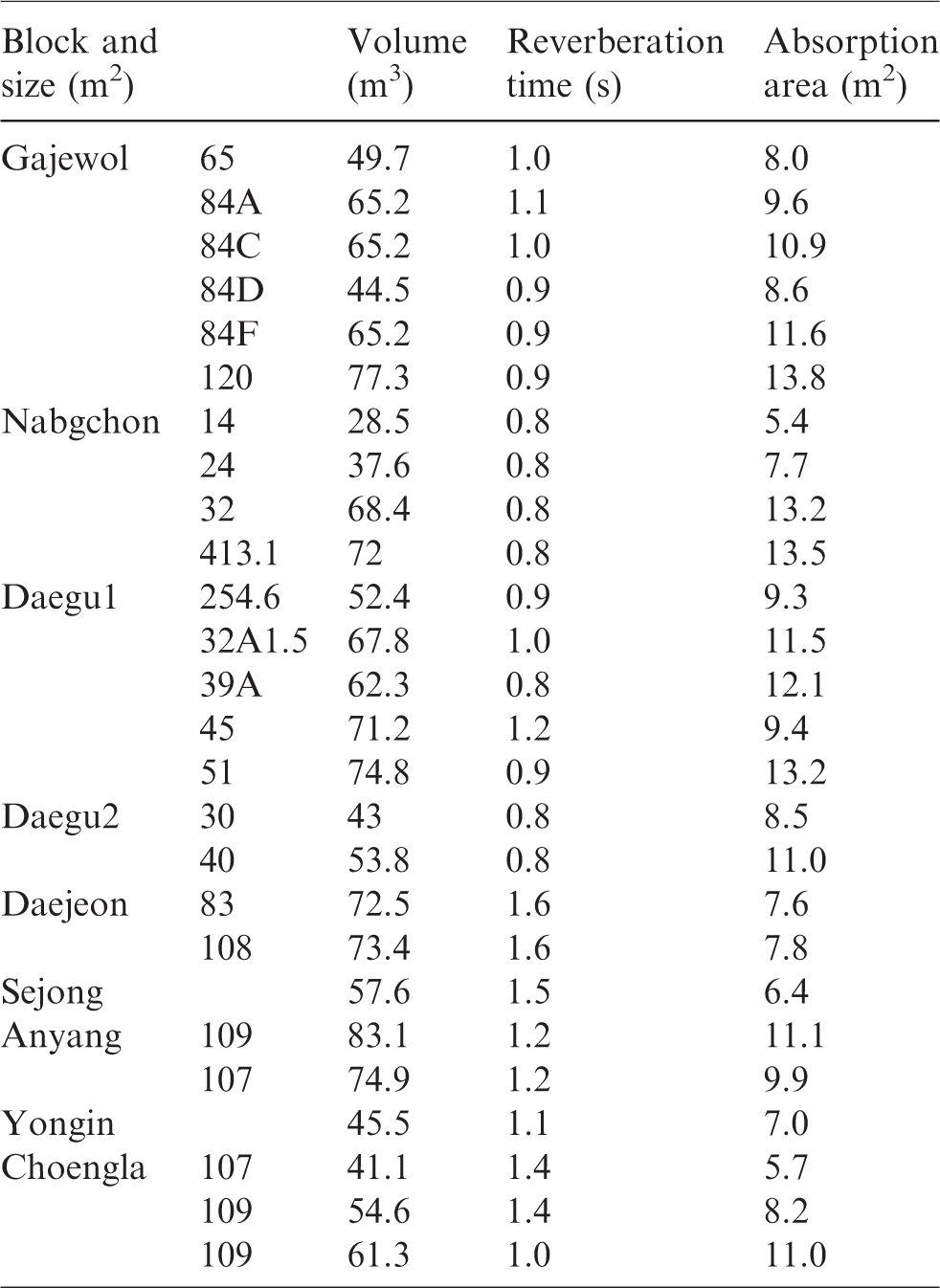
On the other hand, the reverberation time of an apartment house is distributed between 0.8 and 1.6 s, as shown in Table 14. 27 Irrespective of the small size of the apartment, the standard value of the weighted floor impact sound level should not be close to 0.5 s. It should be noted that the apartment time is not particularly short when the apartment size is small. Due to the planar characteristics of the apartments in Korea where the living room, the passageway, the kitchen and the dining room are open, the reverberation time of the living room of a 45 m2 small apartment approaches 0.8 s. As a result of the opening of public spaces, the bottom of the hard floor heating panel is a factor in the relatively long reverberation time of our houses.
Reverberation time measurement. 27
Proposal of acoustic design guidelines for houses for hearing impaired seniors
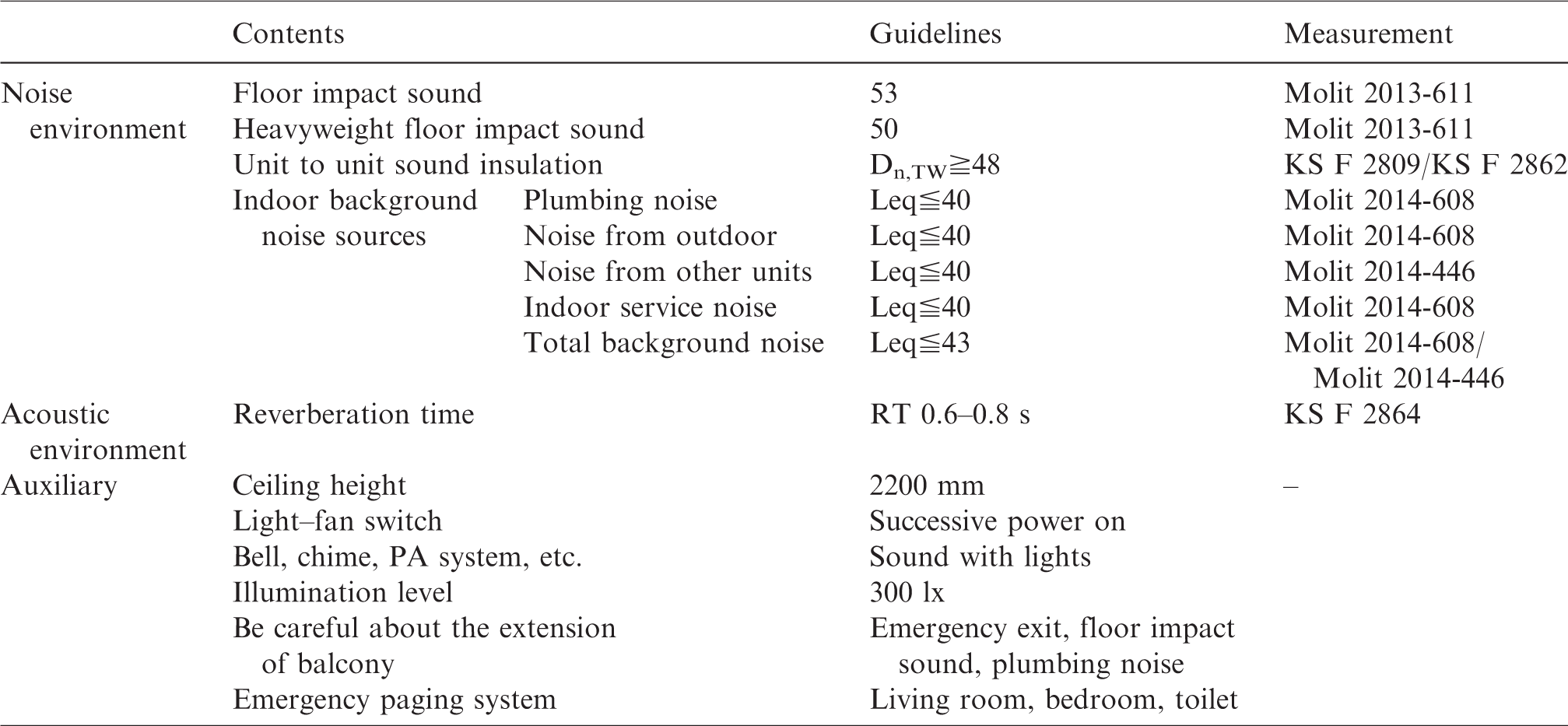
In the future, it will be necessary to consider ways to minimize the inconvenience caused by hearing loss of the elderly during the inevitable ageing of society, and it should be regarded as an essential mandate of the housing field to assist in this realization. There are three components in the proposal which are noise environment design guidelines, reverberant environment design guidelines and additional design guidelines. They are summarized in Table 15.
Proposed acoustic design guidelines.
Noise environment design guidelines
Floor impact sound isolation performance
It is necessary to strengthen the lightweight inter-floor noise insulation performance in consideration of the decline of the utilized frequency band of the elderly (the minimum audible level rise) while accepting 50 dB as the current legal standard for heavy floor impact sound insulation performance. To accomplish this, we intend to propose that the performance of light floor impact sound isolation should be 53 dB, which is 5 dB higher than the legal standard of 58 dB. This is equivalent to grade 3 of the green building certification standard of the housing acoustic design guidelines for the elderly. We chose this standard because the elderly required a smaller background noise environment for accurate listening.
Sound insulation performance of walls
According to the current wall member specification standard and performance standard, concrete or brick wall of a certain thickness or wall member with a R’w+C of more than 48 dB should be used for the house wall of an apartment house. However, in the case of a small-scale old-age apartment house where most of the elderly live in Korea, it is insufficient to address the inter-household noise transmission insulation performance by merely blocking the air transmission noise of a simple wall member. This is because of the possibility of disputes between neighbours due to excessive television viewing of the elderly, as well as the problem of flanking transmission through the legal fire evacuation exit of the common part of entrance halls, staircases and the extended balcony side wall. Therefore, it is necessary to utilize the sound insulation performance evaluation tool that considers all variable factors such as wall joints, porches, staircase and fire evacuation exits, as well as the sound insulation performance of inter-household wall members of apartment houses, for the inter-household noise insulation design guidelines that consider the hearing loss of the elderly. For the purpose of developing housing acoustic design guidelines for the elderly, we intend to propose an inter-household air transmission sound insulation performance of 48 dB, based on the actual inter-household sound insulation performance evaluation criteria Dn,tw value, and not by the sound insulation performance evaluation criterion of simple wall members.
Background noise level
As discussed, the Korean Building Code on noise has a complicated structure. The code for plumbing noise was set at 40 dBA but was repealed on March 2012. The code on outdoor noise is 65 dBA of the arithmetic average of the values measured outside of the first and fifth floors for apartment units on the fifth floor and below. For units higher than the fifth floor, the outdoor noise measured inside the apartments should be lower than 45 dBA. On the other hand, the criteria for inter-floor noise that other noise transmit up and down houses, and to nearby houses except for the noise of the water supply and drainage equipment, are proposed as 43 dBA (weekly) and 38 dBA (nighttime) by the joint Ordinance of the Ministry of Land, Transport and Maritime Affairs and the Ministry of Environment dated 3 April 2014. 28 However, the criteria for noise source facility within self-household, which may be greater than the noise level inflow from the up and down houses, such as refrigerators, kitchen exhausts, air conditioners, etc. have never been discussed.
Given the consideration of the hearing loss of the elderly in housing acoustic design guidelines, it is suggested that the noise level of each internal noise factor should be limited to 40 dBA, and the background noise level inside the house which is the sum of these factors should be kept within 43 dBA. In other words, if the various internal noise sources such as the noise of the water supply and drainage system, traffic noise, etc. are each kept within 40 dBA, the ultimate goal of maintaining the background noise level inside the house to within 43 dBA will be achieved.
Reverberant environment design guidelines
Hayne and Fleming 11 emphasized the importance of short reverberations and a clear acoustic environment in order to strengthen the social relations of the elderly with hearing impairment suffering from dementia. They maintained that the reverberation time of the housing environment for these elderly persons should ideally be less than 1.0 s and preferably in the range of 0.6–0.8 s or as short as possible. The sound absorption redistribution design required to create an environment with a short reverberation time also has the secondary effect of lowering the background noise level in the house. In Korea, there are no guidelines on the reverberant environment that takes into consideration the diminished auditory capacity of the elderly. Moreover, there are no guidelines on the reverberant environment of houses for normal individuals. However, the results obtained for actual apartment houses (to evaluate the standardized light floor impact sound level) show very long reverberation times ranging from 0.8 to 1.6 s (Table 13). The appropriate acoustic design using sound absorption ceiling, curtain, sofa and floor finishing material will allow the elderly to adjust their living space reverberation time from 0.6 s (small space housing) to 0.8 s (large space housing).
Additional environmental guidelines
Housing acoustic design which takes into consideration the hearing loss of the elderly is not achievable by acoustic methods alone. The following methods that can reduce noise in the living space of the elderly and obtain supplementary information on conversation sound should also be considered with regard to acoustic environment design guidelines.
Design the ceiling of the social activity space in the house as low as possible. A height of 2200 mm is preferable. A lamp–exhaust fan integrated switch in the bathroom or utility room is not desirable. It is desirable to turn off the lamp, i.e. to allow exhaust after the user leaves. It is desirable to set up ringtones, guide tones and alarm tones in various places in the house and to set them to operate with light. Elderly people suffering from hearing loss tend to observe the movements of the lips of a speaker during conversation. This can be facilitated by the arrangement of social spaces and the maintenance of an indoor brightness at 300 lx or more. Be aware of the expansion of the living room to the balcony. In particular, balcony expansion with a fire evacuation exit to adjacent households should be avoided. In case there is a need for help in the main room, living room, bathroom, etc., a paging system should be installed to inform the management room or other household members of the emergency. It is necessary to perform trial operations periodically for system evaluation and to prepare for immediate response in the case of an actual emergency.
Discussion
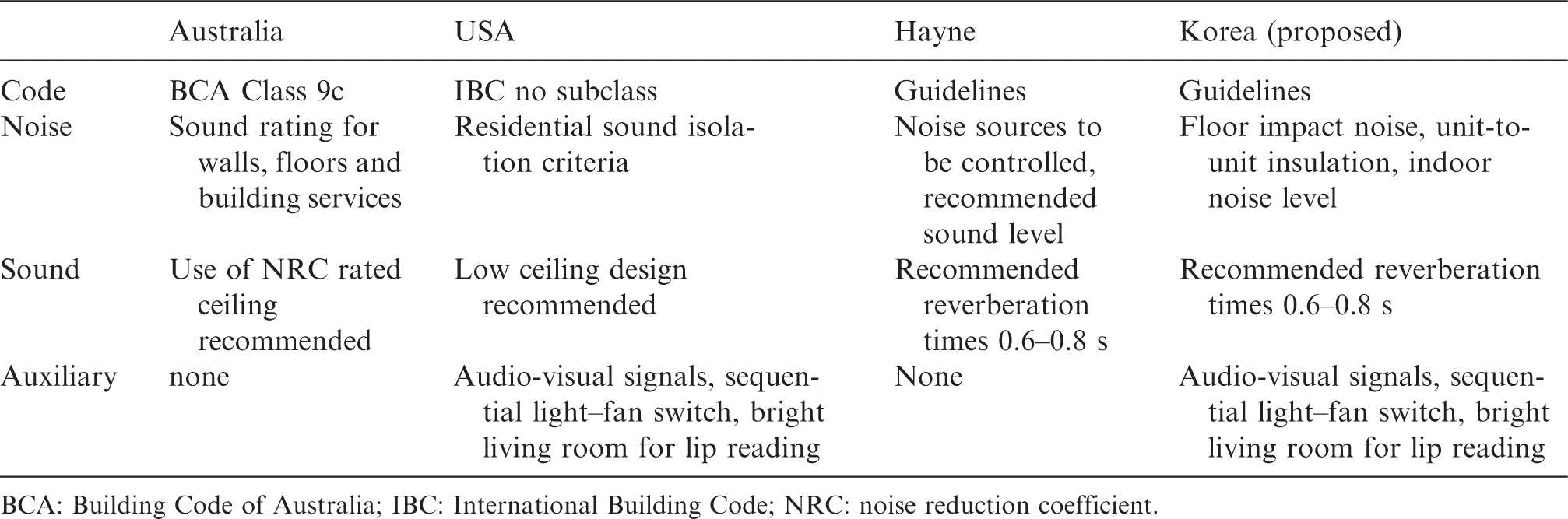
Based on the Australian and American architectural codes previously considered and the design guidelines and current standards for housing acoustics in Korea, we intend to propose housing acoustic design guidelines for Korea that considers the hearing loss of the elderly. At present, the acoustic performance standard for general apartment houses is based on both the compulsory standard by the Presidential Decree ‘Rules on Housing Construction Standard 21 , etc.’ and the ‘Green Building Certification Standard’. 23 The housing sound design guidelines for the elderly that are proposed in this study are not intended as mandatory standards. Table 16 shows the characteristics of proposed housing acoustic design guidelines for the elderly in Korea.
Proposed acoustic design guidelines.
BCA: Building Code of Australia; IBC: International Building Code; NRC: noise reduction coefficient.
The proposed design guidelines are different from the assessment model of aged apartment houses 24 in two aspects: (i) The assessment model only focuses on noise problems such as floor impact noise, outdoor traffic noise, plumbing noise, and so on. However, the proposed design guidelines include acoustic environments such as noisy and reverberant aspects and additional environmental considerations. (ii) The recommended level for hearing impaired seniors is lower with respect to the sensitivity of the elderly to noisy environments.
Conclusion
While most people know that hearing declines with age, they tend to overlook the fact that the process is going on at a personal level. As individuals get older, they encounter difficulty in hearing certain sounds, and it becomes progressively more difficult to understand the meaning of sounds. In particular, normal communication may be difficult due to the presence of background noise. The living environment of the elderly is typically not considered by normal individuals who assume by default that everyone has normal hearing, but should be considered in designs that factor in the hearing loss characteristics of the elderly. This loss is defined by difficulty in hearing high-frequency sounds and a decreased intelligibility in reverberant environments.
The purpose of this paper is to develop housing acoustic design guidelines that consider the hearing loss associated with old age as a natural process of life. The role of ‘noise’ and ‘sound’ is very important in the design of space for the elderly. Regarding noise, we propose a floor impact sound insulation performance with enhanced light and heavy, and presented new design guidelines for evaluating the actual inter-household sound insulation performance, as a potential replacement to the current method of evaluating the performance of wall members. In addition, we proposed design guidelines that unify the indoor noise levels of various standard traffic noise, inter-floor noise, water supply, drainage equipment noise, etc. to 40 dBA and adjusted the indoor background noise level, which is the sum of these noises, to 43 dBA. In order to consider hearing loss in the elderly, a short reverberation time and low background noise level are important. We propose design guidelines that include a reverberation time of 0.6–0.8 s, preferably with sound absorption material ceilings, floors, furniture and small spaces due to low ceilings. In addition, acoustic design guidelines based on non-acoustic methods including an interlocking system of signal and signal lights, separation of the lighting–ventilation fan switch, proper illumination for reading lips, in addition to the problem of balcony extension and alternatives, are included as design guidelines.
In the future, housing acoustic design guidelines that consider the hearing loss of the elderly need to be further subdivided and verified. There is also a desperate need for further research to establish national architectural codes and standards based on guidance from the current state of design without any binding force.
Explanation of single number quantity 29
– Rw: airborne sound insulation of a material or building element over a range of frequencies – laboratory measurement. – R’w: airborne sound insulation between rooms, over a range of frequencies – field measurement. – R’w+C (Ctr): Rw or R’w may use the spectrum adaptation terms (C or Ctr). C: A-weighted Pink Noise spectrum, Ctr: A-weighted urban traffic noise spectrum. – Dn,TW: Field measurement of airborne sound transmission. Standardized to a standard 0.5 s reverberation time and weighted to provide a single figure value. – L′n,AW: Lightweight impact sound insulation of floors, based on field measurement, which is weighted in inversed A-waiting curves and normalized with room absorption power. – L′i,Fmax,AW: Heavyweight impact sound insulation of floors, based on field measurement, which is weighted in inversed A-waiting curves. – STC: American single number rating of a partition’s isolation value based on laboratory measurement. Results may not be compatible with Rw, as a different range of frequencies is used. – IIC: American single number rating of a floor’s isolation value based on laboratory measurement.
Footnotes
Authors’ contribution
All authors contributed equally in the preparation of this manuscript.
Declaration of conflicting interests
The author(s) declared no potential conflicts of interest with respect to the research, authorship, and/or publication of this article.
Funding
The author(s) disclosed receipt of the following financial support for the research, authorship, and/or publication of this article: This research was supported by the Basic Science Research Program through the National Research Foundation of Korea (NRF) and funded by the Ministry of Education (2016R1D1A1B03932172).