







Abstract
The radiant wall composited with capillary tubes has been widely applied in heating or cooling systems due to its large heat transfer area, low-temperature heating and high-temperature cooling. In this study, a ratio model of heat transfer in steady-state condition was established, which explores heat transfer capacity from the capillary layer (active layer) towards the indoor and outdoor sides. The experimental data including the radiant surface temperature, the capillary layer temperature and the heat flux distribution were collected in cooling and heating conditions. The proposed ratio model was validated. The results show that the fluctuation of indoor air temperature is relatively small, suggesting that the radiant system possesses higher stability. Results showed that thermal resistances of the composite radiant wall in summer and winter conditions vary greatly due to different moisture contents. With the continuation of the system operation, the calculated values from the ratio model under the steady-state condition were more consistent with average values obtained from experiments under unsteady-state conditions, indicating that the overall heat transfer performance of the composite radiant wall could be properly evaluated by the proposed model in engineering applications.
Keywords
Introduction
The literature data show that the building energy consumption has been increasing rapidly in the last 50 years up to about 40% of the total energy consumption related to the building.1,2 In particular, the energy consumption of heating, ventilation and air conditioning (HVAC) takes up a large portion and more than half of the building energy consumption. Currently, the energy-saving strategies for energy-efficient HVAC systems primarily consist of evaporative cooling, active thermal storage, heat recovery, radiant heating and radiant cooling, variable air volume and variable refrigerant flow.3,4 In these strategies, radiant heating/cooling system is one of the most effective methods to reduce emissions and is increasingly receiving more attention due its characteristics of energy-efficiency, high thermal comfort, low noise and limited space occupation.5–7 The working principle of the traditional air-conditioning systems is dominated by convective heat transfer mechanism,8,9 which would induce a strong ‘draught sensation’ depending on the air speed, air temperature, turbulence intensity and clothing level in the control area. 10 In addition, the required low and high supply water temperatures in summer and winter, respectively, may further result in large energy wastage. 11 Compared with the conventional air-conditioning system, the radiant system is capable to avoid ‘draught sensation’ and achieve good indoor thermal comfort due to its radiant heat transfer mechanism. Furthermore, the temperature difference between cooling/heating surface and indoor environment is relatively small due to the large radiant surface areas, and therefore the increased/reduced supply water temperature in summer and winter could achieve the desired effect of energy-saving. 12 The radiant ceiling panel system and conventional air-conditioning system were compared in terms of thermal comfort and energy consumption by Imanari et al. 13 They found that energy consumption can be reduced by 10% when using the radiant ceiling panel system in typical office rooms located on the third, fourth and fifth floors of a six-floor building in the Tokyo area. Kim et al. 14 performed an energy consumption analysis of a hybrid radiant cooling system for buildings in summer. They concluded that this hybrid radiant panel system is effective for energy-saving because it has a higher cooling impact ratio and larger coefficient of performance of the chiller.
In order to investigate the energy-saving potential of a radiant system, the study on its cooling/heating capacity is of great significance. The cooling/heating capacity is affected by many factors, such as the active layer temperature, indoor and outdoor air temperatures, capillary tube spacing and thermal conductivity of radiant wall. 15 Fonseca et al.16,17 conducted an experimental and dynamic simulation analysis of radiant ceiling system in both heating and cooling modes, and found that the influence of radiant surface temperature inside the room is considerable. Okamoto et al. 18 developed a calculation method for estimating the heat fluxes from the radiant ceiling panels and concluded that as the pipe density becomes higher, the radiant surface temperature becomes lower in cooling and higher in heating, while heat fluxes from radiant ceiling panels becomes larger in both cooling and heating cases. Jeong and Mumma 19 established an analytical model of the cooling radiant ceiling panel to analyse eight single-design parameters and found that the supply water temperature has the greatest influence on the cooling capacity. Wu et al. 20 proposed a simplified model to calculate the radiant surface temperature and heat transfer of radiant floor heating and cooling systems. They concluded that the supply water temperature exhibits a large impact on the radiant surface temperature and heat transfer of the radiant floor. Zhang et al. 21 presented a simplified model of indoor parameters; they found that the heat conductivity of each layer demonstrates an important influence on the cooling performance of the radiant floor. Zhang et al. 22 conducted an experiment in two test rooms and concluded that the cooling or heating capacity of the radiant panel is essentially affected by the radiant surface temperature, indoor air temperature and room dimensions.
In addition, the variation of exterior disturbances may change the heat gain of the building envelope, thus changing the radiant surface temperature and resulting in a heat loss. Li et al. 23 evaluated the performance of the radiant system in relation to its cooling/heating capacity and human thermal comfort requirement and drew a conclusion that the heat loss is as large as 30%–40% of the cooling/heating capacity. A mathematical model was established by Zhang et al. 24 for further analysis of unsteady-state radiation heat transfer. Their results showed that the ratio of radiation heat transfer ranges from 40% to 60% in the total heat transfer from the radiant ceiling towards the indoor side. A two-dimensional model in terms of the heat loss and temperature was set up by Weitzmann et al. 25 to analyse the influence of the floor construction and foundation on the performance of the floor heating system. They found that the heat storage and exothermic performance of the building envelope would have an impact on the unsteady heat transfer process. Paschkis and Baker 26 established a model for the resistance and capacity (RC) of heat transfer in the building envelope and obtained the expression of the heat transfer matrix equation. Zhang 27 developed a simplified RC model of the radiant ceiling based on Paschkis’ study and found that the heat storage and exothermic performance of radiant ceiling hardly affect the total heat transfer capacity over a certain period of operation.
Throughout the aforementioned literature work, most researchers focused on the influence of various factors, e.g. the radiant surface temperature, indoor air temperature and supply water temperature, etc., on the cooling/heating capacity of the system. Regarding the exterior disturbances, most studies discussed the heat loss of the building envelope, but the characteristics of the heat fluxes from the active layer respectively towards the indoor and outdoor environments, which determine the heat transfer characteristics of the composite radiant wall, have not been extensively investigated. The results from Paschkis and Baker 26 and Zhang 27 indicated that the heat transfer predicted by the steady-state and unsteady-state methods over a certain period of operation is approximately the same. Therefore, the calculation method needs to be established for the heat fluxes from the active layer towards the indoor and outdoor environments in steady-state condition.
This article reports the heat transfer characteristics of the radiant wall composited with capillary tubes in both summer and winter conditions. We established a steady-state based ratio model of heat transfer in the composite radiant wall. The experimental data including the heat fluxes from the capillary layer towards the indoor and outdoor sides, indoor air temperatures, the capillary layer temperature and the radiant surface temperature were collected to validate the ratio model. The characteristics of heat transfer and the thermal resistance of the composite radiant wall in summer and winter conditions were analysed. The aim is to provide a relevant reference for estimating the overall thermal performance of radiant wall in actual applications.
Heat transfer characteristics of composite radiant wall
Structure of composite radiant wall
The composite radiant wall studied in this research was embedded with capillary tubes. The active layer was formed by the capillary layer, set between the internal wall and external wall. Hot or cold water was fed into capillary tubes. The entire radiant system transfers heat to the indoor and outdoor environments simultaneously. As mentioned above, the heat transfer varies with time and exhibits the characteristics of hysteresis in unsteady-state conditions. However, a total heat transfer predicted by the steady-state model remains approximately the same with that by an unsteady-state model, indicating that the thermal hysteresis does not affect the total amount of the heat penetration through the composite radiant wall within a certain period of operation. 26 Compared with an unsteady-state model, a steady-state model is more convenient and suitable for exploring the overall heat transfer performance of the composite radiant wall. Therefore, the ratio model should be simplified under steady-state condition to determine easily the heat distribution (towards indoor and outdoor sides) in the radiant wall. Moreover, the ratio model was established to analyse the heat transfer process from the capillary layer towards the indoor and outdoor environments, for the purpose of laying a theoretical basis for the design method of the cooling/heating areas and the assessment of the cooling/heating load subject to the radiant system.
The composite radiant wall can be regarded as an infinite panel. The temperature difference exists mainly between the capillary layer towards the indoor and outdoor sides, while the temperature difference along the wall longitudinal direction can be ignorable, and only heat fluxes in the wall thickness direction are investigated. The heat transfer in the composite radiant wall can be regarded as a one-dimensional process with an internal heat source or cold source.
Considering the symmetry and periodicity of the capillary tubes, only a group of tubes was selected to analyse the ratio of heat transfer from the capillary layer towards the indoor and outdoor environments. The physical model proposed in this study is depicted in Figure 1(a) for the radiant wall constructed in the hot-summer and cold-winter zone of China. Convective heat transfer occurs inside the capillary tube between the water and the internal wall (from the capillary layer towards the indoor surface), and heat penetrates the composite radiant wall to the internal/external surface by heat conduction. The conjugated heat transfer including natural convection and radiation would occur between the internal surface and indoor environment. In order to obtain the basic heat transfer characteristic of radiant wall, the heat sources of indoor light and equipment are not considered. The heat transfer also occurs between the external wall (from the capillary layer towards the outdoor surface) and the outdoor environment by forced convection, as illustrated in Figure 1(b). In the experiment, the radiant wall was installed on the northern wall of the tested room, and therefore effects of solar radiation and longwave radiation heat gain were neglected.
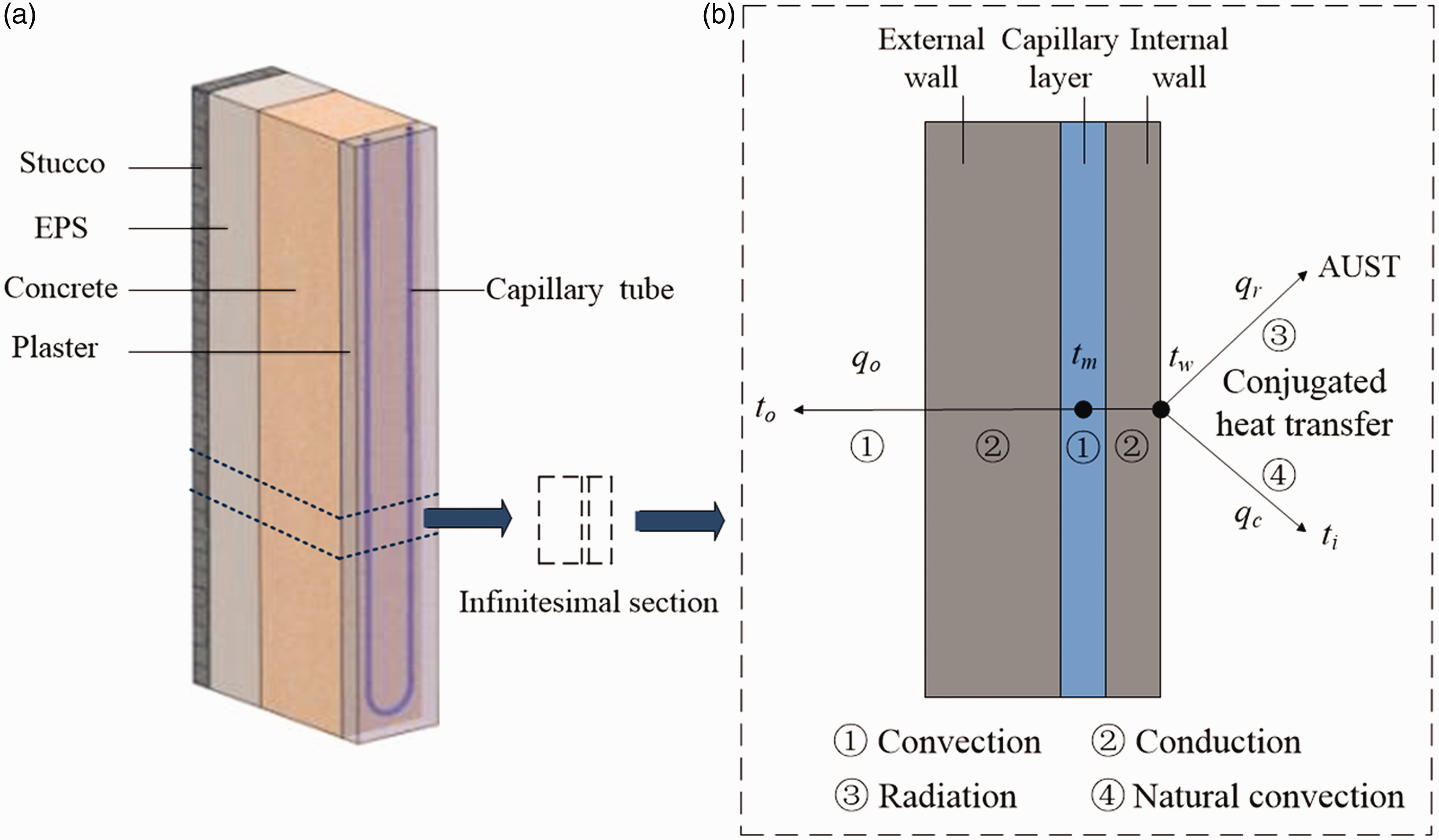
Schematic diagram of the radiant wall composited with capillary tubes: (a) physical model; (b) heat transfer processes.
The radiant wall includes the external wall, internal wall and capillary layer. The diameter of the capillary tube is 3.5 mm, and the capillary tube spacing is 15 mm. The thickness of the external wall is 240 mm, including a 20 mm stucco layer, an 80 mm insulation layer, and a 140 mm concrete layer. The thickness of the internal wall is 20 mm.
The expression of the ratio of heat transfer in the composite radiant wall is described by equation (1)

Ratio modelling of heat fluxes
The conjugated heat transfer occurs on the internal wall, involving the natural convection and radiation, as illustrated in Figure 1(b). The calculation of the natural convection is influenced by many variables, e.g. indoor air temperature, radiant surface temperature and building envelope roughness, etc.
28
The available empirical equations were applied to calculate the convective heat transfer coefficient by many researchers.29–36 In this study, methods of calculating natural convective heat flux between a heated or cooled wall panel surface and indoor air were based on ASHRAE handbook, as given by equation (2)
36

The radiant heat flux from the capillary layer towards the indoor environment was determined by equation (3)





Taking equations (2) to (7) into account, the radiant heat flux from the capillary layer towards the indoor environment can be rearranged by equation (8)

Then, the total heat fluxes from the capillary layer towards the indoor environment can be expressed by equation (9)

Due to the significant influence of the wind on the outdoor surface of the building envelope, the convective heat transfer becomes dominant. The outdoor air temperature was used to calculate the total heat fluxes from the capillary layer towards the outdoor environment,
26
as can be determined by equation (10). As mentioned above that the studied radiant wall is of northern direction and effects of solar radiation and longwave radiation heat gain are negligible, the outdoor air temperature was adopted to characterize the outdoor integration.

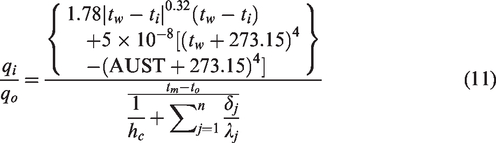
The ratio of heat fluxes from the capillary layer towards the indoor and outdoor sides is shown as equation (11)
Experiments
Experimental system
In this study, the experimental system was established in Nanjing, China to validate the accuracy of the ratio model of heat transfer from the capillary layer towards the indoor and outdoor sides and investigate the characteristic of the ratio in both summer and winter conditions. Nanjing is classified as the humid subtropical climate (Cfa climate) based on the Köppen-Geiger classification, 38 which corresponds to the hot-summer and cold-winter climate under the climate classification in China. The climate of this researched zone is a typical humid climate in China. The radiant system is associated with a dedicated fresh-air system, which bears the latent heat load separately. Therefore, the radiant system could provide a comfort environment with an elimination of the draught sensation. In addition, the radiant system has low noise and is energy-saving due to the high-temperature cooling in summer and low-temperature heating in winter. The experimental parameters include the capillary layer temperature, the indoor and outdoor air temperatures, the radiant surface temperature and heat fluxes from the capillary layer towards both indoor and outdoor sides.
The general dimension of the north-facing test room was 3.0 m (x) × 3.4 m (y) × 3.0 m (z), with the external north and west walls as shown in Figure 2(a). The radiant system was mainly composed of the cold/heat source system with the radiant panel. The capillary tubes were embedded in the north-facing wall of the test room. The diameter of the capillary tube is 3.5 mm, and the capillary tube spacing is 15 mm. The thickness of the external wall is 240 mm, including the 20 mm external plaster layer, the 80 mm insulation layer and the 140 mm concrete layer. The thickness of the internal wall is 20 mm. The heat transfer coefficient of each layer in the composite radiant wall is within the range of 1.0 W·m−2·K−1, which is in accordance with the design codes 39 for energy-efficient public buildings and represents the typical envelope structure constructed in the hot-summer and cold-winter zone of China. In order to characterize the heat transfer performance of composite radiant walls in hot-summer and cold-winter zone of China, such typical building envelope was studied.
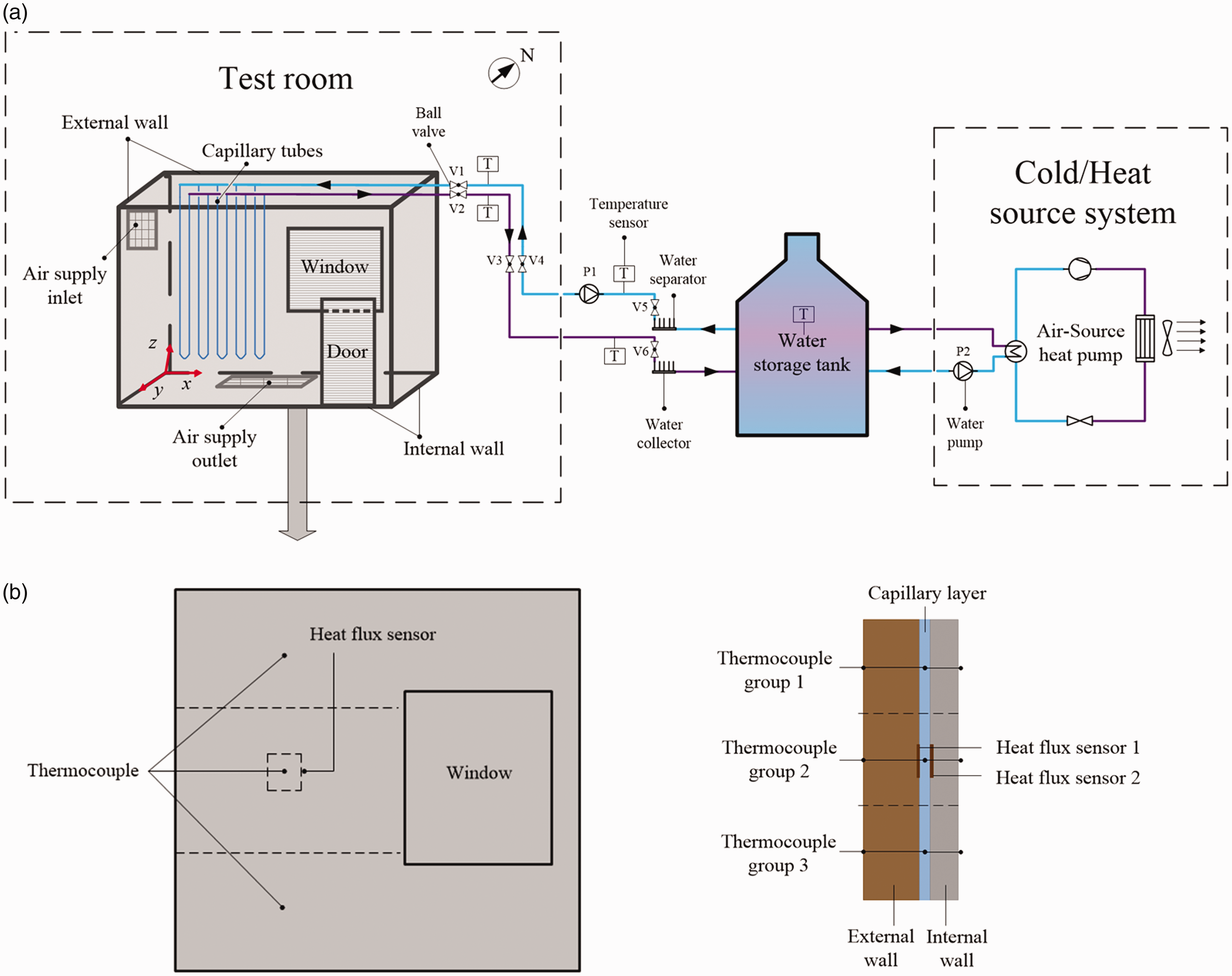
Overview of experiment: (a) schematic diagram of the experimental system; (b) schematic diagram of area-averaged method; (c) positions of experimental instruments.
According to the relevant codes, 37 data acquisition apparatuses began to collect and record the instantaneous values at each measuring point after 72 h pilot run of the system. The schematic diagram of the experimental system is shown in Figure 2(a). The high-temperature chilled water in summer condition and low-temperature hot water in winter condition were obtained by the operation of air-source heat pump and were stored in the water storage tank. Working fluid was supplied to the radiant panel through the water separators, the water pumps and the ball valves. Then the working fluids returned to the water storage tank after the heat transfer process occurred in the radiant panel.
The cold/heat source system was equipped with an air-source heat pump with a rated heat of 8.2 kW. The supply water flow rate of the radiant system is 0.56 m3/h, and the water pressure is 0.1 MPa. The water flow rate is dominated by the host controller. In order to protect the cold/heat source pump, the unit stops and alarms when the water pressure is less than 0.1 MPa. The water supply temperatures were maintained between 18–20°C in summer conditions and 34–36°C in winter conditions,40,41 respectively. To minimize the heat loss from external windows towards the indoor environment, double-layer hollow glazed windows with low thermal conductivity were installed.
The measuring system
In order to obtain the heat fluxes from the capillary layer towards the indoor and outdoor sides, respectively, the heat flux sensors (thermopile type) with the size of 100 mm × 2.5 mm × 100 mm were attached to both sides of the capillary tubes, using high conductive thermal grease. Due to the thermal insulation at the top and bottom, we consider that the heat transfer is in the latitudinal direction. The large area radiant wall is equivalent to a one-dimensional infinite slab; therefore, the reflection of ground effects could be neglected. Then heat fluxes from the capillary layer towards inside and outside can be measured by the small-area heat flux sensors, for the fact that the thermal resistance of the heat flux sensor is negligible. 36 Nine T-type thermocouples were placed on the capillary layer and wall surfaces to collect the temperature data. In addition, the indoor and outdoor air temperatures were collected by high accuracy temperature-humidity thermistor, and a data logger Fluke 2638 A was adopted for data monitoring and recording of all sensors. The time interval of data recording was 1 min, and the sampling time lasted over 24 h. The main parameters of the experimental apparatus are shown in Table 1.
Summary of experimental instruments.
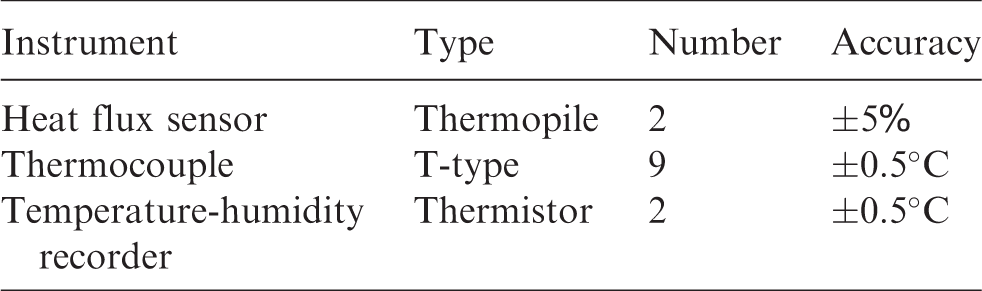
The area-averaged method was adopted to measure temperatures and heat fluxes of the composite radiant wall, as shown in Figure 2(b). The measuring points were arranged in the vertical centreline of the composite radiant wall, and kept away from thermal bridges, cracks and air leakages, and not be directly affected by heat sources inside the room. 37 The area of the composite radiant wall was divided into three equal parts and thermocouples were placed in the centre of each part, as shown in Figure 2(c). The heat flux sensors were located at the centre position of the composite radiant wall to obtain the uniform and accurate heat fluxes.
Data reduction
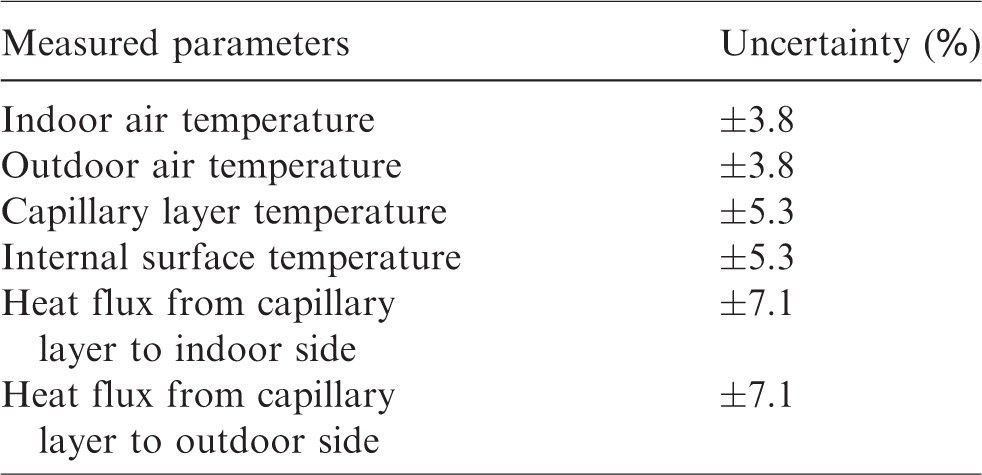
Temperature and heat flux are the critical parameters in the present study. The accuracy of the measurement directly could affect the experimental results. The combined uncertainty of indirect measurements can be calculated by equation (12). Table 2 shows the results of the uncertainty analysis of the indoor and outdoor air temperatures, capillary layer temperature, radiant surface temperature and heat fluxes from the capillary layer towards indoor and outdoor sides.

The results of the uncertainty analysis.
Results and discussion
Validation
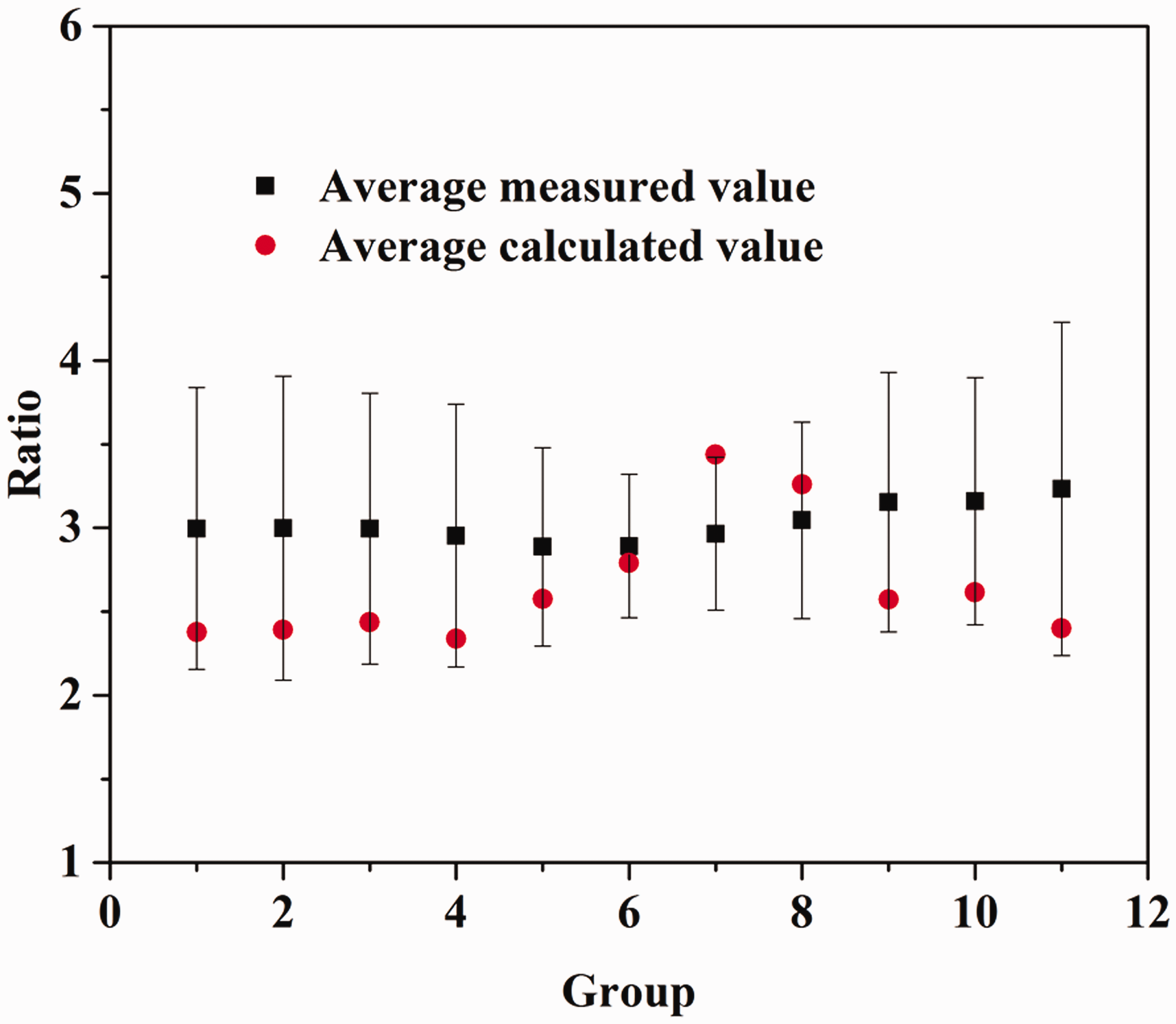
The experimental results of heating conditions were used to validate the ratio model established above. To determine the ratio value accurately, the average values of heat fluxes, indoor and outdoor air temperatures, the capillary layer temperature and radiant surface temperature in the corresponding period were collected and brought into equations (9) and (10). The comparison between the average calculated ratios and the measured values is shown in Figure 3.
Comparison between calculated and measured values in winter conditions.
The number of measuring groups during those sampling dates are different due to the different operation frequencies of the air-source heat pump. Taking the measuring groups on 13 January as an example, the air-source heat pump started and stopped 10 times, and therefore 10 sets of data were recorded for analysis. The average error between the model calculation and experimental results during the entire measuring period (from 10 January to 13 January) is ±15.6%, which is within an acceptable range in engineering applications.42,43 Figure 3 indicates that the experimental results are in good agreement with the calculated values of the ratio model, verifying the rationality and the veracity of the proposed model. The minimum average error between calculated values and measured values in the ratio of heat transfer on 13 January is ±4.5%.18,44,45 With the continuation of the system operation, the experimental results of the ratio of heat transfer in the composite radiant wall are closer to the calculated values in steady-state conditions. This also explains that the total heat transfer is not affected by heat storage and exothermic performance of the composite radiant wall, which verifies previous conclusions by Zhang. 27 However, the experiment is under unsteady-state condition, while the ratio model we proposed is a steady-state heat transfer model. According to the conservation of energy, the average values of experimental data and the calculated values of the proposed model are in fairly good agreement with a relatively long period, which fully validates the feasibility of the steady-state ratio model. Establishing the ratio model of heat transfer under steady-state condition is important for exploring the heat transfer capacity of the capillary layer (active layer) facing towards the indoor and outdoor sides.
Radiant cooling
Temperature variation
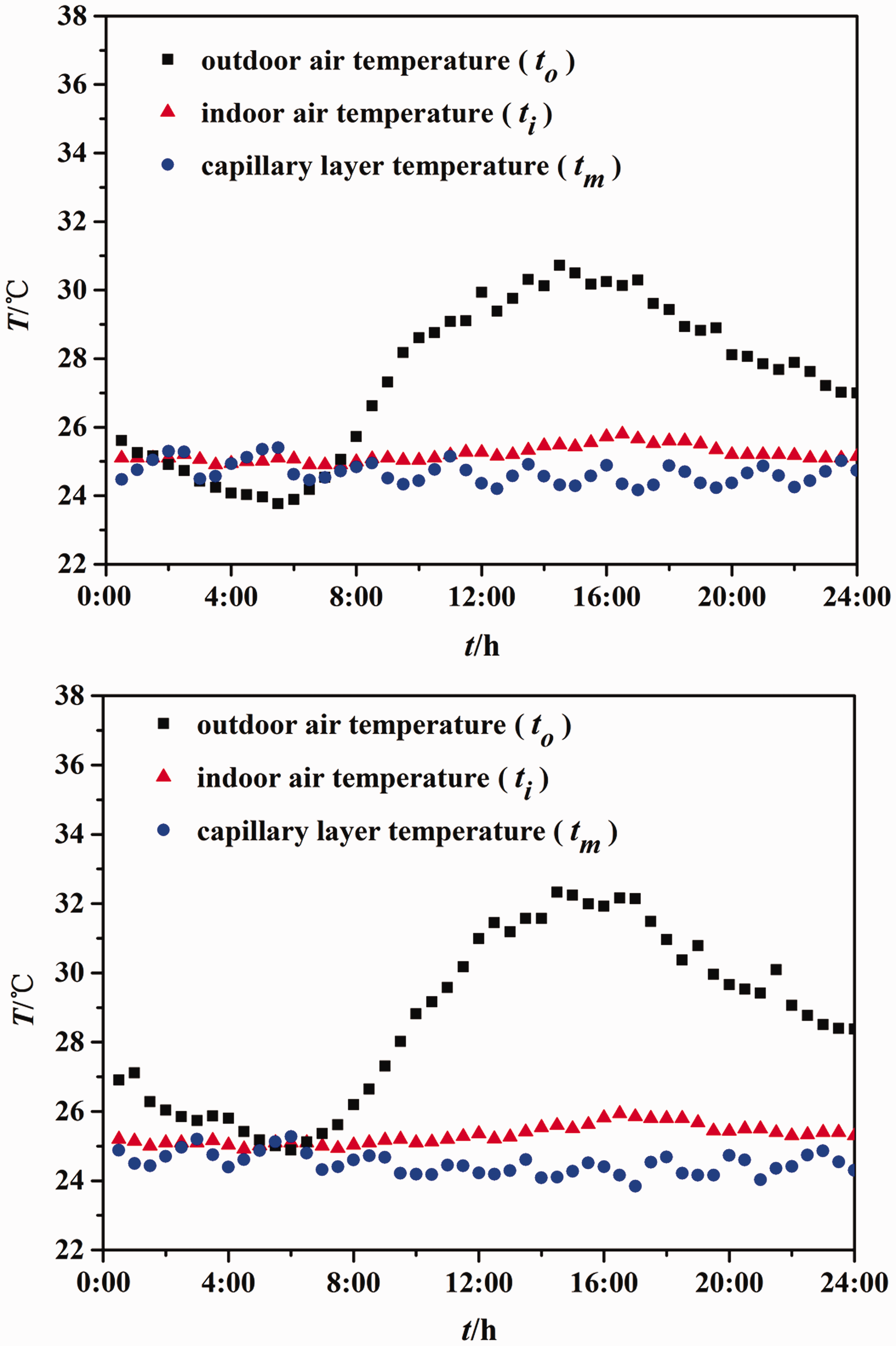
The data collected on 31 August 2016 and 1 September 2016 were analysed in terms of temperature variations of the indoor air, the outdoor air and the capillary layer, as shown in Figure 4. The capillary layer temperature varied periodically due to the operation state of the air-source heat pump. The capillary layer counteracts the heat from the outdoor environment towards the indoor environment and absorbs the heat from the indoor environment. The outdoor air temperature fluctuates greatly from 23°C to 32°C with a variation in the hourly temperature. However, the indoor air temperature varied within 25°C–26°C, which benefits the stability of the radiant system. During the tests, the indoor air temperature was maintained at 25.5°C, which is neutral according to the standard of ISO 7730–2005,46,47 and compliance with the requirement of thermal comfort for indoor environment.
Temperature variation in summer conditions: (a) 31 August 2016; (b) 1 September 2016.
Ratio of heat fluxes
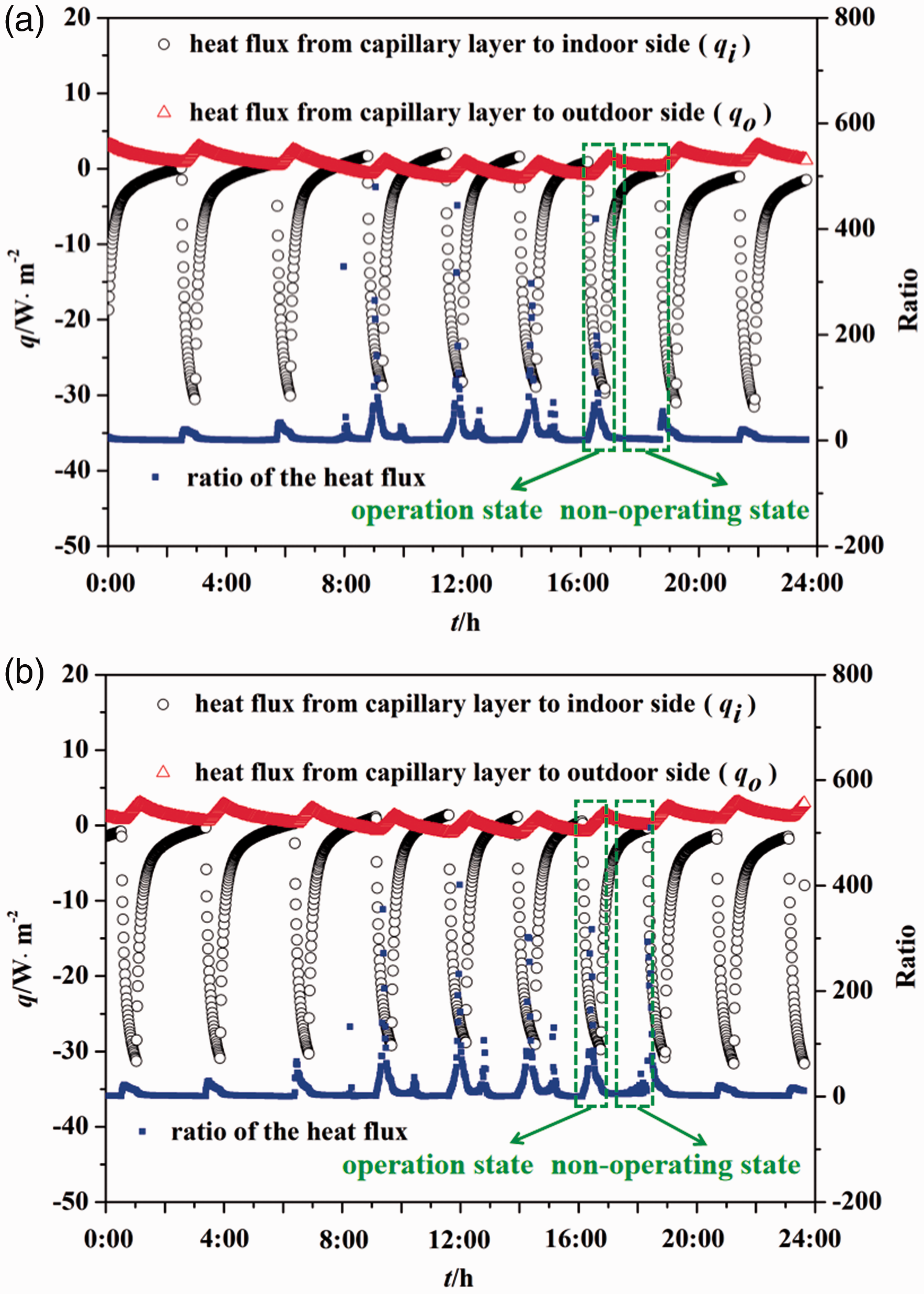
In this study, the direction of heat fluxes from outside towards inside is defined as the positive direction. The heat fluxes from the capillary layer towards the indoor and outdoor sides in summer conditions are shown in Figure 5. Results show that in summer conditions, the data collected by the heat flux sensors possess positive and negative values. This is attributed to the fact that the supply water temperature is lower than the ambient temperature, and capillary layer absorbs heat simultaneously from both indoor and outdoor sides.
Heat fluxes from the capillary layer towards the indoor and outdoor sides in summer conditions: (a) 31 August 2016; (b) 1 September 2016.
As can be seen from Figure 5, the heat fluxes from the capillary layer towards the indoor side are higher than those facing towards the outdoor side due to effects of heat transfer performance of the building envelopes. The results show that the heat flux variations from the capillary layer towards the indoor and outdoor sides are closely related to the operation state of the system. During the operation state of the system, the supply water temperature is kept at the setting value, and the heat fluxes from the capillary layer towards indoor and outdoor sides increase simultaneously. During the non-operating state, the supply water temperature increases to satisfy the requirement of the heat transfer in the indoor environment, the heat fluxes from the capillary layer towards the indoor side decrease rapidly, and the heat fluxes from the capillary layer towards the outdoor side vary slightly, which result in a decrease in the ratios. When the indoor air temperature is higher than the setting temperature, the heat pump restarts and the supply water temperature cools down again. Compared to the ratios in winter conditions, the ratios of the heat fluxes from the capillary layer towards the indoor side and outdoor side in summer conditions vary greatly between operation and non-operating state transitions. This is due to different moisture contents of the building envelope in the two seasons, which in turn changes the insulation properties of the building envelope and the thermal resistances of the radiant wall.48,49 Further analysis can be found in the later discussion.
Radiant heating
Temperature variation
The data on 10 January 2017 and 13 January 2017 were analysed with a consideration of the temperature variation in the indoor air, the outdoor air and the capillary layer, as shown in Figure 6.
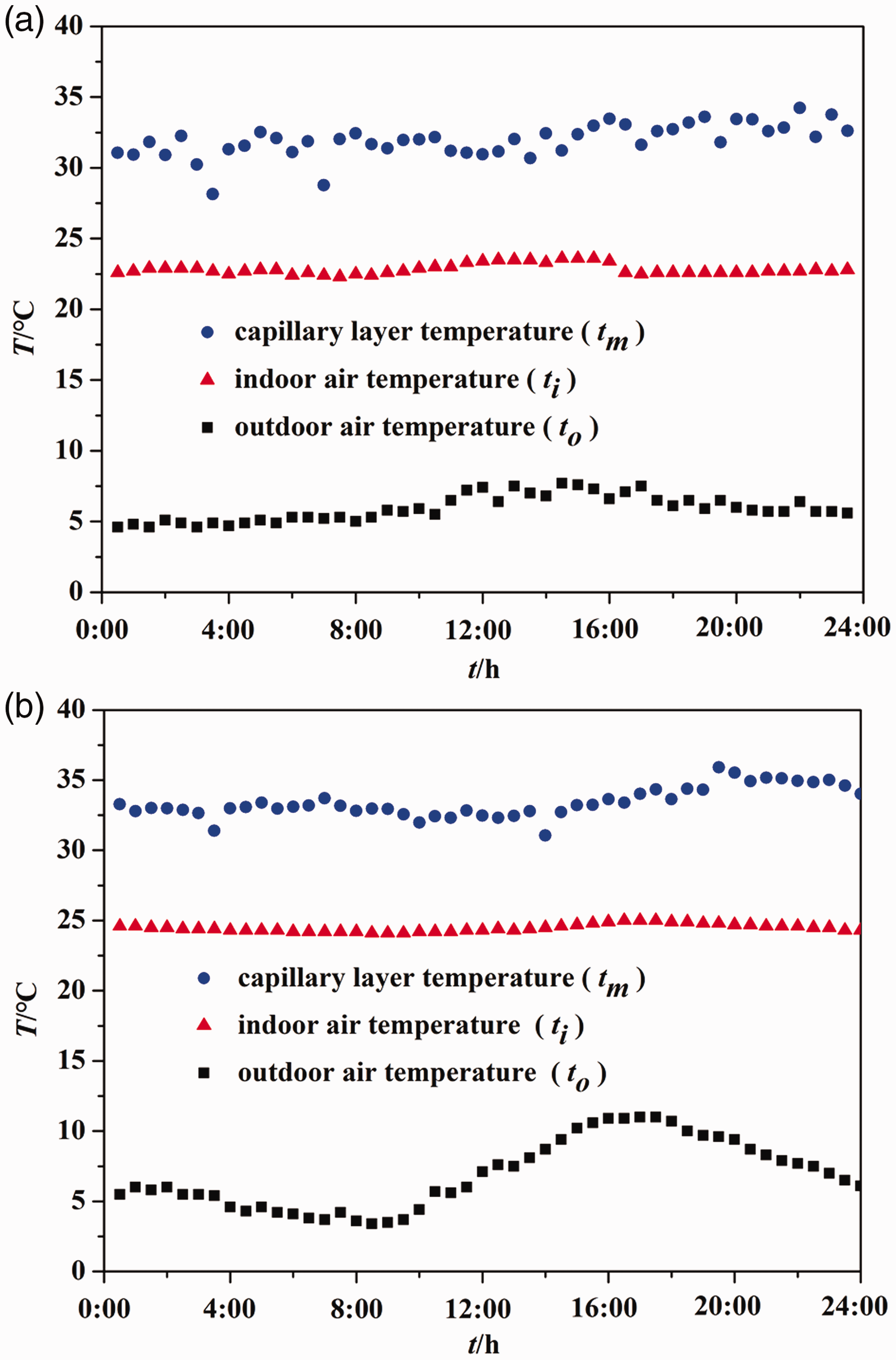
Temperature variation in winter conditions: (a) 10 January 2017; (b) 13 January 2017.
As can be seen, the capillary layer temperature varied periodically due to the operation state of the air-source heat pump. The capillary layer counteracts the heat from the outdoor environment towards the indoor environment and discharges the heat to the indoor environment. The outdoor air temperature varied greatly within 3°C–10°C. The indoor air temperature was kept between 24°C and 25°C, indicating a good stability of the radiant system and the performance satisfying the indoor thermal comfort of occupants. However, the indoor air temperature on 13 January shows a slow decreasing trend. This is because that the heat from the capillary layer towards the indoor environment is mainly transferred by radiation mode. Compared to the traditional air-conditioning system, the method of radiation is relatively slow to adjust the indoor air temperature.
Ratio of heat fluxes
Similarly, in winter conditions, the capillary layer discharges heat to the indoor and outdoor sides, and the direction of the heat fluxes from the capillary layer towards the indoor and outdoor sides exhibit positive and negative values, respectively, as shown in Figure 7. The heat flux and ratio at operation and non-operating state are discussed respectively for the relatively complicated characteristic of the composite radiant wall in winter conditions.
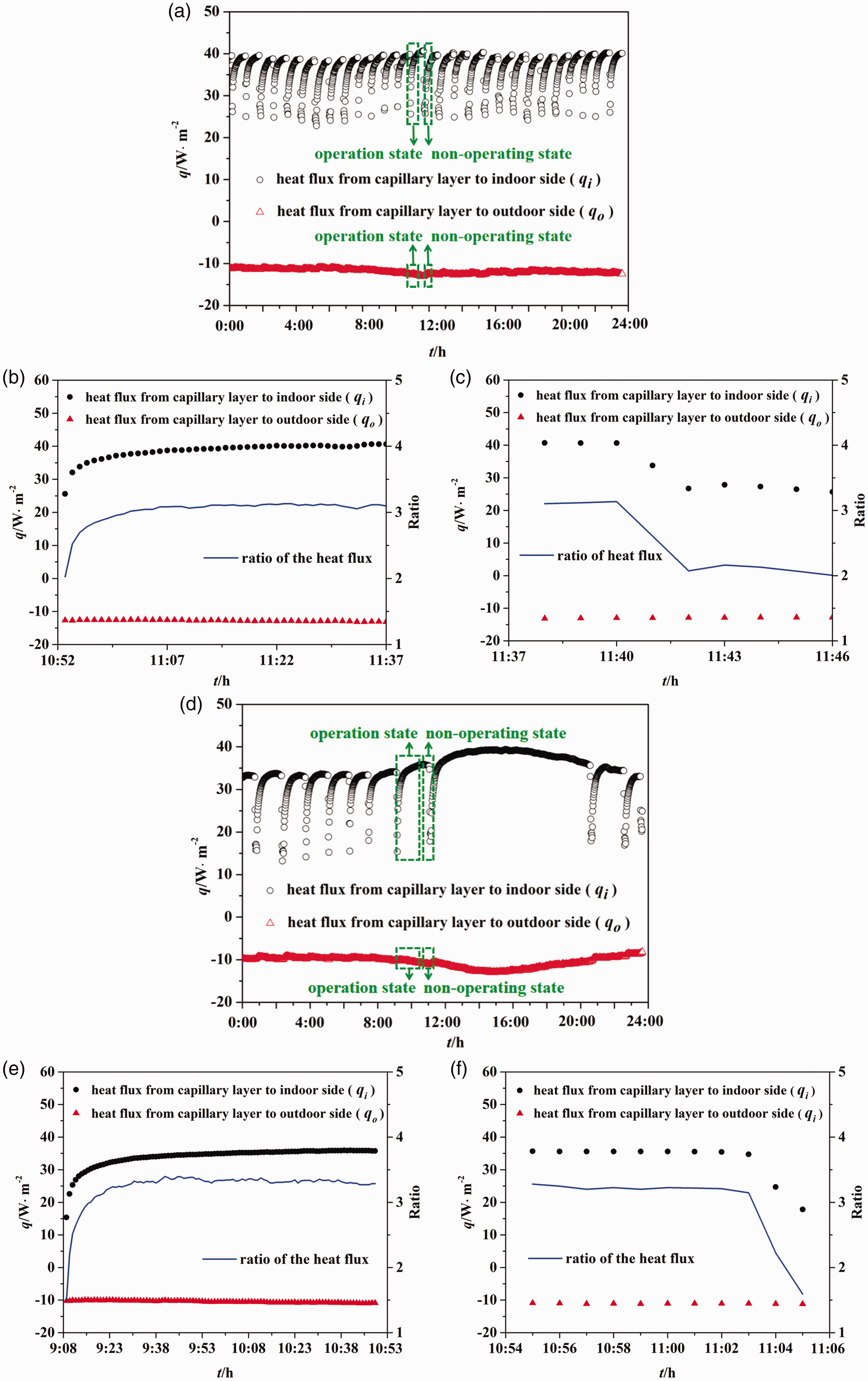
Heat fluxes from the capillary layer towards the indoor and outdoor sides in winter conditions: (a) 10 January 2017; (b) operation state in 10 January 2017; (c) non-operating state in 10 January 2017; (d) 13 January 2017; (e) operation state in 13 January 2017; (f) non-operating state in 13 January 2017.
From Figure 7, the heat fluxes from the capillary layer towards the indoor side are relatively higher than that from the capillary layer towards the outdoor side, owing to the effect of heat transfer performance of the building envelope. The heat fluxes from the capillary layer towards the indoor side are closely related to the operation state of the system while the heat fluxes from the capillary layer towards the outdoor side are kept within 7–10 W·m−2, due to the fact that the periodic variation of the capillary layer temperature in a certain period of operation is 2°C, which shows a slight effect on the temperature difference between the capillary layer and the outdoor air. By comparing the measured cases, Figure 7 shows that the starting/stopping rates on 10 January 2017 are higher than on 13 January 2017, as a result that the outdoor air temperature on 10 January 2017 was relatively low and the requirement of the indoor air temperature was difficult to reach.
Comparison of radiant cooling and heating characteristics
Comparison of the thermal resistances in summer and winter conditions
From the above analysis, the maximum heat fluxes from the capillary layer towards the indoor side in summer conditions are much larger than that from the capillary layer towards the outdoor side, while the ratio of heat transfer in the composite radiant wall varies within a small range in winter conditions. To verify the experimental results, the average thermal resistances of the composite radiant wall in summer and winter conditions were calculated, as listed in Tables 3 and 4.
Average experimental results in summer conditions.

Average experimental results in winter conditions.

The average thermal resistance of the internal wall in winter conditions is 0.264 K·m2·W−1, which is larger than 0.097 K·m2·W−1 recorded in summer conditions, bringing a difference of 272.2%. The average thermal resistance of external wall in winter conditions is 2.345 K·m2·W−1, which is less than 3.670 K·m2·W−1 recorded in summer conditions, with a difference of 156.5%. These findings indicate that there is a large difference in the thermal resistance of the internal and external walls in summer and winter conditions. This is due to different moisture contents in the building envelope in these two seasons, which in turn changes the insulation properties of the building envelope.48,49 As the moisture content increases, the materials in the radiant wall become more viscous and less plastic, then the thermal resistances of the radiant wall gradually become smaller.50,51 The moisture contents of internal wall in summer conditions are larger than in winter conditions. However, the moisture content of the external wall in summer conditions is smaller than that in winter conditions. According to the average experimental results, the thermal resistances of internal wall are relatively small in summer conditions, which increase the heat fluxes from the capillary layer towards the indoor side. Correspondingly, the thermal resistances of the external wall are larger in summer conditions, decreasing the heat fluxes from the capillary layer towards the outdoor side. Therefore, the ratios of heat transfer in summer conditions are larger than recorded in the winter conditions.
Comparison of heat fluxes in summer and winter conditions
Hysteresis is existed in the start-up and stopping periods of the air-source heat pump. In summer conditions, the supply water temperature at start-up is relatively low, and the capillary layer absorbs the heat from the indoor and outdoor environments simultaneously. After reaching the setting temperature, the heat pump stops. Then the capillary layer eliminates the part of heat transferred from the indoor and outdoor sides, resulting in an insufficient cooling capacity. Therefore, the heat from the indoor environment continues to penetrate the capillary layer towards the outdoor environment, then the value of the heat flux qo from the capillary layer towards the outdoor side changes to become negative. It is the same as allowing the heat from the outdoor environment continues to be transferred towards the indoor environment, the value of the heat flux qi from the capillary layer towards the indoor environment changes to become positive.
After the air-source heat pump is started, the supply water temperature decreases, and the cooling capacity of the radiant system rises, the capillary layer could absorb the heat from the indoor and outdoor sides, so that the values of the heat fluxes qi and qo return to be negative and positive, respectively. In winter conditions, the heating capacity of the system is enough, due to the relatively large differences between the supply water temperature and the indoor and outdoor air temperatures. Therefore, the direction of the heat fluxes on both sides would not change.
According to variations of the average results in the test period shown in Table 5, the differences between the supply water temperatures and the outdoor air temperatures are relatively small in summer conditions, and the heat fluxes from the capillary layer towards the outdoor side are smaller than those in winter conditions. However, the maximum heat fluxes from the capillary layer towards the indoor side could reach to 30–33 W·m−2 based on variations of thermal resistance of composite radiant wall, which are close to that in winter conditions, so that the maximum ratios of the heat transfer in summer conditions are much larger than those in winter conditions. In Table 5, the average values for the ratio of heat transfer in summer and winter conditions are within 1–4, which proves that the existence of the large ratio value in summer conditions is reasonable.
The variation of average results in summer and winter conditions.

Conclusions
Based on the analysis of heat transfer characteristics of composite radiant wall, a ratio model of heat distribution under steady-state conditions was established and validated in this study. Taking the radiant system of a residential building in Nanjing, China as the research object, an experimental study was carried out to investigate characteristics of temperature variations and ratios of heat flux allocation in cooling and heating conditions. The following conclusions were derived from the study:
The indoor air temperature would be maintained at 25°C and would satisfy the comfort requirements of the indoor environment, which could not be affected by a variation of the outdoor air temperature. In summer conditions, heat fluxes from the capillary layer towards the indoor and outdoor sides are closely related to the system operation and downtime states. During the operation state, heat fluxes towards the indoor side are higher than those towards the outdoor side, while the ratio of heat transfer gradually decreases during the downtime state. In winter conditions, however, the heat fluxes from the capillary layer towards the outdoor side would be kept within 7–10 W·m−2. The starting/stopping rates would increase when the outdoor air temperature is relatively low, and the requirement of indoor air temperature is difficult to reach. With the continuation of the system operation, ratios of heat transfer obtained from experiments under unsteady-state conditions and from the proposed steady-state model would be more consistent with a minimum average error at ±4.5%. This fully demonstrated that the effect of heat storage and exothermic in the composite radiant wall would not have a great impact on the entire heat transfer process in a certain period, indirectly verifying the feasibility of the steady-state ratio model. The steady-state ratio model is also applicable to analyse the heat transfer characteristics of radiant wall in other climate zones. The average ratios of heat transfer are within the range of 1–4 in summer and winter conditions. The thermal resistances of the composite radiant wall vary greatly with the season change due to the different moisture contents, causing the maximum ratio of heat transfer in summer conditions to be far greater than that in winter conditions.
Footnotes
Authors’ contribution
All authors contributed equally in the preparation of this article.
Acknowledgements
The authors would like to thank all the funders for their kind support to make this research possible. The authors would also like to thank the following people for their valuable input and effort: Mr. Chunbin Ye, Nanjing In-Out Air-Conditioner Company, Senior Engineer Ying Cao, China Architecture Design & Research Group, and two MSc students from Xi’an Jiaotong University, Ms. Zhendi Ma and Zeyu Tao.
Declaration of conflicting interests
The author(s) declared no potential conflicts of interest with respect to the research, authorship, and/or publication of this article.
Funding
The author(s) disclosed receipt of the following financial support for the research, authorship, and/or publication of this article: This project was jointly financed by the Scientific and Technological Innovation Project in Shaanxi Province (2015KTCQ01-99), the Key Scientific Research Innovation Team Project of Shaanxi Province (2016KCT-16) and the National Key Research & Development Program of China (2016YFC0802405).