







Abstract
Hybrid ground source heat pump (GSHP) systems which utilize capillary radiant ceiling are promising to provide a better building comfort while reducing energy consumption. We have developed a GSHP model and an analytic hierarchy process (AHP) method for evaluating the system feasibility. The hybrid GSHP system provides heating/cooling for an office in Wuhan, China. A conventional HVAC system – water chiller + gas boiler (WB) system was also simulated. The results showed that the hybrid system would provide a better indoor comfort and remains at the thermal comfort class I, and the hybrid system would incur a 14.5% lower cost but would provide 43.2% more energy saving. The hybrid GSHP system could reduce 20.23 tons of CO2 emission, while 1.39 tons more SO2, 0.39 tons more NOx and 9.70 tons more Ash emissions could be produced. Overall, the hybrid system performance evaluation result (SPER) was 0.966, and the WB system was 0.746. These SPERs were quantified system evaluation results calculated using the AHP method, which have considered the impacts of the various factors – economic cost, energy saving and environmental impact. The hybrid GSHP system is more adaptable than the WB system and has a good application prospect in this climate region.
Keywords
Introduction
Due to the society development and increasing needs of indoor thermal comfort, building energy consumption now accounts for more than a third of China’s total energy consumption.1–3 The heating, ventilation and air-conditioning (HVAC) systems contribute 60%–70% of the building energy consumption. Ground source heat pump (GSHP) system is a new type of HVAC system which utilizes heat pump technology and renewable geothermal energy to heat or cool buildings. The GSHP system is energy saving in comparison to the conventional types of HVAC system and would also reduce environmental pollution.4,5 For the GSHP systems, it is critical to balance the heat it extracts from and rejected to the ground in heating and cooling seasons to maintain a stable and efficient system performance over the years. 6 Therefore, typically, a GSHP system is connected to an auxiliary cooling source (cooling tower or others) or auxiliary heating source (solar collector) and becomes a hybrid GSHP system.
Several researchers suggested coupling the HVAC systems with radiant terminals. By coupling the radiant terminals to HVAC system, the system efficiency and indoor comfort would be greatly improved. The system can transfer peak load and reduce building energy consumption and system operating costs.7–12 Experimental evaluation of the potential application of low-temperature radiant ceiling heating systems showed that it can provide fairly neutral thermal sensation and satisfactory indoor comfort even for old and energy-renovated buildings. 13 Both thermal comfort conditions and system’s energy consumption need to be investigated by determining the heat transfer coefficient of radiant. The heat transfer coefficients corresponding to convection, radiation and total heat transfer from radiant ceiling have been proposed.14–16
For the optimization and design of the radiant system cooling and heating capacity, several impact factors have been studied. The satisfaction of radiant system performance was found to be correlated to the exposure duration of radiant. 17 Effects of the radiant system location on both the air change efficiency and thermal comfort have been studied. 18 The design of radiant cooling panels with different aspect ratio, serpentine flow architecture has been studied, and the design toward compactness is a way to increase the ratio of cooling capacity over pumping power. 19 An improved system for enhancing the air flow disturbance to increase heat transfer between the aluminium sheets and cooling panels has been suggested, which reduces system capital cost by using less pipe materials. 20 Open type radiant panel has been proposed as a method for enhancement of system capacity. 21 Indoor air distribution and thermal environment were investigated for different combinations of radiant heating systems with mechanical ventilation systems. 22 Adopting appropriate control and operation schemes, 44.4% annual primary energy saving for office building in hot humid climate could be achieved. 23 Utilizing model predictive control and proportion-integral-derivative control for radiant ceiling cooling have led to differences in energy consumption. 24 To reduce both the initial cost and maintenance cost, the air temperature can be used to control the radiant systems in lieu of the operative temperature. 25
The condensation phenomenon is one critical concern of using radiant terminal. Song et al. 26 suggested a solution for floor surface condensation problems by cooling and dehumidifying the outdoor air before it entered an apartment. A critical RH method was developed to determine suitable relative humidity accurately to avoid condensation. 27 An operation limit region plotting key parameters including supply water temperature, operative temperature panel surface temperature as well as total heat flux density of the radiant system was identified and proposed to avoid the water condensation risk. 28
Hybrid GSHP system coupled with radiant terminal such as capillary radiant ceiling or radiant floor can be promising for practical applications considering indoor thermal comfort, system energy efficiency, etc. Cacabelos et al. 29 developed a GSHP system model which was coupled with radiant floor terminal for a public library. The model average deviation error and root squared error coefficient were less than 5% and 12%, respectively. Villarino et al. 30 developed a HVAC system model for an office building, including a ground-coupled heat pump (GCHP), radiant floor and mechanical ventilation; the values obtained in the simulation model presented a deviation of 2% from the respective experimental results. Sarbu and Sebarchievici 31 tested the performances of an office installed with a GSHP system to compare the efficiency between the radiator and radiant floor. They found that the two systems shared almost the same coefficient of performance (COP), but the on/off switching of radiator system would cause higher wear on the heat pump. The optimization of the system performance has been realized by testing different control methods. Arghand et al. 32 evaluated the system performances regarding room temperature stability and pump energy using different control methods.
Previous researchers mainly focused on the modelling or empirical study and optimal system control strategies of the hybrid GSHP system. They concluded that the hybrid GSHP system is more energy efficient than conventional HVAC systems. There have been few studies that have evaluated the performance of hybrid GSHP and investigated the system feasibility based on more comprehensive perspective. Xie et al. 33 performed collaborative optimization of GSHP-radiant ceiling air conditioning system based on response surface method and fast non-dominated sorting genetic algorithm method, the system performance, thermal comfort and economy were evaluated. Zhang et al. 34 evaluated 50 existed conventional GSHP systems in Jiangsu, China. A comprehensive evaluation was conducted based on the statistical baseline set by the collected data. This method included factors that could influence the actual system performance and provided an approach to assess and compare the performance of different cases comprehensively.
In this study, we developed a TRNSYS model to evaluate the hybrid GSHP system implemented in an office building in the Yangtze River Basin of China – Wuhan city. The system utilizes cooling tower as an auxiliary cooling source and radiant capillary roof as indoor terminal. The system parameters such as indoor air temperature, indoor air relative humidity, indoor predicted mean vote–predicted percentage of dissatisfied (PMV-PPD), heat pump entering fluid temperature (EFT), system coefficient of performance were estimated based on the developed model. The analytic hierarchy process (AHP) method was used for the comprehensive system evaluation and for studying the system feasibility. The hybrid GSHP system evaluation results were compared to conventional HVAC system evaluation results, which showed that the hybrid GSHP system is more feasible than the conventional system for the studied case.
Methodology
Building heating and cooling loads were calculated based on the weather files and building information. A hybrid GSHP system was designed and simulated in TRNSYS environment. The simulated indoor air temperature, indoor air relative humidity, heat pump EFT, system COP were used for investigating the overall system performance. The system was then evaluated in three aspects: economical cost, energy consumption and environmental impact. One evaluation method – AHP method – was used for studying the system performance comprehensively. A traditional HVAC system (water chiller + gas boiler) was also modelled and evaluated. The two systems were compared and the results are discussed in the following sections.
The typical 11-storey office building studied is located in Wuhan. The total construction area of the building is 1400 m2 and construction volume is 15,646 m3. The building layout is shown in Figure 1. The building wall and window materials were designed according to the Chinese standard GB 50189–2015. 35 The exterior walls and roof heat transfer coefficient are 0.588 W/(m2·K) and 0.198 W/(m2·K), respectively. The window heat transfer coefficient is 1.4 W/(m2·K) and window shading coefficient is 0.63.
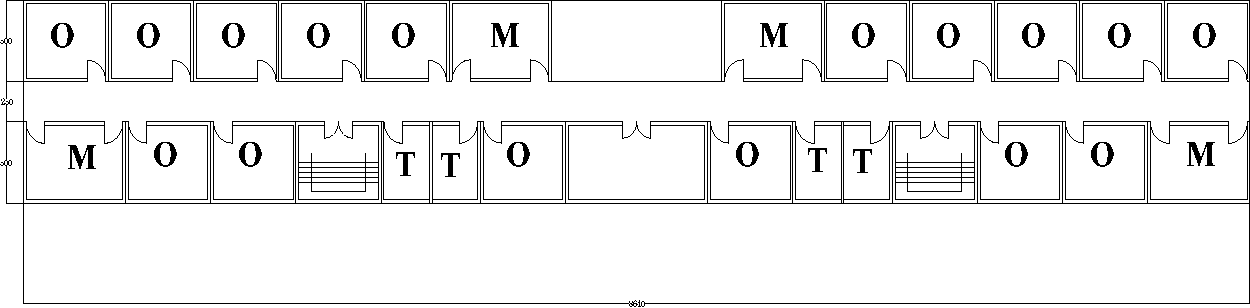
Office building layout (O: office, M: meeting, T: toilet).
The occupant density was set to accommodate 420 staffs in the building. The constant infiltration rate of ventilation was set at 0.6 air change rate per hour (ACH). Schedules for the people, equipment and lighting were created assuming a typical office schedule.
A TRNSYS building model has been developed. The building heating and cooling loads were calculated based on required inputs such as TMY2 formatted weather files, building dimensions, wall, window and roof thermal properties, infiltration air change rate, ventilation rate and internal heat source (person, lighting and equipment), etc. The estimated building loads were used as inputs both for the hybrid GSHP system model and the traditional HVAC (water chiller + gas boiler) model developed in TRNSYS. Based on the TRNSYS building model, the calculated office building heating and cooling load results are shown in Figure 2. The office building peak cooling load is 1897 kW, and the peak heating load is 1267 kW.
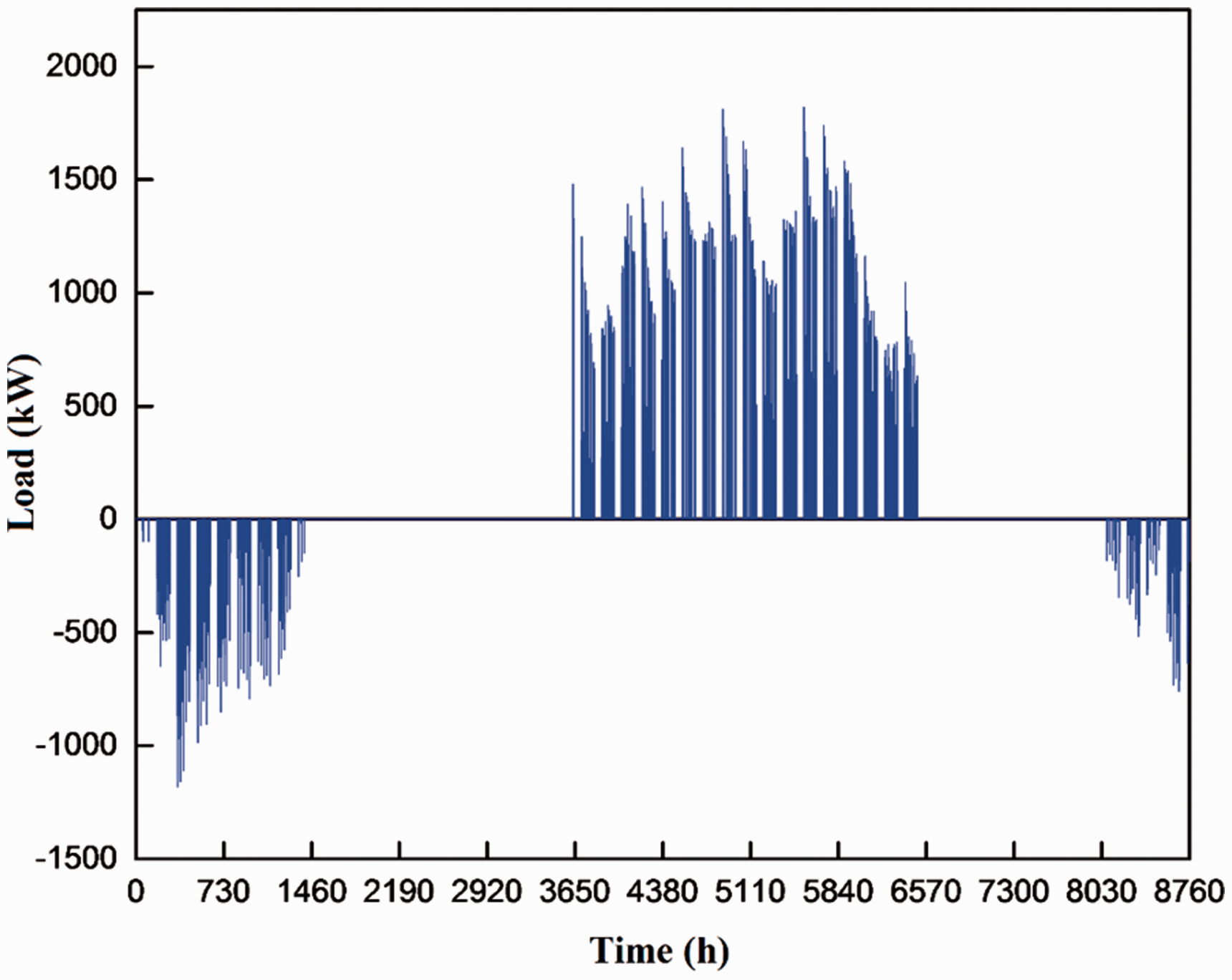
Office building heating and cooling loads in Wuhan, China.
Since the office building is cooling dominant, in order to balance the heat injection and extraction to/from the soil through the ground heat exchangers of the GSHP system, a typical vertical GSHP system needs to be connected to an auxiliary cooling device – cooling tower, and the schematic diagram of the hybrid GSHP system is shown in Figure 3. The cooling tower capacity was designed according to the difference of the heat injection to and extraction from the soil in order to meet the building heating and cooling demands, which suggests that the cooling tower should operate to meet the peak cooling loads. In summer, the cooling tower would be turned on when the heat pump EFT is higher than 37°C, and the system COP has significantly declined. It would be turned off if the heat pump EFT is lower than 33°C, when the hybrid GSHP system would work efficiently without the operation of the cooling tower.
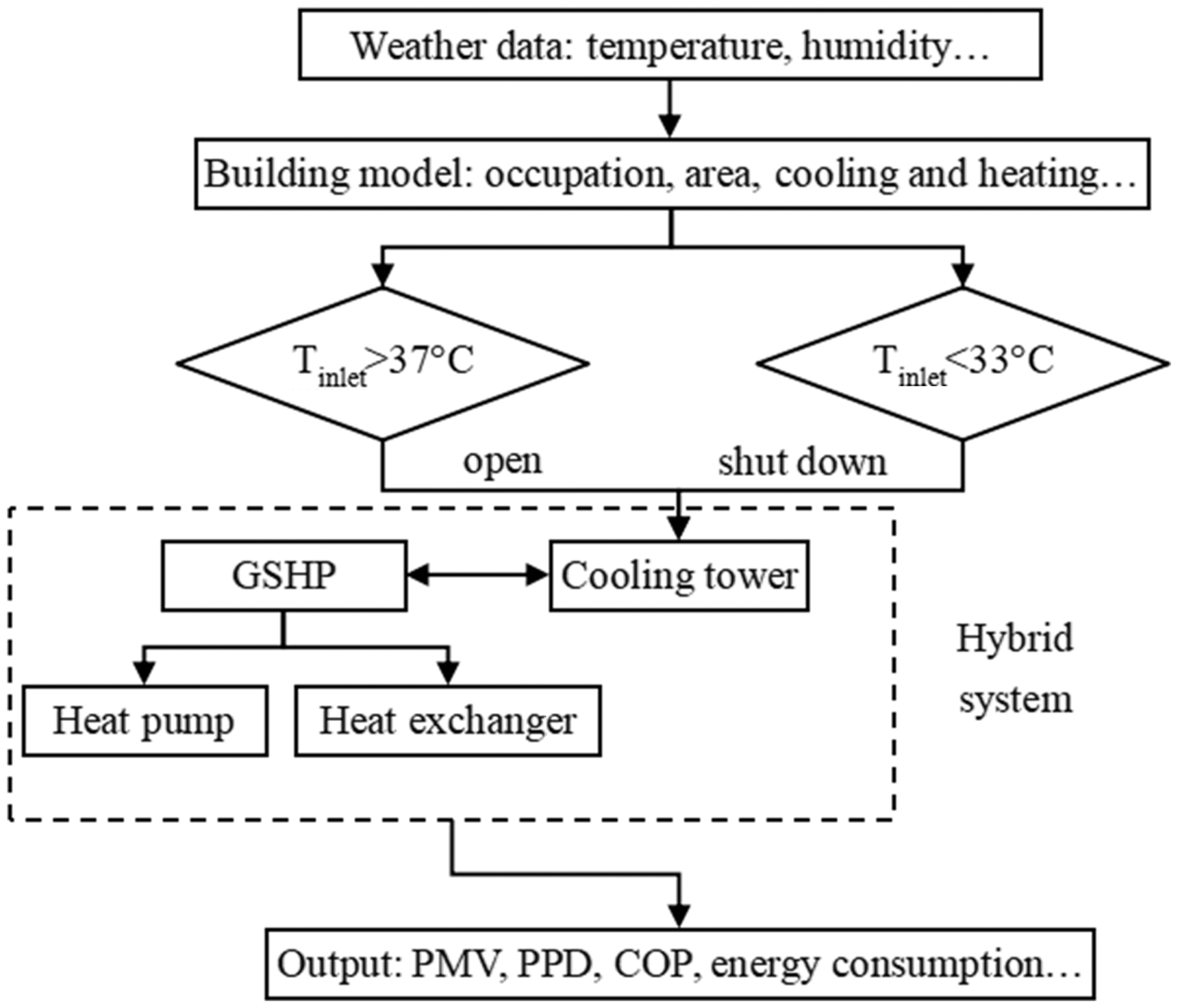
Hybrid GSHP system coupled with capillary radiant ceiling terminal model.
The hybrid system utilizes capillary radiant roof as terminal. The inputs to the hybrid GSHP model include parameters for the ceiling terminal, vertical ground heat exchangers, soil, circulating fluids and equipment. The model output results such as the indoor air temperature and relative humidity, indoor PMV-PPD, heat pump EFT and system COP, and these results are presented and discussed later.
The capillary radiant ceiling terminal was embedded in the building model by setting roof thermal properties and dimension parameters. An insulation layer was laid under the roof, and the capillary tube was laid in the middle of the insulation layer as a ‘sandwich’ structure. The insulation thermal resistance R ≥ 0.825 m2·K/W and the detailed information for the capillary tube are shown in Table 1.
Capillary radiant ceiling terminal dimensions.
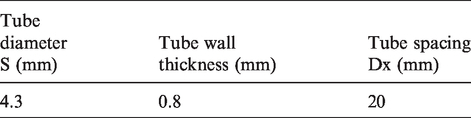
The capillary tube was designed based on the following principles: (1) D1 ≥ 0.3 Dx, D1 is the distance between the tube centre and ground layer surface, Dx is the tube spacing; (2) D2 ≥ S/2, D2 is the distance between the tube centre and insulation layer surface, S is the outer diameter of the tube.
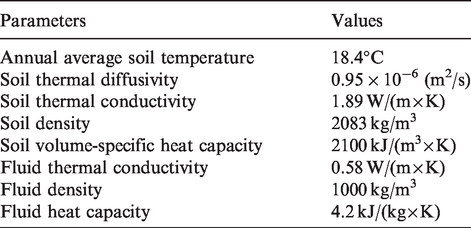
Vertical ground heat exchangers were used in the hybrid GSHP system in this study. The U-shaped polyethylene tube inner diameter and outer diameter were 26 mm and 32 mm, respectively. The tube pitch was 100 mm, and the drilling diameter was 200 mm. The borehole depth was 100 m and a hole pitch was 6 m. The office building is located in Wuhan, Yangtz River Basin of China; in the hot summer and cold winter climate, soil freezing usually would not occur. Thus, water was used as the circulating liquid in the system. The specific soil physical parameters and circulating liquid are shown in Table 2. The designed borehole number was 161 based on the TRNSYS model results.
Soil and circulating fluid physical properties.
Results
The hybrid GSHP model results including indoor air condition, system COPs and heat pump EFTs are presented here. Moreover, the system economical cost, energy consumption and environmental impact were also calculated. An AHP method was used so as to comprehensively evaluate the system. A conventional HVAC system (water chiller + gas boiler) was also modelled. The hybrid GSHP system evaluation results were then compared to the conventional HVAC system evaluation results.
Indoor air condition
Figure 4 demonstrates the indoor air temperature variation during the one-year study period, which was maintained at relatively stable level, while the outdoor air temperatures varied dramatically. The outdoor air temperature varied from −4.7°C to 37.4°C, and the annual average relative humidity of air was 76.0%. In summer, indoor air temperatures of the hybrid GSHP system were maintained within the range of 25–26°C. In winter, the temperature varied within the designed range of 19–20°C. During the transition season period, when the system was turned off, the temperatures fluctuated to a larger degree as expected.
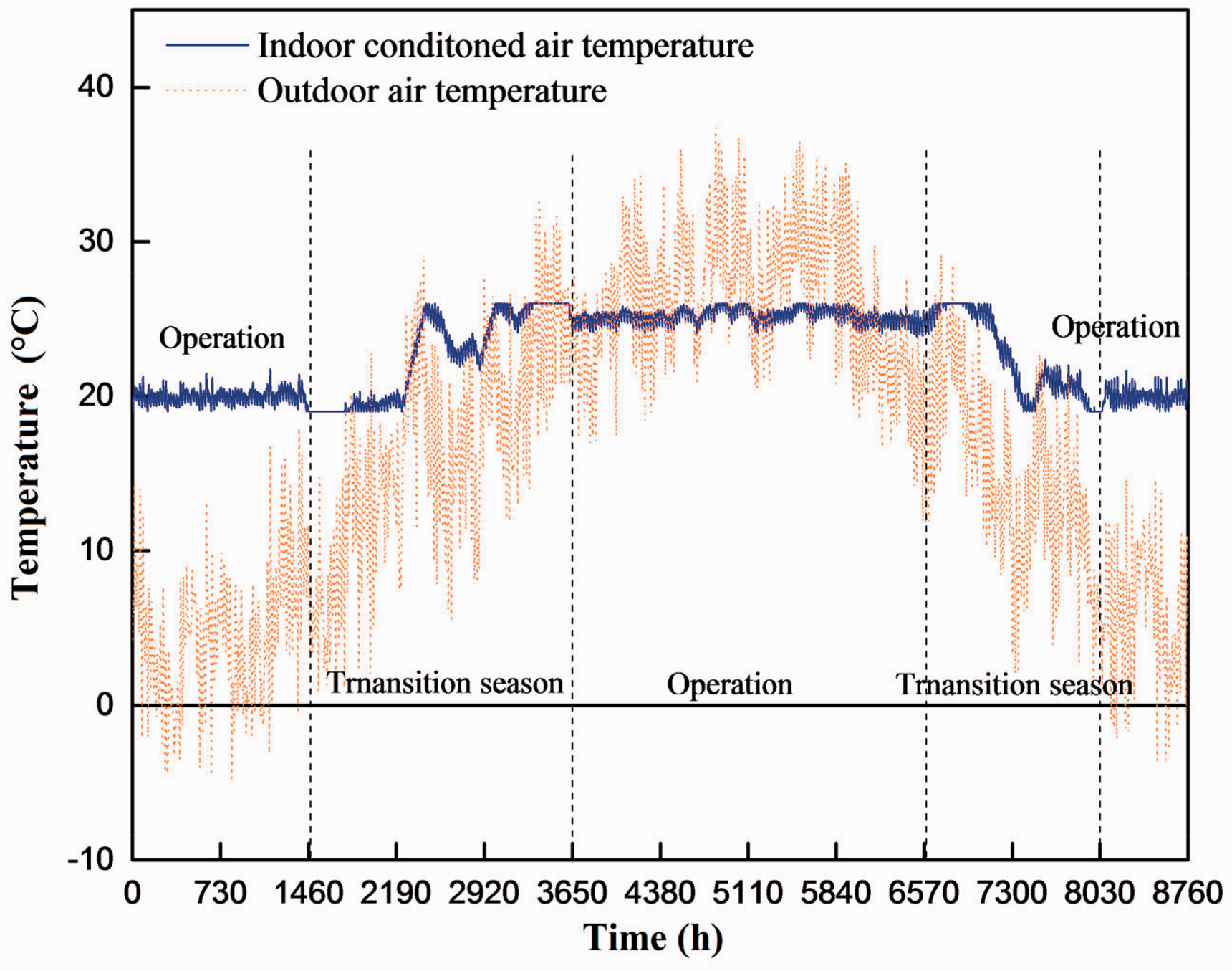
Conditioned indoor air temperature using hybrid GSHP system model.
Condensation would be the main concern of applying the capillary radiant ceiling terminal for building heating and cooling. The roof surface temperature would need to be 2–3°C above the indoor air dew point temperature to avoid condensation. In the model, a condensation detector was set at the roof surface; signal 1 indicates that condensation had occurred, and signal 0 indicates the opposite. Figure 5 presents the relative humidity of indoor air and the corresponding condensation indicator value – dew point signal. In summer, the air relative humidity fluctuated within the range of 40–50% which would meet the relevant specification requirement range, from 40 to 70%. In winter, the relative humidity fluctuated between 55 and 65%, and in most of the time would meet the requirement range of 30–60%. Meanwhile, the condensation signal stayed at 0, which indicated no condensation had occurred, and the operation of the radiant terminal is feasible for the investigated office building. Figure 6 presents the results of the roof surface temperature.
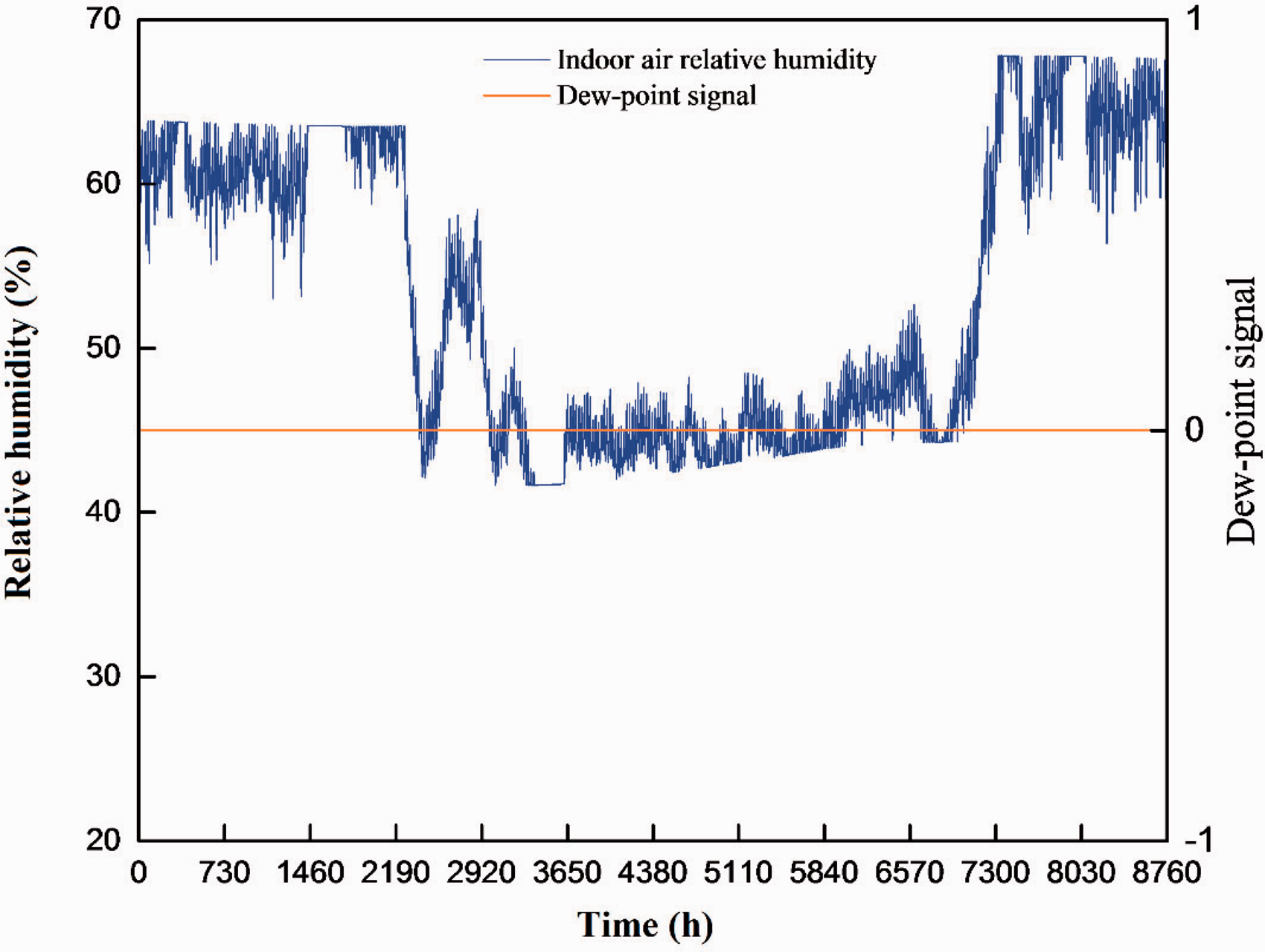
Simulated indoor air relative humidity and radiant terminal condensation sign using hybrid GSHP system model.
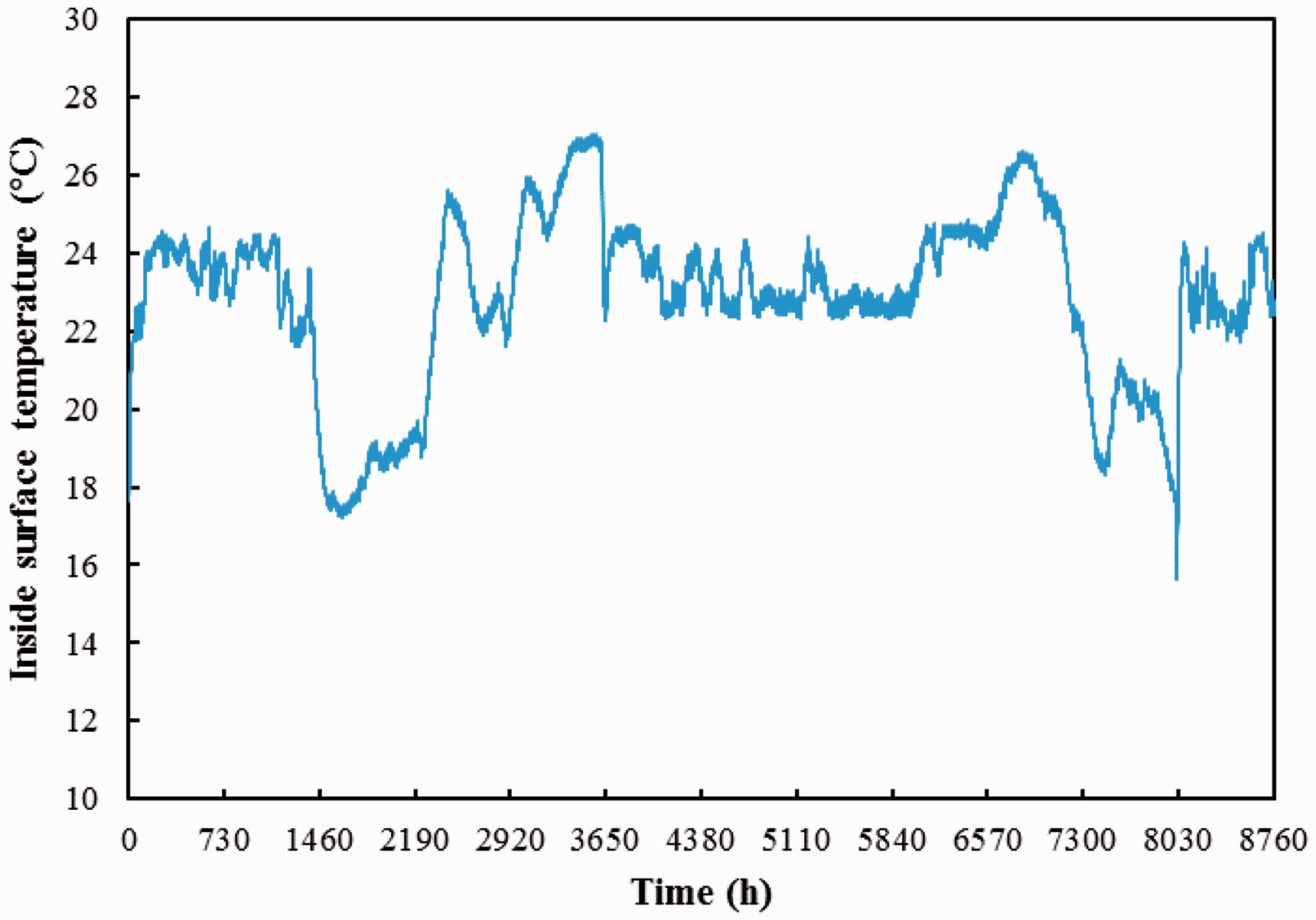
Simulated roof surface temperature.
The PMV-PPD values for the hybrid GSHP system were also calculated and are presented in Figure 7. This index was established by P.O. Fanger, 36 and is used in thermal comfort standard. PPD refers to the percentage of unsatisfied prediction, indicating that the subjects are not satisfied with the proportion of the thermal environment and PMV refers to the expected average vote. Thermal comfort class I requirements: PPD < 10%, −0.5 < PMV < 0.5. Thermal comfort class II requirements: 10% < PPD < 26%, –1 < PMV < −0.5 and 0.5 < PMV < 1 according to Chinese standard GB 50736–2016. 37
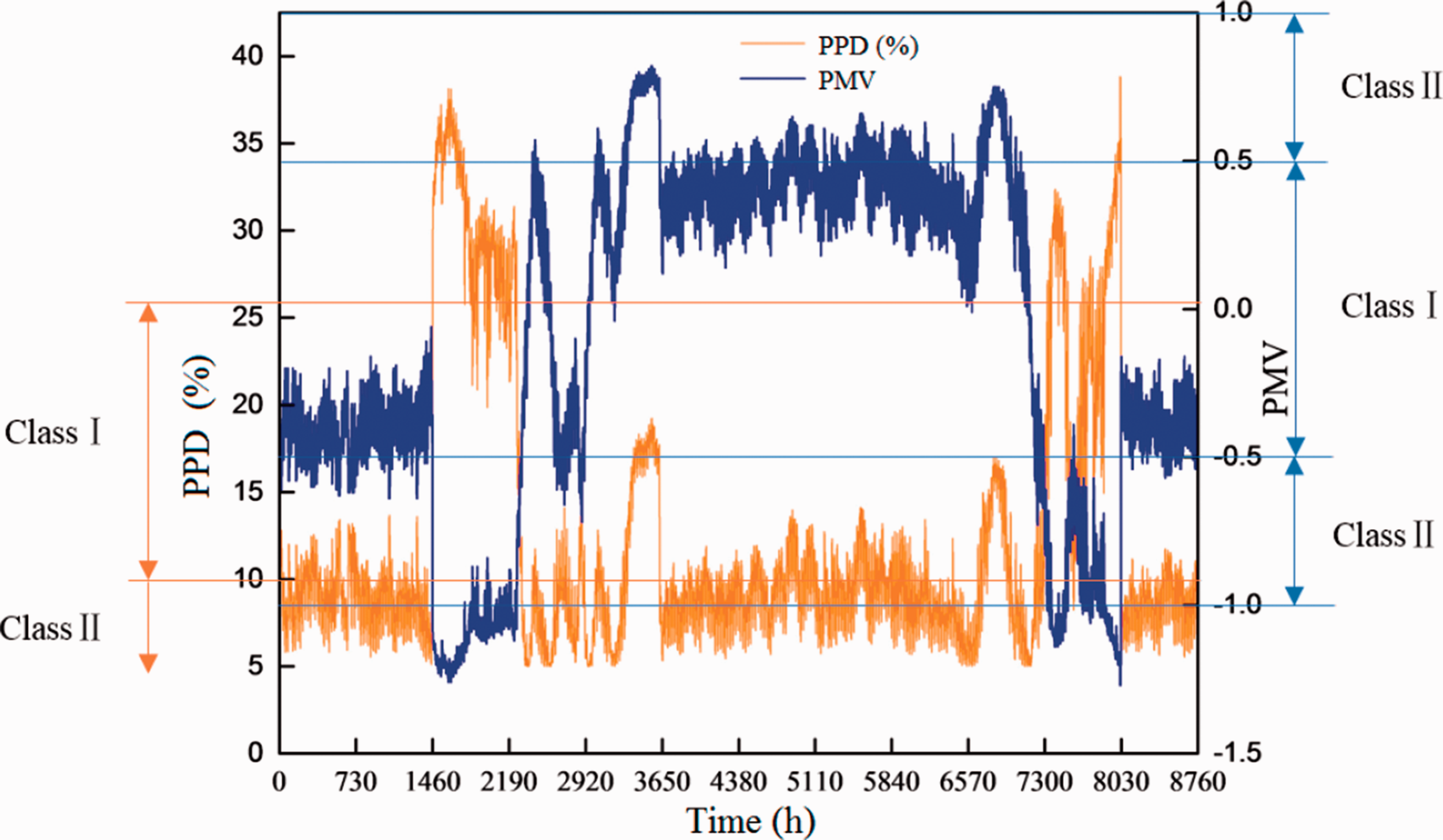
Simulated PMV-PPD results using the hybrid GSHP system model.
During most of the time, the PMV results ranged from −0.5 to 0.5 and the PPD results were less than 10%; during these times, the system would operate and would meet the thermal comfort class I requirements. 36 Occasionally, during the cooling and heating season, in about 7.5% of the time within a year, PPD results rose to about 15%, within the thermal comfort class II. This is because the water in the capillary was temperature controlled, and there was a time delay when conditioning the room through radiant heat transfer process if the outdoor air temperature suddenly rose or decline. A higher indoor comfort level could possibly be achieved if the control strategy has been improved in the future.
System performance
As shown in Figure 8, the hybrid GSHP system’s average coefficient of performance (COP) amounted to 4.65 in summer and 3.27 in winter. The system COP for cooling was relatively higher than that for heating. Local initial ground temperature could be a main factor for determining the COP of the system heating and cooling. Meanwhile, as presented in Figure 9, the heat pump EFTs were lower than 36°C, which indicates that hybrid GSHP system was operated at a relatively stable condition. The minimum EFT was 6°C, which occurred in February and the maximum temperature was in July at 34.5°C. Meanwhile, the disturbed soil temperature near the ground heat exchangers was stable as shown in Figure 9. The comparison of the disturbed soil temperatures and heat pump EFTs (ground heat exchangers ExFTs) demonstrates the process of extracting heat and rejecting heat from/to the soil. During the initial stages in winter, the heat pump EFTs was equal to the initial soil temperature, as the ground heat exchangers extracted heat from the soil, the soil temperature near the underground heat exchanger gradually declined due to the heat exchange. Consequently, in winter, the heat pump EFTs declined with the disturbed soil temperature, as the system was operated during this period and in summer the opposite happened.
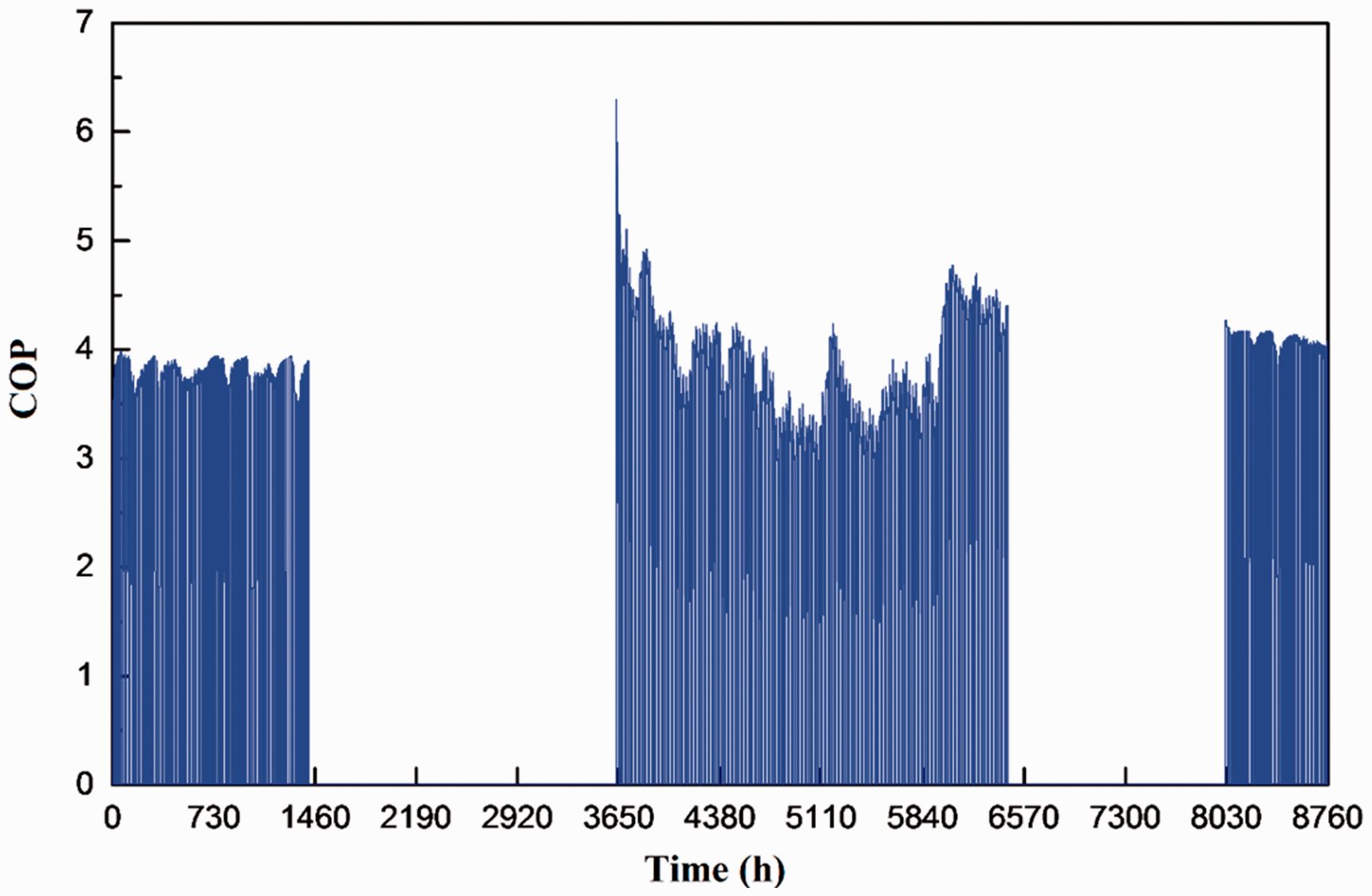
Hybrid GSHP system coefficient of performance (COP).
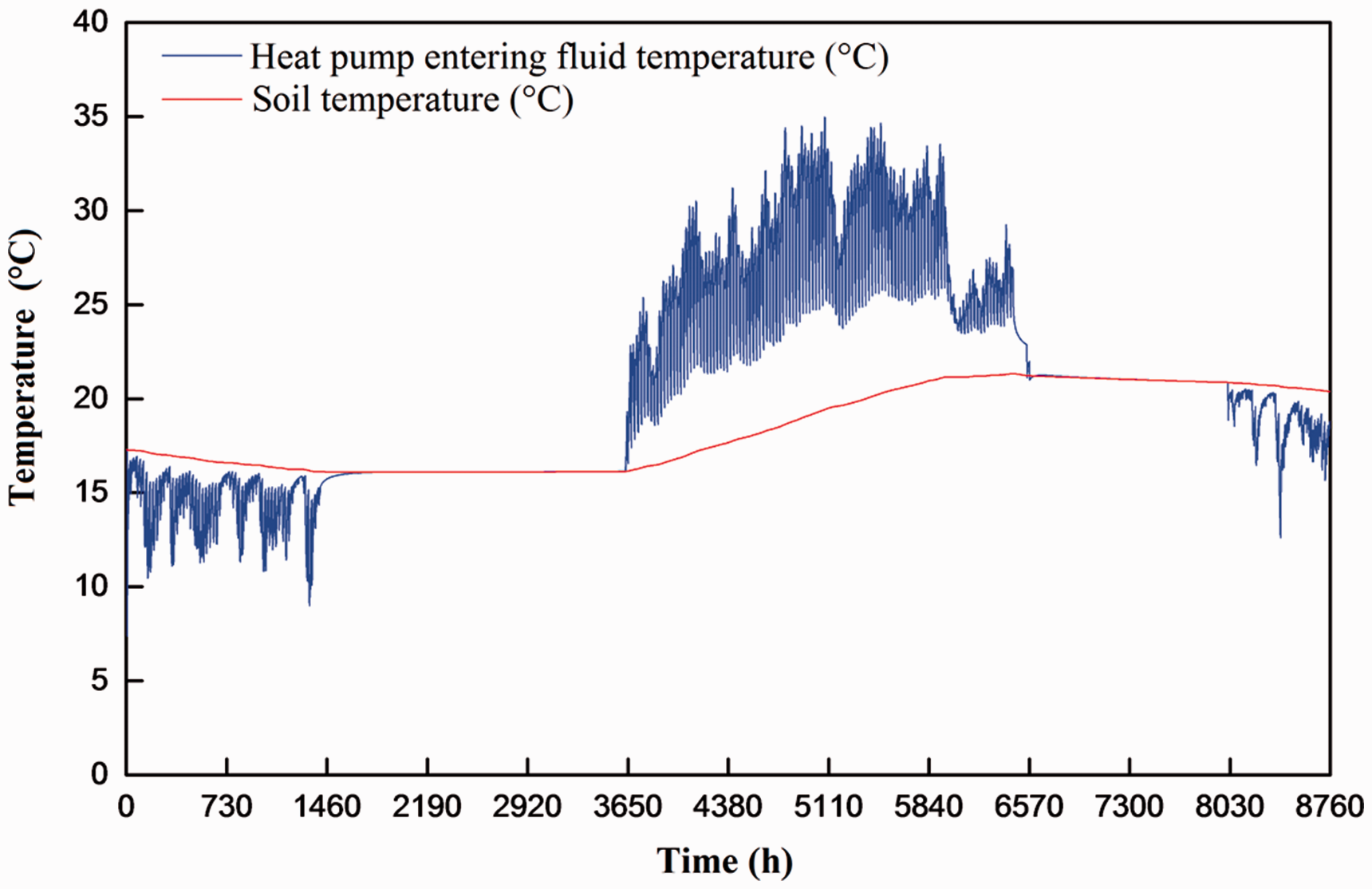
The heat pump entering fluid temperatures (EFTs) of hybrid GSHP system.
As shown in Figure 9, in winter, the heat pump EFTs are lower than the soil temperatures in winter and in summer, the EFTs are higher than the soil temperatures. The soil temperature is the average results recorded at various depths of the heat exchangers in the ground.
Figure 10 shows the system heat pump EFTs reached a steady state condition after a long run. The heat pump EFTs were increased from 34.5°C to 35.6°C. The attainment of a steady state condition, demonstrates the balance of the ground heat extraction and rejection rate by the cooling tower, and the hybrid GSHP system performance is stable and sustainable.
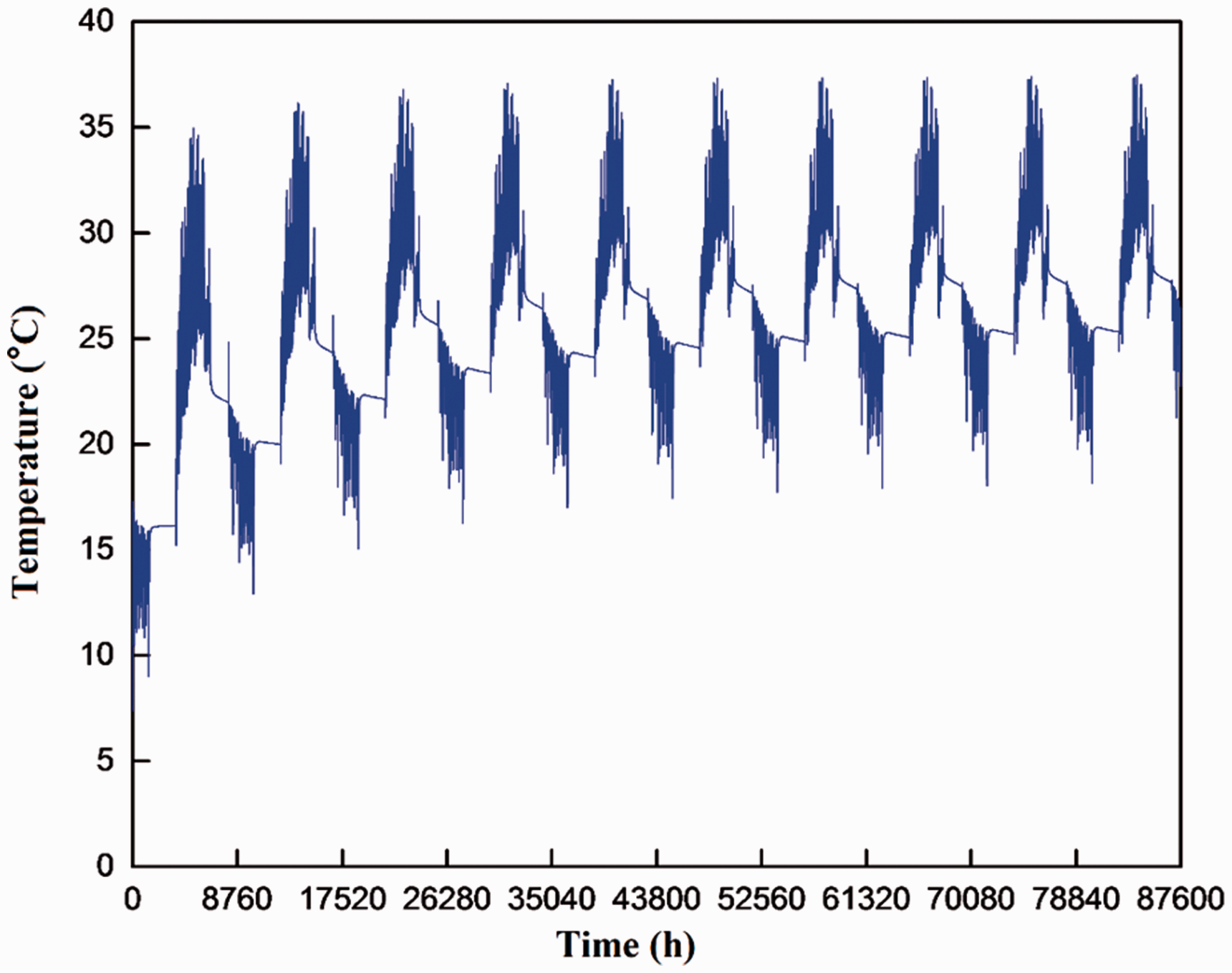
The heat pump EFTs of the hybrid GSHP system.
Discussion
The operation of the hybrid GSHP system was shown to have maintained the building indoor condition at a satisfactorily comfort level. The economical feasibility, energy consumption and environmental evaluation of the system were also assessed and discussed. Moreover, a traditional HVAC system model was also developed in TRNSYS for comparison. This water chiller unit for cooling and natural gas boiler for heating WB system was also evaluated and compared with the hybrid GSHP system performance.
The system dynamic annual costs were used as the comprehensive economic indicators. The system annual costs are composed of three parts: system initial investment per year, system operating cost and maintenance fees. According to results shown in Table 3, although the hybrid GSHP system would require more initial investment than the WB system, it would cost less in the system operation and maintenance. The dynamic annual cost of hybrid GSHP system was 1.07 million Yuan (RMB) by our estimation, 14.5% lower than the dynamic cost of the WB system which was 1.25 million Yuan.
System dynamic annual costs for 10 years of operations (¥1000RMB).

GSHP: ground source heat pump.
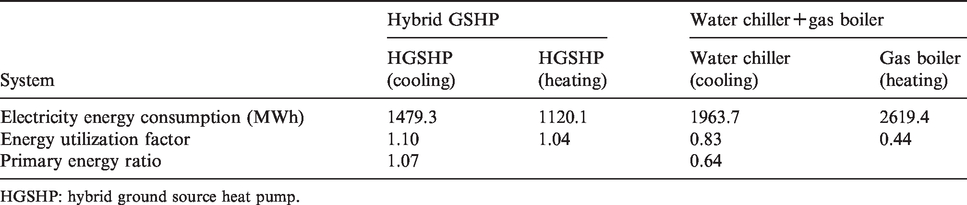
Table 4 presents the energy consumption comparison between the operation of the hybrid GSHP system and WB system. The primary energy consumption of the two systems was summarized. The hybrid GSHP system uses only electricity as its energy source, while the WB system consumes both the electricity and natural gas. The natural gas consumption was converted to electricity consumption based on equivalent heating energy. The WB system would utilize the water chiller for cooling and gas boiler for heating. The energy utilization factor is the ratio of the system output energy to the system input energy. The energy utilization factor for the WB system was 0.83 and 0.44 for the water chiller unit and the natural gas boiler, respectively, which were much lower than the hybrid GSHP system. Therefore, the comparison of the hybrid GSHP system with the WB system would show a saving of 24.7% of the energy in cooling season (i.e. summer) and 57.2% in heating season (i.e. winter). Annually, the energy saving rate of the hybrid GSHP system reached 43.2%. Meanwhile, a primary energy ratio of 1.07 per year would be achieved by the HGSHP, while the conventional system could only achieve 0.64. For the energy saving comparison, the hybrid GSHP therefore would have an obvious advantage. The hybrid GSHP would therefore satisfy the requirements of the government’s demand for energy saving.
The comparison of the system energy consumption of the hybrid GSHP and WB systems.
HGSHP: hybrid ground source heat pump.
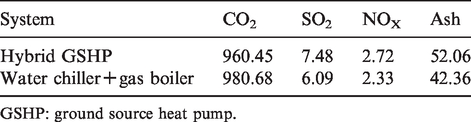
The consumption of energy would cause environmental pollution to the local atmosphere, which could be harmful to mankind. The environmental pollution would be mainly caused by fuel combustion. For the system that uses electrical energy as the driving power, the pollution would be caused by the thermal power plant that generates the electricity. For the direct or indirect (electricity) use of fuel combustion as the driving energy, the pollutant emission values of the two systems – hybrid GSHP system and WB system – were calculated as shown in Table 5.
System pollutant emissions (ton).
GSHP: ground source heat pump.
Compared with the WB system, the hybrid GSHP system could reduce 20.23 tons of CO2 emission; it produced 1.39 tons more SO2, 0.39 tons more NOx and 9.70 tons more Ash emissions. The electricity used was assumed to have come from the coal-fired thermal power plant. The WB system would utilize electricity as the cooling energy source and natural gas as the heating energy source. The gas-fired boilers for heating would produce less pollutant emissions, which would only contain CO2, H2O vapour and a small amount of other contaminants.
Comprehensive evaluation
Previously, the system evaluation was based on only one indicator of the several, which are economic impact, energy consumption and environmental impact. As discussed above, the hybrid GSHP system would cost less and consume less energy; however, it would produce relatively more pollution. In order to evaluate the system from an overall perspective rather than based on only one factor, a more comprehensive evaluation method – AHP method – was introduced and used in this study.
The AHP is a method to stratify complicated problems and to increase the accuracy of the system evaluation judgment matrix, through a comparison of two systems at each level to improve decision-maker's discrimination for each target difference. In the AHP model, elements at the same level would act as guidelines to dominate some elements in the next level. At the same time, they are dominated by elements of the previous level, such as the target level, criterion level (or indicator level, sub-indicator level) and so on. As shown in Figure 11, the target level is the system evaluation. The indicator layer is divided into three factors: energy saving, economy and environment. The sub-indicator layer is divided into primary energy ratio, dynamic annual cost and pollutant emissions. The number of layers that are needed for the system evaluation and the importance of each sub index are determined accordingly.
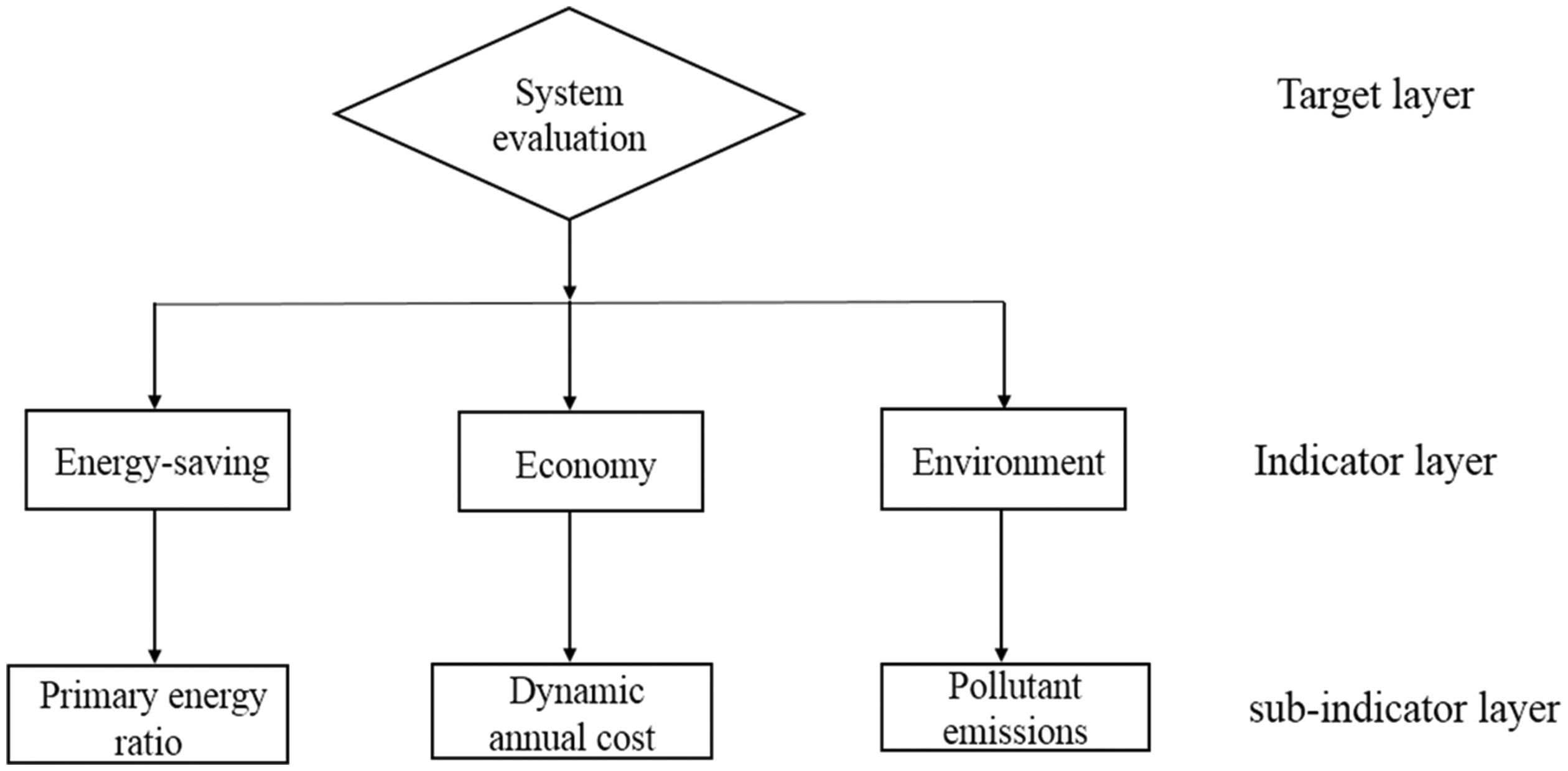
Index system of system suitability evaluation.
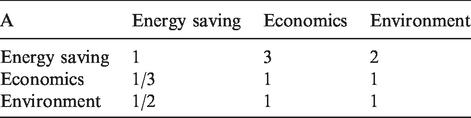
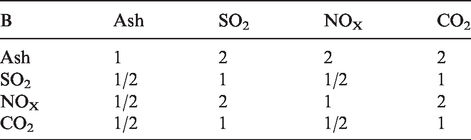
In this study, the hybrid GSHP system and the WB system performance were both evaluated by three main factors: the energy saving, economics and environment. The hybrid GSHP system was proven by this study to cost less and is more energy efficient than the WB system. In the aspect of pollutant emissions, except for the carbon dioxide emission, the hybrid GSHP system would produce more emissions. Knowing the weights of the indicator layer and proportion of each pollutant in environmental protection is important for a comprehensive system evaluation. According to the importance of the three factors in the indicator layer, the judgment matrix A of the indicator layer was established. The judgment matrix B was established to evaluate the environmental impact, which was determined in more details by different pollutants emissions, as shown in Tables 6 and 7.
Judgment matrix of matrix A.
Judgment matrix of matrix B.
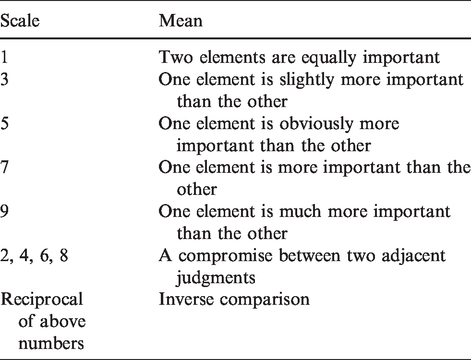
The basic quantitative evaluation of the AHP method is as shown in Table 8. The system performance evaluation results could be impacted by the setting of the matrixes A and B. The hybrid GSHP system was shown to outperform the conventional system for almost each of the three factors. Variations of the setting of the matrix would possibly not have an obvious effect on the final system performance evaluation result (SPER). A sensitivity study with different settings of the matrixes A and B will be performed in a future work.
The relative importance judgement of AHP method.
The weight vectors were calculated with, ωA = 0.5485, 0.2106, 0.2409 for energy saving, economics and environment. From the calculated weight vectors, energy efficiency accounts for more than half of the overall weight, and economy has a similar weight as environmental protection. The weight vectors of pollutant emissions in the sub-indicator layer were calculated, with: ωB = 0.3917, 0.1646, 0.2792, 0.1646, the discharge of ash is given the maximum weight of 0.3917, the weight of CO2 is similar to the weight of NOX.
Consistency check of the judgment matrix was calculated as given by equation (1)

Consistency index (CI) was calculated as given by equation (2)

Consistency ratio (CR) was calculated as given by equation (3)

In order to find a valid result for ω given in equation (1), equations (2) and (3) are needed for calculating the value of CI and CR. In equation (2), λ is the characteristic value of the matrix ω, n is matrix order. RI is the average random consistency index of the judgment matrix, and it is a constant for a certain judgment matrix. When CI is equal to 0, A is consistent. The consistency of A decreases as the value of CI increases. The inconsistency of A is within the allowable range when CR is less than 0.1.
For the third-order matrix RIA = 0.58, CRA = 0.015/0.58 = 0.026 < 0.1. For the fourth-order matrix RIB = 0.9, CRB = 0.035/0.9 = 0.039 < 0.1. The result of the test was shown to have met the requirements. Therefore, the feature vector of A and B can be used as a weight vector and the calculated weight vector ω is valid.
Table 9 presents the criteria for the evaluation of the system feasibility. Table 10 presents the hybrid GSHP system and WB system evaluation results. In Table 10, for evaluation and comparison of the hybrid GSHP system and WB system, the evaluation value for the system with a better performance is defined as 1 and taken as the reference value. The evaluation value for the other system is given according to its ratio to the reference value.
Criteria for determining system feasibility.

SPER: system performance evaluation result.
System economic cost, energy saving and environmental impact and SPER.

SPER: system performance evaluation result; GSHP: ground source heat pump.
The corresponding evaluation values SPER for the two systems were calculated and are presented in Table 10. As mentioned above, the hybrid system would incur a 14.5% lower cost but would provide 43.2% more energy saving. The hybrid GSHP system could reduce 20.23 tons of CO2 emission, while 1.39 tons more SO2, 0.39 tons more NOx and 9.70 tons more Ash emissions could be produced. The weight factors for energy saving, economics and environment of system evaluations were 0.5485, 0.2106 and 0.2409, respectively. The economic factor is almost half of the total weight; the energy saving and environmental factor are almost quarter of the total weight. Overall, the hybrid GSHP SPER is 0.966 during the adaptation, the index for the conventional system SPER is 0.746 during the general adaptation. Therefore, the hybrid GSHP system is overall more adaptable than the WB system, considering all three factors and their corresponding weights. Previous studies also recommended that the radiant panel is suitable for hot and humid environment, similar to the weather conditions of the Yangtze River Basin of China. 38 Compared to the performance of the hybrid GSHP system with the traditional HVAC system under real operation conditions, the hybrid GSHP system would require remarkably less energy as well as electricity and primary energy use with radiant terminals.39,40 Overall, the hybrid GSHP system coupled with capillary radiant ceiling terminals would have a good potential for future wider applications in the Yangtze River Basin (hot summer and cold winter) regions in China or areas with similar weather conditions.
Conclusions
In this paper, based on TRNSYS building simulations, the application of hybrid ground source heat pump (GSHP) system combined with capillary radiant ceiling terminal in an office building in Wuhan in the Yangtze River Basin region of China, which is a cooling-dominated area in summer has been evaluated in comparison with the conventional HVAC system – water chiller for cooling and natural gas for heating WB. The main conclusions are given as follows:
Utilizing a cooling tower to balance the heat extraction from and rejection to the ground, the hybrid GSHP system could successfully maintain a stable performance after 10 years of operation. The hybrid GSHP system would provide a better indoor comfort (PMV and PPD) which meets thermal comfort class I requirements of standard GB 50736-2016,
37
while the WB system provided indoor comforts which meets the thermal comfort class II requirements of the standard partially. Compared with the WB system, the hybrid system would have a 14.5% lower cost and 43.2% more energy saving. The hybrid GSHP system could reduce 20.23 tons of CO2 emission. However, the hybrid GSHP system would produce 1.39 tons more SO2, 0.39 tons more NOx and 9.70 tons more Ash emissions. The AHP method was used for the evaluation of the system comprehensive performances. The hybrid GSHP SPER has a value of 0.966 during the adaptation, while the conventional system SPER has a value of 0.746 during the general adaptation. Overall, the hybrid GSHP system is more adaptable than the WB system and has good potential for future applications in this climate region.
When designing the hybrid GSHP system utilizing radiant ceiling terminal, condensation should be avoided in order to guarantee the system effectiveness and to meet customer’s indoor comfort requirements.
Footnotes
Author’s contribution
The authors contributed equally in the preparation of this article.
Acknowledgements
The authors would like to express our gratitude to Chen Ren and Wentao Xiang for his help in modelling and Yuhang Miao for the proofreading of this work.
Declaration of conflicting interests
The author(s) declared no potential conflicts of interest with respect to the research, authorship, and/or publication of this article.
Funding
The author(s) disclosed receipt of the following financial support for the research, authorship, and/or publication of this article: The authors would like to acknowledge the coordinated support from National Key Research and Development Program of China (Grant No. 2018YFF0300300) and Natural Science Foundation of Hubei Province (Grant No. 2019CFB140).
