







Abstract
This research presents a comparative study and an indoor thermal comfort analysis of self-constructed dwellings with different roofing in the Lower Papaloapan River Basin in Mexico. These include concrete roofs, zinc-coated sheet metal, asbestos sheets and palm fronds, all with and without false ceilings. The comparative study takes into account the identification and analysis of different architectural typologies, materials, structural pathologies, as well as the construction processes and the number of hours in which a dwelling is inside the comfort zone proposed. Until now, there is no relevant information about the comfort zone for the inhabitants of the studied region. Thermal comfort analysis shows that the comfort zone for the region is difficult to achieve due to the temperature and humidity of the region. Among the roofing without a false ceiling, the dwelling with palm roofing had the best performance whilst housing with zinc roofing produced the worst. Moreover, palm roofing is an ecological and vernacular option that uses local materials. In the case of a false ceiling, a standardizing effect was observed for all types of roofing. New approaches to show and analyse data and some suggestions for improving comfort conditions within homes in the region were proposed.
Keywords
Introduction
According to The Office of The Treasury and Public Credit (Spanish: Secretaría de Hacienda y Crédito Público), 1 the demand for housing in Mexico in the year 2020 was estimated at 851,100 new homes, which had an impact on 3.3 million people.
As reported by the Global Property Guide, housing financing is only available to 10% of workers, therefore, during the past decade, 70% of new houses in Mexico have been built by individuals and not by construction companies. A clear example of this is noticed in the Lower Papaloapan River Basin, where housing needs are mostly met through self-construction. Self-built dwellings are defined as: constructions built by people in a community, using available materials and accessible technology, to meet local and daily needs. 2
The viability of a self-built dwelling must be based not only on elements and materials used in its construction and/or modification, but on the ability of users to reproduce and adapt the process in a simple, durable and economical way, as well as in the housing needs of each family, without neglecting its adaption and respect to their environment. Thus, self-construction has the characteristic of adapting and modifying itself according to the changing needs of the users.
The three basic functions of a house in terms of its shelter are: protection from the sun and rain, protection from soil moisture and protection from the wind. 3 From this perspective, the roof is the component of the house that serves to protect the construction from the sun and rain. A roof is imperative when building a house, and is mainly composed of two elements: a support structure and a roofing material.
The Lower Papaloapan River Basin
The Papaloapan River Basin is one of the 12 hydrological basins located in the geographical area known as the Papaloapan region, and one of the most important watersheds in Mexico. It is located on the slope of the Gulf of Mexico and represents 2.5% of the total area of the Mexican Republic. 4 It offers a great variety of social, cultural and geographical contexts, which create a wide diversity, in terms of self-construction of housing.
The Lower Papaloapan River Basin maintains particular climatic characteristics of ambient temperature and humidity, the annual thermal range varies from 15°C to 42°C with apparent temperatures (ATs) higher than 48°C in the hottest season, an annual average of 78% relative humidity. The average annual wind speed is 2.5 m/s predominantly from the south during most of the year.
Adaptation to thermal comfort in rural dwelling
Over time, there have been various modifications of the vernacular construction processes that predominate around the world; partly due to the versatility of the new and diverse construction materials, as well as economic and social factors. A detailed review of the state of vernacular architecture of the world and its characteristics can be seen in Chandel et al.; 5 in that study, two issues are addressed: first, their energy-efficient attributes of that improve the interior thermal comfort conditions; second, how to adapt to current lifestyles.
In Mexico, a high percentage of affordable housing in the last century has not included bioclimatic adaptations in its design and construction. There are a large number of documents related to the evaluation of them, in which they have been shown to be thermally inefficient. 6
Dominguez and Morillón, 7 estimated that a correct bioclimatic design of the 2,310,000 homes that The National Workers’ Housing Fund Institute (Instituto del Fondo Nacional de la Vivienda para los Trabajadores) built during the period of 2001–2010 would have led to save 4,869,711 kWh of electricity for the year 2010. Likewise, they would have not emitted the equivalent of 3316.27 tons of CO2 in total.
The human thermal adaptation to an environment can be attributed to three different processes: behaviour adjustment, physiological acclimation and psychological habituation or expectation. People who live in warm climates have developed high tolerance to weather conditions, through long-term conditioning at high temperatures with high humidity levels, an example of physiological acclimation. Similarly, their clothing and personal habits have been influenced by the weather conditions in which they live, an example of behaviour adjustment. 8 A wide discussion about this topic can be found in Brager. 9
The thermal comfort conditions need to be analysed which users of self-built houses are exposed to. In the literature, there is a broad list on this subject, for example, Feriadi and Wong 10 conducted a thermal comfort assessment of public housing with natural ventilation in Indonesia, they investigated and analysed the perception of the comfort degree in housing in densely populated areas, as well as the adaptive behaviour of residents, by using devices that modify the internal conditions of their homes.
The ceilings went from being a simple superposition of sheets nailed and superimposed on a wooden support, to a diversity of complex architectural structures, where geometric and arithmetic knowledge was a necessary requirement to achieve a firm, resistant and durable structure. 11
Zinc-coated galvanized sheets are being the most used material for roofs dwellings in rural areas around the world, but this aggravates the quality of life in these communities by reducing the comfort within homes. The concept of comfort is understood as the thermal or climatic state of welfare that is perceived inside a dwelling, without excluding other conditions of material satisfaction. 12
In naturally ventilated buildings, the occupant’s ability to modify the indoor environment is limited. An uncomfortable indoor environment might not be possible to control only by passive means because of different socio-economic backgrounds and climatic conditions. However, people living in naturally ventilated buildings are likely to be more tolerant.10,13
On the other hand, building materials, as well as their thickness, are of vital importance to the indoor thermal behaviour of a dwelling. This is reported by Martín et al., 14 who made a thermal study of the indoor thermal conditions in a traditional rural house in Navapalos, Spain and compared the results with a modern house. The results show that: 1) during the summer, for a traditional home, the indoor thermal conditions are within the comfort zone; 2) during the winter, the indoor environment is more stable within traditional houses; however, none of the buildings was able to provide thermal comfort in a natural way.
Carrazco and Morillón 15 presented a bioclimatic adaptation of social-housing in north-eastern Mexico, based on the thermal analysis of vernacular architecture. Their results show that, by modifying certain elements and construction methods, adequate comfort conditions are generated, without significantly impacting the initial construction costs.
This study presents an approach to the indoor thermal conditions to which the users are exposed in self-constructed houses with different types of typologies in the region of the Lower Papaloapan River Basin. Analysing the vernacular strategies used in current self-construction is important to understand how they contribute or impact to ensure the condition of thermal comfort in a predominantly hot climate. To our knowledge, there is no published information on thermal comfort inside buildings and how inhabitants of the region are exposed. The assessment of the indoor thermal conditions will show whether the designs and materials used are adequate for the studied region. Furthermore, the information obtained can be considered by future research’s in the design of accessible buildings that include passive cooling.
The paper is organized as follows: the next section presents the information collected during field visits about the main roofing used in self-construction in the Lower Papaloapan Basin, as well as their construction processes and pathologies. The methods section describes the data obtained from field visits and simulations, as well as formulas used to calculate the comfort zone and the AT. Results show two novel simulated data treatments to better visualize the thermal conditions to which the users are subjects. Finally, we present the discussion and conclusions.
Roofing in the Lower Papaloapan River Basin
To gather information on different types of self-constructions, field visits were made to 17 communities that include 4 municipalities in the state of Oaxaca and 8 in the state of Veracruz. Seventy-seven self-constructed residential buildings were analysed. Depending on the construction material and construction process used, the roofing were classified into four types: zinc sheets, reinforced concrete, palm fronds and asbestos sheets, which can be observed in Figure 1.
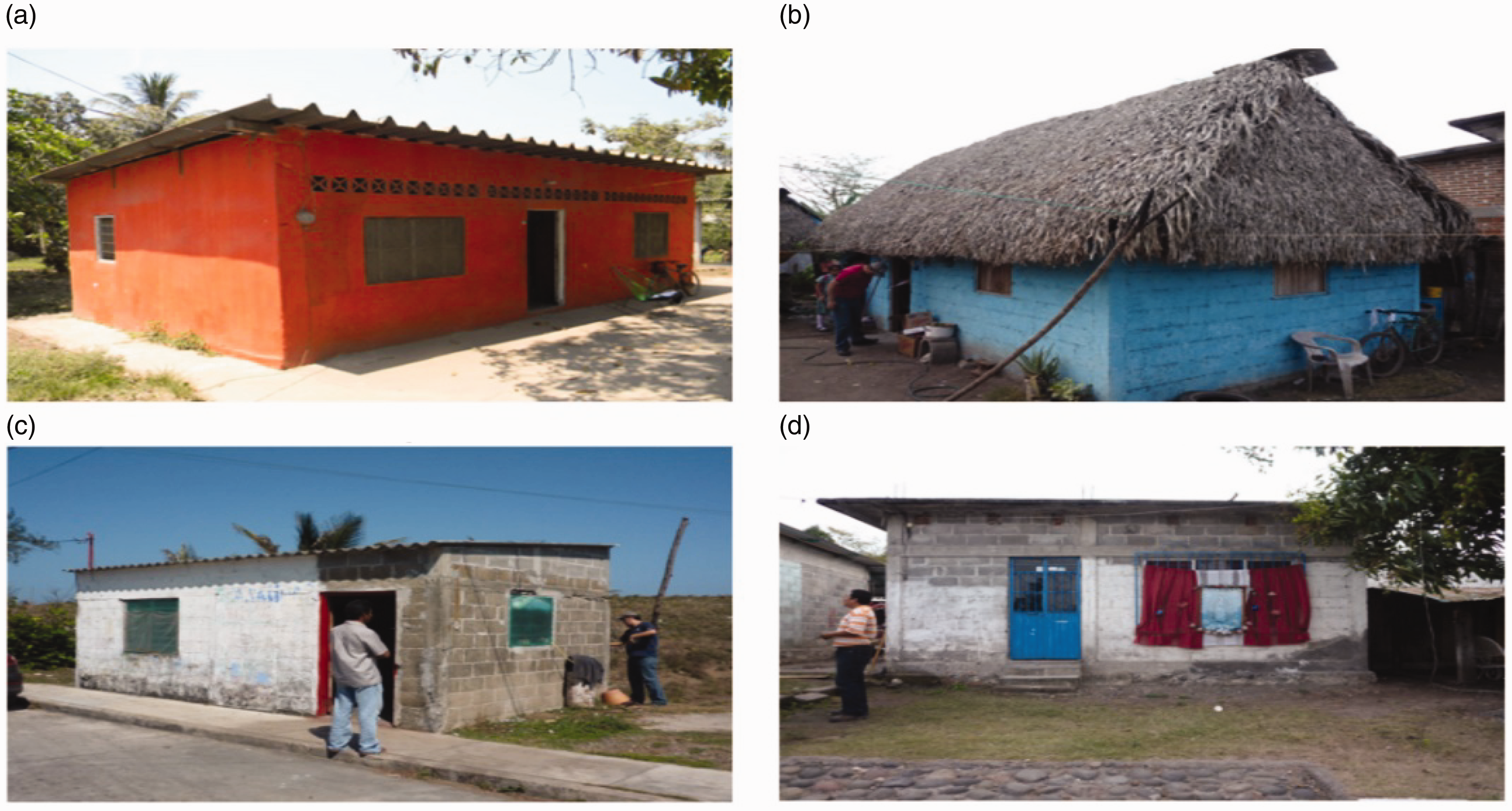
Typical roofs used in self-construction in the Lower Papaloapan Basin. (a) Zinc sheet roof, (b) palm leaves roof, (c) asbestos sheet roof and (d) concrete roof.
Asbestos was still found as a roofing material despite the fact that several countries have banned it due to its health problems, mainly when it is used in construction. The ban is due to the diffusion of asbestos fibres into the environment which, when inhaled over a long period of time, constitute a health hazard leading to asbestosis (mesothelioma), a form of lung cancer.16,17
Regarding the architectural plan, we find one, two or more slopes; ranging from 2% to 100% in some cases to avoid stagnation of rainwater, which in the area becomes an important consideration. Structurally, the slope of the roof (P) was calculated as the quotient of the maximum height of the roof (h), not including the height of the walls, over the length of the base including the eaves (l), that is to say P = (h/l) × 100. For a gabled roof, the length of the base was divided by 2. In the case of the palm roof: h = 2.45 m, l = 2.32 m, so the slope is P = 105% (see Table 1).
Summary of typologies and pathologies found during field surveys of roofs used in the region.
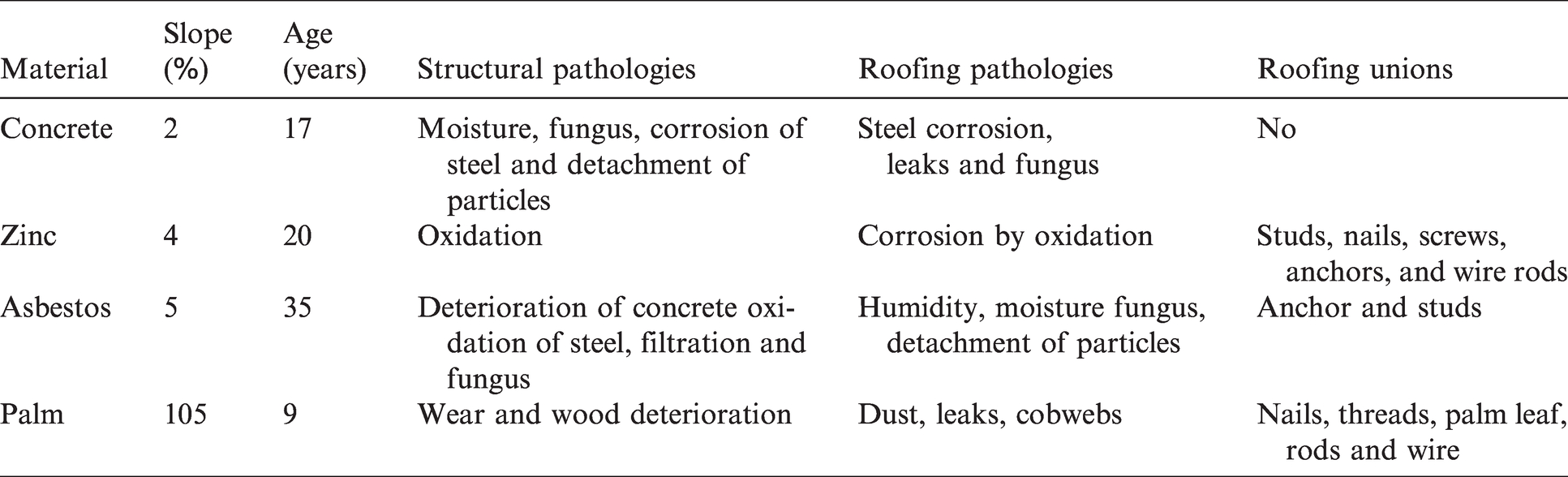
The most common materials in self-construction of walls are: bricks, porous concrete blocks, wood, bamboo and zinc sheets; floors are constructed primarily of dirt floor, concrete or ceramic tile. From a structural point of view, the roof is made up of two basic elements: the structural supports and the sheathing. Table 1 shows the typologies and pathologies of both structures and roofing that were found in field visits.
During the field observations, the use of an insulating element suspended below the roof (false ceiling) was observed in several cases; the use of this element is mainly concentrated in the case of asbestos sheet roofing and zinc sheeting. In the case of palm leaves, this element was not observed.
Construction process for concrete roofing
This type of construction is built by pouring fresh concrete into wooden moulds with internal reinforcement of metal rods, then the concrete is cured, the whole process is carried out manually. The average number of people employed for the construction of this type of roof is four people; however, more than four people may be needed on the day the concrete is poured. For this type of construction, general knowledge of masonry and use of common tools is necessary.
Construction process for zinc sheet roofing
The most significant factors for choosing a zinc roof are its accessible price and the ease of installation. The construction process consists of manually lifting, placing, aligning and fixing the sheets to the support structure. Depending on the length of the construction, the support of the sheets can be reinforced between walls, with structures of rectangular tubular profile (PTR), in these, the sheet is attached to the profile with studs or anchors. Another type of support is directly on the walls, regularly anchored by studs or anchors and can be set with mortar or not. There are also sheets supported on wood, palm or bamboo structures. In these cases, the sheets are normally attached to the structure by nails, screws, wire rods or hooks depending on the availability of material to the owners. The assembly time is one or two days, with labour and non-specialized tools.
Construction process for asbestos roofing
The constructive process for this type of roofing consists of the elevating, placing, aligning and overlapping of sheets by manual means. Generally these types of structures do not require support, because they are self-supporting sheets; only in some cases, and due to the length of the spans between walls, support structures may be required for asbestos roofs, which are generally four-inch beams of PTR. In these houses, the roof is anchored to the walls by means of a threaded rod.
Construction process for palm roofing
This roofing is the classic example of vernacular construction that survives in the region. It consists of two elements, the support structure and the roofing. The first is made with scaffolding that is supported directly on the columns, beams, post or walls of the house, and are anchored by means of rods or nails. The second structure supports the palm fronds used as roofing, which is composed of triangular structures made of palm wood beams and fastened with nails and wires. The union between these two elements is by means of nails. A person with traditional knowledge is needed in the construction of this type of roof. Additionally up to 10 people are required for the assembly of the reinforcement. A person with the skill to use a specialized tool such as a chainsaw is required to obtain the beams and braces of the structure.
Methods
The basin is divided into sub-regions, since there are different types of climates within it. In order to standardize environmental characteristics, this study was limited to the Lower Papaloapan River Basin where the highest temperatures are present. The great variety in shape and dimensions of roofing that exist in the study area makes its characterization difficult. Therefore, to improve the analysis, we chose the most representative one. The approximate limit chosen was
According to Kolaitis et al., 19 the most reliable way to perform thermal analysis and monitoring include: the theoretical cases supported by simulations and those carried out under real operating conditions.
In this study, two data sets were used: field measurements and simulated data. Additionally, to these data sets, the simulations were complemented with the climatological database of the study region obtained using the Meteonorm 7 software (Meteotest AG). The general methodology was: To obtain relevant measurements from field visits. Through the thermal data obtained in field visits, a representative value of the thermal resistance for each material of the observed roofs was determined. These values were used as the required thermal property in the roof design in the TRNBuild interface for the simulations in TRNSYS 16 (TRNSYS 16, e-Media Resources, Madison, WI, USA). The simulations were complemented with the climatological database of the study region obtained using the Meteonorm 7 software (Meteotest AG). Thus, through simulations, the environmental conditions of humidity and temperature were obtained for a whole year inside a standardized house for four different roofs with and without the use of a false ceiling. AT and comfort zone were calculated for the region. The simulated data were treated with two approaches: colour maps to evaluate the hours that a building is in the comfort zone and the AT difference.
The points mentioned are explained in detail in this section.
Field measurements
The specific measurements of temperature and humidity, as well as observations of the typologies and pathologies in the field, were carried out on different days from January to June from 9 a.m. to 6 p.m. and according to the viability of the daily activities of the users.
During the field surveys, the exterior and interior surface temperatures on ceilings and walls were recorded with an infrared thermometer IR Fluke 59 MAX+ (±0.8% of the registered value), the direct incident solar radiation on the roof surface was registered with a pyranometer datalogger SensoVant LP02-LI19 (<1.8% calibration uncertainty) and ambient humidity was measured with the use of a psychometric probe AZ 8723 Psychrometer (± 3% RH, ±
Determination of thermal resistance for each roof
When real ceilings are analysed, the lengths of surfaces are much larger than the thicknesses, which allows ceilings to be approximated by a slab of infinite length for thermal analysis. Therefore, the analysis can be performed as a one-dimensional heat transfer.
The incident solar radiation and temperatures measured on the roofs during the hours of most solar incidence was used in an energy balance to determine the heat fraction per convection and conduction in each material.
The resistance to convection heat transfer on the roof surface was calculated using correlations presented in Wang.
20
With these correlations, the Nusselt number (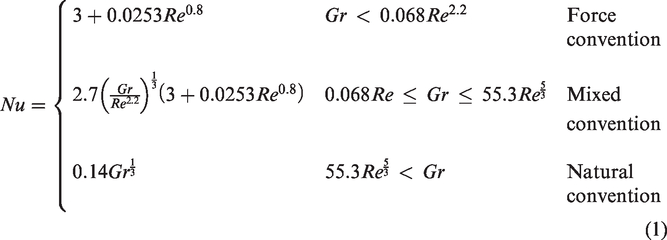
The heat fraction by conduction was calculated using Fourier’s law. Thus it was possible to determine a representative value of the thermal resistance (
Table 2 presents a summary of the thermal conditions of ambient temperature and relative humidity measured in field surveys, as well as the determined value of
Thermal conditions of the average ambient temperature and the average relative humidity measured in field surveys and the determined value of

Simulations in TRNSYS 16
TRNSYS 16 is a graphical environment software widely used in the field of thermal systems engineering and design, due to its easy use and wide library of components.
We introduced in TRNSYS 16 conditions about:
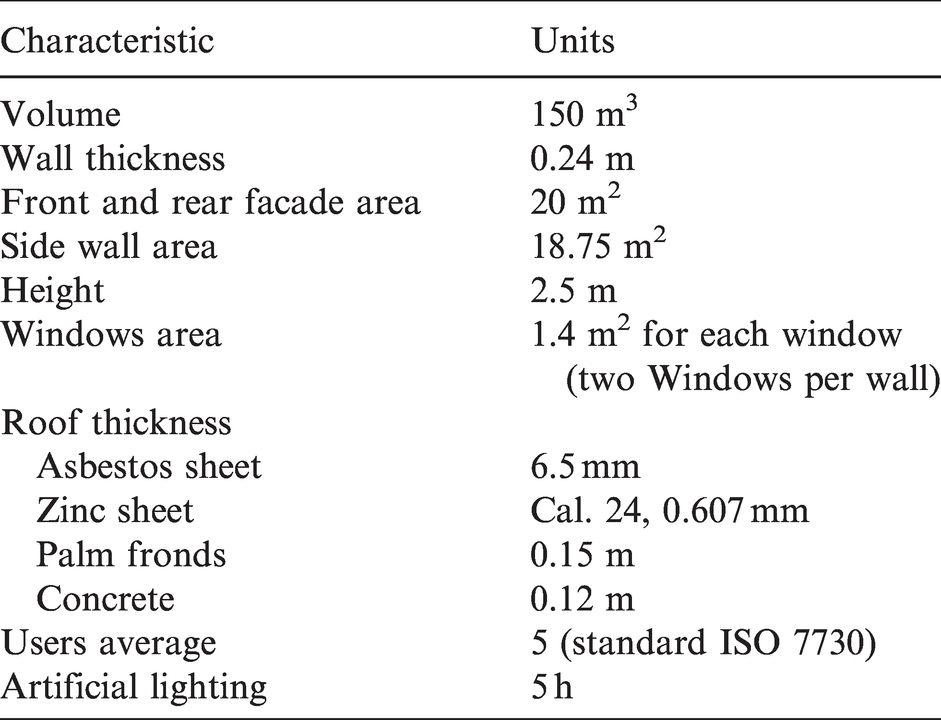
In the simulation model, elements that favour convective heat exchange were proposed, doors and windows enclosures with a simple glass (
C. Thermal properties of materials used as enclosures (see Table 4). Thermal properties of materials used as enclosures in the TRNSYS 16 simulations.
The obtained simulations were analysed with colour maps and difference in AT.
Thermal comfort
To determine the comfort conditions to which the users are exposed, a thermal comfort zone was calculated using equations (2) to (4)
The comfort limits, that define the comfort zone, are defined as

Amplitude of comfort limits for different ranges of oscillation of the annual average temperature. 21

Source: Reproduced with permission from Morillón et al., 2002.21
For conditions of human comfort, relative humidity below 25% feels uncomfortably dry, and above 60% feels uncomfortably wet. Human comfort requires that the relative humidity be in the range 25%–60%. Then a range of indoor relative humidity according to the stipulated by ISO 7730: 2005, with minimum and maximum limits of 40% and 60% respectively was established.
Apparent temperature
As we already mentioned, The Lower Papaloapan River Basin is characterized by high humidity, 78% annual average. This parameter greatly increases the feeling of sultry weather due to the combined effect of heat and humidity. In this study, the temperature–humidity scale presented by Steadman22,23 was used to determine the final conditions of AT to which users of dwellings are exposed. Wind speeds higher than 3.4 m/s are expected to influence the calculation of AT in warm climates, since, the wind reduces the layer of air that wraps up the skin, which serves to reduce the sensation of heat, as long as the ambient temperature do not exceed the temperature of the skin. However, in our case, the expected decrease due to wind speed is not presented, since, in most of the year, the wind speed is below 2.5 m/s, moreover, in the hottest season, the average wind speeds are 1.8 m/s.
From the climatological data, the annual AT was calculated as the average between the maximal and minimal AT measured in the year.
Based on the knowledge of
Results
Treatment 1: Colour map
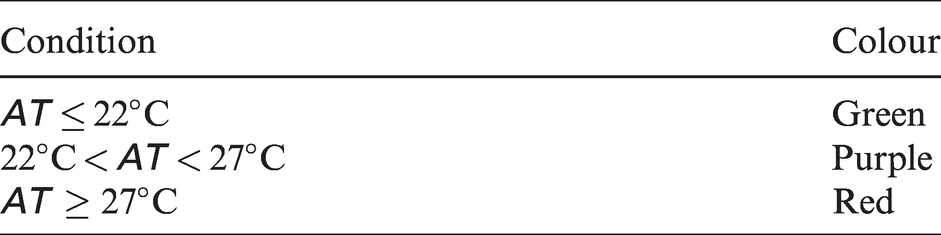
Using the equations in the Methods section, we obtained a comfort temperature range between 22°C and 27°C.
Considering 365 days, four cases were compared: concrete, zinc, asbestos and palm roofing, with and without false ceiling. The number of hours per day the AT was below, within and above the comfort zone was calculated.
Figures 2 and 3 show the colour maps for air AT over the year with and without a false ceiling respectively. Figures 2 and 3 contains
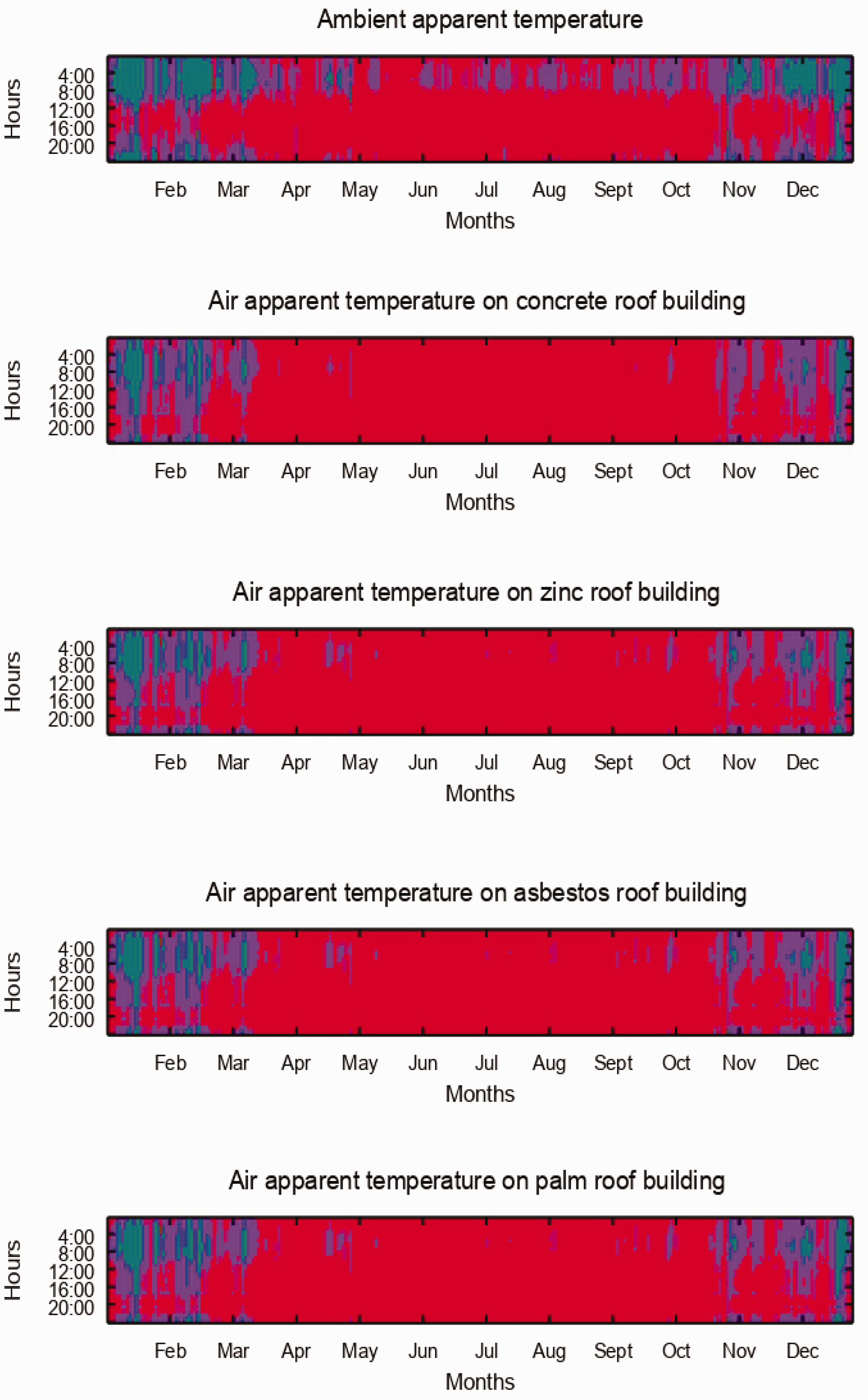
Colour maps for air AT over the year, according to its colour code. We show the case of ambient and buildings with a false ceiling.
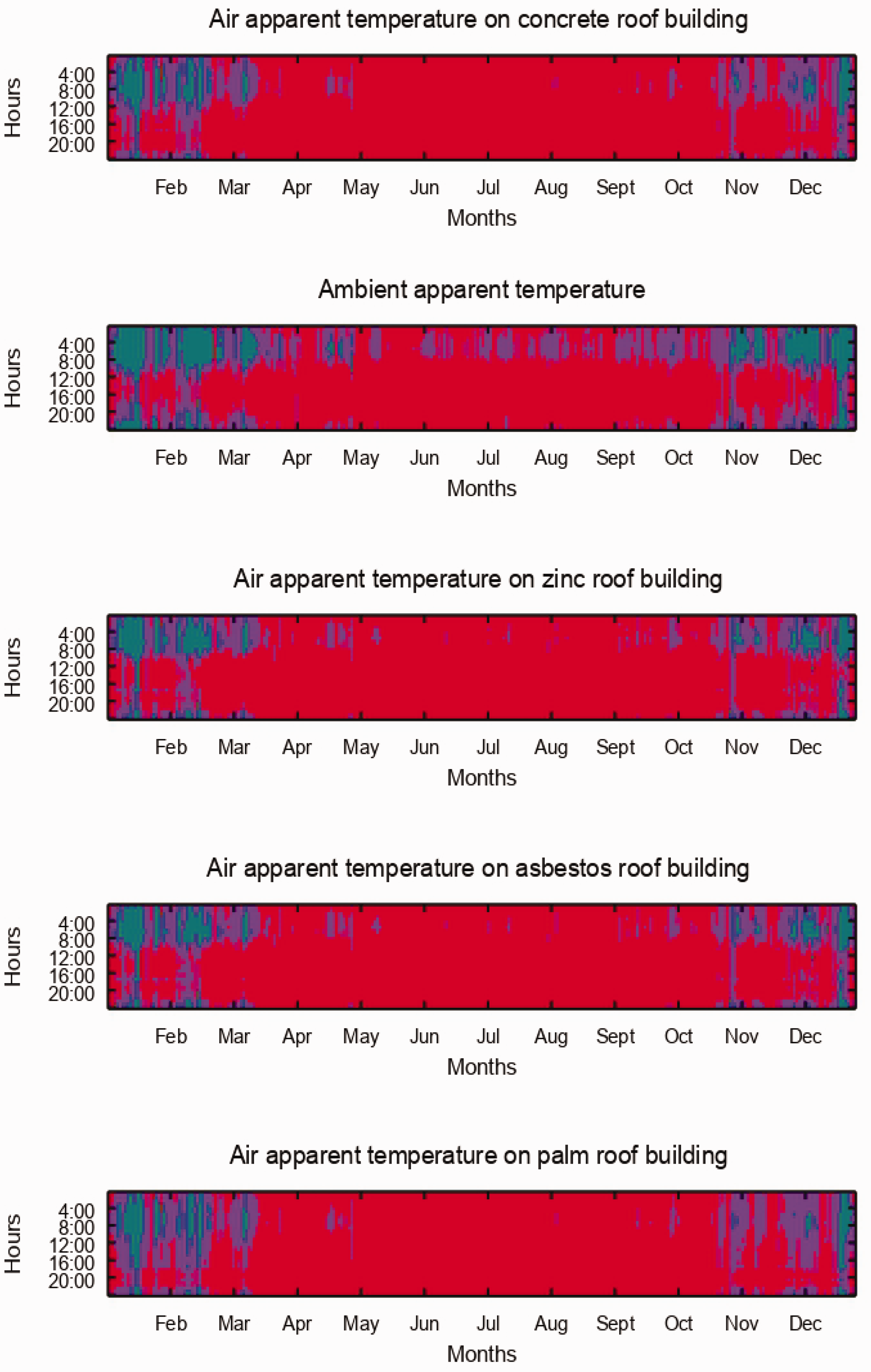
Colour maps for air AT over the year, according to its colour code. We show the case of ambient and buildings without a false ceiling.
Code for the colour map.
Ambient AT
During months of January and February on average, outside the buildings, the first nine hours and the last four hours of the day show an air AT below the comfort zone, surpassing it between the 12:00 and 19:00 h and presenting a few hours within the comfort zone. From mid-March until the mid-October, the ambient AT is above the comfort zone throughout the day, during this period, a few days the ambient AT is inside the comfort zone from 0:00 to 10:00 h and also from 22:00 to 24:00 h. Finally the last two months of the year, with similar conditions to the beginning of the year.
Air AT inside a concrete roofed building with a false ceiling
During January, inside the building, the air AT remains within or below the comfort zone, except in the afternoons, when the comfort zone is surpassed between 15:00 to 22:00 h. At the end of February, there is an increase in the AT throughout the day, interspersed with comfort hours. From mid-March to the end of October, the air AT is above the comfort zone almost every day. For November and December, the air AT is inside the comfort zone almost all days except the last two weeks of December where the temperature oscillates between below and inside the comfort zone.
Air AT inside zinc and asbestos roofing buildings with a false ceiling
The results for zinc and asbestos roofing buildings are very similar to concrete in terms of seasons and hours below, inside and above the comfort zone, with the following difference: between March and October from 2:00 to 10:00 h, the air AT is in the comfort zone.
Air AT inside a palm roofing building
For this kind of building, the biggest differences with respect to previous results are: at the beginning (January and February) and the end of the year (November and December) the hours below and inside the comfort zone are extended, that is, the building spends more time inside the comfort zone. This does not happen in buildings with other kinds of roofing. The difference between palm roofing with and without a false ceiling is minimal.
AT of concrete, zinc and asbestos roofing without a false ceiling
In contrast to the palm roofing buildings where the presence of a false ceiling had a minimal effect on the AT, concrete, zinc and asbestos roofing without a false ceiling present a remarkable increase of the AT throughout the year.
Results show that the increase in the number of hours above the comfort zone over the year is around 77%, see Figure 6. This fact makes life more difficult inside buildings. The effects on these situations are of increasing interest.25,26
Figure 4, on the left, presents the number of hours that a building spent below, inside and above the comfort zone for each type of roofing with a false ceiling, compared with the ambient AT (blue bar). Figure 4 shows that the ambient AT doubles the hours below the comfort zone, with respect to all buildings. However, the hours spent in all buildings with a false ceiling within the comfort zone was increased by about 160 h compared to buildings without a false ceiling. The false ceiling standardizes the AT in all cases. The hours that buildings with concrete, zinc and asbestos roofing passed above the comfort zone decrease with respect to buildings without a false ceiling. This decrease is more noticeable for the concrete roofing, although on the contrary, there is an increase in hours in the palm roofing building.
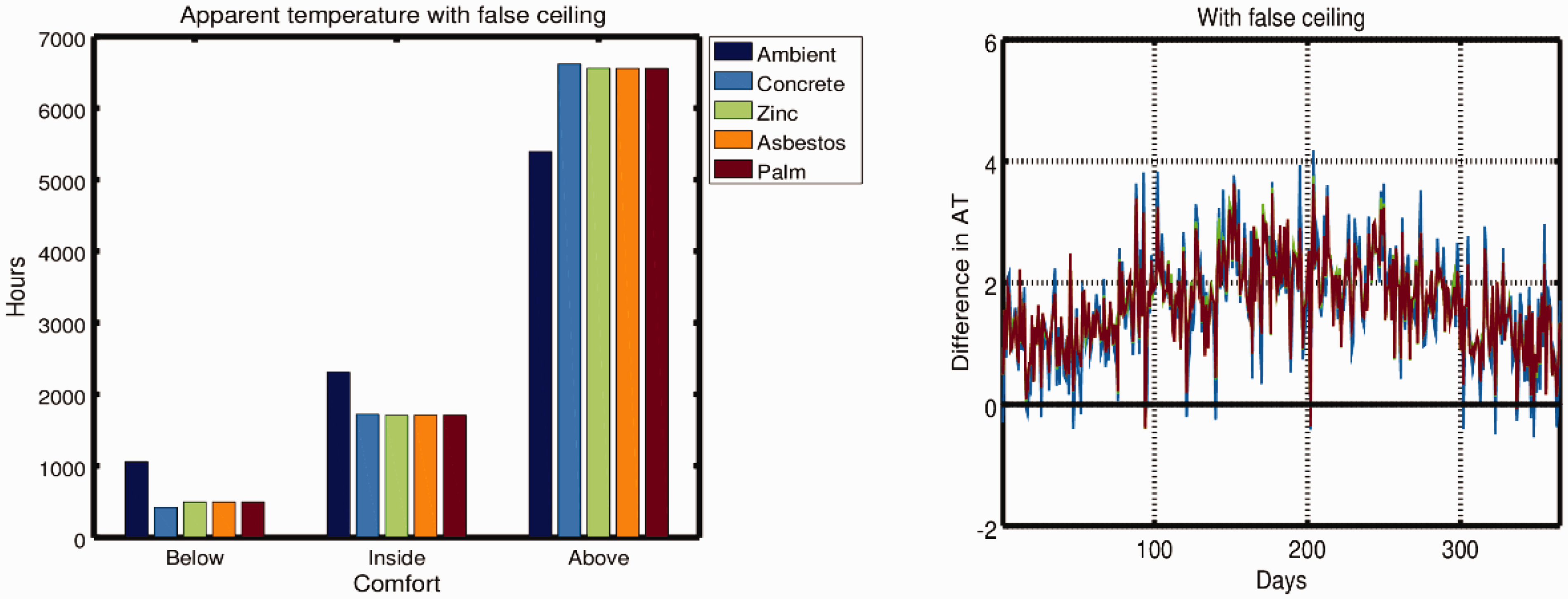
On the left: Number of hours below, inside and above the comfort zone, in four different buildings with roofing with a false ceiling. On the right: difference in AT in the same cases.
Figure 5 shows the annual statistics for the ambient AT and the simulated data of the AT in four different types of roofing with a false ceiling. The effect of the false ceiling can be described as standardizing, as minimums, maximums and medians of the AT become very similar in all roofing buildings, decreasing the average and maximum up to 2°C.
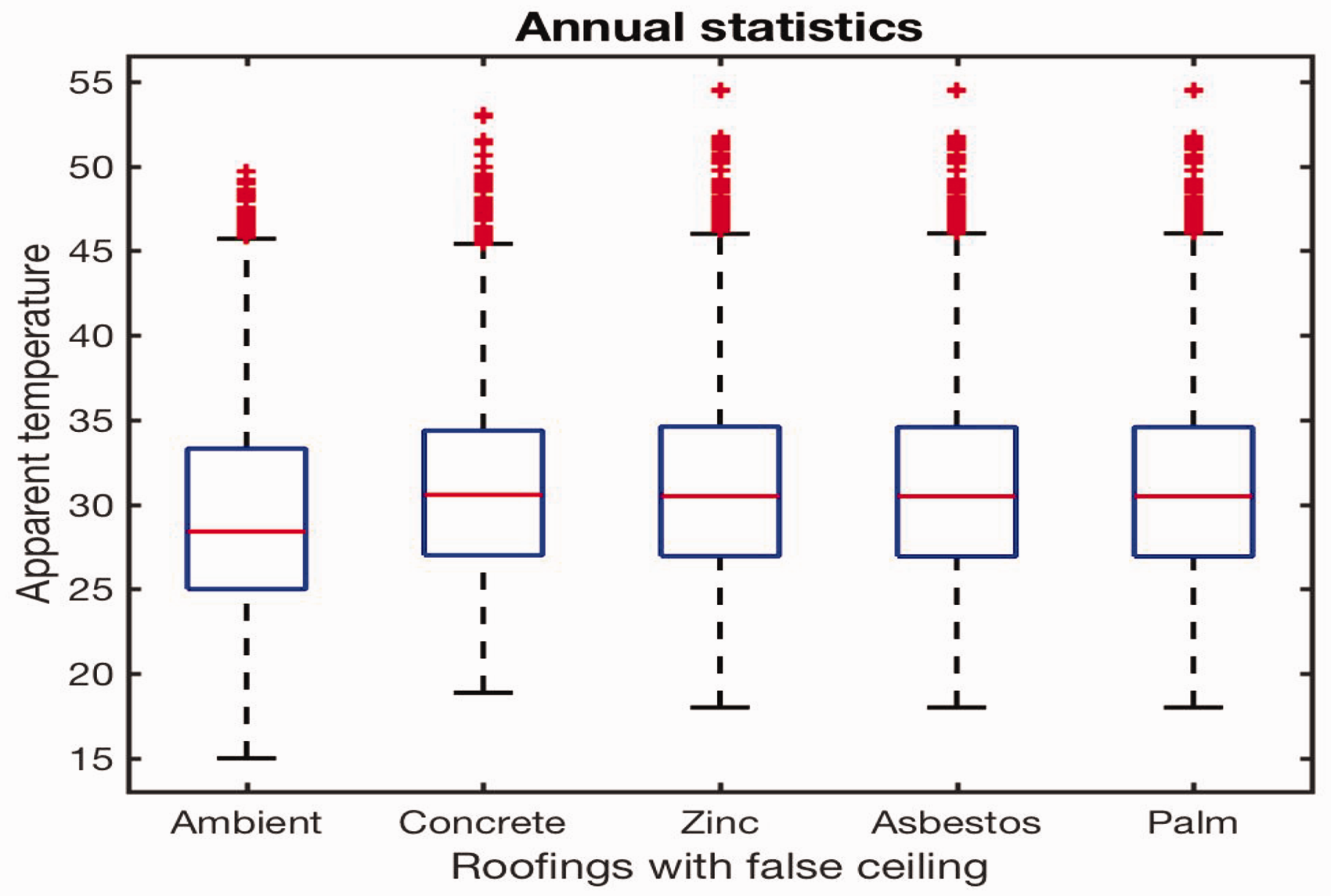
Boxplot of ambient AT and AT inside buildings with four different roofing with a false ceiling.
Figure 6, on the left, presents the number of hours that a building spent below, inside and above the comfort zone in each case, respectively. For the hours below the comfort zone, the ambient AT duplicates the hours with respect to all self-buildings, this is due to the fact temperatures drop late at night and early in mornings. After the ambient, the palm roofing building is where higher number of hours was obtained inside the comfort zone, with a difference of more than 223 h with respect to others. The least comfortable is the zinc roofing building which is the most common in the Lower Basin region, as observed in field visits. In terms of hours above the comfort zone, the ambient presents the lowest number of hours, followed by the palm roofing building, the concrete roofing building being the worst.
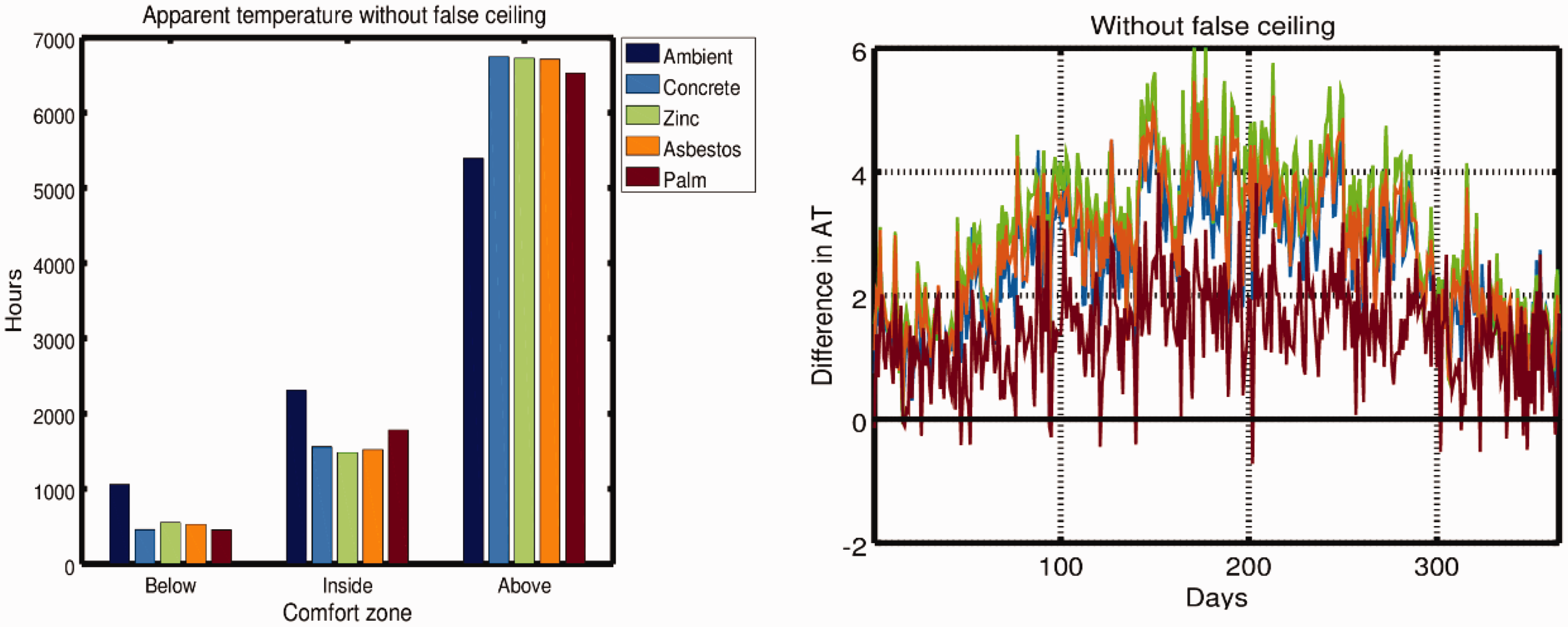
On the left: Number of hours below, inside and above the comfort zone, in four different buildings with roofs without false ceiling. On the right: difference in AT for the same cases.
Figure 7 shows the annual statistics for the ambient AT and the simulated data of the AT in four different types of roofs without false ceiling. The high peaks of the ATs reached in the region and the average of the AT of all dwellings are above the comfort zone, presenting the palm roofing building the lowest AT inside the houses. The palm roofing building is also where the lowest of the maximum ATs was found. Other statistical quantities are also shown in boxplots.
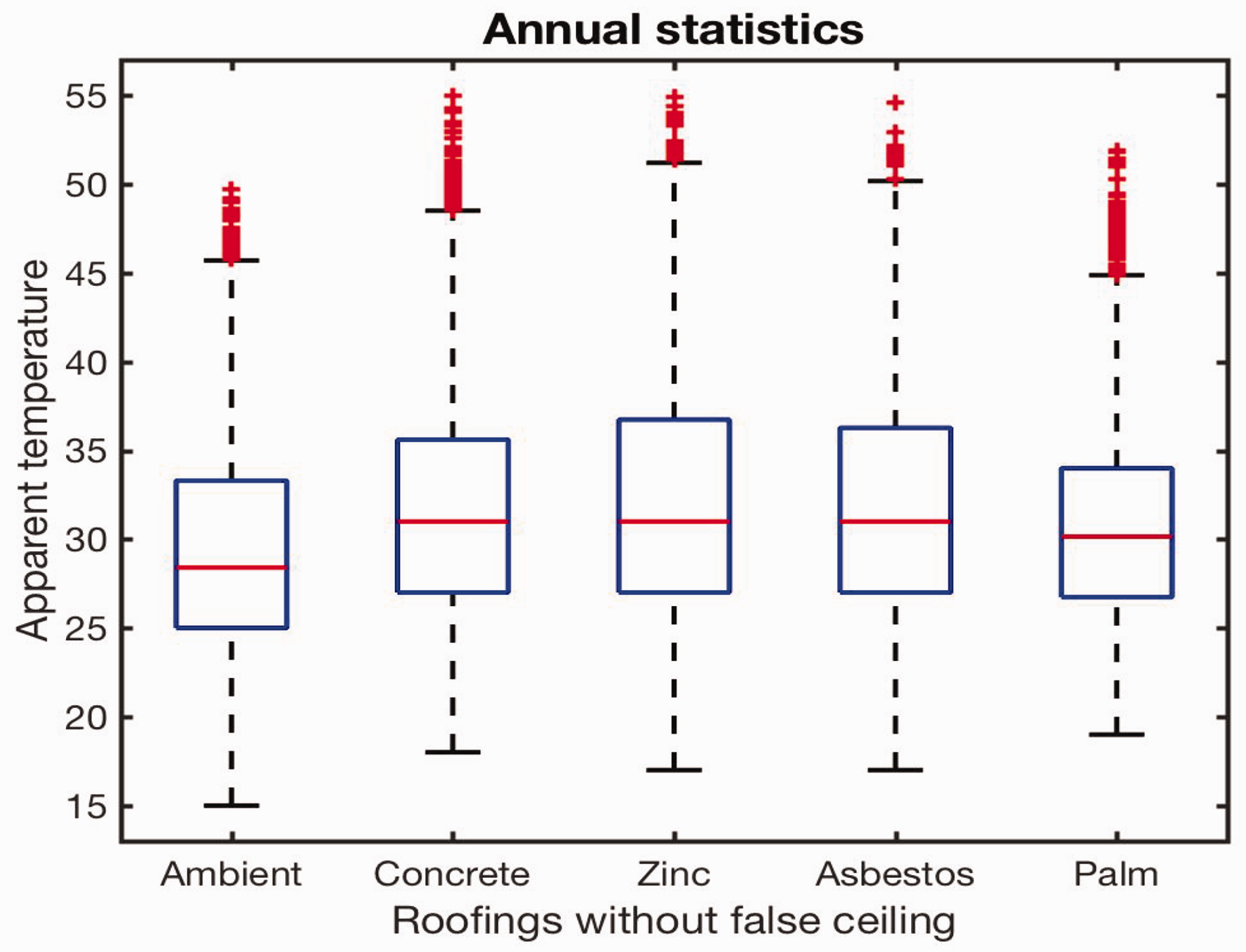
Boxplot of ambient AT and AT inside buildings with four different roofing without a false ceiling.
Treatment 2: Difference in AT
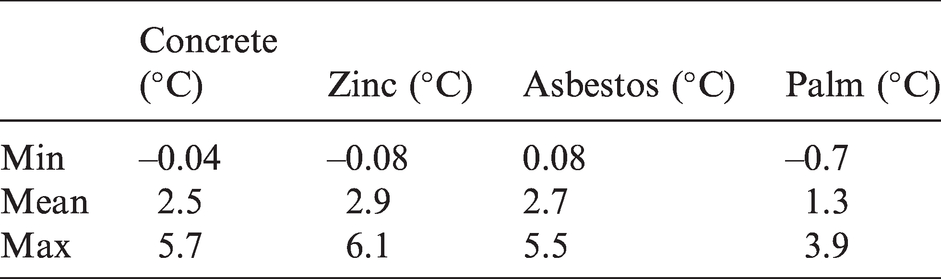
Difference between AT (
Roughly speaking,
The
Difference in mean AT in four different conditions with a false ceiling.
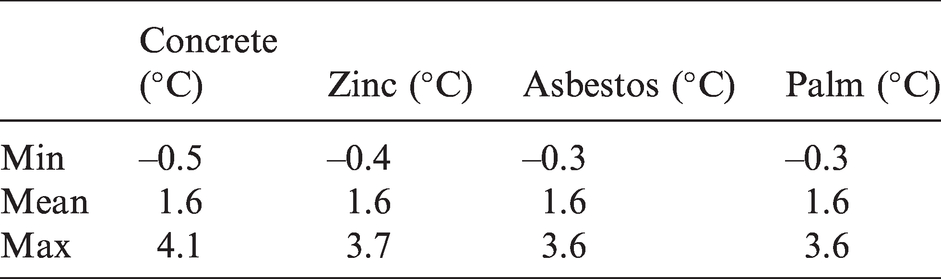
Difference in mean AT for four different conditions without false ceiling.
Discussion
During field surveys, four types of roofing were commonly observed in self-constructed homes: zinc, asbestos, concrete and palm roofing. Humidity percentage, temperatures and internal humidity and solar radiation were recorded. In this study, information about typologies and structural pathologies is provided.
Several authors have explored the thermal behaviour of walls and ceilings to achieve thermal comfort, for example, Barrios et al. 27 analysed various configurations of materials to evaluate the thermal performance of ceilings and walls in buildings without air conditioning, and obtained an approach to an adequate index of thermal comfort.
In the Lower Papaloapan River Basin, comfort zone is difficult to achieve most of the year, due to conditions regarding temperature and humidity. We found an AT of over 30°C most of the time inside houses, with palm roofing being the best with respect to comfort hours, and zinc roofing the worst, with a difference of almost 300 h between them.
Results also show that the minimum AT is highest in a house with palm roofing and maximum AT is less in the same construction, meaning palm roofing is the best option for maintaining thermal comfort, being only 1°C over ambient AT most of the time, and even reaching lower ATs in some cases. The effect of palm roofing is remarkable and the use of this local material is also an ecological and traditional option.
From the simulated data, no roofing performs better than ambient AT, which has more hours inside the comfort zone and also fewest hours above the comfort zone. This suggests a construction proposal that takes advantage of the natural cooling that occurs late at night and early in the morning, instead of increasing the use of air conditioning, which is what frequently happens.
On the other hand, the use of a false ceiling has a standardizing effect for all roofing analysed. AT decreases more than 2°C and the hours inside the comfort zone are increased by more than 200 h. With a false ceiling, some hours below and above the comfort zone were moved into this zone, except in the house with palm roofing, where an opposite effect was detected. Though this is a viable option to improve the conditions of contentment for people in the region, an ecological alternative must be proposed, since the material used was expanded polystyrene.
Although different proposals, such as insulation in the walls and ceilings or modification in the thickness of the sheathing, are some of the main options to mitigate the heat inside houses, they are not yet presented as a viable option for the majority of real users in our study. Thus, through simulations in TRNSYS 16 for buildings with zinc and concrete roofing, some recommendations were obtained that help improve the thermal comfort inside homes in the region.
First: the orientation of the facade in an east-southeast direction presents the best thermal responses in the interior, so simulations were carried out in this direction.
Second: differences in height of 0.5 m cause a significant decrease in the interior temperature. On the other hand, the use of false ceilings further increases this temperature condition, which is why the combination of both elements is highly recommended.
Third: Simulations showed that the use of windows that cover approximately 22% of the exterior wall surfaces is adequate to maintain the temperature conditions inside; 5–8 airflow exchanges per hour is recommended during the hottest season. However, to keep the temperature within the comfort zone in the cold season, three air changes per hour are recommended, preferably avoiding them at night.
Figure 8 presents a comparison of the original conditions with concrete and zinc and two proposals for each one; we call Concrete 1 (Zinc 1) to the space of 150 m3 with measurements of
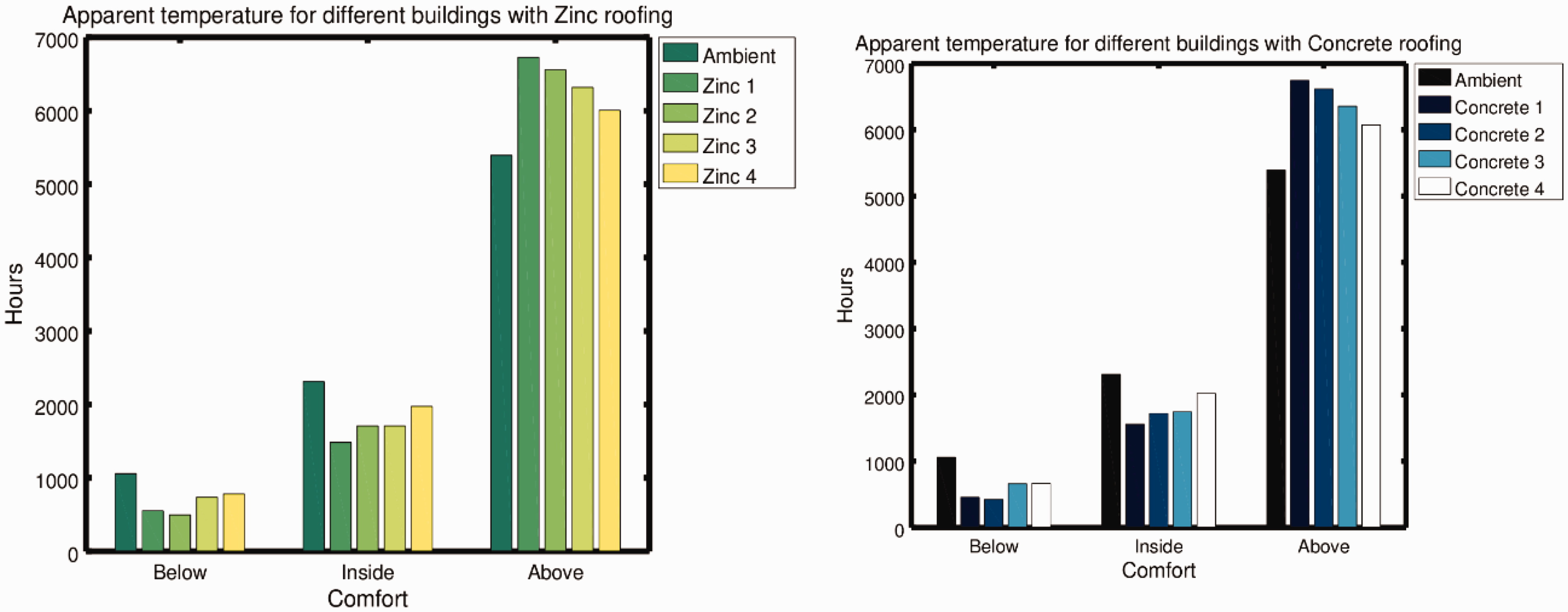
On the left: Number of hours below, inside and above the comfort zone, under ambient AT and four zinc roofing conditions. On the right: Number of hours below, inside and above the comfort zone under ambient AT and four concrete roofing conditions.
In the case of concrete, the difference between Concrete 1 and Concrete 4, the latter has 674 fewer hours above the comfort zone and 496 more hours within the comfort zone. Even without the false ceiling or modification in the physical space, a high airflow exchange rate increases the time spent within the comfort zone by 187 h.
In the case of zinc, considering Zinc 1 and Zinc 4, the latter has 720 fewer hours above the comfort zone and 491 h more within the comfort zone. Even without the ceiling or modification in the physical space, a high airflow exchange rate increases the time within the comfort zone by 225 h.
Conclusions
In this study, the behaviour of the environmental conditions inside four types of self-constructed houses with materials commonly used as roofs in the Lower Papaloapan River Basin, Mexico, were determined. The AT was used as a validation parameter to determine the final conditions to which the users of the dwellings are exposed.
By displaying the results in colour maps, we can distinguish the changes between the first hours of the day and the rest of it, we can also differentiate seasons: spring-summer and fall-winter, a real comfort condition is rarely reached inside the self-built houses in the study region. Moreover, this study showed that the temperatures conditions reached and perceived inside self-built houses are at their most extreme points, which can lead to health problems.25,26,28
The methodology used here for studying and understanding the collected and simulated data could be applied to other cases and could be useful for comparing AT of various building conditions for different time periods.
The results clearly indicate that the temperature inside the self-built houses with zinc, asbestos and concrete roofs fluctuates on average of 8°C above the comfort zone during the transition from spring to summer. These fluctuations remain to a greater or lesser extent throughout the year. These fluctuations are largely due to the thermal diffusivity of each material coupled with the typical climatic conditions of humidity and temperature present in the region. This is mainly due to the fact that the houses are not built taking into account the prevailing climatic conditions and adequate construction processes, as indicated by vernacular architecture, but mainly influenced by the socioeconomic factor.
Some suggestions were made in relation to orientation, height and airflow exchanges to improve the comfort conditions within homes in the region. The information obtained can be considered in future research on the design of accessible buildings that include passive cooling.
Footnotes
Authors' contribution
All authors contributed equally in the preparation of this manuscript.
Declaration of conflicting interests
The author(s) declared no potential conflicts of interest with respect to the research, authorship, and/or publication of this article.
Funding
The first author thanks CONACYT for the support provided to carry out this work resulting from the 2019 postdoctoral fellowship.
Supplemental material
Original data are available upon request.