







Abstract
Daylighting and acoustics parameters are related to each other in terms of material usage, specifically for window openings. However, no study has included acoustics and daylighting as objectives in the multi-objective optimisation models. In this study, this relationship was included to the optimisation process of generating building conceptual form. A model was developed to optimise the form of a building using acoustics, daylighting and floor area as the objectives. Daylight autonomy parameter for daylighting performance and C50 (speech clarity), reverberation time, Speech Transmission Index parameters for acoustic performance were used in the model which was created with visual programming language. Case studies were conducted with the model, and the results were discussed. Maximising speech clarity and maximising annual daylighting in the space were determined as objectives for the building form optimisation process in the case studies.
Introduction
Studies on building performance have increased owing to the development of simulation tools in the field of computer-aided design.1,2 According to Machairas et al. 3 factors such as the difficulty of using the tools, the need to acquire additional skills, additional costs and the perception that the tools constrain the designer have contributed to the minimal use of these tools in the past. Furthermore, designers found it challenging to analyse the effect of design alternatives on building performance in the early design process owing to the difficulty in transferring data between different software and time constraints.4–9 Therefore, most of the performance analyses were carried out after the initial design phase. However, building performance analysis performed after the initial design phase reduces the number of alternative solutions in the early design process, 10 whereas producing more design alternatives in the early design stage leads to more satisfactory final design solutions.11–13 In this concept, which is known as performance-based design, 14 early decisions taken at the beginning of the design are important. 15 First, the design goals that affect the performance of the building are determined, and then the design process is initiated.
Studies like Yi and Malkawi 12 and Echenagucia et al. 16 were conducted analysing the relationship between building form and building performance in the early design stage. In this type of study, the form of the building originates from the conceptual design stage based on the determined performance criteria. The objectives of these studies are usually parameters such as daylighting, heating and radiation. However, when designing buildings, adding parameters such as acoustics in the optimisation process is important to provide comfort in the interior. Acoustics are related to the building’s form.17,18 According to the function of the space, there are ideal acoustic quality values for speech or song to be intelligible. 19 For the space to achieve these values, the volume and shape of the space are important. In the optimisation process, a proper planning of acoustics in relation to the volume in the interior could affect the efficiency of the building because in the case of improper acoustics planning, extra materials or various measures may be required to correct the acoustics quality at a later stage. Additionally, acoustics are affected by the materials used. 18 For example, the amount of windows (glass) in the space affects its acoustic quality. The use of windows is directly related to daylighting, which is a parameter related to the building performance. Therefore, to consider these parameters together in the optimisation of the building form is important.
As seen in the review in the Background section, no study has considered acoustics and daylighting together in the optimisation of the form of a building in the conceptual design phase. Hence, this study focuses on the inclusion of the acoustic parameter to the form optimisation process for creating performance-based building designs, and this study aims to formulate a model by including acoustic and daylighting parameters in the multi-objective optimisation. The building form variables used in the proposed optimisation model include the size of the window openings. These openings determine the amount of glass material usage accordingly. The glass material also has an effect on interior acoustic performance of a space. In this model, improving clarity of speech is necessary in order to achieve the best acoustics performance given the volume of the interior. Minimising the use of electricity by maximising daylight levels in the interior is also desirable. Within these parameters, the optimised form, which is adjusted to the selected area, should be the goal.
Background
Daylighting performance optimisation studies
As the first examples of multi-criteria optimisation studies related to performance-based building design, Gero et al.’s 20 optimisation study used thermal performance, capital cost and useable area objectives; Marks’s 21 optimisation study considered building cost and heating cost objectives; and Caldas and Norford’s 22 optimisation study used thermal and lighting performance objectives. With the current rapid development of software technologies and algorithms, such studies have gained traction and started to diversify.
Recent studies on the development of various optimisation-oriented methods have been undertaken to ensure lighting efficiency in building design. Various objectives are used in these studies, for example, Delgarm et al. 23 developed a multi-objective optimisation model for building design using a particle swarm optimisation, where their objectives are related to annual cooling, heating and lighting electricity consumption. For the early design stage, Echenagucia et al. 16 developed a multi-objective optimisation model with objectives related to the energy needs for heating, cooling and lighting. Shahbazi et al. 24 carried out a study on optimising building design in relation to lighting and thermal performance. Kheiri 25 compared genetic algorithm (GA), simulated annealing (SA) and hybrid methods for optimisation of fenestration system in relation to daylighting performance of an office space.
In addition, some researchers have mainly focused on daylighting performance. For example, Sawyer 26 has conducted a study on daylight perception in work environments. Hansen et al. 27 have conducted a study on double dynamic lighting in relation to daylighting in an office space.
Within the scope of the building form and the lighting performance, studies on shading devices can also be considered. There are many studies in this context that have analysed shading devices used to create performance-based building designs. de Almeida Rocha et al. 28 proposed a multi-criteria method for designing building facade shading systems. The design objectives in their method were related to energy efficiency, daylighting and fading protection. Taveres-Cachat et al. 29 developed a method that improved the performance of photovoltaic (PV) integrated shading devices, and the objectives in their methodology were the parameters related to thermal, electric and lighting systems. In addition, Goia et al., 30 Khoroshiltseva et al., 31 Bustamante et al. 32 and Kirimtat et al. 33 developed optimisation models for shading design, where energy consumption and lighting were the main objectives.
Some researchers have mainly focused on material and building performance relationship. For example, Yu and Leng 34 have carried out a study on the effect of glass roof system on energy and daylighting performance. Shen and Zhou 35 have tested the light transmitting performance of plastic optical fibre transparent concrete product.
There have been extensive review studies on building design optimisation in the context of building performance. For example, Evins, 36 Attia et al., 37 Nguyen et al., 38 Machairas et al. 3 and Shi et al. 39 reviewed the optimisation studies carried out within this context. In addition, Wetter and Wright, 40 Elbeltagi et al., 41 Wright and Alajmi, 42 Tuhus-Dubrow and Krarti, 43 Hamdy et al., 44 Kämpf et al. 45 and Wortmann and Nannicini 46 reviewed the performance of the algorithms and programs used in this context. However, there is no study that addresses interior comfort and building performance within the scope of acoustic quality.
Acoustics studies
Many studies have been conducted on acoustics, particularly on the subject of the acoustic properties of materials. Bonwetsch et al. 47 and Walker and Foged 48 examined the acoustic properties of digitally fabricated wall panels, and Turco et al. 49 examined the scattering coefficient values of the origami-based complex forms created by the authors. Belanger et al. 50 investigated the acoustic properties of curved glass, while Taban et al. 51 studied the acoustic characteristics of natural date palm fibres. Studies have also been carried out on acoustics software, for example, Lim 52 carried out the measurement of acoustic performance using the agent-based method, and Parigi et al. 53 compared the different properties of acoustics software. In addition, studies by Hongisto et al., 54 Rasmussen 55 and Alonso et al. 56 have examined the acoustical retrofit of existing buildings.
The technical manual of BREEAM, 57 a sustainability assessment method, includes room geometry as a parameter that affects acoustics. However, few studies have focused on the role of acoustics in the early design stage. Alambeigi et al. 58 proposed that in the early design stage of form formation, the form should be developed according to the acoustic performance. Foged et al. 59 also investigated the optimisation of the form of a building based on the acoustic parameters. However, energy performance-related parameters should also be included in optimisation studies considering the acoustic-form relationship in order to attain versatile (multi-directional) optimised conceptual form results.
Multi-objective building design optimisation
Objectives, variables and constraints
In this study, the objectives for building form optimisation were defined as follows: increase daylighting, improve acoustic quality and increase the ground floor surface area of the conceptual form. First, providing sufficient daylight for interior spaces reduces the energy consumed to provide artificial light. Therefore, during building form optimisation, the daylighting level should be increased in interior spaces. Second, while shaping the form of the building in optimisation, speech clarity should be increased in order to increase the acoustic quality in relation to the volume. Lastly, to enlarge the floor area of the building within the boundaries of the given site, and within the 5-m setback limit, the optimised form should achieve the maximum area.
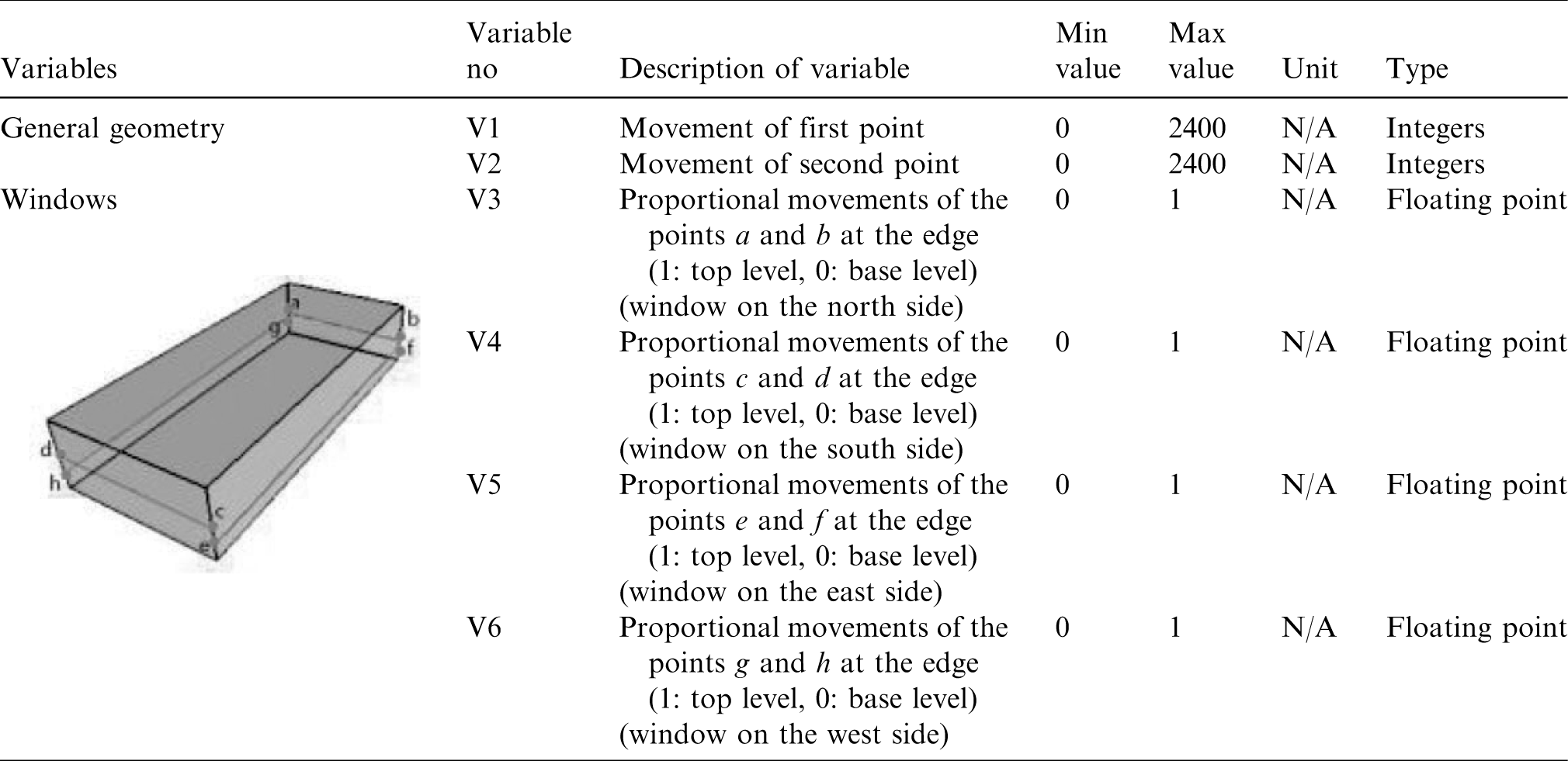
The variables were defined as the range of values defining the parametric geometry (Table 1), and the constraints were defined as the site location, the parcel boundaries and the maximum height of the building and the program of the building (Table 2).
Variables of the building form.
Constraints for the optimisation process.

In this study, the building design was optimised using many parameters, and the parameters used in this study are for experimental and test purposes. These parameters can be varied according to different building design purposes, and the minimum and maximum values of the parameters can also be varied.
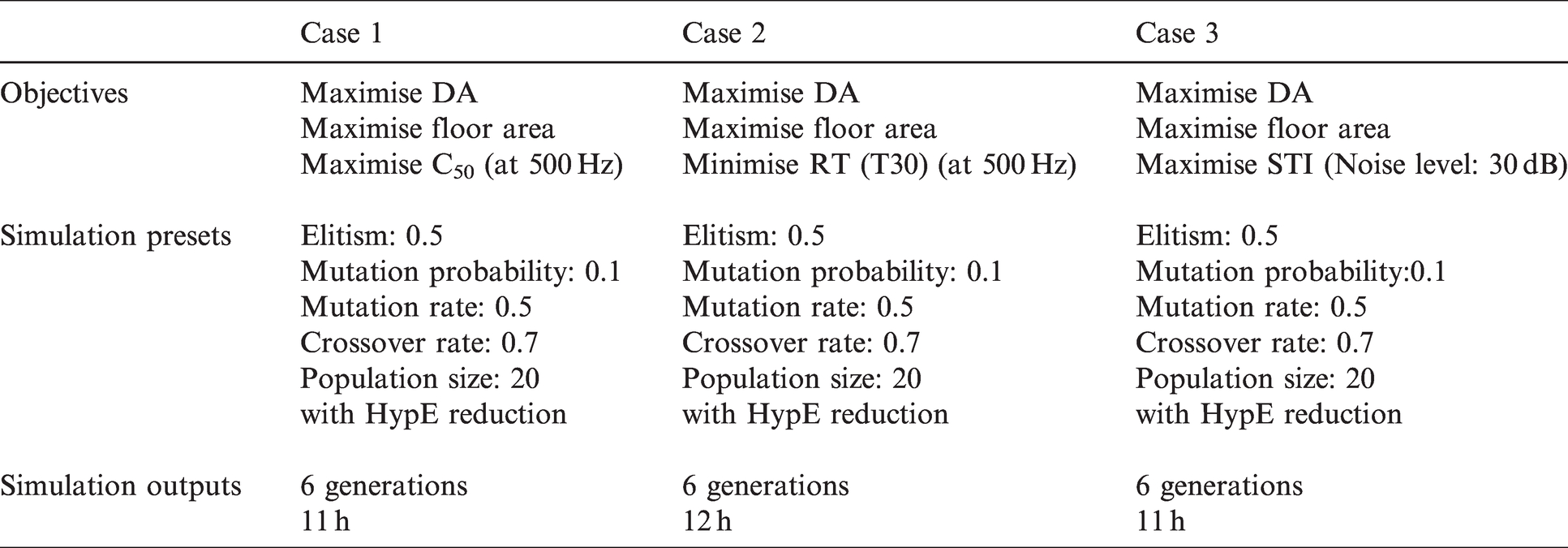
Three case studies were conducted. The properties of the case studies are given in Table 3. Regarding the acoustic performance of the space, in the first case study it has been focused on maximising C50 (speech clarity), in the second case study it has been focused on minimising reverberation time (RT) and in the third case study it has been focused on maximising Speech Transmission Index (STI).
Properties of the case studies.
Method
The model proposed in this study was formulated using a visual programming language (VPL). The Grasshopper 60 program, which is a VPL program that works as a plug-in to the Rhinoceros 61 program, was used, and other programs that work as an add-on to the Grasshopper were also used in accordance with the objectives of this study. For example, Honeybee and Ladybug 62 add-ons were used for daylighting analyses. These add-ons work in the background with EnergyPlus, Radiance, Daysim and OpenStudio. For the acoustic calculations, the ray-tracing program add-on Pachyderm, 63 which can work within VPL, was used, whereas the Octopus 64 add-on was used for multi-objective optimisation (Figure 1).
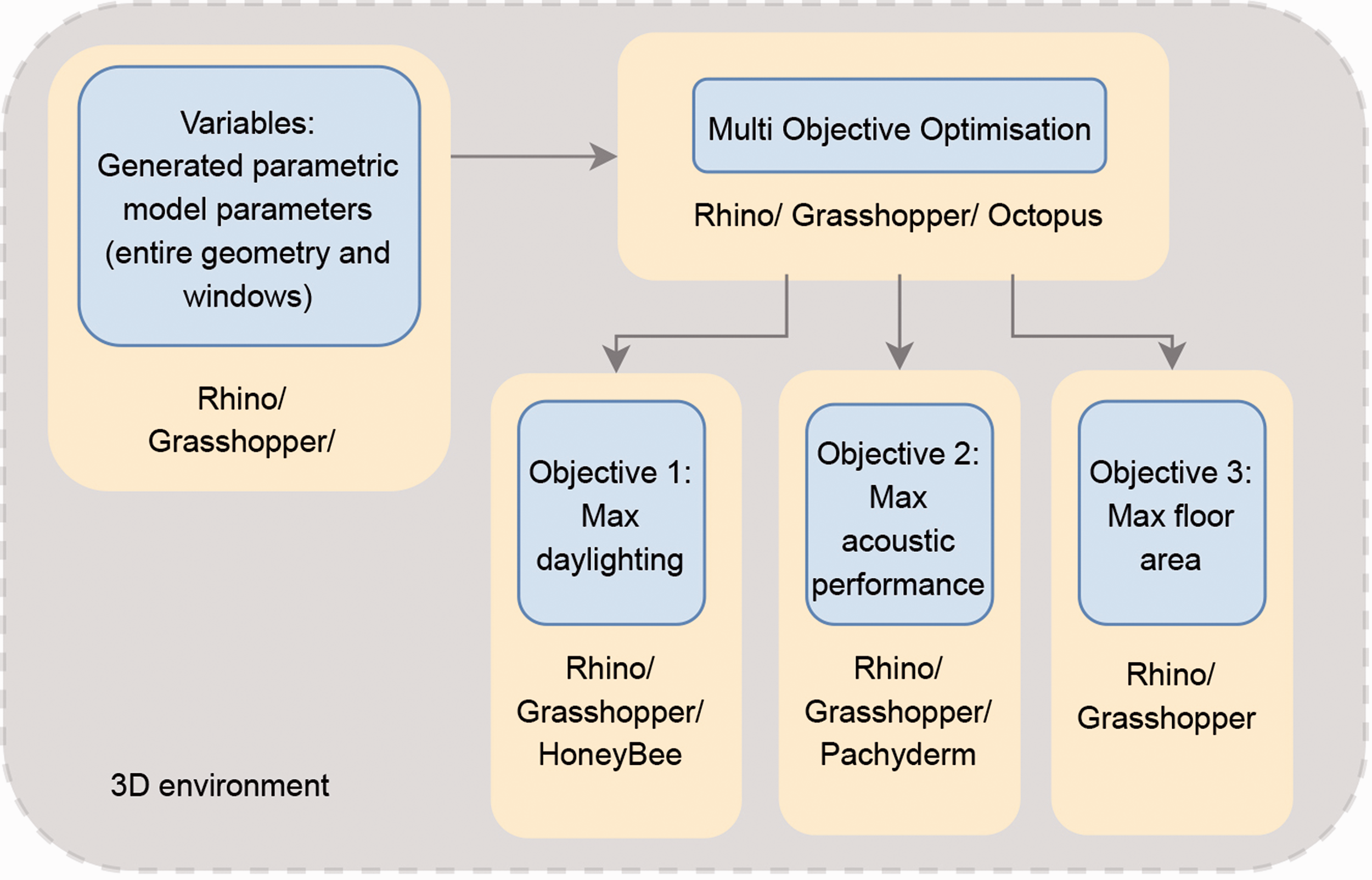
Computer software and objectives used in this study.
Octopus is a multi-objective optimisation engine based on a GA, and specifically, the algorithm used in this engine is called the SPEA-2 algorithm.65,66 In Octopus, individual’s fitness is calculated by Pareto dominance, which uses the whole population to evaluate an individual. In addition, Octopus uses HypE 67 algorithm (in combination with SPEA-2 algorithm) for hypervolume indicator. 68
Octopus gives results in various combinations of values. As Vierlinger 66 mentioned, the designers should choose among the solutions according to their aesthetic criteria or the specific objective.
Octopus tries to minimise the objective values by default. To maximise an objective, it is necessary to multiply the value of the objective defined in Octopus by –1. Therefore, the objective values, which were tried to be maximised, were multiplied by –1 (Figure 3). Additionally, the objectives are equally weighted in the script.
First, the parametric geometry to be optimised was created with its variables with consideration for the constraints of the specified site (Table 1). A grid was placed in the area, leaving a 5 m perimeter on all sides. The intersection points of this grid are in a ‘list’ form in the script. Therefore, these items do not have units. For the optimisation process, a surface geometry was created over two points selected from this list, with the ‘Rectangle 2 pt’ command. A surface was created by determining two points (V1, V2) on the grid, from which a volume was created. Window openings were positioned on all the facades of the geometry (east, west, north, south). The window openings were also determined as variables to be optimised in accordance with the objectives. Proportional movements of points at the edges create windows on the facades. There is no minimum amount of window area, and the maximum limit is the facade itself. The windows were positioned horizontally across the facade. Maximising the floor area with respect to the geometry was determined as an objective of the optimisation stage (Table 3 and Figure 2).
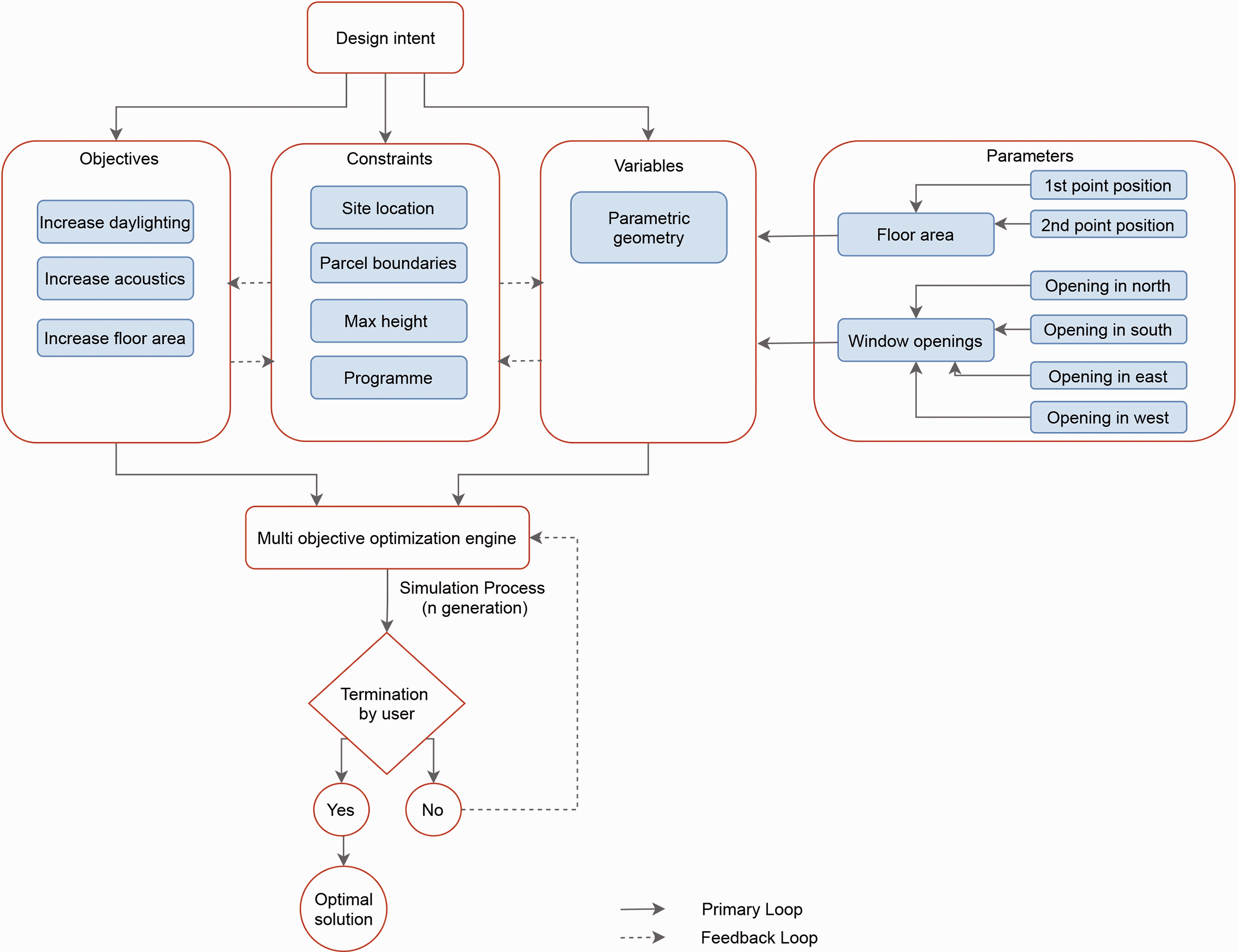
Flowchart of the script.
To verify the performance, a case study in Berlin was selected, since the annual daylight intake of this city is lower than many other metropolitan cities. Any site where the model is intended to be used can be selected for further studies. It should be noted that the weather data of the region of the selected site should be used.
Then, various settings were established for daylighting simulation. First, as the selected site is in Berlin, the simulation was set so that Berlin EPW weather data (Berlin 103840) was used for daylighting analysis. Then, the daylighting simulation was adjusted for a climate-based (annual) analysis (for 8759 h). Sensor points in the space were set at 1 m above the ground. In addition, neighbouring buildings were modelled and included in the design optimisation process so that their shadows could be included in the simulation process. The script was based on the script developed by Roudsari and Pak. 69 Daylight autonomy (DA), which is the output of this part of the script, was used for the optimisation as it measures the daylight performance according to the façade orientation and location. 70 Maximising the daylighting level was determined as an objective for the optimisation stage. The threshold for DA was set at 300 lux (DA300). Thus, the model calculates percentage of the time that each sensor in the space receives at least the threshold value (300 lux).
Various settings were established for the acoustic simulation of the building. The intelligibility of speech within the interior space was considered as a criterion for determining better acoustics as the building was designated as an office. While C80 was preferred to measure musical sounds, C50 was preferred to measure speech sounds71,72 and was used to measure speech clarity in the first case study. C50 can be explained as the energy ratio of the reflections with early decay time intervals of 50 ms. 73 The objective was to maximise speech clarity for 500 Hz. Ten thousand rays were used for starting up the acoustics simulation. In the acoustic simulation, during the optimisation process of the building form, the source and receiver were positioned in relation to the floor area, so that neither the source nor receiver can leave the building form during optimisation. Floor’s length on the north–south axis was divided into three parts. The source was placed in the middle of the first piece and the receiver was placed in the middle of the third piece. In this way, source–receiver acoustic transmission path changed according to the floor area. The source and the receiver were positioned at 170 cm above the ground level.
For the second case study, RT, which is another acoustic performance measurement parameter, was used as one of the objectives in the optimisation. Recommended RT value for speech spaces is 1 s. 74 The speech in the interior space becomes less understandable as RT increases. Therefore, in the second case study, minimising RT value was determined as an objective. The other objectives are the same as in the first case study (Table 3).
For the third case study, STI, which is another acoustic performance measurement parameter, was used as one of the objectives in the optimisation. STI values can be between 0 and 1 (1.00 to 0.75 Excellent, 0.60 to 0.75 Good, 0.45 to 0.60 Fair, 0.30 to 0.45 Poor, 0.00 to 0.30 Bad). 75 In this case study, maximising STI value was determined as an objective. Background noise level was set as 30 dB for this test. The other objectives are the same as in the first case study.
The volumetric geometry of a room, surface characteristics and material absorption coefficients affect the acoustic quality of a space. 18 In the developed script, the surface area and the volume of the space can be parameterised during the optimisation process. In addition, the materials were set on the surfaces of the form to determine the effect of materials. The windows were set with glass material. Floor material was set with 9 mm tufted pile carpet on felt underlay, the ceiling was set as fissured ceiling tile material, and the remaining surfaces were set with wall material. The material absorption values of these materials are listed in Table 4. These materials were taken from Vorländer’s 76 list of values for use in acoustic simulations.
Material coefficients (Vorländer 76 ).

Finally, the determined objectives and variables were set in the Octopus multi-objective optimisation engine, and the simulation was initiated (Figures 2 and 3). Some forms and values (daylighting, acoustics and floor area) obtained from these case studies are presented in the next section below.
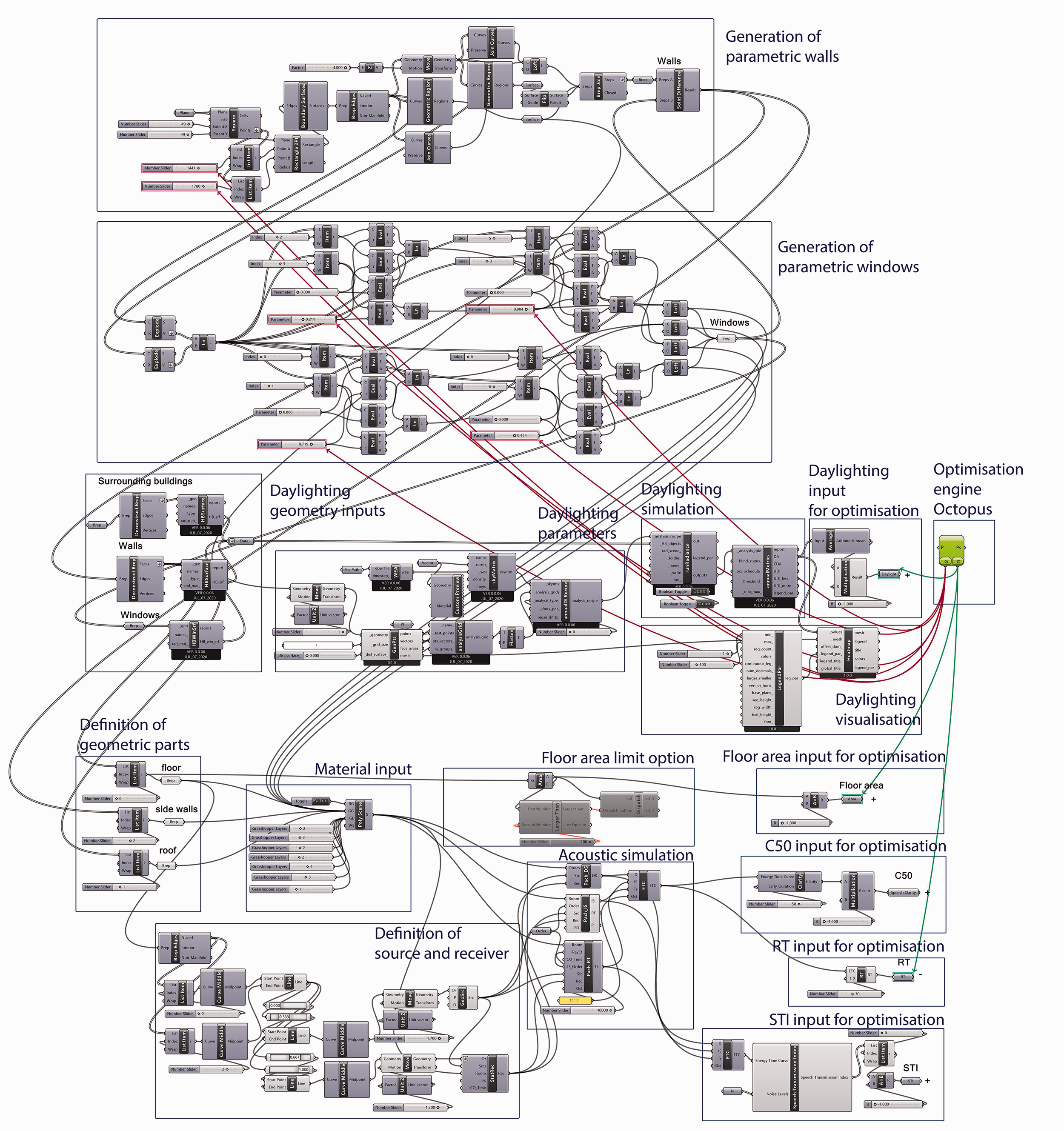
The script.
Results and discussion
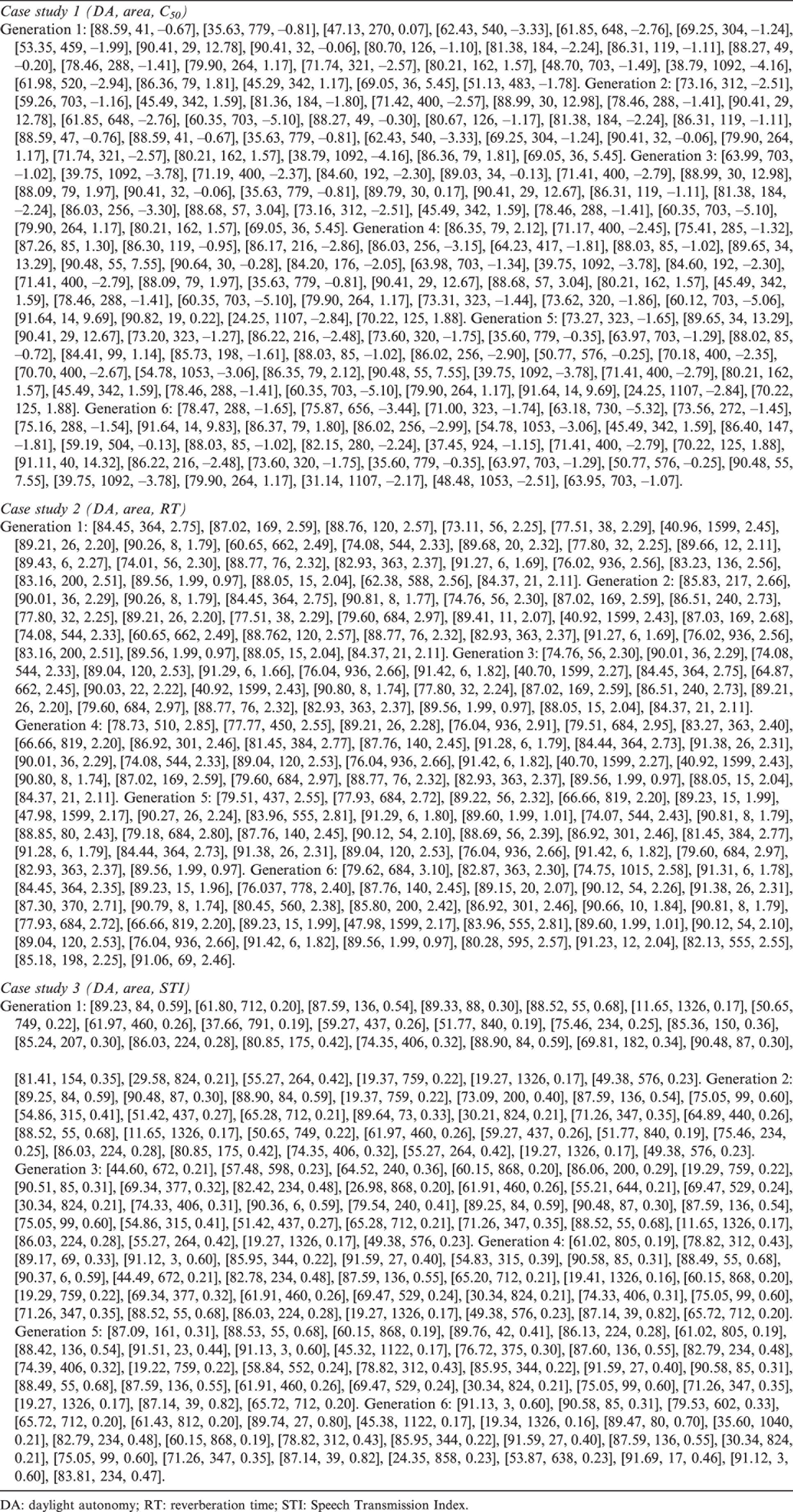
At the end of the Case 1 simulation, we examined the Pareto Front results generated by Octopus, and we selected three solutions to examine the forms. In order to see the differences between them, we carefully considered the values from different parts of the resulting graphics. In addition, all of the resulting values at the end of the optimisation with six generations can be found in Table 5. Accordingly, the average daylighting received inside the first, second and third forms are 79.9%, 59.19% and 35.59%, respectively. C50 values of the first, second and third forms are 1.08 dB, 0.02 dB and –1.08 dB, respectively. Floor areas of the first, second and third forms are 264 m2, 504 m2 and 779 m2, respectively (Figure 4).
Pareto Front results.
DA: daylight autonomy; RT: reverberation time; STI: Speech Transmission Index.
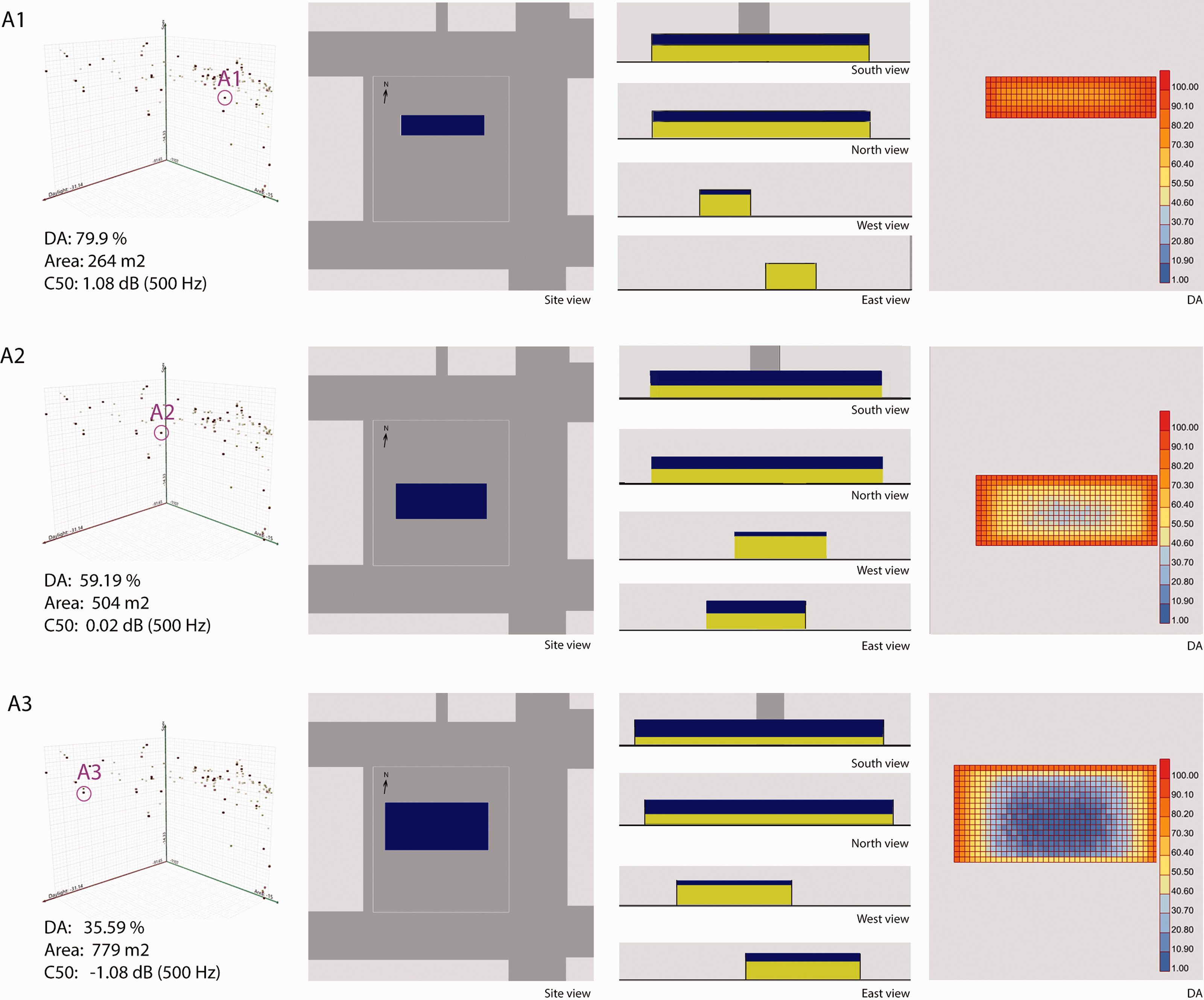
Optimised first, second and third forms and their values (A1, A2, A3).
At the end of the Case 2 simulation, we examined the Pareto Front results generated by Octopus, and we selected three solutions to examine the forms. In order to see the differences between them, we carefully considered the values from different parts of the resulting graphics. In addition, all of the resulting values at the end of the optimisation with six generations can be found in Table 5. Accordingly, the average daylighting received inside the first, second and third forms are 90.80%, 80.47% and 66.66%, respectively. RT values of the first, second and third forms are 1.77 s, 2.35 s and 2.44 s, respectively. Floor areas of the first, second and third forms are 8 m2, 560 m2 and 819 m2, respectively (Figure 5).
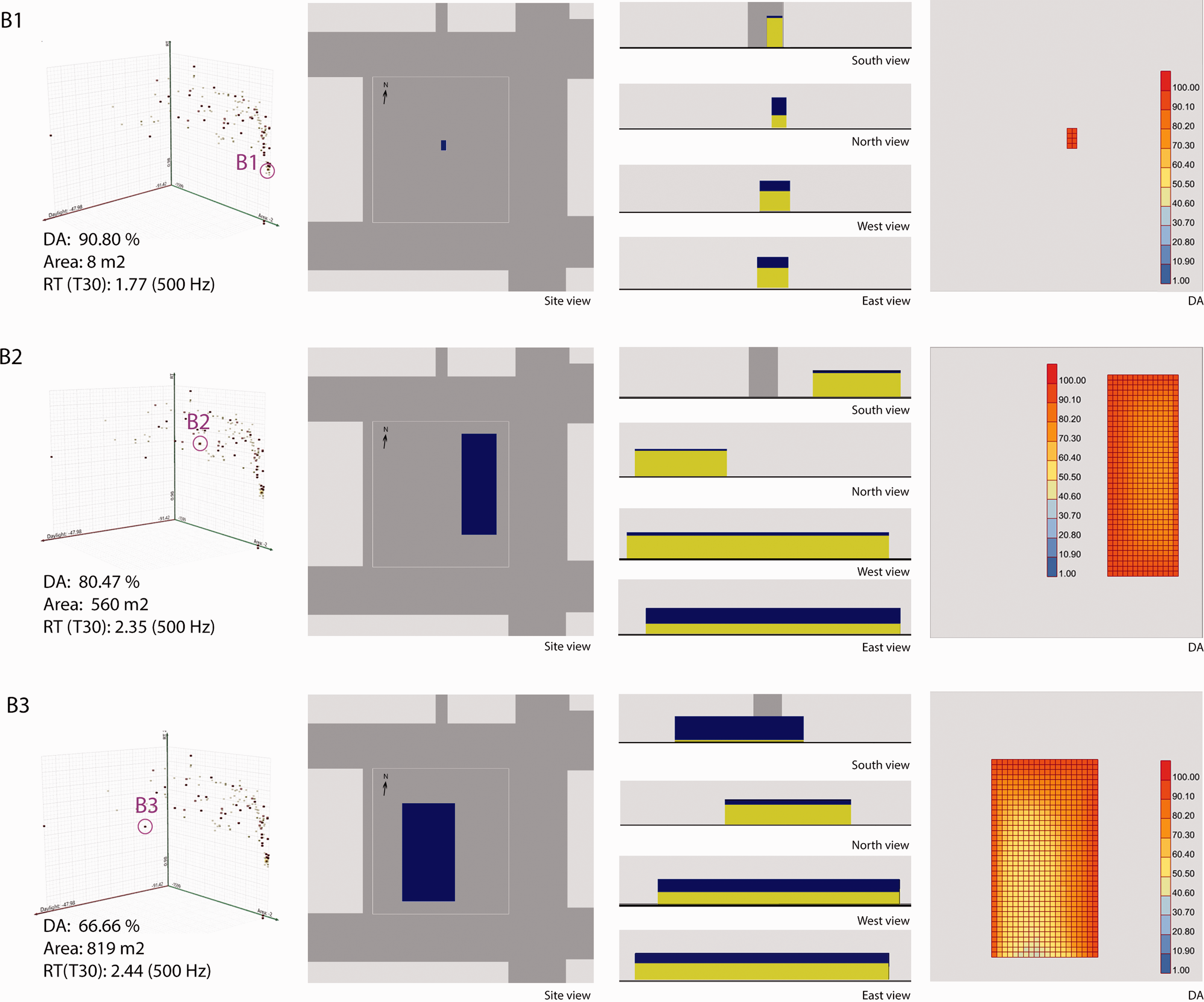
Optimised first, second and third forms and their values (B1, B2, B3).
At the end of the Case 3 simulation, we examined the Pareto Front results generated by Octopus, and we selected three solutions to examine the forms. In order to see the differences between them, we carefully considered the values from different parts of the resulting graphics. In addition, all of the resulting values at the end of the optimisation with six generations can be found in Table 5. Accordingly, the average daylighting received inside the first, second and third forms are 75.02%, 71.24% and 24.48%, respectively. STI values of the first, second and third forms are 0.60, 0.34 and 0.24, respectively. Floor areas of the first, second and third forms are 99 m2, 348 m2 and 858 m2, respectively (Figure 6).
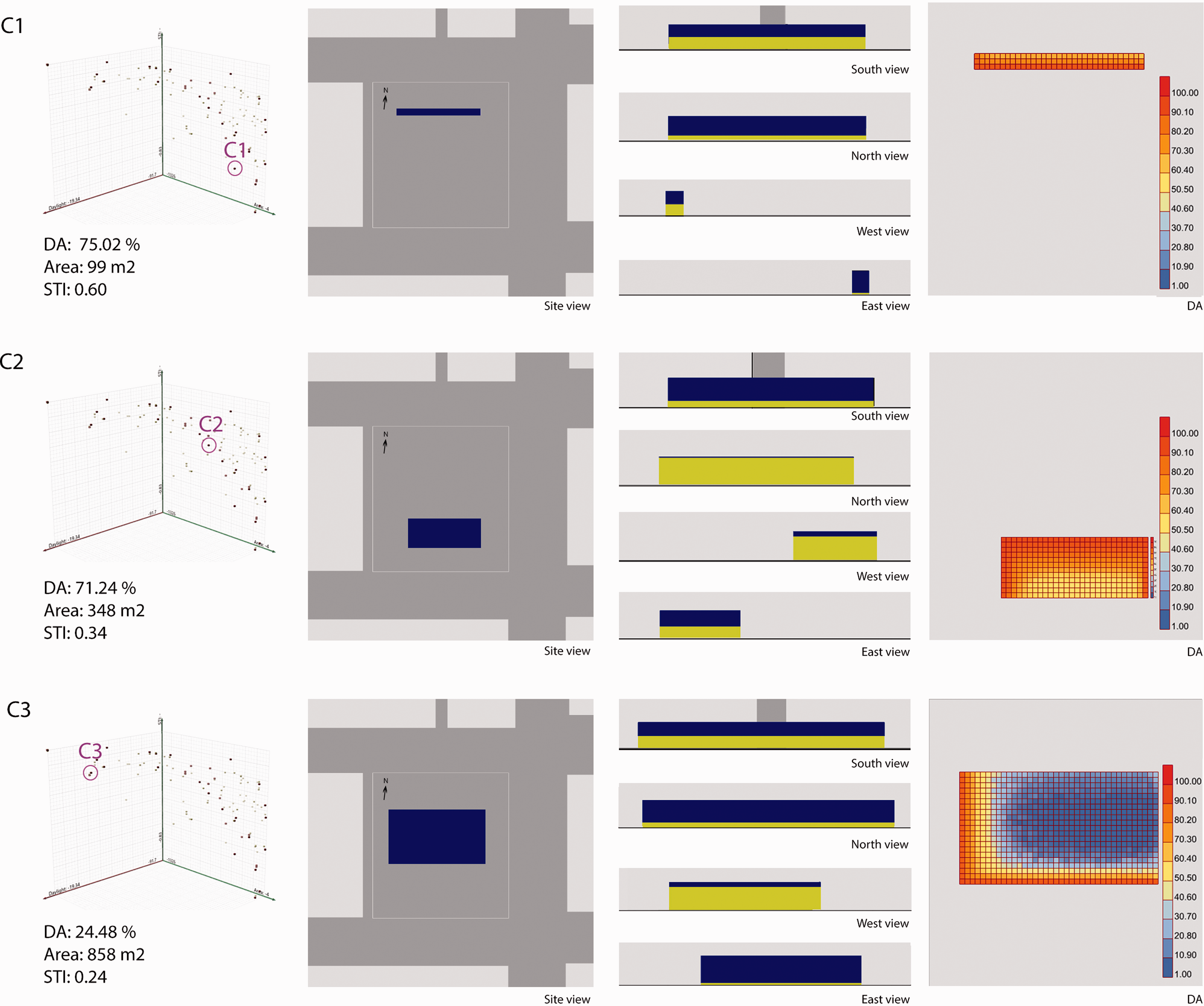
Optimised first, second and third forms and their values (C1, C2, C3).
The simulations were stopped when the simulation results showed tendency to convergence (Table 6). However, the simulations can be continued to attain a better convergence level.
Convergence levels.
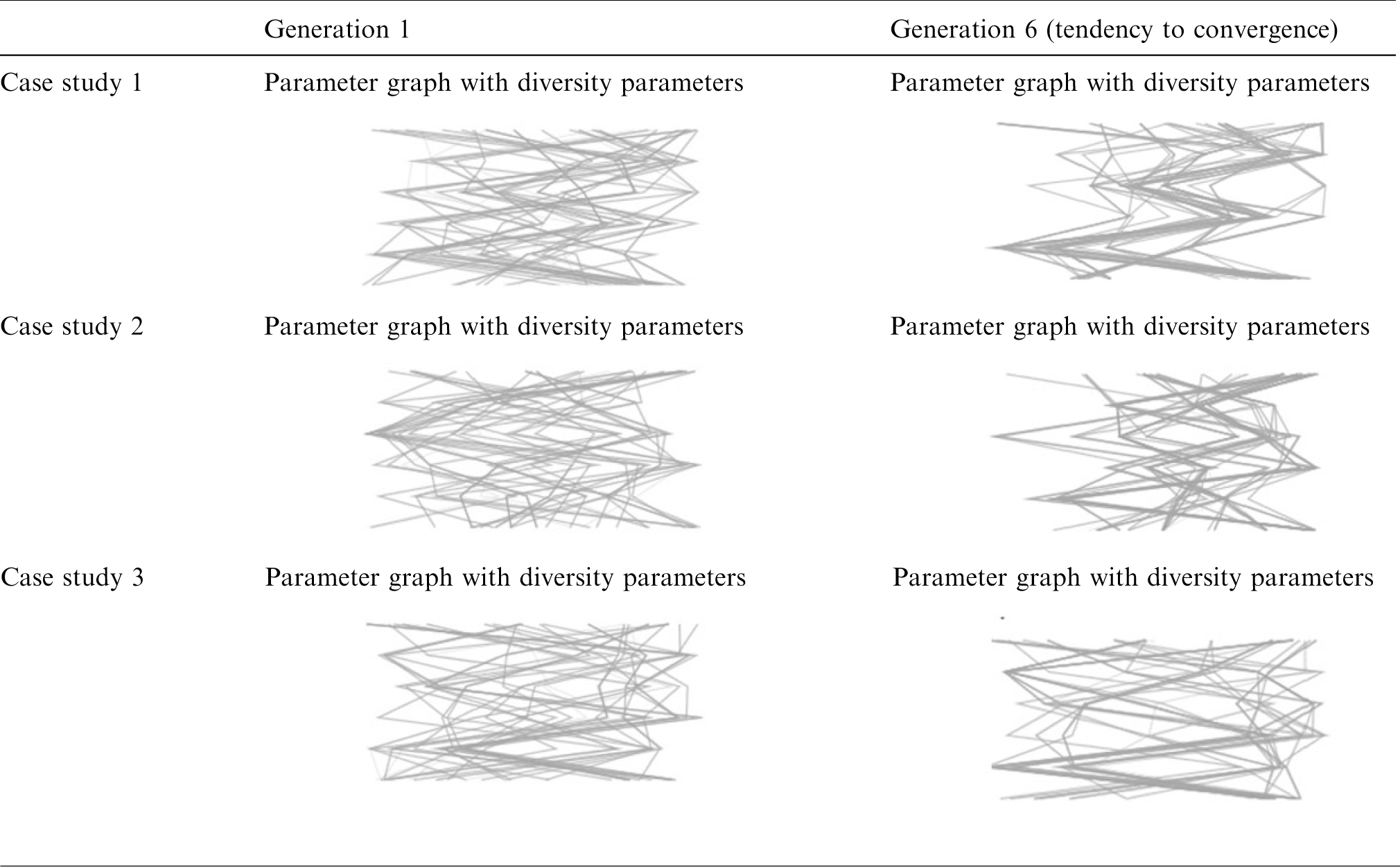
The ‘reinitiate’ option was used in Octopus to see the form of the selected solution. Thus, the simulation was started again with the variable values found at the end of the optimisation. Objective values resulting from this simulation can change slightly.
The results in Table 5 verify that while an objective value increases, other values may decrease. Again, in this case, the designer should choose the optimised form according to the desired criteria. This choice can be made according to the objective that the designer gives priority to. Optimised form results can be used at the early design stage.
The RT values of the optimised forms formed at the end of the Case 2 simulation are high for room speech. The source–receiver path, surface area, furniture, material absorption coefficients and volume can affect RT value. Furniture was not used in the space in this study, and only one source and receiver were used. In addition, according to these results, different materials can be selected in order to decrease RT value.
The objectives can be changed according to the function of the building to be designed. For example, if a performance building (e.g. an auditorium building) is to be designed, it may be preferable to have less daylight intake and longer RT in the space.
The use of many objectives in the optimisation simulation in the early design process yields more specific and holistic results. This approach narrows the set of solutions to find the most effective solution.
Limitations
Since the goal was to test the model created in this study, many architectural design parameters have been ignored. Testing was conducted on a simple model. For example, budget, structural constraints, environmental constraints such as access and view, the number of storeys and other parameters affecting the acoustics such as furniture have been ignored. These parameters could also be included in the model to develop a more comprehensive model. Furthermore, various energy-efficiency metrics can be included in the optimisation. In addition, it will be important to test different algorithms for such models, since including too many parameters in the model will cause the simulation to take a long time.
In this study, the duration of the optimisation process was long. This is considered normal as the study included three objectives (floor area, daylighting and acoustics) and many variables in the multi-objective optimisation. However, the duration of the optimisation can be reduced by using other algorithm-based optimisation engines such as the swarm algorithm instead of the GA-based optimisation engine used in this study. Therefore, objective-oriented multi-optimisation studies, such as this study should be verified using different algorithms.
The size of the floor area is generally determined in line with the project that comes to the architect. By setting the maximum and minimum limits that the floor area can occupy in the model, the area of the floor area can be limited in optimisation. An example of setting minimum area limits can be seen in the script (Figure 3).
The tests can be made with complex forms. The use of complex forms in the optimisation can produce more optimised results. Especially in buildings such as auditoriums, the optimisation of the roof form will be important. However, as the building form becomes more complex, the number of the variables will increase. Variables related to the number and the size of the windows can also be increased. As the number of the variables increases, the simulation will take longer time.
Inclusion of the material as a variable in the optimisation process will give more optimised results. However, the inclusion of such a variable in optimisation considerably increases the simulation time.
Conclusion
The optimisation of building form in the early design stage is becoming an important issue. In this optimisation stage, interior comfort should also be considered. The acoustics that affect interior comfort are related to the volume of the building and the materials used. For example, the amount of glass used affects the space’s acoustic quality. The use of glass also affects the indoor daylight intake. At this point, while creating building form optimisation, including the acoustic and daylighting factors in the optimisation process will help to make more rational decisions in the early design process. Therefore, considering interior comfort parameters together in the conceptual design stage can provide an optimised building design. In the light of mentioned relationship between acoustics and daylighting, following contributions have been made in this study: Relationship between daylighting and acoustics performances has been included in the optimisation process of building form by the developed model. The results of the case study demonstrate that the model works. The model attempts to increase the daylighting – acoustics quality, and floor area inside the space. This model can be used to design performance-based building forms with interior comfort. In addition, the model can provide various optimised design alternatives according to the defined criteria.
Footnotes
Author's contribution
Asli Agirbas is the only contributor for this article.
Declaration of conflicting interests
The author(s) declared no potential conflicts of interest with respect to the research, authorship, and/or publication of this article.
Funding
The author(s) received no financial support for the research, authorship, and/or publication of this article.
