







Abstract
Fire safety evaluation is rarely involved in the iterative building design process except for legislative approval phases compared to other building objectives. However, regardless of architectural design priorities, all buildings should have adequate fire protection. This research develops a fire vulnerability assessment model based on the impact of architects on fire protection and effects of building design characteristics on fire safety. Inherent to the uncertain nature of fire safety evaluation practice, this study proposes a fuzzy vulnerability decision-making methodology to detect and visualize escape route vulnerabilities, which have the highest impact on the interoperability of fire safety and architectural design practices. The model was validated in an opera house building since the assembly occupancies have specific importance due to the significant number of fire causalities. The escape routes of the case study building were evaluated for materials’ fire reaction, route flow, route equipment, means of egress, dimensions and layout input variables. The output vulnerability levels were discussed to enhance the understanding of critical building design factors that contribute to fire vulnerability. The results confirm that the model is fairly effective in the detection and visualization of vulnerability sources by reducing communication time delays and preventing human-induced mistakes.
Keywords
Introduction
Fire safety science emerged as a distinct discipline in the early 20th century due to significant fire events following the industrial revolution. 1 Since then, prescriptive fire safety considerations intend to ensure adequate life safety and property protection by directing professionals to the deterministic approaches governed by rules, regulations and governance practices with the concept of ‘compliance'. 2 However, the implementation of rules and regulations by designers is contradictive since they perceive these rules as limitations for their creativity. 3 Moreover, in most cases, buildings designed as ‘safe' on the basis of these prescriptive rules neglect the accumulation of fault-revealing measures of historical building records with large margins of safety. 4
In this respect, fire safety evaluation is rarely involved in the iterative building design process when compared to other building objectives such as energy efficiency and cost-effectiveness. Besides, fire safety design is judged as a physical phenomenon that resists to the abstract representation of the architectural design.5,6 These contradictions may result in the evaluation of the building as ‘already calibrated' before the designer starts to design. Moreover, gaps, overlaps and misunderstandings may arise between architects and fire-safety engineers. 5 Therefore, fire safety practitioners do not take part in the design process except legislative approval phases.2,7 However, fires can occur in almost any kind of building, even when least expected. 8
In fire safety evaluation, there are several factors affecting the fire safety performance in the building life cycle process, including early and detailed design, construction, operation and demolition phases. For example, the nature of the fire itself is an important factor to evaluate the perceptual and visible sources of fire. This includes the process of ignition and combustion characteristics of building materials and furnishing, which generates heat and smoke. 5 The fuel load, fuel type, combustible loading and ventilation are examples of the fire characteristics.9,10 Another factor is the human nature or occupant behaviour within the building, both in terms of individuals and group characteristics. This includes occupant features such as familiarity with the building, physical and cognitive ability, alertness and location within the building, which are observable during and after evacuation phases, and for which the fire is active as well.5,11 Next factor is the fire emergency response characteristics evaluating the firefighting service and equipment features. This comprises the activities of notice, arrival and intervention of firefighting team, such as the method for contacting the fire service, the fire department’s response time and the number of narrow roads.12,13 Next, the management and maintenance of fire safety is another factor controlled in the building operation phase. This factor is used for inspections, documentation and operational controls. 13 The other important factor is the building characteristics, including the physically enclosed building environment in which activities are carried out. The passive fire prevention measures such as building layout, materials, components and assemblies, are part of building characteristics and planned during the early building design process by the architect.
When examined in detail, each of these factors have a substantial impact on fire safety evaluation of buildings. However, there has been little research conducted on the influence of architects on fire safety and how fire safety professionals perceive the effects of building design on fire safety. 5 The most of the previous studies on fire safety evaluation focus on the fire and emergency response characteristics and suffer from the limitation of considering critical building characteristics specified in the architectural design process, and will affect fire safety vulnerability of building in construction and operation phases.
The complexity of fire risk factors for both known and unknown uncertainties requires an integrated approach. However, the prevalent fire safety evaluation methods, including fire codes, automated code checking tools and risk indexes, have failed to consider the complexity of building systems with multiple variables and many unknowns.14,15 To manage the rapid increase in imprecise or uncertain information, the fire safety decision-making process was separated into manageable parts to transfer experience-based knowledge to standardized data that allows modifications and extensions. 1 The inherent uncertain aspects of fire safety management direct decision-makers to use fuzzy logic to evaluate fire risk parameters. However, the existing fuzzy fire safety evaluation literature concentrates on active fire risk parameters such as sprinklers, fire/smoke dampers, fire/smoke alarm systems, or the comprehensive models that oversimplify building characteristics variables. On the other hand, existing passive fire safety evaluation models have limitations by focusing on satisfying fire safety of individual building elements by ignoring their interrelations in performance. 16
This study aims to integrate fire safety evaluation with architectural design practice for the assessment and visualization of critical fire vulnerabilities for the indoor built environment in the early building design process. For this purpose, fire safety decision-making process was separated into manageable parts to transfer experience-based knowledge to standardized data that allows modifications and extensions. In this research, fuzzy vulnerability decision-making (FVDM) methodology was used to structure the imprecise data of input variables through expert reasoning. The proposed methodology enables quick-response assessment and visualization of critical design vulnerabilities on building plan drawings and elimination of communication time delays between fire safety and architectural design professionals to take corrective measures.
The specific objective of this study is to give priority to building characteristics precautions, aiming to prevent fire before it starts. Besides, adding the architects' perspectives to means of egress design was found significant, which further contributes to the fire safety management literature. This research has its focus on the egress route design variables, which have the most visible effect in terms of fire-safe construction and safe evacuation. As for examining the applicability of the escape route vulnerability framework and validate the fuzzy logic software tool results, a case study was conducted at Opera House building. The case study analyses provide significant results to test and enhance the understanding of building characteristics that have an impact on fire resilient built environment.
Review of fire safety evaluation literature
Absolute fire safety is unobtainable. 17 Therefore, fire safety evaluation aims to achieve the fire safety level considered as ‘safe enough', and the question of ‘how safe is safe enough' needs to be judged by ‘risk evaluation'. 17 Risk, when it is collective, represents the possibility of future disaster, denoting the occurrence possibility of dangerous phenomena, which in turn will affect the vulnerable subjects. Reduction of risk in many cases is not possible by modifying hazard, so altering conditions of vulnerability is the primary disaster risk prevention and mitigation measure. 18 The concept of vulnerability is a powerful analytical tool that comprises being susceptible to be harmed and guides the prescriptive analysis of actions to provide wellbeing and to reduce the risk. 19 Unlike threats like fire, vulnerabilities can be controlled since designs create the vulnerabilities themselves. 20
In fire safety evaluation, a vulnerability assessment can be used to analyse building characteristics, systems, and site features to identify weaknesses and to provide the necessary redundancy for corrective actions and mitigations. The majority of fire vulnerability evaluation models were structured based on the weighting of variables through semi-quantitative index methods. 21 In this research, prevalent indexing methodologies used in fire safety evaluation literature (1990–2021) were analysed according to their input parameters and the weight dispersions (Table 1).13,22–33
Comparative dispersion of fire safety evaluation parameters.
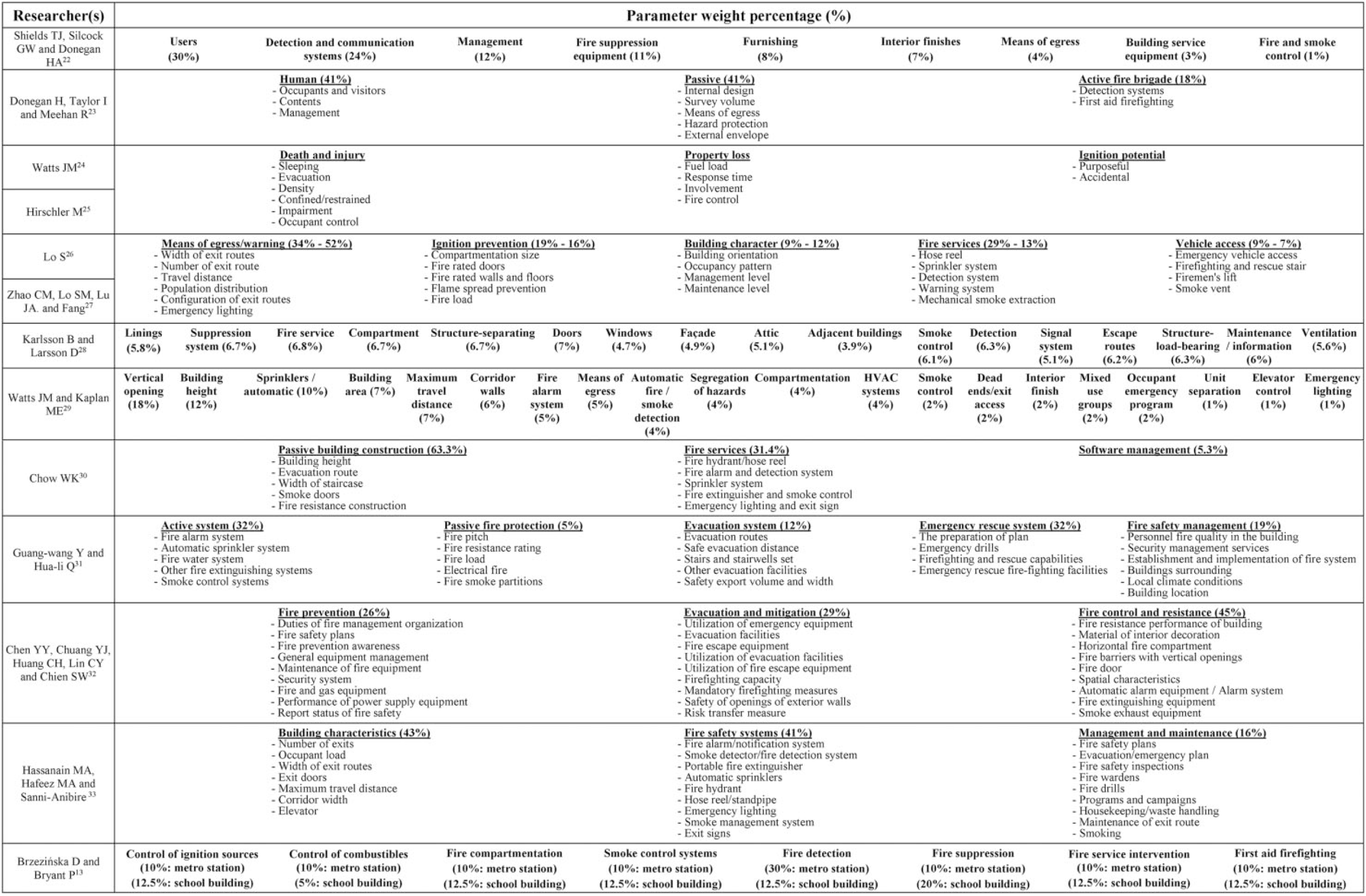
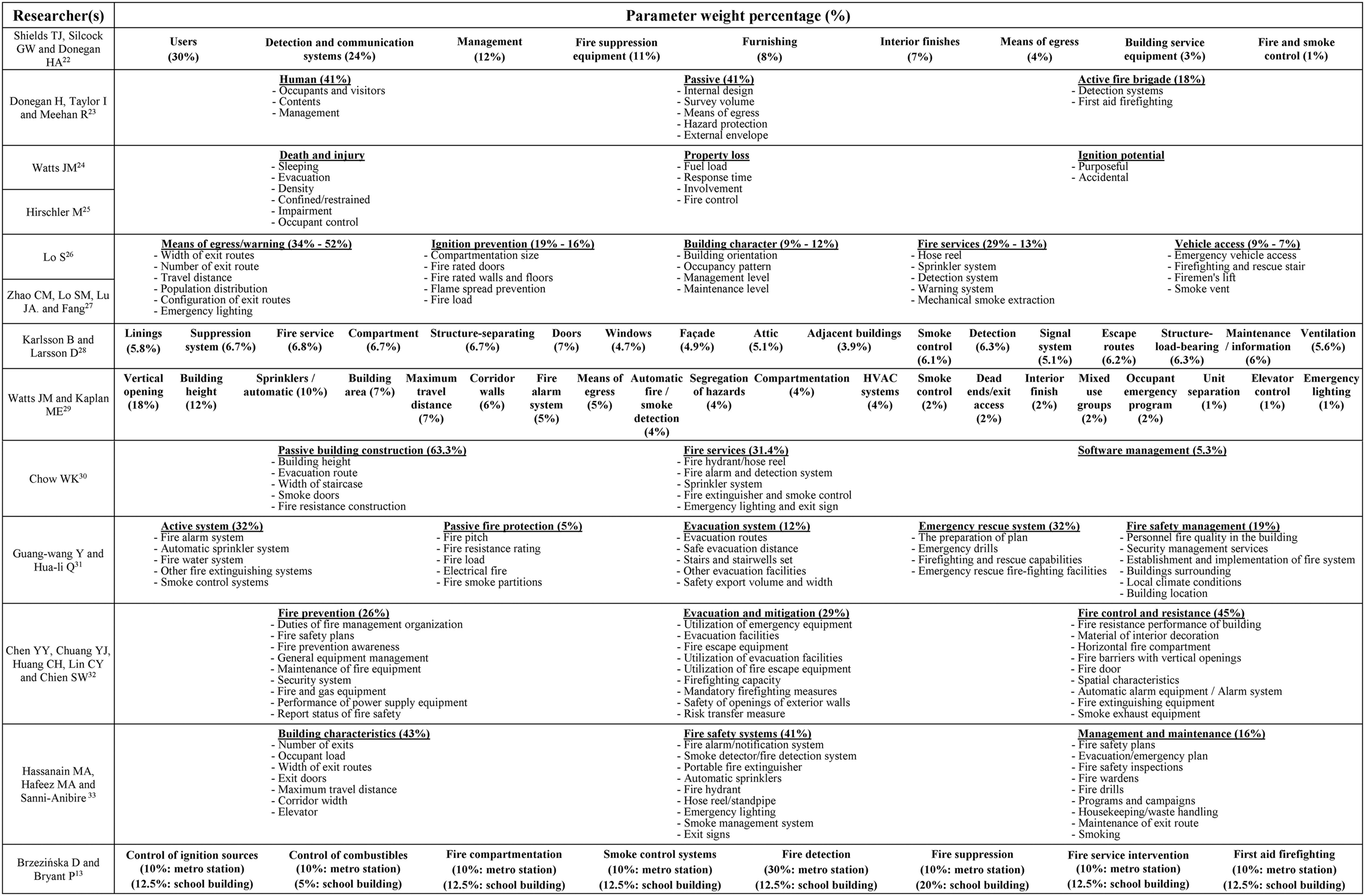
The findings of the literature analysis revealed that, despite the advantages of previous fire safety models as simplistic ways of ranking and evaluating fire safety when compared to expensive and time-consuming quantitative methods, they are mostly limited to consider critical passive building construction factors and to integrate non-statistical uncertainty of fire safety input variables with these factors.17,34 On the other hand, the uncertain nature of fire safety parameters directs decision-makers to the use of fuzzy logic. The fuzzy method has implementations in various fields and uses non-statistical uncertainties to solve real problems through human reasoning and interpretation.35,36
The preliminary studies on the suggestion of fuzzy logic in fire safety evaluation37,38 have been dating back to 20 years. However, there is a limited number of fuzzy fire safety evaluation model, most of which focuses on active fire parameters such as sprinklers, fire/smoke dampers and fire/smoke alarms.39–42 On the other hand, the examples of comprehensive fuzzy fire safety evaluation systems are too broad in scope to focus on critical building design vulnerabilities.24,32,43,44
To determine the most critical fire vulnerabilities, for each evaluation model analysed in Table 1, parameters that were repeated most and with the highest weight percentage were identified. Once the critical vulnerabilities were diagnosed, measures can be taken rapidly, providing important timesaving. Accordingly, the most critical parameters were defined as; escape route, structural separation, doors, compartmentation, vertical openings, furnishing, interior finishing and façade.
In line with the technological developments, starting from the 1910s, the focus of fire safety experts has changed away from the issue of fireproof construction towards life safety performances. 45 One of the reasons for that shift was the effect of absolutely fireproof structures with non-combustible exterior walls in which people trapped and cannot escape. 46 Triangle Shirtwaist Company fire in which many workers trapped and doomed due to locked exits and Cocoanut Grove fire causing a huge disaster due to a single revolving exit door were the main examples in awareness of safe escape design and exits code enforcement. 47 Meanwhile, safe egress became the major determinant and the most crucial aspect of a building’s fire safety since the poor design of escape routes is the main reason for an insufficient escape from fires.48–50 Egress parameters involve building circulation elements, including spaces, walls, doors and stairs. 51
Escape route vulnerability was analysed for the scope of this paper since it comprises the highest-ranking dispersion with a lot number of sub-parameters, among other building characteristics covered in the research area. For future studies, the proposed methodology can be further developed by using the variables of the remaining building parameters.
Escape route vulnerability assessment
Integrating fuzzy logic with escape route vulnerability assessment requires a hybrid method named FVDM. In FVDM, the decision is defined as the fuzzy set of alternatives comprising conflicting goals and constraints.52,53 The methodology uses the priorities of decision makers (expert knowledge), the relationships behind those priorities and the qualitative and quantitative attributes expressed by linguistic terms. 54 FVDM aims to transform the building design input variables to output fire vulnerability levels by considering the external factors (rules/regulations) and available resources (people, tools).
The IDEFØ model was used to represent the evaluations and activities (steps) of the FVDM structure for fire vulnerability assessment. IDEFØ is a communication assessment methodology that analyses and processes expert decisions through a simple graphical interface. 55 The ‘box and arrow’ graphics are used to connect the steps (S), and interface arrows are used to express additional factors that trigger and control the operations. 55 In Figure 1, IDEFØ was adopted to the FVDM framework to represent a five-step fire vulnerability assessment strategy; namely, problem definition and linguistic variables (S1), fuzzy sets and membership functions (S2), construction of fuzzy rules (S3), encoding fuzzy rules to operate fuzzy inference (S4), and defuzzification (S5).
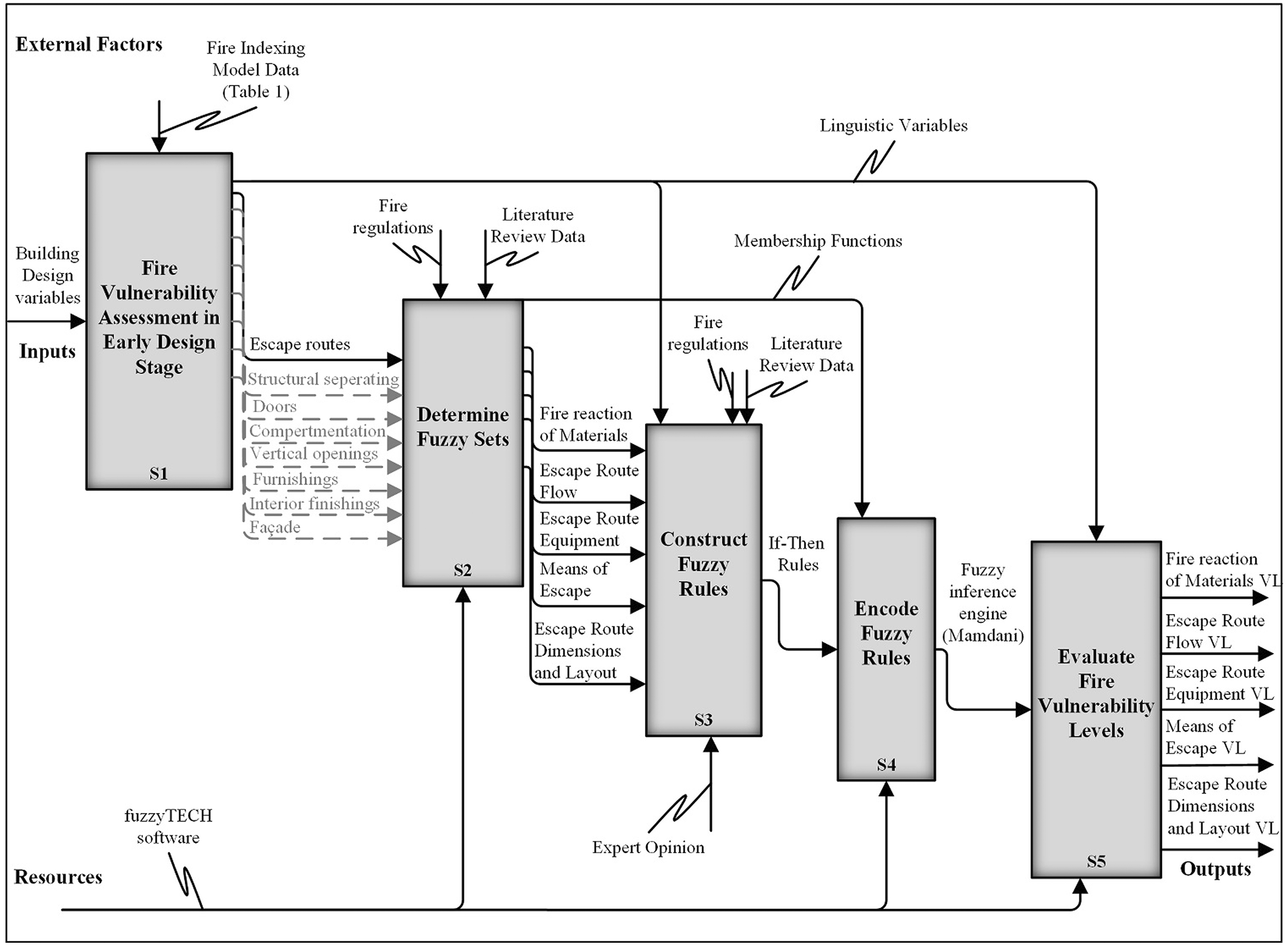
Fire vulnerability assessment strategy.
Problem definition and linguistic variables (S1)
On the basis of FVDM input and linguistic variables, escape route vulnerability assessment data were built in fuzzyTECH simulation software (Figure 2). FuzzyTECH was selected to calculate fuzzy logic calculations since it is a continuously improved tool with fast results and a simple graphical interface in which the graphical editors let the user specify the entire system with straightforward instructions. 56
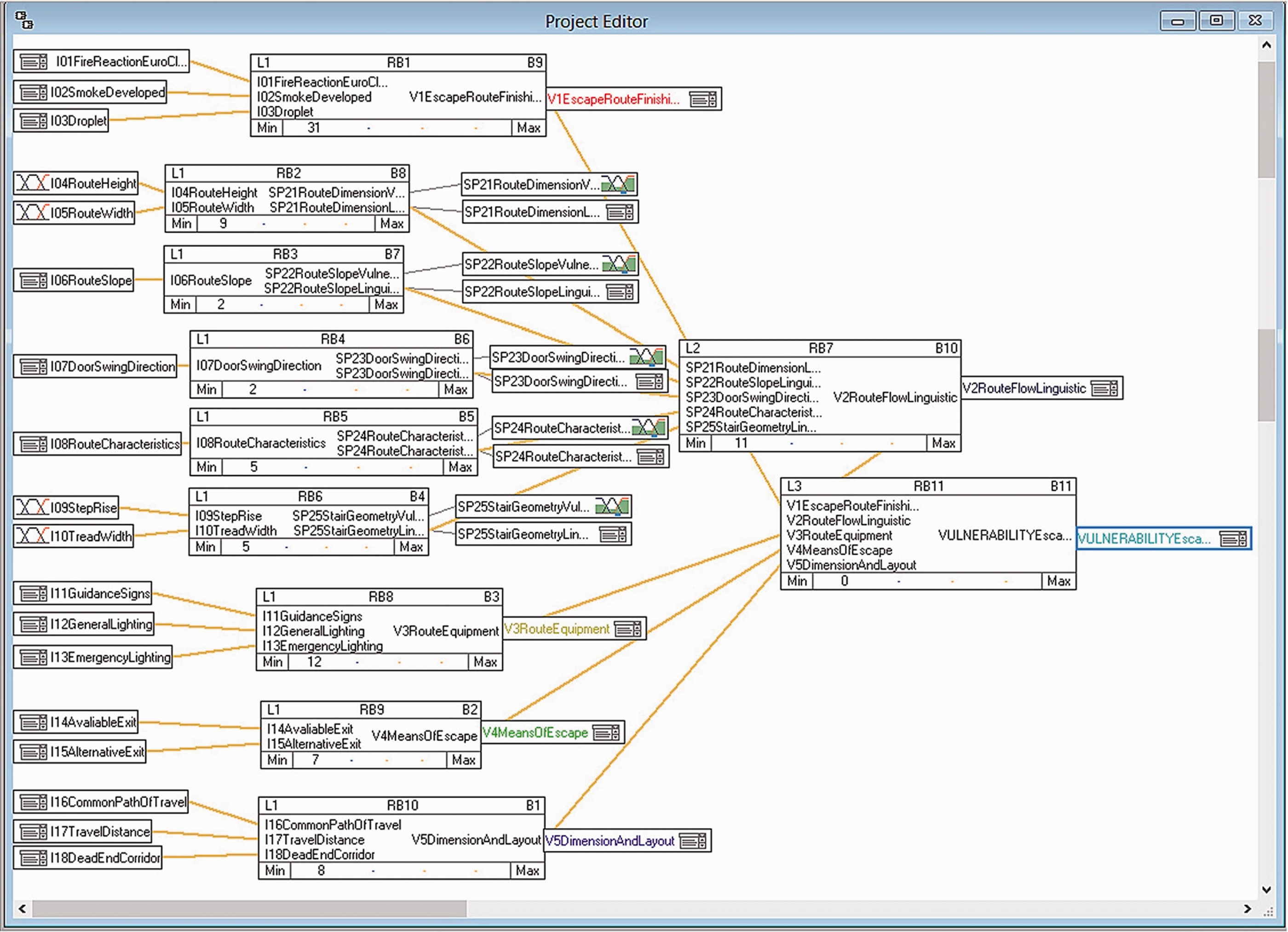
FuzzyTECH escape route vulnerability model.
The escape route FVDM model has eighteen input variables identified through the fire safety evaluation literature (Table 2). The variables were grouped under five sub-parameters to conduct vulnerability analyses; (1) fire reaction classifications of finishing materials, (2) escape route flow, (3) escape route equipment, (4) means of escape, and (5) escape route dimension and layout.
Escape route vulnerability input parameters.
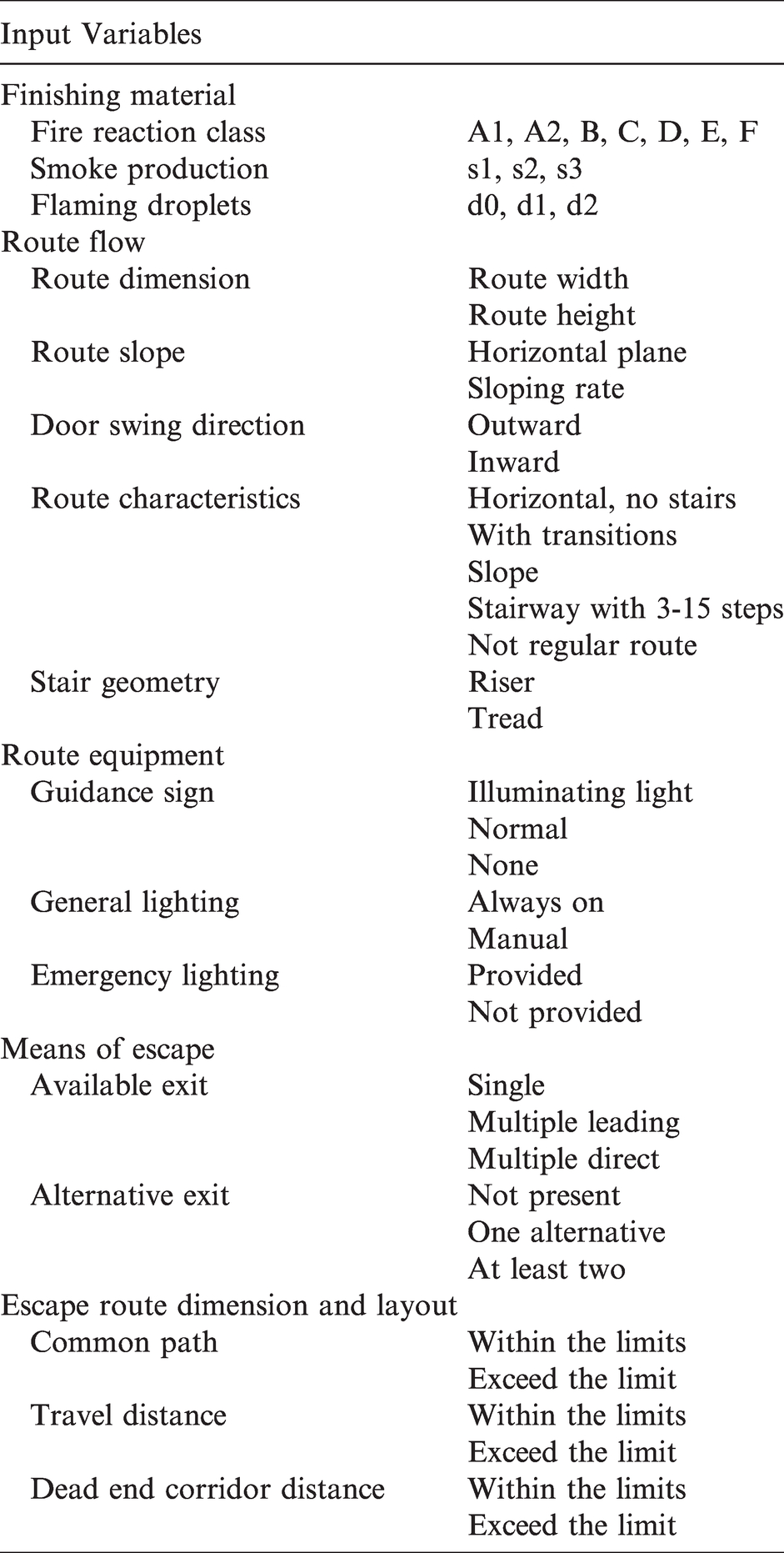
The escape route FVDM model can be further detailed with active fire characteristics, occupant characteristics, fire response characteristics, fire safety management and maintenance factors. This research has its focus on the building characteristics including the layout, materials, compartments and assemblies. The escape route variables were used for the evaluation of fire safety concerns by architects in the preliminary design process. Thus, the simultaneous operation of the building design input and fire safety design input results was emphasized to minimize modification of designers in the proposed building design. 57
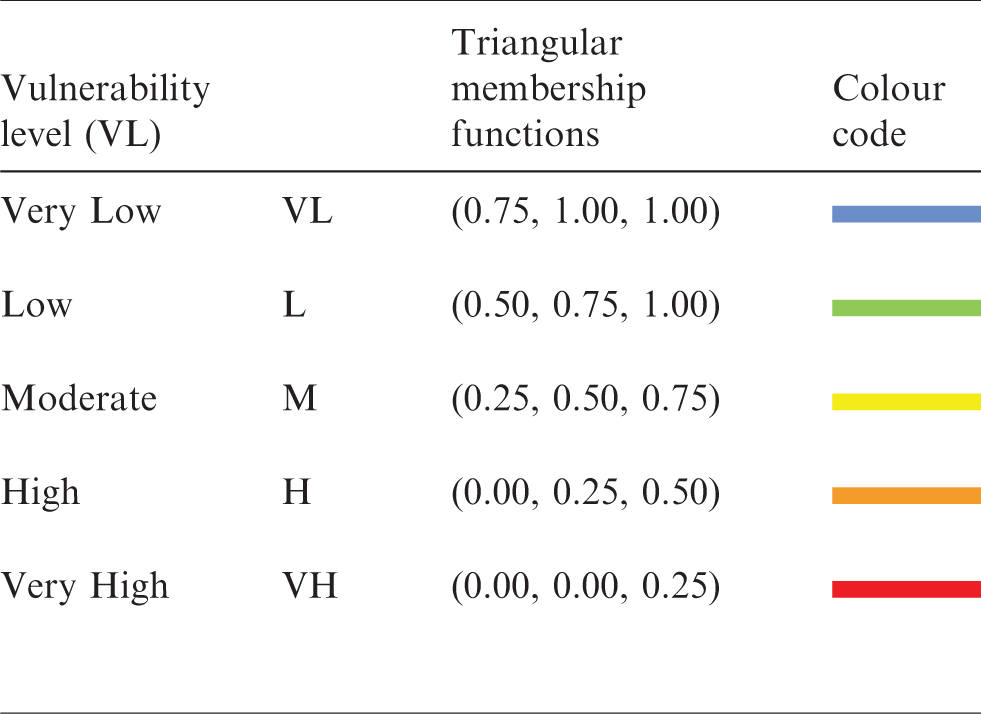
Although vulnerability is characterized as a function of impact and susceptibility of systems, it is not a directly measurable parameter and depends on linguistic expressions. 58 Linguistic variables are used for natural and artificial language to verbalize importance, context, and the condition of inputs that enable the applicability of fuzzy logic in various research fields.36,58,59 The linguistic variables of each fire safety parameters were determined according to five-scale vulnerability levels: Very Low (VL), Low (L), Moderate (M), High (H), Very High (VH). Triangular membership functions were set with average completeness values (0.50) to determine a dominant rule for every input value with a membership degree greater than or equal to 0.50. In Table 3, linguistic variables, colour codes and corresponding triangular membership function intervals are indicated.
Conversion of linguistic variables.
Escape route fuzzy sets and membership functions (S2)
The input variables were generated in categorical and numerical data sets. The categorical functions were used to assign values to a finite set of discrete categories, while fuzzy functions were used to denote numerical data intervals, each having a membership degree expressed over 100.
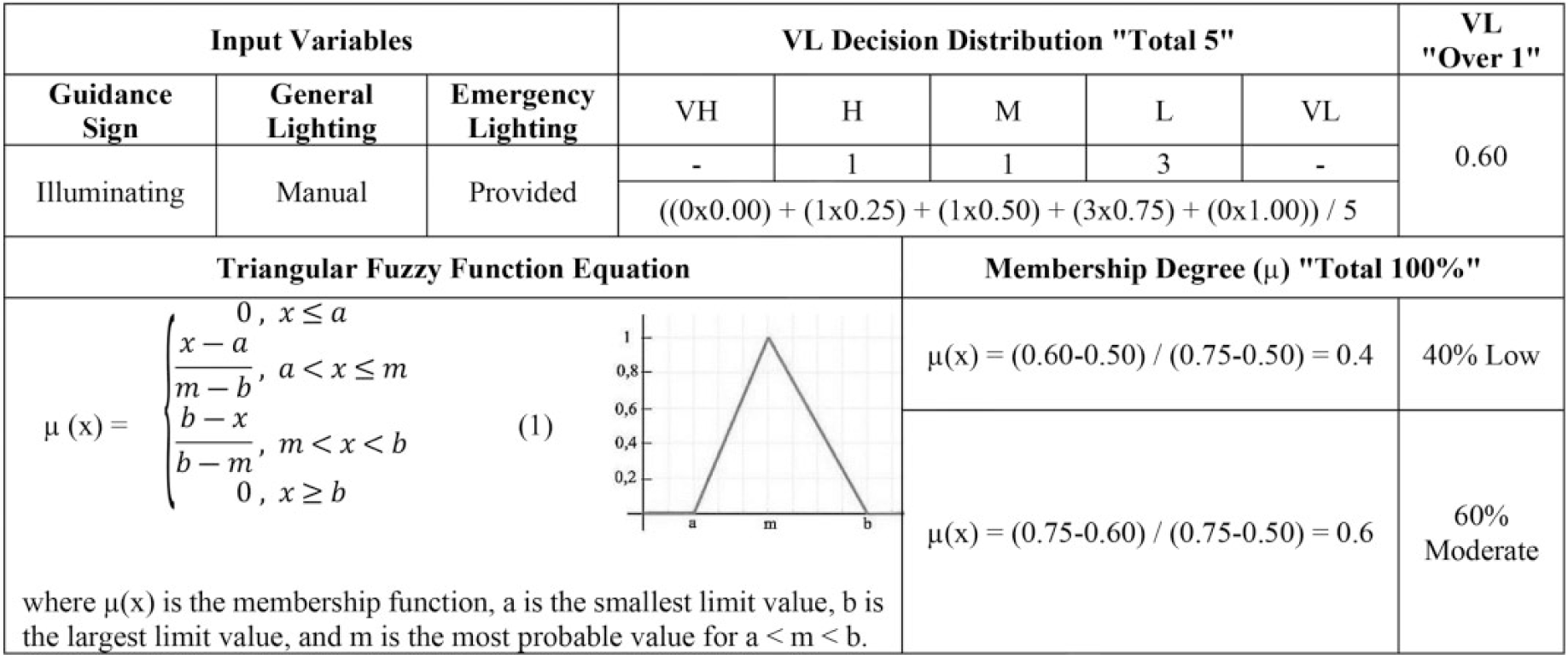
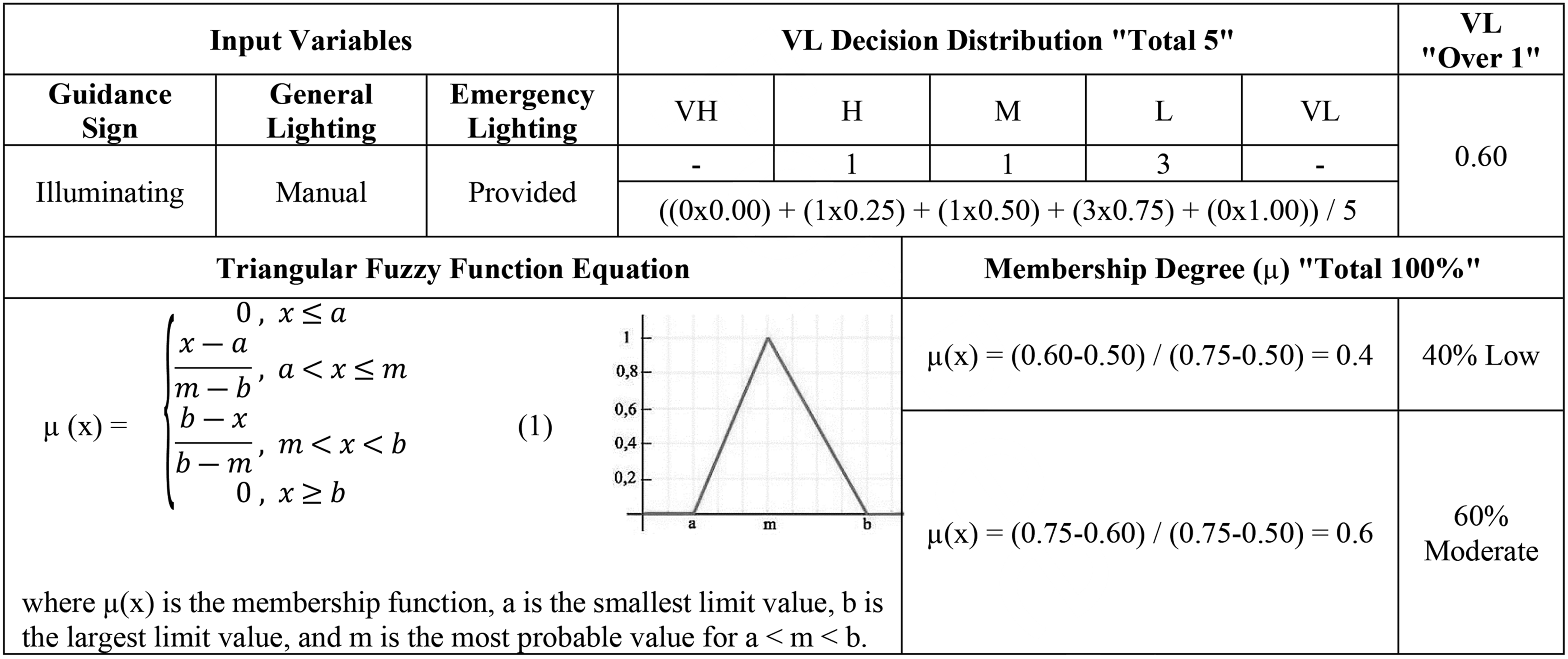
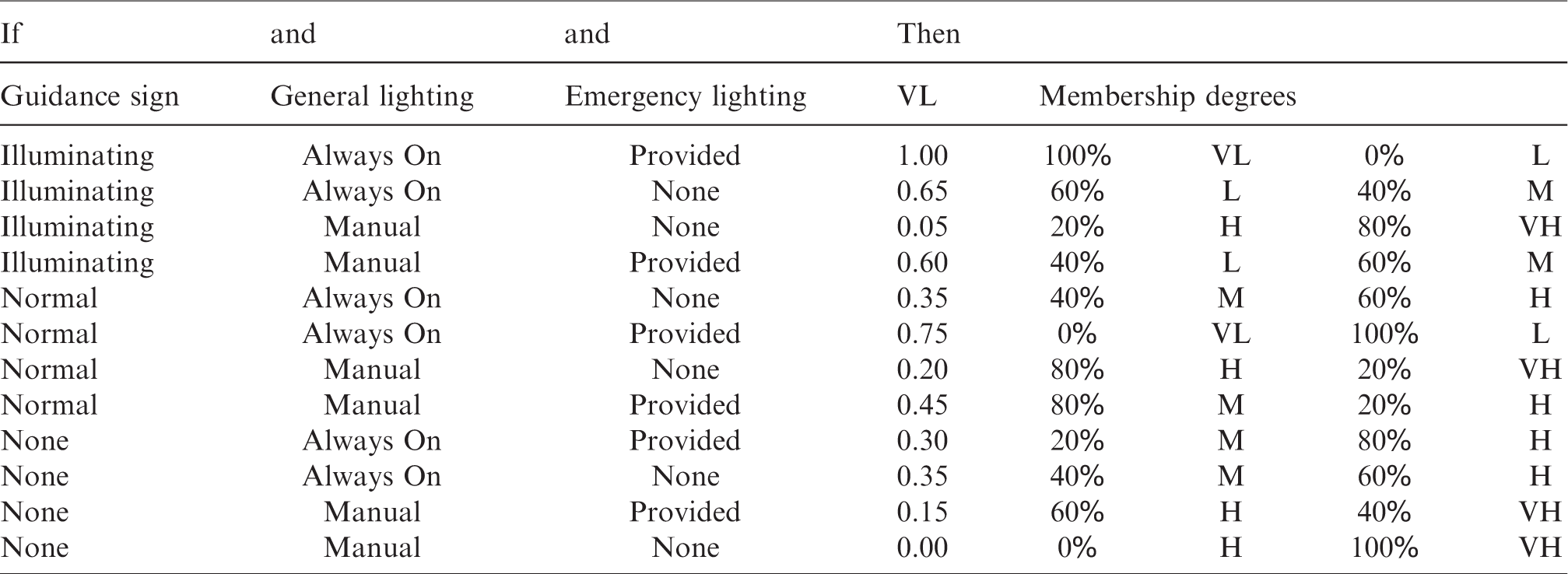
In Table 4, the fuzzy membership degree calculations of sample input variables selected among the escape route equipment rule set (Table 7) were performed for guidance sign, general lighting and emergency lighting variables. The vulnerability level results based on evaluations of five experts were shown in the decision distribution line. Accordingly, the first expert decision was High VL and the second expert decision was Moderate VL. The other three experts’ decisions were Low VL for the selected escape route equipment rule expression. The total vulnerability level was calculated based on the membership degrees (µ) of linguistic variables (1.00 for Very Low, 0.75 for Low, 0.50 for Moderate, 0.25 for High and 0.00 for Very High). In the conversion process, the vulnerability level for inputs of guidance sign, general lighting and emergency lighting was calculated as 0.60. The triangular membership function, equation (1), was used to convert the VL result (0.60) to linguistic expressions through which membership degrees of 40% Low VL and 60% Medium VL were calculated (Table 4).
Expert decision distribution and membership degree (µ) equations.
Construction of escape route fuzzy rules (S3)
Fuzzy rules were set in the form of if-then rules comprising both quantitative and linguistic data collected from the fire regulations, literature analyses, and expert opinion. The summary of rule sets identified for escape route vulnerability components is listed in Tables 5–9.
Escape route finishing evaluation rule structure.

The first rule set of escape route finishing input variables was generated based on TS EN 13501–1 standard for ‘Fire classification of construction products and building elements: Classification using test data from reaction to fire tests’ (Table 5). 60 Accordingly, the fire performance of construction products is classified with four fire test methods: non-combustibility test, the gross calorific potential test, the single burning item and the ignitability test. Based on fire test results, the classification of building materials' reaction to fire were determined with three properties: (1) fire class (A1, A2, B, C, D, E, F), (2) smoke emission and intensity (s1, s2, s3), and (3) burning droplets and particles production (d0, d1, d2). 60 The A1 class is used when the material does not contribute to the spread of fire, the A2 corresponds to materials similar to A1 class, having small concentration of organic compounds. In terms of fire contribution, the B class materials have very limited contribution to fire, the C class materials have limited contribution to fire, and D class materials have acceptable contribution to fire. On the other hand, the E class corresponds to flammable materials that produce small flame attacks, while the F class is used for the products not tested. In terms of smoke quantity and emission classification, Total Smoke Production (TSP) and Smoke Growth Rate (SMOGRA) values are calculated according to the smoke released in the first 600 seconds in the single burning item test, and then classification is done on the basis of s1, s2 and s3 levels. Accordingly, s1 is used for absent or weak intensity, s2 is used for average intensity, and s3 is used for high intensity of TSP and SMOGRA. On the other hand, for burning droplets, the classification for d0, d1, and d2 is done according to visual observation of dripping in the first 600 seconds and dripping particle burn for 10 seconds. In burning droplets classification, d0 is used when there is no dripping and particle production, d1 is for slow dripping, and d2 is for high dripping. 61
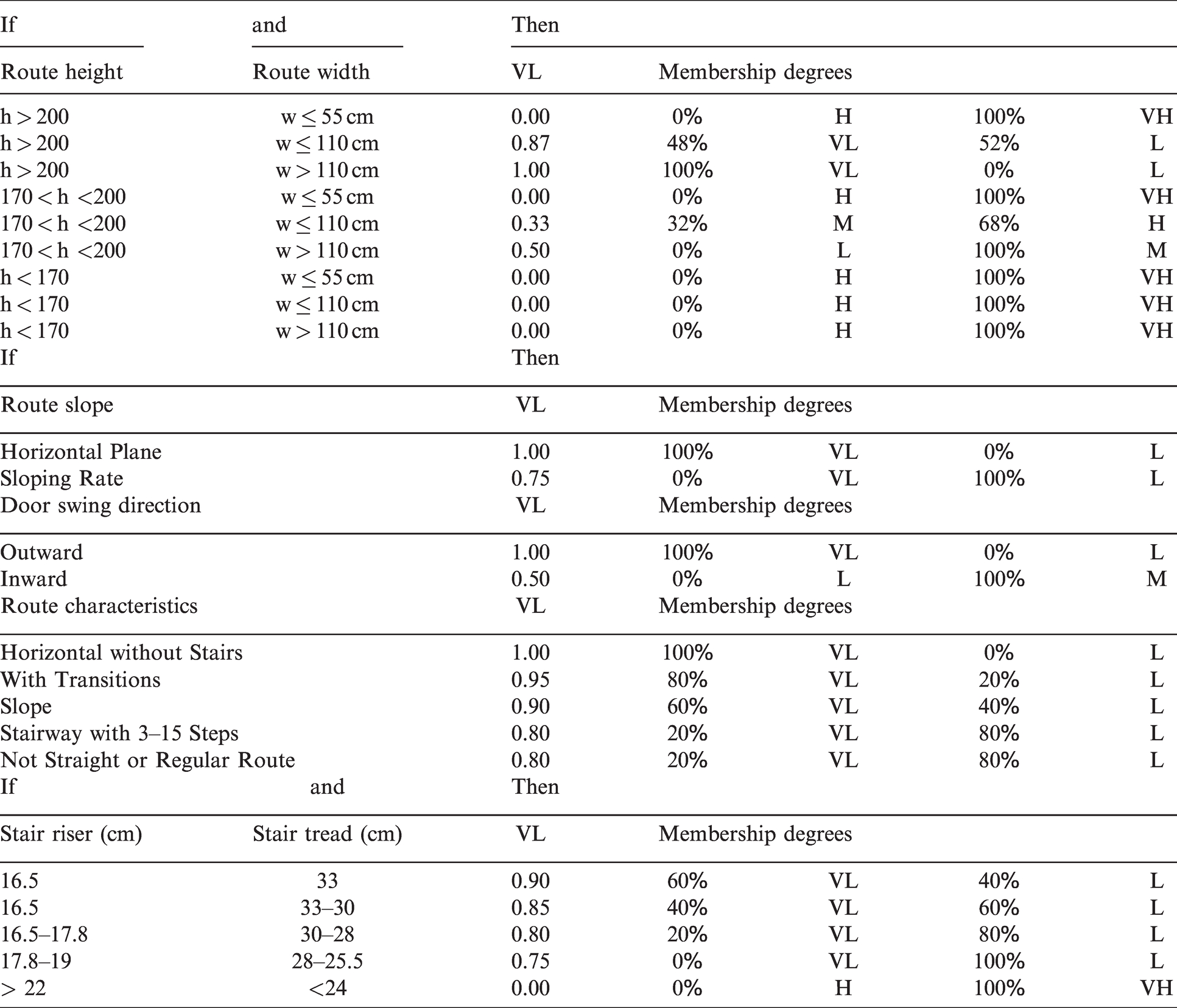
The second rule set is structured for the escape route flow parameter, which keeps the geometrical information of the route. The rules of escape route flow were assigned by converting the path flow factor results of Grimaz and Tosolini 62 to triangular fuzzy functions to map the degree of vulnerability membership (Table 6). The rule sets of the last three vulnerability analyses were determined through a structured interview with five experts who have 2 to 20 years of experience both in the architecture and fire safety fields. The detailed explanation of the expert decision-making method was given in ‘Escape route fuzzy sets and membership functions (S2)' section. Accordingly, the evaluations of escape route equipment vulnerability, means of egress variables based on their single or multiple-use, and route distance variables were calculated (Tables 7–9).
Route flow rule structure.
Encoding fuzzy rules to operate fuzzy inference (S4)
The structure of if-then rules was transformed into fuzzy membership functions by using the Mamdani (centroid) method. 63 Mamdani is the most frequently used method with an intuitive technique, therefore well suited to human cognition.64,65 In the Mamdani method, the rule strength is attained by using the minimum operator for the computation of fuzziness of multiple fuzzified inputs and maximum operator for the calculation of fuzzy output.
Defuzzification and evaluation of escape route vulnerability (S5)
In the defuzzification phase, the membership functions were converted to crisp output to find one crisp value as an output. The results were represented in the form of triangular membership functions with corresponding vulnerability levels. The evaluation of fuzzy input parameters was completed by calculating crisp output values and linguistic vulnerability levels through the defuzzification process.
Case study
Among all the occupancy types, the assembly occupancies, including theatres and opera houses, have particular importance throughout fire history, since they have caused significant number of causalities in case of fire. As popular meeting places, inadequate number or design of egress and blocked, locked, or non-functional exits in assembly occupancies result in large losses of life and injuries. Iroquois Theatre in Chicago in the United States (1903) resulted in 602 fatalities, Ring Theatre fire in Austria resulted in 794 fatalities (1881), and Comiqué Opera House fire in France (1887) resulted in 200 fatalities were the examples of deadliest fire events in an assembly occupancy. 46
A case study was conducted at the Opera House building to demonstrate the applicability of the escape route vulnerability framework and validate the fuzzy logic software tool. The case study seeks to examine and visualize escape route design vulnerabilities and take immediate measures within the iterative early building design process according to their severity levels.
The Opera House building was planned to be located on the Aegean coastline of Turkey with a complex circulation organization. It is designed to have the main hall with a capacity of 1450 people, a secondary hall with a capacity of 450 people, and a multipurpose open-air courtyard with 400 people. At the back of the main hall, there are rehearsal rooms for orchestra, ballet and opera, ateliers, offices and storage areas, which are open to visitors. Considering the significant occupant capacity, multi-level access and egress components were designed for ground floor level and sloping roof level exit discharge.
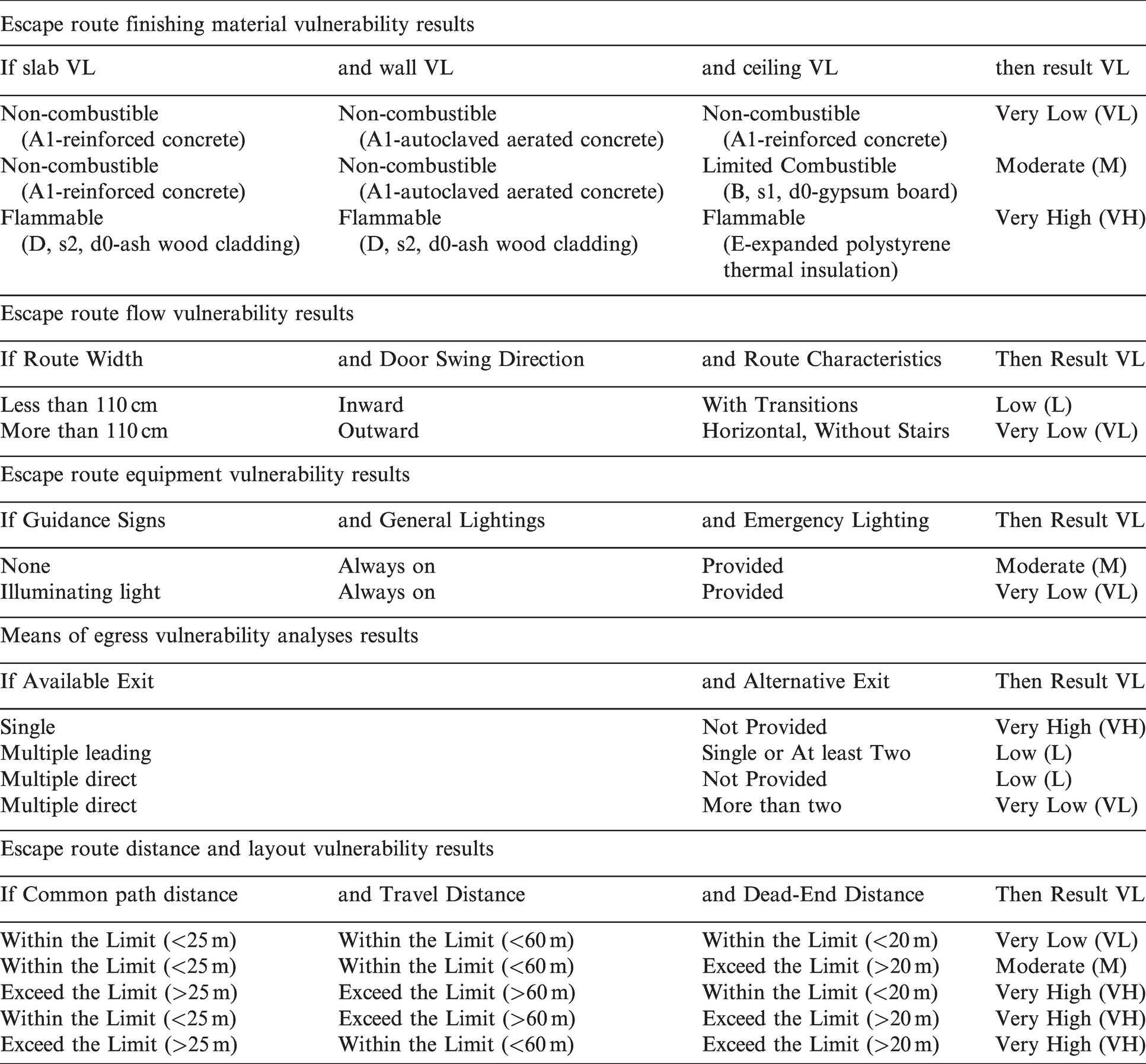
In this research, escape route vulnerability evaluation was demonstrated for the ground floor of the case study building, which has the largest total floor area and exit discharge. Providing the summary of all rule sets in the escape route evaluation framework (Tables 5–9), the rules used to calculate Opera House ground floor escape route vulnerabilities were presented in Table 10.
Route equipment rule structure.
Opera House escape route vulnerability results
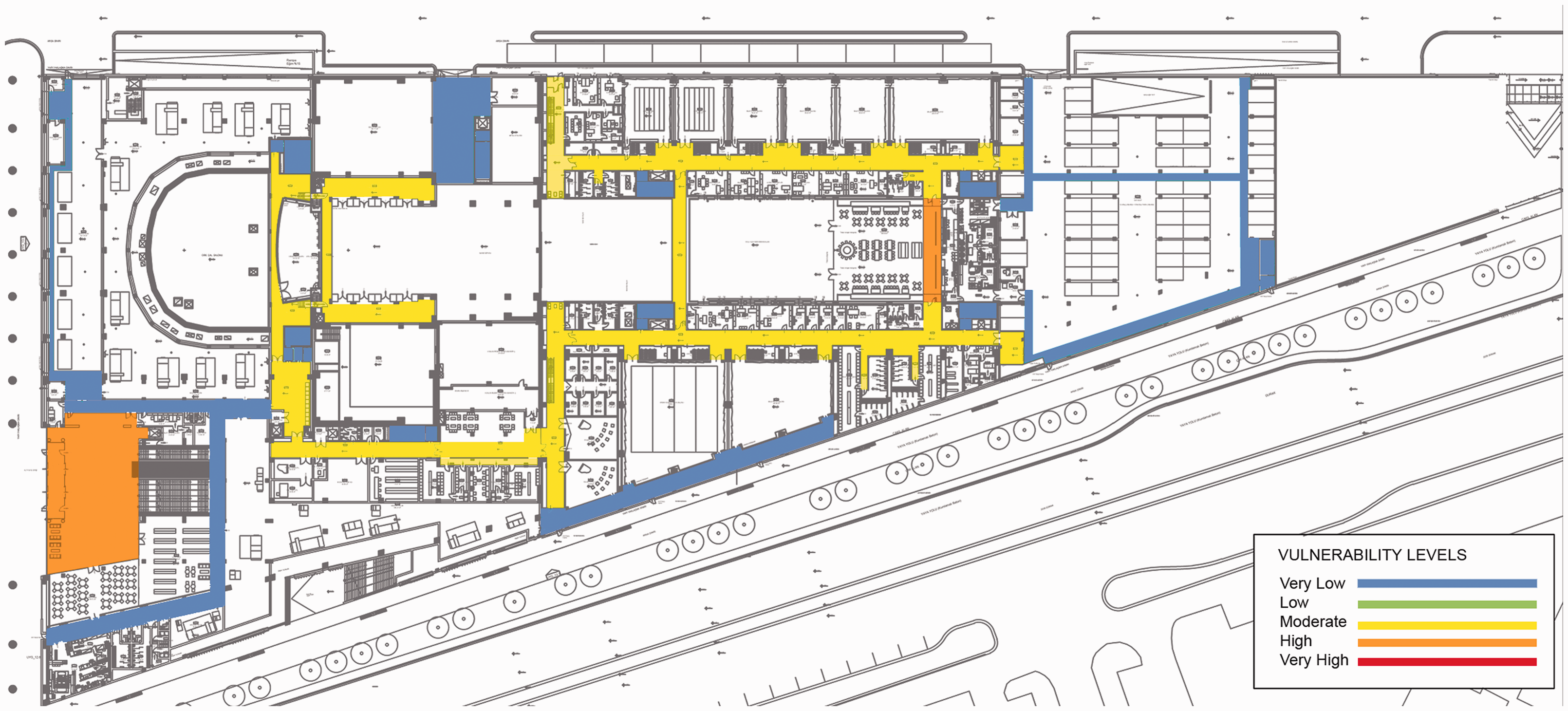
The escape route finishing vulnerability assessment was analysed based on the rule data of the most vulnerable finishing material of ground floor escape routes (Table 5). The results indicated that; the main entrance hall with flammable and untreated wooden wall and floor cladding materials has High VL, and the interior corridors of service spaces with limited combustible gypsum finishing materials have Moderate VLs. On the other hand, the rest of the escape routes were designed with non-combustible finishing materials, which have a Very Low VLs (Figure 3).
Escape route finishing material vulnerability visualization.
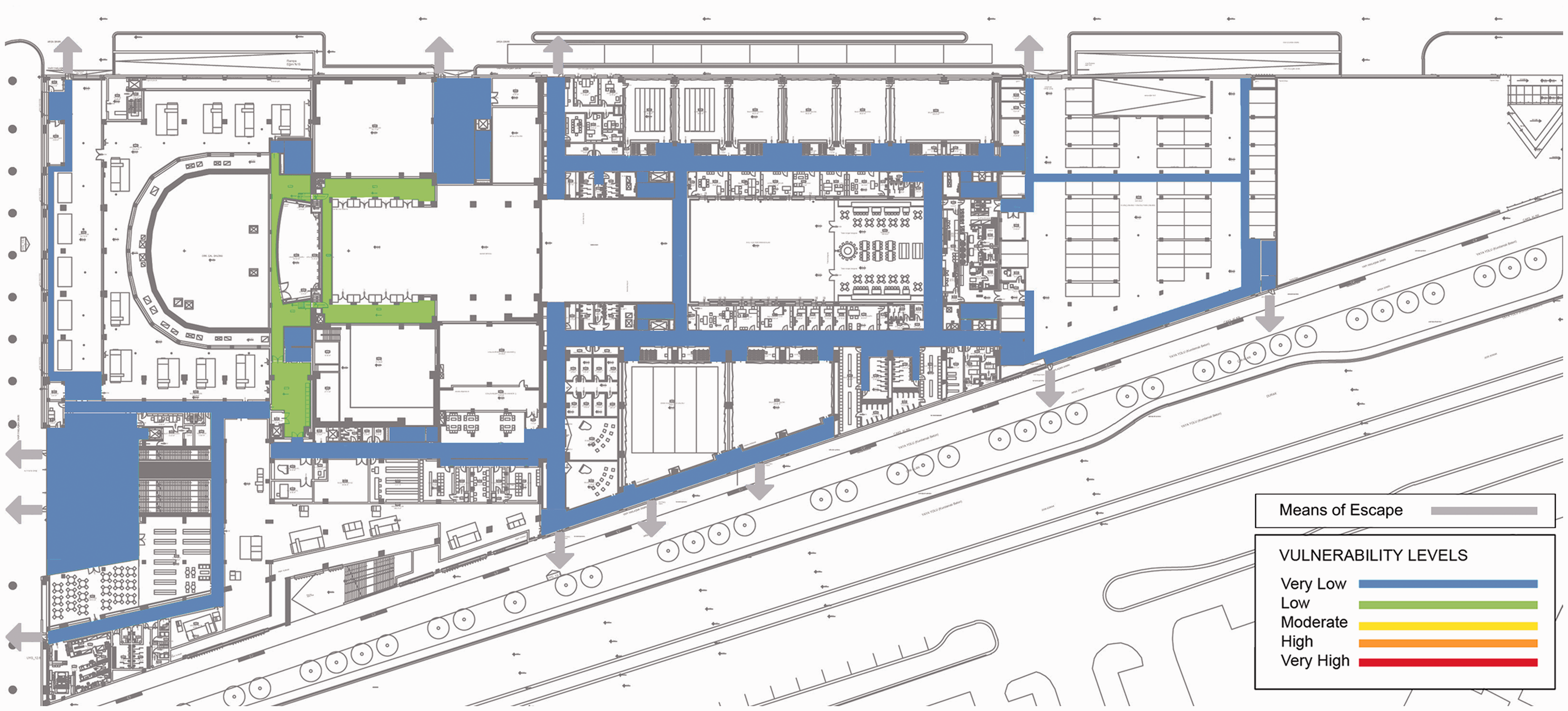
Following the route finishing vulnerability assessment, the route flow analyses were calculated through route dimension, door swing, route slope, route characteristics and staircase geometry evaluations of building. The interrelations of input variables were calculated by using the rule data presented in Table 6. As a result, the route height dimension VL, route slope VL and stair geometry VL were calculated as Very Low. Therefore, the route width VL, door swing direction VL, and route characteristics VL were the determinant factors in route flow VL analyses (Figure 4).
Escape route flow vulnerability visualization.
In the equipment analyses, the building information was referenced from the fire scenario and guidance sign plan designed by the project team (Table 7). According to fire safety design and scenario, the emergency lighting system, and the guidance sign illuminations were kept ‘always on’ regardless of an emergency case. Thus, the positions and availability of guidance signs on the egress routes were the determinant factors in terms of escape route equipment vulnerability (Figure 5).
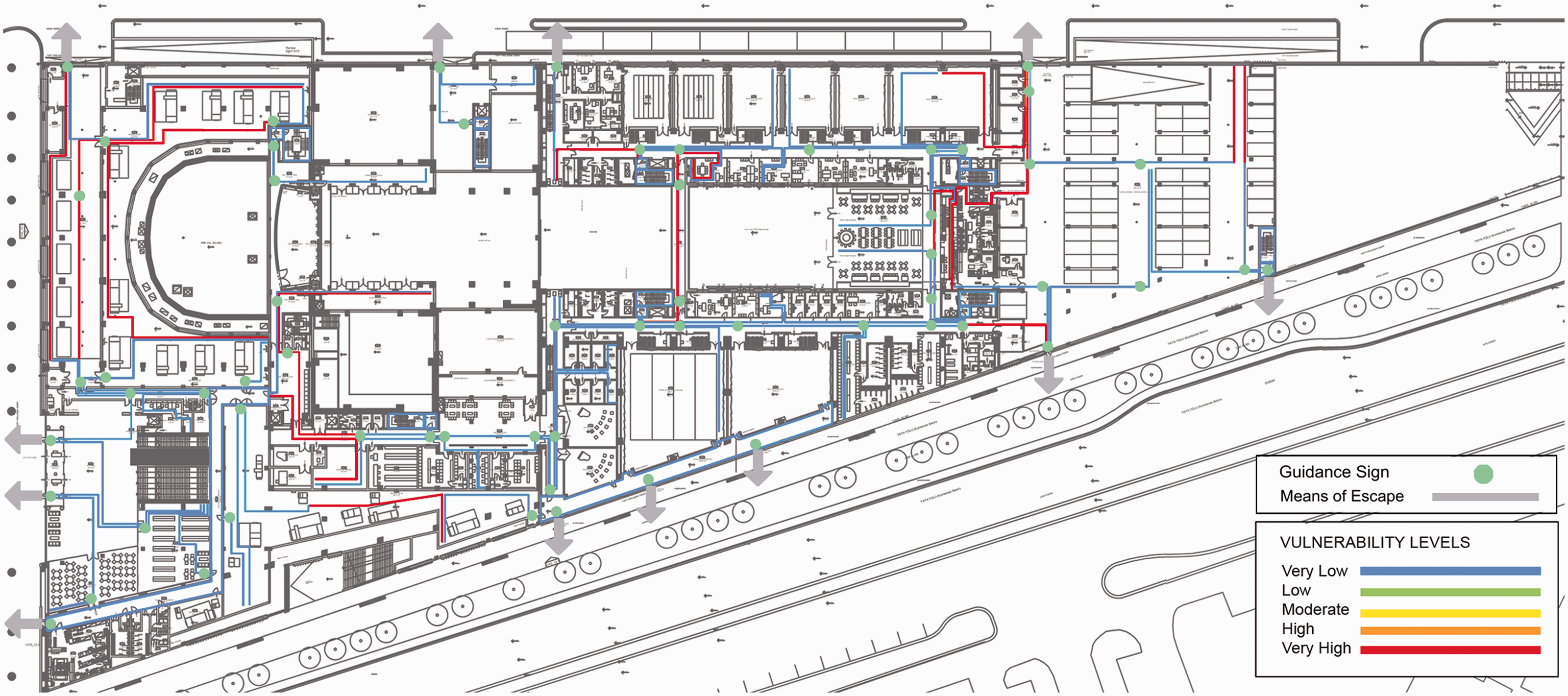
Escape route equipment vulnerability visualization.
In the subsequent means of egress analyses, the vulnerabilities were queried by accepting the nearest means of egress component as an available means of egress, the second exit as multiple means of egress, and other exits for alternative means of escape. Based on the rule data in Table 8, the results of the means of escape vulnerability analyses were calculated (Figure 6).
Means of egress rule structure.
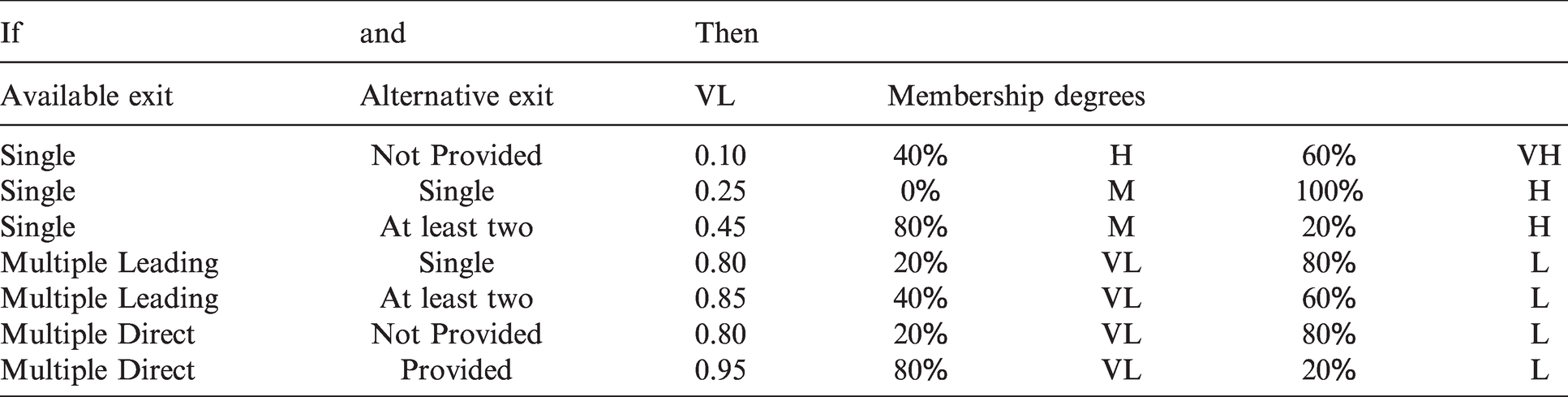
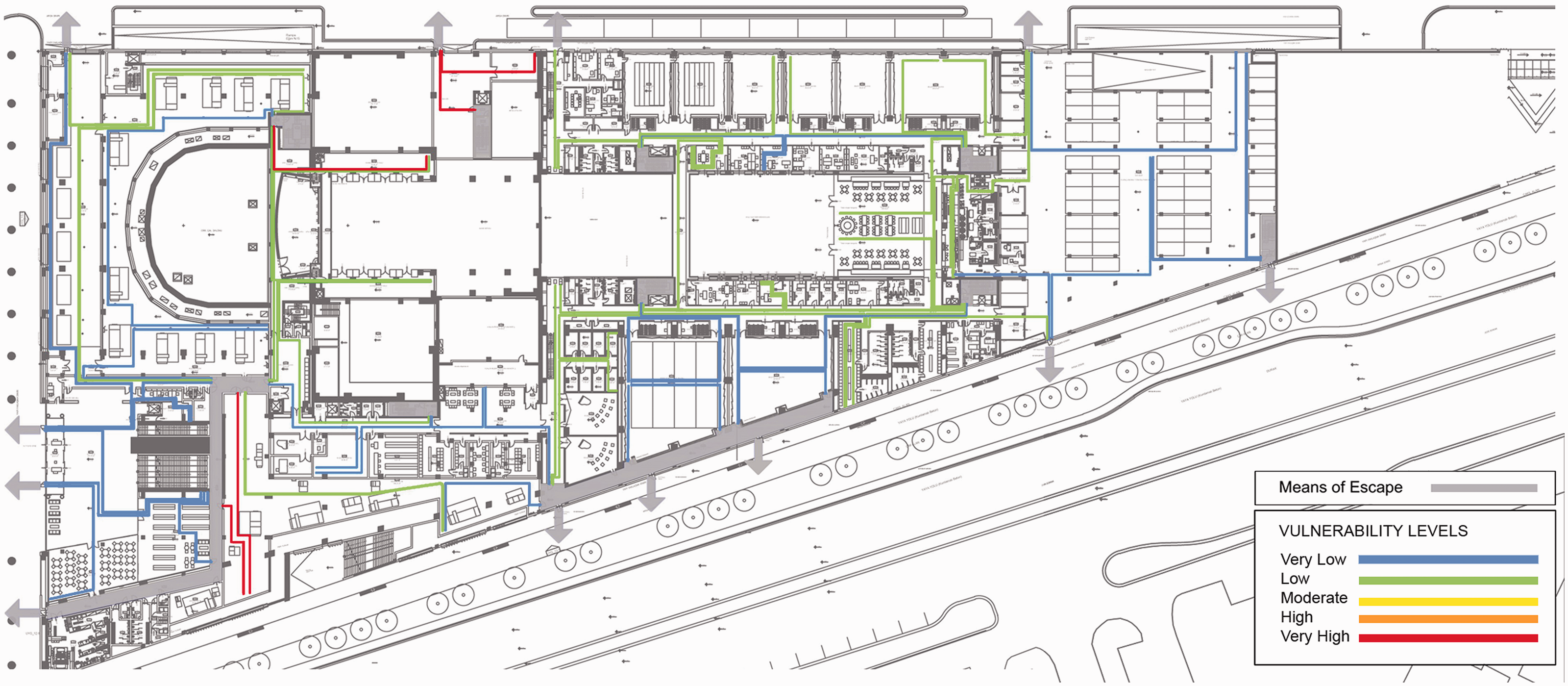
Means of escape vulnerability visualization.
In the escape route distance and layout analyses, the distance limits of travel, common path and dead-end corridor were used. The limits were set through the means of egress standards and measured for the shortest accessible path between any points (Table 9). Accordingly, the car parking area and mechanical room spaces have Very High VLs with long travel distances, while the rest of the escape route dimensions and layout have Very Low VLs (Figure 7).
Route dimension and layout rule structure.
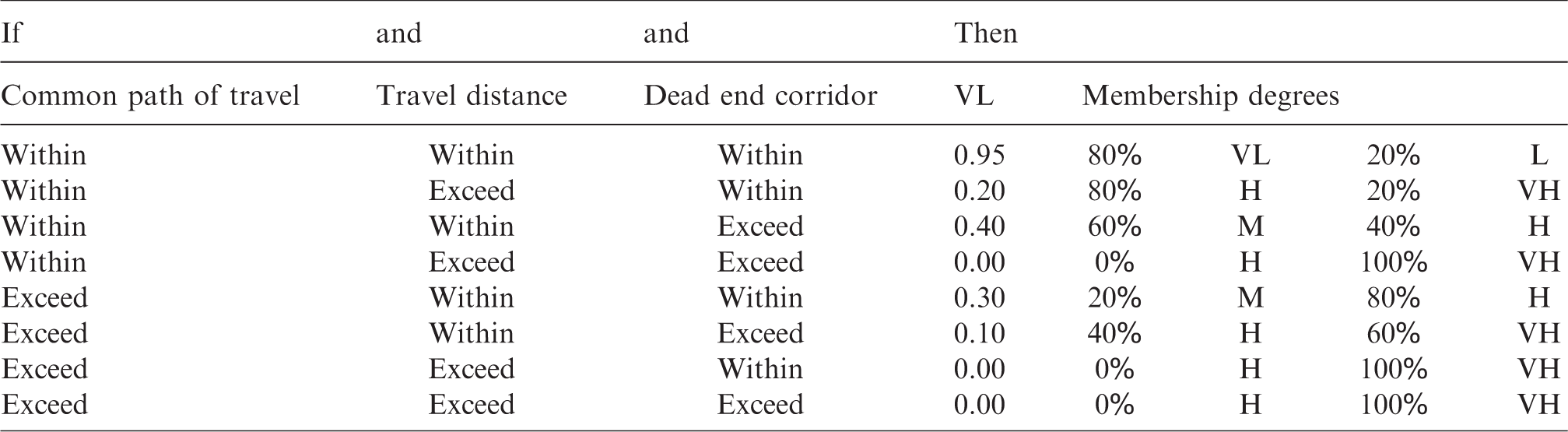
Escape route vulnerability results.
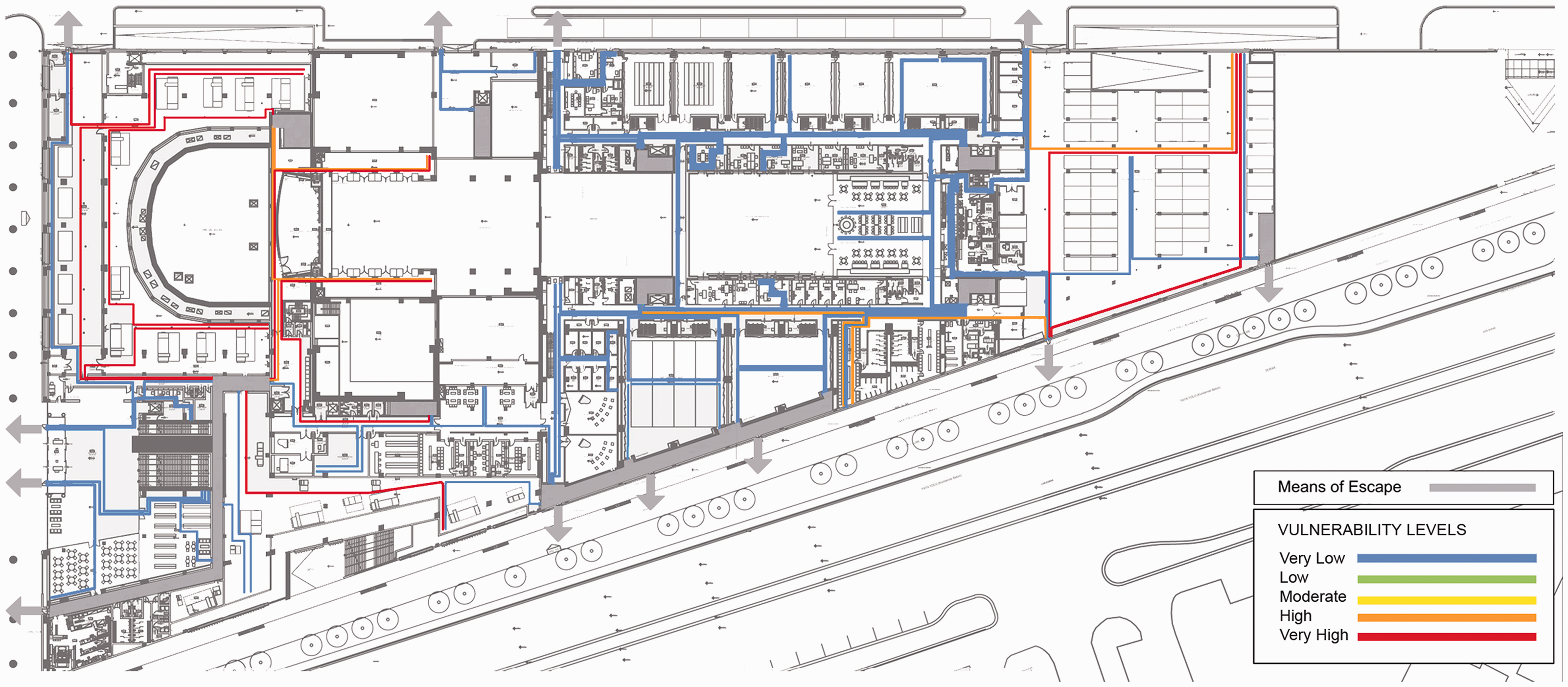
Route distance and layout vulnerability visualization.
Discussion of escape route vulnerability results
Designing a safe escape is an integrative process. The results of five escape route safety parameters, namely, materials’ fire reaction, route flow, route equipment, means of egress and dimensions and layout, have an effect on the vulnerability level (VL) of each other, and the final output VL of the escape route. For example, a flammable wall finishing material may affect the travel distance by blocking the escape or a direct exit without guidance may cause misdirection of occupants.
In the final output assessment, two different methodologies were tested to calculate and verify the outputs of five escape route safety parameters. Firstly, the experts were asked to evaluate the final results through constructing rule-based interrelations between output parameters and differentiating the significance of those parameters by their intuition and prior domain knowledge. However, the construction of the rule-based system with five escape route parameters and five scale linguistic variables requires a total of 3125 (55) rules. This is an excessive amount of rule generation and might not be efficient in terms of the system's applicability. Therefore, the expert opinion method was tested only for the escape route vulnerability results obtained from the Opera House building ground floor design. According to the results, if the number of low vulnerability outputs is considerably more than high vulnerabilities, the expert opinion method disregards the highest vulnerability results. In that case, the final vulnerability level decreases, resulting in ‘false safety’. For example, the high VL of the entrance foyer with flammable interior finishing material and very low vulnerabilities in route flow, equipment, means of egress, and dimensions and layout were evaluated as low VL by the evaluators. Thus, in addition to difficulties in applying the excessive number of rules, the calculation final result output vulnerability through expert opinion causes the negligence of the most severe vulnerability in case of other safe vulnerabilities with the accumulation of results at moderate VLs.
On the other hand, the escape route parameters identified through literature review are the most critical factors for fire vulnerability decision-making, and therefore, cannot be evaluated at average levels. In the second methodology, the final output vulnerability results were assessed by assigning the most critical VL for each escape route. In this regard, the most severe VL in the escape route was used as a single indicator for the final fire VL result of each escape route. This method has advantages to reflect the effect of all output VLs without neglecting any critical input parameter and detect any weakness of the result vulnerability to take immediate precautions (Figure 8).
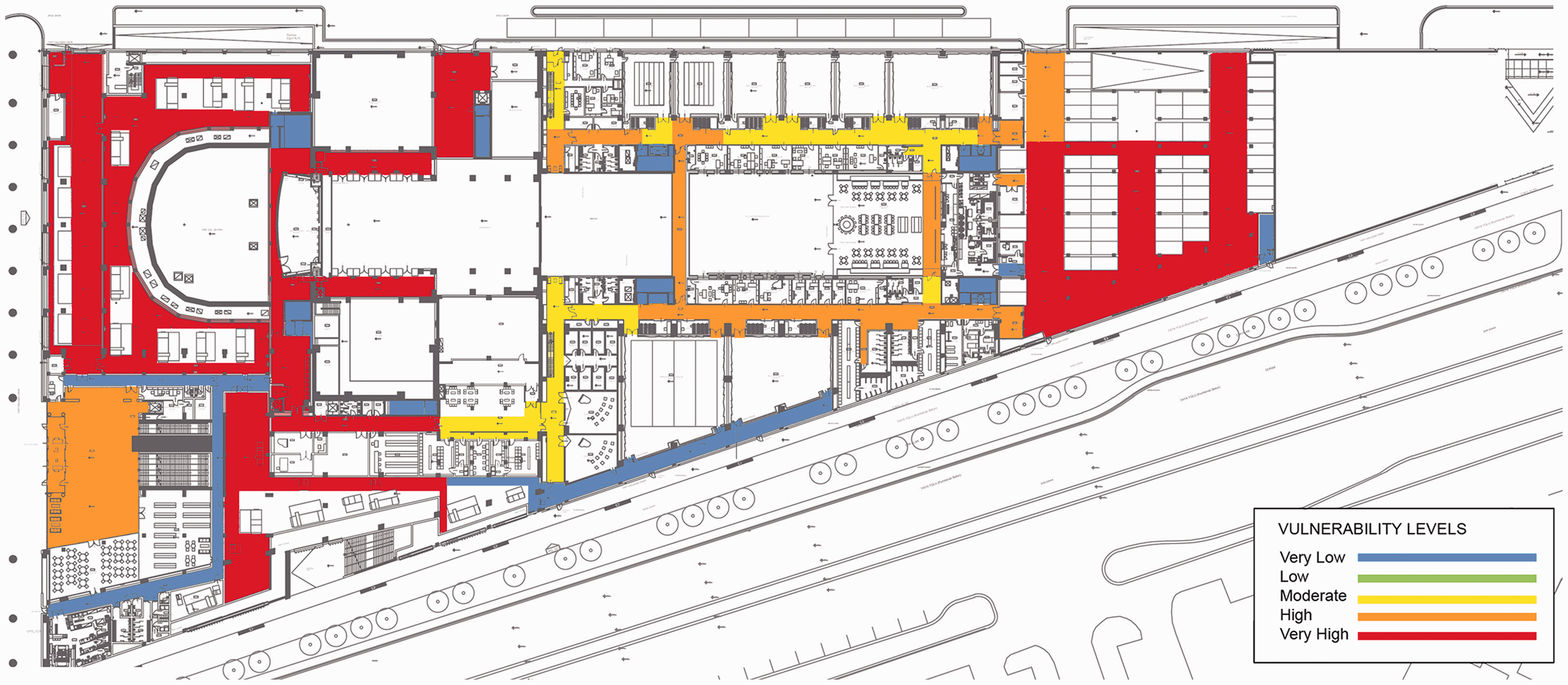
The final result of escape route vulnerability.
Overall, to clearly express the conclusions on the case study results, the output VLs were discussed. The escape route VL evaluation of the orchestra study hall with ‘moderate VL’ finishing material, ‘low VL’ route flow, ‘very love VL’ route equipment and ‘very high VL’ means of escape and distances, was resulted as ‘very high vulnerability to fire,’ in other words ‘not acceptable.’ Similarly, vulnerabilities of travel distances in car parking and mechanical room areas have a very high vulnerability and therefore need to be re-examined through additional exit components. Besides, the flammable cladding materials used in the entrance foyer and suspended ceilings of service corridor spaces need treatment through fire retardant coatings, and the emergency sign placements and directions used in the cafeteria and service room corridors need reconsideration. The results indicated that the detailed escape route analyses enabled the detection of point sources of vulnerabilities, which may have a serious contribution to fire spread with storage content, equipment and the open flame source.
Conclusion
Fires have catastrophic effects on both the natural and indoor built environment. The management of the complex fire risk factors for both known and unknown uncertainties requires an integrated approach between fire safety and architectural design professionals.
This research criticizes the non-existence of an integrated approach between fire safety and architectural design phases; and proposes an evaluation tool to detect and mitigate critical passive building characteristics vulnerabilities with regard to fire safety. The critical building characteristics were queried by systematic literature analysis, in which the escape route variables were identified as the highest impact for both fire safety evaluation and architectural design objectives.
The methodology was constructed as an FVDM tool for the evaluation of buildings that are unique in terms of their escape route design. The test and visualization of the escape route vulnerability assessment methodology were performed on an Opera House building, which is an assembly occupancy with high risk factors and complex egress route organization. The FVDM model has several advantages over prevalent fire safety evaluation methodologies, including prescriptive codes, indexing methods and automated code checking systems. Firstly, the FVDM methodology evaluates the interrelations between input variables with the fuzzy rule-based connection between the variables and final output. Thus, the effects of each egress route variable change over total vulnerability can be tested on a single platform through the computerized fuzzy vulnerability model visualized in fuzzyTECH. Secondly, structured interviews were conducted with domain experts to enable the integration of human reasoning in the fire vulnerability evaluation process. The rule-based system was developed using the results of the structured interview. The domain experts used their priorities to define the relationships behind those priorities in linguistic terms. The vulnerability outputs were calculated by encoding the rules and expressed with linguistic vulnerability levels from very high to very low fire vulnerability. In addition, the linguistic expressions provided accessible communication between building professionals and contributed to the construction of fire safety awareness for fire resilient built environment. Thirdly, the visualization of vulnerabilities with colour-codes enables easy detection of fire safety weaknesses from common representation mediums such as plans and sections. As a result, communication time delays between the fire safety management team and other building professionals can be decreased. The practical limitation of the analysis is the use of CAD software to conduct visualization, for which the authors have already started to conduct further research to use integrated building information models.
Footnotes
Authors' contribution
All authors contributed equally in the preparation of this manuscript.
Declaration of conflicting interests
The author(s) declared no potential conflicts of interest with respect to the research, authorship, and/or publication of this article.
Funding
The author(s) received no financial support for the research, authorship, and/or publication of this article.
